Archive for ‘Politics’

06/01/2016

Pathankot attack: Congress asks Modi to ‘fix responsibility’ – The Hindu

Scaling up the offensive against the government over Pathankot terror attack, the Congress on Wednesday asked Prime Minister Narendra Modi to fix responsiblity for the “grave security lapse” and suggested that some heads must roll.

People light candles during a memorial service for the Indian soldiers killed in a militant attack at Pathankot air base, in Mumbai on Tuesday.

“They should realize that it has gone wrong and resignations should happen. If there is a lapse, resignations should happen,” former Home Minister Sushil Kumar Shinde told reporters at the AICC briefing when repeatedly asked whether Congress is demanding resignation of Home Minister Rajnath Singh or Defence Minister Manohar Parrikar into the matter.

“This government has totally failed. It has no system in place to protect the nation,” he added.

AICC Communication Department chairman Randeep Surjewala also said that the Prime Minister should fix the responsibility and take action against the Home and Defence Ministers.

“First responsibility is of the Prime Minister as he is the head of the government. Then Defence Minister and Home Minister are also responsible as they deal with the matter.

The Prime Minister should act decisively and not merely talk. “The Prime Minister should fix responsibility for this negligence and he reaches to the same conclusion that the nation has arrived at that there has been a huge lapse in the nation’s security, he should then take action against the Defence Minister and the Home Minister,” Surjewala said.

The party asked whether the Prime Minister and the BJP government would explain as to who was responsible for the “grave security lapse” as terrorists managed to reach Pathankot Air Base despite advance intelligence alert and reporting of prior incident.

Source: Pathankot attack: Congress asks Modi to ‘fix responsibility’ – The Hindu

01/01/2016

‘The Miraculous History of China’s Two Palace Museums’ – China Real Time Report – WSJ

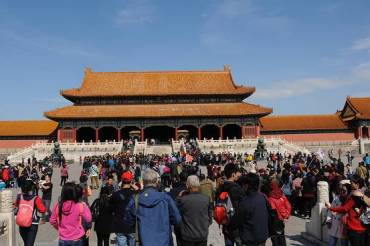
In late 1948 and early 1949, toward the end of the Chinese civil war, Nationalist leader Chiang Kai-shek transported across the Taiwan Strait hundreds of thousands of valuable Chinese artifacts which are now stored in Taipei’s National Palace Museum. Along with its Palace Museum counterpart in Beijing – more famous as the Forbidden City – the museums serve as one of the most poignant reminders of the division of China.

Beijing’s Palace Museum, which celebrated its 90th anniversary in October, was established shortly after the last Chinese emperor, Pu Yi, was forced from his palace, where he had been allowed to stay even after the Chinese republic was founded in 1911.

Intellectuals at the time wanted to set up a Chinese museum along the lines of the great museums in Europe.

Today, millions visit both museums each year, crowding around artifacts such as the Jadeite Cabbage and the Meat-Shaped Stone in Taipei.

Among the visitors are huge tour groups of mainland Chinese tourists, as the Taipei government continues to liberalize travel policies for its neighbor amid a broader detente.

This week, a branch of the National Palace Museum housing exhibits from around Asia was inaugurated in the southern Taiwanese city of Chiayi.

In his book “The Miraculous History of China’s Two Palace Museums,” Hong Kong-based writer Mark O’Neill details the treacherous history of how some of China’s most precious artifacts were rescued from the invading Japanese imperial army in the 1930s and later transported to Taiwan, and the powerful symbolism of the museums.

Source: Writing China: Mark O’Neill, ‘The Miraculous History of China’s Two Palace Museums’ – China Real Time Report – WSJ

31/12/2015

2015 Chinese diplomacy: Reaching farther and wider – Xinhua | English.news.cn

2015 has been a productive year not only for China, but for its partners all over the world. The world’s second largest economy reached out farther and wider, through initiatives such as the “Belt and Road” and the “AIIB“. And President Xi Jinping led the way.


President Xi Jinping’s official state visit to the UK was full of pomp and pageantry and the occasional imbibing. Footage of President Xi and Prime Minister David Cameron enjoying a pint and some banter in an English pub went viral in China. And the rest is history. The consumer power of the world’s second largest economy has been felt fully by the British beer company. Just this time, it started with President Xi himself.

And in the year 2015, it’s been a recurring story. Wherever the Chinese president travels, Chinese investment and consumer power are his companions. From projects worth in the billions. There’s Chinese investment in the UK infrastructure and energy sector.

Chinese financing of Russian and Central Asian natural gas projects and China’s pledge of 60 billion dollars of development funds to African nations.

To a more personal touch, a visit, in the case of Boeing, by the President of the world’s largest airplane market, means shored up confidence for some 160-thousand employees, against the backdrop of a wobbly global economy, The president also brought Ping Pong diplomacy to a high school in Washington State while students there returned the favor by showing the well-known football fan, a different kind of football. And this viral photo of President Xi brought forward cutting edge research at the Imperial College London.

2015 has been a year when Chinese initiatives were taking root and taking shape on a global scale from the Belt and road initiative. To the AIIB, and the south-south cooperation fund. Economies reshaped and lives transformed or in the case of Greene King, a centuries old British beer finding a new Chinese following.

Source: 2015 Chinese diplomacy: Reaching farther and wider – Xinhua | English.news.cn

31/12/2015

It’s official: China building second aircraft carrier as concern mounts over claims to South China Sea | South China Morning Post

China on Thursday confirmed it is building a second aircraft carrier, as its neighbours worry about Beijing’s new assertiveness to claims in the South China Sea.

Chinese aircraft carrier Liaoning cruises for a test on the sea. Photo: AP

Defence Ministry spokesman Yang Yujun said the carrier had been designed in China and was being built in the port of Dalian in Liaoning province. The construction drew on experiences from the country’s first aircraft carrier, the Liaoning, bought from Ukraine in 1998 and refitted in China.

Source: It’s official: China building second aircraft carrier as concern mounts over claims to South China Sea | South China Morning Post

30/12/2015

Historian praises China’s global infrastructure building, criticizes West’s destructive methods – Xinhua | English.news.cn

China, with its impressive international infrastructure initiatives, has injected impetus into global growth, a U.S.-German historian has said, while criticizing Washington’s hawkish attitude, as reported by Sputnik.

China is “leading an economic renaissance of a scale not seen in more than a century,” said F. William Engdahl, a historian and economic researcher, in his recent article for New Eastern Outlook. “Beijing is, with customary Chinese speed, linking its economy by land and by sea lanes to all Eurasia,” the historian wrote, previously saying that China is “moving forward with an impressive array of major international infrastructure projects” in various regions. “For my side, I infinitely prefer the peaceful building projects to the destroying ones,” Engdahl said.

During the Johannesburg Summit of the Forum on China-Africa Cooperation (FOCAC) in early December in South Africa, Chinese President Xi Jinping unveiled the 60-billion-U.S.-dollar aid package for Africa in the next three years. The package seeks to help Africa to industrialize, modernize its agricultural production, boost the skills of its workers, build infrastructure and improve its health care.

“Unlike NATO’s endless wars, construction of infrastructure — railways, water navigation, electric power grids, lifts people up and enhances peace and stability,” Engdahl said, pointing out that Xi’s offer benefits both Africa and China.

China is also establishing a more amicable, vibrant neighborhood and is deepening economic ties with European countries through its Belt and Road initiative. The Belt and Road initiative, comprising the Silk Road Economic Belt and the 21st Century Maritime Silk Road, was brought up by Xi in 2013, with the aim of building a trade and infrastructure network connecting Asia with Europe and Africa along the ancient Silk Road routes.

The initiative creates a “golden opportunity” for the countries of Central and Eastern Europe that are facing economic difficulties, linking the East and the West of the Eurasian continent through a vast network of high-speed railways and maritime routes, Engdahl said.

“China is the world address in rail infrastructure today, while the West, led by the pathetic rail construction record of the USA, falls farther and farther behind,” Engdahl said, referring to China’s planned construction of a Hungary-Serbia high-speed railway. The railway linking the capitals of Hungary and Serbia, Budapest and Belgrade, has a total length of 350 km, with 184 km in Serbia. It is designed for electric passenger and cargo trains with a maximum speed of 200 km per hour. Once complete, it will help create a fast lane for importing and exporting products between China and Europe.

Besides recognizing the export of “Chinese rail technology” to Europe, the researcher also mentioned Beijing’s intentions to invest in constructing and upgrading port facilities in the Baltic, Adriatic, and Black Seas.

Source: Historian praises China’s global infrastructure building, criticizes West’s destructive methods – Xinhua | English.news.cn

30/12/2015

Top 10 policy changes in China in 2015

  1. Two children for all couples

China will allow all couples to have two children, abandoning its decades-long one-child policy, the Communist Party of China announced in late October. The change is intended to balance population development and address the challenge of an ageing population.

Under the new policy, couples who have two children can enjoy longer maternity leave and they could have more than two children if eligible. Current longer marriage and maternity leaves enjoyed by citizens who marry late and delay having children will be removed, and so will the rewards for couples who volunteer to have only one child.

The two-child policy will come into force on Jan 1.

2. Raising the retirement age

The 13th Five-Year Plan (2016-20) proposes progressively raising the retirement age to help address the country’s pension pressure and labor shortage.

On Nov 20, the Ministry of Human Resource and Social Security said raising the retirement age will be done progressively in small steps. The authority will raise the retirement age by several months every year, and the policy adjustment will be made public in advance. The Ministry of Human Resources and Social Security is drawing up the policy and will solicit public opinions on the completed draft.

In 2017, China should complete the integration of its two pension systems. From 2018, the retirement age for women should be raised one year every three years, and the retirement age for men should be raised one year every six years. This means in 2045, the retirement age for both men and women will be 65.

3. Household permits on the way for all

China will provide unregistered citizens with household registration permits, a crucial document entitling them to social welfare, according to a high–level reform meeting held in early December.

“It is a basic legal right for Chinese citizens to lawfully register for hukou. It’s also a premise for citizens to participate in social affairs, enjoy rights and fulfill duties,” said a statement released on Dec 9 after a meeting of the central leading group for comprehensively deepening reform.

The meeting was told that registration should take place regardless of family planning and other policy limits, and that those without hukou who face difficulties in applying should have their problems solved.

4. Unified pension system

The landmark pension reform plan, announced by the State Council on Jan 14, aims to eliminate the dual-track pension system in China.

New measures on old-age insurance were unveiled for the nearly 40 million workers in government agencies and public institutions, most of whom are civil servants, doctors, teachers and researchers. Insurance will now be paid by both workers and organizations, instead of just by organizations or central finance as in the past.

Before the measures were introduced, corporate employees had to pay for their own old-age insurance, while government staff enjoyed pensions without making any contribution at all. The reform helps to bring fairness and quench long-term public outcry.

5. Rural residents encouraged to buy properties in cities

China will roll out measures to reduce its property inventory and stabilize its ailing housing market, said a statement released on Dec 21 after a key policy meeting.

Rural residents relocating to urban areas should be allowed to register as city residents, which would enable them to buy or rent property, according to the conference.

In addition, a low-rent public housing program will cover those without household registration.

6. Harsher environmental protection law

China’s revised Environmental Protection Law came into effect on Jan 1, bringing with it heavier punishments.

According to the revised law, extra fines accumulating on a daily basis will be imposed on enterprises that fail to rectify violations.

Local officials may be demoted or sacked for misconduct, including the concealment of offenses, falsifying data, failing to publicize environmental data, and not giving closure orders to enterprises that illegally discharge pollutants.

7. Entrepreneurship encouraged among college students

The Ministry of Education announced in May that more than 30 measures would be introduced to support students starting their own businesses, and for innovation in scientific and academic research.

The measures are outlined in a series of guidelines released by the State Council, including developing and opening compulsory and selective courses for students, and awarding them credits for taking the courses.

Establishing innovation and entrepreneurship records, with transcripts for students, encouraging teachers to guide students in innovation and starting up businesses, and providing them with funds and supporting them to take part in entrepreneurship contests are also on the list.

8. New plan targets water pollution

China released the Action Plan for Water Pollution Prevention and Control on April 16 to tackle serious water pollution, aiming to intensify government efforts to reduce emissions of pollutants and to protect supplies.

The plan calls for 70 percent of the water in the country’s seven major river basins, including the Yangtze and Yellow rivers, to be in good condition by 2020, and for a continued improvement to 75 percent by 2030.

The amount of “black and smelly water” in urban areas will be reduced to 10 percent by 2020 and will largely disappear by 2030.

9. Toughest smoking ban in Beijing

A new regulation on tobacco use took effect in Beijing on June 1. The regulation extends existing smoking bans to include all indoor public areas and workplaces, plus a number of outdoor areas, including schools, seating areas in sports stadiums and hospitals where women or children are treated.

Violators will face fines of up to 200 yuan ($32), a twentyfold increase from the previous 10-yuan penalty stipulated by the previous regulation adopted in 1996. Owners of buildings classified as public places, such as restaurants, that fail to stop smokers lighting up face fines of up to 10,000 yuan.

Members of the public can report violations to the authorities by dialing a health hotline (12320) or via social media.

10. Price control on most medicines lifted

China has lifted price controls on most medicines since June 1 with the intention of creating a more market-driven pricing system that will help keep medical costs in check.

Only narcotics and some listed psychotropic drugs continue to be controlled by the government, with ceiling retail prices.

Public health departments must boost supervision on medical institutions and check improper medicine and medical equipment use, as well as excessive checkups and treatment, according to a notice issued in May.

From: http://usa.chinadaily.com.cn/china/2015-12/28/content_22835045.htm

21/12/2015

Shifting barriers | The Economist

THE pillars of social control are flaking at the edges.

First came the relaxation in October of draconian family-planning restrictions. Now it is the turn of the household-registration, or hukou, system, which determines whether a person may enjoy subsidised public services in urban areas—rural hukou holders are excluded. On December 12th the government announced what state media trumpeted as the biggest shake-up in decades of the hukou policy, which has aggravated a huge social divide in China’s cities and curbed the free flow of labour.

The pernicious impact of the system, however, will long persist. As with the adjustment to the decades-old family-planning policy (now all couples will be allowed to have two children), the latest changes to the hukou system follow years of half-hearted tinkering. They will allow migrant workers to apply for special residency permits which provide some of the benefits of an urban hukou (a booklet proving household registration is pictured above).

If an urban hukou is like an internal passport, the residency permit is like a green card. Under the arrangements, migrants will be able to apply for a permit if they have lived in a city for six months, and can show either an employment contract or a tenancy agreement. The document will allow access to state health care where the migrants live, and permit their children to go to local state schools up to the age of 15. It will also make other bureaucratic things easier, like buying a car. Such reforms have already been tried in some cities. They will now be rolled out nationwide.

For those who meet the requirements, the changes will bring two main benefits. They should allow some of the 70m children who have been left behind to attend school in their native villages to join their migrant parents. And it will allow migrants to use urban services without losing the main benefit of their rural hukou: the right to farm a plot of land. According to a survey in 2010 by the Chinese Academy of Social Sciences, 90% of migrants did not want to change their registration status because they feared losing this right.

Source: Shifting barriers | The Economist

14/12/2015

Japan, India agree on rail, nuclear deal | The Japan Times

Tokyo and New Delhi agreed to major deals Saturday, including the introduction of Japan’s bullet train technology to India and an agreement on nuclear cooperation.

The bilateral accord was reached during talks in New Delhi between Prime Minister Shinzo Abe and his Indian counterpart, Narendra Modi. “This enterprise will launch a revolution in Indian railways and speed up India’s journey into the future. It will become an engine of economic transformation in India,” Modi said after the talks, referring to the introduction of Japanese shinkansen technology in building a high-speed railway in India. “This project befits the start of a new era for (ties between) Japan and India,” Abe said.

The two countries also agreed on a civil nuclear cooperation pact. Sensitive negotiations had continued for five years on exporting Japan’s nuclear power plant technology to India, with one of the sticking points being whether Japan could ensure that its nuclear technology would not be diverted for military use. India, despite being a de facto nuclear weapons state, has not joined the Nuclear Non-Proliferation Treaty. “Japan is promoting (nuclear) nonproliferation, given the history of Nagasaki and Hiroshima, while India is outside the NPT framework but wants to cooperate on nuclear power generation,” one Japanese official said while noting Japan is the only country to have suffered atomic bombings.

Deputy Chief Cabinet Secretary Koichi Hagiuda, who accompanied Abe on the visit, told reporters after the talks that Japan’s cooperation under the bilateral civil nuclear pact will stop if India conducts a nuclear test. The two projects were the main points of focus of Abe’s three-day visit to India, which began Friday. Japan is keen to tap into India, with its 1.2 billion population, and forge closer ties in light of China’s growing political and economic clout in the region. Under a policy to elevate bilateral ties to what they now call a “Special Strategic and Global Partnership,”

Abe and Modi plan to boost security cooperation between the two nations and exchange views on regional issues such as the situation in the South China Sea, Japanese officials said. While Japan and India are not directly involved in the tensions in the South China sea, a key shipping route for oil and other imports, they are both concerned over the freedom of navigation in international waters. China claims almost the entire South China Sea and has competing territorial claims with Vietnam, the Philippines, Brunei, Malaysia and Taiwan. Beijing’s fast-paced and massive land reclamation work has made the smaller Asian claimants uneasy. Seeing India’s potential value to Japan, both on the economic and political fronts, Abe has touted the importance of strengthening bilateral ties to help maintain peace and stability in Asia. Abe’s latest trip to India is his third visit as prime minister. The shinkansen technology will be applied to a planned 500-km-long high-speed railway that will link Mumbai and Ahmedabad in western India and take roughly two hours.

Japan, which is seeking to spur its economy through infrastructure exports to Asia, is looking to play catch-up after losing out to China in its bid to secure a key high-speed railway contract in Indonesia in October. Construction of the Indian railway project, which is estimated to cost 980 billion rupees ($14.6 billion), will begin in 2017, with the aim of starting operations in 2023. Japan has sounded out India about a plan for Tokyo to provide yen loans on the premise that the railway contract will be given to a consortium of Japanese firms, a Japanese government source said.

The two leaders also signed others pacts, including one that allows the transfer of defense equipment to India and another on data protection, which allows the exchange of defense-related information. The moves reflect Tokyo’s desire to forge closer ties with New Delhi due to China’s muscle-flexing.

When Modi visited Japan last year, Abe vowed to extend ¥3.5 trillion in public and private investment and financing to India over five years for development. Japan also pledged a ¥50 billion loan to India for a public-private partnership infrastructure project.

Source: Japan, India agree on rail, nuclear deal | The Japan Times

14/12/2015

‘Spice-Girl Diplomacy:’ North Korean Girl Band’s Beijing Shows Abruptly Cancelled – China Real Time Report – WSJ

The Moranbong band’s shows at China’s National Center for the Performing Arts have been cancelled “due to some reasons,” an employee at the venue told China Real Time Saturday night.

A person who had a ticket to one of the band’s invitation-only shows confirmed that he received a cancellation notice late Saturday afternoon. Short hair, glittery miniskirts, electronic pop music and perhaps even the theme song from the 1976 Hollywood hit “Rocky” were expected to grace the stage of Beijing’s top music hall Saturday night as the Moranbong band was set to kick off three days of shows in the Chinese capital.

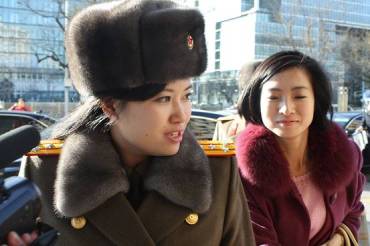
The group — which was accompanied by an army orchestra, the State Merited Chorus – arrived in Beijing on Thursday and was expected to stay until next Tuesday on what the North Korean official news agency KCNA described as a “friendship visit” to China.

Zuma Press China’s state-run media lit up with news reports on the group’s visit in recent days, with the official Xinhua News Agency publishing a slideshow showing the women arriving in Beijing dressed in military-style frocks and fur hats. It was unclear Saturday evening whether the band was still in Beijing.

Japan’s Kyodo News Service reported that band members were seen at Beijing’s Capital International Airport and had flown back to Pyongyang late Saturday afternoon. But no updates were forthcoming from Xinhua and other Chinese state-run media. The visit was to have been the group’s first overseas tour — although no one, it seemed, knew how to obtain a ticket.

Neither the concert venue nor China’s foreign ministry was able to provide instructions on buying a ticket when asked by China Real Time this week. A ticket agent at the National Centre for the Performing Arts said before Saturday’s cancellations that the performances were being treated as a national-level foreign affairs activity and that the concert hall was responsible only for providing the venue. “We don’t have a single ticket on hand; we even don’t know yet which room will be offered for the performance,” the ticket agent said.

Chinese foreign ministry spokeswoman Hua Chunying said Friday that she had no details on the show or its audience — and had not been invited herself. ”This performance is not organized by the foreign ministry so I have no more information to offer,” she said at a regular briefing. “As for where to buy the tickets, I have no information. I myself have no ticket to the performance.”

Some speculated that the tour was being organized by another official organ, the International Department of the Chinese Communist Party’s Central Committee. Neither that department nor the North Korean Embassy responded to requests for comment. China has long been North Korea’s economic and diplomatic lifeline. Yet the traditional alliance between the two has come under strain in recent years, particularly after Pyongyang conducted its third nuclear test in 2013 and North Korean forces seized a Chinese fishing boat later that year.

Even so, both countries have played up their ties again since this fall when senior Chinese official Liu Yunshan stood alongside Mr. Kim at a military parade in Pyongyang to mark the 70th anniversary of North Korea’s ruling Workers’ Party. Mr. Liu, who is a member of the Standing Committee of the Chinese Communist Party, also passed along to Mr. Kim a letter from Xi Jinping in which the Chinese president called for closer relations.

Whether Moranbong’s short-lived visit to Beijing was intended to show a further warming of ties between China and North Korea — also known as the Democratic People’s Republic of Korea, or DPRK — remains open to debate. Asked Friday about the group, Ms. Hua called the tour “a major event showing the friendship between the DPRK and China.” “We believe it contributes to our mutual understanding and the sound and sustainable development of bilateral ties,” she added.

Zhang Yushan, a researcher at the Jilin Social Science Academy who studies North and South Korea, cautioned against reading too much into the visit. “This spice-girl diplomacy doesn’t really mean China and North Korea’s relations really will become warmer,” he said. This week, a top United Nations official called for the Security Council to refer North Korea to the International Criminal Court over “gross human rights violations.” China called a vote to stop the meeting, although it failed to halt it. “North Korea was seeking help from China”, Mr. Zhang of the move. “We are both very practical.”

Members of the Moranbong Band are believed to have been selected by Kim Jong Un himself. The group has become the most well-known girl band in North Korea since its debut in 2012. In addition to anthems urging listeners to “support our supreme commander with arms,” Moranbong’s repertoire also includes a surprising number of foreign pieces, including the “Rocky” theme song

Source: ‘Spice-Girl Diplomacy:’ North Korean Girl Band’s Beijing Shows Abruptly Cancelled – China Real Time Report – WSJ

02/12/2015

Hacking of U.S. government was criminal, not state-sponsored: China | Reuters

China’s official Xinhua news agency said on Wednesday that an investigation into a massive U.S. computer breach last year that affected more than 22 million federal workers found the hacking attack was criminal, not state-sponsored.

An illustration picture shows a projection of binary code on a man holding a laptop computer, in an office in Warsaw June 24, 2013. REUTERS/Kacper Pempel

In an article about a meeting between top U.S. and Chinese officials on cyber security issues held in Washington, Xinhua said the breach at the United States Office of Personnel Management (OPM) was among the cases discussed.

The report did not give details of who conducted the investigation, or whether U.S. and Chinese officials both agreed with the conclusion.

The U.S. Embassy in Beijing referred Reuters to the Department of Justice and Department of Homeland Security in Washington for comment on the talks.

The Cyberspace Administration of China, the country’s Internet regulator, did not immediately reply to a Reuters request for comment.

OPM has been under scrutiny from lawmakers and the public ever since it disclosed earlier this year that it had fallen victim to two cyber attacks, which officials have privately linked to Chinese hackers.

The intrusions exposed sensitive personal information, including names, Social Security numbers and addresses of more than 22 million current and former federal employees and contractors, in addition to 5.6 million fingerprints.

Top U.S. and Chinese officials convened this week in Washington for the first round of cyber security talks following the signing of a bilateral anti-hacking accord in September.

The talks on Tuesday and Wednesday are seen as potentially significant in establishing acceptable norms for cyber espionage.

China and the U.S. reached a broad agreement on the joint fight against cyber crimes, and will set up a hotline for these issues, according to Xinhua and CCTV, China’s state-operated national broadcaster.

CCTV said a spokesperson for the Department of Homeland Security declined to comment on any agreement. The next meeting is scheduled for next June, Xinhua said.

Source: Hacking of U.S. government was criminal, not state-sponsored: China | Reuters

Law of Unintended Consequences

continuously updated blog about China & India

ChiaHou's Book Reviews

continuously updated blog about China & India

What's wrong with the world; and its economy

continuously updated blog about China & India