Archive for ‘Politics’

11/12/2014

The Vladimir Putin and Narendra Modi Agreements in Full – India Real Time – WSJ

Indian Prime Minister Narendra Modi and Russian Prime Minister Vladimir Putin announced that their countries had signed 20 bi-lateral agreements including memorandums of understanding and commercial contracts on Thursday.
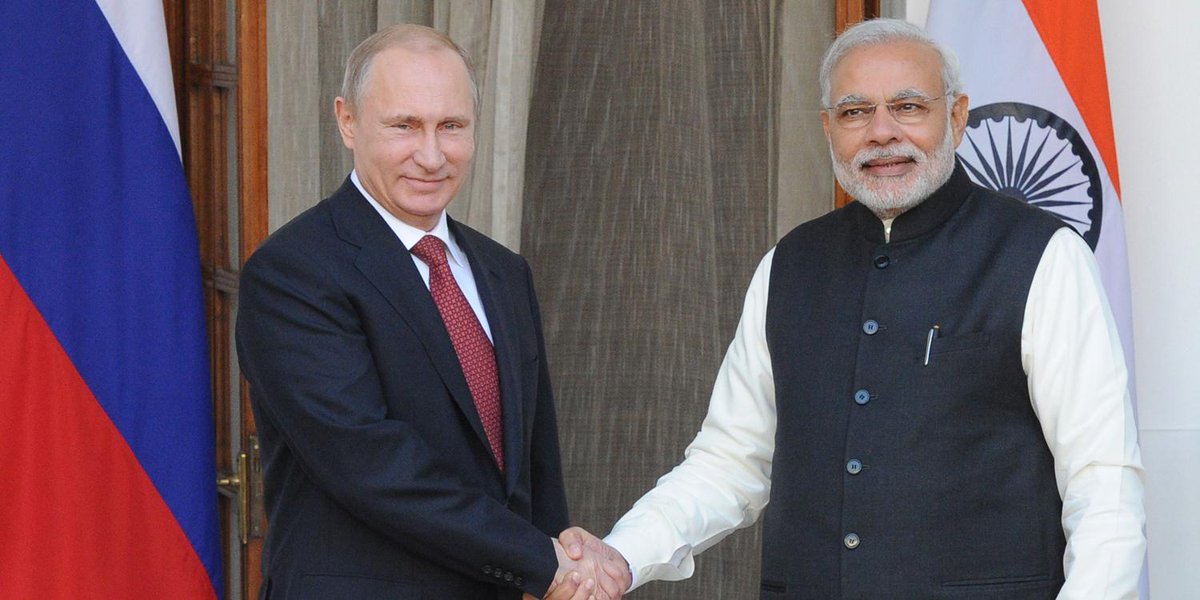
View image on Twitter

During Mr. Putin’s visit to India’s capital, the Russian leader said in a news conference that the documents placed an emphasis on trade and economic issues.

Eight of the agreements signed relate to nuclear power and energy production including a roadmap for bilateral cooperation in the civil nuclear energy sector over the next 20 years. Russia also agreed to supply “major equipment” to the Kudankulam nuclear power plant in Tamil Nadu.

India agreed to identify a second site apart from Kudankulam for Russian-designed nuclear power plants.

Mr. Modi said that they had “outlined an ambitious vision for nuclear energy” and would have “the highest standards of safety in the world.”

A list of the agreements signed is below as provided by India’s Ministry of External Affairs.

via The Vladimir Putin and Narendra Modi Agreements in Full – India Real Time – WSJ.

10/12/2014

China releases one of its longest-serving political prisoners, relative says | Reuters

China has freed one of its longest-serving political prisoners, the ethnic Mongol dissident Hada, who has spent much of the last two decades behind bars, his uncle said on Tuesday.

Beijing fears ethnic unrest in strategic border areas and keeps a tight rein on Inner Mongolia, just as it does on Tibet and Xinjiang in the far west, even though the region is supposed to have a large measure of autonomy.

“He’s not in good health,” the dissident’s uncle, Haschuluu, told Reuters, adding that Hada’s younger brother had told him of the release, which took place on Tuesday morning in the Inner Mongolian capital of Hohhot. He declined to comment further.

Many Mongols in China go by just one name.

Hada was tried behind closed doors in 1996 and jailed for 15 years for separatism, spying and supporting the Southern Mongolian Democratic Alliance, which sought greater rights for China’s ethnic Mongols. He says the charges were trumped up.

After being released in December 2010, he had to serve a separate sentence of four years of “deprivation of political rights”, mostly in an illegal detention center in the northern region of Inner Mongolia, his family says.

via China releases one of its longest-serving political prisoners, relative says | Reuters.

10/12/2014

Former top planning official jailed for life in China over graft | Reuters

The former deputy head of China’s top planning agency was jailed for life on Wednesday over a bribery scandal that exposed graft at the highest levels of China’s government, and ensnared several companies including Toyota Motor Corp.

Liu Tienan, then deputy chairman of China's National Development and Reform Commission (NDRC), attends a news conference in Beijing in this February 27, 2009 file photograph. Liu, a deputy chairman of China's top planning agency, the National Development and Reform Commission (NDRC), is under investigation for suspected ''serious discipline violations'', state media said on 12 May, 2013, REUTERS/Stringer/Files

The sentence, handed down by a court just outside of Beijing, capped the downfall of Liu Tienan, who was sacked as deputy head of the National Development and Reform Commission (NDRC) last year, a position that carries ministerial-level status.

Liu was the first ministerial-level official to face an investigation after Xi Jinping became Communist Party head in late 2012 and launched the most aggressive anti-graft campaign China has seen in decades.

via Former top planning official jailed for life in China over graft | Reuters.

07/12/2014

China to end use of prisoners’ organs for transplants next month | Reuters

China, the only country that still systematically takes organs from executed prisoners for use in transplant operations, plans to end the controversial practice from next month, a state-run newspaper said on Friday.

The government has over the last year flagged plans to end the practice, which has drawn criticism from rights groups, who have accused authorities of taking many organs without consent from prisoners or their families, a claim Beijing has denied.

The official China Daily said that human organ transplants will from Jan. 1 rely on voluntary public donations and on donations from living relatives.

“Harvesting organs from executed prisoners for transplants is controversial, despite written consent being required from donors and their relatives,” Huang Jiefu, head of the China Organ Donation Committee, was quoted as saying.

via China to end use of prisoners’ organs for transplants next month | Reuters.

04/12/2014

Modi seeks to draw line under row over minister’s pro-Hindu comments | Reuters

Prime Minister Narendra Modi sought on Thursday to draw a line under a row sparked by a ministerial colleague’s derogatory comments about non-Hindus, urging angry parliament deputies to accept her apology and move on.

A supporter of Bharatiya Janata Party (BJP) holds a placard with a picture of India's Prime Minister Narendra Modi as he attends a rally addressed by the party president Amit Shah (not pictured) in Kolkata November 30, 2014. REUTERS/Rupak De Chowdhuri

The opposition, led by the Congress, has demanded the dismissal of Niranjan Jyoti, the junior minister for food processing industries, for telling voters this week that they must “decide whether you want a government of those born of (Hindu god) Ram, or those born illegitimately”.

The saffron-clad minister apologised a day later after her remarks drew outrage and calls that she be prosecuted for violating the secular spirit of India’s constitution.

Critics say that Modi’s nationalist Bharatiya Janata Party has a deep-seated bias against Muslims and that it is pursuing Hindu-dominant agenda.

Modi urged the upper house of parliament to accept Jyoti’s apology amid a third straight day of protests.

via Modi seeks to draw line under row over minister’s pro-Hindu comments | Reuters.

02/12/2014

India and France to push ahead with Rafale jet deal | Reuters

The French and Indian defence ministers agreed on Monday to overcome any differences and finalise the sale of 126 fighter jets to India in a deal worth an estimated $15 billion, the Indian defence ministry said.

A Rafale jet fighter is seen on the assembly line in the factory of French aircraft manufacturer Dassault Aviation in Merignac near Bordeaux, southwestern France, January 10, 2014. REUTERS/Benoit Tessier/Files

France’s Dassault Aviation (AVMD.PA) has been trying to clinch a deal to sell India its Rafale jets since New Delhi chose the company over other foreign plane manufacturers in 2012. But disagreements over cost and work-sharing have slowed talks, while India’s weak economy has stretched government finances.

On Monday, French Defence Minister Jean-Yves Le Drian met his Indian counterpart Manohar Parrikar, who was appointed defence minister last month.

“Both sides agreed to take forward the strategic co-operation between the two countries. They discussed all issues including Rafale. It was decided that whatever differences still existed would be resolved in a fast-track manner,” said Indian defence ministry spokesman Sitanshu Kar.

Under the deal, which would provide a major boost to French domestic defence manufacturing, the first 18 planes will be made in France and shipped to India, while the remaining 108 will be produced by state-run Hindustan Aeronautics Ltd (IPO-HIAE.NS).

The final phase of exclusive negotiations on the contract should conclude within India’s current budget year ending in March 2015, Dassault Chief Executive Eric Trappier said last month.

via India and France to push ahead with Rafale jet deal | Reuters.

27/11/2014

South Asia Summit Nearing Failure as India, Pakistan Bicker – Businessweek

South Asian leaders overseeing a quarter of the world’s people struggled to agree on how to ease trade barriers in the region as India and Pakistan continued a decades-long row over a disputed border.

Pakistani Prime Minister Nawaz Sharif

Indian Prime Minister Narendra Modi was scheduled to meet every regional leader except Pakistani Prime Minister Nawaz Sharif for a one-on-one meeting during a gathering in Nepal starting today. Leaders of the South Asian Association for Regional Cooperation, or SAARC, last held a summit in 2011.

Failure to agree on cross-border travel and electricity supply would risk derailing Modi’s plan to turn the bloc into a regional force that can counter China’s growing influence. Chinese leaders have promised to invest part of a $40 billion Silk Road fund on infrastructure in South Asia.

via South Asia Summit Nearing Failure as India, Pakistan Bicker – Businessweek.

27/11/2014

China looms over South Asian summit in the Himalayas | Reuters

When eight South Asian leaders gather for a summit in Kathmandu on Wednesday, they will meet in a conference center donated by China to its cash-strapped Himalayan neighbor Nepal 27 years ago.

Prime Minister Narendra Modi watches a guard of honour upon his arrival for the 18th South Asian Association for Regional Cooperation (SAARC) summit in Kathmandu November 25, 2014. REUTERS/Navesh Chitrakar

In the decades since it built the modernist brick and glass hall, China has massively stepped up its presence in South Asia, supplying ports, power stations and weapons.

China’s advance has been aided by bickering between India and Pakistan that stymies almost all attempts at integration in a region that is home to a fifth of the world’s population but has barely any shared roads, fuel pipes or power lines.

India’s Prime Minister Narendra Modi has not welcomed Beijing’s renewed suggestion its status be raised from “observer” in the South Asian Association for Regional Cooperation (SAARC), in which India is presently the only major power.

SAARC summits bring together leaders from Afghanistan, Bangladesh, Bhutan, India, the Maldives, Nepal, Pakistan and Sri Lanka.

Modi’s hope of using the group as a counterweight to China is unlikely to gain traction at the two-day Kathmandu meeting, with officials saying Pakistan is blocking deals to increase transport and energy connections.

Pakistan mooted the idea of upgrading China’s and South Korea’s status in the organization at a meeting of SAARC foreign ministers on Tuesday. It was quickly rebuffed by India.

via China looms over South Asian summit in the Himalayas | Reuters.

25/11/2014

India-Pakistan Sparring Opens Door for China in South Asia – Businessweek

For a senior Afghan diplomat sitting in India’s capital, it’s easy to explain how a region with a quarter of the world’s people can account for only five percent of global trade.

Narendra Modi and Xi Jinping

“India and Pakistan need to overcome their problems,” M. Ashraf Haidari, deputy chief of mission at Afghanistan’s embassy in New Delhi, said in an interview ahead of this week’s meeting of the South Asian Association for Regional Cooperation, or SAARC. “Summits happen, leaders come, there’s all this consensus and declarations announced. But unfortunately it doesn’t happen in reality.”

As leaders of eight SAARC countries meet in Nepal this week for the first time since 2011, Indian Prime Minister Narendra Modi has more reasons than ever to turn the bloc into a regional force to counter China’s growing influence in South Asia. Doing so will require him to overcome differences with Pakistani leader Nawaz Sharif.

So far, things aren’t looking good. Modi’s government scrapped talks with Pakistan in August, which was followed by the worst border fighting between the countries in a decade. At the same time, China has promised SAARC nations part of a $40 billion Silk Road fund to finance infrastructure investments.

“SAARC won’t be able to counter China’s influence,” said Nishan de Mel, executive director and head of research at Colombo-based Verite Research Pvt., a policy research group. “China tends to have an approach that isn’t too demanding and isn’t politically difficult for the partner country and where the partner country will tend to see benefits quite quickly. India’s approach tends to be more hard-nosed.”

via India-Pakistan Sparring Opens Door for China in South Asia – Businessweek.

25/11/2014

China’s Railroad Ventures Abroad Project Soft Power – Businessweek

Last week state-owned China Railway Construction Corp. (CRCC) signed a lucrative contract with Nigeria to build an 870-mile coastal railroad from Lagos to Calabar, two of the West African nation’s leading cities. The price tag: $12 billion. That makes it the largest single overseas engineering contract awarded to any Chinese company, according to state-run Xinhua newswire.

Chinese and Venezuelan construction workers build an elevated platform at China Railway Engineering Corporation's (CREC) Tinaco-Anaco railway project in Los Dos Caminos, Venezuela in 2012

Beijing hopes many more deals will follow. In recent months, Chinese leaders on overseas missions have often bragged of the country’s prowess in building railroads, including high-speed bullet trains.

In May, Li Keqiang made his first diplomatic trip as China’s premier to Africa, visiting Ethiopia, Nigeria, Angola, and Kenya. At the headquarters of the African Union in Addis Ababa, Ethiopia, he said he envisioned a bright future for the continent when African capitals would be connected by high-speed rail. And China, he added, according to Xinhua, could “help make this dream come true.”

In early November, a consortium of Chinese companies led by CRCC won a $3.7 billion contract to build a bullet train in Mexico; that contract was canceled a few days later due to suspected corruption on the Mexican side. But the aborted deal is still a sign of overseas demand for China’s rail technology.

Nor are rail deals limited to developing nations: In October, Boston’s transit authority signed a $567 million contract with China’s CNR Corp. to build 284 subway cars.

In addition to stimulating domestic manufacturing demand for steel and rail equipment exports, China’s leaders hope the flurry of railway deals will have soft power benefits as well. The Nigerian railroad will be “a mutually beneficial project,” as CRCC Chairman Meng Fengchao told Xinhua. He pledged to hire at least several thousand workers from Nigeria; in the past, Chinese companies have been criticized for bringing in Chinese workers to complete large engineering projects, thus denying work opportunities to local populations.

via China’s Railroad Ventures Abroad Project Soft Power – Businessweek.

Law of Unintended Consequences

continuously updated blog about China & India

ChiaHou's Book Reviews

continuously updated blog about China & India

What's wrong with the world; and its economy

continuously updated blog about China & India