Chindia Alert: You’ll be Living in their World Very Soon
aims to alert you to the threats and opportunities that China and India present. China and India require serious attention; case of ‘hidden dragon and crouching tiger’.
Without this attention, governments, businesses and, indeed, individuals may find themselves at a great disadvantage sooner rather than later.
The POSTs (front webpages) are mainly 'cuttings' from reliable sources, updated continuously.
The PAGEs (see Tabs, above) attempt to make the information more meaningful by putting some structure to the information we have researched and assembled since 2006.
Visiting Chinese State Councilor and Foreign Minister Wang Yi (L) and Kyrgyz Foreign Minister Chyngyz Aidarbekov attend a signing ceremony of the Cooperation Program from 2020 to 2021 between Chinese Foreign Ministry and Kyrgyz Foreign Ministry in Bishkek, Kyrgyzstan, on May 21, 2019. (Xinhua/Li Yong)
BISHKEK, May 21 (Xinhua) — Visiting Chinese State Councilor and Foreign Minister Wang Yi on Tuesday held talks with Kyrgyz Foreign Minister Chyngyz Aidarbekov in Bishkek, vowing to enhance cooperation in various fields between the two countries.
Wang noted that China and Kyrgyzstan are friendly neighbors and comprehensive strategic partners linked by mountains and rivers. The two heads of states reached a wide range of consensuses on further developing bilateral comprehensive strategic partnership on the sidelines of the second Belt and Road Forum of International Cooperation in Beijing in April.
Taking the opportunity of jointly building the Belt and Road, China is ready to pursue coordination of the development strategies between China and Kyrgyzstan and effectively implement the key projects for the benefit of the two peoples, the Chinese state councilor said during the meeting.
To this end, the two sides should work to build closer people-to-people ties, promote local-level cooperation, further strengthen security cooperation ties and expand cooperation in fighting the “three forces” of terrorism, separatism and extremism, transnational crime and drug trafficking, said Wang, adding that China fully supports Kyrgyzstan in hosting the summit of the Shanghai Cooperation Organization in June to promote further cooperation among the member states.
Wang stressed that the sustained, steady and sound development of bilateral relations serves the fundamental interests of the two peoples. China appreciates Kyrgyzstan’s firm support on some major issues concerning Taiwan and Xinjiang, and will resolutely support Kyrgyzstan’s independent choice of development path as well as its internal and external policies to maintain national independence, sovereignty and security.
For his part, Aidarbekov extended warm congratulations on the 70th anniversary of the founding of the People’s Republic of China and expressed sincere admiration for China’s great achievements during the 40 years of reform and opening up.
He noted that Kyrgyzstan attaches great importance to the comprehensive strategic partnership between the two countries, fully supports the Belt and Road Initiative, and is ready to further promote bilateral cooperation in the fields of trade, investment, energy, transportation, agriculture and disaster relief.
The Kyrgyz foreign minister stressed that his country firmly upholds the one-China policy, fully supports China’s stance on its internal affairs including Taiwan and Xinjiang issues and hopes the mutual political trust between the two countries can be further strengthened.
Following their talks, the two officials signed the Cooperation Program from 2020 to 2021 between Chinese Foreign Ministry and Kyrgyz Foreign Ministry and jointly met with the press.
Pro-democracy lawmaker James To originally led the session on the controversial extradition bill but earlier this week those supportive of the new law replaced him as chairman.
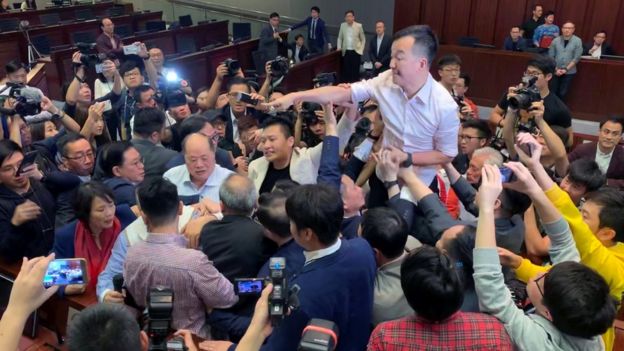
Tensions boiled over on Saturday, with politicians swearing and jumping over tables amid a crowd of reporters as they fought to control the microphone.
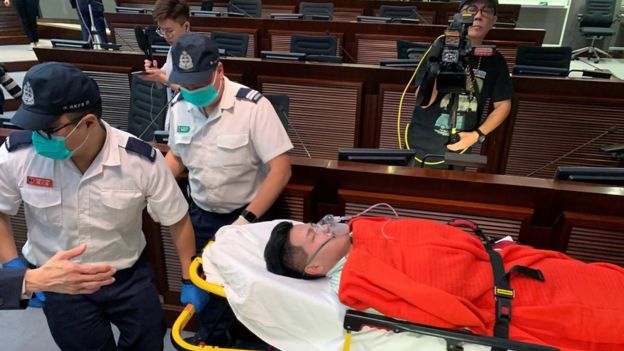
Image copyright REUTERSImage caption Opponents and supporters of the bill clashed in the legislatureImage copyright REUTERSImage caption Pro-democracy lawmaker Gary Fan was taken out on a stretcher
Pro-democracy legislator Gary Fan collapsed and was carried out on a stretcher, while one pro-Beijing legislator was later seen with his arm in a sling.
Why change the extradition laws?
Under a policy known as “One Country, Two Systems”, Hong Kong has a separate legal system to mainland China.
Beijing regained control over the former British colony in 1997 on the condition it would allow the territory “a high degree of autonomy, except in foreign and defence affairs” for 50 years.
But Hong Kong’s pro-Beijing leader Carrie Lam earlier this year announced plans to change the law so suspects could be extradited to Taiwan, Macau or mainland China on a case-by-case basis.
Image copyright REUTERSImage caption Some critics say Carrie Lam has “betrayed” Hong Kong over the law change
Ms Lam has cited the case of a 19-year-old Hong Kong man who allegedly murdered his pregnant girlfriend while on holiday in Taiwan before fleeing home.
While Taiwan has sought his extradition, Hong Kong officials say they cannot help as they do not have an extradition agreement with Taiwan.
Even the normally conservative business community has objected. The International Chamber of Commerce in Hong Kong said the bill has “gross inadequacies” which could mean people risk “losing freedom, property and even their life”.
And Chris Patten, the last British governor of Hong Kong, told the government-funded broadcaster RTHK last month the proposal was “an assault on Hong Kong’s values, stability and security”.
BEIJING, May 5 (Xinhua) — The Chinese mainland’s Taiwan affairs chief on Sunday called on youths on both sides of the Taiwan Strait to jointly shoulder the historic mission of national rejuvenation and contribute to cross-Strait integrated development.
Liu Jieyi, head of the Taiwan Work Office of the Communist Party of China Central Committee and the Taiwan Affairs Office of the State Council, made the remarks at the opening ceremony of a summit on cross-Strait exchange and cooperation among the youths.
Young people on the two sides of the Strait should value this great time, be responsible and do their share in safeguarding and building the common home of compatriots on the two sides of the Strait, Liu said.
“Attempts by the ‘Taiwan independence’ forces to undermine cross-Strait peace and obstruct national development will never be allowed,” he said.
He also pledged to provide better conditions for youths from Taiwan to carry out exchanges, study, work and start businesses on the mainland.
As Saturday marks the centenary of the May Fourth Movement, Liu called on the youths on both sides of the Strait to pass on the May Fourth spirit, which refers to patriotism, progress, democracy and science, with patriotism at the core.
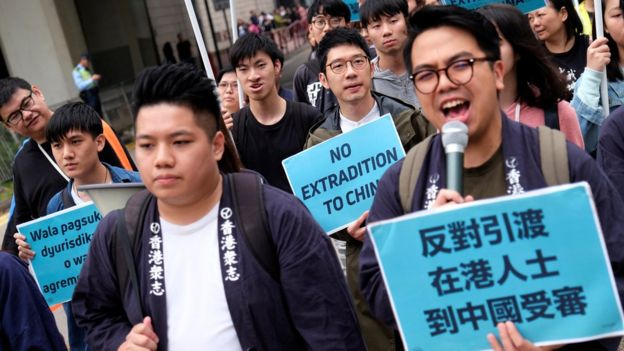
HONG KONG (Reuters) – Thousands of people marched on Hong Kong’s parliament on Sunday to demand the scrapping of proposed extradition rules that would allow people to be sent to mainland China for trial – a move which some fear puts the city’s core freedoms at risk.
Opponents of the proposal fear further erosion of rights and legal protections in the free-wheeling financial hub – freedoms which were guaranteed under the city’s handover from British colonial rule to Chinese sovereignty in 1997.
Early estimates suggested several thousand people had joined the march along Hong Kong Island from Causeway Bay to the council in the Admiralty business district.
Veteran Hong Kong activist and former legislator Leung Kwok-hung said the government’s move risked removing Hong Kongers’ “freedom from fear”.
“Hong Kong people and visitors passing by Hong Kong will lose their right not to be extradited into mainland China,” he said. “They would need to face an unjust legal system on the mainland.”
Some younger marchers said they were worried about travelling to China after the move, which comes just as the government encourages young people to deepen ties with the mainland and promotes Hong Kong’s links with southern China.
The peaceful marchers chanted demands for Hong Kong’s Executive Carrie Lam to step down, saying she had “betrayed” Hong Kong. Some sported yellow umbrellas – the symbol of the Occupy civil disobedience movement that paralysed parts of Hong Kong for 11 weeks in 2014.
The proposed changes have sparked an unusually broad chorus of concern from international business elites to lawyers and rights’ groups and even some pro-establishment figures.
Chris Patten, the last British governor of Hong Kong who handed the city back to Chinese rule in 1997, on Saturday described the move “as an assault on Hong Kong’s values, stability and security”, government-funded broadcaster RTHK reported.
Chief Executive Lam and other government officials are standing fast by their proposals, saying they are vital to plug long-standing loopholes.
Under the changes, the Hong Kong leader would have the right to order the extradition of wanted offenders to China, Macau and Taiwan as well as other countries not covered by Hong Kong’s existing extradition treaties.
As a safeguard such orders, to be issued case-by-case, could be challenged and appealed through the city’s vaunted legal system.
Government officials have said no-one at risk of the death penalty or torture or facing a political charge could be sent from Hong Kong. Under pressure from local business groups, they earlier exempted nine commercial crimes from the new provisions.
The proposals could be passed into law later in the year, with the city’s pro-democratic camp no longer holding enough seats to block the move.
The government has justified the swift introduction of the changes by saying they are needed so a young Hong Kong man suspected of murdering his girlfriend in Taiwan can be extradited to face charges there.
The government’s assurances are not enough for Lam Wing-kee, a former Hong Kong political bookseller who said in 2016 he was abducted by mainland agents in the city.
Lam left Hong Kong for Taiwan last week, saying he feared being sent back to the mainland under the new laws and his experienced showed he could have no trust in China’s legal system.
A group of 33 followers of Falun Gong, a religious sect banned in China, flew from Taiwan to Hong Kong on Saturday to join the march but were refused entry to Hong Kong, RTHK reported.
Sunday’s march comes amid renewed calls for deeper electoral reforms stalled five years ago after Occupy protests.
Four leaders of the movement were last week sentenced to jail terms ranging from eight to 16 months, part of a group of nine activists found guilty after a near month-long trial.
TAIPEI (Reuters) – Terry Gou, chairman of Apple supplier Foxconn, said on Wednesday he will contest Taiwan’s 2020 presidential election, shaking up the political landscape at a time of heightened tension between the self-ruled island and Beijing.
Gou, Taiwan’s richest person with a net worth of $7.6 billion according to Forbes, said he would join the already competitive race, and take part in the opposition, China-friendly Kuomintang (KMT) primaries.
His decision capped a flurry of news this week that began when Gou told Reuters on Monday he planned to step down from the world’s largest contract manufacturer to pave the way for younger talent to move up the company’s ranks.
He later announced he was considering a presidential bid and hinted he was close to a decision, and then told more than 100 people packed into a temple he would follow the instruction of a sea goddess who had told him to run for president.
RELATED COVERAGE
Foxconn’s Gou announces bid to run in Taiwan’s 2020 presidential race
The sea goddess Mazu is a popular deity in Taiwan and is believed to hold sway over one’s safety and fortune.
“Peace, stability, economy, future, are my core values,” Gou said later at the KMT’s headquarters in Taipei.
He urged the party to rediscover its spirit, the honor of its members and the lost support of the youth, and to establish a fair and transparent system for the primary race.
The KMT’s primary was already highly competitive, with contenders including a former KMT chairman, Eric Chu, and a former head of the island’s parliament, Wang Jin-pyng.
The KMT has not agreed how the race should be run or how candidates will be decided.
Gou’s bid, which requires KMT approval, comes at a delicate time for cross-strait relations and delivers a blow to the ruling pro-independence Democratic Progressive Party, which is struggling in opinion polls.
China-Taiwan relations have deteriorated since the island’s president, Tsai Ing-wen, of the independence-leaning DPP, swept to power in 2016.
China suspects Tsai is pushing for the island’s formal independence. That is a red line for China, which has never renounced the use of force to bring Taiwan under its control.
Tsai says she wants to maintain the status quo with China but will defend Taiwan’s security and democracy.
‘VERY PRO-CHINA’
A senior adviser to Tsai told Reuters he thought Gou’s bid could create problems, given his extensive business ties with China.
“This is problematic to Taiwan’s national security,” the adviser, Yao Chia-wen, said.
“He’s very pro-China and he represents the class of the wealthy people. Will that gain support from Taiwanese?” Yao said, adding he believed Gou would face a tough battle in the KMT primary.
Tension between Taipei and Beijing escalated again on Monday, as Chinese bombers and warships conducted drills around the island, prompting Taiwan to scramble jets and ships to monitor the Chinese forces.
A senior U.S. official denounced Beijing’s military maneuvers as “coercion” and a threat to stability in the region.
Gou has questioned Taiwan’s ties with the United States and said this week the island should stop buying U.S. weapons. He said peace was the best the defense.
William Stanton, professor at National Taiwan University and former head of the de facto U.S. embassy in Taipei, said he would have concerns if Gou were to become president.
“I’d be concerned about how he would behave. He did not have a positive attitude toward the U.S.,” Stanton said.
The KMT, which once ruled China before fleeing to Taiwan at the end of a civil war with the Communists in 1949, said in February it could sign a peace treaty with Beijing if it won the presidential election.
Zhang Baohui, a regional security analyst at Hong Kong’s Lingnan University, said Gou’s run could mark the start of the most unusual election in Taiwan history.
This is something entirely fresh for Taiwan politics – here is a candidate who sees everything through the pragmatic angle of a businessman rather than raw politics or ideology,” Zhang told Reuters.
“He has no baggage and that will be a fascinating scenario.”
Gou’s news comes as Tsai is grappling with a series of unpopular domestic reform initiatives, from a pension scheme to labor law, which have come under intense voter scrutiny.
The KMT said this week Gou had been a party member for more than 50 years and had given it an interest-free loan of T$45 million ($1.5 million) in 2016 under the name of his mother, which had signaled his loyalty to the party.
Foxconn said on Tuesday Gou would remain chairman, though he planned to withdraw from daily operations.
It was not immediately clear when he planned to pull back or if his presidential bid would require him to step down from Foxconn. There were no regulations related to a company executive running for the presidency, the island’s stock exchange said.
Foxconn’s shares closed up 2.1 percent at T$91.80 ahead of Gou’s formal declaration, the highest in six months. His Hong Kong-listed FIH Mobile closed up 28 percent, tracking the strength in parent Foxconn.
Doctors say drink contained anti-bacteria compound used by catering industry
Woman took ‘one sip and found it tasted bad’
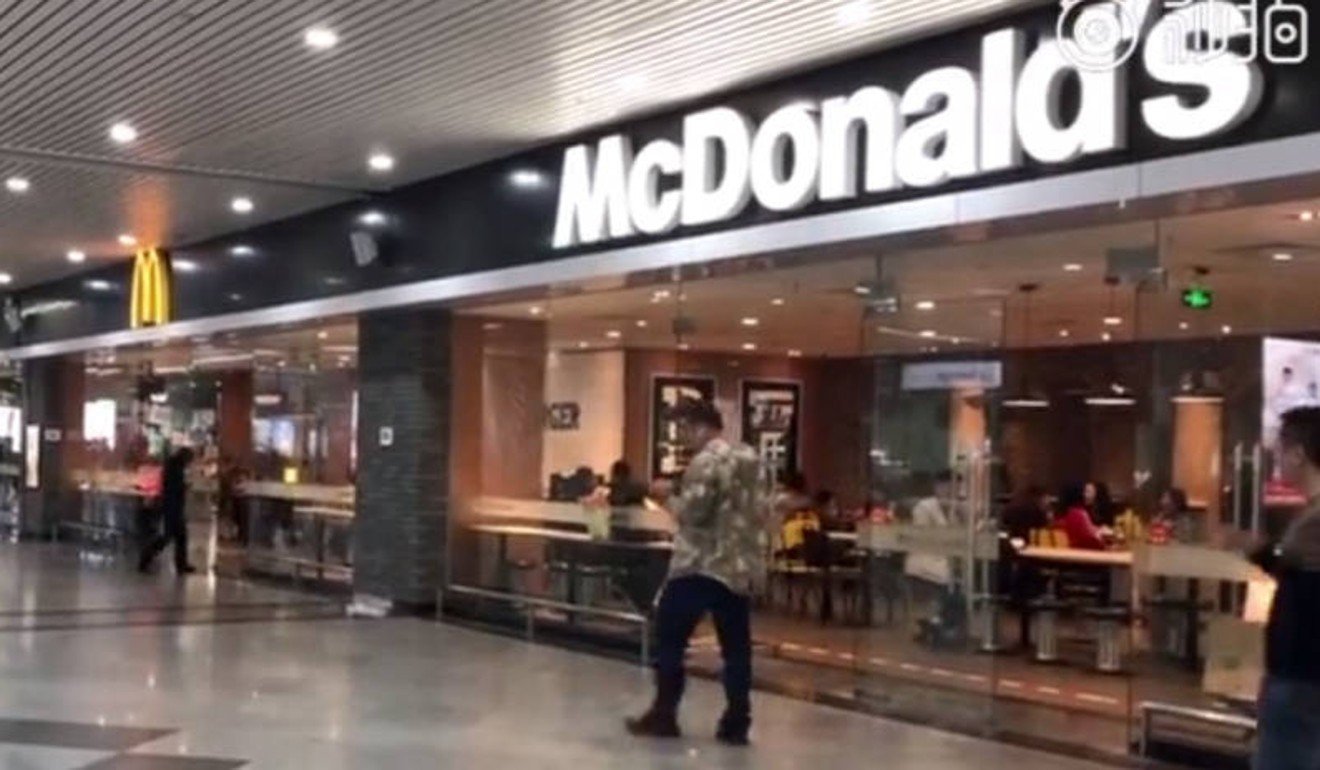
Fast food chain McDonald’s apologised to a customer who was served milk tea contaminated with disinfectant at one of its stores in eastern China. Photo: Weibo
Fast food chain McDonald’s apologised to a customer who was served milk tea contaminated with disinfectant in one of its stores in eastern China, damaging her digestive tract.
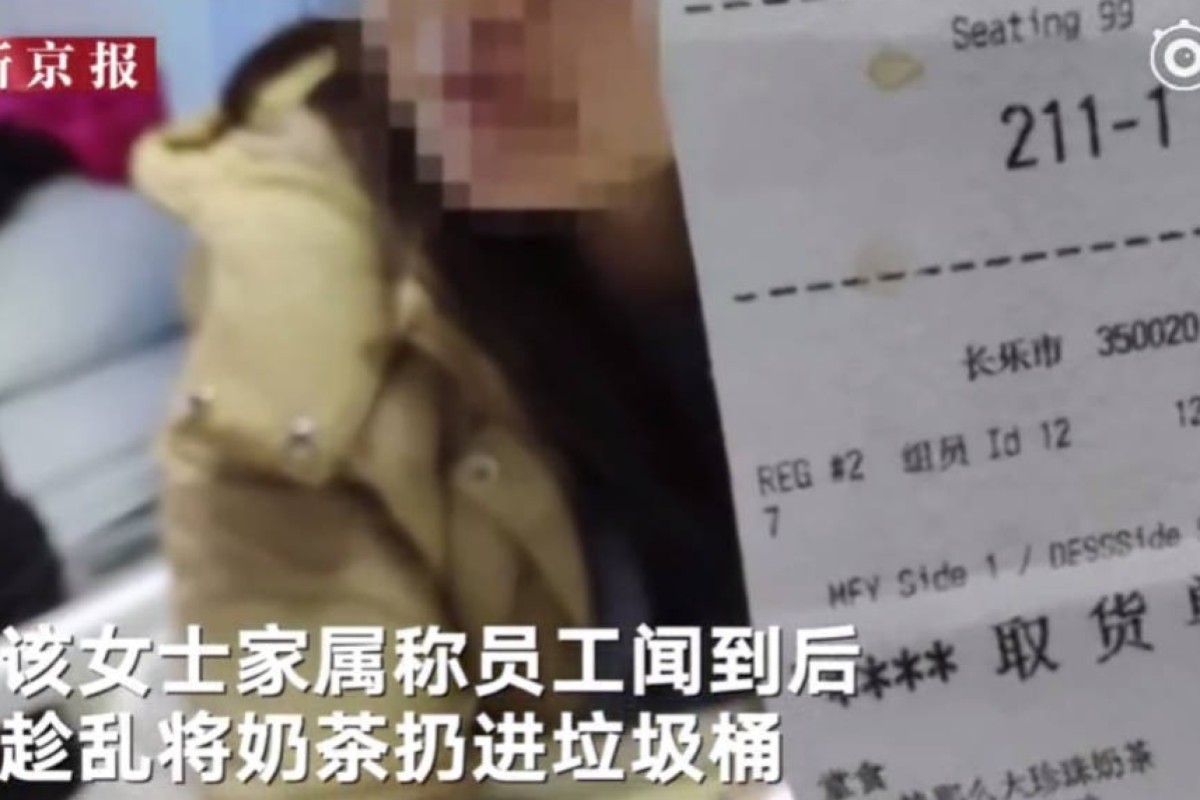
The restaurant said on Monday that it had reached a settlement with the customer, a woman surnamed Huang, after she suffered vomiting, a sore throat, a stomach ache and was taken to hospital on Friday for treatment.
Huang – who was still in hospital – suffered the symptoms shortly after taking a sip of the drink in a restaurant at Changle Airport in Fuzhou, the capital of Fujian province, the Strait Metropolis Daily reported.
“She just had one sip and found it tasted bad. But she already swallowed some of it,” Huang’s husband, surnamed Tang, told the newspaper.
McDonald’s apologises after advertisement showing Taiwan as a country draws criticism
When the lid was removed from the cup there was a strong smell of disinfectant, Tang said.
“I asked staff workers about the drink, but they just took it and smelled it, without giving any explanation. They threw the drink into the rubbish when we were not looking, but we took it back,” Tang said.
Doctors said the woman’s symptoms were caused by sodium dichloroisocyanurate, a chlorine compound widely used to kill bacteria in water by the catering industry and by the leisure sector in swimming pools.
On its Weibo feed, McDonald’s described the incident as unintentional and said staff would be given more training.
“McDonald’s has paid great attention to the incident and is deeply sorry for the error made by a staff member of our restaurant,” it said.
McDonald’s said that it would improve staff training after the customer was given tea tainted with disinfectant. Photo: Weibo
Image copyrightREUTERSImage captionHong Kong is part of China but has its own judicial system
The Hong Kong government has proposed changes to extradition laws that could allow transferring suspects to mainland China for trial. The move has further fuelled fears of erosion of the city’s judicial independence amid Beijing’s increasing influence.
The Hong Kong government will also consider extradition requests from Taiwan and Macau after the new changes.
Officials say the change is needed so that a murder suspect can be extradited to Taiwan for trial, and that mainland China and Macau must be included in the change to close a “systematic loophole”.
Hong Kong’s leader Carrie Lam has pushed for the amendments to be passed before July.
What are the changes?
The changes will allow for extradition requests from authorities in mainland China, Taiwan and Macau for suspects accused of criminal wrongdoings, such as murder and rape.
The requests will then be decided on a case-by-case basis.
Image copyrightREUTERSImage captionOver 100,000 protesters took to Hong Kong streets to rally against the government’s proposal.
Several commercial offences such as tax evasion have been removed from the list of extraditable offences amid concerns from the business community.
Hong Kong officials have said Hong Kong courts will have the final say whether to grant such extradition requests, and suspects accused of political and religious crimes will not be extradited.
Why is this controversial?
There has been a lot of public opposition, and critics say people would be subject to arbitrary detention, unfair trial and torture under China’s judicial system.
“These amendments would heighten the risk for human rights activists and others critical of China being extradited to the mainland for trial on fabricated charges,” Sophie Richardson of Human Rights Watch said in a statement.
Lam Wing Kee, a Hong Kong bookseller said he was abducted and detained in China in 2015 for selling books critical of Chinese leaders and charged with “operating a bookstore illegally”.
During a recent protest against the government proposal, Mr Lam said he would consider leaving the territory before the proposal was passed.
“If I don’t go, I will be extradited,” he said. “I don’t trust the government to guarantee my safety, or the safety of any Hong Kong resident.”
Though some pro-Beijing politicians eager to defend China, dispute the criticism of its judicial system.
Image copyrightEPAImage captionHong Kong and China – one country, two systems
The changes have also attracted opposition from the Hong Kong business community over concerns they may not receive adequate protection under Chinese law.
The proposal has already sparked a legal challenge from Hong Kong tycoon Joseph Lau, who was convicted in absentia in a corruption case in Macau in 2014.
Macau’s government has not been able to have Mr Lau extradited because of a lack of extradition agreement between Hong Kong and Macau, but that will become possible if Hong Kong’s legislature decides to amend the extradition laws.
His lawyers argue in a 44-page submission to Hong Kong’s courts that the Macau trial was marred by “serious procedural irregularities that rendered the trial incompatible with internationally mandated standards of fairness”.
Every citizen can request a judicial review like Mr Lau has done, but it’s the High Court that decides whether this will be granted. Most observers say there is little chance Mr Lau’s request will be successful.
Why the change now?
The latest proposal has come after a 19-year-old Hong Kong man allegedly murdered his 20-year-old pregnant girlfriend, while holidaying in Taiwan together in February last year. The man fled Taiwan and returned to Hong Kong last year.
Taiwanese officials have sought help from Hong Kong authorities to extradite the man, but Hong Kong officials say they cannot comply because of a lack of extradition agreement with Taiwan.
Image copyrightGETTY IMAGESImage captionUnder Xi Jinping, Beijing is seeking increasing control over Hong Kong
“Are we happy to see a suspect that has committed a serious offence staying in Hong Kong and we’re unable to deliver justice over the case?” Mrs Lam said on 1 April while responding to media questions.
She added that mainland China and Macau were included in the proposed change to address a “loophole” in current laws.
Isn’t Hong Kong part of China anyway?
A former British colony, Hong Kong is semi-autonomous under the principle of “one country, two systems” after it returned to Chinese rule in 1997.
The city has its own laws and its residents enjoy civil liberties unavailable to their mainland counterparts.
Hong Kong has entered into extradition agreements with 20 countries, including the UK and the US, but no such agreements have been reached with mainland China despite ongoing negotiations in the past two decades.
Critics have attributed such failures to poor legal protection for defendants under Chinese law.
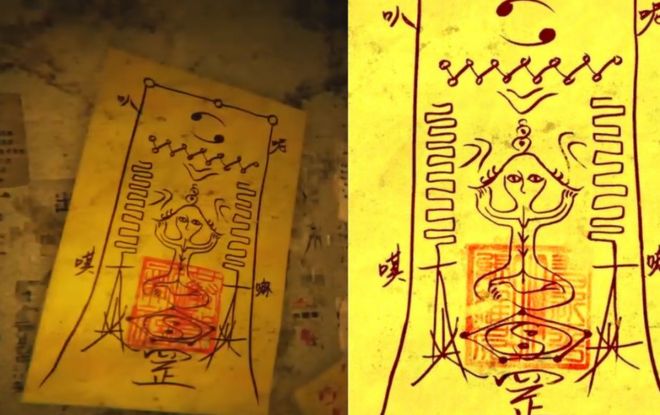
Image copyrightRED CANDLE GAMES/DEVOTIONImage captionWhen players interact with the poster (L), the poster (R) appears – with the words “Winnie the Pooh” and “Xi Jinping”
A Taiwanese games company has had its latest release pulled from mainland China, after players noticed subtle references mocking Chinese President Xi Jinping, including comparing him to Winnie the Pooh.
Red Candle Games released Devotion, a first-person horror game set in 1980s Taiwan, on games platform Steam on 19 February.
The game quickly went viral after players spotted so-called “easter eggs” and publicised them. However online discussion has since been censored.
An “easter egg” is a hidden message or joke in a computer game, normally only picked up by some players paying close attention.
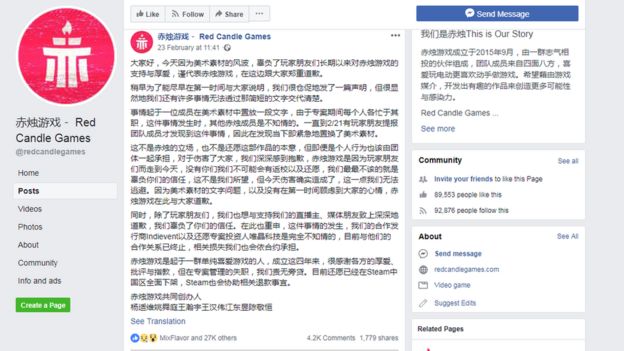
Red Candle Games has apologised, saying it will refund offended users.
Taiwan is an island that is for all practical purposes independent, but China sees it as a rebel region and insists that other countries should not have diplomatic relations with it.
Taiwan’s current president has sparred with Beijing over the island’s political future. In January, Xi Jinping said Taiwan “must and will be” reunited with China.
Hidden messages
One of the easter eggs in Devotion is a poster containing the words “Xi Jinping” next to “Winnie the Pooh”, in an ancient style of writing. Winnie the Pooh has been censored on Chinese search engines and social media since 2017, after bloggers began comparing Mr Xi to the children’s story book and film character.
Gamers have also spotted an old newspaper in Devotion that refers to an individual who has received a prison sentence, nicknamed “baozi” or “steamed bun”.
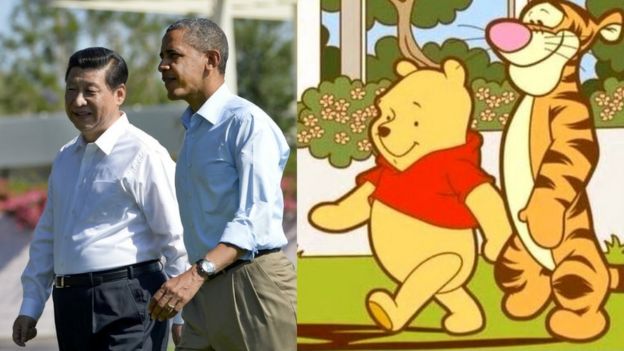
Image copyrightAFP/WEIBOImage captionThis meme showing Xi Jinping and former US President Barack Obama began circulating in 2013
“Steamed bun” is another sensitive term in China, as social media users have used it to refer to the president and evade government censors.
It said that it was aware some players may have been offended by the images, and said that it was in touch with Steam to ensure that such players could obtain a full refund.
“We sincerely hope that this ends with Red Candle, and please do not take it out on all of our innocent partners.”
Taiwanese Vice Premier Chen Chi-mai has praised the game, saying: “Only in countries with democracy and freedom can creation be free from restrictions.”
Image copyrightFACEBOOKImage captionRed Candle Games apologised and confirmed the game had been removed from Steam China
Chinese online censors, meanwhile, are trying to scrub references to the game and its hidden messages.
Searches for both “Red Candle Games” and “Devotion” in Chinese on Weibo are showing no results.
But on Monday, a search of the hashtag #Devotion showed only four posts, none of which refer to the game.
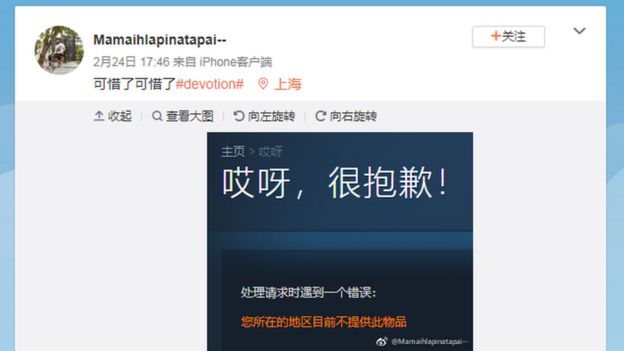
Posts that mention the game’s title in English, which the censors are often lax in censoring, show that China-based users are receiving messages on Steam saying that the game is “no longer available” to play in their country.
Meanwhile Red Candle’s account on China’s Twitter-like Sina Weibo service has been suspended, preventing the company from publicising its game in the mainland.
Image copyrightSINA WEIBOImage captionWeibo users shared posts saying they were no longer able to play the game
In Taiwan, where social media is not government-controlled, thousands of social media users are joking about the easter eggs.
Some on Facebook are posting pictures and gifs of Winnie the Pooh, and others are showing printouts of the offending poster.
Gaming in China
The episode has raised questions as to whether Steam will be the latest overseas online platform to be blocked in mainland China.
Technically, Steam has not gained official approval to operate in the country, but it remains accessible. Some 30m people are estimated to use it in China.
The platform allows China-based users to download and play games that have not received official authorisation.
Over the last decade, the government has banned games if their content is considered to be violent, or anti-Beijing. However many recent releases have never made it to China anyway because of a years-long backlog of games that regulators are yet to examine.
The top media regulator has also just announced that it will not be granting any new licences to gaming companies until the backlog is cleared.
The result is that wildly popular games such as PlayerUnknown’s Battlegrounds and Fortnite, both of which were released in 2017, remain neither banned, nor authorised in the country.
Different social systems should not be ‘a barrier to unification or an excuse for separation’, according to mainland’s cross-strait affairs office
After Quemoy began importing water from Fujian in August, preliminary research has been done to supply water to Matsu chain and electricity to both
News
Beijing says it can ease power and water shortages on Taiwan’s islands
27 Feb 2019
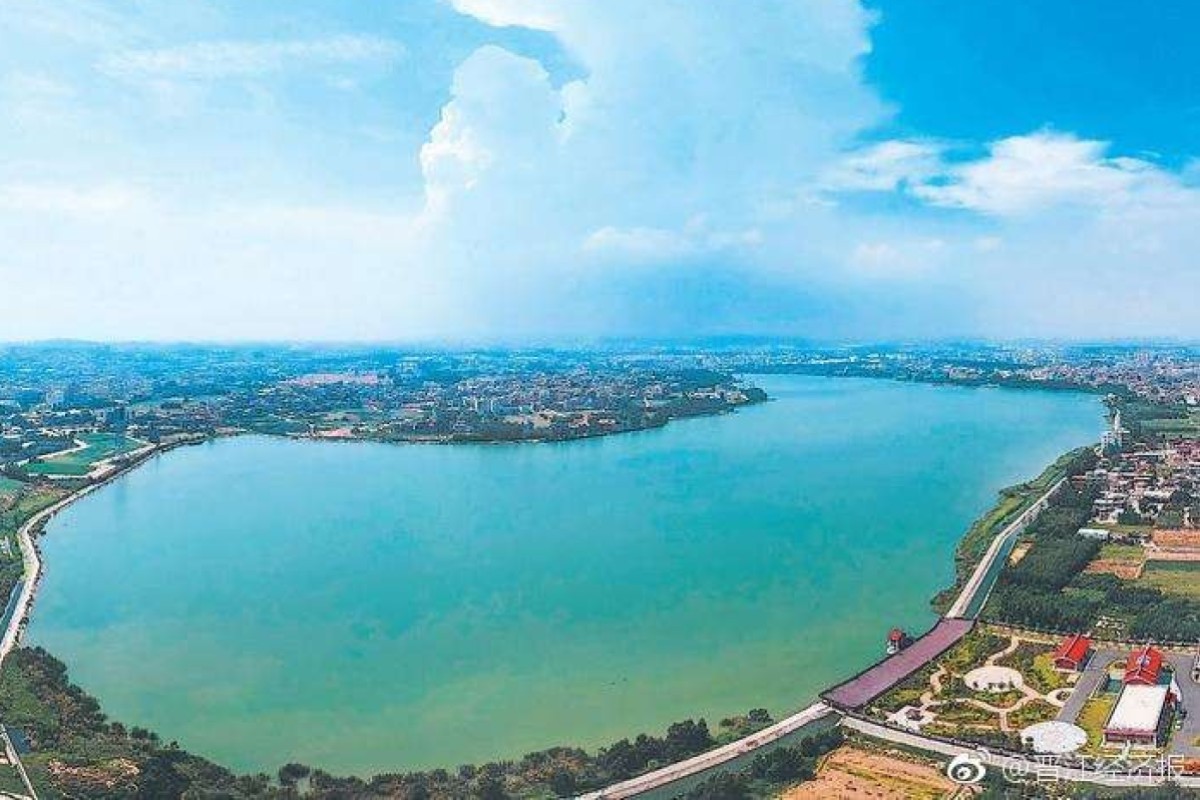
Taiwan-controlled Quemoy Island – which is just 2km from Xiamen – began importing water from the mainland in August. Photo: Weibo
Beijing says it is prepared to supply electricity and water to islands controlled by Taipei in the Taiwan Strait despite escalating tensions between the two sides.
An Fengshan, spokesman for the Taiwan Affairs Office in Beijing, also said their different social systems should not be “an excuse” to separate the country, and any deal between the mainland and Taipei should be struck in the interests of a “peaceful unification” agenda.
Speaking at a monthly press briefing on Wednesday, An said the mainland could supply power and water to meet the needs of residents on Quemoy, also known as Kinmen, and the Matsu island group. Controlled by Taipei, the islands are located off the mainland’s southeastern Fujian coast – Quemoy is just 2km from Xiamen – and have been on the front line of cross-strait tensions since 1949.
Taiwan’s cold war island begins to thaw
“The people of the Quemoy and Matsu islands have long hoped that the mainland could help to resolve the difficulties they face with power and water shortages, and they have made numerous appeals for gas and bridge connections [with the mainland],” An said.
“Our attitude is very clear – that in regards to these demands, the mainland will make every effort to provide opportunities and conditions to help them achieve bigger and better development.”
An said Fujian province authorities had completed preliminary research and planning to supply electricity to the Quemoy and Matsu islands, as well as water to the Matsu chain. Plans to supply gas and build bridges were expected in the future, he said, without elaborating.
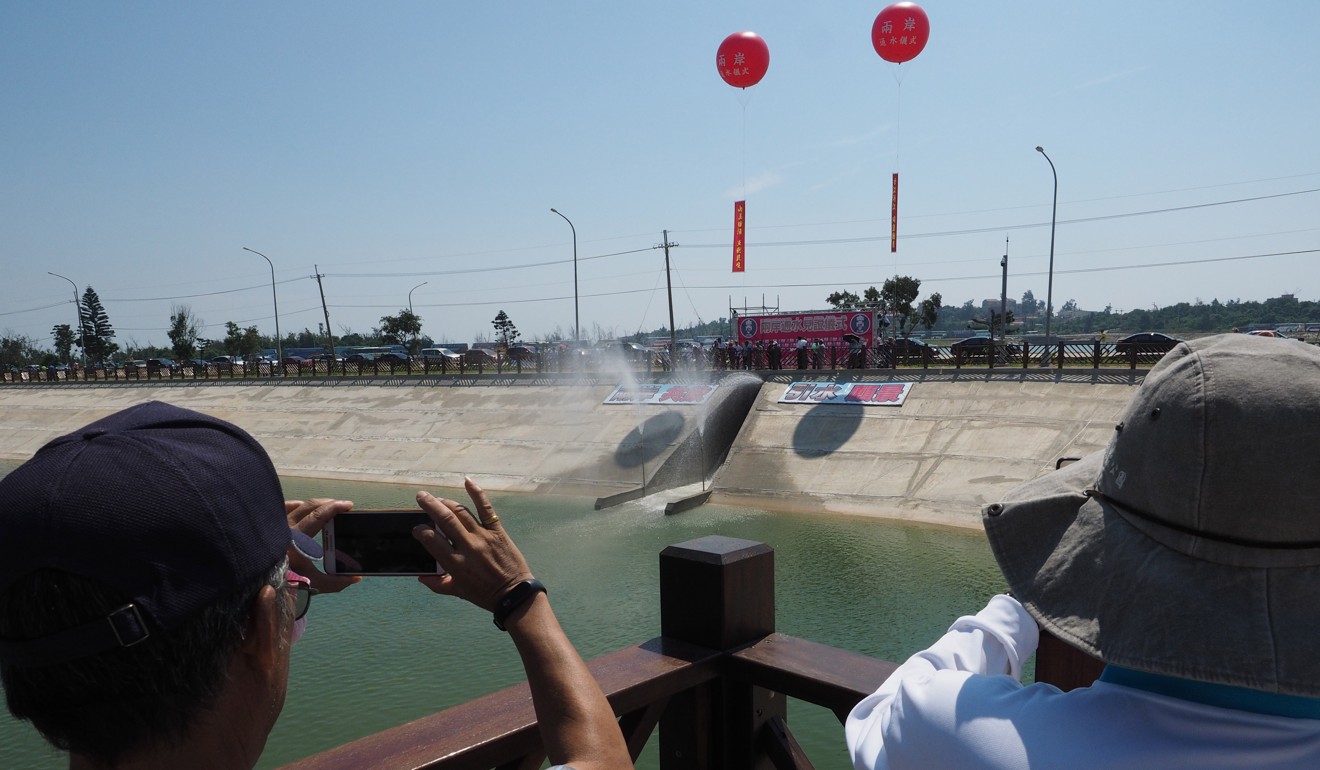
Water is released into the Tianbu Reservoir on Quemoy island in August when the mainland supply began. Photo: EPA-EFE
Quemoy began importing water from Fujian to ease its water shortage in August, three years after it signed a 30-year agreement with the mainland province to supply water via an undersea pipeline.
But Taiwan’s Mainland Affairs Council, which handles cross-strait ties, asked the Quemoy county government to downplay a ceremony marking the start of the supply
because of moves by Beijing to suppress Taipei.
Beijing sees Taiwan as a breakaway province subject to eventual reunification, by force if necessary. Relations across the strait soured after Tsai Ing-wen, of the independence-leaning Democratic Progressive Party, became president in 2016 and refused to accept the one-China principles.
Since then, mainland China has stepped up pressure on Taiwan, suspending official communications with the Tsai government, poaching its diplomatic allies and staging war games near the self-ruled island, which is edging closer to Washington.
In an interview with CNN last week, Tsai said she would seek re-election next year and there would be no peace deal with the mainland unless Beijing ruled out using force against Taiwan.
On Wednesday, An said the different social systems across the strait should not be a barrier to unification, which President Xi Jinping sees as part of his Chinese dream of national rejuvenation but has been rejected by Tsai.
“Peaceful unification and ‘one country, two systems’ are the basic policies for us to resolve the Taiwan issues, and the best way to realise the motherland’s unification,” An said.
He was referring to a speech by Xi in January calling for Beijing and Taipei to start talks on “one country, two systems” in Taiwan – first proposed by late paramount leader Deng Xiaoping in the 1980s – as the path to bring the island back into the China fold.
“The differences in the systems should not be a barrier to unification or an excuse for separation,” An said.
China protests against US ‘provocation’ after two American warships pass through Taiwan Straits.
Asked about Beijing-friendly Kuomintang chairman Wu Den-yih’s recent remarks that Taipei would sign a peace deal with the mainland if his party won the election in 2020, An said the two sides could explore a deal “as long as it benefits and safeguards the peace of the Taiwan Strait, increases the peaceful development of relations and pushes the peaceful unification process of the motherland”.
Military watchers can expect ‘something new’ at this year’s National Day parade in October, Professor Jin Canrong tells forum in Hong Kong
As tensions rise over Taiwan, Beijing is building a naval and missile force as powerful as any in the world, he says
Beijing’s military build-up just starting – a lot more to come, expert warns
24 Feb 2019
Submarine arms race seen heating up in Indo-Pacific amid China ‘threat’
16 Feb 2019
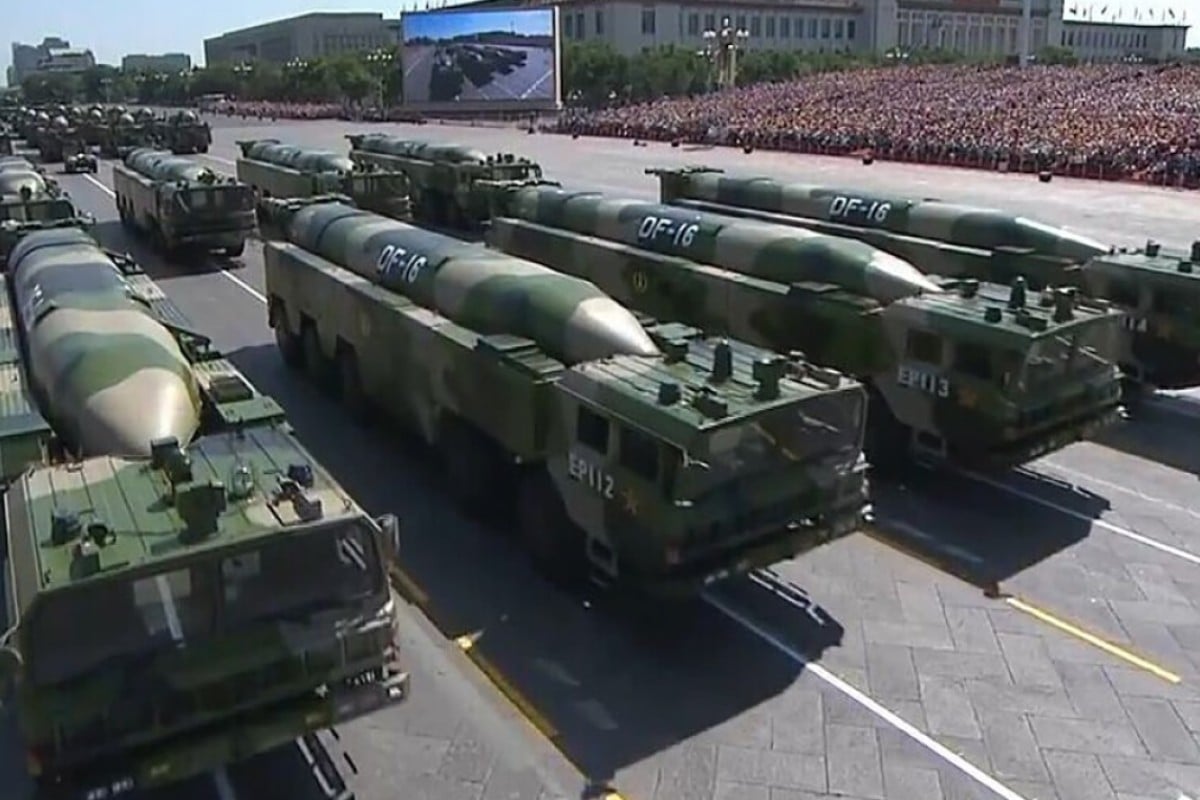
Military vehicles carrying DF-16 ballistic missiles take part in China’s National Day parade. Taiwan says Beijing has such missiles trained on the self-ruled island. Photo: Handout
Beijing will show the world “something new” when it rolls out its arsenal of short- to medium-range ballistic missiles at its National Day military parade in October, according to a Chinese expert on international relations.
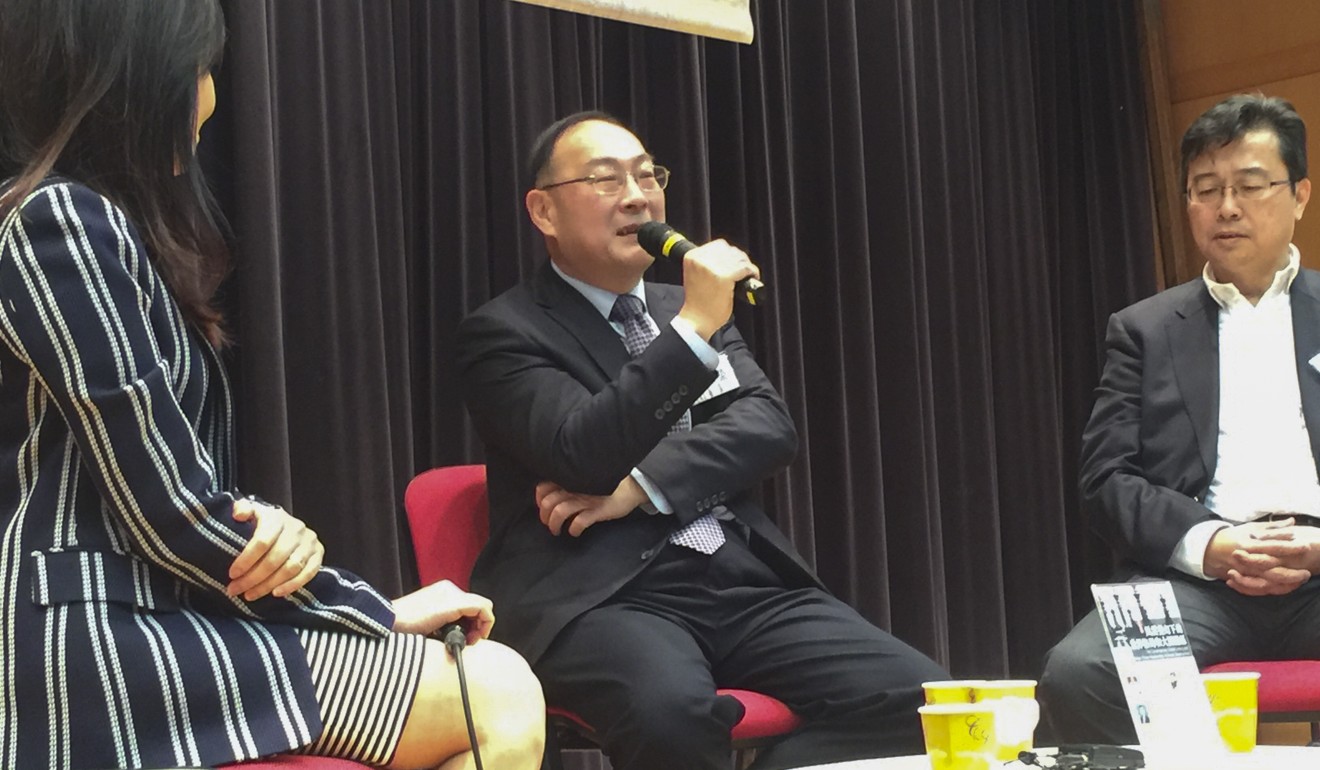
Speaking at a seminar at the University of Hong Kong on Saturday, Professor Jin Canrong, associate dean of the school of international studies at Renmin University in Beijing, said China had made great strides in expanding its military capability, but there was a lot more to come.
US commander pushes for more funding to counter China’s influence in Indo-Pacific
While he did not elaborate on what the “something new” might be, he said the country was gearing up for a possible conflict over Taiwan, the self-ruled island that Beijing regards as a wayward province awaiting reunification.
Over the next five or 10 years, Taiwan could provide the “biggest uncertainty” for Beijing, he said, especially if the United States decided to “ignite” the situation.
Known for being outspoken on sensitive issues, Jin said that while Beijing wanted a peaceful reunification, it was wary of “pro-independence factions [on the island] and right-wing American [politicians] creating trouble”.
By registering for these newsletters you agree to our T&C and Privacy Policy
In a speech on January 2 to mark the 40th anniversary of Beijing’s call to end military confrontation across the Taiwan Strait, Chinese President Xi Jinping said that “the political division across the strait … cannot be passed on from generation to generation”, apparently signalling his determination to bring it to an end.
Xi said China would not abandon the use of force in reunifying Taiwan, but stressed the military would target only external elements and those seeking independence for the island.
In 2017, Taipei said that it had detected the deployment of DF-16 ballistic missiles on the mainland that were aimed at Taiwan.
Jin said China was rapidly expanding its missile capabilities. The People’s Liberation Army had already stockpiled about 3,000 short- and medium-range missiles, he said, even though it had been using just 15 per cent of its production capacity.
“Just imagine if we were running at 100 per cent,” he said.
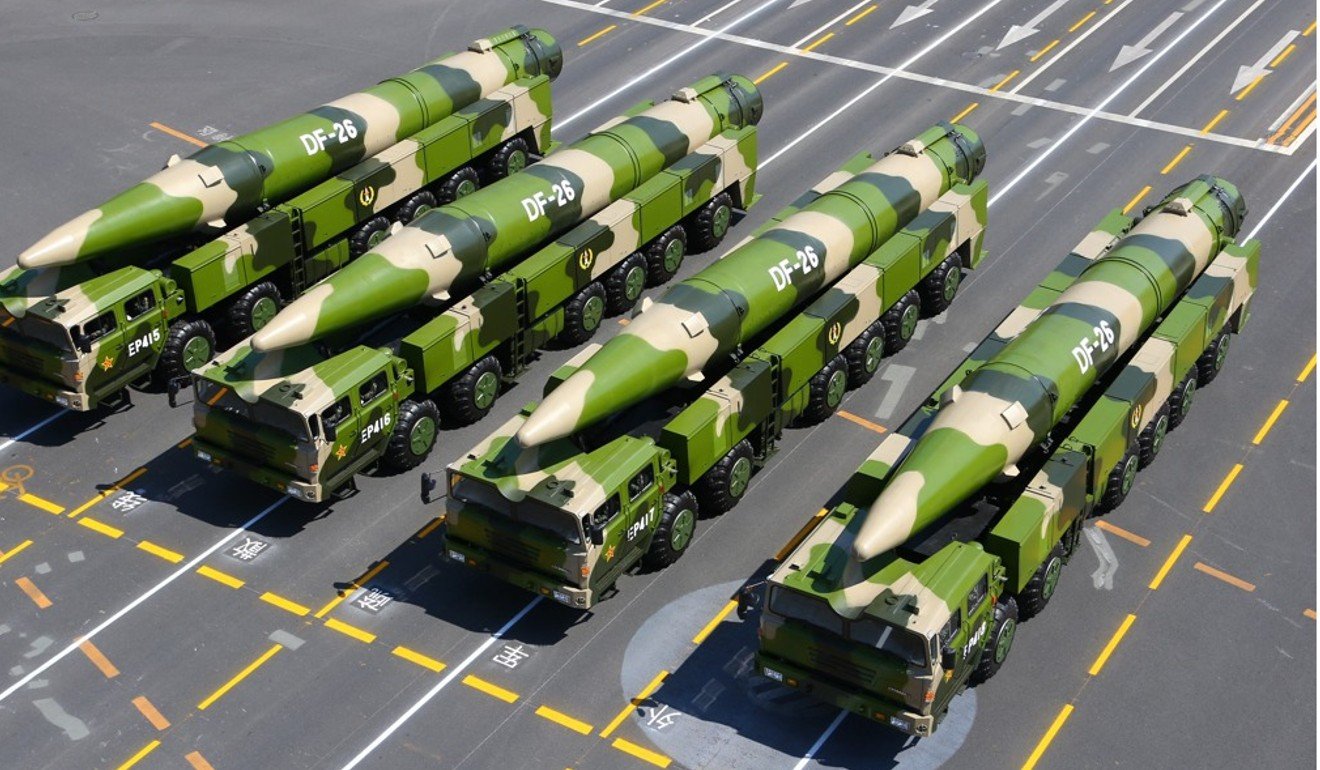
Beijing will show the world “something new” when it rolls out its ballistic missiles at its National Day military parade in October, an expert says. Photo: Xinhua
Share:
Under its plan for military modernisation China had achieved “great advancements in space, electronics and cyberwarfare”, the academic said, but its achievements to date were only the beginning.
As well as the expansion of its missile force, Beijing was investing heavily in its navy, he said.
Is China about to abandon its ‘no first use’ nuclear weapons policy?
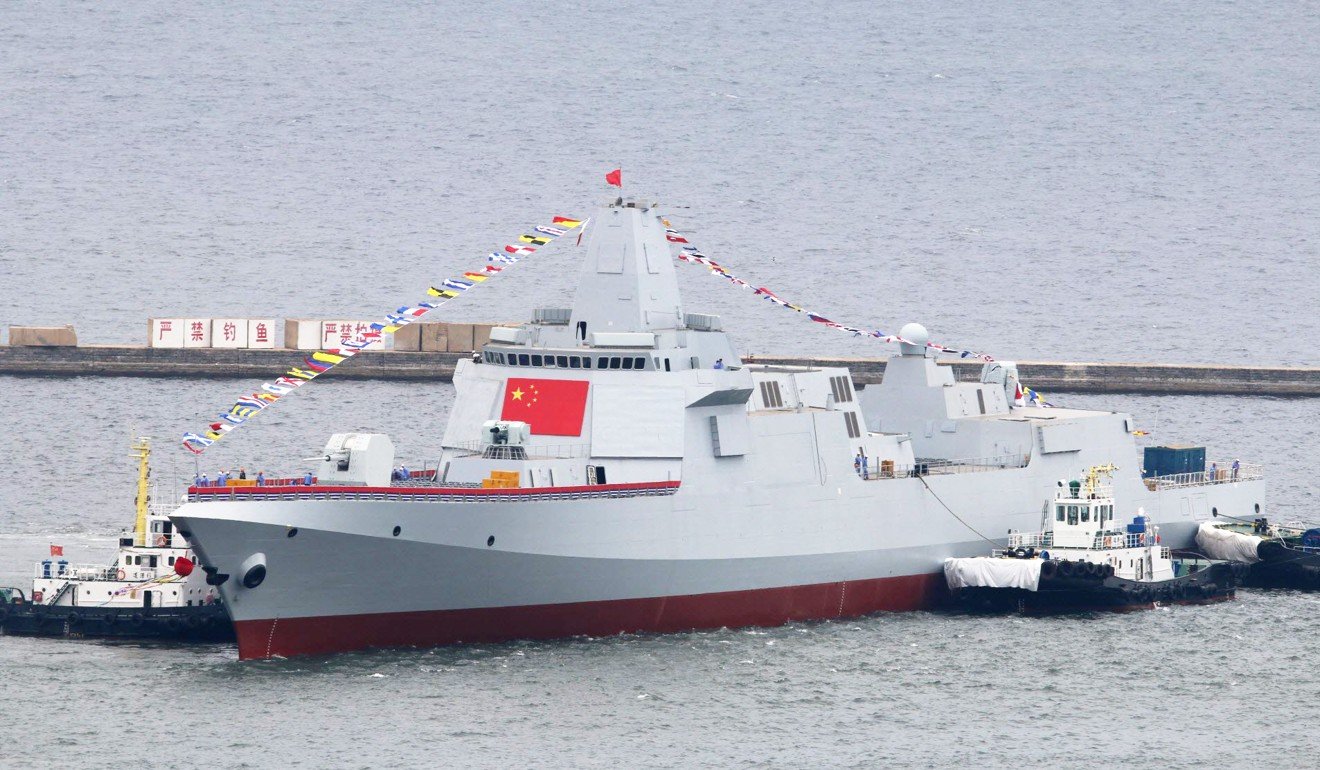
With the deployment of the new Type 055 guided-missile destroyer – which some Chinese military experts have said is as good as anything in the US Navy – the balance of power was shifting, he said.
“For the first time in 500 years, the East has combat equipment that is at least as good as the West’s.”
With the deployment of the new Type 055 guided-missile destroyer, the balance of power between China and the US is shifting, according to Jin Canrong. Photo: Handout
Share:
And as the navy continued to modernise and expand, the US might be forced to rethink its position in the region, he said.
“When we have dozens of destroyers and four or five [aircraft] carriers the US will not be able to meddle in Taiwan.”
China’s first aircraft carrier may become test bed for electromagnetic warplane launcher
Jin said that China would also soon have all the scientific, academic and research personnel it needed to achieve its military ambitions.
“China had nearly 30 million university students in 2018, which is twice as many as the US. More than half of them are studying science or engineering,” he said.
“Every year we produce about 4 million science and engineering graduates, while America produces just 440,000.”
Professor Jin Canrong speaks at a forum in Hong Kong. Photo: Handout
Share:
Beijing also had the money to support its plans, Jin said. Based on his own calculations, he said China allocated about 1.4 per cent of its gross domestic product to military spending, which was lower than “Germany’s 1.5 per cent”, and less than half the “3 per cent in Britain and France”.
“The tax paid by Chinese smokers is more than enough to cover [the country’s] military expenses,” Jin said.
According to figures from Nato, Britain spent 2.1 of its GDP on defence in 2017, France 1.8 per cent and Germany 1.2 per cent. Both the World Bank and the United Nations put China’s military spending in 2017 at 1.9 per cent of its GDP.






 CHINDIA ALERT: You'll be living in their world, very soon