Archive for ‘Portugal’

30/04/2020

It’s complicated: China-Europe relations hit by diversity, distrust and dogmatism during pandemic

  • European nations are divided over how best to deal with Beijing, which looms larger in their policy and public debates
  • Think tanks came together and reported on China’s much-touted medical aid and ‘mask diplomacy’ during Covid-19 crisis
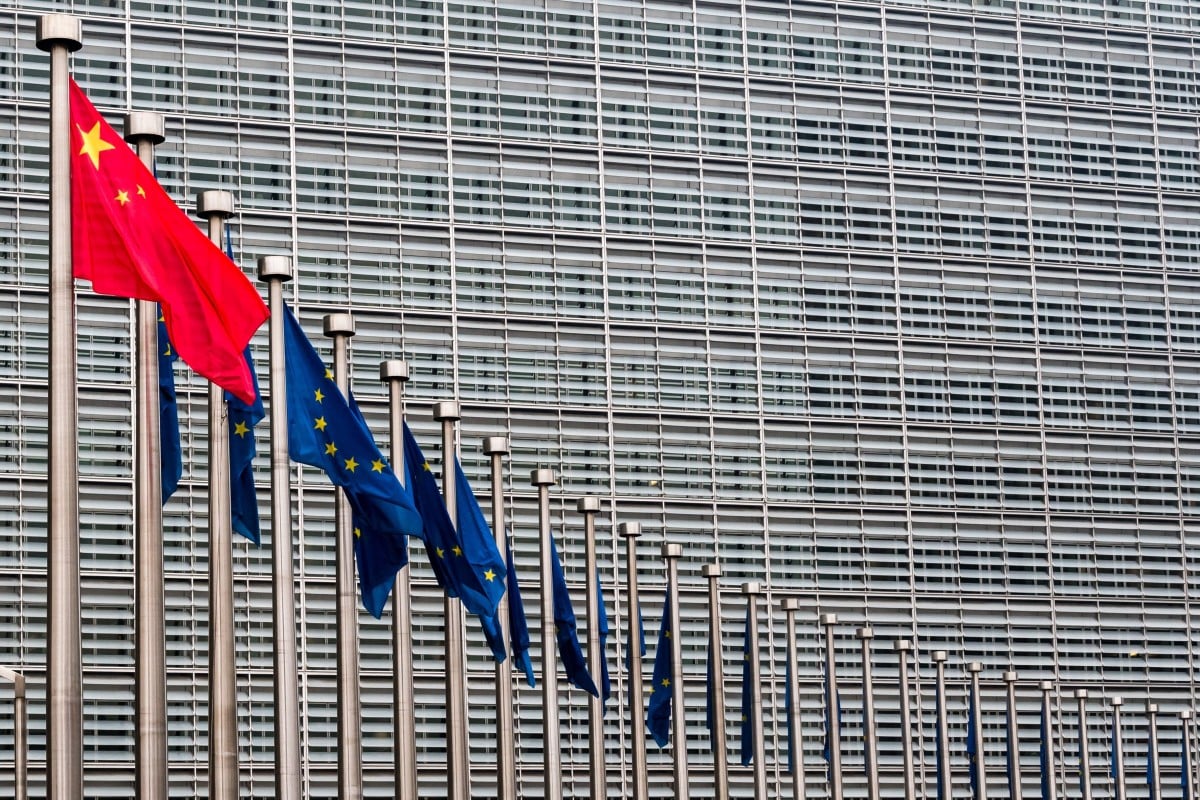
European nations are looking to be more cohesive in their approach towards relations with China. Photo: Bloomberg

As Beijing steps up its pressure campaign on Europe in the wake of the Covid-19 pandemic, their relations look set to become more diverse and contested amid growing distrust and wariness of China’s expanding influence, according to new research.

The study, based on analysis of China’s role in 19 European countries’ handling of the coronavirus crisis, showed that Europe remained largely divided over how to deal with Beijing, which has figured ever more prominently in policy and public debates in many parts of the continent.

A total of 28 experts from 21 think tanks across the continent, collectively known as the European Think-tank Network on China, were involved in the research.

It came on the heels of a diplomatic debacle in the past week that saw the European Union reportedly bowing to pressure by China. The EU reportedly toned down part of a report documenting Beijing’s disinformation efforts to deflect the blame and rewrite the global coronavirus narrative.

Although a spokesperson for the EU denied those allegations, the saga has “moreover revealed the pressures that China has placed on

European Union

officials during the crisis”, according to John Seaman, editor of the report and a research fellow at the French Institute of International Relations.

In a phone call on Wednesday, Chinese Premier Li Keqiang and European Commission President Ursula von der Leyen shrugged off concerns about their discord and vowed to boost the fight against the virus and boost economic recovery, according to Xinhua.

Germany ‘rejected China’s bid for positive spin’ on pandemic response

27 Apr 2020

According to Seaman, the Covid-19 crisis hit at a time when traditionally trade-driven China-EU relations had grown more complex and competitive after the European Commission said for the first time last year that Beijing was a systemic rival.

“Debates over the need to adopt more coherent strategies towards China have been emerging across Europe. In many ways, the current crisis has become a catalyst for a number of trends that have been shaping Europe-China relations in recent years, while in other ways it has turned the tables,” he said in the report.

“It has simultaneously brought Europe and China into closer cooperation, pushed them further apart, and seemingly underlined the fractures that exist within Europe on how to approach an increasingly influential China.”

A growing number of European countries, including Sweden and Britain, have joined the United States and Australia in calling for an international inquiry into China’s handling of the pandemic. Leaders from Germany and France have also pressed Beijing for greater transparency about the origin of the deadly virus.

The European think tanks’ report was also focused on China’s unusually aggressive coronavirus diplomacy, with Chinese embassies and ambassadors shifting the blame on to Western democracies and promoting Beijing’s messaging “with varying degrees of dogmatism, divisiveness and moderation” on Twitter and in traditional media.

“While China’s increasingly proactive public diplomacy is widespread, and there appears to be a relative degree of consistency in messaging, there is a diversity in method that ranges from low key (Latvia or Romania) to charm offensive (Poland, Portugal, Italy or Spain) to provocative or aggressive (Sweden, Germany or France),” the report said.

It examined China’s much-touted medical aid and “mask diplomacy” and found “a correlation between Chinese companies with commercial interests in the country and donations from these companies” in countries including Greece, Hungary, Italy, Portugal and Spain.
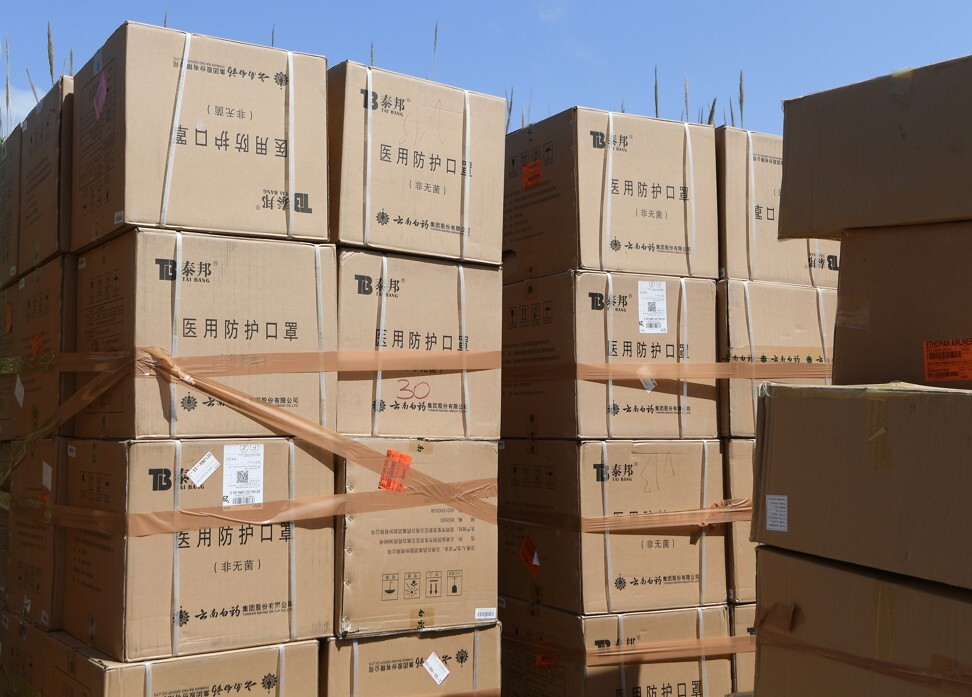
Boxes of medical supplies from China in Rome. Some European nations are growing wary about China’s diplomatic overreach and apparent willingness to alter the coronavirus narrative. Photo: Xinhua
Many countries have pushed back against China’s diplomatic overreach and its preferred narrative that has served to “[underline] the apparent successes of its autocratic governance model, ignoring its clear downfalls in managing the crisis initially, while sowing doubt on the effectiveness of liberal democracies”, according to Seaman.

While the European Union’s foreign policy chief Josep Borrell warned of Beijing’s geopolitical game to expand its influence through spinning and “politics of generosity”, countries such as Germany and Sweden have moved to tighten investment screening, 5G and industrial policies targeting Chinese firms.

Zhang Ming, China’s top envoy to the EU, last week dismissed the concerns about China’s alleged ploy to use the vulnerabilities of other countries to advance China’s geopolitical interests, such as with the country’s embattled tech giant Huawei and the ambitious Belt and Road Initiative.

“Disinformation is our common enemy and we need to make joint efforts to eradicate it,” Zhang said, claiming China had been a victim of unspecified disinformation campaigns.

The report also noted that China’s actions towards Europe in times of crisis looked set to amplify the fractures across the continent and prompt further debates about the need for a coherent EU strategy on China.

A poll of more than 12,000 people across the 28 EU member countries by German think tank Bertelsmann Stiftung in September last year showed 45 per cent of Europeans saw China as a competitor while only 9 per cent believed their countries shared the same political interests or values with China.

Another survey of 16 European countries released by the Pew Research Centre in December also showed the continent remained deeply divided over how to approach China.

While people in most of western Europe and some of Central and Eastern Europe, such as Slovak and Czech, saw China negatively, 51 per cent in Greece had a positive view of China and those in Russia, Ukraine, Poland, Bulgaria and Lithuania tended to see China more favourably.

Source: SCMP
03/03/2020

Coronavirus: China orders travellers quarantined amid outbreak

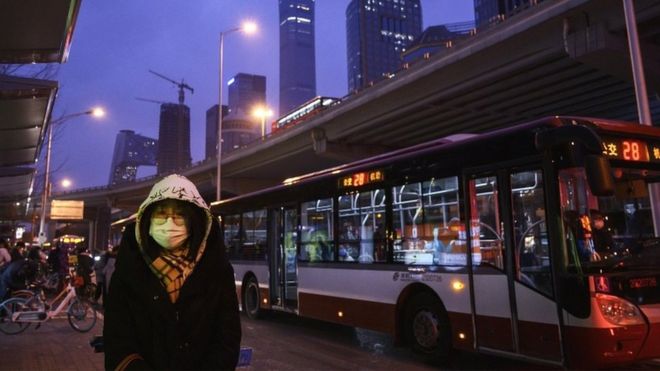
A Chinese office worker wears a protective mask as she waits to take a public bus after leaving work on 2 March 2020 in Beijing, ChinaImage copyright GETTY IMAGES
Image caption Authorities are also asking overseas Chinese to reconsider travel plans

Travellers from countries with severe coronavirus outbreaks who arrive in some parts of China will have to undergo a 14-day quarantine, state media say.

Travellers from the virus hotspots of South Korea, Japan, Iran and Italy arriving in the capital will have to be isolated, a Beijing official has said.

Shanghai and Guangdong announced similar restrictions earlier.

Authorities are worried the virus might be imported back into the country.

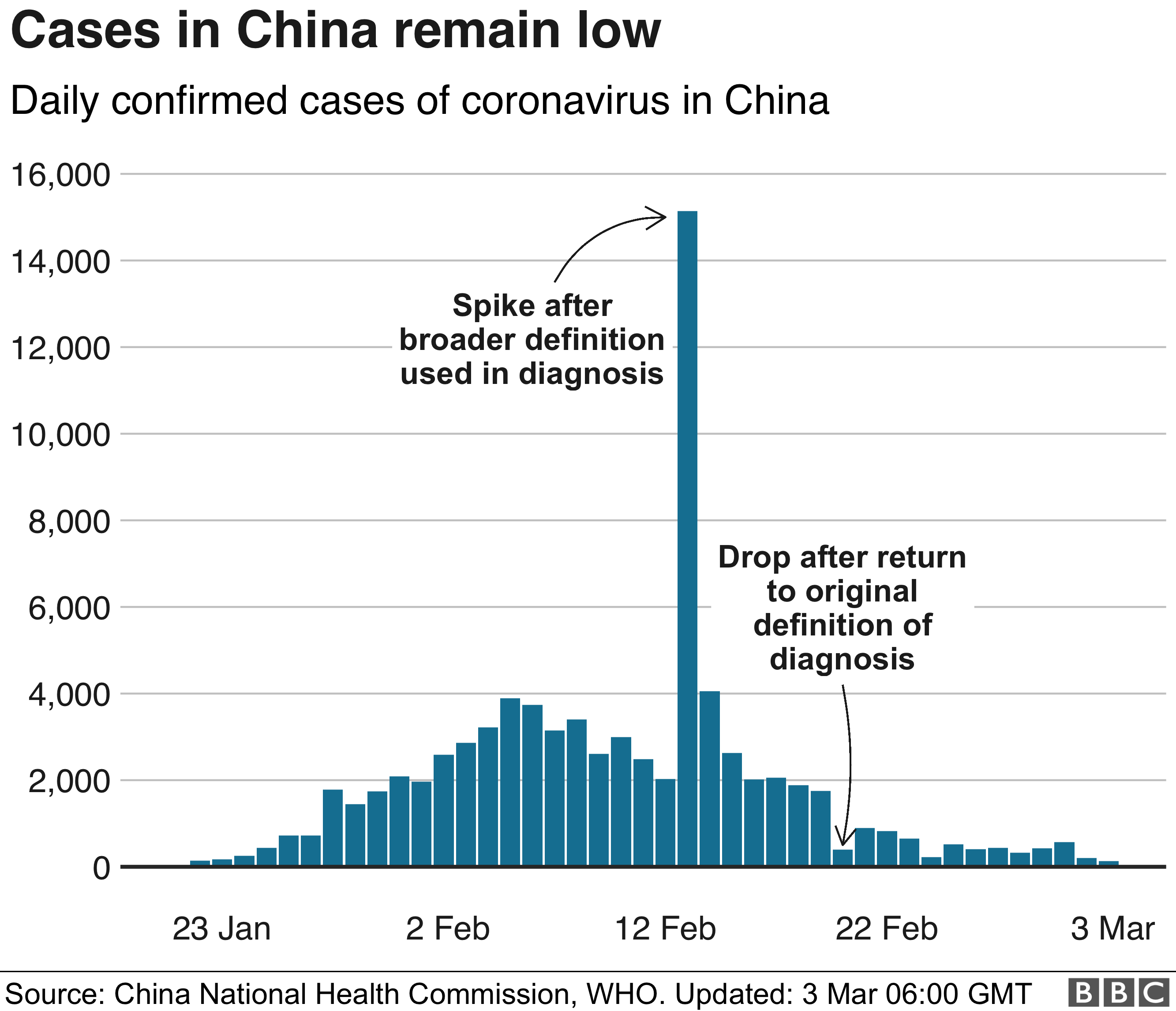
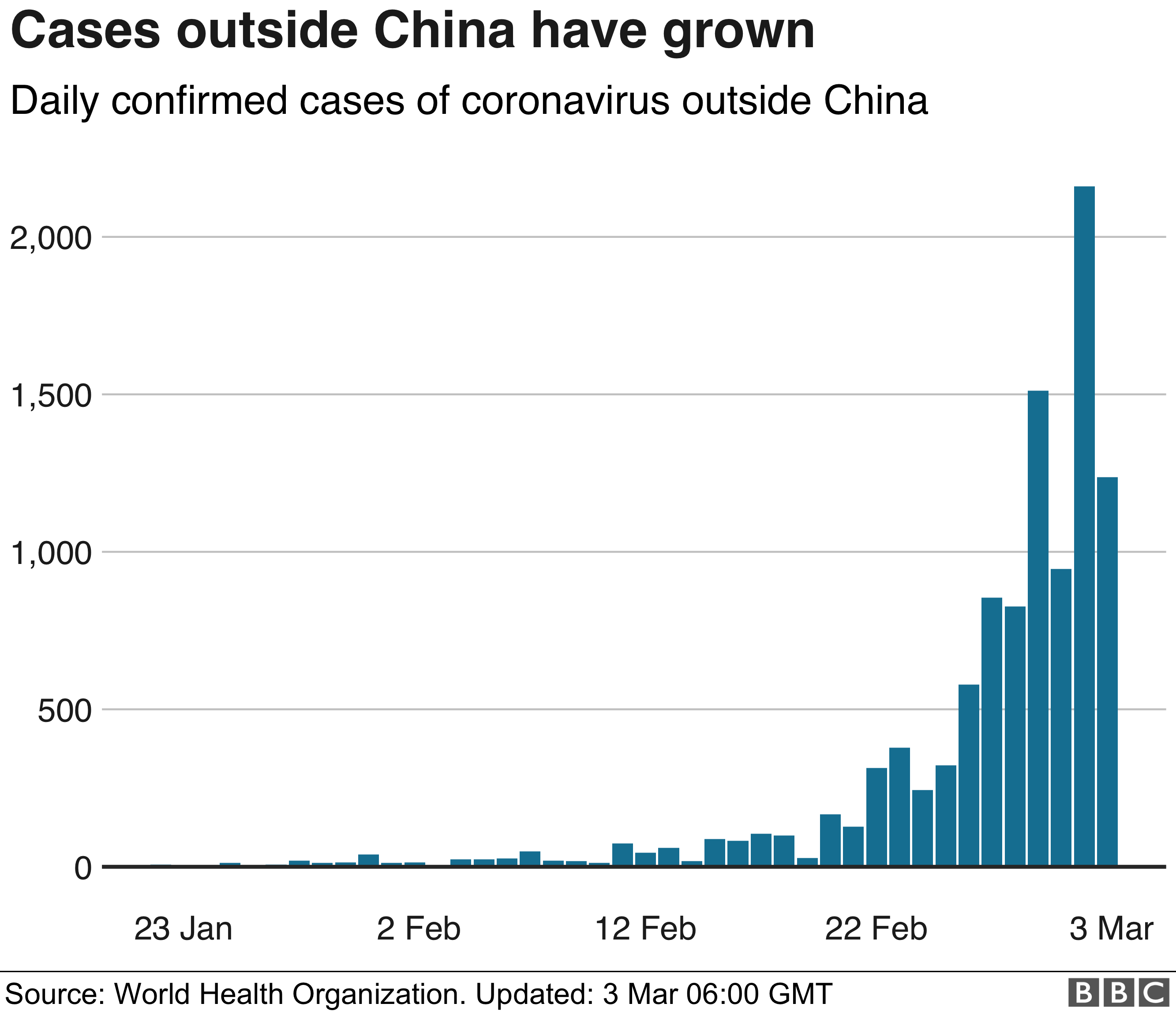
Although most virus deaths have been in China, Monday saw nine times more new infections outside China than in.

Presentational grey line

What do I need to know about the coronavirus?

Presentational grey line

Shanghai said it would require new arrivals from countries with “relatively serious virus conditions” to be isolated, without naming the countries.

Authorities are also asking overseas Chinese to reconsider travel plans.

“For the sake of your family’s health and safety, please strengthen your precautions, carefully decide on your travel plans and minimise mobility,” officials in one southern Chinese province said.

China reported 125 new virus cases on Tuesday – the lowest number of new daily infections in six weeks. There were also 31 more deaths – all in Hubei province, where the virus emerged.Presentational white space

Coronavirus chart 3 March 2020
Presentational white space

In other developments:

  • Finance ministers from the G7 countries have said they are “ready to take action”, including fiscal measures to aid the response to the virus and support the global economy
  • The Pope, who had cancelled a Lent retreat for the first time in his papacy because he was suffering from a cold, has tested negative for the virus, Italian media report
  • South Korean President Moon Jae-in has put the country into a “state of war” and ordered all government departments to shift to a 24-hour emergency system
  • Jailed British-Iranian woman Nazanin Zaghari-Ratcliffe is in good health, Iran’s judiciary has said. She was assessed after her husband said she was showing symptoms of Covid-19
  • Japan’s Olympic minister says the Tokyo 2020 Games could be postponed until later in the year. BBC Sport is keeping track of all events that are affected
  • In the UK, where there are 39 confirmed cases, the government has warned that up to a fifth of the workforce may be off sick during the peak of a coronavirus epidemic
Media caption Julie, who lives in Singapore, was diagnosed with coronavirus and then put into isolation

How are different countries affected?

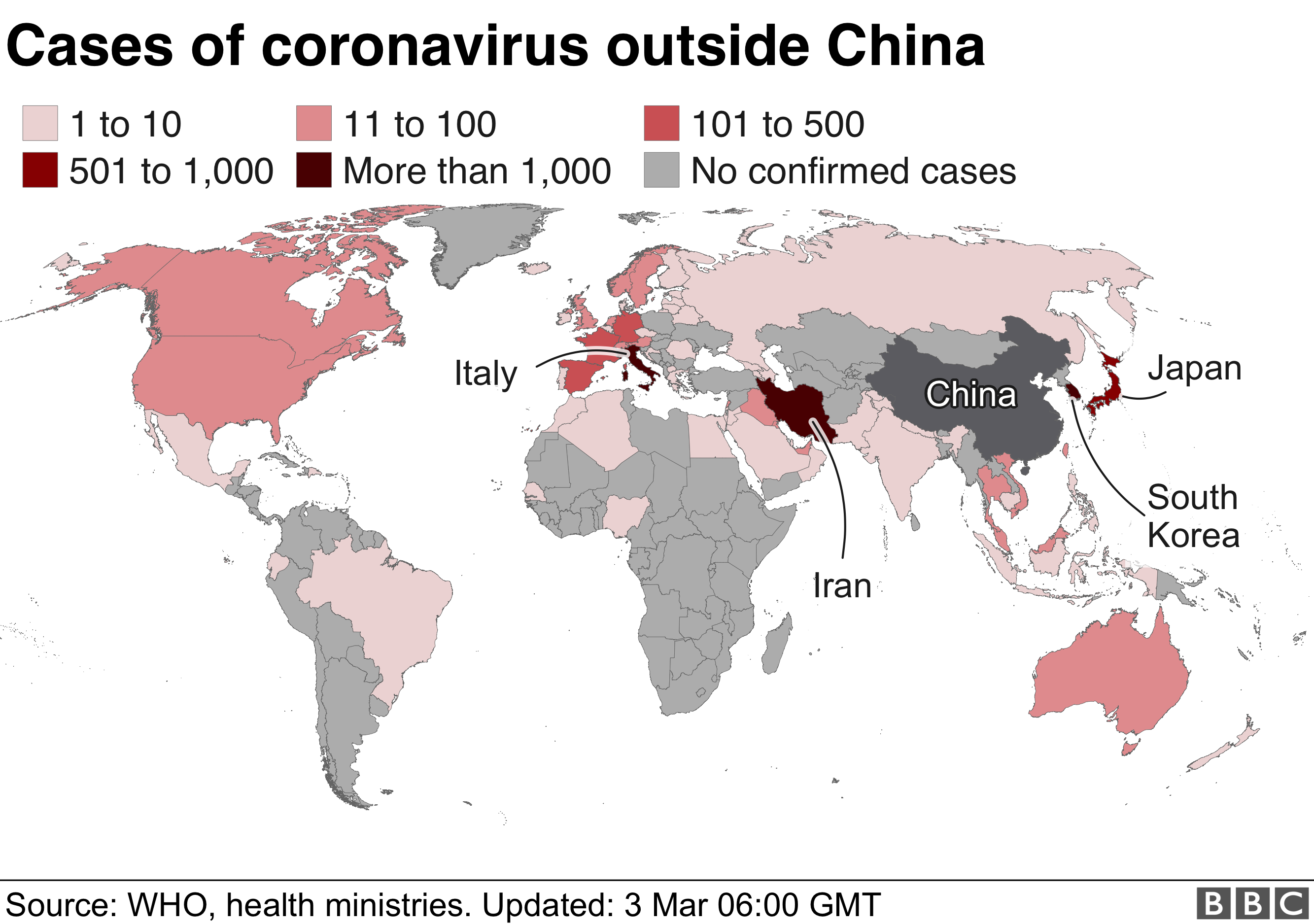
There are now almost 90,000 cases worldwide in about 70 countries, although the vast majority – just under 90% – remain in China, and most of those are in Hubei province where the virus originated late last year.

Of the nearly 8,800 cases outside China, 81% are in four countries – Iran, South Korea, Italy and Japan.

Coronavirus chart 3 March 2020

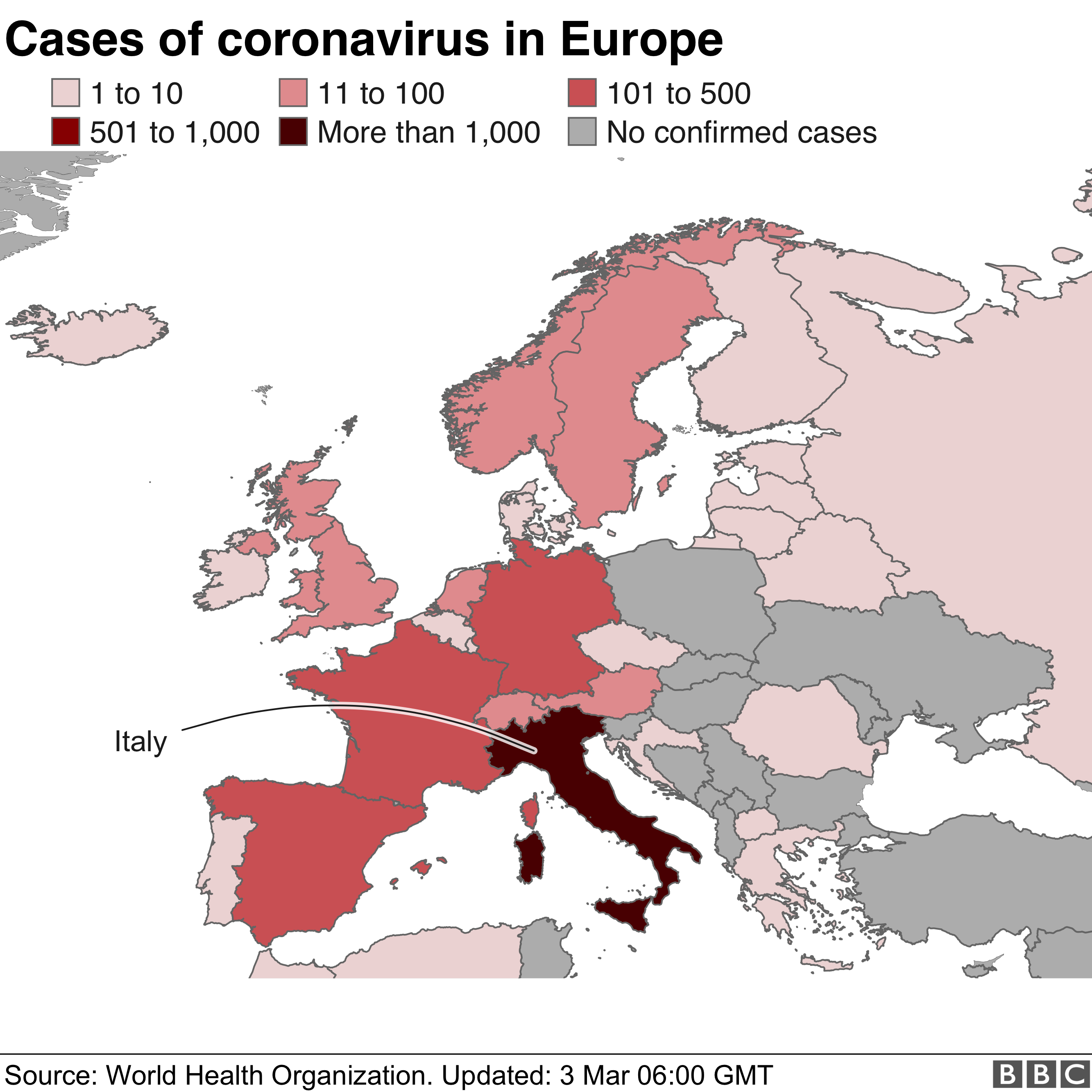
One of the countries worst affected outside China – Italy – said on Monday that the death toll there had risen by 18 to 52. There are 1,835 confirmed cases, most of them in the Lombardy and Veneto areas of the north. Nearly 150 people are said to have recovered.

However, the country is seeing a slowdown in new cases. On Monday, the authorities said there were 258 new cases of the virus – a 16% increase on the previous day – after new cases spiked by 50% on Sunday.

European coronavirus map 3 March 2020
Presentational white space

On Tuesday, Iran said the latest death toll from the virus was 77 – although the real figure is believed to be much higher. More than 2,300 people are said to be infected, including senior political figures. The head of Iran’s emergency medical services, Pirhossein Kolivand, was one of them, the Ilna news agency reported on Tuesday.

Some 23 MPs are also reported to have tested positive for the virus, and an official close to the Supreme Leader, Ayatollah Ali Khamenei, was reported on Monday to have died of the disease.

Health officials in the US state of Washington said on Monday that four more people had died, bringing the total there to six. They are the only deaths in the US so far. Local officials say they are buying a hotel to convert it into an isolation hospital.

On Tuesday, Ukraine confirmed its first case of coronavirus, while Portugal, Iceland, Jordan, Tunisia, Armenia, Latvia, Senegal, Morocco and Andorra confirmed their first cases on Monday.

Coronavirus global map

How deadly is Covid-19?

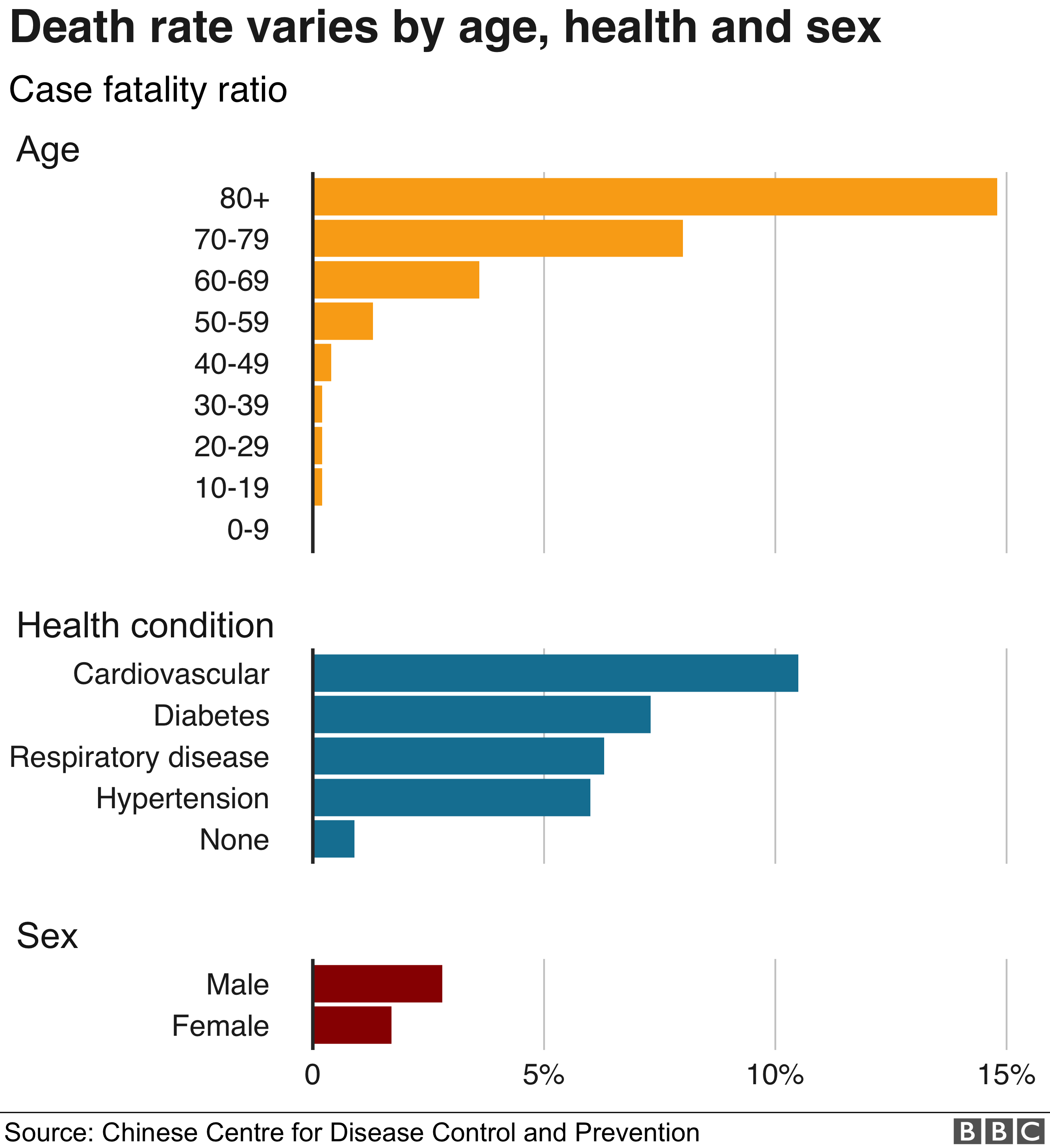
The WHO says the virus appears to particularly affect those over 60, and people already ill.

In the first large analysis of more than 44,000 cases from China, the death rate was 10 times higher in the very elderly compared to the middle-aged.

Most patients have only mild symptoms and the death rate appears to be between 2% and 5%, the WHO said.

By comparison, seasonal flu has an average mortality rate of about 0.1%, but is highly infectious – with up to 400,000 people dying from it each year.

Other strains of coronavirus, such as Severe Acute Respiratory Syndrome (Sars) and Middle East Respiratory Syndrome (Mers), have much higher death rates than Covid-19.

Death rates for different groups

Source: The BBC

06/09/2019

Chinese medicine herbs could defeat devastating cotton virus, study suggests

  • Scientists find some chemicals can kill the cotton leaf curl Multan virus and others can boost cotton plants’ immunity to it
  • It is feared the virus could wreak havoc in China’s Xinjiang region, which produces most of the country’s cotton
A cotton picker in Xinjiang, where cases of the virus have been reported. Photo: Xinhua

Chinese scientists have found chemicals in medicinal herbs that could tame a destructive plant virus threatening the cotton industry in its western Xinjiang region.

Some small-molecule chemicals in herbs commonly used in Chinese medicine can effectively suppress cotton leaf curl Multan virus, according to ongoing research led by Professor Ye Jian at the Institute of Microbiology in Beijing.

By targeting WRKY20, a gene in the virus’ DNA, the chemicals could disrupt the viral infection and transmission, Ye’s team found.

Some early findings from their research were published last month in the journal Science Advances.

The leaf curl virus – a species of Begomovirus, the largest genus of plant viruses – poses a significant threat to the world’s cotton plantations, causing leaf curling, stunted growth and lower yields of cotton fibre. It costs the cotton industry in the Indian subcontinent about US$1 billion a year, according to a press release about the study from the Chinese Academy of Sciences.

Were there to be a pandemic in China, the drop in output and measures to contain it could cost the cotton farming industry 50 billion yuan (US$7 billion), according to some researchers’ estimates, the academy added.

The first known cases of the virus in China over the past decade were limited to coastal areas in the country’s east, but several cases have now been reported in Xinjiang Uygur autonomous region.

“We are running out of time,” Ye told the South China Morning Post.

Cotton is a pillar industry in Xinjiang, which provides more than 80 per cent of China’s total cotton production. The industry also contributes up to 50 per cent of the income of farmers involved in it, according to government statistics.

Exact figures for infections in the region are not available, but outbreaks so far remain isolated, according to Ye and other researchers with knowledge of the situation.

Double threat to China’s cotton industry: warmer weather and mirid bug

However, Professor Gao Feng, cotton researcher at the Agricultural College of Shihezi University in Xinjiang, warned that leaf curl virus could reduce cotton production in an infected field to almost zero.

“A large-scale outbreak has not occurred yet, but the threat is very serious and people are very nervous,” Gao told the Post. “We are in desperate need of a solution.”

The challenges facing China’s pork industry highlight the danger viruses can pose to the domestic market. A swine fever outbreak that has wiped out 100 million pigs caused pork prices to rise, forcing China to look to new countries to import from, such as Portugal and Argentina.

Its biggest overseas supplier of cotton is the United States, with which it is locked in a protracted trade war. In July, the government allowed some Chinese companies to buy a total of 50,000 tonnes of cotton from the US without tariffs being charged.

The central and regional governments fear that falling incomes caused by the impact of an outbreak on the cotton industry would increase the risk of ethnic conflict, social instability and anti-government thoughts.

Ye’s team adopted two approaches to fighting the virus.

How trade war with the US is changing China’s cotton industry

Some chemicals they discovered could improve cotton plants’ immunity against the infection by stimulating them to generate an antibody that killed the virus. The other chemicals they found could target the virus, directly reducing its intensity.

“They can be used as sprays,” Ye said, adding that he planned to reveal the chemical composites and related herbs in a paper to be published in a peer-reviewed journal in the coming months.

The discovery could offer an environmental benefit, too. Cotton farmers in Xinjiang use pesticides to deter the whiteflies that transmit the virus, but their overuse has affected Xinjiang’s delicate ecology, which in its desert areas is particularly vulnerable to disturbance.

In the agricultural research community, there is growing concern that some whitefly species will become resistant to pesticides. “If that happens, we will have a major problem,” Ye said.

He said the chemicals identified in the ongoing study would not harm the environment.

“These chemicals come from plants, so the negative impact to the environment would be minimal,” he said.

The study also found that it may be possible to use the cotton leaf curl Multan virus to benefit farmers. It stimulates cotton plants to generate a chemical that is harmful to other insects, such as the bollworm, that compete with whiteflies for food, meaning that it could be genetically modified into a pest control agent.

Most cotton species in commercial plantations are genetically modified to produce an insecticide to kill bollworm. Ye said a man-made virus could reduce the dependence on genetically modified plants.

Source: SCMP

22/06/2019

Senior Chinese official stresses importance of security cooperation with Portugal

PORTUGAL-LISBON-CHINA-GUO SHENGKUN-VISIT

Guo Shengkun (R), a member of the Political Bureau of the Communist Party of China (CPC) Central Committee and head of the Commission for Political and Legal Affairs of the CPC Central Committee, meets with acting Portuguese Prime Minister and Minister of Foreign Affairs Augusto Santos Silva in Lisbon, Portugal, on June 21, 2019. (Xinhua)

LISBON, June 21 (Xinhua) — Senior Chinese official Guo Shengkun on Friday stressed the importance of raising the level of cooperation on law enforcement and security with Portugal.

Guo is a member of the Political Bureau of the Communist Party of China (CPC) Central Committee and head of the Commission for Political and Legal Affairs of the CPC Central Committee.

In meeting with acting Portuguese Prime Minister and Minister of Foreign Affairs Augusto Santos Silva, Guo said that the exchange of visits by leaders of the two countries within half a year reflects the high level of China-Portugal relations and injects new impetus into the development of bilateral ties.

This year marks the 40th anniversary of the diplomatic relations between the two countries. China is willing to take the opportunity to work together with Portugal to implement the important consensus reached by the leaders of the two countries, Guo said.

China, Guo said, is also ready to deepen cooperation in economy and trade, education, science and technology as well as the joint building of the Belt and Road Initiative.

Guo said the two sides should strengthen communication and coordination under the framework of China-European Union (EU) cooperation and multilateral institutions to promote the long-term healthy and stable development of China-EU relations, and jointly safeguard multilateralism and free trade.

Guo also said that the cooperation on law enforcement and security is an important part of the relationship between the two countries, stressing the need to establish a normalized cooperation mechanism to continuously promote the level of cooperation on the law enforcement, security and anti-terrorism to meet the demand of increasing trade and personnel exchanges, so as to make contributions to the development of China-Portugal comprehensive strategic partnership.

As acting prime minister, Silva welcomed Guo’s visit and highly praised the fruitful results of the exchanges and cooperation between Portugal and China in various fields.

Silva said Portugal is willing to work together with China to continue to tap the potential for pragmatic cooperation in the fields of economy and trade, law enforcement and security, strengthen coordination in international affairs, and promote the continuous development of Europe-China and Portugal-China relations

Silva also said that his country supports and is willing to actively participate in the joint building of the Belt and Road Initiative.

During the visit, Guo also held talks with head of the Portuguese law enforcement and security departments.

Source: Xinhua

20/04/2019

Chile, Mongolia, Nepal, Portugal, Switzerland presidents, Austria Chancellor to visit China

BEIJING, April 19 (Xinhua) — The presidents of Chile, Mongolia, Nepal, Portugal, and Switzerland will pay state visits to China and attend the second Belt and Road Forum for International Cooperation (BRF) next week, at the invitation of Chinese President Xi Jinping, Foreign Ministry spokesperson Lu Kang announced Friday.

Chilean President Sebastian Pinera and Mongolian President Khaltmaa Battulga will visit China from April 24 to 28; Nepali President Bidhya Devi Bhandari will visit from April 24 to May 2; Portuguese President Marcelo Rebelo de Sousa will visit from April 28 to May 2, and Ueli Maurer, president of the Swiss Confederation, will visit from April 23 to 30, Lu said.

Bhandari will also attend the opening ceremony of the 2019 Beijing International Horticultural Exhibition, according to Lu.

Chancellor of Austria Sebastian Kurz will pay an official visit to China from April 25 to 29 and attend the second BRF, at the invitation of Chinese Premier Li Keqiang, Lu announced.

Source: Xinhua

20/04/2019

Xi to address Belt and Road forum next week: FM

CHINA-BEIJING-BRF-PRESS BRIEFING (CN)

Chinese State Councilor and Foreign Minister Wang Yi (C) speaks during a press briefing for the second Belt and Road Forum for International Cooperation (BRF) in Beijing, capital of China, April 19, 2019. The second Belt and Road Forum for International Cooperation will be held from April 25 to 27 in Beijing, Wang Yi announced Friday. (Xinhua/Zhai Jianlan)

BEIJING, April 19 (Xinhua) — Chinese President Xi Jinping will deliver a keynote speech at the second Belt and Road Forum for International Cooperation (BRF) to be held from April 25 to 27 in Beijing, State Councilor and Foreign Minister Wang Yi announced Friday.

Leaders including heads of state and government from 37 countries will attend the forum’s roundtable summit, Wang told a press briefing.

Wang said 12 thematic forums and a CEO conference would be held on April 25, the opening ceremony and a high-level meeting on April 26, and the leaders’ roundtable on April 27.

Xi will attend the opening ceremony and deliver a keynote speech. He will also chair the leaders’ roundtable and brief media from home and abroad about the outcomes after the roundtable, Wang said, adding that Xi and his wife Peng Liyuan will also hold a welcoming banquet for the leaders and representatives.

According to Wang, the 37 countries are Austria, Azerbaijan, Belarus, Brunei, Cambodia, Chile, Cyprus, Czech Republic, Djibouti, Egypt, Ethiopia, Greece, Hungary, Indonesia, Italy, Kazakhstan, Kenya, Kyrgyzstan, Laos, Malaysia, Mongolia, Mozambique, Myanmar, Nepal, Pakistan, Papua New Guinea, the Philippines, Portugal, Russia, Serbia, Singapore, Switzerland, Tajikistan, Thailand, the United Arab Emirates, Uzbekistan and Vietnam.

The secretary-general of the United Nations and the managing director of the International Monetary Fund will attend the forum, Wang said, adding that senior representatives of France, Germany, Britain, Spain, Japan, the Republic of Korea and the European Union will also participate.

Noting that the BRF is the top-level platform for international cooperation under the framework of the Belt and Road Initiative, Wang said the conference next week would be of landmark significance.

The theme of the second BRF is “Belt and Road Cooperation, Shaping a Brighter Shared Future.” Wang said the main purpose is to promote the high-quality development of Belt and Road cooperation, which is the common aspiration of countries participating in the initiative.

Speaking highly of the fruitful results yielded since the initiative was launched in 2013, Wang said the second BRF was greatly welcomed worldwide with some 5,000 participants from more than 150 countries and 90 international organizations having confirmed their attendance, covering areas from five continents and different walks of life such as government, civil society, business and academia.

According to Wang, this year’s forum will have 12 thematic forums, twice of that during the first forum in 2017, and the CEO conference will be held for the first time. A joint communique will be released after the leaders’ roundtable and other consensus reached during the forum will be issued in a report.

The Belt and Road Initiative, proposed by Xi in 2013, aims at enhancing all-around connectivity through infrastructure construction, exploring new driving force for the world economic growth, and building a new platform for world economic cooperation, according to Wang.

Stressing that Xi and leaders from other countries blueprinted the initiative in 2017, Wang said the progress in the past two years shows that the initiative conforms to the trend of the times featuring peace, development, cooperation and win-win and accords with the common aspiration of openness and joint development of all countries.

“As the host country, we will maintain close communication and coordination with all parties to prepare for the forum with openness, inclusiveness and transparency, upholding the principle of consultation and cooperation for shared benefits,” Wang said.

He said the forum would voice the firm support for multilateralism and an open world economy, enrich the principles of cooperation of the Belt and Road Initiative, build a network of partnership, and establish more mechanisms for high-quality development.

Bilateral, trilateral and multilateral cooperation has been reinforcing each other under the initiative, laying a solid foundation for a closer and more wide-ranging partnership, he said.

Wang said China will showcase the outcomes and introduce the measures of its reform and opening-up to the world, adding that this will allow China to share the dividends of its economic growth, promote the Belt and Road Initiative, and bring more opportunities to the development of all countries as well as the building of the Belt and Road.

“I believe that the forum will inject stronger impetus into the world economy, open even broader horizon for the development of the countries, and contribute to the building of a community with a shared future for humanity, ” said Wang.

Source: Xinhua

07/04/2019

Greece says EU’s China concerns must not harm its economic interests

  • Deputy prime minister Yannis Dragasakis hopes ‘logic will prevail’ ahead of EU-China summit
  • Affirms Greek support for Beijing’s belt and road plan for global trade
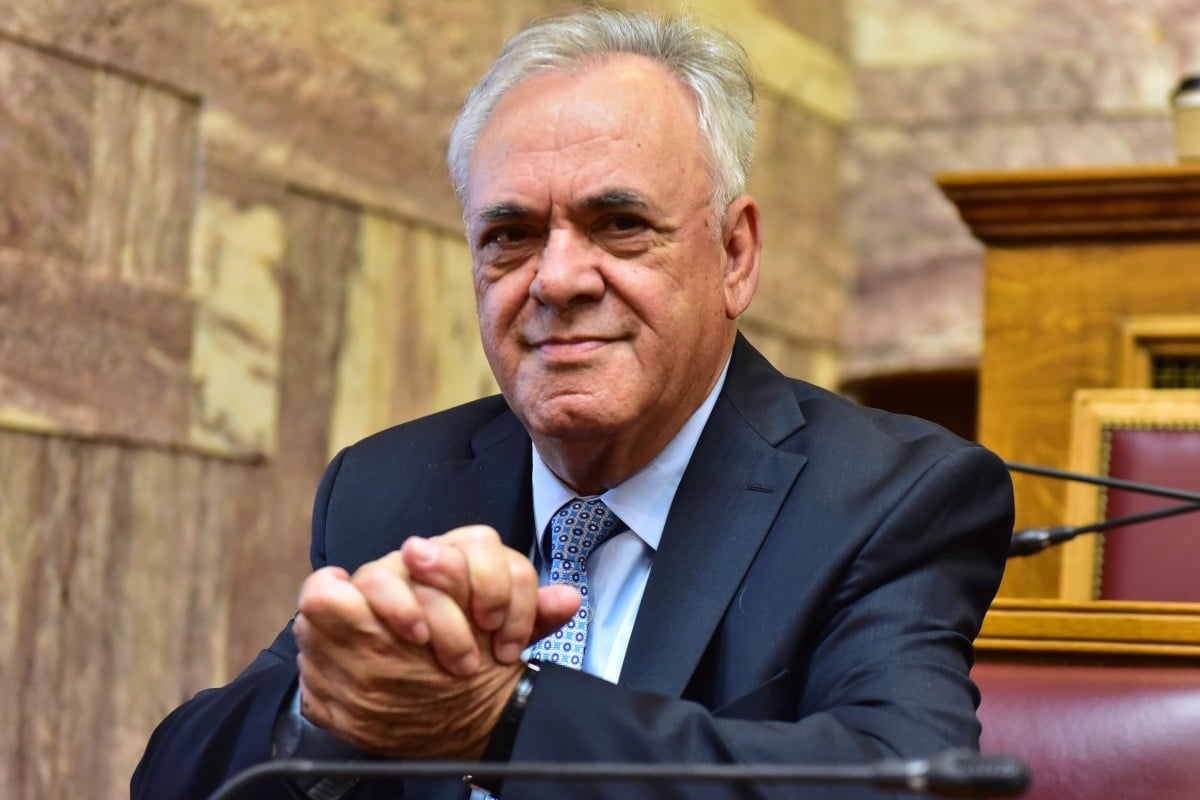
Greece’s deputy prime minister Yannis Dragasakis says the European Union’s suspicion about China is in danger of becoming a “self-fulfilling prophecy”. Photo: Alamy
The deputy prime minister of Greece has warned that European Union suspicion of China is in danger of becoming a “self-fulfilling prophecy” while reaffirming his country’s support for Beijing’s controversial “Belt and Road Initiative”.
In an exclusive interview with theSouth China Morning Post in Athens on Monday, Yannis Dragasakis said he hoped logic would prevail in the EU’s relationship with the world’s second-largest economy.
“We would like to see the EU having good relations with China,” he said.
“Seriously, we should start [the discussion about China] from the opposite end, which is, what are the needs and problems that we can work on with China?”
Dragasakis was speaking ahead of the annual summit between the EU and China in Brussels on Wednesday, which this year will take place against a backdrop of suspicion among some EU countries over Beijing’s political and commercial ambitions in the region.
Europe has been divided over whether to work with China’s enormous belt and road plan, which aims to link China by sea and land with southeast and central Asia, the Middle East, Europe and Africa, through an infrastructure network along the lines of the old Silk Road.
Italy becomes first G7 nation to sign up for China’s belt and road plan

Washington has criticised the scheme as a “vanity project”, and the EU looks set to refer to China as a “strategic rival”, with some European leaders fearing Beijing’s diplomatic manoeuvres could derail unity among member states.

Last month Italy, which is grappling with its third recession in a decade, became the first G7 nation to join the belt and road programme, in a bid to boost exports and upgrade its port facilities.

Last year Greece – ranked second lowest in economic competitiveness within the EU by the World Economic Forum in 2018 – signed up to the scheme, after years of relying on China to help it through its own financial crisis.

Chinese state-owned shipping company Cosco bought a 51 per cent stake in Pireaus Port, Greece’s most important infrastructure hub in 2016 with an option to buy another 16 per cent after five years.

China aims to make the port the “dragon head” of its belt and road programme, serving as a gateway for its cargo to Europe and North Africa.

Will Greece be China’s bridge to the rest of Europe?

With its warming relationship with Beijing, Athens has, at times, departed from EU positions on China.

In 2016, Greece helped stop the EU from issuing a unified statement against Chinese aggression in the South China Sea. The following year, Athens stopped the bloc from condemning China’s human rights record. Days later, it opposed tougher screening on China’s investments in Europe.

Dragasakis was clear that the EU should not devise any policies that may hinder Greece’s ability to revive its economy.

“Greece badly needs investment. We hope logic will prevail at the end of the day, which means we should take advantage of all opportunities and build on these prospects to further our collaboration,” he said.

“Greece will keep following a multidimensional policy, an inclusive policy, without excluding anyone.”

Dragasakis hit back at France and Germany for treating China as a geopolitical rival, while simultaneously signing up to trade agreements with Beijing.

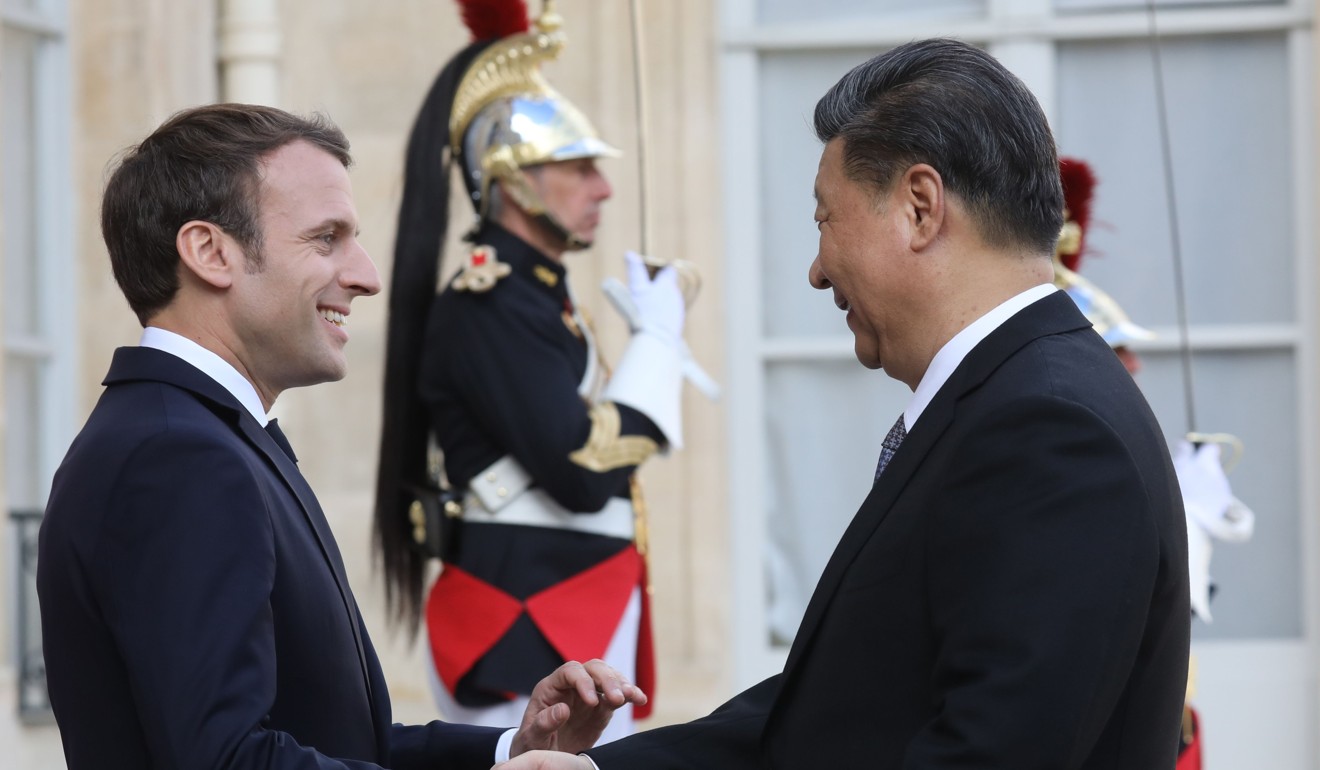
Days before receiving Chinese President Xi Jinping in France last month, President Emmanuel Macron declared that the “time of European naivety” towards China was over – a remark the Greek deputy prime minister described as “interesting” during the interview.

“It’s so interesting, yes. Mr Macron, despite his statement, actually signed very large-scale agreements with China,” he said, adding: “Germany, the same”.

French President Emmanuel Macron welcomes Chinese President Xi Jinping to the Elysee Palace in Paris last month. Photo: AFP

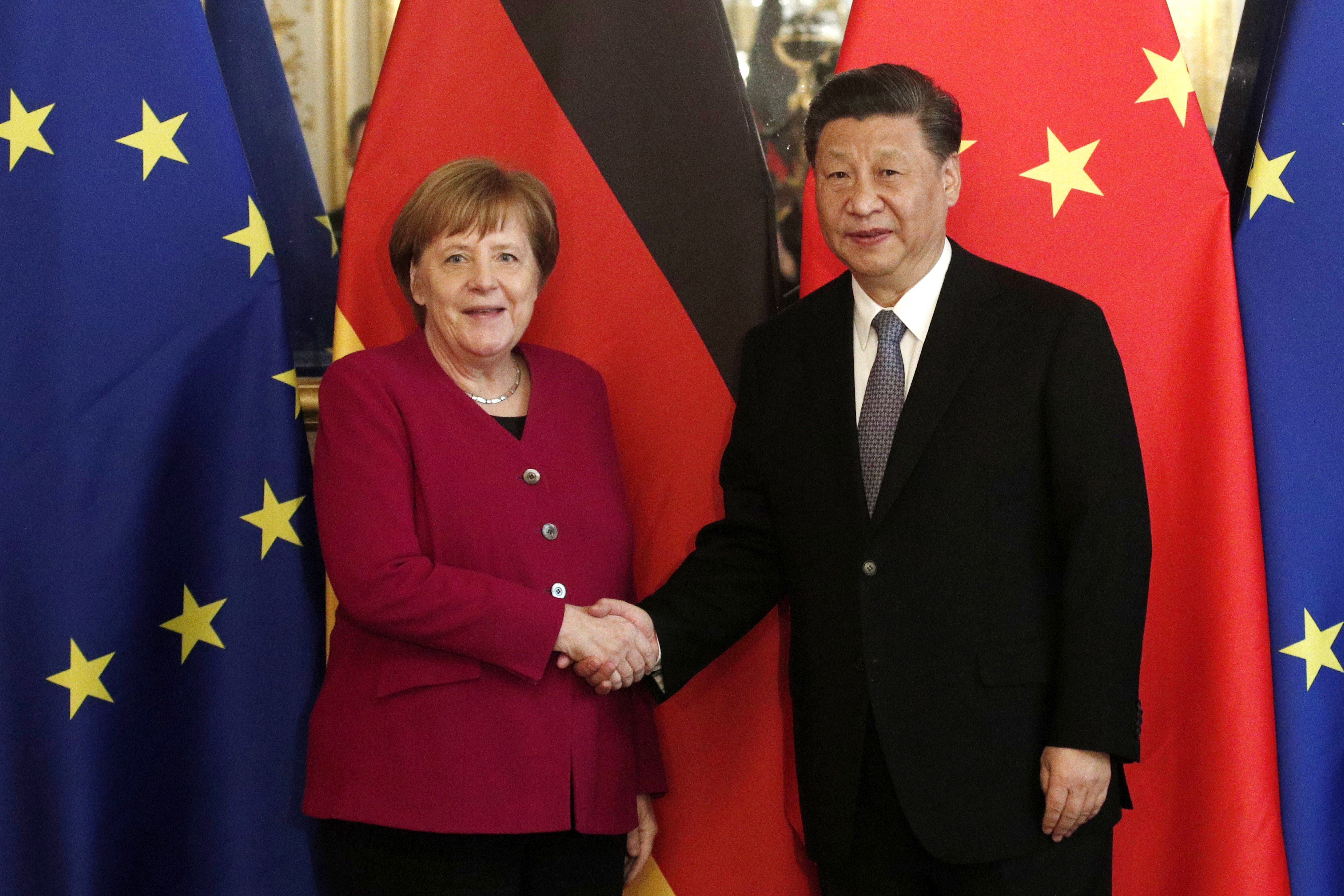
Macron invited German Chancellor Angela Merkel and European Commission President Jean-Claude Juncker to his meeting in Paris with Xi, where the four sought to reassure each other over economic cooperation between the European trading bloc and China.

Dragasakis said Greece’s relations with China were based on “very solid ground” with the two countries sharing complementary interests, particularly through the belt and road plan.

Greek Prime Minister Alexis Tsipras is understood to be considering joining Foreign Minister George Katrougalos at the belt and road summit in Beijing, which will be hosted by Xi later this month.

More than 40 heads of state are expected to attend the summit, with China’s foreign ministry recently saying that Europe had started to see the value of the scheme.

If confirmed, Tsipras’ presence at the summit will be interpreted as an attempt by Greece to consolidate Chinese support in the wake of Italy’s joining of the scheme.

He will also need to mend ties with Beijing, following a recent decision by Greece’s archaeological body to block a plan by Cosco to upgrade facilities at the Piraeus port, throwing the future of the multimillion euro privatisation deal into uncertainty.

Portugal’s support for China’s belt and road plan ‘bad news’ for EU

Dragasakis said there were strong prospects for the future relationship between Greece and China because of the two countries’ reciprocal interest.

Relations with other Asian countries, while not yet as close as Greek ties with China, would continue to be developed, he said.

Dragasakis said Athens would not adopt discriminatory policies against any country as it looked to shore up foreign investments to boost its economy.

India, for instance, has set its sights on Greece as a potential business partner, with President Ram Nath Kovind becoming its first titular head of state to visit Greece last year.

“Relations with India are lagging behind – they are not at the same level as with China, but of course we are mulling further developments with India,” Dragasakis said, adding that Greece would also work more closely with Japan, South Korea and Vietnam.

EU leaders hold out olive branch to Chinese ‘rival’ by saying they want active role in Belt and Road Initiative

EU leaders hold out olive branch to China over belt and road

Read more

China will not divide Europe, senior diplomat says

China will not divide Europe, senior diplomat says

Read more

Beijing calls for ‘objective’ assessment of human rights record.


Source: SCMP

05/12/2018

Chinese president arrives in Portugal for state visit

PORTUGAL-LISBON-CHINA-XI JINPING-ARRIVAL

Chinese President Xi Jinping (L) and his wife Peng Liyuan disembark from the airplane after arriving in Lisbon, Portugal, on Dec. 4, 2018. Xi arrived in Portugal on Tuesday for a two-day state visit. (Xinhua/Li Xueren)

LISBON, Dec. 4 (Xinhua) — Chinese President Xi Jinping arrived in Portugal on Tuesday for a two-day state visit aimed at carrying forward friendship and expanding cooperation between the two countries.

It is the first visit by a Chinese head of state to the European country in eight years.

Two Portuguese fighter jets escorted Xi’s plane as it entered the country’s airspace.

Xi and his wife, Peng Liyuan, were greeted by senior Portuguese government officials at the airport.

While delivering a written speech upon arrival, Xi praised the traditional friendship between China and Portugal, saying that the bilateral relations have withstood the test of time and international vicissitudes and become even stronger.

In 1999, the two countries properly resolved the question of Macao through friendly consultations, setting an example for other nations to tackle issues left over from history, Xi said.

In 2005, China and Portugal established a comprehensive strategic partnership, which enabled their mutually beneficial cooperation to embark on a fast lane of development and deliver substantial benefits to the people of the two countries, Xi said.

He said that next year marks the 40th anniversary of the establishment of diplomatic ties between the two countries, which is a new starting point in history for the bilateral relations.

Xi said that he is looking forward to meeting President Marcelo Rebelo de Sousa, Prime Minister Antonio Costa and other Portuguese leaders to draw up the blueprint for future bilateral cooperation.

He added that he believes with the concerted efforts of both sides, the China-Portugal comprehensive strategic partnership will enjoy an even brighter future.

Portugal is the final stop of Xi’s Europe and Latin America tour, which has already taken him to Spain, Argentina and Panama.

In Buenos Aires, Argentina, Xi also attended the 13th Group of 20 summit, and met U.S. President Donald Trump as well as leaders of other countries.

When Xi left Panama for Portugal, Panamanian President Juan Carlos Varela went to the airport to see him off.

04/12/2018

Portugal welcomes China’s money as its influence worries EU partners

Portugal welcomes China’s money as its influence worries EU partners

  • Xi Jinping’s visit to Lisbon follows EU countries’ agreement on regulation of foreign investment, particularly from China
  • EU-IMF bailout of Portugal in 2011 prompted privatisations that brought flood of Chinese investment
PUBLISHED : Tuesday, 04 December, 2018, 5:56pm
UPDATED : Tuesday, 04 December, 2018, 6:09pm

Fresh from a visit to Spain last week, Xi’s two-day stay in Portugal will include a meeting with President Marcelo Rebelo de Sousa and the signing of cooperation agreements.

One of them will bring the Portuguese port of Sines, in the southwest, into China’s “Belt and Road Initiative”, a strategy that offers loans to build railways, roads and ports across Asia, Europe and Africa.

In an opinion editorial published on Sunday in Portuguese newspapers, Xi stressed the importance of China’s relationship with Portugal as part of a broader network of trade links.

But China’s growing influence in Europe, welcomed by Greece and several eastern European countries, is viewed warily by others on the continent

At the initiative of France and Germany, EU countries last week agreed a framework regulating foreign investment, particularly from China.

Portuguese Prime Minister Antonio Costa said on Friday that Lisbon did not back the idea and was relieved that the final accord provided for only an advisory role on the part of the European Commission.

Foreign investment does not worry Portugal, and the EU should not “take the path of protectionism” in the face of globalisation, he said.

Portugal, one of western Europe’s poorest countries, was open to Chinese investment after being hit hard by the 2008 global financial crisis.

Its 78 billion euro (US$89 billion) EU-IMF rescue package in 2011 came with required austerity policies – and a wide-ranging privatisation programme that opened the doors to Chinese investment.

Chinese investment accounted for 3.6 per cent of Portugal’s GDP between 2010 and 2016, according to figures from Spain’s ESADE business school.

China now owns a 28 per cent stake in Portuguese energy utility EDP, the country’s largest firm, via China Three Gorges and China’s state-owned international investment company CNIC.

It also has a stake in Portugal’s biggest private bank, BCP, and its leading insurance company, Fidelidade.

Perhaps the most contentious issue is China Three Gorges’ bid to take a controlling stake in EDP, of which it is already the main stakeholder. The 9 billion euro operation was launched in May.

But although it has been welcomed by the Portuguese government, it still risks falling foul of barriers imposed by regulators in around 15 countries where EDP operates, including the United States.

Luis Castro Henriques, head of Portugal’s trade and investment agency Aicep, says Chinese investment in Portugal has been good for the country.

China has risen to Portugal’s 11th-largest trade partner in the decade since 2008, when it was 28th on the list.

“We want now to attract large-scale industrial investment, notably in the automobile and agro-food sectors,” Castro Henriques said.

Law of Unintended Consequences

continuously updated blog about China & India

ChiaHou's Book Reviews

continuously updated blog about China & India

What's wrong with the world; and its economy

continuously updated blog about China & India