Chindia Alert: You’ll be Living in their World Very Soon
aims to alert you to the threats and opportunities that China and India present. China and India require serious attention; case of ‘hidden dragon and crouching tiger’.
Without this attention, governments, businesses and, indeed, individuals may find themselves at a great disadvantage sooner rather than later.
The POSTs (front webpages) are mainly 'cuttings' from reliable sources, updated continuously.
The PAGEs (see Tabs, above) attempt to make the information more meaningful by putting some structure to the information we have researched and assembled since 2006.
Beijing’s Chaoyang district remains the last high-risk area in China, with virus preventive measures continuing to impact on travel and shopping plans
China faces the dilemma of preventing a re-emerge of the pandemic, while also pushing to get its economy back to normal
China’s continued pandemic prevention measures, coupled with still hesitant consumer demand, will inevitably lead to persistent limitations on the nation’s economic recovery, analysts said. Photo: Bloomberg
After nearly three months of being quarantined by herself in Beijing, Mary Zhao was looking forward to the upcoming long weekend at the start of May to be able to finally reunite with her parents.
But Zhao was forced to abandon her plan for the Labour Day holidays as Beijing’s upmarket Chaoyang district, where she lives, remains the only high-risk zone for coronavirus in the entire country.
If she travelled the five hours by car, or two hours via bullet train, to the neighbouring Hebei province, she would first have to undergo a 14-day quarantine before seeing her parents. Her parents would also have the same two week quarantine to look forward to once they returned home if they came to visit their daughter in Beijing.
These strict controls to prevent a re-emergence of the coronavirus outbreak are making a return to normal life impossible for many, and mean the final economic and social cost
from China’s draconian preventive measures could be much larger than expected.
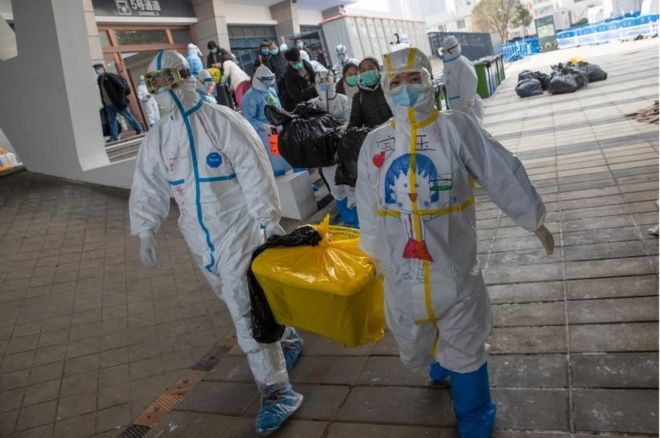
Wuhan declares ‘victory’ as central Chinese city’s last Covid-19 patients leave hospital
It underscores the dilemma facing China’s leaders on how to balance the need to
and to avoid a fresh outbreak. On the surface, China may be able to declare victory as even Wuhan, the city where the virus was first detected, announced that the last Covid-19 patient had left hospital on Sunday. But fears of a renewed outbreak have kept the country’s cinemas and most schools closed, with travel between provinces discouraged.
China’s national borders also remain largely closed, with flights being cut to a minimum, and a mandatory 14-day quarantine for every arrival. In the number of places where new cases have been reported, quarantine requirements have been tightened, including Harbin and a few other cities near the border with Russia.
Chaoyang, the home to one of Beijing’s main business districts and most foreign embassies, changed its risk rating to high from low in the middle of April after three new cases were reported, dealing a fresh blow to the district’s
and forcing many of the 3.5 million residents to cancel their travel plans.
On the outskirts of Beijing, near Beijing Capital International Airport, returning migrant workers to Picun village were ordered to stop at entrance and could only be escorted inside by their landlord, with many villages and residential compounds remaining closed to outsiders.
In the high-end shopping district of Guomao, some shops also remain closed as there are few potential customers, while over in the popular Sanlitun area, metal barriers restrict access and temperature checkpoints are still required.
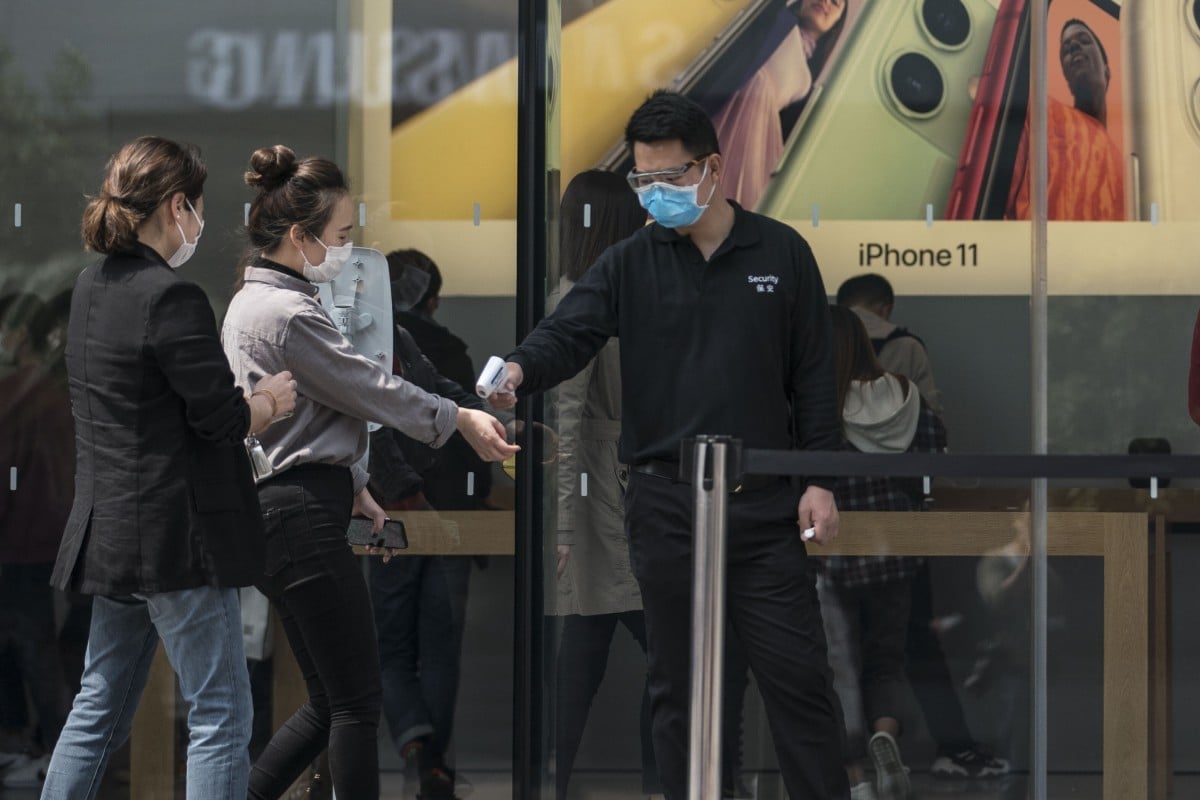
The landmark Apple Store in the popular Taikoo shopping centre is open, but with limited customers allowed inside, there are long queues outside. Customers are required to scan a QR code to check their movements over the last few days before entering.
Coronavirus: More schools reopen in China for students preparing for university entrance exams
“Why do I have to spend 20 minutes just to get into the Apple Store? The sun has almost melted me down,” one visitor complained to the security guards at the front of the shop.
China’s continued pandemic prevention measures, coupled with still hesitant consumer demand, will inevitably lead to persistent limitations on the nation’s economic recovery, analysts said.
Ernai Cui, an economist at research firm Gavekal Dragonomics, said on Monday that China’s cautious approach to lifting restrictions “points to a weak second quarter for consumer services”, adding additional pressure to the economic recovery.Mao Zhenhua, a researcher at the China Institute of Economics at Renmin University, said China’s preventive measures will inevitably be a drag on production, employment and exports.
BEIJING, April 6 (Xinhua) — Bike riding, bird watching, or simply enjoying the natural scenery against the blue sky. A wild duck lake wetland in suburban Beijing has attracted urbanites during the traditional Qingming festival.
The park imposes a daily limit of 1,680 visitors and workers take body temperatures for visitors and ask them to show their health codes, which are common preventive measures in many scenic spots.
“Our tickets sold out one day in advance on the Internet, “said Liu Xuemei, a park management official. “Through the online booking of tickets, we strictly control the flow of tourists to protect wild birds as it is a season of bird migration.”
Besides paying tribute to the dead, outing is another tradition among Chinese during Tomb-sweeping Day, also known as Qingming Festival which fell on Saturday. Citizens enjoy a three-day holiday for the festival.
As China’s domestic COVID-19 situation continues its improving trend, more parks and scenic sites have reopened across the country, providing places for citizens to have spring outings amid tight prevention measures.
On Saturday, the Juyongguan section of the Great Wall and the Ming Tombs in Beijing reopened to the public after two months of closure in the prevention and control of COVID-19.
The famous Badaling section of the Great Wall in Beijing, which partly opened on March 24, hosted 12,000 tourists on Sunday alone.
Beijing’s major parks, which partly opened to the public, also adopted strict measures to control the number of tourists while cancelling some traditional spring activities such as enjoying flowers to avoid gathering.
Data from several domestic travel companies such as Qunar and Trip.com show that the domestic tourism industry is recovering and the booking volume of tickets for travel, hotels and scenic spots is on the rise.
Since March, some of the business activities of travel agencies have resumed in more than 10 provinces and municipalities. Tours around cities and 1-hour high-speed trips are popular, according to the travel platforms.
“I haven’t been out during the epidemic. It’s fine today. I brought my daughter to the mountain area to breathe fresh air and relax,” said a female tourist surnamed Liu, in the city of Wuhu, east China’s Anhui Province. Liu went to the suburban area of Wuhu with her daughter for an outing on Saturday and said she felt the epidemic prevention measures were reassuring.
At the Balihe scenic area in Yingshang County, Anhui, the number of tourists rose from 1,000 after it reopened on March 15 to about 8,000 per day during the Qingming holiday.
The scenic area implements online real-name booking. Its tourist service center has a body temperature detection area and provides wash-free disinfectant. Staff members wear masks and gloves, according to Wang Longtao, deputy general manager of a company in charge of the Balihe tourism development.
“I am optimistic about the recovery of domestic tourism. People have accumulated a strong desire to consume,” said Liang Jianzhang, co-founder and chairman of Trip.com Group.
Huangshan Mountain, a UNESCO world heritage site in Anhui Province, saw 20,000 tourists on Saturday and Sunday, as pictures of crowded tourists triggered concerns over epidemic prevention.
The scenic area authorities said Monday they increased 20 transfer buses and mobilized a total of 160 buses to prevent overcrowding.
Industry experts warn that as the COVID-19 epidemic has not ended domestically and the pressure of imported cases is growing, scenic spots should make people’s safety and health the top priority and take targeted measures as they reopen.
Image copyright EPAImage caption Wuhan has been sealed off since mid-January
The lockdown in Wuhan, the Chinese city where the global coronavirus outbreak began, will be partially lifted on 8 April, officials say.
Travel restrictions in the rest of Hubei province, where Wuhan is located, will be lifted from midnight on Tuesday – for residents who are healthy.
A single new case of the virus was reported in Wuhan on Tuesday following almost a week of no reported new cases.
Countries around the world have gone into lockdown or imposed severe curbs.
The UK is getting to grips with sweeping new measures to tackle the spread of coronavirus, including a ban on public gatherings of more than two people and the immediate closure of shops selling non-essential goods.
Image copyright AFPImage caption The WHO has urged the G20 group of nations to boost production of protective equipment
Meanwhile, health experts say Americans must limit their social interactions or the number of infections will overwhelm the health care system in the US.
Spanish soldiers helping to fight the coronavirus pandemic have found elderly patients in retirement homes abandoned and, in some cases, dead in their beds, the defence ministry has said.
An ice rink in Madrid is to be used as a temporary mortuary for Covid-19 victims.
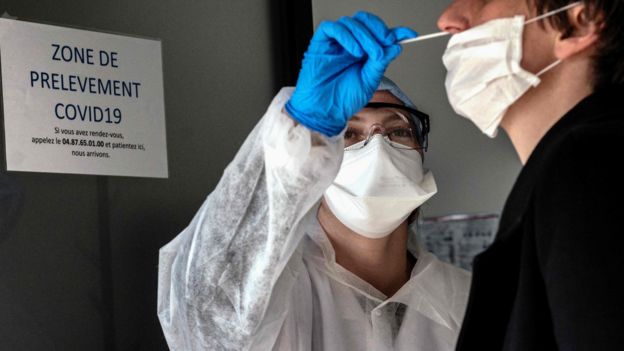
The World Health Organization (WHO) has warned that the pandemic is accelerating, with more than 300,000 cases now confirmed. It is urging countries to adopt rigorous testing and contact-tracing strategies.
Wuhan has been shut off from the rest of the world since the middle of January. But officials now say anyone who has a “green” code on a widely used smartphone health app will be allowed to leave the city from 8 April.
Earlier, the authorities reported a new case of coronavirus in Wuhan, ending a five-day run of no reported new cases in the city.
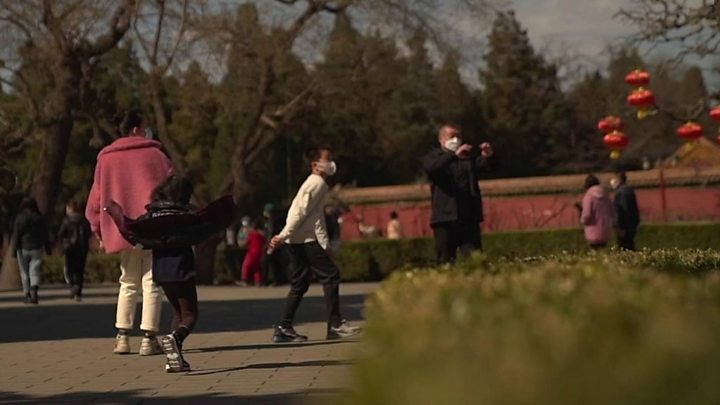
Media caption Coronavirus: People in Beijing begin to head outdoors
It comes after health officials there confirmed that they were not counting cases of people who were positive but had not been admitted to hospital or did not show any symptoms of the disease.
Official government figures say there have been 78 new cases reported on the Chinese mainland in the last 24 hours. All but four of them were caused by infected travellers arriving from abroad.
This so-called “second wave” of imported infections is also affecting countries like South Korea and Singapore, which had been successful in stopping the spread of disease in recent weeks.
South Korea has been seeing a drop in its daily tally of new cases. On Tuesday it reported its lowest number since 29 February.
China looks to repair its reputation
By Robin Brant, BBC News, Shanghai
China considers itself to be – very nearly – a “post corona” country.
In the last week we’ve heard Wuhan medics warning the UK and others that they need to do more to protect frontline health workers, citing the mistakes they made early on when some treated patients without wearing proper protective clothing.
But there’s also been reporting in state media of the reported death toll in Italy surpassing that in China. This has been combined with some commentary from prominent media figures that has appeared distasteful, almost triumphalist.
At the same time there is a panic about the threat of a second wave from imported cases – travellers arriving from abroad. This has fuelled the view – right or wrong – that some other countries aren’t taking the threat seriously because they aren’t doing what China did. (Almost all the cases in Beijing that have been made public are of Chinese nationals returning home).
Meanwhile, well away from senior leaders, there are some high-profile diplomatic figures using international-facing social media to spread theories that the US may have weaponised and dumped the virus in China. Or that Italy had cases that may have been Covid-19 earlier than China. China is sowing seeds of doubt and questioning assumed truths as it looks to repair its reputation.
Almost all of India with its 1.3bn people is under lockdown. Buses, trains and other forms of public transport are suspended. On Monday, the authorities said domestic flights would also stopped. The country has reported 485 cases and nine people have died. Prime Minister Narendra Modi will address the nation again this evening.
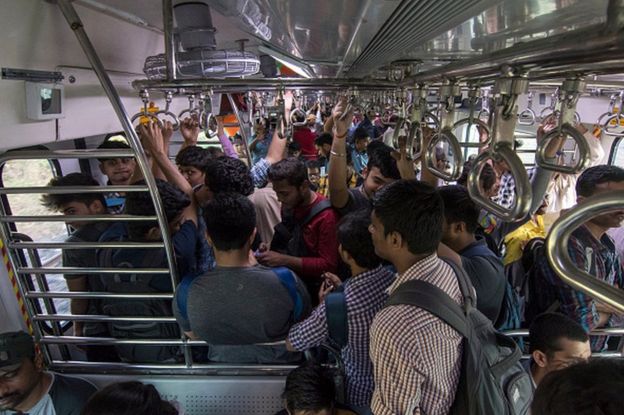
Image copyright GETTY IMAGESImage caption Mumbai’s suburban train network carries eight million passengers a day
Neighbouring Pakistan has almost twice as many confirmed cases – 878 as of Monday evening. Sweeping restrictions are in place although the government has stopped short of imposing a nationwide lockdown. However, several provinces have announced them independently. The army is being brought in to help enforce the restrictions.
Bangladesh, which has reported 33 cases and three deaths, is also deploying its armed forces to help maintain social distancing and boost Covid-19 preventive measures. The soldiers will also monitor thousands of quarantined expatriate returnees. Across South Asia, there are concerns that the actual number of cases could be much higher than is being reported.
Indonesia, which has 49 confirmed Covid-19 deaths – the highest in South-East Asia – has converted an athlete’s village built for the 2018 Asian Games into a makeshift hospital for coronavirus patients. A state of emergency was declared in Jakarta on Monday.
In Thailand, a month-long state of emergency which will include curfews and checkpoints will begin on Thursday. The government has been criticised for failing to take strong action so far. Four people have died and nearly 900 tested positive.
Talks between the Japanese PM and the International Olympic Committee are expected this evening.
The most populous country that was without a case until now – Myanmar – has announced two cases.
Europe’s battle against virus intensifies
UK Prime Minister Boris Johnson announced on Monday night that, with immediate effect, “people will only be allowed to leave their home…for very limited purposes”. They include shopping for basic necessities, taking one form of exercise per day, fulfilling any medical need, or travelling to work if working from home is impossible.
Media caption Reality Check tackles misleading health advice being shared online
The number of people who have died in the UK rose to 335 on Monday.
In Italy, the worst-hit country in the world, the authorities said 602 people with Covid-19 had died in the past 24 hours, bringing the total death toll there to 6,077.
But the daily increase in cases was the smallest since Thursday, raising hope that the stringent restrictions imposed by the government were starting to have an effect.
Spain, however, said on Tuesday that its death toll had risen by 514 to 2,696. Nearly 40,000 are infected, about 5,400 of them healthcare workers.






 CHINDIA ALERT: You'll be living in their world, very soon