Chindia Alert: You’ll be Living in their World Very Soon
aims to alert you to the threats and opportunities that China and India present. China and India require serious attention; case of ‘hidden dragon and crouching tiger’.
Without this attention, governments, businesses and, indeed, individuals may find themselves at a great disadvantage sooner rather than later.
The POSTs (front webpages) are mainly 'cuttings' from reliable sources, updated continuously.
The PAGEs (see Tabs, above) attempt to make the information more meaningful by putting some structure to the information we have researched and assembled since 2006.
MAMALLAPURAM, India, (Reuters) – Chinese President Xi Jinping said on Saturday he had a free and frank discussion with Indian Prime Minister Narendra Modi and would pursue proposals the two leaders discussed to improve bilateral ties.
Xi and Modi held several hours of one-on-one talks in a southern seaside Indian town in their second annual summit designed to break through decades of distrust between their countries over border disputes, a ballooning trade deficit and China’s close military ties with India’s arch rival, Pakistan.
“Yesterday and today we have engaged in candid discussions and as friends,” Xi said in opening remarks as the two leaders sat down for formal talks with their delegations.
“I look forward to further discussions, I may follow up on proposals discussed yesterday,” he said, without elaborating.
Ties were ruffled when India revoked the special status of the Himalayan territory of Kashmir in August, angering both Pakistan, which claims the region, and its all-weather ally China.
Modi noted in his opening remarks that he and Xi had agreed to manage their differences prudently and not let them snowball into disputes.
The neighbours are expected to move forward on a set of confidence building measures along their border including border trade, tourism and even joint military patrols to boost trust, officials said.
India and China share a 3,500 km (2,200 mile) border, over which they went to war in 1962. Its course remains unresolved despite more than 20 rounds of talks.
Modi took Xi on a personal tour of temple monuments dating back to the seventh and eighth century at Mamallapuram in southern India when regional leaders had trade ties with Chinese provinces.
India’s Foreign Secretary Vijay Gokhale said the two leaders spent nearly five hours discussing bilateral issues that have often been fraught.
The two leaders discussed economic issues, including India’s $53 billion trade deficit with China in 2018/19, and ways to tackle it, Gokhale said.
China, for its part, was expected to urge India to take an independent decision on telecom equipment maker Huawei’s bid for India’s proposed 3G network and not be swayed by U.S. pressure. The United States has asked its allies not to use Huawei equipment, which it says China could exploit for spying.
Sources told Reuters in August that China had warned of “reverse sanctions” on Indian firms engaged in business in China should India block Huawei Technologies [HWT.UL] because of U.S. pressure.
Xi will head to Nepal later on Saturday where he is expected to push for China’s further involvement in developing its infrastructure as part of his signature One Belt One Road initiative to boost trade and transport links across Asia.
Image copyright REUTERSImage caption Economists say India’s growth is powered by the ‘top 100 million’ people
As India lumbers towards the final phase of an exhausting general election and Prime Minister Narendra Modi’s BJP seeks a second term in power, there’s some worrying news. The world’s fastest growing major economy appears to be headed for a slowdown.
The signs are everywhere. Economic growth slowed to 6.6% in the three months to December, the slowest in six quarters. Sales of cars and SUVs have slumped to a seven-year-low. Tractors and two-wheelers sales are down. Net profits for 334 companies (excluding banks and financials) are down 18% year-on-year, according to the Financial Express newspaper.
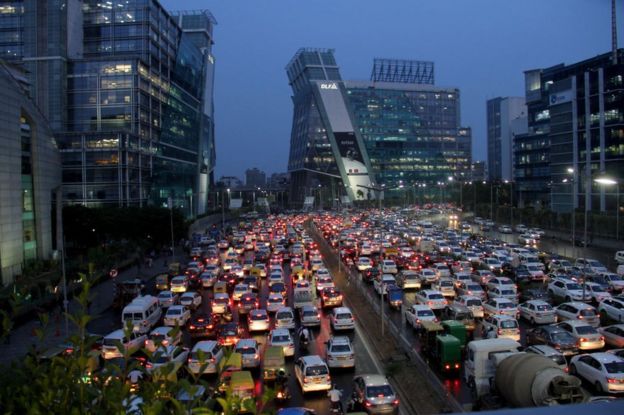
Image copyright GETTY IMAGESImage caption Sales of cars and SUVs have slumped to a seven-year-low.
One newspaper wondered whether India was “losing the consumption plot”. Taken together, all this points to a fall in both urban and rural incomes, leading to demand contraction. A crop glut has seen farm incomes drop. And credit stagnation, partly triggered by the collapse of a major non-banking financial institution, or a shadow bank, has led to a fall in lending and worsened matters.
Kaushik Basu, former chief economist of the World Bank and professor of economics at Cornell University, believes the slowdown is “much more serious” than he initially believed. “The evidence is now mounting to the point where it can no longer be ignored,” he told me.
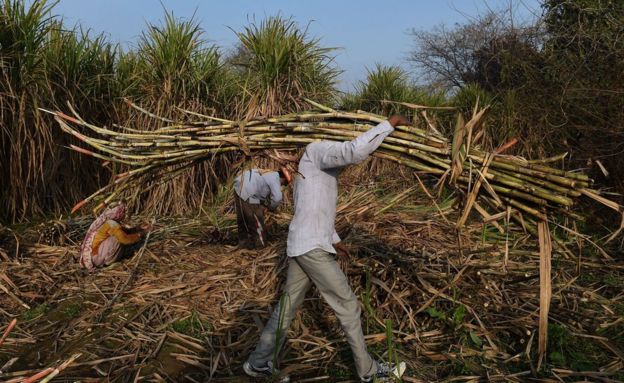
One reason, he believes, is the controversial currency ban in 2016 – also called demonetisation – which adversely hit farmers. More than 80% of the currency circulating in India’s sprawling cash-driven economy was taken out of circulation in what, in the words of one of Prime Minister Modi’s own advisers, was a “massive, draconian, monetary shock”.
Image copyright AFP
“This was evident to all by early 2017. What many observers did not realise then – I did not – is that the shock made the farmers take on debts which ended up causing sustained hardship to them that is continuing and slowing down the agriculture sector.”
No other injuries reported following accident on southern island of Hainan
Military is currently intensifying training for pilots as it looks to strengthen capabilities
Mobile phone footage believed to be taken from the crash site. Photo: Handout
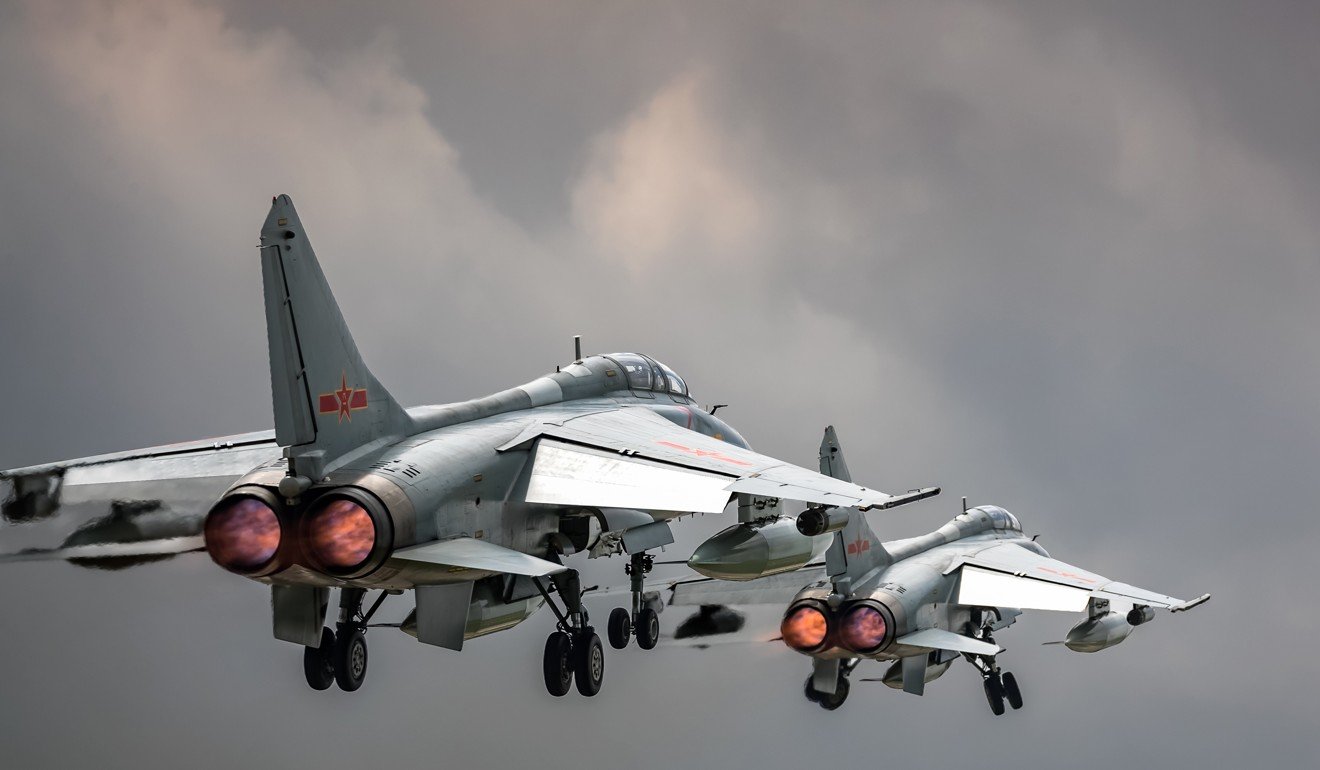
A Chinese navy plane crashed in Hainan province on Tuesday killing two crew members, the military said.
A short statement said the crash happened during a training exercise over rural Ledong county in the southern island province.
No one else was reported to have been injured after the plane hit the ground and the cause of the incident is being investigated.
Footage that purported to be taken from the crash site started circulating on social media after the accident.
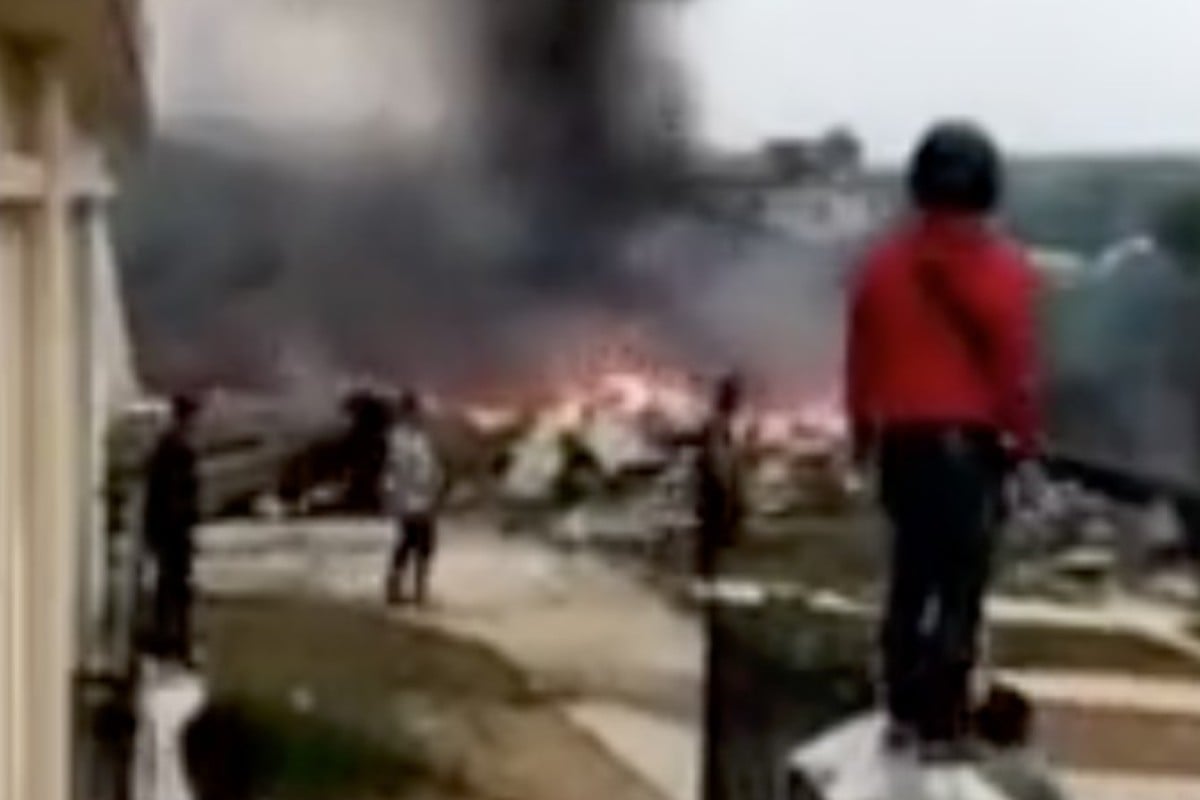
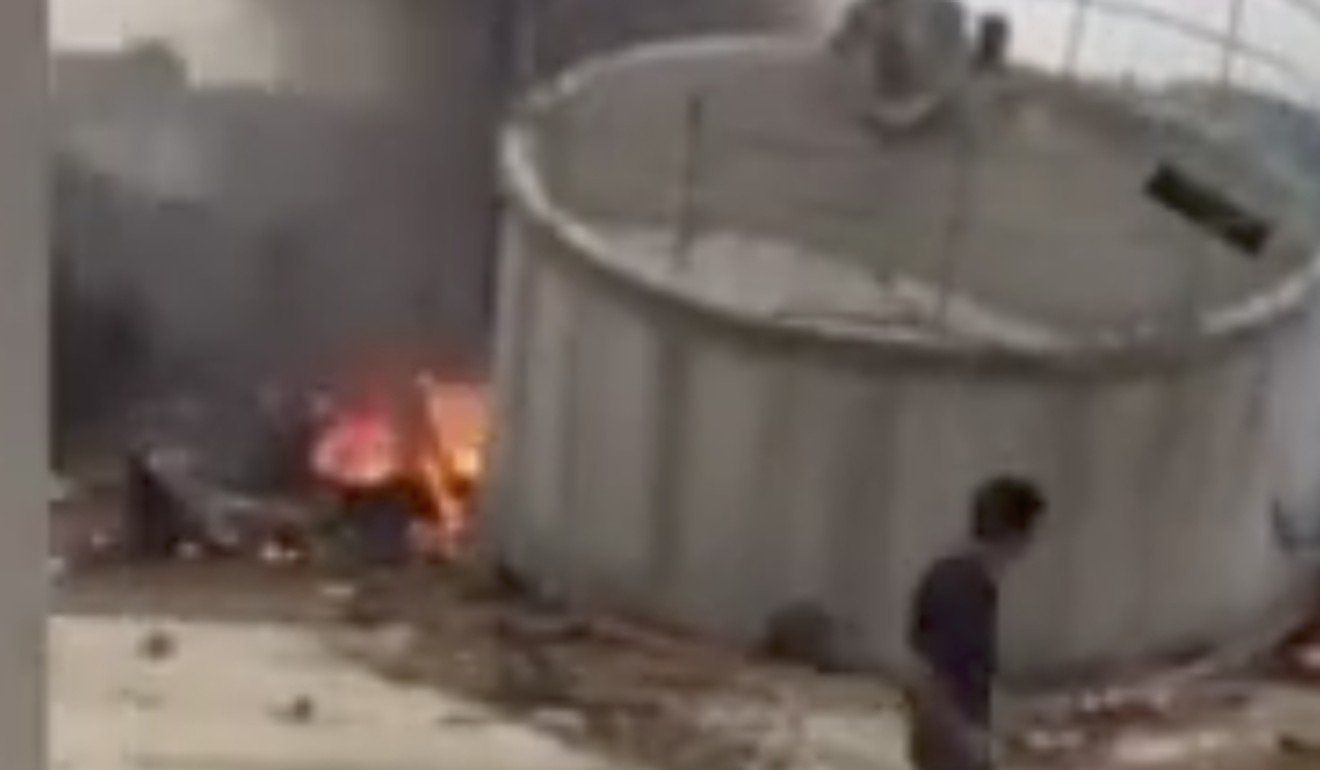
The mobile phone footage, which news portal 163.com said was taken in Hainan, showed smoke rising from piles of wreckage next to a damaged water tower as bystanders gathered at the site.
Footage apparently taken at the crash site. Photo: Handout
The person who uploaded the footage said the plane had hit the water tower before crashing into the ground.
The PLA’s official statement did not specify the type plane that crashed, although unverified witness account online said it was a twin-seat Xian JH-7 “Flying Leopard”.
The JH-7, which entered service with the navy and air force in the 1990s, has been involved in a number of fatal accidents over the years.
The country’s worst military air accident in recent years happened in January 2018. At least 12 crew members died when a PLA Air Force plane, believed to be an electronic reconnaissance aircraft, crashed in Guizhou in the southwest of the country.
Between 2016 and 2017, there were at least four accidents involving the navy’s J-15 “Flying Sharks”, one of them resulting in the death of the pilot.
Military commentators have previously said that China’s drive to improve its combat readiness, which includes the building of new aircraft carriers and warplanes, has resulted in a serious shortage of qualified pilots.
To fill the vacancies the Chinese military has started a major recruitment drive and intensive training programme for pilot pilots.
One unverified report said the plane that crashed was a JH-7 “Flying Leopard”. Photo. Xinhua
Currently China has one aircraft carrier, the Liaoning, in service, which can carry a maximum of 24 J-15s as well as other aircraft.
Meanwhile, the new home-grown carrier Type 001A will soon be commissioned, which is designed to accommodate to carry eight more fighters.
In addition, construction is believed to have started on another carrier that will be able to carry heavier and more advanced warplanes.
According to figures from the end of 2016, there were only 25 pilots qualified to fly the J-15 while 12 others were in training.
Most of the Chinese navy’s pilots have been redeployed from the air force, which is itself in need of more trained pilots.
This year the navy for the first time began a nation-wide programme to scout out potential pilots.
Speaking on the sidelines of the ongoing legislative meeting in Beijing Feng Wei, a PLA pilot from the Western Theatre, said the military was currently intensifying its pilots’ training as increasing amounts of new equipment entered service.
“Personnel quality is the key to everything,” he added.



 CHINDIA ALERT: You'll be living in their world, very soon