Chindia Alert: You’ll be Living in their World Very Soon
aims to alert you to the threats and opportunities that China and India present. China and India require serious attention; case of ‘hidden dragon and crouching tiger’.
Without this attention, governments, businesses and, indeed, individuals may find themselves at a great disadvantage sooner rather than later.
The POSTs (front webpages) are mainly 'cuttings' from reliable sources, updated continuously.
The PAGEs (see Tabs, above) attempt to make the information more meaningful by putting some structure to the information we have researched and assembled since 2006.
Image copyright AFPImage caption Decorated elephants lead the procession at the Jagannath temple’s annual festival in Ahmedabad
Animal rights activists in India have criticised a plan by the Assam state government to send four elephants on a perilous train journey of more than 3,100km (1,926 miles) to participate in a temple ritual. They say the long journey could be dangerous for the animals and may even kill them, writes the BBC’s Geeta Pandey in Delhi.
The elephants are to be moved from Tinsukia town in the north-eastern state of Assam to the extreme west of the country – Ahmedabad city in Gujarat state.
Reports say the railway authorities in Assam, who have been asked to make travel arrangements for the elephants, are looking for a coach to transport them.
No date is set for their departure yet, but they are expected to reach Ahmedabad before 4 July to participate in the annual Rath Yatra (chariot procession) at the Jagannath temple. The train journey is expected to take three to four days.
In previous years, Prime Minister Narendra Modi, who hails from Gujarat, has participated in the festival and the elephant procession, although temple officials say he’s not expected to attend this year.
Temple trustee Mahendra Jha told BBC Gujarati that they decided to “borrow” the animals from Assam “for two months” because three of their own elephants died from old age last year.
But activists and conservationists say the plan to move the elephants is “cruel and completely inhuman”, especially since temperatures are more than 40C (104F) in many places along the northern Indian route these elephants are expected to take.
Media caption Human-elephant conflict destroying lives in India
“Most of north-western India is reeling under a heatwave. There have been reports of people dying from heat during train journeys,” Kaushik Barua, a wildlife conservationist based in the Assam state capital, Guwahati, told the BBC.
“The wagon in which the elephants will be transported is not climate-controlled. It will be hitched to a passenger train which will be travelling at a speed of 100km/h (62mph), so can you imagine the plight of the animals?”
Mr Barua warns the journey may prove “dangerous” for the animals.
“They can suffer from heatstroke, from shock, and even die.”
Under the law, he says, there’s no problem moving these elephants since all the paperwork is in order, “but where’s the animal welfare?”
Also weighing in on the debate is the opposition Congress party MP from Assam, Gaurav Gogoi, who’s petitioned India’s Environment Minister Prakash Javadekar to intervene.
“Roughly half of the country is struggling through its worst drought in six decades…. These are extreme conditions for the elephants to travel… The elephants may suffer from acute skin infection and dehydration,” Mr Gogoi wrote in his letter on Thursday.
Media caption India’s first elephant hospital is run by the charity Wildlife SOS
“Therefore, I request the central government to intervene and instruct the state government to withdraw the decision as soon as possible.”
Elephants – both wild and captive – are a protected species in India and there are strict guidelines for their transportation, wildlife biologist Dr Bibhuti Prasad Lahkar told the BBC.
According to the rules, no elephant can be made to walk for more than 30km (18 miles) at a stretch or transported for more than six hours in one go.
The state’s wildlife officials, who’ve issued transit permits for the elephants, have so far refused to comment on the controversy. But after protests from activists and conservationists, “they have gone into a huddle, discussing a plan B,” according to a wildlife expert.
Image copyright GETTY IMAGESImage caption Elephants are a protected species in India
“There’s some suggestion that the pachyderms may be moved in trucks to allow them the flexibility to stop if needed and that they could be accompanied by a forest department veterinarian to look after them,” he said.
Mr Barua, however, is blunt.
“Gujarat doesn’t need these elephants,” he says. “Wildlife laws prevent [the] display and exhibition of elephants. Laws ban performances by elephants in circuses, zoos are not allowed to exhibit them, so why should temples be allowed to use them in rituals or processions? Don’t elephants have rights?
“We worship Ganesha, the Elephant God. Why are the Gods then being put through such cruelty by a temple?”
NEW DELHI (Reuters) – India’s federal think-tank has asked scooter and motorbike manufacturers to draw up a plan to switch to electric vehicles, days after they publicly opposed the government’s proposals saying they would disrupt the sector, two sources told Reuters.
Niti Aayog officials met with executives from companies including Bajaj Auto, Hero MotoCorp and TVS late on Friday, giving them two weeks to come up with the plan, according to one of the executives.
The think-tank, which is chaired by Prime Minister Narendra Modi and plays a key role in policymaking, had recommended that only electric models of scooters and motorbikes with engine capacity of more than 150cc must be sold from 2025, sources have told Reuters.
Automakers opposed the proposal and warned that a sudden transition, at a time when auto sales have slumped to a two-decade low, would cause market disruption and job losses.
India is one of the world’s largest two wheeler markets with sales of more than 20 million scooters and motorbikes last year.
During Friday’s meeting government officials argued that switching to EVs is of national importance so India does not miss out on the global drive towards environmentally cleaner vehicles, one of sources said.
But industry executives responded that a premature switch with no established supply chain, charging infrastructure or skilled labour in India, could result in India losing its leadership position in scooters and motorbikes, the second source said.
“There were clearly drawn out positions,” said the source, adding there were “strong opinions” at the meeting.
Bajaj, Hero and Niti Aayog did not respond to a request for comment, while TVS declined to comment.
ELECTRIFICATION
Niti Aayog is working with several other ministries on the recommendations, which are part of an electrification effort to help India reduce its fuel import bill and curb pollution.
The proposal also includes incentives for local production of batteries, an increase ownership cost of gasoline cars and forming a policy to scrap old vehicles, according to records of government meetings seen by Reuters.
The panel has also suggested measures such as directing taxi aggregators like Uber and Ola to convert 40% of their fleets to electric by April 2026, Reuters has reported.
Executives from EV start-up Ather Energy, ride-sharing firm Ola and officials from the Society of Indian Automobile Manufacturers (SIAM), an industry trade body, also attended the meeting, the sources said.
The proposals are India’s second attempt for a switch to EVs. In 2017 it proposed an ambitious plan mainly for electric cars but rowed back after facing resistance from car makers.
The current push could disrupt the market order for two-wheelers and open up avenues for local start-ups, analysts say.
Scooter and bike start-ups like Ather, 22Motors and Okinawa are already making in-roads in India.
“It is extremely critical that we make the transition to electric quickly lest we get wiped out by another global wave,” Tarun Mehta, CEO and co-founder at Ather said.
A Google search for basic information on India’s caste system lists many sites that, with varying degrees of emphasis, outline three popular tropes on the phenomenon.
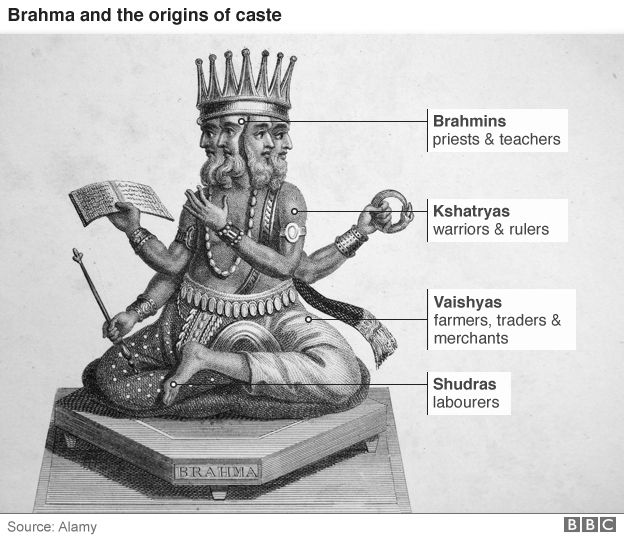
First, the caste system is a four-fold categorical hierarchy of the Hindu religion – with Brahmins (priests/teachers) on top, followed, in order, by Kshatriyas (rulers/warriors), Vaishyas (farmers/traders/merchants), and Shudras (labourers). In addition, there is a fifth group of “Outcastes” (people who do unclean work and are outside the four-fold system).
Second, this system is ordained by Hinduism’s sacred texts (notably the supposed source of Hindu law, the Manusmriti), it is thousands of years old, and it governed all key aspects of life, including marriage, occupation and location.
Third, caste-based discrimination is illegal now and there are policies instead for caste-based affirmative action (or positive discrimination).
These ideas, even seen in a BBC explainer, represent the conventional wisdom. The problem is that the conventional wisdom has not been updated with critical scholarly findings.
The first two statements may as well have been written 200 years ago, at the beginning of the 19th Century, which is when these “facts” about Indian society were being made up by the British colonial authorities.
In a new book, The Truth About Us: The Politics of Information from Manu to Modi, I show how the social categories of religion and caste as they are perceived in modern-day India were developed during the British colonial rule, at a time when information was scarce and the coloniser’s power over information was absolute.
Image caption Conventional wisdom says the caste system is a four-fold categorical hierarchy of the Hindu religion
This was done initially in the early 19th Century by elevating selected and convenient Brahman-Sanskrit texts like the Manusmriti to canonical status; the supposed origin of caste in the Rig Veda (most ancient religious text) was most likely added retroactively, after it was translated to English decades later.
These categories were institutionalised in the mid to late 19th Century through the census. These were acts of convenience and simplification.
The colonisers established the acceptable list of indigenous religions in India – Hinduism, Sikhism, Jainism – and their boundaries and laws through “reading” what they claimed were India’s definitive texts.
What is now widely accepted as Hinduism was, in fact, an ideology (or, more accurately, a theory or fantasy) that is better called “Brahmanism”, that existed largely in textual (but not real) form and enunciated the interests of a small, Sanskrit-educated social group.
There is little doubt that the religion categories in India could have been defined very differently by reinterpreting those same or other texts.
The so-called four-fold hierarchy was also derived from the same Brahman texts. This system of categorisation was also textual or theoretical; it existed only in scrolls and had no relationship with the reality on the ground.
This became embarrassingly obvious from the first censuses in the late 1860s. The plan then was to fit all of the “Hindu” population into these four categories. But the bewildering variety of responses on caste identity from the population became impossible to fit neatly into colonial or Brahman theory.
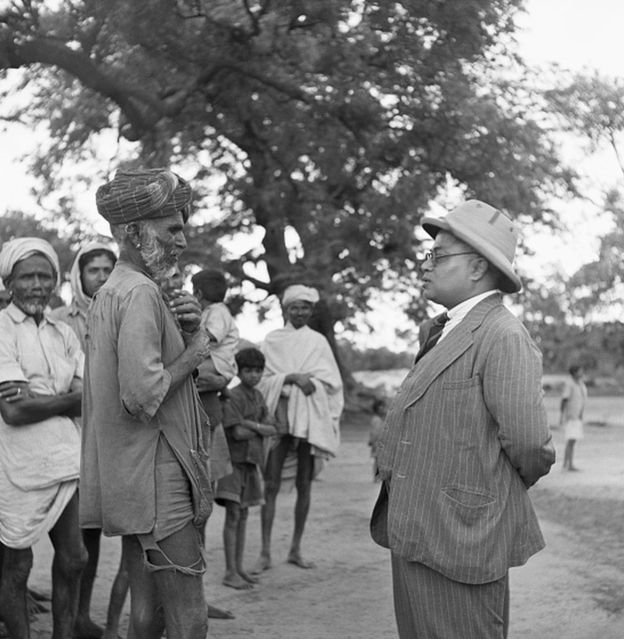
Image copyright GETTY IMAGESImage caption A leader of those formerly considered untouchable with a government official in British India
WR Cornish, who supervised census operations in the Madras Presidency in 1871, wrote that “… regarding the origin of caste we can place no reliance upon the statements made in the Hindu sacred writings. Whether there was ever a period in which the Hindus were composed of four classes is exceedingly doubtful”.
Similarly, CF Magrath, leader and author of a monograph on the 1871 Bihar census, wrote, “that the now meaningless division into the four castes alleged to have been made by Manu should be put aside”.
Anthropologist Susan Bayly writes that “until well into the colonial period, much of the subcontinent was still populated by people for whom the formal distinctions of caste were of only limited importance, even in parts of the so-called Hindu heartland… The institutions and beliefs which are now often described as the elements of traditional caste were only just taking shape as recently as the early 18th Century”.
In fact, it is doubtful that caste had much significance or virulence in society before the British made it India’s defining social feature.
Astonishing diversity
The pre-colonial written record in royal court documents and traveller accounts studied by professional historians and philologists like Nicholas Dirks, GS Ghurye, Richard Eaton, David Shulman and Cynthia Talbot show little or no mention of caste.
Social identities were constantly malleable. “Slaves” and “menials” and “merchants” became kings; farmers became soldiers, and soldiers became farmers; one’s social identity could be changed as easily as moving from one village to another; there is little evidence of systematic and widespread caste oppression or mass conversion to Islam as a result of it.
All the available evidence calls for a fundamental re-imagination of social identity in pre-colonial India.
The picture that one should see is of astonishing diversity. What the colonisers did through their reading of the “sacred” texts and the institution of the census was to try to frame all of that diversity through alien categorical systems of religion, race, caste and tribe. The census was used to simplify – categorise and define – what was barely understood by the colonisers using a convenient ideology and absurd (and shifting) methodology.
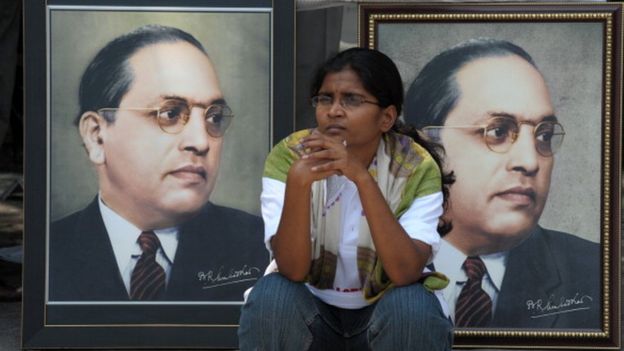
Image copyright AFPImage caption India’s constitution was written by BR Ambedkar, a member of the Dalit community which is at the bottom of the caste system
The colonisers invented or constructed Indian social identities using categories of convenience during a period that covered roughly the 19th Century.
This was done to serve the British Indian government’s own interests – primarily to create a single society with a common law that could be easily governed.
A very large, complex and regionally diverse system of faiths and social identities was simplified to a degree that probably has no parallel in world history, entirely new categories and hierarchies were created, incompatible or mismatched parts were stuffed together, new boundaries were created, and flexible boundaries hardened.
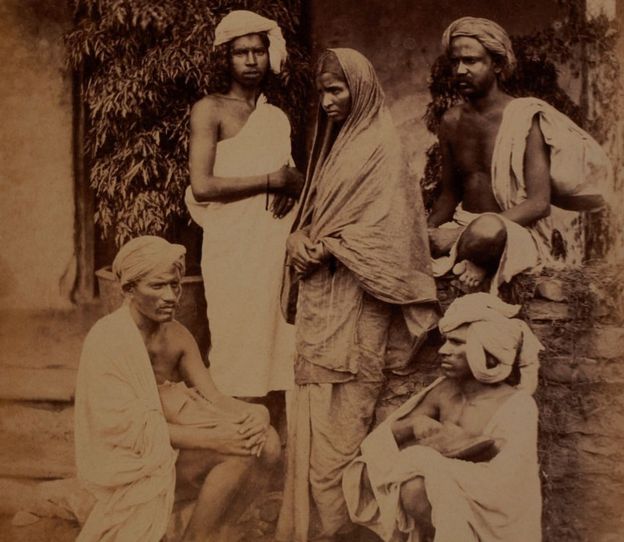
Image copyright GETTY IMAGESImage caption Dalits, or untouchables, were at the bottom of the caste system
The resulting categorical system became rigid during the next century and quarter, as the made-up categories came to be associated with real rights. Religion-based electorates in British India and caste-based reservations in independent India made amorphous categories concrete. There came to be real and material consequences of belonging to one category (like Jain or Scheduled Caste) instead of another. Categorisation, as it turned out in India, was destiny.
The vast scholarship of the last few decades allows us to make a strong case that the British colonisers wrote the first and defining draft of Indian history.
So deeply inscribed is this draft in the public imagination that it is now accepted as the truth. It is imperative that we begin to question these imagined truths.
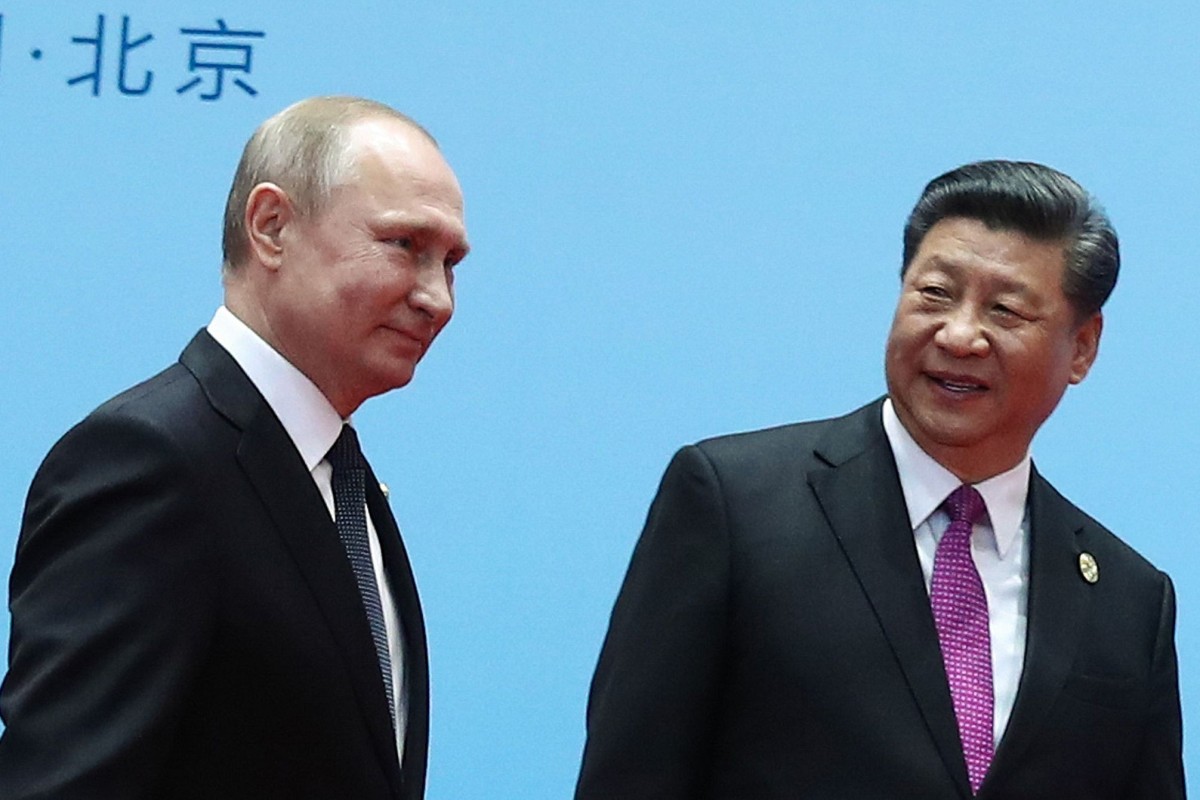
President Xi Jinping will meet Russian counterpart Vladimir Putin next month and address economic summit in St Petersburg
Diplomatic flurry will also include regional security forums in Kyrgyzstan and Tajikistan
Xi Jinping has met Vladimir Putin more times than any other foreign leader since he took power in 2013. Photo: AFP
Beijing is stepping up efforts to seek support from regional and global players such as Russia and Central Asian nations as its geostrategic rivalry with Washington heats up.
President Xi Jinping is expected to meet his Russian counterpart Vladimir Putin next month, when he will also address the St Petersburg International Economic Summit,
The Chinese president will also visit the Kyrgyzstan capital Bishkek for the Shanghai Cooperation Organisation (SCO) summit in June, as well as another regional security forum in Dushanbe, Tajikistan.
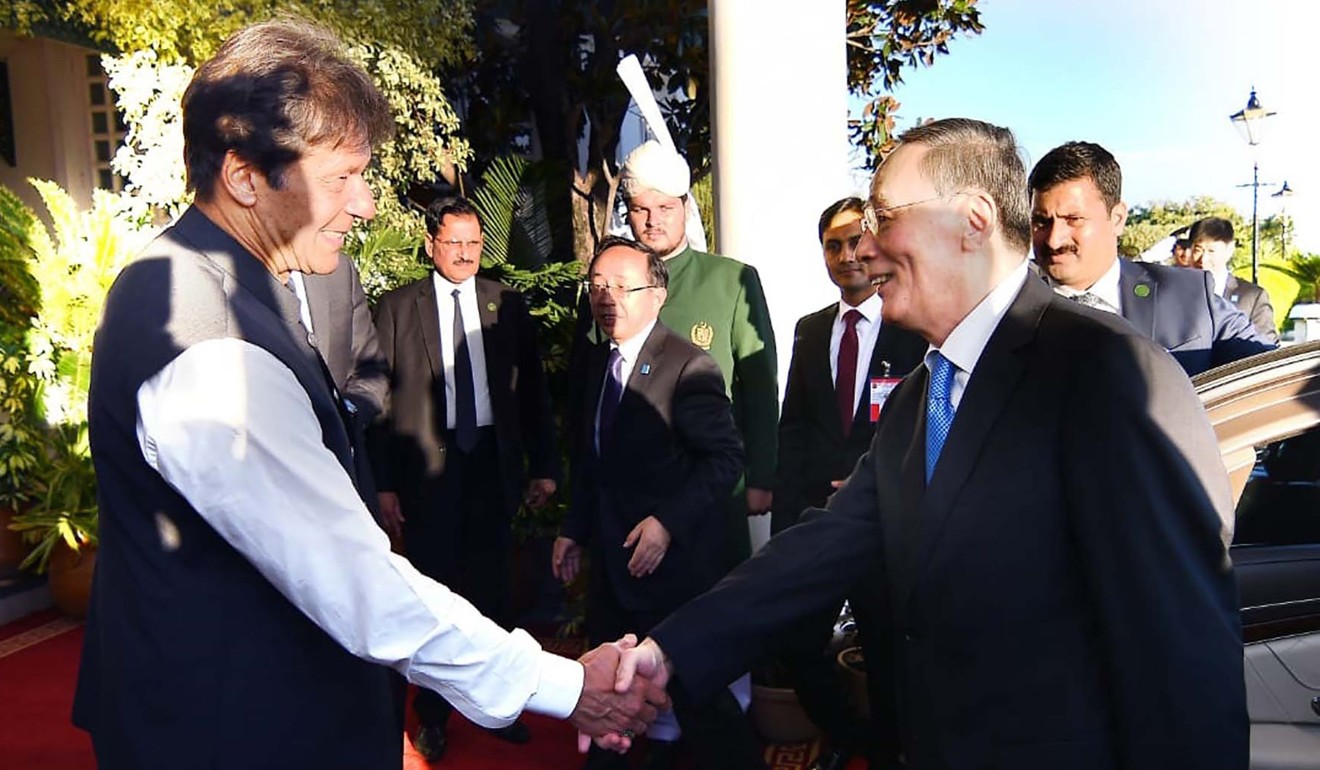
Meanwhile, Vice-PresidentWang Qishan is visiting Pakistan before he heads to the Netherlands and Germany, according to the Chinese foreign ministry.
Pakistani Prime Minister Imran Khan meets Chinese Vice-President Wang Qishan in Islamabad on Sunday. Photo: AFP
The latest flurry of diplomatic activity comes as competition between China and the US intensifies on several fronts including trade and technology, the South China Sea and the Arctic, where Beijing’s partnership with Moscow –
It will be Xi’s second time at the St Petersburg forum, and observers expect the Chinese leader will reaffirm Beijing’s commitment to multilateralism and promote the nation as a champion of openness and cooperation.
China-Russia ties unrivalled, Beijing warns before Pompeo meets Putin
It will also be his second meeting with Putin in two months, after talks on the sidelines of the Belt and Road Forum in Beijing in late April, when the Russian president
for the controversial China-led infrastructure and investment initiative.
With China and Russia edging closer, the latest meeting is likely to see efforts to coordinate their strategies on a range of issues – including Venezuela, North Korea, nuclear weapons and arms control, according to observers. Xi has met Putin more times than any other foreign leader since he took power in 2013.
“This time it is very likely that the latest anti-China moves by the US, such as new tariffs and the Huawei ban, will feature prominently in their conversations,” said Artyom Lukin, an associate professor at Far Eastern Federal University in Vladivostok.
Lukin said Russia’s stagnating economy and sanctions imposed by the West limited its role as a substitute for the foreign markets and technologies China could lose access to because of the US crusade. But he said Putin would “provide political and moral support to Xi”.
“That is also significant as Russia has been withstanding intense US-led sanctions pressure for more than five years already,” Lukin said, referring to sanctions imposed after Russia’s annexation of Crimea in 2014.
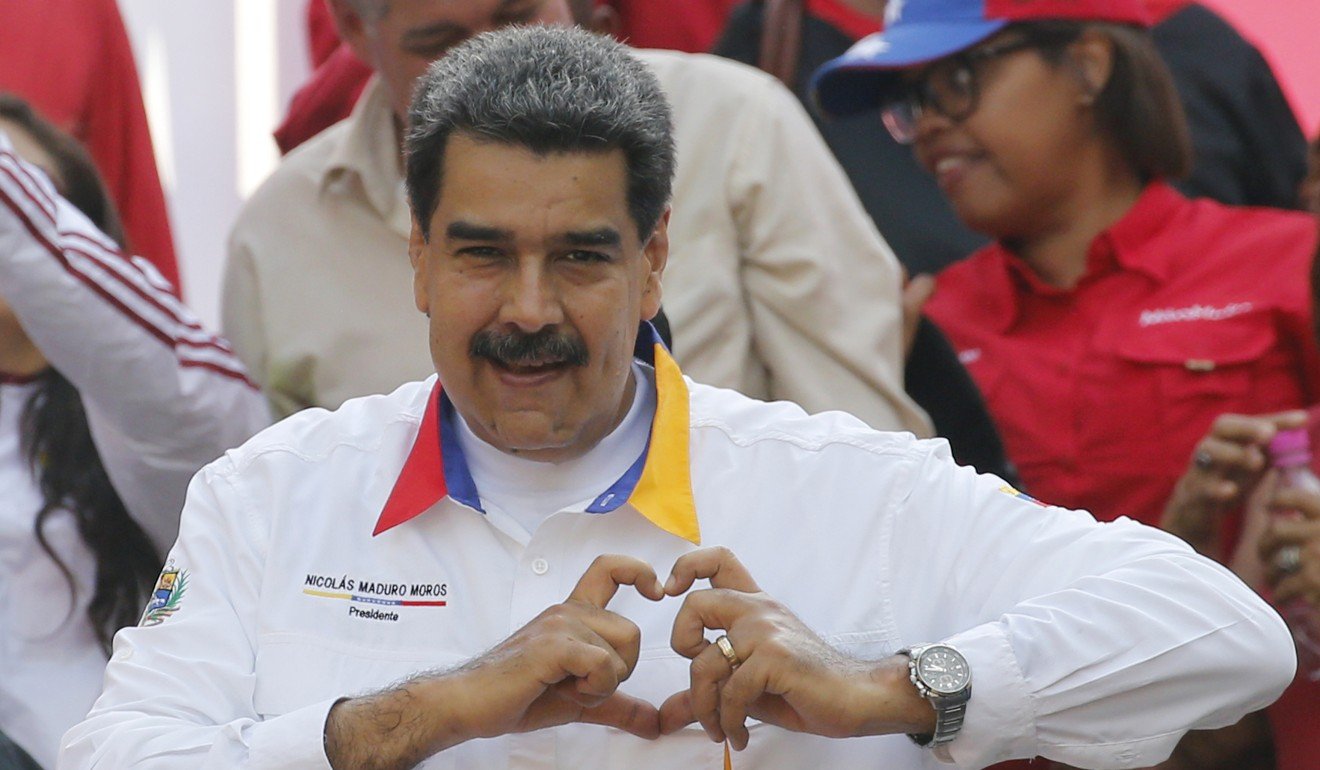
Xi and Putin are also expected to talk about Venezuela, where US-backed opposition leader Juan Guaido is attempting to oust socialist President Nicolas Maduro, who has the support of China and Russia.
Venezuelan President Nicolas Maduro has the backing of China and Russia. Photo: AP
“Moscow and Beijing are not able to seriously hurt Washington by raising tariffs or denying access to high technology. However, there are plenty of areas where coordinated Sino-Russian policies can damage US interests in the short term or in the long run,” Lukin said. “For example, Moscow and Beijing could intensify their joint support for the Venezuelan government of Nicolas Maduro, frustrating Washington’s efforts to dislodge him.”
China and Russia would also be seeking to boost economic ties. Bilateral trade, dominated by Chinese imports of gas and oil, reached US$108 billion last year – falling far short of the target set in 2011 by Xi’s predecessor, Hu Jintao, of US$200 billion by 2020.
China and Russia to forge stronger Eurasian economic ties
Li Lifan, an associate research professor at the Shanghai Academy of Social Sciences, said bilateral trade was a sticking point. “This is one of the potential hindrances in China-Russia relations and Beijing is hoping to [address this] … in the face of a possible global economic slowdown,” Li said.
Given the escalating trade war with Washington, he said China would seek to diversify its investments and markets to other parts of the world, particularly Russia and Europe.
“China will step up its investment cooperation with Europe and Russia and focus more on multilateral investment,” Li said.
But Beijing was not expected to do anything to worsen tensions with Washington.
“China is currently taking a very cautious approach towards the US, trying to avoid heating up the confrontation and further aggravation of the situation,” said Danil Bochkov, a contributing author with the Russian International Affairs Council. “For China it is important to demonstrate that it has a reliable friend – Russia – but that should not be done in an openly provocative manner.”
Stephen Blank, a senior fellow at the American Foreign Policy Council in Washington, said Beijing and Moscow would also seek to contain US influence “as far as possible” from Central Asia, where China has increased its engagement through infrastructure building under the “Belt and Road Initiative”.
Leaders from the region will gather in Bishkek next month for the SCO summit, a security bloc set up in 2001 that now comprises China, Russia, Kazakhstan, Kyrgyzstan, Tajikistan, Uzbekistan, India and Pakistan. Those members account for about 23 per cent of the world’s land mass, 45 per cent of its population, and 25 per cent of global GDP.
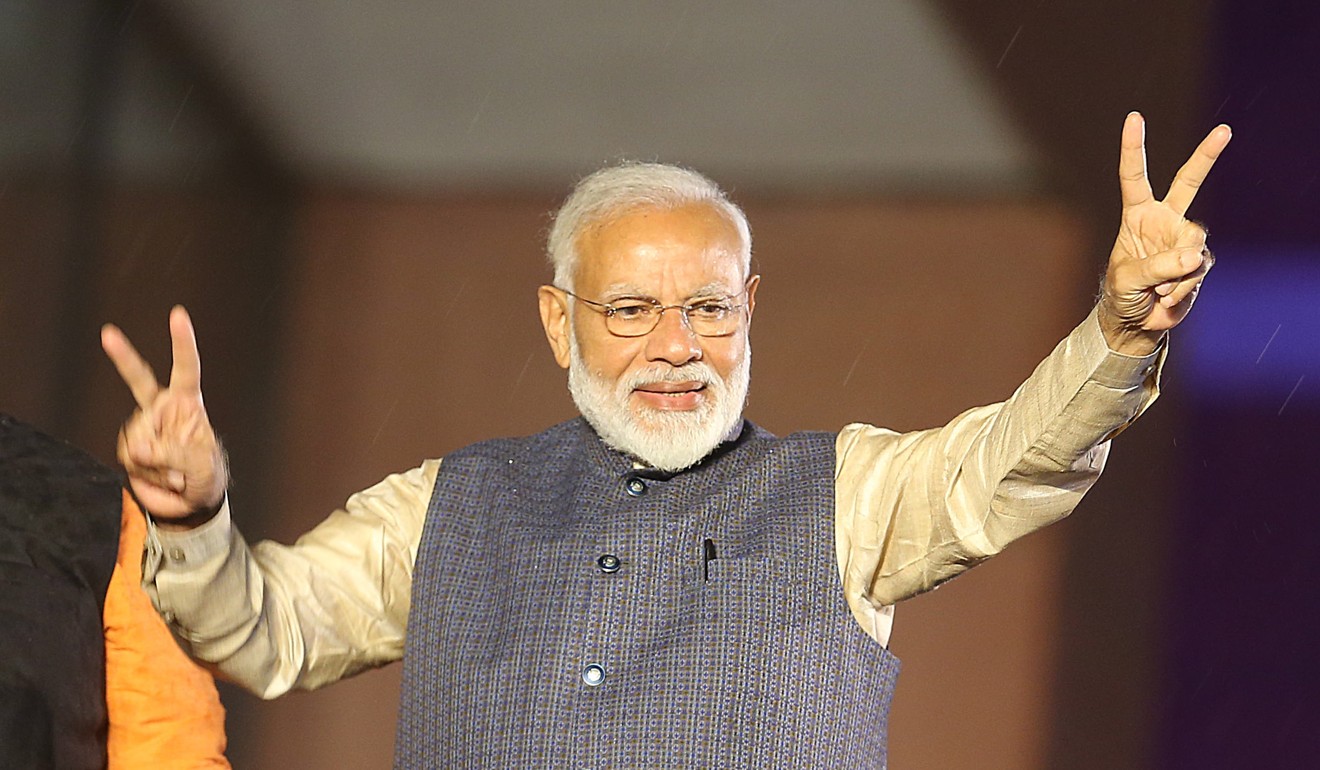
Newly re-elected Indian Prime Minister Narendra Modi could meet the Chinese president for talks in Bishkek next month. Photo: EPA-EFE
There is growing speculation that Xi will meet newly re-elected Indian Prime Minister Narendra Modi on the sidelines of that summit.
Independent analyst and author Namrata Goswami said India would be seeking a commitment to a WTO-led and rules-based multilateral trading system during the SCO talks.
“This is interesting and significant given the current US tendencies under President Donald Trump focused on ‘America first’ and the US-China trade war,” Goswami said.
Counterterrorism will again be a top priority at the SCO summit, amid concerns among member states about the rising number of Islamic State fighters returning from Syria and Iraq. Chinese scholars estimated last year that around 30,000 jihadists who had fought in Syria had gone back to their home countries, including China.
Alexander Bortnikov, chief of the main Russian intelligence agency FSB, said earlier that 5,000 fighters from a group affiliated with Isis had gathered in areas bordering former Soviet states in Central Asia, saying most of them had fought alongside Isis in Syria.
War-torn Afghanistan, which shares a border with four SCO member states – China, Pakistan, Tajikistan and Uzbekistan – is also likely to be high on the agenda at the Bishkek summit.
“With the Trump administration drafting plans to withdraw troops from Afghanistan, the SCO will assess the security situation there and decide whether to provide training for Afghan troops,” Li said.
Eva Seiwert, a doctoral candidate at the Free University of Berlin, expected the security bloc would also discuss Iran after the US withdrew from the 2015 nuclear deal and ordered new sanctions against the country.
Iran, which has observer status with the SCO, was blocked from becoming a full member in 2008 because it was subject to UN sanctions at the time. But its membership application could again be up for discussion.
Iran presses China and Russia to save nuclear deal
“The Trump administration’s unilateral withdrawal from the Iran nuclear deal in 2018 made it easy for China and Russia to present themselves as the proponents of peaceful settlement of conflicts,” Seiwert said. “Discussing the possibility of admitting Iran as a full member state would help the SCO members demonstrate their support of multilateral and peaceful cooperation.
“This would be a strong signal to the US and enhance the SCO’s standing in the international community,” she said.
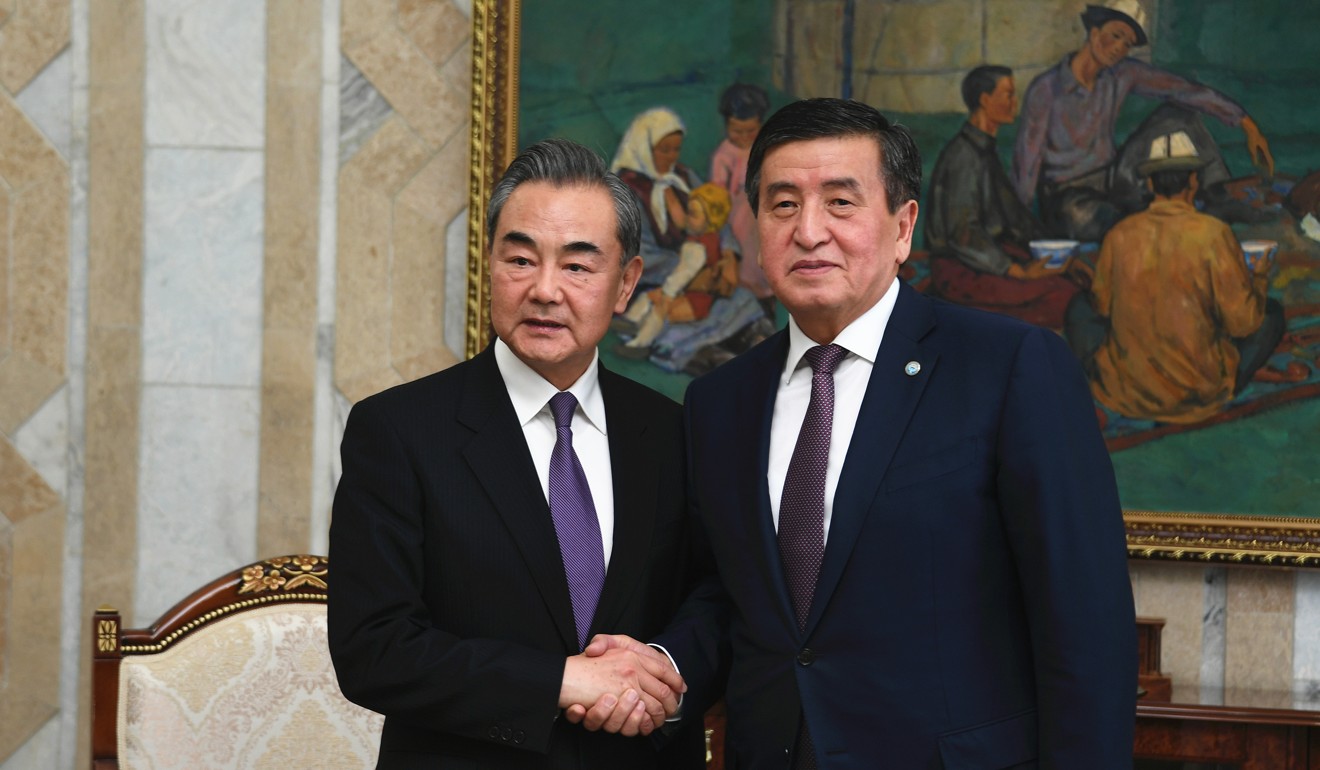
Kyrgyz President Sooronbay Jeenbekov (right) meets Chinese Foreign Minister Wang Yi in Bishkek on Tuesday last week. Photo: Xinhua
As well as security, Xi’s visit to Central Asia is also likely to focus on economic ties. Meeting Kyrgyz President Sooronbay Jeenbekov in Bishkek last week, Chinese Foreign Minister Wang Yi said Beijing would continue to “provide support and help national development and construction in Kyrgyzstan”.
Li said China may increase investment in the Central Asian region, especially in greenfield projects.
“China will continue to buy agriculture products from Central Asia, such as cherries from Uzbekistan, and build hydropower projects to meet local energy demand,” Li said. “Investment in solar and wind energy projects is also expected to increase too.”
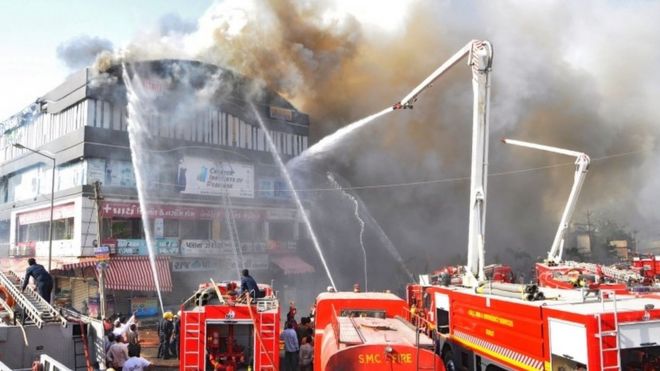
Image copyright GETTY IMAGESImage caption The fire ripped through tuition classes in the western state of Gujarat
At least 19 students have died in a fire at a school in India, officials said.
Students were seen jumping and falling from the building in the western city of Surat as black smoke billowed from windows.
Most of the victims were teenagers who had been studying at a tuition centre.
The initial cause of the fire was not immediately clear. Officials said the blaze spread through packed classrooms because of flammable roofing.
At least 20 others sustained serious injuries and were being treated in hospital in Gujarat.
“The students lost their life both because of the fire and jumping out of the building,” Deepak Sapthaley, a local fire official, told AFP.
All of the dead were aged below 20 years and many were trapped because the fire began near the staircase, Reuters reported.
Prime Minister Narendra Modi offered his condolences on Twitter and called for local authorities to provide assistance.
Narendra Modi
✔@narendramodi
Extremely anguished by the fire tragedy in Surat. My thoughts are with bereaved families. May the injured recover quickly. Have asked the Gujarat Government and local authorities to provide all possible assistance to those affected.
An inquiry into the incident has been ordered and a report is expected within three days, said the spokesman for the office of Gujarat Chief Minister Vijay Rupani.
Rahul Gandhi, who had fronted the opposition campaign against Prime Minister Narendra Modi, has owned responsibility for the crushing defeat at the meeting.
LOK SABHA ELECTIONSUpdated: May 25, 2019 14:07 IST
HT Correspondent
Hindustan Times, NewDelhi
Seated next to Rahul Gandhi as he shared his brief analysis of the election is UPA chairperson Sonia Gandhi (Sanjeev Verma/ HT Photo)
Congress president Rahul Gandhi on Saturday is leading a review of his party’s devastating performance in the Lok Sabha elections at a meeting of the Congress Working Committee, or CWC.
Rahul Gandhi, who had fronted the opposition campaign against Prime Minister Narendra Modi, has owned responsibility for the crushing defeat at the meeting. Seated next to Rahul Gandhi as he shared his brief analysis of the election is UPA chairperson Sonia Gandhi and former Prime Minister Manmohan Singh. Sister Priyanka Gandhi Vadra, former minister P Chidambaram and Congress’s leader in the outgoing Lok Sabha Mallikarjun Kharge was also present.
Television channels initially said Rahul Gandhi had offered to resign at the CWC which was rejected by the top panel but later put out a clarification. Three senior Congress including Uttar Pradesh unit chief Raj Babbar, HK Patil, who was tasked to oversee the Karnataka Congress campaign and Odisha Congress chief Niranjan Patnaik have resigned after the election debacle.
The Congress won just about 52 seats in the Lok Sabha in this round of national elections, a shade better than its worst performance ever, in the 2014 elections, when it ended up with 44 seats.
Congress leaders have indicated that the CWC could go for a deeper analysis of the election outcome that goes beyond the obvious. Some drastic action could also follow.
Senior Congress leaders assembled at the party’s Working Committee meeting in New Delhi.
For now, the Congress’s top priority is to get the party fighting fit in Maharashtra, Haryana and Jharkhand that will head to assembly elections later this year. Assembly elections in Jammu and Kashmir are likely to be held anytime soon and Delhi will go to the polls in February next year.
The party chiefs in many states are likely to be replaced and new teams put in place within a week or two. This will be in line with a realisation in the Congress that a revival at the national level is possible only when the party resurrects itself in the states.
Some new general secretaries and in-charges of states are also expected to be appointed soon.
Gandhi had made it clear at an unusually brief news conference after the poll verdict came on Thursday that the party was determined to fight back. “Have faith and we will work and sort this out in the time to come,” Gandhi said, his message to party workers and supporters. “Love never loses, and I am certain that we will emerge stronger and work better… love will guide us.
The Congress which did not get the post of the Leader of Opposition in the Lok Sabha in 2014 may not get it this time also. A party should get 10 per cent, or 55 of the 543 Lok Sabha seats, to be entitled to the Leader of Opposition designation for its leader.
Rahul Gandhi has already taken responsibility for the party’s performance in the Lok Sabah elections but hasn’t elaborated on the next step yet.
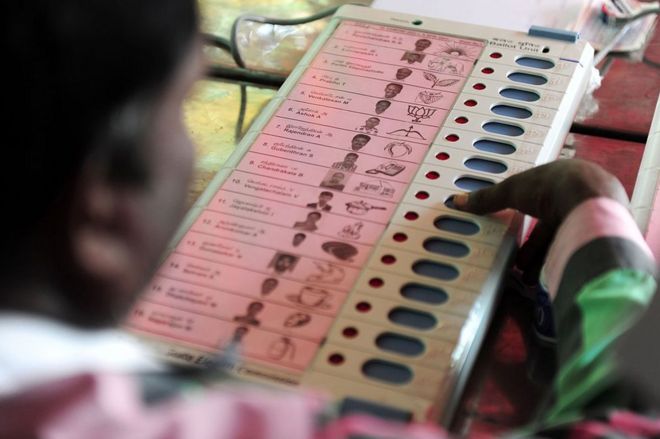
Image copyright AFPImage caption More than 1.5 million e-voting machines will be used in the summer elections
India’s election is nearly over: voting began on 11 April, and the final ballot was cast on 19 May with results out on 23 May. Every day, the BBC will be bringing you all the latest updates on the twists and turns of the world’s largest democracy.
What happened?
India’s Election Commission has denied allegations that voting machines had been tampered with in parts of India.
India’s opposition parties are meeting the election watchdog on Tuesday to demand more transparency in counting of votes on 23 May (Thursday).
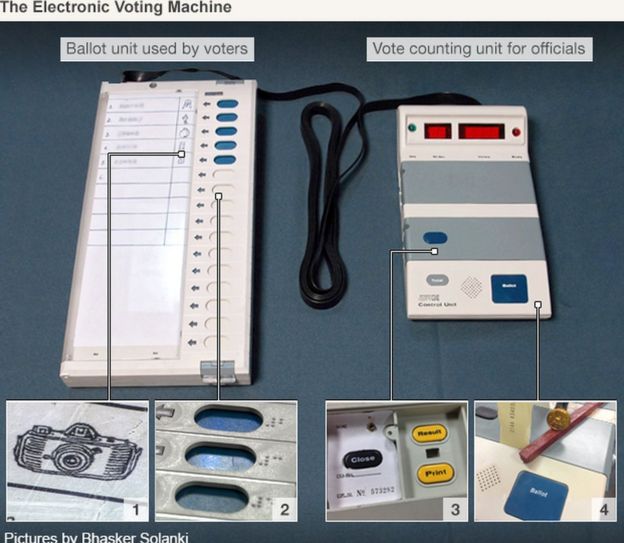
Opposition leaders said the EC had to ensure that there was no possibility of anybody manipulating the Electronic Voting Machines (EVMs) which were used to record votes in the general election that concluded on Sunday.
In Uttar Pradesh’s Ghazipur constituency, a candidate belonging to the opposition Bahujan Samaj Party held a protest outside a room where the machines have been stored ahead of the counting. The candidate alleged that attempts were being made to take out the machines from the storage room.
Local officials have said the allegations are baseless.
The apprehensions regarding EVMs are baseless. EVMs are in strong room with 24×7 CISF security. And candidates have been allowed to post their agents to monitor the strong room.
In Chandauli constituency, supporters of Samajwadi Party have circulated a mobile phone clip, alleging that some machines were being brought to the counting station on Monday, a day after the election.
Local officials have said the machines shown in the video are reserve machines which had been brought from another part of the constituency because of logistical reasons.
The Election Commission has insisted that “proper security and protocol” was maintained in storing the electronic voting machines.
Why does this matter?
The move comes after a slew of exit polls predicted that the governing Bharatiya Janata Party (BJP) would get a comfortable majority in parliament to form a government.
Sitaram Yechury from the Left Front said the EC was “yet to come out with a mechanism” to deal with a mismatch between an EVM result and the corresponding paper trail.
During voting, EVMs are connected to a Voter-Verifiable Paper Audit Trail (VVPAT) machine, which dispenses a slip of paper with the symbol of the party the voter selected.
The Supreme Court has ordered the EC to tally the results from five EVMs with VVPAT receipts in at least five polling stations in every assembly seat. A parliamentary constituency comprises several assembly seats.
But opposition parties say that the tally should done for the entire constituency in case of a mismatch.
“On VVPATs and the EVM tally, the EC is yet to come out with a procedure in case there is a mismatch. Even if there is one mismatch in the EVMs or VVPAT samples picked for counting, to maintain the integrity of the electoral process, all VVPATs in that Assembly segment must be counted. This is important to maintain integrity of the electoral process,” Mr Yechury said.
If this were to happen however, it would considerably slow down the counting process and declaration of results.
PM Modi tweets tribute to former PM Rajiv Gandhi
What happened?
Prime Minister Narendra Modi has tweeted on the occasion of the death anniversary of former PM Rajiv Gandhi.
Mr Modi has repeatedly attacked Mr Gandhi on the campaign trail and his slurs have prompted widespread criticism.
He called Mr Gandhi the “number one corrupt man in the country” at a rally earlier this month in the northern state of Uttar Pradesh. A few days later, he went after Mr Gandhi again – accusing him of using a naval aircraft carrier to take him and his family to an island for a “family holiday”.
Mr Gandhi was assassinated by a suicide bomber in 1991 during a campaign rally.
Why does this matter?
Mr Modi’s tweet marking Mr Gandhi’s death anniversary is customary – but it has garnered attention because he attacked the former prime minister repeatedly while campaigning and didn’t back down when challenged.
Many were taken aback by Mr Modi’s criticism of Mr Gandhi. It elicited condemnation not just from the main opposition Congress party, but other regional opposition leaders, political commentators and even former political opponents of Mr Gandhi.
Analysts said the comments were a sign of “desperation” and showed that Mr Modi “knew” his party was not going to perform as well as expected in the election.
Now that campaigning is over and the election is nearly at an end, Mr Modi seems to be abandoning acerbic rhetoric for something more conciliatory.
On Monday, opposition rejects exit poll results
Image copyrightGETTY IMAGES
What happened?
Opposition leaders have dismissed the exit polls, which suggest that the governing Bharatiya Janata Party (BJP) is on course to win the general election.
I don’t trust Exit Poll gossip. The game plan is to manipulate or replace thousands of EVMs through this gossip. I appeal to all Opposition parties to be united, strong and bold. We will fight this battle together
A slew of exit polls released on Sunday predict big wins for the BJP-led National Democratic Alliance (NDA). The highest poll prediction for the NDA is 365 seats, and the lowest is 242.
An average of all exit polls gives the NDA 295 seats. Any party or coalition needs at least 272 seats to secure a majority in parliament and form a government.
The BJP welcomed the prediction and many of its leaders congratulated party workers’ efforts on social media.
Why does this matter?
Exit polls have to be taken with caution because they have been wrong in the past – a fact that opposition leaders were quick to point out.
I believe the exit polls are all wrong. In Australia last weekend, 56 different exit polls proved wrong. In India many people don’t tell pollsters the truth fearing they might be from the Government. Will wait till 23rd for the real results.
Time and again exit polls have failed to catch the People’s pulse. Exit polls have proved to be incorrect and far from ground reality in many instances. While undoubtedly TDP govt will be formed in AP, we are confident that non-BJP parties will form a non-BJP govt at the center.
The BJP is locked in a fierce electoral battle with the Congress and a clutch of regional parties in various states. But the trends suggest that the opposition’s strategy may have failed.
The most surprising prediction has come from the bellwether state of Uttar Pradesh (UP), which sends 80 MPs to parliament – more than any other.
So the state always holds the key to who forms the government – in 2014, the BJP won 71 seats.
Analysts had predicted that powerful regional parties would comfortably defeat the BJP this time around. But most of the exit polls suggest the party will perform much better than expected in UP – winning anything between 38 to 68 seats.
Only two polls – Nielsen-ABP and NewsX-Neta – have predicted that the BJP would lose at least 40 seats in UP to regional parties. Nielsen-ABP says the NDA will win 22 seats in the state, while NewsX-Neta gives the coalition only 33 seats.
These are the the only two polls which predict that the BJP-led alliance could fall short of an outright majority.
ENJERLA/NEW DELHI, India (Reuters) – It was supposed to be Johnson & Johnson’s biggest manufacturing plant in India. It was to eventually employ at least 1,500 people and help bring development to a rural area near Hyderabad in southern India.
Yet, three years after the U.S. healthcare company completed construction of production facilities for cosmetics and baby products on the 47-acre site, they stand idle.
Two sources familiar with J&J’s operations in India and one state government official told Reuters production at the plant, at Penjerla in Telangana state, never began because of a slowing in the growth in demand for the products.
One of them said that demand didn’t rise as expected because of two shock policy moves by Prime Minister Narendra Modi: a late 2016 ban on then circulating high-value currency notes, and the nationwide introduction of a goods and services tax (GST) in 2017.
J&J spokespeople in its Mumbai operations in India and at its global headquarters in New Brunswick, New Jersey, declined to respond to a list of questions from Reuters.
Modi’s office did not respond to a call and an email with questions.
Aimed at rooting out corruption and streamlining the tax system, the double whammy of ‘demonetization’ and GST – were two of Modi’s signature policy moves. But instead of encouraging economic activity as intended, they did the opposite, at least in 2016-2018, by sapping consumer demand, according to some economists.
Many businesses, especially small and medium-sized enterprises, complained publicly – some in their financial statements – that they suffered a drop off in orders. The suspended J&J project stands as one of the most vivid examples of the impact on the broader investment picture.
In the first month after demonetization, some business surveys showed that sales of products such as shampoos and soap fell more than 20 percent.
Lack of jobs growth and a farm-income crisis because of low crop prices have hurt Modi in the current general election, according to several political strategists.
Still, Modi and his ruling Hindu nationalist Bharatiya Janata Party are expected by many of the strategists to be in a position to get a second term – probably with support of some other parties – when votes are counted on Thursday, partly because of his strong stance on national security issues.
BIG INVESTMENTS, GREAT EXPECTATIONS
A range of Modi’s business policies, such as capping prices of medical devices, forcing tech companies to store more data locally and stricter e-commerce regulations have in the past two years hurt plans of American multinationals such as J&J, Mastercard, Amazon and Walmart-owned Flipkart.
The groundbreaking of the J&J facility in Penjerla, its third in the country, was carried out with much fanfare in 2014, attended by Telangana state’s Chief Minister Chandrashekar Rao, who hailed the foreign investment as a big win for local communities. A document dated April 2017 that lists products the company planned to make at the facility, submitted to the Telangana government and reviewed by Reuters, names baby oil, baby shampoo, baby lotion, baby hair oil, face wash and creams.
Shaukat Ali, running a tea shop under a bamboo stall on barren land outside the plant, said local workers check in routinely for possible vacancies at the J&J site, but nothing has come up in years.
At the local pollution control board office, the member secretary Satyanarayana Reddy said the J&J plant had all the required approvals and he was not sure why it hadn’t started production.
“It is unusual for such a big plant to stay idle for so long,” he said. “But there is no problem from our side.”
Chandrasekhar Babu, an additional director at the Telangana industries department, said a J&J company official told him the plant hadn’t started due to lack of demand.
GST and demonetization were two key reasons the plan didn’t kick off, one of the sources said, adding that lack of consumer demand since then dented company’s plans.
The second source familiar with J&J’s plans said the company miscalculated Indian market demand.
On a recent visit by a Reuters reporter to the J&J plant, plush, furnished conference rooms and cubicles sat inactive; M. Sairam, who said he was the site manager, told Reuters production areas with machines were idle too.
PLANNED FURTHER EXPANSION
Local officials had hoped the initial J&J plant would be only the beginning. After the groundbreaking in 2014, Pradeep Chandra, who was Telangana’s special chief secretary of industries, told Business Today magazine that “based on the extent of land (J&J) have acquired we believe that they are looking at much larger expansion here.”
Local media reports at the time said the J&J facility would employ some 1,500 people.
A J&J official, who was not identified by name, was reported subsequently in December 2016 in India’s Business Standard assaying that the $85 million plant would be operational by 2018 after it had overcome procedural delays. The official was quoted as saying the company had earmarked an additional $100 million for expansion.
Vikas Srivastava, the managing director of J&J Consumer(India), who was at the 2014 groundbreaking, did not respond to calls for comment.
Reuters also talked to two workers outside a sprawling Procter & Gamble facility making detergents and diapers, which is next to the J&J plant. They said they were part of the P&G plant’s production team and the plant had been running below capacity.
A P&G spokesperson denied that, saying the plant was “operating at full capacity in line with our business plans”. “India is a priority market for P&G globally and in recent quarters, P&G’s business in India has registered strong double-digit growth consistently,” the company said.
The weak rural economy, where most Indians work, has also hurt growth in sales of basic items such as detergents and shampoo in the past year.
Hindustan Unilever Ltd, an industry bellwether that would compete with the likes of J&J and P&G in some categories, said its volume growth shrank to 7 percent in the quarter ended March 31, down from double-digit growth in the previous five quarters.
The company warned that the daily consumer goods segment in India was “recession resistant … not recession proof.”
NEW DELHI (Reuters) – The Bharatiya Janata Party (BJP) has one unwanted lead in this month’s general election race – according to data from an electoral watchdog it is fielding the most candidates among the major parties who are facing criminal charges. Its main rival, Congress, is just a step behind.
Election laws allow such candidates to run so long as they have not been convicted, on grounds both of fairness and because India’s criminal justice system moves so slowly that trials can take years, or even decades, to be resolved.
Still, the number of such candidates accused of offences ranging from murder to rioting has been rising with each election.
Analysts say political parties turn to them because they often have the deepest pockets in steadily costlier elections, and that some local strongmen are seen as having the best chance of winning.
Nearly one-in-five candidates running for parliament in the current election has an outstanding criminal case against them, inching up from 17% in the previous election and 15% in 2009, according to the Association for Democratic Reforms (ADR), a non-profit organisation that analysed candidates’ declarations.
The data shows that 40% candidates from Prime Minister Narendra Modi’s BJP face criminal charges, including crimes against women and murder, followed by the Congress party at 39%.
Among the smaller parties, the Communist Party of India (Marxist) has an even higher proportion, with 58 percent of its candidates embroiled in criminal cases.
Polls have suggested that the BJP and its allies lead the race to win the mammoth, staggered election that began last month and ends on Sunday. Votes will be counted on Thursday.
“Parties only think about winnability and they know that money power and muscle power of such candidates ensures that win,” said Anil Verma, head of the ADR.
With 240 cases against him, K Surendran of the BJP tops the list of candidates with the most outstanding criminal complaints that include rioting, criminal trespass and attempted murder.
He said most of the cases stem from his involvement in the BJP campaign to oppose the entry of women and girls of menstruating age into the Sabarimala temple in his home state of Kerala.
“I understand that an outsider might feel that I am a grave offender but, in reality, I am completely innocent of these charges,” he said. “It was all politically motivated.”
Dean Kuriakose from the Congress party has 204 criminal cases against him, the second highest, the data showed. Most of the cases were related to a political agitation against the ruling Communist Party in Kerala, which turned violent.
He was not available for comment. But a party spokesman said Kuriakose was innocent. “He was falsely charged by the police under influence from Kerala government,” the spokesman said.
Political analysts say that often people vote for candidates who face criminal charges because they are seen as best placed to deliver results. In some parts of India local strongmen mediate in disputes and dispense justice.
“Powerful people, even if criminals, offer a kind of parallel system of redressal,” said K.C. Suri, a professor of political science at the University of Hyderabad.
A separate ADR survey of more than 250,000 voters last year found 98% felt candidates with criminal backgrounds should not be in parliament, though 35% said they were willing to vote for such a candidate on caste grounds or if the candidate had done “good work” in the past.
Image copyright REUTERSImage caption Economists say India’s growth is powered by the ‘top 100 million’ people
As India lumbers towards the final phase of an exhausting general election and Prime Minister Narendra Modi’s BJP seeks a second term in power, there’s some worrying news. The world’s fastest growing major economy appears to be headed for a slowdown.
The signs are everywhere. Economic growth slowed to 6.6% in the three months to December, the slowest in six quarters. Sales of cars and SUVs have slumped to a seven-year-low. Tractors and two-wheelers sales are down. Net profits for 334 companies (excluding banks and financials) are down 18% year-on-year, according to the Financial Express newspaper.
Image copyright GETTY IMAGESImage caption Sales of cars and SUVs have slumped to a seven-year-low.
One newspaper wondered whether India was “losing the consumption plot”. Taken together, all this points to a fall in both urban and rural incomes, leading to demand contraction. A crop glut has seen farm incomes drop. And credit stagnation, partly triggered by the collapse of a major non-banking financial institution, or a shadow bank, has led to a fall in lending and worsened matters.
Kaushik Basu, former chief economist of the World Bank and professor of economics at Cornell University, believes the slowdown is “much more serious” than he initially believed. “The evidence is now mounting to the point where it can no longer be ignored,” he told me.
One reason, he believes, is the controversial currency ban in 2016 – also called demonetisation – which adversely hit farmers. More than 80% of the currency circulating in India’s sprawling cash-driven economy was taken out of circulation in what, in the words of one of Prime Minister Modi’s own advisers, was a “massive, draconian, monetary shock”.
Image copyright AFP
“This was evident to all by early 2017. What many observers did not realise then – I did not – is that the shock made the farmers take on debts which ended up causing sustained hardship to them that is continuing and slowing down the agriculture sector.”


 Image copyright AFP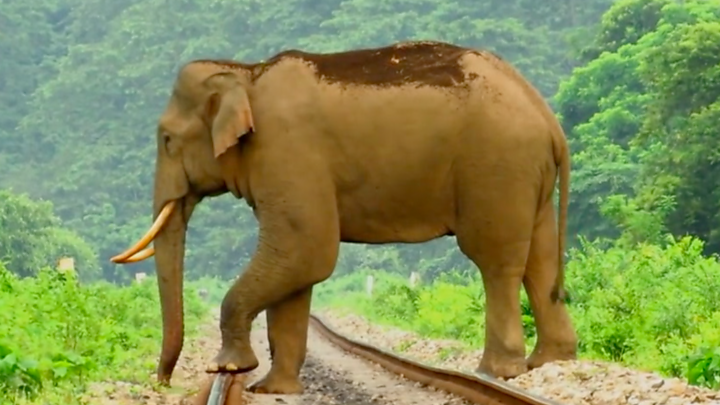
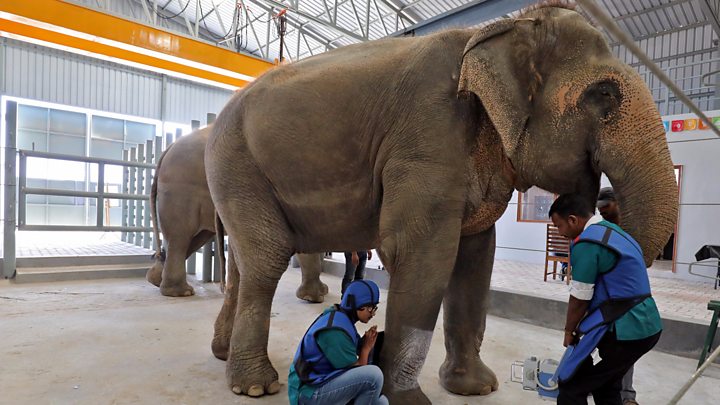
 Image copyright GETTY IMAGES







 CHINDIA ALERT: You'll be living in their world, very soon