Chindia Alert: You’ll be Living in their World Very Soon
aims to alert you to the threats and opportunities that China and India present. China and India require serious attention; case of ‘hidden dragon and crouching tiger’.
Without this attention, governments, businesses and, indeed, individuals may find themselves at a great disadvantage sooner rather than later.
The POSTs (front webpages) are mainly 'cuttings' from reliable sources, updated continuously.
The PAGEs (see Tabs, above) attempt to make the information more meaningful by putting some structure to the information we have researched and assembled since 2006.
Researchers conclude that the virus was circulating undetected in France in February
Findings highlight the difficulties governments face in tracing the source of coronavirus outbreaks
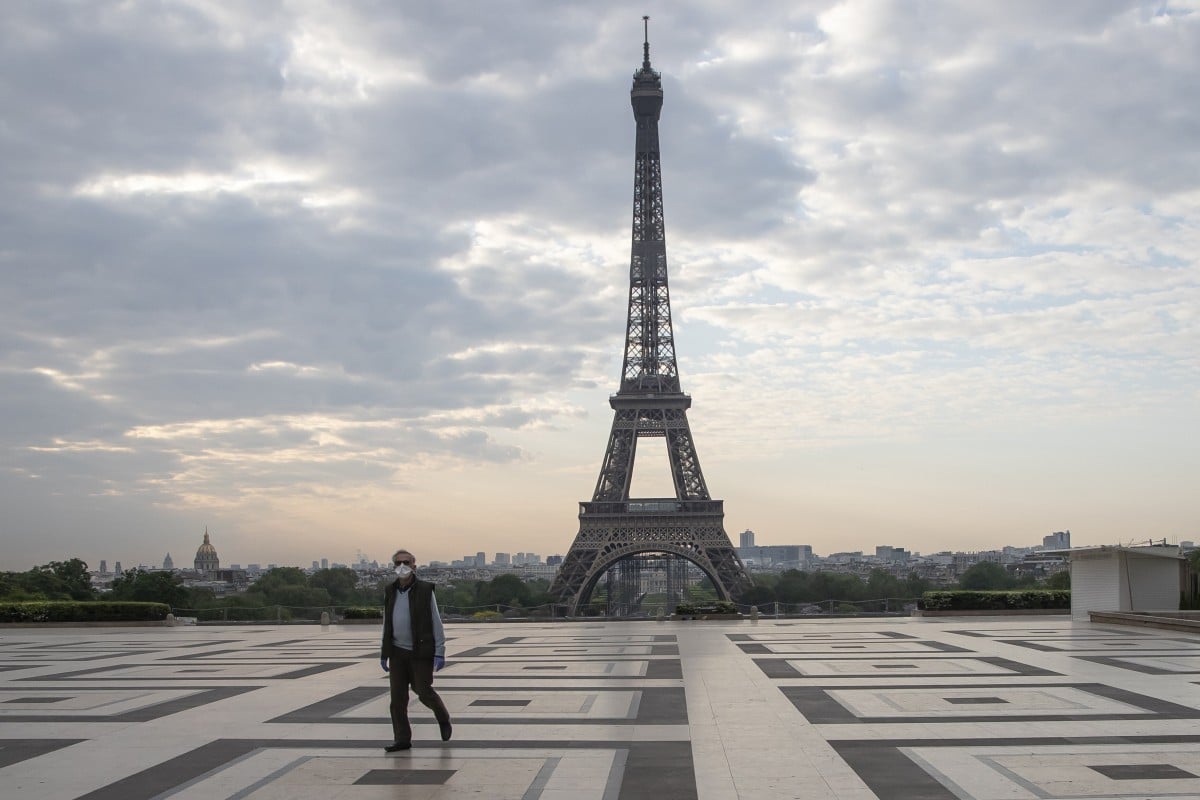
Researchers in France have carried out genetic analysis and found that the dominant types of the viral strains in the country did not come from China or Italy. Photo: AP
The coronavirus outbreak in France was not caused by cases imported from China, but from a locally circulating strain of unknown origin, according to a new study by French scientists at the Institut Pasteur in Paris.
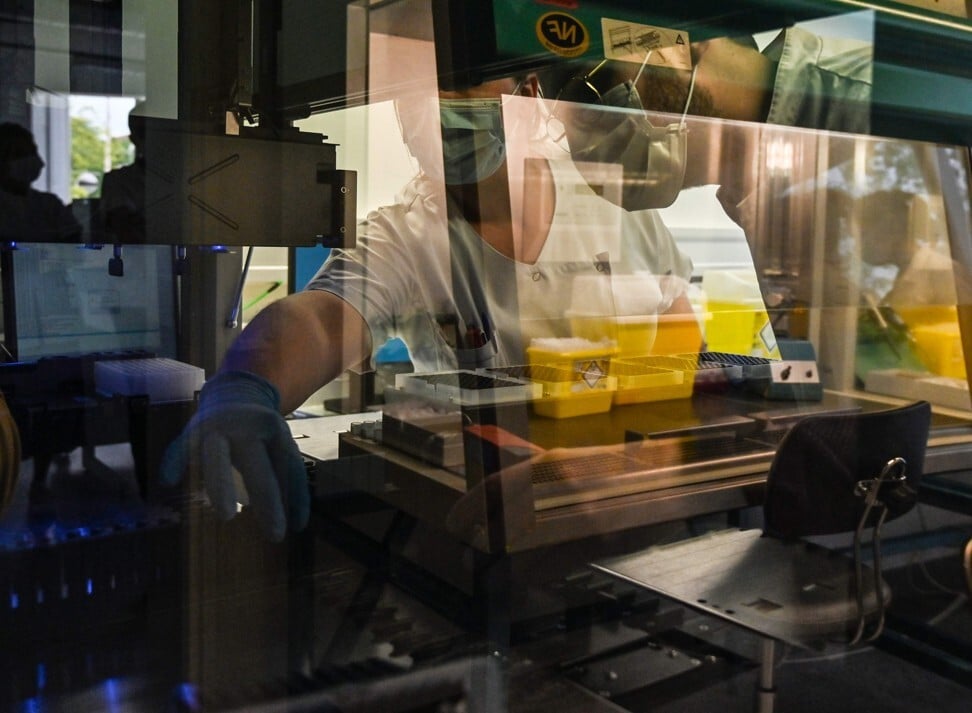
Genetic analysis showed that the dominant types of the viral strains in France belonged to a clade – or group with a common ancestor – that did not come from China or Italy, the earliest hotspot in Europe.
“The French outbreak has been mainly seeded by one or several variants of this clade … we can infer that the virus was silently circulating in France in February,” said researchers led by Dr Sylvie van der Werf and Etienne Simon-Loriere in a non-peer reviewed paper released on bioRxiv.org last week.
The Covid-19 pandemic has infected more than 128,000 people in France and caused more than 23,000 deaths.
France detected the virus in late January, before any other country in Europe. A few patients with a travel history that included China’s Hubei province were sampled on January 24 and tested positive.
The Covid-19 pandemic has infected more than 128,000 people in France and caused more than 23,000 deaths. Photo: AFP
The French government took quick and decisive measures to trace contacts of the infected people and shut down the chance of further infection.
However, these strains were not found in patients tested after the initial imported cases, suggesting “the quarantine imposed on the initial Covid-19 cases in France appears to have prevented local transmission”, the researchers said.
The Pasteur institute collected samples from more than 90 other patients across France and found the strains all came from one genetic line. Strains following this unique path of evolution had so far only been detected in Europe and the Americas.
Singapore Covid-19 cases to rise as not all migrant workers being tested
28 Apr 2020
The earliest sample in the French clade was collected on February 19 from a patient who had no history of travel and no known contact with returned travellers.
Several patients had recently travelled to other European countries, the United Arab Emirates, Madagascar and Egypt but there was no direct evidence that they contracted the disease in these destinations.
To the researchers’ surprise, some of the later strains collected were genetically older – or closer to the ancestral root – than the first sample in this clade.
Spanish official cries reading names of health workers killed by coronavirus
A possible explanation, according to the authors, was that local transmission had been occurring in France for some time without being detected by health authorities.
The French government may have missed detecting the transmission. According to the researchers, a large proportion of those patients might have had mild symptoms or none at all.
The researchers also found that three sequences later sampled in Algeria were closely related to those in France, suggesting that travellers from France might have introduced the virus to the African country and caused an outbreak.
China says US politicians are lying as Trump calls for Covid-19 damages
29 Apr 2020
Benjamin Neuman, professor and chair of biological sciences with the Texas A&M University-Texarkana, said the French strains might have come from Belgium, where some sequences most closely related to the original strain from China were clustered.
“Since the earliest European strains of [the coronavirus] Sars-CoV-2 seem to be associated with Belgium, the idea that the virus spread from Belgium to both Italy and France at around the same time seems plausible, as this paper contends,” he said.
France is the latest in a growing number of countries and areas where no direct link between China and local outbreaks could be established.
The dominant strains in Russia and Australia, for instance, came from Europe and the United States, respectively, according to some studies.
These findings have drawn fire from some politicians who have tried to deflect domestic anger over their handling of the crisis by blaming China.
Is this the next big hotspot for the ‘little flu’?
28 Apr 2020
“So now the Fake News @nytimes is tracing the CoronaVirus origins back to Europe, NOT China. This is a first!” he tweeted on April 11, referring to a story about the studies in the The New York Times’ science section.
The findings also highlight the difficulties governments face in tracing the source of coronavirus outbreaks.
Less-developed countries may never know where their strains came from due to inadequate testing and sequencing capability.
India, for example, has released the genetic sequence of fewer than 40 samples to the public so far, a small number considering its huge population.
Most of the strains sampled in 35 early cases came from clades that could be traced to Italy and Iran, with only a few from China, according to a recent study. But researchers were not able to track further because of the lack of data.
A scientist on the study, Dr Mukesh Thakur, of the Zoological Survey of India, said it was too early to rule out China as the source of outbreaks in India because the number of samples at hand was limited.
A 20-year-old student studying medicine in Wuhan, for instance, might have come in contact with many people on the way home before she was tested positive on January 30.
Thakur said local media reported that the Indian government quarantined 3,500 people possibly linked to three positive cases imported from Wuhan.
“God knows how many of them tested positive in the subsequent stages,” Thakur said in an email response to the Post’s queries on Tuesday.
Some prominent scientists, including Francis Collins, director of the US National Institutes of Health, said the virus might have been spreading quietly in humans for years, or even decades, without causing a detectable outbreak.
The virus had thus adapted well to the human body. Some genes regulating its binding to host cells were similar, or even identical, to those found in some other highly infectious human viruses, such as HIV and Ebola.
According to some estimates, the ancestor of Sars-CoV-2, the virus causing Covid-19, might have left bats between 50 and 70 years ago. A recent study by a team of geneticists in Oxford University estimated the first outbreak of the current pandemic could have occurred as early as September last year.
They found that the dominant strains circulating in China and Asia were genetically younger than some popular strains in the United States.
But trade with partner countries might not be as badly affected as with countries elsewhere in the world, observers say
China’s trade with belt and road countries rose by 3.2 per cent in the January-March period, but second-quarter results will depend on how well they manage to contain the pathogen, academic says
China’s investment in foreign infrastructure as part of its Belt and Road Initiative has been curtailed because of the coronavirus pandemic. Photo: Xinhua
The coronavirus pandemic is set to cause a slump in Chinese investment in its signature
and a dip in trade with partner countries that could take a year to overcome, analysts say.
But the impact of the health crisis on China’s economic relations with nations involved in the ambitious infrastructure development programme might not be as great as on those that are not.
China’s total foreign trade in the first quarter of 2020 fell by 6.4 per cent year on year, according to official figures from Beijing.
Trade with the United States, Europe and Japan all dropped in the period, by 18.3, 10.4 and 8.1 per cent, respectively, the commerce ministry said.
By comparison, China’s trade with belt and road countries increased by 3.2 per cent in the first quarter, although the growth figure was lower than the 10.8 per cent reported for the whole of 2019.
China’s trade with 56 belt and road countries – located across Africa, Asia, Europe and South America – accounts for about 30 per cent of its total annual volume, according to the commerce ministry.
Despite the first-quarter growth, Tong Jiadong, a professor of international trade at Nankai University in Tianjin, said he expected China’s trade with belt and road countries to fall by between 2 and 5 per cent this year.
His predictions are less gloomy than the 13 to 32 per cent contraction in global trade forecast for this year by the World Trade Organisation.
“A drop in [China’s total] first-quarter trade was inevitable but it slowly started to recover as it resumed production, especially with Southeast Asian, Eastern European and Arab countries,” Tong said.
“The second quarter will really depend on how the epidemic is contained in belt and road countries.”
Nick Marro, Hong Kong-based head of global trade at the Economist Intelligence Unit, said he expected China’s total overseas direct investment to fall by about 30 per cent this year, which would be bad news for the belt and road plan.
“This will derive from a combination of growing domestic stress in China, enhanced regulatory scrutiny over Chinese investment in major international markets, and weakened global economic prospects that will naturally depress investment demand,” he said.
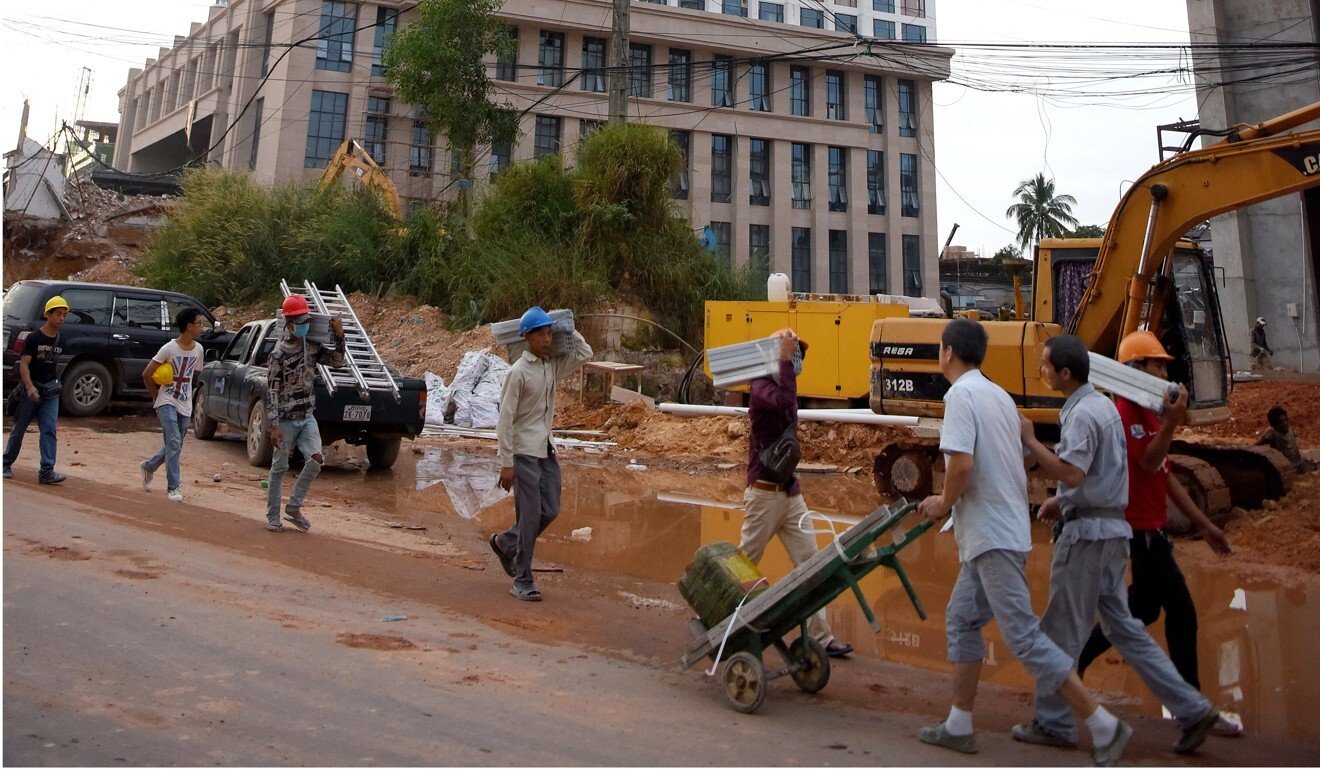
The development of the Chinese built and operated special economic zone in the Cambodian town of Sihanoukville is reported to have slowed, while infrastructure projects in Bangladesh, including the Payra coal-fired power plant, have been put on hold.
The development of the Chinese built and operated special economic zone in the Cambodian town of Sihanoukville is reported to have slowed. Photo: AFP
Marro said the reduction of capital and labour from China might complicate other projects for key belt and road partner, like Pakistan, which is home to infrastructure projects worth tens of billions of US dollars, and funded and built in large part by China.
“Pakistan looks concerning, particularly in terms of how we’ve assessed its sovereign and currency risk,” Marro said.
“Public debt is high compared to other emerging markets, while the coronavirus will push the budget deficit to expand to 10 per cent of GDP [gross domestic product] this year.”
Last week, Pakistan asked China for a 10-year extension to the repayment period on US$30 billion worth of loans used to fund the development of infrastructure projects, according to a report by local newspaper Dawn.
China’s overseas investment has been falling steadily from its peak in 2016, mostly as a result of Beijing’s curbs on capital outflows.
Last year, the direct investment by Chinese companies and organisations other than banks in belt and road countries fell 3.8 per cent from 2018 to US$15 billion, with most of the money going to South and Southeast Asian countries, including Singapore, Vietnam, Indonesia and Pakistan.
Tong said the pandemic had made Chinese investors nervous about putting their money in countries where disease control measures were becoming increasingly stringent, but added that the pause in activity would give all parties time to regroup.
“Investment in the second quarter will decline and allow time for the questions to be answered,” he said.
“Past experience along the belt and road has taught many lessons to both China and its partners, and forced them to think calmly about their own interests. The epidemic provides both parties with a good time for this.”
Dr Frans-Paul van der Putten, a senior research fellow at Clingendael Institute in the Netherlands, said China’s post-pandemic strategy for the belt and road in Europe
might include a shift away from investing in high-profile infrastructure projects like ports and airports.
Investors might instead cooperate with transport and logistics providers rather than invest directly, he said.
“Even though in the coming years the amount of money China loans and invests abroad may be lower than in the peak years around 2015-16, I expect it to maintain the belt and road plan as its overall strategic framework for its foreign economic relations,” he said.
Teenager alleges man filmed his attacks and threatened her into silence
Victim’s mother says she never knew reason for daughter’s suicide attempts
Chinese girl accuses teacher of four years of beatings and sexual assault
28 Feb 2019
A 17-year-old girl alleges a teacher sexually assaulted her over four years and blackmailed her with video of the assaults. Photo: Weibo
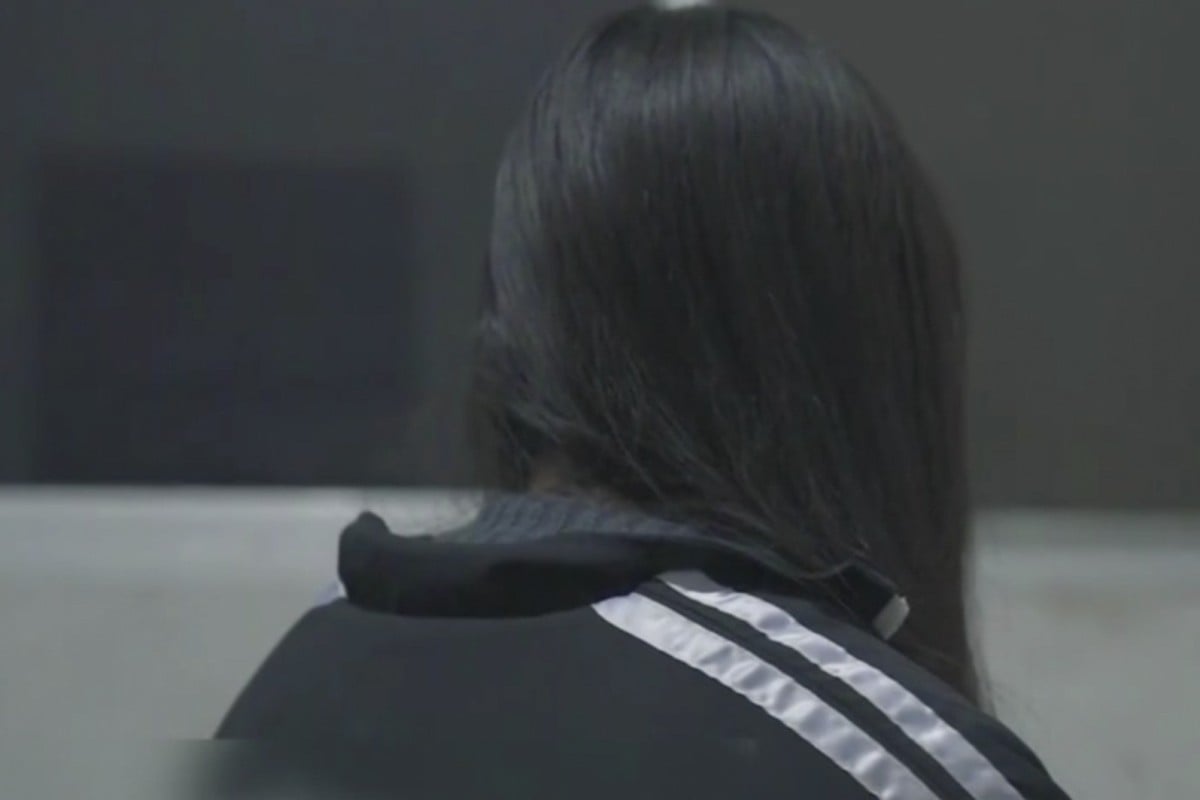
A teenage girl from northwestern China has created shock waves by publicly accusing a schoolteacher of four years of rape, physical abuse and blackmail.
The girl, now 17, told the City and Youth Channel of Shaanxi Television on Wednesday that the teacher at Chenggu County No 4 Middle School in Shaanxi province forced her into a sexual relationship and threatened her with violence if she spoke about the attacks.
Authorities began an investigation into allegations against a 42-year-old man about a week ago after the girl was found beaten up on a country road. A man identified by the surname Ni was taken into police custody in connection with the attacks. The county’s education bureau has also launched an inquiry, Shaanxi Television reported.
The interview with the girl was widely reported by Chinese newspapers and had been viewed more than 18 million times on Weibo by Thursday afternoon.
China’s #MeToo claim costs university professor his job
The student claimed she was first raped in 2015, when she was summoned by Ni to a classroom on the pretext of teaching her to draw.
“He grabbed me from behind after I entered the room,” she told Shaanxi Television. “I struggled and screamed, but he covered my mouth with his hand.”
Ni repeatedly raped her over the years, she claimed, and filmed the assaults. He would often hit her and threaten to make the videos public, she said.
The alleged assaults began when the girl, then 13, was summoned to an art class at school. Photo: Weibo
Share:
They last met on February 18, when the girl tried to persuade Ni to delete the videos but she was beaten again, she said. “He slapped my face and seized me by the throat in his car. He then held me down, sat on me and continued to hit me.”
The attacks stopped when passers-by witnessed the man beating the teenager and called police, the report said.
“The girl has suffered a trauma in the past couple of years. She has tried to kill herself several times, but I did not know the real reason,” the girl’s mother said in the report. “I thought it was the pressure at school.”
For some on social media, the story was an indictment of Chinese society’s treatment of sexual assault victims.
“Such an experience would be ‘humiliating’ in China,” one commenter said. “People around her would not really feel sorry for her. They would avoid her because she was ‘dirty’.”
Teenage sexual assault survivor demands right to be heard
“All girls who have come forward in an environment with such a patchy rule of law and pressure from the public are brave,” another said.
Students at schools and colleges began to speak out last year in the wake of the international #MeToo movement and a national campaign against sexual harassment that spread across schools and college campuses.
A year ago, Luo Qianqian, a former student at Beihang University in Beijing, alleged that she and at least five other women had been sexually harassed by one of their professors.
The professor was fired after an inquiry found his behaviour “was a breach of administrative discipline and the norms of being a teacher”.
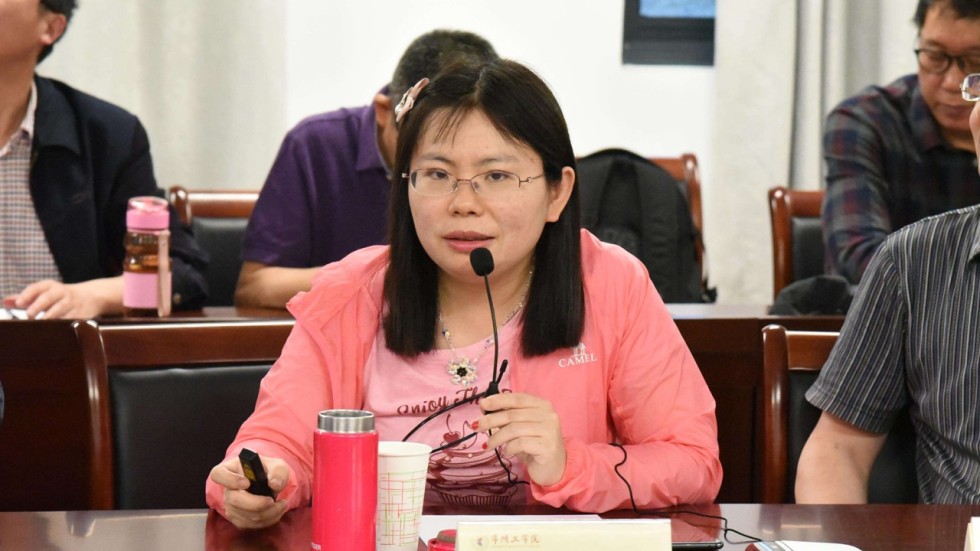
A sociology professor known for publishing scores of academic papers in both English and Chinese has been removed from her teaching post by Nanjing University for professional misconduct, according to a statement issued by her employer.
Liang Ying, who is on the faculty of the School of Social and Behavioural Sciences, became the subject of several media reports in October accusing her of plagiarising other people’s work or submitting duplicate manuscripts of at least 15 of her papers. The university said at the time it would investigate the allegations.
In its latest statement, the school said that Liang had “academic ethics and other moral problems” and described her violations as “serious”.
It also said it had “instructed relevant departments … to undertake deep self-reflection and serious self-criticism, and take practical measures to prevent such incidents from happening again”.
Liang, 39, joined Nanjing University in 2009 – where she had earlier completed her doctorate – after gaining a master’s degree from Suzhou University, and doing her postdoctoral research at Peking University and the University of Chicago.
In 2015 she was awarded a place on the Changjiang Scholars Programme, a prestigious award scheme set up by the Ministry of Education.
The university said in its statement that it was applying to have Liang stripped of all of her teaching qualifications and honorary titles.
By the time she joined Nanjing, the then 30-year-old had already had more than 30 papers published. Between 2009 and 2014 she managed to get a further 60 Chinese-language papers into print, and in the years after 2014 had 43 English-language papers published, according to the university’s website.
Despite her prolificacy, investigators discovered that in some instances her work had been either plagiarised or submitted to more than one publication, with only minor changes, China Youth Daily said in a recent report.
The article said that before her dismissal, Liang had since 2014 been asking online publishers to take down her Chinese-language papers on the grounds that her early work was fundamentally flawed.
Her efforts paid off as she succeeded in having more than 120 documents removed from an academic database. She also earned the nickname Professor 404, in reference to the 404 error message displayed online when a webpage cannot be found.
Aside from the allegations of cheating, Liang was also criticised by her students for her lack of commitment and lackadaisical attitude.
According to the newspaper report, the entire student body of her school signed a letter to the university’s administrators complaining about her misconduct as a teacher, including showing up late for lectures, and allowing other students – and sometimes even her father – take the class.
Other students accused Liang of leaving class early, playing with her phone during lectures and threatening to give them low grades if they scored her poorly in their reviews of her.
The university also received complaints about controversial remarks Liang was said to have made in class, including insensitive comments about the “comfort women” who were forced into sexual slavery by the Japanese during their occupation of China in the 1930s and 1940s, the report said.
In another instance, she is said to have boasted about using harrowing videos to trigger distressing memories in survivors of the 1937 Nanking massacre, it said.
Liang defended the research saying she used it to show how traumatic memories had a persistent impact on those areas of the brain that control emotion.
Anne-Marie Brady, a professor at the University of Canterbury in Christchurch, New Zealand, said she had been harassed and intimidated for publishing research critical of the Chinese Communist Party.CreditCreditUniversity of Canterbury
WELLINGTON, New Zealand — More than 160 China experts from around the world have signed a letter urging New Zealand’s government to protect an academic who said she was the subject of harassment and intimidation for publishing research critical of the Chinese Communist Party.
The letter, published Thursday on the Czech website Sinopsis and signed by 169 scholars, researchers, journalists, commentators and human rights advocates, is the latest effort by scholars to ramp up pressure on Western governments to confront China’s political interference beyond its borders.
The New Zealand police and the country’s intelligence agency, along with Interpol, are investigating the case of Anne-Marie Brady, a professor at the University of Canterbury in the city of Christchurch. She said she had been subjected to a yearlong harassment campaign in which her home was burglarized, her office broken into twice and her car sabotaged.
Ms. Brady said the only items stolen from her home were electronic devices linked to her China scholarship, with the thief or thieves ignoring cash and newer electronics used by other family members.








 CHINDIA ALERT: You'll be living in their world, very soon
COMMENTS: 2