Archive for ‘protective gear’

31/05/2020

India coronavirus: Why is India reopening amid a spike in cases?

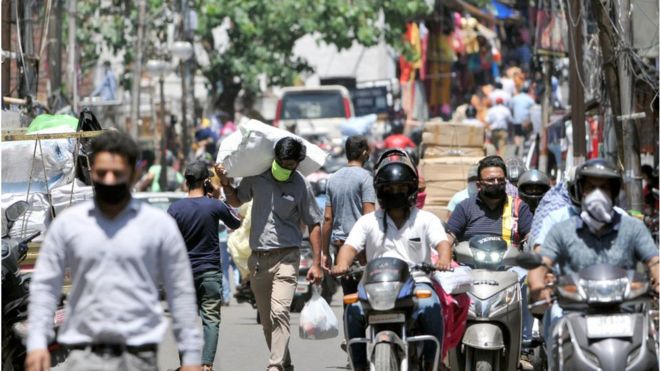
A rush of people and motorists in a marketplace area as shops start opening in the city under specific guidelines, on May 20, 2020 in Jammu, IndiaImage copyright GETTY IMAGES
Image caption Within a week of reopening, India has seen a sharp spike in cases

India is roaring – rather than inching – back to life amid a record spike in Covid-19 infections. The BBC’s Aparna Alluri finds out why.

On Saturday, India’s government announced plans to end a national lockdown that began on 25 March.

This was expected – the roads, and even the skies, have been busy for the last 10 days since restrictions started to ease for the first time in two months. Many businesses and workplaces are already open, construction has re-started, markets are crowded and parks are filling up. Soon, hotels, restaurants, malls, places of worship, schools and colleges will also reopen.

But the pandemic continues to rage. When India went into lockdown, it had reported 519 confirmed cases and 10 deaths. Now, its case tally has crossed 173,000, with 4,971 deaths. It added nearly 8,000 new cases on Saturday alone – the latest in a slew of record single-day spikes.
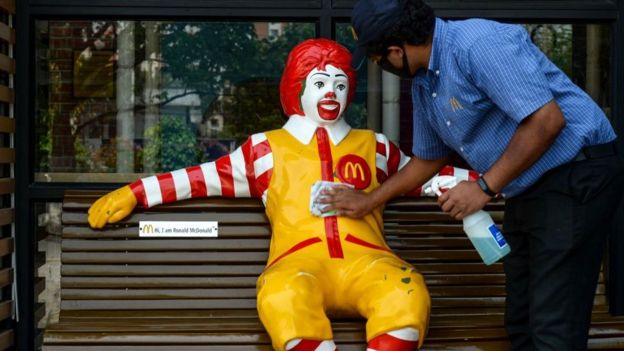
A worker cleans the mascot of fast-food company McDonald's for the reopening of the outlet in Hyderabad on May 20.Image copyright GETTY IMAGES
Image caption Fast food chains like McDonald’s have begun reopening outlets in parts of India.

So, why the rush to reopen?

The lockdown is simply unaffordable

“It’s certainly time to lift the lockdown,” says Gautam Menon, a professor and researcher on models of infectious diseases.

“Beyond a point, it’s hard to sustain a lockdown that has gone on for so long – economically, socially and psychologically.”

From day one, India’s lockdown came at a huge cost, especially since so many of its people live on a daily wage or close to it. It put food supply chains at risk, cost millions their livelihood, and throttled every kind of business – from car manufacturers to high-end fashion to the corner shop selling tobacco. As the economy sputtered and unemployment rose, India’s growth forecast tumbled to a 30-year-low.

Raghuram Rajan, an economist and former central bank governor, said at the end of April that the country needed to open up quickly, and any further lockdowns would be “devastating”.

The opinion is shared by global consultant Mckinsey, whose report from earlier this month said India’s economy must be “managed alongside persistent infection risks”.
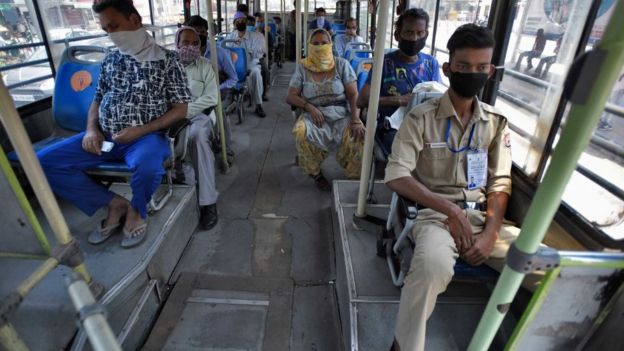
Passengers maintaining social distance as they are on board in a DTC Bus after government eased lockdown restriction, at AIIMS on May 20, 2020 in New Delhi, India.Image copyright GETTY IMAGES
Image caption As restrictions ease, Indians are slowly getting used to the new normal

“The original purpose of the lockdowns was to delay the spike so we can put health services and systems in place, so we are able handle the spike [when it comes],” says Dr N Devadasan, a public health expert. “That objective, to a large extent, has been met.”

In the last two months, India has turned stadia, schools and even train coaches into quarantine centres, added and expanded Covid-19 wards in hospitals, and ramped up testing as well as production of protective gear. While grave challenges remain and shortages persist, the consensus seems to be that the government has bought as much time as possible.

“We have used the lockdown period to prepare ourselves… Now is the time to revive the economy,” Delhi Chief Minister Arvind Kejriwal said last week.

The silver lining

For weeks, India’s relatively low Covid-19 numbers baffled experts everywhere. Despite the dense population, disease burden and underfunded public hospitals, there was no deluge of infections or fatalities. Low testing rates explain the former, but not the latter.

In fact, India made global headlines not for its caseload but for its botched handling of the lockdown – millions of informal workers, largely migrants, were left jobless overnight. Scared and unsure, many tried to return home, often desperate enough to walk, cycle or hitchhike across hundreds of kilometres.

Perhaps the choice – between a virus that didn’t appear to be wreaking havoc yet, and a lockdown that certainly was – seemed obvious to the government.

But that is changing quickly as cases shoot up. “I suspect we will keep finding more and more cases, but they will mostly be asymptomatic or will have mild symptoms,” Dr Devadasan says.

The hope – which is also encouraging the government to reopen – is that most of India’s undetected infections are not severe enough to require hospitalisation. And so far, except in Mumbai city, there has been no dearth of hospital beds.

India’s Covid-19 data is spotty and sparse, but what it does have suggests that it hasn’t been as badly hit by the virus as some other countries.

The government, for instance, has been touting India’s mortality rate as a silver lining – at nearly 3%, it’s among the lowest in the world.

But some are unconvinced by that. Dr Jacob John, a prominent virologist, says India has never had, and still doesn’t have, a robust system for recording deaths – in his view, the government is certainly missing Covid-19 deaths because they have no way of knowing of every fatality.
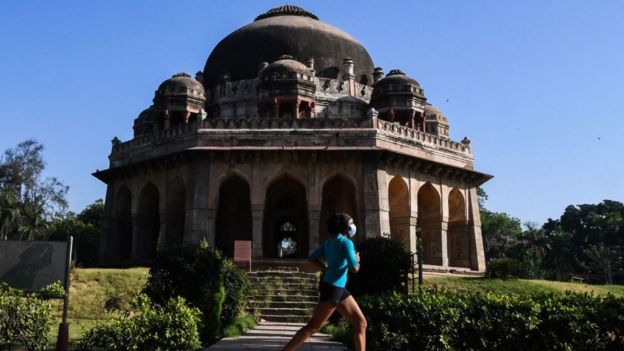
A woman jogs at Lodhi Garden after the local government eased restrictions imposed as a preventive measure against the spread of the COVID-19 coronavirus in New Delhi on May 21, 2020.Image copyright GETTY IMAGES
Image caption Indians are venturing out again but it’s unclear how many of them are asymptomatic.

And, he says, “what we must aim for is flattening the mortality curve, not necessarily the epidemic curve”.

Dr John, like several other experts, also predicts a peak in July or August, and believes the country is reopening so quickly because the “government realised the futility of such leaky lockdowns”.

A shift in strategy

So is the government gearing up for another lockdown when the peak comes?

While Dr Menon believes the lockdown was well-timed, he says it was too focused on cases coming from abroad.

“There was a hope that by controlling that, we could prevent epidemic spread, but how effective was our screening [at airports]?”

Now, he adds, is the time for “localised lockdowns”.
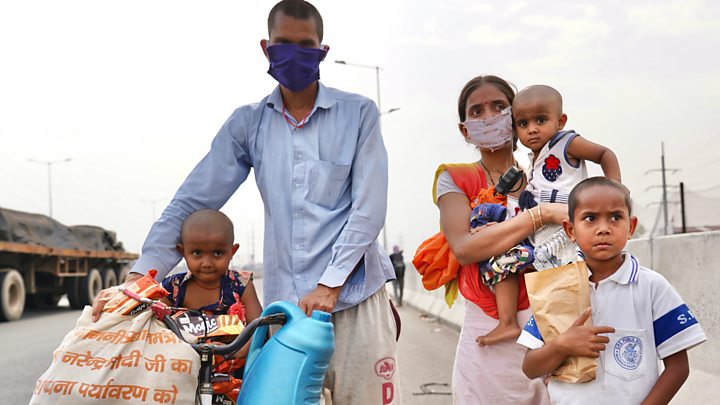
Media caption Coronavirus: Death and despair for migrants on Indian roads

The federal government has left it to states to decide where, how and to what extent to lift the lockdown as the virus’ progression varies wildly across India.

Maharashtra alone accounts for more than a third of India’s active cases. Add Tamil Nadu, Gujarat and Delhi, and that makes up 67% of the national total.

But other states – such as Bihar – are already seeing a sharp uptick as migrant workers return home.

“Initially, most of your cases were in the cities,” Dr Devadasan says. “But we kept the migrant workers in cities and didn’t allow them to go home. Now, we are sending them back. We have facilitated transporting the virus from urban areas to rural areas.”

While the government has said how many infections have been avoided – up to 300,000 – and lives saved – up to 71,000 – by the lockdown, there is no indication of what lies ahead.

There is only advice: The day the government began to ease restrictions, Mr Kejriwal tweeted, urging people to “follow discipline and control the coronavirus disease” as it was their “responsibility”.
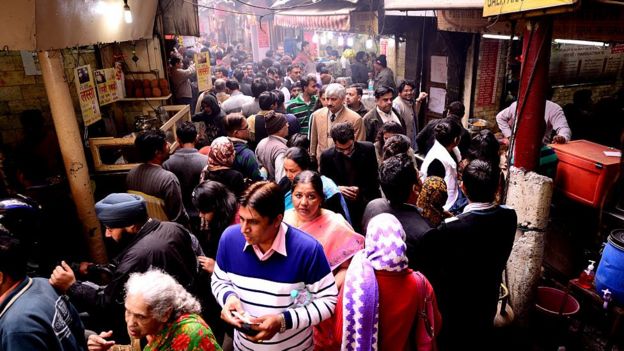
The famous Paranthe wali gali (bylane of fried bread) in Chandni Chowk, on August 20, 2014 in New Delhi, India.Image copyright GETTY IMAGES
Image caption Social distancing will prove to be India’s biggest post-lockdown challenge

Because the alternative – of curfews and constant policing – is unsustainable.

“My worry is more the circumstances of people – it’s not as though they have an option to practise social distancing,” Dr Menon says.

And they don’t – not in joint family homes or one-room hovels packed together in slums, not in crowded markets or busy streets where jostling is second nature, or in temples, mosques, weddings or religious processions where more is always merrier.

The overwhelming message is that the virus is here to stay, and we have to learn to live with it – and the only way to do that, it appears, is to let people live with it.

Source: The BBC
10/04/2020

Coronavirus: Inside India’s busiest Covid-19 hospital

IndoreImage copyright GETTY IMAGES
Image caption Indore is a bustling commercial city

In early March, 40-year-old Ravi Dosi, a chest specialist in India, saw a baffling surge in patients with respiratory problems at outpatient clinics.

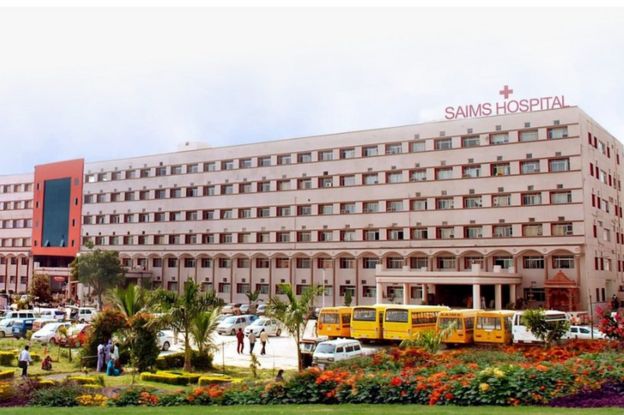
“There was almost a 50% jump in patients with upper respiratory issues and sore throat. They were not responding to antibiotics. Testing was still low and we didn’t really know what was going on,” Dr Dosi, who works at Sri Aurobindo Institute of Medical Sciences, a 1,156-bed private medical college in the central city of Indore, told me.

Less than a fortnight later, Dr Dosi began seeing an uptick in admissions of Covid-19 patients. Around the end of March, the hospital was receiving 28 infected patients every day.

They had dry cough, fever, and difficulty breathing. Their blood oxygen levels were low. They were reporting loss of taste and smell.

In the first wave of patients, nearly a dozen came from far-flung districts, more than 150km (93 miles) from Indore, a bustling commercial city in Madhya Pradesh state. The state has now become a hotspot, with nearly 400 confirmed infections out of the more than 6,400 infections and nearly 200 deaths across the country so far.

By the second week of April, Dr Dosi and his team of 100 doctors and nearly an equal number of nursing staff working 24/7 in three shifts, were treating 144 Covid-19 patients. (Thirty-one had been treated and sent home already.)

A total of 38 patients were in intensive care. Twenty-one of them were critical. There had been seven deaths. “We are handling the largest number of Covid-19 patients in India,” Vinod Bhandari, a surgeon and chairman of the hospital, told me.

Doctors now believe that the infection was spreading in the community long before the government admitted to it, and testing slowly ramped up. Until two weeks ago, Indian health authorities had been denying community transmission.

SAIMs Hospital Indore
Image caption The hospital in Indore has more than 140 patients

Now a new study by Indian Council of Medical Research (ICMR) using surveillance data from 41 labs in the country has hinted at community transmission: 52 districts in 20 states and union territories reported Covid-19 patients. Some 40% of the cases did not report any history of international travel or contact with a known case. (The survey was based on swabs collected from nearly 6,000 patients who tested positive between 15 February and 19 March.)

Back in the hospital in Indore, the doctors are battling the surge in infections.

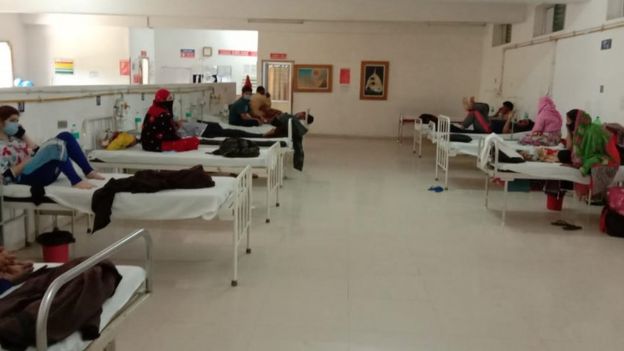
Three isolation wards spread over two floors floors are stacked with patients. (The hospital has earmarked 525 beds for Covid-19 patients.) Isolation wards have younger patients with mild infection, while elderly patients with more severe symptoms are in intensive care. The oldest patient is a 95-year-old man, and the youngest is a four-month-old boy.

The team of doctors handling patients includes chest specialists, anaesthetists, microbiologists, and dermatologists. There are patients with a lot of underlying medical conditions – diabetes, hypertension, even cancer – so all the specialists have been called in to help with the treatment.

Dr Dosi wakes up early, puts on protective gear – scrubs, face masks and shields, N95 masks, gowns, double gloves and shoe covers – before going on his rounds of the patients. Doctors say they are not facing a shortage of gear yet.

They are using 22 ventilators to help the critical patients breathe, and also providing oxygen supplies to others using nasal cannulas (nose prongs).

In the isolation wards, patients are given oral medication – antibiotics and hydroxychloroquine (commonly known as HCQ), an anti-malarial drug – and directed to maintain social distancing and wash their hands regularly.

Isolation wards
Image caption The isolation wards are packed with patients

“I have never seen a challenge and crisis like this in my career. I have heard stories about an outbreak of plague in Surat [in 1994]. But this seems to be much bigger. The biggest challenge is to keep hopes alive and be positive,” says Dr Dosi.

Keeping hopes up for patients in isolation can be taxing. Three tests, say doctors, are being done for the infection – if the first test comes out positive, the patient remains in isolation for two weeks, and is tested twice on two days after the quarantine period. If the last two tests come back negative, the patient is discharged. If not, the patient has to stay in isolation for another two weeks. “It is a tough grind, mentally,” says one doctor.

Banner image reading 'more about coronavirus'
Banner

For the last three weeks, Dr Dosi has been living in the hospital, away from his wife, two sons and parents. His father is a retired pathologist. They communicate via hurried video calls, between his frantic trips to the isolation wards and intensive care.

I ask him when does he expect this to “get over”, so that he can go home.

“In a couple of weeks,” he says. “The lockdown should have helped to slow down the infection.”

Dr Dosi is alluding to the strict 21-day lockdown India imposed on 24 March to halt the spread of the infection.

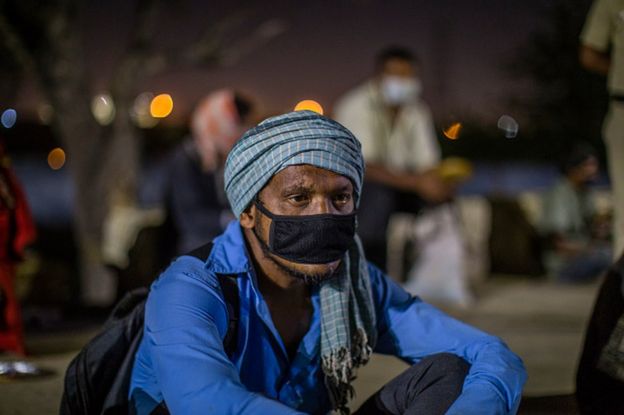
migrant workerImage copyright GETTY IMAGES
Image caption Health officials have been denying community transmission

Things are getting better, he says.

“I am getting 10 patients for admission in isolation wards, and two patients severe enough for intensive care every day now. Earlier this week, it was 50:50.”

It is possibly too early to hazard a guess about when admissions will slow down to single digits. As more people are tested, the number of patients can easily rise again.

It’s been unrelenting, Dr Dosi says.

Early, on Friday, I sent him a text to find out what was going on.

“Please. Have an emergency in ICU,” he replied.

Source: The BBC

09/04/2020

How India’s behemoth railways are joining the fight against Covid-19

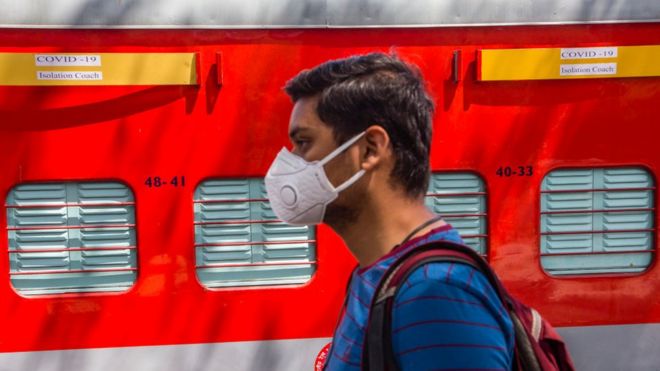
A man wearing a face mask walks past an Indian Railway train coach which is being set up for isolationImage copyright GETTY IMAGES
Image caption India’s railways are hoping to ease the burden on hospitals

India is preparing for a potential surge in Covid-19 patients by tapping into an unusual resource: its trains, which power the world’s fourth biggest rail network.

The country suspended its passenger trains for the first time after it announced a three-week lockdown on 25 March to contain the coronavirus. As of Wednesday, it had reported 4,643 active cases and 149 deaths, and the numbers are rapidly increasing.

“We, at the railways, thought: how can we contribute?” its spokesman, Rajesh Bajpai, told the BBC. “So we came up with this idea and everyone liked it.”

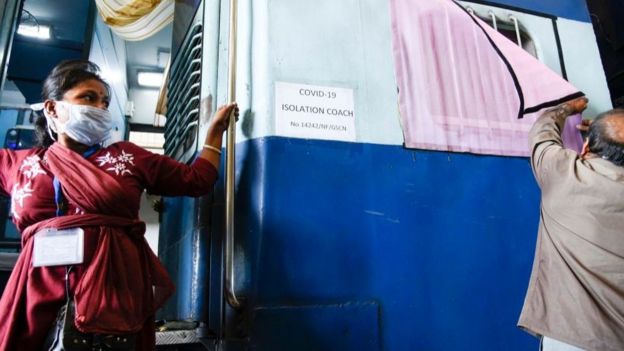
Work has already begun to convert 5,000 train coaches into quarantine or isolation wards, which amounts to 40,000 beds. And the railway ministry says it’s prepared to convert 15,000 more coaches.

The Indian railways – as the ministry is known – is a behemoth. Largely constructed during British rule, it’s still the mainstay of India’s public transport, and includes some of the world’s busiest urban rail systems. It transports 23 million passengers a day and its 12,000 trains crisscross 65,000km (40,389 miles) of tracks, connecting the remotest parts of India.

Mr Bajpai says the coaches can be spared as they are mostly trying to convert older ones, and passengers will be fewer than ever in the coming months even if restrictions are eased.

He adds that this is not unusual for the railways, which already runs several “special” trains, from luxury trains to exhibition trains to a hospital train, complete with operation theatres.

“The coach is a shell and inside, you can provide anything – a drawing room, a dining room, a kitchen, a hospital.”

A looming crisis?

And India may well need the extra beds.

States have already turned all sorts of spaces – sports centres, stadiums, wedding venues, hotels, resorts – into quarantine or isolation centres. But officials fear they will run out of space as the country ramps up testing.

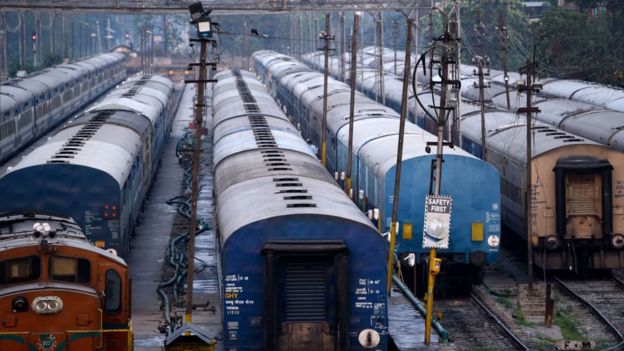
Trains are seen parked at Guwahati Railway Station, during nationwide lockdownImage copyright GETTY IMAGES
Image caption India suspended all passenger trains last month

For every person who tests positive, there are scores more who need to be traced, quarantined and, if necessary, isolated. But isolation at home is not always an option in India’s joint family households – and especially not in its densely-populated slums.

In Mumbai’s Dharavi, a sprawling slum, officials sealed off an entire building where 300 people lived after one of its residents tested positive. But the looming concern is, in the event of more such outbreaks, where will they send high-risk or symptomatic patients?

“There are so many options available and this [the coaches] is one of the options,” Mr Bajpai says.

He doesn’t foresee them being used until beds in existing quarantine or isolation centres are filled. But, he adds, they will keep them ready with the necessary facilities.

That includes converting one of the two toilets in each coach into a “bathing room”, providing oxygen cylinders in every coach, and modifying all the cabins so they can hold medical equipment. And then there are measures that are specific to Covid-19 – such as replacing taps that turn with those that have long handles, and fitting dustbins with foot pedals.

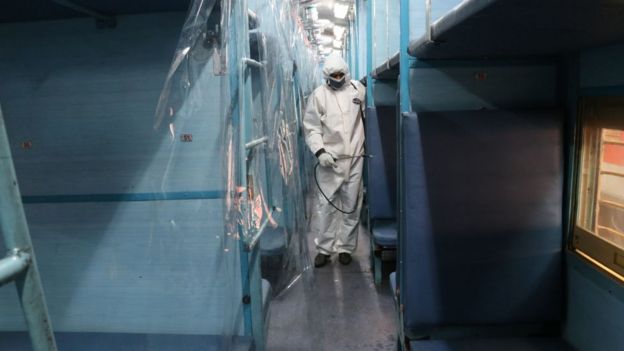
A worker in protective gear sprays disinfectant inside a train carriage converted into an isolation wardImage copyright GETTY IMAGES
Image caption It takes up to three days to turn a coach into an isolation ward

The ministry has also ordered extra coat hooks and mosquito nets for every cabin, and has instructed officials to make sure that charging points are working, the upholstery “is in good condition” and “broken panels are replaced”.

The coaches are being readied in 130 different locations across the country, but it’s yet to be decided where they will be stationed.

Mr Bajpai says it’s up to states to decide which stations they want the coaches in. But that in itself is a process because the coaches need regular water and electric supply.

And there are other concerns too. Summer has begun and large parts of India record scorching temperatures, often more than 40C. And the coaches that are being converted are not air-conditioned.

“The patient will be very uncomfortable. Doctors and nurses will be wearing protective gear, and they will find it very difficult,” says Vivek Sahai, a former chairman of the railway board.

Staff member of Northeast Frontier Railway (NFR) prepare train coaches to convert them into isolation wards for COVID-19 patients.Image copyright GETTY IMAGES
Image caption Staff member of Northeast Frontier Railway (NFR) prepare train coaches to convert them into isolation wards for COVID-19 patients.

He also says not everyone might be comfortable squatting to use Indian-style toilets; and he wonders if all the designated coaches have a proper system of waste management. (Indian coaches are designed to dispose of human waste onto the tracks although new technologies have begun to be adopted in recent years.)

“I am not saying it cannot be done but they have to take care of these things,” he says. “But if anybody can do it, it’s the railways.”

However, some experts say that this by itself is not going to help solve India’s problems.

“You don’t just need space,” says Dr Sumit Sengupta, a pulmonologist. “We need thousands of doctors and nurses if you really have to make a dent.”

India is severely short of both, and at least three hospitals have been sealed this week alone after members of the staff tested positive.

Media caption As cases of coronavirus rise and the virus hits India’s congested slums, will the country cope?

“Why isolate someone who has symptoms when there is no treatment? Because you don’t want them to spread the infection,” Dr Sengupta says.

But, he adds, the virus is spreading anyway because so many patients are asymptomatic. He says isolating symptomatic patients will not help unless India starts testing aggressively.

“This will work only as part of a larger strategy,” he adds. “Test, trace and isolate. Test should come first.”

Source: The BBC

05/04/2020

Spain’s health workers overburdened and undersupplied in coronavirus fight

  • More than 15,000 workers infected as hospitals struggle with a lack of test kits and protective gear
  • Chronic shortages are forcing emergency teams to ration equipment and come up with their own makeshift solutions
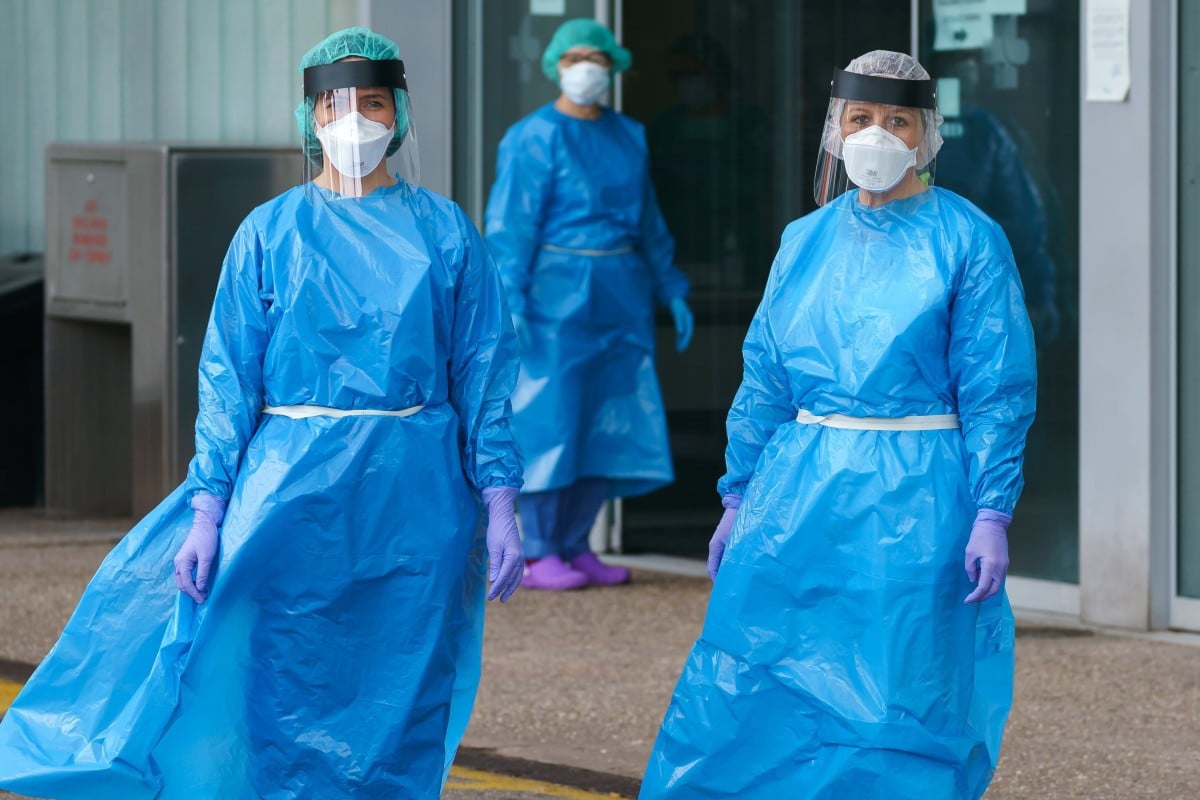
Health workers in protective gear outside an emergency entrance to a hospital in northern Spain. Photo: AFP
Overburdened hospitals and a shortage of protective measures and tests are taking a toll on Spanish medical professionals who are contracting Covid-19 – the illness caused by the new coronavirus – at an alarming rate.
To date, more than 15,000 health professionals in Spain – about 14 per cent of the national total – have been infected. In contrast, Italy reported that health workers accounted for about 10 per cent of its infections.
“I have tried to be careful, but when you work in a hospital, no one can guarantee that one of your colleagues doesn’t have the virus in the asymptomatic phase,” said ambulance crew member Xevi Mateu, who tested positive for the virus a week ago.

Mateu, who lives and works in Catalonia, said he thought he might have got infected during a meal break at the hospital or while on duty in the cramped space of an emergency vehicle.

Europe faces Easter indoors as Spain’s virus cases surge past 100,000

2 Apr 2020

Information on how to protect himself from the rampaging pandemic was conflicting, he said, and with no guarantee on future supplies he was forced to ration his use of protective equipment as soon as the demand for ambulance services began to exceed capacity.

Albert Gual, another emergency worker in Catalonia, said protocols had changed since he first started transferring Covid-19 patients to hospital, and he believes the shortage of protective equipment is to blame.

“At the beginning of the crisis, we threw away the glasses, the medical suit and the mask after one use. Now we are using one mask per day, until the stock runs out,” Gual said.

“Yesterday I talked to a colleague from the emergency service who told me they are overwhelmed – without material, without resources, without people. The medical suits are reused and sterilised until they have holes,” he said.

There have also been reports of doctors and nurses in Spain making their own protective clothing out of bin liners.

To ease the burden on Spain’s medical workforce, retirees have been asked to return to practice and newly licensed personnel have been recruited to make up the shortfall. One of the new recruits is Candela Lebrero, who completed her medical degree last year and is now a nurse at a hospital in Madrid.

The Spanish capital has seen the country’s largest number of infections – with more than 36,000 – and staff at the Madrid Principe de Asturias Hospital, where Lebrero works have been among those falling ill from the disease.

Reports of an overload of patients were very real, she said, with emergency rooms forced to send less serious cases to “medicalised hotels” and additional hospital wards switched to caring for Covid-19 patients.

As for rapid testing, it “hadn’t arrived yet” at Lebrero’s hospital, which was relying on PCR tests – the swab technique which identifies the presence of any genetic material belonging to the virus – as a diagnostic for both patients and health personnel who presented with symptoms, she said.

Similar problems have been reported across Spain and last week the health ministry’s coordinator for the emergency response, Fernando Simon, acknowledged the difficulties for health care workers to access protective equipment.

On March 25, Simon admitted the jump in infections among medical staff was due to “a market access problem” as supplies “are scarce and there is non availability” – a problem not limited to Spain.

“We are on the way to a solution,” he said. On Monday, Simon also tested positive for the disease.

While equipment shortages are a global problem, Spain was hit particularly hard after its two largest distributors of medical supplies – located in France and Germany – were ordered to stop selling by their governments in early March, fearful of depleted stocks in their own countries as the pandemic spread.

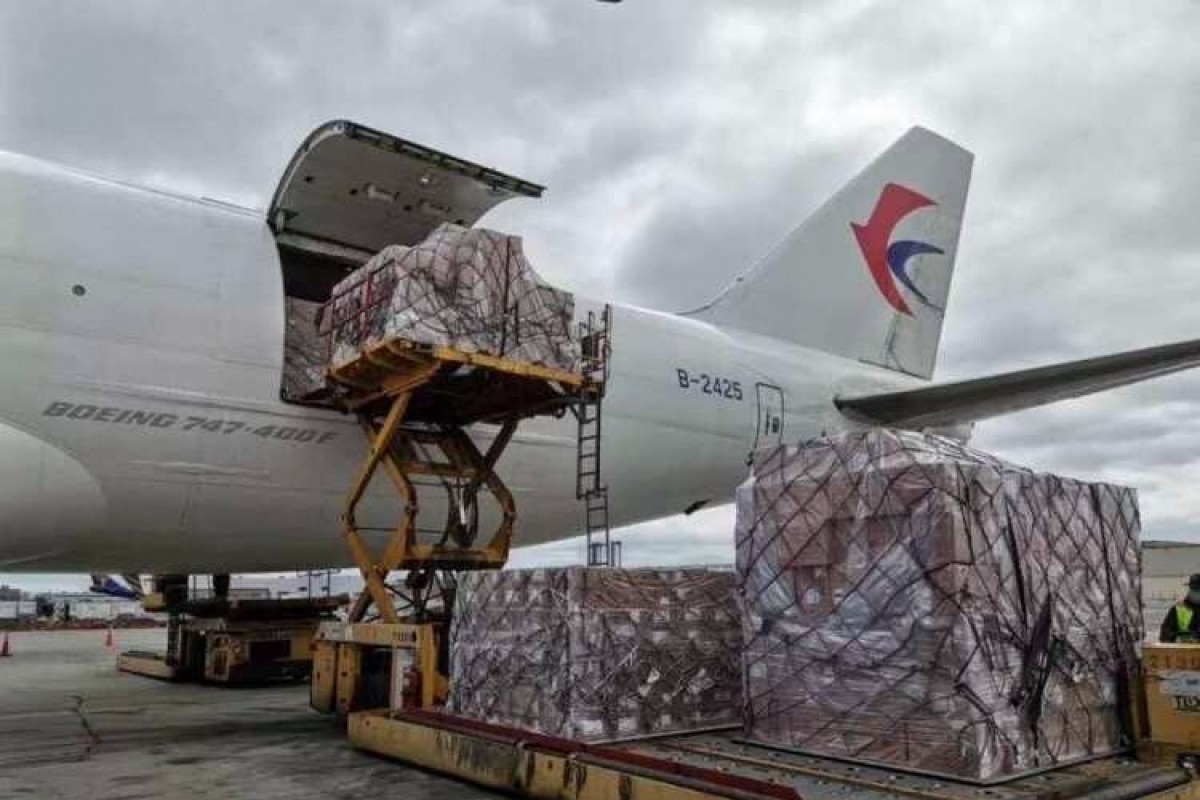
The decision, which was criticised for being contrary to the spirit of the European Union, forced the Spanish government to turn to other measures, including the purchase of 432 million (US$467 million) worth of supplies from China.

A freight corridor was also opened to speed deliveries, and Spanish manufacturers were put on a “war footing” to urgently switch to making medical supplies. The car industry is now turning out respirators and gels, while textile manufacturers have turned their hand to producing gowns and face masks.

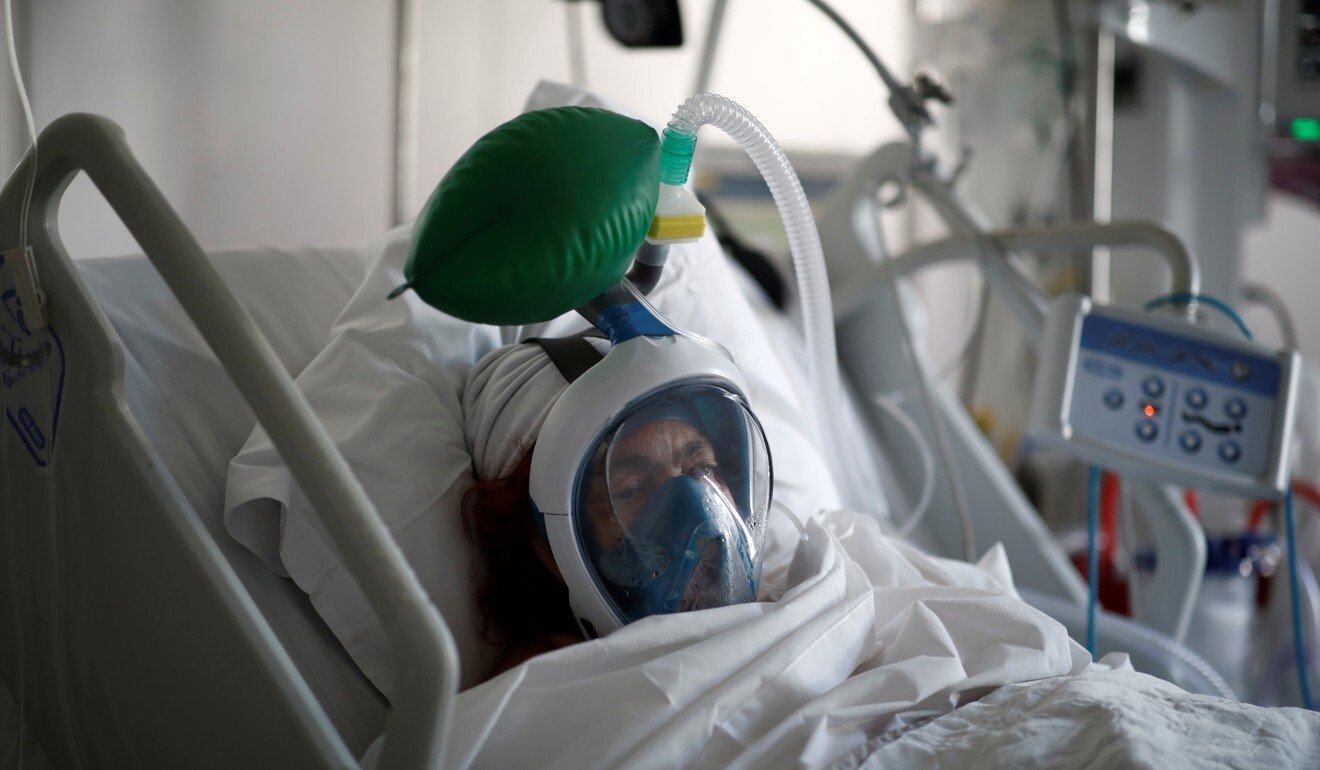
Sports equipment chain Decathlon has even adapted its snorkel goggles for medical use and donated its entire stock to Spanish hospitals.

A Covid-19 patient wears a full-face snorkelling mask which has been converted into a ventilator. Photo: Reuters
The scramble to address shortages in Spain’s overstretched health system has not been without problems. Last week, the government withdrew 58,000 Covid-19 rapid test kits
 it bought from a Chinese company, after their accuracy rate was reported to be just 30 per cent.
China said the kits were not approved for sale and not included in supplies sent by Beijing to Spain.
It is not clear if the supplies from China have arrived, but on the ground medical personnel said they had not yet seen the equipment.
“It is assumed that the new ones have already arrived, but they have to pass the approval of the Carlos III Public Health Institute [a Spanish public health research institute], and their use is not yet widespread,” Laura Díez, press officer for the State Confederation of Medical Unions said.
“Their arrival will improve the situation since at least it would be known if someone in contact with the infected could transmit the disease, especially health personnel,” she said.
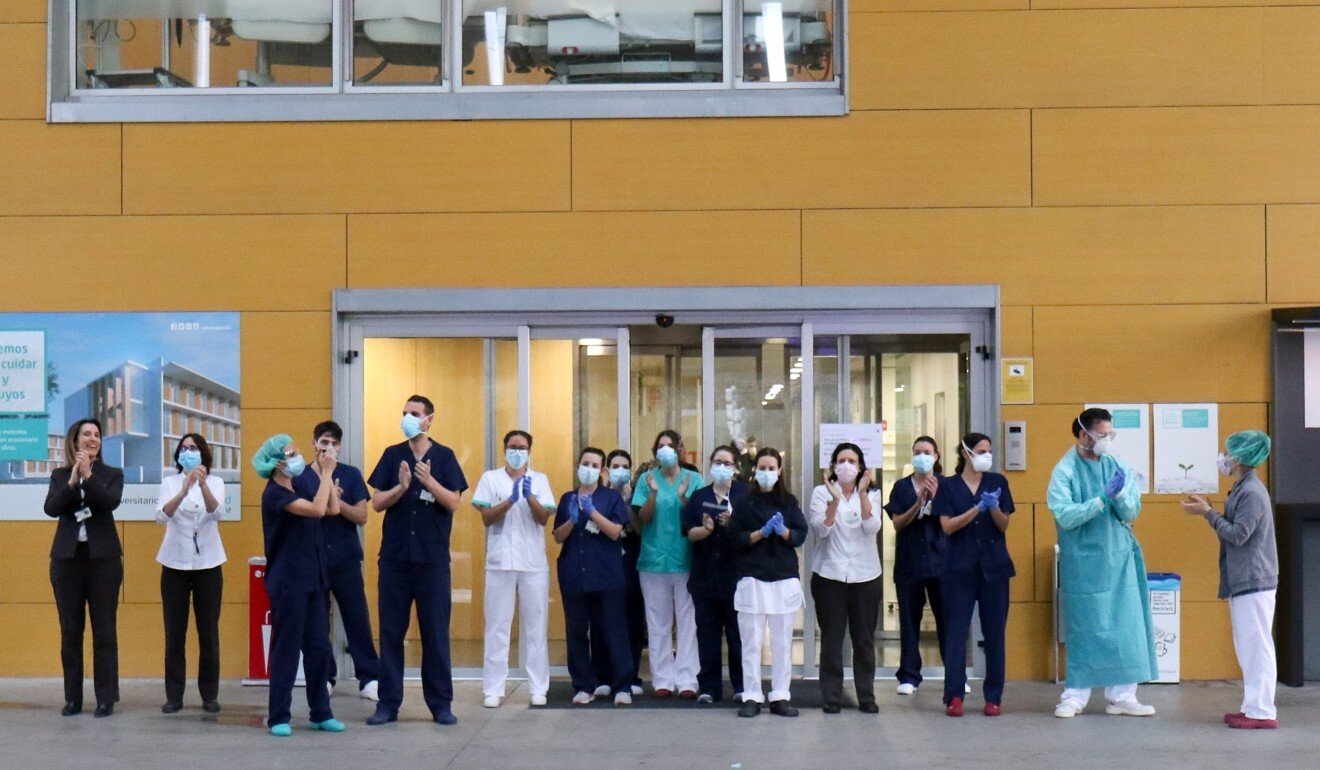
Medical staff in Spain acknowledge the daily applause from the public which has become a feature of the coronavirus pandemic. Photo: DPA
Several health organisations have appealed to the courts in their desperate bid to get hold of protective equipment. A Madrid court did accept the argument by an association of doctors that the authorities should be forced to provide adequate supplies to all health personnel.
But the Supreme Court refused to support the claim, saying it recognised the government was doing everything it could.
“We presented precautionary measures and they were dismissed, we have filed an appeal,” Díez said.
“At the moment we have no answer. Authorities said that planes with the material are arriving, but at the hospitals, they are not seen.”
Spain says Covid-19 can lead to closer ties with Chinese medical suppliers
29 Mar 2020

Meanwhile, the General Councils of Dentists, Nurses, Pharmacists, Doctors, and Veterinarians, which represent more than 700,000 health professionals in Spain, expressed its “absolute rejection” of new guidelines for medical workers set by the health ministry.

In a notice issued on Friday, the ministry said that health professionals that had not been tested for Covid-19 but who took time off should return to work seven days after the onset of symptoms as long as they did not have a fever or respiratory problems.

Once back at work, they should wear a surgical mask for 14 days from the onset of symptoms and avoid contact with other people.

The general councils said some of the guidelines represented “a serious risk” to the health of professionals and their patients.

Ambulance worker Mateu is currently in isolation at home as he recovers from the disease, but his thoughts are with his colleagues and their daily struggle. He said he thanked his supervisors and coordinators for working hard every day.

With so many of the staff themselves sick, there was a lot of stress on those who were still at work, he said.

“I have the feeling that the effort and management is not being done from the top down, but from the bottom up: from us who work directly with the patients, our supervisors and they are continuing the chain of gestures and efforts,” he said.

Source: SCMP

05/04/2020

Philanthropists step up citizens’ diplomacy with gifts even as US, Chinese diplomats play the blame game amid coronavirus pandemic

  • The philanthropic foundations of Jack Ma and Joe Tsai, two of China’s wealthiest technology entrepreneurs, have donated 23 million face masks, 2,000 ventilators and 170,000 pieces of protective gear to New York
  • The donation, the biggest by private citizens to the epicentre of the global coronavirus pandemic, was described by New York Governor Andrew Cuomo as ‘really good news’
A shipment of 1,000 ventilators donated by Jack Ma Foundation and Joe Tsai Foundation, has arrived in New York. Photo: Handout
Chinese philanthropists are stepping up their donation of protective gear, essential medical and diagnostic kits to the United States, Europe and Asian countries, despite rising acrimony between diplomats and government officials looking to pin blame amid the world’s worst pandemic in decades.
The private foundations of Jack Ma and Joe Tsai, co-founders of this newspaper’s owner Alibaba Group Holding and two of China’s wealthiest technology entrepreneurs, have donated a combined 23 million face masks, 2,000 medical ventilators and 170,000 pieces of protective gear to New York city.
The first 1,000 medical ventilators arrived today, with another 1,000 on the way, for a total donation valued at US$50 million, according to a person familiar with the matter.

Delivery of the essential materials, made possible by behind-the-scene manoeuvres by the donors and officials from both the Chinese and US sides due to import and export regulatory hurdles, highlights the role of civil diplomacy in dealing with the global public health crisis.

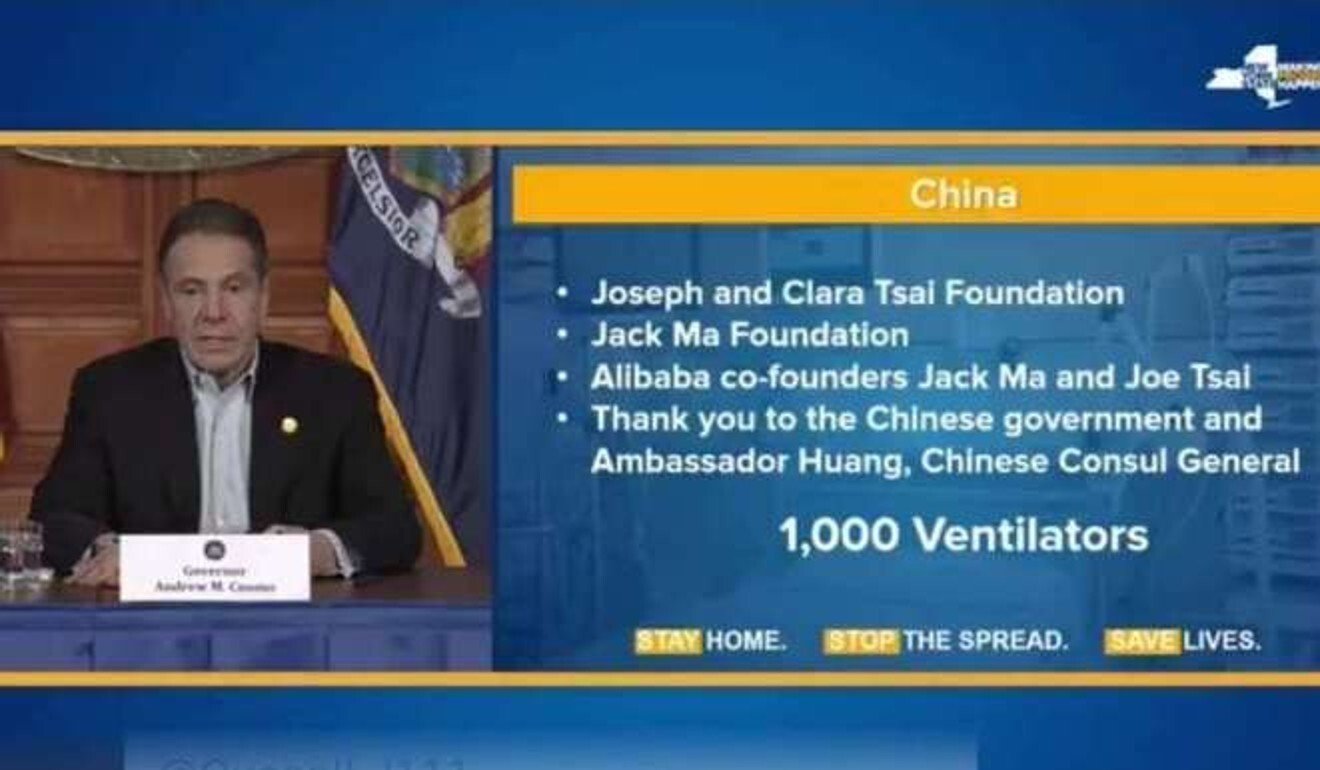
New York Governor Andrew Cuomo thanks the Chinese government for the 1,000 ventilators donated by Jack Ma Foundation and Joe Tsai Foundation, which arrived in New York on Saturday. Photo: Handout
The gesture comes as diplomats of both countries, and even government officials including the US president and his secretary of state, have engaged in a tit-for-tat war of words, as they attempt to pin the blame for the worlds worst pandemic in decades on each other.
Confirmed cases in the US have soared and surpassed China as the new global epicentre. In the US there are nearly 310,000 cases and nearly 8,500 people have died so far from the Covid-19 disease.

Jack Ma is a friend of mine and he’s made it very possible to get about 1,000 ventilators from China. But that was from him and my other friend [Tsai] that was really a gift – Andrew Cuomo, governor of New York

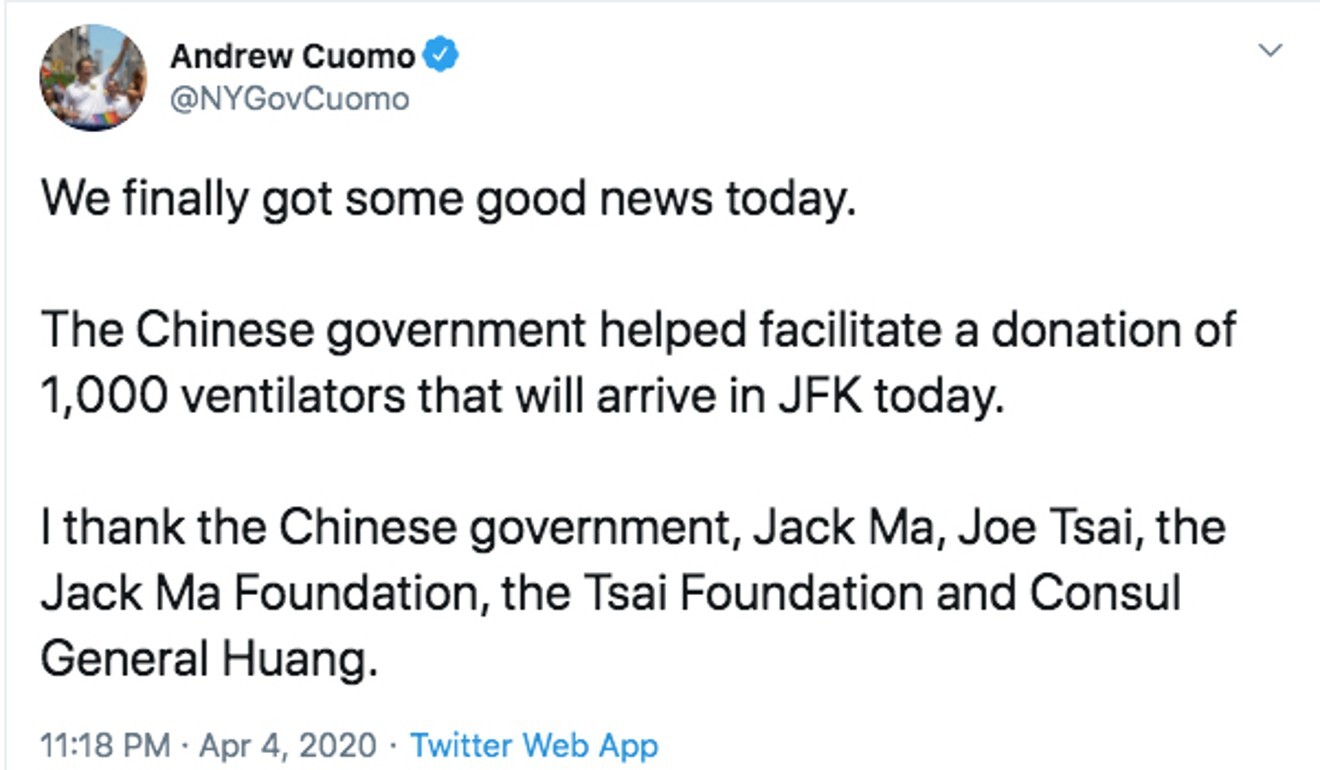
Andrew Cuomo, governor of New York, thanked the Chinese government for easing the transfer of the ventilators to the hard-hit state, the current epicentre of the coronavirus outbreak in the US.

He said the donations were “really good news”, as the state pushes up against the apex of the outbreak, which is likely to hit in about seven days.

“This is a big deal, and this is going to make a significant difference for us,” Governor Andrew Cuomo said on Saturday.

“Jack Ma is a friend of mine and he’s made it very possible to get about 1,000 ventilators from China. But that was from him and my other friend [Tsai] that was really a gift. And we appreciate it very much.”

One of the challenges in making the donation possible was the fact that the US had previously blocked China-made “KN95” standard masks, only allowing “3M N95” masks to be used. Although the two masks have different standards, they essentially have the same performance. On Friday, the US Food and Drugs Administration issued an emergency use authorisation for KN95 masks.

Alfred Wu, associate professor in Lee Kuan Yew School of Public Policy at National University of Singapore, said that what China is doing with its so-called masks diplomacy is very clear. “But given the emergency situation in New York, whatever channel – private or public sources – the equipment comes from, should not matter, especially those for medical workers,” he said.

Separately, the western state of Oregon has also said that it would send 140 ventilators to New York.

The state, like other areas of the US, is facing shortages of medical gear, including masks and ventilators.

“We are not yet at the apex. We are getting closer,” Cuomo said, adding that this was good as it gave the authorities more time to prepare.

A tweet from New York Governor Andrew Cuomo thanking the Chinese government for the 1,000 ventilators donated by Jack Ma Foundation and Joe Tsai Foundation. Photo: Twitter
Cuomo said 113,704 people in New York have tested positive for the coronavirus, with 15,000 having been hospitalised The state’s death toll saw a significant spike on Saturday to reach 3,565, up from 2,935 the previous day.
The White House has been criticised for not better coordinating the supply of medical goods to states, who are competing with each other on the open market.
NUS’ Wu said that tussle between the federal and state governments in the US on key decisions on acquiring medical supplies was not helping the fight against the pandemic. “Unlike in China, where the central government has the say over local governments, in the US, when it comes to public health provision, the power belongs to the state,” he said.

Meanwhile, Cuomo acknowledged that he asked the White House and others for help negotiating the ventilators.

Trump said he would like to hear a more resounding “thank you” from Cuomo for providing medical supplies and helping quickly to add hospital capacity.

Source:SCMP

Law of Unintended Consequences

continuously updated blog about China & India

ChiaHou's Book Reviews

continuously updated blog about China & India

What's wrong with the world; and its economy

continuously updated blog about China & India