Archive for ‘public transport’

26/09/2019

Beijing Daxing airport – world’s largest terminal – takes flight

  • Visually spectacular and with the latest technology, the Chinese capital’s second international airport is open for business
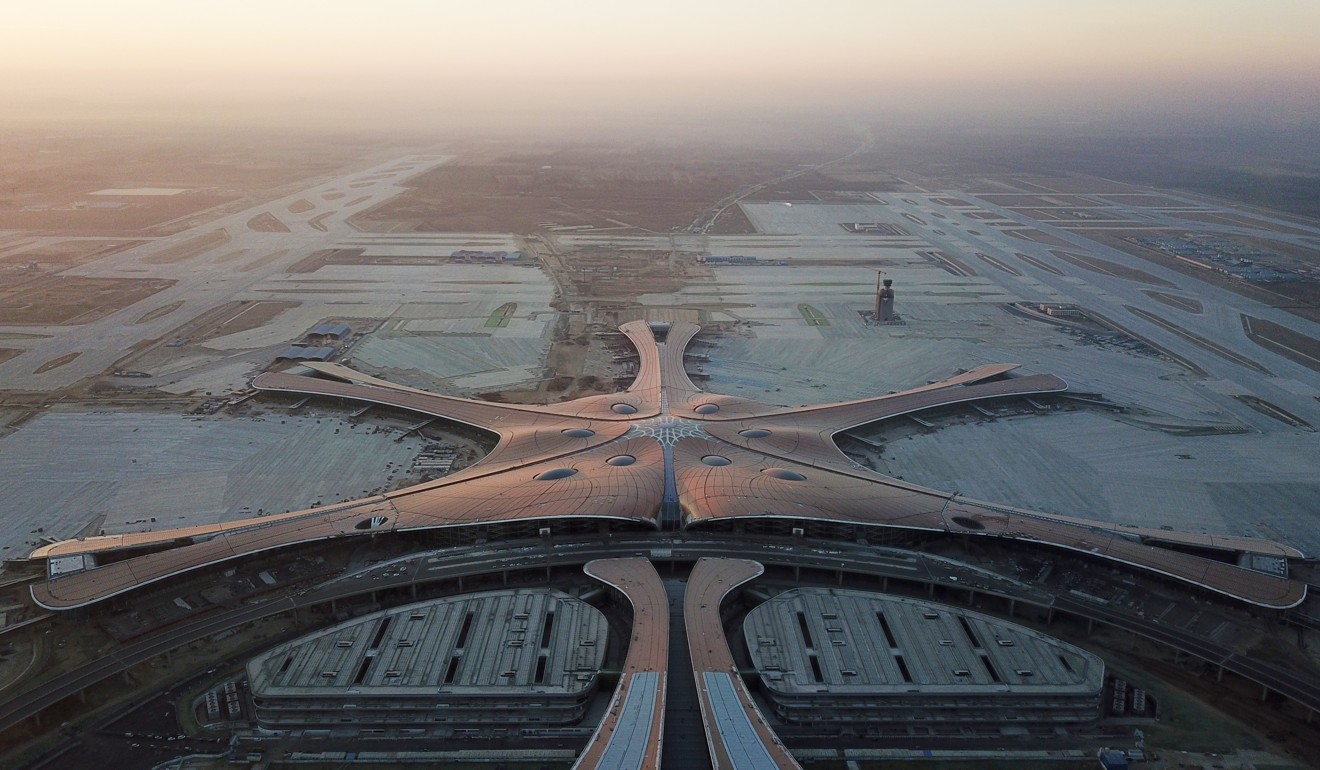
The terminal building at Beijing Daxing International Airport, which has officially opened. Photo: Xinhua

At 4.23pm on Wednesday a China Southern Airlines A380 left Beijing for Guangzhou – on the first commercial flight out of the world’s latest and largest airport terminal at Daxing, five years after construction began on the ambitious project.

The 80 billion yuan (US$11 billion) Beijing Daxing International Airport was officially opened by Chinese President Xi Jinping on Wednesday morning.

China Southern Airlines, the mainland’s largest carrier, has 40 per cent of the flight slots at the new airport. It is one of 16 airlines which will be operating out of Beijing Daxing International Airport, the visually spectacular new facility at the southern end of the Chinese capital.

Six other flights, including China Eastern Airlines for Shanghai and Air China for Chengdu, took off before 5pm in the afternoon. These domestic airlines will have part of their operations moving to Daxing for the upcoming winter-spring season, according to the mainland’s aviation authority. No Hong Kong airlines were listed.

British Airways has announced its whole operation will be moved to Daxing, while some foreign airlines, such as Ethiopian Airlines, Polish Airlines, Malaysia Airlines, Royal Air Maroc and Finnair, will operate at both airports.

Spanning 47 sq km (18 square miles) – almost 50 per cent larger than the city of Macau – Daxing, with its 700,000 square metre (7.5 million sq ft) terminal is a spectacular sight. Its futuristic shape, resembling a giant hexagonal starfish or – as some internet users have dubbed it – an alien base, not only handles more aircraft, it also keeps passengers’ walks

From the centre of the security check to the furthest end gate in each wing is about 600 metres (1,970 feet), or less than an eight-minute walk.

Beijing’s new 7-runway, star-shaped Daxing airport opened by Xi Jinping
According to Xinhua, more than 70 restaurants, tea shops and coffee houses will operate in the airport, along with 36 international brands, including Louis Vuitton, Gucci and Bottega Veneta.

Daxing is designed to take pressure off the overcrowded Beijing Capital International Airport (BCIA) and, by 2021, is expected to handle 45 million passengers a year, rising to 72 million by 2025.

Located at the south of the capital, 46km (28.5 miles) from the central Tiananmen Square, the airport was once frowned upon for its less than optimal location, with its southern end at the border with Hebei province. But it may not be as time-consuming for travellers as originally thought.

The design of the airport means passengers will walk a much shorter distance to the check-in and security check.Hu Haiqing, China Southern Airlines

Hu Haiqing, deputy general manager of China Southern Airlines’ operation control centre, told Global Times that “although Daxing is further away from downtown Beijing than the Capital airport, there are still some advantages, especially for our airline”.
With most of its bases in the south of the country, China Southern Airlines flights to Daxing will be 10 to 15 minutes shorter than to the Capital airport. A further 15 to 20 minutes taxiing time will also be saved, thanks to its position in the new airport.
“The design of the airport also means passengers, once they leave their car or train, will walk a much shorter distance to the check-in and security check,” Hu said.
According to Xinhua, Daxing’s design also makes transit much quicker, with transfers between international and domestic flights up to 90 minutes shorter than from the Capital airport.
The futuristic shape of Daxing airport not only handles more aircraft, it also keeps passengers’ walks to a minimum. Photo: Xinhua

Public transport will be the quickest way to reach the new airport from downtown Beijing – 20 minutes from West Beijing railway station once the Beijing-Xiongan high-speed rail officially opens. The airport express service will also take passengers from Caoqiao station to the airport in 19 minutes.

There is no underground rail service or airport express connecting the Capital airport in the north with Daxing, but passengers can change trains at Caoqiao for downtown Beijing or other stations which connect with BCIA’s airport express service.

Waiting times at the new airport will be greatly reduced by the use of facial recognition technology for self-service check-in and smart security checks, according to Wang Hui, manager of Daxing’s terminal management department.

The technology does away with the need for a paper boarding pass and passengers can check-in, with or without luggage, and go through the security check by themselves.
Beijing is the window for China to go global … Daxing airport makes it possible to open more global routes.China Eastern Airlines pilot

“The airport has more than 400 self-service check-in kiosks, which means more than 80 per cent of check-ins will be self-service. That shortens each passenger’s queuing time to no more than 10 minutes,” Wang told Global Times.
“The smart security check channels are able to handle 260 passengers per hour, 40 per cent faster than using traditional means,” he said.
The opening of Daxing Airport could be a great boost for the mainland – and even the global – aviation industry by easing pressure on the Capital airport and making new routes possible, said a veteran China Eastern Airlines pilot who declined to be named.
5 things we know about Beijing’s new Daxing International Airport
Opening new flight routes from BCIA was almost impossible, he pointed out, because the centre of Beijing was a no-fly zone for security reasons. Daxing airport’s location at the southern end of the city, however, avoided the problem of planes having to bypass the restricted space, leaving room to open more routes for domestic and international flights.
“Beijing is the window for China to go global but the Capital airport’s schedule is saturated and unable to open new routes. Daxing airport makes it possible to open more global routes,” the pilot said.
He said the runway design at Daxing also meant fewer delays, because the four runways of phase one – more than any other airport in China – included one which was perpendicular to the other three, allowing flights to land and take off regardless of wind direction.
Source: SCMP
17/09/2019

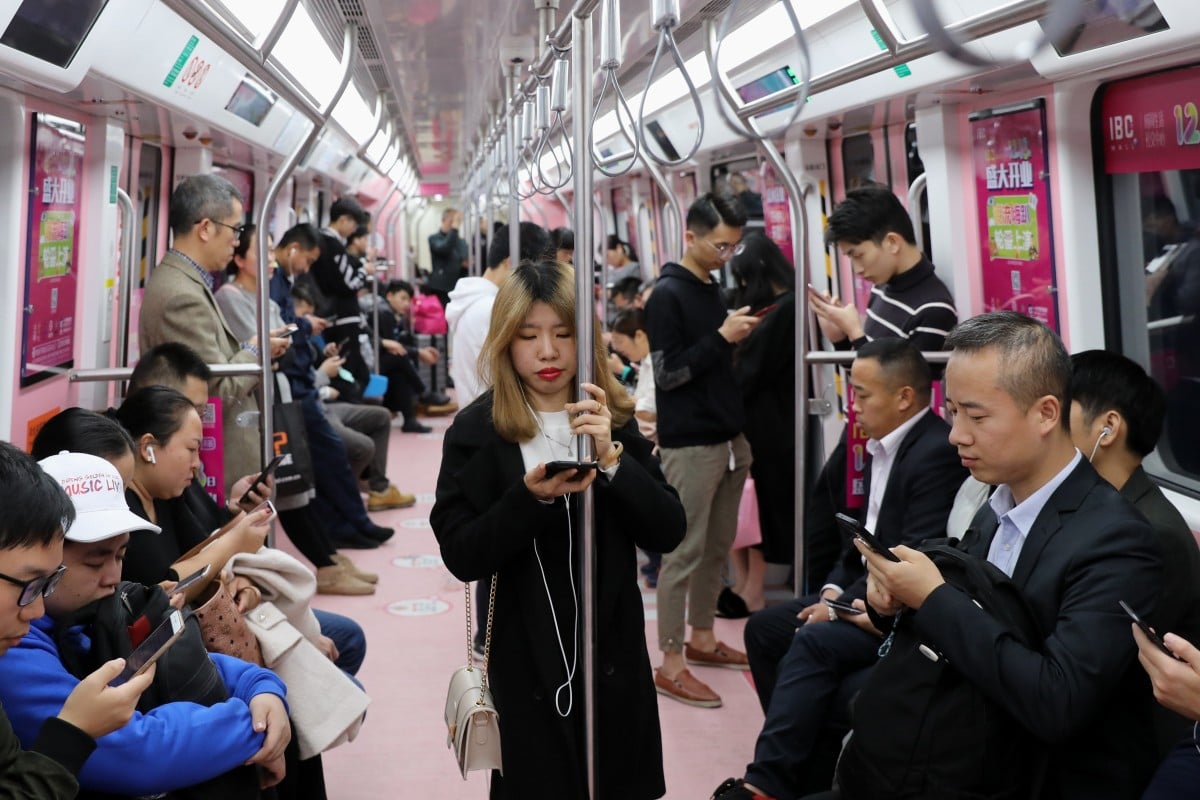
China’s women still waiting for an end to getting groped on public transport

  • Priority carriages on underground trains have not solved the problem of sexual harassment for female passengers
A woman is surrounded by men in a priority carriage on the Shenzhen metro. Photo: Sam Tsang

The first time Wanda was groped by a man on a Beijing bus she was a college student, travelling to school in her gym uniform on a summer’s day. Ten years – and numerous examples of sexual harassment on public transport – later, she is still haunted by the memory.

Now 31, Wanda – who asked to be identified only by her first name – remembers every detail of the incident. The bus was not crowded but the man, who appeared to be in his 40s, went straight over to stand uncomfortably close to her.

Then he pressed himself tightly against her and began making a thrusting motion with his lower body. Wanda said she froze, terrified by the encounter and unsure how to act. Just then, the bus took a sharp turn, the man was thrown aside and she quickly moved away.

“Afterwards, for a period, I looked at every adult man I saw as if he was aggressive,” she said.

Since then, Wanda said she had been flashed at in public and just last year was forced to block a man with her purse when he tried to touch her leg on a train.
118 Chinese men detained for groping women on subway trains

Wanda’s experience is not unusual but attempts to address the problem of sexual harassment on public transport in China have met with mixed results, as well as claims by feminists that they are restrictive to women.

Two major cities in southern China, for example, introduced priority carriages for women on their underground trains in 2017.

Shenzhen

and Guangzhou, both in Guangdong province, established two designated carriages – one at each end of the train – during peak times.

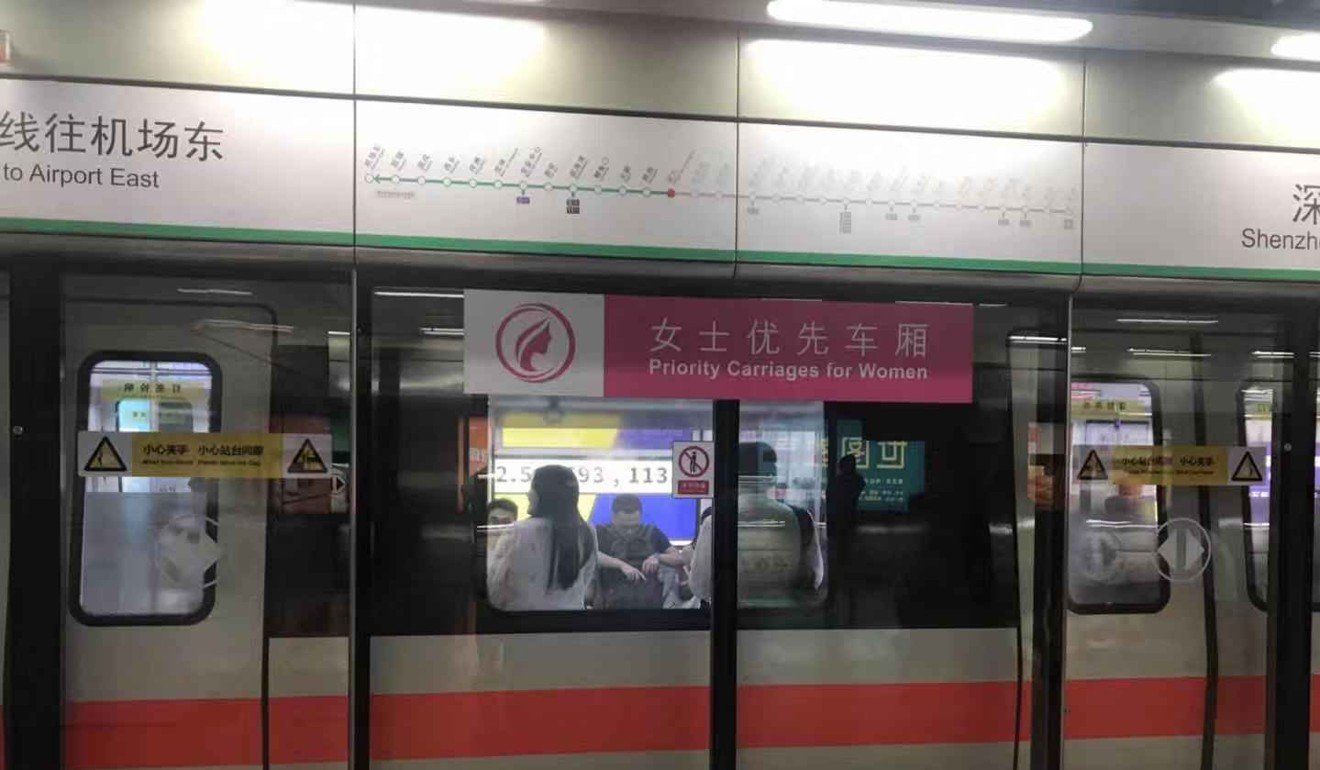
The carriages are decorated with pink stickers which say, in Chinese and English, “priority carriages for women” and while men are not barred from using them
they are encouraged to leave them to women passengers.
While the authorities did not specifically say they were intended to prevent sexual harassment – saying only that the scheme was meant to “give more care and respect to women” – the carriages followed a precedent set by Japan and Europe for that reason.

Shenzhen is currently considering an update to its priority carriages with an amended law designating them for people with disabilities and minors, as well as women, and only during rush hour. Other passengers who do not meet these criteria can be asked to leave by rail staff.

A priority carriage for women on the Shenzhen underground system. Photo: Phoebe Zhang

But in reality the restrictions on the priority carriages are seldom enforced and they have been used by men since their launch. Furthermore, feminists say the scheme is a form of segregation, rather than an attempt to solve the cause of the issue.

One reason the priority carriages have failed in their purpose could be the size of the crowds using public transport each day. According to government data, there are roughly 5 million passenger trips on the Shenzhen underground every day and 8 million in Guangzhou.

It is also hard for staff to enforce the regulation.

“When it first came out, subway staff vehemently advocated for women to use it, so many people did,” said Zhang Ying, a piano teacher in Guangzhou. Staff would hold loud speakers and gesture for women to get on the priority carriages. But now, everybody just treats it like an ordinary carriage, she said.

Zhang said she rarely uses the priority carriages because of the inconvenience of having to walk all the way to the end of the train.

Women call for convenience in all areas, but [the government] only wants to draw you a little corner to play in.Xiao Meili, Guangzhou-based feminist

Feminists have opposed the scheme from the start.
“The logic behind the scheme is wrong to begin with,” said Xiao Meili, a Guangzhou-based feminist. “When noticing the dangers women face in public spaces, women call for convenience in all areas, but [the government] only wants to draw you a little corner to play in, signalling they still will neglect you in most places.”
Although it may appear well-intentioned, Xiao said the scheme was restricting women’s space.
“Most of the sexual harassers and rapists are men, so wouldn’t it be more effective to put these offenders in a limited space?” she asked.
In a survey of 443 people conducted by a group of feminists in Shenzhen in 2017, 42 per cent of women said they had been harassed on public transport, compared with just 6 per cent of men.
Most of the interviewees said they were dissatisfied with the police response and 65 per cent said they thought police should be most responsible for handling sexual harassment in public.
Six ways Japanese women can deter gropers on trains
Xiao and others have repeatedly written to government representatives about sexual harassment on public transport. In 2016, Xiao’s feminist group received 40,000 yuan (US$5,650) in public donations – just enough to buy an advertisement slot.
For two years, the group tried to put up anti-harassment billboards in the Guangzhou and Shenzhen underground systems, but they were repeatedly blocked by the authorities who said the advertisements would cause panic.
But in 2018 Xiao’s group spotted advertisements in the subways in Beijing, Shanghai and Chengdu, some placed by news organisations and others by local governments. One advertisement in Chengdu, put up by rail officials, said: “There’s no groping hand here.”
Another, in Beijing, said: “Prevent sexual harassment, be vocal.”
Xiao said she was happy to see the changes, but described the current policy of updating the carriages in Shenzhen as an example of “lazy politics”.
There needed to be more than a pink bumper sticker on carriage windows, she said.
Instead, policymakers needed to think about the actual mechanisms of stopping harassment and how to handle culprits once they were caught.
“Women do not demand special care as if they are a soft and weak group,” Xiao said.
“They demand the safety they deserve and the right to travel conveniently.”
Source: SCMP
18/08/2019

Feature: Over 470,000 people in Hong Kong say “no” to violence

CHINA-HONG KONG-OPPOSITION TO VIOLENCE-RALLY (CN)

People from all walks of life take part in a rally to voice their opposition to violence and call for restoring social order, expressing the people’s common will to protect and save the city at Tamar Park in south China’s Hong Kong, Aug. 17, 2019. (Xinhua/Lui Siu Wai)

HONG KONG, Aug. 17 (Xinhua) — “Anti-violence!”, “Save Hong Kong!” Over 470,000 people gathered on Saturday in a rally held at Tamar Park, Admiralty of Hong Kong, to voice out their demand for peace and stability in Hong Kong.

At around 4 p.m. local time, the metro station near Tamar Park was swarming with people. An hour later, the rally started as the Chinese national anthem was ringing out.

Waving the Chinese national flag and the flag of the Hong Kong Special Administrative Region (HKSAR) and holding signs written with slogans including “Stop Riots”, “Anti-violence” and “Save Hong Kong”, the crowd was enthusiastic and impassioned despite the rain. They chanted the slogans to express their views.

At the beginning of the rally, a video was played, featuring a recording of a policeman’s wife who spoke, choking back sobs, of how violent protesters stormed the police stations and attacked the police. She appealed to the public to support the police and Hong Kong during this difficult time. “Police, keep it up!”, “Save Hong Kong!” the crowd cried out at the end of the video.

Tam Yiu-chung, a member of the Standing Committee of China’s National People’s Congress, called upon people from all walks of life to firmly oppose violence.

The national flag and emblem represent the dignity of the country, and those who insult the national flag and emblem are turning themselves into enemies of the people in the whole country, Tam added.

Rebuking the recent illegal assemblies and violent acts at Hong Kong International Airport as “the ugliest riot in the world”, Maria Tam Wai-chu deputy director of the National People’s Congress Standing Committee Basic Law Committee from Hong Kong, stressed that everyone should respect the freedoms of others and the exercise of freedom does not include wanton destruction of public properties or obstruction of public transport.

Wong Kam-leung, chairman of Hong Kong Federation of Education Workers, said that the violence in Hong Kong has been escalating over the past two months and he was distressed to see young people using force and violating laws.

He called on the young people to “stop and think twice” before engaging in violent or illegal acts.

A 57-year-old gardener surnamed Chan said sometimes she could not go to work because radical demonstrators disrupted the traffic, “which was very annoying.”

“Hong Kong has always been a peaceful society. I hope the extremist radicals stop violent acts so that people can return to peaceful life,” she said.

A finance professional surnamed Lee said his business has been badly hit by the illegal demonstrations since many of his clients are too concerned to invest in Hong Kong.

“The common aspiration of the overwhelming majority of people in Hong Kong is that the violence and chaos will stop soon. Our community has been torn apart and can not afford any more of it,” he said. “We urge the demonstrators and mobs to stop it immediately; otherwise, the whole community has to pay for the consequences.”

A local resident, Wendy, a mother of a young boy, told the reporter that her life was largely affected by the violent protests going on in the recent two months.

“For the sake of our future generations and Hong Kong getting back on track, we refuse to be in silence, we must let the world hear our voice,” she said firmly.

The assembly ended at around 6 p.m. local time, with the participants singing the chorus Below the Lion Rock, a famous song in Hong Kong that represents the spirit of unity and hard-working.

Source: Xinhua

04/06/2019

Delhi metro: Will free public transport make women safer?

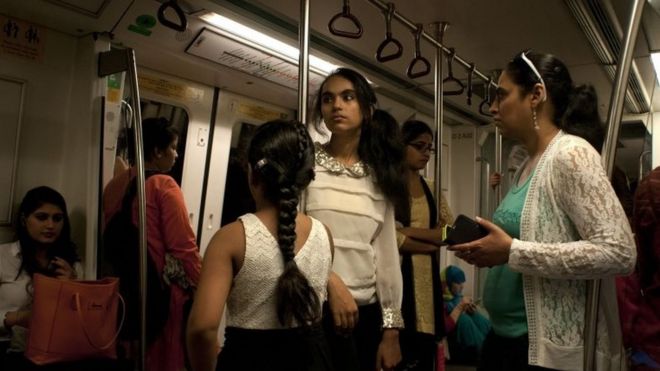
Indian commuters travel in the compartment reserved for women on the metro in New Delhi, India, on June 10, 2015Image copyright GETTY IMAGES
Image caption Mr Kejriwal has proposed free travel on buses and the city’s famed Delhi metro rail service

The chief minister of India’s capital Delhi created a minor sensation when he announced that women would no longer have to pay for public transport.

Arvind Kejriwal said that free rides on city buses and the metro would help improve women’s safety in the city.

Delhi reports some of the highest numbers of rape in India. The 2012 gang rape and murder of a student on a bus in the city sparked massive protests.

However not everyone is convinced that Mr Kejriwal’s proposal will help.

Dinesh Mohan, a transport expert with the Indian Institute of Technology in Delhi, told the BBC that making public transport free wouldn’t solve the problem.

“You need to think about the entire journey and not just the metro – you have to take into account how safe or unsafe sidewalks are and what the journey to the metro station is like in the first place. So if the idea is to make it safer for women, that experience has to be continuous. Safety can’t begin and end at the metro station. I don’t see any thought behind this initiative yet.”

The Delhi metro already reserves a coach exclusively for women on every train it runs.

On social media, the proposal caused a great deal of debate as well.

Many people, including economists and columnists, dismissed the idea and some women even said that they would continue to pay to ride the metro.

Presentational white space

However the proposal also had its share of defenders.

Despite Mr Kejriwal’s announcement, women will have to wait a while to see if it is actually implemented.

The proposal still has to be approved by the federal government because it is an equity partner along with the Delhi government in the Delhi Metro Rail Corporation.

But Mr Kejriwal has said that the federal government’s permission is not necessary as the Delhi government will bear the cost.

Delhi transport minister Kailash Gahlot said since this qualifies as a subsidy, they did not require any such permission.

Some have dismissed the entire thing as a pre-election gimmick by Mr Kejriwal – Delhi will hold state assembly elections next year.

The Delhi Metro Rail Corporation has not officially reacted to the news. But the Times of India newspaper quoted a “source” in the department as saying that implementing the proposal, if it came to pass, would be “difficult”.

Architect and urban planner Sonal Shah said on Twitter that a number of factors had to be taken into consideration for women’s safety to be addressed effectively. She said that transport access was “not equal for men and women”, adding that a number of existing issues with public transport had to be addressed first.

Source: The BBC

30/04/2019

Chinese embassy in Paris warns tourists to beware the beautiful bandit … and other sneak thieves

  • Notice says holidaymaker found his wallet and mobile phone missing after being asked for directions by an attractive woman on the Champs-Élysées
  • Warnings come just days after Beijing withdraws invitation to join navy’s anniversary parade for French frigate that sailed through Taiwan Strait
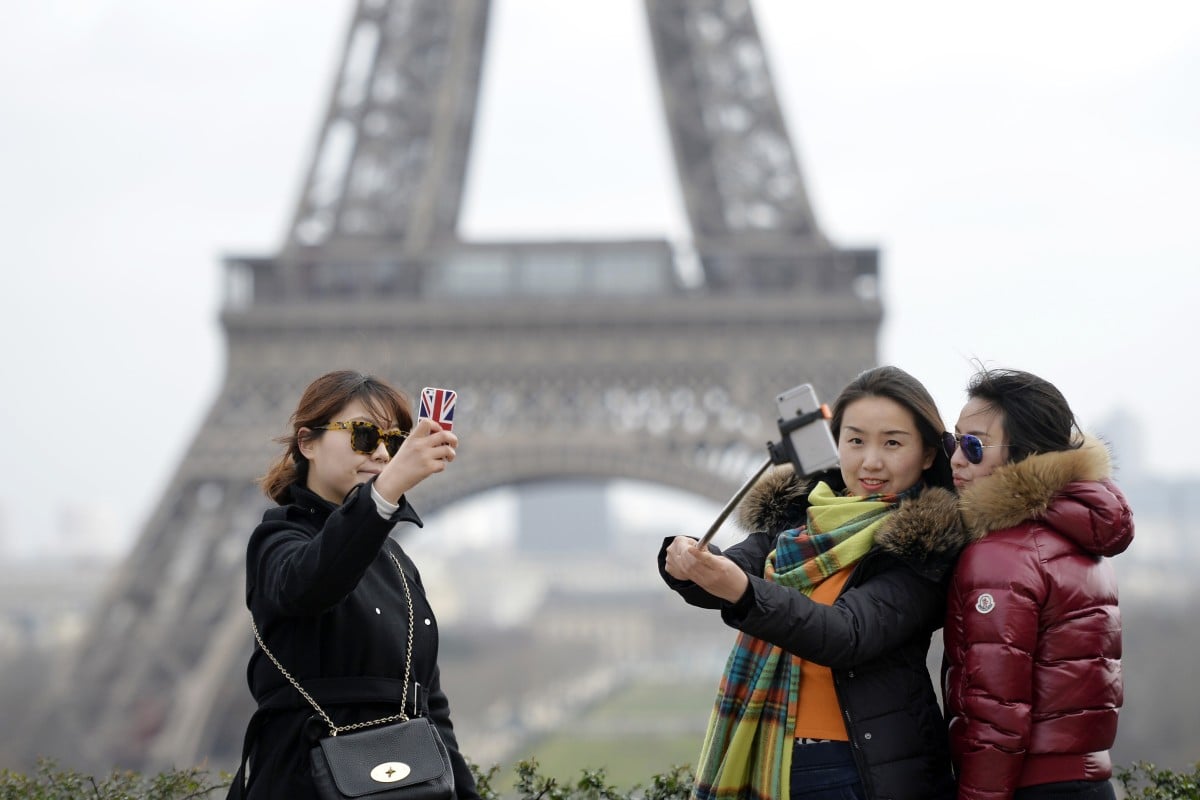
Chinese tourists have been warned to be on their guard when visiting France. Photo: AFP
Chinese visitors to Paris have been warned to be on the look out for a bewitching blonde who preys on the good nature and naivety of tourists to relieve them of their valuables.

According to a series of notices posted on the website of the Chinese embassy in the French capital, the alluring larcenist is just one of a number of con artists and crooks that prowl the city in search of easy targets.

Holidaymaker “Shen” became their latest victim earlier this month, the mission said.

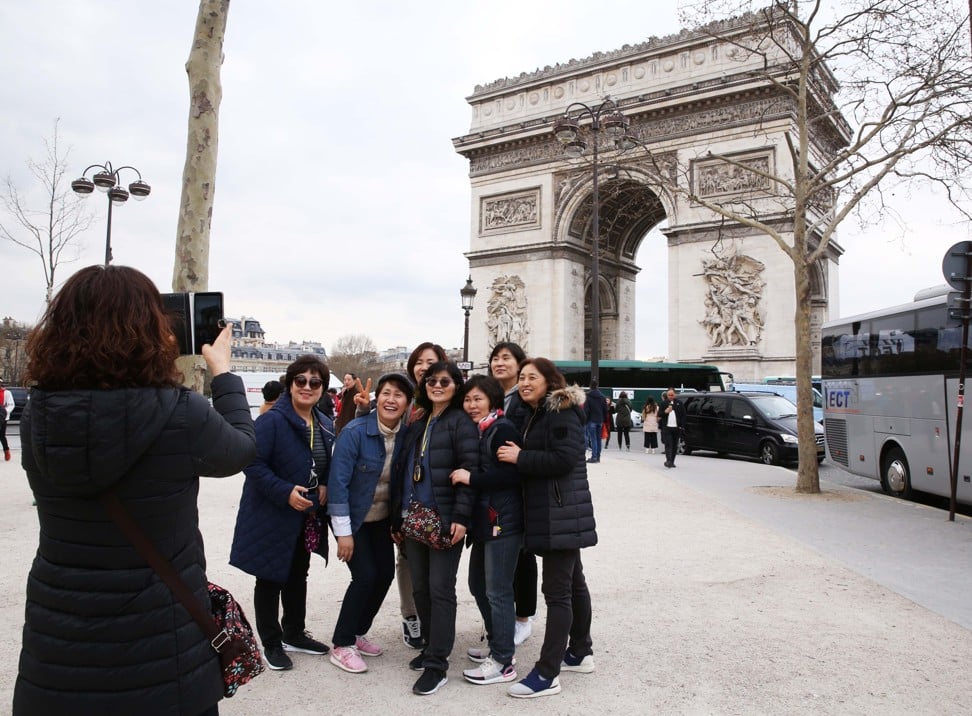
“On April 1, a Chinese citizen surnamed Shen was appreciating the beautiful scenery at Avenue des Champs-Élysées, when a blonde approached him and asked for directions,” according to one of the notices posted on the site on Thursday.

The Arc de Triomphe stands at the western end of the Champs-Élysées, where a Chinese tourist identified only as “Shen” was allegedly robbed on April 1. Photo: Xinhua

“Although Shen was curious why the blonde would chose a foreigner like him for directions, he still replied as he had made some travel preparations.”

It was only after the woman had walked away that Shen realised his mobile phone and wallet were missing, it said.

Cherish the love: China and France should disrupting ties, Beijing says

Pickpockets and sneak thieves are a threat to all visitors to France, but the Chinese are often regarded as prime targets because of the belief they carry lots of cash and valuables, the embassy said.

As well as the Champs-Élysées, tourists were warned to take extra care when visiting attractions like the Palace of Versailles and Sacré-Coeur, and when travelling on the subway.

“Be aware of strangers in public places and on public transport, and always pay attention to your belongings,” the embassy said.

The notice about Shen did not say if he had reported the suspected theft to the local police.

Pickpockets and sneak thieves are a threat to all visitors to France, but the Chinese are often regarded as prime targets, the embassy said. Photo: AFP

According to the Paris Region Tourism Board, China accounts for the third largest number of visitors to France after the United States and Britain. Chinese tourists made 1.1 million trips to the country in 2017 and the figure is forecast to grow to 2 million by 2022.

While most experience trouble-free trips, there have been reports of Chinese visitors to France being robbed or even assaulted in recent years.

In November 2017, a group of 

tourists were attacked

in the car park of their hotel in the Val-de-Marne suburb of Paris after returning from a shopping trip. Their four assailants made off with nine bags filled with luxury goods.

A year earlier, 27 Chinese tourists were attacked by a group of six Frenchmen as they boarded a bus that was about to take them to the airport.
Source: SCMP
Law of Unintended Consequences

continuously updated blog about China & India

ChiaHou's Book Reviews

continuously updated blog about China & India

What's wrong with the world; and its economy

continuously updated blog about China & India