19/04/2020
- Faced with a backlash from the West over its handling of the early stages of the pandemic, Beijing has been quietly gaining ground in Asia
- Teams of experts and donations of medical supplies have been largely welcomed by China’s neighbours
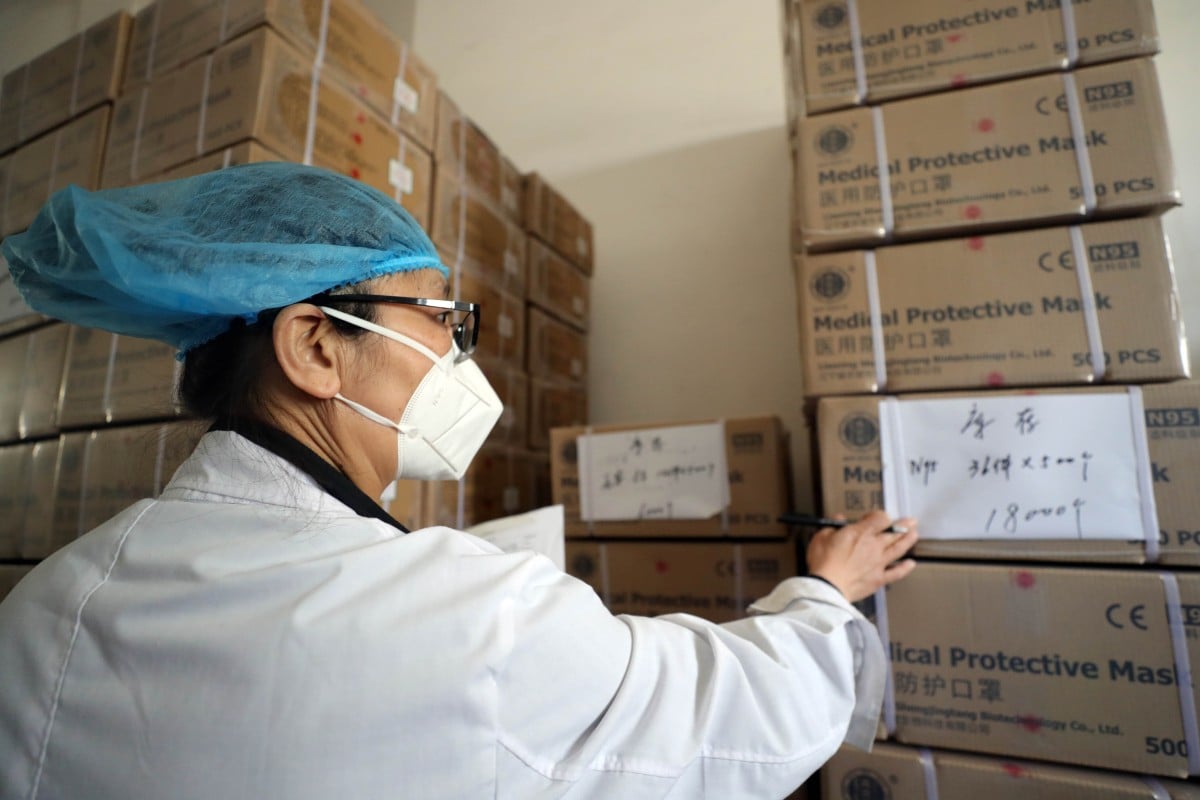
Despite facing some criticism from the West, China’s Asian neighbours have welcomed its medical expertise and vital supplies. Photo: Xinhua
While China’s campaign to mend its international image in the wake of its handling of the
coronavirus health crisis has been met with scepticism and even a backlash from the US and its Western allies, Beijing has been quietly gaining ground in Asia.
Teams of experts have been sent to Cambodia, the Philippines, Myanmar, Pakistan and soon to Malaysia, to share their knowledge from the pandemic’s ground zero in central China.
Beijing has also donated or facilitated shipments of medical masks and ventilators to countries in need. And despite some of the equipment failing to meet Western quality standards, or being downright defective, the supplies have been largely welcomed in Asian countries.
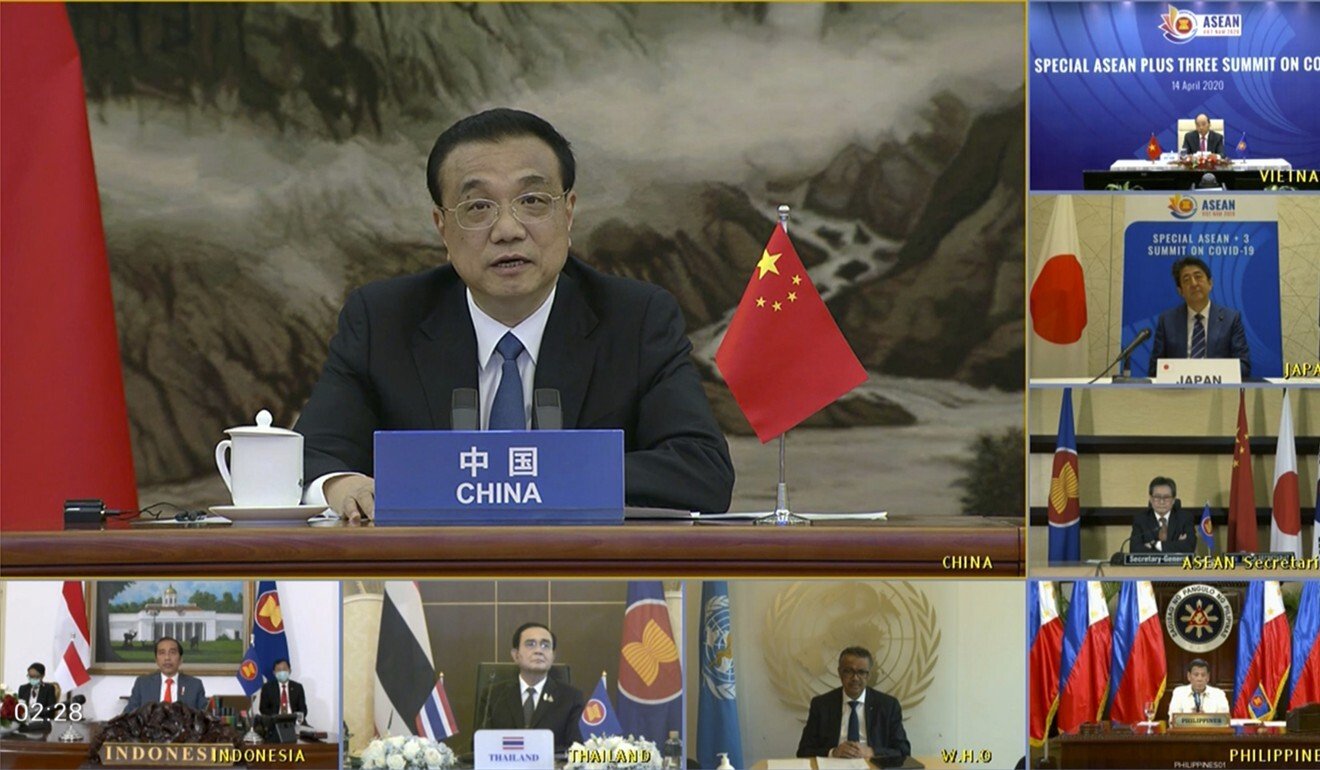
China has also held a series of online “special meetings” with its Asian neighbours, most recently on Tuesday when Premier Li Keqiang discussed his country’s experiences in combating the disease and rebooting a stalled economy with the leaders of the Association of Southeast Asian Nations (Asean), Japan and South Korea.
Chinese Prime Minister Li Keqiang speaks to Asean Plus Three leaders during a virtual summit on Tuesday. Photo: AP
Many Western politicians have publicly questioned Beijing’s role and its subsequent handling of the crisis but Asian leaders – including Philippine President Rodrigo Duterte and Japanese Prime Minister Shinzo Abe – have been reluctant to blame the Chinese government, while also facing criticism at home for not closing their borders with China soon enough to prevent the spread of the virus.
An official from one Asian country said attention had shifted from the early stages of the outbreak – when disgruntled voices among the public were at their loudest – as people watched the virus continue its deadly spread through their homes and across the world.
“Now everybody just wants to get past the quarantine,” he said. “China has been very helpful to us. It’s also closer to us so it’s easier to get shipments from them. The [medical] supplies keep coming, which is what we need right now.”
The official said also that while the teams of experts sent by Beijing were mainly there to observe and offer advice, the gesture was still appreciated.
Another Asian official said the tardy response by Western governments in handling the outbreak had given China an advantage, despite its initial lack of transparency over the outbreak.
“The West is not doing a better job on this,” he said, adding that his government had taken cues from Beijing on the use of propaganda in shaping public opinion and boosting patriotic sentiment in a time of crisis.
“Because it happened in China first, it has given us time to observe what works in China and adopt [these measures] for our country,” the official said.
Experts in the region said that Beijing’s intensifying campaign of “mask diplomacy” to reverse the damage to its reputation had met with less resistance in Asia.
Why China’s ‘mask diplomacy’ is raising concern in the West
“Over the past two months or so, China, after getting the Covid-19 outbreak under control, has been using a very concerted effort to reshape the narrative, to pre-empt the narrative that China is liable for this global pandemic, that China has to compensate other countries,” said Richard Heydarian, a Manila-based academic and former policy adviser to the Philippine government.
“It doesn’t help that the US is in lockdown with its domestic crisis and that we have someone like President Trump who is more interested in playing the blame game rather than acting like a global leader,” he said.
Shahriman Lockman, a senior analyst with the foreign policy and security studies programme at Malaysia’s Institute of Strategic and International Studies, said that as the US had withdrawn into its own affairs as it struggled to contain the pandemic, China had found Southeast Asia a fertile ground for cultivating an image of itself as a provider.
China’s first-quarter GDP shrinks for the first time since 1976 as coronavirus cripples economy
Beijing’s highly publicised delegations tasking medical equipment and supplies had burnished that reputation, he said, adding that the Chinese government had also “quite successfully shaped general Southeast Asian perceptions of its handling of the pandemic, despite growing evidence that it could have acted more swiftly at the early stages of the outbreak in Wuhan”.
“Its capacity and will to build hospitals from scratch and put hundreds of millions of people on lockdown are being compared to the more indecisive and chaotic responses seen in the West, especially in Britain and the United States,” he said.
Coronavirus droplets may travel further than personal distancing guidelines
Lockman said Southeast Asian countries had also been careful to avoid getting caught in the middle of the deteriorating relationship between Beijing and Washington as the two powers pointed fingers at each other over the origins of the new coronavirus.
“The squabble between China and the United States about the pandemic is precisely what Asean governments would go to great lengths to avoid because it is seen as an expression of Sino-US rivalry,” he said.
“Furthermore, the immense Chinese market is seen as providing an irreplaceable route towards Southeast Asia’s post-pandemic economic recovery.”
Aaron Connelly, a research fellow in Southeast Asian political change and foreign policy with the International Institute for Strategic Studies in Singapore, said Asian countries’ dependence on China had made them slow to blame China for the pandemic.
“Anecdotally, it seems to me that most Southeast Asian political and business elites have given Beijing a pass on the initial cover-up of Covid-19, and high marks for the domestic lockdown that followed,” he said.
“This may be motivated reasoning, because these elites are so dependent on Chinese trade and investment, and see little benefit in criticising China.”
China and Vietnam ‘likely to clash again’ as they build maritime militias
The cooperation with its neighbours as they grapple with the coronavirus had not slowed China’s military and research activities in the disputed areas of the
South China Sea – a point of contention that would continue to cloud relations in the region, experts said.
Earlier this month an encounter in the South China Sea with a Chinese coastguard vessel led to the sinking of a fishing boat from Vietnam, which this year assumed chairmanship of Asean.
And in a move that could spark fresh regional concerns, shipping data on Thursday showed a controversial Chinese government survey ship, the Haiyang Dizhi 8, had moved closer to Malaysia’s exclusive economic zone.
The survey ship was embroiled in a months-long stand-off last year with Vietnamese vessels within Hanoi’s exclusive economic zone and was spotted again on Tuesday 158km (98 miles) off the Vietnamese coast.
Source: SCMP
Posted in 10, 13, 15, 16, 17, 18, 1976, 27, 44, 50%, 54, according, across the world, again, against, April, areas, arriving, ASEAN, Asian, Association of Southeast Asian Nations (ASEAN), ASYMPTOMATIC CASES, at, authorities, avoid, ‘mask diplomacy’, battling, Beijing, Beijing’s, biggest, blame, blame game, borders, Britain, build, burnished, cabinet, cases, cautioning, central, central district, chairmanship, China, China's, China’s National Health Commission, Chinese capital, chinese government, Chinese market, City, clinical, closer, closing, coast, coastguard vesse, coastguard vessel, combating, compensate, confirmed, confirmed cases, considered, contain, contention, control, controversial, coronavirus, coronavirus cases, cough, countries, country’s, COVID-19, COVID-19 outbreak, cripples, crisis, criticism, cross infections, Data, day, deadly spread, death toll, deaths, declines, delegations, despite, destabilising, Disease, disputed areas, districts, domestic, down, earlier, eastern, economic recovery, economically, economy, elsewhere, embroiled, epicentre, epidemic, everybody, exclusive economic zones, experiences, eyes, facing, fall, family gatherings, fever, first time, fishing boat, flare-up, foreign policy and security studies programme, Friday, from, GDP, global leader, global pandemic, Government, Guangzhou, Haiyang Dizhi 8, handling, Hanoi’s, Harbin, health commission, Heilongjiang, high-risk, Home, hospitals, However, hubei province, hundreds, imported, imported infections, including, infected, Institute of Strategic and International Studies, interested, International Institute for Strategic Studies, investigations, irreplaceable, Japan, Japanese Prime Minister, Japanese Prime Minister Shinzo Abe, Jiaozhou, km, last, leaders, local, locally, lockdown, low-risk, lowest, mainland, Mainland China, Major, Malaysia’s, March, medical equipment and supplies, medium-risk, miles, military and research activities, millions, months-long, moved, narrative, new, nine, Northeastern, Notably, now, number, off, Official, officials, on guard, outbreak, patients, People, perceptions, Philippine, playing, political, politicians, Post, post-pandemic, pre-empt, Premier Li Keqiang, present, President Trump, prevent, previous, province, provincial capital, provincial government, publicly, published, punished, quarantine, questioned, quickly, quoted, reached, rebooting, rebound, recent, reluctant, remaining, reported, reporting, reputation, research fellow, reshape, resurgence, role, route, Russia, Saturday, saying, scratch, seen, senior analyst, shandong province, shipping data, showed, shrinks, since, Singapore, sinking, Sino-US rivalry, slow, social media, socially, soon enough, South China Sea, South Korea, Southeast Asia, Southeast Asian political change and foreign policy, southern city, spotted, spread, squabble, stalled, stand-off, State Council, statement, stood, stop, subsequent, Suifenhe, Sunday, surge, survey ship, symptoms, tally, task, test positive, Three, Thursday, Total, towards, transmitted, Transparency, travellers, Tuesday, two, Uncategorized, United States, vice governor, vice mayor, Vietnam, Vietnamese, Vietnamese vessels, virtual summit, Virus, Washington, website, weeks, were, Western, within, Wuhan, year |
Leave a Comment »
14/02/2019
STOCKHOLM (Reuters) – Sweden said on Thursday it had replaced its ambassador to China after her “incorrect” handling of unauthorized meetings intended to help free dissident bookseller Gui Minhai.
The Hong Kong-based, Swedish publisher of books critical of China’s communist leaders was abducted in Thailand in 2015 and later appeared in custody in mainland China.
His daughter Angela Gui said this week she had met ambassador Anna Lindstedt and two businessmen in Stockholm in January, where she was advised to keep quiet about her father’s case while negotiations were proceeding.
Sweden’s Foreign Ministry said that was not an official meeting, and Lindstedt had now returned to Sweden with an interim envoy sent to Beijing during an inquiry.
“Neither the Foreign Ministry nor the Foreign Minister were informed until after the event,” ministry spokesman Rasmus Eljanskog said in an emailed statement.
“As a consequence of the incorrect manner in which the said meetings were handled, we are now conducting an internal investigation.”
Gui, 54, became a Swedish citizen after studying there in the 1980s. After the abduction, he was released in October 2017, but his whereabouts were unclear until January last year when his daughter said he was seized by Chinese agents on a Beijing-bound train in the presence of Swedish diplomats.
China later confirmed it had detained him again.
In her blog, Angela Gui said Lindstedt invited her to Stockholm to meet two businessmen who could help secure her father’s release.
“The businessman said, ‘you care about Anna (Lindstedt), right? If you keep talking to the media it’ll damage her career. You don’t want her to come to any harm, do you?’”, she said in the post on blog portal Medium.
“In order for this to happen (negotiations), I was told I needed to be quiet. I wasn’t to tell anyone about this, or say anything publicly about the case,” she added.
“I’m not going to be quiet in exchange for … an arbitrary promise that my father ‘might’ be released. Threats, verbal abuse, bribes, or flattery won’t change that.”
China’s Foreign Ministry declined comment, with spokeswoman Hua Chunying saying she knew nothing about Gui’s latest situation. On its website, China’s embassy in Stockholm said it had not authorized anyone to “engage” with Gui’s daughter.
“The Chinese side handles the Gui Minhai case in accordance with law and legal procedure,” it said.
Gui’s original abduction – along with four others in the Hong Kong book trade – fed worries about interference from Beijing despite guarantees of wide-ranging freedoms for the former British colony which returned to Chinese rule in 1997.
The four others have since returned to Hong Kong. The United States and European Union have urged Gui’s release.
Sweden said it was continuing to seek Gui’s freedom, as Lindstedt faced scathing criticism for what the leader of Sweden’s Left Party called an “outrageous scandal”.
“A Swedish ambassador has done the bidding of a dictatorship and tried to silence the daughter of a Swedish political prisoner in China,” Jonas Sjostedt told local TV.
“I don’t think we have seen a worse scandal in Swedish foreign administration for decades.”
Lindstedt could not immediately be reached for comment.
Source: Reuters
Posted in abduction, ambassadors, Angela Gui, Anna Lindstedt, Beijing, blog, bookseller, British colony, career, China alert, daughter, diplomat, Dissident, envoy, father, Foreign Ministry, furore, Gui Minhai, Hua Chunying, Jonas Sjostedt, Official, OUTRAGEOUS SCANDAL, publicly, Rasmus Eljanskog, release, spokesman, spokeswoman, Stockholm, Sweden, Thailand, trains, Uncategorized |
Leave a Comment »





 CHINDIA ALERT: You'll be living in their world, very soon