Archive for ‘Pune’

29/04/2020

Coronavirus: Oxford vaccine effective in monkeys, heading for mass production in India

  • Six animals inoculated with vaccine candidate then exposed to virus did not catch Covid-19 after 28 days
  • Up to 60 million doses could be produced by Serum Institute of India this year
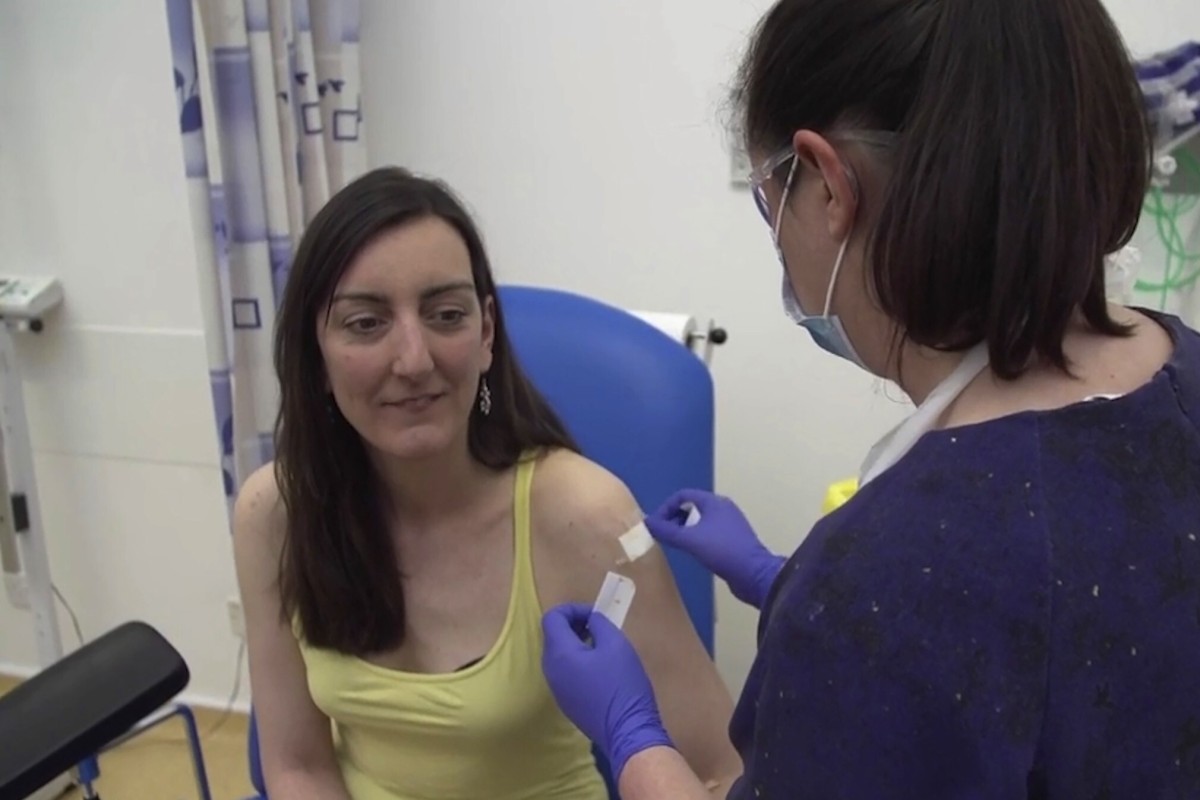
Microbiologist Elisa Granato gets an injection on Thursday as part of the first human trials in Britain for a potential coronavirus vaccine. Photo: University of Oxford via AP

A leading candidate for a Covid-19 vaccine has shown promising results in animal trials, and is expected to see mass production in India within months.

The Serum Institute of India, the world’s largest maker of vaccines by volume, said on Tuesday that it plans this year to produce up to 60 million doses of a potential vaccine developed by the University of Oxford, which is under clinical trial in Britain.

While the vaccine candidate, called “ChAdOx1 nCoV-19”, is yet to be proven to work against Covid-19, Serum decided to start manufacturing it as it had shown success in animal trials and had progressed to tests on humans, Serum Chief Executive Adar Poonawalla said.

Six rhesus macaque monkeys were inoculated with the vaccine candidate at the National Institutes of Health’s Rocky Mountain Laboratory in Montana last month, according to The New York Times.

Covid-19 vaccine trial starts in Oxford, but remdesivir treatment reportedly flops in China tests
The subjects were exposed afterwards to large quantities of the novel coronavirus, but all six remained healthy after more than 28 days, the newspaper reported, citing researcher Vincent Munster, who conducted the test.

More than 3 million people have been reported to be infected globally and over 210,000 have died from Covid-19, the respiratory disease caused by the coronavirus.

“They are a bunch of very qualified, great scientists [at Oxford] … That’s why we said we will go with this and that’s why we are confident,” Poonawalla told Reuters in a phone interview.

“Being a private limited company, not accountable to public investors or bankers, I can take a little risk and sideline some of the other commercial products and projects that I had planned in my existing facility,” Poonawalla said.

Bill Gates hopes his virus vaccine ‘manufacturing within a year’

27 Apr 2020

As many as 100 potential Covid-19 candidate vaccines are now under development by biotech and research teams around the world, and at least five of these are in preliminary testing in people in what are known as phase one clinical trials.

Poonawalla said he hoped trials of the Oxford vaccine, due to finish in about September, would be successful. Oxford scientists said last week the main focus of initial tests was to ascertain not only whether the vaccine worked but that it induced good immune responses and no unacceptable side effects.

Serum, owned by the Indian billionaire Cyrus Poonawalla, plans to make the vaccine at its two manufacturing plants in the western city of Pune, aiming to produce up to 400 million doses next year if all goes well, Poonawalla said.

“A majority of the vaccine, at least initially, would have to go to our countrymen before it goes abroad,” he said, adding that Serum would leave it to the Indian government to decide which countries would get how much of the vaccine and when.
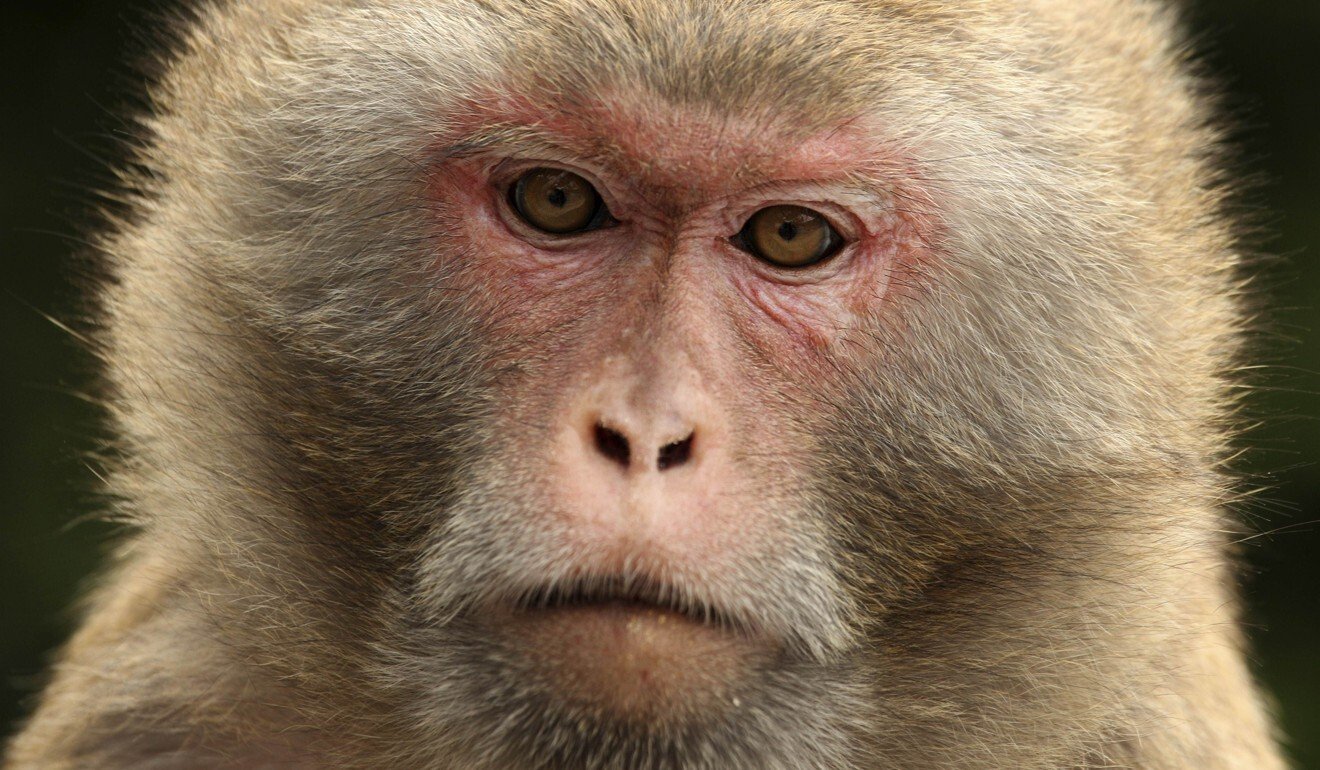
Rhesus macaque monkeys are often used in animal testing because of their similarity to humans. Photo: AFP
Serum envisages a price of 1,000 rupees (US$14.70) per vaccine, but governments would give it to people without charge, he said.

He said Prime Minister Narendra Modi’s office was “very closely” involved in the vaccine production and the company is hoping the government will help foot the cost of making it.

Over roughly the next five months, Serum will spend some 300 million to 400 million rupees (US$4.4 million to US$5.9 million) on making around 3-5 million doses per month, he said. “[The government] are very happy to share some risk and fund something with us, but we haven’t really pencilled anything down yet,” Poonawalla said.

Coronavirus: clinical trial begins on third vaccine candidate in China
22 Apr 2020

Serum has also partnered with the US biotech firm Codagenix and Austria’s Themis on two other Covid-19 vaccine candidates and plans to announce a fourth alliance in a couple of weeks, he said.

Serum’s board last week also agreed to invest roughly 6 billion rupees (US$8.8 billion) on making a new manufacturing unit to solely produce coronavirus vaccines, Poonawalla said.

Source: SCMP
01/04/2020

Coronavirus: India’s race to build a low-cost ventilator to save Covid-19 patients

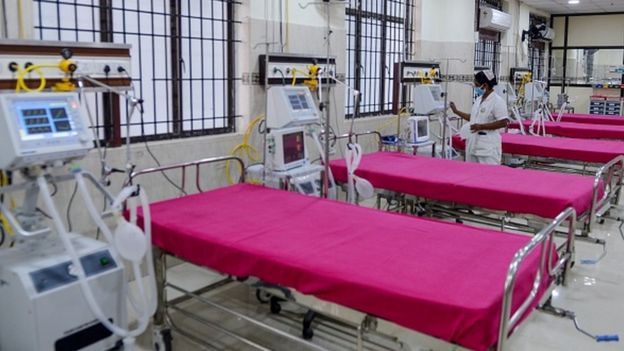
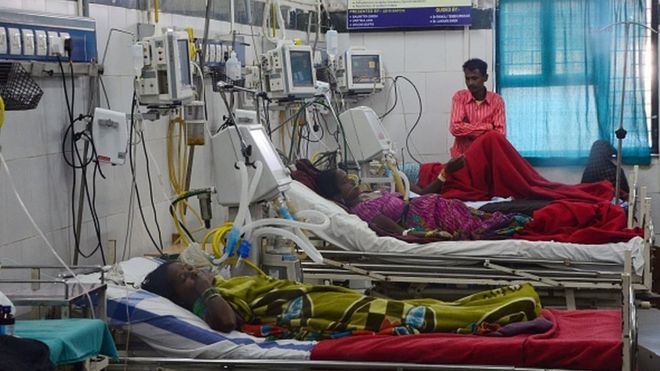
Patients on ventilators in an Indian hospitalImage copyright GETTY IMAGES
Image caption India has an estimated 48,000 ventilators and most of them are already in use

In an 8,000 sq ft (743 sq m) facility in the western Indian city of Pune, a bunch of young engineers are racing against time to develop a low-cost ventilator that could save thousands of lives if the coronavirus pandemic overwhelms the country’s hospitals.

These engineers – from some of India’s top engineering schools – belong to a barely two-year-old start-up which makes water-less robots that clean solar plants.

Last year, Nocca Robotics had a modest turnover of 2.7 million rupees ($36,000; £29,000). The average age of the mechanical, electronic and aerospace engineers who work for the firm is 26.

India, by most estimates, only has 48,000 ventilators. Nobody quite knows how many of these breathing assistance machines are working. But it is a fair assumption that all those available are being used in intensive care units on existing patients with other diseases.

About one in six people with Covid-19 gets seriously ill, which can include breathing difficulties. The country faces seeing its hospitals hobbled as others around the world have been, with doctors forced to choose who they try to save.

At least two Indian companies make ventilators at present, mostly from imported components. They cost around 150,000 ($1,987; £1,612) rupees each. One of them, AgVa Healthcare, plans to make 20,000 in a month’s time. India has also ordered 10,000 from China, but that will meet just a fraction of the potential demand.

The invasive ventilator being developed by the engineers at Nocca Robotics will cost 50,000 rupees ($662). Within five days of beginning work, a group of seven engineers at the start-up have three prototypes of a portable machine ready.

They are being tested on artificial lungs, a prosthetic device that provides oxygen and removes carbon dioxide from the blood. By 7 April, they plan to be ready with machines that can be tested on patients after approvals.

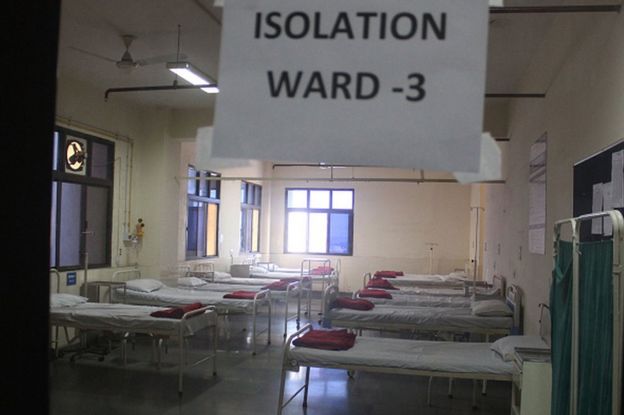
India hospitalImage copyright GETTY IMAGES
Image caption India is beefing up isolation beds in hospitals

“It is most certainly doable,” said Dr Deepak Padmanabhan, a cardiologist at Bangalore’s Jayadeva Institute of Cardiovascular Sciences and Research, and a key advisor on this project. “The simulations on artificial lungs have been done and seem to work well.”

Inspiring story

The race to develop this inexpensive, home-grown invasive breathing machine is an inspiring story of swift coordination and speedy action involving public and private institutions, something not common in India.

“The pandemic has brought us all together in ways I could never imagine,” says Amitabha Bandyopadhyay, a professor of biological sciences and bioengineering at Indian Institute of Technology (IIT), Kanpur, and a key mover of the project.

The young engineers mined open source medical supplies groups on the internet to find information on how to make the ventilators. After securing permissions, it took them exactly eight hours to produce the first prototype. Of particular use, say doctors, were some designs by engineers at MIT. With imports stalled, the engineers picked up pressure sensors – a key component of the machine that helps supply oxygen to lungs at a pressure that doesn’t cause injury – from those used in drones and available in the market.

India hospitalImage copyright AFP
Image caption India needs thousands of ventilators to cope with a possible rush of patients

Local authorities helped open firms that stock components – each machine needs 150 to 200 parts – and made sure that a bunch of engineers who had returned home to Nanded after the lockdown were still able to travel 400km (248 miles) back to Pune to work on the machine.

Some leading Indian industrialists, including a major medical device-making company, have offered their factories to manufacture the machines. The plan is to make 30,000 ventilators, at around 150-200 a day, by the middle of May.

Social media influencers joined the effort. Rahul Raj, a lithium battery-maker and an IIT alumnus, crowd-sourced a group called Caring Indians to “pool resources and experience” to cope with the pandemic. Within 24 hours, 1,000 people had signed up. “We tweeted to the local lawmaker and local police in Pune to help the developers, and made contacts with people who would be interested in the project,” Mr Raj said.

‘No-frills machine’

Expat Indian doctors and entrepreneurs who went to the same school – IIT is India’s leading engineering school and alumni include Google chief Sundar Pichai – held Zoom meetings with the young developers, advising them and asking questions about the machine’s development. The head of a US-based company gave them a 90-minute lecture on how to manage production. A former chief of an info-tech company told them how to source the components.

Lastly, a bunch of doctors vetted every development and asked hard questions. In the end, more than a dozen top professionals – pulmonologists, cardiologists, scientists, innovators, venture capitalists – have guided the young team.

Doctors say the goal is to develop a “no-frills” breathing machine tailored to Indian conditions.

Ventilators depend on pressurised oxygen supply from hospital plants. But in a country where piped oxygen is not available in many small towns and villages, developers are seeing whether they can also make the machine run on oxygen cylinders. “In a way we are trying to de-modernise the machine to what it was barely 20 years ago,” says Dr Padmanabhan.

“We are not experienced. But we are very good at making products easily. The robots that we make are much more complex to make. But this is a life-saving machine and carries risk, so we have to be very, very careful that we develop a perfect product which clears all approvals,” said Nikhil Kurele, the 26-year-old co-founder and chief executive officer of Nocca Robotics.

In just a week’s time, India will learn whether they pulled off the feat.

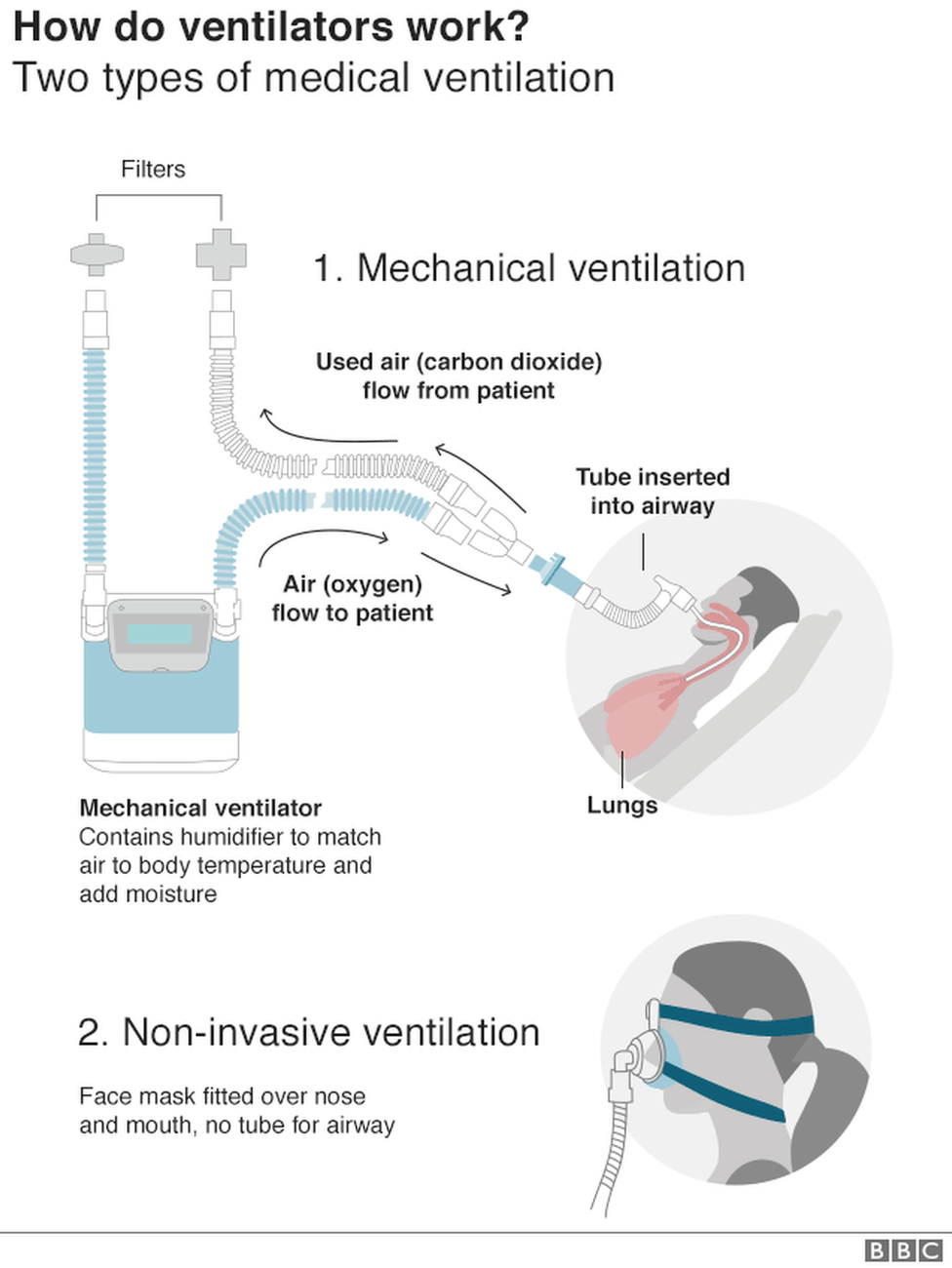
Graphic showing two common types of medical ventilation
Presentational white space

Source: The BBC

26/09/2019

At least 11 dead, thousands evacuated as flash floods hit Western India

MUMBAI (Reuters) – At least 11 people have been killed and six are missing after the Western Indian city of Pune and its neighbouring areas were hit by heavy rain and flash floods, a government official said on Wednesday.

More than 28,000 people have been evacuated from low-lying areas and the local administration is on alert for more rain, Deepak Mhaisekar told Reuters.

Pune, which is around 200 kilometres (124 miles) east of India’s financial hub of Mumbai, has received 113% more rainfall than average since the start of the monsoon season in early June, a weather department official said.

Of the 11 deaths, five occurred in Pune when a wall collapsed, said Mhaisekar.

South Asia gets monsoon rain annually during the June-September months which cause fatalities and mass displacement.

India’s monsoons, which deliver more than 70% of the country’s annual rainfall, are crucial for farm output and economic growth, but rainfall often weakens the foundations of poorly built walls and buildings resulting in deaths.

Source: Reuters


27/07/2019

The Indian city where motorbike riders hate helmets

A man riding a bike without helmetImage copyright GETTY IMAGES
Image caption Wearing helmets is mandatory for motorbike riders

Wearing helmets is mandatory for motorbike riders in India. But political interference has made it difficult for police to enforce the law in the western city of Pune, writes independent journalist Omkar Khandekar.

From the sidelines of the noisy Ganeshkhind road in Pune, police constable Sunil Tathe looks at the oncoming traffic with disappointment.

“Up to 70% motorcyclists in the city wore helmets until recently. But ever since we received orders to stop the helmet-enforcement drive, I barely see half of them wearing it,” he says.

Mr Tathe is referring to a recent government order which stops police from questioning riders who violate the law.

Devendra Fadnavis, the chief minister of Maharashtra state (where Pune is located), told the city police to send notices of fine to offenders’ homes instead of stopping them on the road. He gave the order after Pune’s legislators accused the police of harassing people because of the helmet-enforcement drive.

Police across India struggle to enforce the law as riders often don’t wear a helmet. The problem is more severe in smaller towns.

That’s why police in Pune launched the drive to stop and fine offenders on the spot. They believe that sending notices is not as effective.

Presentational grey line

Read more India stories

Presentational grey line

“You can only penalise someone if their number plate is visible in the CCTV,” said Tathe. “I’ve often come across people who hide or rub off a digit on the number plate. When asked, they say an errant child did it.”

Pune has one of the highest numbers of two-wheelers in the country – nearly 2.5 million – and ranks among the top 10 Indian cities for fatal road accidents.

In the last five years, more than 1,000 bikers died on Pune’s roads and in the suburban Pimpri-Chinchwad area. Only three of the deceased were wearing helmets.

And yet, when the city police declared their intent to strictly enforce the law this year, many residents were outraged.

Some took to the streets and held rallies, chanting slogans such as “helmet hatao, Punekar bachao” (get rid of helmets, save Pune’s residents). One “anti-helmet group” even went to a crematorium and staged a mock funeral of helmets.

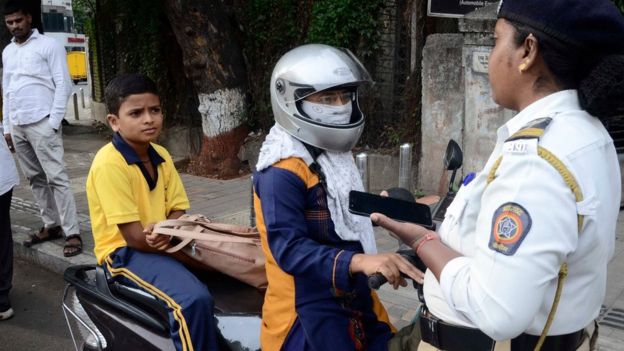
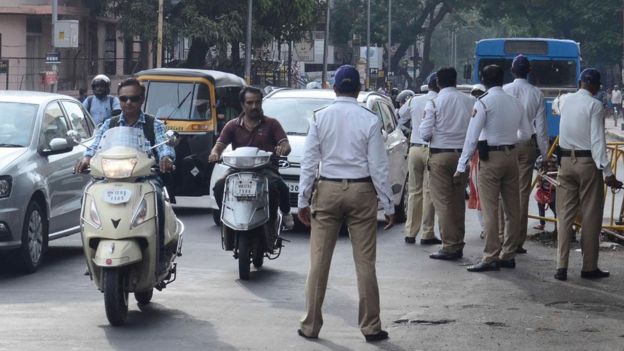
Police in Pune checking motorbike ridersImage copyright GETTY IMAGES
Image caption Pune’s police are struggling to enforce a law that mandates helmets

They argue that people from the Sikh faith, most of whom wear turbans, are exempted from wearing helmets, so why should they not have the freedom to chooseA local politician, who supported the protests, claimed helmets cause problems in the spine.

Vivek Velankar, who heads the “anti-helmet compulsion action committee”, says that their battle has been going on for nearly two decades. Bikers in Pune, he adds, have to ride carefully anyway, considering how congested the city is.

“Wearing helmets, in fact, makes bikers feel a degree of safety,” he says. “That makes them even more reckless.”

One political party organised a motorbike rally where all riders wore the traditional Pune headgear made of cloth, instead of helmets.

And in April, just before the parliamentary elections, advocate Ramesh Dharmavat, a candidate from the fledgling People’s Union Party, contested on the sole issue of banning helmets. He received 547 votes.

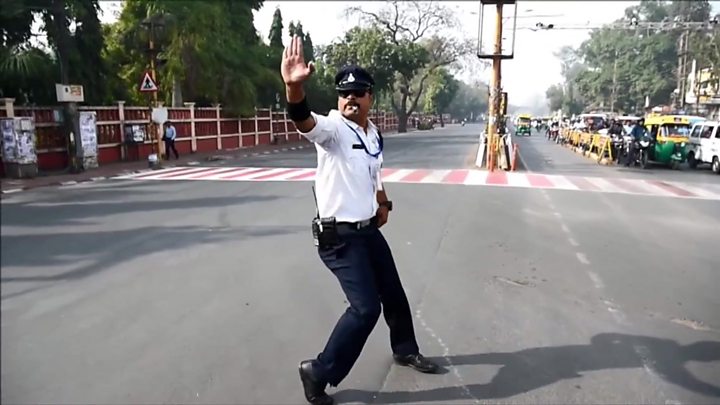
Media caption Traffic cop Ranjeet Singh uses dance moves to manage traffic

Anil Deshmukh, deputy commissioner of Pune traffic police, says most people argue against wearing helmets, which frustrates officers who are enforcing the law.

“There just doesn’t seem to be any logical explanation for such arguments. But here (Pune), they also get political patronage,” he says.

The drive had begun on 1 January and police had fined more than 100,000 people for riding without helmets in the first three months. Even as a section of the city’s population resisted, says Mr Deshmukh, the compliance was around 80% in some areas.

The police also launched a scheme to reward citizens who had no traffic violations on their record. They were given discount coupons to be redeemed at restaurants or shops.

But this changed once police started implementing the chief minister’s order.

Police in Pune checking motorbike ridersImage copyright GETTY IMAGES
Image caption Some people refuse to comply with the law

They don’t have the manpower or necessary technology, such as a synchronised signalling system or cameras that automatically recognise number plates.

Nishad Kulkarni, an architect and long-time city resident, says the resistance largely stems from Pune’s history.

“In the 1980s and early 1990s, Pune used to be a city of cyclists. You would frequently use cycles to commute. But that changed in the late 1990s. As the manufacturing and IT boom started, several infrastructure projects and skyscrapers came up. Soon, everyone was driving cars or riding motorbikes before knowing how to behave on roads,” he says.

Many of the city’s residents, according to him, prioritise convenience over safety. “Whenever I’ve seen cops stop these people, they think they know better.

It takes one to know one. “There are 30 people in my own family. I don’t think any one of us wears a helmet,” he says.

Source: The BBC

08/05/2019

India election 2019: How sugar influences the world’s biggest vote

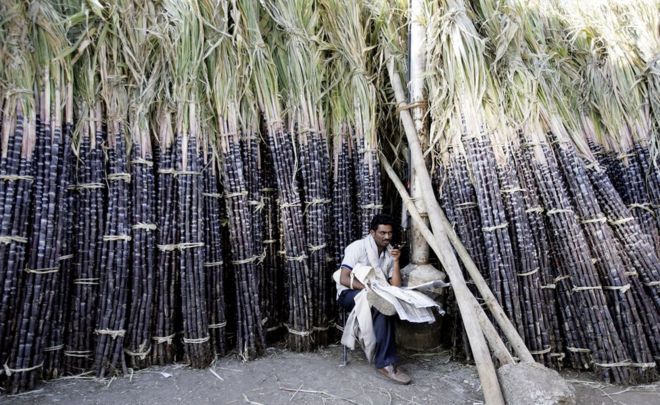
An Indian vendor sits among sugarcane kept at the main wholesale market ahead of celebrations surrounding the festival of Pongal in Bangalore,Image copyright AFP
Image caption Some 30 million farmers are engaged in cane farming in India

When Prime Minister Narendra Modi held a recent election meeting in the northern Indian state of Uttar Pradesh, he was compelled to make a promise relating to sugar, a diet staple.

Farmers who grow cane in the politically crucial state ruled by Mr Modi’s Bharatiya Janata Party (BJP) were angry because sugar mills had not paid their dues in time. They held protests and blocked railway tracks. “I know there are cane dues. I will make sure every penny of yours will be paid,” Mr Modi told the audience.

India’s sugar mills are bleeding money and collectively owe billions of dollars to 50 million cane farmers, many of whom haven’t been paid for nearly a year. Niti Ayog, a government think tank, says the arrears have reached “alarming” levels. More than 12 million tonnes of unsold sugar have piled up in factories. There is little incentive to export more as India’s sugar price is higher than the international price.

Sugar is serious business in India. Around 525 mills produced more than 30 million tonnes of sugar in the last crushing season, which lasted from October to April. This makes it the world’s largest producer, unseating Brazil. A large number of mills are run by cooperatives where farmers own shares proportional to the land they own and pledge their produce to the mill.

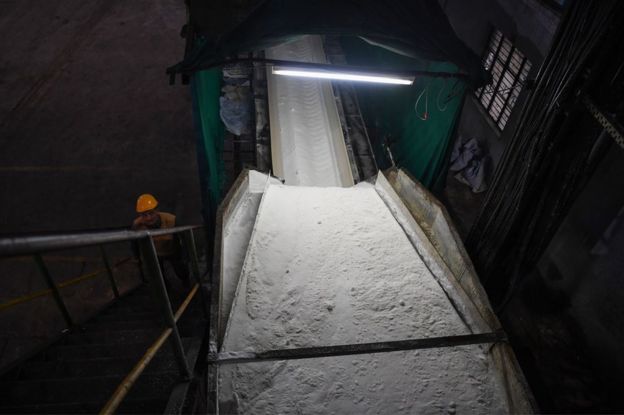
An Indian worker is pictured next to a sugarcane processing unit at the Triveni sugar refining factory in Sabitgarh village, in Bulandshahr district in the northern state of Uttar Pradesh.Image copyrightAFP
Image captionIndia is the world’s largest producer of sugar

That’s not all. Some 50 million farmers, tightly concentrated geographically, are engaged in cane farming. Millions more work in the mills and farms and are engaged in transportation of cane.

As with much of India’s politics, cane growers appear to be a reliable “vote bank”. Uttar Pradesh and Maharashtra, which together produce 60% of the country’s sugar, send 128 MPs to the parliament. The price of cane can swing votes in more than 150 of the 545 seats in the ongoing general election, according to one estimate. Sugar is possibly the “most politicised crop in the world”, says Shekhar Gaikwad, the sugar commissioner of Maharashtra.

Presentational grey line

India votes 2019

Presentational grey line

Indians are also voracious consumers of sugar. The bulk of the supply goes into making sweets, confectionary and fizzy drinks that are beginning to contribute to a rising obesity problem, like elsewhere in the world. “The world’s sweet tooth continues to rely on cane sugar, much as it did four centuries ago,” says James Walvin, author of How Sugar Corrupted the World.

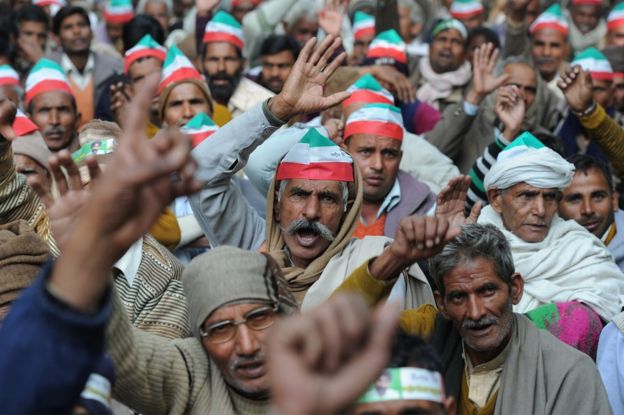
Indian sugarcane farmers shout slogans during a protest in New Delhi on December 4,2012Image copyright AFP
Image caption Cane farmers have held protests, demanding higher crop prices

On the face of it, cane growers and owners of sugar mills should be happy.

The government sets cane and sugar prices, allocates production and export quotas, and hands out ample subsidies. State-run banks give crop loans to farmers and production loans to mills. When mills run out of cash, public funds are used to bail them out. “I earn around 7,000 rupees ($100; £76) from growing sugar every month. It’s not a lot of money, but it’s an assured income,” says Sanjay Anna Kole, a fourth-generation, 10-acre cane farm owner in Maharashtra’s Kolhapur district.

But protectionism may be yielding diminishing returns. Generous price support for the crop means the price at which mils buy cane has outstripped the price at which they sell sugar. Among large producers – Thailand, Brazil and Australia – India pays the highest cane price to farmers. It also spends more than Brazil, for example, in producing sugar.

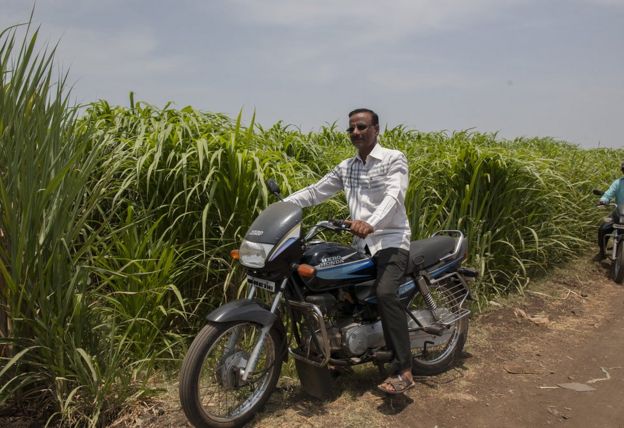
Sanjay Anna KoleImage copyrightMANSI THAPLIYAL
Image captionFarmer Sanjay Anna Kole says cane farming provides an ‘assured income’

The involvement of politicians may not be helping matters. Since the inception of the first mills in the 1950s, politicians have owned or gained control of them by winning mill co-operative elections. Almost half a dozen ministers in Maharashtra, India’s second-biggest cane growing state, own sugar mills.

A study on the links between politicians and sugar mills by Sandip Sukhtankar, associate professor of economics at University of Virginia, found that 101 of the 183 mills – for which data was available – in Maharashtra had chairmen who competed for state or national elections between 1993 and 2005.

He also found that cane prices paid by “politically controlled” mills fell during election years, and that this was not entirely due to loss of productivity.

These mills have also been blamed for holding on to arrears and releasing them before elections to win over voters; and political parties have been accused of using money from the mills to finance campaigns. “One would think that perhaps political parties that don’t benefit from links to sugar might have incentives to reform the sector, but we have seen parties everywhere want a piece of the action,” says Dr Sukhtankar. “There are resources in the sugar industry to be extracted for political purposes.”

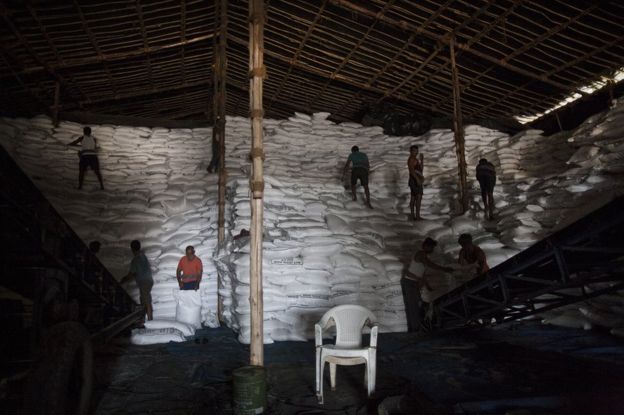
Sugar stocked in Maharashtra factoryImage copyright MANSI THAPLIYAL
Image caption Sugar stocks have piled up in factories across India

Whatever the case, India’s world-beating crop is mired in crisis. The farmers and the mills grumble that they aren’t getting a fair price for their crop and sugar respectively. “It looks like a sunset industry for me. There’s no future in cane until the government completely overhauls farm policies,” Suresh Mahadev Gatage, an organic cane-grower in Kolhapur, told me.

The unrest among the farmers is worrying. In January, several thousand angry cane farmers descended on Shekhar Gaikwad’s office in the city of Pune, demanding the mills pay their dues in time. The negotiations lasted 13 hours.

One of the farmers’ demands was to arrest a state minister, who was heading three mills in the state, and had defaulted on his cane dues. When negotiations ended way past midnight, authorities issued orders to seize sugar from the offending mills and sell it in retail. In India’s lumbering bureaucracy, that took another eight hours because 500 copies of the orders had to be printed. “My office is pelted by stones every other day by irate farmers,” says Mr Gaikwad.

Suresh Mahadev GatageImage copyright MANSI THAPLIYAL
Image caption Cane grower Suresh Mahadev Gatage says there is ‘no future in cane’

Meanwhile, what is completely forgotten is how much sugar has hurt India’s ecology. More than 60% of the water available for farming in India is consumed by rice and sugar, two crops that occupy 24% of the cultivable area. Experts say crop prices should begin to reflect the scarcity and economic value of water.

But before that, as Raju Shetti, MP and a prominent leader of sugarcane farmers, says, price controls should be eased and bulk corporate buyers like soft drink companies and pharmaceuticals should pay more for sugar.

“We need differential pricing for sugar. Cheap sugar should be only provided to people who can’t afford it. The rest should pay a higher price,” he told me.

“Otherwise, the industry will collapse, and farmers will die. Even politicians will not be able to save it.”

Source: The BBC

Law of Unintended Consequences

continuously updated blog about China & India

ChiaHou's Book Reviews

continuously updated blog about China & India

What's wrong with the world; and its economy

continuously updated blog about China & India