12/03/2020
- China is now making more than 100 million masks a day, up from 20 million before the coronavirus outbreak, and may start to export more to other countries
- Mask shortages elsewhere once more raise the debate about an over-reliance on China, with critics pointing to a lack of US industrial policy
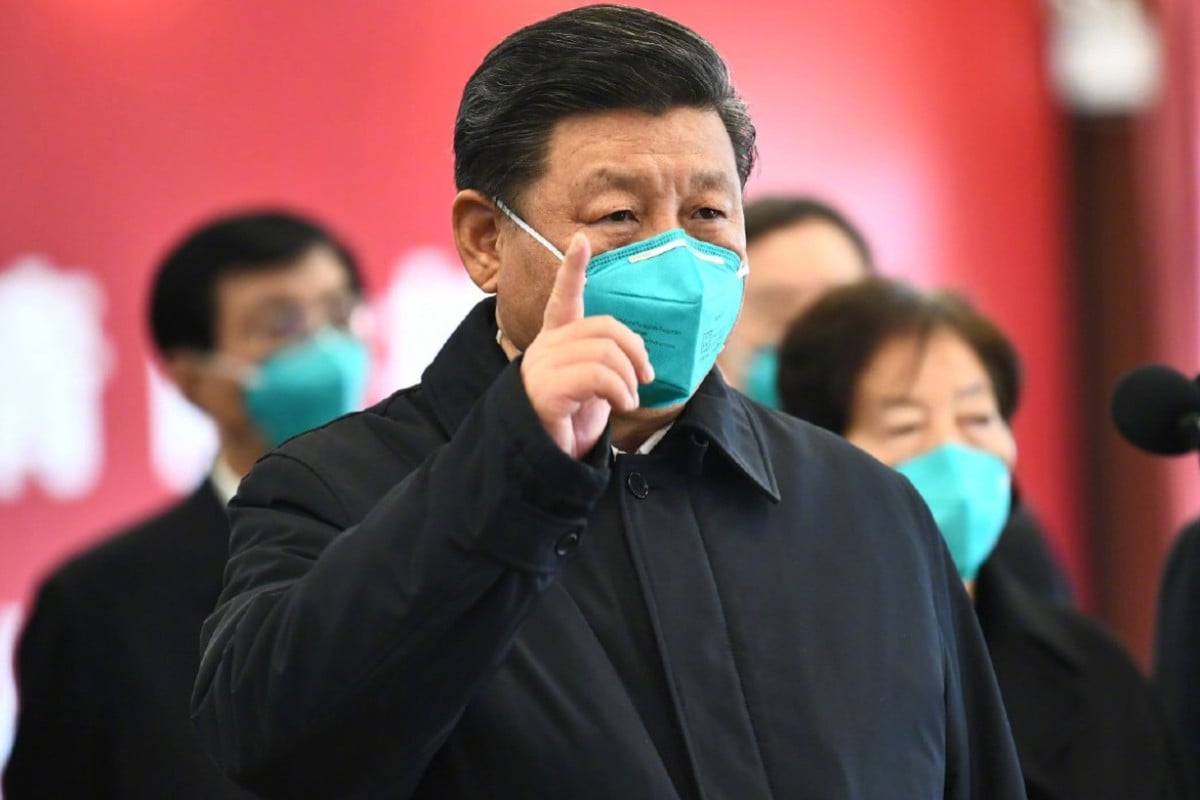
China was producing 116 million masks per day of February 29, including a mix of disposable and high-end masks like the American-designed N95 model worn by President Xi Jinping on his trip on Tuesday to Wuhan. Photo: Xinhua
The Liu family factory has been making diapers and baby products in the Chinese city of Quanzhou for over 10 years, but in February, for the first time, it started making face masks, as demand soared spectacularly due to the coronavirus outbreak.
The business – which employs 100 people in the Southeastern Fujian province – has added two production lines to make up to 200,000
masks a day.
And while the decision was primarily commercial, “encouragement” from the Chinese government – in the form of subsidies, lower taxes, interest-free loans, fast-track approvals for expansion and help alleviating labour shortages – made the decision an obvious one, said Mr Liu who preferred only to give his family name.
“The government is advocating an expansion in production,” Liu said. “With faster approvals, producers need to prioritise the government’s needs over exports.”
WHO declares coronavirus crisis a pandemic
The factory is one of thousands of refitted pop-ups around China making masks and other protective equipment for the first time, part of a massive industrial drive to respond to the spread of the coronavirus.
Before the outbreak, China already made about half the world’s supply of masks, at a rate of 20 million units a day. That rose to 116 million as of February 29, according to China’s state planning agency, a mix of disposable and high-end masks like the American-designed N95 model worn by President Xi Jinping on his trip on Tuesday to Wuhan, the epicentre of the outbreak.
This exponential jump is the result of a wartime-like shift in industrial policy, with Beijing directing its powerful state-owned enterprises to lead the nationwide mask-making effort, and the country’s sprawling manufacturing engine following their lead.
For me, this is the big advantage of China, the speed Thomas Schmitz
“For me, this is the big advantage of China, the speed,” said Thomas Schmitz, president of the China branch of Austrian engineering giant Andritz, which has seen a big uptick in demand for its wet wipe-making machines in recent weeks, also due to the virus. “When you need to run, people know how to run, and this is something which has been lost in other countries since their industrial heydays.”
Chinese oil and gas major Sinopec upped production of mask raw materials such as polypropylene and polyvinyl chloride in January. This week, it set up two production lines in Beijing to produce melt-blown non-woven fabric, intended to make four tonnes of the fabric each day, which can then be used to produce 1.2 million N95 respirators or six million surgical masks a day.
The maker of China’s new J-20 stealth fighter jet, Chengdu Aircraft Industry Group, repurposed part of its factory to design a mask production line, according to local media reports. The Sichuan Daily said 258 of the company’s engineers spent three days fast-tracking development of an assembly line with more than 1,200 components.
Coronavirus: From mysterious origins to a global threat
More than 2,500 companies in China have reportedly started making masks, among them 700 technology companies including iPhone assembler Foxconn and smartphone makers Xiaomi and Oppo, in an extraordinary mobilisation of resources.
The result resembles “the war effort” in the middle of the last century in the United States and western Europe, but arguably no other nation could undergo such a transformation so quickly today.
It is a reminder of what can happen in a centrally-planned economy with a strong manufacturing base, but also brings into sharp focus some of the geopolitical issues which have characterised China’s at-times difficult relationship with the rest of the world, particularly the European Union and US, over the past couple of years.
China’s dominance in manufacturing has become all the more evident as the rest of the world scrambles to shore up their own dwindling medical supplies, leading many to wonder why the world is so dependent on it for vital supplies.
The lesson for Washington is not that we need to emulate the Chinese economic model, but rather that we need to better steward the industrial base in key sectors Rush Doshi
The Italian government, which is dealing with the highest number of coronavirus cases and deaths after China, is to take shipment of 1,000 ventilators, 2 million masks, 100,000 respirators, 200,000 protective suits and 50,000 testing kits from China.
Italian foreign minister Luigi Di Maio said after a phone call with Chinese counterpart Wang Yi, they had agreed the
export deal in the same week that European neighbours France and Germany banned masks from being exported because of low domestic supplies.
The Italy export deal showed that “China is emerging as a global public goods provider as the US proves unable and unwilling to lead,” said Rush Doshi, the director of the China Strategy Initiative at the Washington-based Brookings Institute think tank.
“China’s ability to produce what is needed to fight coronavirus is not simply a product of its economic model – it’s also a product of its industrial capacity,” Doshi said. “The US once had this capacity too, but it has lost important parts of it. The lesson for Washington is not that we need to emulate the Chinese economic model, but rather that we need to better steward the industrial base in key sectors.”
The frustration is felt acutely by Michael Einhorn, president of medical equipment distributor Dealmed-Park Surgical in New York, who has been trying to source stock from China for weeks, “but cannot get straight answers” from vendors.
Unaware that Wuhan was still under heavy
economic lockdown, Einhorn said he placed an order with a private seller in China’s virus-stricken city last week, but that the goods had not been shipped.
“Everyone is running out here, people are panicking in hospitals and we want to be able to help our most important customers,” Einhorn said. “We are dealing with hospitals that do not have products, how in the United States of America in 2020 did this happen?”
With the number of confirmed coronavirus cases in China falling daily, it is not inconceivable that the sort of export deal struck with Italian leaders becomes commonplace, although for now, it deal can be chalked up as a significant public relations coup for Beijing.
The World Medical Association is unable to specify how many masks are required to supply frontline medical staff in virus-hit areas, but said that “this crisis should be a wake up call for politicians and societies to make the necessary investment in emergency preparedness and to look into the vulnerability of our supply chains”.
Australian-listed manufacturer Eagle Health announced on Friday that it had installed production lines at its Xiamen factory in southern China to make 300 million masks a year and said it had already received orders from China and would be securing further larger orders internationally.
The group, which normally makes products including amino acids, protein supplements and lozenges in China, said it would prioritise meeting the large domestic demand, but was aware of an impending global shortage.
Eagle Health has already commenced production of its first order of 3.2 million medical masks for the Yiling Hospital Management Group in China, a process which will take 10 days. It has other smaller orders from Chinese government agencies and expects to receive more orders outside China.
The decision to make more masks came from increased demand. These are opportunities. The global demand for high quality masks will be significant Xu Gang
“The decision to make more masks came from increased demand. These are opportunities,” said chief executive Xu Gang. “The global demand for high quality masks will be significant. Imagine when the schools open. The situation will take some time to peak.”
Last week, the Australian Dental Association said supplies of masks at many practices were expected to run out within four weeks. The Australian government has since arranged a supply of 54 million masks for both the dental and medical industries.
At the same time, the US only has 1 per cent of the 3.5 billion masks it would need to counter a serious outbreak, Bloomberg reported.
While China has no quota on the volume of masks that had to be hived off for local consumption, the government has said domestic demand needs to be prioritised.
Businesses are free to export but overseas demand has yet to explode like it has in China, said Fujian factory owner Liu.
Wendy Min, sales director of Pluscare, a manufacturer based near the virus’ epicentre in Hubei province, said her company is making 200,000 masks per day, much of which are sold to the government, with exports still restricted by partial lockdown of workers and cargo transport.
“We previously exported to Europe, South America and other parts of Asia,” Min said. “But at the moment we can’t export. We are trying to discuss this with the government, but we cannot wait any more – we have to export soon.”
Min said that while she was receiving countless cold calls up until last week from people in China looking for masks, these have stopped, perhaps unsurprising given the abundance in supplies becoming available.
An influx of Chinese-made masks, though, is likely to be welcomed in other virus-stricken parts of the world.
Self-quarantine of all international travellers to Beijing as China fights import of coronavirus
Miguel Luiz Gricheno, CEO of Brazilian mask manufacturer Destra, said that his company is making 30,000 masks a day, but cannot meet local demand due to a lack of supplies, including the non-woven fabric from which masks are made.
“In disposable masks, most Brazilian companies are paralysed due to the lack of raw materials,” Gricheno said. “With the arrival of the coronavirus in Brazil, the demand has increased a lot but the main raw material comes from abroad.”
However, a short-term supply fix will not answer underlying questions about how so many countries found themselves in such dire straits, meaning the geopolitical fallout of the coronavirus will be extensive.
Decades of weak industrial policy helped elect US President Donald Trump, who said he would bring manufacturing jobs back to America at China’s expense. While he has waged a bruising two-year trade war with China in response, the current situation shows just how difficult it will be to change the global manufacturing processes, which are so heavily controlled by China.
One of the great flaws of globalisation is that everyone wanted things cheaper, but did you compromise your health care infrastructure in the process? Stephen Roach
“In the guise of trying to improve efficiency and create value for price-sensitive consumers, we’ve created a global production network that is very difficult to unwind,” said Stephen Roach, a professor of economics at Yale University and a veteran China watcher. “One of the great flaws of globalisation is that everyone wanted things cheaper, but did you compromise your health care infrastructure in the process.
Reuters reported that Trump is considering invoking the emergency provisions of the Defence Production Act, which would allow the government to instruct companies to alter production to help address the domestic shortage of medical supplies like masks. If a company is producing 20 per cent N95 masks and 80 per cent standard masks, the White House could order them to rejig the ratio, an unnamed official said.
The New York Times reported on Wednesday that the White House is preparing an executive order that would allow the government to buy medical supplies from overseas in the hope that it will incentivise companies to make them within the US.
But these changes still do not give Trump the sort of sweeping powers enjoyed by Chinese counterpart Xi.
“When you have a pluralistic, democratic situation that Trump is overseeing, it becomes more unwieldy” to take the steps necessary to address a crisis situation, said Harry Broadman, chair of the emerging markets practise at the Berkeley Research Group and a senior US government official in the 1980s and 1990s.
“That is why I think Trump looks at Xi with envy, because he doesn’t have to deal with a disparity of views or democratic interests,” Broadman said. “I think Trump is at heart a bilateral guy, as you saw with the phase one [US-China] trade deal and the state-to-state purchases. That is why he likes dealing with [Russian President Vladimir] Putin and Xi, because each of them can move mountains. I think Trump is very envious of that ability.”
Source: SCMP
Posted in 100 million masks, American-designed N95 model, Andritz, Asia, Australian Dental Association, Australian government, Austrian engineering giant, Beijing, Bloomberg, Brazil, Brazilian companies, Brookings Institute, can move mountains, Chengdu Aircraft Industry Group, China Strategy Initiative, China’s, coronavirus, coronavirus cases, coronavirus outbreak, countries, cranks, Dealmed-Park Surgical, deaths, Defence Production Act, Destra, Eagle Health, Europe, European neighbours, European Union, exponential jump, export, Fears, Foxconn, France, Fujian, gear, Germany, industrial policy, international travellers, iPhone assembler, Italian foreign minister, Italian government, J-20 stealth fighter jets, Juggernaut, mask-making, mobilisation, New York, Oppo, over reliance, paralysed, Pluscare, President Xi Jinping, protective suits, Putin, Quanzhou, raw materials, resources, respirators, Reuters, russian president vladimir putin, self-quarantine, Sichuan Daily, Sinopec, smartphone makers, South America, sparking, testing kits, The New York Times, Trump, Uncategorized, United States of America, US, US industrial policy, US President Donald Trump, ventilators, Wang Yi, wartime-like shift, Washington, White House, World Medical Association, world’s workshop, Wuhan, Xi, Xiamen, Xiaomi, Yiling Hospital Management Group |
Leave a Comment »
28/10/2019
- The president is set to become the first Russian leader to make a state visit to the Philippines for more than 40 years, according to a former envoy
- Moscow is aware of China’s entry into the Philippines, and could have its eye on some projects there, while the US is also watching developments
Russian President Vladimir Putin and Philippine President Rodrigo Duterte shake hands during a 2016 meeting in Peru. Photo: EPA
The timing of Moscow’s announcement over the weekend that
President Vladimir Putin
has accepted an invitation to visit Manila has raised eyebrows, as it comes on the eve of crucial bilateral talks between
the Philippines and China on joint oil exploration in the
.
In a statement immediately welcomed by the Philippine presidential palace, Igor Khovaev, Russia’s ambassador to the Philippines, on Saturday told reporters Putin had accepted Duterte’s invitation “with gratitude”.
No date has been set for the visit, with Khovaev only saying Moscow would “do our best to arrange this meeting as soon as possible”.
A steering committee with representatives from both Manila and Beijing is set to meet this week to discuss the joint oil exploration deal. China has proposed a 60 per cent-40 per cent split in favour of the Philippines, according to Hermogenes Esperon,
Courting Russia with South China Sea oil is a ‘dangerous gamble’ for Duterte
Neither side has clarified if the split refers to ownership or revenue, and no other details were disclosed.
After an August meeting with Duterte, Chinese President Xi Jinping said the countries could take a “bigger step” in jointly developing oil and gas resources if they could properly handle their sovereignty dispute in the South China Sea.
But defence and security analysts say the Philippine president took a “dangerous gamble” on a visit to
Russia last month, when he invited the Russian state oil company Rosneft to explore for oil in Philippine waters – which include parts of the South China Sea claimed by China.
The timing of Moscow’s announcement has not gone unnoticed.
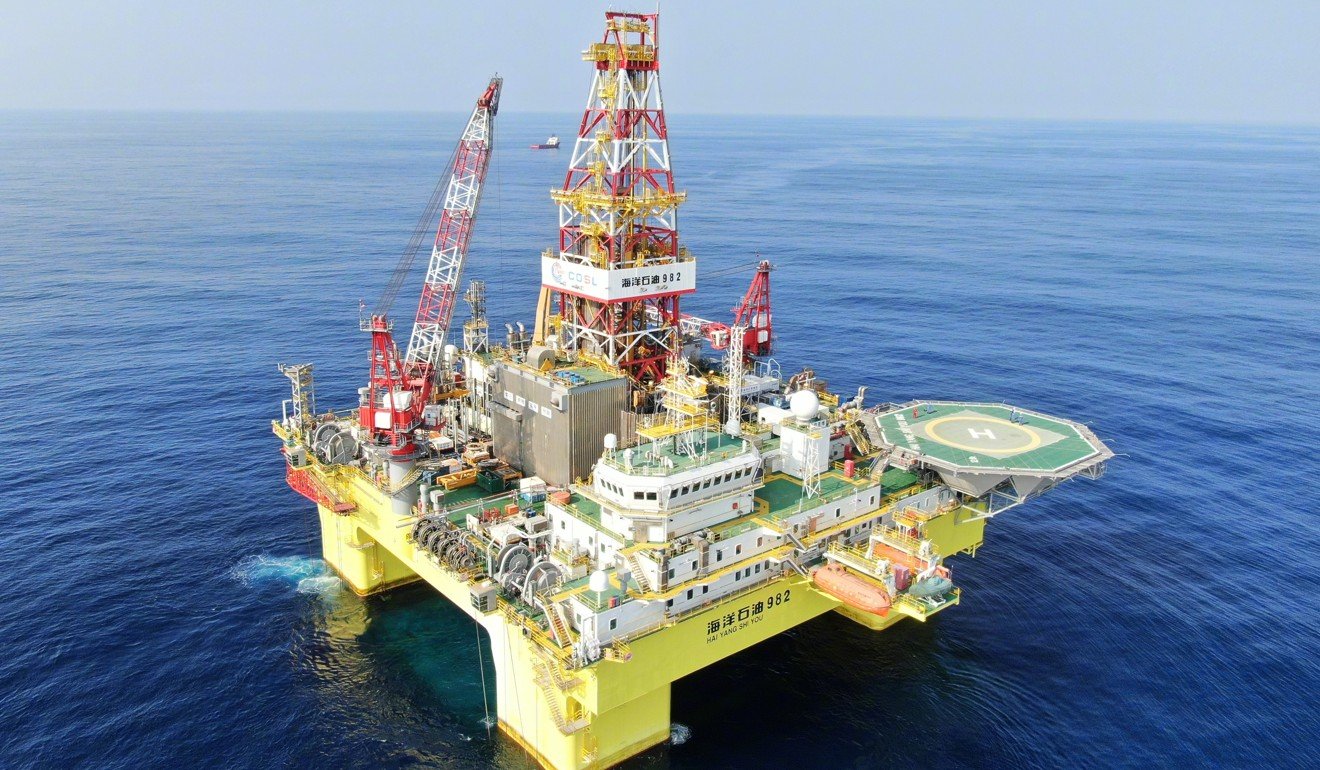
A Chinese deepwater oil rig in the South China Sea. Photo: Weibo
“It’s a welcome and historic development. Some wise guy in the Duterte government thought about timing [the invitation to Putin around the oil talks with Beijing],” said retired Philippine ambassador Lauro Baja, who once served as president of the United Nations Security Council.
Baja told the Post that no Russian president had visited the Philippines during his more than 40 years with the Department of Foreign Affairs.
“The Philippines then was almost a nonentity as far as Russia was concerned, [but] maybe now Russia recognises the strategic importance of the Philippines [in terms of] regional politics,” he said.
Baja said Moscow was aware of China’s entry into the Philippines, and could have its eye on some projects there.
“For all their so-called alliance, China and Russia are fierce competitors for influence and other benefits. And I think Russia has some objectives in mind like selling armaments and [forging] technological agreements,” he said, while cautioning that the situation remained “nebulous”.
New Philippines military chief sees no ‘shooting war’ in South China Sea despite disputes
“It’s a fascinating development but things are still early … For now, this is [just] an invitation extended by Duterte and accepted in principle by Putin.”
The United States will also be monitoring developments in the Philippines, according to Greg Poling, director of the Washington-based Centre for Strategic and International Studies’ Asia Maritime Transparency Initiative.
“Russia is eager to boost its influence in the region, and doubtless doing so with a long-standing US ally is seen as a bonus by Moscow,” he said. “There is nothing that prevents the Philippines from engaging in security cooperation with Russia, but the devil will be in the details.”
Poling added that the US would be concerned if Russia-Philippine cooperation involved acquiring military platforms that were incompatible with the shared platforms and doctrines used by Washington and Manila, as well as the latter’s other major security partners, namely Australia, Japan and South Korea.
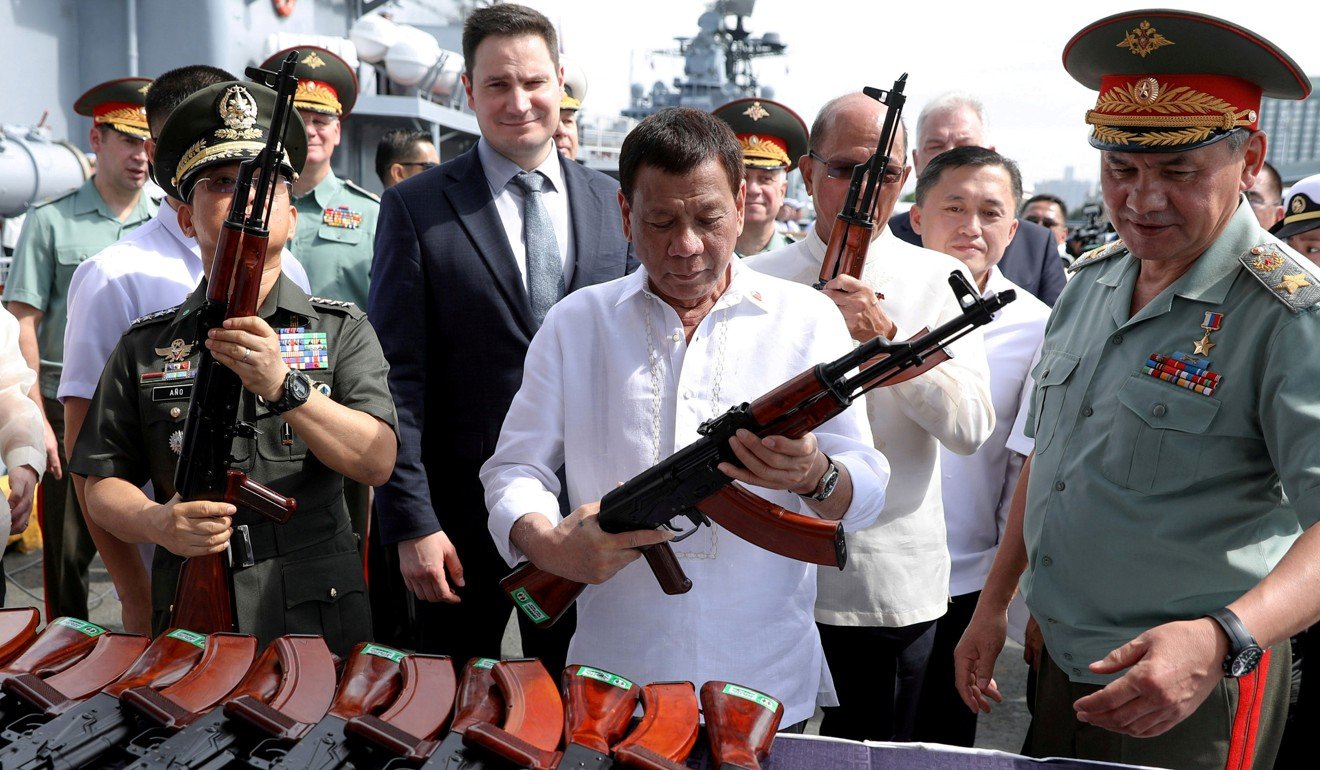
Philippine President Rodrigo Duterte inspects firearms donated by Russia in 2017. Photo: Reuters
“The US will also be concerned if any acquisitions or cooperation with Russia might threaten information security or intelligence cooperation between the US and the Philippines,” he said.
“And finally, any major platforms acquired from Russia would likely require the US to impose sanctions on the Philippines unless a waiver is granted, and the US government has been very stingy about awarding those waivers because they undermine the effectiveness of the sanctions regime.”
Moscow last week offered to help the Philippines produce its own arms for both domestic use and export with the help of Russian technology. Max Montero, an Australia-based Filipino security consultant, viewed that offer as “a swipe at the US”.
“Imagine a US stronghold and long-time ally and former colony becoming a manufacturing hub for Russian arms. And it makes it worse if [the Philippine armed forces] buys them too,” he said.
“Weakening the US alliances in Asia will benefit Russia [as it is] one of the US’ competitors in arms sales and geopolitics.”
Russia offers arms technology to the Philippines with ‘no conditions’ as US ties falter
The Philippines, Montero said, would benefit from such an arrangement since it is “a laggard in defence technology”. However, he pointed out that the country’s armed forces continue to buy weapons from the US and receive American arms as grants, potentially limiting the domestic market for Russian arms.
Navy cooperation has also been on the agenda, as Moscow and Manila discussed signing a new naval pact in March, while warships from each country have visited the other this year. Philippine naval vessels made their first-ever visit to Russia in October, while three Russian ships docked in the Philippines for a goodwill visit in January.
Russia is the top supplier of arms to Southeast Asia, and the No 2 global arms supplier, behind the US. Southeast Asia bought US$6.6 billion of Russian arms between 2010 and 2017, or more than 12 per cent of Russia’s sales, according to the Stockholm International Peace Research Institute, a Swedish think tank that publishes global arms tracking data.
Source: SCMP
Posted in acquisitions, agenda, arms sales, Australia, Beijing, Centre for Strategic and International Studies’ Asia Maritime Transparency Initiative, China’s, Chinese, Chinese President Xi Jinping, cooperation, deepwater oil rig, Department of Foreign Affairs, donated, entry, firearms, GeoPolitics, global arms supplier, global arms tracking data, inspects, invite, Japan, Manila, Manila-Beijing, Moscow, naval pact, Navy cooperation, nonentity, oil company, oil talks, Peru, Philippine President, Philippines, Putin, Rodrigo Duterte, Rosneft, Russia, Russian leader, Russian President, russian president vladimir putin, Russian state, Russian technology, South China Sea, South Korea, Southeast Asia, State visit, Stockholm International Peace Research Institute, Swedish think tank, Uncategorized, United Nations Security Council, United Nations Security Council (UNSC), United States, US, Washington |
Leave a Comment »
10/09/2019
BEIJING, Sept. 9 (Xinhua) — Chinese Premier Li Keqiang’s upcoming visit to Russia will open up broader space for pragmatic cooperation between the two countries in the new era and boost bilateral ties, a Chinese Foreign Ministry official said Monday.
At the invitation of Russian Prime Minister Dmitry Medvedev, Li will pay an official visit to Russia from Sept. 16 to 18 and co-chair the 24th regular meeting between Chinese and Russian heads of government with Medvedev, Vice Foreign Minister Le Yucheng said at a press briefing.
The visit comes as the two countries are embracing the 70th anniversary of the establishment of diplomatic ties and ushering in a new era in their relations.
Noting that the China-Russia relationship has become more mature, stable and tenacious over the past 70 years, Le said it is now a major-country relationship featuring the highest degree of mutual trust, coordination and strategic value.
“China and Russia enjoy solid political mutual trust and firmly support each other on issues concerning core interests and major concerns, while their all-round mutually beneficial cooperation has continued to expand and their interests have been more closely interconnected,” Le said, adding that the bilateral trade volume exceeded 100 billion U.S. dollars for the first time last year.
According to Le, the two countries also have close and effective communication and coordination in international affairs.
The upcoming meeting between the two countries’ heads of government will focus on two major objectives, Le said. The first is to promote the implementation of the major consensus reached by the two countries’ heads of state, deepen the integration of interests and consolidate the material basis of bilateral relations.
The second is to contribute the two countries’ wisdom to and voice their support for safeguarding multilateralism, open economy, and the liberalization and facilitation of trade and investment, Le said.
During the visit, Li will hold talks with Medvedev in St. Petersburg and sign a joint communique of the 24th regular meeting between Chinese and Russian heads of government. Li will also meet with Putin in Moscow
Source: Xinhua
Posted in 70th anniversary, China-Russia relationship, Chinese premier Li Keqiang, diplomatic ties, Dmitry Medvedev, mature, Moscow, pragmatic cooperation, Putin, Russia, Russian Prime Minister, St Petersburg, stable, tenacious, Uncategorized, Vice Foreign Minister, Vice Foreign Minister Le Yucheng |
Leave a Comment »
06/09/2019
Russian President Vladimir Putin (2nd R) meets with Chinese Vice Premier Hu Chunhua (2nd L) on the sidelines of the fifth Eastern Economic Forum in Vladivostok, Russia, Sept. 5, 2019. (Xinhua/Bai Xueqi)
VLADIVOSTOK, Russia, Sept. 5 (Xinhua) — Russian President Vladimir Putin said on Thursday that his country welcomes Chinese investment and expects more positive outcomes from bilateral cooperation.
Putin made the remarks here at a meeting with visiting Chinese Vice Premier Hu Chunhua on the sidelines of the fifth Eastern Economic Forum (EEF).
Putin thanked the Chinese high-level delegation for participating in the forum and asked Hu to convey his sincere greetings to Chinese President Xi Jinping.
This year marks the 70th anniversary of diplomatic ties between the two countries, said Putin, adding that strengthening Russia-China cooperation in different areas is of special significance and there is huge potential for such cooperation to expand.
By coordinating with each other, Moscow and Beijing play important roles in international issues, the Russian leader said, adding that with concerted efforts of the two sides, economic and trade ties between the two countries are also growing steadily.
Hu conveyed the Chinese president’s cordial greetings and best wishes to Putin, saying that Xi attended the fourth EEF last year and sent him to attend the fifth EEF this year, which shows that China attaches great significance to its relations with Russia.
Recalling that Xi and Putin elevated bilateral relations in Moscow in June to a comprehensive strategic partnership of coordination for a new era, Hu said that China is ready to work with Russia to implement the important consensuses reached by the two presidents and continuously push bilateral ties forward.
China-Russia economic and trade ties have improved over the recent years, and relevant departments of both countries are working to achieve the target of 200 billion U.S. dollars in bilateral trade volume by 2024 set by Xi and Putin, Hu said.
In addition to trade in traditional areas, China supports the two sides in fostering new areas of growth, implementing major projects of strategic significance, further facilitating trade and investment, expanding trade in agricultural products, and boosting cross-border e-commerce and trade in services, he said.
Also on Thursday, Hu met with Russian Deputy Prime Minister Yury Trutnev to discuss intergovernmental cooperation between China’s northeastern region and Russia’s Far Eastern and Baikal regions.
Source: Xinhua
Posted in chinese investment, Putin, Russia, Uncategorized, welcomes |
Leave a Comment »
01/09/2019
- US president likely had Beijing ‘on his mind’ when he made his audacious offer, diplomat says
- Proposal ‘could be interpreted as a very clear signal’ to China and Denmark that the US sees Greenland as part of an exclusive strategic zone, academic says
China has been building closer ties with Greenland in recent years. Photo: Reuters
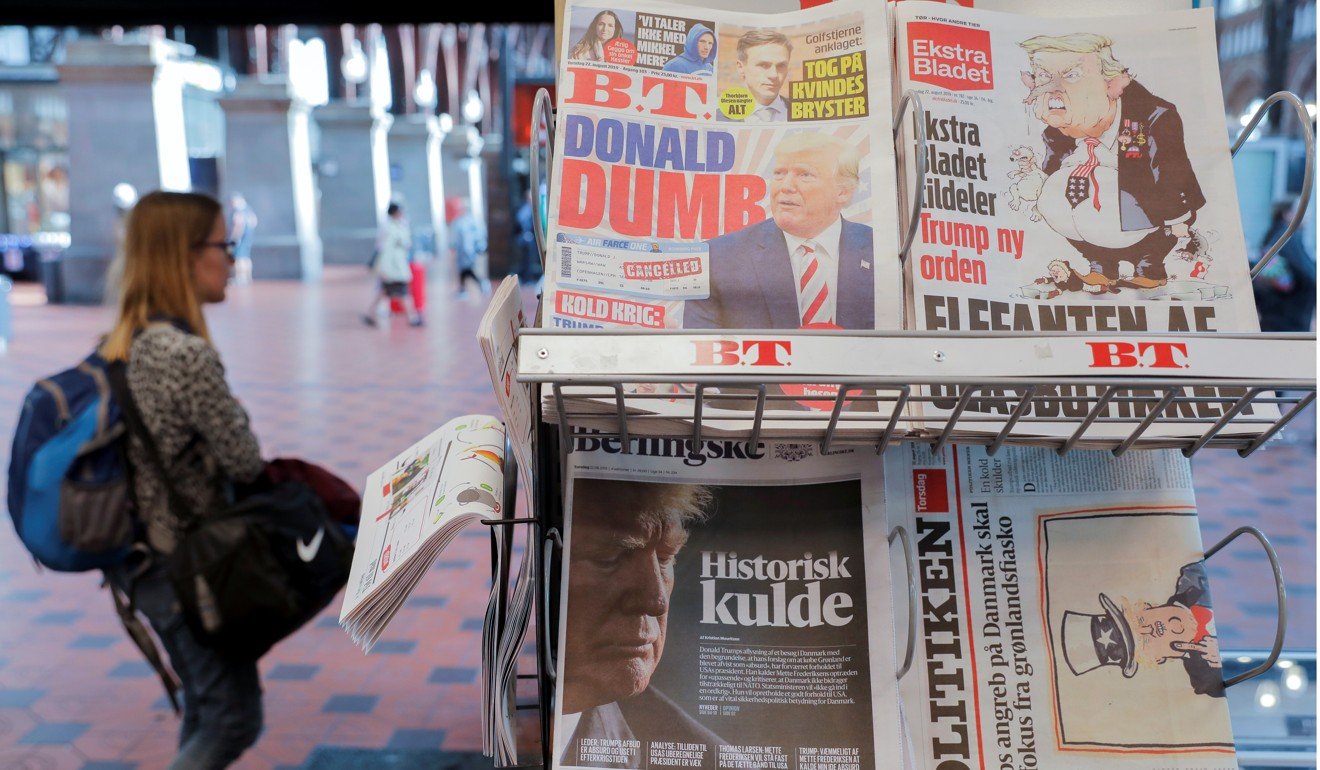
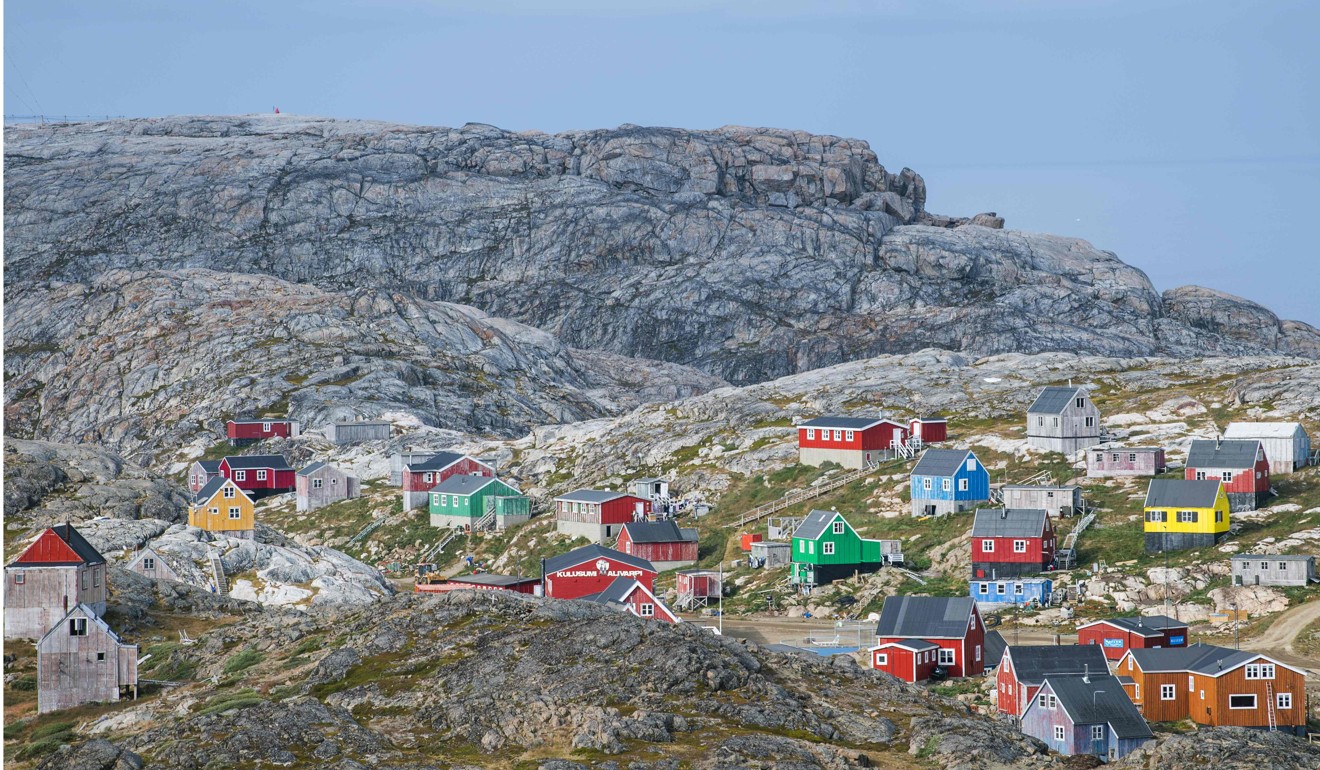
US President Donald Trump’s eyebrow-raising idea to buy Greenland from Denmark last month epitomised what analysts say is Washington’s fear of the growing interplay of Chinese money, Russian aggression and Arctic political division.
Of all the countries involved in the region, Denmark is feeling the most heat, and not just because Trump recently cancelled a trip and called its Prime Minister Mette Frederikse “nasty” for describing his plan to buy the world’s largest island “absurd”.
Over the past few years, both of Denmark’s self-ruled governments – Greenland and the Faroe Islands – have increasingly turned to China for commercial deals, adding weight to Beijing’s growing strategic influence in the vast area that forms the common backyard of Europe, North America and Russia.
Russia seeks Chinese support in developing Arctic shipping routes
Greenland is of particular concern to the White House and the Pentagon as it is home to the US Thule Air Force Base, located far above the polar circle and which served as the first line of defence during the cold war.
Nowadays, the island is also strategically important for the US ballistic missile early warning system, as the shortest route from Europe to North America goes via the ice-cloaked, resource-rich territory.
“Though it’s difficult to tell the motivations of President Trump, he likely had China on his mind with his Greenland offer,” said a Beijing-based diplomat, who asked not to be named.
The US was likely to step up its presence in Greenland in the future, the person said.
In May, US Secretary of State Mike Pompeo accused China and Russia of introducing a strategic power struggle into the Arctic region and described Beijing’s behaviour there as aggressive.
When Greenland signalled an interest in engaging a Chinese state-owned company to build two airports in 2017 – the island’s prime minister flew to Beijing to appeal for financial backing – Copenhagen stepped in amid US pressure, reluctantly agreeing to finance the projects from the public coffers.
Denmark’s reluctance stems from a long-standing mistrust between Copenhagen and Greenland, as the island’s quest for economic development is viewed by the Danes as an attempt to shore up capital to push for a future independence movement.
“There is no doubt that the US foreign and security policy community is becoming far more interested in Greenland as a strategic asset,” said Andreas Bøje Forsby, a researcher at the University of Copenhagen’s Nordic Institute of Asian Studies.
“Proposing to buy Greenland could be interpreted as a very clear signal to both China and Denmark that Greenland is part of an exclusive American strategic zone,” he said.
Danish Prime Minister Mette Frederikse described Donald Trump’s plan to buy Greenland as “absurd”. Photo: Reuters
The government of the Faroe Islands – an archipelago located between Scotland, Norway and Iceland – has a similar readiness to engage with China but for a different purpose.
Unlike Greenland, there are no immediate political movements calling for independence from Denmark, making its overall relationship with Copenhagen more amiable.
This month, the Faroese government will open a liaison office in Beijing, located within the Danish embassy.
“Our top priority is to have a free-trade agreement with China,” Sigmundur Isfeld, the first head of the Faroe Islands’ representation to Beijing, said.
US defence report flags China’s expanding military reach in the Arctic
With Norway – a key competitor of the Faroes in the fishing and export industries – eyeing a similar arrangement with China, the time was ripe to clinch a deal, he said.
“It is a challenge for us … we need to get in the game.”
Although part of Denmark, the Faroe Islands are not part of the European Union and therefore have to form separate trade agreements with other countries.
“For example, there is an EU-Japan economic partnership agreement. It covers all EU nations, but it does not cover the Faroe Islands,” Isfeld said.
Trade between Greenland and China totalled US$126 million in 2108. Photo: AFP
China, for its part, has sought to exert its economic and cultural influence on the Faroes, which has a population of about 52,000 people.
, the embattled Chinese telecoms giant, has been working with the islands’ main telecoms provider for four years and is said to be finalising a plan for 5G upgrades across the archipelago.
Beijing also helped fund a project for a Chinese-Faroese dictionary.
With a population of about 56,000 people, Greenland is one of China’s smallest trading partners. In the first seven months of 2019, trade between the two was US$126 million, with Chinese imports of fish accounting for the bulk of the total.
The Greenland government’s annual political and economic report for 2019 said that strong demand for metals from China had contributed to mineral and mining projects in the country, though China’s transition to a less mineral-intensive economy could spell trouble for the future of the sector.
The island’s gross domestic product is expected to grow by 3 per cent this year, according to the report, with seafood – principally cod, halibut and prawns – set to continue to be its chief export.
The end of the Arctic as we know it
China’s attempts in recent years to expand its involvement in Greenland have run into roadblocks.
In 2016, a Chinese mining company expressed interest in taking over an abandoned marine station in Grønnedal, an offer that the Danish government turned down the following year. A Chinese state-owned construction company had also offered to build airports in Greenland, but withdrew its offer this year.
Also this year, China expanded its involvement in exporting from Kvanefjeld, one of the world’s largest deposits of rare earths and uranium, by creating a joint venture to process and export the resources.
Beijing has made clear its strategic ambitions in the region. Early last year, it unveiled its Polar Silk Road strategy, plotting the course for its future development goals in the region – including scientific, commercial, environmental preservation and resource extraction efforts.
It also aligned its Arctic interests with its Belt and Road Initiative. Chinese companies are encouraged to invest in building infrastructure along the routes and conduct commercial trial voyages to gauge feasibility.
Putin boasts of nuclear icebreaker fleet as he outlines Arctic expansion plans
Anders Rasmussen, a former Danish prime minister and erstwhile Nato secretary general, said in an article published in Atlantic magazine last month that with melting ice caps opening the Arctic Sea to shipping, Arctic sea lanes “will likely become another flashpoint of renewed competition among the great powers as climate change alters our world”.
It was a situation he said he found “regrettable, but inevitable”.
“Both China and Russia are interested in getting a foothold in Greenland, to expand their influence in the Arctic region,” Rasmussen said. “Instead of being a source of contention,
Greenland should serve to highlight how many interests the United States and Denmark have in common.”
Source: SCMP
Posted in 5G upgrades, airports, Anders Rasmussen, archipelago, Arctic, Arctic expansion plans, Arctic political division, Arctic Sea, Arctic sea lanes, Arctic shipping routes, Atlantic magazine, Beijing, Belt and Road Initiative, Belt and Road Initiative (BRI), China alert, China’s growing presence, Chinese mining company, Chinese money, Chinese support, Chinese-Faroese dictionary, climate change, Cold War, commercial, Copenhagen, Danish embassy, Danish government, Danish prime minister, Denmark, early warning system, environmental preservation, EU nations, EU-Japan economic partnership agreement, Europe, European Union, Faroe Islands, Faroese government, first line of defence, Grønnedal, Greenland, Huawei, Iceland, imports of fish, Kvanefjeld, liaison office, melting ice caps, Mette Frederikse, Mike Pompeo, Nato secretary general, Nordic Institute of Asian Studies, North America, Norway, nuclear icebreaker fleet, offer, Pentagon, polar circle, Polar Silk Road strategy, President Donald Trump, Prime minister, prompt, Putin, rare earths, resource extraction, Russia, Russian aggression, scientific, Scotland, shipping, telecoms giant, to buy, Uncategorized, United States, University of Copenhagen, Uranium, US ballistic missile, US Secretary of State, US Thule Air Force Base, Washington, White House |
Leave a Comment »
27/04/2019
- Foreign Minister Wang Yi tells French counterpart Jean-Yves Le Drian the two sides should ensure ties ‘continue to develop in a healthy way’
- Meeting comes after Paris angers Beijing by sending a warship through the sensitive Taiwan Strait
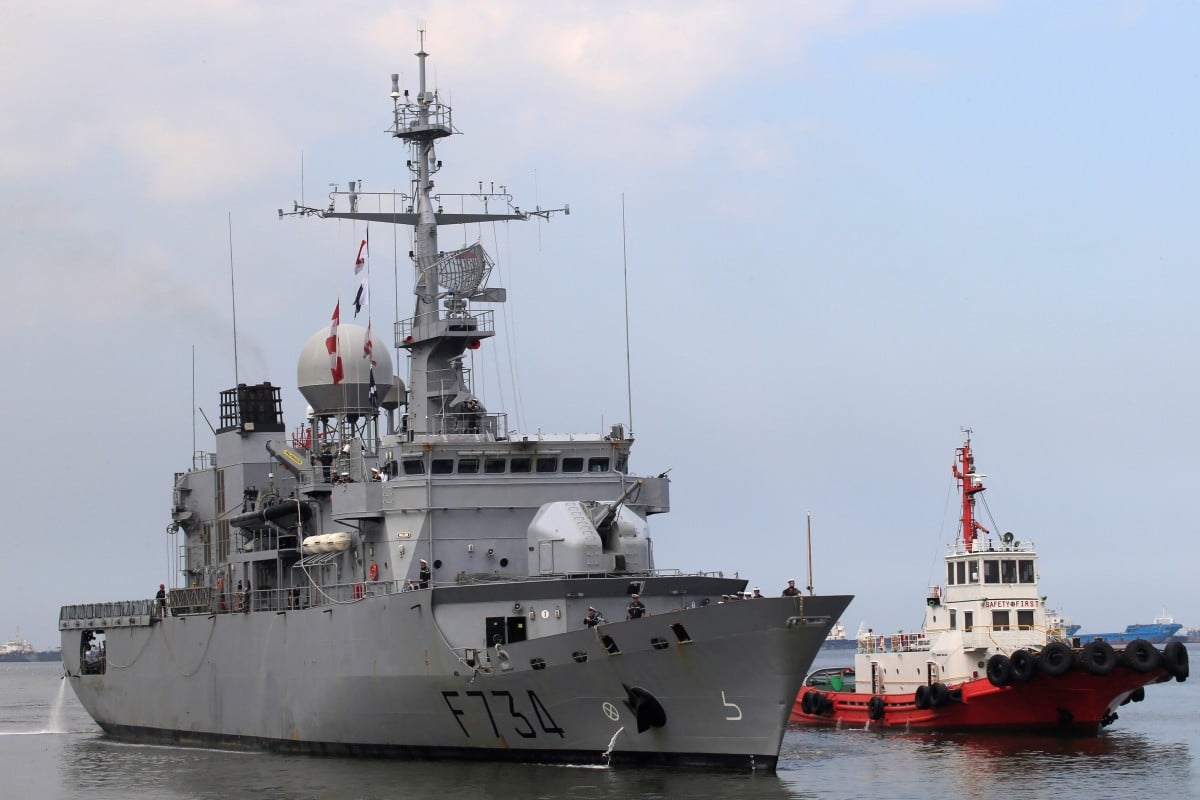
Paris upset Beijing earlier this month by sending its frigate Vendémiaire through the Taiwan Strait. Photo: Reuters
France and China should value their strong relationship and not take actions that disrupt it, China’s foreign minister told his French counterpart on Thursday, just days after
at Paris for sending a warship through the Taiwan Strait earlier this month.
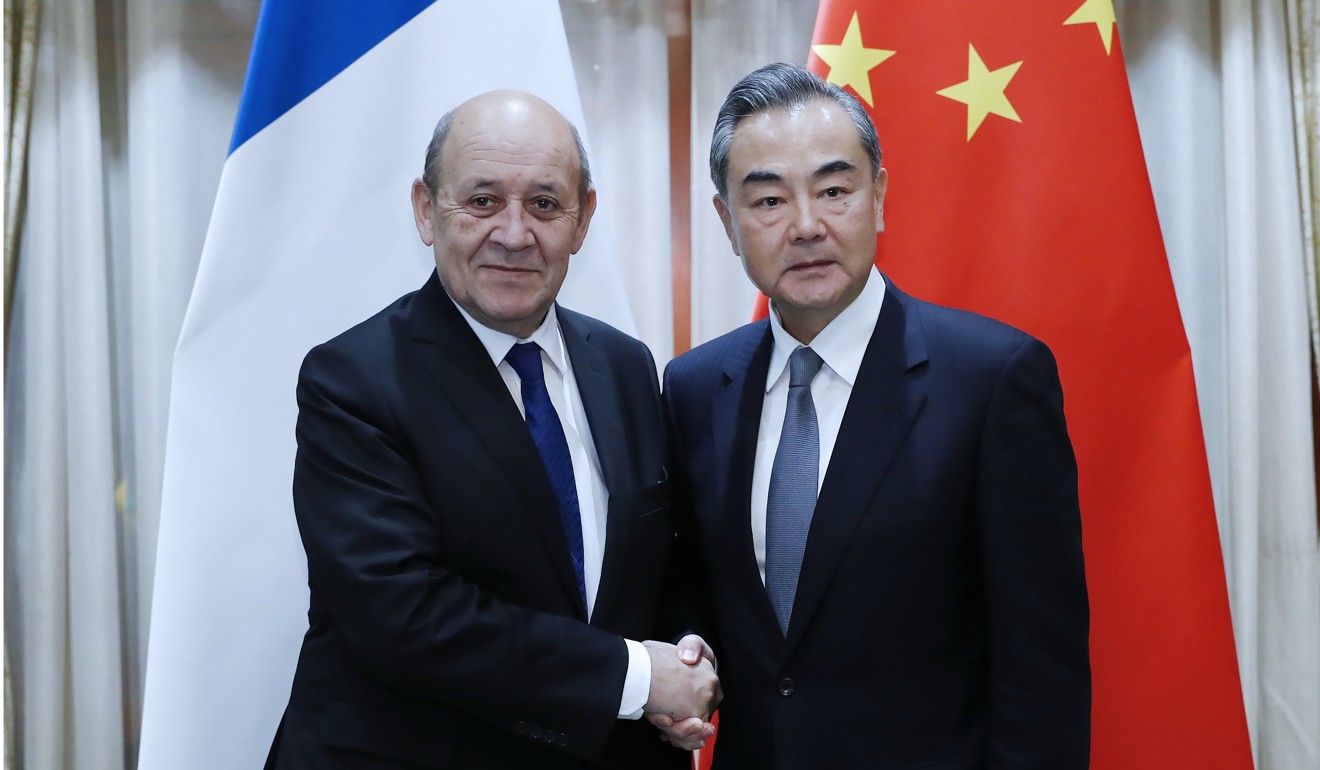
Speaking at a meeting on the sidelines of the Belt and Road Forum in Beijing, Wang Yi told Jean-Yves Le Drian that the two nations “should cherish their hard-won and good relations”.
“[We should] avoid unnecessary disruptions and ensure that bilateral relations continue to develop in a healthy and progressive way,” he was quoted as saying in a statement issued on Friday by the Chinese foreign ministry.
Le Drian responded by saying France was willing to cooperate with China to “maintain the growth momentum of bilateral relations”, according to the statement.
French Foreign Minister Jean-Yves Le Drian told his Chinese counterpart Wang Yi that Paris was willing to cooperate with Beijing. Photo: Xinhua
The
passed through the Taiwan Strait on April 6. It had been expected to take part in a naval parade on Tuesday to celebrate the 70th anniversary of China’s navy, but Beijing withdrew the invitation in response to the action.
The defence ministry in Paris said this week it had been “in close contact with the Chinese authorities” about the incident.
EU’s connectivity plan ‘more sustainable’ than belt and road
A spokesman for the European Union said the trading bloc was committed to a rules-based maritime order based on international law, including freedom of navigation, and that it was in regular contact with the member states.
Chinese academics said that after the transit by the French warship it was likely that more Western countries would make their presence known in the region and that Beijing should remain vigilant.
“France wants to show that as a great power it has a broader concern in Asia-Pacific beyond trade and other ‘soft’ fields,” said Shi Yinhong, an international relations professor at Renmin University of China in Beijing.
“And it will exert its right to free navigation in any international waters regardless of China’s position or sensitivities.”
The Taiwan Strait is about 160km (100 miles) wide and divides mainland China from Taiwan, which Beijing regards as a breakaway province awaiting reunification, by force if necessary. The US, meanwhile, is bound by law to help the self-ruled defend itself and frequently sends warships through the strait in a show of support.
Shi said that US President Donald Trump’s Indo-Pacific strategy, which regards China as a “strategic competitor”, might draw “opportunistic associates” – like France and Britain – into the region.
“Some other states could be encouraged by the French action to do the same,” he said. “But [they] may also be deterred by China’s probable military and diplomatic responses, which would be determined on a case-by-case basis.”
Putin gets behind Xi’s belt and road plan in face of US hostility
Zhu Feng, a professor of international relations at Nanjing University, said France’s conduct was intended to show the “shared concern of Western allies” regarding the security aspect of cross-strait relations.
“China must be vigilant to the new tendency [for nations] to internationalise the Taiwan Strait issue,” he said, though added that the transit of the French warship was “more of a symbolic gesture than actual action”.
Philippe Le Corre, a senior fellow at the Carnegie Endowment for International Peace in Washington and former special assistant for international affairs to the French defence minister, said the Taiwan Strait did not belong to any one nation and, therefore, ships were within their rights to sail through it without prior authorisation.
“From Paris’s point of view, like the rest of the EU, the principles of freedom of navigation are critical to the world economy and trade, therefore there is no reason why European navies or even commercial ships should not be allowed to cross the Taiwan Strait,” he said.
“This is EU policy, not just France or the UK. It has nothing to do with the US, it is international law.”
Source: SCMP
Posted in avoid causing unnecessary upset, Beijing, belt and road plan, China alert, European Union, foreign minister, France, Jean-Yves Le Drian, Nanjing University, Paris, Philippe Le Corre, professor of international relations, Putin, senior fellow at the Carnegie Endowment for International Peace, Taiwan Strait, Uncategorized, US hostility, Wang Yi, warship, Washington, Zhu Feng |
Leave a Comment »
22/02/2019
BEIJING, Feb. 21 (Xinhua) — China highly appreciates Russian President Vladimir Putin’s positive remarks on China-Russia ties as he delivered a state of the nation address, Foreign Ministry spokesperson Geng Shuang said on Thursday.
In the annual address, Putin described the relations of Russia and China as important “stable forces” of the international community.
Geng said the rapid development of China-Russia relations under the strategic guidance of the two heads of state gained not only fruitful achievement at the bilateral level but also injected positive energy in maintaining global strategic stability.
This year marks the 70th anniversary of the two countries’ establishment of diplomatic ties. Geng said that the two countries should take the opportunity to continuously deepen strategic coordination, push for further development of bilateral ties and better benefit the two peoples and safeguard the security and the stability of the world.
Source: Xinhua
Posted in China alert, Foreign Ministry spokesperson, Geng Shuang, Putin, Russia, Russian President, stable forces, Uncategorized, Vladimir Putin |
Leave a Comment »





 CHINDIA ALERT: You'll be living in their world, very soon