Archive for ‘Red tape’

09/03/2019

Tied up in red tape, Chinese scientists seek bigger say over research funding

  • Researchers say they spend so much time on grant applications that they get no time to do science
  • Funding applications are said to be too onerous and inflexible
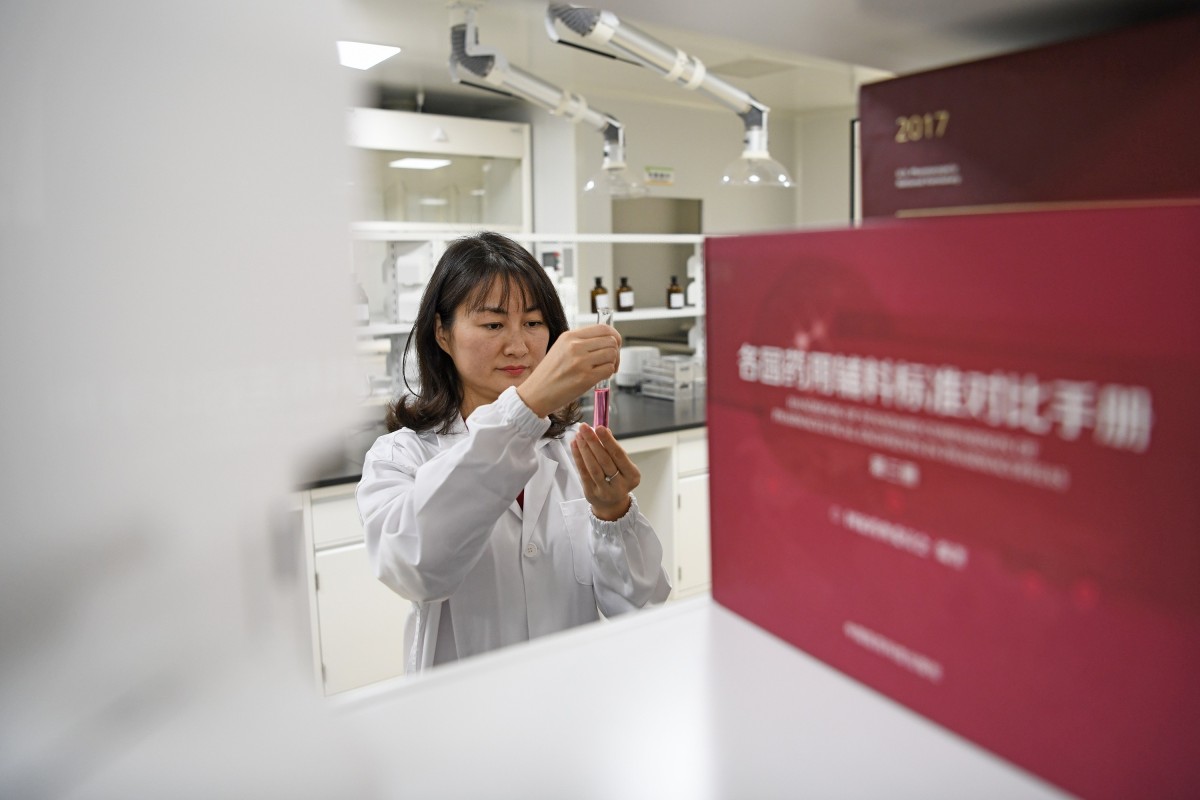
Chinese scientists say funding applications are too onerous and restrictive. Photo: Xinhua

Chinese scientists are appealing for a bigger say over research funding as they buckle under a rigid and bureaucratic application system.

The appeal from delegates to the country’s peak advisory body, the Chinese People’s Political Consultative Conference, comes as the central government prepares to launch a pilot project that will give research teams greater flexibility in the way funds are used.

Despite slowing economic growth, the central government also plans to increase the budget for science and technology by 13.4 per cent this year to 354.31 billion yuan (US$52.7 billion) as Beijing tries to challenge the United States in the race for high technology.

But researchers have been hampered by a funding structure that demands they clearly state the use of their research and submit a detailed plan with a deadline for delivery of results.

Application rules have become stricter in the last few years, partly a result of a crackdown on corruption, which has led to a dozen university presidents and top scientists being arrested for embezzling research and infrastructure funding.

Chinese science minister warns scientists not to overstep ethical bounds after He Jiankui’s gene-edited babies scandal

CPPCC delegate Yuan Zhiming, an agricultural scientist from the Chinese Academy of Sciences in Wuhan, said he spent so much time filling out funding applications that he did not have time to do any research.

“It’s not easy to complete the budget with detailed outcomes, because I don’t already know my research results,” Yuan said in an open panel discussion on the sidelines of the CPPCC.

Wang Liming, a CPPCC delegate from China National Nuclear Corporation, agreed, saying funding applications were too onerous and inflexible. “Money earmarked for buying soy sauce cannot be used to buy vinegar,” he joked.

People’s Daily, the Communist Party’s mouthpiece, reported in December 2016 that it took a scientist a month to finish an annual report for a regular research project and much longer for a major one.

The fears about more bureaucracy in research intensified last year when the National Natural Science Foundation – which manages science funding and promotes research – was downgraded and put under the Ministry of Science and Technology.

The authorities said the change was aimed at strengthening the government’s “research-driven development strategy” and “optimising the distribution of funding on science and technology”, while scientists said it meant funding approval would be more stringent.

China’s science and tech minister calls on private enterprises to develop ‘core technologies’

But senior Chinese officials said they understood the need to speed up research for China to transform itself into an innovation powerhouse.

Science and Technology Minister Wang Zhigang said on Friday that China would overhaul the way funding was managed to give researchers more incentives.

“The ministry [of science and technology] has done a series of things to ease the burden on researchers, so that they will not be bothered by forms, reimbursements, titles and prizes and have more time to do real research,” Wang said.

“The upcoming reforms will be centred on how to ignite researchers’ enthusiasm, initiative and creativity.”

Source: SCMP

21/02/2019

China to further cut red tape to invigorate market

BEIJING, Feb. 20 (Xinhua) — China’s central government will eliminate or delegate to lower-level authorities more items that require government approval and implement nationwide the reform of the construction project reviewing system, the State Council’s executive meeting chaired by Premier Li Keqiang decided on Wednesday.

The Chinese government has put high importance on transforming government functions by streamlining administration, delegating powers, enhancing oversight and providing better services. Premier Li stressed the importance of deepening the reform in transforming government functions, especially by delegating administrative powers.

He called for a thorough evaluation of all government review items to see that all existing review items that can be eliminated or delegated to lower-level authorities be duly dealt with except for those involving national security and major public interests.

“Streamlining administration is as important as tax cuts in stimulating market vitality as we tackle the current downward economic pressure. The key task for the government is to foster a better business environment to energize all market players,” Li said at the Wednesday meeting, “This will be our important measure for sustaining steady economic growth this year.”

It was decided at the meeting that 25 administrative approval items including pre-approval of corporate names before business registration and preliminary review of domestically-produced medicines will be canceled. Six administrative approval items including the practising registration of some professions will be delegated to government departments at or below the provincial level.

“Our reform to transform government functions affects the vested interests of government departments. However, administrative streamlining is a must as excessive and cumbersome reviewing requirements would drive up institutional transaction costs and dampen market vitality,” Li said. “Meanwhile, the government must enhance oversight and improve services. Its focus should shift to setting rules and standards.”

It was also decided at the meeting the pilot reform of the reviewing system for construction projects will be rolled out across the nation.

Under unified requirements, an inter-agency reviewing process with a single department acting as the lead agency and clear reviewing timeframes will be adopted. Practices such as pledging of notification, district-wide evaluation, and joint drawing review and project inspection upon completion will be implemented. In a word, there will be “a single blueprint” overseeing the implementation of a project, “a single window” providing multi-agency services, “a single checklist” for preparing application materials and “a single set of mechanisms” for regulating the permitting processes. The goal is to halve the time required for reviewing construction projects to 120 working days in the whole of the country within the first half of this year.

“Market players must assume their due responsibilities and recognize that they take primary responsibility for the projects they undertake, and that they will be held accountable for them on a lifetime basis,” Li said, “As for the government, it must not interfere in things that do not fall within its purview, and focus on exercising oversight in all the areas necessary. This kind of oversight will help ensure fairness and efficiency.”

Source: Xinhua

Law of Unintended Consequences

continuously updated blog about China & India

ChiaHou's Book Reviews

continuously updated blog about China & India

What's wrong with the world; and its economy

continuously updated blog about China & India