Archive for ‘region’

12/04/2020

Covid-19 lockdowns brought blue skies back to China, but don’t expect them to last

  • Between January 20 and April 4, PM2.5 levels across the country fell by more than 18 per cent, according to the environment ministry
  • But observers say that as soon as the nation’s factories and roads get back to normal, so too will the air pollution levels
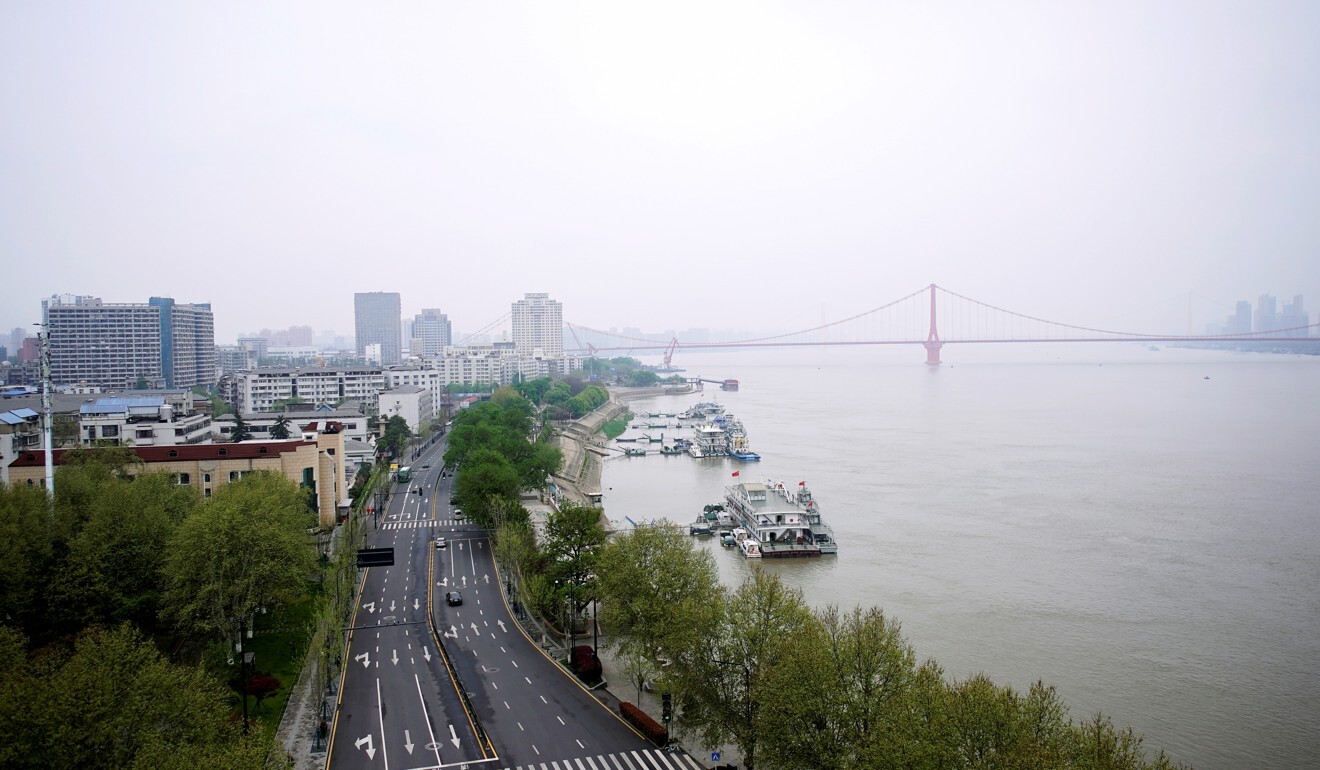
Blue skies were an unexpected upside of locking down cities and halting industrial production across China. Photo: AFP
China’s air quality has improved dramatically in recent weeks as a result of the widespread city lockdowns and strict travel restrictions introduced to contain the

coronavirus epidemic

. But experts say the blue skies could rapidly disappear as factories and roads reopen under a government stimulus plan to breathe new life into a stalled economy.

According to the Ministry of Ecology and Environment, between January 20 and April 4 the average concentration of PM2.5 – the tiny particles that pose the biggest risk to health – fell by 18.4 per cent from the same period of last year.
Meanwhile, the average number of days with good air quality – determined as when the air pollution index falls below 100 – rose by 7.5 per cent, it said.

Satellite images released by Nasa and the European Space Agency showed a dramatic drop in nitrogen dioxide emissions in major Chinese cities in the first two months of 2020, compared with a year earlier.

According to Nasa, the changes in Wuhan – the central China city at the epicentre of the initial coronavirus outbreak – were particularly striking, while nitrogen dioxide levels across the whole of eastern and central China were 10 to 30 per cent lower than normal.

The region is home to hundreds of factories, supplying everything from steel and car parts to microchips. Wuhan, which has a population of 11 million, was placed under lockdown on January 23, but those restrictions were lifted on  Wednesday
.
Air pollution is likely to return to China’s cities once the lockdowns are lifted. Photo: Reuters
Nitrogen dioxide is produced by cars, power plants and other industrial facilities and is thought to exacerbate respiratory illnesses such as asthma.

The space agency said the decline in air pollution levels coincided with the restrictions imposed on transport and business activities.

That was consistent with official data from China’s National Development and Reform Commission, which recorded a 25 per cent fall in road freight volume and a 14 per cent decline in the consumption of oil products between January and February.

Guangzhou cases prompt shutdown in ‘Little Africa’ trading hub

8 Apr 2020

Liu Qian, a senior climate campaigner for Greenpeace based in Beijing, said the restrictions on industry and travel were the primary reasons for the improvement in air quality.

According to official data, in February, the concentrations of PM2.5, nitrogen dioxide and sulphur dioxide – a toxic gas that comes mostly from industrial burning of coal and other fossil fuels – all fell, by 27 per cent, 28 per cent and 23 per cent, respectively.

“The causes of air pollution are complicated, but the suspension of industrial activity and a drop in public transport use will have helped to reduce levels,” Liu said.

As the epicentre of the Covid-19 pandemic has shifted to the United States and

Europe

, human and industrial activity in China is gradually picking back up, and so is air pollution.

Lauri Myllyvirta, lead analyst with the Centre for Research on Energy and Clean Air in Helsinki, said that levels of nitrogen dioxide pollution, measured both by Nasa satellites and official stations in China, started inching back up in the middle of March and had returned to normal levels by the end of the month.

That coincided with the centre’s findings – published on Carbon Brief, a British website on climate change – that coal consumption at power plants and oil refineries across China returned to their normal levels in the fourth week of March.

How the Wuhan experience could help coronavirus battle in US and Europe

10 Apr 2020

Ma Jun, director of the Institute of Public & Environmental Affairs, a Beijing-based charity, said a stimulus plan to kick-start the economy would have a significant impact on air pollution.

“Once industrial production is fully resumed, so are the emission levels,” he said. “Unless another outbreak happens and triggers another lockdown, which would be terrible, the improvement achieved under the pandemic is unstable and won’t last long.”

After the 2008 financial crisis, Beijing launched a 4 trillion yuan (US$567.6 billion) stimulus package that included massive infrastructure investment, but also did huge damage to the environment. In the years that followed, air pollution rose to record highs and sparked a public backlash.

Even before the Covid-19 outbreak, China’s economy was slowing – it grew by 6.1 per cent in 2019, its slowest for 29 years – and concerns are now growing that policymakers will go all out to revive it.
“Local governments have been under huge pressure since last year, and there are fears that environmental regulations will be sidelined [in the push to boost economic output],” Ma said.
But Beijing had the opportunity to get it right this time by investing more in green infrastructure projects rather than high-carbon projects, he said.
“A balance between economic development and environmental protection is key to achieving a green recovery, and that is what China needs.”
Source: SCMP
25/02/2020

After raucous welcome in India, Trump clinches $3 billion military equipment sale

NEW DELHI (Reuters) – U.S. President Donald Trump said on Tuesday that India will buy $3 billion worth of military equipment, including attack helicopters, as the two countries deepen defence and commercial ties in an attempt to balance the weight of China in the region.

India and the United States were also making progress on a big trade deal, Trump said. Negotiators from the two sides have wrangled for months to narrow differences on farm goods, medical devices, digital trade and new tariffs.

Trump was accorded a massive reception in Indian Prime Minister Narendra Modi’s home state on Monday, with more than 100,000 people filling into a cricket stadium for a “Namaste Trump” rally.

On Tuesday, Trump sat down for one-on-one talks with Modi followed by delegation-level meetings to try and move forward on issues that have divided them, mainly the festering trade dispute.

After those meetings, Trump said his visit had been productive with the conclusion of deals to buy helicopters for the Indian military. India is buying 24 SeaHawk helicopters from Lockheed Martin equipped with Hellfire missiles worth $2.6 billion and also plans a follow-on order for six Apache helicopters.

India is modernising its military to narrow the gap with China and has increasingly turned to the United States over traditional supplier, Russia.

Trump said the two countries were also making progress on a trade deal, which had been an area of growing friction between them.

“Our teams have made tremendous progress on a comprehensive trade agreement and I’m optimistic we can reach a deal that will be of great importance to both countries,” said Trump in remarks made alongside Modi.

The two countries had initially planned to produce a “mini deal”, but that proved elusive.

Instead both sides are now aiming for a bigger package, including possibly a free trade agreement.

Trump said he also discussed with Modi, whom he called his “dear friend”, the importance of a secure 5G telecoms network in India, ahead of a planned airwaves auction by the country.

The United States has banned Huawei, arguing the use of its kit creates the potential for espionage by China – a claim denied by Huawei and Beijing – but India, where telecoms companies have long used network gear from the Chinese firm, is yet to make a call.

Trump described Monday’s rally in Ahmedabad and again praised Modi and spoke of the size of the crowd, claiming there were “thousands of people outside trying to get in..

“I would even imagine they were there more for you than for me, I would hope so,” he told Modi. “The people love you…every time I mentioned your name, they would cheer.”

In New Delhi, Trump was given a formal state welcome on Tuesday at the red sandstone presidential palace with a 21-cannon gun salute and a red coated honour guard on horseback on a smoggy day.

HUG GETS TIGHTER

India is one of the few big countries in the world where Trump’s personal approval rating is above 50% and Trump’s trip has got wall-to-wall coverage with commentators saying he had hit all the right notes on his first official visit to the world’s biggest democracy.

They were also effusive in their praise for Modi for pulling off a spectacular reception for Trump.

“Modi-Trump hug gets tighter,” ran a headline in the Times of India.

But in a sign of the underlying political tensions in India, violent protests broke out in Delhi on Monday over a new citizenship law that critics say discriminates against Muslims and is a further attempt to undermine the secular foundations of India’s democracy. They say the law is part of a pattern of divisiveness being followed by Modi’s Hindu nationalist Bharatiya Janata Party.

At least 7 people were killed and about 150 injured in the clashes that took place in another part of the capital, away from the centre of the city where Modi is hosting Trump.

In his speech on Monday, Trump extolled India’s rise as a stable and prosperous democracy as one of the achievements of the century. “You have done it as a tolerant country. And you have done it as a great, free country,” he said.

Delhi has also been struggling with high air pollution and on Tuesday the air quality was moderately poor at 193 on a government index that measures pollution up to a scale of 500. The WHO considers anything above 60 as unhealthy.

Source: Reuters

10/08/2019

Collapse of intelligence pact between US, South Korea and Japan ‘will be symbolic victory for China’

  • Three-year-old security treaty between US and two key allies under threat as tensions between Seoul and Tokyo continue to escalate
  • End of General Security of Military Information Agreement risks undermining Washington’s influence in the region
South Korean protesters hold signs saying “No Abe” during a rally demanding the abolition of the General Security of Military Information Agreement. Photo: AP
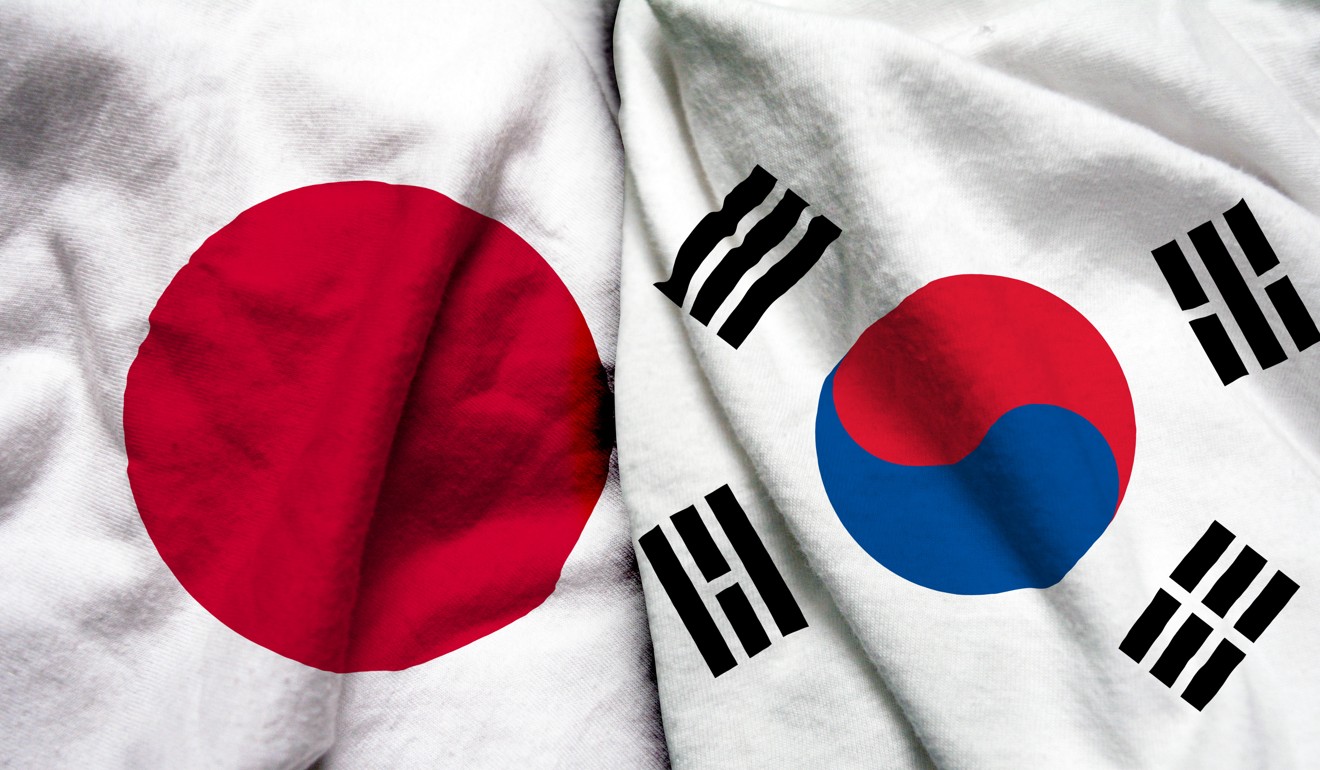
The possible termination of a military information-sharing pact between South Korea and Japan would be a symbolic victory for China, a security analyst has warned.
Recent tension between the two countries recently threatened to spill over into the sphere of intelligence after Seoul signalled that it may pull out of the General Security of Military Information Agreement (GSOMIA) pact.

The agreement signed in 2016 enables three-way intelligence gathering between the US and its two allies and provides a crucial framework for coping with North Korea’s nuclear and missile threats.

But the escalating trade dispute between Seoul and Tokyo, prompted by a dispute about Japan’s colonial legacy, has left the future of the deal in jeopardy as the annual deadline for its renewal looms.

Japan approves first hi-tech exports to South Korea since start of ‘trade war’ – but with a warning

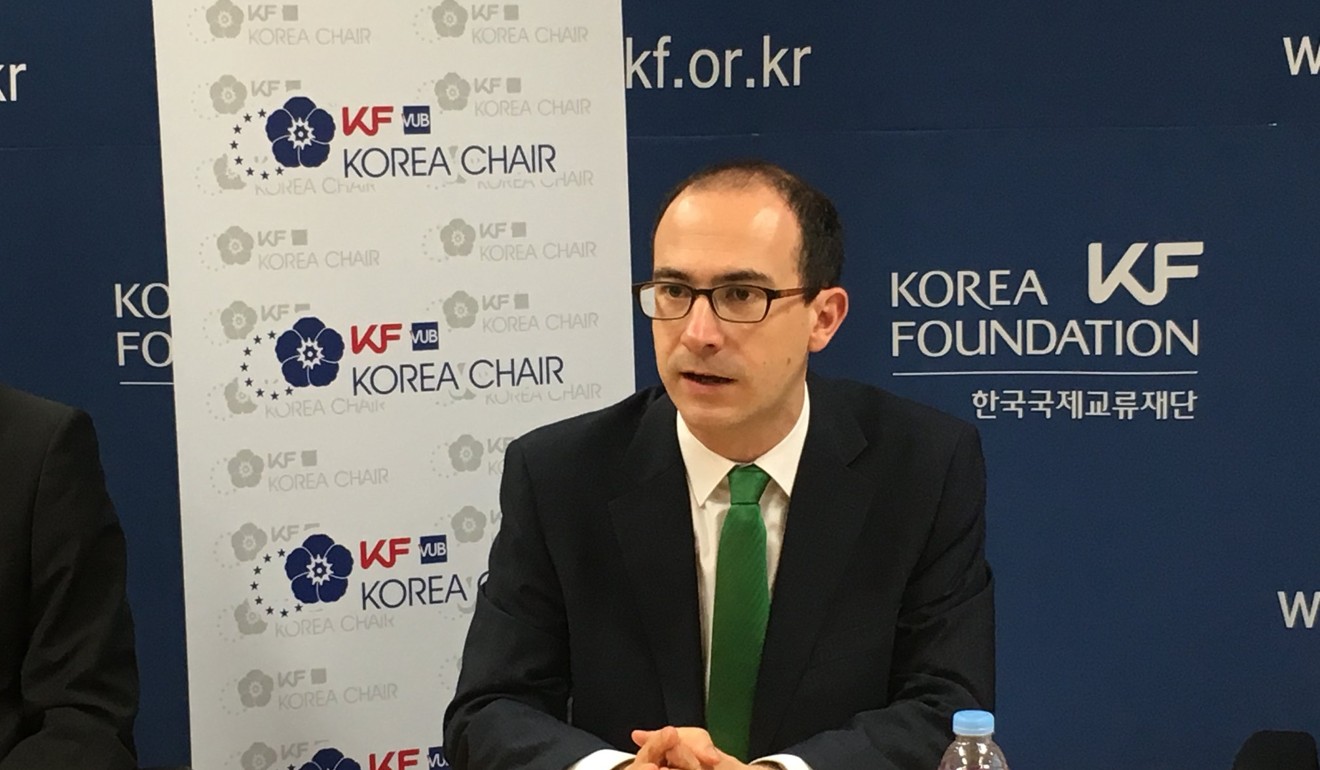
Ramon Pacheco Pardo, the first Korea chair at the Institute for European Studies at Vrije Universiteit Brussel in Belgium, said scrapping the pact would help strengthen China’s influence in the Asia-Pacific region at the expense of the US.

“It is undeniable that termination of GSOMIA would dent the US-South Korea-Japan alliance. The alliance system in northeast Asia will be weaker, strengthening China in relative terms in the process. “This could embolden China and Russia to strengthen their military cooperation in northeast Asia, said Pardo, a member of the non-governmental EU Council for Security Cooperation in the Asia-Pacific.

“Ending GSOMIA would signal that South Korea and Japan are not ready to follow Washington’s lead in the way the latter would like, given the political capital that successive US administrations spent in convincing both countries to share intelligence.”

Ramon Pacheco Pardo said the collapse of the pact would have a largely symbolic impact on China. Photo: Facebook

But Pardo also stressed that the intelligence alliance was not directly targeting China.

“While it is true that GSOMIA serves to connect the weakest link of the US-South Korea-Japan security triangle, ultimately South Korea’s security posture and the capabilities of each country independently mean that it is difficult to argue that the agreement is a concerted effort to contain China.”

“After all, Beijing does not share any significant information on North Korea’s nuclear and missile programmes with South Korea, Japan or the US.

“This is not going to change any time soon. So the good news for China would be symbolic rather than substantial.”

US missiles, jittery neighbours and South Korea’s big security dilemma

Beijing warned on Tuesday that it would take “countermeasures” if the US deployed ground-based missiles in either Japan or South Korea, and Pardo argued that scrapping the intelligence-sharing pact would expose the weaknesses in their co-ordinated approach towards China.

The security deal is automatically renewed every year unless one party decides to pull out. To do so, it must notify the others 90 days before its expiry – a deadline that falls on August 23.

The trade row was sparked by a recent South Korean court ruling that Japanese should compensate individual victims of wartime forced labour. Tokyo believes it settled all necessary compensation under a treaty signed in 1965, but Seoul believes that individual victims’ right to file a claim has not expired.

Relations between South Korea and Japan have deteriorated following a court ruling over forced labour in the wartime era. Photo: Shutterstock

Last week Japan said it would remove South Korea from its “white list” of countries with preferential trade status. Seoul has threatened to respond in kind, but also warned that it may reconsider whether to renew the intelligence-sharing pact.

Both the US and Japan have said they want the arrangement to continue, but Pardo said the effect of the termination would remain largely symbolic.

South Korea has already been investing in its own satellite and anti-submarine programmes to monitor the North’s activities, while Japan has also been developing its own intelligence programmes.

“This shows that neither South Korea nor Japan wants to rely on each other or third parties, namely the US, when it comes to monitoring North Korea’s military activities,” Pardo said.

But he argued that this behaviour already indicated that the alliance was weakening and suggested that terminating the treaty would increase China’s room for manoeuvre.

South Korea buys helicopters worth US$800 million after Trump seeks contribution for US presence

Since the 1990s successive US administrations have pushed for intelligence-sharing arrangements with Japan and South Korea to help build a framework to check Chinese and Russian military expansion in the Pacific.

“Beijing and Moscow are clearly moving in the direction of closer cooperation anyway. GSOMIA or not, military cooperation will continue … as long as Xi Jinping and Vladimir Putin lead each country and most probably even beyond then,” Pardo said.

China and Russia flexed their muscles in the region last month as the trade dispute between the two key allies intensified.

Russian and Chinese long-range military aircraft conducted their first-ever joint air patrol over the Sea of Japan – also known as the East Sea – and the East China Sea.

“The East Asian security landscape would be reshaped insofar that China, North Korea and Russia would see that their main opponent in the region – the US – is unable to convince its two key allies, South Korea and Japan, to cooperate on a key issue,” Pardo said.

“The current dispute between South Korea and Japan will need a negotiated solution … In any case, Japan will have to learn to live with the fact that former colonisers will, from time to time, receive criticism by many of their former colonies, criticism that sometimes will escalate.

“It happens to former European colonial powers, for example, and it is only logical because the interpretation of the past is always in flux.”

Source: SCMP

29/05/2019

Japan’s deal to buy F-35 Lightning jets from US ‘may fuel arms race with China in region’

  • Donald Trump has welcomed Tokyo’s order for the stealth fighter, but it is likely to trigger a response from Beijing
  • Deal to buy 105 of the advanced fighters will greatly expand Japan’s capabilities in the South China Sea
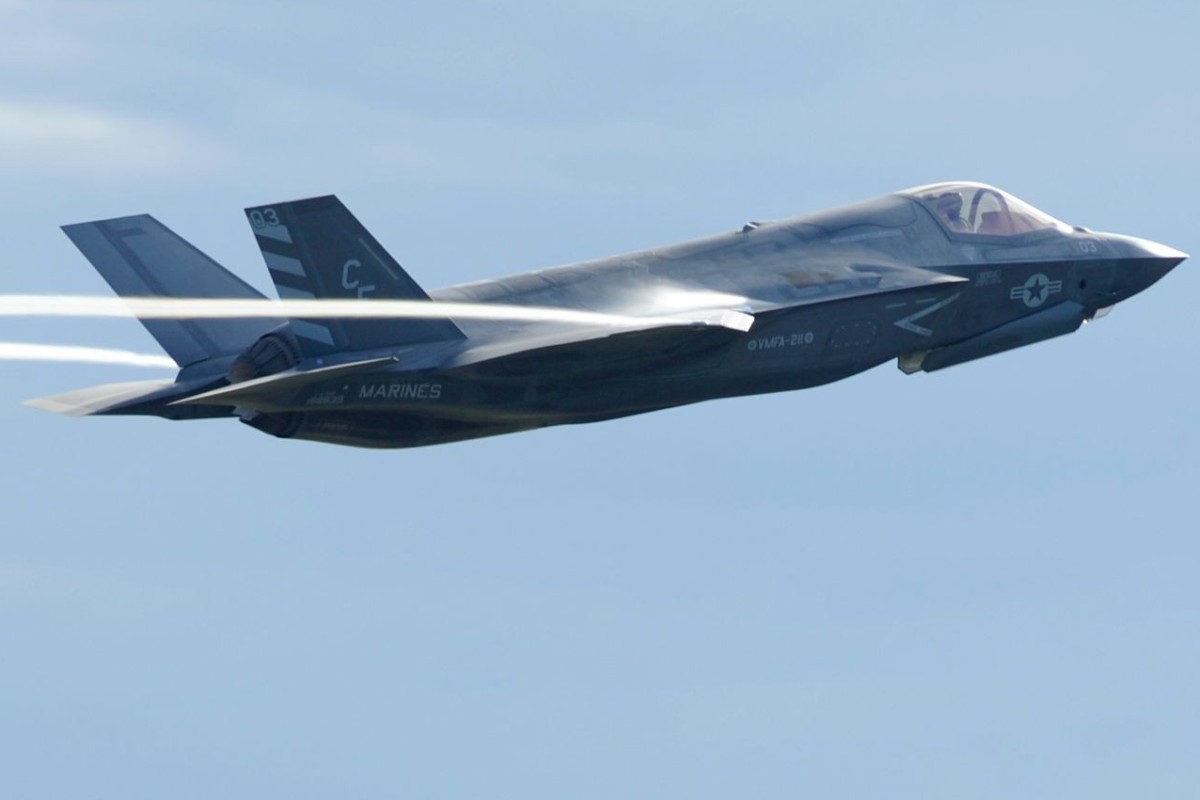
Japan’s F-35 fleet will be the largest of any US ally. Photo: AFP
Japan’s decision to buy 105 F-35 Lightning jet fighters from the United States may further fuel the arms race in Asia, analysts have warned.
The deal, first announced in December, was confirmed on Monday during US President Donald Trump’s four-day state visit to Japan.
Japan “has just announced its intent to purchase 105 brand new F-35 stealth aircraft. Stealth, because, the fact is you can’t see them”, Trump said at Japan’s Akasaka Palace. “This purchase would give Japan the largest F-35 fleet of any US ally.”
The F-35 deal is likely to help Japan reassert its role as a leading security player, but also present a new challenge to China’s People’s Liberation Army, which has extended its clout in the Indo-Pacific region in recent years.
So far about a dozen US allies have placed orders for the F-35.
The Australian government has budgeted US$17 billion for 72 of the jets and South Korea has ordered 40 F-35As. Lockheed Martin, which makes the F-35, also hopes Seoul will buy another 20 of the fighters.

Washington and Tokyo have long been wary of Beijing’s military expansion, with Japan announcing a new foreign policy strategy of a “Free and Open Indo-Pacific” three years ago to further promote the “rule of law, freedom of navigation and free trade”.

Washington’s concerns are reflected in this year’s version of an annual congressional report that warned: “Over the coming decades, [Chinese leaders] are focused on realising a powerful and prosperous China that is equipped with a ‘world-class’ military, securing China’s status as a great power with the aim of emerging as the pre-eminent power in the Indo-Pacific region.”

In Japan, a parade of pomp for Trump, but Rodrigo Duterte and other world leaders will have to wait

Military observers said that the F-35 deal, together with Tokyo’s plans to modernise its fleet of Izumo-class helicopter carriers to accommodate jets, pose a threat to Beijing’s game plan in the South China Sea by increasing the operational reach of its air force.

Japan does not face the South China Sea but views it as strategically important due to its role as a vital shipping lane.

Zhou Chenming, a Beijing-based military expert, said: “The [F-35 deal] can help Japan counterbalance threats from China … and it can be seen as a vital part of the worldwide coercion strategy of the US.

“This is bound to upset the balance of power in the Asia-Pacific region, given the large quantity of warplanes ordered by Japan.”

Analysts also pointed out that although China’s fifth-generation J-20 fighter has given the PLA a lead in the stealth fighter race, the Chinese aircraft was known to have suffered from engine problems even after its deployment in 2017.

The latest F-35 deal will also put further pressure on China to accelerate and improve its J-20 development programme.

Zhang Baohui, director of the Centre for Asia-Pacific Studies at Lingnan University in Hong Kong, said: “If Japan buys the F-35B, which is carrier-based, then it will upset the South China Sea dynamic. Japan does have plans to deploy F-35B to its aircraft carriers.”

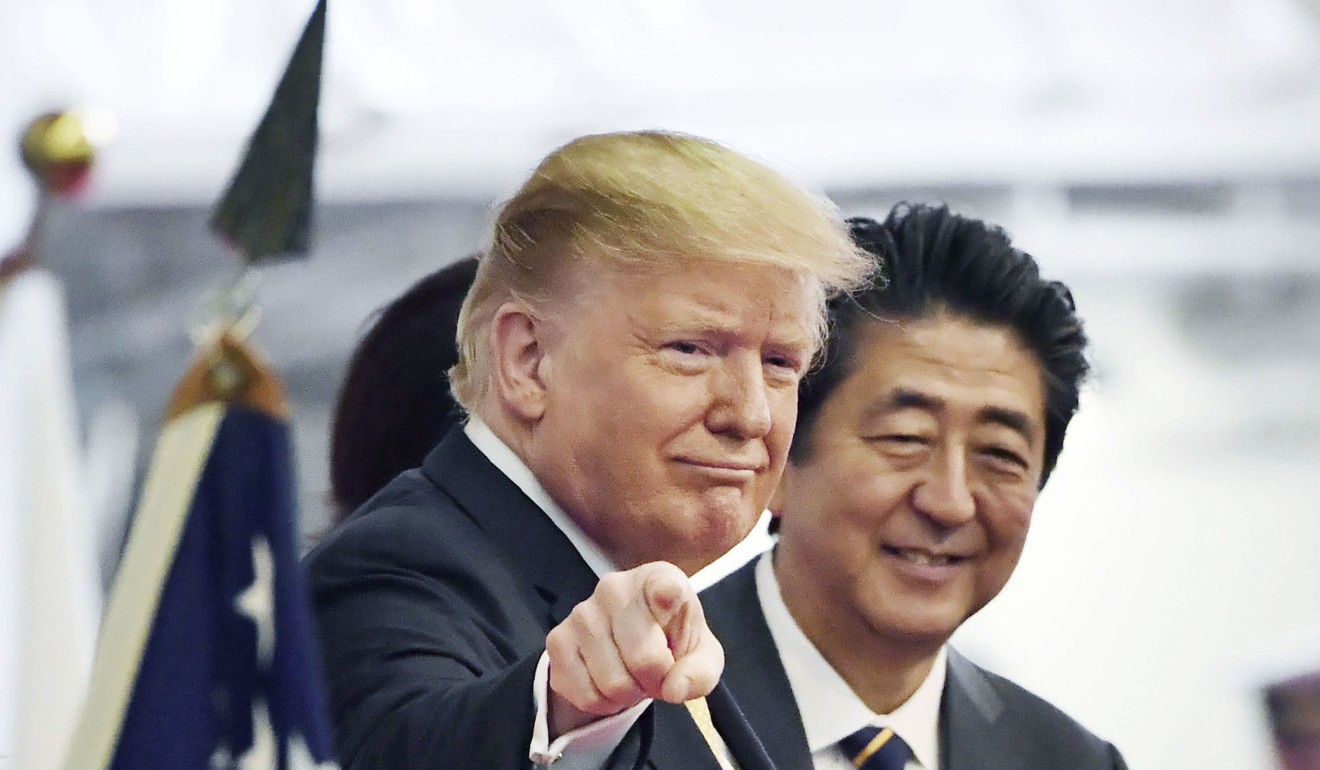
US President Donald Trump and Japanese prime Minister Shinzo Abe on a Japanese helicopter carrier on Tuesday. Photo: Kyodo

Ryo Hinata-Yamaguchi, a visiting professor at Pusan National University in South Korea, said: “As Japan moves to configure the Izumo class with the ability to launch short take-off and vertical landing features, the F-35B is essentially the only choice.”

The F-35 deal is about “enhancing Japan’s ability to achieve air and naval superiority, which is vital to the defence of the Japanese archipelago”, he added, noting that the further strengthening of military ties between Washington and Tokyo would improve their joint operational capabilities.

President Donald Trump boasts ‘fearsome’ US military in the Pacific during final Japan speech aimed at rivals China, North Korea

Song Zhongping, a Hong Kong-based military analyst and formerly an instructor with the PLA Artillery Corps, said: “The purchase will definitely trigger a regional arms race, prompting China to do the same by developing and deploying more of its own advanced stealth fighter jets in the region to counter the military presence of the US and its allies.

“Japan needs to update its old air force fleet, with its 200 F-15 fighters approaching the end of their service life,” he explained.

“It also wants to catch up with the pace of generational advancement of fighter jets in many countries – entering a new age of stealth fighters.”

Japan is planning to adapt its helicopter carriers to carry fighter jets. Photo: Kyodo

Collin Koh, a maritime security expert at Nanyang Technological University in Singapore, said the F-35s would give Japan a significant boost in the stealth fighter race.

“Japan would retain its position as one of the best-equipped air forces in the region and worldwide,” he said.

Koh suggested that while China was a key concern for Tokyo, North Korea was also a consideration.

“This move could be seen as a response to what Japan has in recent times mentioned to be an increasingly severe security environment it faces: not just China and its rapid military build-up including, of course, the induction of new-generation fighters such as J-20, but also the threat posed by North Korea,” Koh said.

Source: SCMP

Law of Unintended Consequences

continuously updated blog about China & India

ChiaHou's Book Reviews

continuously updated blog about China & India

What's wrong with the world; and its economy

continuously updated blog about China & India