Archive for ‘resilience’

23/05/2020

Boy who lost a leg in China’s 2008 Sichuan earthquake now dances to inspire

  • Xie Haifeng’s story is one of luck and resilience and he has made it his mission to help others through adversity
  • Professional dancer owes part of his success to the city of Hong Kong and one of its doctors who helped survivors through recovery
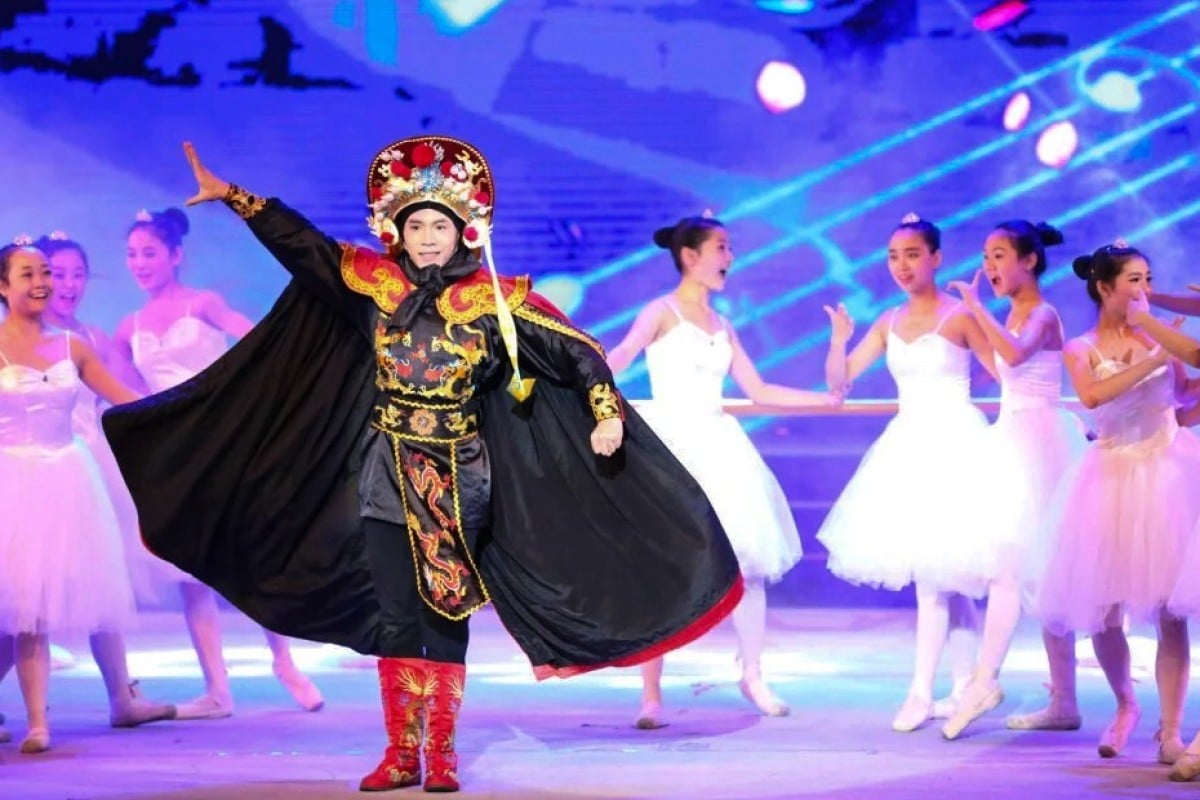
Xie Haifeng was 15 when he lost his leg in one of modern China’s most devastating disasters. Photo: Handout

When the rumbling began, Xie Haifeng thought someone was shaking his bed. Perhaps one of the other 800 children in the school dormitory was being naughty. Or maybe it was a small quake. Then came the unmistakable sound of screams.

Xie, then a 15-year-old pupil at Muyi Town Middle School in the southwestern Chinese province of Sichuan, started running. He fell as the dorm building collapsed around him. When he tried to stand up, he realised something was missing. His left leg was gone.

What Xie thought was a small quake turned out to be one of the most devastating disasters in modern Chinese history.
The Sichuan earthquake of May 2008 left at least 87,000 people dead and shook the country to its core. It was less than three month before Beijing would host its first Olympic Games, an opportunity to show the world its strength and ambition.
Instead, 7,444 schools had crumbled like tofu in an area known to be seismically active. Their rubble was a stark demonstration of the weak foundation of China’s progress and its tragic consequences. At Xie’s school, the shoddily built walls and ceilings crushed 600 children. Only 300 survived.

It still frightens me to recall the earthquake.Xie Haifeng, dancer

Xie considers himself lucky. “If I had run just one second more slowly, I would have been dead. If I had run one second faster, I would have been completely fine. But anyway, I am lucky to be alive,” he said. A dozen years later, his story is also one of resilience. Defying all the odds, Xie is now a professional dancer for a troupe in Sichuan and has made it his mission to help others through adversity.

The journey from his hospital bed to the stage was long and difficult and even though many years have passed, “it still frightens me to recall the earthquake”. But, he said: “I have forgiven fate and accepted the reality that I have only one leg.”

Xie’s trauma was a particularly difficult blow to his family. His older sister was already handicapped, after injuring her arm in an accident. When his mother, a migrant worker in the northwestern province of Gansu, arrived at the hospital a few days after the earthquake, she had no idea of the extent of Xie’s condition.

“When I woke up in the evening, I saw my mother weeping beside my bed. I told myself I should be strong,” Xie said, adding that his mother initially thought he had suffered only bruises. He was sent for treatment to a hospital in the prosperous southern city of Shenzhen, along with other survivors who had been left with disabilities by the earthquake.

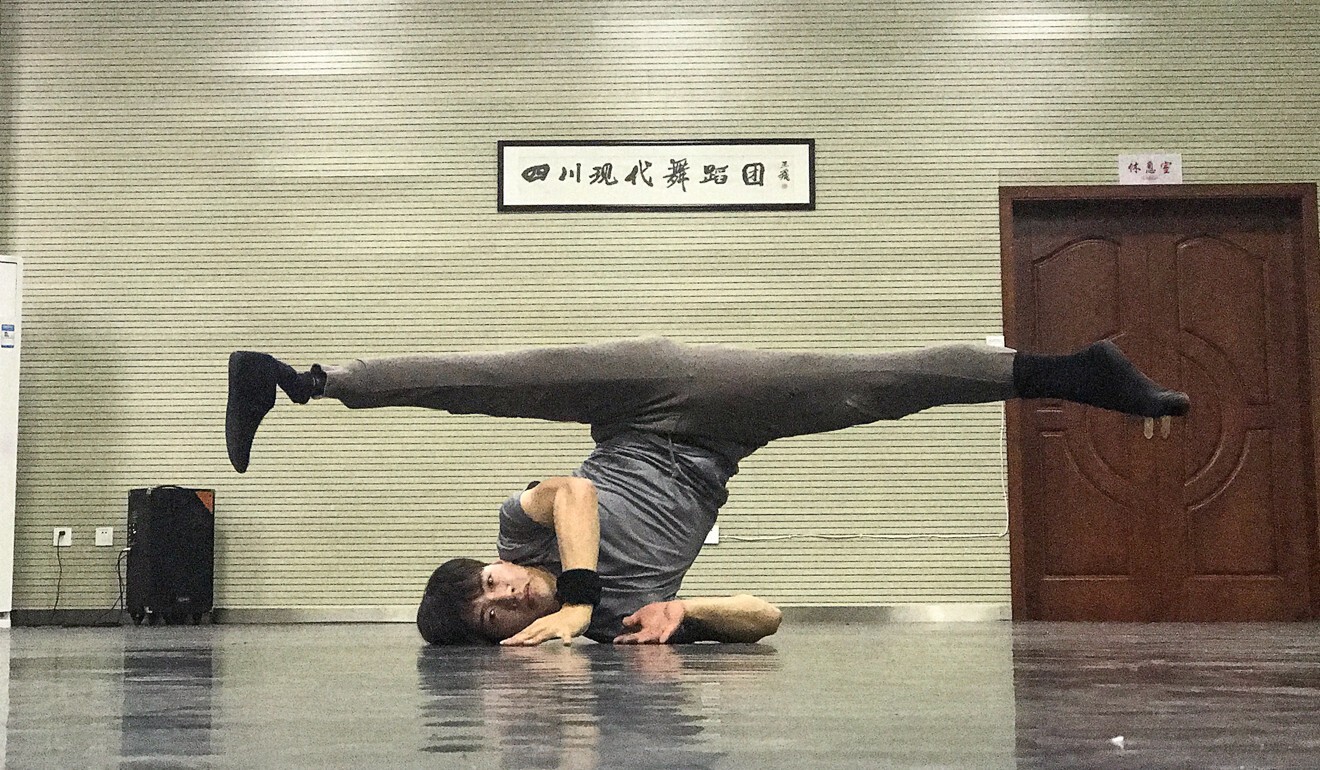
Defying all the odds, Xie Haifeng is now a professional dancer. Photo: Handout
It was there that Xie was inspired to make the most of his life. A team of athletes visited the hospital and he was shocked to see one of them, a volleyball player, walking on a prosthetic leg.

Xie began to wear a prosthesis and after rehabilitation training returned to his hometown in 2009 where he was admitted to Qingchuan High School. At first, he was self-conscious and felt inferior to his peers. He did not dare to wear shorts in summer and said he seldom talked to the other students.

The following year he was introduced to members of the Chengdu Disabled People’s Art Troupe, where he found a new and welcoming home. Xie quit school and joined the troupe, despite his parents’ opposition. They were convinced study was the only way for rural students like their son to get out of poverty.

Xie learned Sichuan opera and was soon performing its art of bian lian, or 

face changing

– a skill that requires rapid mask changes in a dazzling sleight of hand – on stage until the troupe was disbanded in 2011, leaving him unemployed for six months.

China marks 10-year anniversary of Sichuan earthquake

But the misfortune led to an improbable opportunity when he was hired by the Sichuan Provincial Disabled People’s Art Troupe and trained to dance. At 19, and with no experience, Xie found the training far more difficult than those who had started at the more usual age of five or six.

His body was too stiff, he said, and in the first months he spent 10 hours each day just stretching and building flexibility. It was just the beginning of a long and often arduous process.

“That agony is too much to be described,” Xie said about the pain of dancing on a prosthetic leg. “During the first six months’ training, I broke three artificial legs.”

More than once, he wondered whether he had chosen the right path. But, ultimately, his gruelling effort paid off and Xie has performed in Singapore, Hong Kong and Macau. In 2013, he won a gold medal at a national dancing competition for people with disabilities.

“My dances won me applause and recognition from the audience. I feel relieved and I think my heart belongs to the stage,” he said.

Xie broke three artificial legs during his first six months of dance training. Photo: Handout
Xie said he owed part of his success to Hong Kong which in 2008 donated HK$20 billion (US$2.5 billion) in aid to Sichuan and sent doctors to treat the injured. Among the volunteers was Poon Tak-lun, a Hong Kong orthopaedist who flew to Sichuan every two weeks from 2008 to 2013 to treat patients.
At a gala show in 2013 to express gratitude from the people of Sichuan to Hong Kong, Xie met Poon and the two became good friends, thanks to their common interest in the arts.

“Dr Poon promised to pay for all the costs of installing and repairing my artificial leg in the future. He told me to focus on dancing without worrying about the leg’s costs,” Xie said.

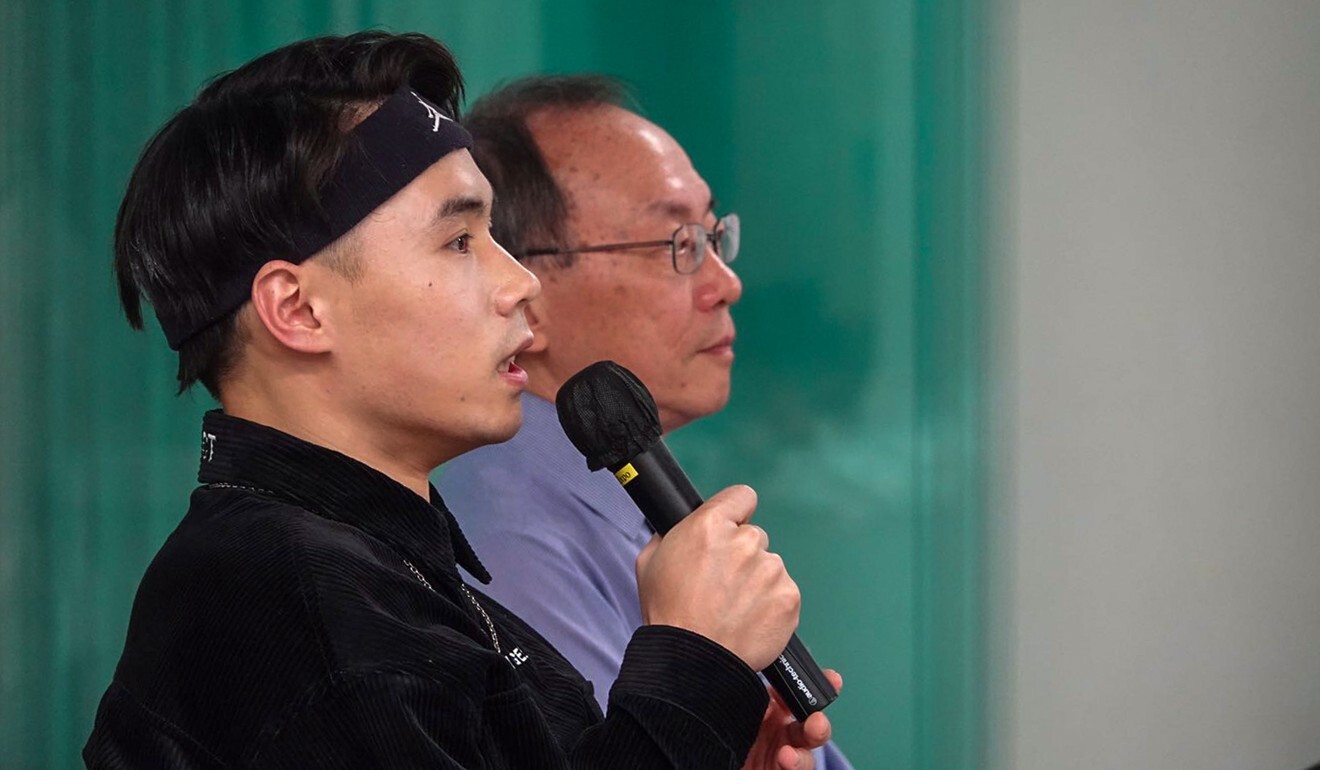
Xie Haifeng (pictured left with friend Poon Tak-lun) gives a speech to students in Hong Kong. Photo: Handout
Grateful for the help he received from Poon and Hong Kong, Xie has sought to return the favour by doing what he does best.
“I have no other skills except dancing and performing. So I thought of sharing my experience to encourage young students in Hong Kong,” he said.
Xie travels to Hong Kong about twice a year to perform and visit schools. In 2019, he visited the city four times, performing dances and Sichuan opera, and giving speeches at more than 10 primary and secondary schools.
“I encourage them to study hard. I said there are many people in this world who have more difficulties than them but still insist on pursuing their dreams, so they should not give up their dreams,” Xie said.
When he is not dancing and giving inspirational speeches, Xie said he lived a life like everyone else – climbing mountains, swimming and proudly walking on the leg he gained after almost losing everything in Sichuan’s deadly earthquake.
Source: SCMP
13/05/2019

China not to compromise on major principles, capable to cope with challenges: think tanks

BEIJING, May 12 (Xinhua) — Facing U.S. tariff hike threats, China has adhered to its bottom line, defended national dignity and people’s interests, experts with domestic think tanks said Sunday at a symposium on China-U.S. trade relations.

Imposing new tariffs goes against the will of the people and the trend of the times. China has the resolution, courage and confidence to rise to all sorts of challenges, they said.

The United States on Friday increased additional tariffs on 200 billion U.S. dollars worth of Chinese imports from 10 percent to 25 percent.

At the 11th round of economic and trade consultations that ended in Washington the same day, the Chinese delegation made clear its consistent and resolute stance: problems can not be solved by increasing tariffs and cooperation is the only right choice for the two sides, but it has to be based on principles. China will never make concessions on major issues of principle.

RAISING TARIFFS MORE DETRIMENTAL TO U.S. ECONOMY

“Increasing tariffs will impact enterprises of both countries, but harm American businesses more,” said Gao Lingyun, a researcher with the Institute of World Economics and Politics under the Chinese Academy of Social Sciences (CASS).

The additional tariffs can not change U.S. demand for Chinese goods and will be eventually passed on to American consumers and retailers by U.S. importers, Gao said.

“If the United States insists on going its way to raise tariffs on all Chinese imports, its domestic prices would be dramatically pushed up, resulting in inflation,” Gao said.

A wide range of U.S. industry associations have expressed strong opposition to imposing additional tariffs on Chinese imports. Raising tariffs to 25 percent could cost nearly one million American jobs and increase volatility of financial market, said the Tariffs Hurt the Heartland campaign.

Of the Chinese goods already under higher tariffs, more than 70 percent are intermediates and investment goods. Such a higher proportion means that the tariffs will be eventually be passed on to American businesses, consumers and farmers, said Chen Wenling, chief economist with the China Center for International Economic Exchanges.

Chen said the trade war provoked by the United States is ineffective. The United States wanted to fix the problem of trade deficit but its trade deficits to China, European Union and other economies rose rather than fell. In addition, the corresponding industry chain restructuring did not benefit the U.S. either. Auto makers Tesla and Ford are moving to the Chinese market instead.

“Some U.S. enterprises may find it difficult to survive if quitting the Chinese market as a very large share of their profits come from China,” said Liang Ming, a researcher with a research institute of the Ministry of Commerce.

Based on an estimate of the effect of having additional tariffs on 200 billion U.S. dollars worth of Chinese goods, Liang said the United States still needs to import a majority of the goods from China. But most of the Chinese products involved are less dependent on the U.S. market, and can be exported to other markets, Liang noted.

Experts said that the spill-over effect of trade wars can reach the whole world, posing severe challenges to the global order, rules, trade systems, supply chains and even bringing negative impact on the peaceful development of the world.

“What China emphasizes, such as avoiding raising tariffs and a balance in the appeals of both sides, is not only the requests of China but also the rational choice for any country when facing unreasonable trade demand,” said Dong Yan, a researcher with the CASS’s Institute of World Economics and Politics.

Analysts agreed at Sunday’s symposium that cooperation benefits China and the Unites States, while conflicts hurt both; cooperation is always the right path to resolve the China-U.S. trade dispute.

NO YIELDING ON PRINCIPLES, FIGHT AND TALK ALTERNATELY

Experts said that the U.S. accusation of China’s “backtracking” for the unsuccessful talks is untenable and irresponsible as the two are still in the process of negotiation. As a matter of fact, the U.S. side is to blame for the negotiating setback as it has been exerting pressure on China and upping the ante.

“The U.S. requests involve China’s core interests and major concerns. They touch the bottom line and China will not compromise,” said Wei Jianguo, executive deputy director of the China Center for International Economic Exchanges.

He noted that a successful agreement must ensure both sides are satisfied for the most part and have both sides to make compromises.

If an agreement satisfies only one side with the concerns of the other side not respected or not taken care of, it can hardly sustain during the implementation and may even be revoked, he said.

After more than a year, both sides have conducted 11 rounds of economic and trade consultations, which experts said fully displays that the consultation is a continuing battle. Taking it easy is necessary while preparations must be fully made psychologically and at working level.

“It’s normal for major countries to have frictions. China must adapt to it,” said Wang Wen, executive dean of the Chongyang Institute for Financial Studies, Renmin University of China.

Chen Wenling said Chinese negotiators have stuck to their principles and stance during the consultation. “It will be normal for both sides to fight and talk alternately. China must not be vague in resolutely safeguarding its core national interests and major concerns and upholding national dignity,” Chen said.

Experts noted that China’s position on upholding the overall interests of the China-U.S. relations and consolidating bilateral economic and trade cooperation remains unchanged. The two countries should meet each other halfway in line with the principles of mutual respect, equality and mutual benefit and resolve their core differences through dialog rather than confrontation.

Dong Yan said that the Sino-U.S. economic and trade friction is a long-term problem, complicated and arduous. Before everything, China and the United States should continue to build mutual trust, step up coordination in bilateral and multilateral areas, and expand common interests.

“We believe that in the face of huge cooperative interests, the U.S. side is also very clear that a trade war will not solve the economic and trade differences between the two countries,” said Liang Ming.

Although the tariff escalation is regrettable, Liang said he believed both sides had hope for the future of their economic and trade relations. A win-win cooperation between China and the United States is in line with the aspirations of the two peoples and the world at large, Liang said.

FACING CHALLENGE WITH CONFIDENCE

“Above 8,000 meters, it is the stratosphere, where the air gets thin. For mountain climbers, this requires extra efforts to overcome, which is similar to the phase that China’s economy has to overcome in order to achieve high-quality development.”

Wang Wen, citing mountain climbing as a metaphor, said the current stage requires China to stay patient and make hard work persistently according to a set route.

With both solid strength and huge potential as well as a strong capability to cope with risks and strikes, China has the confidence, resolution and ability to face all kinds of risks and challenges, said Zheng Shuiquan, deputy secretary of the Party Committee of Renmin University of China.

“No matter how the situation goes in the future, we need to manage our own affairs well,” said Zhang Yansheng, chief research fellow with the China Center for International Economic Exchanges.

Since last year, a series of measures have been taken by the central government to consolidate the growth momentum of the Chinese economy. Wang Jinbin, deputy dean of School of Economics, Renmin University of China, said that stabilizing expectation and confidence is very essential.

Starting this year, transition towards new growth engines from the traditional ones has accelerated, with new industries and businesses constantly emerging, said Yan Jinming, executive director of the National Academy of Development and Strategy of the Renmin University of China.

He said that the Chinese economy has strong resilience and flexibility, a huge market and promising prospect.

“The key is to manage our own affairs now, so as to constantly increase the potential for economic development,” said Yan.

“A win-win cooperation is an unstoppable trend of development. Trade development needs to be aligned with major national strategies. By deepening Belt and Road economic cooperation, China will see its high-quality development path getting broader and broader,” said Chen.

Source: Xinhua

24/01/2019

Interview: China economy has multiple sources of growth potentials, resilience

NEW YORK, Jan. 23 (Xinhua) — China’s economy enjoys multiple sources of growth potentials and resilience, and its structural change brings about optimism on the country’s ability to tide through difficulties, according to a senior investment advisor with UBS Wealth Management.

Growth potentials and resilience of the Chinese economy stem from a mixed combination of effective fiscal and monetary policies, and the fact that the economy has become more consumption-oriented and less export-dependent, Jorge O. Mariscal, Emerging Markets Chief Investment Officer at UBS Wealth Management, said on Tuesday.

The ongoing transformation of the Chinese economy relies less on traditional exports and more on an increasing number of technological breakthroughs such as 5G and industrial internet, Mariscal said in an email interview with Xinhua.

China’s supply side reform generates the potential momentum of a new model of growth, which fosters innovation and less bureaucracy, Mariscal added.

“The above structural change makes us optimistic about China’s ability to navigate the current difficult juncture,” said Mariscal.

Mariscal said he expected that the Chinese economy would grow 6.1 percent in 2019 amid some mixed trends.

China’s economy, the world’s second largest, grew 6.6 percent year on year to reach 90.0309 trillion yuan (about 13.28 trillion U.S. dollars) in 2018, above the official target of around 6.5 percent, according to data issued by the National Bureau of Statistics (NBS) on Monday.

China also would have higher debt-to-GDP ratio in 2019 due to the slowdown in economic expansion and the easing of fiscal policies, which will likely lead to a rebound of the property sector, liquidity level, and ideally consumption to investment level in 2019, according to Mariscal.

Chinese economy underwent a meaningful slowdown caused by deleveraging in 2018, compounded by negative investment and consumer sentiment due to trade tensions with the United States and a slow and gradual policy response, said Mariscal.

Mariscal also expected more fiscal policies and further expansionary monetary policies from China as China’s central bank has already lowered reserve requirement ratio by 100 basis points so far 2019 with 83 billion U.S. dollars injected to the banking system.

China is still likely to report weak economic indicators in the first quarter of 2019 as the transmission of policies into real economy takes time and the effects of supportive policies are likely to be felt after the first quarter, said Mariscal.

Chinese investment growth has rebounded since October 2018 due to high infrastructure investment from local governments, but it remains to be seen whether it is sufficient to stabilize growth in 2019, according to Mariscal.

A stable economic performance in China will of course promote the stability of global economy as China makes up about 15 percent of global GDP, said Mariscal.

Whether China could manage to mitigate the downside risks by setting forth a series of counter-cyclical policies is crucial to the global economy, especially amid the uncertainties of trade tension between the United States and China.

The impacts from tariffs in 2018 were not as bad as expected based on the most recent statistics of Chinese trade balances, according to Mariscal.

It is estimated that China contributed to nearly 30 percent of the world’s economic growth and remained the largest contributor to global growth in 2018 as China’s economic growth entered a new normal of slower economic growth.

Source: Xinhua

Law of Unintended Consequences

continuously updated blog about China & India

ChiaHou's Book Reviews

continuously updated blog about China & India

What's wrong with the world; and its economy

continuously updated blog about China & India