Chindia Alert: You’ll be Living in their World Very Soon
aims to alert you to the threats and opportunities that China and India present. China and India require serious attention; case of ‘hidden dragon and crouching tiger’.
Without this attention, governments, businesses and, indeed, individuals may find themselves at a great disadvantage sooner rather than later.
The POSTs (front webpages) are mainly 'cuttings' from reliable sources, updated continuously.
The PAGEs (see Tabs, above) attempt to make the information more meaningful by putting some structure to the information we have researched and assembled since 2006.
Image copyright GETTY IMAGESImage caption An empty stretch of the road and Delhi Police barricades to screen commuters during lockdown, at Delhi Gate on April 16, 2020 in New Delhi, India.
India has eased some restrictions imposed as part of a nationwide lockdown to curb the spread of the coronavirus.
Most of the new measures are targeted at easing pressure on farming, which employs more than half the nation’s workforce.
Allowing farms to operate again has been seen as essential to avoid food shortages.
But some other measures announced last week, will not be implemented.
This includes the delivery of non-essential items such as mobile phones, computers, and refrigerators by e-commerce firms – the government reversed its decision on that on Sunday.
And none of the restrictions will be lifted in areas that are still considered “hotspots” for the virus – this includes all major Indian cities.
Domestic and international flights and inter-state travel will also remain suspended.
So what restrictions are being eased?
Most of the new measures target agricultural businesses – farming, fisheries and plantations. This will allow crops to be harvested and daily-wagers and others working in these sectors to continue earning.
To restore the supply chain in these industries, cargo trucks will also be allowed to operate across state borders to transport produce from villages to the cities.
Essential public works programmes – such as building roads and water lines in rural areas – will also reopen, but under strict instructions to follow social distancing norms. These are a huge source of employment for hundreds of thousands of daily-wage earners, and farmers looking to supplement their income.
Banks, ATMs, hospitals, clinics, pharmacies and government offices will remain open. And the self-employed – such as plumbers, electricians and carpenters – will also be allowed to work.
Some public and even private workplaces have been permitted to open in areas that are not considered hotspots.
But all businesses and services that reopen are expected to follow social distancing norms.
Who decides what to reopen?
State governments will decide where restrictions can be eased. And several state chief ministers, including Delhi’s Arvind Kejriwal, have said that none of the restrictions will be lifted in their regions.
Mr Kejriwal said the situation in the national capital was still serious and the decision would be reviewed after one week.
India’s most populous state, Uttar Pradesh, will also see all restrictions in place, as will the southern states of Andhra Pradesh, Telangana and Karnataka.
The southern state of Kerala, which has been widely acknowledged for its success in dealing with the virus, has announced a significant easing of the lockdown in areas that it has demarcated as “green” zones.
This includes allowing private vehicular movement and dine-in services at restaurants, with social distancing norms in place. However, it’s implementing what is known as an “odd-even” scheme – private cars with even and odd number plates will be allowed only on alternate days, to limit the number of people on the road.
Police in Hong Kong have been fighting running battles with activists in a third consecutive day of protests, after a call for a general strike caused widespread disruption on Monday.
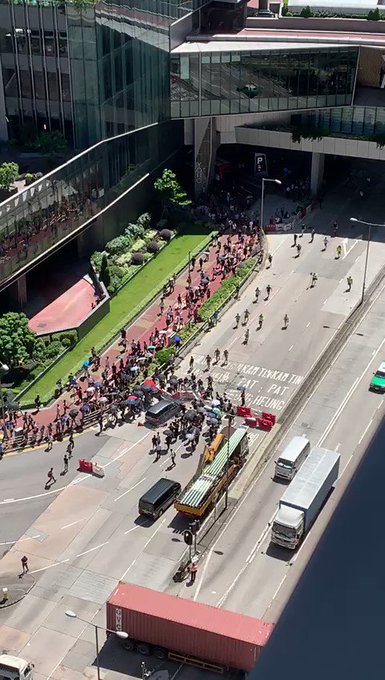
Protesters blocked roads and paralysed train services at peak times on a day of action across the city.
More than 200 flights were cancelled as the protests entered their ninth week.
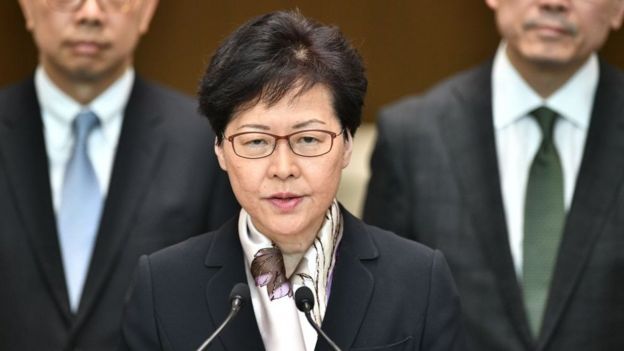
Hong Kong’s leader, Carrie Lam, has pledged to restore law and order, rejecting calls for her resignation.
Initially the demonstrations, which began on 9 June, focused on a controversial extradition law, which would have allowed the transfer of suspects to mainland China. However, the protests have now become a wider challenge to Beijing’s authority.
Ms Lam warned that Hong Kong was “on the verge of a very dangerous situation”.
Media caption Protests take place in Hong Kong for the ninth weekend – for and against the authorities
In her first media address in two weeks, Ms Lam said the protesters’ actions had challenged the principle of “one country, two systems” – the extra freedoms granted to Hong Kong when it was returned from British to Chinese rule in 1997.
She also accused activists of using the extradition bill as a cover for their real goals.
“We continue to allow these violent protesters to make use of the [extradition] bill to conceal their ulterior motives,” she said. “Those ulterior motives are going to destroy Hong Kong.”
Image copyright GETTY IMAGES
The Chinese foreign ministry said no one should underestimate China’s resolve to safeguard the stability of Hong Kong, Reuters news agency reports.
What happened on Monday?
Police fired tear gas at several locations as protesters rallied into the night, setting fires and besieging police stations. In the North Point district, which has a reputation for pro-Beijing sympathies, men wielding long poles clashed with demonstrators before falling back.
More than 80 people were arrested, in addition to the 420 detained since 9 June. In that time, police said they had used more than 1,000 tear gas canisters and 160 rubber bullets.
Protest leaders had called for a general strike. While many people made it to work, in some areas protesters blocked trains from leaving stations and scuffled with commuters. Several lines of the Mass Transit Railway (MTR) were suspended for a time, and the Cross-Harbour Tunnel was also blocked.
One video circulating on Twitter reportedly showed a car in the district of Yuen Long forcefully hitting a barricade set up by protesters, injuring one person.
It is not clear how many joined the strike, but tens of thousands of protesters were out on the streets. Several shops and businesses were closed, including international fashion retailers like Topshop and Zara.
Hong Kong airport, one of the busiest in the world, said travellers should check its website and seek updates directly from the airlines.
Most of the cancelled flights were with local carriers Cathay Pacific and Hong Kong Airlines.
The protests were initially sparked by a controversial bill that would allow China to extradite suspects from Hong Kong to the mainland.
Critics said it would undermine the territory’s judicial independence and could be used to target those who spoke out against the Chinese government.
Although the bill has now been suspended, demonstrators want it fully withdrawn.
Their demands have broadened to include an independent inquiry into alleged police brutality, Ms Lam’s resignation, and the dropping of riot charges linked to the protests.
Last week, more than 40 activists appeared in court charged with rioting. If convicted, they could be jailed for up to 10 years.
The Chinese army has so far stayed out of the dispute, but China’s top policy office in Hong Kong has previously condemned the protests, calling them “horrendous incidents” that have caused “serious damage to the rule of law”.


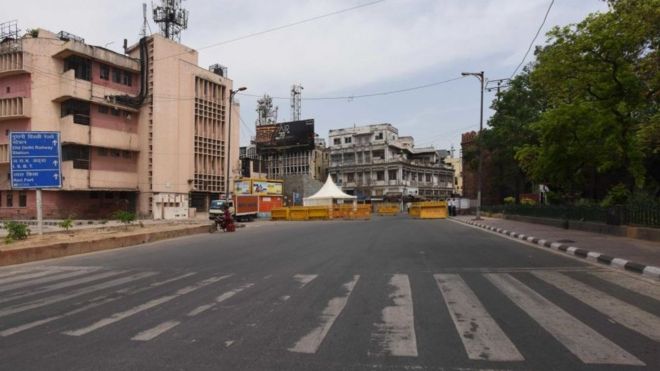 Image copyright GETTY IMAGES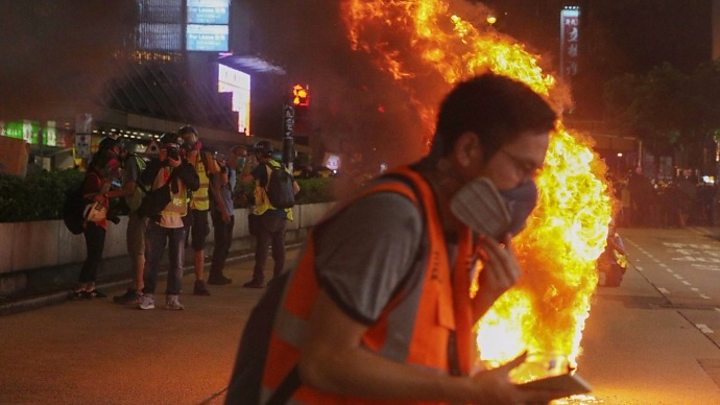


 CHINDIA ALERT: You'll be living in their world, very soon