Chindia Alert: You’ll be Living in their World Very Soon
aims to alert you to the threats and opportunities that China and India present. China and India require serious attention; case of ‘hidden dragon and crouching tiger’.
Without this attention, governments, businesses and, indeed, individuals may find themselves at a great disadvantage sooner rather than later.
The POSTs (front webpages) are mainly 'cuttings' from reliable sources, updated continuously.
The PAGEs (see Tabs, above) attempt to make the information more meaningful by putting some structure to the information we have researched and assembled since 2006.
Hardline politicians want president to fulfil promise to overhaul constitution to reflect the self-ruled island’s political reality
A petition calls for two referendums on the issue – proposing it either be replaced with a new one or revised
The push for constitutional change could lead to a cross-strait conflict. Photo: Handout
Taiwanese President Tsai Ing-wen is under growing pressure from the hardline camp to push for constitutional change to reflect the self-ruled island’s independent status – something observers say could provoke a cross-strait conflict.
With Tsai due to be sworn in for a second four-year term next month after a landslide victory in January’s election, hardline pro-independence politicians want her to fulfil a 2015 campaign promise: to overhaul the constitution so that it reflects Taiwan’s political reality. The process has been stalled since Tsai’s first term, which began in 2016.
Leading the charge is the Taiwan New Constitution Foundation, a group formed last year by a Tsai adviser and long-time independence advocate Koo Kwang-ming.
The foundation launched a petition at the end of March calling for two referendums on the constitution – proposing that it either be replaced with a new one or revised.
The existing constitution was adopted when Kuomintang leader Chiang Kai-shek and the KMT fled to Taiwan and set up an interim government in 1949 following their defeat by Mao Zedong’s communists in mainland China.
Drawn up in 1947, the constitution still puts the mainland and Mongolia under the Republic of China jurisdiction – Taiwan’s official name for itself. In reality, its jurisdiction extends only to Taiwan and its outlying islands of Penghu, Matsu and Quemoy, which is also known as Kinmen.
Taiwan’s constitution was adopted when KMT leader Chiang Kai-shek fled to the island in 1949. Photo: Handout
“We have garnered more than 3,000 signatures from the public for the first phase of initiating the proposals to hold two referendums asking the president to push for constitutional change,” Lin Yi-cheng, executive director of the Taiwan New Constitution Foundation, said on Wednesday.
He said they would propose that voters be asked two questions in the referendums: “Do you support the president in initiating a constitutional reform process for the country?”
And: “Do you support the president in pushing for the establishment of a new constitution reflecting the reality of Taiwan?”
“We’re ready to send the two referendum proposals to the Central Election Commission on Thursday,” he said.
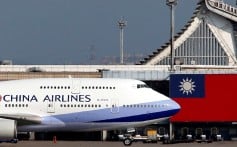
Confusion prompts call for China Airlines name change in Taiwan, but at what cost?
14 Apr 2020
Under Taiwan’s Referendum Act, the process for holding a referendum involves three stages: a proposal, endorsement and voting.
Lin said there should be no problem for the commission to approve the proposal stage since they had gathered far more than the minimum 1,931 signatures needed under the act.
The endorsement stage requires a minimum of 290,000 signatures, and if the referendum is held, they will need at least 5 million votes.
Lin said if the process went smoothly, he expected a referendum could be held in August next year, allowing time for review and making the necessary arrangements.
He said if the referendum questions got enough public support, Tsai would need to deal with the issue.
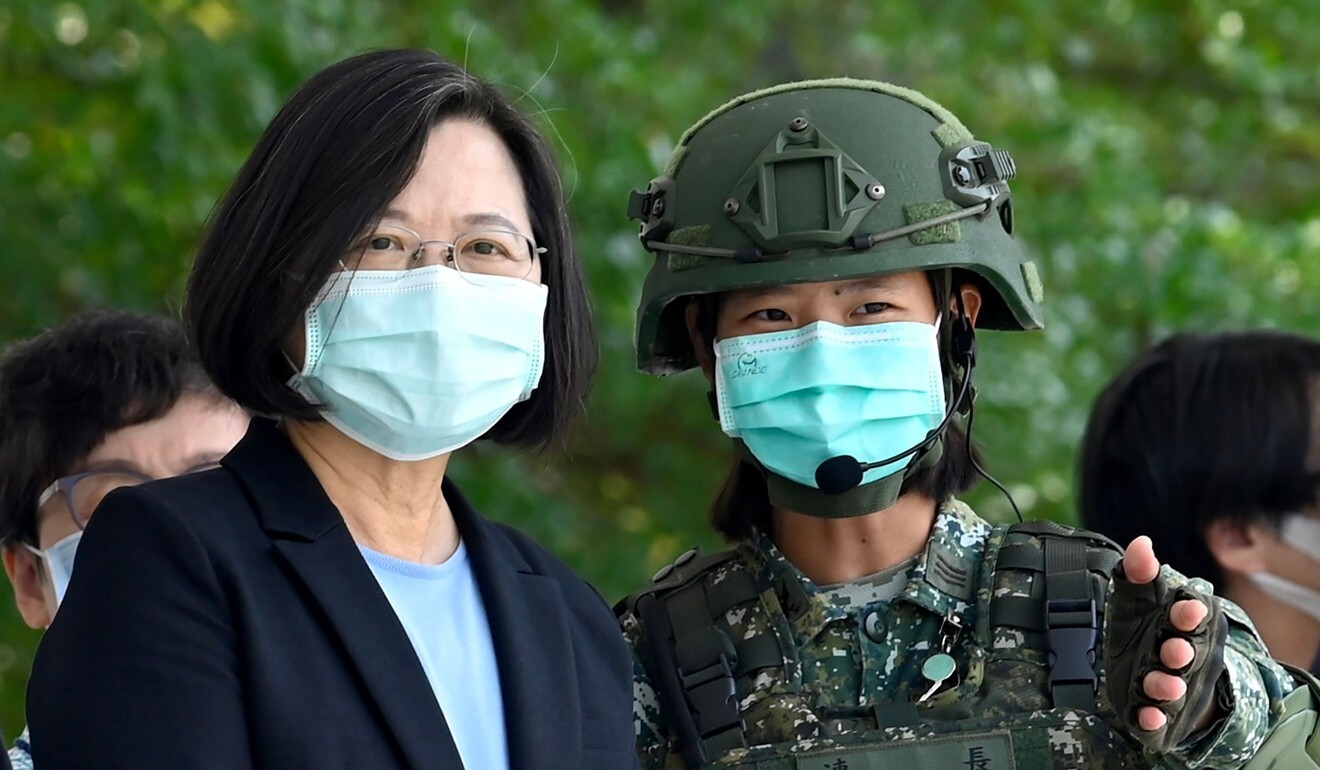
Tsai Ing-wen visits a military base in Tainan earlier this month. The pressure for constitutional change creates a dilemma for the president. Photo: AFP
Tsai’s Democratic Progressive Party government has been tight-lipped over the constitutional change issue, which Beijing sees as a move for the island to declare formal independence from the mainland.
Beijing considers Taiwan a wayward province that must be returned to the mainland fold, by force if necessary, and it has warned Tsai against declaring formal independence.
A DPP official said the foundation’s push would put Tsai in a difficult position.
“If she ignores the referendums, she will come under constant pressure from the hardline camp, and if she seriously considers taking action and instituting a new Taiwan constitution, she will risk a confrontation with Beijing, the consequence of which could be a cross-strait conflict,” said the official, who requested anonymity.
On Tuesday, Zhu Fenglian, a spokeswoman for the mainland’s Taiwan Affairs Office, warned the island against holding any referendum on constitutional revision, saying it would be doomed to end in an impasse and would ultimately fail.
“It will only push Taiwan towards an extremely dangerous abyss and bring disasters to Taiwanese compatriots,” she said.
Chinese air force’s drill ‘aimed at signalling deterrent around Taiwan’
2 Apr 2020
But according to Wang Kung-yi, a political science professor at Chinese Culture University in Taipei, Tsai should not be too worried about the hardline camp move.
“The hardline camp has been marginalised greatly in the past several years as reflected by the poor showing in the legislative elections in January,” Wang said, adding that he expected Tsai to continue her relatively moderate cross-strait policy of not sharply provoking the mainland.
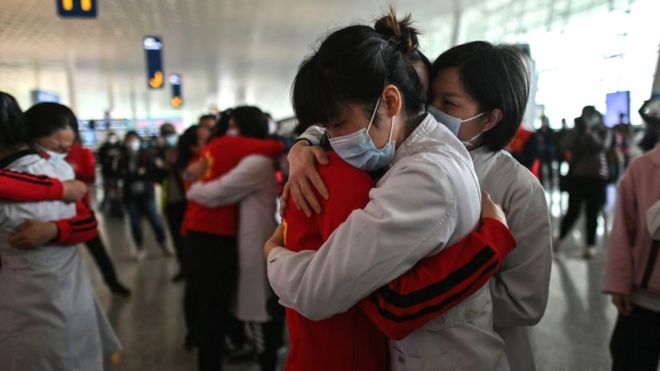
Image copyright GETTY IMAGESImage caption The Chinese city of Wuhan recently lifted its strict quarantine measures
The Chinese city of Wuhan, where the coronavirus originated last year, has raised its official Covid-19 death toll by 50%, adding 1,290 fatalities.
Wuhan officials attributed the new figure to updated reporting and deaths outside hospitals. China has insisted there was no cover-up.
It has been accused of downplaying the severity of its virus outbreak.
Wuhan’s 11 million residents spent months in strict lockdown conditions, which have only recently been eased.
The latest official figures bring the death toll in the city in China’s central Hubei province to 3,869, increasing the national total to more than 4,600.
China has confirmed nearly 84,000 coronavirus infections, the seventh-highest globally, according to Johns Hopkins University data.
What’s China’s explanation for the rise in deaths?
In a statement released on Friday, officials in Wuhan said the revised figures were the result of new data received from multiple sources, including records kept by funeral homes and prisons.
Deaths linked to the virus outside hospitals, such as people who died at home, had not previously been recorded.
Media caption Learn how Wuhan dealt with the lockdown
The “statistical verification” followed efforts by authorities to “ensure that information on the city’s Covid-19 epidemic is open, transparent and the data [is] accurate”, the statement said.
It added that health systems were initially overwhelmed and cases were “mistakenly reported” – in some instances counted more than once and in others missed entirely.
A shortage of testing capacity in the early stages meant that many infected patients were not accounted for, it said.
A spokesman for China’s National Health Commission, Mi Feng, said the new death count came from a “comprehensive review” of epidemic data.
In its daily news conference, the foreign ministry said accusations of a cover-up, which have been made most stridently on the world stage by US President Donald Trump, were unsubstantiated. “We’ll never allow any concealment,” a spokesman said.
Why are there concerns over China’s figures?
Friday’s revised figures come amid growing international concern that deaths in China have been under-reported. Questions have also been raised about Beijing’s handling of the epidemic, particularly in its early stages.
In December 2019, Chinese authorities launched an investigation into a mysterious viral pneumonia after cases began circulating in Wuhan.
China reported the cases to the World Health Organization (WHO), the UN’s global health agency, on 31 December.
But WHO experts were only allowed to visit China and investigate the outbreak on 10 February, by which time the country had more than 40,000 cases.
The mayor of Wuhan has previously admitted there was a lack of action between the start of January – when about 100 cases had been confirmed – and 23 January, when city-wide restrictions were enacted.
Around that time, a doctor who tried to warn his colleagues about an outbreak of a Sars-like virus was silenced by the authorities. Dr Li Wenliang later died from Covid-19.
Wuhan’s death toll increase of almost exactly 50% has left some analysts wondering if this is all a bit too neat.
For months questions have been asked about the veracity of China’s official coronavirus statistics.
The inference has been that some Chinese officials may have deliberately under-reported deaths and infections to give the impression that cities and towns were successfully managing the emergency.
If that was the case, Chinese officials were not to know just how bad this crisis would get in other countries, making its own figures now seem implausibly small.
The authorities in Wuhan, where the first cluster of this disease was reported, said there had been no deliberate misrepresentation of data, rather that a stabilisation in the emergency had allowed them time to revisit the reported cases and to add any previously missed.
That the new death toll was released at the same time as a press conference announcing a total collapse in China’s economic growth figures has led some to wonder whether this was a deliberate attempt to bury one or other of these stories.
Then again, it could also be a complete coincidence.
China has been pushing back against US suggestions that the coronavirus came from a laboratory studying infectious diseases in Wuhan, the BBC’s Barbara Plett Usher in Washington DC reports.
US President Donald Trump and some of his officials have been flirting with the outlier theory in the midst of a propaganda war with China over the origin and handling of the pandemic, our correspondent says.
Mr Trump this week halted funding for the World Health Organization (WHO), accusing it of making deadly mistakes and overly trusting China.
“Do you really believe those numbers in this vast country called China, and that they have a certain number of cases and a certain number of deaths; does anybody really believe that?” Mr Trump said at the White House on Wednesday.
On Thursday, UK Foreign Secretary Dominic Raab said: “We’ll have to ask the hard questions about how [coronavirus] came about and how it couldn’t have been stopped earlier.”
But China has also been praised for its handling of the crisis and the unprecedented restrictions that it instituted to slow the spread of the virus.
Image copyright GETTY IMAGESImage caption The Chinese city of Wuhan recently lifted its strict quarantine measures
The Chinese city of Wuhan, where the coronavirus originated last year, has raised its official Covid-19 death toll by 50%, adding 1,290 fatalities.
Wuhan officials attributed the new figure to updated reporting and deaths outside hospitals. China has insisted there was no cover-up.
It has been accused of downplaying the severity of its virus outbreak.
Wuhan’s 11 million residents spent months in strict lockdown conditions, which have only recently been eased.
The latest official figures bring the death toll in the city in China’s central Hubei province to 3,869, increasing the national total to more than 4,600.
China has confirmed nearly 84,000 coronavirus infections, the seventh-highest globally, according to Johns Hopkins University data.
What’s China’s explanation for the rise in deaths?
In a statement released on Friday, officials in Wuhan said the revised figures were the result of new data received from multiple sources, including records kept by funeral homes and prisons.
Deaths linked to the virus outside hospitals, such as people who died at home, had not previously been recorded.
Media caption Learn how Wuhan dealt with the lockdown
The “statistical verification” followed efforts by authorities to “ensure that information on the city’s Covid-19 epidemic is open, transparent and the data [is] accurate”, the statement said.
It added that health systems were initially overwhelmed and cases were “mistakenly reported” – in some instances counted more than once and in others missed entirely.
A shortage of testing capacity in the early stages meant that many infected patients were not accounted for, it said.
A spokesman for China’s National Health Commission, Mi Feng, said the new death count came from a “comprehensive review” of epidemic data.
In its daily news conference, the foreign ministry said accusations of a cover-up, which have been made most stridently on the world stage by US President Donald Trump, were unsubstantiated. “We’ll never allow any concealment,” a spokesman said.
Why are there concerns over China’s figures?
Friday’s revised figures come amid growing international concern that deaths in China have been under-reported. Questions have also been raised about Beijing’s handling of the epidemic, particularly in its early stages.
In December 2019, Chinese authorities launched an investigation into a mysterious viral pneumonia after cases began circulating in Wuhan.
China reported the cases to the World Health Organization (WHO), the UN’s global health agency, on 31 December.
But WHO experts were only allowed to visit China and investigate the outbreak on 10 February, by which time the country had more than 40,000 cases.
The mayor of Wuhan has previously admitted there was a lack of action between the start of January – when about 100 cases had been confirmed – and 23 January, when city-wide restrictions were enacted.
Around that time, a doctor who tried to warn his colleagues about an outbreak of a Sars-like virus was silenced by the authorities. Dr Li Wenliang later died from Covid-19.
Wuhan’s death toll increase of almost exactly 50% has left some analysts wondering if this is all a bit too neat.
For months questions have been asked about the veracity of China’s official coronavirus statistics.
The inference has been that some Chinese officials may have deliberately under-reported deaths and infections to give the impression that cities and towns were successfully managing the emergency.
If that was the case, Chinese officials were not to know just how bad this crisis would get in other countries, making its own figures now seem implausibly small.
The authorities in Wuhan, where the first cluster of this disease was reported, said there had been no deliberate misrepresentation of data, rather that a stabilisation in the emergency had allowed them time to revisit the reported cases and to add any previously missed.
That the new death toll was released at the same time as a press conference announcing a total collapse in China’s economic growth figures has led some to wonder whether this was a deliberate attempt to bury one or other of these stories.
Then again, it could also be a complete coincidence.
But China has also been praised for its handling of the crisis and the unprecedented restrictions that it instituted to slow the spread of the virus. WHO Director General Dr Tedros Adhanom Ghebreyesus has hailed China for the “speed with which [it] detected the outbreak” and its “commitment to transparency”.
US President Donald Trump this week halted funding for the WHO, accusing it of making deadly mistakes and overly trusting China.
“Do you really believe those numbers in this vast country called China, and that they have a certain number of cases and a certain number of deaths; does anybody really believe that?” Mr Trump said at the White House on Wednesday.
On Thursday, UK Foreign Secretary Dominic Raab said: “We’ll have to ask the hard questions about how [coronavirus] came about and how it couldn’t have been stopped earlier.”
Image copyright GETTY IMAGESImage caption Tamils argue that imposing Hindi will jeopardise their language
The Indian government has revised a controversial draft bill to make Hindi a mandatory third language to be taught in schools across the country.
The draft bill had met particularly strong opposition in the southern state of Tamil Nadu, which has always resisted the “imposition” of Hindi.
In 1965, it saw violent protests against a proposal that Hindi would be India’s only official language.
Tamil is one of the oldest languages and evokes a lot of pride in the state.
However the government decision has not calmed tensions in Tamil Nadu.
The two main political parties in the state, the DMK and AIADMK, have both said that simply revising the draft to say Hindi would not be mandatory is not enough.
The state teaches only two languages – Tamil and English – in the government school curriculum, and the parties do not want a third language introduced at all.
A DMK spokesman told the NDTV news channel that the third language clause would be used as a “back door” to introduce Hindi anyway.
Their rivals, the AIADMK, which allied with the Bharatiya Janata Party (BJP) in the general elections but lost badly in the state, had a similar view.
“Our party has always been clear in our stand. We have always followed a two-language policy. Though mandatory Hindi has been revised in the draft now, we still cannot support this three-language system. Our government will talk to the union government for our rights,” former state education minister and AIADMK spokesman Vaigaichelvan told BBC Tamil.
On Monday, #HindiIsNotTheNationalLanguage began trending on Twitter in India, which saw many from Tamil Nadu facing off against people from other parts of the country and asserting their right not to have the language “imposed” on them.
The BJP government’s real face is beginning to emerge…Hindi is being imposed on South Indians. Tamil Nadu has rebelled against BJP-Govt. Let’s join them to fight the imposition of Hindi! #HindiIsNotTheNationalLanguage
Picture speaks a thousand words! In a diverse country like India, learning a new language should be a choice and not compulsion/imposition.
Declaring any Indian language as a national language will be a joke. #HindiImposition#HindiIsNotTheNationalLanguage
“There is no opposition to actually learning Hindi. In fact with the recent IT boom in the south, so many people from the north have migrated here that its use has become more widespread here. It is true that if you know Hindi you will find it easier to get work in other parts of India, so there are also many people here who willingly learn it. But that should be their choice. What people are opposing is the imposition of it,” senior journalist and political analyst KN Arun told the BBC.
Mr Arun also warned that there was a chance that the issue could lead to further protests in the state, saying that a few hardline Tamil groups had been using the issue to whip up anger among the people.
It is also a particularly emotive issue. Politics in the state is still centred around the ideas and principles of the Dravidian movement, which among other things reveres the Tamil language and links it closely to regional identity.
“Tamil is very rich in literature and different to other languages like Hindi which branched out of Sanskrit. There is fear that the Indian government is trying to slowly introduce Hindi, which will threaten the status of Tamil,” author and journalist Vaasanthi told the BBC.










 CHINDIA ALERT: You'll be living in their world, very soon