Archive for ‘Richard Nixon’

22/02/2020

Trump in India: A brief history of US presidents’ trips

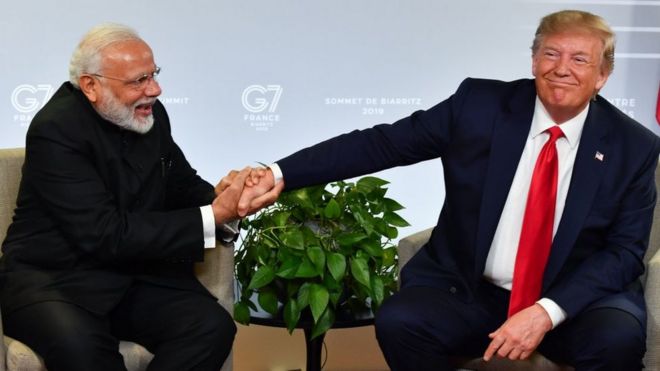
Indian Prime Minister Narendra Modi (L) and US President Donald Trump shakes hands as they speak during a bilateral meeting in Biarritz, south-west France on August 26, 2019.Image copyright GETTY IMAGES
Image caption Mr Trump is making his first official visit to India

US President Donald Trump is expecting a raucous welcome on his first official state visit to India on Monday and Tuesday.

He follows a long line of leaders who have made the journey. Some of his predecessors were greeted enthusiastically; others stumbled through diplomatic gaffes; one even had a village named after him.

Can history be a guide to how this diplomatic tryst might go? Here’s a brief look at past visits, ranked in order of how they went.

The good: President Eisenhower

Let’s begin at the beginning.

Dwight D Eisenhower, the first US president to visit India, was greeted with a 21-gun salute when he landed in the national capital, Delhi, in December 1959. Huge crowds lined the streets to catch a glimpse of the World War Two hero in his open-top car – Mr Trump is expecting a similar reception in Ahmedabad city, where he will be doing a road show.
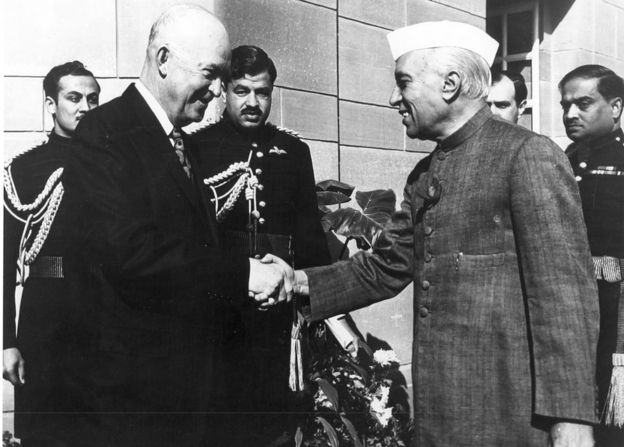
President Eisenhower (L) with Prime Minister Jawaharlal NehruImage copyright US EMBASSY ARCHIVES
Image caption Dwight D Eisenhower, pictured with Prime Minister Jawaharlal Nehru, was the first US president to make the trip

The warmth between President Eisenhower and Indian Prime Minister Jawaharlal Nehru helped during what was a rocky phase in US-India ties. This was early in the Cold war, when the US and Pakistan had become become close allies, and India insisted on staying neutral or “non-aligned”. Like today, relations with China were at the core of the India-US equation, with Washington pressuring Delhi to take an aggressive stance with Beijing on the issue of Tibet.

But, on the whole, Eisenhower’s four-day trip was billed a success. And nearly every US president on a state visit to India has emulated his itinerary: he laid flowers at Mahatma Gandhi’s memorial, took in the splendour of the Taj Mahal, addressed parliament and spoke at Delhi’s iconic Ramlila grounds, which, according to one news report, attracted one million people.

When he left, Nehru said he had taken with him “a piece of our heart”.
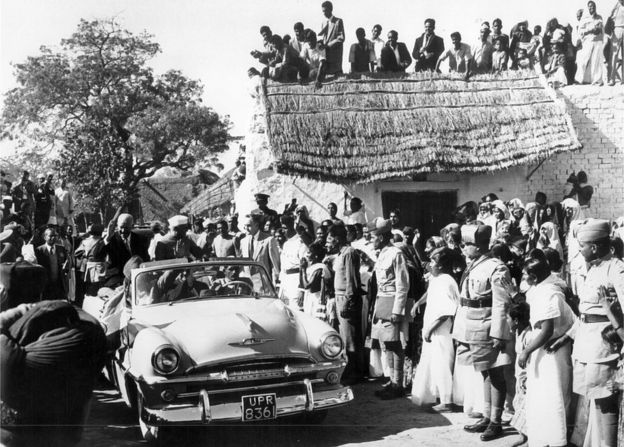
President Eisenhower drove in open car to small village to get a glimpse of rural India on December 13, 1959.Image copyright US EMBASSY ARCHIVES
Image caption President Eisenhower was greeted by large crowds
Presentational white spaceThe game-changer: Bill Clinton

If there was a game-changing visit, it would be Bill Clinton’s in March 2000 with Prime Minister Atal Bihari Vajpayee. Mr Clinton’s arrival came after a two-decade lull – neither Ronald Reagan nor George Bush Snr made the journey East. It came at a tricky time as Washington had imposed sanctions on Delhi following its 1999 test of a nuclear bomb.

But, according to Navtej Sarna, a former Indian Ambassador to the US, the five-day trip was “a joyous visit”. It included stops in Hyderabad, a southern city that was emerging as a tech hub, and Mumbai, India’s financial capital. “He came and saw the economic and cyber potential of India, and democracy in action,” says Mr Sarna.
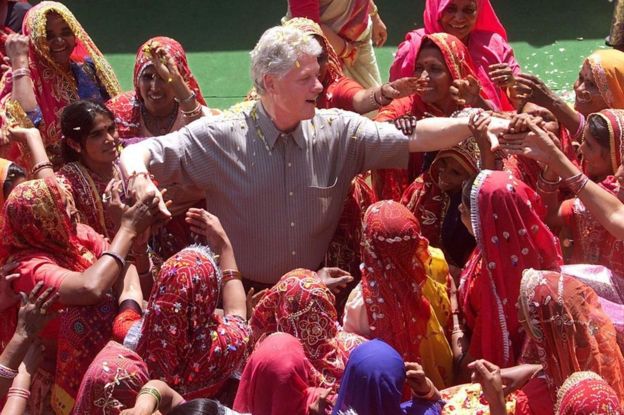
US President Bill Clinton shakes hands with local villagers after touring Nayla Village 23 March 2000.Image copyright GETTY IMAGES
Image caption Bill Clinton’s visit was described as “joyous”
Mr Clinton also danced with villagers, took a tiger safari and sampled Delhi’s famously creamy black dal (lentils) at a luxury hotel that has since been associated with the president.

The country’s reaction is perhaps best expressed in this New York Times headline: “Clinton fever – a delighted India has all the symptoms.”

The nuclear deal: George W Bush

George W Bush, as Forbes magazine once put it, was the “best US president India’s ever had”. His three-day visit in March 2006 was a highlight in the two countries’ strategic relationship – especially in matters of trade and nuclear technology, subjects they have long wrangled over. His strong personal dynamic with Prime Minister Manmohan Singh was hard to miss – after he left office, Mr Bush, a keen artist, even painted a portrait of Mr Singh.

The two leaders are credited for a historic but controversial nuclear deal, which was signed during Mr Bush’s visit. It brought India, which had for decades refused to sign the Nuclear Non-Proliferation Treaty (NPT), out of isolation. Energy-hungry India got access to US civil nuclear technology in exchange for opening its nuclear facilities to inspection.
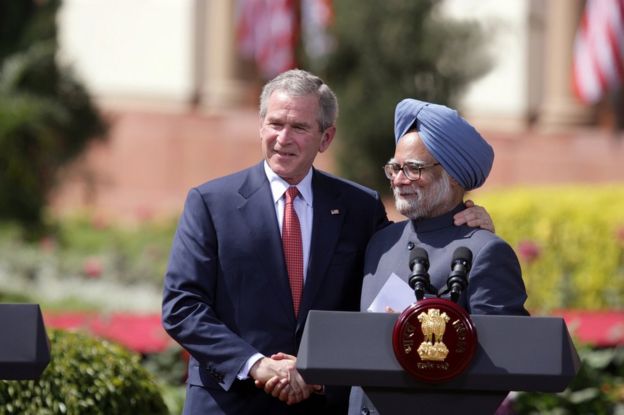
George W Bush (L) with Manmohan Singh (R)Image copyright US EMBASSY ARCHIVES
Image caption George W Bush and Manmohan Singh had a very good relationship
However, while the visit was substantive, it was not as spectacular as others – there was no trip to the Taj, nor an address to parliament. But the timing was important. Anti-US sentiment over the invasion of Iraq was running high – left-wing MPs had staged a protest against Mr Bush’s visit, and there were demonstrations in other parts of India.

Double visit: Barack Obama

Barack Obama was the only president to make two official visits. First, in 2010 with Prime Minister Manmohan Singh, and then in 2015 with Prime Minister Narendra Modi.

On his first visit – in a break from the past – he landed in Mumbai, instead of Delhi, with a large trade delegation. This was not just about economic ties but a show of solidarity following the Mumbai terror attacks of 2008, which killed 166 people. Mr and Mrs Obama even stayed at the Taj Mahal hotel, one of the main targets.

It was significant that the US president declared support for India to join a reformed and expanded UN Security Council, says Alyssa Ayres, a former US deputy assistant secretary of state for South Asia. “That all these years later nothing has changed in the UN system is another matter, but that was a major policy shift for the United States.”
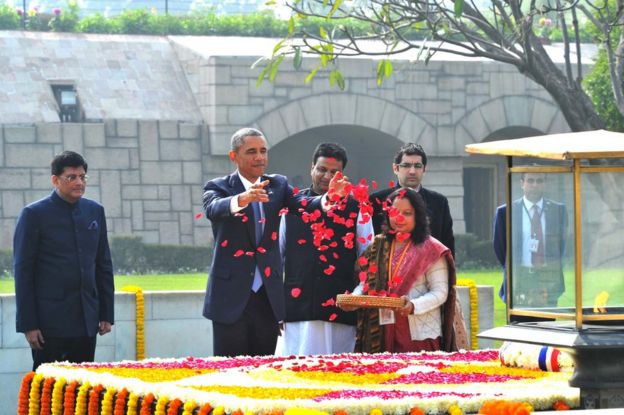
US President Barack Obama paying floral tributes at the samadhi of Mahatma Gandhi at Rajghat in Delhi.Image copyright US EMBASSY ARCHIVES
Image caption Barack Obama visited India twice
Mr Obama returned in 2015 as chief guest at India’s Republic Day celebrations, at PM Modi’s invitation. Trade, defence and climate change were at the heart of the talks. The trip also emphasised an Indo-Pacific strategy, where both leaders expressed unease over Beijing’s provocations in the South China Sea.

The not-so-good: Jimmy Carter

Although Jimmy Carter’s two-day visit in 1978 was a thaw in India-US relations, it was not free of hiccups.

With some 500 reporters in tow, Carter followed a packed itinerary: he met Prime Minister Morarji Desai, addressed a joint session of parliament, went to the Taj Mahal, and dropped by a village just outside Delhi.

The village, Chuma Kheragaon, had a personal connection: Carter’s mother, Lillian, had visited here when she was in India as a member of the Peace Corps in the late 1960s. So when Carter and his wife, Rosalynn, made the trip, they gave the village money and its first television set. It was even renamed “Carterpuri”, a moniker it still holds.
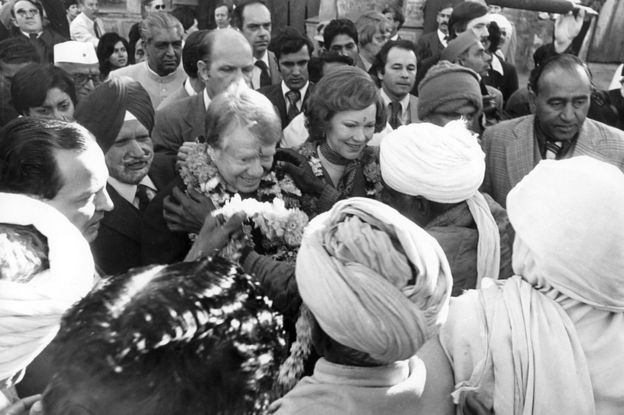
Jimmy Carter being greeted by villagers of 'Carterpuri'Image copyright US EMBASSY ARCHIVES
Image caption Jimmy Carter being greeted by villagers of ‘Carterpuri’
But beyond the photo-ops, India and the US were sparring. India was building its nuclear programme, and had conducted its first test in 1974. The US wanted India to sign the NPF, which sought to stop the spread of nuclear weapons. But India refused, saying the agreement discriminated against developing countries.

In a leaked conversation that made headlines and threatened to derail the visit, Mr Carter promised his Secretary of State, Cyrus Vance, a “very cold and very blunt” letter to Desai. The two leaders signed a declaration, promising greater global co-operation, but Carter left India without the assurances he had hoped for.

The ugly: Richard Nixon

Richard Nixon was no stranger to India when he arrived in August 1969 for a day-long state visit. He had been here as vice-president in 1953, and before that on personal trips. But, by all accounts, he wasn’t a fan.

“Nixon disliked Indians in general and despised [Prime Minister] Indira Gandhi,” according to Gary Bass, author of Blood Telegram: Nixon, Kissinger and a Forgotten Genocide. And, he adds, the feeling was said to be mutual.

This was also at the height of the Cold War, and India’s non-alignment policy “appalled” American presidents. Mr Bass says that under Gandhi, India’s neutrality had turned into a “noticeably pro-Soviet foreign policy”.
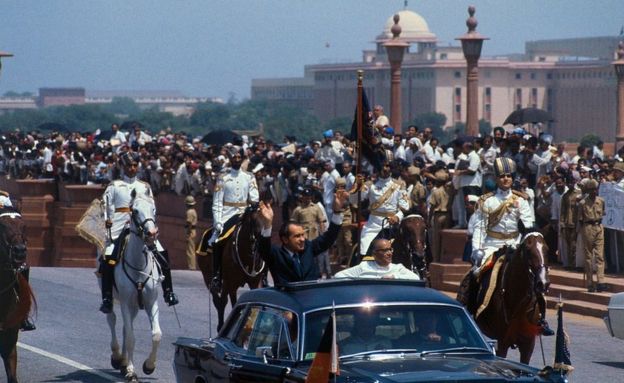
President Richard Nixon waves to crowds as he rides in open car with the acting president of India, Mohammad Hidyatullah, in motorcade from airport upon arrival here July 31.Image copyright GETTY IMAGES
Image caption Richard Nixon waves to the crowds alongside Mohammad Hidyatullah, India’s acting president
The relationship only turned frostier after the trip as India backed Bangladesh (then East Pakistan) in its fight for independence from Pakistan, a close American ally. The differences were laid bare when Gandhi visited the White House in 1971. Declassified state department cables later revealed that Nixon referred to her as an “old witch”.

And the future: Donald Trump

The US and India have certainly had their ups and downs, but during the last official visit in 2015, Mr Obama and Mr Modi signed a declaration of friendship: “Chalein saath saath (Let’s move forward together)…” it began.

President Trump’s visit will take the relationship forward, but it’s unclear how.
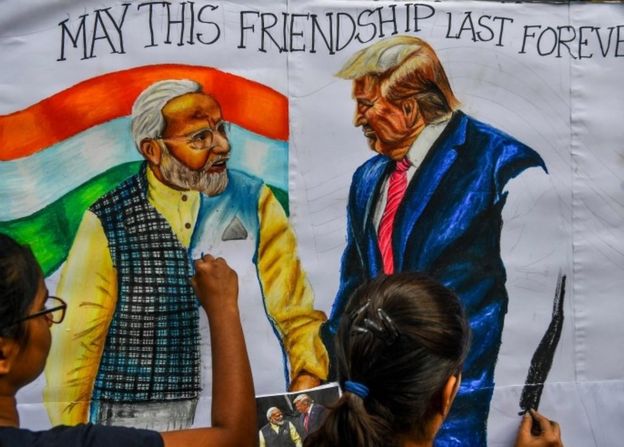
Students paint on canvas faces of US President Donald Trump (R) and India"s Prime Minister Narendra Modi, in the street in Mumbai on February 21, 2020, ahead of the visit of US President in IndiaImage copyright AFP

His arrival in Ahmedabad, the main city in PM Modi’s home state of Gujarat, followed by a big arena event, is expected to draw a massive crowd. It will echo President Eisenhower’s rally in Delhi years ago, perhaps cementing the personal ties between the two leaders.

But while Mr Trump’s trip will be packed with pageantry, it could be light on policy. Unlike other presidential visits, this one is not expected to yield concrete agreements, with the trade deal Mr Trump so badly wants looking unlikely.

Source: The BBC

24/07/2019

China’s choice of Shanghai for US trade talks emphasises commercial rather than political focus, analysts say

  • Switching first face-to-face gathering since G20 summit from Beijing sends message that ‘trade should be trade, and politics should be politics,’ analyst says
  • Trade representative Robert Lighthizer and Treasury Secretary Steven Mnuchin are set to meet counterparts Vice-Premier Liu He and Commerce Minister Zhong Shan
Shanghai is China’s global financial hub, while Beijing is viewed as more of a political centre. Photo: Bloomberg
China’s decision to hold next week’s negotiations with the United States in Shanghai could be a fresh sign that Beijing is revising its strategy as it prepares for a protracted trade war, analysts said.
By choosing global financial hub Shanghai rather than the political centre of Beijing, China is trying to play down the political aspects of the talks and emphasise the commercial elements, analysts suggested.
The meeting will be the first face-to-face gathering of the two countries’ trade negotiators since talks collapsed in May without a deal as the US blamed China for renegading on earlier promises, while China blamed the US for being too demanding.
The trade teams have held two phone conversations in July, although neither Washington or Beijing have confirmed the venue or schedule for the talks next week.
Shen Jianguang, the chief economist at JD Digits and a veteran Chinese economy watcher, said China is changing the location of the talks to send a message that “trade should be trade, and politics should be politics”.
He added that the choice of Shanghai implies that China is trying to focus on the technical issues such as the US relaxation of sales restrictions to 
Huawei Technologies

and China’s purchase of US farm products instead of political issues that will be more difficult to resolve.

“The Shanghai talks will only result in a small step,” Shen said.

Trade representative Robert Lighthizer

and Treasury Secretary Steven Mnuchin are expected to lead the US delegation to meet their Chinese counterparts headed by Vice-Premier Liu He and Commerce Minister Zhong Shan, the South China Morning Postreported earlier this week.

The Shanghai talks will only result in a small stepShen Jianguang

Bloomberg and The Wall Street Journal reported on Wednesday that the talks will take place in Shanghai, and a source confirmed the location to the Post. Hua Chunying, China’s foreign ministry spokeswoman, said on Wednesday that she had no information to provide on the location of the talks.
Chang Jian, chief China economist at Barclays, said that the choice of Shanghai is a sign that the initial goal of the talks would be “smaller”, focusing more on specific import and export arrangements rather than wholesale institutional changes in China’s economic model.
“It shows that China is preparing for a protracted trade talks for years to come,” Chang said. “For China, a precondition for a grand deal is that the US has to lift all tariffs, which the US will find very hard to do.”
Aidan Yao, a senior emerging Asia economist at AXA Investment Managers, said the fact that it took almost a month after the ceasefire agreement reached between President Xi Jinping and US counterpart Donald Trump at the G20 summit in Japan for a face-to-face meeting to take place is already a confirmation of “the deep divide” that remains.
“Without a clear strategy to tackle them, I doubt anyone should hold their breath for a breakthrough” despite certain goodwill gestures in recent days, Yao said.

Without a clear strategy to tackle them, I doubt anyone should hold their breath for a breakthroughAidan Yao

The initial arrangements for the meeting came after the US announced that it would offer exemptions to 110 Chinese products, including medical equipment and key electronic components, from import tariffs. China, meanwhile, said that several companies would buy American agricultural products having already applied for exemptions from the tariffs imposed by Beijing.
Liao Qun, the chief economist at China Citic Bank International, said a change of location could pump “fresh air” into the talks.

“Shanghai is the window of China’s reform and opening up and the country’s economic heart,” Liao said. “It could be a positive change”.

Larry Hu, chief China economist of Macquarie Capital, noted that Shanghai has played a unique role in US-China relations.

“The important Shanghai Communiqué was inked in the city,” Hu said, referring to the diplomatic document signed between China and US in 1972 during president Richard Nixon’s visit to China to meet Chinese chairman Mao Zedong.

The document, which is part of the Three Joint Communiqués, paved the way for Beijing and Washington to establish official diplomatic relationships later that decade.

The Three Joint Communiqués are a collection of joint statements made by the governments of the US and China from 1972, 1979 and 1982.

Source: SCMP

04/07/2019

How US-trained telecoms entrepreneur Bill Huang turned to China for a wireless technology America couldn’t offer

  • ‘There’s no need for a confrontation in technology because science has no borders,’ says the founder of CloudMinds
  • Huang has watched from up close as the US gradually descended from its telecoms supremacy and China caught up
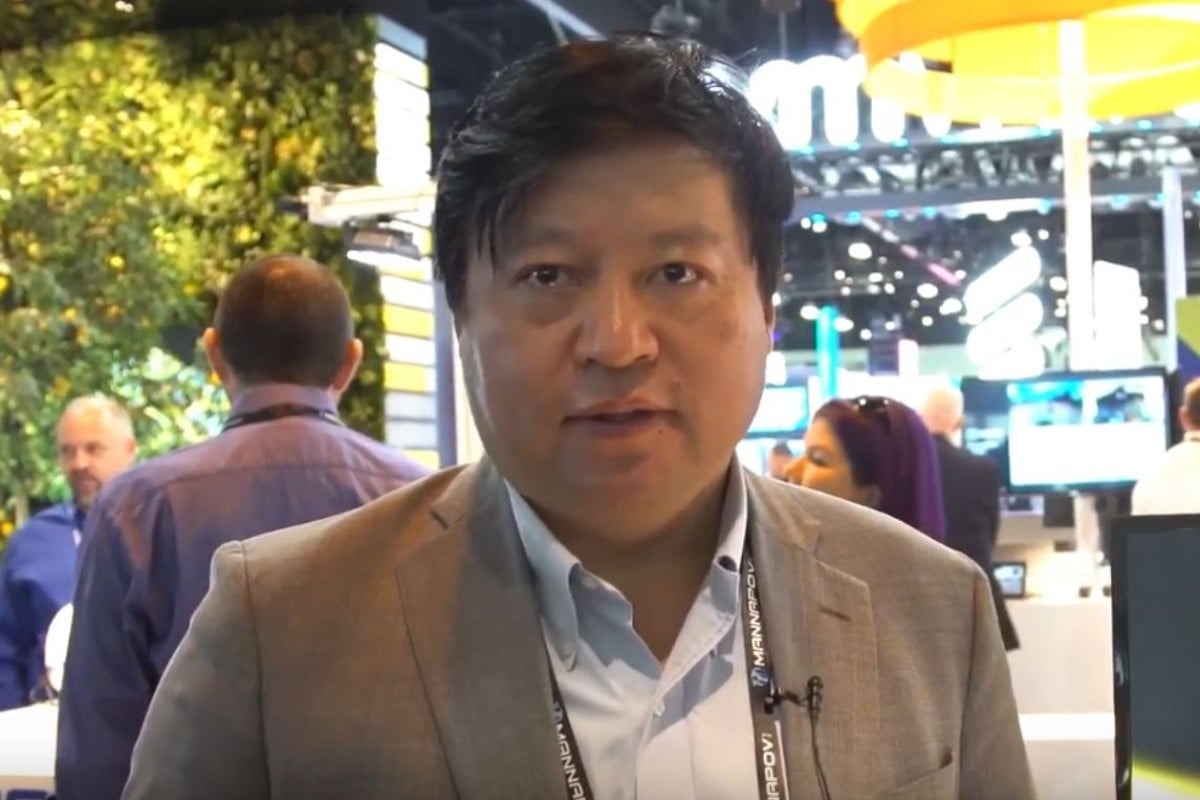
Bill Huang in 2018. Photo: YouTube
Bill Huang, a Chinese-American telecoms industry veteran, used to target China and its vast, untapped market with the technological know-how he had learned in the US.
But over the past few years, the tables have turned. In his latest business endeavour, the engineer turned entrepreneur is relying on China for a key technology that would transform mobile communication for the next decade – and it is a technology the US has fallen behind on.
As one of the first young mainland Chinese to attend graduate school in the US after diplomatic relations were resumed 40 years ago, and as one of the early participants in Beijing’s global recruitment programme to attract top talent in science and technology, Huang has a unique perspective on the current bilateral stand-off that centres on technology.
CloudMinds Technology, a privately held robotics sector company he founded in 2015, needs the superfast 5G network to support its cloud-based platforms for operating intelligent robots. The next-generation wireless technology has become a flash point in the escalating US-China tech rivalry, and Huang is at the forefront of it all.

“It’s kind of like a one-sided rivalry. Because the US doesn’t have the [5G] technology,” Huang said on the sidelines of a recent conference on China in Philadelphia.

For months, the US government has waged a campaign to block the Chinese telecoms giant Huawei from dominating global 5G networks, lobbying allies to shun the company for what it says are risks of espionage or sabotage by Beijing.

Huawei is already ahead of its European rivals in market share thanks in part to its lower prices. But so far no companies in the US – which has long led the telecoms industry – can make the equipment needed to build the next generation of networks.

Huang, 57, who spent three decades in the mobile communication sector, has watched from up close as the US gradually descended from its telecoms supremacy and China quietly caught up.

Technology is not like martial arts, or Shakespeare’s book, it’s not like everything is copyrighted Bill Huang, CEO of CloudMinds Technology

In its heyday, US giants like AT&T sold network equipment to countries around the world. Huang himself once worked at AT&T’s research hub Bell Labs, a dominant leader in telecoms innovation known as “the idea factory” and arguably the most innovative scientific institution for a long stretch of the 20th century.
“In the last 20 years, the US went from [being] No 1 in the telecommunications industry to now almost exiting telecommunications equipment manufacturing,” Huang said, citing the acquisition of Lucent and Motorola by European counterparts.
It was a decline Huang witnessed with an initial sense of sadness. As a veteran of Bell Labs, he said, he had felt extremely proud of the company’s contribution not only to America, but to telecoms technology worldwide.
“But secondly I also felt a level of pride for China,” he said, “because it went from nothing in telecommunications to lead the world in telecommunications in less than 30 years.”
Huawei was under secret US surveillance, US fraud hearing told

Glenn O’Donnell, an analyst at Forrester Research, said the decline of major US telecoms providers had little to do with politics, but was a function of inadequate interest in innovatation because of their dominance in the field.

“The long lease cycles and until recently the relative maturity of the market really didn’t lend itself well for real innovation,” he said.

“And that’s now changing, and all of those players that decided not to play in telecommunications are now wishing they had a stake because there’s a lucrative new market.”

Also drastically different today is the state of relations between China and the US. As they fight their costly trade war, tensions and acrimony have spilled into other aspects of bilateral relations, from technology, defence and geopolitics to ideology. There are even warnings of “decoupling” – something almost unimaginable to Huang, whose personal trajectory has been shaped by the intertwined ties between his homeland and his adopted country.

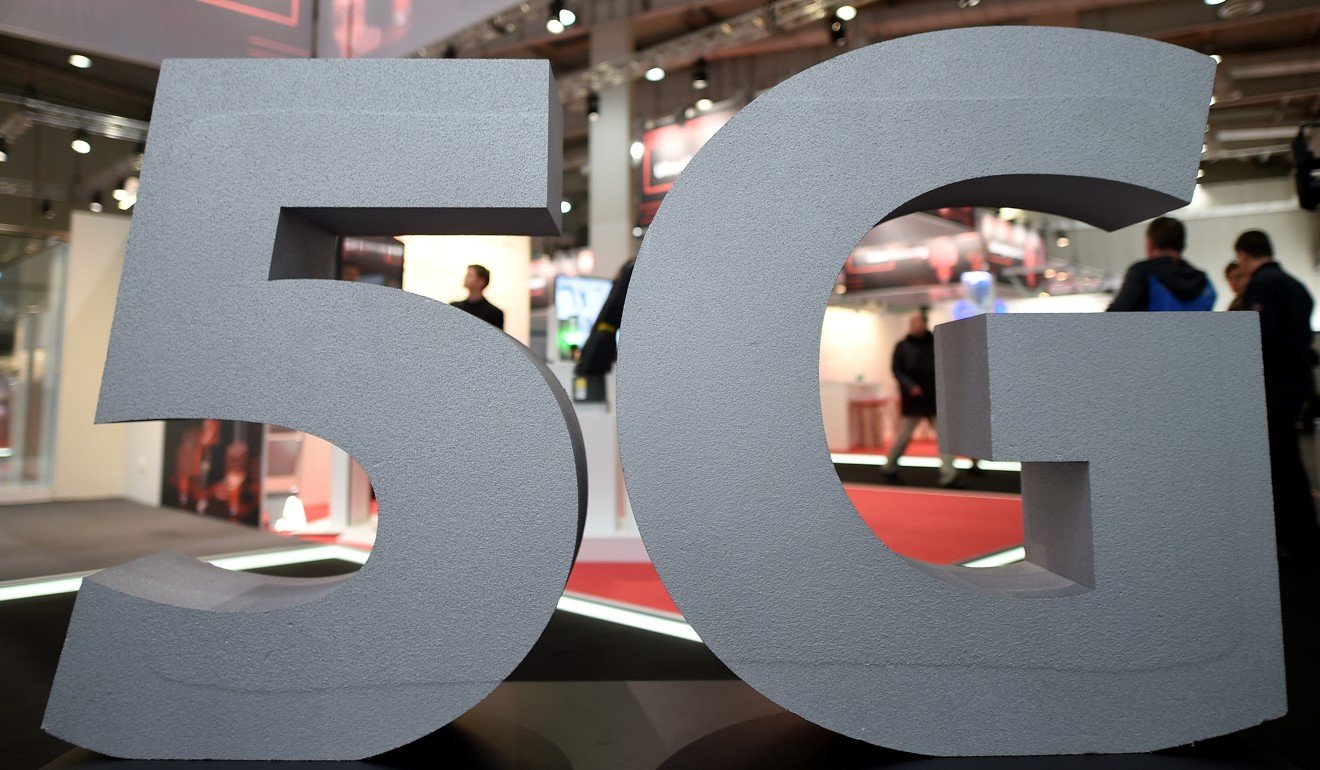
Fifth-generation mobile telecommunications technology, or 5G, enables data to be transferred at a speed that is 20 times faster than current standards. Photo: Reuters

He calls himself “a product of China-US relations”. Such was his proud conviction that he gave his son the middle name “Nixon”, after the president who put relations with China back on track in 1972 with a historic trip to Beijing that ended over two decades of antagonism and isolation since the Chinese Communist Party took power.

The visit by Richard Nixon – who died in 1994, the same year Huang’s son was born – not only mended bilateral relations, but created an opportunity for Huang and many others like him: to learn the most advanced science and technology from the world’s leading innovation powerhouse.

Born in 1962 into an intellectual family in southwestern China, Huang spent most of his childhood in the turmoil of the Cultural Revolution.

“As professors, my parents had a very difficult time during the Cultural Revolution. But they insisted that we spend time to study,” he said.

Huang recalled being a “wild kid”, going to school to “have fun”. But when the time came to study, he was able to pick up the pace, which he attributed to the academic minds that run in his family.

Hailed as a “child prodigy”, he passed the country’s first university entrance exam in a decade at the age of 15. A year later, in 1978, he was in the first batch of students to enter university after the disruptions of the decade-long upheaval. He chose to major in electrical engineering, following in his father’s footsteps.

In his sophomore year at the Huazhong Institute of Technology, his parents told him to apply for graduate programmes in the US.

“They think the US has the best technology in the world, and they wanted me to come here to study,” he said. “I read everything about the US … and I was very eager to come.”

Arriving at the University of Illinois’ Chicago campus in 1982, at age 20, Huang was one of the first new Chinese graduates to further their studies in the US after the re-establishment of diplomatic relations in 1979. He did not speak English (although he could read it), and had to enrol in a three-month language training program before he could attend lectures.

He studied computer science in addition to electrical engineering, working day and night on projects in the lab – a time he looks back on with fondness.

“It was some of the most intense time in my life, I suppose,” Huang said. “But I was young and relentless, and I could go on for three days without sleep. … I thoroughly enjoyed it.”

US to speed up 5G development plans as race with China accelerates

Despite their vastly different cultural backgrounds, Huang made friends with his American classmates and fellow foreign students, some of whom were from India and what was then the Soviet Union.

“I experienced zero racial prejudice,” he said. “That was Chicago in the 1980s. I don’t know what happened today, [but back then] it was thoroughly what I thought was the ‘melting pot’.”

In his computer science classes, Huang learned Unix – a state-of-the-art operating system developed by Bell Labs – from adjunct professors who had helped create the program.

Little did he know he would later become a researcher at Bell Labs. “That was the holy ground of telecommunications,” he said, still beaming with pride when speaking of his former employer, which invented, among other things, the communications satellite and the cellular telephone system.

Bill Huang as a graduate student in Chicago in the early 1980s. Photo: CCTV

In 1994, Huang joined 10 other former Bell Labs engineers at a California-based telecoms infrastructure provider that targeted the vast and underserved Chinese market. A year later, the company merged with a telecoms software company to become UTStarcom, with Huang as its co-founder and chief technology officer.

UTStarcom tapped into the fast-growing Chinese telecoms market with a low-cost, limited-range wireless service known as the Personal Access System (PAS). It went public on the Nasdaq exchange five years later. In 2001, China passed the US as having the most mobile phone customers. The rapidly expanding market propelled UTStarcom’s growth; its revenues increased tenfold between its IPO and 2003, when it controlled 60 per cent of China’s PAS market.

In 2007, having lived in the US for longer than he did in China and having become an American citizen, Huang moved from Silicon Valley to Beijing with his wife and son. China Mobile, the country’s largest telecoms operator, had asked him to help build a “Bell Labs for China” – a request he readily accepted.

“It was not only a simple job, but a responsibility, a challenge I thought I should accept no matter what,” he told Chinese state broadcaster CCTV in 2017.

Smartphone screen with resolution million times higher than iPhone: Chinese researchers make technology breakthrough

As the head of the China Mobile Research Institute, Huang led the carrier’s leap from 3G to 4G, and he was also at the centre of 5G research. “We put a lot of effort into researching what standards are required for the future network,” he said.
His return to China preceded the “Thousand Talents Plan”, a state-backed recruitment drive to lure the world’s brightest scientists and experts – especially those with roots in China – with lavish grants. But when the plan was set up in 2008, Huang was among the first batch of researchers to be enlisted.
“I express my heartfelt thanks to the state and the people for giving me such a good opportunity and condition to return home and serve the country,” Huang was quoted as saying at a forum for recipients of Thousand Talents awards hosted by People’s Daily in 2010.
“I worked for over 20 years abroad, and all my work was in the field of technology. I hope to bring the whole set of things I know back to China,” he added.
The recruitment scheme, much celebrated at the time, has become a sensitive subject today as tensions between the US and China escalate. It has drawn growing scrutiny and suspicion from the US, where investigators are looking for any connection to theft of American intellectual property. In response, China hushed up or deleted references to the programme in universities, companies and cyberspace.
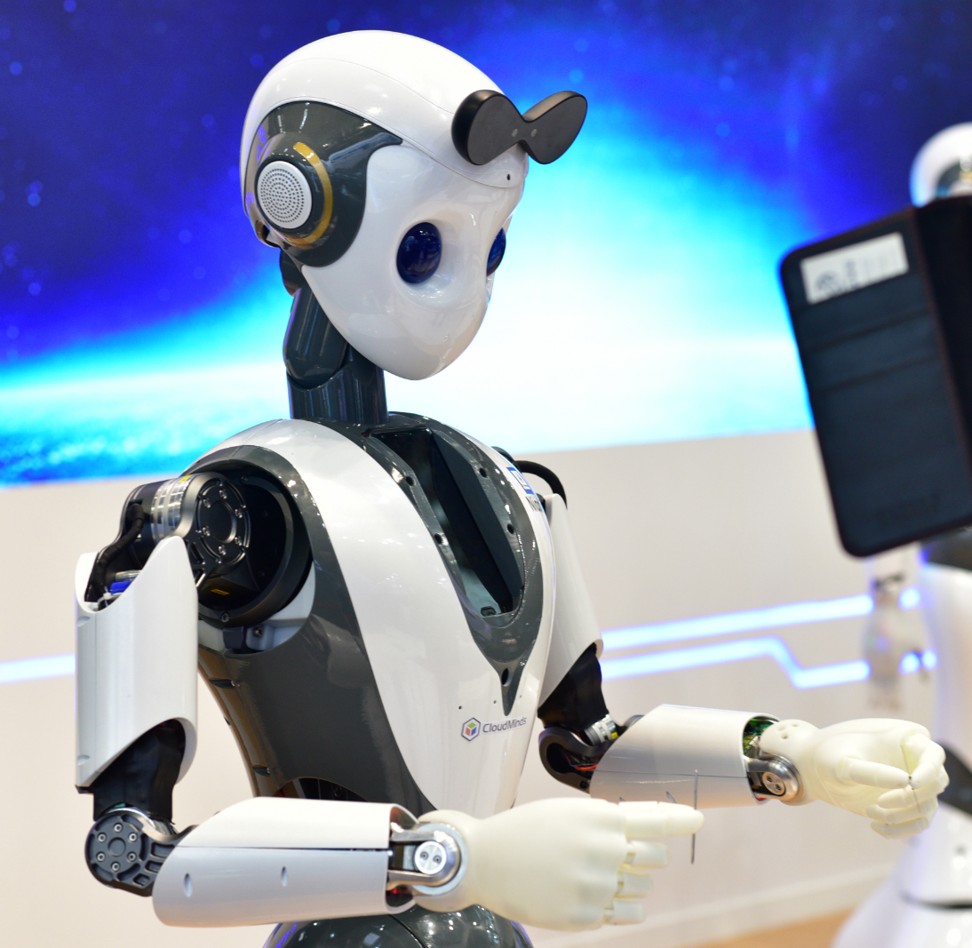
A robot made by CloudMinds Technology showcased at the Mobile World Congress Barcelona in February. Photo: Handout

When asked about US complaints regarding China’s alleged technology theft, Huang gave a vehement defence of China.

“I think these are just basically blatant accusations with no ground,” he said. “Ninety-nine per cent [of the technologies] are not stolen. There are industrial espionage cases … but they’re not systematic cases, and they’re not [the result of the] rivalry between China and the US – they’re the result of competition.”

Huang also dismissed accusations that Chinese scientists and experts have “stolen” US technology.

“Technology is not like martial arts, or Shakespeare’s book, it’s not like everything is copyrighted,” he said.

“Everyone in Silicon Valley in the last 50 years started from somewhere, and then they become an entrepreneur and they move [on] to start their own companies. So in the early days, everyone took a little bit from what they have worked on.”

“It was customary, and then it became very litigious. Then people started saying: wait a minute, you can do that? So there were many exemplary cases, then it became more and more refined in what you can take and what you cannot take; what is protected and what is not protected. All of these things are happening industry-wide, it’s not a single US and China issue.”

Can China meet US demands over IP theft and forced technology transfer?

But intellectual property theft is not the only American grievance. Many US companies have accused China of forced technology transfers, with foreign businesses required to hand over technology to their Chinese partners in exchange for access to the market.

Huang said that complaint “has been there since day one”.

“Chinese companies will always complain about American companies. American companies will always complain about Chinese companies. The reason is very simple: every company would want to use regulations and law to their advantage,” he said.

A trained engineer, Huang holds a “globalist” view of technology – at odds with the national security perspective that has become prevalent in Washington.

“There’s no need for a confrontation in technology because science has no borders,” he said.

“In Huawei labs, there are many American engineers. In Intel and Qualcomm’s labs, I can assure you there are many Chinese engineers, and there are many German, French, Swedish engineers in all of these organisations. The fact they’re sold by a Chinese company or they’re sold by an American company has no meaning because behind the technologies is an international effort.”

To make his point, Huang calls the technology created by CloudMinds a “US and China technology”.

“I mean, how do you categorise it? Is it created by China or the US? It’s created by both. Because we have engineers in Silicon Valley, and we have engineers in Beijing.”

Protecting IP in China is hard, but awareness is rising, thanks to Trump
The company has dual headquarters, with its global operation based in Santa Clara, California, and its China operation based in Beijing – a structure Huang says now “makes perfect sense”.
“That was by design, by our lawyers. They kind of foresaw, if there [are] going to be trade tensions, this would be the right way to do it.”
But Huang questions if these tensions – a large part of which he said had been “politicised” – are so deeply embedded in every corner of society.
“I come to the United States very often, and I talk to the industry. I still feel it is the same America.”
“I encountered no scrutiny, no warning, and everyone is encouraging us, both from the US and from China, to continue our practice,” he said, adding that he only felt the tension when speaking to lawyers and government officials.
“But I am worried by all these stories. I think that’s why I said earlier: in the media it all looks very scary, but in practice, it’s all business as usual.”
Source: SCMP
Law of Unintended Consequences

continuously updated blog about China & India

ChiaHou's Book Reviews

continuously updated blog about China & India

What's wrong with the world; and its economy

continuously updated blog about China & India