Archive for ‘Rodrigo Duterte’

28/10/2019

Putin accepts Duterte invite, just before Manila-Beijing South China Sea oil talks. Coincidence?

  • The president is set to become the first Russian leader to make a state visit to the Philippines for more than 40 years, according to a former envoy
  • Moscow is aware of China’s entry into the Philippines, and could have its eye on some projects there, while the US is also watching developments
Russian President Vladimir Putin and Philippine President Rodrigo Duterte shake hands during a 2016 meeting in Peru. Photo: EPA
The timing of Moscow’s announcement over the weekend that President Vladimir Putin
has accepted an invitation to visit Manila has raised eyebrows, as it comes on the eve of crucial bilateral talks between the Philippines and China on joint oil exploration in the

South China Sea

.

In a statement immediately welcomed by the Philippine presidential palace, Igor Khovaev, Russia’s ambassador to the Philippines, on Saturday told reporters Putin had accepted Duterte’s invitation “with gratitude”.

No date has been set for the visit, with Khovaev only saying Moscow would “do our best to arrange this meeting as soon as possible”.

A steering committee with representatives from both Manila and Beijing is set to meet this week to discuss the joint oil exploration deal. China has proposed a 60 per cent-40 per cent split in favour of the Philippines, according to Hermogenes Esperon, 

Courting Russia with South China Sea oil is a ‘dangerous gamble’ for Duterte

Neither side has clarified if the split refers to ownership or revenue, and no other details were disclosed.

After an August meeting with Duterte, Chinese President Xi Jinping said the countries could take a “bigger step” in jointly developing oil and gas resources if they could properly handle their sovereignty dispute in the South China Sea.

But defence and security analysts say the Philippine president took a “dangerous gamble” on a visit to Russia last month, when he invited the Russian state oil company Rosneft to explore for oil in Philippine waters – which include parts of the South China Sea claimed by China.

The timing of Moscow’s announcement has not gone unnoticed.
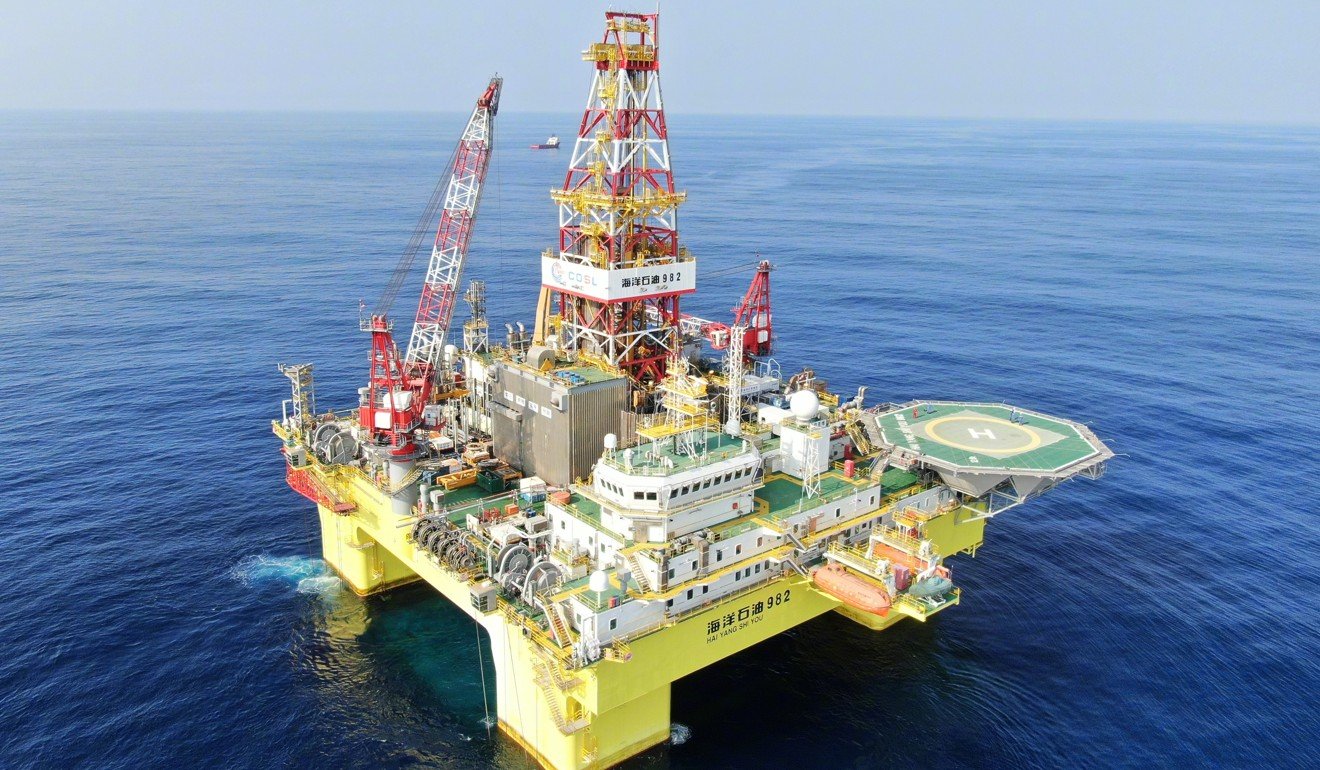
A Chinese deepwater oil rig in the South China Sea. Photo: Weibo

“It’s a welcome and historic development. Some wise guy in the Duterte government thought about timing [the invitation to Putin around the oil talks with Beijing],” said retired Philippine ambassador Lauro Baja, who once served as president of the United Nations Security Council.

Baja told the Post that no Russian president had visited the Philippines during his more than 40 years with the Department of Foreign Affairs.

“The Philippines then was almost a nonentity as far as Russia was concerned, [but] maybe now Russia recognises the strategic importance of the Philippines [in terms of] regional politics,” he said.

Baja said Moscow was aware of China’s entry into the Philippines, and could have its eye on some projects there.

“For all their so-called alliance, China and Russia are fierce competitors for influence and other benefits. And I think Russia has some objectives in mind like selling armaments and [forging] technological agreements,” he said, while cautioning that the situation remained “nebulous”.

New Philippines military chief sees no ‘shooting war’ in South China Sea despite disputes

“It’s a fascinating development but things are still early … For now, this is [just] an invitation extended by Duterte and accepted in principle by Putin.”

The United States will also be monitoring developments in the Philippines, according to Greg Poling, director of the Washington-based Centre for Strategic and International Studies’ Asia Maritime Transparency Initiative.

“Russia is eager to boost its influence in the region, and doubtless doing so with a long-standing US ally is seen as a bonus by Moscow,” he said. “There is nothing that prevents the Philippines from engaging in security cooperation with Russia, but the devil will be in the details.”

Poling added that the US would be concerned if Russia-Philippine cooperation involved acquiring military platforms that were incompatible with the shared platforms and doctrines used by Washington and Manila, as well as the latter’s other major security partners, namely Australia, Japan and South Korea.
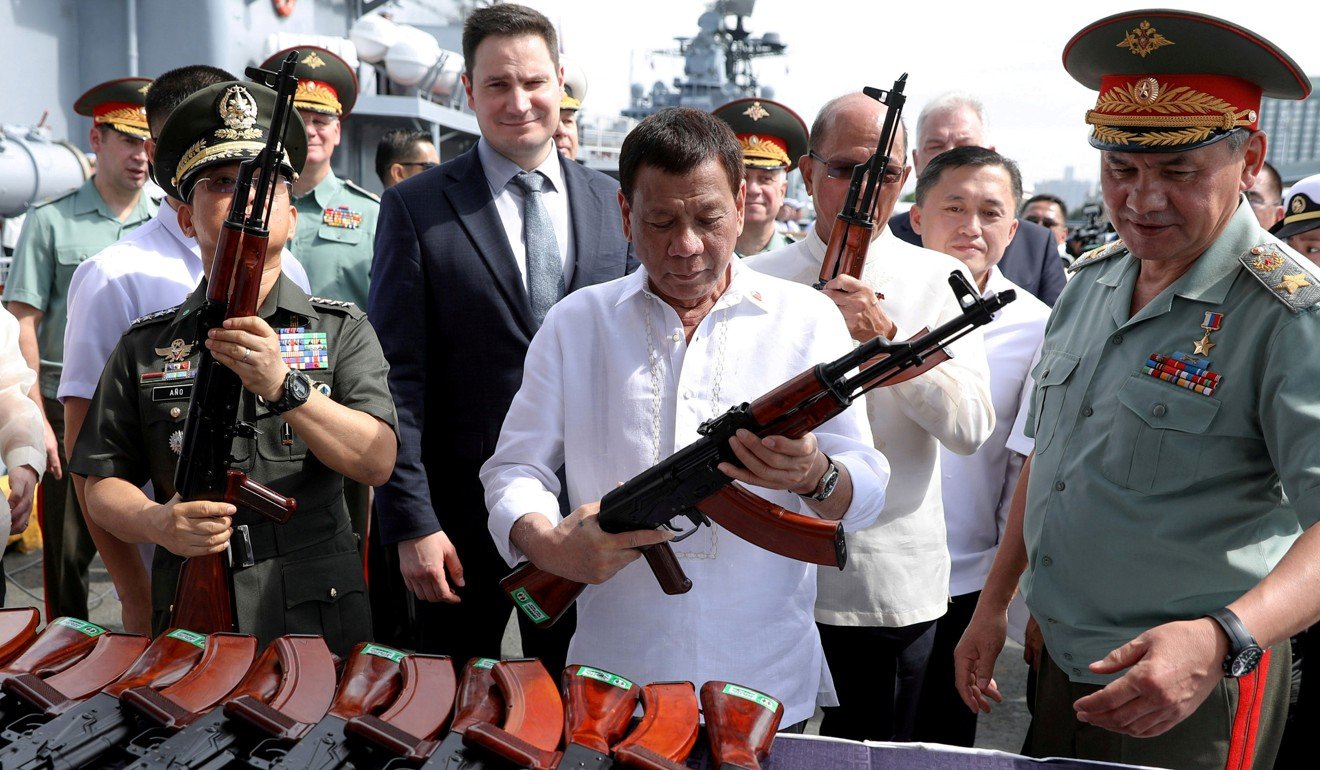
Philippine President Rodrigo Duterte inspects firearms donated by Russia in 2017. Photo: Reuters

“The US will also be concerned if any acquisitions or cooperation with Russia might threaten information security or intelligence cooperation between the US and the Philippines,” he said.

“And finally, any major platforms acquired from Russia would likely require the US to impose sanctions on the Philippines unless a waiver is granted, and the US government has been very stingy about awarding those waivers because they undermine the effectiveness of the sanctions regime.”

Moscow last week offered to help the Philippines produce its own arms for both domestic use and export with the help of Russian technology. Max Montero, an Australia-based Filipino security consultant, viewed that offer as “a swipe at the US”.

“Imagine a US stronghold and long-time ally and former colony becoming a manufacturing hub for Russian arms. And it makes it worse if [the Philippine armed forces] buys them too,” he said.

“Weakening the US alliances in Asia will benefit Russia [as it is] one of the US’ competitors in arms sales and geopolitics.”

Russia offers arms technology to the Philippines with ‘no conditions’ as US ties falter

The Philippines, Montero said, would benefit from such an arrangement since it is “a laggard in defence technology”. However, he pointed out that the country’s armed forces continue to buy weapons from the US and receive American arms as grants, potentially limiting the domestic market for Russian arms.

Navy cooperation has also been on the agenda, as Moscow and Manila discussed signing a new naval pact in March, while warships from each country have visited the other this year. Philippine naval vessels made their first-ever visit to Russia in October, while three Russian ships docked in the Philippines for a goodwill visit in January.

Russia is the top supplier of arms to Southeast Asia, and the No 2 global arms supplier, behind the US. Southeast Asia bought US$6.6 billion of Russian arms between 2010 and 2017, or more than 12 per cent of Russia’s sales, according to the Stockholm International Peace Research Institute, a Swedish think tank that publishes global arms tracking data.

Source: SCMP

24/09/2019

Interview: China has proven to be Philippines’ partner in economic development: gov’t official

MANILA, Sept. 24 (Xinhua) — China has proven to be an important partner of the Philippines in economic development, a senior aide of Philippine President Rodrigo Duterte has said.

The Philippine Presidential Adviser for Flagship Programs and Projects Vivencio Dizon told Xinhua on Monday that China is now “an integral partner” in the Philippines’ infrastructure build-up.

Indeed, Dizon said that President Duterte was correct in espousing “a foreign policy that we are friends to all, enemies to none.” By embracing partners like China other than its traditional partners, Dizon said the Duterte administration has gained a lot especially from building warm relations with China.

“China is an integral partner in our infrastructure build-up,” said Dizon, also the president of the Bases Conversion Development Authority (BCDA).

Already, Dizon said, China has become the country’s largest trading partner. “I think this is a testament to the success of this strategy,” he added, referring to Duterte’s decision to pursue an independent foreign policy.

For example, Dizon said the number of Chinese tourists has “increased exponentially over the last couple of years, bringing in a lot of foreign expenditures from Chinese tourists to the Philippines, boosting our economy.”

BCDA, a Philippine government-owned and controlled corporation, has partnered with Chinese companies on infrastructure projects and business investments.

BCDA and China Gezhouba Group Corporation signed a framework of cooperation in November 2018 to develop a 500-hectare mixed-use industrial park in New Clark City in the northern Philippines.

“We believe that bringing in more investments from countries like China will not only provide more employment opportunities, but also provide a lot of opportunities for technology transfer in the country and in particular the New Clark City,” Dizon added.

Dizon said China’s Belt and Road Initiative complements with the Duterte administration’s “Build, Build, Build” infrastructure program that aims to improve the connectivity of this archipelagic country.

He said infrastructure requires the Philippines to partner and work with countries throughout the world who have been successful in building infrastructure.

“China is obviously one of those countries,” Dizon said. “That’s the reason why we have identified several projects under the Build, Build, Build program wherein China can help and participate in allowing the Philippines not only to raise the needed resources, the needed capital to build these large-scale infrastructure projects but also learn from the experiences of China in building up its infrastructure.”

The “Build, Build, Build” program, rolled out by the Philippine government in 2017, intends to spend 8 to 9 trillion pesos (roughly 160 to 180 billion U.S. dollars) in the medium-term on building roads, bridges, airports, seaports and railways in the Philippines.

“It’s very important for the Philippines to partner with these countries, like China, in order to not only raise the needed resources but also to build the right infrastructure for the country and our people to move forward,” Dizon said.

Source: Xinhua

31/08/2019

China, Philippines common interests “far greater” than differences: Premier Li

CHINA-BEIJING-LI KEQIANG-PHILIPPINE PRESIDENT-MEETING (CN)

Chinese Premier Li Keqiang meets with Philippine President Rodrigo Duterte at the Great Hall of the People in Beijing, capital of China, Aug. 30, 2019. (Xinhua/Ding Lin)

BEIJING, Aug. 30 (Xinhua) — Chinese Premier Li Keqiang said Friday that the common interests between China and the Philippines far outweigh the differences in his meeting with visiting Philippine President Rodrigo Duterte.

Li said that China is willing to cooperate with the Philippines on the basis of mutual respect, equality and mutual benefit, and seek better synergy between the Belt and Road Initiative and the Philippines’ “Build, Build, Build” program, so as to promote sustained, stable and healthy development of bilateral relations and cooperation.

Li said that the current situation in the South China Sea is generally stable and the countries in the region are living in peace.

China always acts with the greatest sincerity and is willing to work together with the Philippines and ASEAN countries to achieve the Code of Conduct (COC) in the South China Sea in the period when the Philippines serves as a coordinating country for China-ASEAN relations, said Li.

Li also expected joint efforts to promote offshore oil and gas development, and safeguard peace and stability in the South China Sea and the region.

Duterte said the Philippine side is willing to further expand exchanges and cooperation with China in such fields as the economy, trade and people-to-people exchanges, so as to promote bilateral ties and secure the two peoples concrete benefits.

Duterte said the Philippines will never confront China.

On the South China Sea issue, Duterte said Western countries are not COC negotiators and should not hinder the efforts of regional countries in this regard.

He said as the Philippines now is fulfilling its responsibilities as a coordinating country for China-ASEAN relations, the Philippine side will work with China and ASEAN countries to actively promote the adoption of the COC during his term of office.

Duterte also expressed the willingness to push forward common development with China on offshore oil and gas.

Source: Xinhua

31/08/2019

Xi attends opening ceremony of FIBA Basketball World Cup 2019

CHINA-BEIJING-XI JINPING-FIBA BASKETBALL WORLD CUP-OPENING CEREMONY (CN)

Chinese President Xi Jinping attends the opening ceremony of the FIBA Basketball World Cup 2019 at the National Aquatics Center, also known as the Water Cube, in Beijing, capital of China, Aug. 30, 2019. (Xinhua/Huang Jingwen)

BEIJING, Aug. 30 (Xinhua) — Chinese President Xi Jinping attended the opening ceremony of the FIBA Basketball World Cup 2019 Friday at the National Aquatics Center (Water Cube) in Beijing.

When Xi stepped into the Olympic Hall of the Water Cube with FIBA President Horacio Muratore, FIBA Secretary General Andreas Zagklis and visiting Philippine President Rodrigo Duterte, the audience gave a warm welcome with a standing applause.

After the national flag of the People’s Republic of China was raised and the national anthem being performed and sung, Muratore delivered a speech.

He said the 2019 edition will be the largest and most-watched Basketball World Cup in history, and will feature the greatest ever number of host cities.

He highly commended the preparation China has made for the competition and said he believed that this Basketball World Cup would be a tremendous success.

At Muratore’s invitation, Xi declared the opening of the FIBA Basketball World Cup 2019.

Artistic performances unveiled after the rising of the flags of the FIBA and the FIBA Basketball World Cup 2019.

Yao Ming, chairman of the China Basketball Association, escorted the trophy of the Basketball World Cup into the center.

The FIBA Basketball World Cup is the top national-level basketball competition held by FIBA every four years. This year’s competition will be held from Aug. 31 to Sept. 15.

Source: Xinhua

30/08/2019

Xi, Duterte meet on pushing forward ties

CHINA-BEIJING-XI JINPING-PHILIPPINE PRESIDENT-MEETING (CN)

Chinese President Xi Jinping meets with Philippine President Rodrigo Duterte at the Diaoyutai State Guesthouse in Beijing, capital of China, Aug. 29, 2019. (Xinhua/Pang Xinglei)

BEIJING, Aug. 29 (Xinhua) — Chinese President Xi Jinping on Thursday met with Philippine President Rodrigo Duterte at the Diaoyutai State Guesthouse in Beijing, and the two leaders expressed their readiness to push forward ties.

“Under the two sides’ joint efforts, bilateral ties smoothly realized taking an upturn and scoring consolidation and uplift, and continuously achieved tangible outcomes, during President Duterte’s administration over the past three years,” said Xi, expressing welcome for Duterte’s visit.

“At present, the international and regional situations are undergoing profound and complex changes. However, peace, development, cooperation and mutual benefit are still an irresistible trend of the times,” said Xi.

Xi said he is willing to work with Duterte to continue to grasp the trend of the times from a strategic and long-term perspective, leading the sound development of bilateral ties. “This will not only benefit the two countries and their peoples, but will also add positive energy to regional peace and stability.”

Xi said it is necessary to continue to promote the synergy between the Belt and Road Initiative and the Philippine “Build, Build, Build” program, and implement major cooperative projects in such areas as infrastructure construction, industrial parks, telecommunications and energy.

“China is willing to import more high-quality fruits and agricultural products from the Philippines, and will send experts to the Philippines to teach agricultural and fishery technology,” said Xi.

On issues such as human rights, China will continue to firmly support the Philippines’ efforts to safeguard national sovereignty and resist external interference, said the Chinese president.

On the South China Sea issue, Xi said China and the Philippines have been maintaining effective communication.

He said the two sides should set aside disputes, eliminate external interference, and concentrate on conducting cooperation, making pragmatic efforts and seeking development.

Xi said “as long as the two sides handle the South China Sea issue properly, the atmosphere of bilateral ties will be sound, the foundation of the relationship will be stable, and regional peace and stability will have an important guarantee.”

Both sides can take a “bigger step” in the joint development of offshore oil and gas, said Xi.

“The Code of Conduct (COC) in the South China Sea is a pioneering undertaking in establishing rules and regulations in the South China Sea, and China and the Philippines should be committed to promoting the adoption of the COC at an early date,” said Xi, stressing an early adoption will demonstrate the firm position and positive stance of China and the Philippines to jointly safeguard the long-term stability of the region.

Duterte expressed congratulations on the 70th anniversary of the founding of the People’s Republic of China, saying that China’s successful development experience is worth learning from.

“I cherish the close friendship with President Xi,” he said, adding that China means a lot to the Philippines and developing bilateral ties is a project lasting for generations.

He pledged to meet with Xi frequently, strengthen communication, and jointly promote the sound development of the two countries’ ties so as to achieve win-win benefits.

Duterte expressed his hope that China will continue to help the Philippines in economic development and infrastructure construction, and thanked China for support in his country’s human rights cause, post-quake reconstruction, and anti-terrorism and anti-narcotics endeavors.

Facts have proven that China is a sincere friend to the Philippines, he said, adding that the Philippines fully respects China’s laws and the right to maintain law-based governance on the Hong Kong issue, he said.

Duterte expressed his view that the path to peacefully resolving the South China Sea disputes is through cooperation, rather than confrontation.

Maintaining friendly cooperation as well as peace and stability is in the interests of all the parties in the region, he said, while pledging to speed up joint maritime oil and gas exploration with China.

As the country coordinator for China-ASEAN relations, the Philippines is committed to advancing an early adoption of the Code of Conduct (COC) in the South China Sea with relevant parties, Duterte said.

After the meeting, the two heads of state witnessed a ceremony for the exchange of bilateral cooperation deals.

The two sides also announced the setting up of an intergovernmental joint steering committee and a working group between relevant enterprises on oil and gas cooperation so as to promote substantial progress in the joint exploration of oil and gas.

Duterte is on a visit to China from Aug. 28 to Sept. 1, at the invitation of Xi. He will also attend the opening ceremony of the 2019 International Basketball Federation (FIBA) World Cup in Beijing.Source: Xinhua

22/06/2019

Southeast Asian leaders open summit in Bangkok

BANGKOK (Reuters) – Southeast Asian leaders opened a two-day summit in Bangkok on Saturday, though it was unclear what progress their 10-country group could make on disputes in the South China Sea and the plight of ethnic Rohingya fleeing Myanmar.

Formed more than half a century ago, the Association of Southeast Asian Nations (ASEAN) has historically struggled with challenges facing the region because it works only by consensus and is reluctant to become involved in any matter regarded as internal to a member state.

Thai Prime Minister Prayuth Chan-ocha was making his debut as a civilian leader representing current chair Thailand, after a general election in March that opposition parties say was designed to ensure his victory five years after the former army chief seized power in a 2014 coup.

Officials are expected to discuss a Code of Conduct (COC) for negotiations over the South China Sea, one of the world’s busiest waterways and a potential flashpoint, as it is claimed by several ASEAN members as well as China.

However, it was unlikely much progress would be made, though member nations might discuss the June 9 collision of a Philippine boat and a Chinese fishing vessel.

“It is encouraging to see that the ASEAN-China talks on the COC have continued,” said Marty Natalegawa, former foreign minister of Indonesia.

“However, there is real risk that developments on the ground – or more precisely at sea – are far outpacing the COC’s progress thereby possibly rendering it irrelevant.”

Philippine President Rodrigo Duterte has accepted China’s proposal to jointly investigate allegations that a Chinese fishing vessel abandoned 22 Filipinos after it sank their boat in the South China Sea, his spokesman said on Saturday.

Rights groups have also called on ASEAN leaders to rethink support for plans to repatriate Rohingya Muslims who have fled member state Myanmar, where activists say returnees could face discrimination and persecution.

More than 700,000 Rohingya crossed into Bangladesh in 2017, according to U.N. agencies, after a crackdown by Myanmar’s military sparked by Rohingya insurgent attacks on the security forces.

However, it is unlikely that there will be any criticism of Myanmar at the summit over the Rohingya, said Prapat Thepchatree, a political science professor at Thailand’s Thammasat University said.

“This issue has been a very sensitive one for ASEAN,” he said.

Host country Thailand deployed about 10,000 security forces around Bangkok for the summit, mindful of a decade ago when Thailand last hosted an ASEAN summit and dozens of protesters loyal to military-ousted former premier Thaksin Shinawatra forced their way into the meeting venue.

But on Saturday morning, only a small group of people had planned to stage a protest to call Prayuth’s election the product of a rigged system.

The group, called Citizens Wanting Elections, was stopped by police before it could reach a meeting point near the summit venue. The group later released a statement welcoming visiting leaders but criticising Prayuth.

“The individual who serves as President of ASEAN, who welcomes everyone today, did not come from a clean and fair election,” the letter said.

Source: Reuters

13/06/2019

Chinese tourists breaking rules ‘all over the place’ in Boracay

  • After a six-month closure, Boracay reopened in October with new rules that prohibit smoking, drinking, dining and littering on the beachfront. But the dos and don’ts seem to have escaped notice, especially among tourists from China and South Korea
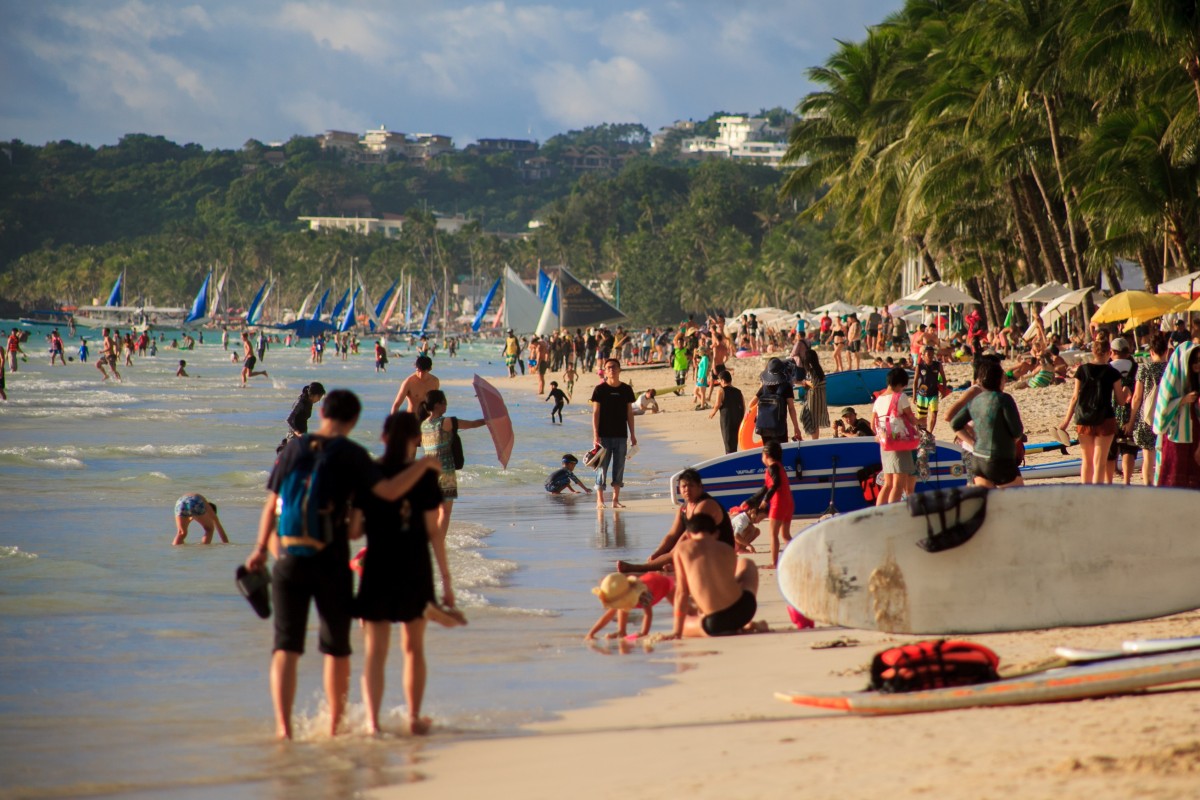
  • Tourists enjoy Boracay’s famous White Beach in January. Photo: Shutterstock
    Tourists enjoy Boracay’s famous White Beach in January. Photo: Shutterstock
    Travel has changed a lot since the 19th century. Obviously. But attitudes towards travellers have not, if the diaries of Francis Kilvert are anything to go by.
    “Of all noxious animals, the most noxious is a tourist,” the English clergyman wrote in the 1870s, and while Kilvert asserted that it was the British who were “the most vulgar, ill-bred, offensive and loathsome” of them all – a contention that might be challenged today – an increasing number of places across the globe have had their fill of imprudent outsiders, regardless of where they are from.
    The island of 
    Boracay

    , in the Philippines, the original face of overtourism in the region, is one of them. In February last year, Philippine President Rodrigo Duterte vowed to

    close

    the popular tourist hotspot, saying, “Boracay is a cesspool. It is destroying the environment of the Republic of the Philippines and creating a disaster.” The septic metaphor was no melodrama – a number of hotels, restaurants and other tourism-related businesses were dumping untreated sewage directly into the ocean, contaminating White Beach’s crystalline waters and tarnishing Boracay’s reputation. As Duterte decreed, the island shuttered for six months from April, during which time infrastructure was to be installed and new environmental requirements implemented.

    When Boracay 
    reopened

    , in October, it was heralded as a rare success in the ongoing fight against the tourist menace, despite the fact that thousands of

    islanders had been left without incomes

    , the nation’s economic growth had suffered and, heaven forfend, holidaymakers had been forced to cancel hard-earned vacations. And the rehabilitation is far from complete. In January, the Boracay Inter-Agency Task Force, the organisation overseeing the ecological overhaul, announced a 25.3 billion peso (US$485 million) action plan, which, if approved, will fund 233 projects related to the enforcement of laws and regulations, pollution control and prevention, rehabilitation and recovery of the ecosystem, and the sustainability of land activities, according to a report on Philippine news site Rappler.

    But still the tourists come, albeit in smaller numbers than before, and just as in pre-closure times, not all of them are welcome; in particular those who pay little attention to the new rules, which prohibit smoking, drinking, dining, littering, partying and fire dancing on the beachfront.
    A complaint about Chinese tourists, posted to Facebook in April. Photo: Facebook / @philippinesdefense

    On April 29, Wilson Enriquez, the Boracay Tourism Regulatory Enforcement Unit chief, revealed that tourists from China were the worst violators of these regulations, as stated in an article on the Philippines Lifestyle News website. Since the beginning of the year, 739 Chinese had been apprehended.

    “Tour guides have informed them about the ordinances but [Chinese tourists] are really stubborn,” Enriquez told the news site. Korean tourists took a distant second, with 277 apprehensions, with most infractions recorded for smoking, eating and drinking on the beach, or littering.

    Eighty per cent of the visitors Boracay received in the first quarter of this year hailed from China and South Korea, according to the local tourism office – the former accounting for almost half of all arrivals, 149,019 of 309,591 – so perhaps it is unsurprising that the Chinese break the most rules.

    One disgruntled Filipino took to social media (where else) to air their grievance, writing that Boracay had been “teeming with loud, garbage-throwing, spitting everywhere Chinese tourists” during their Holy Week visit, while another told Philippines Lifestyle News, “I saw [Chinese tourists] with my own eyes, breaking ordinances all over the place.”

    That there has been a recent rise in anti-China sentiment in the Philippines, a reaction to Duterte’s “love affair” with the Middle Kingdom, according to an article on SupChina’s website, should be noted. But really, if we want to be able to enjoy Boracay, or anywhere for that matter, for years to come, we should all stick to the rules and exercise respect for the community and environment hosting us.


    Airbnb bounces back in Japan

    A sign on the door to a block of flats in Tokyo communicating a ban on using units in the property for Airbnb, in March 2018. Photo: Reuters
    A sign on the door to a block of flats in Tokyo communicating a ban on using units in the property for Airbnb, in March 2018. Photo: Reuters
    It has been a year since Japan implemented its minpaku law, aimed at regulating short-term lets, such as those advertised on home-sharing site

    Airbnb

    . It effectively rendered hosts whose homes were not licensed illegal, and all those without the required permit were forced to delist their properties and cancel bookings. Almost 80 per cent of listings disappeared.

    However, Airbnb is back in business. In a statement published on June 6, the company said that 50,000 listings were now available in the country, as well as 23,000 rooms in hotels and ryokan. Just before the rules came into force last June, Airbnb had a total of 60,000 listings.
    Presumably the company’s efforts to appease local regulations will pay off next year, when Japan hopes to receive 40 million visitors as host of the 2020 Summer Olympics. Whether those 40 million will be welcomed by residents remains to be seen.

    Monkey troubles – wild macaque gets cheeky in Bali

    If you need any reminder that the macaques that roam Ubud’s Sacred Monkey Forest, in the uplands of the Indonesian

    island of Bali

    , are wild animals, then this tourist’s experience should jog your memory. While posing for a picture, a monkey climbed onto the lap of Sarah Wijohn, a visitor from New Zealand, had a good old scratch and then yanked down her top, almost exposing her to the world.

    Fortunately, neither Wijohn nor the primate seemed too scarred by the incident, unlike those who have written blog posts about being attacked by the animals and made videos advising how not to catch rabies from the “crazy monkey forest”.
    Here’s an idea: don’t go.
    Source: SCMP
26/04/2019

Premier Li meets Philippine president

(BRF)CHINA-BEIJING-LI KEQIANG-PHILIPPINE PRESIDENT-MEETING (CN)

Chinese Premier Li Keqiang (R) meets with Philippine President Rodrigo Duterte, who is here to attend the Second Belt and Road Forum for International Cooperation, in Beijing, capital of China, April 25, 2019. (Xinhua/Li Tao)

BEIJING, April 25 (Xinhua) — Chinese Premier Li Keqiang on Thursday met with Philippine President Rodrigo Duterte, who is here to attend the Second Belt and Road Forum for International Cooperation.

China and the Philippines are neighbors facing each other across the sea, and their development and stability is closely related, Li said, adding that bilateral relations had achieved positive turnaround and consolidation, and had been progressing on the right track, after the joint efforts of the two sides over the past three years.

China is willing to see new achievements in the economic and social development of the Philippines, and align the Belt and Road Initiative (BRI) with the “Build, Build, Build” program of the Philippines, he said.

Peace and stability in the South China Sea is in line with the common interests of China, the Philippines and other countries in the region, Li added.

China supports the Philippines in fulfilling its responsibilities as the country coordinator for China-ASEAN relations, and expects negotiations on the Code of Conduct (COC) in the South China Sea to be completed soon, Li said.

Li also expressed confidence that countries around the South China Sea will be able to jointly safeguard peace and stability in the region with wisdom, adding that it is necessary to properly manage existing issues through dialogue and consultation, so as to realize common development.

Noting the contribution of the BRI to global prosperity and connectivity, Duterte said the Philippines is ready to deepen the cooperation with China under the BRI framework.

The Philippines will further improve its business environment, and welcomes more investments from Chinese companies, said the president.

Duterte said the Philippines will firmly make the South China Sea a sea of peace, friendship and cooperation, and is looking forward to working with other parties to conclude the negotiations on the COC as soon as possible.

Source: Xinhua

Law of Unintended Consequences

continuously updated blog about China & India

ChiaHou's Book Reviews

continuously updated blog about China & India

What's wrong with the world; and its economy

continuously updated blog about China & India