Chindia Alert: You’ll be Living in their World Very Soon
aims to alert you to the threats and opportunities that China and India present. China and India require serious attention; case of ‘hidden dragon and crouching tiger’.
Without this attention, governments, businesses and, indeed, individuals may find themselves at a great disadvantage sooner rather than later.
The POSTs (front webpages) are mainly 'cuttings' from reliable sources, updated continuously.
The PAGEs (see Tabs, above) attempt to make the information more meaningful by putting some structure to the information we have researched and assembled since 2006.
BEIJING, Sept. 9 (Xinhua) — Chinese Premier Li Keqiang will pay an official visit to Russia from Sept. 16 to 18 at the invitation of Russian Prime Minister Dmitry Medvedev, a Chinese Foreign Ministry spokesperson announced Monday.
During the visit, Li and Medvedev will hold the 24th regular meeting between Chinese and Russian heads of government, according to spokeswoman Hua Chunying.
Russian President Vladimir Putin (2nd R) meets with Chinese Vice Premier Hu Chunhua (2nd L) on the sidelines of the fifth Eastern Economic Forum in Vladivostok, Russia, Sept. 5, 2019. (Xinhua/Bai Xueqi)
VLADIVOSTOK, Russia, Sept. 5 (Xinhua) — Russian President Vladimir Putin said on Thursday that his country welcomes Chinese investment and expects more positive outcomes from bilateral cooperation.
Putin made the remarks here at a meeting with visiting Chinese Vice Premier Hu Chunhua on the sidelines of the fifth Eastern Economic Forum (EEF).
Putin thanked the Chinese high-level delegation for participating in the forum and asked Hu to convey his sincere greetings to Chinese President Xi Jinping.
This year marks the 70th anniversary of diplomatic ties between the two countries, said Putin, adding that strengthening Russia-China cooperation in different areas is of special significance and there is huge potential for such cooperation to expand.
By coordinating with each other, Moscow and Beijing play important roles in international issues, the Russian leader said, adding that with concerted efforts of the two sides, economic and trade ties between the two countries are also growing steadily.
Hu conveyed the Chinese president’s cordial greetings and best wishes to Putin, saying that Xi attended the fourth EEF last year and sent him to attend the fifth EEF this year, which shows that China attaches great significance to its relations with Russia.
Recalling that Xi and Putin elevated bilateral relations in Moscow in June to a comprehensive strategic partnership of coordination for a new era, Hu said that China is ready to work with Russia to implement the important consensuses reached by the two presidents and continuously push bilateral ties forward.
China-Russia economic and trade ties have improved over the recent years, and relevant departments of both countries are working to achieve the target of 200 billion U.S. dollars in bilateral trade volume by 2024 set by Xi and Putin, Hu said.
In addition to trade in traditional areas, China supports the two sides in fostering new areas of growth, implementing major projects of strategic significance, further facilitating trade and investment, expanding trade in agricultural products, and boosting cross-border e-commerce and trade in services, he said.
Also on Thursday, Hu met with Russian Deputy Prime Minister Yury Trutnev to discuss intergovernmental cooperation between China’s northeastern region and Russia’s Far Eastern and Baikal regions.
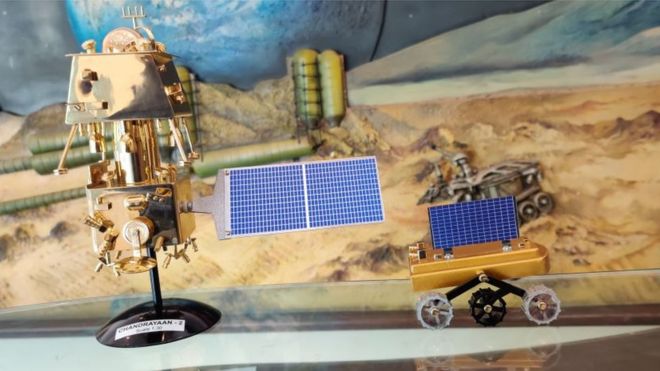
Image copyrigh tGETTY IMAGESImage caption Chandrayaan-2 is a three-in-one mission comprising an orbiter, a lander and a six-wheeled rover
India’s second Moon mission will see the country’s space agency attempt to land a rover on the lunar surface on 7 September. Science writer Pallava Bagla explains how it will reach the Moon and why it is significant.
Why is this mission unique?
Costing $150 million, Chandrayaan-2 will carry forward the achievements of its predecessor Chandrayaan-1 which was launched in 2008 and discovered the presence of water molecules on the parched lunar surface.
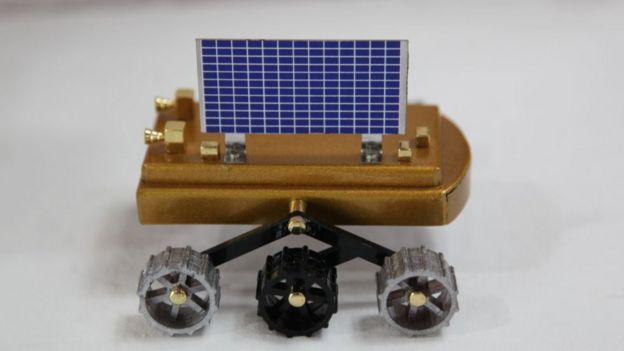
Chandrayaan-2 is a three-in-one mission comprising an orbiter, a lander named Vikram and a six-wheeled rover named Pragyaan.
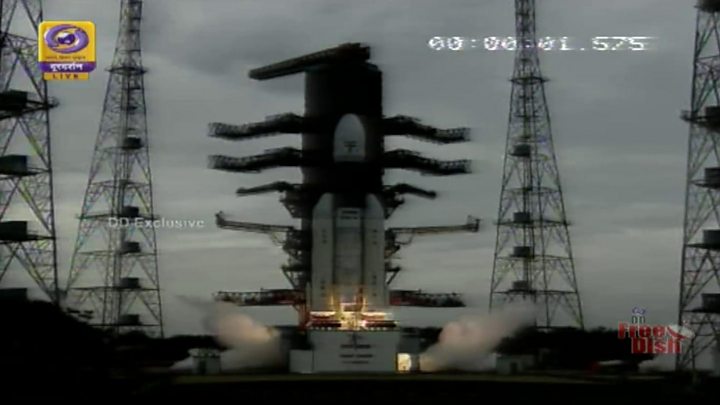
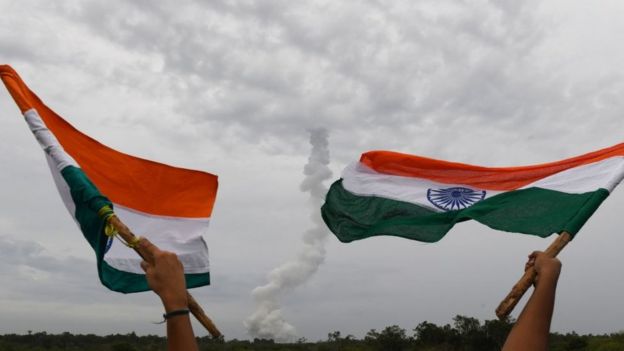
It was launched on 22 July, a week after its scheduled blast-off, which was halted due to a technical snag.
It entered the Moon’s orbit nearly a month later in a tricky operation, completing a series of manoeuvres before its lander was cut loose on 2 September.
Media caption The successful launch of India’s Moon mission
Now, on 7 September, a little after midnight India local time (1800 GMT), the lander which contains the rover will be sent hurtling down to the lunar surface where it is expected to make a landing near the South Pole of the Moon.
The last 15 minutes of the mission, when the Vikram lander will attempt to autonomously guide itself down to the lunar surface with no support from ground control, has been described as “15 minutes of terror” by the head of the Indian Space Research Organisation (Isro), Dr K Sivan.
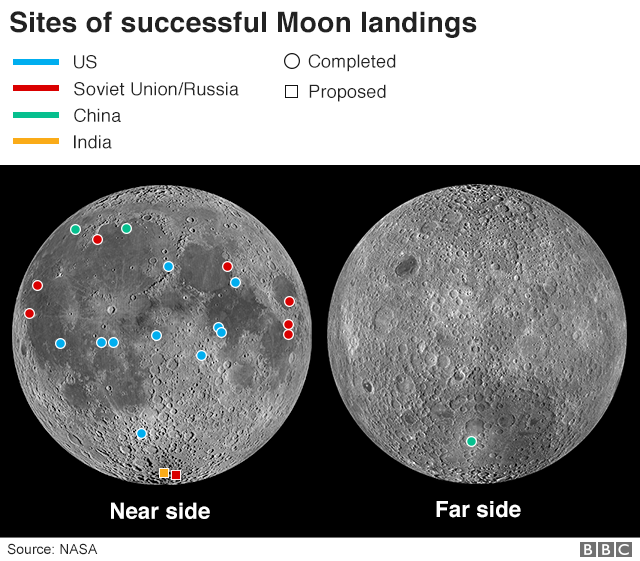
If India does succeed in touching down with the Vikram lander intact, it will become the fourth country to do so after the US, Russia and China.
More importantly for Indians, it will mean the nation’s flag will reach the Moon intact.
How will it land on the Moon?
The Moon may be Earth’s closest neighbour, but landing on it is a very tricky operation.
It has no atmosphere worthy of the name, which means parachutes cannot be used to slow the lander’s descent to the surface. The only option therefore is to go in for what is called a “powered descent”.
This means that the velocity of the lander is steadily reduced with its own rocket engines.
The lander will be moving horizontally across the surface of the Moon as it descends. The rocket engines must bring that horizontal movement to a stop whilst at the same time controlling the rate of descent to near zero just before the moment of touchdown.
This is known as a “soft landing”.
Before the final approach, both the orbiter and lander would have surveyed the Moon to find a “sweet spot” with no craters and boulders where it can land.
If the lander does not function properly it could crash land on the Moon surface, like its predecessor Chandrayaan-1 – though this was an intentional crash landing as in 2008 India had not yet mastered how to perform a soft landing.
Media caption Is India a space superpower?
Either way, once the landing happens and the lunar dust that may have been kicked up settles, the ramp opens up and the rover is very gently wheeled out.
The rover will then “Moon walk” at the princely speed of one centimetre per minute. It can travel a maximum of 500m (1,640ft) from the lander.
Both the lander and rover are powered with solar batteries and carry three instruments apiece.
What will the lander do?
The lander will, among other things, measure Moon quakes in its vicinity and do a thermal profile of the lunar “soil”. Meanwhile, the rover will further analyse the lunar soil.
The rear wheels of the rover are imprinted with the national emblem – the Ashoka Chakra – and the Isro logo, which means a permanent mark of India’s visit will be left on the surface of the Moon.
But the extreme temperatures on the Moon’s surface are a real challenge to the mission.
Image copyright GETTY IMAGESImage caption The rover will “Moon walk” at a speed of one centimetre per minute
When the Sun shines, the lunar temperature can cross 100C and when it sets the temperature can drop to -170C.
As their batteries must be recharged with sunlight, the nominal life of both the rover and lander is expected to be one lunar day, since Isro is not sure if they can survive the ultra-cold temperatures of the long cold lunar night which lasts 14 days.
Both will send back photos of each other so the first Indian “selfies” from the lunar surface are expected soon after they land.
Why is the South Pole of the Moon significant?
The South Pole of the Moon is still a largely unexplored area, and India is targeting a spot that no other landing craft has reached so far. The mission will attempt to soft land its rover and lander in a high plain between two craters – Manzinus C and Simpelius N – at a latitude of about 70° south.
Most earlier missions including the Apollo manned missions targeted the equatorial region of the Moon.
Isro says the lunar South Pole is especially interesting because the surface area that remains in shadow here is much larger than that of the Moon’s North Pole. This means that there is a possibility of water in areas that are permanently shadowed.
In addition, the South Pole region has craters that are cold traps and contain a fossil record of the early Solar System.
This unexplored region is also especially important because in the near future, possibly by 2024, the US space agency Nasa aims to place boots back on the Moon through its Artemis Mission, and wants to target landing near the South Pole.
India’s mission will therefore give the Americans much needed data of this unchartered territory.
Why will the orbiter circle the Moon for a year?
The Chandrayaan-2 orbiter is expected to circle the Moon for a further year.
During that time, it will map lunar minerals, take high resolution photos and search for water on the lunar surface in the most detailed fashion till date by any lunar craft, using an infra-red imager and radars.
Image copyright GETTY IMAGESImage caption The imprints of India’s national emblem and the Isro logo will be left on the Moon by the rover
The high resolution camera will help make a digital terrain map of the moon
It will also analyse the thin lunar atmosphere.
There is also the possibility that the orbiter may last longer than a year, as Isro says it has made suitable savings in fuel. But once its fuel runs out, the orbiter will become a long-lasting Indian-made lunar satellite.
US president likely had Beijing ‘on his mind’ when he made his audacious offer, diplomat says
Proposal ‘could be interpreted as a very clear signal’ to China and Denmark that the US sees Greenland as part of an exclusive strategic zone, academic says
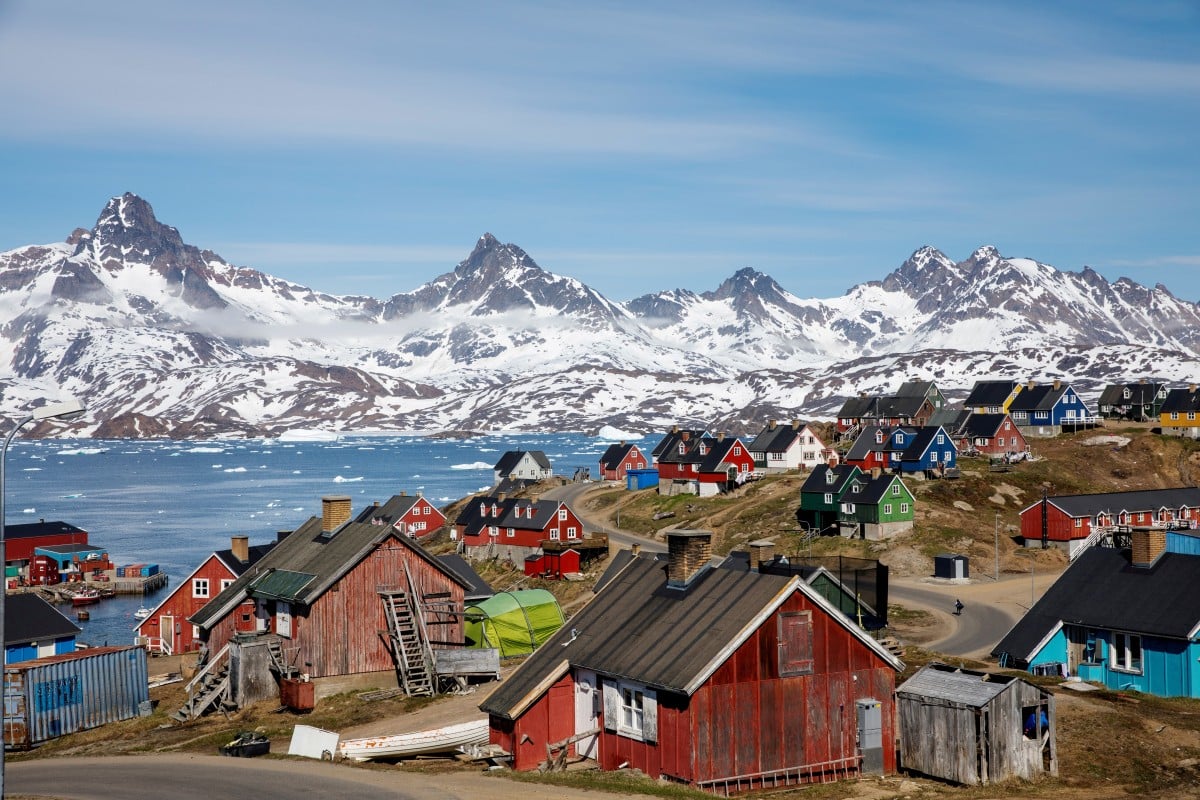
China has been building closer ties with Greenland in recent years. Photo: Reuters
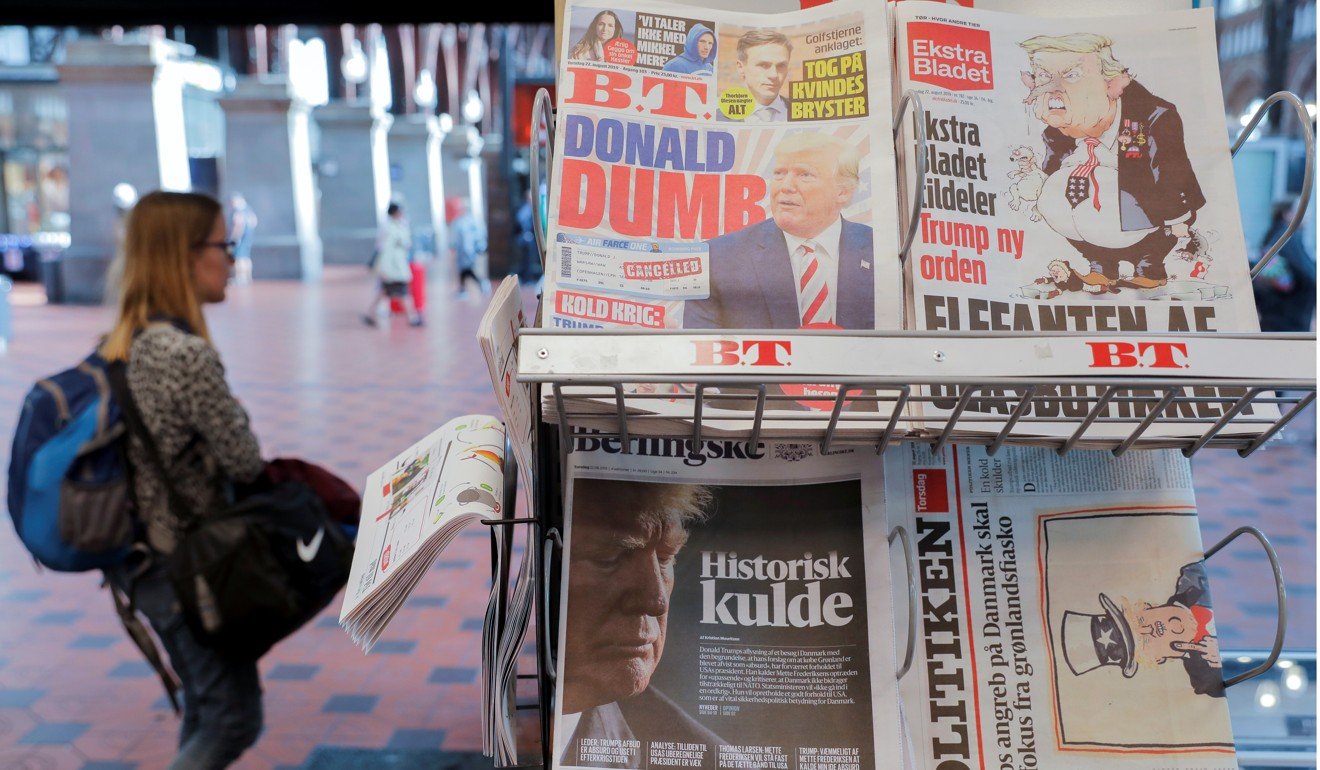
US President Donald Trump’s eyebrow-raising idea to buy Greenland from Denmark last month epitomised what analysts say is Washington’s fear of the growing interplay of Chinese money, Russian aggression and Arctic political division.
Of all the countries involved in the region, Denmark is feeling the most heat, and not just because Trump recently cancelled a trip and called its Prime Minister Mette Frederikse “nasty” for describing his plan to buy the world’s largest island “absurd”.
Over the past few years, both of Denmark’s self-ruled governments – Greenland and the Faroe Islands – have increasingly turned to China for commercial deals, adding weight to Beijing’s growing strategic influence in the vast area that forms the common backyard of Europe, North America and Russia.
Russia seeks Chinese support in developing Arctic shipping routes
Greenland is of particular concern to the White House and the Pentagon as it is home to the US Thule Air Force Base, located far above the polar circle and which served as the first line of defence during the cold war.
Nowadays, the island is also strategically important for the US ballistic missile early warning system, as the shortest route from Europe to North America goes via the ice-cloaked, resource-rich territory.
“Though it’s difficult to tell the motivations of President Trump, he likely had China on his mind with his Greenland offer,” said a Beijing-based diplomat, who asked not to be named.
The US was likely to step up its presence in Greenland in the future, the person said.
In May, US Secretary of State Mike Pompeo accused China and Russia of introducing a strategic power struggle into the Arctic region and described Beijing’s behaviour there as aggressive.
When Greenland signalled an interest in engaging a Chinese state-owned company to build two airports in 2017 – the island’s prime minister flew to Beijing to appeal for financial backing – Copenhagen stepped in amid US pressure, reluctantly agreeing to finance the projects from the public coffers.
Denmark’s reluctance stems from a long-standing mistrust between Copenhagen and Greenland, as the island’s quest for economic development is viewed by the Danes as an attempt to shore up capital to push for a future independence movement.
“There is no doubt that the US foreign and security policy community is becoming far more interested in Greenland as a strategic asset,” said Andreas Bøje Forsby, a researcher at the University of Copenhagen’s Nordic Institute of Asian Studies.
“Proposing to buy Greenland could be interpreted as a very clear signal to both China and Denmark that Greenland is part of an exclusive American strategic zone,” he said.
Danish Prime Minister Mette Frederikse described Donald Trump’s plan to buy Greenland as “absurd”. Photo: Reuters
The government of the Faroe Islands – an archipelago located between Scotland, Norway and Iceland – has a similar readiness to engage with China but for a different purpose.
Unlike Greenland, there are no immediate political movements calling for independence from Denmark, making its overall relationship with Copenhagen more amiable.
This month, the Faroese government will open a liaison office in Beijing, located within the Danish embassy.
“Our top priority is to have a free-trade agreement with China,” Sigmundur Isfeld, the first head of the Faroe Islands’ representation to Beijing, said.
US defence report flags China’s expanding military reach in the Arctic
With Norway – a key competitor of the Faroes in the fishing and export industries – eyeing a similar arrangement with China, the time was ripe to clinch a deal, he said.
“It is a challenge for us … we need to get in the game.”
Although part of Denmark, the Faroe Islands are not part of the European Union and therefore have to form separate trade agreements with other countries.
“For example, there is an EU-Japan economic partnership agreement. It covers all EU nations, but it does not cover the Faroe Islands,” Isfeld said.
Trade between Greenland and China totalled US$126 million in 2108. Photo: AFP
China, for its part, has sought to exert its economic and cultural influence on the Faroes, which has a population of about 52,000 people.
, the embattled Chinese telecoms giant, has been working with the islands’ main telecoms provider for four years and is said to be finalising a plan for 5G upgrades across the archipelago.
Beijing also helped fund a project for a Chinese-Faroese dictionary.
With a population of about 56,000 people, Greenland is one of China’s smallest trading partners. In the first seven months of 2019, trade between the two was US$126 million, with Chinese imports of fish accounting for the bulk of the total.
The Greenland government’s annual political and economic report for 2019 said that strong demand for metals from China had contributed to mineral and mining projects in the country, though China’s transition to a less mineral-intensive economy could spell trouble for the future of the sector.
The island’s gross domestic product is expected to grow by 3 per cent this year, according to the report, with seafood – principally cod, halibut and prawns – set to continue to be its chief export.
The end of the Arctic as we know it
China’s attempts in recent years to expand its involvement in Greenland have run into roadblocks.
In 2016, a Chinese mining company expressed interest in taking over an abandoned marine station in Grønnedal, an offer that the Danish government turned down the following year. A Chinese state-owned construction company had also offered to build airports in Greenland, but withdrew its offer this year.
Also this year, China expanded its involvement in exporting from Kvanefjeld, one of the world’s largest deposits of rare earths and uranium, by creating a joint venture to process and export the resources.
Beijing has made clear its strategic ambitions in the region. Early last year, it unveiled its Polar Silk Road strategy, plotting the course for its future development goals in the region – including scientific, commercial, environmental preservation and resource extraction efforts.
It also aligned its Arctic interests with its Belt and Road Initiative. Chinese companies are encouraged to invest in building infrastructure along the routes and conduct commercial trial voyages to gauge feasibility.
Putin boasts of nuclear icebreaker fleet as he outlines Arctic expansion plans
Anders Rasmussen, a former Danish prime minister and erstwhile Nato secretary general, said in an article published in Atlantic magazine last month that with melting ice caps opening the Arctic Sea to shipping, Arctic sea lanes “will likely become another flashpoint of renewed competition among the great powers as climate change alters our world”.
It was a situation he said he found “regrettable, but inevitable”.
“Both China and Russia are interested in getting a foothold in Greenland, to expand their influence in the Arctic region,” Rasmussen said. “Instead of being a source of contention,
Greenland should serve to highlight how many interests the United States and Denmark have in common.”
A recent joint exercise in Tajikistan is the latest example of Beijing’s growing security and economic interests in the former Soviet republic
Analysts say Moscow may not be happy about China’s growing reach in the lawless, mountainous area and will be keeping an eye on the situation
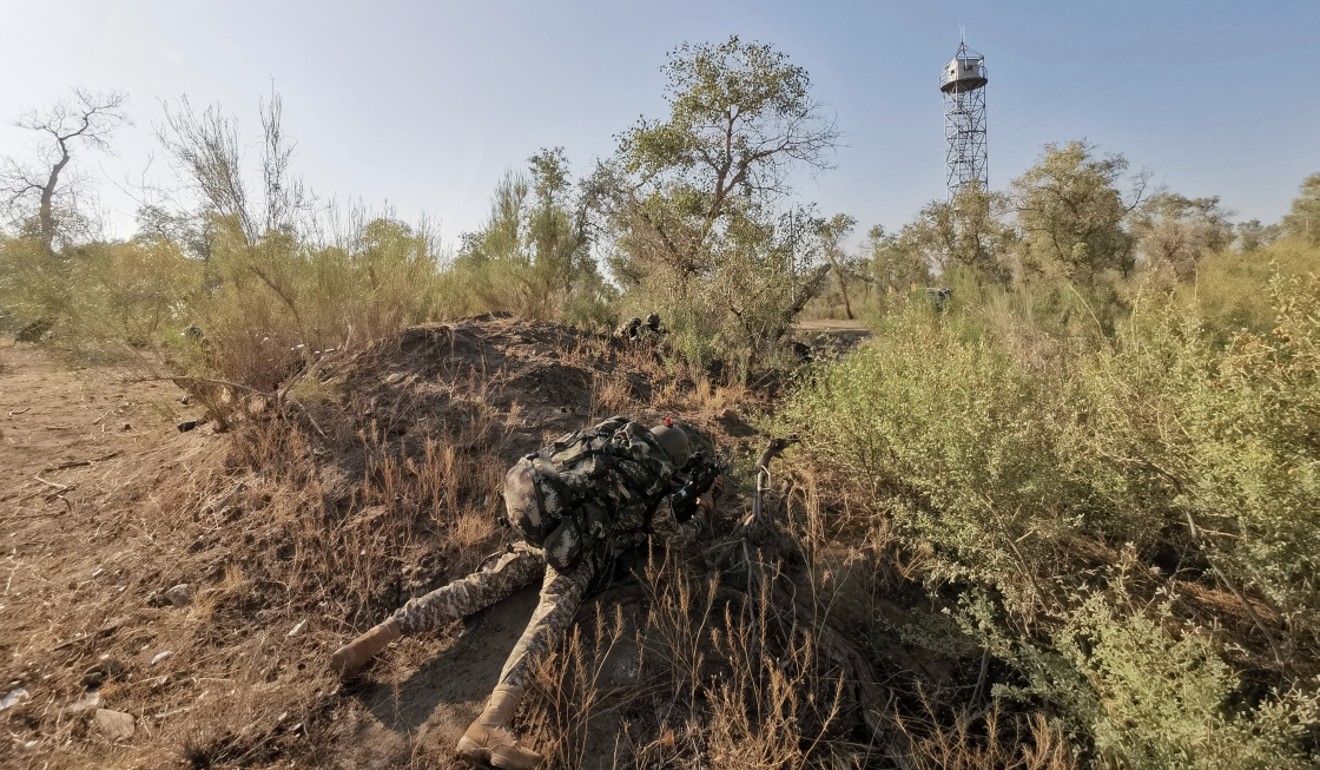
Chinese and Tajik troops completed a joint exercise earlier this month in the mountainous region of Gorno-Badakhshan. Photo: Xinhua
China is increasing its military and economic presence in parts of central Asia that Russia has traditionally considered its sphere of influence – a development some analysts believe could cause concern in Moscow.
While Russia’s influence remains strong in many former Soviet republics, China is steadily building up its military and economic influence in Tajikistan, particularly in the remote, mountainous areas on its western borders where central government authority is weak.
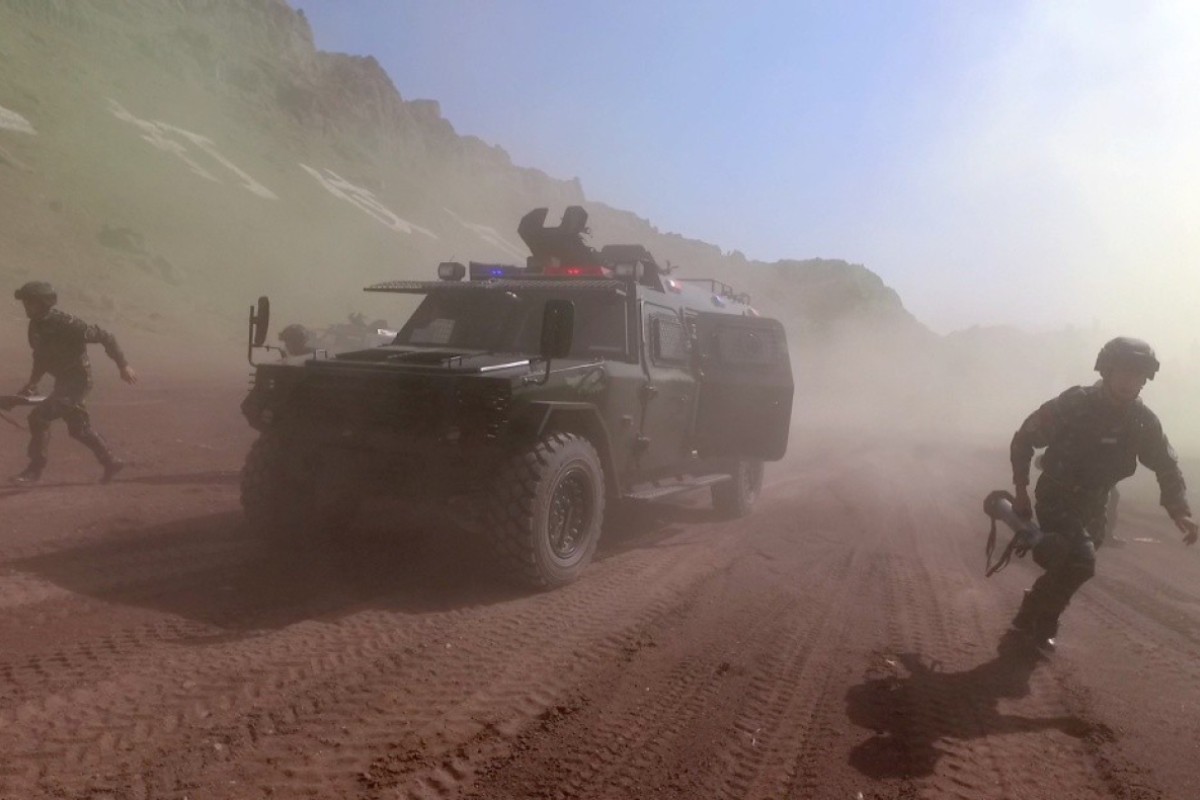
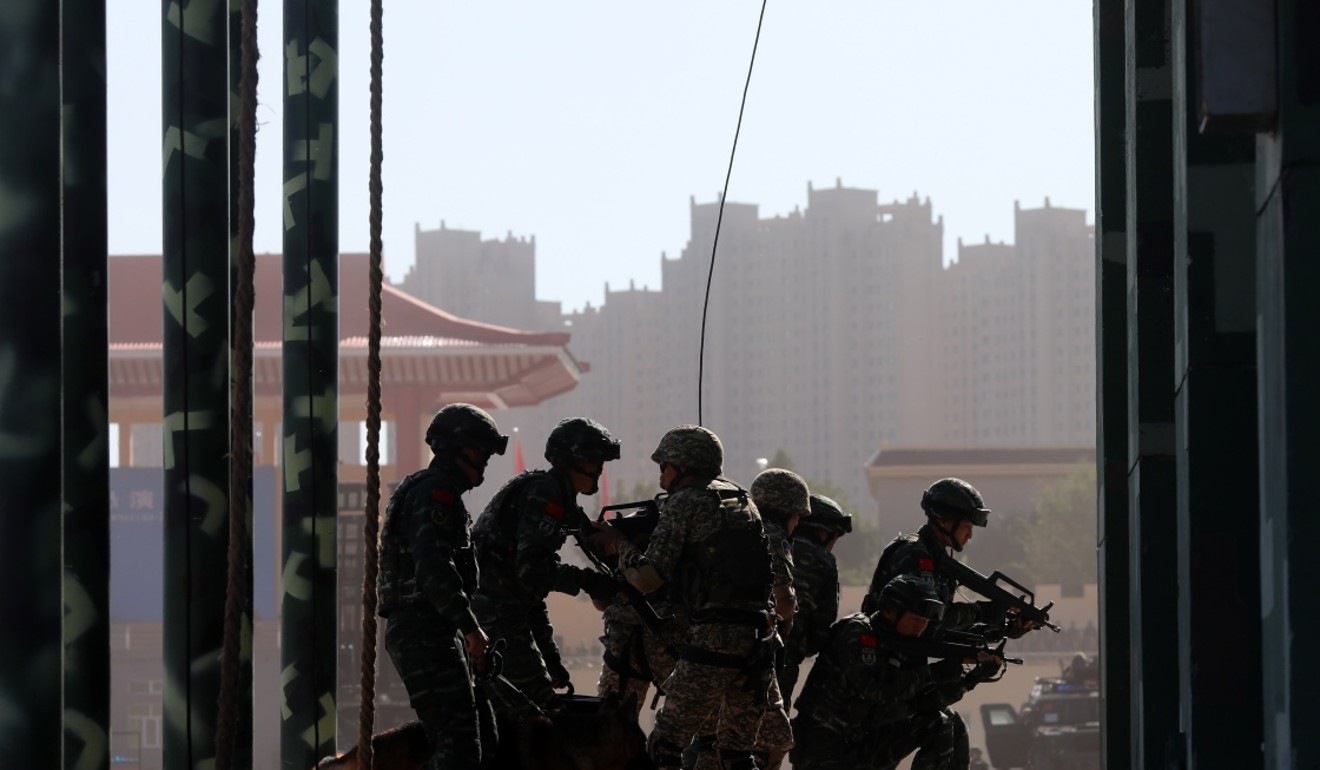
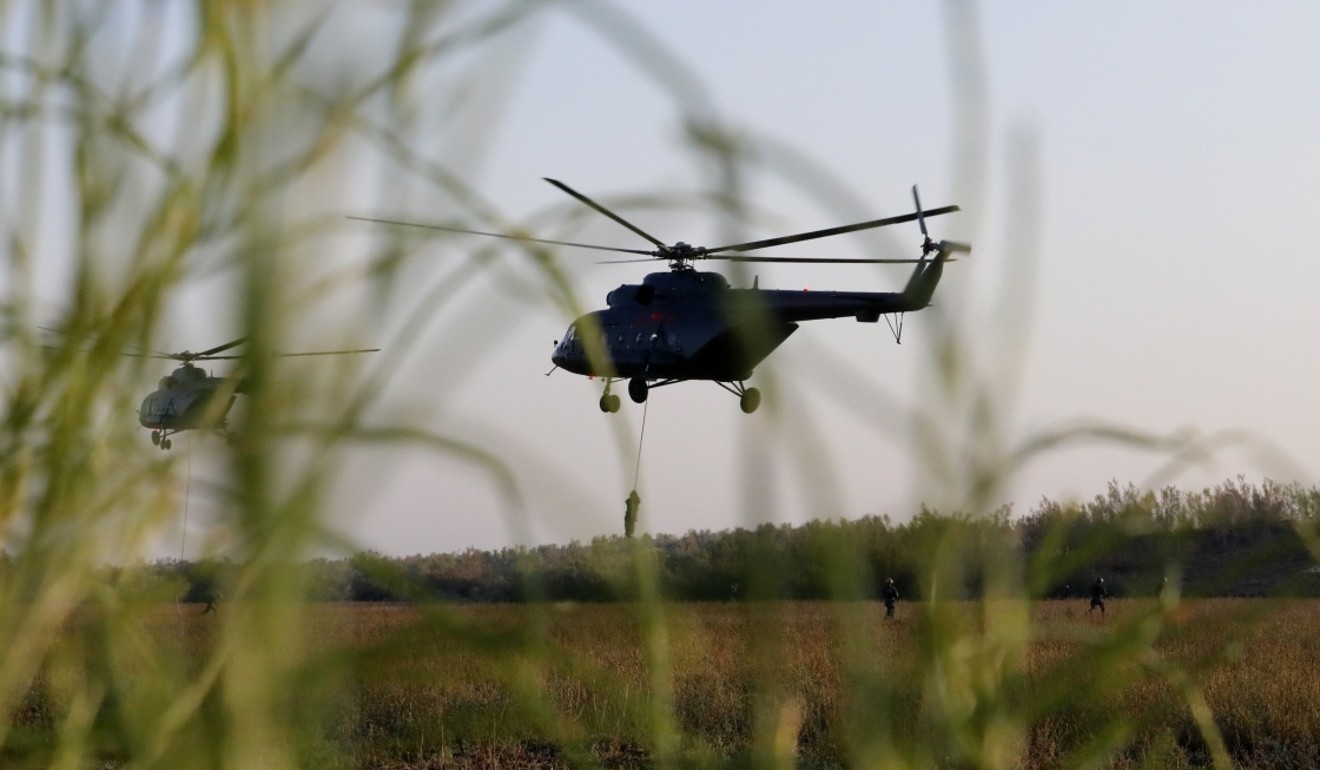
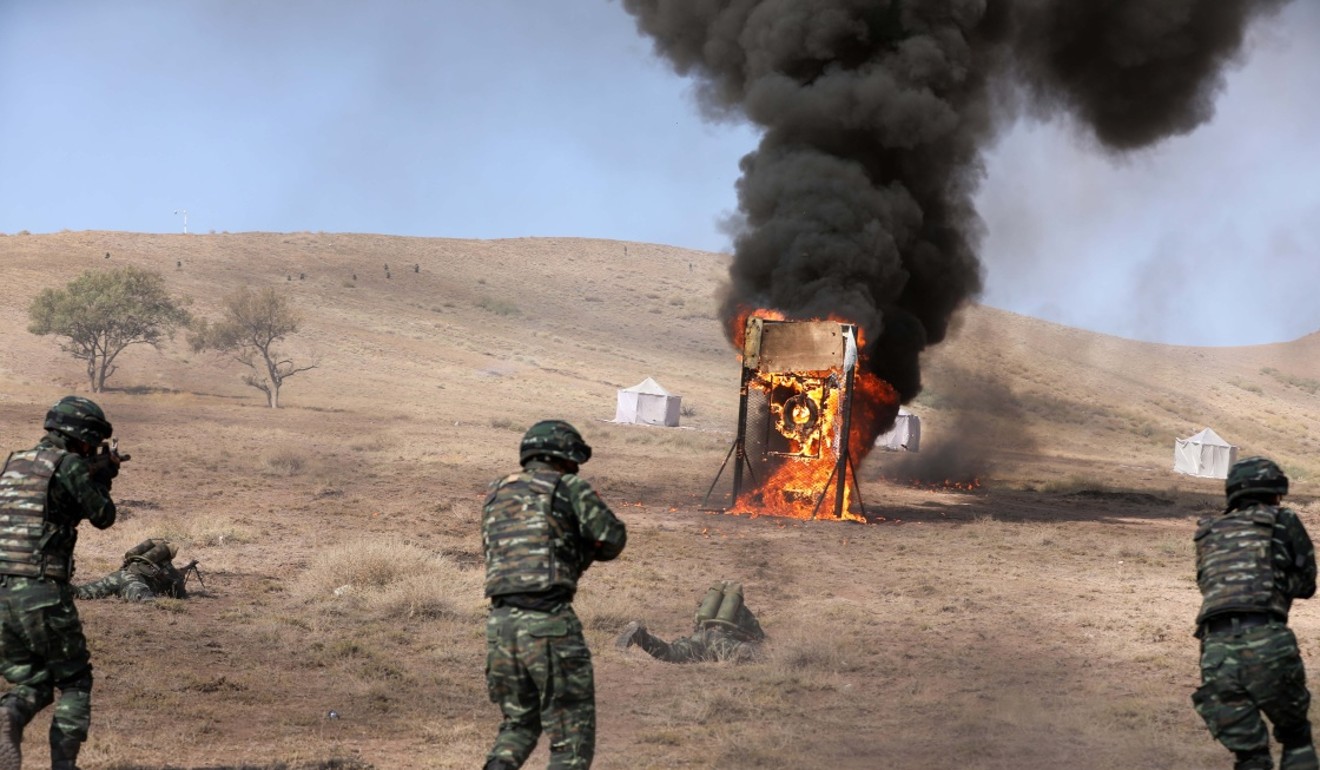
Chinese troops recently concluded a joint drill in eastern Tajikistan involving 1,200 troops from both countries.
The eight-day exercise that finished on August 13 was conducted in the autonomous Gorno-Badakhshan autonomous region, a sparsely populated territory in the high Pamir mountains, which borders China’s Xinjiang region and Afghanistan.
China has been increasing its security presence in the strategically sensitive region. Photo: Xinhua
Although this year’s exercise involved fewer troops than the 10,000 involved in a previous drill three years ago, it tested the use of advanced aerial vehicles and ground reconnaissance technology to monitor the area.
The landlocked country is strategically important for China, which is worried that the porous borders will serve as an entry point for drugs and Islamic militants into Xinjiang, where its deradicalisation strategy has led to the detention of a million Muslim minorities in reeducation camps.
It also sits along the trade routes China hopes to develop under the Belt and Road Initiative – Beijing’s flagship plan to expand its global influence through infrastructure, trade and investment – but the area has long been plagued by lawlessness and outbreaks of violence.
The recent exercise tested aerial surveillance techniques. Photo: Xinhua
Artyom Lukin, a professor of international politics at Far Eastern Federal University in Vladivostok, said Russia was not happy about the deployment of Chinese forces in Tajikistan.
“Russia has traditionally considered Central Asia, including Tajikistan, as its sphere of political-military influence,” he said.
Observers said other Central Asian republics – such as Kazakhstan, Uzbekistan and Kyrgyzstan – are likely to stay within Moscow’s orbit, but China is steadily building closer security ties with Tajikistan.
In February, China’s defence ministry denied that it was building a base and stationing troops in the country, but defended its closer military cooperation with Tajikistan.
The recent training exercise was conducted in an area Russia has long seen as part of its sphere of influence. Photo: Xinhua
China has long-standing security interests in the country and in 2016 it agreed to finance 11 border outposts and a training centre for guards along the Afghan border.
This was part of a deal Beijing made through the Quadrilateral Cooperation and Coordination Mechanism – which also involves Pakistan, Afghanistan and Tajikistan – to strengthen cooperation in combating terrorism and improving security.
China has also overtaken Russia economically, becoming the largest foreign investor in Tajikistan in 2016, accounting for 30 per cent of Tajikistan’s total direct accumulated investments, state news agency Xinhua reported.
Banned Muslim political party blamed for deadly attack on tourists in Tajikistan
China’s direct investment in Tajikistan was worth US$95 million in 2017, according to the latest available figures. China has also grown to become the country’s third largest trading partner with bilateral trade reaching around US$1.5 billion in 2018.
A recent opinion piece published by the Russian state-owned news agency Sputnik suggested China may be “getting carried away” by its investments in the region.
The article suggested that China’s growing presence in the country could lead to a “partial loss” of Tajikistan’s sovereignty and argued that Beijing may want to take control of the border with Afghanistan.
China also has economic interests to protect. Photo: Xinhua
But Lukin said even though this growing involvement may be an irritant for Russia, the strategic partnership between China and Russia will remain strong.
The two countries remain the key players in the Shanghai Cooperation Organisation, an economic and security alliance that includes the Central Asian republics and India and Pakistan.
Why Chinese investors are struggling to gain a foothold in Tajikistan
Lukin said: “Moscow no doubt understands that in terms of security, Tajikistan’s border, adjacent to China’s Xinjiang and Afghanistan, is truly a vital concern for Beijing.
“The presence of Chinese troops could actually benefit Russia, because it will be China bearing the costs of policing Tajikistan’s mountainous border areas.”
Stephen Blank, a former professor at the US Army War College and a specialist in Eurasian security, said that while Russia has mostly stayed silent about China’s presence in Tajikistan, it was closely watching the situation.
“What happens in the long run depends on how far China goes to extend its military presence in Central Asia. And if it keeps extending, it may well provoke some expression of concern in Russia beyond the silence that has hitherto been the case,” Blank said.
Chinese troops could play an increasing role in policing the area in future. Photo: Xinhua
“[The recent drills] look like conventional war-fighting exercises as much as anti-terrorist operations and suggest that China may have bigger contingencies than anti-terrorism in mind.”
Mathieu Duchatel, director of the Asia programme at the Institut Montaigne, a French think tank, said both Russia and China share similar concerns about terrorism and drug trafficking in Central Asia.
He said Russia had not objected to the security pact with Pakistan, Afghanistan and Tajikistan because there are more important strategic priorities in China-Russia relations.
“Overall, Russia’s acceptance of a security role for China in Central Asia shows how Russia realistically adjusts to the changing balance of power with China, and is able to avoid a zero-sum game on issues where parallel efforts by China and Russia can serve Russian security interests,” he said.
Participants pose for photos at the New Inclusive Asia Dialogue in Kuala Lumpur, Malaysia, Aug. 14, 2019. The China-proposed Belt and Road Initiative (BRI) was formulated with economic development agenda through increased connectivity, infrastructure and capacity building, according to academics and experts at the New Inclusive Asia Dialogue here on Wednesday. (Photo by Chong Voon Chung/Xinhua)
KUALA LUMPUR, Aug. 14 (Xinhua) — The China-proposed Belt and Road Initiative (BRI) was formulated with economic development agenda through increased connectivity, infrastructure and capacity building, according to academics and experts at a conference here on Wednesday.
Speaking at the New Inclusive Asia Dialogue, multiple experts said BRI, as a flexible economic oriented initiative, stood in contrast with attempts by certain country to piece together its own trade network, which was described as being focused on political agendas.
Dr S Mahmud Ali, an associate fellow with the University of Malaya’s Institute of China Studies, said countries like Malaysia, which aspired to reach developed nation status, had recognized the real gains to be had from participation in BRI.
Mahmud said once several on-going BRI related projects were completed in the country, the country’s economic capacity would be greatly boosted.
Malaysia does play a significant role and substantial amounts of Chinese investments funding projects will boost Malaysia’s productivity, total production capacity, its ability to export and produce good that will rise quite dramatically once these projects are completed, he said.
Proposed by China in 2013, the Belt and Road Initiative refers to the Silk Road Economic Belt and the 21st century Maritime Silk Road, which aims at building trade and infrastructure networks connecting Asia with Europe and Africa along the ancient trade routes of the Silk Road.
Chairman of the Committee of International Information of the Foreign Affairs Ministry of Kazakhstan Timur Shaimergenov said that the flexible, economically focused BRI had gained strong support due to the inclusive approach taken by China.
“The Belt and Road Initiative is a flexible economic oriented project. It does not come with political pressure but instead it is about giving participating countries the opportunity to take advantage of economic opportunities.”
Criticism against BRI has taken on a political dimension and they are completely ignoring that while BRI started as a Chinese initiative, it has really become a Eurasian initiative,” he said.
Olga Kuznetsova, a professor with the Moscow Lomonosov State University said infrastructure development had the potential to benefit countries along BRI route, calling on countries to formulate clear plans to take advantage of the economic spillover.
“Russia is interested in the development of Eurasian transport corridors and invests in the implementation of projects to create them,” she said.
Chinese Ambassador to Malaysia Bai Tian said China had made it clear that it would continue to be a supporter of fair and equitable international trade and globalization, especially in the backdrop of unilateral protectionism.
“We look forward to joining hands with Asian countries to promote trade and investment facilitation, to accelerate the process of regional free trade zone, and to deepen regional and sub-regional cooperation,” he said.
Hosted by the Center for New Inclusive Asia, a Malaysian based think tank, the two-day dialogue aims to foster better understanding of connectivity as a means to promote inclusive growth in Asia, bringing together prominent scholars, senior government officials and corporate leaders from some 10 countries and regions.
BEIJING, Aug. 10 (Xinhua) — Chinese President Xi Jinping has led new advances in the development of major country diplomacy with Chinese characteristics.
Xi had a packed diplomatic schedule in the first half of 2019. In April-May, he chaired or attended three events China hosted in a row in just more than half a month. In June, he made four overseas visits and attended four important international meetings in a month.
Amid immense changes in the international situation, the head-of-state diplomacy has led the way forward.
FORGING GLOBAL PARTNERSHIP NETWORK
Xi made his first overseas visit this year in March to three European countries: Italy, Monaco and France, injecting strong impetus into the China-EU comprehensive strategic partnership.
Major-country relations continued to grow. In June, Xi paid a state visit to Russia where he and Russian President Vladimir Putin elevated the China-Russia ties to a comprehensive strategic partnership of coordination for a new era. It was Xi’s eighth visit to Russia and his 31st meeting with Putin since he took office as the Chinese president in 2013.
Friendly exchanges with neighboring countries were deepened. In June, he paid a state visit to the Democratic People’s Republic of Korea (DPRK), opening a new chapter for China-DPRK friendship. Also in June, Xi visited Kyrgyzstan and Tajikistan and met with Japanese Prime Minister Shinzo Abe in the Japanese city of Osaka. All in all, Xi met or held talks with more than 30 leaders of neighboring countries in the first half of the year.
Common progress with the vast majority of developing countries was advanced. Xi congratulated the inauguration of the China-Africa Institute, the opening of the Coordinators’ Meeting on the Implementation of the Follow-up Actions of the Beijing Summit of the Forum on the China-Africa Cooperation, and the first China-Africa Economic and Trade Expo.
Xi also chaired a China-Africa leaders’ meeting on the sidelines of the G20 summit in Osaka, at which leaders reached a broad consensus on a range of issues.
LEADING GLOBAL OPENNESS, COOPERATION
Xi has said a few anti-globalization movements that have emerged in the world cannot stop the tide of globalization.
Thinking in big-picture terms, a Chinese poem says, helps one dispel the clouds to see the sun.
At the G20 summit in Osaka, Xi announced China’s further opening-up measures which have since strengthened the confidence of the global economy.
On the sidelines of the G20 summit, Xi met with U.S. President Donald Trump. They agreed to advance a China-U.S. relationship featuring coordination, cooperation and stability.
China is playing a more positive role in the multilateral trading system, taking globalization toward the direction of more inclusiveness and benefit for all, said World Trade Organization Director General Roberto Azevedo.
Meanwhile, the China-proposed principle of extensive consultation, joint contribution and shared benefits is gaining worldwide recognition.
In April, the Second Belt and Road Forum for International Cooperation was attended by about 6,000 participants from 150 countries and 92 international organizations.
A study published by the World Bank found that fully implementing deeper policy reforms of the Belt and Road Initiative would lift 32 million people out of moderate poverty, increase global trade by up to 6.2 percent and increase global income by as much as 2.9 percent.
WORKING TOGETHER FOR BETTER FUTURE
The Chinese president has called on countries around the world to make concerted efforts and jointly shape the future of humanity.
In various occasions ranging from the global governance forum co-hosted by China and France to the Conference on Dialogue of Asian Civilizations, Xi put forward China’s approaches on global governance and encouraged all parties to build consensus on upholding multilateralism.
China has been committed to firmly upholding the international system with the United Nations at its core and international law as its foundation, and standing on the side of justice as China plays an active role in endeavors such as advancing the political settlement of the Korean Peninsula issue and supporting maintaining the Iran nuclear deal.
China has become a strong pillar of international cooperation and multilateralism, according to UN Secretary-General Antonio Guterres.
At the three events China hosted in the first half of the year, Xi expounded on the concept of building a community with a shared future for humanity from different perspectives: help developing countries break growth bottlenecks, tackle environmental challenges and look to culture and civilization to play their role.
All won broad recognition.
Under Xi’s leadership, the major country diplomacy with Chinese characteristics is sailing towards a brighter future.
Three-year-old security treaty between US and two key allies under threat as tensions between Seoul and Tokyo continue to escalate
End of General Security of Military Information Agreement risks undermining Washington’s influence in the region
South Korean protesters hold signs saying “No Abe” during a rally demanding the abolition of the General Security of Military Information Agreement. Photo: AP
The possible termination of a military information-sharing pact between South Korea and Japan would be a symbolic victory for China, a security analyst has warned.
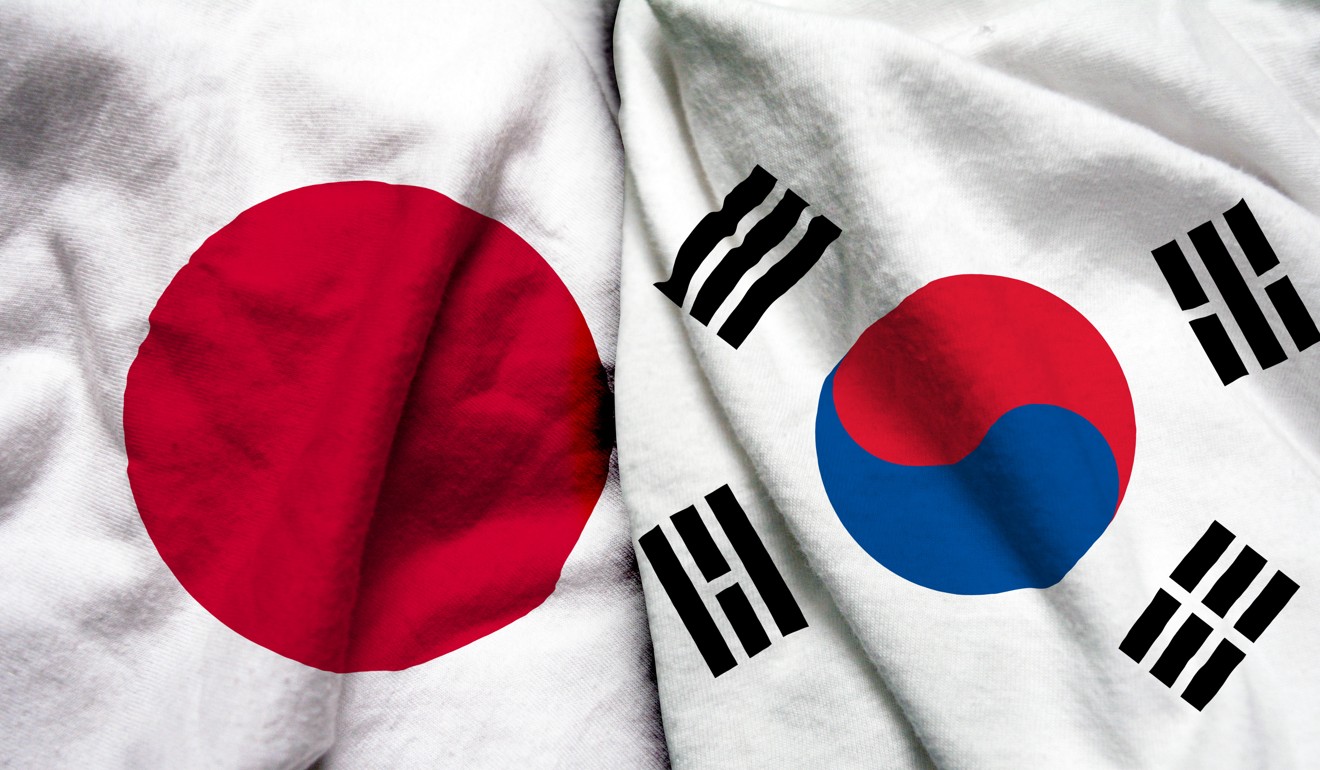
Recent tension between the two countries recently threatened to spill over into the sphere of intelligence after Seoul signalled that it may pull out of the General Security of Military Information Agreement (GSOMIA) pact.
The agreement signed in 2016 enables three-way intelligence gathering between the US and its two allies and provides a crucial framework for coping with North Korea’s nuclear and missile threats.
But the escalating trade dispute between Seoul and Tokyo, prompted by a dispute about Japan’s colonial legacy, has left the future of the deal in jeopardy as the annual deadline for its renewal looms.
Japan approves first hi-tech exports to South Korea since start of ‘trade war’ – but with a warning
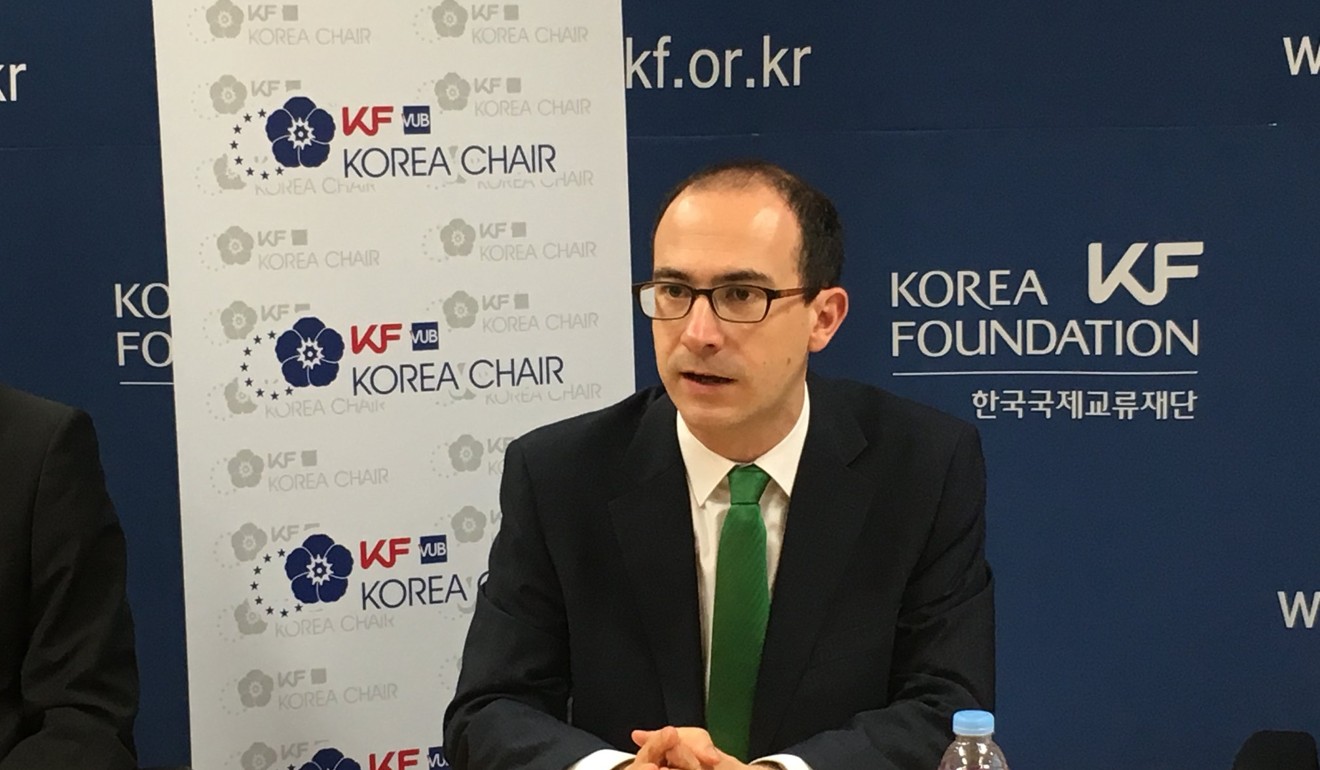
Ramon Pacheco Pardo, the first Korea chair at the Institute for European Studies at Vrije Universiteit Brussel in Belgium, said scrapping the pact would help strengthen China’s influence in the Asia-Pacific region at the expense of the US.
“It is undeniable that termination of GSOMIA would dent the US-South Korea-Japan alliance. The alliance system in northeast Asia will be weaker, strengthening China in relative terms in the process. “This could embolden China and Russia to strengthen their military cooperation in northeast Asia, said Pardo, a member of the non-governmental EU Council for Security Cooperation in the Asia-Pacific.
“Ending GSOMIA would signal that South Korea and Japan are not ready to follow Washington’s lead in the way the latter would like, given the political capital that successive US administrations spent in convincing both countries to share intelligence.”
Ramon Pacheco Pardo said the collapse of the pact would have a largely symbolic impact on China. Photo: Facebook
But Pardo also stressed that the intelligence alliance was not directly targeting China.
“While it is true that GSOMIA serves to connect the weakest link of the US-South Korea-Japan security triangle, ultimately South Korea’s security posture and the capabilities of each country independently mean that it is difficult to argue that the agreement is a concerted effort to contain China.”
“After all, Beijing does not share any significant information on North Korea’s nuclear and missile programmes with South Korea, Japan or the US.
“This is not going to change any time soon. So the good news for China would be symbolic rather than substantial.”
US missiles, jittery neighbours and South Korea’s big security dilemma
Beijing warned on Tuesday that it would take “countermeasures” if the US deployed ground-based missiles in either Japan or South Korea, and Pardo argued that scrapping the intelligence-sharing pact would expose the weaknesses in their co-ordinated approach towards China.
The security deal is automatically renewed every year unless one party decides to pull out. To do so, it must notify the others 90 days before its expiry – a deadline that falls on August 23.
The trade row was sparked by a recent South Korean court ruling that Japanese should compensate individual victims of wartime forced labour. Tokyo believes it settled all necessary compensation under a treaty signed in 1965, but Seoul believes that individual victims’ right to file a claim has not expired.
Relations between South Korea and Japan have deteriorated following a court ruling over forced labour in the wartime era. Photo: Shutterstock
Last week Japan said it would remove South Korea from its “white list” of countries with preferential trade status. Seoul has threatened to respond in kind, but also warned that it may reconsider whether to renew the intelligence-sharing pact.
Both the US and Japan have said they want the arrangement to continue, but Pardo said the effect of the termination would remain largely symbolic.
South Korea has already been investing in its own satellite and anti-submarine programmes to monitor the North’s activities, while Japan has also been developing its own intelligence programmes.
“This shows that neither South Korea nor Japan wants to rely on each other or third parties, namely the US, when it comes to monitoring North Korea’s military activities,” Pardo said.
But he argued that this behaviour already indicated that the alliance was weakening and suggested that terminating the treaty would increase China’s room for manoeuvre.
South Korea buys helicopters worth US$800 million after Trump seeks contribution for US presence
Since the 1990s successive US administrations have pushed for intelligence-sharing arrangements with Japan and South Korea to help build a framework to check Chinese and Russian military expansion in the Pacific.
“Beijing and Moscow are clearly moving in the direction of closer cooperation anyway. GSOMIA or not, military cooperation will continue … as long as Xi Jinping and Vladimir Putin lead each country and most probably even beyond then,” Pardo said.
China and Russia flexed their muscles in the region last month as the trade dispute between the two key allies intensified.
Russian and Chinese long-range military aircraft conducted their first-ever joint air patrol over the Sea of Japan – also known as the East Sea – and the East China Sea.
“The East Asian security landscape would be reshaped insofar that China, North Korea and Russia would see that their main opponent in the region – the US – is unable to convince its two key allies, South Korea and Japan, to cooperate on a key issue,” Pardo said.
“The current dispute between South Korea and Japan will need a negotiated solution … In any case, Japan will have to learn to live with the fact that former colonisers will, from time to time, receive criticism by many of their former colonies, criticism that sometimes will escalate.
“It happens to former European colonial powers, for example, and it is only logical because the interpretation of the past is always in flux.”
BEIJING, July 29 (Xinhua) — The attempt of some Western countries to tarnish the image of the Xinjiang Uygur Autonomous Region is doomed to fail, and the fight against terrorism and extremism in Xinjiang should be supported and respected, a Chinese foreign ministry spokesperson said Monday.
Recently, ambassadors from 50 countries to the United Nations Office at Geneva (UNOG) have sent a joint letter to the President of the UN Human Rights Council (UNHRC) and the High Commissioner for Human Rights to voice their support for China’s position on issues related to Xinjiang.
The 50 ambassadors, who are from countries including Russia, Pakistan, Saudi Arabia, Algeria and Cuba, have collectively stated for the first time that the counter-terrorism and de-radicalization measures, including the establishment of vocational education and training centers, have effectively safeguarded basic human rights in Xinjiang, spokesperson Hua Chunying told a press briefing.
According to media reports, 24 members of the UNHRC have previously signed a letter criticizing China’s position on relevant issues.
“The 24 members, with a total population of no more than 600 million, are all developed Western countries, none of them being an Islamic or developing country. While of the 50 countries that support China are from Asia, Africa, Latin America and Europe, with a total population of nearly 2 billion, 28 are members of the Organization of the Islamic Cooperation, and their population is more than twice that of the 24 members that criticized China,” Hua said. “So it’s obvious who is right and who is wrong on the matter of Xinjiang,” she added.
Hua said many of the ambassadors who supported China’s Xinjiang policy have visited Xinjiang and witnessed the truth.
As the ambassadors pointed out, those who had visited Xinjiang found what they saw and heard was completely different from what was described in Western media reports, according to Hua.
“The ambassadors also appreciated China’s achievements in human rights, believed that Xinjiang’s establishment of vocational education and training centers, as well as other counter-terrorism and de-radicalization measures, effectively guaranteed basic human rights and urged relevant countries to stop their unfounded accusations against China,” said the spokesperson.
“This fully shows that the international community has its fair judgment on the development of Xinjiang,” said Hua, adding that attempt to smear Xinjiang and put pressure on China in the name of “human rights” will never succeed.
Pointing out that the current problem in Xinjiang is the issue of counter-terrorism and extremism rather than religious and human rights issues, Hua said the counter-terrorism and de-radicalization struggle in Xinjiang deserve support, respect and understanding.
“Faced with severe threats of terrorism and extremism, the Xinjiang Uygur Autonomous Region has taken a series of counter-terrorism and de-radicalization measures according to law, including the establishment of vocational education and training centers,” said Hua, adding that those measures have turned the situation around.
“In almost three years, not a single violent or terrorist incident took place in Xinjiang. The region now enjoys social stability and unity among all ethnic groups. People there are living a happy life with a stronger sense of fulfillment and security. They endorse the government’s policies and measures wholeheartedly,” said the spokesperson.
Noting that many of the 24 countries that denounce China’s Xinjiang policy have been victims of terrorism, Hua said relevant people and officials from these 24 countries are welcome to visit Xinjiang to learn about Xinjiang’s counter-terrorism and de-radicalization experience.
Hua said China is working with all parties to ensure that multilateral human rights mechanisms stick to the purposes and principles of the UN Charter. Human rights issues should be dealt with in an objective, fair and non-selective way. “We need to advance international human rights cause in a sound manner through constructive dialogue and cooperation.”
“We resolutely oppose any country’s act of using the Human Rights Council and other mechanisms to interfere in other countries’ internal affairs and wantonly criticize, smear and pressure others. We urge the relevant countries to correct their mistakes at once, not to politicize the relevant issue or practice double standards, and stop meddling in other countries’ domestic affairs,” she added.
Chinese State Councilor and Foreign Minister Wang Yi (2nd L) poses for a group photo with Brazilian Foreign Minister Ernesto Araujo (3rd L), Russian Foreign Minister Sergey Lavrov (1st L), South African Foreign Minister Naledi Pandor (2nd R) and India’s Minister of State for External Affairs Vijay Kumar Singh in Rio de Janeiro, Brazil, July 26, 2019. Wang Yi attended the Formal Meeting of the BRICS Ministers of Foreign Affairs in Rio de Janeiro. (Xinhua/Xin Yuewei)
RIO DE JANEIRO, July 27 (Xinhua) — The rise of emerging markets and developing countries, represented by the BRICS countries, has bolstered a more multi-polar world, Chinese State Councilor and Foreign Minister Wang Yi said here on Friday.
At the Formal Meeting of the BRICS Ministers of Foreign Affairs, Wang also said BRICS cooperation is not a band-aid solution for the five countries but a strategic choice that focuses on common and long-term development and harbors bright prospects.
The five countries are Brazil, Russia, India, China and South Africa.
Wang said no matter how the international landscape changes, the direction of the BRICS cooperation must not change. Faced with new challenges, the five countries should let their voices be heard, offer more solutions to pressing global issues and play a greater role in world affairs.
Wang pointed out that unilateralism undermines international rules and challenges the international rule of law, which exacerbates the instability and uncertainty of the world.
The BRICS countries must take the lead in maintaining multilateralism and safeguarding the global governance system with the UN as its core and under international law.
Furthermore, the bloc should safeguard the multilateral trading system represented by the WTO and protect the common interests and development space of emerging market and developing countries, he said.
The five countries together must continue to integrate the interests of other emerging market countries and developing countries through flexible and diverse platforms such as “BRICS Plus.”
At the meeting, the five foreign ministers all agreed to safeguard the purposes and principles of the UN Charter, defend multilateralism and free trade, oppose unilateralism and protectionism, strengthen global governance, and build a community with a shared future for humankind.
They agreed that regional hotspot issues should be resolved through dialogue and consultation and that BRICS cooperation should work to benefit the peoples of the five countries.
The foreign ministers also agreed to maintain vigilance on cybersecurity issues and expressed opposition to the use of cybersecurity to suppress the development of science and technology in other countries. They agreed to strive toward an open and non-discriminatory environment for the application of information technology.
The foreign ministers were tasked with preparing for the BRICS summit to be held in Brasilia in November.









 CHINDIA ALERT: You'll be living in their world, very soon