Chindia Alert: You’ll be Living in their World Very Soon
aims to alert you to the threats and opportunities that China and India present. China and India require serious attention; case of ‘hidden dragon and crouching tiger’.
Without this attention, governments, businesses and, indeed, individuals may find themselves at a great disadvantage sooner rather than later.
The POSTs (front webpages) are mainly 'cuttings' from reliable sources, updated continuously.
The PAGEs (see Tabs, above) attempt to make the information more meaningful by putting some structure to the information we have researched and assembled since 2006.
SUIFENHE, China (Reuters) – China’s northeastern border with Russia has become a frontline in the fight against a resurgence of the coronavirus epidemic as new daily cases rose to the highest in nearly six weeks – with more than 90% involving people coming from abroad.
Having largely stamped out domestic transmission of the disease, China has been slowly easing curbs on movement as it tries to get its economy back on track, but there are fears that a rise in imported cases could spark a second wave of COVID-19.
A total of 108 new coronavirus cases were reported in mainland China on Sunday, up from 99 a day earlier, marking the highest daily tally since March 5.
Imported cases accounted for a record 98. Half involved Chinese nationals returning from Russia’s Far Eastern Federal District, home to the city of Vladivostok, who re-entered China through border crossings in Heilongjiang province.
RELATED COVERAGE
Number of people crossing China borders cut 90% as part of virus efforts: official
“Our little town here, we thought it was the safest place,” said a resident of the border city of Suifenhe, who only gave his surname as Zhu.
“Some Chinese citizens – they want to come back, but it’s not very sensible, what are you doing coming here for?”
The border is closed, except to Chinese nationals, and the land route through the city had become one of few options available for people trying to return home after Russia stopped flights to China except for those evacuating people.
Streets in Suifenhe were virtually empty on Sunday evening due to restrictions of movement and gatherings announced last week, when authorities took preventative measures similar to those imposed in Wuhan, the central Chinese city where the pandemic ripping round the world first emerged late last year.
The total number of confirmed cases in mainland China now stands at 82,160 as of Sunday, and at the peak of the first wave of the epidemic on Feb 12 there were over 15,000 new cases.
Though the number of daily infections across China has dropped sharply from that peak, China has seen the daily toll creep higher after hitting a trough on March 12 because of the rise in imported cases.
Chinese cities near the Russian frontier are tightening border controls and imposing stricter quarantines in response.
Suifenhe and Harbin, the capital of Heilongjiang, are now mandating 28 days of quarantine as well as nucleic acid and antibody tests for all arrivals from abroad.
In Shanghai, authorities found that 60 people who arrived on Aeroflot flight SU208 from Moscow on April 10 have the coronavirus, Zheng Jin, a spokeswoman for the Shanghai Municipal Health Commission, told a press conference on Monday.
Residents in Suifenhe said a lot of people had left the city fearing contagion, but others put their trust in authorities’ containment measures.
“I don’t need to worry,” Zhao Wei, another Suifenhe resident, told Reuters. “If there’s a local transmission, I would, but there’s not a single one. They’re all from the border, but they’ve all been sent to quarantine.”
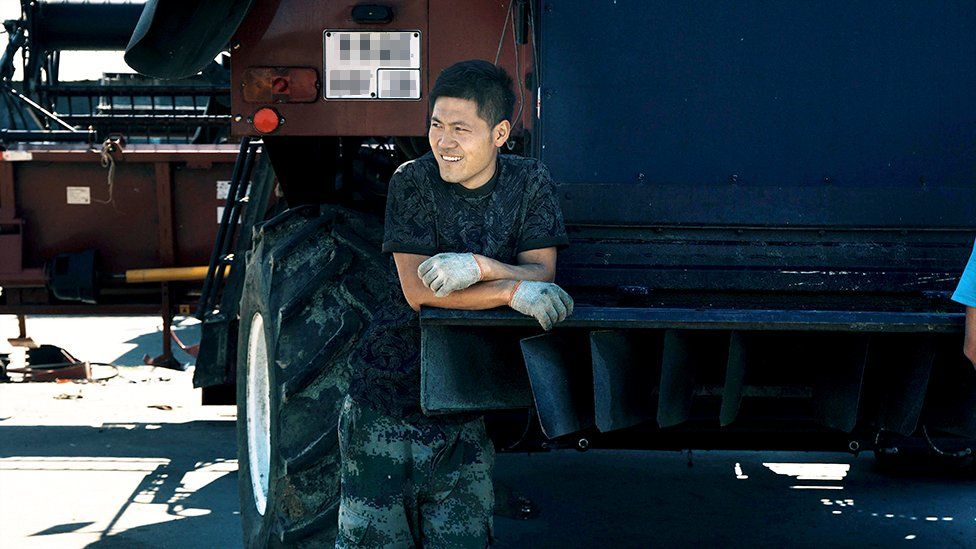
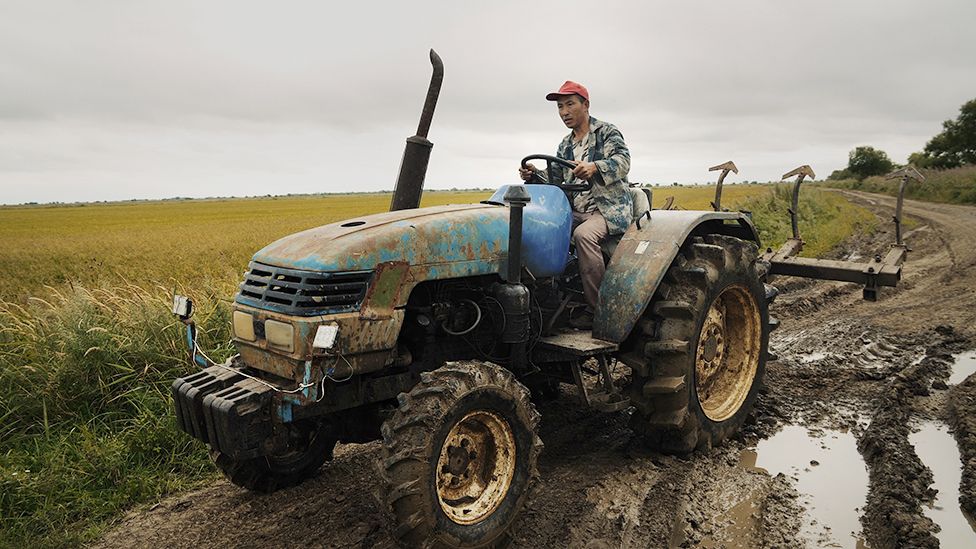
Image caption Chinese farmers are trying to bring workers across the border into Russia
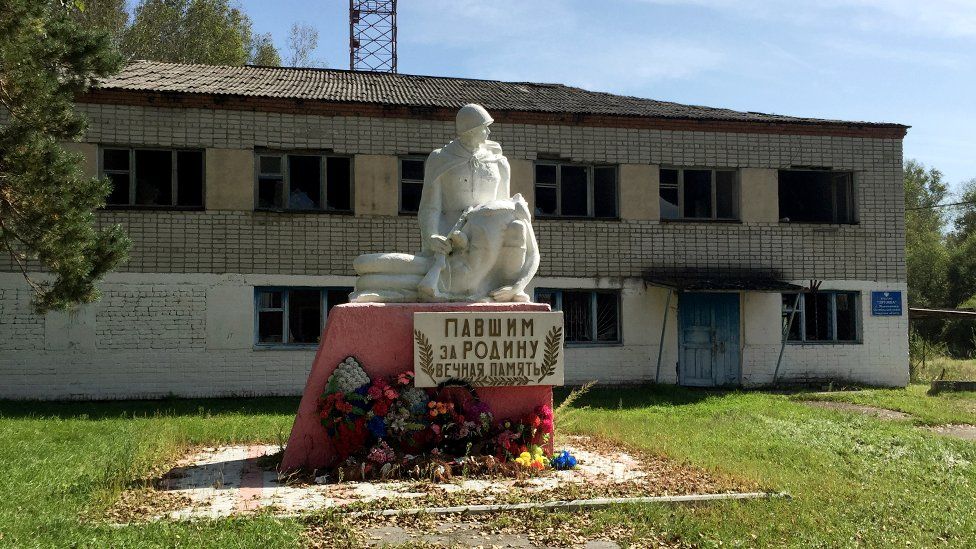
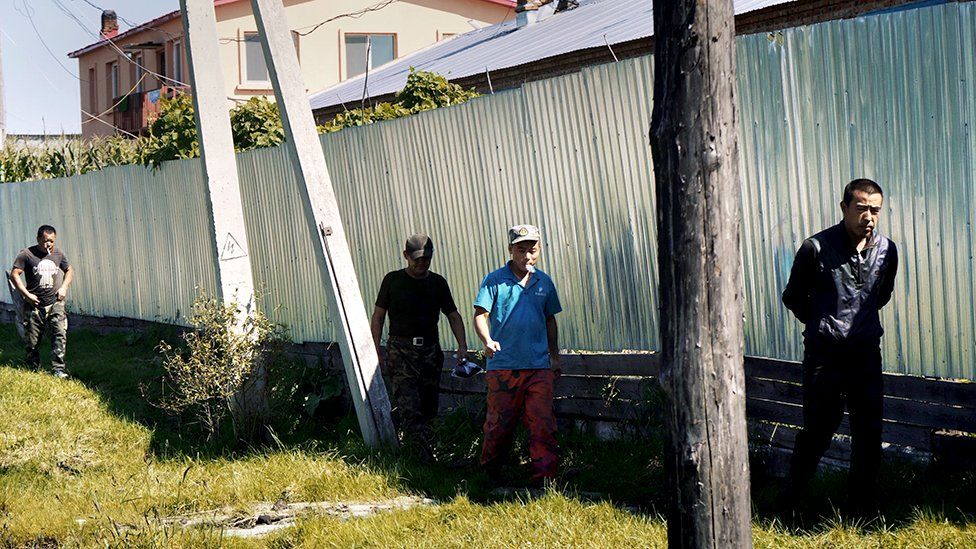
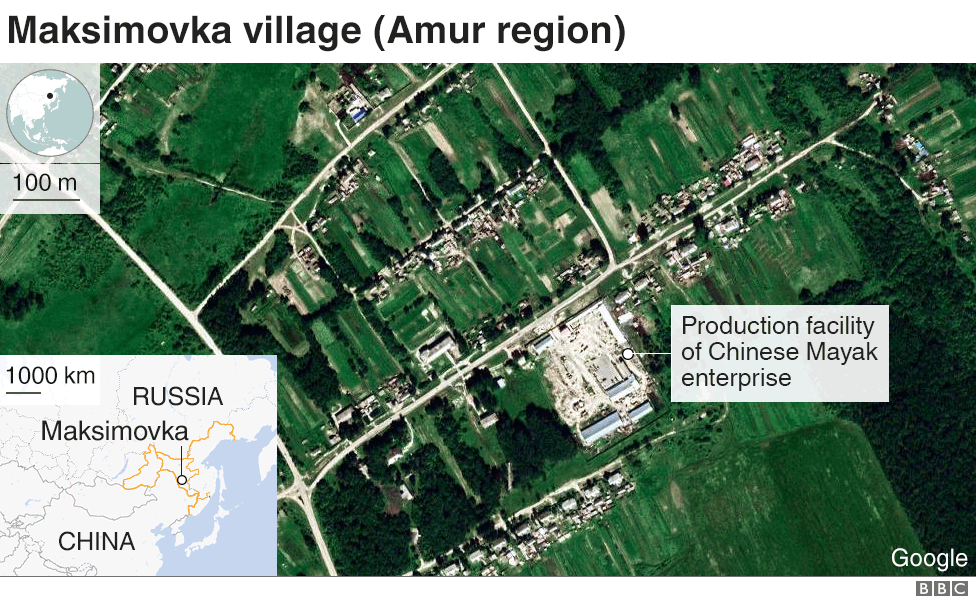
The farm in Maksimovka is surrounded by high metal fences. The Chinese migrants who work there only leave the site to go shopping. At the centre of this village in Russia’s Far East sits an old abandoned building – there is no lock on the door and inside, the floor is littered with papers dating back to the 1980s and 90s.
Here lie clues to why a farm that once provided work to some 400 Russians was unable to survive.
Like many of the collective farms in rural Russia, the Mayak farm collapsed with the old Soviet Union.
That is when the Chinese workers arrived, in five border regions, and Russians have not always been happy to welcome their new neighbours.
Image caption Little remains of the old farm at Mayak, apart from a monument to those killed in World War Two
“Working in Russia is much the same as in China. You get up in the morning and go to work,” says Chom Vampen.
He is one of thousands of Chinese who have moved to this vast, under-populated part of Russia since the early 1990s.
Most seek work at Russian- or Chinese-owned farms or buy the lease on the land to develop their own agricultural enterprises.
As Russia’s relations with the West have deteriorated, President Vladimir Putin has welcomed China’s growing footprint here.
Image caption Chinese farm workers from Maksimovka
Mayak’s chairman, Yevgeny Fokin, leased thousands of hectares to Chinese entrepreneurs, attracted by low rents and large farms.
“We gave the shares to Fokin, thinking it would be better if the land belonged to the collective. But he gave it all to the Chinese and left, and we lost everything,” a local resident of Maksimovka village, Tatyana Ivanovna, said.
“No way,” says Mr Fokin. “There was nothing unusual about it.”
How Chinese companies took over
Chinese companies first appeared in Russia’s Far East in the early 2000s, but Beijing’s interest in the region increased after the global financial crisis of 2008.
“There was panic, [the Chinese] were looking at where to invest,” the head of a Chinese-owned farm told BBC Russian, preferring not to give his name.
Chinese investment was followed by an influx of Chinese migrants.
“We have little land and a lot of people,” said one Chinese farmer.
Based on data released by the state land register, BBC Russian calculated that Chinese citizens either owned or leased at least 350,000 hectares (3,500 sq km) of Far Eastern land in Russia. In 2018, around 2.2 million hectares of Russian land in the region was used for agricultural purposes.
The actual proportion could be higher, the BBC has learned
Chinese farmers are, according to BBC research, represented in 40% of the Far East, most significantly in the Jewish autonomous region of Birobidzhan.
Regional governor Alexander Levintal said that in many cases land officially leased by Russians was in reality managed by Chinese nationals.
“Almost all the land that belonged to collectives was handed over to the Chinese,” said the head of the Jewish autonomous region’s peasant association, Alexander Larik.
Why relations are uneasy
Most of the farms run by Chinese migrants resemble fortresses. At Babstovo, a half-hour drive from the Chinese border, lies Friendship farm, which is surrounded by a high fence and a red flag.
Image caption Chinese workers here are main seasonal and rarely settle in Russia
But things are different in the village of Opitnoye Polye, where Xin Jie employs Russian as well as Chinese workers.
Like many Chinese here, he adopted a Russian name and is now known as Chinese Dima.
Chinese Dima moved to Russia in the 1990s and leased more than 2,500 hectares of land to develop a soya plantation. He is actively involved in the community, buying presents for nursery school children and sending his tractor to help clear the snow in remote villages in the winter.
Conflicts between Russians and Chinese are not uncommon. In 2015, three Russians entered a Chinese factory in the Far Eastern Amur region and threatened a Chinese guard with a stick, demanding he give them food.
A few days later, when they returned to steal a tractor engine, they were confronted by the same Chinese guard who this time carried an axe.
They were given prison sentences ranging from five to nine years.
Most Chinese cross the border for seasonal work, for sowing or harvesting, and then return home.
But many Russians are unhappy with the Chinese influx. More than one in three people said they viewed China’s Russia policy as expansion, according to a poll conducted in 2017 by the Russian Academy of Sciences.
Almost half said that China threatened Russia’s territorial integrity, while a third believed that it endangered their country’s economic development.
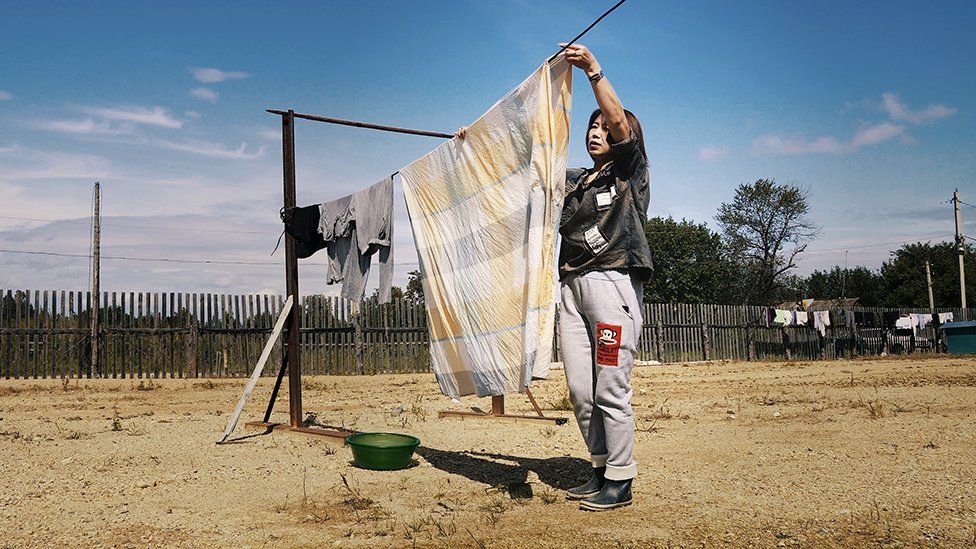
Image caption A Chinese woman hangs out the washing on a farm at Dimitrovo
“They leave at seven in the morning and return after dark. I don’t see them and they don’t see me,” says Ivanovich of his Chinese neighbours in the village of Dimitrovo.
But some Russians have struck up friendships with the Chinese.
“They bring beer, we drink. I give them eggs and honey,” says Alexander.
Why Russian workers struggle to compete
Chinese farm workers in Russia’s Far East often have a better reputation than their Russian counterparts.
“The Chinese do not drink and they have nowhere to run; they come here for the season. Our citizens come to work for a week, plead for money and then go on a bender,” complained one Russian agricultural boss who declined to give his name.
Mr Larik, of the peasant association in the Jewish autonomous region, said Chinese farm owners generally preferred hiring Chinese migrants and gave Russian nationals low-skilled jobs.
A Chinese farmer who asked to stay anonymous complained about the drinking habits of Russian employees.
“All Russians drink. Today you pay them, tomorrow they do not show up. There are problems with discipline,” he said.
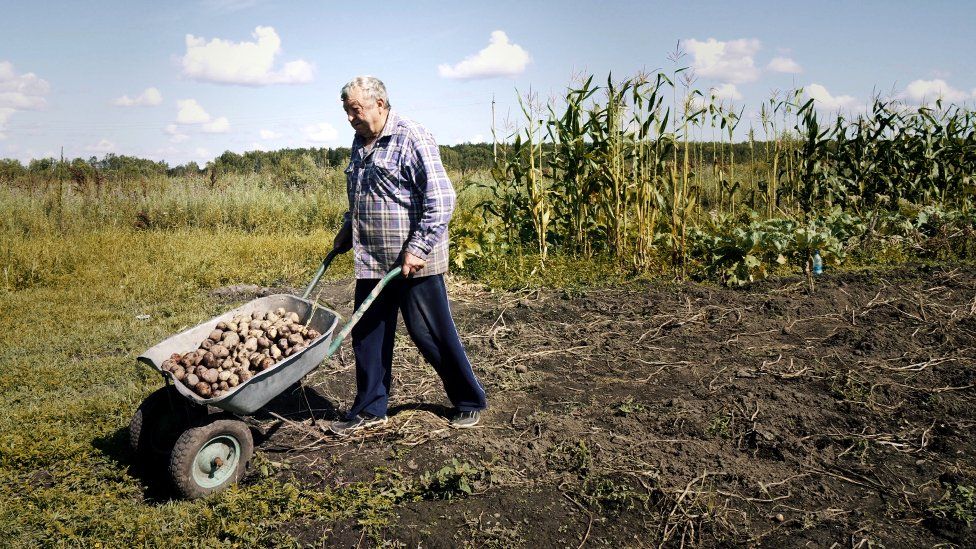
Image caption Residents in Maksimovka complain that young people tend to head to the cities, leaving only pensioners behind
Russia has a poor record of protecting workers’ rights, especially in the agriculture industry, which is generally low paid.
Not everyone here has a low opinion of local workers.
“What is the difference between Russian and Chinese workers? Russian workers are smarter than the Chinese,” says Chom Vampen.




 CHINDIA ALERT: You'll be living in their world, very soon