11/03/2020
- China imported 72 per cent of its oil in 2019, with Saudi Arabia and Russia, who are now locked in a price war, its largest suppliers
- Oil prices again fell on Wednesday, with Brent crude down to US$36 a barrel as Saudi Arabia moved to boost output capacity in an escalation of its price war with Russia
China imported 506 million tonnes (3.7 billion barrels) of oil in 2019, an increase of 9.5 per cent from 2018, marking the 17th consecutive year of increased imports. Photo: AP
China’s coronavirus-hit industrial enterprises could receive a welcome boost from plunging oil prices, with the world’s largest importer and consumer set for significant cost savings, analysts said.
A total of 72 per cent of the oil consumed in China was imported in 2019, an average of 10 million barrels per day, meaning any sharp drop in costs as a result of the price war between Saudi Arabia and Russia will help firms reduce costs as they struggle to resume production.
“China benefits a lot from the price war as it is the world’s biggest crude importer,” said Bai Jun, an economic committee member at the China Petroleum Society, an association of Chinese energy researchers.
China imported 506 million tonnes (3.7 billion barrels) of oil in 2019, an increase of 9.5 per cent from 2018, marking the 17th consecutive year of increased imports.
Lower oil prices should raise output by 0.3 per cent above what it would have been with higher oil prices. This will provide some relief, but is a small offset to the many other drags facing the economy Julian Evans-Pritchard
Saudi Arabia and Russia topped a list, also including Angola, Iraq and Oman, that accounted for about 55 per cent of China’s total crude imports in 2018, according to China’s customs data.
Profits for China’s industrial firms could increase by 2 per cent this year as a result of lower oil prices, according to Julian Evans-Pritchard, senior China economist at Capital Economics.
“Lower oil prices should raise output by 0.3 per cent above what it would have been with higher oil prices. This will provide some relief, but is a small offset to the many other drags facing the economy, including the slump in global demand that has contributed to the fall in oil prices,” he said.
“For example, a 2 percentage point decline in export growth would fully wipe out the gains we foresee from lower oil prices. We expect a slowdown in
of at least three times that magnitude.”
Global stock markets plummet amid coronavirus panic and falling oil prices
On the other hand, a crash in international oil prices could potentially lead to an increasingly monopolised supply structure as small suppliers could be priced out in the market. This would fly in the face of Beijing’s long-term strategy of securing multiple sources of supply, Wang Yongzhong, who leads the global energy research at the Chinese Academy of Social Sciences, a government think tank, said.
Beijing “is concerned more about the energy security, or how to find multiple sources of stable supply [than a gain from lowers prices],” according to Wang.
The price of Brent crude, the international benchmark, fell back to US$36 a barrel on Wednesday, reversing gains made earlier in the day, after plunging more than 30 per cent on Friday after Saudi Arabia moved to boost output capacity in the opening of a price war with Russia. In 2019, according to customs data, China’s average import price per barrel was around US$65.
China is also a big oil producer with 190 million tonnes (1.4 billion barrels) of output last year and the average cost is higher than US$40 per barrel – a fall in oil prices can push them into lossesBai Jun
But the drop is oil prices is not an unmitigated positive for the Chinese economy, as it will adversely impact domestic oil producers and overseas oilfield investments.
“China is also a big oil producer with 190 million tonnes (1.4 billion barrels) of output last year and the average cost is higher than US$40 per barrel – a fall in oil prices can push them into losses,” added Bai from the China Petroleum Society.
Dong Xiucheng, a professor at the University of International Business and Economics in Beijing, agreed that a lower oil price could help Chinese consumers and facilitate
but that it would also create a “cold winter” for China’s oil producers, especially state-owned enterprises who still have to maintain production levels.
“The coming days for them will be very hard,” Dong said. “State-owned players need to consider production targets and social stability. Workers can’t lose their jobs.”
As oil prices are falling, these projects could translate into big burden for Chinese investors as there’s now a big question mark over whether these projects can make any money Zhu Kunfeng
China National Offshore Oil (CNOOC), one of China’s three state-owned oil companies, has seen its share price in Hong Kong plummet over 20 per cent this week, closing down almost 6 per cent on Wednesday alone.
Zhu Kunfeng, a Beijing-based expert with consultancy firm IHS Markit, said the plunge in international crude prices could dampen China’s domestic output and force it to rely more on overseas supplies.
The collapse in oil prices could also question the financial viability of many Chinese-invested oil projects overseas.
“Chinese companies had been aggressive in buying overseas oil assets in the early 2010s … in the name of improving China’s energy security”, Zhu said.
“As oil prices are falling, these projects could translate into big burden for Chinese investors as there’s now a big question mark over whether these projects can make any money.”
Source: SCMP
Posted in Capital Economics, China National Offshore Oil (CNOOC), China Petroleum Society, China’s, Chinese Academy of Social Sciences, coronavirus-hit, economy, Hong Kong, Oil price war, Russia, Saudi Arabia, Uncategorized, welcome relief |
Leave a Comment »
24/02/2020
BEIJING/SEOUL (Reuters) – Italy, South Korea and Iran reported sharp rises in coronavirus infections on Monday, triggering concern from the World Health Organization (WHO), but China relaxed some curbs on movement, including in Beijing, as the rate of new infections there eased.
The virus has put Chinese cities into lockdown, disrupted air traffic to the workshop of the world and blocked global supply chains for everything from cars and car parts to smartphones.
The surge of cases outside mainland China triggered steep falls in global share markets and Wall Street stock futures as investors fled to safe havens. Gold soared to a seven-year high, oil tumbled nearly 4% and the Korean won KRW= fell to its lowest level since August.[MKTS/GLOB]
But U.S. Treasury Secretary Steven Mnuchin cautioned against jumping to conclusions about the impact on the global economy or supply chains, saying it was simply too soon to know.
The World Health Organization (WHO) said it no longer had a process for declaring a pandemic, but that the coronavirus outbreak remained an international emergency.
“We are specially concerned about the rapid increase in cases in … Iran, Italy and the Republic of Korea,” WHO head Tedros Adhanom Ghebreyesus told a news conference in Sweden via video link from Geneva.
South Korea reported 231 new cases, taking its total to 833. Many are in its fourth-largest city, Daegu, which became more isolated with Asiana Airlines (020560.KS) and Korean Air (003490.KS) suspending flights there until next month.
Iran, which announced its first two cases last Wednesday, said it had confirmed 43 cases and eight deaths. Most of the infections were in the Shi’ite Muslim holy city of Qom.
Elsewhere in the Middle East, Bahrain and Iraq reported their first cases and Kuwait reported three cases involving people who had been in Iran.
Saudi Arabia, Kuwait, Iraq, Turkey, Pakistan and Afghanistan imposed restrictions on travel and immigration from Iran. Afghanistan also reported its first case, officials said.
The WHO has been saying for weeks that it dreads the disease reaching countries with weak health systems.
Europe’s biggest outbreak is in Italy, with some 150 infections – compared with just three before Friday – and a fifth death.
‘SEVERE AND COMPLEX’
Scientists around the world are scrambling to analyze the virus, but a vaccine is probably more than a year away.
“Worryingly, it seems that the virus can pass from person to person without symptoms, making it extremely difficult to track, regardless of what health authorities do,” said Simon Clarke, an expert in cellular microbiology at the University of Reading in Britain.
China postponed the annual meeting of its parliament in Beijing.
But there was a measure of relief for the world’s second-largest economy as more than 20 province-level jurisdictions, including Beijing and Shanghai, reported zero new infections, the best showing since the outbreak began.
President Xi Jinping urged businesses to get back to work, though he said the epidemic was still “severe and complex, and prevention and control work is in the most difficult and critical stage”.
Excluding the central Hubei province, center of the outbreak, mainland China reported 11 new cases, the lowest since the national health authority started publishing nationwide daily figures on Jan. 20.
The coronavirus has infected nearly 77,000 people and killed more than 2,500 in China, most in Hubei.
Overall, China reported 409 new cases on the mainland, down from 648 a day earlier, taking the total number of infections to 77,150 cases as of Feb. 23. The death toll rose by 150 to 2,592.
Outside mainland China, the outbreak has spread to about 29 countries and territories, with a death toll of about two dozen, according to a Reuters tally.
Xi said on Sunday the outbreak would have a relatively big, but short-term, impact on the economy and the government would step up policy adjustments to help cushion the blow.
Mnuchin, speaking to Reuters in the Saudi city of Riyadh, said he did not expect the coronavirus to have a material impact on the Phase 1 U.S.-China trade deal.
“Obviously that could change as the situation develops,” he added.
In northern Italy, authorities sealed off the worst-affected towns and banned public gatherings across a wide area, halting the carnival in Venice, where there were two cases.
Austria briefly suspended train services over the Alps from Italy after two travelers coming from Italy showed symptoms of fever.
Both tested negative for the new coronavirus but Austrian Interior Minister Karl Nehammer said a task force would meet on Monday to discuss whether to introduce border controls.
Japan had 773 cases as of late Sunday, mostly on a cruise ship quarantined near Tokyo. A third passenger, a Japanese man in his 80s, died on Sunday.
In South Korea, authorities reported a seventh death and dozens more cases on Monday. Of the new cases, 115 were linked to a church in the city of Daegu.
Drone footage showed what appeared to be hundreds of people queuing in a neat line outside a Daegu supermarket under the winter sunshine to buy face masks. ( tmsnrt.rs/37WP6lA )
Source: Reuters
Posted in Afghanistan, Alps, Asiana Airlines (020560.KS), Austria, Bahrain, Beijing, Britain, Carnival, China, church, coronavirus cases, Cruise Ship, Daegu, Europe's biggest outbreak, fall, France, holy city, hubei province, iran, Iraq, Ireland, Italy, Korea, Korean Air (003490.KS), Kuwait, Mainland China, Middle East, Muslim, national health authority, new, Pakistan, President Xi Jinping, Qom, quarantined, Republic of Korea, Reuters, rise, Riyadh, Saudi Arabia, Seoul, Shanghai, Shi’ite, South Korea, Tokyo, Turkey, Uncategorized, University of Reading, Venice, World Health Organization (WHO) |
Leave a Comment »
23/02/2020
SEOUL/SHANGHAI (Reuters) – South Korea raised its disease alert to the highest level on Sunday after a surge in coronavirus infections and two more deaths, while China state media warned the outbreak there had yet to reach a turning point despite some signs of easing.
South Korea’s president said he was putting the country on “red alert” due to the rapid rise in new cases, which are largely being traced back to church services. Health officials reported 169 new infections, bringing the total to 602, having doubled from Friday to Saturday.
The escalation in the alert level allows the government to send extra resources to Daegu city and Cheongdo county, which were designated “special care zones” on Friday.
South Korea’s Yonhap News Agency said it also enables the government to forcibly prevent public activities and order the temporary closure of schools, though the government gave no immediate details on what steps could be taken.
In China, the health commission confirmed 648 new infections – higher than a day earlier – but only 18 were outside of Hubei province, the lowest number outside of the epicenter since authorities started publishing data a month ago and locked down large parts of the country.
But the number of cases continued to climb elsewhere.
Japanese Prime Minister Shinzo Abe instructed government agencies on Sunday to urgently prepare medical provisions and draft a comprehensive plan to curb the spread of the virus, after it reported 27 more cases a day earlier.
The U.S. State Department raised its travel advisory level one notch for South Korea and Japan to Level 2 on a scale of 1 to 4.
Concern about the reach and rapid spread of coronavirus also grew in Europe and the Middle East.
Cases in Italy, Europe’s worst hit country, more than quadrupled to 79 on Saturday, with two deaths.
Iran reported a total of 43 infections, with eight deaths – all since Tuesday – forcing some of its neighbors to announce travel and immigration curbs.
The World Health Organization on Saturday stressed that the number of cases outside of China was still relatively few, but it was worried by the detection of infections without a clear link to China.
The disease has spread to some 26 countries and territories outside China, killing more than a dozen people, according to a Reuters tally. It has been fatal in 2% of reported cases, with the elderly and ill the most vulnerable, according to the WHO.
The potential economic impact of coronavirus was prominent at a meeting of G20 finance ministers in Riyadh, at which the International Monetary Fund chief said China’s 2020 growth would likely be lower at 5.6%, down 0.4 percentage points from its January outlook, with 0.1 percentage points shaved from global growth.
Graphic: Online site for coronavirus news here
Graphic: Tracking the novel coronavirus here
CHURCH CONTAGION
The last time South Korea raised the alert to the highest was 11 years ago during the Influenza A or H1N1 outbreak.
Many of South Korea’s new cases were linked to the Shincheonji Church of Jesus congregation in Daegu after a 61-year-old woman known as “Patient 31” tested positive for the virus last week. The woman had no recent record of overseas travel.
Catholic churches in Daegu and Gwangju have suspended mass and other gatherings, while churches elsewhere saw declines in attendance on Sunday, especially among the elderly.
“If the situation gets worse, I think we’ll need to take more measures. Currently, we’re limiting personal gatherings within the church except for Mass,” said Song Gi-young, 53, wearing a face mask at church.
Heo Young-moo, 88, expressed frustration.
“Devotees shouldn’t go to any risky places … Hasn’t it become so widespread because those people didn’t get checked?”,” he said.
Outside of the church was a sign that said: “All Shincheonji followers are strictly prohibited from entering”.
The foreign ministry said South Koreans aboard a plane to Israel had been denied entry there on Saturday due to concerns about the virus spread.
China said the number of new deaths on Saturday from COVID-19, as the disease caused by the virus is known, was 97, all but one of which were in Hubei.
Eighty-two of those were in the provincial capital Wuhan, where Xinhua news agency said nucleic tests were being carried out on the backlog of cases to try to contain the spread.
In total, China has reported 76,936 cases, and 2,442 deaths. The WHO says the virus is severe or critical in only a fifth of infected patients, and mild in the rest.
Graphic: Reuters graphics on the new coronavirus here
NOT OVER YET
Beijing, Zhejiang, Sichuan had no new infections on Feb. 22 for the first time since the outbreak was detected. There were signs of street life in Shanghai, with some cafes serving take-out food and families wearing masks walking their dogs.
State run television on Sunday urged people to avoid complacency, drawing attention to people gathering in public areas and tourist spots without wearing masks.
Analysts have been closely watching out for any signs of a secondary wave of infections as transport restrictions are eased and many migrant workers return to factories and offices. Business activity in the world’s second-biggest economy is only gradually returning to normal after widespread disruptions.
Japan’s health minister apologized on Saturday after a woman who was allowed to leave the coronavirus-struck Diamond Princess cruise ship tested positive despite having underwent quarantine.
At least 623 cases have been reported on the vessel, the biggest outbreak outside China, involving more than a dozen nationalities.
In Italy, schools and universities were closed and some soccer matches postponed in Lombardy and Veneto, the country’s industrial heartland.
Saudi Arabia, Kuwait, Iraq have travel and immigration curbs on Iran, while Oman on Sunday urged its citizens to steer clear of countries with high infection rates and said arrivals from those nations would be quarantined.
Source: Reuters
Posted in "special care zones", apologized, Beijing, Cheongdo, China, congregation, COVID-19, Cruise Ship, Daegu, Diamond Princess, epicenter, Europe, face mask, Gwangju, H1N1, health commission, Health Minister, hubei province, industrial heartland, Influenza A, International Monetary Fund, iran, Iraq, Israel, Italy, Japan’s, Japanese, Japanese Prime Minister Shinzo Abe, Kuwait, Lombardy, Middle East, nationalities, Oman, outbreak, postponed, Prime minister, public activities, quarantine, quarantined, red alert, Saudi Arabia, schools, Seoul, Shanghai, Shincheonji Church of Jesus, sichuan province, soccer matches, South Korea, temporary closure, Uncategorized, universities, Veneto, Vessel, World Health Organization, Wuhan, Xinhua News Agency, Yonhap news agency, Zhejiang |
Leave a Comment »
22/02/2020
BEIJING (Reuters) – China reported a sharp decrease in new deaths and cases of the coronavirus on Saturday but a doubling of infections in South Korea and 10 new cases in Iran added to unease about its rapid spread and global reach.
Mainland China had 397 new confirmed cases of coronavirus infections on Friday, down from 889 a day earlier, but only 31 cases were outside of the virus epicentre of Hubei province, the lowest number since the National Health Commission started compiling nationwide data a month ago.
But infection numbers continued to rise elsewhere, with outbreaks worsening in South Korea, Italy and Lebanon and Iran, prompting a warning from the World Health Organization that the window of opportunity to contain the international spread was closing..
South Korea saw another spike in infections, with 229 new confirmed cases, taking its tally to 433. Officials warned that could rise substantially as more than 1,000 people who attended a church at the centre of the outbreak had shown flu-like symptoms.
Iran, which had no reported cases earlier this week, saw 10 new cases, one of which had died, taking the number to 28 infections and five deaths.
Concerns about the virus weighed on U.S. stocks on Friday, driven by an earlier spike in cases in China and data showing stalling U.S. business activity in February. [MKTS/GLOB]
It has spread to some 26 countries and territories outside mainland China, killing 13 people, according to a Reuters tally.
WHO director-general Tedros Adhanom Ghebreyesus on Twitter expressed concern on Saturday about cases with no clear link to China and called on all countries to invest urgently in preparedness. He made an appeal for $675 million to support the most vulnerable countries.
On Friday, he said now was the time to act decisively.
“We still have a chance to contain it,” he said. “If we don’t, if we squander the opportunity, then there will be a serious problem on our hands.”
An outbreak in northern Italy worsened with its first two deaths, among 17 confirmed cases including its first known instance of local transmission.
Japan confirmed 14 new coronavirus cases on Saturday, among those a teacher who had shown symptoms while working at her school.
Japan is facing growing questions about whether it is doing enough to contain its spread, and concern about whether it could scupper this year’s Tokyo Olympics. Organisers on Saturday postponed the start of training for volunteers as a precaution.
The Bank of Japan’s governor on Saturday shrugged off talk that the widening epidemic is triggering an outflow of funds from Asia.
Online site for coronavirus news – here
GRAPHIC: Tracking the novel coronavirus – here
NEW COMPLICATIONS
The total number of confirmed cases in mainland China rose to 76,288, with the death toll at 2,345 as of the end of Friday. Hubei reported 106 new deaths, of which 90 were in Wuhan.
But new, albeit isolated findings about the coronavirus could complicate efforts to thwart it, including the Hubei government’s announcement on Saturday that an elderly man took 27 days to show symptoms after infection, almost twice the presumed 14-day incubation period.
That follows Chinese scientists reporting that a woman from Wuhan had travelled 400 miles (675 km) and infected five relatives without showing signs of infection, offering new evidence of asymptomatical spreading.
State television on Saturday showed the arrival in Wuhan of the “blue whale”, the first of seven river cruise ships it is bringing in to house medical workers, tens of thousands of which have been sent to Hubei to contain the virus.
Senior Chinese central bank officials sought to ease global investors’ worries about the potential damage to the world’s second-largest economy from the outbreak, saying interest rates would be guided lower and that the country’s financial system and currency were resilient.
Chen Yulu, a deputy governor of the People’s Bank of China, said policymakers had plenty of tools to support the economy, and were fully confident of winning the war against the epidemic.
“We believe that after this epidemic is over, pent-up demand for consumption and investment will be fully released, and China’s economy will rebound swiftly,” Chen told state television.
China has recently cut several key lending rates, including the benchmark lending rate on Thursday, and has urged banks to extend cheap loans to the worst-hit companies which are struggling to resume production and are running out of cash.
The transport ministry said businesses would resume operations on a larger scale later this month and said more roads, waterways and ports were returning to normal.
Online media and Weibo users posted footage and images on Saturday of some malls reopening, including in the cities of Wuxi, Hangzhou and in Gansu province, with shoppers queuing in near-empty streets outside for mandatory temperature checks as trickles of customers in masks perused luxury goods shops and makeup counters.
Some analysts believe China’s economy could contract in the first quarter from the previous three months due to the combined supply and demand shocks caused by the epidemic and strict government containment measures. On an annual basis, some warn growth could fall by as much as half from 6% in the fourth quarter.
However, transport restrictions remain in many areas and while more firms are reopening, the limited data available suggests manufacturing is still at weak levels, with disruptions starting to spillover into global supply chains.
Samsung Electronics (005930.KS) said on Saturday that one coronavirus case had been confirmed at its mobile device factory complex in Gumi, causing a shutdown of its entire facility.
Finance leaders from the Group of 20 major economies were set to discuss risks to the world economy in Saudi Arabia this weekend.
The WHO’s Tedros on Twitter said 13 priority countries in Africa had been identified for help because of their direct links to China or high travel volume. That would include 30,000 personal protective kits on the way to six countries and 60,000 more for 19 states in the weeks ahead.
Source: Reuters
Posted in asymptomatical, “blue whale”, Bank of Japan’s, Beijing, Central bank, China, concerns, coronavirus, coronavirus cases, deaths, epidemic, factory complex, fall, Finance leaders, Gansu Province, global, governor, Group of 20 (G20), grow, Gumi, Hangzhou, hubei province, iran, Italy, Japan, Lebanon, Mainland China, Mobile device, National Health Commission, new, People’s Bank of China (PBOC), ports, reports, Reuters, rising, river cruise ships, roads, Saudi Arabia, sharp decrease, South Korea, spread, Tokyo Olympics, transport ministry, Uncategorized, waterways, Weibo, World Health Organization, Wuhan, Wuxi |
Leave a Comment »
08/11/2019
- Chan is accused of supporting Beijing’s so-called nine-dash line, which is its historical justification for its territorial claims in the resource-rich sea
- Vietnam, Malaysia, the Philippines, Taiwan and Brunei all have competing claims in the waterway that overlap with China’s
Film star Jackie Chan. Photo: Reuters
Martial arts film star
Jackie Chan’s planned visit to
Vietnam for a charity has been cancelled following an online backlash related to Beijing’s expansive claims in the disputed
South China Sea.
The Hong Kong-born actor was set to visit Hanoi on November 10 to support Operation Smile, a charity that gives free surgery to children with facial disfigurements.
Jackie Chan says he wants to make films in Saudi Arabia
But the plans were scrapped after thousands of angry Facebook users flooded the charity’s official page when his visit was announced last week.
Some of their comments claimed Chan had spoken in support of China’s so-called nine-dash line – its historical justification for its territorial claims in the resource-rich sea.
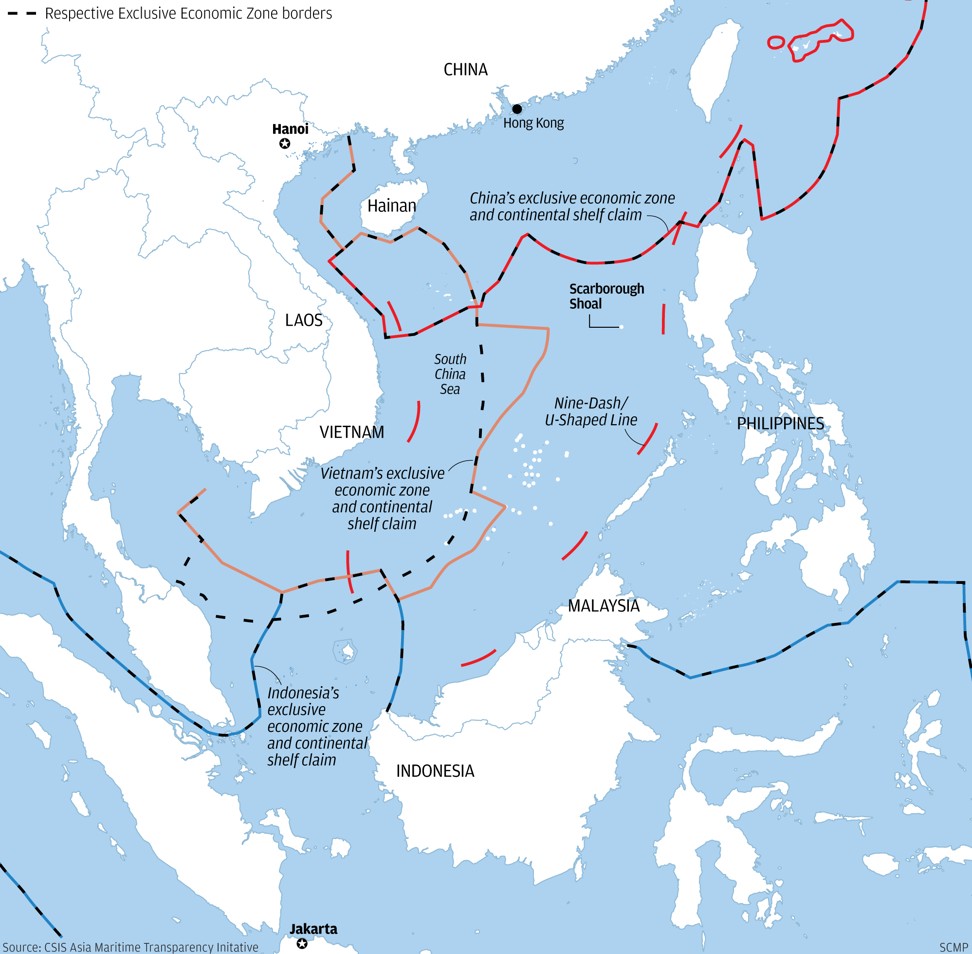
A map showing claimant countries’ exclusive economic zones in the South China Sea.
However, Chan has not explicitly expressed public support for the controversial maritime assertion.
Vietnam, Malaysia, the Philippines, Taiwan and Brunei all have competing claims in the waterway that overlap with China’s – long a source of tension in the region.
Issuing a mea culpa on Friday for failing “to predict the reaction” of the Vietnamese public, the charity asserted that their work is “non-political”.
“We are very sorry … Operation Smile will not organise any activities with [Chan’s] involvement” in Vietnam, they said.
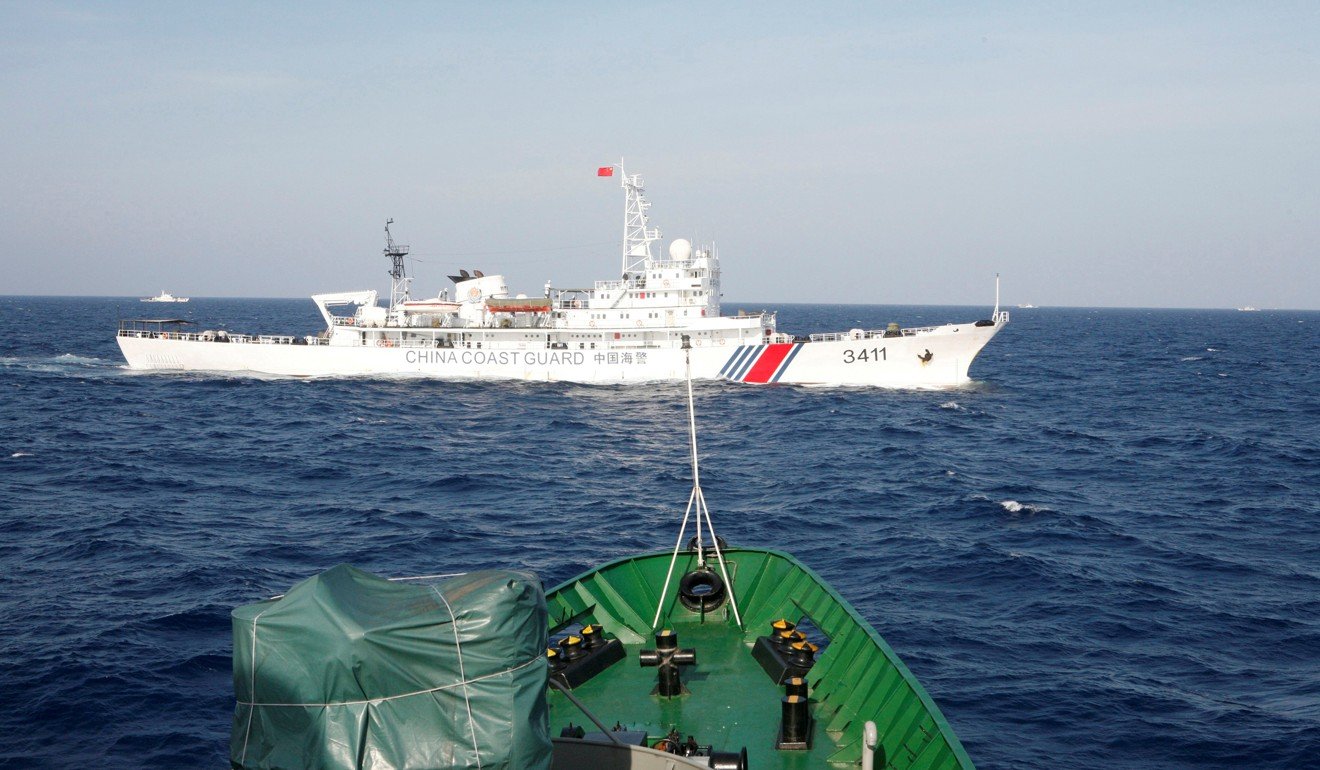
A Chinese coastguard ship sails by a Vietnamese vessel off the coast of Vietnam in 2014. Photo: Reuters
Vietnam is one of Beijing’s most vocal critics over the flashpoint South China Sea issue.
The foreign ministry on Thursday repeated its usual proclamation on the sea, citing the country’s “full legal basis and true evidence to affirm Vietnam’s sovereignty”, deputy spokesperson Ngo Toan Thang said.
Chan has in the past been accused of siding with China over Hong Kong’s democracy protests after calling the unrest in his hometown “sad and depressing”.
The comment sparked ire in Hong Kong but was warmly received by many in China where he has a massive fan base.
Abominable has been criticised for a scene showing the nine-dash line. Photo: DreamWorks
Earlier this month
Hanoi pulled the DreamWorks film Abominable from theatres over a scene featuring a map showing the nine-dash line.
Beijing claims most the South China Sea through the vague delineation, which is based on maps from the 1940s as the then-Republic of China snapped up islands from Japanese control.
Posted in Actor, angry, “Abominable”, “nine-dash line”, backlash, Beijing’s, born, Brunei, cancels, charity visit, children, claimant, claimed, coastguard ship, complaints, countries, exclusive economic zones, Facebook, facial disfigurements, film star, films, free surgery, global fishing route, Hanoi, historical justification, Hong Kong, islands, Japanese control, Malaysia, man-made, martial arts, mea culpa, military installations, Operation Smile, Philippines, plans, Republic of China, resource-rich sea, Saudi Arabia, scrapped, snapped up, South China Sea, survey ship, Taiwan, territorial claims, Uncategorized, users, Vietnam, Vietnamese vessel, waters |
Leave a Comment »
06/11/2019
- French leader calls for restraint and says he raised the topic ‘on several occasions’ during his visit
- Two sides find common ground on need to defend free trade and fight climate change as Donald Trump starts process of pulling US out of Paris Climate Agreement
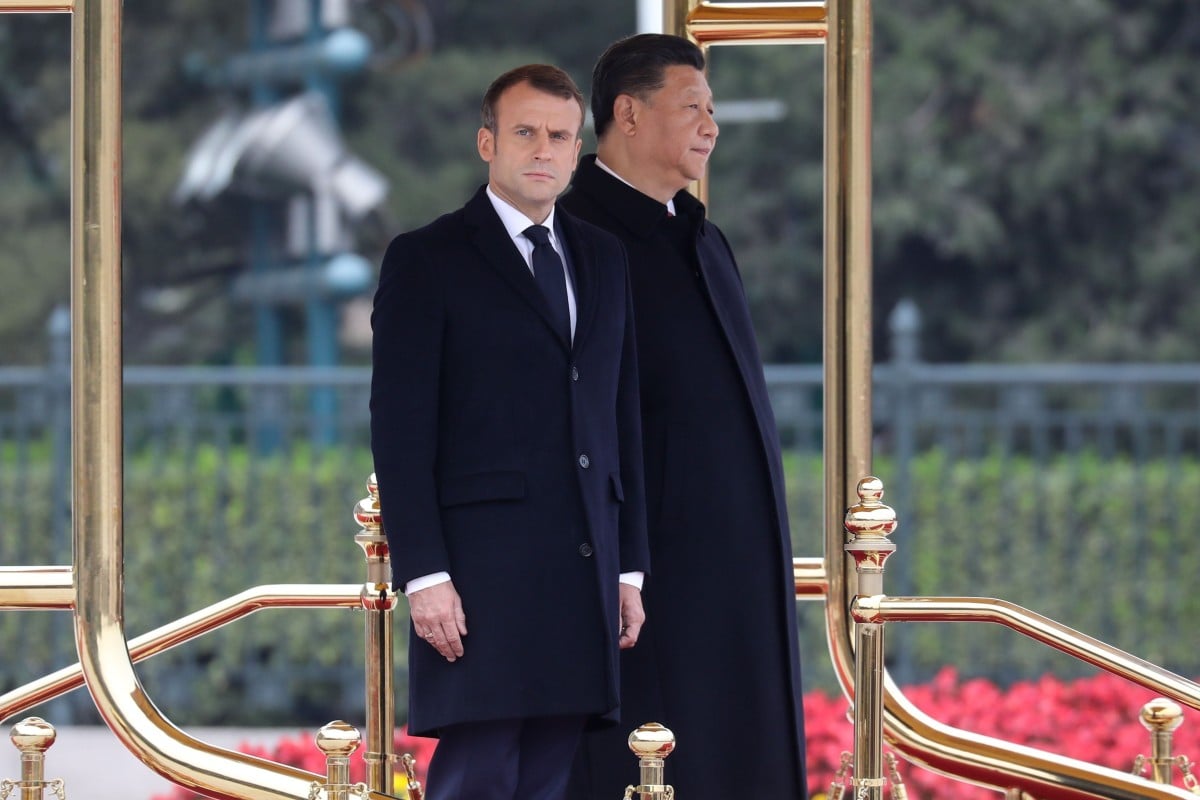
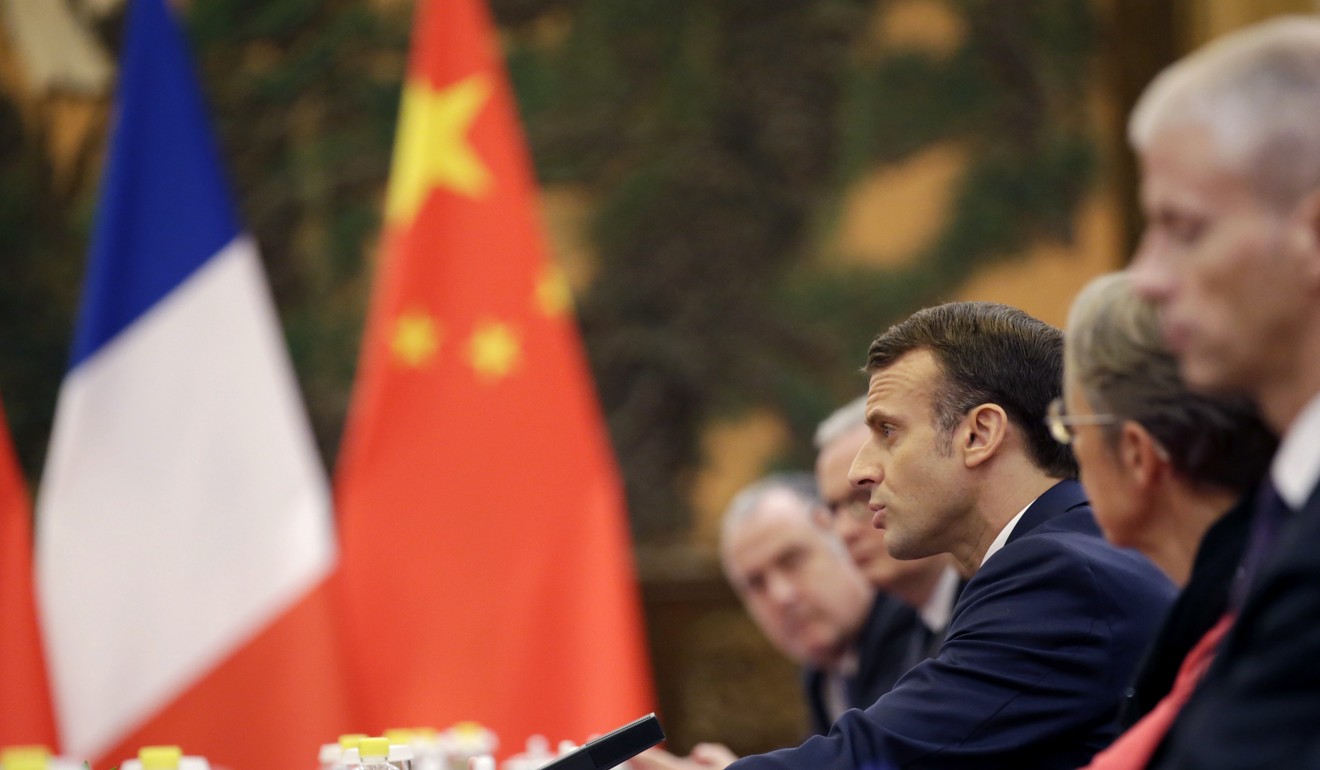
Xi Jinping and Emmanuel Macron at a welcome ceremony ahead of their talks in Beijing on Wednesday. Photo: AFP
French President Emmanuel Macron said he raised human rights and the Hong Kong situation during his talks with his Chinese counterpart Xi Jinping on Wednesday.
Macron’s visit to China concluded with pledges to work together on climate change, but the French leader also said he also called for a de-escalation of the situation in the city through dialogue after months of protests.
Macron, who had promised to raise “taboo” topics during the visit, told a press conference: “I obviously raised this with President Xi Jinping on several occasions.
“We have repeatedly called on the parties involved to [engage in] dialogue, to show restraint, to de-escalate.”
The discussion followed Xi’s meeting with Hong Kong’s embattled Chief Executive Carrie Lam Cheng Yuet-ngor in Shanghai on Monday, where he expressed “high trust” in her and “fully affirmed” support for her response to the unrest that has gripped the city since June.
Earlier the French and Chinese leaders had restated their commitment to protect free trade and pledged their continued support for the Paris Agreement as the United States begins the process of formally withdrawing from the global climate deal.
Macron expressed “regret” over “some countries’ negative attitude” towards environmental protection and the fight against climate change and pledged to work with China to halt the loss of biodiversity.
The French president’s office also released a statement on Wednesday that reaffirmed France and China’s joint support for the “irreversible” Paris Agreement.
Macron points to common ground with China on tariffs and climate action
With the European Union, China and Russia backing the pact, he added, “the isolated choice of one or another is not enough to change the course of the world. It only leads to marginalisation.”
The two countries also agreed to work together to develop joint nuclear power projects and signed a series of contracts worth US$15 billion.
The deals covered aeronautics, energy and agriculture, including approval for 20 French companies to export poultry, beef and pork to China.
An additional action plan released after the talks said French utility giant EDF and China General Nuclear Power should be encouraged to cooperate on projects in China or third countries, citing the joint efforts by the two companies to build nuclear reactors at the Hinkley Point C station in Britain as an example.
The two sides also committed to signing a contract for the construction of a nuclear fuel recycling plant in China, which would involve French energy giant Orano, by January 31.
Xi took what appeared to be a veiled swipe at the United States, which is still embroiled in a protracted trade war and other confrontations with Beijing.
“We advocate for mutual respect and equal treatment, and are opposed to the law of the jungle and acts of intimidation,” Xi said.
“We advocate for openness, inclusion and for mutually beneficial cooperation, and are opposed to protectionism and a zero-sum game.”
Macron said China and the European Union should work in partnership as the world became more unstable, calling on the two sides to further open up market access.
“We call again for trade multilateralism to respond to distortions that have appeared in the global economy, which have led to a profound rise in inequalities and imbalances that explain the surge of challenges to the international systems,” he said.
“China and Europe also share the same views that the trade war only leads to loss.”
Macron kicks off China visit with deal to protect wine and cheese from counterfeiting
Chinese state news agency Xinhua said the two countries agreed to work together to push forward with plans to assemble Airbus’s A350 model in China.
Meanwhile, Beijing Gas Group and French utility firm Engie will collaborate on a liquefied natural gas terminal and storage in the northern city of Tianjin, while France’s Total will set up a joint venture with China’s Shenergy Group to distribute liquid nitrogen gas by truck in the Yangtze River Delta.
The two countries also agreed to reach an agreement by the end of January 2020 on the cost and location of a nuclear fuel reprocessing facility to be built by Orano, formerly known as Areva.
Wu Libo a professor and director of the Centre for Energy Economics and Strategies Studies at Fudan University, said there was “great potential” for further cooperation between the two countries on nuclear energy.
“France has many useful experiences in the operation and management of nuclear power plants and its plants have long-term safe and stable operation records,” she said.
The two sides agreed to work together on joint nuclear power projects. Photo: AP
Jiang Kejun, a senior researcher at the Energy Research Institute of China’s National Development and Reform Commission, said China’s cooperation with France would add credibility to potential third-country projects.
“China has advanced third-generation technology but it’s still a new member in the nuclear power market, while France has developed nuclear energy for a long time, and its EPR reactors – a technology designed and developed in France – are in business operation,” he said.
Jiang said possible markets for the joint projects included Argentina and India, while some Middle Eastern states – such as Saudi Arabia and Qatar – had expressed interest in nuclear energy.
China’s ambassador hits out at Macron’s team for backing ‘hypocritical’ EU stance on Hong Kong
Tong Jiadong, professor of international trade at Nankai University, said that the deals between the two sides helped show that France and China could work together to counteract US unilateralism.
“Objectively speaking, this will form, or at least imply, an opposition to US unilateralism,” Tong said. “China hopes the cooperation between these two countries produces demonstrable effects for other EU member states.”
Ding Chun, a professor of European Studies at Fudan University, said he did not think the EU wanted to “choose a side” between the US and China.
But Ding continued: “If we are talking about free trade and multilateralism, there’s no doubt that the EU and China share a common view and can balance Donald Trump’s unilateralism.”
Source: SCMP
Posted in Airbus’s A350, Areva, Argentina, Beijing, Beijing Gas Group, calm, Carrie Lam Cheng Yuet-ngor, Centre for Energy Economics and Strategies Studies, Chief Executive, China alert, China’s Shenergy Group, Chinese leader Xi Jinping, Energy Research Institute, Engie, EPR reactors, EU, Europe, European Studies, European Union, French, French President Emmanuel Macron, Fudan University, Hong Kong, India, Liquefied natural gas, liquid nitrogen gas, Middle Eastern states, multilateralism, Nankai University, National Development and Reform Commission, National Development and Reform Commission (NDRC), nuclear energy, nuclear fuel reprocessing facility, nuclear power projects, Orano, Paris climate agreement, President Donald Trump, Qatar, Russia, Saudi Arabia, Shanghai, situation, talks are needed, terminal and storage, Tianjin, Uncategorized, unilateralism, United States, utility firm, welcome ceremony, Yangtze River Delta, zero-sum game |
Leave a Comment »
13/10/2019
- The likes of Saudi Arabia also saw an upswing in travellers from the mainland after the release of its new visa programme
- But fewer Chinese tourists went abroad this year, with a 15 per cent drop from 2018 attributed to more opting to visit local historical sites
Chinese tourists take photos in front of the Imperial Palace in Tokyo, Japan. Photo: Reuters
Fewer Chinese travellers went overseas during
“golden week” this year – but for those who did, Japan, Thailand and Singapore were the top-ranked destinations as tourists from the mainland gave Hong Kong a miss, according to China’s largest travel company Ctrip.
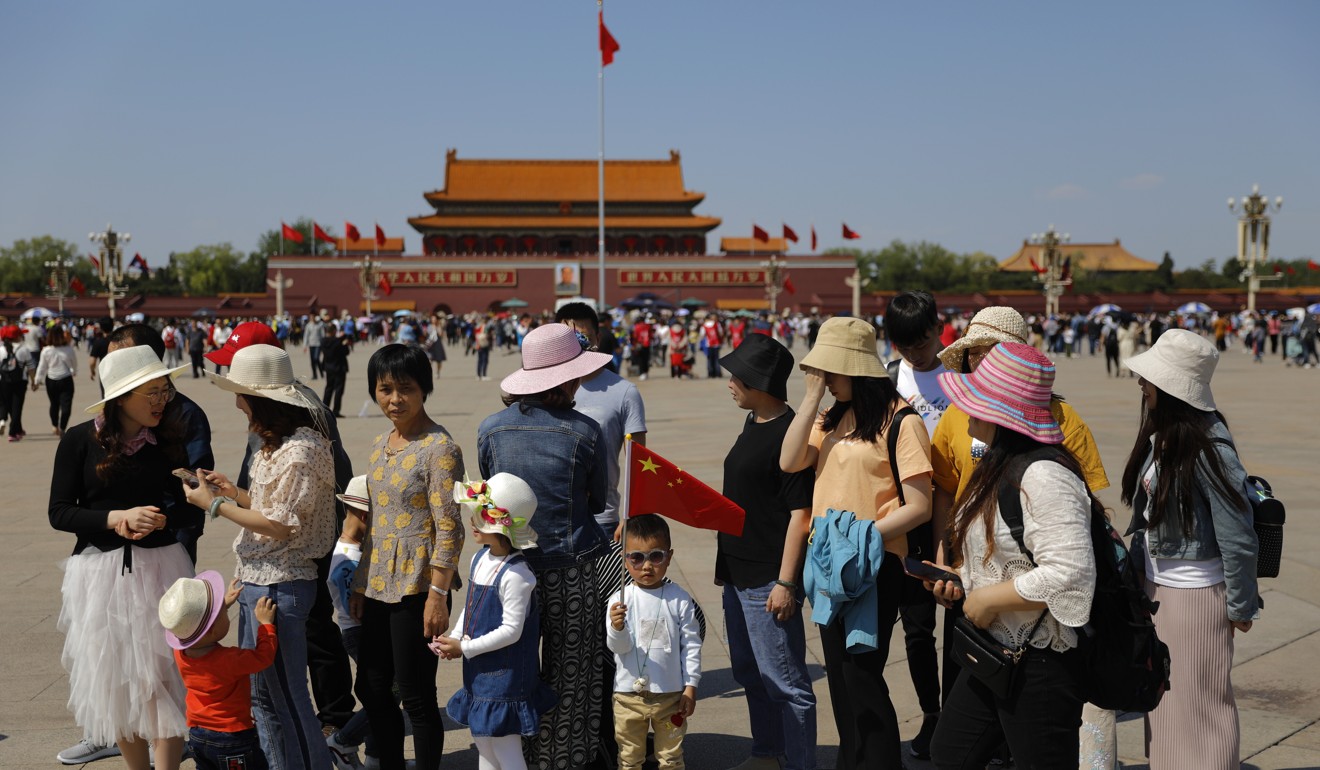
Chinese government data showed only 6.07 million people travelled during the national holiday between October 1-6, a 15.1 per cent drop from the corresponding period last year. Analysts attributed this to Chinese tourists opting for a “staycation”, as 782 million people – a 7 per cent increase from last year – chose to celebrate the 70th anniversary of the People’s Republic of China by visiting local historical sites.
How a new wave of Indian travellers are transforming tourism in Southeast Asia
For those who did venture abroad, Japan, Thailand and Singapore ranked as the top three most-booked countries in Asia during the week, according to Chinese travel firm Ctrip, as tourists from the mainland skipped protest-hit Hong Kong for other destinations.
The city, now in its 19th week of anti-government protests, over the week saw a 50 per cent overall drop in tourism from last year, as well as a 47.8 per cent reduction in border crossings at the Luohu border checkpoint, according to government figures.
Japan remained the most popular destination for Chinese tourists. In the first half of 2019, the nation saw 4.5 million visitors from China, up 11.7 per cent from the same period in 2018. In order of popularity, the top-visited cities were Osaka, Tokyo, Kyoto, Sapporo and Nagoya, according to Japanese media.
Over the same week, Japan increased its sales tax from 8 to 10 per cent, but Chinese shoppers – who accounted for 37 per cent, or US$15.4 billion, of the spending by international visitors to the nation last year – were undeterred.
Japan saw the highest volume of overseas transactions over the week, according Alipay Mobile, the world’s largest mobile payment platform. The firm declined to share the exact amount Chinese tourists had spent in Japan, but reported average spending per international traveller during golden week had increased by 15 per cent to 2,500 yuan (US$350).
From Nissan sales to Tsushima tourism, trade spat with Korea hits Japan in the pocket
Alipay is operated by Ant Financial, an affiliate of Alibaba Group Holding, which owns the Post.
Japanese department stores such as Sogo and Seibu celebrated the Chinese national holiday by holding golden week events and sales at 15 different branches across the nation, with food and arts promotions targeting Chinese shoppers.
Chinese travellers to Japan want cultural experiences involving local customs such as temple tours, heritage sites and cultural events, according to Emily Guo, a researcher at Hong Kong-based marketing research firm Cherry Blossoms.
Chinese tourists visit Tiananmen Square in Beijing. Analysts say 782 million people opted for “staycations” at local historical sites over golden week this year. Photo: EPA
Experts say Thailand – the second-most booked country during golden week, according to Ctrip – saw many repeat travellers return to the country. The nation saw 1.03 million arrivals from China in August, up 19 per cent from 2018.
Guo said these travellers were more budget-conscious than those who travelled to Japan, and enjoyed the good value and picturesque scenery for sharing on social media.
“They have already travelled to Southeast Asia before, and are therefore looking for personalised and local experiences like interacting with Thai residents, jungle treks and food tours,” she said, adding that many are willing to spend extra on immersive experiences such as a hotel in the countryside, or on a room with a forest view.
Thailand’s tourism industry gets jitters after currency surges, visitor numbers from China fall
According to Alipay Mobile, the sale of “durian experience” packages for Chinese tourists looking to taste the spiky, pungent fruit at local farms increased by 60 per cent in Thailand and Malaysia from last year.
Shopping remained on the agenda, too. Thailand ranked second for the highest volume of overseas transactions during the week, according to data from Alipay Mobile. Most Chinese shoppers frequented duty-free shops, convenience stores and local malls, according to local press.
Singapore remained a destination of choice for tourists from the mainland. The city was among the most popular “traditional destinations” for them, according to China’s culture and tourism ministry, with others including Malaysia, Thailand, Japan, Australia, France, Italy, and Russia.
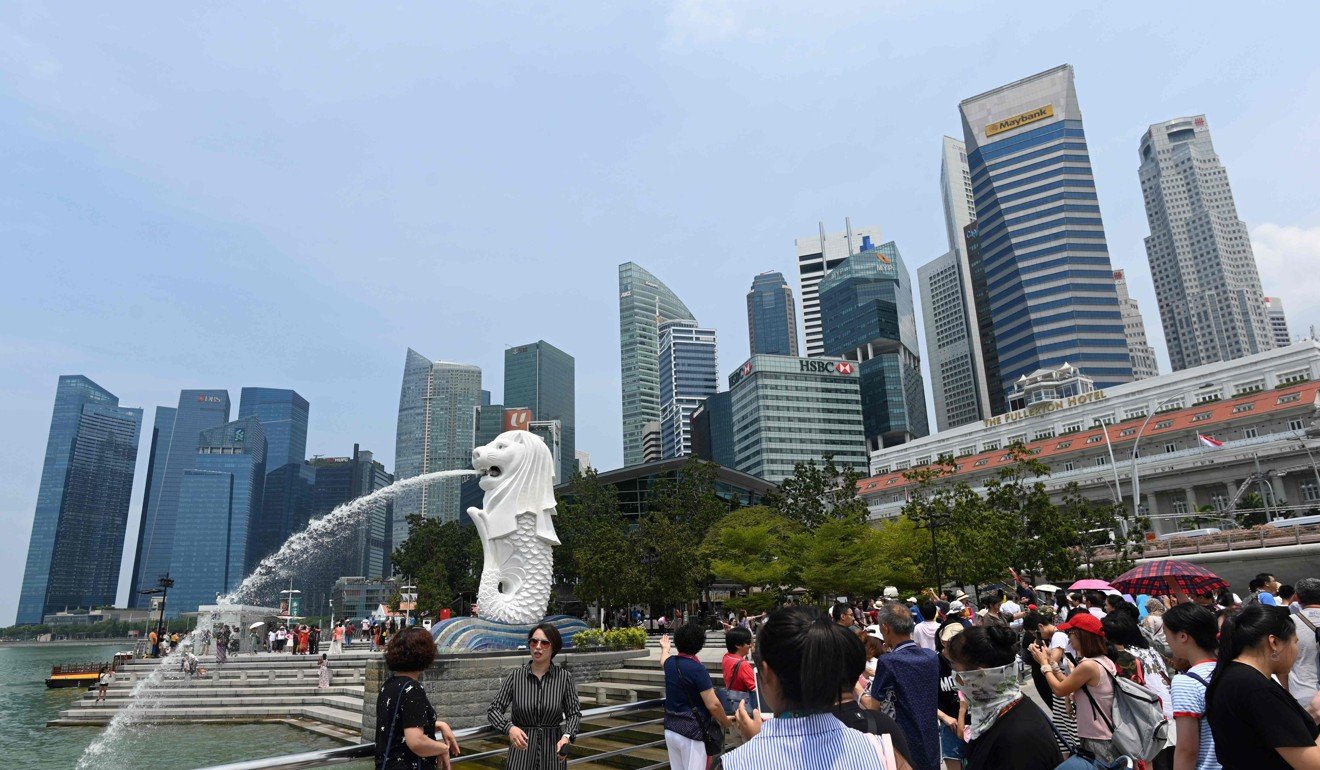
Chinese tourists visiting Singapore over golden week also seized the opportunity to check out property in the Lion City. Photo: AFP
July saw the Lion City break its record for the number of Chinese arrivals, at close to 390,000, an unprecedented 46 per cent jump from the previous month.
Analysts have attributed this to a diversion of tourists from Hong Kong, but property agents such as Clarence Foo, associate deputy group director at OrangeTee & Tie, said some of these Chinese tourists were using the golden week as a chance to eye Singaporean real estate.
“Compared to a normal week, there were probably 15 to 20 per cent more Chinese visitors who viewed property,” said Foo, who counts Singaporean and international buyers among his clients.” They are certainly more keen on Singapore [property] now as there isn’t another comparable investment destination in Asia.”
Meanwhile, the Middle East is emerging as a popular shopping destination for Chinese tourists. According to Ctrip, Dubai saw 501,000 travellers from the mainland in the first half of 2019, an 11 per cent increase from last year.
Saudi Arabia has also experienced a surge in Chinese tourists, with 7,931 heading to the country since it launched its new instant tourist visa programme on September 27. With the new visa, which can be obtained online or upon arrival, tourists can stay in the country for up to 90 days, and unwed foreign men and women can for the first time share hotel rooms.
“Saudi Arabia has the potential to become very popular with Chinese tourists,” said Guo from Cherry Blossoms, adding that travellers from the mainland are increasingly looking for exciting new adventures. “It’s a status symbol for them to visit a country others haven’t visited before.”
Source: SCMP
Posted in 70th anniversary, Alibaba Group Holding, Alipay Mobile, Australia, ‘golden week’, “staycation”, “staycations”, Beijing, benefit, celebrated, Chinese national holiday, chinese tourists, Ctrip, cultural events, cultural experiences, Dubai, durian experience, France, golden week, heritage sites, Hong Kong, Imperial Palace, Italy, Japan, Korea, Kyoto, Lion City, Luohu border checkpoint, mainland, Malaysia, Middle East, Nagoya, nation, Nissan, People’s Republic of China, Post, Russia, Sapporo, Saudi Arabia, Seibu, Singapore, Singaporean real estate, skip, Sogo, Southeast Asia, spiky, pungent fruit, temple tours, Thailand, Tiananmen Square, Tokyo, traditional destinations, travellers, Tsushima tourism, Uncategorized |
Leave a Comment »
21/09/2019
- Iranian news outlet quotes military official as saying exercise will be held soon, but Chinese media silent on reported manoeuvres
An Iranian news source says China, Russia and Iran are planning a joint naval exercise soon. Photo: Xinhua
China, Russia and Iran are planning a joint naval drill in the Sea of Oman and northern Indian Ocean “soon” a semi-official Iranian news outlet reported on Saturday, just days after the United States
blamed Iran for a drone attack on Saudi Arabian oil facilities.
General Ghadir Nezami Pour, head of international affairs and defence diplomacy of the Iranian Armed Forces General Staff, said the drill would take place in international waters, Iran Press news agency reported.
“The exercises have different goals including the exchange of tactical and military experiences and sometimes they seek political goals which show a kind of convergence between participants,” he was quoted as saying.
“Officials at the level of defence minister, chief of staff of the armed forces and commanders of the armed forces will come to Iran in the near future and these actions reflect Iran’s active defence diplomacy.”
The comments came in the aftermath of the September 14 missile strikes on Saudi Arabia’s Abqaiq and Khurais oil facilities.
Washington accused Tehran of masterminding the attacks, allegations that Iran denied.
Tehran warned that any military action by the United States or Saudi Arabia would result in “all-out war”.
US Secretary of State Mike Pompeo initially condemned the attacks on the oil facilities as an “act of war” but later said the US was seeking a peaceful solution to the crisis.
On Friday, Chinese President Xi Jinping condemned the attacks during a phone conversation with Saudi Arabia’s King Salman, adding that he hoped the incident would receive a full and fair investigation.
There was no report of the joint drill plan in Chinese media.
Analysts said the exercise was possible as China might want to show support for Iran.
“The timing of the joint exercise might be a bit sensitive and some might take it as a show of China’s support for Iran should there be any military conflicts between countries,” Beijing-based naval expert Li Jie said.
“But it might well be a regular military exchange between the countries if it is held in international waters and without targeting another country.”
China calls for calm in aftermath of drone strikes on Saudi oil facilities
Ni Lexiong, a military specialist and professor at Shanghai University of Political Science and Law, said the drill was to send the message that China would side with Iran “in extreme scenarios”.
“I don’t see things will go that far, but the navy drill is to send the intimidating message,” Ni said.
Two years ago China and Iran conducted a joint naval exercise near the Strait of Hormuz in the Persian Gulf after Washington accused Tehran of sending fast attack boats to harass US warships passing through the area.
Major General Mohammad Baqeri, Chief of Staff of the Iranian Armed Forces, was in Beijing for a three-day visit earlier this month and agreed that the two countries would have more visits with senior military officials and advance cooperation in training.
China still accounts for more than half of Iran’s oil exports, according to the United States, complicating Washington’s efforts to economically isolate Tehran in its “maximum pressure campaign”.
Source: SCMP
Posted in Abqaiq and Khurais oil facilities, accused, act of war, allegations, attack boats, attacks, Beijing, Chief of Staff of the Iranian Armed Forces, China alert, Chinese President Xi Jinping, condemned, crisis, denied, drone attack, extreme, General Ghadir Nezami Pour, head of international affairs and defence diplomacy, Indian Ocean, International waters, iran, Iranian Armed Forces General Staff, joint, King Salman, Major General Mohammad Baqeri, masterminding, message, Mike Pompeo, missile strikes, naval drill, Naval expert, navy drill, oil facilities, peaceful solution, Persian Gulf, plan, Russia, Saudi Arabia, Saudi Arabian, scenarios, Sea of Oman, Shanghai University of Political Science and Law, Strait of Hormuz, Tehran, Uncategorized, United States, US Secretary of State, US warships, visit, Washington |
Leave a Comment »
19/08/2019
LONDON (Reuters) – Crude oil prices rose on Monday following a weekend attack on a Saudi oil facility by Yemeni separatists and as traders looked for signs that U.S.-China trade tensions could ease.
Price gains were, however, capped to some degree by an unusually downbeat OPEC report that stoked concerns about growth in oil demand.
Brent crude LCOc1, the international benchmark for oil prices, was up 65 cents, or about 1.1%, at $59.29 a barrel at 1024 GMT,
U.S. West Texas Intermediate (WTI) crude futures CLc1 were up 61 cents, or 1.1%, at $55.48 a barrel.
A drone attack by Yemen’s Houthi group on an oilfield in eastern Saudi Arabia on Saturday caused a fire at a gas plant, adding to Middle East tensions, but state-run Saudi Aramco said oil production was not affected.
“The oil market seems to be pricing in again a geopolitical risk premium following the weekend drone attacks on Saudi Arabia, but the premium might not sustain if it does not result in any supply disruptions,” said Giovanni Staunovo, oil analyst for UBS.
Tensions around Iran appeared to ease after Gibraltar released an Iranian tanker it seized in July though Tehran warned the United States against any new attempt to seize the tanker in open seas.
Concerns about a recession also limited crude price gains, as traders looked for signs of progress in U.S.-China trade talks.
Meanwhile, China’s announcement of key interest rate reforms over the weekend has fueled expectations of an imminent reduction in corporate borrowing costs in the struggling economy, boosting share prices on Monday.
U.S. energy firms this week increased the number of oil rigs operating for the first time in seven weeks despite plans by most producers to cut spending on new drilling this year.
“WTI in recent weeks has performed relatively better than Brent… Pipeline start ups in the United States have been supportive for WTI, while the ongoing trade war has had more of an impact on Brent,” said Warren Patterson, head of commodities strategy at Dutch bank ING.
The Organization of the Petroleum Exporting Countries (OPEC) cut its forecast for global oil demand growth in 2019 by 40,000 barrels per day (bpd) to 1.10 million bpd and indicated the market would be in slight surplus in 2020.
It is rare for OPEC to give a bearish forward view on the market outlook.
“Such a bearish prognosis will heap more pressure on OPEC to take further measures to support the market,” said Stephen Brennock of oil broker PVM.
Source: Reuters
Posted in Brent Crude, China alert, drone attack, Gibraltar, Houthi group, Iranian tanker, Middle East tensions, Oil, oil facility, OPEC report, Organization of the Petroleum Exporting Countries (OPEC), rises, Saudi Arabia, Saudi Aramco, Saudi field, Tehran, U.S. West Texas Intermediate (WTI), U.S.-China trade tensions, UBS AG., Uncategorized, United States, Yemeni separatists |
Leave a Comment »
30/07/2019
BEIJING, July 29 (Xinhua) — The attempt of some Western countries to tarnish the image of the Xinjiang Uygur Autonomous Region is doomed to fail, and the fight against terrorism and extremism in Xinjiang should be supported and respected, a Chinese foreign ministry spokesperson said Monday.
Recently, ambassadors from 50 countries to the United Nations Office at Geneva (UNOG) have sent a joint letter to the President of the UN Human Rights Council (UNHRC) and the High Commissioner for Human Rights to voice their support for China’s position on issues related to Xinjiang.
The 50 ambassadors, who are from countries including Russia, Pakistan, Saudi Arabia, Algeria and Cuba, have collectively stated for the first time that the counter-terrorism and de-radicalization measures, including the establishment of vocational education and training centers, have effectively safeguarded basic human rights in Xinjiang, spokesperson Hua Chunying told a press briefing.
According to media reports, 24 members of the UNHRC have previously signed a letter criticizing China’s position on relevant issues.
“The 24 members, with a total population of no more than 600 million, are all developed Western countries, none of them being an Islamic or developing country. While of the 50 countries that support China are from Asia, Africa, Latin America and Europe, with a total population of nearly 2 billion, 28 are members of the Organization of the Islamic Cooperation, and their population is more than twice that of the 24 members that criticized China,” Hua said. “So it’s obvious who is right and who is wrong on the matter of Xinjiang,” she added.
Hua said many of the ambassadors who supported China’s Xinjiang policy have visited Xinjiang and witnessed the truth.
As the ambassadors pointed out, those who had visited Xinjiang found what they saw and heard was completely different from what was described in Western media reports, according to Hua.
“The ambassadors also appreciated China’s achievements in human rights, believed that Xinjiang’s establishment of vocational education and training centers, as well as other counter-terrorism and de-radicalization measures, effectively guaranteed basic human rights and urged relevant countries to stop their unfounded accusations against China,” said the spokesperson.
“This fully shows that the international community has its fair judgment on the development of Xinjiang,” said Hua, adding that attempt to smear Xinjiang and put pressure on China in the name of “human rights” will never succeed.
Pointing out that the current problem in Xinjiang is the issue of counter-terrorism and extremism rather than religious and human rights issues, Hua said the counter-terrorism and de-radicalization struggle in Xinjiang deserve support, respect and understanding.
“Faced with severe threats of terrorism and extremism, the Xinjiang Uygur Autonomous Region has taken a series of counter-terrorism and de-radicalization measures according to law, including the establishment of vocational education and training centers,” said Hua, adding that those measures have turned the situation around.
“In almost three years, not a single violent or terrorist incident took place in Xinjiang. The region now enjoys social stability and unity among all ethnic groups. People there are living a happy life with a stronger sense of fulfillment and security. They endorse the government’s policies and measures wholeheartedly,” said the spokesperson.
Noting that many of the 24 countries that denounce China’s Xinjiang policy have been victims of terrorism, Hua said relevant people and officials from these 24 countries are welcome to visit Xinjiang to learn about Xinjiang’s counter-terrorism and de-radicalization experience.
Hua said China is working with all parties to ensure that multilateral human rights mechanisms stick to the purposes and principles of the UN Charter. Human rights issues should be dealt with in an objective, fair and non-selective way. “We need to advance international human rights cause in a sound manner through constructive dialogue and cooperation.”
“We resolutely oppose any country’s act of using the Human Rights Council and other mechanisms to interfere in other countries’ internal affairs and wantonly criticize, smear and pressure others. We urge the relevant countries to correct their mistakes at once, not to politicize the relevant issue or practice double standards, and stop meddling in other countries’ domestic affairs,” she added.
Source: Xinhua
Posted in africa, Algeria, Asia, Cuba, double standards, Europe, extremism, Fight against terrorism, High Commissioner for Human Rights, Latin America, meddling, Organization of the Islamic Cooperation, Pakistan, respected, Russia, Saudi Arabia, supported, U.N. Human Rights Council, UN Charter, UN Human Rights Council (UNHRC), Uncategorized, United Nations Office at Geneva (UNOG), Xinjiang, Xinjiang Uygur Autonomous Region |
Leave a Comment »







 CHINDIA ALERT: You'll be living in their world, very soon