19/04/2020
- Faced with a backlash from the West over its handling of the early stages of the pandemic, Beijing has been quietly gaining ground in Asia
- Teams of experts and donations of medical supplies have been largely welcomed by China’s neighbours
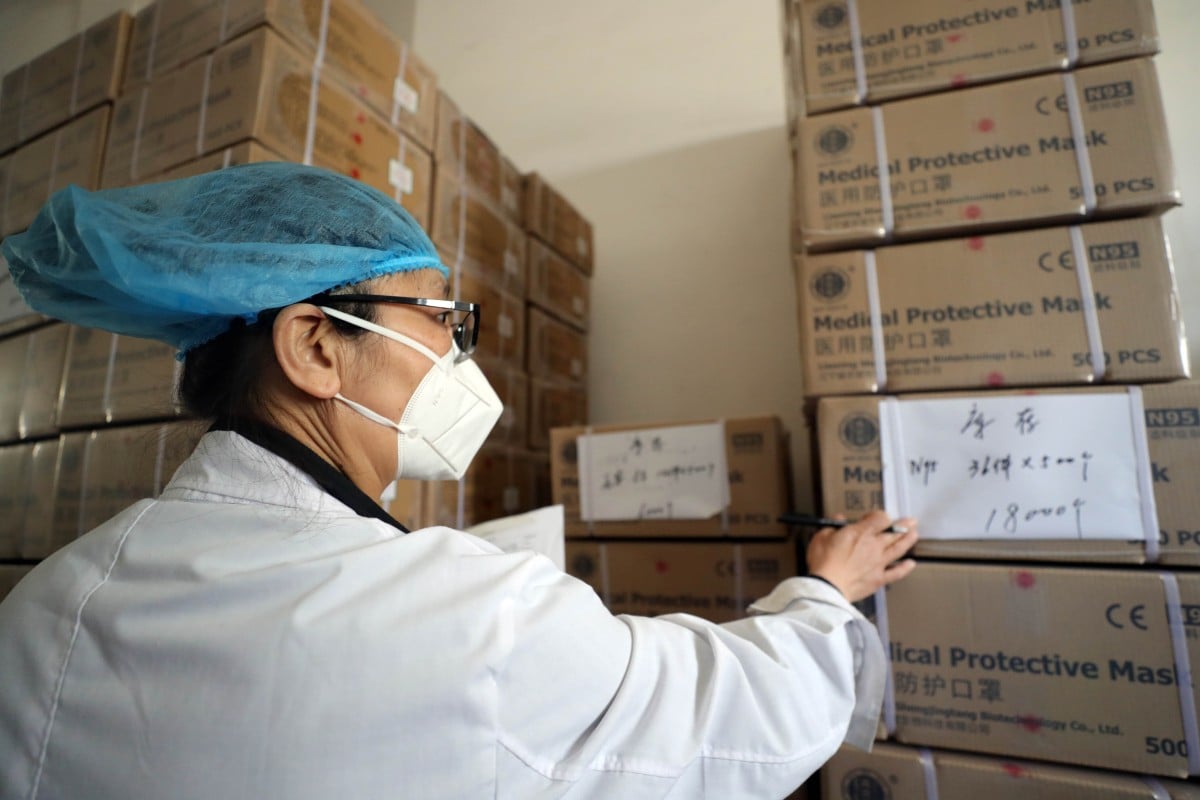
Despite facing some criticism from the West, China’s Asian neighbours have welcomed its medical expertise and vital supplies. Photo: Xinhua
While China’s campaign to mend its international image in the wake of its handling of the
coronavirus health crisis has been met with scepticism and even a backlash from the US and its Western allies, Beijing has been quietly gaining ground in Asia.
Teams of experts have been sent to Cambodia, the Philippines, Myanmar, Pakistan and soon to Malaysia, to share their knowledge from the pandemic’s ground zero in central China.
Beijing has also donated or facilitated shipments of medical masks and ventilators to countries in need. And despite some of the equipment failing to meet Western quality standards, or being downright defective, the supplies have been largely welcomed in Asian countries.
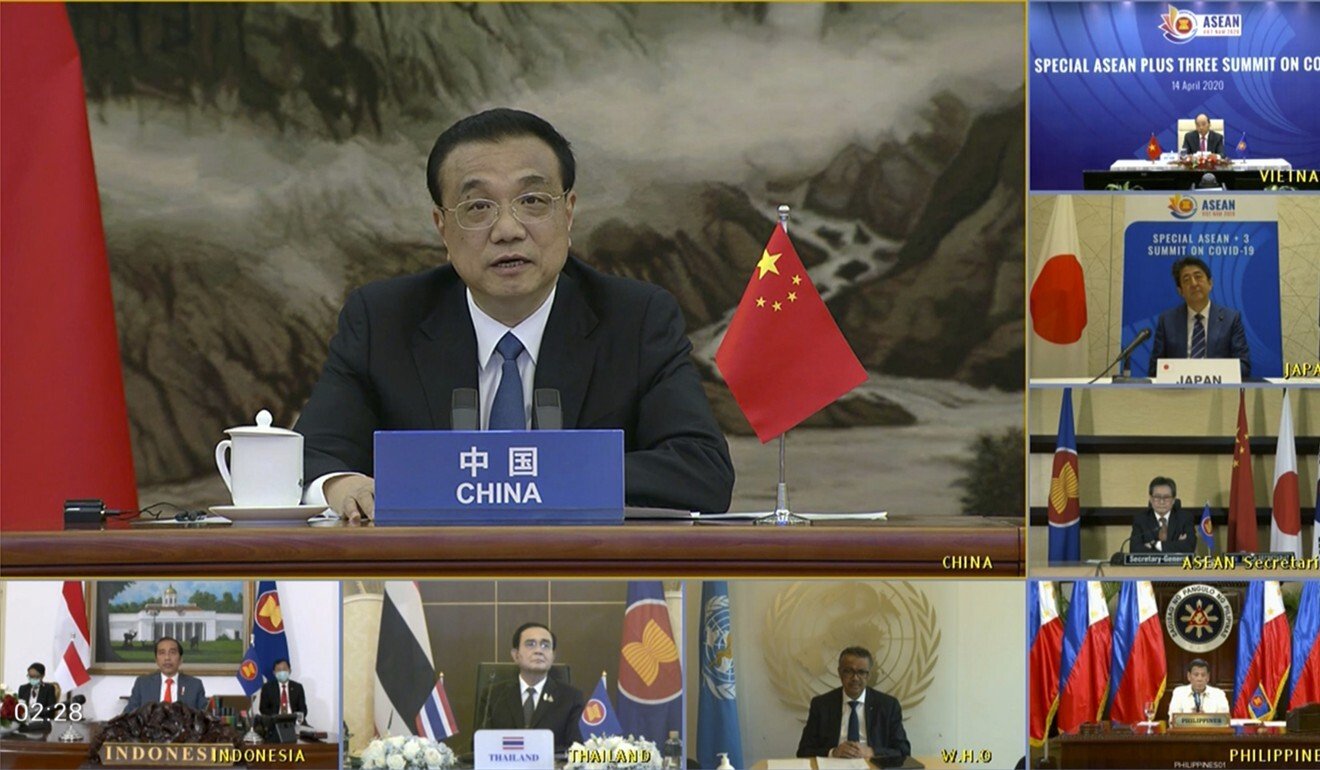
China has also held a series of online “special meetings” with its Asian neighbours, most recently on Tuesday when Premier Li Keqiang discussed his country’s experiences in combating the disease and rebooting a stalled economy with the leaders of the Association of Southeast Asian Nations (Asean), Japan and South Korea.
Chinese Prime Minister Li Keqiang speaks to Asean Plus Three leaders during a virtual summit on Tuesday. Photo: AP
Many Western politicians have publicly questioned Beijing’s role and its subsequent handling of the crisis but Asian leaders – including Philippine President Rodrigo Duterte and Japanese Prime Minister Shinzo Abe – have been reluctant to blame the Chinese government, while also facing criticism at home for not closing their borders with China soon enough to prevent the spread of the virus.
An official from one Asian country said attention had shifted from the early stages of the outbreak – when disgruntled voices among the public were at their loudest – as people watched the virus continue its deadly spread through their homes and across the world.
“Now everybody just wants to get past the quarantine,” he said. “China has been very helpful to us. It’s also closer to us so it’s easier to get shipments from them. The [medical] supplies keep coming, which is what we need right now.”
The official said also that while the teams of experts sent by Beijing were mainly there to observe and offer advice, the gesture was still appreciated.
Another Asian official said the tardy response by Western governments in handling the outbreak had given China an advantage, despite its initial lack of transparency over the outbreak.
“The West is not doing a better job on this,” he said, adding that his government had taken cues from Beijing on the use of propaganda in shaping public opinion and boosting patriotic sentiment in a time of crisis.
“Because it happened in China first, it has given us time to observe what works in China and adopt [these measures] for our country,” the official said.
Experts in the region said that Beijing’s intensifying campaign of “mask diplomacy” to reverse the damage to its reputation had met with less resistance in Asia.
Why China’s ‘mask diplomacy’ is raising concern in the West
“Over the past two months or so, China, after getting the Covid-19 outbreak under control, has been using a very concerted effort to reshape the narrative, to pre-empt the narrative that China is liable for this global pandemic, that China has to compensate other countries,” said Richard Heydarian, a Manila-based academic and former policy adviser to the Philippine government.
“It doesn’t help that the US is in lockdown with its domestic crisis and that we have someone like President Trump who is more interested in playing the blame game rather than acting like a global leader,” he said.
Shahriman Lockman, a senior analyst with the foreign policy and security studies programme at Malaysia’s Institute of Strategic and International Studies, said that as the US had withdrawn into its own affairs as it struggled to contain the pandemic, China had found Southeast Asia a fertile ground for cultivating an image of itself as a provider.
China’s first-quarter GDP shrinks for the first time since 1976 as coronavirus cripples economy
Beijing’s highly publicised delegations tasking medical equipment and supplies had burnished that reputation, he said, adding that the Chinese government had also “quite successfully shaped general Southeast Asian perceptions of its handling of the pandemic, despite growing evidence that it could have acted more swiftly at the early stages of the outbreak in Wuhan”.
“Its capacity and will to build hospitals from scratch and put hundreds of millions of people on lockdown are being compared to the more indecisive and chaotic responses seen in the West, especially in Britain and the United States,” he said.
Coronavirus droplets may travel further than personal distancing guidelines
Lockman said Southeast Asian countries had also been careful to avoid getting caught in the middle of the deteriorating relationship between Beijing and Washington as the two powers pointed fingers at each other over the origins of the new coronavirus.
“The squabble between China and the United States about the pandemic is precisely what Asean governments would go to great lengths to avoid because it is seen as an expression of Sino-US rivalry,” he said.
“Furthermore, the immense Chinese market is seen as providing an irreplaceable route towards Southeast Asia’s post-pandemic economic recovery.”
Aaron Connelly, a research fellow in Southeast Asian political change and foreign policy with the International Institute for Strategic Studies in Singapore, said Asian countries’ dependence on China had made them slow to blame China for the pandemic.
“Anecdotally, it seems to me that most Southeast Asian political and business elites have given Beijing a pass on the initial cover-up of Covid-19, and high marks for the domestic lockdown that followed,” he said.
“This may be motivated reasoning, because these elites are so dependent on Chinese trade and investment, and see little benefit in criticising China.”
China and Vietnam ‘likely to clash again’ as they build maritime militias
The cooperation with its neighbours as they grapple with the coronavirus had not slowed China’s military and research activities in the disputed areas of the
South China Sea – a point of contention that would continue to cloud relations in the region, experts said.
Earlier this month an encounter in the South China Sea with a Chinese coastguard vessel led to the sinking of a fishing boat from Vietnam, which this year assumed chairmanship of Asean.
And in a move that could spark fresh regional concerns, shipping data on Thursday showed a controversial Chinese government survey ship, the Haiyang Dizhi 8, had moved closer to Malaysia’s exclusive economic zone.
The survey ship was embroiled in a months-long stand-off last year with Vietnamese vessels within Hanoi’s exclusive economic zone and was spotted again on Tuesday 158km (98 miles) off the Vietnamese coast.
Source: SCMP
Posted in 10, 13, 15, 16, 17, 18, 1976, 27, 44, 50%, 54, according, across the world, again, against, April, areas, arriving, ASEAN, Asian, Association of Southeast Asian Nations (ASEAN), ASYMPTOMATIC CASES, at, authorities, avoid, ‘mask diplomacy’, battling, Beijing, Beijing’s, biggest, blame, blame game, borders, Britain, build, burnished, cabinet, cases, cautioning, central, central district, chairmanship, China, China's, China’s National Health Commission, Chinese capital, chinese government, Chinese market, City, clinical, closer, closing, coast, coastguard vesse, coastguard vessel, combating, compensate, confirmed, confirmed cases, considered, contain, contention, control, controversial, coronavirus, coronavirus cases, cough, countries, country’s, COVID-19, COVID-19 outbreak, cripples, crisis, criticism, cross infections, Data, day, deadly spread, death toll, deaths, declines, delegations, despite, destabilising, Disease, disputed areas, districts, domestic, down, earlier, eastern, economic recovery, economically, economy, elsewhere, embroiled, epicentre, epidemic, everybody, exclusive economic zones, experiences, eyes, facing, fall, family gatherings, fever, first time, fishing boat, flare-up, foreign policy and security studies programme, Friday, from, GDP, global leader, global pandemic, Government, Guangzhou, Haiyang Dizhi 8, handling, Hanoi’s, Harbin, health commission, Heilongjiang, high-risk, Home, hospitals, However, hubei province, hundreds, imported, imported infections, including, infected, Institute of Strategic and International Studies, interested, International Institute for Strategic Studies, investigations, irreplaceable, Japan, Japanese Prime Minister, Japanese Prime Minister Shinzo Abe, Jiaozhou, km, last, leaders, local, locally, lockdown, low-risk, lowest, mainland, Mainland China, Major, Malaysia’s, March, medical equipment and supplies, medium-risk, miles, military and research activities, millions, months-long, moved, narrative, new, nine, Northeastern, Notably, now, number, off, Official, officials, on guard, outbreak, patients, People, perceptions, Philippine, playing, political, politicians, Post, post-pandemic, pre-empt, Premier Li Keqiang, present, President Trump, prevent, previous, province, provincial capital, provincial government, publicly, published, punished, quarantine, questioned, quickly, quoted, reached, rebooting, rebound, recent, reluctant, remaining, reported, reporting, reputation, research fellow, reshape, resurgence, role, route, Russia, Saturday, saying, scratch, seen, senior analyst, shandong province, shipping data, showed, shrinks, since, Singapore, sinking, Sino-US rivalry, slow, social media, socially, soon enough, South China Sea, South Korea, Southeast Asia, Southeast Asian political change and foreign policy, southern city, spotted, spread, squabble, stalled, stand-off, State Council, statement, stood, stop, subsequent, Suifenhe, Sunday, surge, survey ship, symptoms, tally, task, test positive, Three, Thursday, Total, towards, transmitted, Transparency, travellers, Tuesday, two, Uncategorized, United States, vice governor, vice mayor, Vietnam, Vietnamese, Vietnamese vessels, virtual summit, Virus, Washington, website, weeks, were, Western, within, Wuhan, year |
Leave a Comment »
07/10/2019
NANCHANG, Oct. 6 (Xinhua) — Unlike most of his peers with an unquenchable thirst for urban life, Zhou Jing, a 23-year-old farmer painter, has a special affinity for the golden paddy fields of his hometown.
Zhou, who lives in a small town of Lichuan County, east China’s Jiangxi Province, would drive a tractor on the bumpy country road to the fields every morning, and pack up the paddies in gunny bags with his father.
With a paintbrush in hand and a paintbox on his desk, he was busy coloring a nearly finished oil painting of a bumper autumn harvest in the glow of several groggy light bulbs.
Painting in his small studio fills a pleasant hour after a day’s farm work for the young farmer who has studied painting for seven years. The scratch of paintbrushes is euphonic to his ear.
Although he chose farm work over further study or migrant work after graduating from middle school in 2012, Zhou later signed up to learn to paint at a local industrial park specialized in oil painting.
“I was hesitant, but I knew I should make a living by myself as soon as possible,” he said.
Yet his early paintings were no more than simple compositions of colored blocks, since the young man was not professionally trained. Zhou worked hard and continued to draw long after his classes had ended.
Years of practice did indeed make perfect. Zhou gradually developed his own painting style, as well as the unity of colors. He was finally recognized and started his new career as a registered painter at the industrial park in April.
Life in the countryside is improving as unremitting efforts have been made by the Chinese government to increase support for agriculture, rural areas and farmers. In Lichuan, with a population of less than 300,000, oil wall paintings by the farmers can be found everywhere.
Lichuan was selected as the “Hometown of Chinese Folk Culture and Art” for its oil painting industry in January, with the industrial park’s annual output reaching 300 million yuan (about 41.9 million U.S. dollars). More than 1,000 farmer artists have been trained, increasing their annual income by over 10,000 yuan.
“When I was little I used to envy those who ate chicken drumsticks, food that for me existed only on my drawing paper,” Zhou said. “I had long dreamed of being able to live such a life, and now those dreams have become a reality.”
Source: Xinhua
Posted in bumper autumn harvest, Bumper harvest, bumpy country road, canvas, ear, euphonic, further study, graduating, Hometown of Chinese Folk Culture and Art, Jiangxi Province, Lichuan County, local industrial park, middle school, migrant work, paintbox on his desk, paintbrush in hand, paintbrushes, scratch, specialized, tractor, Uncategorized, young farmer |
Leave a Comment »
02/10/2019
BEIJING, Oct. 2 (Xinhua) — While turning 70 often signals the beginning of a person’s twilight years, for the People’s Republic of China (PRC) it marks a golden age full of hope and vigor.
The PRC celebrated its 70th birthday on Oct. 1. China’s transformation from an agricultural society isolated from the West into the world’s second-largest economy open wide is nothing short of a miracle.
More importantly, it has charted a new path for developing countries to modernize.
Seven decades ago, the war-ravaged country started from scratch. Observers are astonished at China’s large-scale modernization, its reduction of the number of people living in poverty and the sheer volume of its consumer market. Their heads have been turned not only because of the speed of the transition but also by the unique path taken to realize this great transformation.
Reflecting on its past and present, and through experimentation, China has identified and will continue down the right path — socialism with Chinese characteristics.
Reform is the engine of China’s miracle. There is no ready-made solution for the development issues facing China. From creating special economic zones to building free trade pilot zones, from carrying out family-based production contracts to revitalizing state-owned enterprises, China has been one of the most successful countries in piloting reforms over the past decades. Now the reform is more in-depth and more comprehensive in economic, political, cultural, social and ecological sectors.
The Chinese government stresses being effective and responsive to the public interest. Development outlines are far-sighted. For example, the five-year plans are made to deal with comprehensive aspects that concern human development: food, transportation, communication, environment, health and education. These plans are a priority for the government.
Of course these achievements could never have been realized without the leadership of the CPC.
From the people and for the people, the CPC has always upheld its principle of striving for the happiness of the people and the rejuvenation of the nation.
At a life-or-death moment, the CPC shouldered the mission of saving the nation from existential peril. After 28 years of bloody struggle, it led the Chinese people to overthrow the “three mountains” placed on their heads and put an end to the semi-colonial and semi-feudal society of old China. Gone are the days where any attempt to bully China with “fists” or “intimidation” would succeed.
Despite overseas doubts, misunderstandings and predictions that its survival would be short-lived, the CPC has stunned the world with its leadership, innovative theories and ability to unite and organize the people.
It abolished the agricultural tax that had been in place for more than 2,600 years; it established a political system in which people are masters of their own affairs; it did its utmost to help people shake off poverty and keep nearly 1.4 billion people well-off.
No ruling party in the world can match the CPC’s record of adhering to the truth, versing itself in self-reform and self-purification, and turning impossibility into certainty in the face of difficulties and challenges, again and again.
The 70-year journey was never smooth. Trials and hardships abounded. The Chinese people dealt with floods and massive earthquakes and guarded against SARS and financial tsunamis. Yet these twists and turns never blocked China’s way forward but made it more sober, determined and mature.
Today, more than at any other time in history, China is closer to, more confident and more capable of achieving the great rejuvenation of the Chinese nation. However, lofty goals are never easily reached.
The world has been undergoing tremendous changes unseen in a century. Resistant external forces and headwinds still remain. “Zero-sum game” and “superior civilization” mentalities, among others, are prevailing.
The CPC will continue to lead the Chinese people to fight trade bullying, blackmailing and hegemonism. Only the CPC can lead China to emerge as a stronger country.
It all started long ago, and the journey is far from over.
Source: Xinhua
Posted in 70-year journey, agricultural society, agricultural tax, Beijing, blackmailing, bullying, chinese government, communication, comprehensive aspects, consumer market, CPC, cultural, developing countries, earthquakes, ecological, Economic, education, engine, Environment, family-based production contracts, five-year plans, floods, Food, free trade pilot zones, golden age, happiness of the people, health, hegemonism, human development, journey, living in poverty, mentalities, miracle, modernize, New China, old China, People's Republic of China (PRC), political, Reform, rejuvenation of the nation, SARs, scratch, second largest economy, semi-colonial, semi-feudal society, social, special economic zones, started, state-owned enterprises (SOEs), superior civilization, three mountains, transportation, tsunamis, turns 70, Uncategorized, war-ravaged country, witnessing, zero-sum game |
Leave a Comment »
19/09/2019
BEIJING, Sept. 18 (Xinhua) — China’s state-owned enterprises (SOEs) have navigated torrential waters over the past 70 years, from breaking the ground for the country’s industrial system to becoming the model of enterprises worldwide, and are now pledging more contributions to the world economy.
LAYING THE FOUNDATION
At a time when China’s manufacturing industry was still in its infancy, it was the SOEs that supplied the bedrock of the country’s industrial development.
The seamless steel pipe that debuted in China 66 years ago, the green-clad truck bearing the brand name “Jiefang” as well as the silver-white fighter jet that first rolled off production lines in 1956 attested to the SOEs’ early triumphs.
Seven decades have proved long enough for China’s SOEs to emulate their foreign counterparts and lead global innovation.
As a long-time pillar of the Chinese economy, the steel industry delivered a total output of 928 million tonnes in 2018, almost 5,900 times that of 1949, accounting for more than half of the world’s annual steel production.
Today, SOEs remain active in the advent and growth of China’s most acclaimed industrial fronts, including high-speed railway, supercomputers and navigation satellite systems, to name a few.
UNLEASHING VITALITY
Alongside their dazzling achievements, the SOEs’ quest to maintain vitality is equally memorable.
China’s SOEs have undergone a series of reforms in terms of shareholding, payroll and human resource management since 1978, in an effort to better fit into the big picture of China’s economy, which at the time was morphing into a socialist market economy marked by diverse corporate ownerships.
These reforms focused on granting the SOEs more leeway in making corporate decisions.
In 2003, the founding of the State-owned Assets Supervision and Administration Commission (SASAC) of the State Council further improved the management system for China’s SOEs and better prepared them for market competition.
Ongoing tasks of SOE reform include mixed-ownership reforms, employee shareholding and differentiated salary systems, with the underlying logic of delegating power unchanged.
GOING TOP-TIER
Years of continuous reforms have honed Chinese SOEs’ competitive edge, equipping them with the technologies and managerial skills needed to become global top-tier enterprises.
From 1978 to 2018, the business revenue and profit of China’s SOEs expanded at an annual rate of 11.9 percent and 10.3 percent, respectively.
The combined total assets of China’s SOEs in 2018 reached 247.1 times those in 1978, while shareholders’ equity amounted to 130 times.
The number of Chinese enterprises in the Fortune 500 list has risen for the 14th consecutive year, surpassing the U.S. in 2019 with 129 companies, among which 48 are centrally administered SOEs.
Seventy years on, the path of glory continues for China’s SOEs.
Source: Xinhua
Posted in Assets Supervision and Administration Commission (SASAC), Beijing, China’s State Council, Chinese SOEs, high-speed railway (HSR), Jiefang, navigation satellite systems, rise, scratch, seamless steel pipe, silver-white fighter jet, spotlight, State Council, state-owned enterprises (SOEs), supercomputers, Uncategorized |
Leave a Comment »






 CHINDIA ALERT: You'll be living in their world, very soon