Archive for ‘Shandong Luneng’

02/04/2020

China’s race to produce ‘super pigs’ destined to fail amid haphazard biosecurity, experts say

  • China’s pig herd has begun to build again after African swine fever devastated hog populations across the country 18 months ago
  • Scientists are racing to create disease-resistant pigs, but analysts say that will be undermined by basic hygiene problems in China’s pork industry
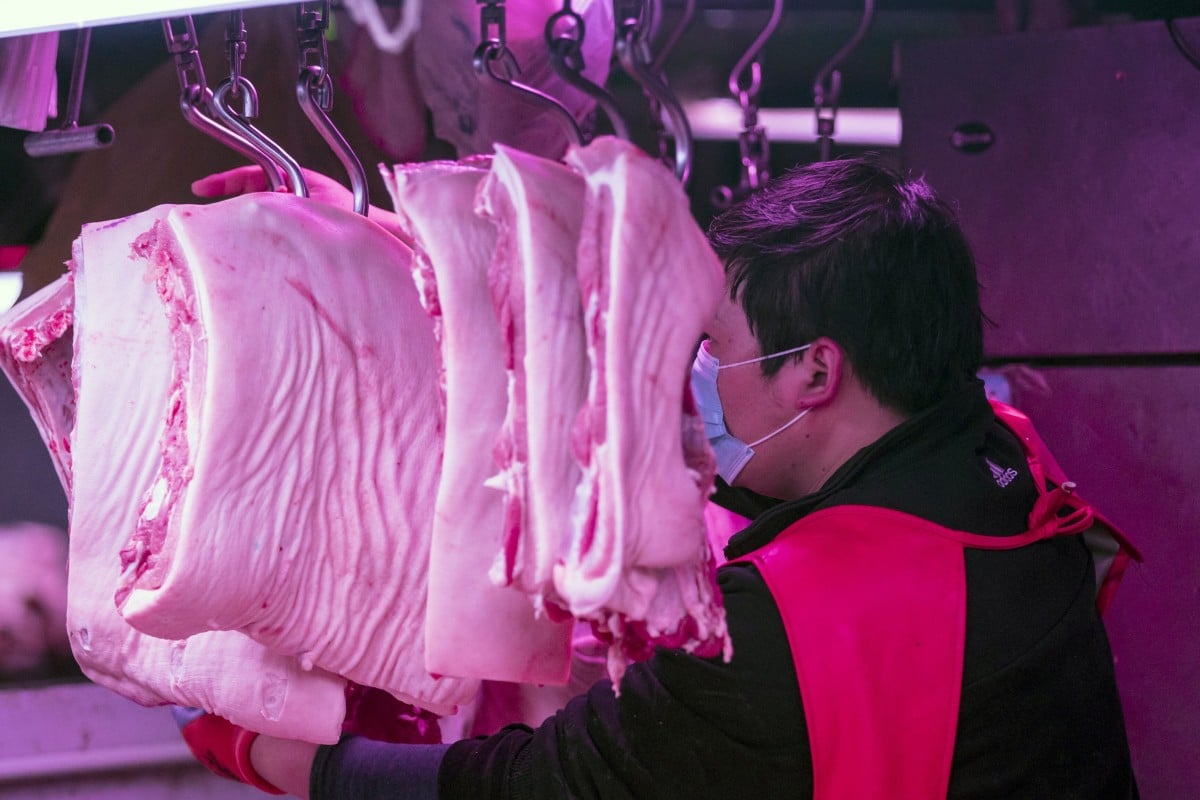
China’s pork industry has been severely dented by African swine fever disease in the past 18 months. Photo: Bloomberg

China should focus less on developing disease-resistant “super pigs” to protect its hog herd from infection and do more to improve basic biosecurity, analysts say, as several companies claim to be close to a breakthrough treatment for African swine fever.

China’s hog herd has begun to steadily rebuild after swine fever spread across the country a year and a half ago, killing or forcing the culling of 60 per cent of the pig population, according to authorities.

But poor biosecurity – including the transport of pigs in filthy trucks and a lack of disinfection at farms – still threaten the industry, observers said.

There is no commercially available vaccine for the disease – which is not harmful to humans – but a number of researchers claim they are close.

Swine fever could kill 25% of the world’s pigs, scientists say
China’s Harbin Veterinary Research Institute, the country’s top research body on animal diseases, said last month it had developed a vaccine for African swine fever (ASF) that laboratory testing showed was safe and effective. However, it did not give a timetable on when it would be available for commercial use.

Meanwhile,Shandong Landsee Genetics, a company in China’s eastern Shandong province, was reported this week to have successfully bred ASF-resistant pigs. The pigs, called Lansibai-2, are from the large white breed, one of the most common raised in China.

When approached for comment, a spokeswoman for the company said the research was confidential and she was not authorised to speak to media.

Despite the apparent progress, analysts are generally sceptical that a silver bullet to prevent the disease will be developed on a large scale any time soon.

“Because this disease has been found in many countries, I don’t think there has been major progress [when it comes to eliminating the disease],” said Chenjun Pan, senior analyst for animal protein at Rabobank. “There have been some vaccines, but the effectiveness of the vaccines is not that satisfactory. So far there haven’t been any solutions from a medical perspective.”

There have been some vaccines, but the effectiveness of the vaccines is not that satisfactory – Chenjun Pan

China’s swine fever problem was complicated by an unwillingness from local governments to diagnose and report ASF cases, said E.W. Johnson, of Enable AgTech Consulting in Beijing. It was also complicated by basic hygiene problems, he added.

“Pigs with ASF are sold to slaughter every day, and dirty trucks are going everywhere, spreading the disease as much as they did when the ASF outbreak began,” Johnson said.

“There is no doubt that people are very excited and extremely zealous about these super-pigs. [But] China seems intent on living with ASF rather than getting rid of it.”

“The most important problem now is how to control the ASF epidemic, and this is not the way to do it,” said Feng Yonghui, chief analyst at pork industry website Soozhu.com. “The whole global industry recognises that the greatest preventive measure is improving biosecurity.”

he whole global industry recognises that the greatest preventive measure is improving biosecurity – E.W. Johnson

Improved hygiene can lower the risk of disease in production, said Feng, including sickness caused by bacteria and viruses, like transmissible gastroenteritis, a coronavirus found in pigs.
“It’s a system – you can’t just do one step in the process,” he said. “The whole industry has to study it, and we still need time to improve.”
Basic controls – like keeping pig transport trucks clean, or disinfecting protective equipment used by workers on pig farms – is simple but comes at a price, and some smaller pig farms are struggling to keep up.
China’s outbreak of African swine fever pushes pork off the Lunar New Year menu
“What we’re worried about are the people on the lower rungs of the ladder who aren’t able to keep up with better practises,” Feng said. “If we are to get pig stocks back up to where they were before the outbreak within three years, this is the key issue that stands in the way.”
China’s pork industry is at a turning point in production unlike at any other time in history, he said.
“In the past, when it came to upgrading production, or when the industry went into loss, all producers big and small began again at the same starting line,” he said. “That’s because there was no threat of disease. Now, those with money get to run first.”
Pork prices in China, the world’s top consumer and producer of pork, have surged since AFS began cutting back supply, driving margins up for both domestic and imported pork.
The world’s biggest pork processor, Hong Kong-listed WH Group, reported a 32 per cent jump in profits last year as record high pork prices in China boosted the value of the company’s exports from the United States and lifted margins on its China sales.
China’s deadly African swine fever epidemic is spreading across Asia
China’s total pork production in 2019 was 42.55 million tons, a decrease of 21.3 per cent from 2018, data from the National Bureau of Statistics showed. In 2018, the total pork output was 54.037 million tons, down 0.9 per cent from 2017.
While researchers race to find a cure for swine fever, new cases keep cropping up across the country. On Wednesday, the Ministry of Agriculture and Rural Affairs said local authorities in Sichuan had detected infections in piglets transported from outside the province.
Another outbreak was recorded in Inner Mongolia, where local authorities detected the disease in a herd of 200 piglets on a farm in Ordos city, which killed 92 of the animals, according to the agriculture industry.
Authorities are also monitoring cases of ASF in piglets smuggled into the country and would launch a 60-day investigation into illegal transport of hogs this month.
Source: SCMP
09/08/2019

China on red alert as Typhoon Lekima bears down on east coast

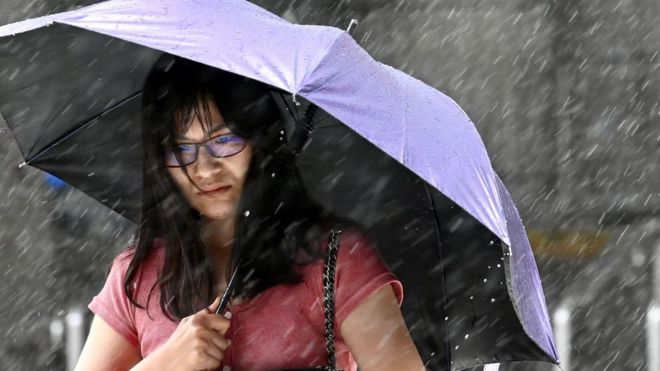
A woman shields herself with an umbrella as she walks in New Taipei City in rain brought by Typhoon Lekima as it passes northeastern Taiwan on August 9, 2019Image copyright AFP
Image caption Lekima has brought heavy rain to Taiwan

Chinese authorities have declared a red alert as a powerful typhoon heads towards the eastern coast.

Typhoon Lekima is currently battering Taiwan with winds of more than 190km/h (120mph) and is due to make landfall in China’s Zhejiang province on Saturday.

Emergency teams have been deployed to the region to guide relief work, China’s emergency ministry said.

Thousands of people further up the coast in Shanghai have been warned to prepare to evacuate.

Lekima, which is the ninth typhoon so far this year, strengthened into a super typhoon late on Wednesday, but Taiwanese authorities have since downgraded it to a regular typhoon.

Flood warnings have been issued for eastern sections of China’s Yangtze River and the Yellow River until Wednesday. The provinces of Jiangsu and Shandong are also on alert.

Cruise liners have been told to delay their arrival in Shanghai and some train services have been suspended over the weekend.

Beijing has also cancelled some trains heading to and from the Yangtze delta region.

Lekima is one of two typhoons in the western Pacific at the moment. Further east, Typhoon Krosa is spreading heavy rain across the Northern Mariana Islands and Guam. It is moving north-west and could strike Japan some time next week, forecasters said.

Media caption BBC Weather’s Sarah Keith-Lucas on typhoons Lekima and Krosa

Lekima was passing the north of Taiwan on Friday, causing flight cancellations and the closures of schools and offices.

Power was cut to more than 40,000 homes and the island’s high speed rail service was suspended north of the city of Taichung, local media reported.

The huge storm came a day after eastern Taiwan was rattled by a 6.0 magnitude earthquake. Experts said the risks of landslides triggered by the tremor were made more likely by the typhoon dumping up to 900mm (35 inches) of rain on Taiwan’s northern mountains.

Media caption The 6.0 earthquake in Taiwan was caught on cat cam

Lekima also brought heavy rain and high winds to south-west Japan on Friday, cutting power to about 14,000 homes, broadcaster NHK reported.

China’s weather bureau said Lekima was expected to have weakened further by the time it made landfall. The country has a four-stage colour-coded warning system, with red representing the most severe weather.

Source: The BBC

06/07/2019

Can China win the soccer World Cup with a handful of naturalised players? Probably not

  • President Xi Jinping has made no secret of his desire for China to one day host and maybe even win football’s greatest prize
  • But a few passport-switching foreigners are unlikely to be enough to make his dreams come true
China’s soccer team has high hopes, but it still has a long way to go before it can even dream of competing on the world stage. Photo: Reuters
As China targets a place at the 2022 World Cup, England-born 
Nico Yennaris

recently became the first foreign player to join the men’s national soccer team as a naturalised citizen.

On his identity card he is listed as ethnic Han.
Several foreign soccer players and other sportspeople have become Chinese citizens in recent years, many of them drawn by the huge financial rewards on offer.
Naturalisation has a long history in many countries, but it is a new concept in China, whose football association only publicly announced it would use it to boost its talent pool late last year. President Xi Jinping’s passion for the game and ambitions for China to host and maybe one day win the World Cup has been public knowledge since before he became leader.
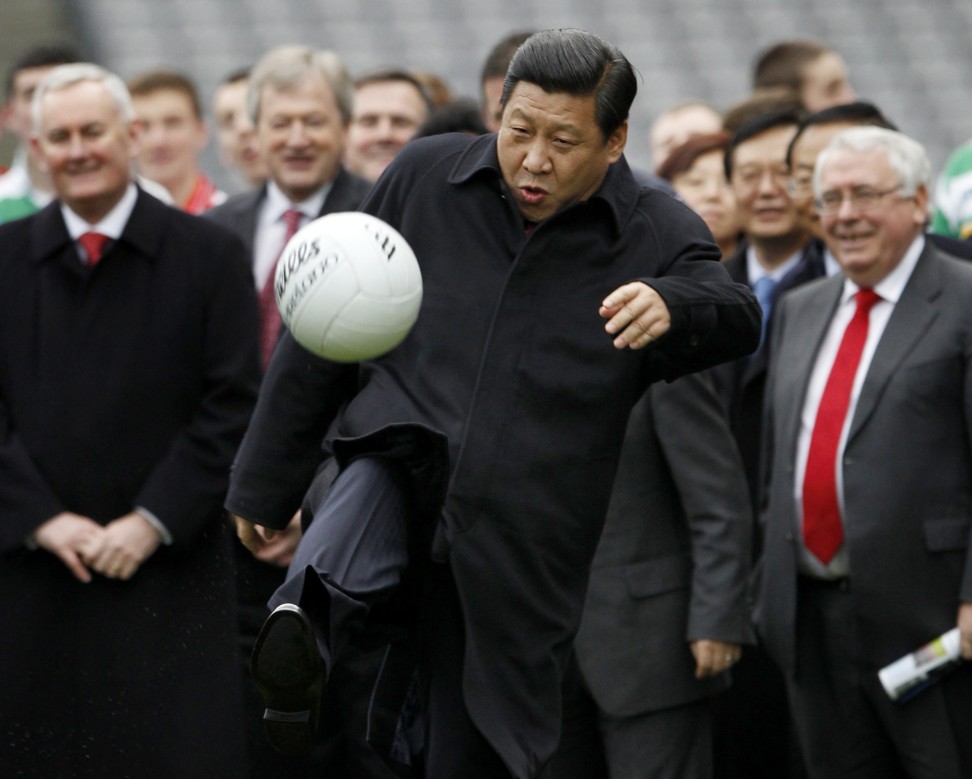
Chinese President Xi Jinping, pictured on a 2012 visit to Croke Park in Dublin while still vice-president, has big dreams for China’s soccer team. Photo: Reuters

John Hou Saeter, who was born to a Norwegian father and Chinese mother, in February became the first professional footballer to switch to Chinese citizenship. The 21-year-old, now known as Hou Yongyong, plays for Beijing Sinobo Guoan, one of the top teams in the Chinese Super League.

Another English player, Tyias Browning, recently joined Guangzhou Evergrande Taobao and is set to complete the process of applying for Chinese citizenship soon, Reuters reported last month.

Yennaris’ naturalisation may help bring China into 21st century
At a work conference in December, Du Zhaocai, the Communist Party secretary of the

Chinese Football Association

(CFA), promised to introduce new policies on naturalisation to help clubs attract players from overseas to join the Super League.

Professor Chen Xiyao from Shanghai University of Sport said such a move would have been unthinkable in the past.

“This is something new in China,” he said. “In the past we only saw our own athletes becoming naturalised citizens of other countries, but not foreign players coming to play for us.”

While the trend was undoubtedly prompted by Xi’s ambitions, Chen said it was also linked to the country’s growing economic prowess and wealth.

“China’s economic growth means it has become better known internationally. Everybody thinks China has money and sports clubs are spending huge sums to attract top players,” he said.

Former Everton player Tyias Browning now plays for Guangzhou Evergrande Taobao. Photo: Reuters

Mark Dreyer, founder of the China Sports Insider website, said naturalised players were motivated not only by money, but also the chance to increase their exposure and possibly play in a major tournament, which they would otherwise not get the chance to do.

“The rewards for the players are fairly clear: more money, more exposure and a shot at playing in the biggest tournaments in the world with China, which they wouldn’t have got if they’d stayed with their original countries,” he said.

“For athletes of Chinese descent, there will also be varying degrees of patriotism built into this as well.”

It is not just soccer players who are making the move top China. It is also happening in other sports, like ice hockey and figure skating.

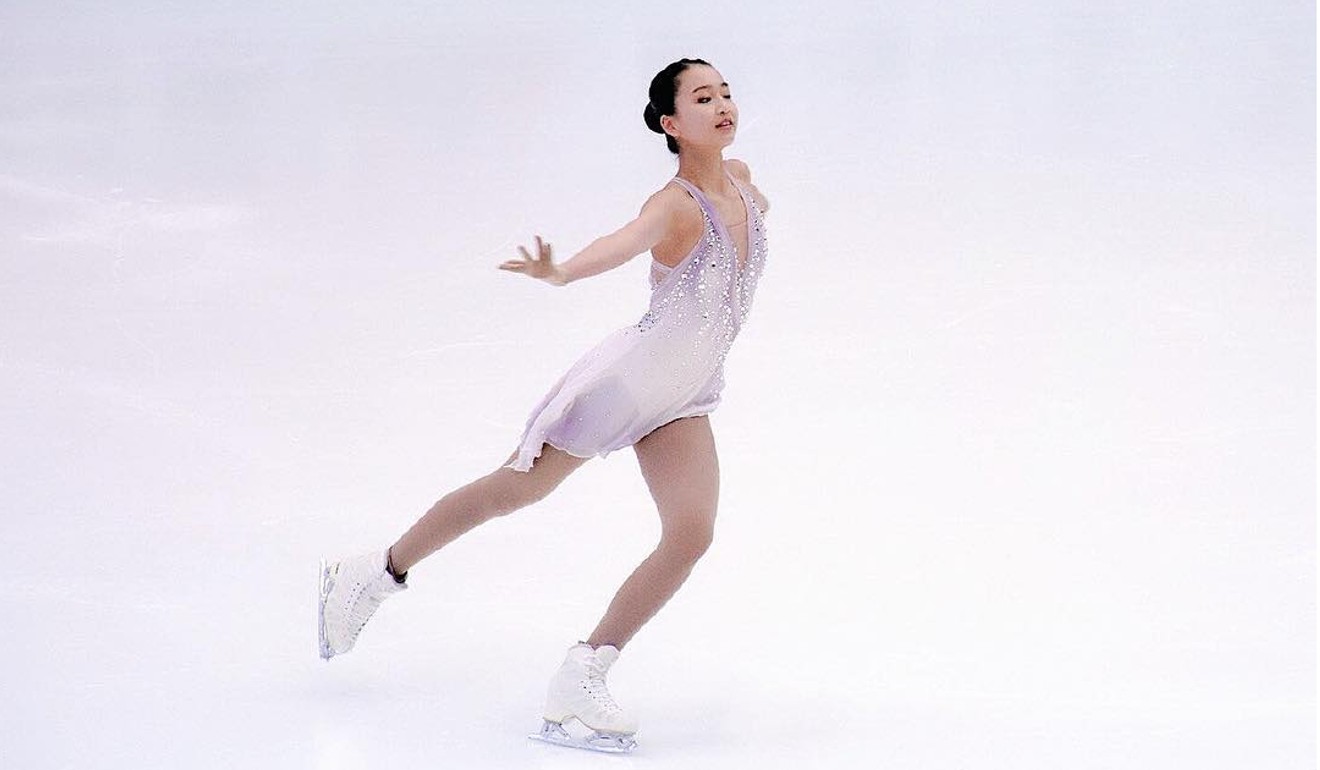
US-born Beverly Zhu, who won the 2018 US Figure Skating Championships, triggered a heated discussion in China after she joined the Chinese team last year, which means she can compete for the host nation at the Beijing 2022 Winter Olympics.

In ice hockey, a number of overseas players have also been naturalised, including Zach Yuen from Canada, who may also represent China in Beijing in 2022.

Beverly Zhu, who won the 2018 US Figure Skating Championships, joined the Chinese team last year. Photo: Instagram

Roy Chu, a lawyer with Links Law Offices in Shanghai who specialises in the sports industry, said that as China does not recognise dual nationality, foreigners have to give up their citizenship if they want to get a Chinese passport and apply for naturalisation.

“Therefore, the players to be naturalised have to be willing to represent China on the one hand, and on the other have a Chinese family background so as to simplify the legal procedures,” Chu said.

Browning’ grandfather and Yennaris’s mother are Chinese.

Dreyer said: “The players who choose to swap clearly think that the rewards outweigh the negatives of trading in their passport for a Chinese one.”

Under Chinese law, only foreigners with Chinese ancestry or those who have lived in China for at least five years can apply for Chinese citizenship. All but one of the sportsmen and women who have so far made the switch have Chinese ancestry.

The exception is Pedro Delgado, who was born and raised in Portugal but now plays for Shandong Luneng. He gained his Chinese citizenship last month and, according to the club, is the first foreign player without Chinese ancestry to become naturalised.

John Hou Saeter, who was born to a Norwegian father and Chinese mother, in February became the first professional footballer to switch to Chinese citizenship. Photo: Instagram

The naturalisation process is the same for sportspeople as it is for anyone else.

“The list of paperwork required by the Ministry of Public Security is quite short, but it doesn’t specify how long it takes to finish each step. So in that sense there is quite a lot of uncertainty,” Chu said.

“Those with Chinese ancestry will become the top targets for naturalisation in the short term so clubs can improve their talent pool, while those without may need more policy support,” he said.

London-born Nico Yennaris recently became the first foreign player to join China’s national soccer team as a naturalised citizen. Photo: AFP

Naturalised players also faced many challenges in China, especially if they did not speak the language or knew little about the culture, he said.

“Aside from settling into a completely different environment, they may also face resentment from their teammates, especially if those players lose their places in the team to the new arrivals,” Dreyer said.

“If the national team has several naturalised players, cliques could develop. We saw this in the US football team, when several German-born Americans were drafted in to play for the national team, causing internal rifts.”

And if the “foreign” players did not perform to the highest standards, the fans might also turn on them, he said.

Xi Jinping has made no secret of his desire to improve China’s and supports events at the school level. Photo: EPA
Under a

CFA directive

issued in March, footballers who become Chinese citizens must be also be educated to be patriotic and learn about the Communist Party. Clubs must also issue monthly reports on how the new players are settling in.

Grass-roots organisations within the Communist Party of China would be “in charge of educating such footballers on the history and basic theory of the party”, it said.
Dreyer said that while the naturalisation process might help China’s ice hockey team to perform slightly better at the 2022 Olympics than it had in the past, it was unlikely to have much of an impact on China’s international soccer ranking. China’s national team has only once qualified for the World Cup, in 2002.
“There is a reason they [naturalised players] didn’t play internationally for their original countries – they weren’t considered good enough,” he said.
“So they are not suddenly going to turn into world-beaters simply by pulling on a Chinese jersey.”
Chen agreed.
“I think it is just a short-term measure that will not truly change China’s overall performance in football or other sports,” he said. “After all, it’s an 11-person team game.”
Source: SCMP
Law of Unintended Consequences

continuously updated blog about China & India

ChiaHou's Book Reviews

continuously updated blog about China & India

What's wrong with the world; and its economy

continuously updated blog about China & India