29/12/2019
TAIYUAN, Dec. 28 (Xinhua) — Authorities have begun to tap north China’s Shanxi Province’s winter tourism potential to bolster the local economy.
The Shanxi government has launched a “snow and ice” tourism ceremony in Jinzhong City and released a guide on the tourism products in the province known for its collieries.
Shanxi has abundant highland resources, and its icy period in winter is usually quite long, making it perfect for winter tourism, according to the provincial department of culture and tourism.
“We promote ice skating, hot springs and local traditions here,” said deputy department head Li Gui. “We have selected more than 30 winter tourism products for the public.”
Li said the sector is still “at a developing stage,” and that the local government will pay more attention to support it in the future.
Source: Xinhua
Posted in "snow and ice", department of culture and tourism, hot springs, Jinzhong City, red hot, Shanxi, Shanxi's, skating, Taiyuan, turns, Uncategorized |
Leave a Comment »
05/12/2019
ZHENGZHOU, Dec. 5 (Xinhua) — Archaeologists have unearthed a number of circular foundations at a Neolithic site of Longshan Culture dating back about 4,000 years in Huaiyang, central China’s Henan Province, and believe they are one of China’s earliest granaries.
The Shizhuang Site was discovered when workers built a factory. According to an archaeological survey, the site covers 30,000 square meters with the main living area of 5,000 square meters surrounded with rammed earth walls. The ground bases of the granaries are located inside the ancient settlement.
The Henan Provincial Institute of Cultural Relics and Archaeology began excavation of the site in July.
Cao Yanpeng, an associate researcher at the institute, said the Longshan Culture represents a gradual transition from a primitive society to a civilized era. The cultural sites were discovered in places in the middle and lower reaches of the Yellow River, including the current provinces of Shanxi, Shaanxi, Henan and Shandong.
The main artifacts from the culture are characterized by black pottery.
“Granaries from that period, especially circular ones, were rarely found in previous discoveries,” said Lei Xingshan, secretary of the Party Committee of Peking University’s School of Archaeology and Literature.
The site also contains cultural remains from the Spring and Autumn period (770 B.C.- 476 B.C.), and Han (202 B.C.-220) and Tang (618-907) dynasties.
Source: Xinhua
Posted in 4,000-year-old, Archaeologists, black pottery, Central China, circular foundations, discovered, dynasties, granaries, Han (202 B.C.-220), Henan, Henan province, Henan Provincial Institute of Cultural Relics and Archaeology, Huaiyang, Longshan Culture, Neolithic, Peking University's School of Archaeology and Literature, ruins, shaanxi province, shandong province, Shanxi, Spring and Autumn period (770 B.C.- 476 B.C.), Tang (618-907), Uncategorized, unearthed, Yellow River |
Leave a Comment »
02/12/2019
- World’s largest coal consumer shows little sign of ending its dependency even though it is also the biggest market for renewable energy sources
- UN climate summit is meeting to discuss ways to limit future warming, but hopes are fading that China will commit to further curbs on emissions
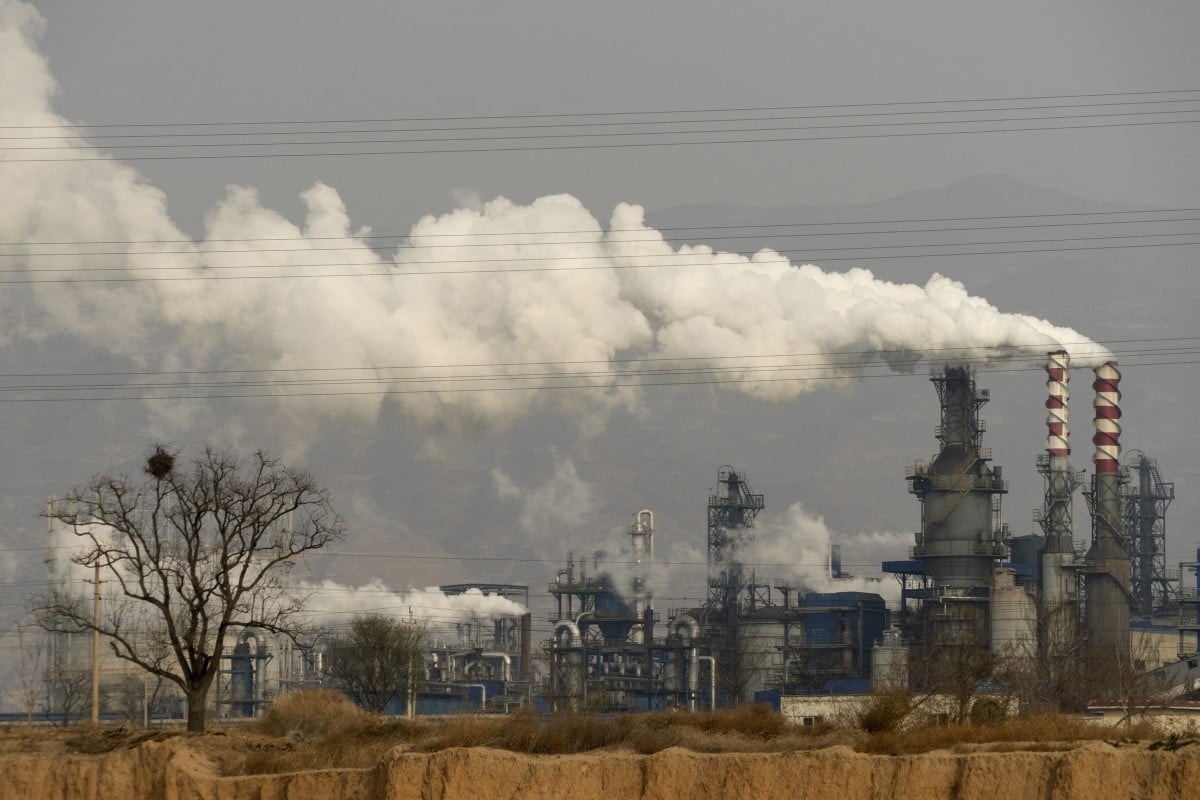
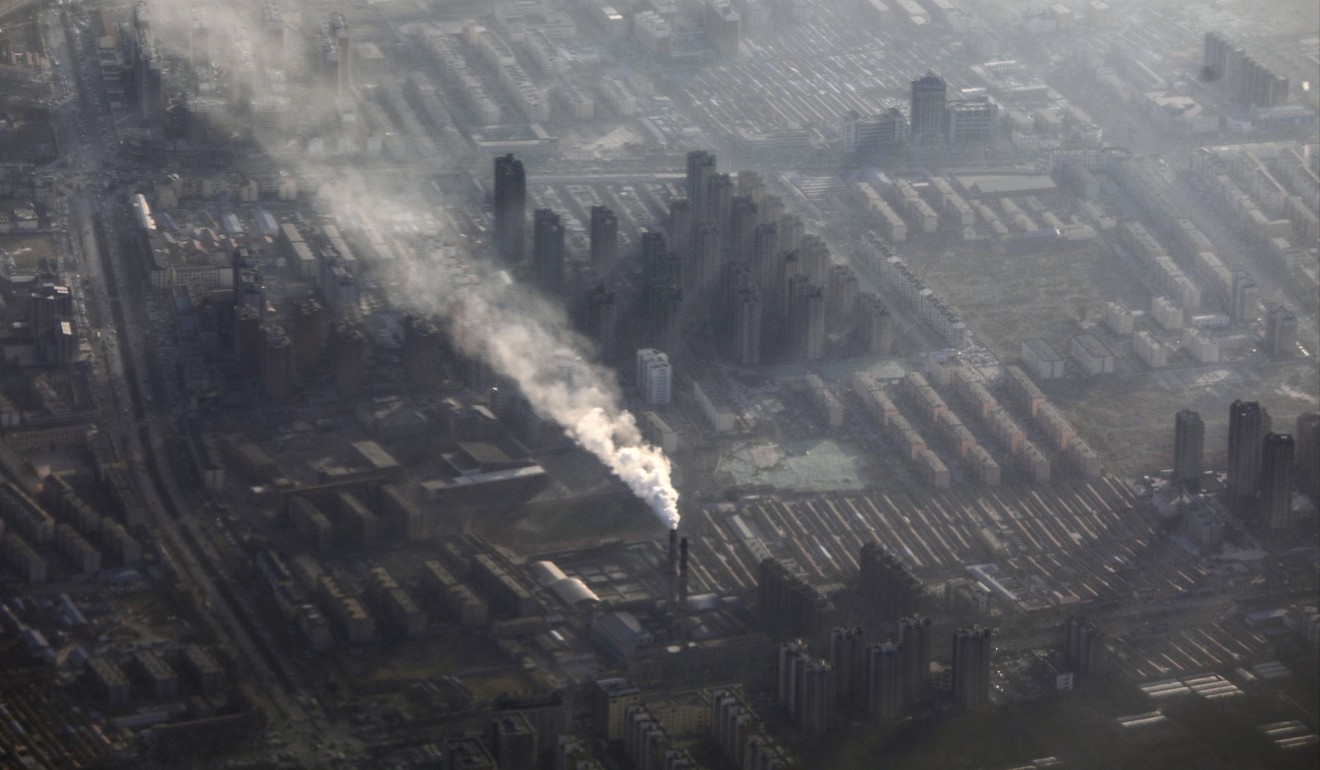
China now accounts for around 30 per cent of the world’s carbon emissions. Photo: AP
As world leaders gather in Spain to discuss how to slow the warming of the planet, the spotlight has fallen on China – the top emitter of greenhouse gases.
China burns about half the coal used globally each year. Between 2000 and 2018, its annual carbon emissions nearly tripled, and it now accounts for about 30 per cent of the world’s total.
Yet it is also the leading market for solar panels, wind turbines and electric vehicles, and it manufactures about two-thirds of solar cells installed worldwide.
“We are witnessing many contradictions in China’s energy development,” said Kevin Tu, a Beijing-based fellow with the Centre on Global Energy Policy at Columbia University. “It’s the largest coal market and the largest clean energy market in the world.”
That apparent paradox is possible because of the sheer scale of China’s energy demands.
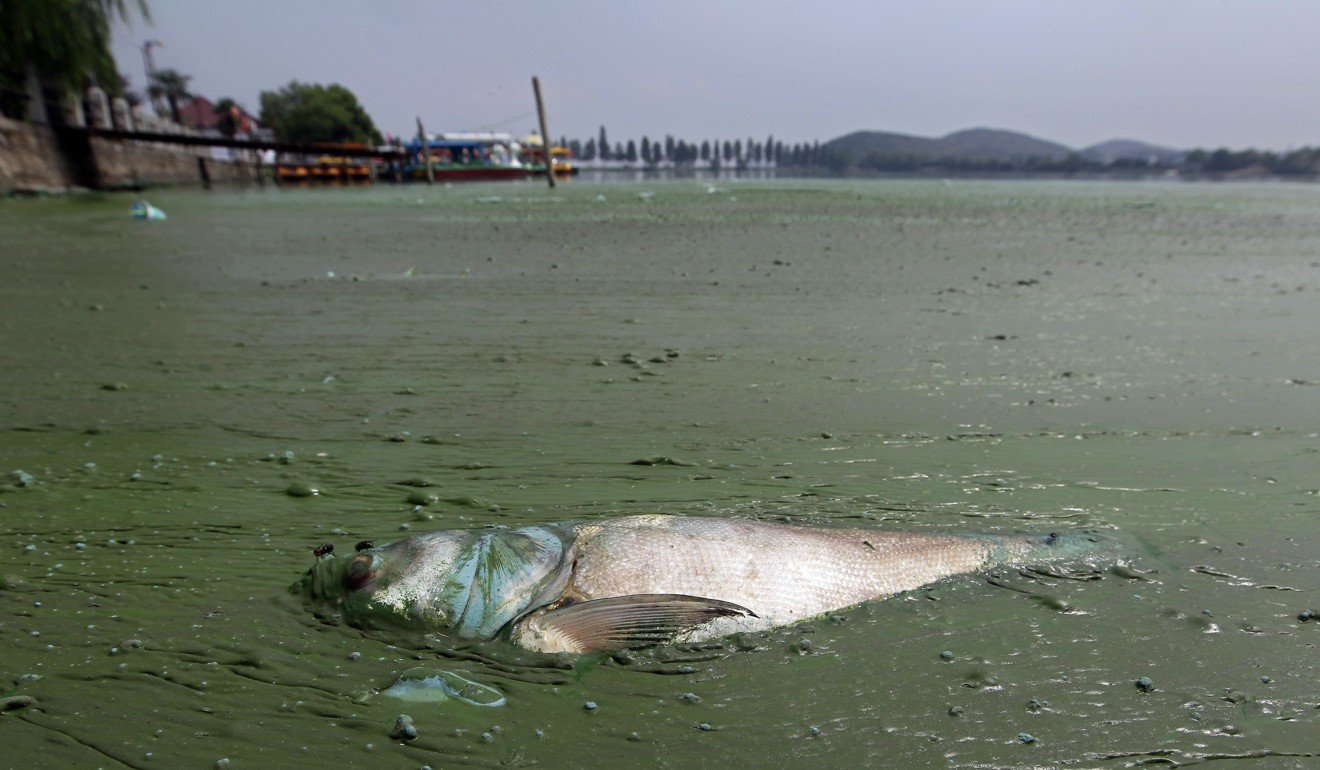
Pollution alarm as tourism businesses contaminate home of China’s hairy crab
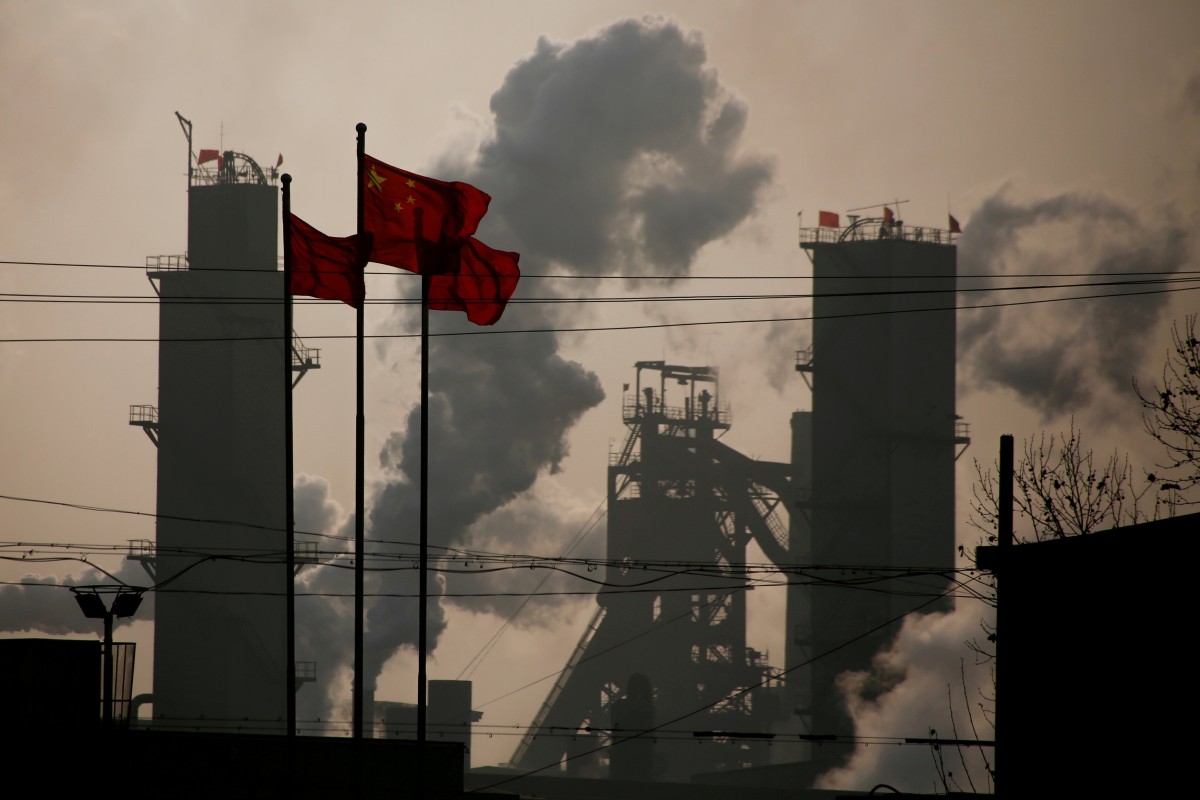
But as China’s economy slows to the lowest level in a quarter century – around 6 per cent growth, according to government statistics – policymakers are doubling down on support for coal and other heavy industries, the traditional backbones of China’s energy system and economy. At the same time, the country is reducing subsidies for renewable energy.
At the annual United Nations climate summit, this year in Madrid, government representatives will put the finishing touches on implementing the 2015 Paris Agreement, which set a goal to limit future warming to 1.5 to 2 degrees Celsius above pre-industrial levels.
Nations may decide for themselves how to achieve it.
China had previously committed to shifting its energy mix to 20 per cent renewables, including nuclear and hydroelectric energy.
Climate experts generally agree that the initial targets pledged in Paris will not be enough to reach the goal, and next year nations are required to articulate more ambitious targets.
Hopes that China would offer to do much more are fading.
Recent media reports and satellite images suggest that China is building or planning to complete new coal power plants with total capacity of 148 gigawatts – nearly equal to the entire coal-power capacity of the European Union within the next few years, according to an analysis by Global Energy Monitor, a San Francisco-based non-profit.
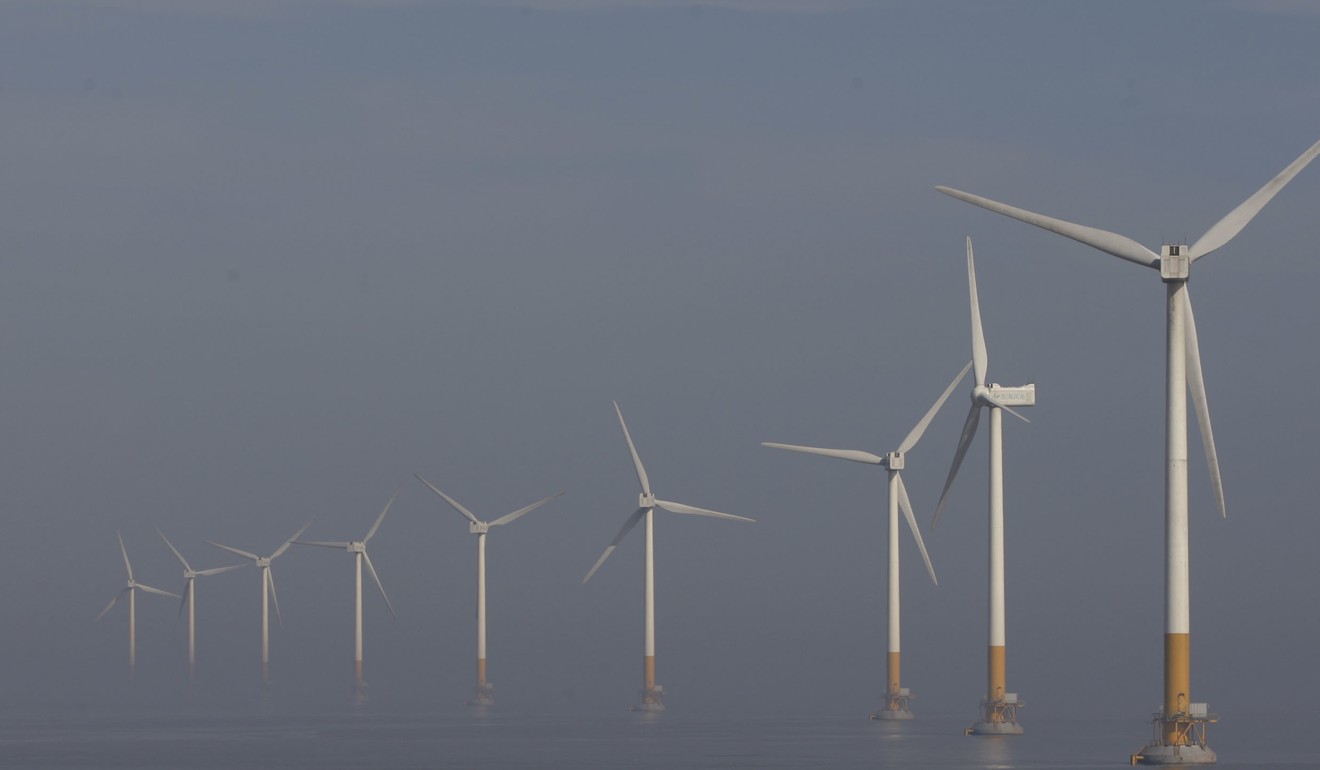
China is the world’s leading market for wind turbines and other renewables – but is still a major source of emissions. Photo: Chinatopix via AP
Meanwhile, investment in China’s renewable energy dropped almost 40 per cent in the first half of 2019 compared with the same period last year, according to Bloomberg New Energy Finance, a research organisation. The government slashed subsidies for solar energy.
Last week in Beijing, China’s vice-minister of ecology and environment told reporters that non-fossil-fuel sources already account for 14.3 per cent of the country’s energy mix. He did not indicate that China would embrace more stringent targets soon.
“We are still faced with challenges of developing our economy, improving people’s livelihood,” Zhao Yingmin said.
As a fast-growing economy, it was always inevitable that China’s energy demands would climb steeply. The only question was whether the country could power a sufficiently large portion of its economy with renewables to curb emissions growth.
Many observers took hope from a brief dip in China’s carbon emissions between 2014 and 2016. Today the country’s renewed focus on coal comes as a disappointment.
“Now there’s a sense that rather than being a leader, China is the one that is out of step,” said Lauri Myllyvirta, lead analyst at the Centre for Research on Energy and Clean Air in Helsinki.
He notes that several developed countries – including Germany, South Korea and the United States – are rapidly reducing their reliance on coal power.
After climbing sharply for two decades, China’s emissions stalled around 2013 and then declined slightly in 2015 and 2016, according to Global Carbon Budget, which tracks emissions worldwide.
This dip came as Chinese leaders declared a “war on pollution” and suspended the construction of dozens of planned coal power plants, including some in Shanxi.
Pollution scandal near China nature reserve at Tengger desert’s edge
At the same time, the government required many existing coal operators to install new equipment in chimneys to remove sulphur dioxide, nitrous oxide and other hazardous substances. About 80 per cent of coal plants now have scrubbers, said Alvin Lin, Beijing-based China climate and energy policy director for the Natural Resources Defence Council, a non-profit.
As a result, the air quality in many Chinese cities, including Beijing, improved significantly between 2013 and 2017. Residents long accustomed to wearing face masks and running home air-filter machines enjoyed a reprieve of more “blue sky days,” as low-pollution days are known in China.
In the past three years, China’s carbon emissions have begun to rise again, according to Global Carbon Budget.
The coming winter in Beijing may see a return of prolonged smog, as authorities loosen environmental controls on heavy industry – in part to compensate for other slowing sectors in the economy.
The UN Climate Change Conference is taking place in Madrid this month. Photo: AFP
Permits for new coal plants proliferated after regulatory authority was briefly devolved from Beijing to provincial governments, which see construction projects and coal operations as boosts to local economies and tax bases, said Ted Nace, executive director of Global Energy Monitor.
“It’s as though a boa constrictor swallowed a giraffe, and now we’re watching that bulge move through the system,” said Nace. In China, it takes about three years to build a coal plant.
The world has already warmed by 1 degree Celsius. All scenarios envisioned by the Intergovernmental Panel on Climate Change for holding planetary warming to around 1.5 degrees Celsius involve steep worldwide reductions in coal-power generation.
In that effort, other countries rely on Chinese manufacturing to hold down prices on solar panels. wind turbines and lithium-ion batteries.
“China has a really mixed record. On the one hand, it’s seen rapidly rising emissions over the past two decades,” said Jonas Nahm, an energy expert at Johns Hopkins University.
“On the other hand, it’s shown it’s able to innovate around manufacturing – and make new energy technologies available at scale, faster and cheaper.”
Source: SCMP
Posted in against, “blue sky days,, battle, Beijing, Bloomberg New Energy Finance, boa constrictor, boa constructor, Centre for Research on Energy and Clean Air, Centre on Global Energy Policy, China’s, coal, coal plants, Coal Power, Columbia University, Construction, demands, electric vehicles, emissions, energy, European Union, Germany, giraffe, global, Global Carbon Budget, Global Energy Monitor, global warming, greenhouse gases, heavy industry, Helsinki, Intergovernmental Panel on Climate Change, Johns Hopkins University, leading market, Madrid, Natural Resources Defence Council, new, paradox, plans, plants, Reliance, renewables, Risk, Shanxi, Solar Energy, solar panels, source, South Korea, suspended, swallowed, Tengger desert, top emitter, UN Climate Change Conference, UN climate summit, Uncategorized, undermining, United States, war on pollution, warming, wind turbines |
Leave a Comment »
09/08/2019
A villager shops at a mart in Wangzhuanggou Village of Wuxiang County, north China’s Shanxi Province, Feb. 17, 2019.
China has seen rapid income and consumption growth in rural areas over the past 70 years, according to a report from the National Bureau of Statistics (NBS). In 2018, rural per capita disposable income had increased 40 times from 1949 to stand at 14,617 yuan (about 2,088 U.S. dollars) in real terms after deducting price factors, up 5.5 percent on average annually, the NBS said. The country’s urban-rural income gap narrowed remarkably, with the ratio of per capita disposable income for urban residents to that of rural residents hitting 2.69 in 2018, 0.64 lower than 1956. The rural consumption level continued to rise in the last 70 years, as indicated by its expanding size and improving quality. Per capita rural consumption grew by an average annual rate of 5.2 percent to reach 12,124 yuan in real terms in 2018 after deducting price factors, up 32.7 times from 1949, while the Engel coefficient for rural residents dropped 38.5 percentage points from 1954 to reach 30.1 percent. Per capita living space in rural areas reached 47.3 square meters, posing a sharp contrast to 8.1 square meters in 1978, according to the report.
Household consumption in rural areas also increased, with the average ownership of cars, computers and cell phones per 100 households reaching 22.3, 26.9 and 257, respectively in 2018. (Xinhua/Zhan Yan)
Source: Xinhua
Posted in 70 years, China alert, consumption growth, income growth, mart, National Bureau of Statistics (NBS), past, rapid, rural areas, Shanxi, shanxi province, shops, Uncategorized, villager, Wangzhuanggou Village, Wuxiang County |
Leave a Comment »
23/06/2019
BEIJING, June 23 (Xinhua) — Air quality improved in Chinese cities in the first five months of 2019, according to the Ministry of Ecology and Environment (MEE).
Some 337 Chinese cities enjoyed good air quality on 80.3 percent of days from January to May this year, up 0.6 percentage points from the same period last year. Nearly 120 cities met the air quality standards, including 20 cities joining this year, data of MEE showed.
The average PM2.5 density, a key indicator of air pollution remained unchanged at 44 micrograms per cubic meter over the period and the average density of PM10 and sulfur dioxide fell 2.6 percent and 13.3 percent respectively year on year.
Haikou, Lhasa and Shenzhen ranked top three on the list of 168 cities’ air quality in the first five months while cities in the provinces of Hebei, Henan and Shanxi lagged behind.
Several regions saw a decrease in PM2.5 in May 2019, with that in Beijing-Tianjin-Hebei region and Yangtze River Delta down 16.7 percent and 8.6 percent year on year respectively.
China pledged to coordinate its efforts on environmental protection and economic development in 2019.
The country vowed to reduce imports of solid waste and push for better air quality with better regional coordination and heavy-polluter revamps, according to the ministry.
Source: Xinhua
Posted in air quality, Beijing-Tianjin-Hebei region, Chinese cities, Haikou, Hebei, Henan, improving, Lhasa, Ministry of Ecology and Environment (MEE), see, Shanxi, Shenzhen, Uncategorized, Yangtze River Delta |
Leave a Comment »
21/05/2019
- Heavy industry among companies fined up to US$1 million amid fears economic slowdown is undermining war on pollution
- Environment ministry fines business for exceeding limits and says some regions have used slowing economy as excuse to backslide on curbs
Pollution levels in some parts of China worsened this winter. Photo: Reuters
China has publicly accused dozens of firms, including some of its largest state enterprises, of exceeding pollution limits and breaching monitoring standards, as concerns grow that the slowing economy is undermining a five-year war on pollution.
In lists published by the Ministry of Ecology and Environment over the past week, subsidiaries of state giants such as China Baowu Steel Group and the Aluminium Corporation of China were cited and fined for breaching emissions standards among other violations.
China has been stepping up its supervision capabilities and has plugged thousands of factories into a real-time emissions monitoring system, but enforcement remains one of its biggest challenges.
The ministry has continued to warn that China’s slowing economy had given some regions an excuse to “loosen their grip” on environmental protection.
In the first quarter of this year, air quality in smog-prone northern regions fell compared with last year, and some regions also saw pollution readings in major lakes and rivers rise over the period.
Pollution levels in some lakes or rivers have also worsened. Photo: Reuters
A notice published last Friday said as many as 82 Chinese enterprises exceeded waste water emissions standards in the fourth quarter of 2018, including 44 sewage treatment plants and six waste water treatment facilities.
A unit of the Aluminium Corporation of China in Shanxi province was named as one of five “serious offenders”.
China’s green efforts hit by fake data and grass-roots corruption
It said the unit had exceeded emissions restrictions for a total of 92 days during the period. The firm did not respond to requests for comment.
As well as being fined, the companies cited were told to restrict operations until problems were resolved.
China has a five-year plan for fighting pollution. Photo: Simon Song
The biggest fine was meted out to a waste water treatment plant in Liaoning province, which was ordered to pay 7.2 million yuan (US$1 million).
In a separate review of monitoring standards in the Yangtze River Delta and the Fenwei plain regions, the ministry identified more than 300 firms for equipment quality violations and exceeding waste water discharge restrictions. It found only 22 per cent of equipment was of the required standard.
The list included a special steel producing unit of Baosteel, China’s biggest steelmaker. Baosteel did not respond to a request to comment.
Source: SCMP
Posted in Aluminium Corporation of China, Baosteel, breaching, China alert, China Baowu Steel Group, Fenwei plain regions, Ministry of Ecology and Environment, names and shames, pollution limits, Shanxi, state enterprises, steelmaker, Uncategorized, Yangtze River Delta |
Leave a Comment »
26/02/2019
BEIJING, Feb. 26 (Xinhua) — A promotional event for northern China’s Shanxi Province was hosted at the Ministry of Foreign Affairs (MFA) Monday.
As the 17th presentation of the MFA’s Chinese provinces initiative, this Shanxi event was themed “China in the New Era: Shanxi, New Transformation for a Shared New Future.”
“Since the 18th National Congress of the Communist Party of China (CPC), Shanxi has moved with the times and embarked on a new journey of innovative development,” said Chinese State Councilor and Foreign Minister Wang Yi.
Wang added that Shanxi is vigorously promoting a greener economy and forging new industrial clusters.
Shanxi’s primary goals are to build a demonstration zone in transformation and development of a resource-based economy, become a pioneer in China’s energy revolution and turn itself into a landmark in opening-up among China’s inland provinces, said Luo Huining, secretary of Shanxi Provincial Committee of the CPC.
Shanxi is a province that boasts a glorious history and booming development, said Clemens von Goetze, Germany ambassador to China.
He added that Germany has discovered cooperation opportunities in Shanxi since the beginning of China’s reform and opening-up.
Mark Sutton, business development director with Johnson Matthey, a Britain-based global energy and chemical company, first visited Shanxi in 2005.
The environment over the past few years has become cleaner and inspiring, said Sutton, adding that Shanxi’s vision to protect the environment is valued. “I wish to spend more time at Shanxi’s historic sites and surrounded by natural sceneries during my next trip.”
The MFA hosted its first provincial promotional event in March 2016 in order to serve national development, facilitate regional opening-up and offer foreigners a platform to learn more about China.
More than 500 people, including diplomats from over 130 countries, representatives from international organizations, business people and journalists, attended the Monday event.
Source: Xinhua
Posted in British, business development director, China alert, Chinese State Councilor, Clemens von Goetze, foreign minister, German ambassador to China, Germany, global energy and chemical company, Johnson Matthey, Luo Huining, Mark Sutton, Ministry of Foreign Affairs (MFA), National Congress of the Communist Party of China, Shanxi, Shanxi Provincial Committee, Uncategorized, Wang Yi |
Leave a Comment »
10/02/2019
TAIYUAN, Feb. 9 (Xinhua) — More than 100 overseas students have been invited to an ancient town in north China’s Shanxi Province to join celebrations for Chinese New Year (Spring Festival), which falls on Feb. 5.
“An opening Pingyao welcomes you” is the celebration of the ancient town of Pingyao, running from Jan. 28 to Feb. 20. More than 100 students across the world participated in the opening ceremony on Jan. 28.
The students took part in celebrations, watching traditional performances, such as opera, acrobatics and magic shows, joining in the Spring Festival Gala, lantern shows, cultural exhibitions, and learning about the local customs.
Farhad Farzad, an Afghan student studying Chinese in a university in the city of Taiyuan, Shanxi’s capital, said it was the first time for him to celebrate Spring Festival. He wrote “happy new year” in Chinese with a writing brush.
Chisom Nwosu, from Nigeria, said that the festival atmosphere in Pingyao was jubilant and the performances were great. It was her chance to gain a better understanding of traditional Chinese folk culture.
Pingyao became a UNESCO world cultural heritage in 1997. It is famous for its well-preserved ancient city walls.
In the 1980s, there were rarely foreign visitors in Pingyao. However, the figure soared to 115,000 last year. The ancient town has received more than 1.5 million foreign tourists since 1997.
Source: Xinhua
Posted in Ancient northern town, celebrate, chinese new year, Nigeria, overseas students, Pingyao, Shanxi, Taiyuan, Uncategorized, UNESCO world cultural heritage |
Leave a Comment »




 CHINDIA ALERT: You'll be living in their world, very soon