Chindia Alert: You’ll be Living in their World Very Soon
aims to alert you to the threats and opportunities that China and India present. China and India require serious attention; case of ‘hidden dragon and crouching tiger’.
Without this attention, governments, businesses and, indeed, individuals may find themselves at a great disadvantage sooner rather than later.
The POSTs (front webpages) are mainly 'cuttings' from reliable sources, updated continuously.
The PAGEs (see Tabs, above) attempt to make the information more meaningful by putting some structure to the information we have researched and assembled since 2006.
Image copyright JOSHY MALIYEKKALImage caption Drinking water reeking of alcohol started flowing out of the apartment taps
Residents of an apartment building in southern India were left in shock after a mix of beer, brandy and rum started gushing out of their taps.
The smelly, brown liquid began flowing from kitchen taps in the block of flats, in Kerala, on Monday morning.
Bemused residents then contacted the authorities for help, and discovered their water well had been contaminated by officials – albeit accidentally.
It emerged 6,000 litres of confiscated alcohol had been buried nearby.
The alcohol, which officials had placed in a pit after it was seized on court orders, had seeped through the soil and into a well – the same well which supplied the residents of the 18 flats in Thrissur district with drinking water.
“We were so shocked,” Joshy Malyiekkal, owner of the apartment complex, told BBC Hindi’s Imran Qureshi.
Luckily, the strong smell put people off consuming the water. However, the discovery meant there was not only no drinking water for the families, but they were also unable to wash.
“The children couldn’t go to school and even their parents couldn’t go to work,” Mr Malyiekkal said.
Image copyright JOSHY MALIYEKKALImage caption The contaminated water from the well being pumped out
After residents complained, officials acted to rectify the mistake.
But the process of pumping the well clean is likely to take a month, according to residents, leaving them reliant on deliveries from authorities.
“They’ve been supplying about 5,000 litres of water daily but it is not enough to cover all the families in our building,” Mr Malyiekkal said, pointing out the well was their main source of water.
Officials from the department did not respond to questions from the BBC.
The state of Kerala has the highest consumption of alcohol in the country.
Image copyright GETTY IMAGESImage caption Mahjong has been referred to as the “quintessence of Chinese culture”
An apparent police ban on all mahjong parlours in a Chinese city led to panic among aficionados of China’s national pastime.
Police in Yushan in southeast China first announced the ban at the weekend, saying it was to curb illegal gambling and “purify social conduct”.
This led to shock and outrage with many calling the strategic, tile-based game the “quintessence of Chinese culture”.
Police then clarified that only unlicensed parlours would be shut.
It comes after several other cities also announced parlours encouraging gambling would be shut.
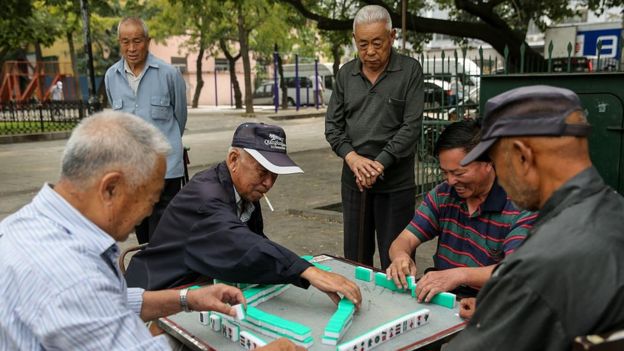
Mahjong is one of the most popular games in China, especially with older people.
While it does not have to be played with money, it is common for players to gamble with small amounts. A typical mahjong game could see players bet anywhere from $1 to $15.
‘People can gamble with anything’
On 20 October, police in Yushan, a small county in China’s southeast Jiangxi province, issued a statement announcing that all mahjong parlours in the county would be “closed” by 22 October.
Authorities said the ban would be enacted in an effort to “push forward the campaign against crimes and gangs… [to] solve the gambling and noise problem [and] purify social conduct”.
Gambling is illegal in China but under Jiangxi province law, those who engage in “win-loss entertainments such as mahjong and poker involving a small amount of money… shall not be punished”.
However, the law adds that people who “[gamble] money of more than 200 yuan ($28; £21)” could be subject to punishment.
Image copyright GETTY IMAGESImage caption It’s a familiar sight to see retirees gather in parks to play mahjong
It wasn’t long before the backlash kicked in.
Some people pointed out that while China does face a widespread problem of illegal gambling dens, many mahjong parlours are in fact, legally operated with licenses.
Another commenter on social media site Weibo said: “Not all people play mahjong for gambling,” according to state media ECNS.
“My grandparents play mahjong as part of their daily entertainment”.
Others said it was a “lazy” solution by the government in an attempt to curtail illegal gambling.
“Mahjong [itself] is not a problem. People can gamble with anything,” said one comment on Weibo.
But one social media user saw the positive side of the ban, saying: “Finally! I have been woken up numerous times [by] mahjong players.”
Mahjong is known to be quite a noisy game, as the heavy tiles often make clacking sounds as they are shuffled around.
But their joy was short lived. Just one day after they made the announcement, Yushan authorities revised their statement, saying licensed mahjong parlours would not be affected.
They also clarified that the ban was meant to target places that encouraged “illegal gambling”.
Despite this, some licensed parlour owners told local news outlets that they were also not operating amid the clampdown, but it was unclear whether that was voluntary or enforced by officials.
Several other cities in Jiangxi have also banned mahjong in recent days, but had made it clear in their announcements that registered mahjong parlours would not be affected.
What is mahjong?
Mahjong is a game played with a set of 144 tiles based on Chinese characters and symbols
It developed in the late 19th century, during China’s Qing dynasty, but became popular in the 20th century
It is conceptually similar to the western card game Rummy
The game has also gone on to gain popularity in the West – and has recently made several appearances in mainstream pop culture.
It was featured as part of a pivotal moment in the Hollywood blockbuster Crazy Rich Asians, where two main characters met for a showdown of a game at a mahjong parlour.
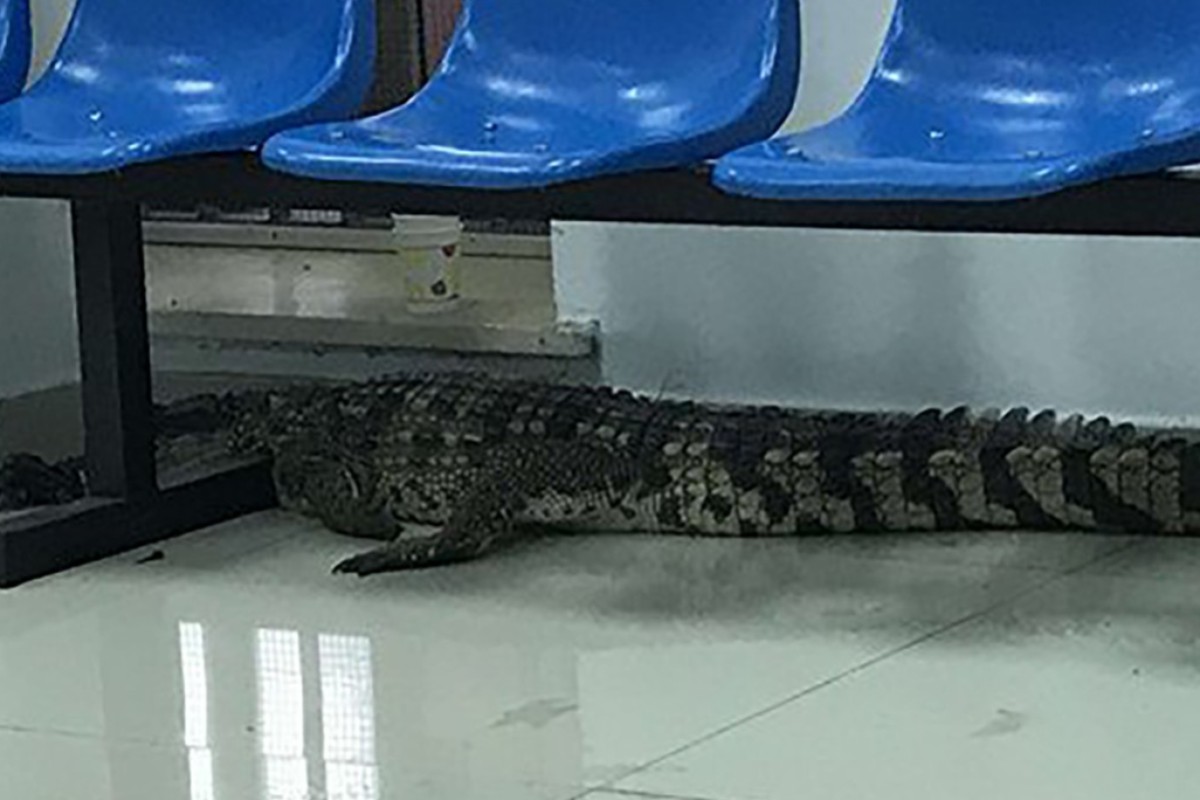
Police investigation reveals animal had escaped from a nearby restaurant
The escaped crocodile was captured by police officers and taken to the local station. Photo: Handout
A security guard at a beauty spot in eastern China was shocked to discover a 2-metre (6ft 6in) crocodile while on his rounds in the early hours of Monday morning.
The animal was lying motionless on a road at Xinlonghu Park in Changzhou, Jiangsu province, with its jaws tied by a strip of cloth, when it was spotted by the security guard, who immediately called the police, according to the Modern Express newspaper.
It took a number of officers to capture the crocodile and take it to the local police station, where an investigation revealed the animal had escaped from a nearby restaurant. The animal was returned and the restaurant owner was “criticised” by police, who urged that a close eye be kept on the animal, the report said.
“They bought it from a farm somewhere as a food material to attract customers. It has been killed for crocodile meat dishes,” an officer told the South China Morning Post on Wednesday.
Crocodiles were once vegetarians – but it was just a phase
Police said it was fortunate that the crocodile had been caught before it had entered the park’s lake or caused any danger to people.
It is unclear what species the crocodile belonged to but China permits the commercial breeding and use of the critically endangered Siamese crocodile, as well as saltwater and Nile crocodiles, which are listed as least concern species.
A staff member of the restaurant, called No. 1 Lakeside, told the Post stewed crocodile meat was on the menu for 168 yuan (US$23.60) a serving, while stewed crocodile claw was also available at 258 yuan.
Crocodile appears in ancient Chinese medicine books as a treatment for respiratory illnesses and the meat has long been regarded as a delicacy, especially in southern China, such as Guangdong province. Crocodile skin also remains a popular material for luxury handbags and other leather goods.
In June, another crocodile, measuring about 1.5 metres, was found in a road puddle during a heavy rain in Wuhan, in the central province of Hubei, where many restaurants have crocodile meat on their menus, the Chutian Metropolis Daily reported.
In that incident it took three officers to capture the animal which was sent to a wildlife centre where a physical check-up showed it had been bred in captivity, most likely for food.
Image copyright AFPImage caption Decorated elephants lead the procession at the Jagannath temple’s annual festival in Ahmedabad
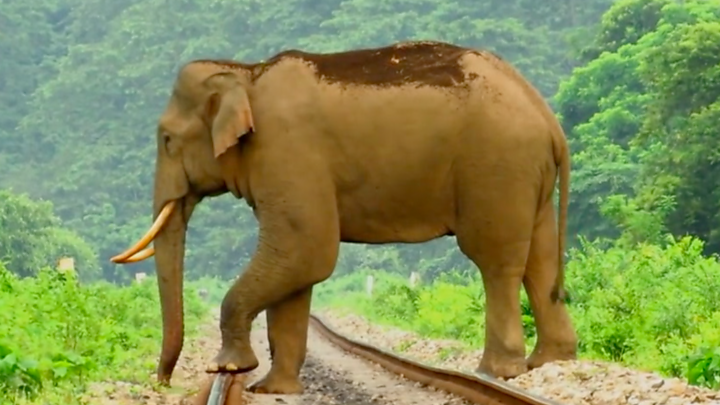
Animal rights activists in India have criticised a plan by the Assam state government to send four elephants on a perilous train journey of more than 3,100km (1,926 miles) to participate in a temple ritual. They say the long journey could be dangerous for the animals and may even kill them, writes the BBC’s Geeta Pandey in Delhi.
The elephants are to be moved from Tinsukia town in the north-eastern state of Assam to the extreme west of the country – Ahmedabad city in Gujarat state.
Reports say the railway authorities in Assam, who have been asked to make travel arrangements for the elephants, are looking for a coach to transport them.
No date is set for their departure yet, but they are expected to reach Ahmedabad before 4 July to participate in the annual Rath Yatra (chariot procession) at the Jagannath temple. The train journey is expected to take three to four days.
In previous years, Prime Minister Narendra Modi, who hails from Gujarat, has participated in the festival and the elephant procession, although temple officials say he’s not expected to attend this year.
Temple trustee Mahendra Jha told BBC Gujarati that they decided to “borrow” the animals from Assam “for two months” because three of their own elephants died from old age last year.
But activists and conservationists say the plan to move the elephants is “cruel and completely inhuman”, especially since temperatures are more than 40C (104F) in many places along the northern Indian route these elephants are expected to take.
Media caption Human-elephant conflict destroying lives in India
“Most of north-western India is reeling under a heatwave. There have been reports of people dying from heat during train journeys,” Kaushik Barua, a wildlife conservationist based in the Assam state capital, Guwahati, told the BBC.
“The wagon in which the elephants will be transported is not climate-controlled. It will be hitched to a passenger train which will be travelling at a speed of 100km/h (62mph), so can you imagine the plight of the animals?”
Mr Barua warns the journey may prove “dangerous” for the animals.
“They can suffer from heatstroke, from shock, and even die.”
Under the law, he says, there’s no problem moving these elephants since all the paperwork is in order, “but where’s the animal welfare?”
Also weighing in on the debate is the opposition Congress party MP from Assam, Gaurav Gogoi, who’s petitioned India’s Environment Minister Prakash Javadekar to intervene.
“Roughly half of the country is struggling through its worst drought in six decades…. These are extreme conditions for the elephants to travel… The elephants may suffer from acute skin infection and dehydration,” Mr Gogoi wrote in his letter on Thursday.
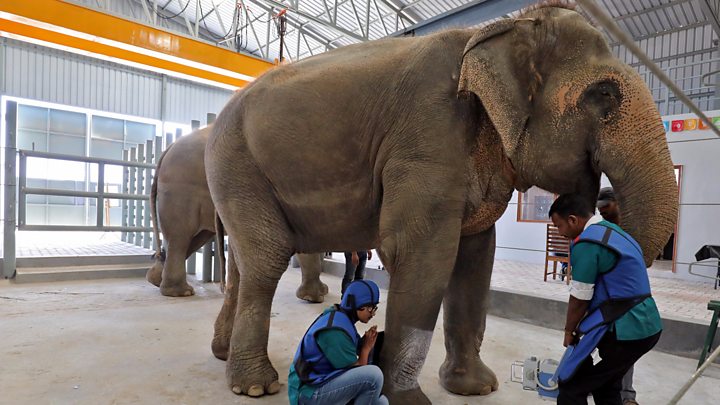
Media caption India’s first elephant hospital is run by the charity Wildlife SOS
“Therefore, I request the central government to intervene and instruct the state government to withdraw the decision as soon as possible.”
Elephants – both wild and captive – are a protected species in India and there are strict guidelines for their transportation, wildlife biologist Dr Bibhuti Prasad Lahkar told the BBC.
According to the rules, no elephant can be made to walk for more than 30km (18 miles) at a stretch or transported for more than six hours in one go.
The state’s wildlife officials, who’ve issued transit permits for the elephants, have so far refused to comment on the controversy. But after protests from activists and conservationists, “they have gone into a huddle, discussing a plan B,” according to a wildlife expert.
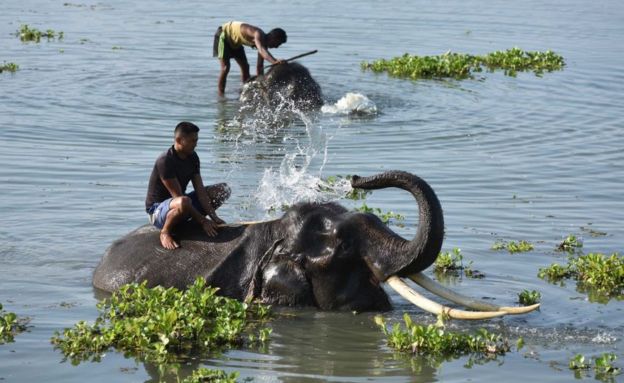
Image copyright GETTY IMAGESImage caption Elephants are a protected species in India
“There’s some suggestion that the pachyderms may be moved in trucks to allow them the flexibility to stop if needed and that they could be accompanied by a forest department veterinarian to look after them,” he said.
Mr Barua, however, is blunt.
“Gujarat doesn’t need these elephants,” he says. “Wildlife laws prevent [the] display and exhibition of elephants. Laws ban performances by elephants in circuses, zoos are not allowed to exhibit them, so why should temples be allowed to use them in rituals or processions? Don’t elephants have rights?
“We worship Ganesha, the Elephant God. Why are the Gods then being put through such cruelty by a temple?”


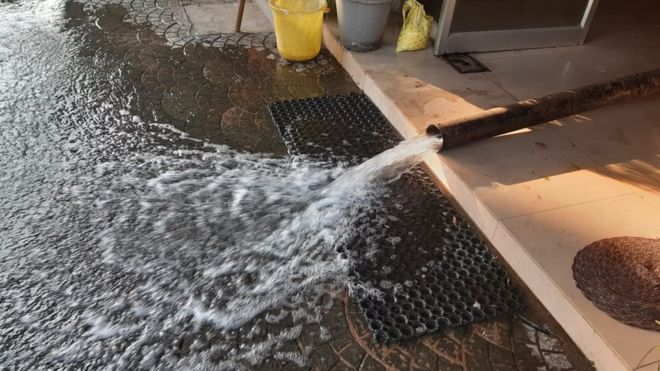 Image copyright JOSHY MALIYEKKAL
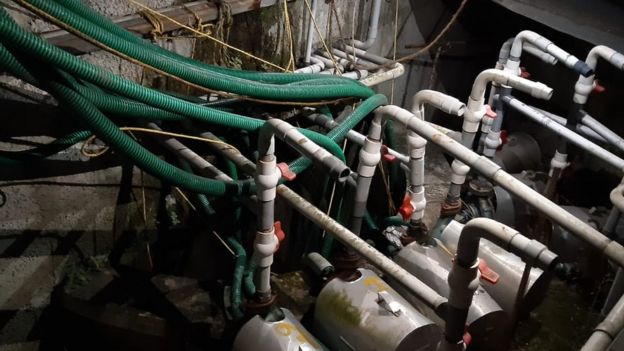 Image copyright JOSHY MALIYEKKAL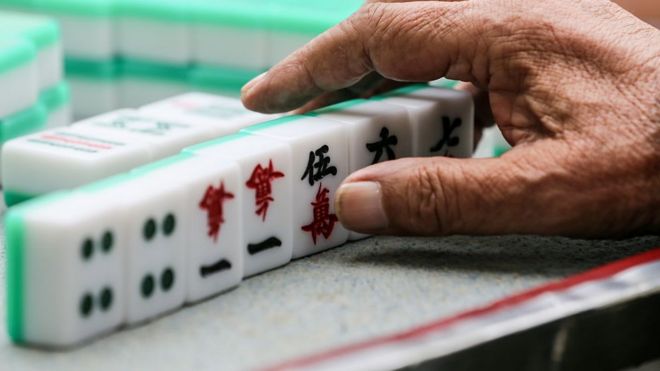



 CHINDIA ALERT: You'll be living in their world, very soon