Archive for ‘sichuan province’

23/02/2020

Korea raises alert to highest level as coronavirus cases jump

SEOUL/SHANGHAI (Reuters) – South Korea raised its disease alert to the highest level on Sunday after a surge in coronavirus infections and two more deaths, while China state media warned the outbreak there had yet to reach a turning point despite some signs of easing.

South Korea’s president said he was putting the country on “red alert” due to the rapid rise in new cases, which are largely being traced back to church services. Health officials reported 169 new infections, bringing the total to 602, having doubled from Friday to Saturday.

The escalation in the alert level allows the government to send extra resources to Daegu city and Cheongdo county, which were designated “special care zones” on Friday.

South Korea’s Yonhap News Agency said it also enables the government to forcibly prevent public activities and order the temporary closure of schools, though the government gave no immediate details on what steps could be taken.

In China, the health commission confirmed 648 new infections – higher than a day earlier – but only 18 were outside of Hubei province, the lowest number outside of the epicenter since authorities started publishing data a month ago and locked down large parts of the country.

But the number of cases continued to climb elsewhere.

Japanese Prime Minister Shinzo Abe instructed government agencies on Sunday to urgently prepare medical provisions and draft a comprehensive plan to curb the spread of the virus, after it reported 27 more cases a day earlier.

The U.S. State Department raised its travel advisory level one notch for South Korea and Japan to Level 2 on a scale of 1 to 4.

Concern about the reach and rapid spread of coronavirus also grew in Europe and the Middle East.

Cases in Italy, Europe’s worst hit country, more than quadrupled to 79 on Saturday, with two deaths.

Iran reported a total of 43 infections, with eight deaths – all since Tuesday – forcing some of its neighbors to announce travel and immigration curbs.

The World Health Organization on Saturday stressed that the number of cases outside of China was still relatively few, but it was worried by the detection of infections without a clear link to China.

The disease has spread to some 26 countries and territories outside China, killing more than a dozen people, according to a Reuters tally. It has been fatal in 2% of reported cases, with the elderly and ill the most vulnerable, according to the WHO.

The potential economic impact of coronavirus was prominent at a meeting of G20 finance ministers in Riyadh, at which the International Monetary Fund chief said China’s 2020 growth would likely be lower at 5.6%, down 0.4 percentage points from its January outlook, with 0.1 percentage points shaved from global growth.

Graphic: Online site for coronavirus news here

Graphic: Tracking the novel coronavirus here

CHURCH CONTAGION

The last time South Korea raised the alert to the highest was 11 years ago during the Influenza A or H1N1 outbreak.

Many of South Korea’s new cases were linked to the Shincheonji Church of Jesus congregation in Daegu after a 61-year-old woman known as “Patient 31” tested positive for the virus last week. The woman had no recent record of overseas travel.

Catholic churches in Daegu and Gwangju have suspended mass and other gatherings, while churches elsewhere saw declines in attendance on Sunday, especially among the elderly.

“If the situation gets worse, I think we’ll need to take more measures. Currently, we’re limiting personal gatherings within the church except for Mass,” said Song Gi-young, 53, wearing a face mask at church.

Heo Young-moo, 88, expressed frustration.

“Devotees shouldn’t go to any risky places … Hasn’t it become so widespread because those people didn’t get checked?”,” he said.

Outside of the church was a sign that said: “All Shincheonji followers are strictly prohibited from entering”.

The foreign ministry said South Koreans aboard a plane to Israel had been denied entry there on Saturday due to concerns about the virus spread.

China said the number of new deaths on Saturday from COVID-19, as the disease caused by the virus is known, was 97, all but one of which were in Hubei.

Eighty-two of those were in the provincial capital Wuhan, where Xinhua news agency said nucleic tests were being carried out on the backlog of cases to try to contain the spread.

In total, China has reported 76,936 cases, and 2,442 deaths. The WHO says the virus is severe or critical in only a fifth of infected patients, and mild in the rest.

Graphic: Reuters graphics on the new coronavirus here

NOT OVER YET

Beijing, Zhejiang, Sichuan had no new infections on Feb. 22 for the first time since the outbreak was detected. There were signs of street life in Shanghai, with some cafes serving take-out food and families wearing masks walking their dogs.

State run television on Sunday urged people to avoid complacency, drawing attention to people gathering in public areas and tourist spots without wearing masks.

Analysts have been closely watching out for any signs of a secondary wave of infections as transport restrictions are eased and many migrant workers return to factories and offices. Business activity in the world’s second-biggest economy is only gradually returning to normal after widespread disruptions.

Japan’s health minister apologized on Saturday after a woman who was allowed to leave the coronavirus-struck Diamond Princess cruise ship tested positive despite having underwent quarantine.

At least 623 cases have been reported on the vessel, the biggest outbreak outside China, involving more than a dozen nationalities.

In Italy, schools and universities were closed and some soccer matches postponed in Lombardy and Veneto, the country’s industrial heartland.

Saudi Arabia, Kuwait, Iraq have travel and immigration curbs on Iran, while Oman on Sunday urged its citizens to steer clear of countries with high infection rates and said arrivals from those nations would be quarantined.

Source: Reuters

17/02/2020

Americans on WHO team to assess coronavirus crisis, China says

  • Experts to visit Beijing, Guangdong and Sichuan but no word on whether Hubei is on the itinerary
  • Specialists say visit must include a trip to the outbreak’s epicentre to get a full picture
A nurse cares for a 14-month-old baby infected with the novel coronavirus in an ICU isolation ward of Wuhan Children’s Hospital in Wuhan, at the epicentre of the outbreak. Photo: Xinhua
A team of medical experts from the World Health Organisation (WHO), including specialists from the US, will visit Beijing and the Chinese provinces of Guangdong and Sichuan from Monday to assess the country’s efforts to contain the spread of a deadly coronavirus, according to the Chinese foreign ministry.
But the ministry did not say whether the team would go to Wuhan or any other parts of Hubei, the central Chinese province at the epicentre of the outbreak, raising concerns among medical experts about the transparency of the mission.
The death toll from the coronavirus had risen to 1,770 on mainland China as of Sunday, infecting 70,548 people, including more than 1,700 medical workers. Most of those confirmed with the disease, now known as Covid-19, are in Wuhan.
China has repeatedly said it welcomes international cooperation to contain the outbreak, but the US Centres for Disease Control and Prevention said last week that it had not yet received an invitation to send experts to the country.
On Monday, the Ministry of Foreign Affairs said the WHO delegation would include Americans, but gave no further details.
The announcement came as a commentary in Communist Party mouthpiece People’s Daily accused Washington of dragging its feet on a funding pledge to help with the epidemic, saying it had a “dark mentality and taken dangerous action” during the outbreak.

WHO director general Tedros Adhanom Ghebreyesus said on Friday that the mission to China included 12 international medical specialists, and they would, with 12 Chinese experts, learn more about the transmission of the virus and the effectiveness of the measures in a bid to work out the next containment steps for China and the world.

An advance team of WHO medical experts arrived in Beijing last Monday, led by Canadian emergency expert Bruce Aylward, Tedros said.

China’s National Health Commission (NHC) said all of the delegation’s members arrived in Beijing over the weekend, and held talks with Chinese medical experts, public health officials and other government departments.

They exchanged views on virus containment, wildlife management and vaccine development, the NHC said.

Experts said the international team would be left with an “incomplete picture” of the outbreak if it did not go to Wuhan or Hubei.

“Unfortunately, this feeds into a narrative that China is trying to hide the true nature of the outbreak, so it would seem to be shortsighted and counterproductive to China’s efforts to say to the world that it is doing everything it can to contain this outbreak,” said Adam Kamradt-Scott, a specialist in global health security and international relations at the University of Sydney.

“We have seen in the past when we have external teams, they are often able to identify areas for improvement or to make recommendations for measures that national authorities may not have thought of – we’ve seen that through other examples where external expertise can be valuable in times of crisis.”

He said any impression of a cover-up would likely further strengthen the resolve of countries that had taken strict measures, including travel bans, to keep them in place or tighten them further.

“China has got a public relations campaign that it also needs to be mindful of in engaging with the international community, so there are the actual measures that the government needs to take in order to control the outbreak, but the government also needs to be seen to be doing everything that it can,” he said.

Source: SCMP

20/01/2020

Xi visits Yunnan on inspection tour ahead of Chinese New Year

CHINA-YUNNAN-XI JINPING-INSPECTION (CN)

Chinese President Xi Jinping, also general secretary of the Communist Party of China Central Committee and chairman of the Central Military Commission, visits a village of the Wa ethnic group to extend his Chinese New Year’s greetings to the villagers in Qingshui Township of the city of Tengchong, southwest China’s Yunnan Province, Jan. 19, 2020. Xi visited Yunnan Province Sunday on an inspection tour ahead of Chinese New Year. (Xinhua/Ju Peng)

KUNMING, Jan. 19 (Xinhua) — Xi Jinping, general secretary of the Communist Party of China Central Committee, visited southwest China’s Yunnan Province Sunday on an inspection tour ahead of Chinese New Year.

Xi went to a village of the Wa ethnic group in Qingshui Township of the city of Tengchong Sunday afternoon to learn about poverty alleviation efforts and extend his Chinese New Year’s greetings to the villagers.

He also visited the old town of Heshun, a gateway on the ancient Southern Silk Road that linked China’s Sichuan and Yunnan with Myanmar and India, to learn about exchanges, historical and cultural inheritance, as well as ecological and environmental protection along the trade route.

Source: Xinhua

23/12/2019

China presses for nuclear talks in last days till North Korea’s deadline for US

  • Summit between Chinese, South Korean and Japanese leaders could yield results for future of Korean peninsula, analyst says
North Korea has promised an unwelcome “Christmas present” if the US does not show the “right attitude” for talks. Photo: KCNA
Chinese President Xi Jinping has again stressed the need for tensions on the Korean peninsula to be resolved through dialogue, as the deadline looms in North Korea’s threat to give the United States an unwelcome “Christmas gift”
.

With just over a week to go until Pyongyang’s year-end deadline for Washington to change what it says a policy of hostility, Xi held separate talks with South Korean President Moon Jae-in and Japanese Prime Minister Shinzo Abe in Beijing on Monday.

Moon and Abe will also join Chinese Premier Li Keqiang for a trilateral summit in Chengdu, Sichuan province, on Tuesday.

The first trilateral leadership talks took place in 2008, but were not held in 2013 and 2014, or in 2016 and 2017.

Xi said China and South Korea “both insist on maintaining peace and stability on the peninsula, and advocate solving problems through dialogue and consultation”, state news agency Xinhua reported on Monday.
“China supports South Korea in continuing to improve its relationship with

North Korea,

and injecting impetus for the Korean peninsula peace talks,” the report said.

Moon said the suspension of talks between the US and North Korea and heightened tensions along the peninsula “are not beneficial to both our countries and North Korea”, according to South Korean news agency Yonhap.

Moon also said that China had played an “important role” in efforts for the denuclearise the peninsula, the report said.

North Korea has signalled impatience over the stalled talks with the US, and the fading hopes for an end to Washington’s economic sanctions.

In April, North Korean leader Kim Jong-un said that he would “wait” until the end of the year to decide whether the US had the “right attitude” to allow a resumption of negotiations, but no signs of further talks have emerged.

Then earlier this month Pyongyang warned that Washington would receive a “Christmas gift”, and US actions would determine whether the present would be good or bad.

In an apparent sign of frustration with the US, North Korean news agency KCNA reported on Sunday that Kim held a meeting of the Workers’ Party of Korea to “bolster the overall armed forces of the country” to deal with the “the fast-changing situation”.

The US imposed crippling sanctions on North Korea’s economy in 2017, though many countries, including China, South Korea and Japan, have also tightened measures against the North.

South Korea and Japan both scaled back people-to-people links in 2016, China banned coal exports to the North in 2017. Earlier this year, Trump thanked China and Russia for maintaining sanctions against Pyongyang.

As diplomats make last-ditch attempts to stop renewed confrontation, US special envoy for North Korea Stephen Biegun shuttled around the region last week, meeting senior officials in China, South Korea and Japan. Biegun urged North Korea to return to negotiations, and said the US “does not have a deadline” for talks.

China and Russia also proposed last week that the United Nations Security Council 

lift some sanctions

, saying it was necessary to break the deadlock.

Xi’s meeting with Moon also comes as Beijing tries to mend ties with Seoul to prevent neighbouring nations from getting closer to Washington.
Relations between China and South Korea deteriorated in 2017 after Seoul deployed a US-led missile defence system known as THAAD, which Beijing deemed as a security threat to its own territory.
On Monday, both Xi and Moon said in their meeting that they looked forward to improving relations between their countries.
“We have been friends and partners that have continued close cooperation,” Xi said. “We have a wide range of common understandings in various fields, including on further developing bilateral relations, facilitating regional peace, stability and prosperity, and defending multilateralism and a free trade system.”
Sun Xingjie, a North Korea specialist at Jilin University, said the US signal was “very clear” in Beigun’s comments.
“They still want to continue discussions,” he said.
Sun also said the talks in Chengdu on Tuesday would likely play an important role in the future of resolving problems on the Korean peninsula.
“After returning to the platform these last couple years, I believe this will become an important, normalised place for discussions. Whatever problems they run into, the platform should continue to move forward,” Sun said.
Source: SCMP
18/12/2019

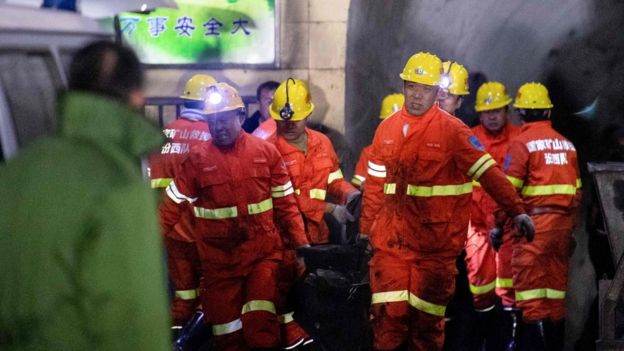
Chinese mines: At least 14 dead in latest disaster

An explosion at a coal mine in south-west China has killed at least 14 people – the latest in a string of deadly mining accidents.

The local authorities said two people were still trapped underground at the mine in Guizhou province.

At least 37 people have died in five separate mining accidents in China since October.

The accidents are often due to poorly-enforced safety regulations.

The explosion at the Guanglong mine in Guizhou province happened in the early hours of Tuesday. Seven workers were lifted to safety.

On Saturday, flooding in a coal mine in south-west China’s Sichuan province killed five and trapped 13 miners underground.

Some 347 miners were working in the Shanmushu mine when the flood happened.

Rescuers carry a victim at the site of a coal mine explosion in Pingyao, early on November 19, 2019Image copyright AFP
Image caption A mine explosion in Pingyao, in China’s northern Shanxi province killed 15 people in November

On 25 November, one person died in an accident at a different mine in Guizhou province.

Before that, a blast in northern China’s Shanxi province killed 15 workers on 18 November.

At the time, officials said the accident was caused by “broken laws and regulations”.

In October, two people were killed in a blast in a mine in Shandong province in eastern China.

The poor safety record and high accident rate in China’s mining sector led to the government in November ordering a “crackdown” on safety issues, said the AFP news agency.

But – despite the string of deadly accidents – mine safety is generally improving.

Last year, 333 people died in Chinese mines – a decrease of 13% on the year before. Meanwhile, the “death per million tons of coal mined” fell to below 0.1 for the first time.

China mined three billion tonnes of coal over the first 10 months this year, according to official data cited by Reuters – up 4.5% from the same period in 2018.

Source: The BBC

08/12/2019

Participants visit Shanghai before attending South-South Human Rights Forum

CHINA-SHANGHAI-PARTICIPANTS OF SOUTH-SOUTH HUMAN RIGHTS FORUM-VISIT (CN)

Participants learn about the construction of Shanghai West Bund in Shanghai, east China, Dec. 7, 2019, before attending the upcoming 2019 South-South Human Rights Forum. (Photo by Wang Xiang/Xinhua)

SHANGHAI, Dec. 7 (Xinhua) — Officials and scholars from more than 70 Asian, African and Latin American developing countries, as well as the United Nations, visited Shanghai on Saturday before attending the upcoming 2019 South-South Human Rights Forum.

The forum, hosted by the State Council Information Office and the Ministry of Foreign Affairs, will be held in Beijing from Dec. 10 to 11.

According to the Beijing Declaration issued at the first South-South Human Rights Forum held in Beijing in 2017, participants agreed that the right to subsistence and the right to development were the primary basic human rights.

During the one-day trip in Shanghai, the officials and scholars, from countries including Laos, Brunei, South Africa, Mexico and Mauritius, visited the city’s financial district and the World Expo Museum, snapped pictures of local residents’ life scenes on the bank of the Huangpu River, and investigated the progress of waste sorting in ordinary residential streets. They were impressed by the prosperous and orderly development of the mega city.

“I think China is becoming more open and confident about human rights. The changes I saw here are examples of the great improvements in the Chinese people’s rights to subsistence and development,” said Davina Sigauta Rasch, director of Corporate Service of the Ombudsman Office in Samoa, who studied international economics and trade from 2009 to 2013 at the Southwestern University of Finance and Economics in Chengdu, Sichuan Province.

She said that compared with 10 years ago, China has made significant progress in the emerging fields such as high-speed railways and mobile payments, which directly improved people’s lives. China is not only developing itself, but also helping other developing countries, she said.

Her idea was echoed by Lionel Vairon, CEO of CEC Consulting in Luxembourg and also a senior research member of the Charhar Institute, a private think tank in China.

Over the past 70 years since the founding of the People’s Republic of China, great achievements which have attracted worldwide attention have been made, he said, adding that the international community should not ignore China’s progress in human rights out of ideological misunderstanding and prejudice.

“In the future, global governance must make a choice between the policy of strong-power hegemony and the path of a community with a shared future for humanity. And the latter is the wisdom China has contributed to the world,” he said.

Source: Xinhua

02/12/2019

Giant pandas adapting well first winter on Qinghai Plateau

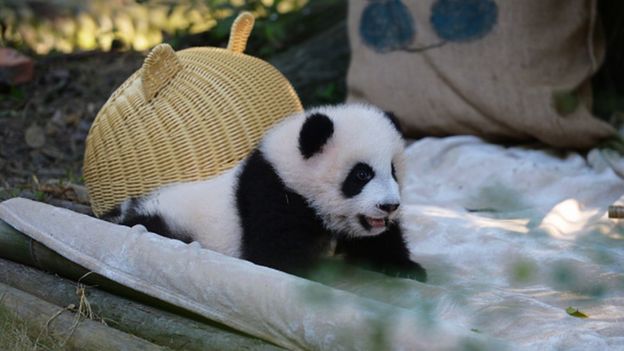
XINING, Dec. 1 (Xinhua) — Four giant pandas can be seen playing at the Qinghai-Tibet Plateau Wild Zoo in northwest China, as they are adapting well to their first winter on the plateau.

The rare species native to warm and humid Sichuan Province in southwest China became the first pandas to settle down in the plateau city of Xining, capital of Qinghai Province, in June.

The panda house in the zoo is the largest of its kind in China. The zoo is open to visitors in winter.

Xining, with an altitude of over 2,260 meters above the sea level, has entered its coldest time of the year with the daily low temperature averaging minus 10 degrees Celsius.

However, the pandas do not just idle in their enclosures enjoying the luxuries of temperature control, floor heating and humidified air. During the day, they venture out rolling in the snow and digging for bamboo shoots buried in the snow by their keepers.

The keepers said the pandas have fully adapted to the climate on the plateau, and all their health indexes are normal.

Experts said the panda settlement on the plateau can help expand the species’ adaptive range of living. Researchers will continue to follow their health conditions at high altitudes.

Source: Xinhua

31/10/2019

Fatal crash highlights Chinese air force’s flaws, with drill and equipment problems implicated in deaths of three, including pilot who flew in National Day military parade

  • The deaths of three airmen in a helicopter crash and a second accident days later point to problems with training and equipment
  • The crashes happened within a span of 10 days, amid an increased number of intensive drills
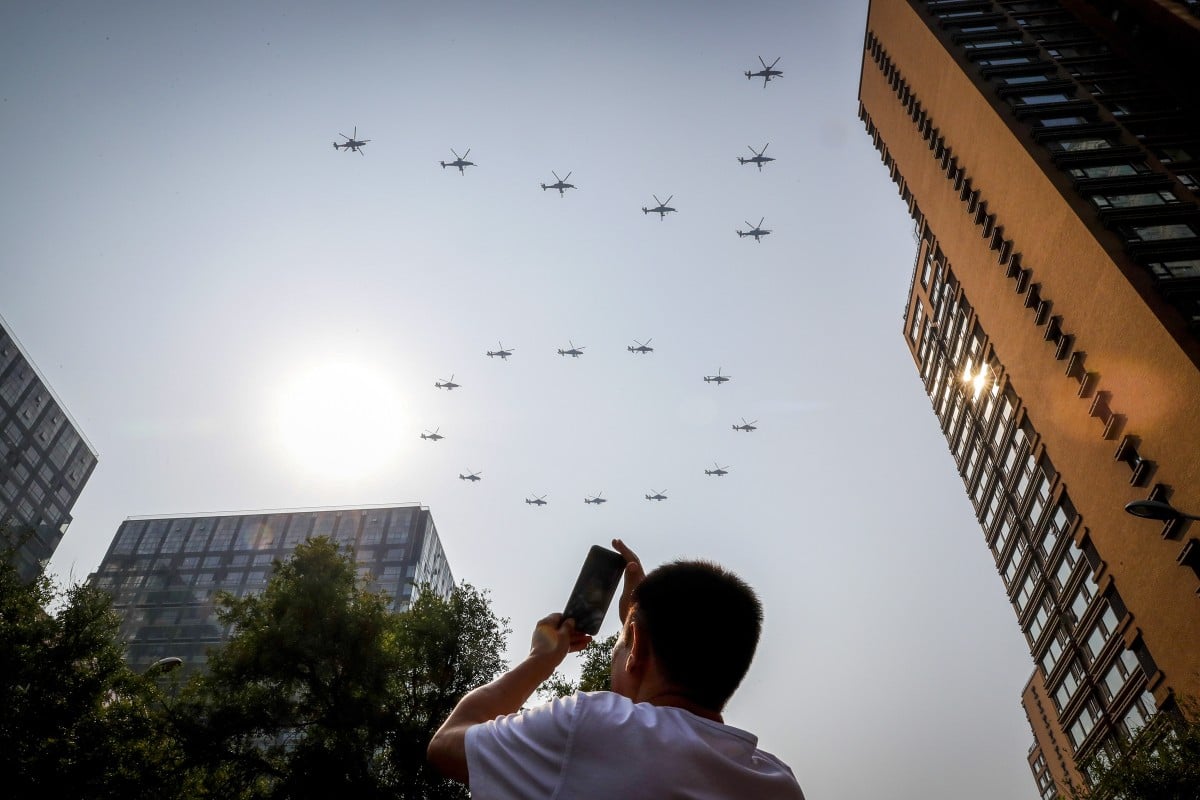
Chinese military helicopters form the number 70 as part of the National Day parade in Beijing. Photo: AP

Engine flaws and a lack of training have been identified as the likely causes of two accidents that hit the Chinese air force in the space of little over a week – one of which claimed the lives of three airmen.

Deaths from the crashes, which happened within a span of 10 days, included a helicopter pilot who took part in the National Day grand parade at the start of the month.

A number of military sources said that as the air force stepped up its exercises – part of President Xi Jinping’s call to strengthen the “combat readiness” of the military – more accidents would happen as increased drills exposed technical problems and inadequate training.

“[If these problems are not resolved], it is foreseeable that more accidents will happen because the top brass is pushing for more drills and exercises across the military,” said one source close to the air force.
The fatal accident happened about three weeks ago in central Henan province, when a transport helicopter crashed, killing all three people on board.
Gong Dachuan, 33, was one of the airmen killed in the crash. Photo: Handout

Local television reports named pilot Gong Dachuan, 33, and 37-year-old engineer Wen Weibin, as two of this killed in the crash. The third victim was later named as Luo Wei, from Luzhou in Sichuan, by an online mourning website.

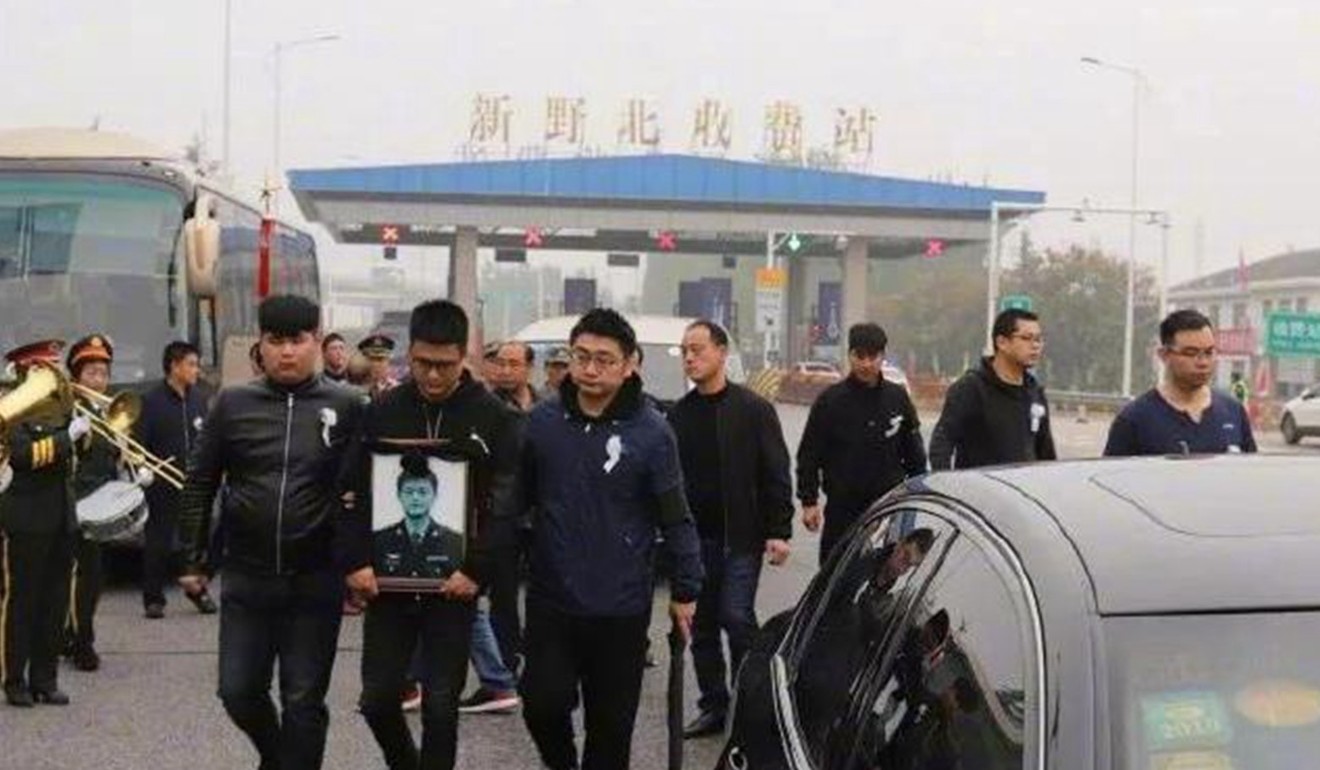
A memorial for Gong was held by the local government in Xinye County last Tuesday.

“The three people were conducting some tests on the helicopter,” said a local source who declined to disclose where the crash happened and the nature of the test.

Xinye county government in Henan province held a memorial to honour the dead pilot. Photo: Handout

Media reports said that Gong had flown in this year’s National Day parade in Beijing, while Wen had been decorated for his participation in the 2015 parade in Beijing to mark the 70th anniversary of victory over Japan in World War II.

The three dead airmen have been designated as martyrs, the reports added.

The second accident happened eight days later on the Tibetan Plateau where a J-10 fighter jet on a low-altitude flying drill crashed into the mountain.

“Fortunately, the pilot ejected safely in time, but the J-10 crashed into the mountain,” said an informed source, who requested anonymity since no official announcement about the accident has been made.

“Preliminary investigations indicated that the accident had something to with the Russian-made AL-31 engine on board the J-10,” the source said.

Military analysts said the air force needs to improve the durability of its aircraft and training for pilots.

Hong Kong-based military expert Song Zhongping suggested that problems with engines and flight control systems were also key reasons behind some of the fatal crashes.

Wen Weibin, 37, also died in the crash. Photo: Handout

Two J-15  fighter jets crashed in April 2016, resulting in one death and one serious injury. Investigations into the two crashes pointed to problems with the flight control system.

A source from the Chinese air force said that, unlike their American counterparts, PLA pilots generally lack training in avionics engineering and had little flying experience before enlistment.

“PLA pilots may be strong and courageous, and they are motivated to make sacrifices,” the air force source said. “But they don’t have as much experience as American pilots – many of [whom] have a lot of experience in flying civilian aircraft before they join the air force.”

Source: SCMP

23/10/2019

Chinese ‘panda’ pet cafe raises eyebrows

A 'panda' dog in a Chinese pet cafeImage copyright HONGXING NEWS
Image caption A pet cafe in China’s Sichuan province lets people play with dogs dyed to look like pandas.

​Animal cafes have been springing up all over the world for the last two decades as a place for animal lovers to enjoy a meal alongside their furry friends.

But a new “panda” cafe in Chengdu in south-western China – internationally known as the home of the giant panda – is raising eyebrows and a lot of concern.

According to the Chengdu Economic Daily, a cafe recently opened in Chengdu, seems at first glance to be home to six giant panda cubs.

But the “panda” cafe is – in fact – all bark and no bite because on closer inspection, it turns out they are actually the Chow Chow breed of dogs, which have been dyed to look like China’s national animal.

‘Could damage their fur and skin’

The owner of the cafe, Mr Huang, says that as well as serving food and drink, the cafe provides a dyeing service.

He tells Hongxing News that he imports his dye from Japan and has hired special staff for dyeing the dogs.

“Every time we dye it costs 1,500 yuan [$211; £163],” he says. “The dye is really expensive.” He says that this is to ensure the quality of the dye, and says that it in no way affects the animals.

You may also be interested in:

Hongxing News says that a short video inside the cafe had raised awareness of it nationally and has boosted visitor figures.

But it has also raised a lot of concern. One vet, Li Daibing, told Hongxing News that he urged people not to dye their pets, saying: “This could damage their fur and skin.”

A giant panda in ChengduImage copyright VCG
Image caption Chengdu has become a popular tourist site for seeing the vulnerable species, and national Chinese treasure: the giant panda.

‘Has become normal’

Dyeing pets became a full-blown craze in China in the early 2010s, first for competitions, but then amidst a domestic wave of “extreme dog pampering”.

Since, however, there has been a growing consciousness in China about animal ethics and testing. Many of the thousands of social media users commenting on the popular Sina Weibo microblog have voiced their concern about such treatments being used on animals.

Many call the idea “crazy” and note that hair dye can “damage people’s hair and scalp”, so could similarly affect a dog.

But others argue that “it’s really cute”, and say that they perceive animal dyeing “has become normal”.

It’s not just China either – earlier this year, the Latitude Festival in Suffolk was criticised by the RSPCA after a flock of sheep were dyed pink.

Source: The BBC

14/10/2019

Senior official stresses eradicating poverty in west China on schedule

LHASA, Oct. 13 (Xinhua) — A senior official has called for enhanced efforts in eradicating poverty in west China’s underdeveloped areas and making sure to win the battle against poverty on schedule.

Hu Chunhua, a member of the Political Bureau of the Communist Party of China Central Committee and chief of the State Council leading group of poverty alleviation and development, made the remarks when he inspected poverty-eradication work in Tibet Autonomous Region from Oct. 11 to 13.

Parts of Tibet, Xinjiang Uygur Autonomous Region, and provinces of Sichuan, Qinghai, Gansu and Yunnan are major targeted areas for the country to win an overall combat against poverty on schedule.

Hu said the poverty alleviation campaign has entered a crucial stage and the country will continue its efforts unswervingly to ensure all rural population living in poverty-hit areas will be lifted out of poverty.

More efforts should be made to satisfy the need of poor population in terms of compulsory education, basic medical care, safe housing and drinking water.

To consolidate achievements of poverty relief campaign, more measures should be taken, including boosting poverty-alleviation industries and county-level economy, and enhancing follow-up support for people relocated from harsh living conditions, he added.

Source: Xinhua

Law of Unintended Consequences

continuously updated blog about China & India

ChiaHou's Book Reviews

continuously updated blog about China & India

What's wrong with the world; and its economy

continuously updated blog about China & India