29/05/2019
- “I believe my father would have been thrilled to know this,” Li’s dad Lee Hsien Yang said
- Sex between men remains illegal in Singapore but the city state’s first PM had been known to express a different opinion from the government in his later years
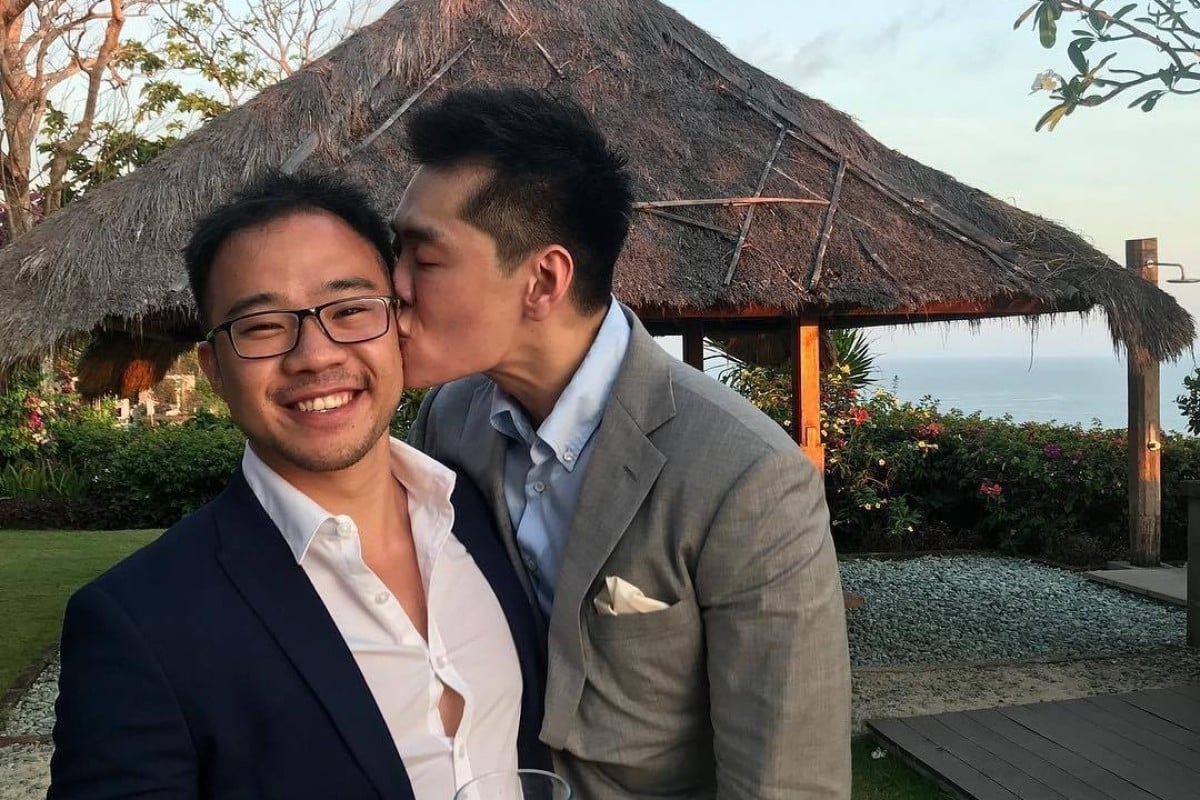
Li Huanwu (R) with his boyfriend Heng Yirui. Photo: Facebook
A grandson of Singapore’s late founding father
revealed on Friday he had married his boyfriend in South Africa, prompting a flurry of mostly positive reactions in his country, where male homosexuality is banned, and around the region.
Li Huanwu, the second son of Lee Hsien Yang, was seen with his partner Heng Yirui in an Instagram post the latter shared online on Friday with a caption that read: “Today I marry my soulmate. Looking forward to a lifetime of moments like this with [Huanwu].”
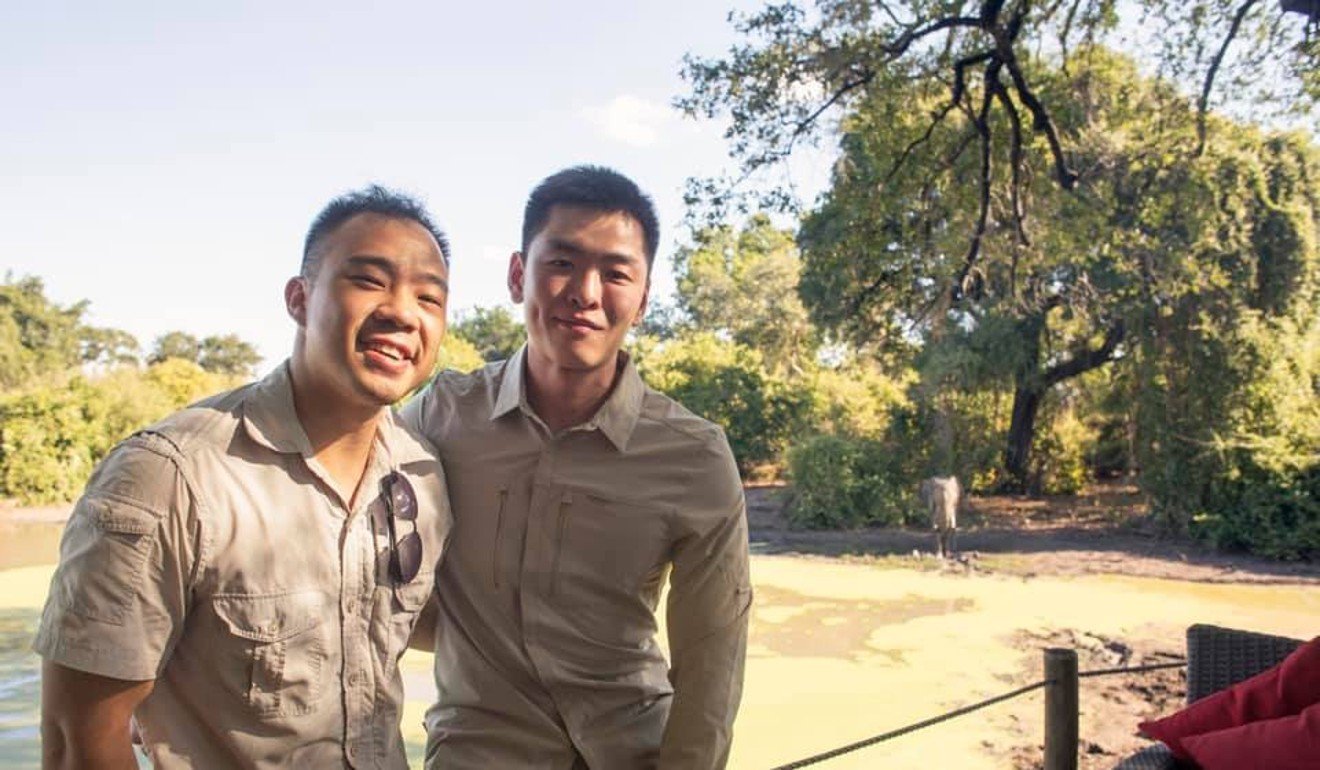
The picture showed both in matching white shirts and khaki trousers at a game reserve in Cape Town.
“I’ll echo my comment I made to Pink Dot – today would have been unimaginable to us growing up. We are overjoyed to share this occasion in the glowing company of friends and family,” Li told the South China Morning Post.
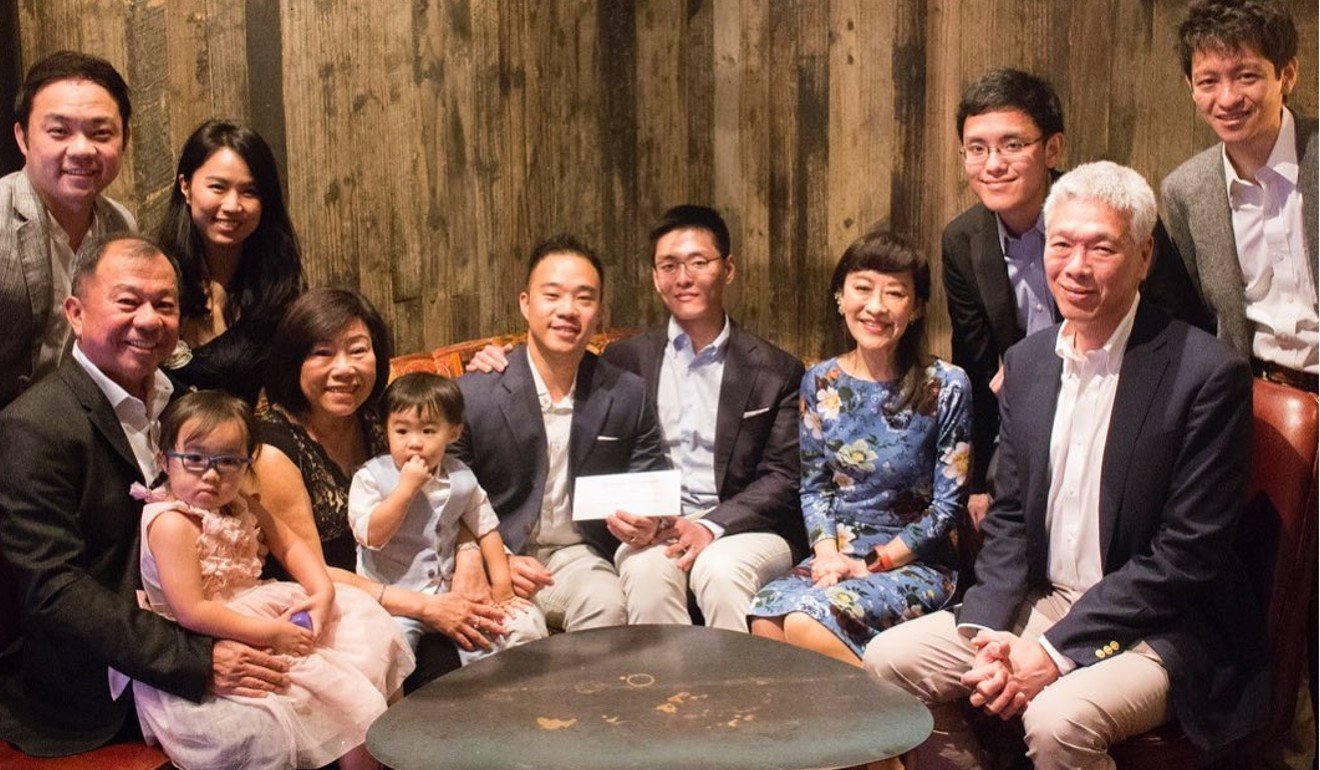
The happy couple with their families. Photo: Facebook
Li’s father, Lee Hsien Yang, is himself the second and youngest son of the elder Lee, who died in March 2015.
Asked about his son’s nuptials, Lee told the Post : “I believe my father would have been thrilled to know this.”
under Section 377A of the Penal Code but Lee Kuan Yew, who was Prime Minister for 31 years until 1990, had been known to express a different opinion from the government in his later years.
Li’s wedding was held in South Africa, where same-sex marriages were legalised in 2006. It also came amid celebrations lauding
last week – the first of its kind in Asia.
On Friday, independent news sites in
, including Mothership.sg and The Independent, were quick to pick up on the announcement while mainstream media outlets steered clear of reporting it.
Mothership’s Facebook post by Saturday had attracted 1,700 likes and 400 comments, mostly positive and congratulating the pair. One user, Donna Lim, commented: “Congrats! Love has no boundaries.”
In mainland China, multiple posts of Li’s wedding surfaced on social media app WeChat, which have garnered hundreds of likes and comments as of Saturday afternoon.
A few reacted with disdain but many of the Chinese commentators also congratulated the couple, with some hoping that Li would front the fight for gay rights in Singapore.
Why some members of Singapore’s LGBT community prefer life in the shadows
“…Homosexuality is illegal in Singapore, and now, Lee Kuan Yew’s grandson is taking the lead,” said a netizen with the username Tired and Humorous.
Another netizen added: “Gay love is still love, homophobia is a disease.”
Comments on the WeChat posts also noted how the lesbian, gay, bisexual and transgender (
) community in Singapore were subject to a law that criminalises sex between gay men.
“It turns out that Singapore is so traditional, it can lead to a conviction,” said one user named Facecover.
The Drum Tower, another user, added: “Singapore’s anti-same sex law was set by the British colony, but now the UK has legalised same-sex marriage.”
Li Huanwu had gone public about his partner more than a year before the wedding. In 2018, he and Heng appeared in a lesbian, gay, bisexual and transgender campaign titled Out in Singapore. Both had also attended
, an annual celebration to support the LGBT community in Singapore that year.
‘Worse than the Kardashians’: family feud turns ugly as siblings target PM’s wife
Li Huanwu’s father, Hsien Yang and his sister Lee Wei Ling are estranged from their eldest brother and current Singapore Prime Minister Lee Hsien Loong because of a dispute over their father’s wishes to have their
. Huanwu’s elder brother Shengwu, a Harvard University economist, is also
in Singapore.
In his book Hard Truths to Keep Singapore Going published in 2011, the elder Lee, who retired from government that same year, said that homosexuality was “not a lifestyle”.
Li Huanwu (R) and Heng Yirui. Photo: Facebook
“You can read the books you want, all the articles. You know that there’s a genetic difference,” Lee said.
“They are born that way and that’s that. So if two men or two women are that way, just leave them alone.”
Earlier, in a book The Wit & Wisdom of Lee Kuan Yew, published in 2007, Lee was quoted as saying: “If in fact it is true, and I have asked doctors this, that you are genetically born a homosexual – because that’s the nature of the genetic random transmission of genes – you can’t help it. So why should we criminalise it?”
Source: SCMP
Posted in boyfriend, founding father, grandson, Lee Hsien Yang\, Lee Kuan Yew, Li Huanwu, marries, Singapore, social media, Uncategorized |
Leave a Comment »
29/05/2019
- Lowy Institute’s 2019 Asia Power Index puts Washington behind both Beijing and Tokyo for diplomatic influence
- Trump’s assault on trade has done little to stop Washington’s decline in regional influence, compared to Beijing, say experts
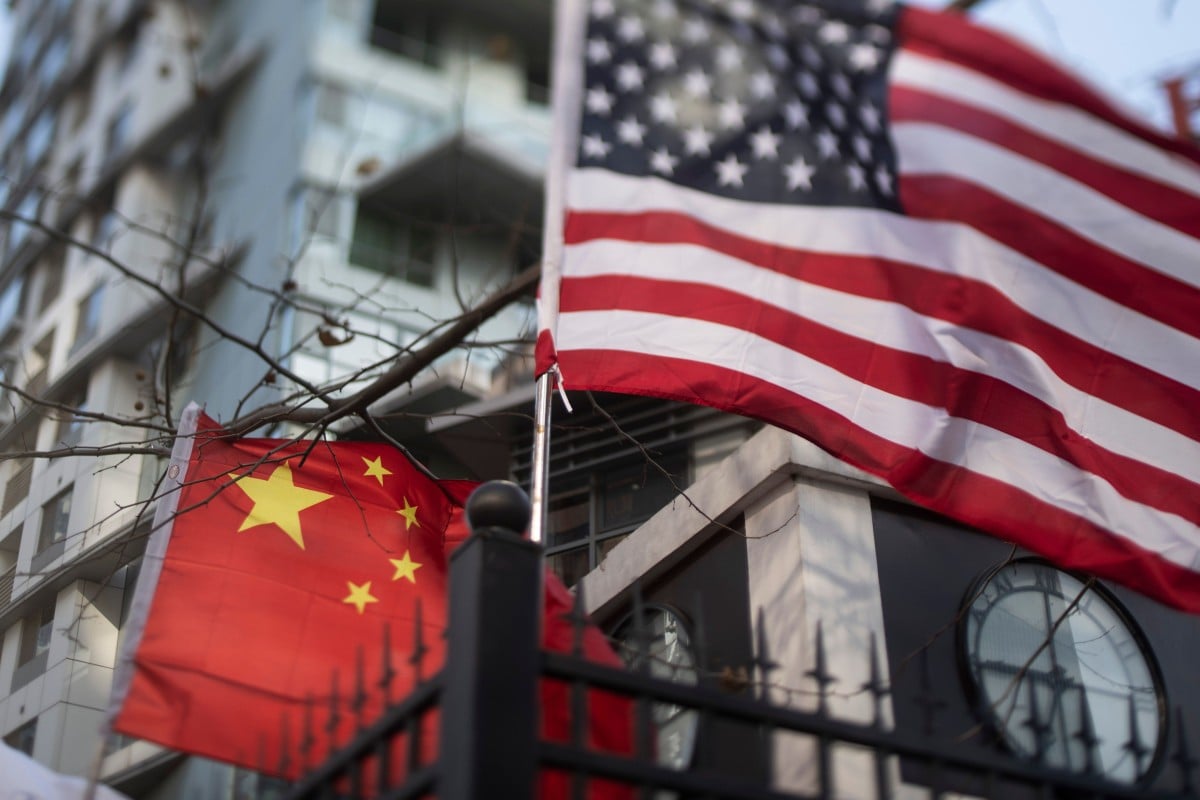
Chinese and US flags at an international school in Beijing. Photo: AFP
The
may be a dominant military force in Asia for now but short of going to war, it will be unable to stop its economic and diplomatic clout from declining relative to China’s power.
That’s the view of Australian think tank the Lowy Institute, which on Tuesday evening released its 2019 index on the distribution of power in Asia.
However, the institute also said China faced its own obstacles in the region, and that its ambitions would be constrained by a lack of trust from its neighbours.
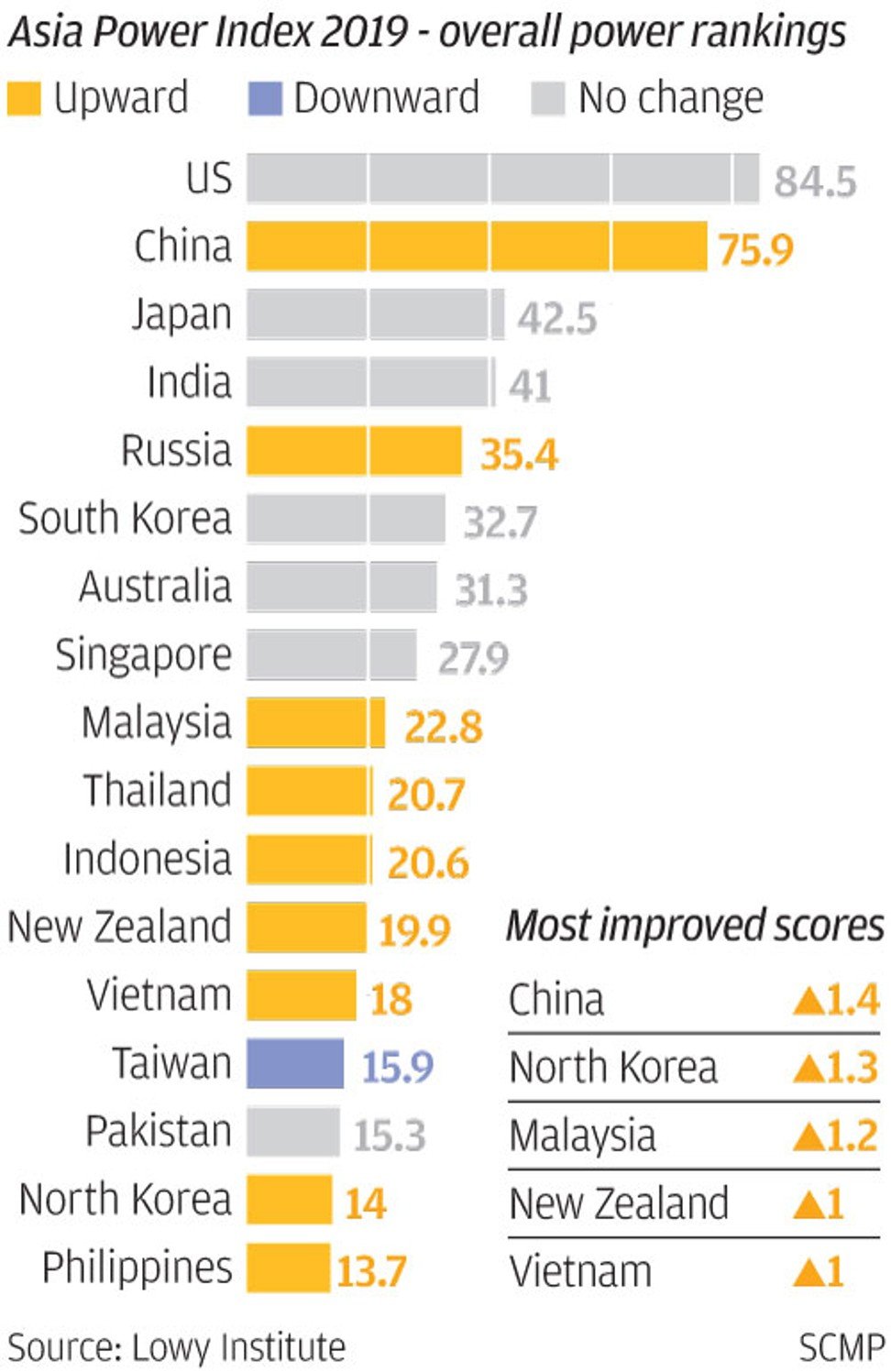
The index scored China 75.9 out of 100, just behind the US, on 84.5. The gap was less than America’s 10 point lead last year, when the index was released for the first time.
“Current US foreign policy may be accelerating this trend,” said the institute, which contended that “under most scenarios, short of war, the United States is unlikely to halt the narrowing power differential between itself and China”.
The Lowy Institute’s Asia Power Index. Click to enlarge.
Share:
Since July, US President
has slapped tariffs on Chinese imports to reduce his country’s
. He most recently hiked a 10 per cent levy on US$200 billion worth of Chinese goods to 25 per cent and has also threatened to impose tariffs on other trading partners such as the European Union and Japan.
Herve Lemahieu, the director of the Lowy Institute’s Asian Power and Diplomacy programme, said: “The Trump administration’s focus on trade wars and balancing trade flows one country at a time has done little to reverse the relative decline of the United States, and carries significant collateral risk for third countries, including key allies of the United States.”
The index rates a nation’s power – which it defines as the ability to direct or influence choices of both state and non-state actors – using eight criteria. These include a country’s defence networks, economic relationships, future resources and military capability.
It ranked Washington behind both Beijing and Tokyo in terms of diplomatic influence in Asia, due in part to “contradictions” between its recent economic agenda and its traditional role of offering consensus-based leadership.
The spoils of trade war: Asia’s winners and losers in US-China clash
Toshihiro Nakayama, a fellow at the Wilson Centre in Washington, said the US had become its own enemy in terms of influence.
“I don’t see the US being overwhelmed by China in terms of sheer power,” said Nakayama. “It’s whether America is willing to maintain its internationalist outlook.”
But John Lee, a senior fellow at the Hudson Institute, said the Trump administration’s willingness to challenge the status quo on issues like trade could ultimately boost US standing in Asia.
“The current administration is disruptive but has earned respect for taking on difficult challenges which are of high regional concern but were largely ignored by the Obama administration –
illegal weapons and China’s predatory economic policies to name two,” said Lee.
“One’s diplomatic standing is not just about being ‘liked’ or ‘uncontroversial’ but being seen as a constructive presence.”
CHINA’S RISE
China’s move up the index overall – from 74.5 last year to 75.9 this year – was partly due to it overtaking the US on the criteria of “economic resources”, which encompasses GDP size, international leverage and technology.
China’s economy grew by more than the size of Australia’s GDP in 2018, the report noted, arguing that its growing base of upper-middle class consumers would blunt the impact of US efforts to restrict Chinese tech firms in Western markets.
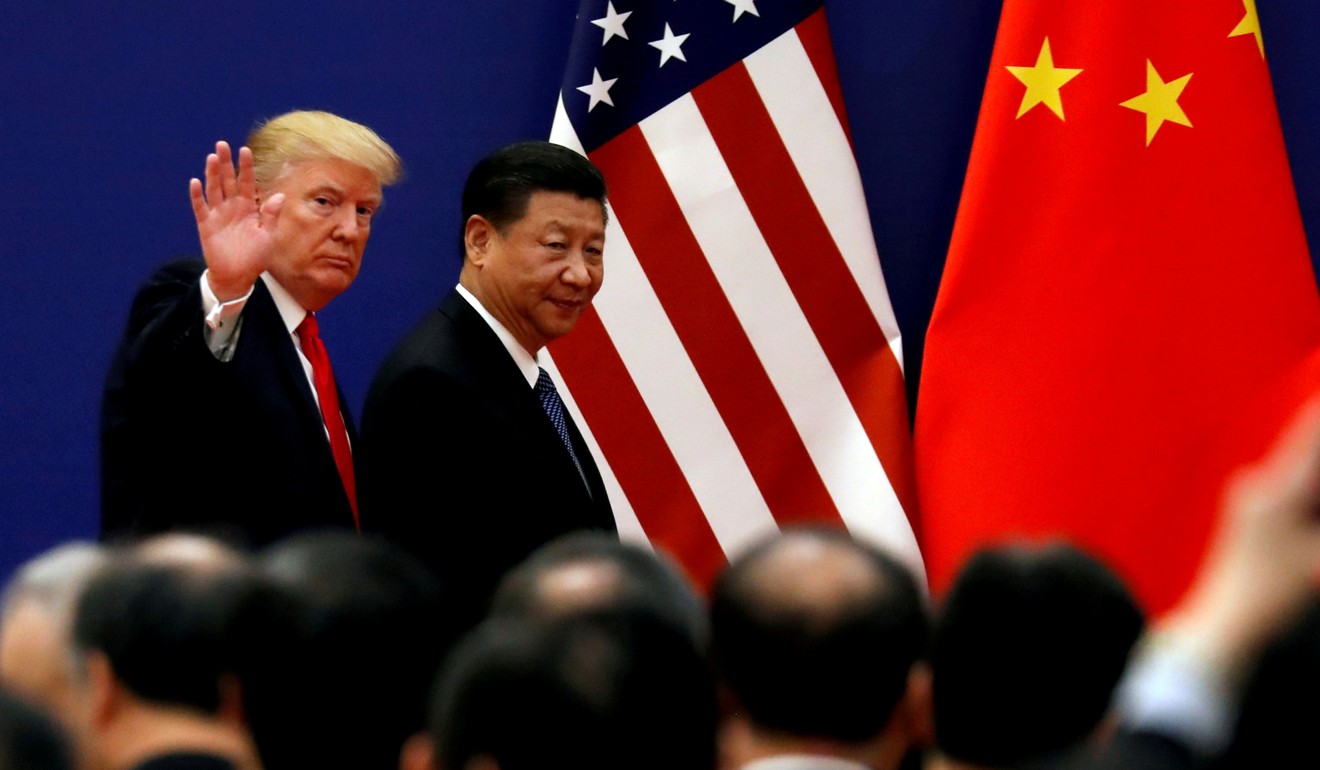
US President Donald Trump with Chinese counterpart Xi Jinping. Photo: Reuters
“In midstream products such as smartphones and with regard to developing country markets, Chinese tech companies can still be competitive and profitable due to their economies of scale and price competitiveness,” said Jingdong Yuan, an associate professor at the China Studies Centre at the University of Sydney.
“However, to become a true superpower in the tech sector and dominate the global market remains a steep climb for China, and the Trump administration is making it all the more difficult.”
The future competitiveness of Beijing’s military, currently a distant second to Washington’s, will depend on long-term political will, according to the report, which noted that China already spends over 50 per cent more on defence than the 10
stands in the way of its primacy in Asia, according to the index, which noted Beijing’s unresolved territorial and historical disputes with 11 neighbouring countries and “growing degrees of opposition” to its signature
.
Beijing is locked in disputes in the
with a raft of countries including Vietnam, the Philippines and Brunei, and has been forced to renegotiate infrastructure projects in
and Myanmar due to concerns over feasibility and cost.
If Trump kills off Huawei, do Asia’s 5G dreams die?
Xin Qiang, a professor at the Centre for American Studies at Fudan University in Shanghai, said Beijing still needed to persuade its neighbours it could be a “constructive, instead of a detrimental, force for the region”.
“There are still many challenges for [China to increase its] power and influence in the Asia-Pacific,” Xin said.
Wu Xinbo, also at Fudan University’s Centre for American Studies, said Beijing was having mixed success in terms of winning regional friends and allies.
“For China, the key challenge is how to manage the maritime disputes with its neighbours,” said Wu. “I don’t think there is growing opposition to the Belt and Road Initiative from the region, actually more and more countries are jumping aboard. It is the US that is intensifying its opposition to the project as Washington worries it may promote China’s geopolitical influence.”
Yuan said the rivalry between the
would persist and shape the global order into the distant future.
“They can still and do wish to cooperate where both find it mutually beneficial, but I think the more important task for now and for some time to come, is to manage their disputes in ways that do not escalate to a dangerous level,” Yuan said. “These differences probably cannot be resolved given their divergent interests, perspectives, etc, but they can and should be managed, simply because their issues are not confined to the bilateral [relationship] but have enormous regional and global implications.”
Elsewhere in Asia, the report spotlighted Japan, ranked third in the index, as the leader of the liberal order in Asia, and fourth-placed India as an “underachiever relative to both its size and potential”.
China’s wrong, the US can kill off Huawei. But here’s why it won’t
Lee said the index supported a growing perception that Tokyo had emerged as a “political and strategic leader among democracies in Asia” under
.
“This is important because Prime Minister Abe wants Japan to emerge as a constructive strategic player in the Indo-Pacific and high diplomatic standing is important to that end,” Lee said.
, South Korea, Australia,
, Malaysia and Thailand rounded out the top-10 most powerful countries, in that order. Among the pack, Russia, Malaysia and Thailand stood out as nations that improved their standing from the previous year.
, ranked 14th, was the only place to record an overall decline in score, reflecting its waning diplomatic influence
during the past year.
Source: SCMP
Posted in Asia, Asia Power Index, Asian Power and Diplomacy programme, Australia, Australia’s GDP, Beijing, Belt and Road Initiative (BRI), Centre for American Studies, China alert, Chinese tech firms, European Union, Fudan University, geopolitical influence, Huawei, Hudson Institute, Japanese Prime Minister Shinzo Abe, Lowy Institute, Malaysia, North Korea, President Xi Jinping, rise, Russia, Short of war, Singapore, South Korea, Taiwan, Thailand, think tanks, Tokyo, Uncategorized, US, US President Donald Trump, Washington, Western markets, Wilson Centre in Washington |
Leave a Comment »
29/05/2019
- The Asian security forum in Singapore had been seen as an ideal venue for a breakthrough in the growing diplomatic spat – but Tokyo has got cold feet
- That will ease the pressure on Beijing in the South China Sea, analysts say
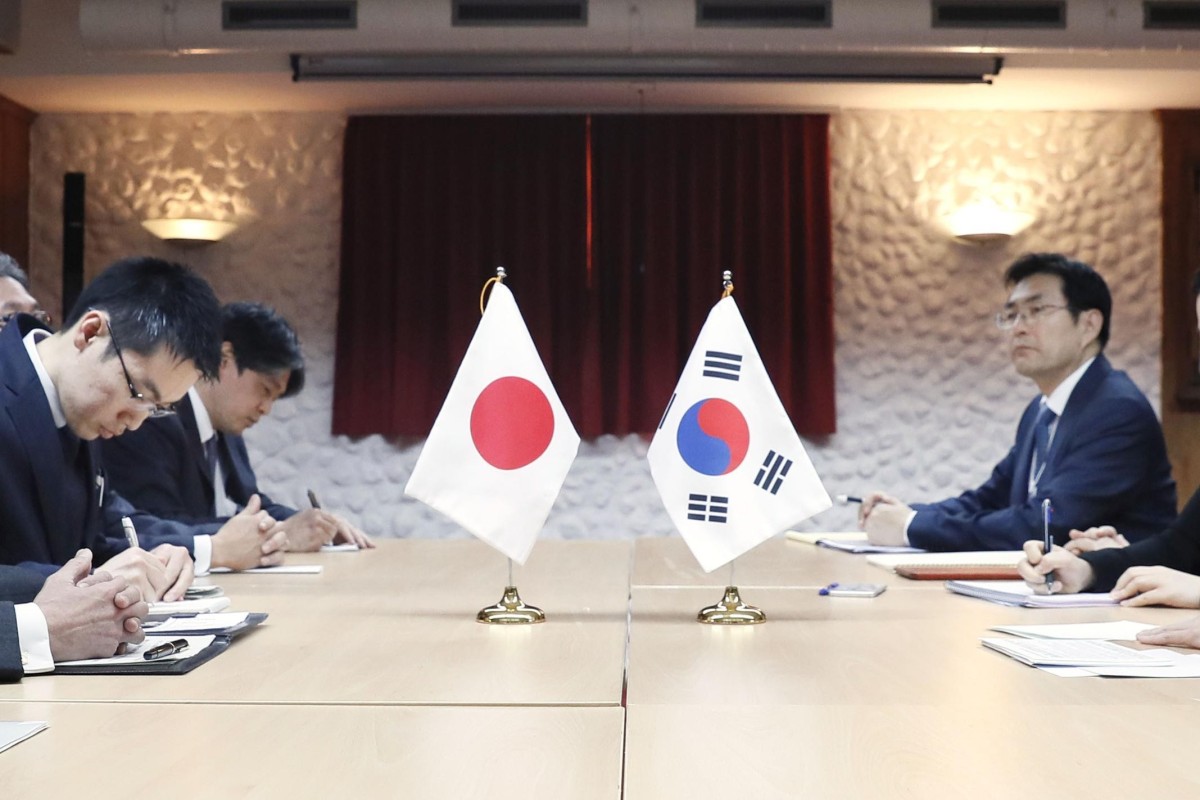
Hopes are fading for a breakthrough in Japan-South Korea relations at the Shangri-La Dialogue in Singapore. Photo: Kyodo
Hopes that
and
could use the Shangri-La Dialogue in
to address their growing diplomatic spat are receding.
The three-day Asian security forum, which begins on Friday, had been seen as an ideal neutral venue for the two countries’ defence ministers to hold formal talks on issues including Tokyo’s claim that in January a
onto a Japanese reconnaissance aircraft.
The issue is one of the biggest deviling the bilateral relationship, alongside Japan’s perception that Seoul has backtracked on a promise to draw a line under Japan’s use of
– euphemistically known as “comfort women” – in military-run brothels during World War Two.
However, Tokyo appears to have concluded that formal talks on the sidelines of the Shangri-La Dialogue would be premature. The Yomiuri newspaper has reported that a formal meeting will no longer take place and that Takeshi Iwaya and Jeong Kyeong-doo, his South Korean opposite number, will now be restricted to a brief, stand-up exchange of their positions.
Despite the report, South Korean officials were guarded when asked whether the meeting had been shelved. “A detailed plan [on the bilateral talks] has yet to be fixed. Consultations are still underway between authorities of the two countries,” said the South Korean defence ministry spokesperson Choi Hyun-soo on Tuesday.
Analysts suggested Japan had run out of patience with South Korea and that the biggest winner in the stand off between two US allies would be China.
Japanese Defence Minister Takeshi Iwaya. Photo: Kyodo
“My sense is that Japan sees South Korea as not engaging in negotiations on a number of issues and not adhering in good faith to agreements that it has already signed,” said Stephen Nagy, a senior associate professor of international relations at Tokyo’s International Christian University.
Tokyo has been incensed that the administration of
has gone back on a 2015 agreement that was meant to draw a final line under the “comfort women” issue. Its anger deepened when Seoul said it would not intervene in a South Korean Supreme Court ruling, which ordered Japanese companies to pay up to 120 million won (US$100,000) to each of a dozen
of the Korean peninsula from 1910-1945.
Like its stance on “comfort women”, Japan believed a line had been drawn under the issue, this time in a 1965 pact that normalised relations between the two countries. Seoul argues that the 1965 treaty, which it signed after receiving US$800 million in grants and soft loans from Tokyo as compensation, does not cover individual victims of colonial-era atrocities.
As rift between Japan, South Korea deepens, how hard can Seoul afford to push?
“Japan is not ready to get into any more agreements because it fears that Seoul will not follow through or that they will become politicised in the future,” Nagy said.
“Tokyo wants binding, long-lasting agreements rather than having to renegotiate something each time a new Korean government comes in,” he said.
“The biggest winner in this stand-off between the US’ two most important allies in the region is, of course, China,” he added. “They must be delighted to see this playing out because it means the US is not able to exert nearly as much pressure in areas such as the
A long-standing strategic aim in US foreign policy circles has been to form a trilateral alliance with South Korea and Japan to present a united front against common security concerns, including China’s growing influence. However, the seeming inability of the two countries to get along has long thwarted this ambition.
“If Japan, South Korea and the US could find a way to cooperate, imagine the influence they could exert over the South China Sea or over
,” Nagy said. “If Japan and Korea could find a way to put their differences aside and with their security capacity, it would be a powerful deterrent to Beijing and Pyongyang.”
South Korean protesters demonstrate against Japan’s use of sex slaves – euphemistically termed ‘comfort women’ in World War II. Photo: AFP
Toshimitsu Shigemura, a professor of international relations at Tokyo’s Waseda University, agreed that the schism between Seoul and Tokyo would be of serious concern to Washington, but he believed that US pressure had already been brought to bear on the two neighbours.
“By avoiding talks in Singapore, Japan is doing its best to avoid public problems between the two sides and I believe that talks are already taking place between the two governments on these issues,” he said.
US wants Japan and South Korea to tag team China. But history is in the way
“The US will have told Tokyo and Seoul that it does not want to see more disagreements and that it is very important that they cooperate and calm things down a bit,” he said.
“I am sure that Washington knows exactly what happened when the Korean warship locked onto the Japanese aircraft in January, but they’re not publicly taking sides and instead they’re telling both governments to put the dispute behind them and to move on,” he added.
Other analysts were more pessimistic.
“The dynamics in domestic politics in both countries are currently overwhelming any diplomatic motives to improve bilateral ties,” said Bong Young-sik, a researcher at the Asan Institute for Policy Studies in Seoul.
Japanese Prime Minister Shinzo Abe. Photo: AFP
“For President Moon Jae-in, Japan-bashing is a useful political card to appeal to his supporters while for
, giving the impression that South Korea is going too far in pressing Japan is also beneficial for his own political gains.”
Professor Ha Jong-moon at Hansin University said there were “no solutions in sight” to resolve the differences over forced labour and wartime sex slavery, but said there would be a chance to “smooth ruffled feathers” at the G20 summit in Osaka, which takes place at the end of June.
The last time the defence ministers of the two countries met was in October last year, when they held talks on the sidelines of the Asean Defence Ministers’ Meeting in Singapore.
Source: SCMP
Posted in Asian security forum, associate professor of international relations, ‘win for China’, “comfort women”, Beijing, China alert, cold feet, fire control radar, hopes fade, Japan-South Korea talks, Japan’s colonial rul, Japan’s colonial rule, Japanese, Jeong Kyeong-doo, Korean sex slaves, military-run brothels, President Moon Jae-in, professor of international relations, Pyongyang, reconnaissance aircraft, Seoul, Shangri-La Dialogue, Singapore, South China Sea, South Korea, South Korean Supreme Court, South Korean warship, Stephen Nagy, Takeshi Iwaya, Tokyo, Tokyo’s International Christian University., Tokyo’s Waseda University, Toshimitsu Shigemura, Uncategorized, US allies, World War Two, Yomiuri |
Leave a Comment »
28/05/2019
- Asia has a rich but largely forgotten history of acceptance of queer relationships
- It was not until the colonial era that sexual and gender diversity came to be seen as a sin
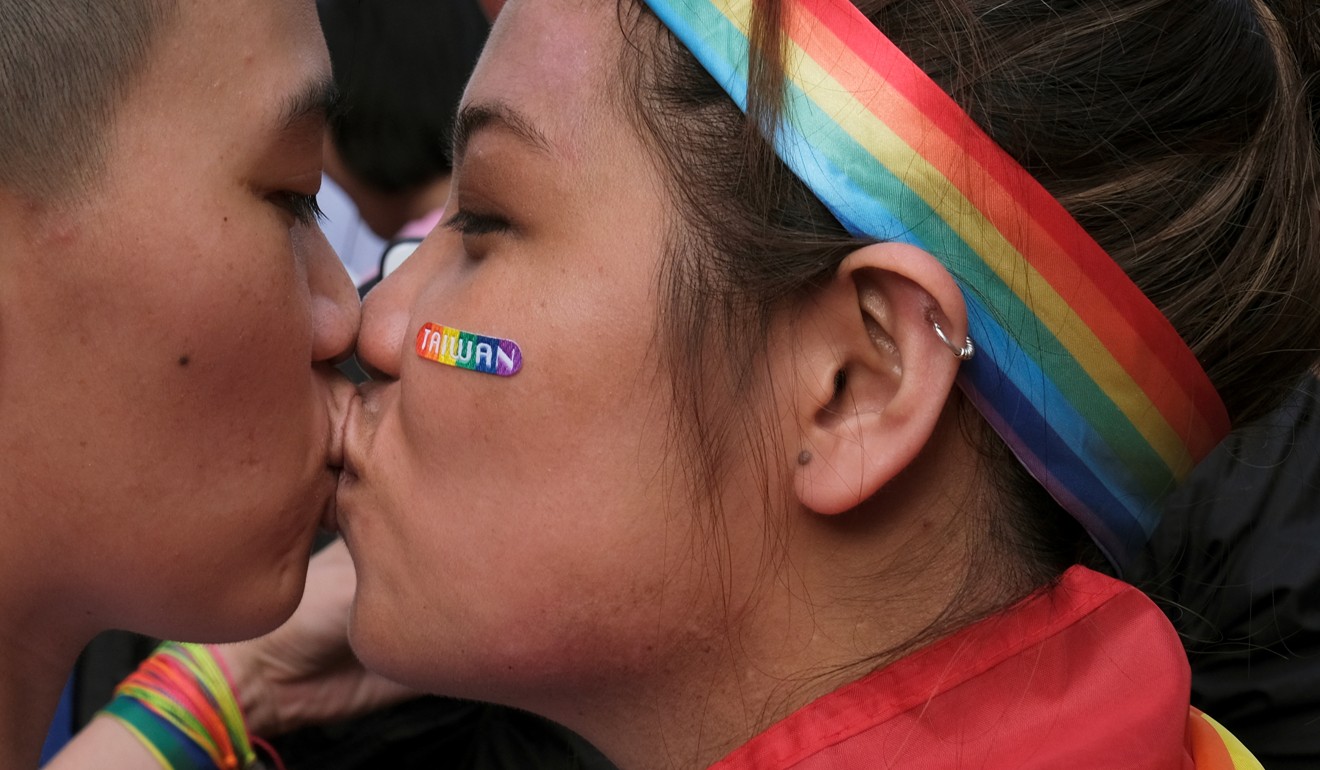
An LGBT pride parade in support of Taiwan’s same-sex marriage law. Photo: Reuters
A
nyone reading the headlines about
legalisation of same-sex marriage
would get the impression this was Asia’s first taste of marriage equality. They would be quite wrong.
While Taiwan may be the first jurisdiction in Asia to legalise the modern form of same-sex marriage, such unions have been recognised across the region in various guises for centuries.
It may be true that Asia does not have a great reputation among the
community, but it does have a rich history of acceptance of sexual and gender diversity – one that has largely been forgotten.
When Europeans first encountered Chinese society, they praised many aspects of it, from its efficient government to the sophisticated lifestyles of the upper-class. But they were shocked and repulsed about one aspect of Chinese society: the “abominable vice of sodomy”.
Opinion: Three lessons for Hong Kong from Taiwan’s LGBT journey
One Portuguese Dominican friar, Gaspar da Cruz, even wrote an apocalyptic tract which portrayed China as the new Sodom – beset by earthquakes, floods, and other natural disasters due to their acceptance of that “filthy abomination, which is that they are so given to the accursed sin of unnatural vice”, that is, sodomy.
Southern China, in particular, was known for a widespread acceptance of homosexual relationships. Shen Defu, a Chinese writer during the Ming dynasty, wrote that it was common for men of all social classes in Fujian province to take male lovers. While men generally took on these lovers while maintaining respectable marriages to women, there were some men who took their lover-relationships to a quasi-marriage level. The older man would be considered qixiong (adoptive older brother) and the younger qidi(adoptive younger brother).
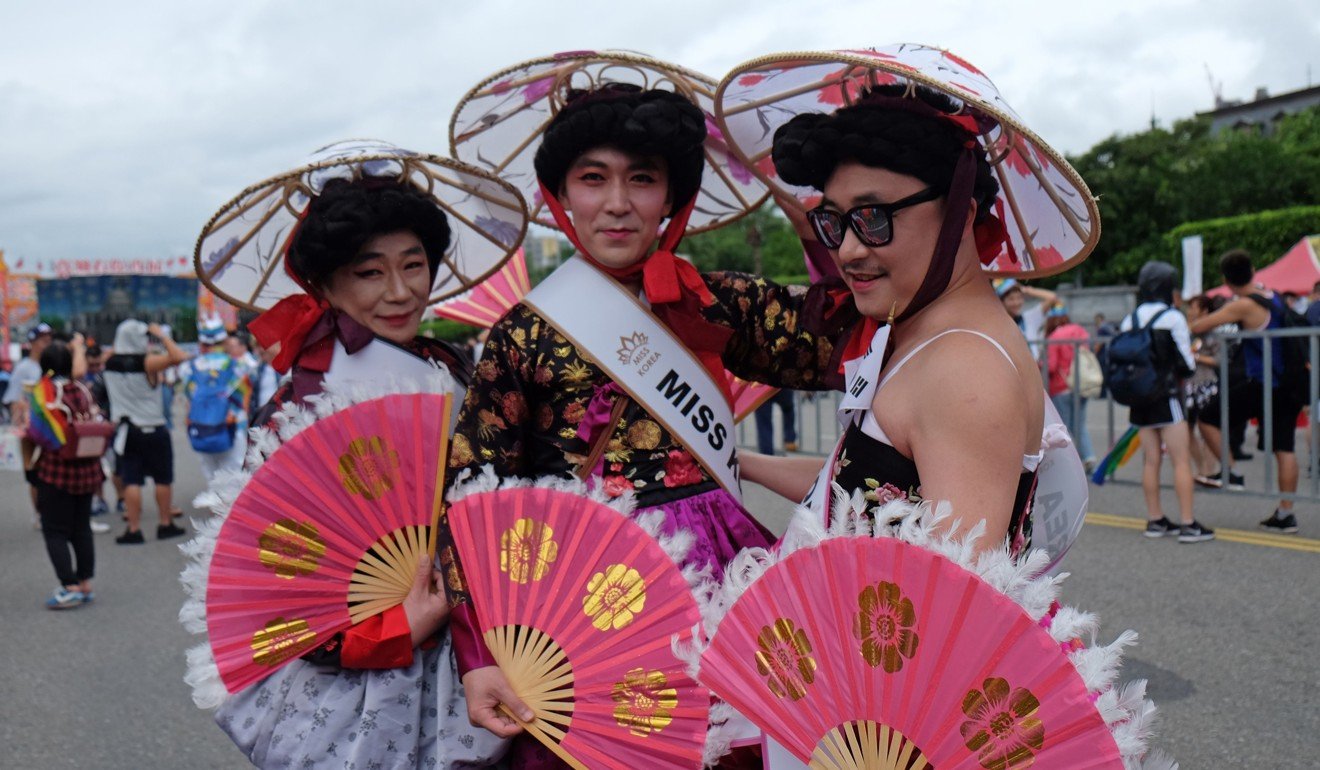
South Korean men take part in Taiwan’s annual LGBT pride parade in Taipei. Photo: AFP
Bret Hinsch, a professor of history in Taiwan, describes the ceremony based on the narration of a Chinese playwright, Li Yu (1610-1680): “Two men sacrifice a carp, a rooster, and a duck. They then exchange their exact times of birth, smear each other’s mothers with the blood of their sacrifices, and then swear eternal loyalty to one another.
The ceremony concludes with feasting on the sacrificial victims …. The younger qidi would move into the qixiong’s household. There he would be treated as a son-in-law by his husband’s parents. Throughout the marriage, many of which lasted for 20 years, the qixiong would be completely responsible for his younger husband’s upkeep.
The marriage would typically dissolve after a number of years so that the younger man could find a bride to marry to procreate and further the family lineage. The elder man was expected to pay the bride a price for the younger man.
These forms of gay “marriage” were prevalent enough in Fujian that there was even a patron deity of homosexuality, the rabbit. Many Han people from Fujian migrated to Taiwan starting in the 17th century; they now make up 80 per cent of the population.
Explained: gay rights, LGBTQ and same-sex marriage in Asia
Most literary accounts of homosexual relationships in China involve men, and there is a lively debate among scholars as to whether women enjoyed the same freedom.
Nevertheless, the most documented of female “quasi-marriages” are the “Golden Orchid Associations” in Guangdong. (Around 15 per cent of Taiwan’s population is Hakka, which historians trace specifically to Han migrants from Guangdong and surrounding areas.) The Golden Orchid Society was a movement based in Guangdong that lasted from the late Qing dynasty until the early 1900s. It provided a “sisterhood” alternative to women who did not want to get married for various reasons.
To announce her intentions, one woman would offer another gifts of peanut candy, dates and other goods. If the recipient accepted the gift, it was a signal she had accepted the proposal. They would swear an oath to one another, where sometimes one woman was designated “husband” and the other “wife”.
A couple kiss as they celebrate Taiwan’s legalisation of same-sex marriage. Photo: Reuters
Hinsch describes the ceremony in this way: “After an exchange of ritual gifts, the foundation of the Chinese marriage ceremony, a feast attended by female companions served to witness the marriage. These married lesbian couples could even adopt female children, who in turn could inherit family property from the couple’s parents.”
While these “marriages” are not equivalent to the same-sex marriages of today, they nevertheless are historical precedents for what is now happening in Taiwan.
And China is far from being the only country in Asia with a queer history – Southeast Asia’s LGBTQ history is even richer.
Why some members of Singapore’s LGBT community prefer life in the shadows
In the early modern period, marriages between two people of the same assigned sex but who identified as different genders, were fairly normal in many parts of Southeast Asia. We know this primarily from the records Europeans kept when they landed on Asian shores.
For instance, here is a letter by a Portuguese missionary, Antonio de Paiva, to his Catholic bishop in 1544 about his observations of the Bugis people in what is now
: “Your lordship will know that the priests of these kings are generally called bissus. They grow no hair on their beards, dress in a womanly fashion, and grow their hair long and braided; they imitate [women’s] speech because they adopt all of the female gestures and inclinations. They marry and are received, according to the custom of the land, with other common men, and they live indoors, uniting carnally in their secret places with the men whom they have for husbands …”
After this scandalised description, the author concludes with amazement that the Christian god, who had destroyed “three cities of Sodom for the same sin”, had not yet destroyed such “wanton people” who were “encircled by evil”.
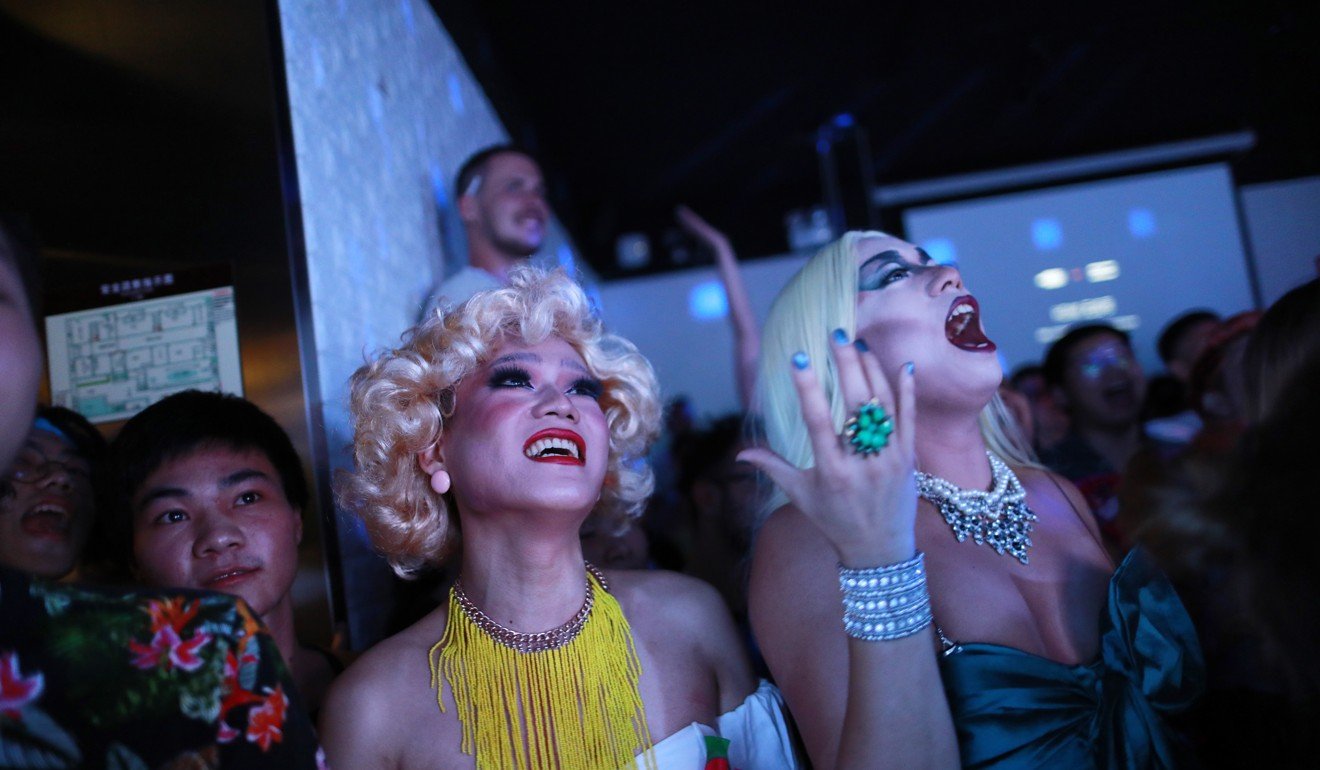
Drag queens at a gay nightclub in Beijing. Despite its reputation, Asia has a long history of accepting diversity. Photo: EPA
Dating as far back as the 13th century, bissu have traditionally served as council to kings and guarded sacred manuscripts. They are considered a fifth gender within the Bugis’ gender-system: oroané (male men), makkunrai (female women), calabai (male women), calalai (female men), and bissu, who were neither male nor female (or both).
Brunei’s LGBT residents face up to new death by stoning law against gay sex
Today, their ranks have thinned – in one area, the population has dwindled to just six people – but the tradition remains, and they still perform important blessings. Contemporary bissu are typically male-bodied individuals who adopt feminine and masculine elements in their appearance. Although in the past bissu were married men, today they are required to be celibate.
In pre-Islamic Bugis culture, bissu were accorded priestly honours and tasked with mediating between the gods and people precisely because of, not in spite of, their gender. According to professor Halilintar Lathier, an Indonesian anthropologist, Bugis culture “perceived the upper world as male and this world as female, and therefore only a meta-gender would be able to become an intermediary”.
This pattern of a “gender-expansive” priest able to marry others of the same sex recurs throughout Southeast Asia.
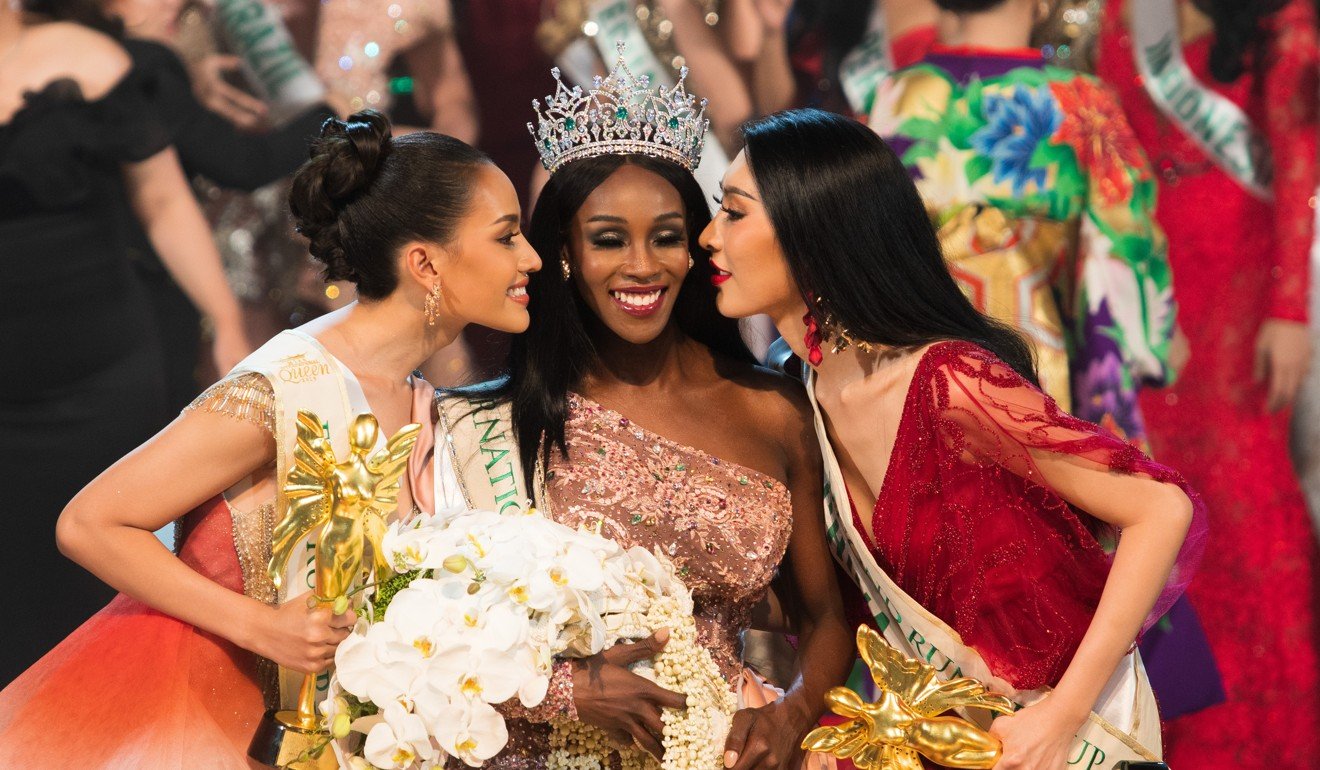
A transgender beauty contest in Pattaya, Thailand. Despite its reputation, Asia has a long history of accepting diversity. Photo: Handout
To the west of South Sulawesi is Borneo, a large island that contains all of Brunei and parts of Indonesia and
. Borneo is home to many indigenous communities, including the Iban. The Iban historically respected manang bali, who were typically male-bodied shamans who adopted feminine dress and demeanour, and who took men as their husbands. Manang bali were mediators and held roles of great ritual importance; they were typically wealthy village chiefs known for their healing arts.
West of Borneo is the Malay Peninsula, where there are records from the Malay Annals and Misa Melayu dating as far back as the 15th century about priests, called sida-sida, who served in the palaces of the Malay sultans. They were responsible for safeguarding women in the palace as well as the food and clothing of royalty, and overseeing ritual protocol. The sida-sida undertook “androgynous behaviour” such as wearing women’s clothing and doing women’s tasks. A Malay anthropologist in the 1950s, Shamsul A.B., recalls seeing male-bodied sida-sida in the royal palace in his childhood, who were believed by the population to either be celibate and asexual, or attracted to men. Michael Peletz, an anthropologist and author of Gender Pluralism in Southeast Asia, notes that based on the evidence, it is “highly likely” that sida-sida involved both male- and female-bodied people who were involved in transgender practices, and who engaged in sexual relationships with people of the same and opposite sex.
How a gay student’s suicide is helping Japan’s LGBT community speak up
Northeast of Malaysia is the
, where pre-colonial communities were religiously led by babylan: women healers and shamans who were responsible for mediating between the gods and people. Male-bodied people (asog, bayog), sometimes considered a third sex, could also hold these roles so long as they comported themselves like women. A 16th century Spanish Catholic manuscript records asog in the following manner:
“Ordinarily they dress as women, act like prudes and are so effeminate that one who does not know them would believe they are women … they marry other males and sleep with them as man and wife and have carnal knowledge.”
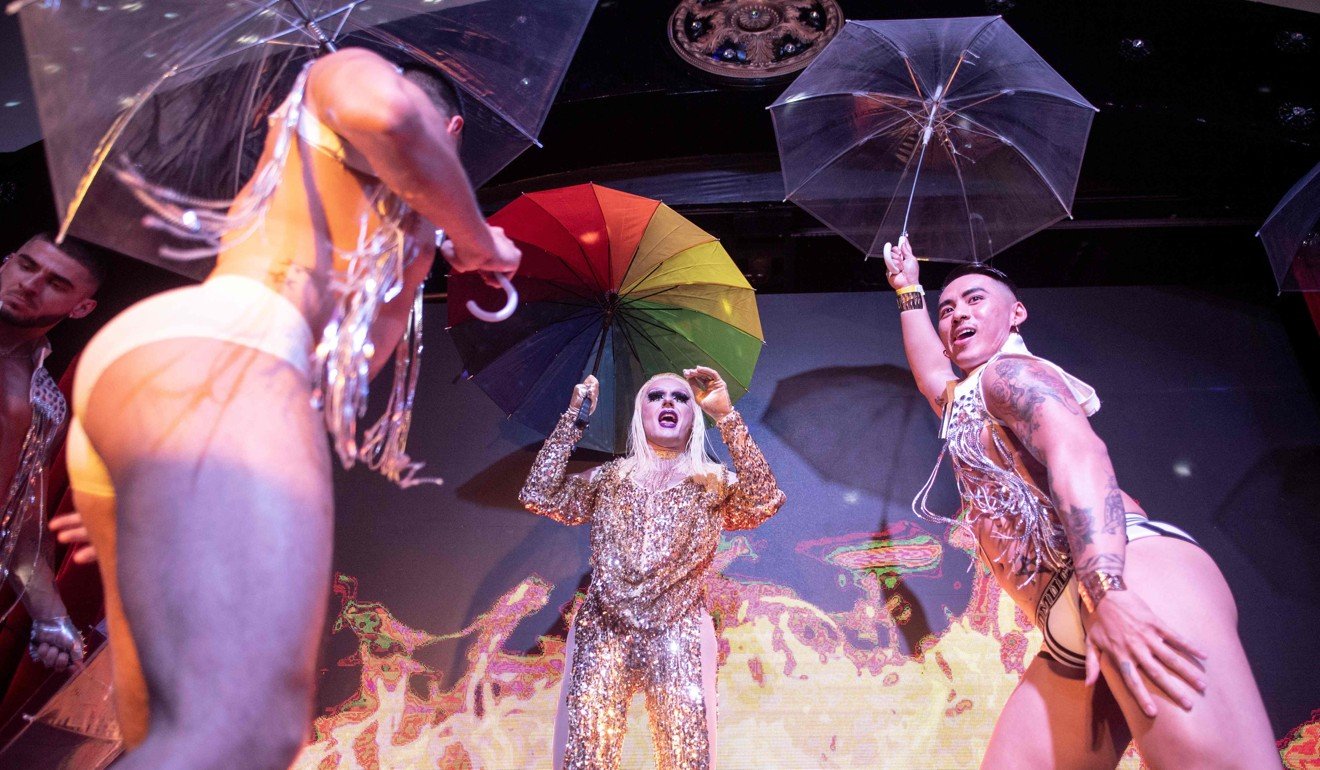
Dancers perform at the Shanghai PRIDE opening party. Despite its reputation, Asia has a long history of accepting diversity. Photo: AFP
The Spanish priests saw these asog as “devil-possessed”, particularly because they habitually practised “sodomy” among one another. Due to the Chinese reputation for homosexuality and various Sinophobic attitudes, some even attributed the prevalence of sodomy to the Chinese, whom they said had “infected the natives” and introduced the curse to the “Indians”, although there is no evidence of this.
COLONIAL CURVEBALL
Although these examples relate to the religious arena, anthropologists believe the respect accorded to these ritual specialists were an indicator of a wider societal acceptance of gender and sexual diversity in Southeast Asia – an acceptance that began to be eroded through the introduction of world religions (particularly Christianity), modernity, and colonialism. For example, in Malaysia, Brunei,
, Myanmar and throughout the commonwealth, the British enforced a penal code that legislated against sodomy. More than half of the countries that currently legally prohibit sodomy do so based on laws created by the British.
On gay sex, India has assumed an ancient position. Read the kama sutra
Similarly, after the Chinese were defeated by Western and Japanese imperialists, many Chinese progressives in the early 20th century sought to modernise China, which meant adopting “modern” Western ideas of dress, relationships, science and sexuality.
Concubinage was outlawed, prostitution was frowned upon, and women’s feet were unbound. It also meant importing European scientific understandings of homosexuality as an inverted or perverted pathology. These “scientific ideas” were debunked in the 1960s in the West, but lived on in China, frozen in time, and have only recently begun to thaw with the rise of LGBTQ activists in Asia.
A recent headline on the news from Taiwan read: “First in Asia: marriage equality comes to Taiwan”, as if the recent bill was an unprecedented “first” for Asia and that marriage equality – which, presumably, the headline writer associates with the West – has finally reached Asian shores.
But when we zoom out historically, it is evident that what happened in Taiwan is not so much a novel “breakthrough” for Asia. It is more a reconnection to its queer Chinese and Asian heritage, as well as a rejection of outdated Western ideas that it once adopted.
There is still much more work to be done to advance LGBT rights in Taiwan and the rest of Asia, but perhaps looking backwards in time can help us move forward.
Source: SCMP
Posted in adoptive older brother), adoptive younger brother, anthropologist, Antonio de Paiva, Asia, “Golden Orchid Associations”, “sisterhood” alternative, babylan, Beijing, bissu, Borneo, Bret Hinsch, Brunei, Bugis people, Bugis’ gender-system, calabai (male women), calalai (female men), carnal knowledge, carp, celibate, China alert, Chinese playwright, Chinese progressives, Chinese Society, colonial era, Concubinage, Drag queen, duck, embraced, encountered, Europeans, female “quasi-marriages”, Fujian Province, gay ‘marriage’, gay nightclub, gender diversity, Gender Pluralism in Southeast Asia, Guangdong, Hakka, Han, History, homosexual relationships, Iban, imperialists, Indians, Indonesia, Japanese, jurisdiction, Li Yu (1610-1680), makkunrai (female women), Malay Annals, Malay Peninsula, Malaysia, male lovers, Michael Peletz, Ming Dynasty, Misa Melayu, Myanmar, neither male nor female (or both), oroané (male men), patron deity of homosexuality, Pattaya, perverted, Portuguese missionary, professor of history, Prostitution, qidi, qixiong, queer relationships, rabbit, rooster, sexual and gender diversity, sin, Singapore, Sinophobic attitudes, Sodom, South Korean men, South Sulawesi, southern China, Spanish priests, Taiwan, Taiwan’s law, Thailand, times of birth, transgender beauty contest, Uncategorized, West, Western |
Leave a Comment »
30/04/2019
SINGAPORE (Reuters) – Some 20 million barrels of Iranian oil sitting on China’s shores in the northeast port of Dalian for the past six months now appears stranded as the United States hardens its stance on importing crude from Tehran.
Iran sent the oil to China, its biggest customer, ahead of the reintroduction of U.S. sanctions last November, as it looked for alternative storage for a backlog of crude at home.
The oil is being held in so-called bonded storage tanks at the port, which means it has yet to clear Chinese customs. Despite a six-month waiver to the start of May that allowed China to continue some Iranian imports, shipping data shows little of this oil has been moved.
Traders and refinery sources pointed to uncertainty over the terms of the waiver and said independent refiners had been unable to secure payment or insurance channels, while state refiners struggled to find vessels.
The future of the crude, worth well over $1 billion at current prices, has become even more unclear after Washington last week increased its pressure on Iran, saying it would end all sanction exemptions at the start of May.
“No responsible Chinese company with any international exposure will have anything to do with Iran oil unless they are specifically told by the Chinese government to do so,” said Tilak Doshi of oil and gas consultancy Muse, Stancil & Co in Singapore.
Iran previously stored oil in 2014 at Dalian during the last round of sanctions that was later sold to buyers in South Korea and India. reut.rs/2yo9Se6
China last week formally complained to the United States over the unilateral Iran sanctions, but U.S. officials have said Washington is not considering a further short-term waiver or a wind-down period.
The 20 million barrels is equal to about a month’s worth of China’s imports from Iran over the past six months, or about two days of the country’s total imports.
Iran says it will continue to export oil in defiance of U.S. sanctions.
A senior official with the National Iranian Tanker Company (NITC), who spoke on condition of anonymity, told Reuters: “We will continue to sell our oil.”
“Iran is now desperate and will deal with anyone with steep discounts as long as they get paid somehow,” said Doshi.
SOME OIL TAKEN
Some Iranian oil sent to Dalian has moved, according to a ship tracking analyst at Refinitiv.
Dan, a supertanker owned by NITC moved 2 million barrels of oil from Dalian more than 1,000 km (620 miles) to the south to the Ningbo Shi Hua crude oil terminal in March, according to Refinitiv data.
Ningbo is home to Sinopec’s Zhenhai refinery, one of the country’s largest oil plants with a capacity of 500,000 barrels a day and a top processor of Iranian oil.
Sinopec declined to comment.
The Iranian tanker was chartered by state-run Chinese trader Zhuhai Zhenrong Corp, according to Refinitiv analyst Emma Li. The NITC official confirmed the oil was taken by Zhuhai Zhenrong.
Zhenrong was started in the 1990s and brokered the first oil supply deals between Iran and China. At that time, Iran was supplying oil to China to pay for arms supplied by Beijing during the 1980-88 Iran-Iraq war. Zhuhai Zhenrong still specializes mainly in buying Iranian oil.(reut.rs/2IHlvEx)
An official at the general manager’s office with Zhuhai Zhenrong’s office in Beijing said he could not immediately comment. The company did not reply to a fax seeking comment.
For now, more Iranian oil is heading to China, with the supertankers Stream and Dream II due to arrive in eastern China from Iran on May 5 and May 7, respectively, Refinitiv data showed.
Some of this crude may be from Chinese investments into Iranian oilfields, a sanctions grey area.
Whether China will keep buying oil from Iran remains unclear, but analysts at Fitch Solutions said in a note “there may be scope for imports via barter or non-compliance from … China.”
Muse, Stancil & Co’s Doshi said the only way to get the Iranian oil out of Dalian now was by cheating.
“Only rogue parties might try to cheat the system and try to pass the Iranian oil at Dalian as something else via fraudulent docs. But I doubt this is easy or can amount to much in terms of volume.”
(MAP: Iranian supertanker frees some oil from China storage in March, tmsnrt.rs/2W1FJvK)
Source: Reuters
Posted in Beijing, bonded storage tanks, China alert, Chinese customs, crude oil terminal, Dalian, Dan, Emma Li, insurance channels, Iranian crude, Iranian imports, Iranian oilfields, Muse, Stancil & Co, National Iranian Tanker Company (NITC), Ningbo Shi Hua, oil and gas consultancy, refinery sources, Refinitiv, Refinitiv analyst, Reuters, shipping data, Singapore, Sinopec, state-run Chinese trader, Stream and Dream II, supertanker, Tehran, Tilak Doshi, Uncategorized, United States, Washington, Zhuhai, Zhuhai Zhenrong, Zhuhai Zhenrong Corp |
Leave a Comment »
29/04/2019
- Are increasing diplomatic tensions behind tighter inspections and cancelled orders?
- Farmers switch to other crops in bid to beat barriers
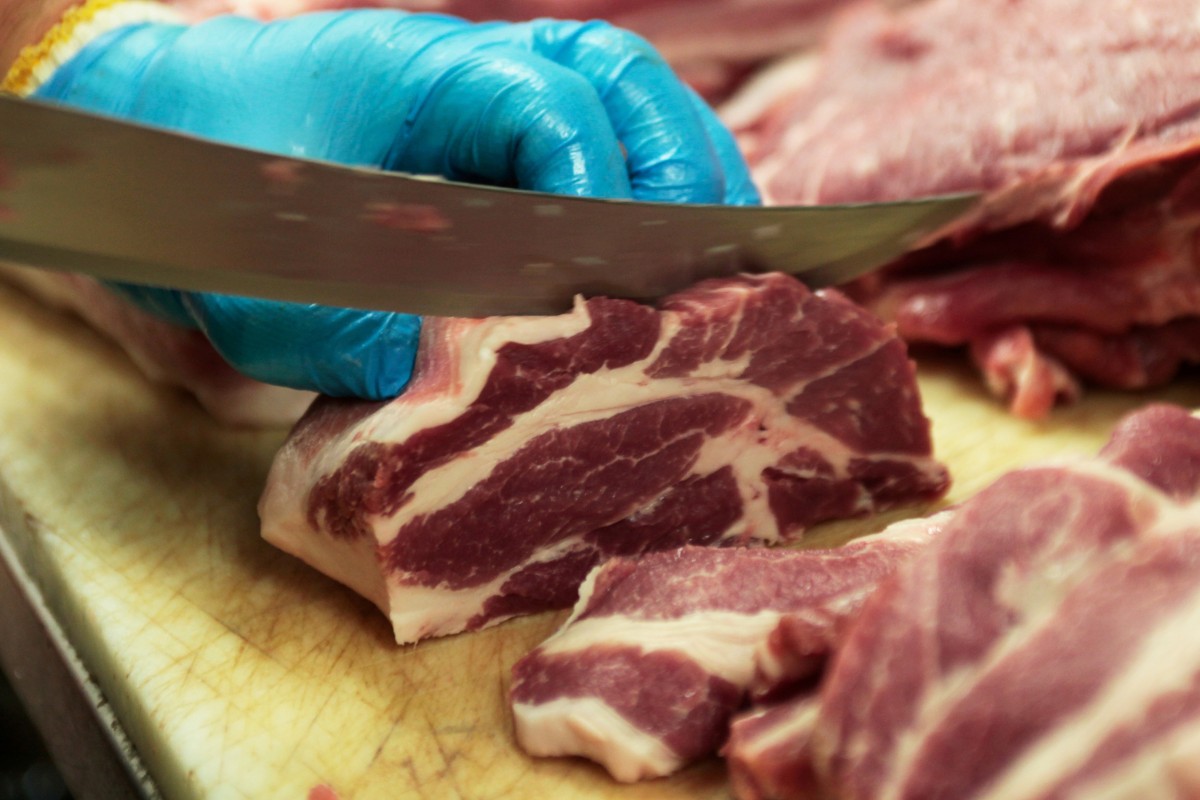
Canadian exporters of pork, soybeans and peas say they are facing delays and increased inspections at Chinese ports. Photo: Reuters
A growing list of Canadian farm exports is facing obstacles at Chinese ports, raising concerns that a bitter diplomatic dispute between the two countries may be to blame.
Sellers of Canadian soybeans and peas say they are experiencing unusual obstacles and Ottawa also warned last week that China was holding up pork shipments over paperwork issues.
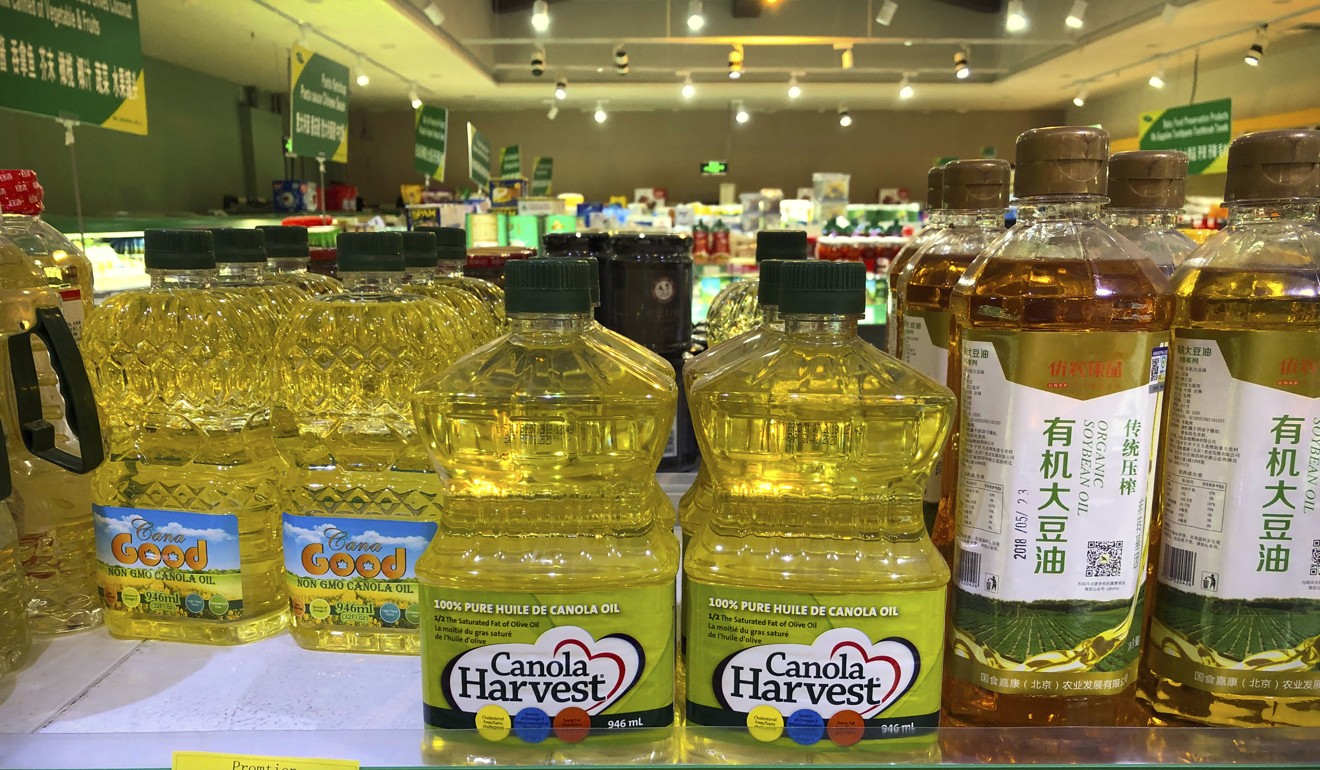
China has already blocked Canadian canola from Richardson International and Viterra, two of Canada’s biggest farm exporters, saying that shipments had pests. Other China-bound canola cargoes have been cancelled, forcing exporters to re-sell elsewhere at discount.
Canadian politicians have said the concerns are baseless, and noted that China detained two Canadians after Canada arrested an executive of Chinese telecom company Huawei Technologies Co Ltd in December at the United States’ request. China has used non-tariff barriers before during diplomatic tensions, most recently against Australian coal.
China has already blocked canola from two of Canada’s biggest farm exporters, while other China-bound canola cargoes have been cancelled. Photo: AP
Increasing tensions with China, a top buyer for most Canadian farm commodities, have forced farmers to plant other crops, such as wheat, that they hope will not face barriers.
China bought US$2.01 billion worth of Canada’s canola and $381 million worth of its pork last year.
The spread of African swine fever through China’s pig herd has reduced China’s need for canola and soybeans to process into feed ingredients but, since January, port soybean inspections that routinely take a few days now require three weeks, causing Chinese buyers to avoid Canadian products, according to Dwight Gerling, president of Canadian exporter DG Global.
“They’re basically sending out the signal, ‘You buy from Canada, we’re going to make your life difficult,’” Gerling said.
Earlier this year, a Chinese buyer told Gerling that a government inspector had found ants in 34 containers (roughly 680 tonnes) of the Canadian soybeans he shipped there.
Such a finding would be rare, since the soybeans were stored in concrete silos in Canada and shipped in sealed containers in late autumn, said Gerling, who concluded the buyer was trying to avoid the new hassles of buying from Canada.
“It’s just them playing games. (Beijing) is just going to keep putting the screws to us,” he said.
China’s General Administration of Customs did not reply to a request for comment. Government officials have said their canola ban is a regular inspection and quarantine measure to protect China’s farm production and ecological safety.
In a statement, the Canadian agriculture department said it could not confirm that China had imposed stricter measures against farm goods other than canola. Ottawa said this month it hoped to send a delegation to China to discuss the issue.
Gerling’s company has halted soybean sales to China and found other buyers in Southeast Asia.
An official at a state-owned crusher in southern China confirmed that port inspections had tightened on Canadian soybean cargoes.
“We don’t have Canadian cargoes coming in as we can’t blatantly commit such wrongdoing when the atmosphere is so intense,” the official said on condition of anonymity.
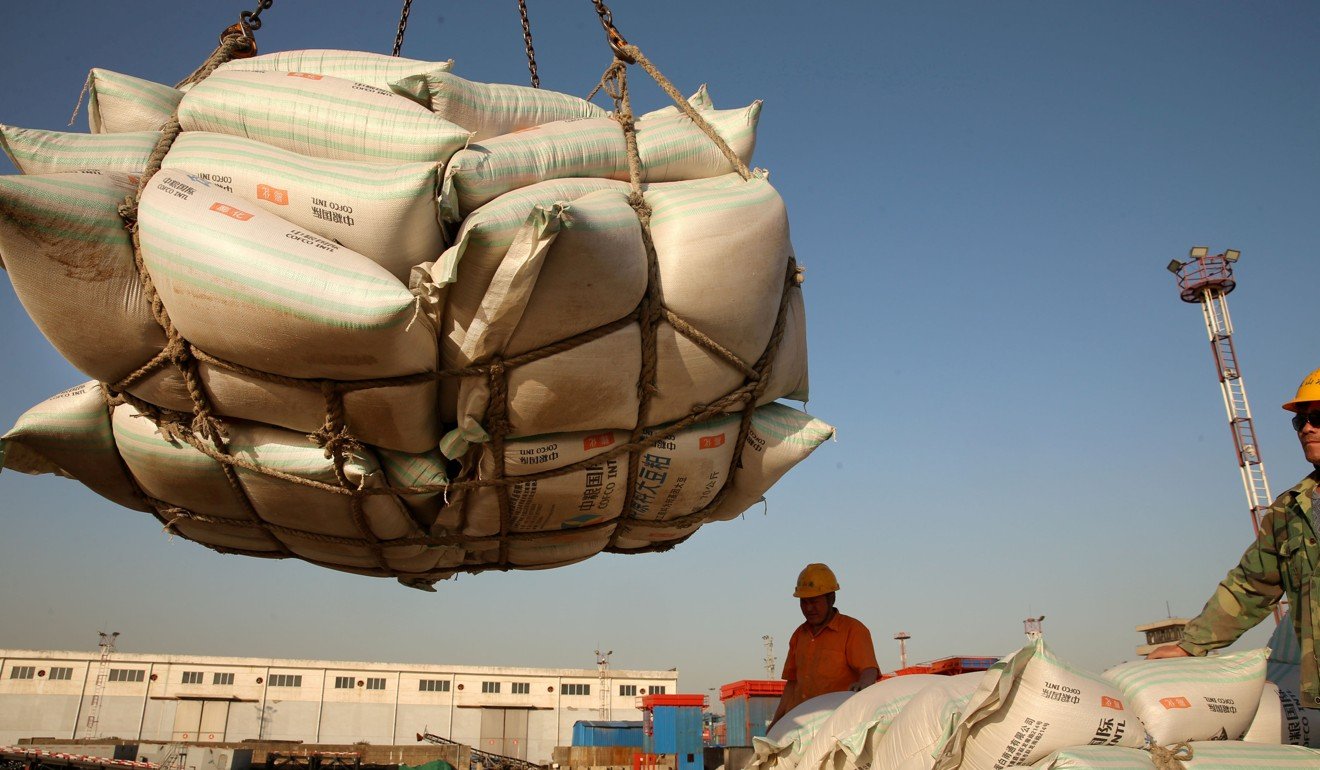
Soybeans from Canada are facing delays when they reach Chinese ports, according to traders. Photo: Reuters
Another official in northern China said his crushing plant scrapped plans to buy Canadian soybeans when the trade dispute flared.
Canada shipped $1.2 billion worth of soybeans to China in 2018, up sharply year over year, according to the Soy Canada industry group, as China and the United States fought a trade war. But sales have now slowed to a trickle.
Canola has taken the brunt of China’s measures.
Chinese buyers have cancelled at least 10 cargoes of Canadian canola in the past few weeks, according to a Singapore-based trader at a company that runs crushing facilities in China. Some cargoes, around 60,000 tonnes each, have been resold to buyers in Pakistan and Bangladesh at deep discounts, the trader said.
“It is devastating for exporters,” the trader said.
Canada gets tough with China on canola ban, demands contamination proof
Intercontinental Exchange (ICE) canola futures fell to a more than four-year low on Tuesday as supplies piled up. Growers intend to sow the smallest crop in three years.
On Monday last week, Ottawa said some Canadian pork exporters used an outdated form to certify shipments to China, causing delays. Such issues arise regularly in commodity trading, but rarely with damaging consequences, said Canadian Pork Council spokesman Gary Stordy.
Canadian pea exporters fear they could be next. China imported C$533 million worth of Canadian peas in 2018, according to industry group Pulse Canada, but the pace has slowed.
Chinese authorities have begun scrutinising import documents and product samples more closely, according to Taimy Cruz, director of logistics at Toronto-based BroadGrain Commodities.
China Inspection and Quarantine Authorities now tests samples of each pea shipment before authorising it for import. They also restrict in some cases the number of soybean shipments allowed under one licence, slowing the flow, she said.
Similarly, import authorities now require soybean shipments that change vessels in Singapore and Shanghai – a routine practice called trans-shipping – to reach their destination on a single ship, she said.
While BroadGrain has not seen its cargoes turned back, it has reduced sales to China to avoid risk, concentrating on the Indian subcontinent and South America, she said.
“We have to be extra careful,” Cruz said. “They are very strict now.”
Source: SCMP
Posted in African swine fever, agriculture department, Bangladesh, Beijing, BroadGrain Commodities, canada, Canadian canola, Canadian exporter, Canadian Pork Council, Canadian soybeans, Canadian soybeans, peas and pork, cancelled orders, China alert, China’s ports, DG Global, diplomatic tensions, director of logistics, Dwight Gerling, face new delays, Gary Stordy, Huawei Technologies Co Ltd, Inspection and Quarantine Authorities, Intercontinental Exchange (ICE) canola futures, Ottawa, Pakistan, paperwork issues, pork shipments, Richardson International, Shanghai, Singapore, Southeast Asian, Soy Canada industry group, spokesman, Taimy Cruz, tighter inspections, Toronto-based, trans-shipping, Uncategorized, United States’ request, Viterra |
Leave a Comment »
20/04/2019
Chinese State Councilor and Foreign Minister Wang Yi (C) speaks during a press briefing for the second Belt and Road Forum for International Cooperation (BRF) in Beijing, capital of China, April 19, 2019. The second Belt and Road Forum for International Cooperation will be held from April 25 to 27 in Beijing, Wang Yi announced Friday. (Xinhua/Zhai Jianlan)
BEIJING, April 19 (Xinhua) — Chinese President Xi Jinping will deliver a keynote speech at the second Belt and Road Forum for International Cooperation (BRF) to be held from April 25 to 27 in Beijing, State Councilor and Foreign Minister Wang Yi announced Friday.
Leaders including heads of state and government from 37 countries will attend the forum’s roundtable summit, Wang told a press briefing.
Wang said 12 thematic forums and a CEO conference would be held on April 25, the opening ceremony and a high-level meeting on April 26, and the leaders’ roundtable on April 27.
Xi will attend the opening ceremony and deliver a keynote speech. He will also chair the leaders’ roundtable and brief media from home and abroad about the outcomes after the roundtable, Wang said, adding that Xi and his wife Peng Liyuan will also hold a welcoming banquet for the leaders and representatives.
According to Wang, the 37 countries are Austria, Azerbaijan, Belarus, Brunei, Cambodia, Chile, Cyprus, Czech Republic, Djibouti, Egypt, Ethiopia, Greece, Hungary, Indonesia, Italy, Kazakhstan, Kenya, Kyrgyzstan, Laos, Malaysia, Mongolia, Mozambique, Myanmar, Nepal, Pakistan, Papua New Guinea, the Philippines, Portugal, Russia, Serbia, Singapore, Switzerland, Tajikistan, Thailand, the United Arab Emirates, Uzbekistan and Vietnam.
The secretary-general of the United Nations and the managing director of the International Monetary Fund will attend the forum, Wang said, adding that senior representatives of France, Germany, Britain, Spain, Japan, the Republic of Korea and the European Union will also participate.
Noting that the BRF is the top-level platform for international cooperation under the framework of the Belt and Road Initiative, Wang said the conference next week would be of landmark significance.
The theme of the second BRF is “Belt and Road Cooperation, Shaping a Brighter Shared Future.” Wang said the main purpose is to promote the high-quality development of Belt and Road cooperation, which is the common aspiration of countries participating in the initiative.
Speaking highly of the fruitful results yielded since the initiative was launched in 2013, Wang said the second BRF was greatly welcomed worldwide with some 5,000 participants from more than 150 countries and 90 international organizations having confirmed their attendance, covering areas from five continents and different walks of life such as government, civil society, business and academia.
According to Wang, this year’s forum will have 12 thematic forums, twice of that during the first forum in 2017, and the CEO conference will be held for the first time. A joint communique will be released after the leaders’ roundtable and other consensus reached during the forum will be issued in a report.
The Belt and Road Initiative, proposed by Xi in 2013, aims at enhancing all-around connectivity through infrastructure construction, exploring new driving force for the world economic growth, and building a new platform for world economic cooperation, according to Wang.
Stressing that Xi and leaders from other countries blueprinted the initiative in 2017, Wang said the progress in the past two years shows that the initiative conforms to the trend of the times featuring peace, development, cooperation and win-win and accords with the common aspiration of openness and joint development of all countries.
“As the host country, we will maintain close communication and coordination with all parties to prepare for the forum with openness, inclusiveness and transparency, upholding the principle of consultation and cooperation for shared benefits,” Wang said.
He said the forum would voice the firm support for multilateralism and an open world economy, enrich the principles of cooperation of the Belt and Road Initiative, build a network of partnership, and establish more mechanisms for high-quality development.
Bilateral, trilateral and multilateral cooperation has been reinforcing each other under the initiative, laying a solid foundation for a closer and more wide-ranging partnership, he said.
Wang said China will showcase the outcomes and introduce the measures of its reform and opening-up to the world, adding that this will allow China to share the dividends of its economic growth, promote the Belt and Road Initiative, and bring more opportunities to the development of all countries as well as the building of the Belt and Road.
“I believe that the forum will inject stronger impetus into the world economy, open even broader horizon for the development of the countries, and contribute to the building of a community with a shared future for humanity, ” said Wang.
Source: Xinhua
Posted in Austria, Azerbaijan, Belarus, Belt and Road Cooperation, belt and road forum, Belt and Road Forum for International Cooperation (BRF), Belt and Road Initiative (BRI), Brunei, Cambodia, Chile, China alert, Chinese President Xi Jinping, Chinese State Councilor and Foreign Minister, Cyprus, Czech Republic, Djibouti, Egypt, Ethiopia, Greece, Hungary, Indonesia, International Monetary Fund, Italy, Kazakhstan, Kenya, Kyrgyzstan, Laos, Malaysia, managing director, Mongolia, Mozambique, Myanmar, Nepal, Pakistan, Papua New Guinea, Portugal, Russia, Secretary-General of the United Nations, Serbia, Singapore, Switzerland, Tajikistan, Thailand, the Philippines, Uncategorized, United Arab Emirates, Uzbekistan, Vietnam, Wang Yi |
Leave a Comment »
26/03/2019
The ruling Aam Aadmi Party (AAP) in the city is fighting the upcoming Lok Sabha election on the agenda of granting full statehood to Delhi.
PTI | New Delhi | March 26, 2019 2:42 pm
Chief Minister and AAP supremo Arvind Kejriwal on Monday promised to build infrastructure equalling “ten Singapore” if full statehood was granted to Delhi.
Addressing a public rally at Patparganj in east Delhi, he called for people’s support in the upcoming elections to ensure that Delhi gets full statehood.
“We will build ten Singapore in Delhi. We will ensure that a flat is given to everyone who is staying in huts in Delhi,” he said.
Taking a dig at Prime Minister Narendra Modi, Kejriwal claimed when the PM was unable to handle Pakistan, how could he be expected to take care of Delhi Police.
“Let us handle Delhi Police and you (PM) take care of Pakistan. You are not able to handle Pakistan, how can you be expected to handle Delhi Police?” he said.
Accusing the Centre of creating hurdles for Delhi’s development, the AAP leader said he faced several obstructions at various stages to get clearances from the central government.
He said the people of Delhi pay Rs 1.5 lakh crore worth Income Tax and receive only Rs 325 crore from the Centre.
“Why should we pay so much and get so less in return? What have Delhiites done to the central government to deserve this? The situation is similar to the time before India got independence.
“First Britishers looted us, now the central government is looting us,” the chief minister said.
“Just for political enmity, PM Modi stopped the development work for the common man of Delhi. Last time you voted for him, but this time do not vote for him, otherwise he would not let me work for development,” he added.
Deputy Chief Minister Manish Sisodia said full statehood for Delhi will ensure that children scoring even 60 per cent marks get admission in colleges in Delhi.
The ruling Aam Aadmi Party (AAP) in the city is fighting the upcoming Lok Sabha election on the agenda of granting full statehood to Delhi.
Raising the slogan of ‘Poorna Rajya Banao Jhadu ka Button Dabao’, the party is busy convincing people to vote for AAP to get full statehood for Delhi.
The election to the seven Lok Sabha seats in the national capital will be held on May 12.
Source: The Statesman
Posted in Arvind Kejriwal, Delhi, full statehood, India alert, Singapore, Uncategorized |
Leave a Comment »
24/02/2019
SEOUL/HANOI (Reuters) – North Korean leader Kim Jong Un made his way across China by train on Sunday, media reported, bound for a high-stakes second nuclear summit with U.S. President Donald Trump in Vietnam’s capital of Hanoi.
Few details of Kim’s trip have been announced but he left Pyongyang by train on Saturday afternoon for the Feb. 27-28 summit accompanied by senior North Korean officials as well as his influential sister, North Korea’s state media reported.
Trump and Kim will meet in Hanoi eight months after their historic summit in Singapore, the first between a sitting U.S. president and a North Korean leader, where they pledged to work towards the complete denuclearisation of the Korean peninsula.
With little progress since then, the two leaders are expected to focus on what elements of North Korea’s nuclear programme it might begin to give up, in exchange for U.S. concessions.
In rare, revealing coverage of Kim’s travel, while it is still going on, the North’s Rodong Sinmun newspaper featured photographs of him getting a red-carpet send-off in Pyongyang and waving from a train carriage door while holding a cigarette.
He was accompanied by top officials also involved in the Singapore summit, including Kim Yong Chol, a former spy chief and Kim’s top envoy in negotiations with the United States, as well as senior party aide Ri Su Yong, Foreign Minister Ri Yong Ho and defence chief No Kwang Chol.
The North Korean leader’s sister, Kim Yo Jong, who acted as a close aide in Singapore, is again part of the delegation, the North’s KCNA news agency reported. It made no mention of his wife, Ri Sol Ju.
The extensive coverage in the secretive North’s official media was a contrast to the limited reporting that has traditionally prevailed during his foreign trips.
Other senior officials, such as his de facto chief of staff Kim Chang Son and Kim Hyok Chol, negotiations counterpart to U.S. envoy Stephen Biegun, were already in Hanoi to prepare for the summit.
With scant progress since the June summit, the two leaders are likely to try to build on their personal connection to push things forward in Hanoi, even if only incrementally, analysts said.
Both sides are under pressure to forge more specific agreements than were reached in Singapore, which critics, especially in the United States, said lacked detail.
“They will not make an agreement which breaks up the current flow of diplomacy. (President Trump) has mentioned that they’ll meet again; even if there is a low-level agreement, they will seek to keep things moving,” said Shin Beom-chul, a senior fellow at the Asan Institute for Policy Studies.
LEARNING FROM VIETNAM
The Trump administration has pressed the North to give up its nuclear weapons programme, which, combined with its missile capabilities, poses a threat to the United States, before it can expect any concessions.
North Korea wants an easing of punishing U.S.-led sanctions, security guarantees and a formal end of the 1950-1953 Korean War, which ended in a truce, not a treaty.
Few details of summit arrangements have been released.
Some lamp posts on Hanoi’s tree-lined streets are decked with North Korean, U.S. and Vietnamese flags fluttering above a handshake design, and security has been stepped up at locations that could be the summit venue, or where the leaders might stay.
It could take Kim at least 2-1/2 days to travel to Vietnam by train.
Some carriages of a green train were spotted at Beijing’s station on Sunday, but it was not confirmed it was Kim’s.
South Korea’s Yonhap news agency said Kim’s train had passed through a station in China’s port city of Tianjin, southeast of Beijing, at around 1 p.m. (0500 GMT).
China has given no details of his trip. Its foreign ministry did not immediately respond to a request for comment.
Two top North Korean officials who were not in Singapore but will be in Hanoi are Kim Phyong Hae and O Su Yong, vice chairmen of the party’s Central Committee, respectively in charge of personnel management and industrial affairs, KCNA reported.
O is a former minister of electronics and vice minister of metals and machine building. He might try to learn about Vietnam’s development of manufacturing, analysts said.
Kim Jong Un may tour some economic facilities while in Vietnam.
Vietnam, like North Korea, fought a war against the United States and keeps tight control over its people and economy. It has been touted as a model for North Korea’s development.
Vietnamese media reported that a North Korean cargo plane arrived on Sunday carrying personnel who appeared to be Kim’s security guards and state media workers. They were driven under police escort to a downtown hotel.
Source: Reuters
Posted in Asan Institute for Policy Studies, Bamboo Airways, Beijing, Boeing, Central Committee, China alert, Cigarette, defence chief, denuclearisation, foreign minister, Hanoi, historic summit, KCNA, Kim Chang Son, Kim Hyok Chol, Kim Jong-un, Kim Phyong Hae, Kim Yo Jong, Kim Yong Chol, Korean peninsula, Korean War, metals and machine building, minister of electronics, news agency, No Kwang Chol, North Korea, nuclear summit, O Su Yong, President Donald Trump, Pyongyang, red-carpet, Ri Sol Ju, Ri Su Yong, Ri Yong Ho, Rodong Sinmun, Shin Beom-chul, Singapore, sister, South Korea, Stephen Biegun, Tianjin, trains, U.S. envoy, Uncategorized, Vietnam, Yonhap |
Leave a Comment »






 CHINDIA ALERT: You'll be living in their world, very soon