Chindia Alert: You’ll be Living in their World Very Soon
aims to alert you to the threats and opportunities that China and India present. China and India require serious attention; case of ‘hidden dragon and crouching tiger’.
Without this attention, governments, businesses and, indeed, individuals may find themselves at a great disadvantage sooner rather than later.
The POSTs (front webpages) are mainly 'cuttings' from reliable sources, updated continuously.
The PAGEs (see Tabs, above) attempt to make the information more meaningful by putting some structure to the information we have researched and assembled since 2006.
China Reconnects: Joining a Deep-rooted Past to a New World Order looks at how the Middle Kingdom is trying to build a modern civilisation without forgetting its heritage
The Scales of Justice and Lady Justice in front of China’s national flag. Photo: Alamy
China Reconnects: Joining a Deep-rooted Past to a New World Order is a new book by Australian historian Wang Gungwu. The book seeks to explain the new-found confidence among the Chinese in their capacity to learn all they need from the developed world while retaining enough from their past to build a modern civilisation. It does not employ theoretical frameworks to explain China’s rise, as Wang believes they are not appropriate to describe the changes sweeping the country. He calls for greater understanding of why history is particularly important to the Chinese state and its people, as the nation seeks the means to respond to a United States trying to preserve its dominant position in the international status quo.
Historian Wang Gungwu. Photo: Handout
Wang is university professor at the National University of Singapore and professor emeritus of the Australian National University. The book is published by World Scientific Publishing. Here are some excerpts.
CHINESE CHARACTERISTICS
Xi Jinping’s China inherited the policies that opened the country to the global economy. The policies created the conditions that made China prosperous and, to many, they put China on the world map again. At the same time, what Xi Jinping inherited also includes practices and lapses of discipline that led to corruption on an unprecedented scale. Deng Xiaoping might have expected some leakages in a more open system, but would not have thought that his party cadres could succumb to that extent.
China’s rise is peaceful, Xi Jinping tells foreign experts
Xi Jinping also inherited programmes from his predecessors “theories” like sange daibiao (Three Represents) and hexie shehuizhuyi shehui (Harmonious socialist society).
Given the pervasive corruption that he found in high places, he must have wondered how useful these theories were. The former was implicitly socialist, stressing productive forces, advanced culture and concern for the interests of the majority. The latter, however, was redolent of Confucian values, made even more explicit when Hu Jintao spoke of barong bachi, or “eight honours and eight disgraces”. Despite these exhortations, the corruption that accompanied them reminds us of conditions familiar to Chinese dynasties in decline.
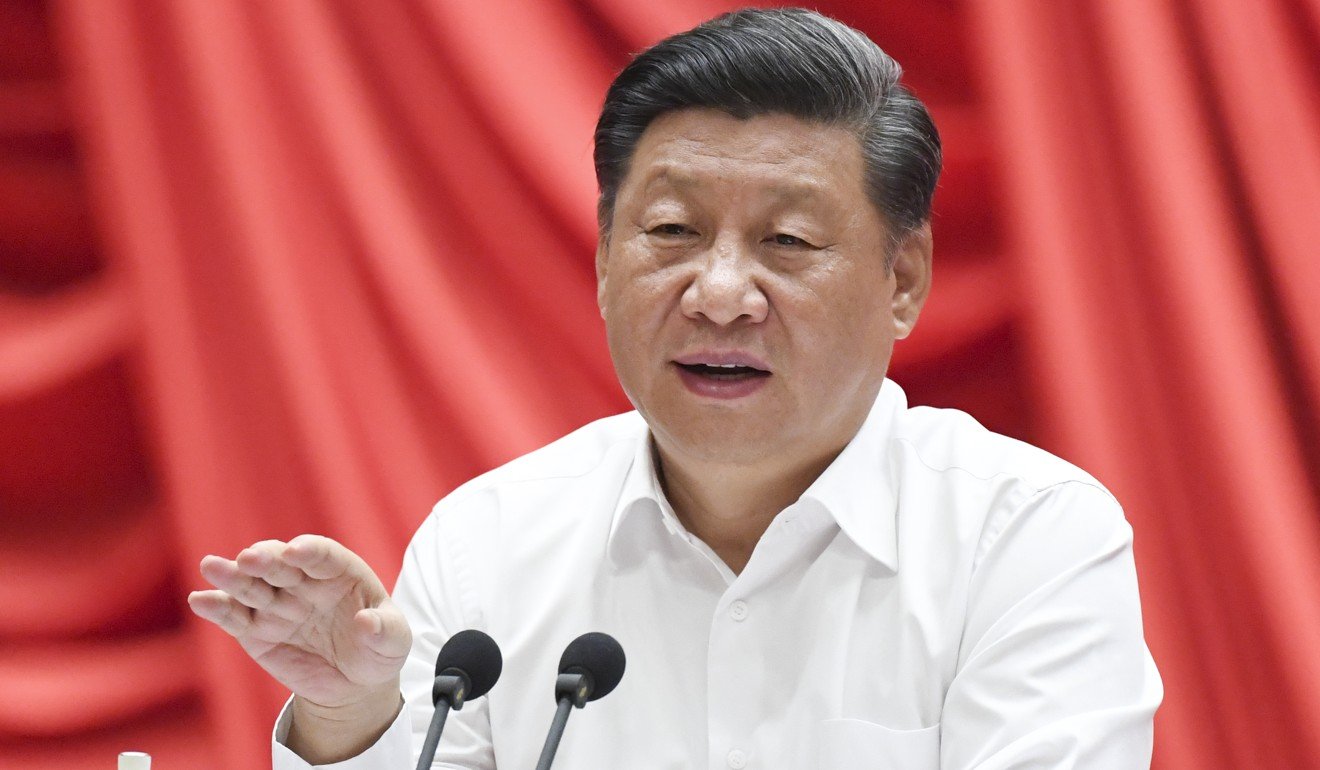
Chinese President Xi Jinping inherited the policies that opened the country to the global economy. Photo: Xinhua
If the regime’s Chinese characteristics enabled officials to be corrupt and the rich to become excessively rich and selfish, where was the socialism? While no one would claim that everything in China’s past was desirable, surely there were better features that could have been chosen to inspire the present. Perhaps not all the corruption should be blamed on old feudal China; the open market economy with its capitalist characteristics is also known for creating the huge gap today between the super rich and the rest. If the capitalist mode is undermining socialist good intentions, are there Chinese characteristics that can protect China from that infection?
How China’s rise is revealing the cracks in US claims to legitimacy as global leader
Critics have been quick to attack as well as defend Confucian China and the market and no simple answer has been found. What Xi Jinping inherited was a collective leadership system that failed to police the Party. He thus reacted by asserting that the Party was in grave danger of collapse. The foremost patriotic act was to save the party. He has to find the socialism that could induce his comrades to rededicate themselves.
He turned to Karl Marx to emphasise its original inspiration and avoided the Russian duo, Lenin and Stalin. By stressing the importance of Marx’s world view and analytical methods, he could ignore the Soviet institutional baggage. Above all, Marx stood for the idea of progress, the modern import from the Enlightenment that has impressed generations of Chinese.
China’s modern story began by rebuilding a unified state. Those leaning towards socialism further agreed that the country had to have a strong centralised government, perhaps the most enduring feature of dynastic China. Sun Yat-sen had recognised that and wanted to be the leader with power to get things done. When Chiang Kai-shek seized power, he fought with every weapon available to maintain his supreme position. It was therefore not surprising that Mao Zedong thought that the Party leader should have full control. His victory over the Nationalists had put him in an unassailable position.
Thereafter, he could redefine the goals that fit his agenda. He was so successful that socialism in his hands became almost unrecognisable. Deng Xiaoping had a difficult time teaching another generation why socialism was progressive and why infusing it with Chinese characteristics would ensure its legitimacy.
China’s reform and opening must continue, 40 years after its ‘second revolution’
This was the background to the corrupted China that came so unexpectedly into Xi Jinping’s hands. From his appointment as party secretary in Shanghai to the Politburo Standing Committee and as vice-president, he had five years to prepare to become the leader of the country. Some of what went through his mind during that period may be gleaned from his writings when he served in Zhejiang, in the Zhijiang xinyu that he published in 2007, but more important was what he thought of a collective leadership that was headless.
Xi Jinping obviously believes that his anti-corruption campaign was vital to enable him to save the Party. His campaign also made him popular and he has tied the campaign to a new faith in socialism.
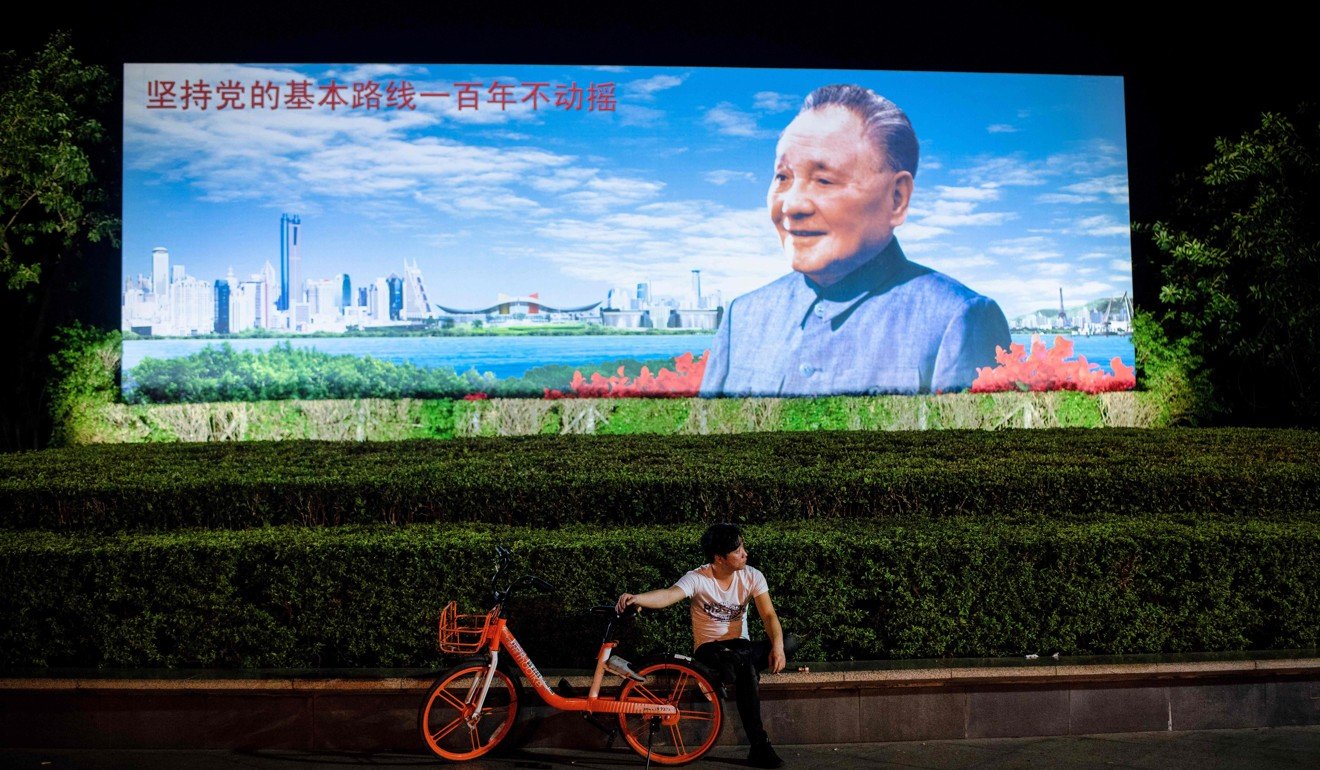
A poster of former Chinese leader Deng Xiaoping in Shenzhen. Photo: AFP
He has emphasised that Deng Xiaoping’s reforms saved the state and the Party and are integral to the power that he has inherited. He had worked dutifully in support of reform and this helped him rise to the highest office. His youthful experiences growing up with the peasants of the northwest taught him about failures as well as successes. That has led him to ask the Party to connect with the first 30 Maoist years as much as study the later years of reform. That way he confirmed the continuity of what he, his father and their comrades had committed their lives to serve. This attitude towards continuities in Chinese history has always looked to a strong state with powerful leaders. Xi Jinping discovered during his years of service what kind of power would be required to establish the caring and fair society that socialism stood for. When he became president, he not only knew that Mao Zedong as cult leader could not succeed but also that a leaderless collective endangered the Party. He has concluded that the Chinese way of doing socialism would have to be connected to the lessons learned throughout the Chinese past.
Where to now? 40 years after the big economic experiment that changed China
Only by recognising how relevant those lessons are can China confidently go forward to devise the modern state that it wants.
There is some truth in the French saying that the more things change the more things remain the same. The Chinese were even more directly paradoxical. They believed that change was inevitable and hence prepared for changes that could occur several times in a lifetime. When thus prepared, they hoped that each change would not destroy the things that were still valued. If the foundations survived, change could make the new become stronger.
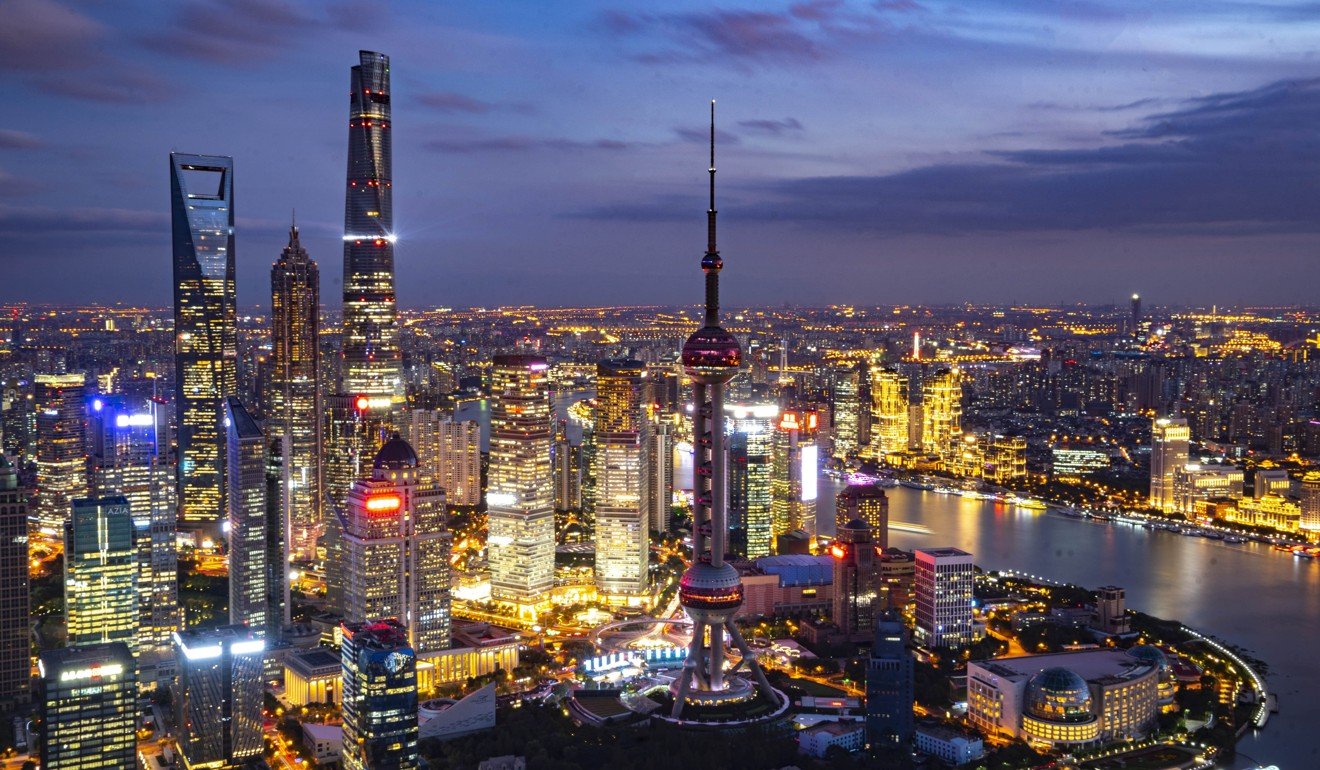
Shanghai is a showcase for China’s modernisation efforts. Photo: Xinhua
There are other ideas in the tradition that Xi Jinping understands. One is that of zhi and xing (knowing and acting) and zhixing heyi (combining knowledge with action). This had been highlighted since the days of Ming philosopher Wang Yangming.
In modern times, Sun Yat-sen advocated xing erhou zhi (act then you will know) as preferable to the safer and more conservative zhi erhou xing (know before acting) and Xi Jinping seems to share that view. When you act and make your choices, these add up so that you will really know. From that perspective, Mao Zedong’s choices taught hard lessons and the Chinese people now know what not to do. Another idea goes back to Confucius, who said shu er buzuo, or transmitting (tradition) and not doing (something new). In other words, without claiming newness or discovery, he transmitted wisdom and knowledge to those who followed. Xi Jinping seems to focus on drawing on past experiences that enable future generations to learn: with learning, something new would result.
Xi Jinping can dramatically reform China’s economy or maintain high growth – but he can’t do both
Xi Jinping may not need the word “new” for his socialism. His shehui zhuyi could be the accumulation of layers of modern experience that harmonise with selected bits of China’s history. Explaining the actions and reactions of generations of his predecessors could take his party-state to another level of development. Here a sage Marx symbolically as important as Confucius would add the goal of progress to inherited wisdom. Socialism could be “hard” in rational and disciplined action and “soft” in moral goals deeply rooted in people’s aspirations. A strong leader who knew how to link the past to a dream of the future could shape the socialism that his people could identify as the datong shehui in China’s heritage.
DIFFERENT HERITAGE
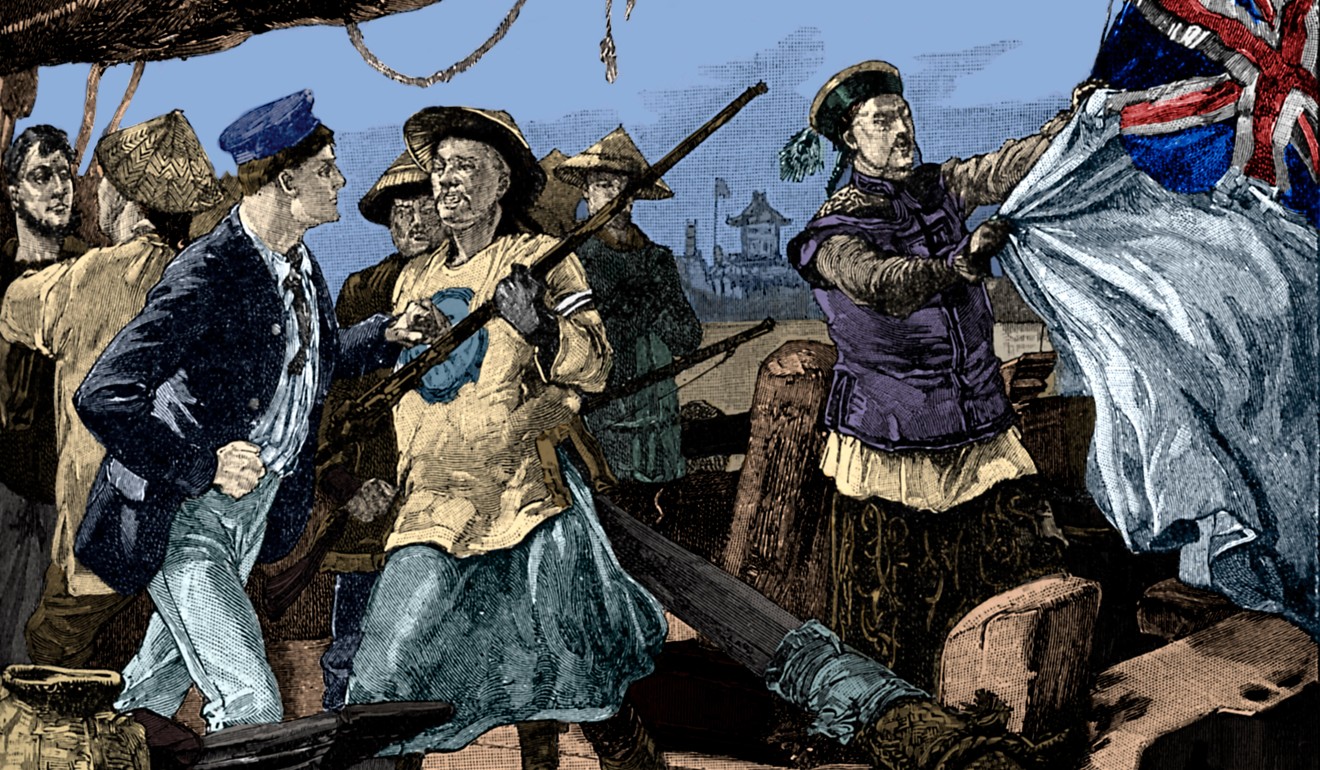
The distance between the legal systems in China and the West has long been a matter of regret. It began when Britain was no longer prepared to let Chinese law be used to punish British subjects; that issue became the cause célèbre in the Anglo-Chinese wars.
Despite the fact that China had, with the help of Anglo-American and other European legal scholars, reformed and modernised its legal system during the past 100 years, the gulf has remained and has continued to fuel an underlying lack of trust. This has once again surfaced in contemporary interstate relations wherever the People’s Republic is involved.
Chinese officials pull down a British flag on a ship in 1856. Photo: Alamy Stock Photo
The issue had become sensitive when the Western powers made it clear that their legal ideals were meant to cover the relations between civilised states, and China had been found wanting. The divide stemmed from the European assumption that international law was built on a common Christian heritage. The treaties that followed China’s several defeats led to extraterritorial jurisdictions by Western powers and Japan. These humiliated China for being so uncivilised that provisions were necessary for the protection of civilised people. The set of practices that diminished China’s sovereign rights remained a source of anger for 100 years and coloured Chinese attitudes towards all Western reference to the rule of law down to the present.
The different value given by China and the West to the role of law has deep roots. It originated from the different premises made about the relationship between man and nature, between those who moved from believing in many gods to faiths in one God, and those whose world views allowed them to live without reference to any God or gods.
Is reform dead in China? Trump’s trade war may be breathing life back into the cause
The single-god world emerged in the Mediterranean region (among Jewish, Christian or Islamic believers) while the mixed often-godless realm was developed in the Sinic cultural zone in eastern Asia.
When traced far back, what is significant is that, while there were great differences in conceptions, both godly and godless traditions paid respect to the role of law, albeit each in its own way. There was no question of not depending on law for securing order, especially the controls needed for political order. Whether the laws reached into private and family affairs, or were in the main varieties of civil and criminal law, all those in authority gave much thought to formulating them to bring out what was fair and most efficacious. And both European and Chinese rulers paid close attention to laws pertaining to governance, and specifically to their relations with their subjects.
The distance between legal systems in China and the West has long been a matter of contention. Photo: Xinhua
Where their respective heritage parted significantly was the way their rulers institutionalised their codes. Those in Europe believed that the rule of law was a higher principle that stood above other considerations; it was sanctified by the supernatural and therefore sacrosanct. The idea had grown out of customary law observed by tribal organisations as well as in the royal and canon laws promulgated in princely states or kingdoms. In time, they were extended to cover larger political units like nation states or empires. Law was therefore at the centre of all governance and remained steadfast whether the rulers were strong men or a group of oligarchs, or leaders who were democratically chosen. Whoever they were and wherever they came from, they could only rule through regulations and statutes that were seen as parts of God’s law. Thereafter, that conception of the rule of law led to questions being asked as to what would best serve those who are equal in the eyes of God. That led people to demand that law should protect people from abusive rulers. The key point was that, behind the respect for the law was religious doctrine and the Church. In certain contexts, God’s law had the power to send even the strongest leaders to the fires of hell. When this authority shifted following the Reformation, Christian Europe still maintained that each church embodied the spirit of God’s law.
To end the trade war, ‘China must deliver on its promises to reform and open up’
When the classics of the Greco-Roman period were given a new lease of life during the Renaissance, this ancient learning stimulated revolts within the Church. The Protestants reinterpreted their heritage and provided conditions whereby new ideas were allowed to grow. As a result, the advent of scepticism, rationalism and the scientific mind enabled an intense questioning of past assumptions that eventually led to a secular view of the world.
Western Europe largely moved away from church-determined ideas and went on to develop laws that have been described as rational and modern. That saw the beginning of a powerful legal system under which the ruler gave up most of his powers so that his subjects would have more say. Of course, who actually had a say was another matter.
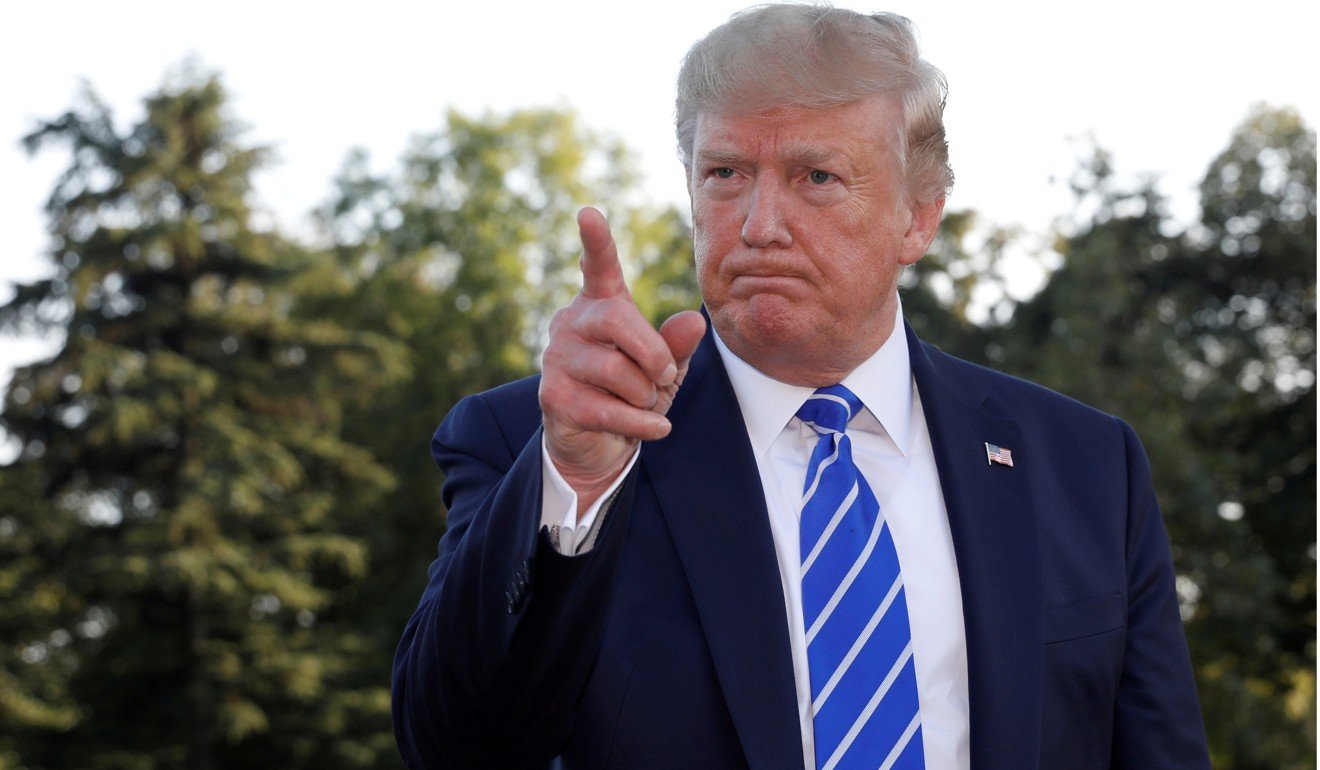
US President Donald Trump, who many Chinese believe is trying to contain China’s rise. Photo: Reuters
It took the British more than 100 years to let ordinary men have the vote, and the women did not get theirs until the 20th century. The British were unapologetic about that pace of development. They thought that the only people who should be allowed to vote were people who owned property and were well-educated. Nevertheless, the principle that people could control their own destiny was confirmed.
In one form or another, laws were obeyed in good conscience by God-fearing people and rational scientific-minded people alike. Even when the laws were obviously man-made and could be cruelly implemented, whether by kings, judges or elected legislators, it continued to be understood that a higher spirit rested behind their making. That belief gave the laws a special moral standing and placed the rule of law at the heart of Western political culture. In short, the ruler was always subject to God’s law.
In comparison, the Chinese have also long acknowledged that laws should be respected but the idea of the rule of law was only implicitly understood. Everyone was conscious that the laws demanded absolute obeisance; that was akin to fear of the ruler’s wrath. Those draconian laws had been given centrality by the state of Qin during the Warring States period. The legalists who drew them up enabled the Qin to defeat the rival states and use the laws to control, dominate and dictate in every respect. What was understood, and sometimes made explicit, was that the ruler would always employ the law to stay in power.
Beijing unveils detailed reform plan to make Shenzhen model city for China and the world
The idea that rules accompanied by harsh punishments made states strong attracted many of the warring lords from the fifth to the third century BC. It led them to challenge the Zhou dynasty’s claim that good governance came from the model rulers of a legendary Golden Age who embodied the principle that the right to rule had to be defined in moral terms. In that context, legitimacy was confirmed through rituals that demonstrate that the ruler had received the Mandate of Heaven.
The rulers of the state of Qin thought otherwise. They employed legalists who believed that power depended on total control through harsh laws and finally destroyed all rivals to establish a new dynasty. The new emperor made sure everyone knew that he was above the law and his laws must be obeyed.
This law was a revolutionary instrument used to destroy a decrepit ancient regime. However, the legalists were so extreme in their rejection of traditional moral and social norms that people rose in revolt and that enabled the Han dynasty to take over the empire. The Han rulers reformed the emperor-state system and experimented with other ideas.
But they retained the body of Qin laws that guided the centralised bureaucracy and brought in non-legalists to administer the empire.
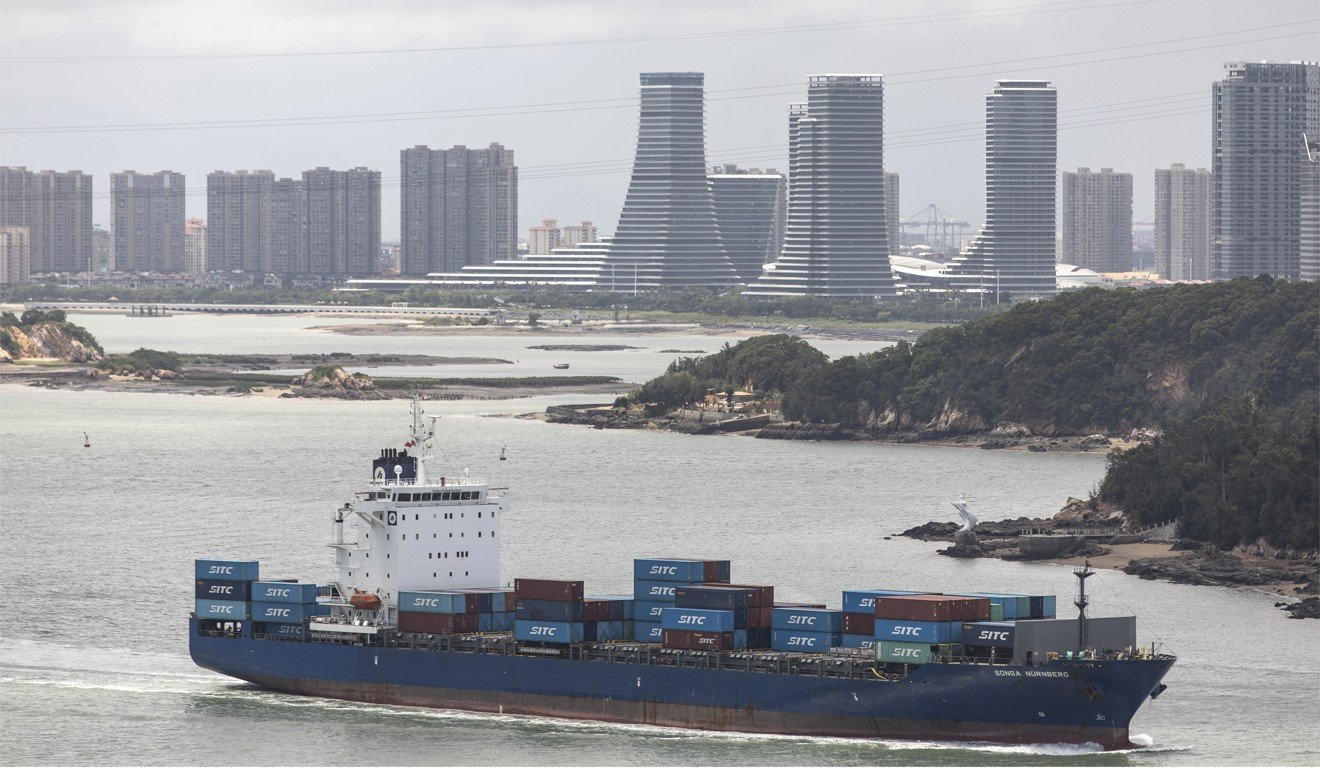
Xiamen in China’s Fujian province. Photo: Bloomberg
The fourth emperor, Han Wudi, then entrusted men of Confucian learning to balance the harsh laws with their moral ideals. The writings of Confucius had been torched and banned by the Qin. Now his disciples could practise what they preached.
The Han ideal thereafter was to educate rulers in the Confucian Classics that extolled them to be guided by responsible officials chosen for their learning and moral principles. The legal system was no longer upfront but remained there to be used by Confucian scholars whenever necessary. That set the tone of imperial governance even for the Central Asian tribal successors of the Han during the fifth and sixth centuries.
By the Tang dynasty, Confucian moral wisdom modified the law codes again, and these were further revised during the Ming-Qing dynasties.
In short, laws with deep roots in Confucian renzhi provided the foundations of the empire state for at least 1,500 years. As outlined earlier, God’s law in its secular form came to stand at the heart of the universalism promoted by the West and led by the United States and its European allies since the end of World War Two. In contrast, the idea of what was civilised in China had been particularistic and the laws guiding its modernisation process operate within its own framework.
Qin dynasty crossbow found at China’s Terracotta Army site may reveal secret of emperor’s success
The country has been prepared to learn from and even adopt Western law codes, but also wants to reconnect with the moral principles that had protected its heritage. This reminds us that law today has not only been a question of adapting modern law for China’s use but is also the source of tension in Sino-Western relations. The normative use of law extended by the West to apply to all interstate relations continues to provide a challenge. Chinese leaders closely observed how those legal institutions have worked in international relations. In particular, they noted how those institutions could not prevent the two wars that destroyed European supremacy. This has led them to believe that the system is not fair or stable and could be improved.
THE NANYANG CONNECTION
Today a new Southeast Asia can work through Asean. This regional organisation is a remarkable achievement, but it is still work in progress. Beginning with maritime interests, it now includes continental states with very different histories. Vietnam, for example, learnt the same lessons as the Chinese and now looks much more to the sea while Laos is totally landlocked. As for Cambodia and Myanmar, how they respond to maritime challenges is still unclear. As members of Asean, this may matter less as long as they can count on a united organisation to monitor the region’s naval concerns.
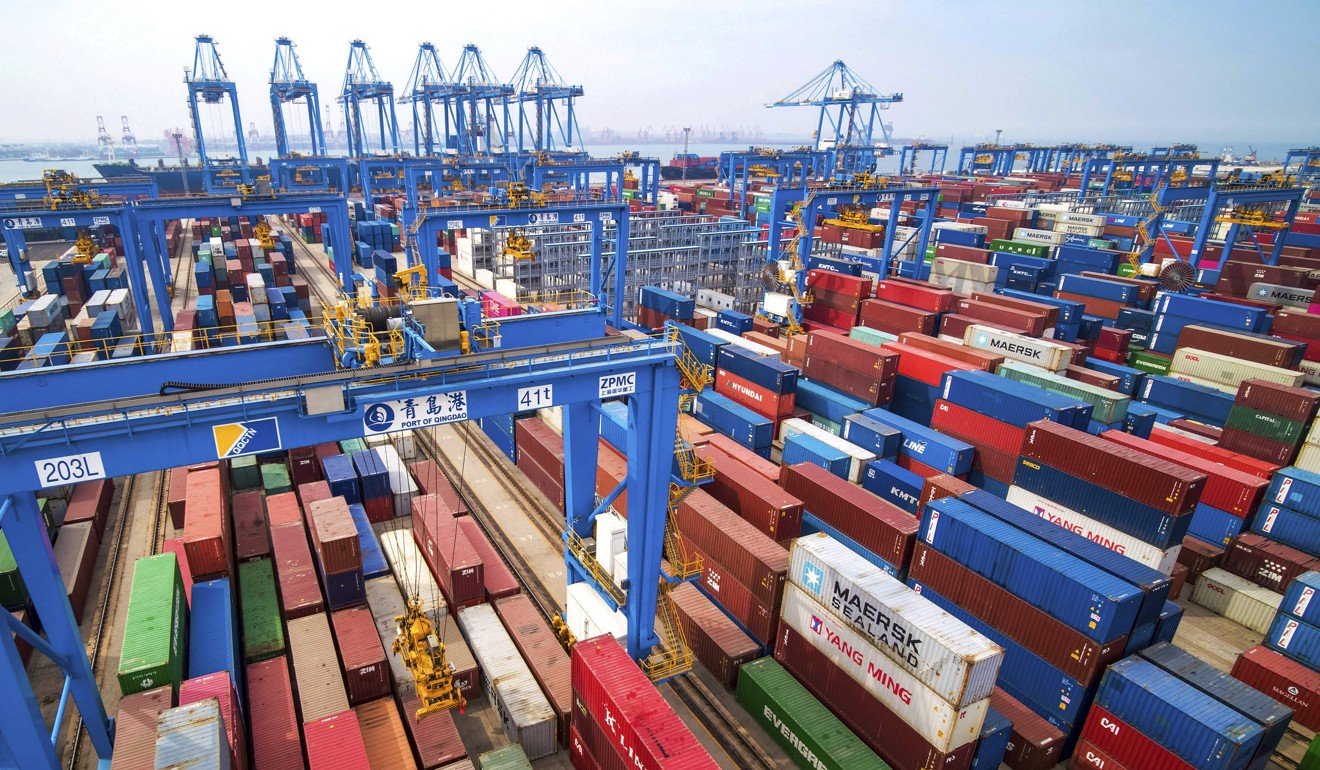
A container port in Qingdao, in China’s Shandong province. Photo: AP
Here Asean’s efforts could make it greater than its parts. The region’s location between the Indian and Pacific Oceans ensures that the great maritime powers of the world will always have a strategic interest in its well-being. But there are analogies with the Mediterranean world that may be relevant. Although on a smaller scale, naval power in that sea determined the fates of all the states involved, deep divisions between the states on its northern and southern coasts have lasted to this day. It is never a question of naval power alone. The states facing the sea have strong hinterlands and neither those of the north nor of the south could dominate the Mediterranean for long. That should remind us that Southeast Asia with its continental and maritime members could also be vulnerable to divisions when confronted by external forces coming from different directions and calling on each of its member states to choose sides.
Should China be worried about the US-Asean sea drill?
Another interesting question is why the South China Sea was never a zone of naval conflict the way the Mediterranean was. It is narrower in parts and wider in others and not well sealed like having Gibraltar at one end and Suez at the other. There are more openings to the ocean, as in the Taiwan Strait, the Sunda and Malacca Straits, as well as the passages leading into the South Pacific. In addition, unlike the Mediterranean where there were always powerful states on both sides of the sea, there was no power that could challenge the Chinese empire in the South China Sea. Had there been one, perhaps that sea would also have been a zone of tense and extended competition from ancient times.
That may be about to change. Today, the newly announced Indo-Pacific front has created a counter-power to face a rising China. At the same time, dynamic economic growth is moving from the Atlantic to this extended maritime space. Together, they have given new life to the Old World. Thus countries like China and India are building more credible navies to match those of Japan and the United States. In that way, the Indo-Pacific could serve as a larger Mediterranean in which the South China Sea acts as its strategic centre. That would make the double-ocean zone one of continuous tension in which powerful protagonists will keep the divisions permanent.
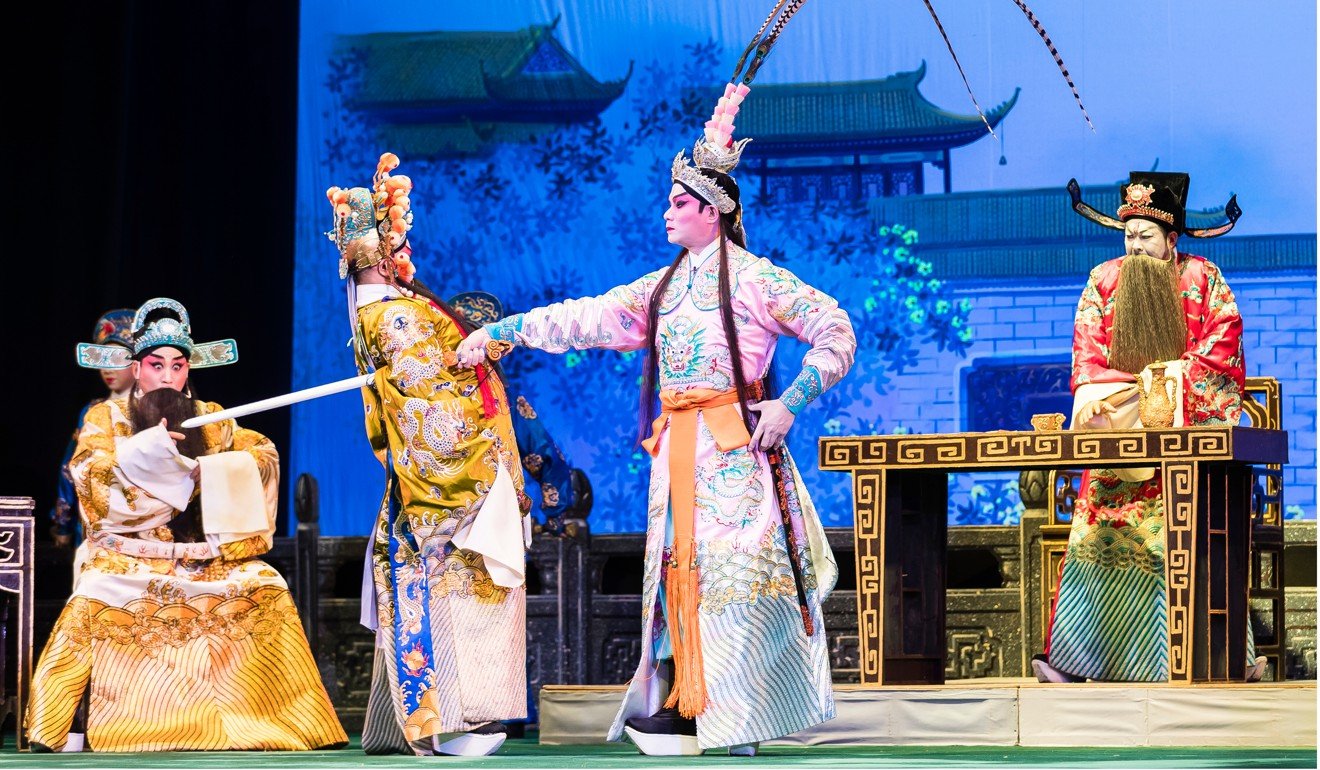
A Cantonese opera show. Can China hold on to its past as it builds a prosperous future? Photo: Handout
If Asean is divided underneath that overarching framework, it would be of little use to anybody. The region’s history renders it open to divisions, especially between the mainland and the archipelagic states that tend to look in different directions for their well-being. However, if these states can overcome their historical baggage, Asean could have a major role to play in the midst of the rapid changes in the relations between the New Global and Old World. If it is united on critical issues, it could provide a bridge that helps to make those relationships peaceful and constructive. That would not only help its members withstand the pressures put on them, but also demonstrate to all major powers that their interests are also best served by a truly united Asean.
ULAN BATOR, Sept. 2 (Xinhua) — A series of cultural events to celebrate the 70th anniversary of the establishment of diplomatic ties between China and Mongolia kicked off at the Mongolian National Modern Art Gallery here on Monday.
Hundreds of people from various fields of both countries, including Mongolian Minister of Education, Culture, Science and Sports Yondonperenlei Baatarbileg and Chinese Ambassador to Mongolia Xing Haiming attended the opening ceremony.
“We will relive the China-Mongolia friendship through more than 20 activities including cultural performances, exhibitions, exchanges of books, watching movies and TV series and free medical exams under a broader theme called ‘Feel China’ for the 70th anniversary of the establishment of diplomatic relations between China and Mongolia,” Xing said at the ceremony.
The ambassador noted that China attaches great importance to China-Mongolia relations and is willing to deepen the alignment of the China-proposed Belt and Road Initiative and Mongolia’s Development Road Program on the basis of equality and mutual benefit.
He expressed hope that the two countries will work together to boost the friendly and mutually beneficial cooperation that brings tangible benefits to the two countries and peoples.
For his part, Baatarbileg said that the culture of any country is a guarantee of independence and the value of its people.
“I have no doubt that the cultural events can give Mongolians a deeper understanding of China’s culture,” he said, noting that the Mongolian government will support any activities aimed at promoting the history and culture of the two countries.
Visitors can partake in martial arts training, craft traditional Chinese embroidery, attend film screenings and taste a variety of Chinese foods.
The events are co-organized by China’s State Council Information Office, China’s Inner Mongolia Autonomous Region, the Mongolian Ministry of Education, Culture, Science and Sports and governor’s office of the Mongolian capital Ulan Bator.
Chinese Vice President Wang Qishan meets with Peruvian Vice President Mercedes Araoz in Beijing, capital of China, Sept. 2, 2019. (Xinhua/Zhang Ling)
BEIJING, Sept. 2 (Xinhua) — Chinese Vice President Wang Qishan met here Monday with Peruvian Vice President Mercedes Araoz, who is in Beijing to attend relevant activities of the Beijing Horticultural Expo.
Wang spoke highly of the current bilateral relationship, saying that China is willing to further advance mutual understanding and trust and deepen cooperation to push the relationship to a higher level.
Araoz congratulated China on the 70th anniversary of the founding of the People’s Republic of China, and said her country is ready to deepen cooperation with China in such areas as trade and economy, investment, agriculture, poverty relief, science, technology and culture.
Chinese Premier Li Keqiang (L) holds a welcoming ceremony for visiting Uzbek Prime Minister Abdulla Aripov before their talks in Beijing, capital of China, Aug. 27, 2019. (Xinhua/Yin Bogu)
BEIJING, Aug. 27 (Xinhua) — Chinese Premier Li Keqiang held talks Tuesday with visiting Uzbek Prime Minister Abdulla Aripov, and the two sides agreed to cement cooperation.
Li said China attaches great importance to China-Uzbekistan relations and is willing to maintain close high-level exchanges with Uzbekistan, promote trade and investment liberalization and facilitation, and strengthen communication and coordination in international and regional affairs.
Li said China is ready to seek synergy between the Belt and Road Initiative and Uzbekistan’s development strategy, deepen cooperation in production capacity, interconnection and agriculture, and make efforts to ensure the stability of energy cooperation.
He expected the two sides to promote cooperation in culture, tourism and higher education, so as to consolidate the people-to-people foundation of bilateral ties.
China is willing to continue to expand the scale of bilateral trade, import Uzbek products that meet the needs of the Chinese market, and support capable Chinese companies investing in Uzbekistan in accordance with market rules, Li said, hoping Uzbekistan will create a good business environment.
Aripov said Uzbekistan is ready to continue to participate in the Belt and Road Initiative, deepen cooperation in various fields, and welcome Chinese enterprises to expand investment in Uzbekistan, so as to push bilateral relations to a higher level.
The two leaders witnessed the signing of a series of cooperation documents after the talks.
Huang Kunming, a member of the Political Bureau of the Communist Party of China (CPC) Central Committee and head of the Publicity Department of the CPC Central Committee, addresses a seminar on expositions on historical sciences made by Xi Jinping, general secretary of the CPC Central Committee, in Beijing, capital of China, Aug. 26, 2019. (Xinhua/Yao Dawei)
BEIJING, Aug. 26 (Xinhua) — A seminar on expositions on historical sciences made by Xi Jinping, general secretary of the Communist Party of China (CPC) Central Committee, was held Monday in Beijing.
Xi’s expositions on historical sciences, which embody a deep understanding of history and historical sciences by contemporary Chinese Communists, are an important guideline to be followed by China’s historical research in the new era, said Huang Kunming, a member of the Political Bureau of the CPC Central Committee and head of the Publicity Department of the CPC Central Committee, when addressing the seminar.
He said Marxism should be firmly upheld to offer guidance and called for efforts to facilitate the building of discipline, and academic and discourse systems of history research with Chinese characteristics.
Huang stressed the importance of combining research and education, taking a clear-cut stand to oppose historical nihilism, and guiding people to establish a correct view of the history, nation, country, and culture.
The seminar, hosted by the Chinese history research institute under the Chinese Academy of Social Sciences, was attended by over 150 historians from across the country.
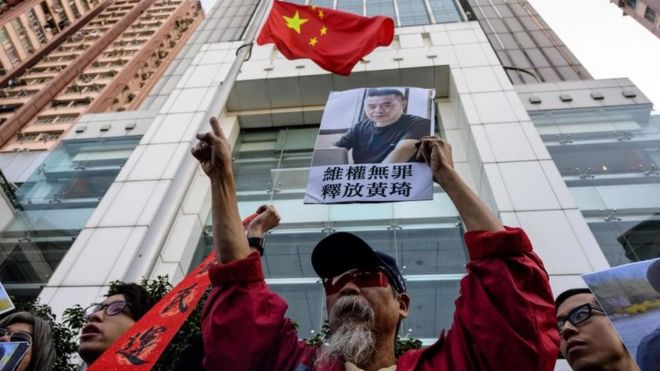
Huang has been detained since being arrested nearly three years ago.
He has already served previous prison sentences related to his journalism.
The statement, from Mianyang Intermediate People’s Court, added Mr Huang would be deprived of his political rights for four years and had also been fined 20,000 yuan ($2,900; £2,360).
Huang has kidney and heart disease and high blood pressure. And supporters have voiced concern about the consequences of the 56-year-old remaining imprisoned.
“This decision is equivalent to a death sentence, considering Huang Qi’s health has already deteriorated from a decade spent in harsh confinement,” said Christophe Deloire, the secretary-general of Reporters Without Borders.
The press-freedom campaign group has previously awarded Huang its Cyberfreedom Prize. It has now called on President Xi Jinping to “show mercy” and issue a pardon.
Amnesty International has called the sentence “harsh and unjust”.
“The authorities are using his case to scare other human rights defenders who do similar work exposing abuses, especially those using online platforms,” said the group’s China researcher Patrick Poon.
Repeated arrests
Huang created his website in 1998 to help people search for friends and family who had disappeared. But over time it began covering allegations of corruption, police brutality and other abuses.
He was subsequently sentenced to a further three years in prison, in 2009, after giving advice to the families of children who had died in an earthquake in Sichuan the previous year.
The relatives had wanted to sue the local authorities over claims that school buildings had been shoddily built – a claim the central government denied.
Huang was detained again, in 2014, after 64 Tianwang covered the case of a woman who had tried to set herself on fire in Tiananmen Square to coincide with the start of that year’s National People’s Congress.
Then he was arrested in November 2016 and accused of “inciting subversion of state power”, since when he has been incarcerated.
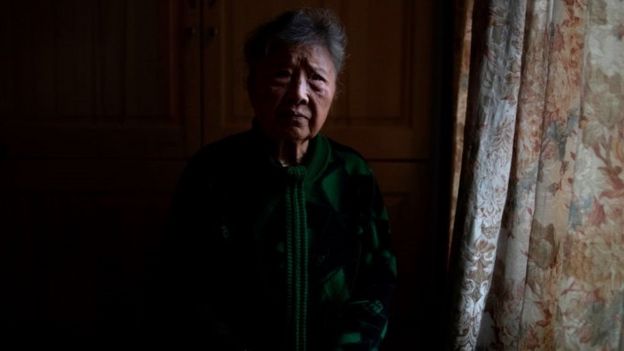
Since then, several human rights organisations, including Freedom House and the China Human Rights Lawyers Concern Group, have called for his release and raised concerns about reported threats to his 85-year-old mother, who had been campaigning on his behalf.
Image copyright GETTY IMAGESImage caption Huang’s mother, Pu Wenqing, had travelled to Beijing to plead her son’s case
Chinese State Councilor and Foreign Minister Wang Yi (R) meets with Minister of Foreign Affairs and International Cooperation of the United Arab Emirates (UAE) Sheikh Abdullah bin Zayed Al Nahyan in Beijing, capital of China, July 21, 2019. (Xinhua/Yan Yan)
BEIJING, July 21 (Xinhua) — Chinese State Councilor and Foreign Minister Wang Yi met with Sheikh Abdullah Bin Zayed Al Nahyan, minister of Foreign Affairs and International Cooperation of the United Arab Emirates (UAE), here Sunday.
Hailing the UAE as China’s important and reliable partner in the Middle East, Wang said China stands ready to work with the UAE to implement the consensus reached by the two countries’ leaders, deepen their partnership under the Belt and Road Initiative, promote cooperation in various fields, enhance people-to-people exchanges, strengthen cooperation on anti-terrorism and law enforcement, and bring the China-UAE comprehensive strategic partnership to higher levels.
Sheikh Abdullah said the UAE is willing to strengthen cooperation with China in trade, investment, energy, culture, education and third-market cooperation, and to work for closer coordination within the United Nations and in regional affairs.
Sun Ling became a cyber star in China after she responded to an online question: how can you get an overseas education if you are dirt poor?
‘I just put my story out there to show there is a possibility in your life even if you have a low starting point,’ the 29-year-old says
Sun Ling works as a contract software engineer at Google in New York. Photo: Sun Ling
To get where she is today, Sun Ling has beaten very long odds.
Born in a rural hamlet in central China’s Hunan province, Sun shot to Chinese social media stardom for her rags-to-relative-comfort career trajectory. Her story begins in a household of such modest means that her mother had to sell blood to make ends meet and a primary school education interrupted by the need for her hands in the family’s fields.
She has no fancy college degree, having gone to work on the assembly line at a Shenzhen factory directly from high school.
Yet today, the 29-year-old works as a contract software engineer at Google in New York, coding on workdays and playing frisbee on weekends, with an annual salary of about US$120,000.
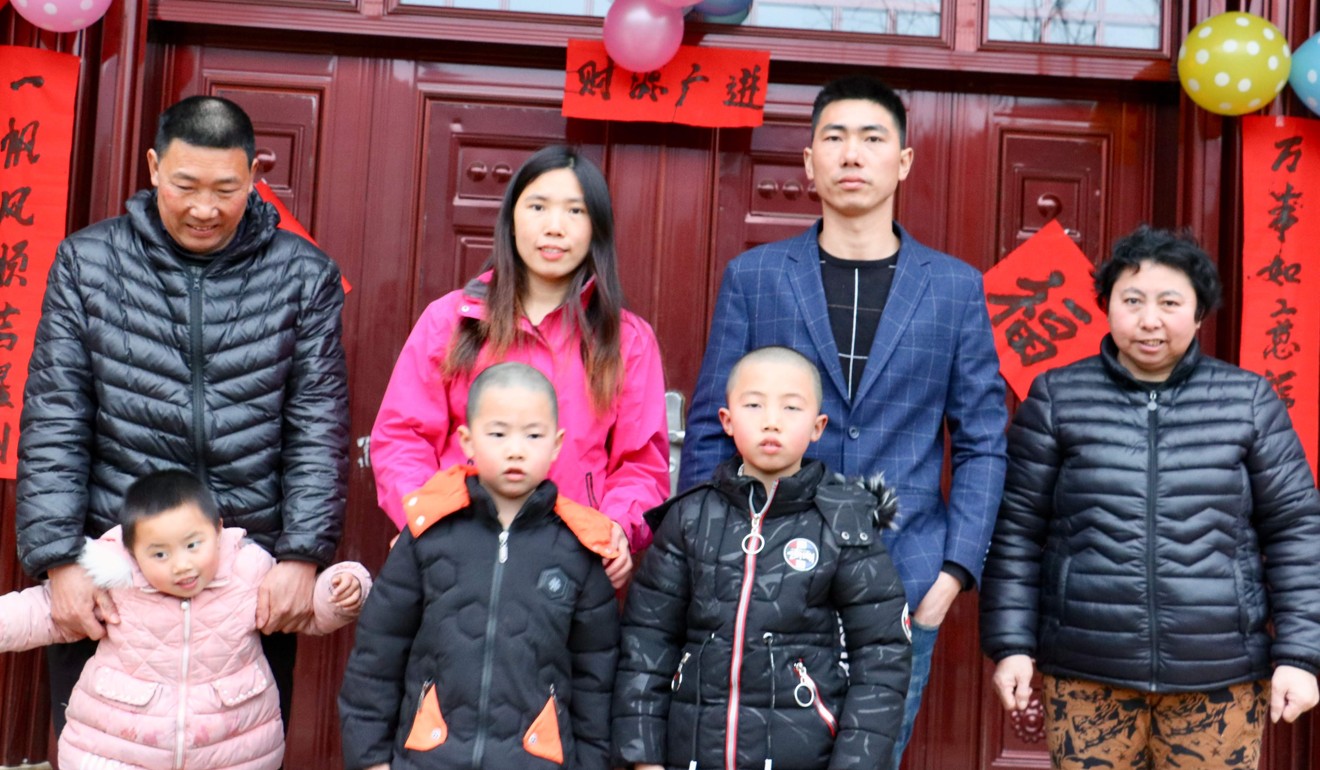
Sun Ling with her parents, brother, niece and nephews in China. Photo: Sun Ling
Sun’s journey from factory worker to high-paid software engineer has garnered Chinese social media headlines such as “the most inspiring story of all times”, and internet users have applauded her as a “positive energy girl”.
But others have not been as flattering, with some questioning the credibility of her story and saying what she has accomplished is almost too difficult to be true amid growing concern about the lack of opportunity and social mobility in China.
“I don’t consider myself a success and I have no intention to become a role model,” Sun told the South China Morning Post on Thursday. “I just put my story out there to show there is a possibility in your life even if you have a low starting point.”
A look inside Google’s new campus outside Silicon Valley
Her story became known in China after she posted an answer on Zhihu, the Chinese version of Quora, responding a question: how can you get an overseas education if you are dirt poor?
In the answer she posted earlier last month, Sun detailed her 10-year journey in making the seemingly impossible possible.
“It is not the orthodox way of studying overseas, just for your reference,” Sun wrote in the post, which has received nearly 35,000 likes on Zhihu. The answer was picked up by other social media; one of her most popular stories, which is circulating on WeChat, has been viewed more than 100,000 times.
Sun said her story was not a textbook “American dream” or “Chinese dream comes true” experience, but rather one driven by the simple motivation to forge a better life.
I just put my story out there to show there is a possibility in your life even if you have a low starting point Sun Ling
When Sun was born in 1990, her parents were farmers in a small village about a 2½-hour drive from Hunan province’s capital city, Changsha. Growing up in a place where a middle school education was considered good enough for a girl, Sun was forced to temporarily drop out of school when she was about 13 to ease the financial burden on her parents, who favoured her brother, the only son in the family.
“I begged and begged till my father allowed me to return to school,” she said. “But to be honest, my strong desire to stay at school at the moment was mainly because farming was too hard. The work got calluses on my hands.”
Sun in her home village in Hunan province in 2013. Photo: Sun Ling
Among her 11 village friends, she was the only one who completed high school. But the education she received at the rural school failed to get her into any college in China. So, like her peers in the village, she went to Shenzhen to become a factory worker.
But the routine of shifts spent examining the quality of batteries bored her. “I have no idea what kind of life I want to live, even today. But I am very certain about the life I don’t want to live,” Sun said.
She quit the factory job after eight months and enrolled in a computer training programme to learn what she regarded as the must-have skills to leave the blue-collar life behind.
That is the thing I like about America: they value what you are able to do more than where you come fromSun Ling
To have enough money to complete the training to become an entry-level software engineer, she worked three part-time jobs, including sending out fliers and waitressing at restaurants, and lived on three credit cards.
After more than a year of training and a debt of 10,000 yuan (US$1,450), in September 2011 she was hired as a software engineer by a Shenzhen company responsible for developing an online payroll system. With her own cubicle, a monthly salary of 4,000 yuan and weekends for herself, the job met all of Sun’s expectation as a “white-collar office lady”.
But the excitement of the new life didn’t last. She started to feel small in a big city where “everyone else is so excellent, with fancy degrees”.
To overcome her educational disadvantage, she signed up for an English training programme and a long-distance programme that allowed her to earn a degree from Shenzhen University. All of this took place while she maintained her software engineering job.
To practise her English, in 2014 she picked up ultimate frisbee, a game where in Shenzhen at the time, most of the players were expats. With a different circle of friends, most of whom had overseas experience, Sun started to dream of a life outside China’s borders.
Sun was born in a rural hamlet in central China’s Hunan province. Photo: Sun Ling
In early 2017, she discovered a master’s programme at Maharishi University of Management in Fairfield, Iowa, which features a controversial “consciousness-based education” system that includes the practice of meditation.
Sun applied and was accepted into the university’s computer science programme.
According to her, its design fit her well as it allowed students to have internships or jobs on a work-study visa after months of attending classes on campus. The rest of the programme could be completed remotely.
After nine months studying on campus and 60 job interviews, Sun received a job offer from EPAM Systems, a vendor for Google, late last year.
Google moving some hardware production out of China
Of her work as a contract software engineer at Google’s Manhattan headquarters, Sun said she was very “lucky” since many of her colleagues had a PhD or studied at top-tier American universities.
“But none of them treat me like I don’t deserve all of this,” she said. “That is the thing I like about America: they value what you are able to do more than where you come from.”
However, her story has not been without controversy in China’s cyber world.
Supporters have sent an increasing number of messages from various online channels, thanking her for an inspiring story and seeking her advice on life decisions. Sceptics claim she just got lucky, and some have accused her of being an advertising tool for Maharishi University of Management.
Chinese family paid US$1.2 million for Yale spot. Why weren’t they charged?
“At first, I got really angry,” Sun said. “I don’t think I deserve all the criticism for simply sharing my real life experience. But then I realised that not everyone has the same attitude in life.”
“I had no resources and I had very few options,” she said. “It is natural that people think it is difficult or even impossible to do. But for me it is actually not that difficult. Just keep learning and keep trying new things step by step, day by day.”
Her journey continues. Sun has been practising English and trying to fit better into her life in the US by doing short video interviews on the streets of New York streets. She has also taken courses about artificial intelligence online.
“My next goal is to become an in-house Google software engineer,” she said. “It won’t be easy. But your life begins at the end of your comfort zone.”
Settlements along the route linking Europe and Asia thrived by providing accommodation and services for countless traders
Formally established during the Han dynasty, it was a 19th-century German geographer who coined the term Silk Road
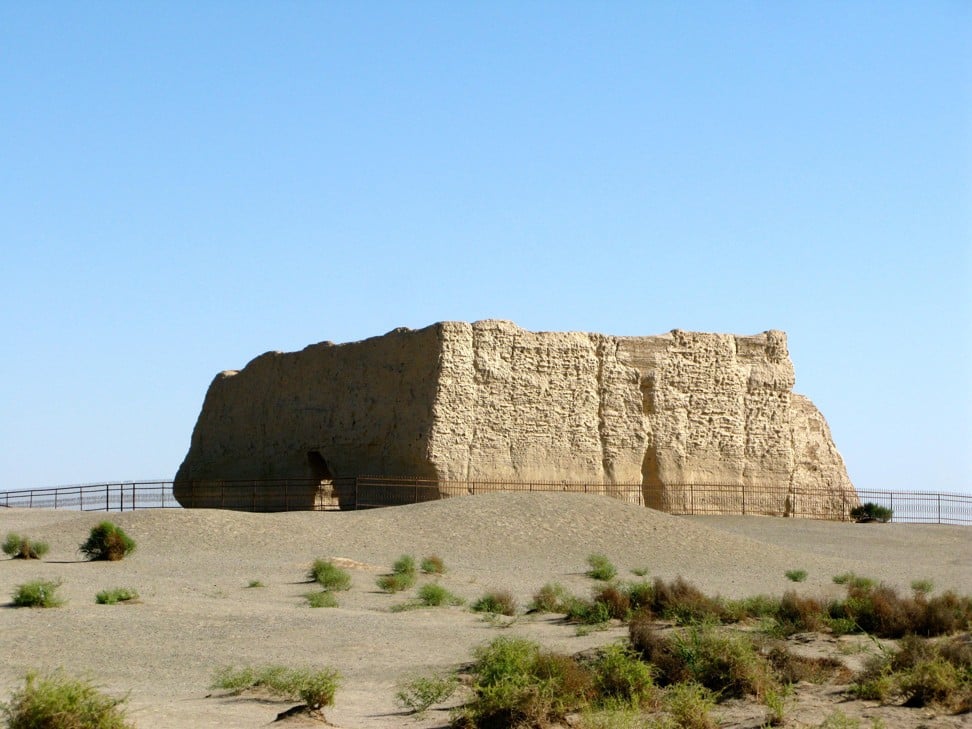
The ruins of a fortified gatehouse and customs post at Yunmenguan Pass, in China’s Gansu province. Photo: Alamy
We have a German geographer, cartographer and explorer to thank for the name of the world’s most famous network of transcontinental trade routes.
Formally established during the Han dynasty, in the first and second centuries BC, it wasn’t until 1877 that Ferdinand von Richthofen coined the term Silk Road (historians increasingly favour the collective term Silk Routes).
The movement of merchandise between China and Europe had been taking place long before the Han arrived on the scene but it was they who employed troops to keep the roads safe from marauding nomads.
Commerce flourished and goods as varied as carpets and camels, glassware and gold, spices and slaves were traded; as were horses, weapons and armour.
Merchants also moved medicines but they were no match for the bubonic plague, which worked its way west along the Silk Road before devastating huge swathes of 14th century Europe.
What follows are some of the countless kingdoms, territories, (modern-day) nations and cities that grew rich on the proceeds of trade, taxes and tolls.
China
A watchtower made of rammed earth at Dunhuang, a desert outpost at the crossroads of two major Silk Road routes in China’s northwestern Gansu province. Photo: Alamy
Marco Polo worked in the Mongol capital, Khanbaliq (today’s Beijing), and was struck by the level of mercantile activity.
The Venetian gap-year pioneer wrote, “Every day more than a thousand carts loaded with silk enter the city, for a great deal of cloth of gold and silk is woven here.”
Light, easy to transport items such as paper and tea provided Silk Road traders with rich pickings, but it was China’s monopoly on the luxurious shimmering fabric that guaranteed huge profits.
So much so that sneaking silk worms out of the empire was punishable by death.
The desert outpost of Dunhuang found itself at the crossroads of two major Silk Road trade arteries, one leading west through the Pamir Mountains to Central Asia and another south to India.
Built into the Great Wall at nearby Yunmenguan are the ruins of a fortified gatehouse and customs post, which controlled the movement of Silk Road caravans.
Also near Dunhuang, the Mogao Caves contain one of the richest collections of Buddhist art treasures anywhere in the world, a legacy of the route to and from the subcontinent.
Afghanistan
Afghanistan’s mountainous terrain was an inescapable part of the Silk Road, until maritime technologies would become the area’s undoing. Photo: Shutterstock
For merchants and middlemen hauling goods through Central Asia, there was no way of bypassing the mountainous lands we know today as Afghanistan.
Evidence of trade can be traced back to long before the Silk Road – locally mined lapis lazuli stones somehow found their way to ancient Egypt, and into Tutankhamun’s funeral mask, created in 1323BC.
Jagged peaks, rough roads in Tajikistan, roof of the world
Besides mercantile exchange, the caravan routes were responsible for the sharing of ideas and Afghanistan was a major beneficiary. Art, philosophy, language, science, food, architecture and technology were all exchanged, along with commercial goods.
In fact, maritime technology would eventually be the area’s undoing. By the 15th century, it had become cheaper and more convenient to transport cargo by sea – a far from ideal development for a landlocked region.
Iran
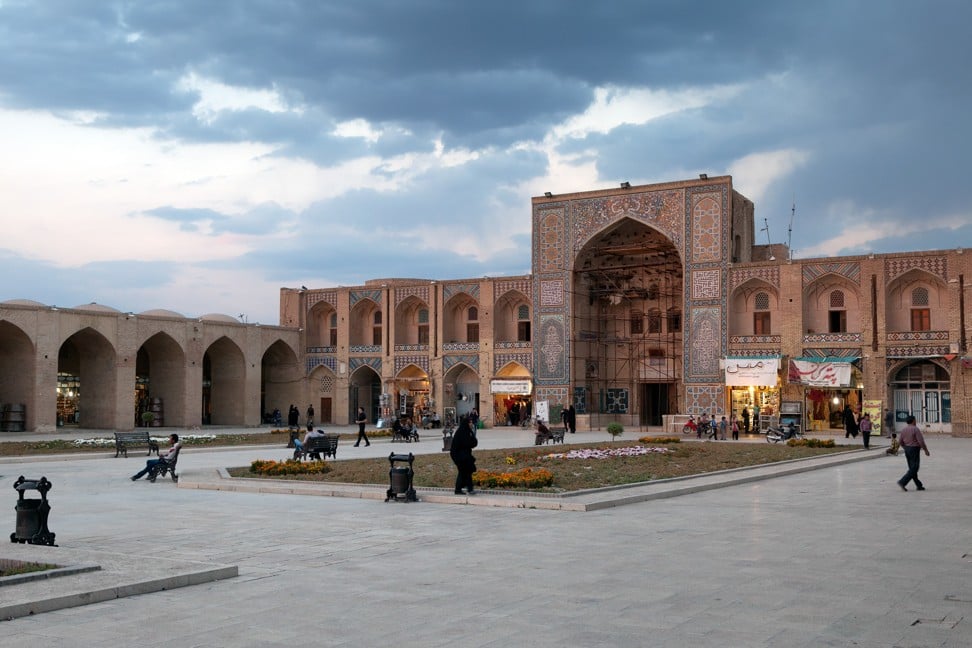
The Ganjali Khan Complex, in Iran. Photo: Shutterstock
Thanks to the Silk Road and the routes that preceded it, the northern Mesopotamian region (present-day Iran) became China’s closest trading partner. Traders rarely journeyed the entire length of the trail, however.
Merchandise was passed along by middlemen who each travelled part of the way and overnighted in caravanserai, fortified inns that provided accommodation, storerooms for goods and space for pack animals.
The good, bad and ugly sides to visiting Chernobyl and Kiev
With so many wheeler-dealers gathering in one place, the hostelries developed into ad hoc marketplaces.
Marco Polo writes of the Persian kingdom of Kerman, where craftsmen made saddles, bridles, spurs and “arms of every kind”.
Today, in the centre of Kerman, the former caravanserai building forms part of the Ganjali Khan Complex, which incorporates a bazaar, bathhouse and mosque.
Uzbekistan
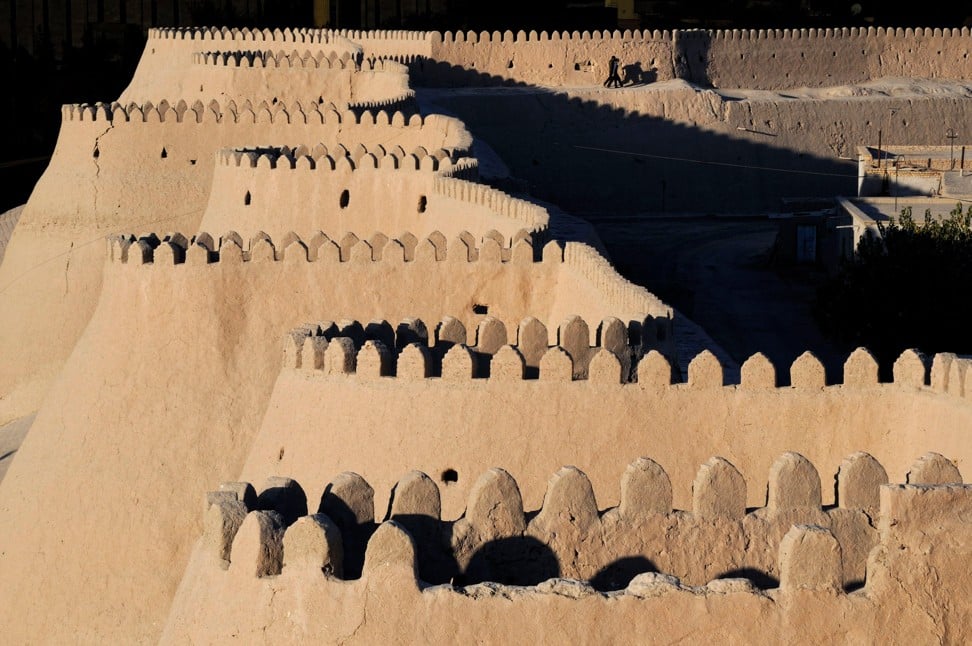
A fort in Khiva, Uzbekistan. Photo: Alamy
The double-landlocked country boasts some of the Silk Road’s most fabled destinations. Forts, such as the one still standing at Khiva, were built to protect traders from bandits; in fact, the city is so well-preserved, it is known as the Museum under the Sky.
The name Samarkand is also deeply entangled with the history of the Silk Road.
The earliest evidence of silk being used outside China can be traced to Bactria, now part of modern Uzbekistan, where four graves from around 1500BC-1200BC contained skeletons wrapped in garments made from the fabric.
Three thousand years later, silk weaving and the production and trade of textiles remain one of Samarkand’s major industries.
Georgia
A street in old town of Tbilisi, Georgia. Photo: Alamy
Security issues in Persia led to the opening up of another branch of the legendary trade route and the first caravan loaded with silk made its way across Georgia in AD568.
Marco Polo referred to the weaving of raw silk in “a very large and fine city called Tbilisi”.
Today, the capital has shaken off the Soviet shackles and is on the cusp of going viral.
Travellers lap up the city’s monasteries, walled fortresses and 1,000-year-old churches before heading up the Georgian Military Highway to stay in villages nestling in the soaring Caucasus Mountains.
Public minibuses known as marshrutka labour into the foothills and although the vehicles can get cramped and uncomfortable, they beat travelling by camel.
Jordan
Petra, in Jordan. Photo: Alamy
The location of the Nabataean capital, Petra, wasn’t chosen by chance.
Savvy nomadic herders realised the site would make the perfect pit-stop at the confluence of several caravan trails, including a route to the north through Palmyra (in modern-day Syria), the Arabian peninsula to the south and Mediterranean ports to the west.
Huge payments in the form of taxes and protection money were collected – no wonder the most magnificent of the sandstone city’s hand-carved buildings is called the Treasury.
The Red Rose City is still a gold mine – today’s tourists pay a hefty
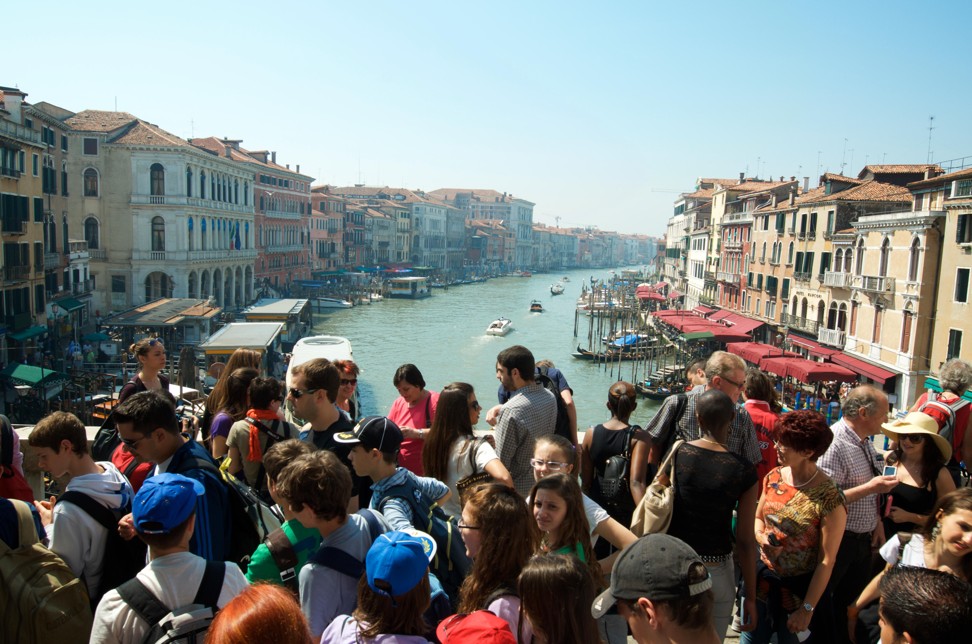
Trade enriched Venice beyond measure, helping shape the Adriatic entrepot into the floating marvel we see today.
Besides the well-documented flow of goods heading west, consignments of cotton, ivory, animal furs, grapevines and other goods passed through the strategically sited port on their way east.
Ironically, for a city built on trade and taxes, the biggest problem Venice faces today is visitors who don’t contribute enough to the local economy.
A lack of spending by millions of day-tripping tourists and cruise passengers who aren’t liable for nightly hotel taxes has prompted authorities to introduce a citywide access fee from January 2020.
Two thousand years ago, tariffs and tolls helped Venice develop and prosper. Now they’re needed to prevent its demise.












 CHINDIA ALERT: You'll be living in their world, very soon