Chindia Alert: You’ll be Living in their World Very Soon
aims to alert you to the threats and opportunities that China and India present. China and India require serious attention; case of ‘hidden dragon and crouching tiger’.
Without this attention, governments, businesses and, indeed, individuals may find themselves at a great disadvantage sooner rather than later.
The POSTs (front webpages) are mainly 'cuttings' from reliable sources, updated continuously.
The PAGEs (see Tabs, above) attempt to make the information more meaningful by putting some structure to the information we have researched and assembled since 2006.
Chief executive Rupert Hogg says staff who ‘support or participate in illegal protests’ would face disciplinary action that ‘may include termination of employment’
Airline’s shares down 4.37 per cent on Monday morning to lowest level in 10 years, despite it complying with orders on Friday from China’s aviation authority
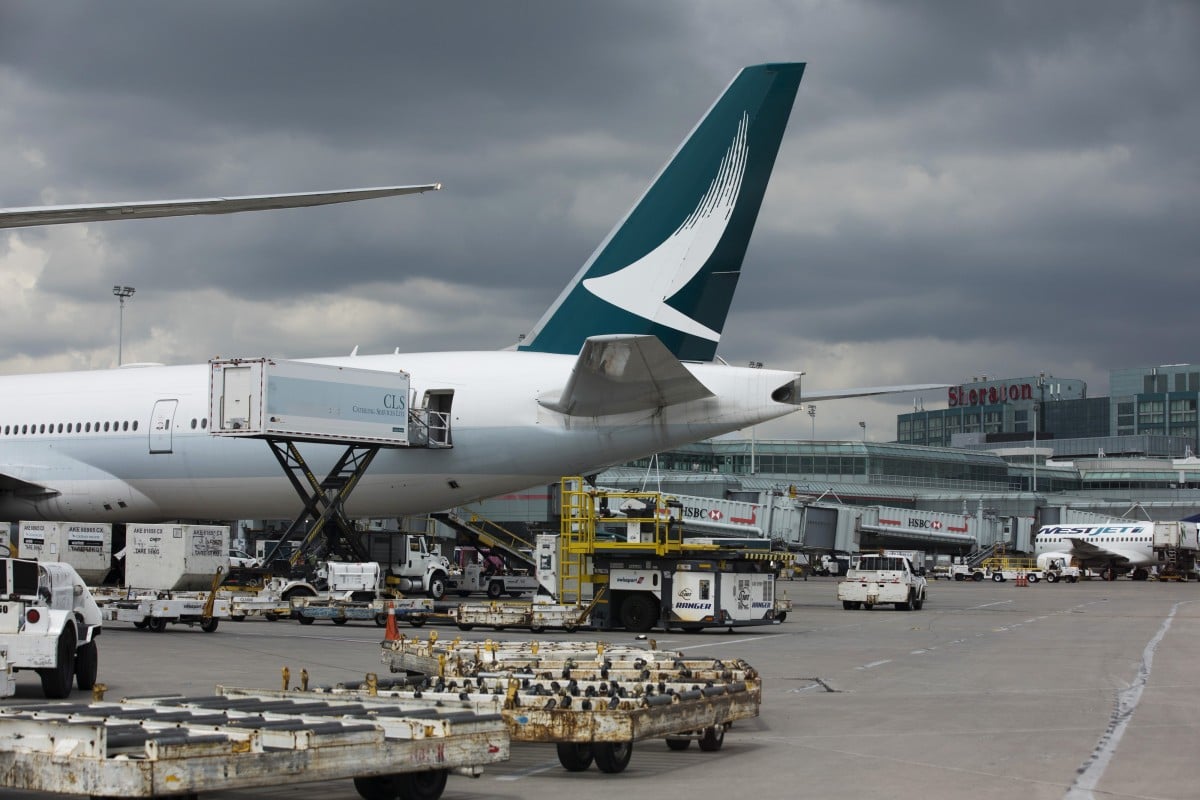
Cathay Pacific moved over the weekend to comply with new orders from China’s aviation authority. Photo: Bloomberg
Cathay Pacific has warned that it would sack staff taking part in illegal protests in Hong Kong, saying it would take a “zero tolerance” approach, as its shares slumped to their lowest level in 10 years in morning trading on Monday.
In a note to staff on Monday, chief executive Rupert Hogg said staff who “support or participate in illegal protests” would face disciplinary action that “could be serious and may include termination of employment”.
His warning indicated an escalation by the company, under pressure to crack down on employees after China’s civil aviation regulator said on Friday that airline staff supporting the Hong Kong protests would be barred from flights going to, from or through mainland China.
“We are all obliged to abide by law at all times,” Hogg said. “Cathay Pacific Group has a zero-tolerance approach to illegal activities. Specifically, in the current context, there will be disciplinary consequences for employees who support or participate in illegal protests. These consequences could be serious and may include termination of employment.”
By noon in Hong Kong, the stock had fallen 4.37 per cent to HK$9.85 (US$1.26), its lowest level since June 2009. Losses dragged the carrier’s parent company Swire Pacific down 5.4 per cent to HK$77.50, making it the worst performer on Hong Kong’s stock market during morning trading.
This was the lowest price since October 2018 for Swire, which owns 45 per cent of the airline. Air China, which owns 22.7 per cent of Cathay, also fell 1.53 per cent in Hong
On Friday, the Civil Aviation Administration of China (CAAC) told Hong Kong’s flagship carrier that any staff members who had taken part in what it called “illegal protests”, “violent actions” and “overly radical activities” would not be allowed to fly to or from the mainland, in a first warning shot at a Hong Kong-based corporate giant.
The CAAC also said that the airline would have to submit identification details of all crew operating all services using mainland China airspace, and that flights with unapproved crew lists would be barred. It gave the airline until Thursday to submit a detailed plan to improve its procedures.
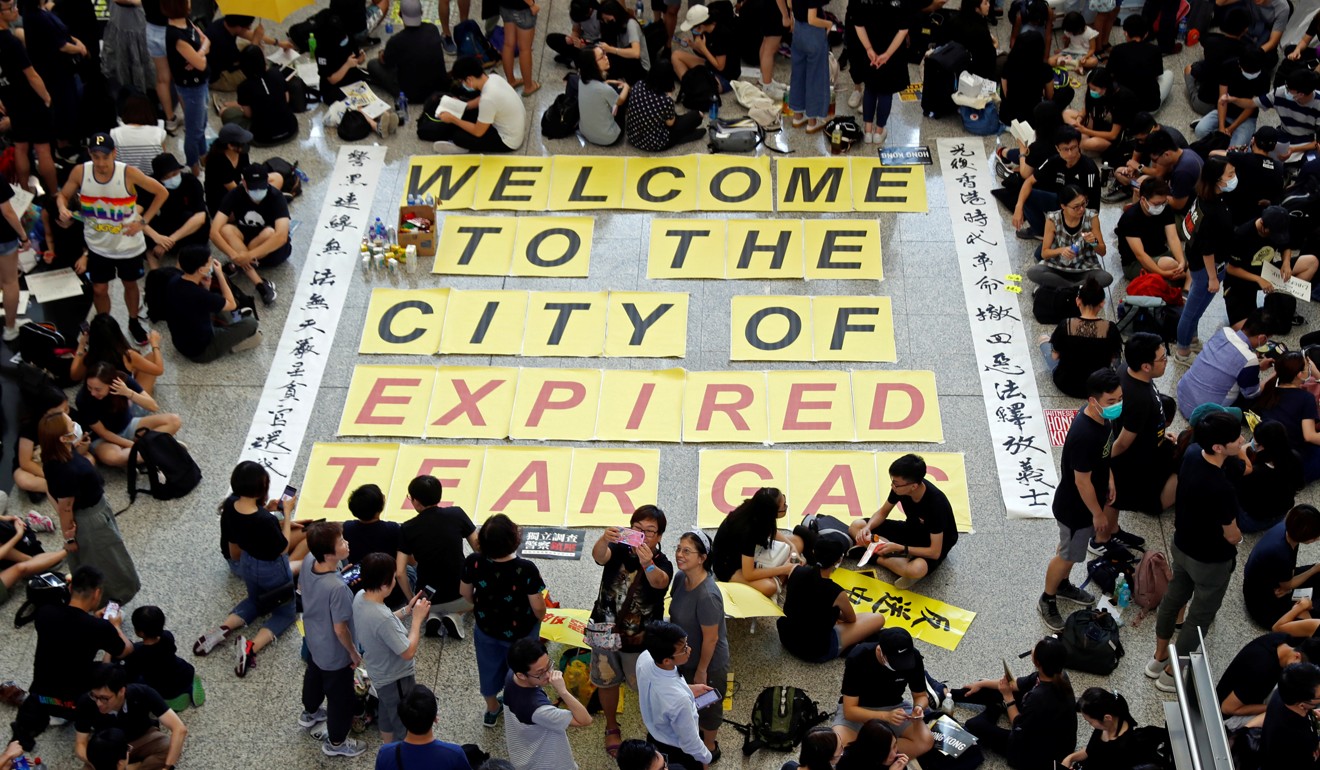
Anti-extradition bill protesters join a sit-in protest at Hong Kong International Airport on Sunday. Photo: Reuters
Cathay Pacific had earlier said it would not stop staff members from taking part in demonstrations.
On Wednesday, Cathay Pacific chairman John Slosar said the company would not rein in staff for openly supporting the protests. “We certainly wouldn’t dream of telling them what they have to think about something,” Slosar said.
But in his second statement in two days in relations to the CAAC’s sanctions, Hogg said the “actions and words” of staff outside of work hours could have a “significant effect on the company”, adding that the actions of a few of Cathay’s 34,000 employees would be seen as a company position.
He also asked staff to not “support or participate” in the illegal protest at the airport, saying the carrier was concerned that the protests could become disorderly and violent.
No flights by Cathay Pacific, nor by its subsidiaries Cathay Dragon or HK Express, were delayed or cancelled on Saturday or Sunday, the company said.
The CAAC’s move was widely seen as a clear warning to Hong Kong’s business community to toe Beijing’s line to pressure ongoing anti-government protests in the city that have been taking place for over two months.
Despite the airline acting over the weekend to comply with the rules, Chinese state media continued to put pressure on the company.
Global Times, a tabloid associated with Communist Party mouthpiece People’s Daily, said on Sunday the airline had still not allayed all concerns despite its adjustments to comply with the ruling.
Carrie Lam’s remarks about Beijing’s sovereignty ‘add fuel to the fire’, analysts warn
“These are only small steps [showing] that Cathay Pacific is heading towards the right direction, and their sincerity will need to be tested over time,” the tabloid said in an opinion article on Sunday.
It said 2,000 company staff joined citywide strikes last Monday, and cited the case of a pilot who was arrested and charged with rioting during a demonstration on July 28.
“Cathay Pacific has touched on this behaviour lightly, which has a huge impact on the trust the industry and the public have towards the company,” the article said.
State broadcaster CCTV published a short video on Weibo on Monday morning of its anchor issuing further warnings to the airline, saying there were reports of staff continuing to join “illegal gatherings” and asking tourists not to go to Hong Kong.
“If this continues, it’s not a matter of whether or not people would still want to come to Hong Kong, but whether they would still want to be on your airline,” Kang Hui said in a one-minute video.
“Let me send a friendly reminder: one would not be in trouble had one not asked for it,” Kang said, in Mandarin and then in English, translating the popular Chinese internet meme phrase “No zuo no die” and claiming some Cathay Pacific staff pretended not to understand Mandarin. Cantonese is the dominant language in Hong Kong.
Elsewhere, the company announced that two of its airport employees
for leaking passenger information about a Hong Kong police soccer team who had been on a flight to mainland China. It has also suspended the pilot who was among 44 people charged with rioting on July 28.
Although the company does not clearly specify its country-by-country performance, China and Hong Kong produced half of all its 2018 revenue – HK$57 billion of a total of HK$111 billion. A fifth of all the carrier’s flight are to and from the mainland.
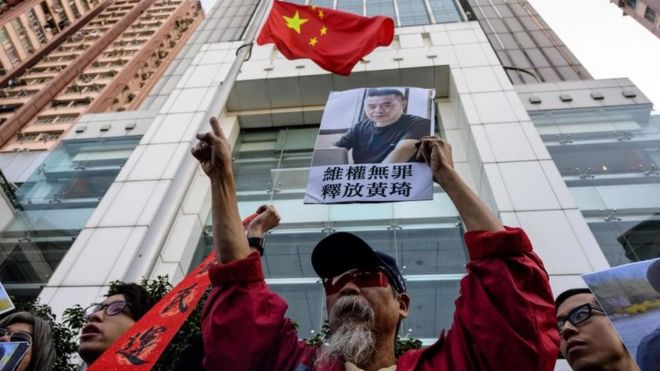
Huang has been detained since being arrested nearly three years ago.
He has already served previous prison sentences related to his journalism.
The statement, from Mianyang Intermediate People’s Court, added Mr Huang would be deprived of his political rights for four years and had also been fined 20,000 yuan ($2,900; £2,360).
Huang has kidney and heart disease and high blood pressure. And supporters have voiced concern about the consequences of the 56-year-old remaining imprisoned.
“This decision is equivalent to a death sentence, considering Huang Qi’s health has already deteriorated from a decade spent in harsh confinement,” said Christophe Deloire, the secretary-general of Reporters Without Borders.
The press-freedom campaign group has previously awarded Huang its Cyberfreedom Prize. It has now called on President Xi Jinping to “show mercy” and issue a pardon.
Amnesty International has called the sentence “harsh and unjust”.
“The authorities are using his case to scare other human rights defenders who do similar work exposing abuses, especially those using online platforms,” said the group’s China researcher Patrick Poon.
Repeated arrests
Huang created his website in 1998 to help people search for friends and family who had disappeared. But over time it began covering allegations of corruption, police brutality and other abuses.
He was subsequently sentenced to a further three years in prison, in 2009, after giving advice to the families of children who had died in an earthquake in Sichuan the previous year.
The relatives had wanted to sue the local authorities over claims that school buildings had been shoddily built – a claim the central government denied.
Huang was detained again, in 2014, after 64 Tianwang covered the case of a woman who had tried to set herself on fire in Tiananmen Square to coincide with the start of that year’s National People’s Congress.
Then he was arrested in November 2016 and accused of “inciting subversion of state power”, since when he has been incarcerated.
Since then, several human rights organisations, including Freedom House and the China Human Rights Lawyers Concern Group, have called for his release and raised concerns about reported threats to his 85-year-old mother, who had been campaigning on his behalf.
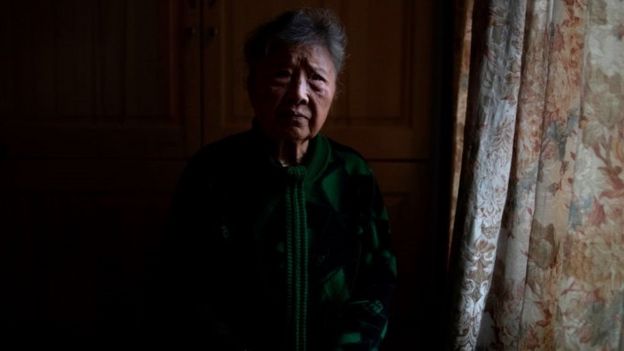
Image copyright GETTY IMAGESImage caption Huang’s mother, Pu Wenqing, had travelled to Beijing to plead her son’s case
YINCHUAN, July 27 (Xinhua) — Hu Chunhua, a member of the Political Bureau of the Communist Party of China Central Committee, has urged more efforts to address weak links in the country’s poverty alleviation campaign, including drinking water safety in the impoverished areas.
Hu, also chief of the State Council’s leading group of poverty alleviation and development, made the remarks during an inspection tour from Friday to Saturday in the city of Guyuan in northwest China’s Ningxia Hui Autonomous Region.
After visits to some impoverished villages, Hu said efforts should be made to ensure compulsory education, basic medical care, and housing for the rural poor, while drinking water safety should be guaranteed.
The country’s central authorities should speed up the implementation of poverty relief policies, while local governments should increase fund use efficiency, he said.
Chinese State Councilor and Foreign Minister Wang Yi (R) meets with Minister of Foreign Affairs and International Cooperation of the United Arab Emirates (UAE) Sheikh Abdullah bin Zayed Al Nahyan in Beijing, capital of China, July 21, 2019. (Xinhua/Yan Yan)
BEIJING, July 21 (Xinhua) — Chinese State Councilor and Foreign Minister Wang Yi met with Sheikh Abdullah Bin Zayed Al Nahyan, minister of Foreign Affairs and International Cooperation of the United Arab Emirates (UAE), here Sunday.
Hailing the UAE as China’s important and reliable partner in the Middle East, Wang said China stands ready to work with the UAE to implement the consensus reached by the two countries’ leaders, deepen their partnership under the Belt and Road Initiative, promote cooperation in various fields, enhance people-to-people exchanges, strengthen cooperation on anti-terrorism and law enforcement, and bring the China-UAE comprehensive strategic partnership to higher levels.
Sheikh Abdullah said the UAE is willing to strengthen cooperation with China in trade, investment, energy, culture, education and third-market cooperation, and to work for closer coordination within the United Nations and in regional affairs.
Sun Ling became a cyber star in China after she responded to an online question: how can you get an overseas education if you are dirt poor?
‘I just put my story out there to show there is a possibility in your life even if you have a low starting point,’ the 29-year-old says
Sun Ling works as a contract software engineer at Google in New York. Photo: Sun Ling
To get where she is today, Sun Ling has beaten very long odds.
Born in a rural hamlet in central China’s Hunan province, Sun shot to Chinese social media stardom for her rags-to-relative-comfort career trajectory. Her story begins in a household of such modest means that her mother had to sell blood to make ends meet and a primary school education interrupted by the need for her hands in the family’s fields.
She has no fancy college degree, having gone to work on the assembly line at a Shenzhen factory directly from high school.
Yet today, the 29-year-old works as a contract software engineer at Google in New York, coding on workdays and playing frisbee on weekends, with an annual salary of about US$120,000.
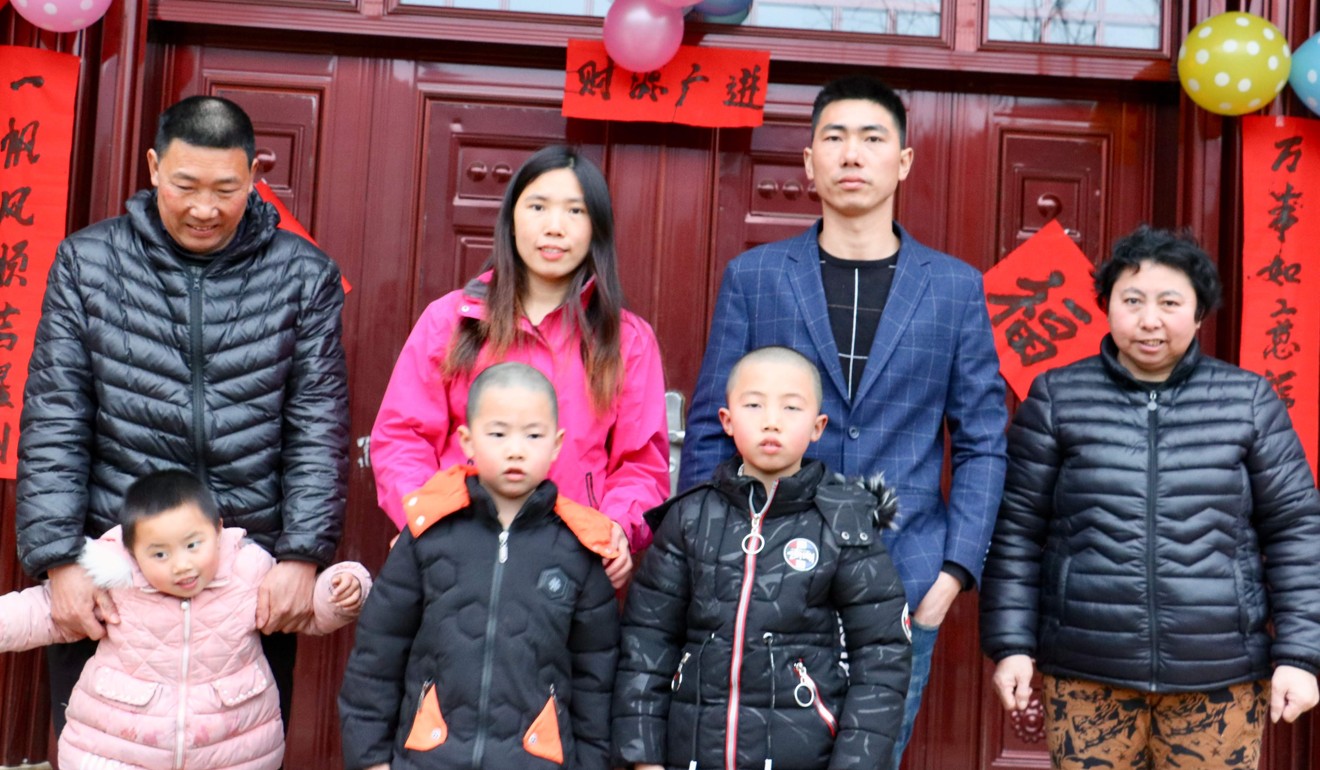
Sun Ling with her parents, brother, niece and nephews in China. Photo: Sun Ling
Sun’s journey from factory worker to high-paid software engineer has garnered Chinese social media headlines such as “the most inspiring story of all times”, and internet users have applauded her as a “positive energy girl”.
But others have not been as flattering, with some questioning the credibility of her story and saying what she has accomplished is almost too difficult to be true amid growing concern about the lack of opportunity and social mobility in China.
“I don’t consider myself a success and I have no intention to become a role model,” Sun told the South China Morning Post on Thursday. “I just put my story out there to show there is a possibility in your life even if you have a low starting point.”
A look inside Google’s new campus outside Silicon Valley
Her story became known in China after she posted an answer on Zhihu, the Chinese version of Quora, responding a question: how can you get an overseas education if you are dirt poor?
In the answer she posted earlier last month, Sun detailed her 10-year journey in making the seemingly impossible possible.
“It is not the orthodox way of studying overseas, just for your reference,” Sun wrote in the post, which has received nearly 35,000 likes on Zhihu. The answer was picked up by other social media; one of her most popular stories, which is circulating on WeChat, has been viewed more than 100,000 times.
Sun said her story was not a textbook “American dream” or “Chinese dream comes true” experience, but rather one driven by the simple motivation to forge a better life.
I just put my story out there to show there is a possibility in your life even if you have a low starting point Sun Ling
When Sun was born in 1990, her parents were farmers in a small village about a 2½-hour drive from Hunan province’s capital city, Changsha. Growing up in a place where a middle school education was considered good enough for a girl, Sun was forced to temporarily drop out of school when she was about 13 to ease the financial burden on her parents, who favoured her brother, the only son in the family.
“I begged and begged till my father allowed me to return to school,” she said. “But to be honest, my strong desire to stay at school at the moment was mainly because farming was too hard. The work got calluses on my hands.”
Sun in her home village in Hunan province in 2013. Photo: Sun Ling
Among her 11 village friends, she was the only one who completed high school. But the education she received at the rural school failed to get her into any college in China. So, like her peers in the village, she went to Shenzhen to become a factory worker.
But the routine of shifts spent examining the quality of batteries bored her. “I have no idea what kind of life I want to live, even today. But I am very certain about the life I don’t want to live,” Sun said.
She quit the factory job after eight months and enrolled in a computer training programme to learn what she regarded as the must-have skills to leave the blue-collar life behind.
That is the thing I like about America: they value what you are able to do more than where you come fromSun Ling
To have enough money to complete the training to become an entry-level software engineer, she worked three part-time jobs, including sending out fliers and waitressing at restaurants, and lived on three credit cards.
After more than a year of training and a debt of 10,000 yuan (US$1,450), in September 2011 she was hired as a software engineer by a Shenzhen company responsible for developing an online payroll system. With her own cubicle, a monthly salary of 4,000 yuan and weekends for herself, the job met all of Sun’s expectation as a “white-collar office lady”.
But the excitement of the new life didn’t last. She started to feel small in a big city where “everyone else is so excellent, with fancy degrees”.
To overcome her educational disadvantage, she signed up for an English training programme and a long-distance programme that allowed her to earn a degree from Shenzhen University. All of this took place while she maintained her software engineering job.
To practise her English, in 2014 she picked up ultimate frisbee, a game where in Shenzhen at the time, most of the players were expats. With a different circle of friends, most of whom had overseas experience, Sun started to dream of a life outside China’s borders.
Sun was born in a rural hamlet in central China’s Hunan province. Photo: Sun Ling
In early 2017, she discovered a master’s programme at Maharishi University of Management in Fairfield, Iowa, which features a controversial “consciousness-based education” system that includes the practice of meditation.
Sun applied and was accepted into the university’s computer science programme.
According to her, its design fit her well as it allowed students to have internships or jobs on a work-study visa after months of attending classes on campus. The rest of the programme could be completed remotely.
After nine months studying on campus and 60 job interviews, Sun received a job offer from EPAM Systems, a vendor for Google, late last year.
Google moving some hardware production out of China
Of her work as a contract software engineer at Google’s Manhattan headquarters, Sun said she was very “lucky” since many of her colleagues had a PhD or studied at top-tier American universities.
“But none of them treat me like I don’t deserve all of this,” she said. “That is the thing I like about America: they value what you are able to do more than where you come from.”
However, her story has not been without controversy in China’s cyber world.
Supporters have sent an increasing number of messages from various online channels, thanking her for an inspiring story and seeking her advice on life decisions. Sceptics claim she just got lucky, and some have accused her of being an advertising tool for Maharishi University of Management.
Chinese family paid US$1.2 million for Yale spot. Why weren’t they charged?
“At first, I got really angry,” Sun said. “I don’t think I deserve all the criticism for simply sharing my real life experience. But then I realised that not everyone has the same attitude in life.”
“I had no resources and I had very few options,” she said. “It is natural that people think it is difficult or even impossible to do. But for me it is actually not that difficult. Just keep learning and keep trying new things step by step, day by day.”
Her journey continues. Sun has been practising English and trying to fit better into her life in the US by doing short video interviews on the streets of New York streets. She has also taken courses about artificial intelligence online.
“My next goal is to become an in-house Google software engineer,” she said. “It won’t be easy. But your life begins at the end of your comfort zone.”
Some 150,000 residents of Baishizhou have to leave by the end of September to make way for malls, hotels and high-end residential projects
They worry about finding affordable housing in the city, and their children’s education
Urban villages like Baishizhou provide affordable housing, mostly for migrant workers. Photo: Phoebe Zhang
As their eviction deadline nears, all Chen Jian can think about is the wrecking ball – and where his family is going to go. He often dreams about the negotiations – with officials, real estate developers, landlords. On other nights, he cannot sleep at all.
“I’m mostly worried about my daughter – she starts secondary school in September,” said Chen, 41, who works as a quality supervisor for a foreign trading company.
His family of four lives in a cheap one-bedroom flat in Baishizhou, one of the last standing chengzhongcun, or “urban villages”, in the flourishing commercial zones of southern Chinese city Shenzhen.
The villages provide affordable housing – costing from a few hundred to a few thousand yuan per month – to a mostly migrant worker population that provides services and labour.
But Baishizhou, in the Nanshan district, will not be standing for much longer. Many tenants in the area have received eviction notices since June, telling them to move out before the end of September to make way for a real estate project led by Shenzhen-based developer LVGEM Group.
The developer bought the land and buildings from their landlords, and it plans to knock them down and replace them with malls, hotels, high-end residential projects and skyscrapers.
Some 150,000 people are affected, mostly migrant workers, and they will have to find new homes, change jobs or even move back home at short notice.
Chen Jian lives in a one-bedroom flat in Baishizhou with his wife, daughter and son. Photo: Phoebe Zhang
For Chen and more than 2,000 other families, their children’s education is the most urgent issue. He said they could move somewhere else nearby, but the rent would be more than four times higher. A cheaper area would mean a long walk to school for his daughter from the nearest subway station.
As the breadwinner, Chen’s monthly income of 12,000 yuan (US$1,750) has to cover the whole family. His wife takes care of their three-year-old son and their daughter, 12.
“If I were here by myself, I would just pack up my bags and go,” said Chen, who moved to Shenzhen from Henan province. “But I can’t – I have children, I would do anything for my children.”
Families who’ve lived in old Chinese town for generations being kicked out to make way for tourists
Urban villages are a phenomenon that grew from China’s rapid development. In the 1980s, soon after Shenzhen became the country’s first special economic zone, the local government expropriated mostly vacant land from villagers and allowed developers to build commercial properties there.
The locals invested the large sums of money they received into new living spaces in their villages, which they rented out to the migrant workers that flowed into the city amid a manufacturing boom.
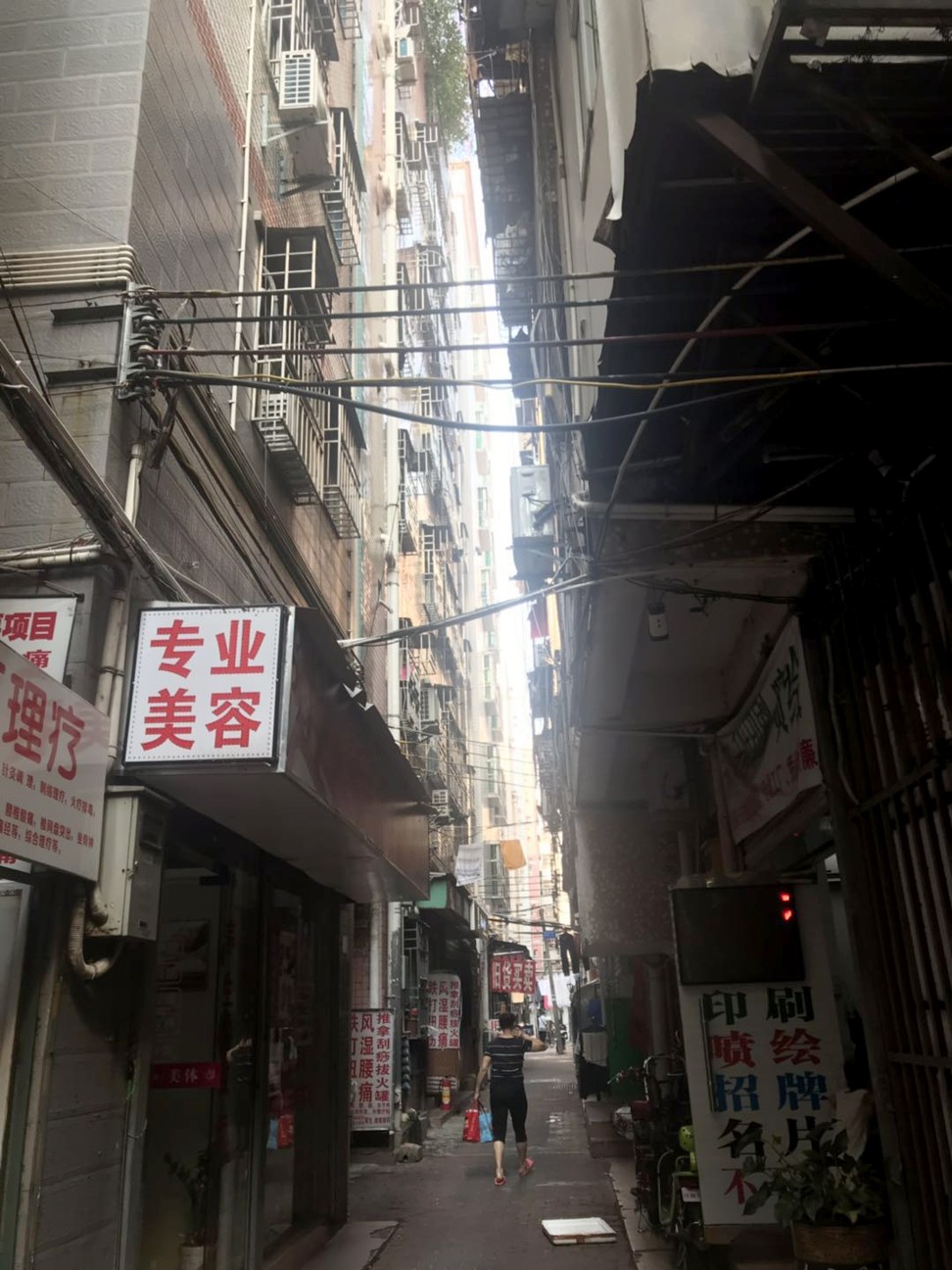
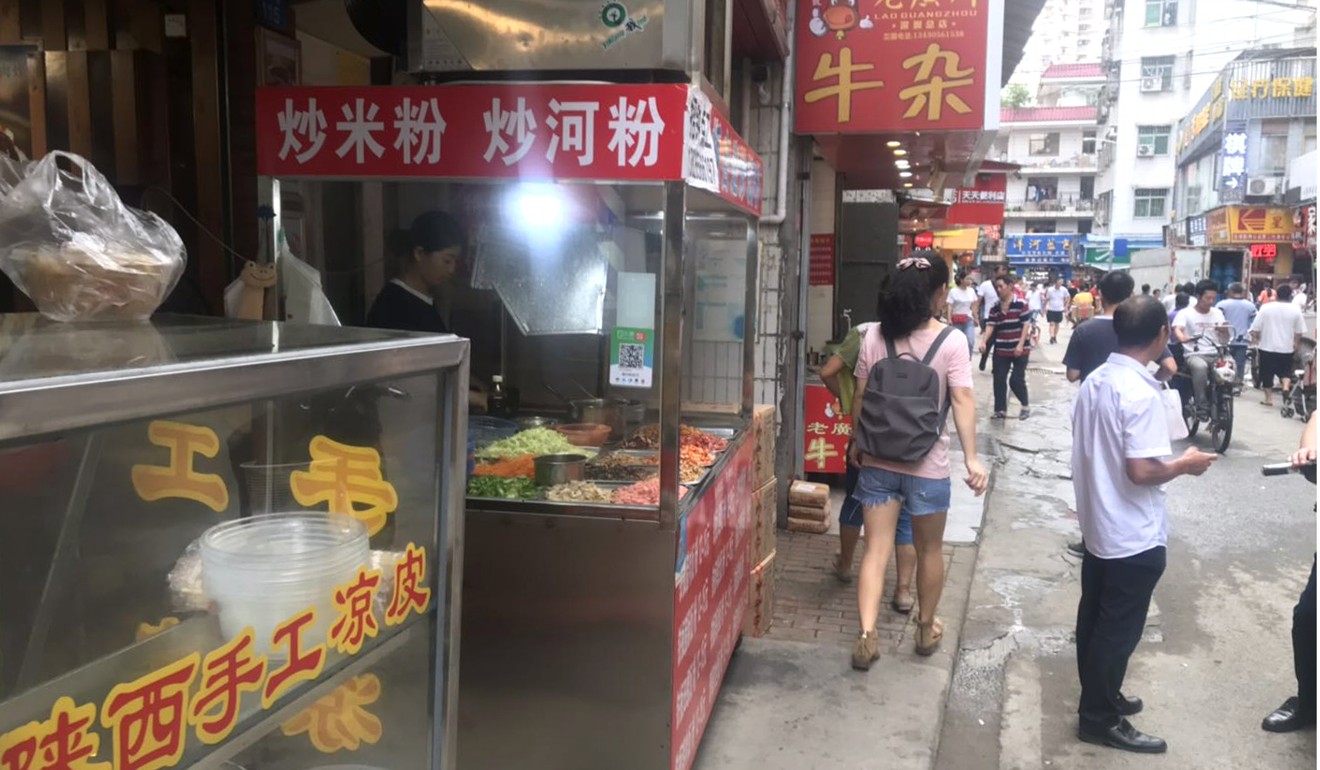
These chengzhongcun emerged as a tangle of damp alleyways, where electricity and telephone wires hang like spiderwebs. They bustle with fruit carts, soy milk shops, cobblers, karaoke parlours, short-stay love hotels and hair salons offering massage services. The “handshake buildings” where people live are packed together so tightly that residents could reach out of the window and shake their neighbour’s hand in the opposite flat.
“I call this ‘voluntary urbanisation’,” said Duan Peng, an architect based in the city. Since he moved to Shenzhen in 2001, Duan has spent many days and nights in Baishizhou. He said its development was in line with the government’s urban planning policy, since it allowed migrant workers to live in a relatively prosperous area in the city centre rather than on its periphery.
“Handshake buildings”, where residents can shake their neighbours’ hands through the windows, are a feature of China’s urban villages. Photo: Phoebe Zhang
Chen moved to Shenzhen with his wife in 2000, and both their children were born there. They moved to Baishizhou in 2008 after he was introduced to his landlord, who is from Chen’s hometown and rented him the flat for 650 yuan a month.
The rent has gone up by just 300 yuan in the 11 years they have lived there. They have watched as new developments sprang up around them – amusement parks, a golf course, malls and an area that is home to some of the country’s top tech companies including Huawei, Tencent and DJI.
How the eviction of Beijing’s migrant workers is tearing at the fabric of the city’s economy
But away from the shiny new developments, 150,000 migrant workers from all over the country are packed into 2,500 buildings in Baishizhou, where rents and services are affordable.
The urban village is full of people like Chen. Small business owner Wang Fang came to Shenzhen from northeast China in 2003 and has lived in Baishizhou ever since. Six months ago, she signed a three-year lease on a commercial space and opened a dumpling restaurant, but she is worried about the future.
“I can’t go back home, I already have a Shenzhen hukou,” she said, referring to the household registration document that gives access to public services. “I don’t have land there any more and can’t make a living there [as a farmer].”
She has not been told she has to leave the restaurant, but Wang and her two sons have until the end of September – when the building’s water and electricity will be cut off – to vacate their flat.
“It’s only a matter of time before the business is shut down as well,” she said.
Small shops and street vendors line Baishizhou’s bustling alleyways. Photo: Phoebe Zhang
According to an online poll of 1,031 Baishizhou residents this week, about half said they may have to find another job, and more than 600 were concerned about their children’s education. The survey, conducted by Shenzhen University urban planning professor Chen Zhu, also found that 70 per cent of those polled planned to find another flat in the city, while 28 per cent would leave.
Duan said the evictions and redevelopment would inevitably affect the surrounding areas, as well as the residents.
“The prices of services in the neighbourhood will increase, because many of the workers [now providing those services] will move far away, and rents will increase as well,” he said.
But for many such redevelopments, while the government, landlords and village officials might be consulted, the tenants are left out.
“Most of these residents, their voices and their interests aren’t on the negotiating table – their losses aren’t calculated in the real estate developer’s demolition costs,” Duan said.
A receptionist at LVGEM said he was not aware of any complaints about the redevelopment, while emails to the company went unanswered.
Meanwhile the developer’s partner, Baishizhou Corporation, told Southern Metropolis Daily it would provide legal services, rentals support and school buses for tenants who will be displaced.
But it is not enough for migrant workers like Chen. Like many of those facing eviction, he fears he will have to pay more rent, and there may not be a school bus service in his area.
He mentions a slogan plastered on walls in the city, “Once you come, you’re a Shenzhener” – part of a government campaign to lure talent and investors.
Chen said he worried that Shenzhen wanted only hi-tech workers and luxury residential compounds in the city, leaving little room for low-income workers.
“Despite what the slogan says, you ask yourself, are you really a Shenzhener?” he said.
Settlements along the route linking Europe and Asia thrived by providing accommodation and services for countless traders
Formally established during the Han dynasty, it was a 19th-century German geographer who coined the term Silk Road
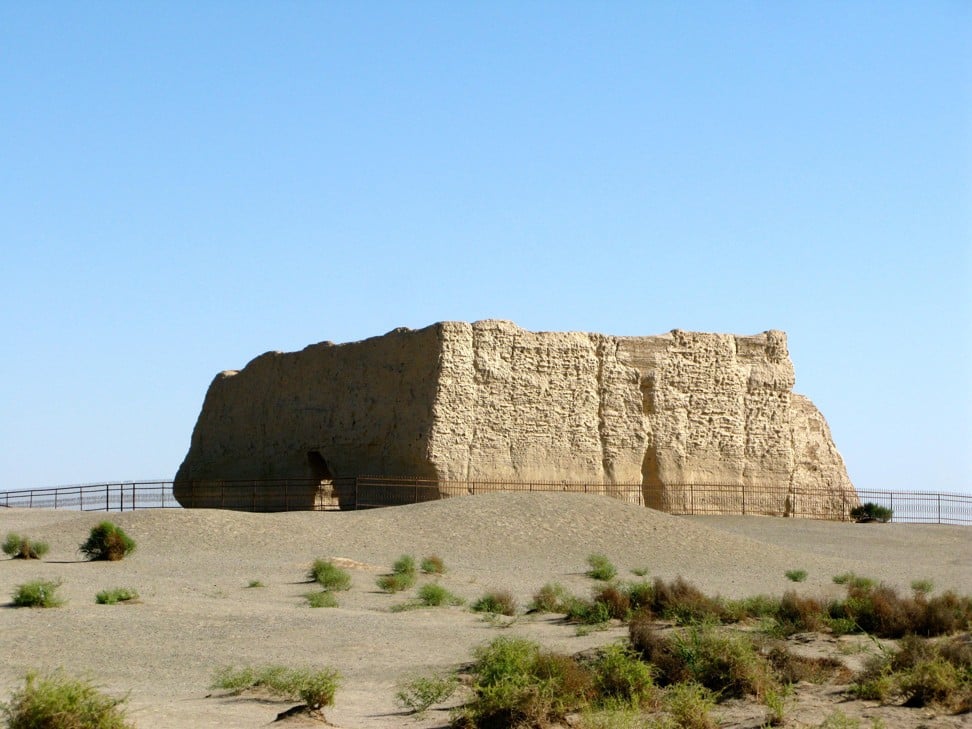
The ruins of a fortified gatehouse and customs post at Yunmenguan Pass, in China’s Gansu province. Photo: Alamy
We have a German geographer, cartographer and explorer to thank for the name of the world’s most famous network of transcontinental trade routes.
Formally established during the Han dynasty, in the first and second centuries BC, it wasn’t until 1877 that Ferdinand von Richthofen coined the term Silk Road (historians increasingly favour the collective term Silk Routes).
The movement of merchandise between China and Europe had been taking place long before the Han arrived on the scene but it was they who employed troops to keep the roads safe from marauding nomads.
Commerce flourished and goods as varied as carpets and camels, glassware and gold, spices and slaves were traded; as were horses, weapons and armour.
Merchants also moved medicines but they were no match for the bubonic plague, which worked its way west along the Silk Road before devastating huge swathes of 14th century Europe.
What follows are some of the countless kingdoms, territories, (modern-day) nations and cities that grew rich on the proceeds of trade, taxes and tolls.
China
A watchtower made of rammed earth at Dunhuang, a desert outpost at the crossroads of two major Silk Road routes in China’s northwestern Gansu province. Photo: Alamy
Marco Polo worked in the Mongol capital, Khanbaliq (today’s Beijing), and was struck by the level of mercantile activity.
The Venetian gap-year pioneer wrote, “Every day more than a thousand carts loaded with silk enter the city, for a great deal of cloth of gold and silk is woven here.”
Light, easy to transport items such as paper and tea provided Silk Road traders with rich pickings, but it was China’s monopoly on the luxurious shimmering fabric that guaranteed huge profits.
So much so that sneaking silk worms out of the empire was punishable by death.
The desert outpost of Dunhuang found itself at the crossroads of two major Silk Road trade arteries, one leading west through the Pamir Mountains to Central Asia and another south to India.
Built into the Great Wall at nearby Yunmenguan are the ruins of a fortified gatehouse and customs post, which controlled the movement of Silk Road caravans.
Also near Dunhuang, the Mogao Caves contain one of the richest collections of Buddhist art treasures anywhere in the world, a legacy of the route to and from the subcontinent.
Afghanistan
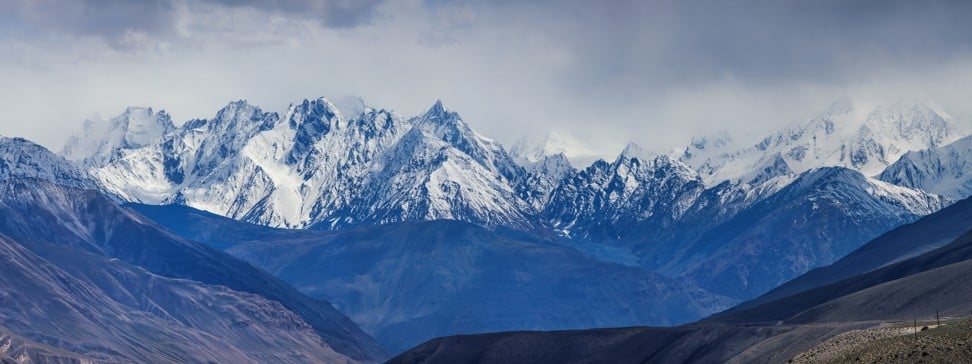
Afghanistan’s mountainous terrain was an inescapable part of the Silk Road, until maritime technologies would become the area’s undoing. Photo: Shutterstock
For merchants and middlemen hauling goods through Central Asia, there was no way of bypassing the mountainous lands we know today as Afghanistan.
Evidence of trade can be traced back to long before the Silk Road – locally mined lapis lazuli stones somehow found their way to ancient Egypt, and into Tutankhamun’s funeral mask, created in 1323BC.
Jagged peaks, rough roads in Tajikistan, roof of the world
Besides mercantile exchange, the caravan routes were responsible for the sharing of ideas and Afghanistan was a major beneficiary. Art, philosophy, language, science, food, architecture and technology were all exchanged, along with commercial goods.
In fact, maritime technology would eventually be the area’s undoing. By the 15th century, it had become cheaper and more convenient to transport cargo by sea – a far from ideal development for a landlocked region.
Iran
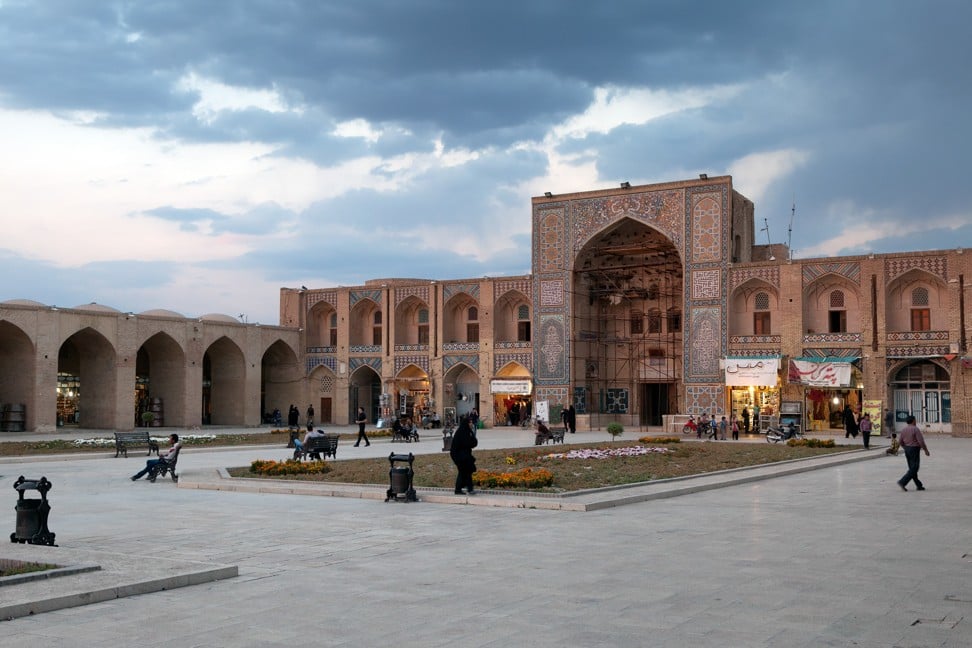
The Ganjali Khan Complex, in Iran. Photo: Shutterstock
Thanks to the Silk Road and the routes that preceded it, the northern Mesopotamian region (present-day Iran) became China’s closest trading partner. Traders rarely journeyed the entire length of the trail, however.
Merchandise was passed along by middlemen who each travelled part of the way and overnighted in caravanserai, fortified inns that provided accommodation, storerooms for goods and space for pack animals.
The good, bad and ugly sides to visiting Chernobyl and Kiev
With so many wheeler-dealers gathering in one place, the hostelries developed into ad hoc marketplaces.
Marco Polo writes of the Persian kingdom of Kerman, where craftsmen made saddles, bridles, spurs and “arms of every kind”.
Today, in the centre of Kerman, the former caravanserai building forms part of the Ganjali Khan Complex, which incorporates a bazaar, bathhouse and mosque.
Uzbekistan
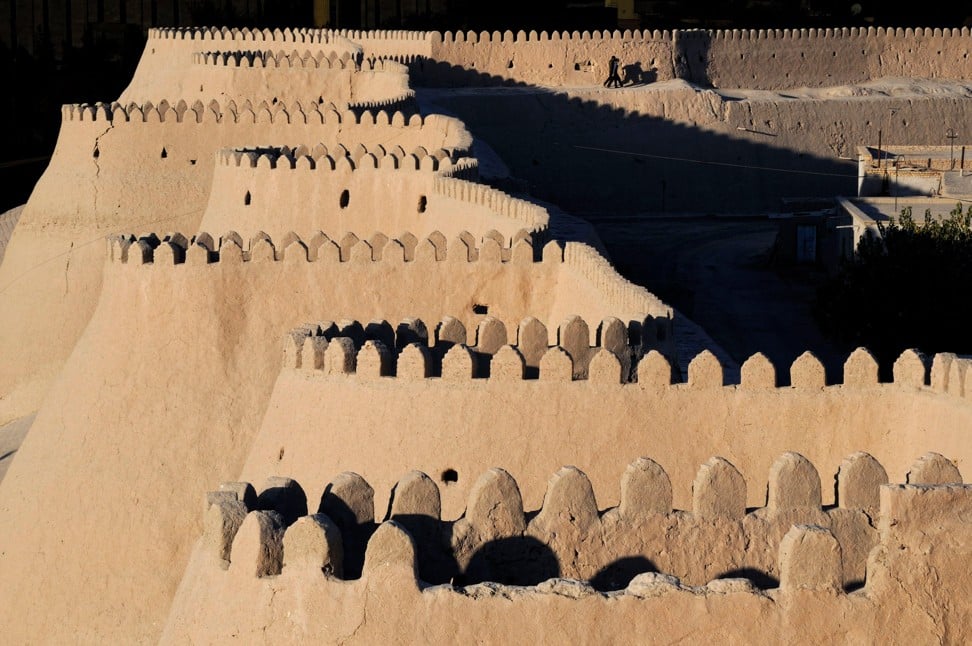
A fort in Khiva, Uzbekistan. Photo: Alamy
The double-landlocked country boasts some of the Silk Road’s most fabled destinations. Forts, such as the one still standing at Khiva, were built to protect traders from bandits; in fact, the city is so well-preserved, it is known as the Museum under the Sky.
The name Samarkand is also deeply entangled with the history of the Silk Road.
The earliest evidence of silk being used outside China can be traced to Bactria, now part of modern Uzbekistan, where four graves from around 1500BC-1200BC contained skeletons wrapped in garments made from the fabric.
Three thousand years later, silk weaving and the production and trade of textiles remain one of Samarkand’s major industries.
Georgia
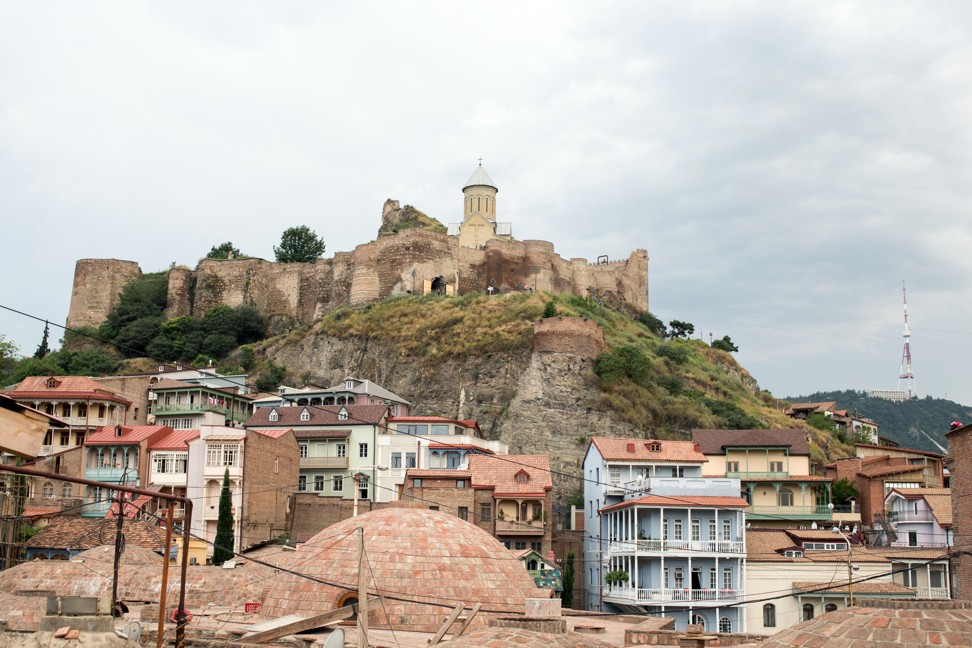
A street in old town of Tbilisi, Georgia. Photo: Alamy
Security issues in Persia led to the opening up of another branch of the legendary trade route and the first caravan loaded with silk made its way across Georgia in AD568.
Marco Polo referred to the weaving of raw silk in “a very large and fine city called Tbilisi”.
Today, the capital has shaken off the Soviet shackles and is on the cusp of going viral.
Travellers lap up the city’s monasteries, walled fortresses and 1,000-year-old churches before heading up the Georgian Military Highway to stay in villages nestling in the soaring Caucasus Mountains.
Public minibuses known as marshrutka labour into the foothills and although the vehicles can get cramped and uncomfortable, they beat travelling by camel.
Jordan
Petra, in Jordan. Photo: Alamy
The location of the Nabataean capital, Petra, wasn’t chosen by chance.
Savvy nomadic herders realised the site would make the perfect pit-stop at the confluence of several caravan trails, including a route to the north through Palmyra (in modern-day Syria), the Arabian peninsula to the south and Mediterranean ports to the west.
Huge payments in the form of taxes and protection money were collected – no wonder the most magnificent of the sandstone city’s hand-carved buildings is called the Treasury.
The Red Rose City is still a gold mine – today’s tourists pay a hefty
Trade enriched Venice beyond measure, helping shape the Adriatic entrepot into the floating marvel we see today.
Besides the well-documented flow of goods heading west, consignments of cotton, ivory, animal furs, grapevines and other goods passed through the strategically sited port on their way east.
Ironically, for a city built on trade and taxes, the biggest problem Venice faces today is visitors who don’t contribute enough to the local economy.
A lack of spending by millions of day-tripping tourists and cruise passengers who aren’t liable for nightly hotel taxes has prompted authorities to introduce a citywide access fee from January 2020.
Two thousand years ago, tariffs and tolls helped Venice develop and prosper. Now they’re needed to prevent its demise.
More than one billion views of Mulan discussion in China hours after trailer screens during Women’s World Cup final
While some quibble over technical details, the vast majority are eagerly awaiting Disney’s first Chinese princess
Crystal Liu Yifei as Mulan in Disney’s live-action film which is eagerly anticipated in China.
Anticipation over Disney’s live-action movie Mulan is running high in China, with more than one billion views of the subject on Chinese social media in the hours after a teaser trailer was unveiled during Sunday’s final game of the Women’s World Cup.
While some online commenters had their doubts over technical details, most internet users appeared exhilarated at the prospect of Disney’s first Chinese princess, played by Chinese-American actress Crystal Liu Yifei.
The big reveals in Disney’s Mulan trailer, and fan reaction
By Monday afternoon, the hashtag Hua Mulan had been viewed more than one billion times on the Twitter-like Weibo service and nearly 770,000 comments had been made on the topic. Some 450 million views had been recorded for the topics “Mushu no longer in the movie Mulan” – a reference to the heroine’s fast-talking dragon companion in the 1998 animation – and “the look of Liu Yifei”.
“I got carried away by the fighting scenes. Mulan is courageous and strong. I look forward to seeing the eastern heroine Hua Mulan going global,” said one Weibo user.
“This is the first Chinese Disney princess. It’s so great and we feel so proud,” said another.
The movie, scheduled for release on March 27 next year, casts renowned action star Jet Li as the emperor who ordered the military draft to fight a northern invasion, and internationally-acclaimed actress Gong Li as a powerful witch. Donnie Yen Ji-dan, star of Rogue One: A Star Wars Story and the Ip Man movies, plays Mulan’s martial arts mentor Commander Tung.
Donnie Yen nails ‘Bottle Cap Challenge’ blindfolded
Mulan tells the story of a fabled Chinese heroine who posed as a man and became one of the greatest warriors of her time, arguably in the Northern Wei period, or about AD400 to 600. She is one China’s best known fictional characters, with numerous theatrical references and poems which many Chinese know by heart.
The familiarity of the tale has presented a challenge for the production, with many Chinese online commenters questioning the historical details which can be discerned from the sketchy details provided by the trailer.
Many took exception to the opening scene of Mulan riding a horse to her home, built in the architectural style of tulou, common in the southern province of Fujian, when the legend places the heroine in the north.
“The poem said Mulan bade farewell to her parents in the morning and slept near the Yellow River at night. How can she live in a tulou in Fujian? Did she take a fast-rail train?” one internet user teased.
Another used the example to call for Disney to pay more attention to technical details when telling Chinese stories. “Please don’t be arrogant about Chinese stories.”
Also questioned in China was the message from the trailer that Mulan had become a warrior to escape a forced marriage, rather than the well known detail that she was saving her father from being drafted into the military in an act of filial piety.
But the overwhelming response was that fans should put aside their own perceptions of Mulan and celebrate the new edition as one of the few fully-Asian cast international movies, as well as its depiction of a powerful woman and Chinese values as “the only Disney princess who was not saved by a prince but instead became a fighting warrior”.
“Can our domestically produced period dramas meet the standard if we are here to be picky about looks and architecture? Even domestic directors can’t be perfect in restoring ancient costumes, make-up or architecture. Why should we ask so much from a foreign one? We should celebrate the cultural exchange rather than splitting hairs to find faults,” said one Weibo user.
“Mulan in the battlefield has outperformed men and showcased the traditional values of courage and protecting the country when needed. Chinese values, presented to the world by Chinese actors, is worth looking forward to. Please throw away the technical faults such as architecture,” said another.
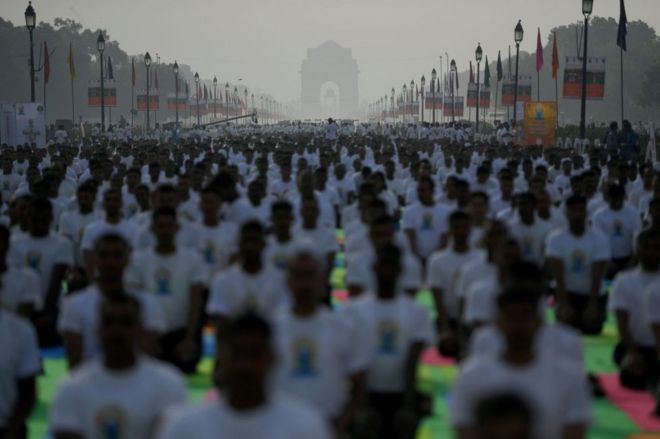
Indians across the country celebrated the fifth international yoga day on Friday.
Temperatures are soaring in many cities, including the capital Delhi, but that didn’t stop people from gathering outdoors and stretching and bending their way through at least an hour of yoga.
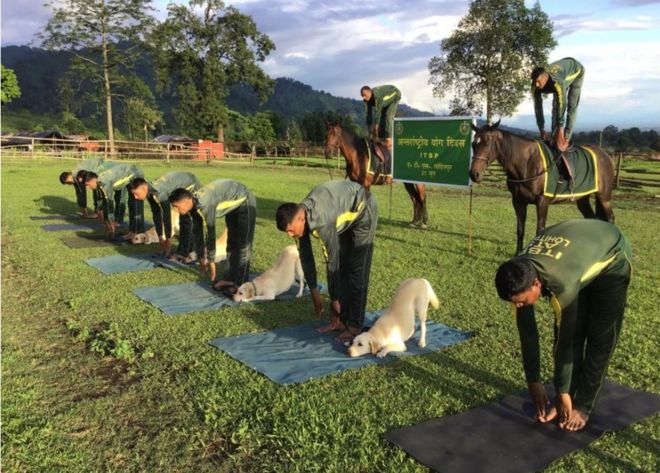
And everyone joined in – even the dog unit of the Indian army!
Image copyright @SPOKESPERSONMOD/TWITTER
The Indo-Tibetan border police – and their dogs and horses – were not about to be outdone. They practised what they called yoga, doga and hoga.
And they were luckier than many of their counterparts – they got to practise their yoga in cooler climes, along India’s scenic Himalayan border.
Image copyrightI TBPOFFICIAL
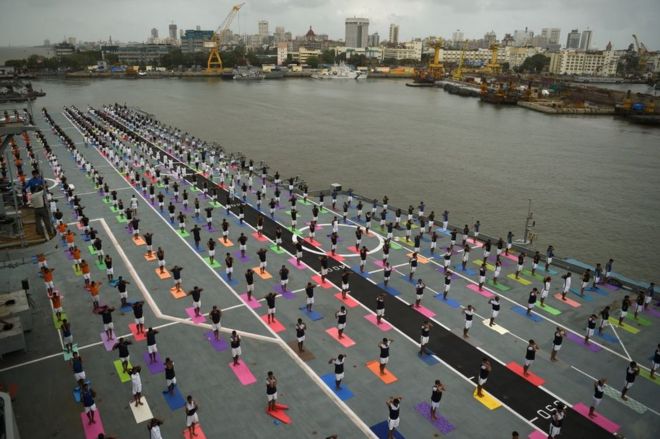
Among those who did yoga in more hostile climates were the armed forces on board the naval aircraft carrier INS Viraat which is docked off the coastline of sweltering Mumbai city.
Image copyright GETTY IMAGES
In Gujarat, the soldiers got a little more creative with their yoga.
A Google search for basic information on India’s caste system lists many sites that, with varying degrees of emphasis, outline three popular tropes on the phenomenon.
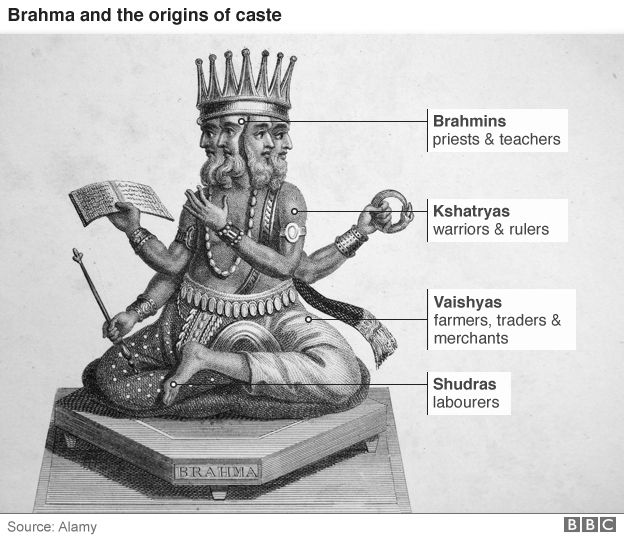
First, the caste system is a four-fold categorical hierarchy of the Hindu religion – with Brahmins (priests/teachers) on top, followed, in order, by Kshatriyas (rulers/warriors), Vaishyas (farmers/traders/merchants), and Shudras (labourers). In addition, there is a fifth group of “Outcastes” (people who do unclean work and are outside the four-fold system).
Second, this system is ordained by Hinduism’s sacred texts (notably the supposed source of Hindu law, the Manusmriti), it is thousands of years old, and it governed all key aspects of life, including marriage, occupation and location.
Third, caste-based discrimination is illegal now and there are policies instead for caste-based affirmative action (or positive discrimination).
These ideas, even seen in a BBC explainer, represent the conventional wisdom. The problem is that the conventional wisdom has not been updated with critical scholarly findings.
The first two statements may as well have been written 200 years ago, at the beginning of the 19th Century, which is when these “facts” about Indian society were being made up by the British colonial authorities.
In a new book, The Truth About Us: The Politics of Information from Manu to Modi, I show how the social categories of religion and caste as they are perceived in modern-day India were developed during the British colonial rule, at a time when information was scarce and the coloniser’s power over information was absolute.
Image caption Conventional wisdom says the caste system is a four-fold categorical hierarchy of the Hindu religion
This was done initially in the early 19th Century by elevating selected and convenient Brahman-Sanskrit texts like the Manusmriti to canonical status; the supposed origin of caste in the Rig Veda (most ancient religious text) was most likely added retroactively, after it was translated to English decades later.
These categories were institutionalised in the mid to late 19th Century through the census. These were acts of convenience and simplification.
The colonisers established the acceptable list of indigenous religions in India – Hinduism, Sikhism, Jainism – and their boundaries and laws through “reading” what they claimed were India’s definitive texts.
What is now widely accepted as Hinduism was, in fact, an ideology (or, more accurately, a theory or fantasy) that is better called “Brahmanism”, that existed largely in textual (but not real) form and enunciated the interests of a small, Sanskrit-educated social group.
There is little doubt that the religion categories in India could have been defined very differently by reinterpreting those same or other texts.
The so-called four-fold hierarchy was also derived from the same Brahman texts. This system of categorisation was also textual or theoretical; it existed only in scrolls and had no relationship with the reality on the ground.
This became embarrassingly obvious from the first censuses in the late 1860s. The plan then was to fit all of the “Hindu” population into these four categories. But the bewildering variety of responses on caste identity from the population became impossible to fit neatly into colonial or Brahman theory.
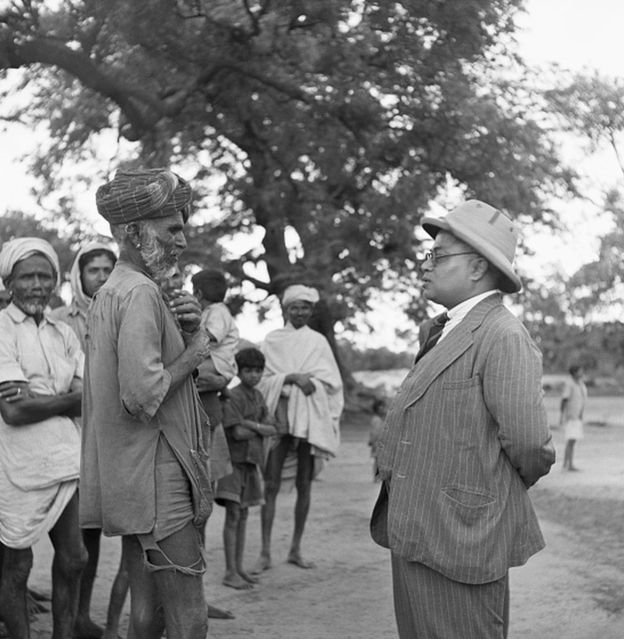
Image copyright GETTY IMAGESImage caption A leader of those formerly considered untouchable with a government official in British India
WR Cornish, who supervised census operations in the Madras Presidency in 1871, wrote that “… regarding the origin of caste we can place no reliance upon the statements made in the Hindu sacred writings. Whether there was ever a period in which the Hindus were composed of four classes is exceedingly doubtful”.
Similarly, CF Magrath, leader and author of a monograph on the 1871 Bihar census, wrote, “that the now meaningless division into the four castes alleged to have been made by Manu should be put aside”.
Anthropologist Susan Bayly writes that “until well into the colonial period, much of the subcontinent was still populated by people for whom the formal distinctions of caste were of only limited importance, even in parts of the so-called Hindu heartland… The institutions and beliefs which are now often described as the elements of traditional caste were only just taking shape as recently as the early 18th Century”.
In fact, it is doubtful that caste had much significance or virulence in society before the British made it India’s defining social feature.
Astonishing diversity
The pre-colonial written record in royal court documents and traveller accounts studied by professional historians and philologists like Nicholas Dirks, GS Ghurye, Richard Eaton, David Shulman and Cynthia Talbot show little or no mention of caste.
Social identities were constantly malleable. “Slaves” and “menials” and “merchants” became kings; farmers became soldiers, and soldiers became farmers; one’s social identity could be changed as easily as moving from one village to another; there is little evidence of systematic and widespread caste oppression or mass conversion to Islam as a result of it.
All the available evidence calls for a fundamental re-imagination of social identity in pre-colonial India.
The picture that one should see is of astonishing diversity. What the colonisers did through their reading of the “sacred” texts and the institution of the census was to try to frame all of that diversity through alien categorical systems of religion, race, caste and tribe. The census was used to simplify – categorise and define – what was barely understood by the colonisers using a convenient ideology and absurd (and shifting) methodology.
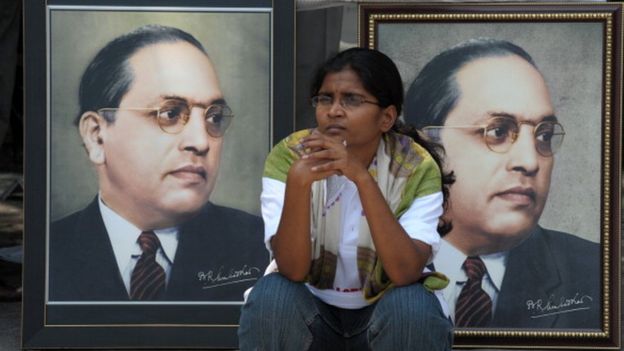
Image copyright AFPImage caption India’s constitution was written by BR Ambedkar, a member of the Dalit community which is at the bottom of the caste system
The colonisers invented or constructed Indian social identities using categories of convenience during a period that covered roughly the 19th Century.
This was done to serve the British Indian government’s own interests – primarily to create a single society with a common law that could be easily governed.
A very large, complex and regionally diverse system of faiths and social identities was simplified to a degree that probably has no parallel in world history, entirely new categories and hierarchies were created, incompatible or mismatched parts were stuffed together, new boundaries were created, and flexible boundaries hardened.
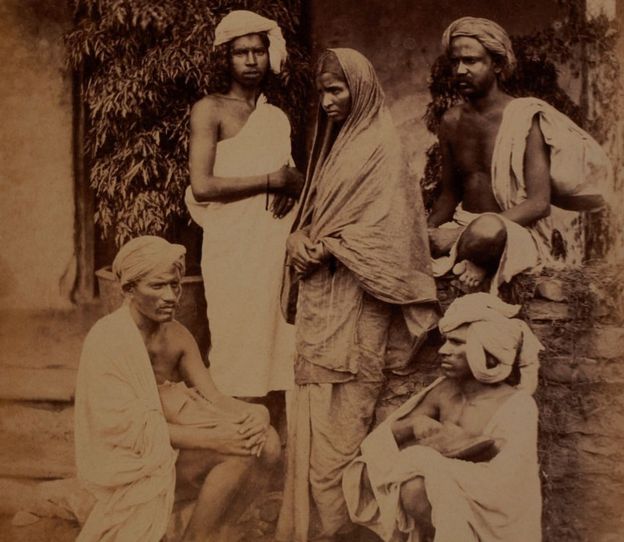
Image copyright GETTY IMAGESImage caption Dalits, or untouchables, were at the bottom of the caste system
The resulting categorical system became rigid during the next century and quarter, as the made-up categories came to be associated with real rights. Religion-based electorates in British India and caste-based reservations in independent India made amorphous categories concrete. There came to be real and material consequences of belonging to one category (like Jain or Scheduled Caste) instead of another. Categorisation, as it turned out in India, was destiny.
The vast scholarship of the last few decades allows us to make a strong case that the British colonisers wrote the first and defining draft of Indian history.
So deeply inscribed is this draft in the public imagination that it is now accepted as the truth. It is imperative that we begin to question these imagined truths.











 CHINDIA ALERT: You'll be living in their world, very soon