

- After a six-month closure, Boracay reopened in October with new rules that prohibit smoking, drinking, dining and littering on the beachfront. But the dos and don’ts seem to have escaped notice, especially among tourists from China and South Korea
-
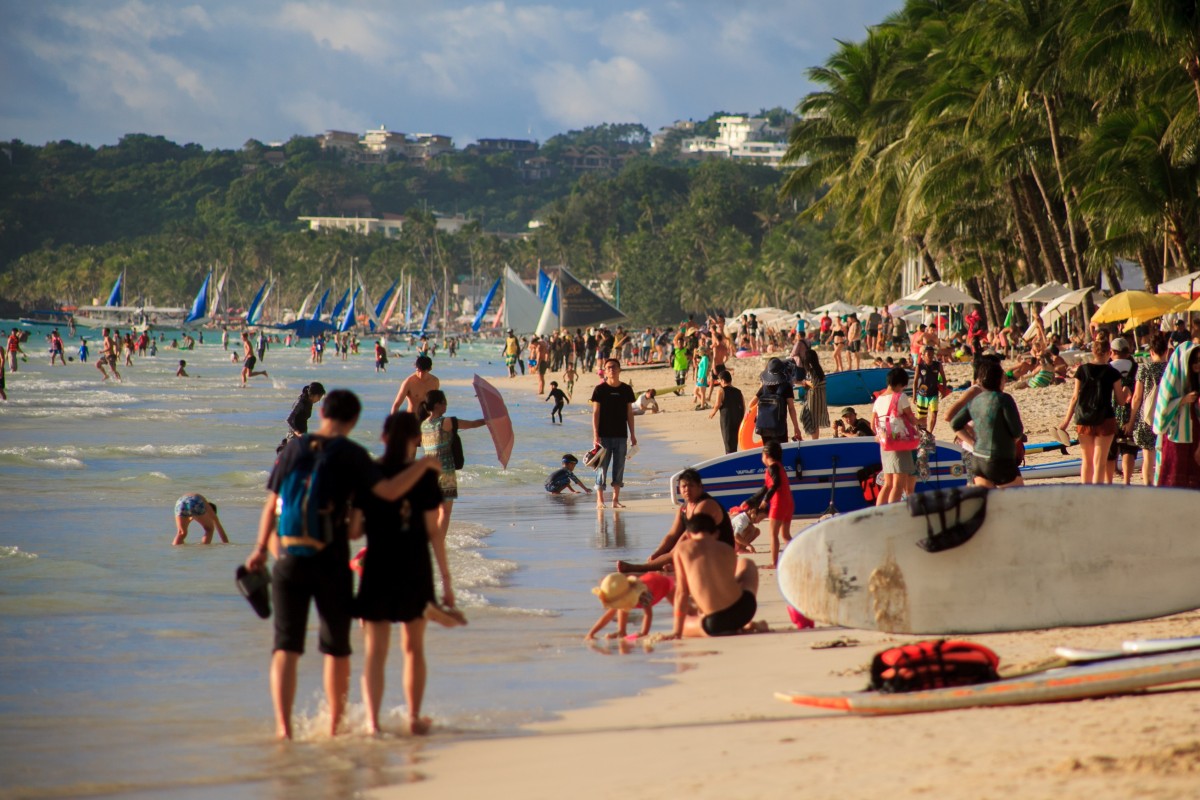 Tourists enjoy Boracay’s famous White Beach in January. Photo: ShutterstockTravel has changed a lot since the 19th century. Obviously. But attitudes towards travellers have not, if the diaries of Francis Kilvert are anything to go by.“Of all noxious animals, the most noxious is a tourist,” the English clergyman wrote in the 1870s, and while Kilvert asserted that it was the British who were “the most vulgar, ill-bred, offensive and loathsome” of them all – a contention that might be challenged today – an increasing number of places across the globe have had their fill of imprudent outsiders, regardless of where they are from.The island of
, in the Philippines, the original face of overtourism in the region, is one of them. In February last year, Philippine President Rodrigo Duterte vowed to
the popular tourist hotspot, saying, “Boracay is a cesspool. It is destroying the environment of the Republic of the Philippines and creating a disaster.” The septic metaphor was no melodrama – a number of hotels, restaurants and other tourism-related businesses were dumping untreated sewage directly into the ocean, contaminating White Beach’s crystalline waters and tarnishing Boracay’s reputation. As Duterte decreed, the island shuttered for six months from April, during which time infrastructure was to be installed and new environmental requirements implemented.
When Boracay, in October, it was heralded as a rare success in the ongoing fight against the tourist menace, despite the fact that thousands of
, the nation’s economic growth had suffered and, heaven forfend, holidaymakers had been forced to cancel hard-earned vacations. And the rehabilitation is far from complete. In January, the Boracay Inter-Agency Task Force, the organisation overseeing the ecological overhaul, announced a 25.3 billion peso (US$485 million) action plan, which, if approved, will fund 233 projects related to the enforcement of laws and regulations, pollution control and prevention, rehabilitation and recovery of the ecosystem, and the sustainability of land activities, according to a report on Philippine news site Rappler.
But still the tourists come, albeit in smaller numbers than before, and just as in pre-closure times, not all of them are welcome; in particular those who pay little attention to the new rules, which prohibit smoking, drinking, dining, littering, partying and fire dancing on the beachfront.A complaint about Chinese tourists, posted to Facebook in April. Photo: Facebook / @philippinesdefenseOn April 29, Wilson Enriquez, the Boracay Tourism Regulatory Enforcement Unit chief, revealed that tourists from China were the worst violators of these regulations, as stated in an article on the Philippines Lifestyle News website. Since the beginning of the year, 739 Chinese had been apprehended.
“Tour guides have informed them about the ordinances but [Chinese tourists] are really stubborn,” Enriquez told the news site. Korean tourists took a distant second, with 277 apprehensions, with most infractions recorded for smoking, eating and drinking on the beach, or littering.
Eighty per cent of the visitors Boracay received in the first quarter of this year hailed from China and South Korea, according to the local tourism office – the former accounting for almost half of all arrivals, 149,019 of 309,591 – so perhaps it is unsurprising that the Chinese break the most rules.
One disgruntled Filipino took to social media (where else) to air their grievance, writing that Boracay had been “teeming with loud, garbage-throwing, spitting everywhere Chinese tourists” during their Holy Week visit, while another told Philippines Lifestyle News, “I saw [Chinese tourists] with my own eyes, breaking ordinances all over the place.”
That there has been a recent rise in anti-China sentiment in the Philippines, a reaction to Duterte’s “love affair” with the Middle Kingdom, according to an article on SupChina’s website, should be noted. But really, if we want to be able to enjoy Boracay, or anywhere for that matter, for years to come, we should all stick to the rules and exercise respect for the community and environment hosting us.
Airbnb bounces back in Japan
 A sign on the door to a block of flats in Tokyo communicating a ban on using units in the property for Airbnb, in March 2018. Photo: ReutersIt has been a year since Japan implemented its minpaku law, aimed at regulating short-term lets, such as those advertised on home-sharing site
. It effectively rendered hosts whose homes were not licensed illegal, and all those without the required permit were forced to delist their properties and cancel bookings. Almost 80 per cent of listings disappeared.
However, Airbnb is back in business. In a statement published on June 6, the company said that 50,000 listings were now available in the country, as well as 23,000 rooms in hotels and ryokan. Just before the rules came into force last June, Airbnb had a total of 60,000 listings.Presumably the company’s efforts to appease local regulations will pay off next year, when Japan hopes to receive 40 million visitors as host of the 2020 Summer Olympics. Whether those 40 million will be welcomed by residents remains to be seen.
Monkey troubles – wild macaque gets cheeky in Bali
If you need any reminder that the macaques that roam Ubud’s Sacred Monkey Forest, in the uplands of the Indonesian, are wild animals, then this tourist’s experience should jog your memory. While posing for a picture, a monkey climbed onto the lap of Sarah Wijohn, a visitor from New Zealand, had a good old scratch and then yanked down her top, almost exposing her to the world.
Fortunately, neither Wijohn nor the primate seemed too scarred by the incident, unlike those who have written blog posts about being attacked by the animals and made videos advising how not to catch rabies from the “crazy monkey forest”.Here’s an idea: don’t go.Source: SCMP
China runs Confucian culture courses for religious leaders in bid to boost control
- Communist Party says those taking part pledged to ‘cultivate the Chinese cultural character of our nation’s religions’
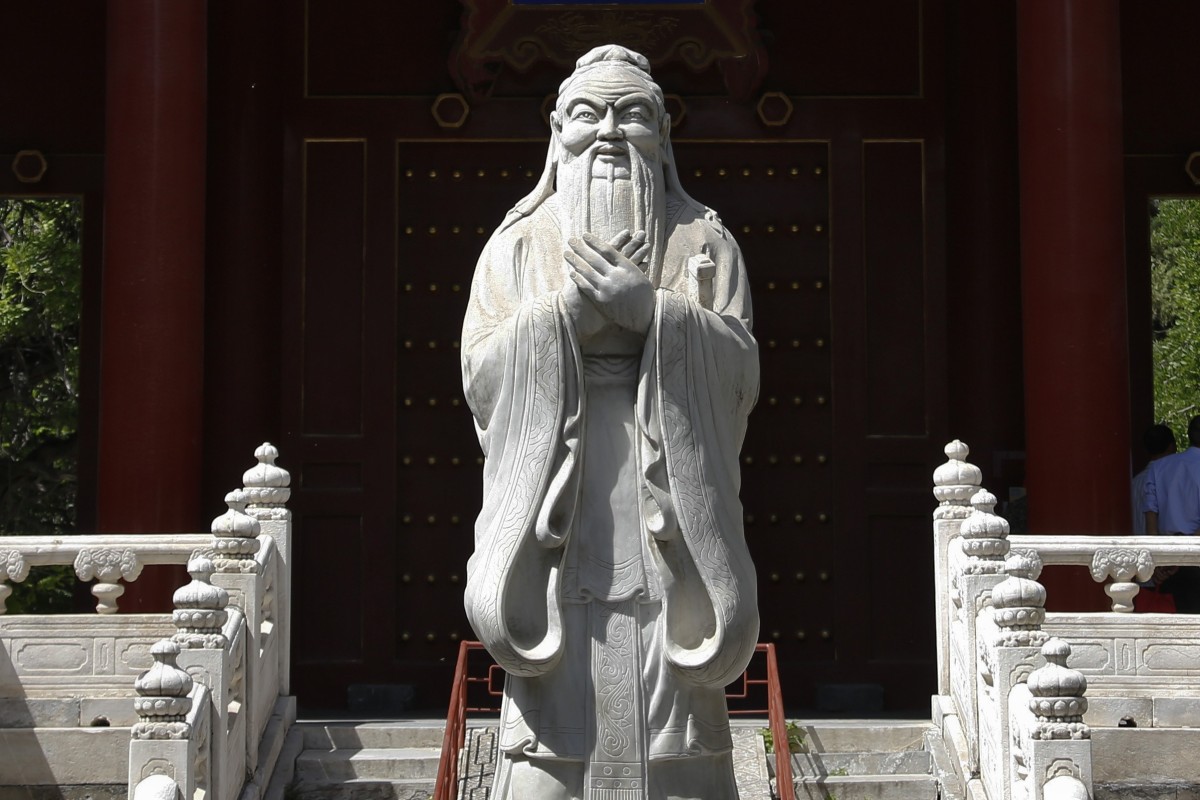
- Confucius has been rehabilitated by party in recent years as a means of rallying patriotism and countering foreign influences
.
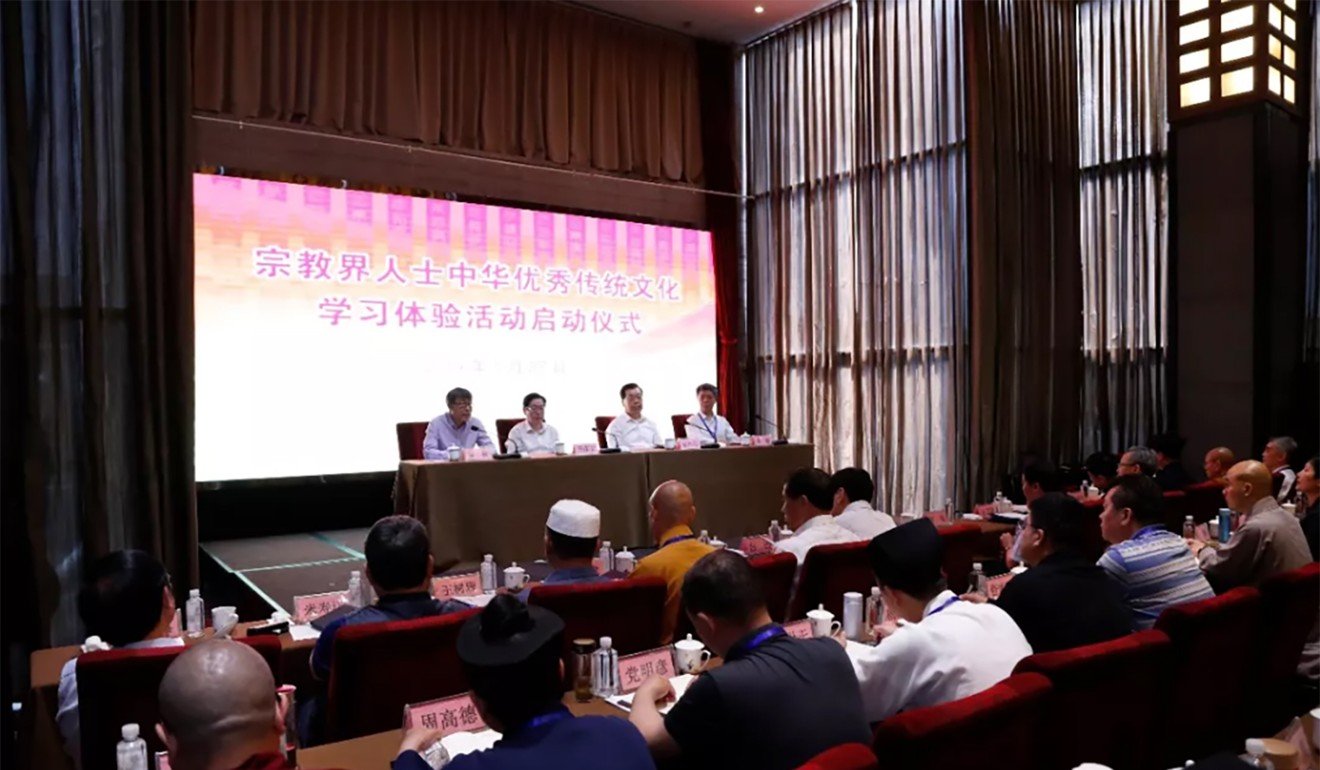
The ruling Communist Party’s United Work Front Department said in a news release on Monday that the activity was designed to ensure the primacy of traditional Chinese values above all.
“To hold activities here … is a collective tribute to excellent traditional Chinese culture and a conscious identification and integration with Chinese culture,” said the release, posted on the department’s website.
Participants pledged to “cultivate the Chinese cultural character of our nation’s religions so that our nation’s religions are rooted in the fertile soil of excellent traditional Chinese culture, and to ceaselessly and deeply advance the Sinicisation of our nation’s religions”, it said.
President Xi Jinping has launched the harshest crackdown in decades on religious practices, especially those viewed as foreign such as Christianity and Islam, while at the same time elevating home-grown Confucianism.
While for decades the officially atheistic Communist Party attacked Confucius as a symbol of feudalism, he has been thoroughly rehabilitated in recent years as a means of rallying patriotism and countering foreign influences.
Confucianism’s emphasis on strict social organisation, advancement through study and exam taking, adherence to hierarchy and maintenance of social harmony appeals especially to the heavily bureaucratic party, which brooks no challenge to its authority.
Xi has repeatedly called for religious leaders and believers to be guided by “socialist core values”. Party bureaucrats overseeing religion have demanded that key religious tenets and texts such as the Bible and Koran be interpreted “in conformity with the demands of modern Chinese development and excellent traditional Chinese culture”.
in camps where they are forced to renounce Islam and their cultural traditions.
, quasi-academic bodies set up in colleges and other centres of education around the world.
Tiananmen Square: What happened in the protests of 1989?
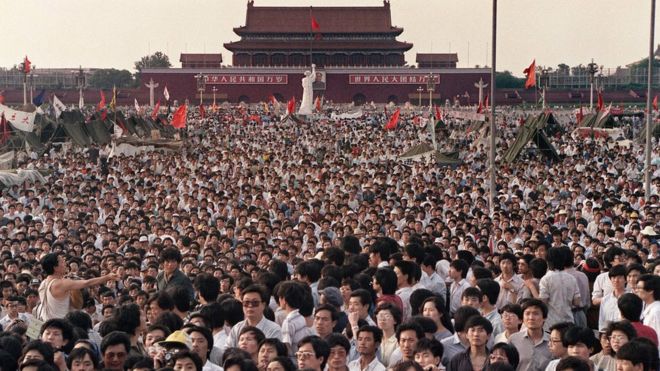 Image copyright AFP
Thirty years ago, Beijing’s Tiananmen Square became the focus for large-scale protests, which were crushed by China’s Communist rulers.
The events produced one of the most iconic photos of the 20th Century – a lone protester standing in front of a line of army tanks.
What led up to the events?
In the 1980s, China was going through huge changes.
The ruling Communist Party began to allow some private companies and foreign investment.
Leader Deng Xiaoping hoped to boost the economy and raise living standards.
However, the move brought with it corruption, while at the same time raising hopes for greater political openness.
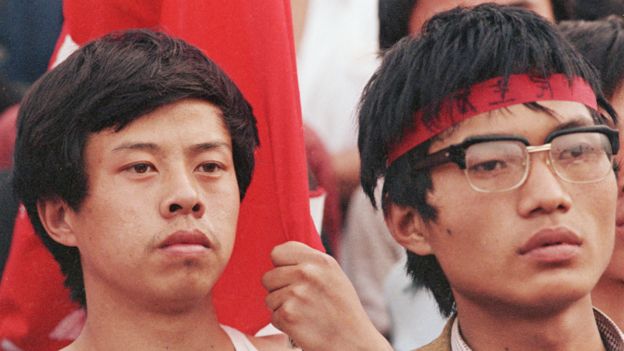 Image copyright GETTY IMAGES
The Communist Party was divided between those urging more rapid change and hardliners wanting to maintain strict state control.
In the mid-1980s, student-led protests started.
Those taking part included people who had lived abroad and been exposed to new ideas and higher standards of living.
How did the protests grow?
In spring 1989, the protests grew, with demands for greater political freedom.
Protesters were spurred on by the death of a leading politician, Hu Yaobang, who had overseen some of the economic and political changes.
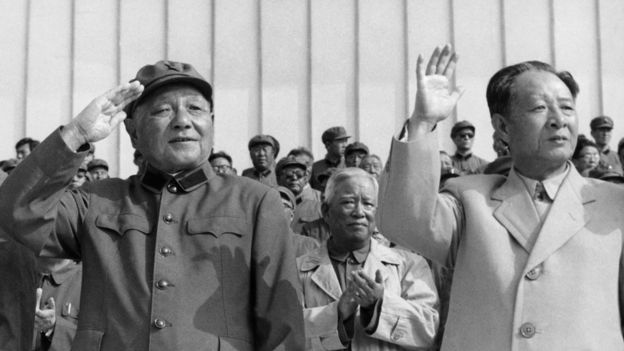 Image copyrigh AFP
He had been pushed out of a top position in the party by political opponents two years earlier.
Tens of thousands gathered on the day of Hu’s funeral, in April, calling for greater freedom of speech and less censorship.
In the following weeks, protesters gathered in Tiananmen Square, with numbers estimated to be up to one million at their largest.
The square is one of Beijing’s most famous landmarks.
It is near the tomb of Mao Zedong, the founder of modern China, and the Great Hall of the People, used for Communist Party meetings.
What was the government’s response?
At first, the government took no direct action against the protesters.
Party officials disagreed on how to respond, some backing concessions, others wanting to take a harder line.
The hardliners won the debate, and in the last two weeks of May, martial law was declared in Beijing.
On 3 to 4 June, troops began to move towards Tiananmen Square, opening fire, crushing and arresting protesters to regain control of the area.
Who was Tank Man?
On 5 June, a man faced down a line of tanks heading away from the square.
He was carrying two shopping bags and was filmed walking to block the tanks from moving past.
 Image copyright GETTY IMAGES
He was pulled away by two men.
It’s not known what happened to him but he’s become the defining image of the protests.
How many people died in the protests?
No-one knows for sure how many people were killed.
At the end of June 1989, the Chinese government said 200 civilians and several dozen security personnel had died.
Other estimates have ranged from hundreds to many thousands.
In 2017, newly released UK documents revealed that a diplomatic cable from then British Ambassador to China, Sir Alan Donald, had said that 10,000 had died.
Do people in China know what happened?
Discussion of the events that took place in Tiananmen Square is highly sensitive in China.
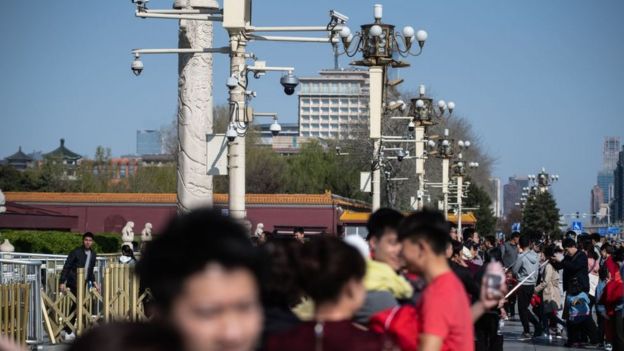 Image copyright GETTY IMAGES
Posts relating to the massacres are regularly removed from the internet, tightly controlled by the government.
So, for a younger generation who didn’t live through the protests, there is little awareness about what happened.
Source: The BBC
No compulsory Hindi in India schools after Tamil Nadu anger
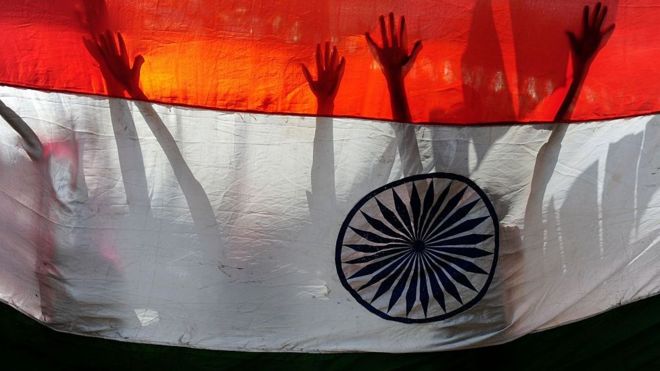 Image copyright GETTY IMAGES
The Indian government has revised a controversial draft bill to make Hindi a mandatory third language to be taught in schools across the country.
The draft bill had met particularly strong opposition in the southern state of Tamil Nadu, which has always resisted the “imposition” of Hindi.
In 1965, it saw violent protests against a proposal that Hindi would be India’s only official language.
Tamil is one of the oldest languages and evokes a lot of pride in the state.
However the government decision has not calmed tensions in Tamil Nadu.
The two main political parties in the state, the DMK and AIADMK, have both said that simply revising the draft to say Hindi would not be mandatory is not enough.
The state teaches only two languages – Tamil and English – in the government school curriculum, and the parties do not want a third language introduced at all.
A DMK spokesman told the NDTV news channel that the third language clause would be used as a “back door” to introduce Hindi anyway.
Their rivals, the AIADMK, which allied with the Bharatiya Janata Party (BJP) in the general elections but lost badly in the state, had a similar view.
“Our party has always been clear in our stand. We have always followed a two-language policy. Though mandatory Hindi has been revised in the draft now, we still cannot support this three-language system. Our government will talk to the union government for our rights,” former state education minister and AIADMK spokesman Vaigaichelvan told BBC Tamil.
On Monday, #HindiIsNotTheNationalLanguage began trending on Twitter in India, which saw many from Tamil Nadu facing off against people from other parts of the country and asserting their right not to have the language “imposed” on them.

 1000 Friends of the South@FriendsOfSouth
The BJP government’s real face is beginning to emerge…Hindi is being imposed on South Indians. Tamil Nadu has rebelled against BJP-Govt. Let’s join them to fight the imposition of Hindi! #HindiIsNotTheNationalLanguage
End of Twitter post by @FriendsOfSouth

 Akahrsh Manikghantan@Akahrsh
Picture speaks a thousand words! In a diverse country like India, learning a new language should be a choice and not compulsion/imposition.
Declaring any Indian language as a national language will be a joke. #HindiImposition#HindiIsNotTheNationalLanguage
End of Twitter post by @Akahrsh

 Akbar Hussain@AkbarHussaine
The picture speaks it all. #HindiIsNotTheNationalLanguage
End of Twitter post by @AkbarHussaine

 karthik subramaniyam@iam_karthik_s
Tamil is always ultimate#HindiIsNotTheNationalLanguage
End of Twitter post by @iam_karthik_s
 “There is no opposition to actually learning Hindi. In fact with the recent IT boom in the south, so many people from the north have migrated here that its use has become more widespread here. It is true that if you know Hindi you will find it easier to get work in other parts of India, so there are also many people here who willingly learn it. But that should be their choice. What people are opposing is the imposition of it,” senior journalist and political analyst KN Arun told the BBC.
Mr Arun also warned that there was a chance that the issue could lead to further protests in the state, saying that a few hardline Tamil groups had been using the issue to whip up anger among the people.
It is also a particularly emotive issue. Politics in the state is still centred around the ideas and principles of the Dravidian movement, which among other things reveres the Tamil language and links it closely to regional identity.
“Tamil is very rich in literature and different to other languages like Hindi which branched out of Sanskrit. There is fear that the Indian government is trying to slowly introduce Hindi, which will threaten the status of Tamil,” author and journalist Vaasanthi told the BBC.
Source: The BBC
China showing signs similar to Japanese housing bubble that led to its ‘lost decades’, expert warns
- China’s housing market showing signs of bubble similar to that seen in Japan in 1980s, says Asian Development Bank Institute dean and CEO Naoyuki Yoshino
- China’s loose policy following 2008 global financial crisis laid foundations for current housing bubble, with US-China trade war adding to concerns
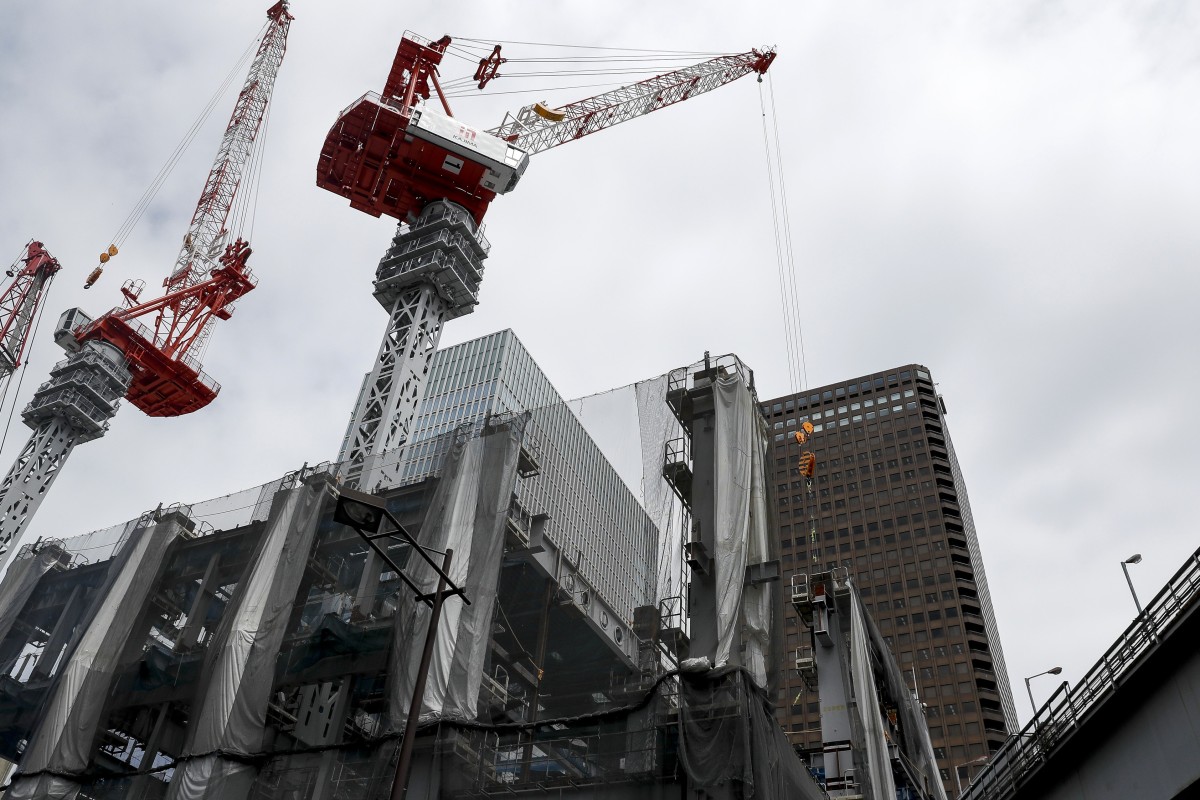
with the Bank of Japan continuing to still keep interest rates at or below zero per cent to this day in an attempt to spur inflation.
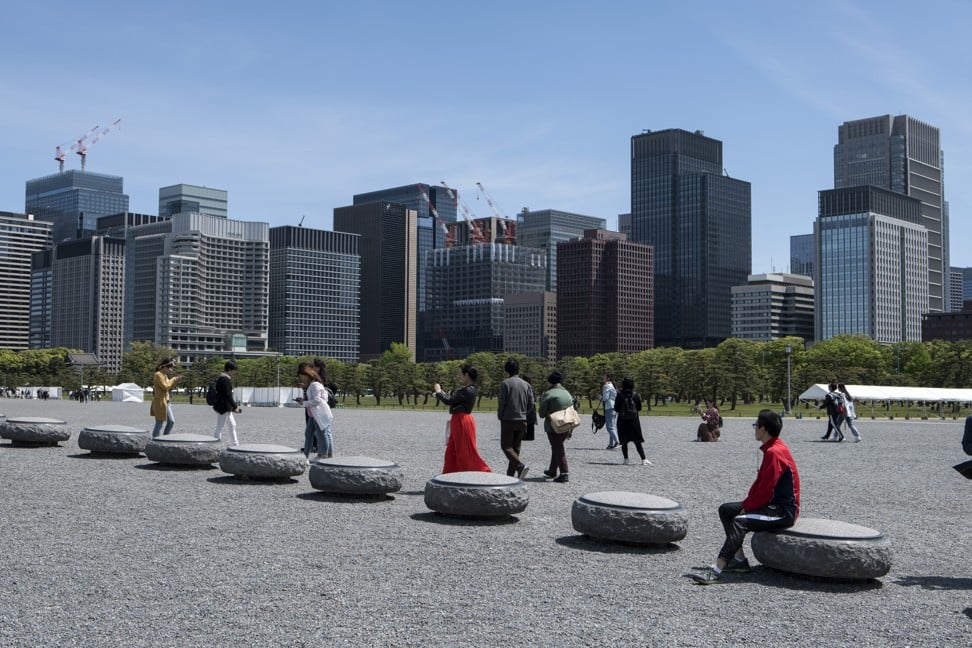
Japan’s experience could serve as a lesson on how to avoid a housing market collapse that would be especially detrimental to China’s financial sector and real economy, according to Yoshino.
“I’m very much concerned that if land prices keep on rising and if the population starts to shrink along with aggregate demand, then China will experience a similar situation to that of Japan,” Yoshino said.
There are already several strong signs of a housing bubble in China, according to Yoshino, firstly the astronomical surge in property prices in recent years.
The increase has also lifted the housing price to income ratio sharply from 5.6 in 1996 to 7.6 in 2013, well above the Japanese rate of 3.0 at its peak in 1988. The price to income ratio is the basic affordability measure for housing.
According to the Global Times, a reasonable home price should be three to six times the median household income. That means a family with an average income can buy a house with three to six years’ annual income. The house price to income ratio in China is above 50 in the first-tier cities and 30 to 40 in the third- and fourth-tier cities, the newspaper said in October. There are four levels of cities in China, defined by a number of factors including gross domestic product (GDP) and population, with Beijing, Shanghai and Shenzhen considered tier-one cities.
Another worrying sign, according to Yoshino, is that China’s financial sector has lent more heavily to the real estate sector than did Japanese banks during their bubble period.
Thirdly, the ratio of Chinese housing loans to the nation’s GDP has consistently been higher than Japan’s by about three times more.
Ever since US President Donald Trump started imposing tariffs on Chinese imports in July, worries have been mounting that China’s property bubble and its record debt level would make the economy vulnerable to the impact of rising trade tensions, leading to a sharper-than-expected economic slowdown.
Despite a government crackdown on debt and risky lending over the last several years, housing prices and bank lending to the sector have continued to rise, pushing homes beyond what the vast majority of people can afford, as well as putting many property developers deeply into debt.
The Chinese Academy of Social Sciences, a top government think tank, said in a report last week that the growth in housing prices in China’s bigger cities, caused by a relatively short supply of new homes, is likely to push up costs across the country.
“The government should closely monitor these cities to avoid overheating,” said Wang Yeqiang, a researcher at the Chinese Academy of Social Sciences who co-authored the report.
Property developers have begun a debt-fuelled land-buying spree just as urban housing demand is entering a long-running structural decline, said Julian Evans-Pritchard, senior China economist at Capital Economics. The potential supply of property that could be built on developers’ land reserves jumped last year to a record high, meaning the risk of a glut of new housing is real, Evans-Pritchard added, if developers were to convert all their land reserves into housing tracts.
“Since real estate drives around a fifth of GDP, a sharp downturn in this sector would be contagious, resulting in a jump in defaults across a wide swathe of the economy that could quickly erode bank capital buffers,” he warned.
China’s corporate debt stood at 155 per cent of GDP in the second quarter of 2018, much higher than other major economies, according to data from the Organisation for Economic Cooperation and Development. In comparison, Japan’s corporate debt level is 100 per cent of GDP and is 74 per cent in the US. China’s corporate debt includes issuances by its
vehicles which by extension is mostly credit with an implicit guarantee from the central government.
Since real estate drives around a fifth of GDP, a sharp downturn in this sector would be contagious, resulting in a jump in defaults across a wide swathe of the economy that could quickly erode bank capital buffers
and
that led to Japan’s long-term deflation problem, said Yoshino, who is also the chief adviser to the Japan Financial Services Agency’s Financial Research Centre.
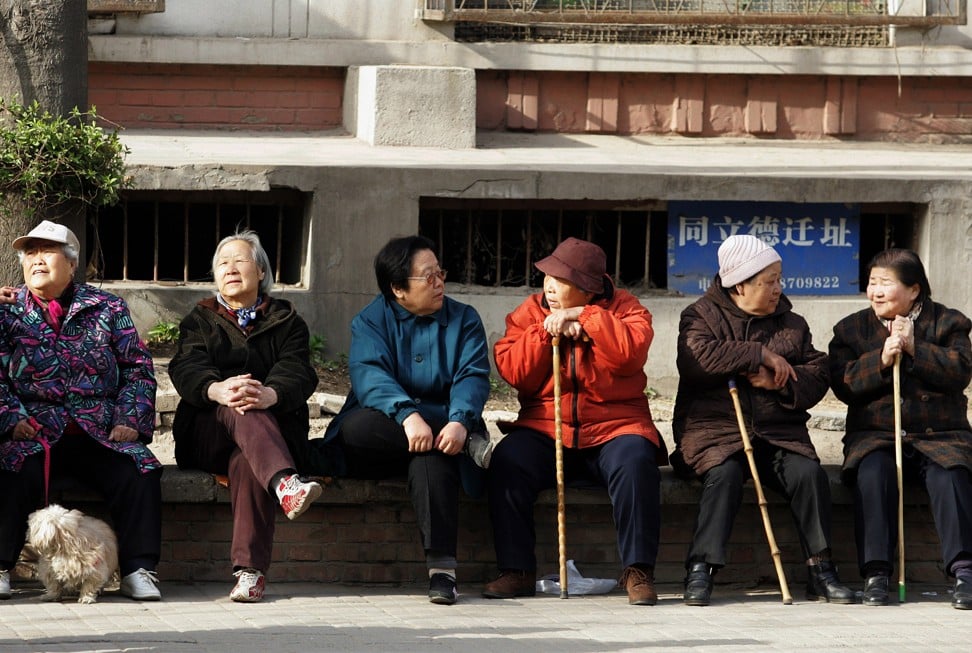
forecast to peak at 6.99 trillion yuan (US$1 trillion) in 2027 before it gradually runs out by 2035, according to the Chinese Academy of Social Sciences, forcing the government to start to transfer assets from state-owned companies to fill the funding gap.
Alicia Garcia Herrero, Asia-Pacific chief economist at Natixis, noted that the US criticisms of China’s unfair trade practises and currency manipulation were reminiscent of the US-Japan disputes in the 1980s and 1990s.
Because Japan was politically and economically dependent on the US at that time, it inevitably implemented economic policies to reduce its current account surplus. Subsequently, Japan suffered from the bursting of its asset price bubble, which led to deflation and the lost decades.
However, Herrero said that the modern China is less dependent on the US and so is in a better position to resist pressure to adjust its economic policies to create demand for American products.
Wang Yang, one of the seven members of China’s elite Politburo Standing Committee, said the US-China trade war could slash one percentage point off Beijing’s economic growth this year. Last year, growth expanded at its slowest pace since 1990, while corporate bond defaults hit a record high and banks’ non-performing loan ratio hit a 10-year high.
Source: SCMP
Boeing 737 Max: China’s top airlines seek compensation
Air China, China Southern and China Eastern have filed claims for payouts, according to state media reports.
China’s regulator was the first to ground the fleet in the wake of two deadly crashes involving the US-made aircraft.
It comes on the eve of a meeting of global aviation regulators that will provide an update on the troubled jets.
The Chinese airlines are seeking compensation for losses incurred by the grounded fleet, as well as delayed deliveries of the 737 Max jets, according to reports.
China operates the largest fleet of Boeing 737 Max aircraft and was the first country to take the jets out of service after the Ethiopian Airlines 737 Max 8 crash in March.
The disaster killed all 157 people on board. In October, 189 people were killed in a Lion Air crash involving the same model.
- Boeing grounds entire 737 Max fleet
- What went wrong inside the Boeing cockpit?
- Can China’s plane-maker take on Boeing and Airbus?
Both crashes were linked to the jet’s Manoeuvring Characteristics Augmentation System, a new feature on 737 Max planes, which was designed to improve the handling of the jet and to stop it pitching up at too high an angle.
Last week, Boeing said it had completed development of a software update for its 737 Max planes.
The planemaker’s entire global fleet of 737 Max aircraft has been grounded since March and the firm is anxious to prove it is safe to return to the skies.
The move by China’s top airlines to seek compensation comes ahead of a closely watched summit of aviation regulators in Texas on Thursday.
The US Federal Aviation Administration (FAA) is due to provide an update on reviews of Boeing’s software fix and new pilot training.
The meeting in Texas will involve 57 agencies from 33 countries, including China, France, Germany and the UK, as well as the European Union Aviation Safety Agency.
But it is unclear if the planes will be back in the air before the end of the critical summer travel season.
Source: The BBC
China’s green efforts hit by fake data and corruption among the grass roots
- Local officials have devised creative ways to cover up their lack of action on tackling pollution
- Falsified monitoring information risks directing clean-up efforts away from where they are needed most

While some officials are covering up their inaction, others are actively corrupt. According to Guangzhou’s Southern Weekend, since 2012 there have been 63 cases involving 118 people in the environment protection system involved in corruption.
In the southwest province of Sichuan, 32 current and former employees of Suining city’s environmental protection bureau were found to be corrupt, raking in illicit income of 6.32 million yuan (US$900,000).
Fabricated notes
The party committee of Bozhou district in Zunyi, Guizhou province in southern China, was found to have fabricated notes for 10 meetings – part of the work requirement under the new environmental targets – in a bid to cheat the inspectors.

Wang Canfa, an environmental law expert at the China University of Political Science and Law, said the problem of fake data could damage the government’s credibility but also prevent it from taking measures in time.
“If the water pollution or air pollution is severe in one place but the local government has said it’s not a big deal, then the investment needed to control the situation might go to other places,” he said.
Zhou Ke, a professor of environment and resources law at Renmin University, said there was an incentive for local officials to cheat because the inspection results were directly related to their career prospects.
Officials ended up cheating or forging materials to protect local interests or their own political achievements, he said.
Source: SCMP
North Korean women ‘forced into sex slavery’ in China – report
 Image copyright KOREA FUTURE INITIATIVE
Thousands of North Korean women and girls are being forced to work in the sex trade in China, according to a new report by a London-based rights group.
They are often abducted and sold as prostitutes, or compelled to marry Chinese men, says the Korea Future Initiative.
The trade is worth $100m (£79m) a year for criminal organisations, it says.
The women are often trapped because China repatriates North Koreans, who then face torture at home, it says.
“Victims are prostituted for as little as 30 Chinese yuan ($4.30; £3.40), sold as wives for just 1,000 yuan, and trafficked into cybersex dens for exploitation by a global online audience,” the report’s author Yoon Hee-soon said.
The girls and women in question are usually aged between 12 and 29, but can sometimes be younger, the report said.
They are coerced, sold, or abducted in China or trafficked directly from North Korea. Many are sold more than once and are forced into at least one form of sexual slavery within a year of leaving their homeland, it adds.
Many are enslaved in brothels in districts in north-east China with large migrant worker populations.
The girls – some as young as nine – and women working in the cybersex industry are forced to perform sex acts and are sexually assaulted in front of webcams. Many of the subscribers are thought to be South Korean.
Women forced into marriage were mostly sold in rural areas for 1,000 to 50,000 yuan, and were raped and abused by their husbands.

The group collected its information from victims in China and exiled survivors in South Korea.
One woman, named as Ms Pyon from Chongjin City, North Korea, is quoted as saying in the report:
“I was sold [to a brothel] with six other North Korean women at a hotel. We were not given much food and were treated badly…After eight months, half of us were sold again. The broker did bad things to me.”
“When I arrived [at the new brothel] I had bruises on my body. [The broker] was beaten then stabbed in the legs by some members of the gang.”
Another, Ms Kim, said: “There are many South Koreans [in Dalian, China]…We put advertising cards under their doors [in hotels]…The cards are in the Korean-language and advertise what we offer…We are mostly taken to bars [by the pimp].
“South Korean companies want [North Korean prostitutes] for their businessmen…Prostitution was my first experience of meeting a South Korean person.”
Source: The BBC
The Indian Dalit man killed for eating in front of upper-caste men
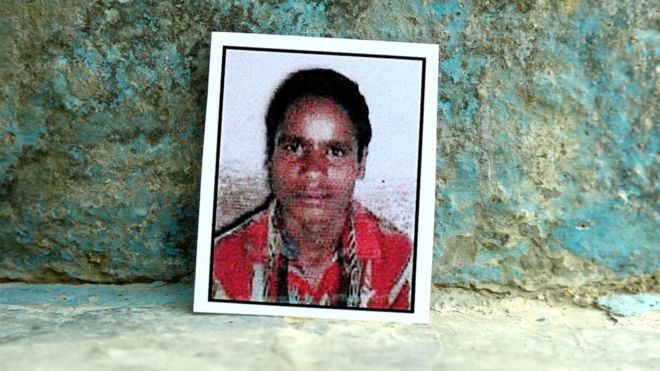
A helpless anger pervades the Dalit community in the remote Indian village of Kot.
Last month, a group of upper-caste men allegedly beat up a 21-year-old Dalit resident, named Jitendra, so badly that he died nine days later.
His alleged crime: he sat on a chair and ate in their presence at a wedding.
Not even one of the hundreds of guests who attended the wedding celebration – also of a young Dalit man – will go on record to describe what happened to Jitendra on 26 April.
Afraid of a backlash, they will only admit to being at a large ground where the wedding feast was being held.
Only the police have publicly said what happened.
The wedding food had been cooked by upper-caste residents because many people in remote regions don’t touch any food prepared by Dalits, who are the bottom of the rigid Hindu caste hierarchy.
“The scuffle happened when food was being served. The controversy erupted over who was sitting on the chair,” police officer Ashok Kumar said.
The incident has been registered under the Scheduled Castes and Scheduled Tribes (Prevention of Atrocities Act) – a law meant to protect historically oppressed communities.
Dalits, formerly known as untouchables, have suffered public shaming for generations at the hands of upper-caste Hindus.
Dalits continue to face widespread atrocities across the country and any attempts at upward social mobility are violently put down.
For example, four wedding processions of Dalits were attacked in the western state of Gujarat within a week in May.
It is still common to see reports of Dalits being threatened, beaten and killed for seemingly mundane reasons.
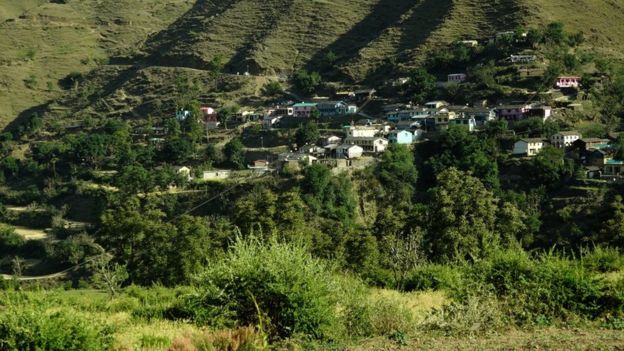
The culture that pervades their community is visible everywhere – including in Kot, which is in the hilly northern state of Uttarakhand.
Local residents from the Dalit community allege that Jitendra was beaten and humiliated at the wedding.
They say he left the event in tears, but was ambushed again a short distance away and attacked again – this time more brutally.
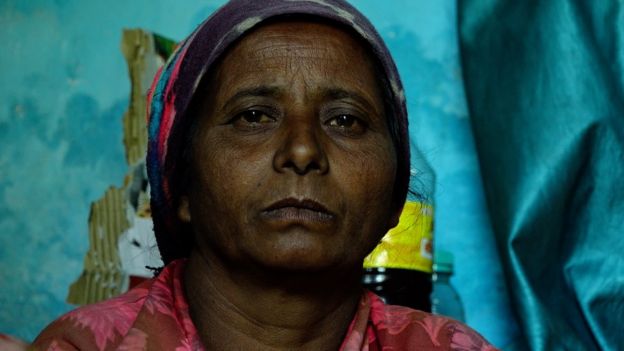
Jitendra’s mother, Geeta Devi, found him injured outside their dilapidated house early the next morning.
“He had been perhaps lying there the entire night,” she said, pointing to where she found him. “He had bruises and injury marks all over his body. He tried to speak but couldn’t.”
She does not know who left her son outside their home. He died nine days later in hospital.
Jitendra’s death is a double tragedy for his mother – nearly five years ago her husband also died.
This meant that Jitendra, who was a carpenter, became the family’s only breadwinner and had to drop out of school to start working.
Family and friends describe him as a private man who spoke very little.
- Why are Dalits in Narendra Modi’s India angry?
- Indian lowest-caste Dalit man killed ‘for owning horse’
Loved ones have been demanding justice for his death, but have found little support among the community.
“There is fear. The family lives in a remote area. They have no land and are financially fragile,” Dalit activist Jabar Singh Verma said. “In surrounding villages too, the Dalits are outnumbered by families from higher castes.”
Of the 50 families in Jitendra’s village, only some 12 or 13 are Dalits.
Dalits comprise almost 19% of Uttarakhand’s population and the state has a history of atrocities committed against them.
Police have arrested seven men in connection with Jitendra’s death, but all of them deny any involvement.
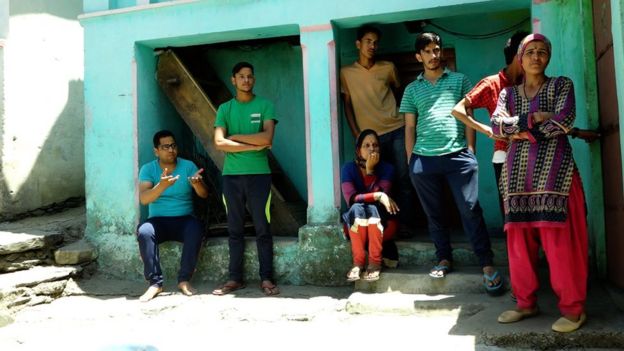
“It’s a conspiracy against our family,” said a woman whose father, uncles and brothers are among the accused. “Why would my father use caste slurs at a Dalit’s marriage?”
“He must have been embarrassed that he got beaten and popped dozens of pills that led to his death,” another local upper-caste person said.
But the Dalits in the village, who are livid over Jitendra’s death, hotly deny these claims.
They say Jitendra suffered from epilepsy, but insist there is no chance that he overdosed on his medication.
Apart from these expressions of anger, local Dalit families have largely remained silent.
“It is because they are economically dependent on families from the higher castes,” activist Daulat Kunwar said.
“Most Dalits are landless. They work the fields of their wealthy upper caste neighbours. They know the consequences of speaking out loud.”
Jitendra’s family has already experienced some of these consequences – Geeta Devi says they are under pressure to stop pushing for the truth.
“Some men came over to our house and tried to scare us,” she said. “There is no one to support us but I will never give up our quest for justice.”
Source: The BBC

 CHINDIA ALERT: You'll be living in their world, very soon