Archive for ‘Social & cultural’

31/05/2012

* Senior leader says to promote Xinjiang’s leapfrog development

Xinhua: “Vice Premier Li Keqiang on Wednesday called for more support to Xinjiang Uygur Autonomous Region to achieve leapfrog development and long-term stability in this westernmost region of China. Li made the remarks at the 3rd National Work Conference on “pairing assistance” projects to support Xinjiang’s development.

Maps of Xinjiang Uygur Autonomous Region of Ch...

Maps of Xinjiang Uygur Autonomous Region of China Español: Región autónoma de Xinjiang (Photo credit: Wikipedia)

President Hu Jintao met the delegates to the annual conference and thanked them for their efforts made in accelerating Xinjiang’s development. Premier Wen Jiabao and Vice President Xi Jinping, both members of the Standing Committee of the Political Bureau of the Communist Party of China CPC Central Committee, were present at the meeting.  Zhou Yongkang, also member of the Standing Committee of the Political Bureau of the CPC Central Committee, also met with the delegates and attended the conference.

Huge achievements have been made in the past two years under a large number of pairing assistance projects for Xinjiang, especially projects concerning Xinjiang people’s well-being, said Li, also a member of the Standing Committee of the Political Bureau of the CPC Central Committee.

Vast land, abundant resources and huge development potential make Xinjiang a major area to implement China’s strategy to expand domestic demand and the strategy to develop the country’s western regions, Li said, adding Xinjiang is also a key area to accommodate transfer of domestic industries. Xinjiang is one of the bridgeheads for China’s opening to central Asia and Europe, said Li, calling for speeding up the opening of China’s western border areas while enhancing the openness of its eastern coastal regions.

Li noted that assisting the development of Xinjiang is a long-lasting, arduous and imperative task. More efforts and higher effectiveness are needed to advance the programs concerning the well-being of local people, such as housing, employment, medical care and social insurance, while the infrastructure construction and environmental protection should be further improved, said Li. More support regarding technology, education, talented people and excellent cadres should be provided to Xinjiang, and the exchanges between Xinjiang and inland areas should be enhanced, Li added.”

via Senior leader says to promote Xinjiangs leapfrog development – Xinhua | English.news.cn.

Xinjiang and Tibet are the two areas where ethnic minorities do not see eye to eye with the Han majority. Interestingly, both are strong adherents of religion; Buddhism in the case of Tibet and Islam in the case of Xinjiang. Until and unless the central authorities can convince these minorities that they have some form of self-determination (after all both are called ‘autonomous regions’ of China), unrest will continue.

30/05/2012

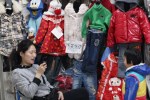
* Tainted children’s clothes scandal in China

A finding of cancer-causing chemicals on children’s clothes sparked public fear yesterday, after a report aired on national state broadcaster China Central Television(CCTV).

The station’s Weekly Quality Report investigative programme carried the report, claiming that a recent Beijing Consumer Association test of 63 samples of children’s clothes sold on the mainland revealed that nearly a third failed to meet quality and safety standards.

The association said that problems included excessive levels of formaldehyde and other carcinogenic chemicals.

The investigation began after consumers started complaining that their children had developed skin rashes after wearing the clothes.

From China Daily Mail blogTainted children’s clothes scandal in China.

29/05/2012

* Former Chinese rail minister expelled from Party

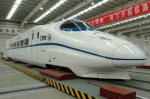
China Daily: “Liu Zhijun violated discipline and will face judicial investigationLiu Zhijun, former railway minister, was expelled from the Communist Party of China due to serious disciplinary violations, according to a decision by the Central Commission for Discipline Inspection announced on Monday.

Liu, 59, was also blamed for fostering corruption throughout the railway system. The disciplinary watchdog said Liu had taken advantage of his position to help Ding Yuxin, board chairwoman of Beijing Boyou Investment Management Corp, make huge illicit gains. He was also charged with accepting a large number of bribes and leading a corrupt life. His illicit gains have been confiscated and he will be handed over to the judicial department for further investigation. His disciplinary violations may include criminal acts, the watchdog said.

Lin Zhe, a professor at the Party School of the Central Committee of the CPC who specializes in fighting corruption, said Liu will probably face severe punishment. “Expelling Liu from the Party means his political life has ended,” she said, adding such punishment for an official is very heavy. However, Lin added Liu’s case will not be brought to court any time soon, “because the case is complicated”, and more time is needed to investigate. No matter what achievements an official has made, no matter how high his position was, the authority will deal with corruption without fear or favor, Lin added.

Li Chengyan, head of Peking University’s clean government research center, said the case is being treated seriously. “Lius punishment, after a one-year investigation, shows our government attaches great importance to the case.” The announcement on Monday is the latest development in the investigation.

Liu was appointed vice-minister of railways in 1996 and minister in 2003. He was removed from his post in February last year. At least eight senior officials at the Ministry of Railways have been sacked in the past two years and placed under investigation. They include, Zhang Shuguang, former deputy chief engineer at the ministry, Luo Jinbao, former board chairman of China Railway Container Transport Co and Su Shunhu, former deputy chief of the ministrys transport bureau.”

via Former rail minister expelled from Party |Politics |chinadaily.com.cn.

27/05/2012

* China’s Harvard connection

Washington Post: “China’s Communist Party is steeped in anti-American rhetoric, but many of its leaders have children or grandchildren who have studied in the United States. Harvard is a particular favorite. Read related article.

China’s Harvard connection
Sources: Institute of International Education’s “Open Doors: Report on International Educational Exchange”; staff reports. The Washington Post. Published on May 18, 2012, 8:12 p.m.
What this means is that the Chinese leaders (or at least their family) know much more about the US than US leaders or their children know about China. A distinct advantage wouldn’t you say?
27/05/2012

* State of Paradox

NY Times: ““‘India’ and ‘change’ were once virtual antonyms: old India hands returned again and again in large part because the subcontinent was so dependably different from the West,” Geoffery C. Ward writes in The Sunday Review section of The New York Times. “But since 1991, when a financial crisis forced India’s government to devalue the rupee, lower import barriers and relax controls on private investment, things have nearly reversed themselves.”

“As the journalist Akash Kapur demonstrates in his lucid, balanced new book, ‘India Becoming,’ his homeland now seems almost synonymous with change,” Mr. Ward writes. Mr. Kapur is especially qualified to “assess the contrasts and contradictions all that change has brought,” he writes. “The son of an American mother and an Indian father, he was raised on the outskirts of Auroville, a utopian international community in the southern state of Tamil Nadu.”

via State of Paradox – NYTimes.com.

See also: How close will India be in 25 years?

26/05/2012

* City girls go manhunting while the bachelors in rest of country despair

The Times, London: “The dance floors are polished to a shine and a 150-metre long “love wall” has been erected down the middle of the venue: everything is set for 48 hours of intensive matchmaking.In a now annual tumult of desire and desperation, more than 20,000 singles will descend on Expo Park in Shanghai today in pursuit of a spouse. A majority will be women: educated, salaried, urbanised and disappointed that city life has yet to yield Mr Right.

The event’s organisers assured The Times that a local steelworks and other Shanghai companies rich in male employees had been “encouraged to dispatch bachelors to the scene”. That urgent call for men is an anomaly in a country where a vast gender imbalance has become endemic and which some demographers believe will create a 50 million-strong surplus of single males by the end of the decade. Chinese families already have an instinctive grasp of the supply and demand crisis that lies ahead for young men. In poorer parts of the country, young men in their 20s are preparing unhappily for a long life unshared.

As well as being held on a greater scale than in the past, today’s event in Shanghai has a fresh innovation: singles will enter free, but parents accompanying them will be charged 50 yuan (£5). The deterrent effect will be minimal. Many thousands of parents are expected to attend, cajoling their offspring towards marriages that modern life is increasingly delaying. Plenty of the parental harassment is an old-fashioned wish for stability and grandchildren. But increasingly, the angst in China is born of raw economic fear. …

China’s male surplus will pose unprecedented challenges to the incoming leadership of the Communist Party. No government anywhere has dealt with an imbalance on this scale. Li Jianmin, the head of the Institute of Population and Development Research at Nankai University, said that the difficulty of men finding wives was an effect of the “big backdrop” of a birth-sex ratio of 118 boys to 100 girls. “The gender imbalance trend started showing in the early 1980s, and now we have just walked over the threshold. In five to ten years, the high-risk period will come,” he said. He added that China’s family planning policy was to a great extent responsible for the imbalance. About 90 per cent of Chinese couples would like a boy and a girl, but when forced to have only one, most opt for a boy.

The problems of male oversupply will be further amplified if, as some now fear, China’s economy sputters. In places of high bachelor concentration, high unemployment, and where all hope of marriage has evaporated, there will probably be crime and unrest, said Andrea Den Boer, a demographer whose Bare Branches book warns of long-term security implications. “It is difficult to be optimistic because while China knows that this problem exists, it does not appear to have any plan,” she said. “There is a strong potential building for future violence and unrest and so far the Chinese authorities have not developed a response to those issues, other than a violent one.””

via City girls go manhunting while the bachelors in rest of country despair | The Times.

A natural if unplanned result of the one-child policy of the CCP.

Related pages/posts

21/05/2012

* What the Chinese want

This is a much longer than usual post.  But if you are interested in either Chinese mentalilty or, more importantly, thinking of trading in China, this is a must read.

Consumers in China are increasingly modern in their tastes, but they are not becoming ‘Western.’ How the selling of coffee, cars and pizza sheds light on a nation racing toward superpower status.

By TOM DOCTOROFF, author of the book “What Chinese Want: Culture, Communism & The Modern Chinese Consumer.”

Apple has taken China by storm. A Starbucks can be found on practically every major street corner in coastal cities and beyond. From Nike to Buick to Siemens, Chinese consumers actively prefer Western brands over their domestic competitors. The rise of microbloggers, the popularity of rock bands with names like Hutong Fist and Catcher in the Rye, and even the newfound popularity of Christmas all seem to point toward a growing Westernization.

But don’t be deceived by appearances. Consumers in China aren’t becoming “Western.” They are increasingly modern and international, but they remain distinctly Chinese. If I’ve learned anything from my 20 years working as an advertising executive in China, it is that successful Western brands craft their message here to be “global,” not “foreign”—so that they can become vessels of Chinese culture.

Understanding China’s consumer culture is a good starting point for understanding the nation itself, as it races toward superpower status. Though the country’s economy and society are evolving rapidly, the underlying cultural blueprint has remained more or less constant for thousands of years. China is a Confucian society, a quixotic combination of top-down patriarchy and bottom-up social mobility. Citizens are driven by an ever-present conflict between standing out and fitting in, between ambition and regimentation. In Chinese society, individuals have no identity apart from obligations to, and acknowledgment by, others. The clan and nation are the eternal pillars of identity. Western individualism—the idea of defining oneself independent of society—doesn’t exist.

Various youth subtribes intermittently bubble to the surface—see the recent rise of “vegetable males” (Chinese metrosexuals) and “Taobao maniacs” (aficionados of the auction website Taobao). But self-expression is generally frowned upon, and societal acknowledgment is still tantamount to success. Liberal arts majors are considered inferior to graduates with engineering or accounting degrees. Few dare to see a psychologist for fear of losing “face”—the respect or deference of others—or being branded sick. Failure to have a child is a grave disappointment.

The speed with which China’s citizens have embraced all things digital is one sign that things are in motion in the country. But e-commerce, which has changed the balance of power between retailers and consumers, didn’t take off until the Chinese need for reassurance was satisfied. Even when transactions are arranged online, most purchases are completed in person, with shoppers examining the product and handing over their cash offline.

Even digital self-expression needs to be safe, cloaked in anonymity. Social networking sites such as Sina Weibo (a Chinese version of Twitter), Renren and Kaixing Wang (Chinese versions of Facebook) have exploded. But users hide behind avatars and pseudonyms. A survey conducted by the advertising firm JWT, where I work, and IAC, the Internet holding company, found that less than a third of young Americans agreed with the statement “I feel free to do and say things [online] I wouldn’t do or say offline,” and 41% disagreed. Among Chinese respondents, 73% agreed, and just 9% disagreed.

Chinese at all socioeconomic levels try to “win”—that is, climb the ladder of success—while working within the system, not against it. In Chinese consumer culture, there is a constant tension between self-protection and displaying status. This struggle explains the existence of two seemingly conflicting lines of development. On the one hand, we see stratospheric savings rates, extreme price sensitivity and aversion to credit-card interest payments. On the other, there is the Chinese fixation with luxury goods and a willingness to pay as much as 120% of one’s yearly income for a car.

Every day, the Chinese confront shredded social safety nets, a lack of institutions that protect individual wealth, contaminated food products and myriad other risks to home and health. The instinct of consumers to project status through material display is counterbalanced by conservative buying behavior. Protective benefits are the primary consideration for consumers. Even high-end paints must establish their lack of toxicity before touting the virtues of colorful self-expression. Safety is a big concern for all car buyers, at either end of the price spectrum.

To win a following among Chinese buyers, brands have to follow three rules.

First and most important, products that are consumed in public, directly or indirectly, command huge price premiums relative to goods used in private. The leading mobile phone brands are international. The leading household appliance brands, by contrast, are cheaply priced domestic makers such as TCL, Changhong and Little Swan. According to a study by the U.K.-based retailer B&Q, the average middle-class Chinese spends only $15,000 to fit out a completely bare 1,000-square-foot apartment.

Luxury items are desired more as status investments than for their inherent beauty or craftsmanship. The Chinese are now the world’s most avid luxury shoppers, at least if trips abroad to cities like Hong Kong and Paris are taken into account. According to Global Refund, a company specializing in tax-free shopping for tourists, the Chinese account for 15% of all luxury items purchased in France but less than 2% of its visitors.

Public display is also a critical consideration in how global brands are repositioning themselves to attract Chinese consumers. Despite China’s tea culture, Starbucks successfully established itself as a public venue in which professional tribes gather to proclaim their affiliation with the new-generation elite. Both Pizza Hut and Häagen Dazs have built mega-franchises in China rooted in out-of-home consumption. (The $5 carton of vanilla to be eaten at home is a tough sell in China.)

The second rule is that the benefits of a product should be external, not internal. Even for luxury goods, celebrating individualism—with familiar Western notions like “what I want” and “how I feel”—doesn’t work in China. Automobiles need to make a statement about a man on his way up. BMW, for example, has successfully fused its global slogan of the “ultimate driving machine” with a Chinese-style declaration of ambition.

Sometimes the difference between internal versus external payoffs can be quite subtle. Spas and resorts do better when they promise not only relaxation but also recharged batteries. Infant formulas must promote intelligence, not happiness. Kids aren’t taken to Pizza Hut so that they can enjoy pizza; they are rewarded with academic “triumph feasts.” Beauty products must help a woman “move forward.” Even beer must do something. In Western countries, letting the good times roll is enough; in China, pilsner must bring people together, reinforce trust and promote mutual financial gain.

Emotional payoffs must be practical, even in matters of the heart. Valentine’s Day is almost as dear to the Chinese as the Lunar New Year, but they view it primarily as an opportunity for men to demonstrate their worthiness and commitment. In the U.S., De Beers’s slogan, “A Diamond is Forever,” glorifies eternal romance. In China, the same tagline connotes obligation, a familial covenant—rock solid, like the stone itself.

The last rule for positioning a brand in China is that products must address the need to navigate the crosscurrents of ambition and regimentation, of standing out while fitting in. Men want to succeed without violating the rules of the game, which is why wealthier individuals prefer Audis or BMWs over flashy Maseratis.

Luxury buyers want to demonstrate mastery of the system while remaining understated, hence the appeal of Mont Blanc’s six-point logo or Bottega Veneta’s signature cross weave—both conspicuously discreet. Young consumers want both stylishness and acceptance, so they opt for more conventionally hip fashion brands like Converse and Uniqlo.

Chinese parents are drawn to brands promising “stealthy learning” for their children: intellectual development masked as fun. Disney will succeed more as an educational franchise—its English learning centers are going gangbusters—than as a theme park. McDonald’s restaurants, temples of childhood delight in the West, have morphed into scholastic playgrounds in China: Happy Meals include collectible Snoopy figurines wearing costumes from around the world, while the McDonald’s website, hosted by Professor Ronald, offers Happy Courses for multiplication. Skippy peanut butter combines “delicious peanut taste” and “intelligent sandwich preparation.”

Even China’s love affair with Christmas—with big holiday sales and ubiquitous seasonal music, even in Communist Party buildings—advances a distinctly Chinese agenda. Santa is a symbol of progress; he represents the country’s growing comfort with a new global order, one into which it is determined to assimilate, without sacrificing the national interest. The holiday has become a way to project status in a culture in which individual identity is inextricably linked to external validation.

The American dream—wealth that culminates in freedom—is intoxicating for the Chinese. But whereas Americans dream of “independence,” Chinese crave “control” of their own destiny and command over the vagaries of daily life. Material similarities between Chinese and Americans mask fundamentally different emotional impulses. If Western brands can learn to meet China’s worldview on its own terms, perhaps the West as a whole can too.”

http://online.wsj.com/article/SB10001424052702303360504577408493723814210.html?mod=WSJ_hp_mostpop_read

19/05/2012

* The world turned upside down: how workers are moving from PIIGS to BRICS

The Times: “The eurozone was dreamland for the formerly impoverished fringe of southern Europe. To share the same currency as the powerful Germans and French was a sure sign that the bad times — of dusty villages emptied of menfolk — were over. They bought German cars, borrowed money to build villas and said farewell to centuries of emigration.

BRICS counties. BRICS - Brazil, Russia, India,...

BRICS counties. BRICS – Brazil, Russia, India, People’s Republic of China, South Africa. Português: As Potências regionais. (Photo credit: Wikipedia)

Now, as dreamland turns to nightmare, young Portuguese, Spaniards and Greeks are on the move again, travelling in search of work and security to countries they had previously treated with contempt or indifference. People from the PIIGS — Portugal, Ireland, Italy, Greece and Spain — are heading for the BRICs — Brazil, India and China but not Russia — as the global turmoil creates a new trend: reverse migration.

The movement of peoples began in earnest at the outset of the financial crisis three years ago, as the strong-growth cultures became a magnet not only for European adventurers but for well-educated native-born emigrants returning home. The rapid unravelling of the PIIGS has, however, made this an act of desperation for many. Across the globe millions of people are on the move as who is rich, who is poor, who is up, who is down is defined anew. Remarkably, at least 10,000 Portuguese have left for Angola. …Angola was a Portuguese colony for three hundred years, a supplier of slaves to the mercantile class in the 17th century. Today it is Africa’s second-largest oil producer and while not exactly a BRIC — two thirds of its population live on £1.30 a day — it has an energy that has drained from its former colonial master.

Brazil has become a natural destination for the Portuguese — and the Spanish. In Madrid, a website, Pepas y Pepes, has been set up to guide would-be emigrants. Even its name is a sad echo, adapted from a famous Spanish film called ¡Vente a Alemania, Pepe! — Come to Germany, Pepe! — which was inspired by the exodus after the Spanish Civil War. … A Barcelona businessman, Jordi Camps, has set up a travel company in China, China a la Carta. “Here you can smell growth,” he says. “It is sad to hear the news from Spain.”

There are two trends unfolding in the world. The first is that many hundreds of thousands who emigrated from what was once called the developing world to Europe and the United States are now being drawn back by the resurgent economies of their homelands. … Nowadays it is an eerily quiet place with giant razor-wired pens all empty of Mexican illegals. Instead, as the US economy wobbles uncertainly, Mexicans are heading home for work. For the first time since the Great Depression more Mexicans are leaving the US than entering it — and most of them are finding jobs.

There is huge reverse migration, too, by overseas Chinese and Indians. Almost 135,000 Chinese students returned home in 2009-10 after finishing their education abroad, an increase of 24.7 per cent. Zhang Peizhuo, a 45-year-old chemical researcher who stayed in Britain for 12 years after graduating there, has now gone back to China, in part because of government incentives. “Huge growth potential and increasing government subsidies have made returning home to start a business an attractive option for many overseas Chinese,” he said.

According to the recruitment company Kelly Services India, as many as 300,000 Indian professionals are expected to return to their homeland in the next four years: “Hype or reality, people do believe that the BRICs are the future and that there are a lot more job opportunities in India than elsewhere.” …

via The world turned upside down: how workers are moving from PIIGS to BRICS | The Times.

See also: https://chindia-alert.org/economic-factors/

19/05/2012

* IIT-JEE topper watched movie on exam eve

The Hindu: “A total number of 479,651 candidates appeared for both papers of the exam on April 8.

Delhi-based Arpit Agrawal, who came as all-India number one in IIT-JEE on Friday, revealed some of the secrets of his success to The Hindu. “I watched a movie the day before my exam,” he said.  “I was definitely lucky that it was on TV. It was loaded with so many emotions [that all the tension of the exam was driven from my mind].”

A student of Modern Vidya Niketan in Faridabad, Arpit says he does not believe that topping the exams comes down to the number of hours of preparation. “Everyone require different hours to prepare. The best way is to revise what you learn on the same day.” …

A total number of 479,651 candidates appeared for both papers of the exam, which was conducted on April 8. Of the total, 24,112 have secured ranks in various categories and 17,462 shortlisted for counselling for admission to 9,647 seats in the 15 IITs, IT-BHU, Varanasi, and Indian School of Mines-Dhanbad. …

This year, 150,431 girls appeared in both papers of IIT-JEE, out of which 2,886 secured ranks and the first 1,908 were shortlisted for counselling.”

via The Hindu : Education : IIT-JEE topper watched movie on exam eve.

Law of Unintended Consequences

continuously updated blog about China & India

ChiaHou's Book Reviews

continuously updated blog about China & India

What's wrong with the world; and its economy

continuously updated blog about China & India