Archive for ‘Social Sciences Academic Press’

10/09/2019

Chinese parents say intense competition forces them to send children to after-school classes

  • More than 40 per cent of those surveyed in an online poll say they feel they have no other choice, while just a quarter think the extra tutoring is necessary
  • It reflects widespread anxiety over getting places at the top schools, according to researcher
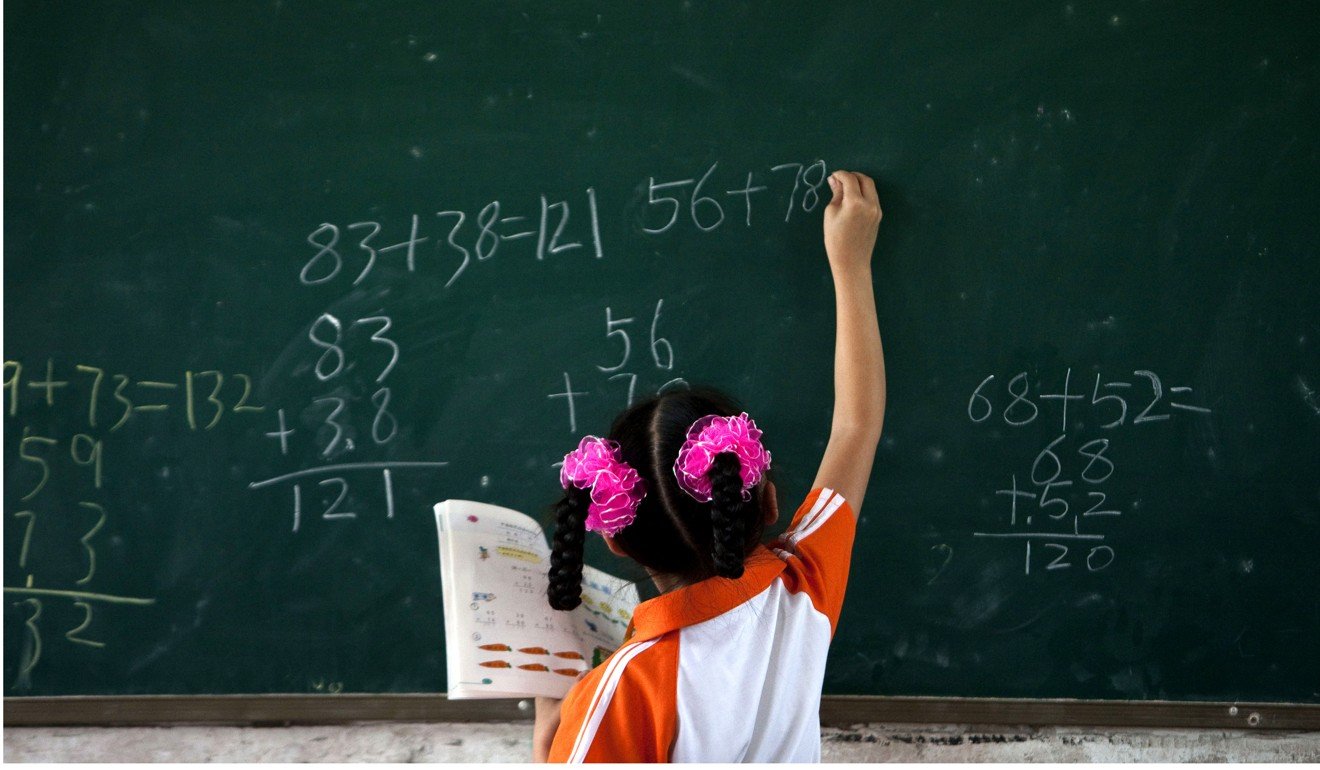
Sixty per cent of mainland Chinese children aged from three to 15 are receiving extra tutoring outside the classroom, according to a report. Photo: Handout

More than 40 per cent of Chinese parents feel they have no choice but to send their children to after-school classes because of the intense competition in the education system, according to an online poll.

But just a quarter of the respondents said they thought the extra tutoring was actually necessary for their children.

Nearly 200,000 parents had responded to the survey, conducted by social network Weibo, by Tuesday.

It comes after a report last week said 60 per cent of children aged between three and 15 in mainland China were receiving extra tutoring outside the classroom.

That report, released by the China National Children’s Centre and the Social Sciences Academic Press, also said parents of children in the age range were spending an average of 9,200 yuan (US$1,290) per year on after-school classes to cope with growing academic pressure.

It was based on a survey of nearly 15,000 children in 10 mainland cities and rural areas.

For the children, that meant they were spending an average of less than two hours playing outside on weekends, according to the report. They were also found to be devoting an average of 88 minutes a day to homework on school days.

Chinese parents send their children to a wide range of after-school classes. Photo: Xinhua

Wu Hong, a researcher from the Dandelion Education Think Tank in Chongqing, said the findings reflected the widespread anxiety of parents over their children getting places at the top schools.

“Many parents don’t have their own ideas about how their kids should be educated and they just follow others blindly. For example, a friend of mine said she plans to send her two five-year-olds to an international school in Thailand just because several of her friends did that,” Wu said.

“It’s not that kids should not attend any after-school classes, but we are apparently giving them too much when they’re so young, and this is only limiting their imagination.”

Last go at exam success for China’s ‘gaokao grandpa’

Studying a wider range of subjects in more depth than the public school syllabus requires and getting a head start by going over topics before they are covered in school have become common tactics used by parents trying to help their children compete in a challenging educational environment in China.

In the more affluent cities, some parents are spending a lot more than the average on their children’s extracurricular activities. Shanghai mother Emma Jin said she wanted to give her daughter, who is in Year Two, a good chance in the education system.

“Extra English classes cost 20,000 yuan for a year. She also takes dance classes, taekwondo and so on,” Jin said. “I don’t expect much from her, but I don’t want her to be the worst in the class either.”

Some parents said the pressure came from the schools.

“My child is studying at a public school. The teacher told us to have our child learn pinyin [the mainland’s system of romanisation of Mandarin script] in advance at after-school classes during the admission interview. Should I have just disregarded his advice?” one parent commented on Weibo.

‘Heavy burden’ of homework leaving Chinese children sleep-deprived, study finds

The heavy pressure on children from extra classes has meanwhile prompted the Ministry of Education to issue several directives to schools asking them to pay more attention to pupils’ well-being – including by encouraging them to get at least one hour of outdoor exercise and 10 hours’ sleep a day. Last year, it also banned cram schools from holding competitions or offering classes to children that were too advanced for their age.

Source: SCMP

01/07/2019

Why West means best for middle-class parents fleeing the Chinese education system

  • International schools and companies offering extracurricular services have sprung up to prepare children to study overseas
  • Families disenchanted with exam-based classes and intense competition for tertiary places look offshore for alternatives
A group of young Chinese students tour the University of Cambridge in England. Photo: Alamy
On a sunny summer’s day, 24 schoolchildren head off on a four-day field trip to Guizhou province in southwestern China.
The children, aged eight to 16, have gone into the far reaches of the mountainous province not to see its picturesque Huangguoshu waterfall or to meet people from the ethnic Miao minorities. Instead, they are there to see the Five-hundred-metre Aperture Spherical Telescope, or Fast – the world’s biggest radio telescope, built in 2016.
The trip was organised by All in One Education, a Shenzhen-based company offering extracurricular classes and educational trips for Chinese students who aim to study abroad.
The agency has organised similar trips to Hebei and Yunnan provinces, catering to parents who want to expand their children’s horizons.
“This kind of experience is not usually available to students who follow the traditional Chinese education model, but it does appeal to those who go to international schools and schools that emphasise exploration,” Zhang Yong, the teacher leading the field trip, said.

Zhang said other agencies in China arranged educational trips abroad, including to universities such as Harvard and Oxford.

Many Chinese parents want their children to have a broader education than they get in the public schools system. Photo: Reuters

The companies are part of an industry targeting an ever-growing market of parents who have high expectations for their children and who are anxious to ensure their children go to the best schools they can afford.

The services are also aimed at parents who see studying abroad as a way to avoid the intense competition and discipline of the Chinese education system.

Crunch time as gaokao exam season starts for China’s university hopefuls

An overseas education has long been reserved for the privileged few in China but it is becoming more of an option as people become more affluent and more services open up to cater to the demand to give the best to the next generation.

According to the Ministry of Education, 662,100 people studied abroad last year, 53,700 more than in 2017.

For Shanghai parent Iris Wang the best means a Western university. She said that not only were Western universities better than their Chinese equivalents but she had also lost faith in China’s secondary education system.

With her daughter starting at an international middle school in September, Wang is now planning for the child to go overseas for experience and study.

She said that although the teachers working in public schools in China were responsible, the system itself was too rigid.

“In summer, the pupils have to take naps at noon, and teachers write down the names of those who don’t sleep and tell their parents,” she said. “And even if you don’t want to take nap, you are not allowed to take a walk or talk; you must rest your heads and arms on the table.”

Many middle-class Chinese parents are seeking alternatives to the public education system. Photo: AP

Such rules are common in Chinese public schools and meant to instil a sense of discipline among the pupils.

“But educating kids is not the same as making a product on an assembly line,” Wang said.

By withdrawing her daughter from the public system, Wang has forfeited her child’s chance to go to a Chinese high school or university.

It’s a route more Chinese parents are taking, according to a report released in April by the Social Sciences Academic Press and the 21st Century Education Research Institute, a Beijing-based think tank. In 2018, there were 821 international schools in China, up 12 per cent from a year earlier.

Wang has not just sent her daughter to an international school but has also begun researching the next steps, convinced that her daughter should leave China early to better adapt to university abroad.

“She will need to learn the language, develop a different learning mindset, as well as adapt to the lifestyle there,” Wang said.

China’s infamous gaokao university entrance exam

Shenzhen mother Yao Li has also decided that an early exit from the Chinese education system would be good for her daughter, who is still in primary school.

Yao plans to send her daughter to an international secondary school so she can receive a Western education and eventually apply to schools abroad.

Compared with the traditional Chinese education, which focused on exams as measures of excellence, an international education could give a child more possibilities, she said.

“The competition in China for a good education is so fierce that my child will not have sufficient room for development if she stays here,” she said. “We hope that she can become more international and have more diverse abilities as well.”

Why did one of China’s elite universities need to offer big money to get the best students?

Yao has already signed her daughter up for extracurricular classes such as English, art and public speaking, hoping that she can develop a diverse set of skills instead of focusing on academic results alone.

Zhang, the teacher at All In One Education, said there was a huge market in China catering to parents who are interested in such classes.

“The reason is simple, the university entrance examination in China is very difficult,” Zhang said. “So parents in areas like Shenzhen who are doing well will send their children abroad to study instead.”

But making the decision to send a child to an international school is just the start. For the middle-class parents who are preparing their children early, there are many more decisions to make, many more classes to attend and many more tests to take.

“We will have to think about which country to send her to in a year or so,” Wang from Shanghai said. “The options are different and so are the preparations – even the language tests required are different, one is TOEFL, one is IELTS.”

Source: SCMP

Law of Unintended Consequences

continuously updated blog about China & India

ChiaHou's Book Reviews

continuously updated blog about China & India

What's wrong with the world; and its economy

continuously updated blog about China & India