12/09/2019
BEIJING (Reuters) – China and Malaysia have agreed to set up a joint dialogue mechanism for the disputed South China Sea, the Chinese government’s top diplomat said on Thursday after meeting Malaysia’s foreign minister.
Recent Chinese naval deployments in the strategic waterway, through which more than $3.4 trillion worth of goods are transported annually, have reignited tension with Vietnam and the Philippines. Malaysia, Brunei and Taiwan also have competing claims in the South China Sea.
Malaysia had been critical of China’s South China Sea position, but has not been excessively outspoken recently, especially after China pumped in billions of dollars into infrastructure projects under its Belt and Road Initiative.
Malaysia regularly tracked Chinese naval and coastguard vessels entering Malaysia’s territorial waters, but China respects Malaysia and had “not done anything that caused us trouble, so far”, Defence Minister Mohamad Sabu told Reuters last month.
Chinese State Councillor Wang Yi told a news conference with Malaysian Foreign Minister Saifuddin Abdullah that this year, tensions in the South China Sea had dropped.
Littoral states and China were committed to continue appropriately handling the South China Sea issue and jointly safeguard peace and stability there, said Wang, who is the Chinese government’s top diplomat.
“To this end, our two sides have agreed to set up a bilateral consultation mechanism for maritime issues, a new platform for dialogue and cooperation for both sides,” he said.
Abdullah, who referred to Wang as “my brother”, said the mechanism would be led by the two countries’ foreign ministries.
“Our officers will be discussing the details, but I think this is one important outcome of the meeting today and also the 45 years of our diplomatic relations,” he said.
China is debt-heavy Malaysia’s biggest trade partner and the countries have close cultural ties too.
In July, China and Malaysia resumed construction on a train project in northern Malaysia, which is part of China’s Belt and Road plan, after a year-long suspension and following a rare agreement to cut its cost by nearly a third, to about $11 billion.
Source: Reuters
Posted in Belt and Road Initiative, Belt and Road Initiative (BRI), belt and road plan, Brunei, China alert, coastguard vessels, defence minister, dialogue, infrastructure projects, Littoral states, Malaysia, Malaysian Foreign Minister, mechanism, Mohamad Sabu, naval deployments, naval vessels, Philippines, Reuters, Saifuddin Abdullah, set up, South China Sea, State Councillor Wang Yi, strategic waterway, Taiwan, Uncategorized, Vietnam |
Leave a Comment »
06/09/2019
- Material that generates heat from sunlight could provide self-maintaining water supply on remote islands
An international research team used solar power to generate a supply of drinking water. Photo: Chinese Academy of Sciences
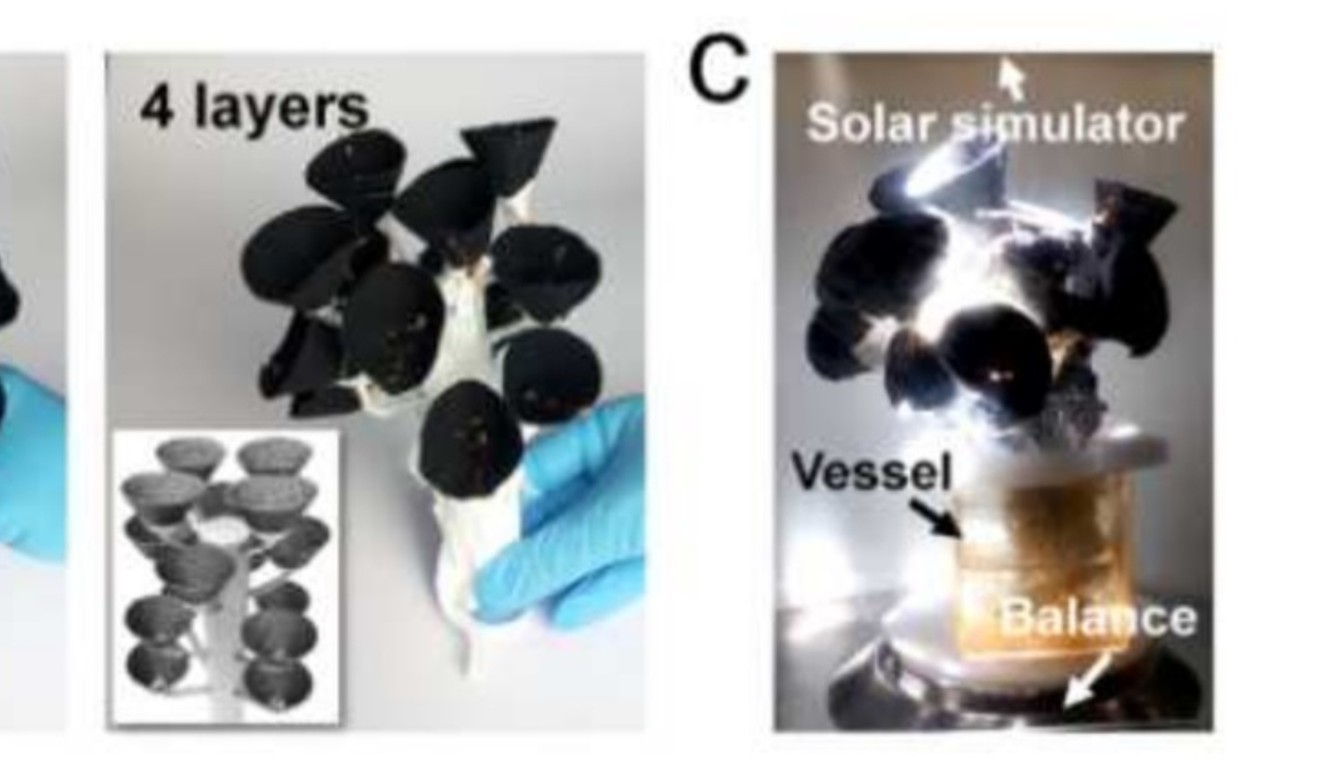
A Chinese-led international research team has created a “tree” that can generate clean drinking water.
Drawing its energy entirely from the sun just like a real tree, the “water tree” has a root made of cotton fabric that can absorb water from its surroundings, such as from sand on a beach.
After water moves up the stem, it is vaporised by “leaves” made of black-carbon paper cones that convert light energy to heat, reaching nearly 50 degrees Celsius (122 Fahrenheit). The tree sits in a glass chamber with a relatively cool surface that collects the vapour.
Using standard cotton fabric and a new nanomaterial that can be cheaply mass-produced from charcoal, a paper cone with a surface area as large as 1 square metre would cost only US$2, according to the researchers.
The cones, which function like leaves, could be mass-produced cheaply, researchers say. Photo: Chinese Academy of Sciences
A cone that size can generate up to 3.4kg (7.5lbs) of condensed water per hour, faster than any other solar-powered desalination methods previously reported.
Even on a cloudy day, the total output in seven hours of sunlight can reach 5.4kg, or three times the amount the typical adult needs to stay hydrated.
One tree can have multiple layers of branches, each with several cones to increase the vapour-producing surface area.
The study, published this month in the journal Nano Energy, was led by Professor Chen Tao at the Chinese Academy of Sciences’ Ningbo Institute of Material Technology and Engineering in Zhejiang province, and also involved researchers from Singapore and Taiwan.
World’s thirst for fresh water is causing a big toxic problem
One of the paper’s co-authors, Dr Ouyang Jianyong, associate professor at the National University of Singapore’s department of materials science and engineering, told the South China Morning Post that the technology could be applied in remote places such as on islands in the South China Sea.
“It is particularly useful for isles far away without a stable drinking water supply,” Ouyang said. “These ‘trees’ may not be able to quench the thirst of a large city, but they can meet the critical demand of a small community, especially in emergencies.
“We are already in contact with some companies [to commercialise the technology],” he added.
The material used to make the cone has several advantages, according to Ouyang. The cones can absorb a wide spectrum of sunlight, maximising the amount of energy they can collect, and their porous structure allows them to release vapour quickly.
Lawmakers endorse plan for HK$7.7 billion desalination plant
When used to desalinate a supply of seawater, the trees would be self-cleaning at night, by water washing away salt residue without being vaporised as it would during sunlight hours.
The vapour-producing fabric is as thin and lightweight as a few sheets of paper. It can be folded and sewn into almost any shape, or cleaned in a washing machine, and can operate effectively for several years in a harsh environment, the researchers say.
The condensed water meets stringent safety standards for direct drinking set by the World Health Organisation, according to the researchers.
Source: SCMP
Posted in Chinese Academy of Sciences, cleaned, department of materials science and engineering, desalinate, desalination plant, Drinking water, lawmakers, Nano Energy, National University of Singapore, night, Ningbo Institute of Material Technology and Engineering, paper, remote islands, sea, Seawater, self-cleaning, self-maintaining water supply, sewn, shape, sheets, Singapore, solar-powered ‘tree’, solar-powered desalination methods, south china morning post, South China Sea, Taiwan, turns, Uncategorized, vapour-producing fabric, washing machine, World Health Organisation, zhejiang province |
Leave a Comment »
31/08/2019
Chinese Premier Li Keqiang meets with Philippine President Rodrigo Duterte at the Great Hall of the People in Beijing, capital of China, Aug. 30, 2019. (Xinhua/Ding Lin)
BEIJING, Aug. 30 (Xinhua) — Chinese Premier Li Keqiang said Friday that the common interests between China and the Philippines far outweigh the differences in his meeting with visiting Philippine President Rodrigo Duterte.
Li said that China is willing to cooperate with the Philippines on the basis of mutual respect, equality and mutual benefit, and seek better synergy between the Belt and Road Initiative and the Philippines’ “Build, Build, Build” program, so as to promote sustained, stable and healthy development of bilateral relations and cooperation.
Li said that the current situation in the South China Sea is generally stable and the countries in the region are living in peace.
China always acts with the greatest sincerity and is willing to work together with the Philippines and ASEAN countries to achieve the Code of Conduct (COC) in the South China Sea in the period when the Philippines serves as a coordinating country for China-ASEAN relations, said Li.
Li also expected joint efforts to promote offshore oil and gas development, and safeguard peace and stability in the South China Sea and the region.
Duterte said the Philippine side is willing to further expand exchanges and cooperation with China in such fields as the economy, trade and people-to-people exchanges, so as to promote bilateral ties and secure the two peoples concrete benefits.
Duterte said the Philippines will never confront China.
On the South China Sea issue, Duterte said Western countries are not COC negotiators and should not hinder the efforts of regional countries in this regard.
He said as the Philippines now is fulfilling its responsibilities as a coordinating country for China-ASEAN relations, the Philippine side will work with China and ASEAN countries to actively promote the adoption of the COC during his term of office.
Duterte also expressed the willingness to push forward common development with China on offshore oil and gas.
Source: Xinhua
Posted in "Build, Build, Build" program, asean countries, Belt and Road Initiative, Belt and Road Initiative (BRI), China alert, China-ASEAN relations, Chinese premier Li Keqiang, Code of Conduct (COC), common interests, differences, Philippine President, Philippines, Rodrigo Duterte, South China Sea, Uncategorized, Western countries |
Leave a Comment »
31/08/2019
- Researchers say system should allow them to track any sound-emitting source – from nuclear subs to whales – using a simple listening device mounted on a buoy, underwater drone or ship
- Breakthrough builds on previous work by team from Beijing and San Diego
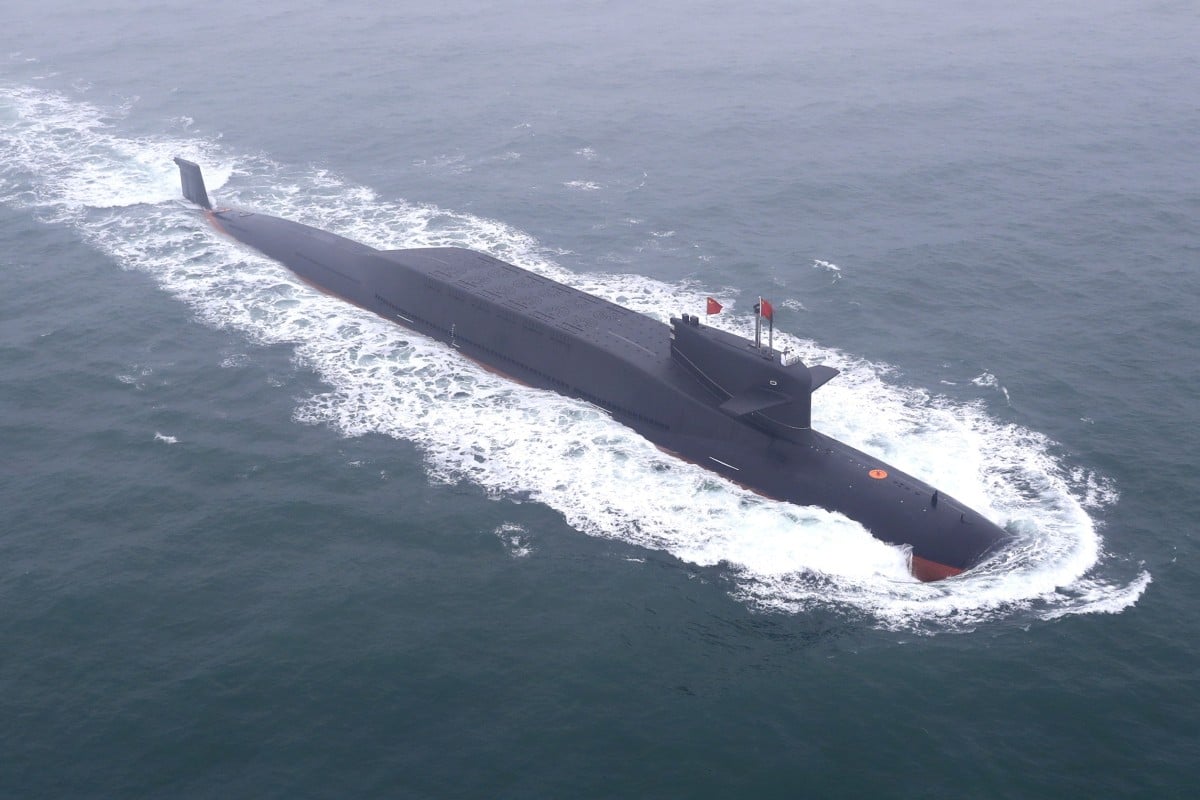
A new AI system developed by Chinese and US scientists could make detecting nuclear submarines possible even in unknown waters. Photo: Xinhua
Scientists from China and the United States have developed a new
artificial intelligence
-based system that they say will make it easier to detect submarines in uncharted waters.
The technology builds on earlier work by the team, led by Dr Niu Haiqiang from the Institute of Acoustics at the Chinese Academy of Sciences in Beijing, which saw them develop a deep-learning algorithm that could improve the speed and precision of detection.
The algorithm, however, needs a large amount of data to work, so its use is limited to waters that have already been fully charted. In contrast, the upgrade works in all waters, charted or otherwise.
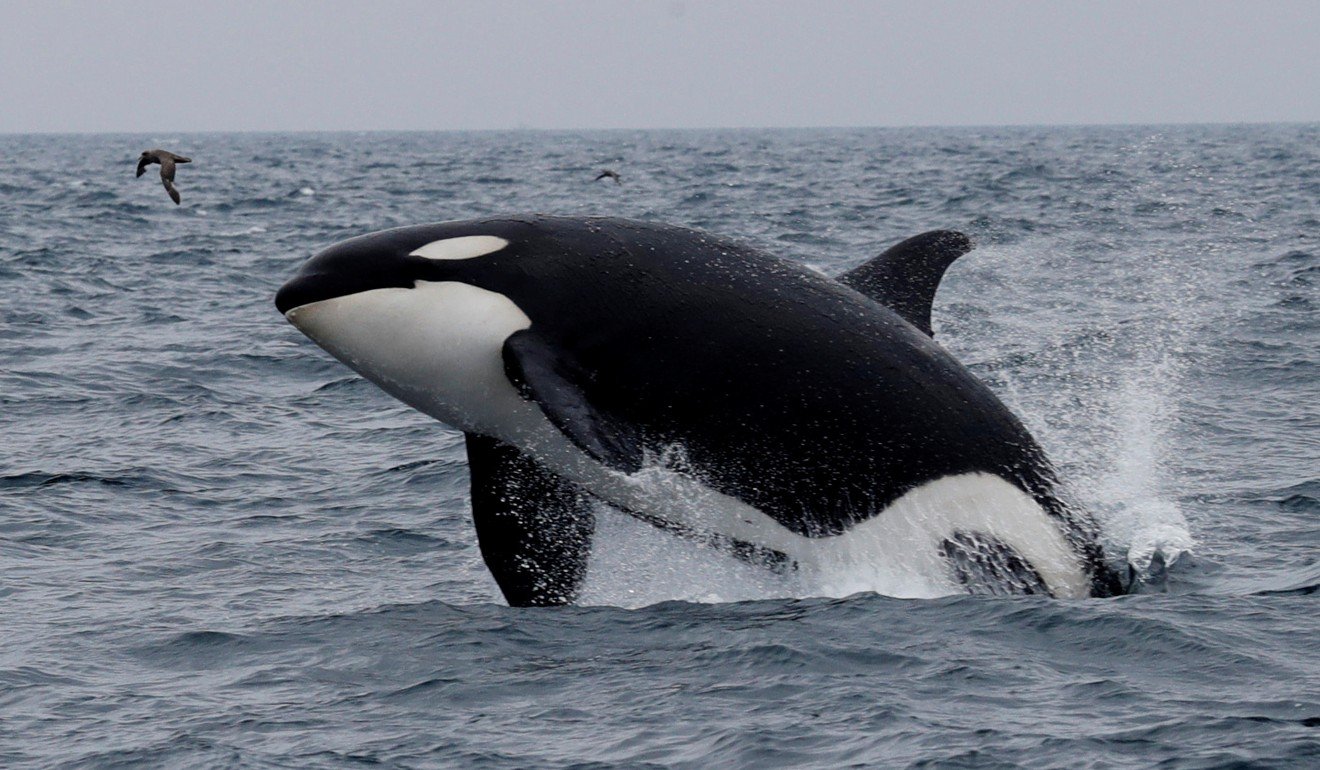
Even killer whales will be unable to hide from the new technology. Photo: Reuters
Niu and his colleagues, who included scientists from the Scripps Institution of Oceanography at the University of California San Diego, started by developing a simulator to generate a wide range of virtual environments from which the algorithm was able to learn.
Once it had assimilated that information, the simulator was able to analyse real-life data taken from the world’s oceans and seas, the team said in a paper published in the July issue of The Journal of the Acoustical Society of America.
It is now able to help a single hydrophone locate more than 80 per cent of underwater targets within an uncharted area with a margin of error of less than 10 metres (33 feet), the paper said.
Chinese monitoring devices installed near US submarine base
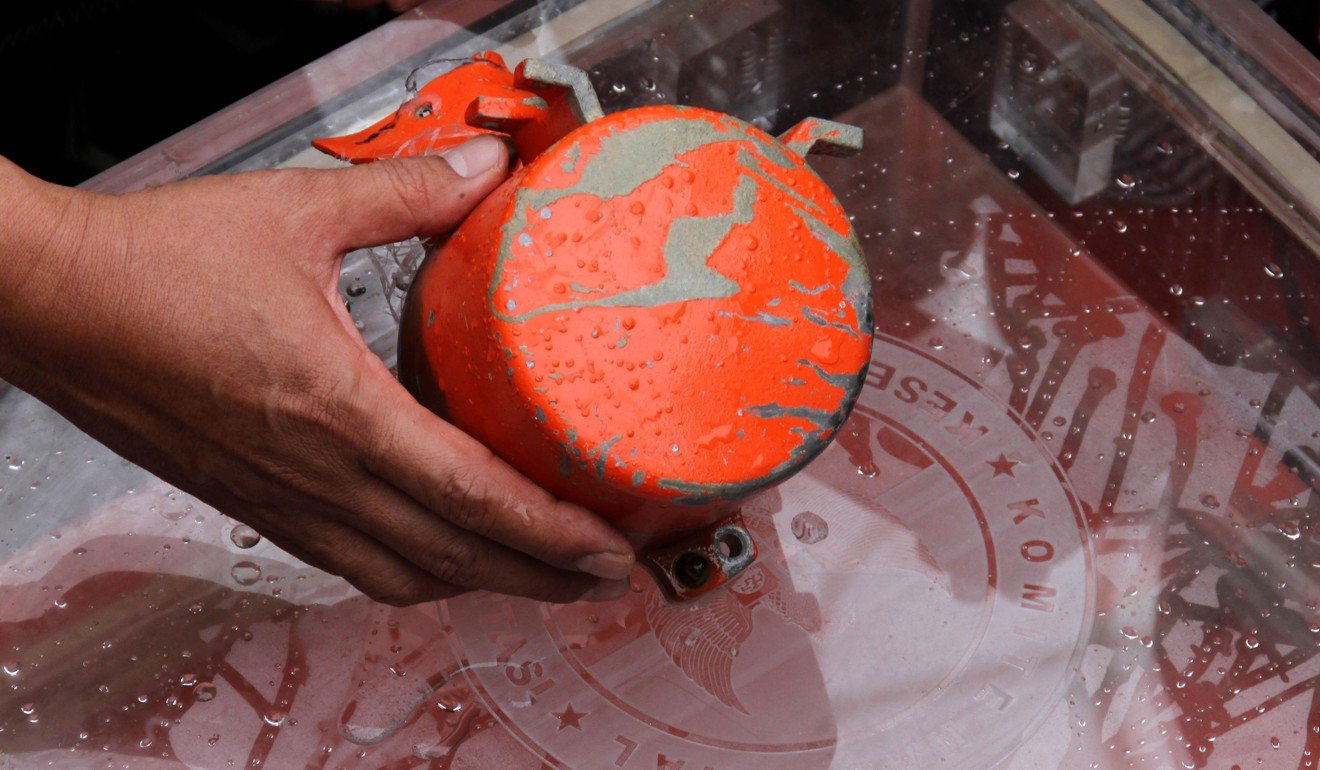
The researchers said the new technology should allow them to track any sound-emitting source – be it a nuclear submarine, a whale or even an emergency beeper from a crashed aircraft – using a simple listening device mounted on a buoy, underwater drone or ship.
The scientists worked together to improve the sensitivity and accuracy of passive underwater surveillance technology, according to the academy’s website.
The new technology might also be able to detect emergency beepers from crashed aircraft. Photo: AFP
Locating targets in unfamiliar waters is challenging because the AI relies on environmental data parameters such as underwater currents and seabed landscapes.
But obtaining such information is not easy, and often impossible.
For instance, the United States does not allow China to collect information in waters close to its west coast, while Beijing forbids the US from getting too close to its military facilities in the South China Sea.
Murder suspect ‘caught by AI software that spotted dead person’s face’
Professor Zhang Renhe, a researcher at the Institute of Acoustics who was not involved in the study, said the latest development was encouraging.
“AI can be a useful assistant to underwater target recognition,” he said. “In a way it is similar to the speech recognition technology on our mobile phones.”
But he said scientists were still wrestling with exactly how the technology worked.
“It is like a black box with some inner workings that are still unexplained,” he said.
Researchers were now working on ways to combine the new AI technology with the physical models for underwater target detection that have been developed in recent decades, Zhang said.
“This is a new frontier for fundamental science,” he said. “It requires international cooperation.”
Source: SCMP
Posted in AI technology, Beijing, breakthrough, buoy, China alert, Chinese Academy of Sciences, Chinese monitoring devices, Chinese scientists, crashed aircraft, deep-learning algorithm, detect, develop, emergency beeper, hydrophone, Institute of Acoustics, international cooperation, listening device, military facilities, mobile phones, Murder suspect, nuclear submarines, researchers, San Diego, Scripps Institution of Oceanography, ship, sound-emitting source, South China Sea, speech recognition technology, submarines, subs, The Journal of the Acoustical Society of America, Uncategorized, uncharted waters, underwater drone, underwater surveillance technology, underwater targets, United States, University of California San Diego, US scientists, US submarine base, west coast, whales |
Leave a Comment »
24/08/2019
HANOI (Reuters) – A Chinese survey vessel on Saturday extended its activities to an area closer to Vietnam’s coastline, ship tracking data showed, after the United States and Australia expressed concern about China’s actions in the disputed waterways.
The Haiyang Dizhi 8 vessel first entered Vietnam’s exclusive economic zone (EEZ) early last month where it began a weeks-long seismic survey, triggering a tense standoff between military and coastguard vessels from Vietnam and China.
The Chinese vessel continued to survey Vietnam’s EEZ on Saturday under escort from at least four ships and was around 102 kilometres (63 miles) southeast of Vietnam’s Phu Quy island and 185 kilometres (115 miles) from the beaches of the southern city of Phan Thiet, according to data from Marine Traffic, a website that tracks vessel movements.
The Chinese vessel group was followed by at least two Vietnamese naval vessels, according to the data.
Vietnam’s foreign ministry did not immediately respond to a request from Reuters for comment.
A country’s EEZ typically extends up to 200 nautical miles (370 kilometres or 230 miles) from its coastline, according to an international UN treaty. That country has sovereign rights to exploit any natural resources within that area, according to the agreement.
Vietnam and China have for years been embroiled in a dispute over the potentially energy-rich stretch of waters and a busy shipping lane in the South China Sea.
China’s unilaterally declared “nine-dash line” marks a vast, U-shaped, expanse of the South China Sea that it claims, including large swathes of Vietnam’s continental shelf where it has awarded oil concessions.
On Friday, Vietnamese Prime Minister Nguyen Xuan Phuc and his Australian counterpart expressed their concern about China’s activities in the South China Sea, known in Vietnam as the East Sea.
Earlier in the week, the United States said it was deeply concerned about China’s interference in oil and gas activities in waters claimed by Vietnam, and that the deployment of the vessels was “an escalation by Beijing in its efforts to intimidate other claimants out of developing resources in the South China Sea”
Chinese Foreign Ministry spokesman Geng Shuang, in response to the U.S. statement, said Washington was “sowing division and had ulterior motives”.
“The aim is to bring chaos to the situation in the South China Sea and damage regional peace and stability. China is resolutely opposed to this,” Geng told a daily news briefing on Friday.
Source: Reuters
Posted in Australia, Beijing, China alert, Chinese ship, coastguard vessels, East Sea, exclusive economic zone (EEZ), Haiyang Dizhi 8, inches closer, international UN treaty, Marine Traffic, military vessels, Nguyen Xuan Phuc, Phan Thiet, Phu Quy island, seismic survey, South China Sea, standoff, survey vessel, tensions, triggering, Uncategorized, United States, Vietnam, Vietnam coastline, Vietnamese Prime Minister, Washington |
Leave a Comment »
22/08/2019
- World’s third largest helicopter assault ship could be launched in a few months, military expert says
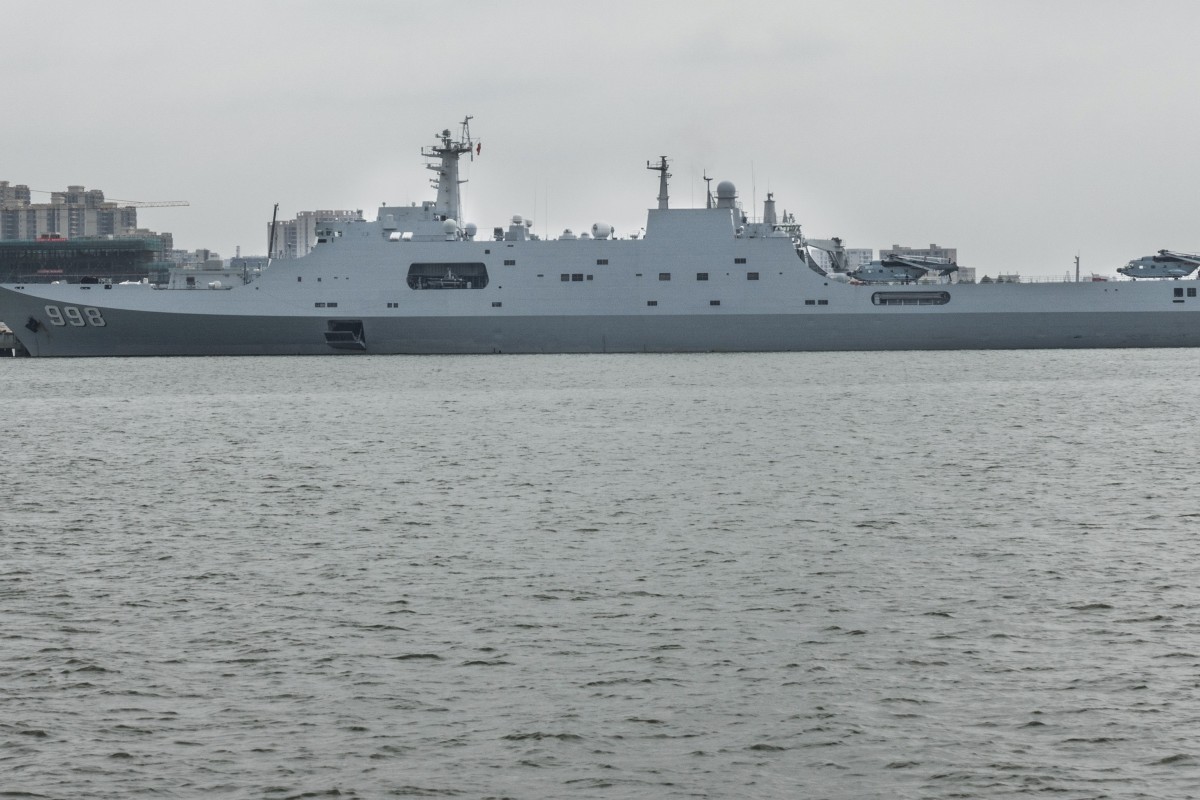
One of China’s previous generation amphibious vessels, the Type 071 Kunlun Shan, launched in 2016. Photo: Chow Chung-yan
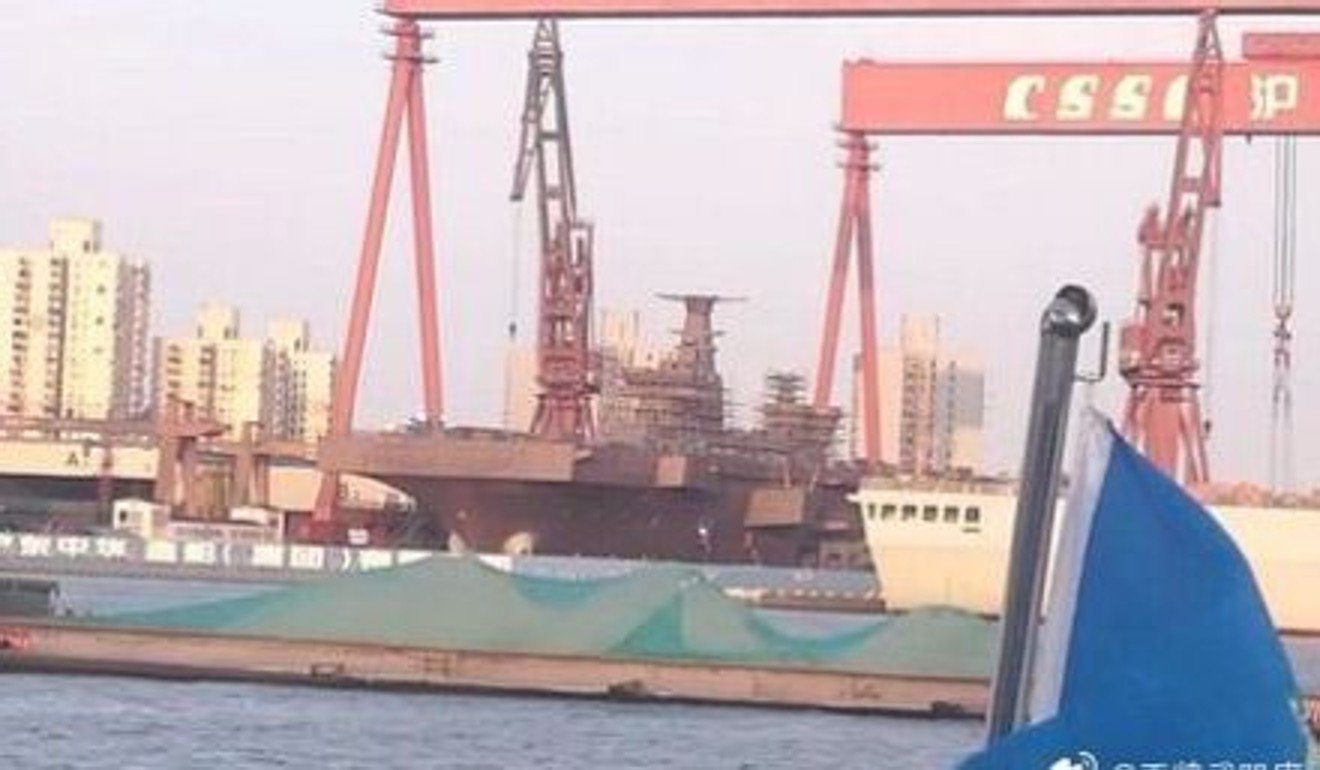
Pictures taken by military enthusiasts earlier this week appear to show that construction of China’s first Type 075 amphibious helicopter assault ship is moving quickly.
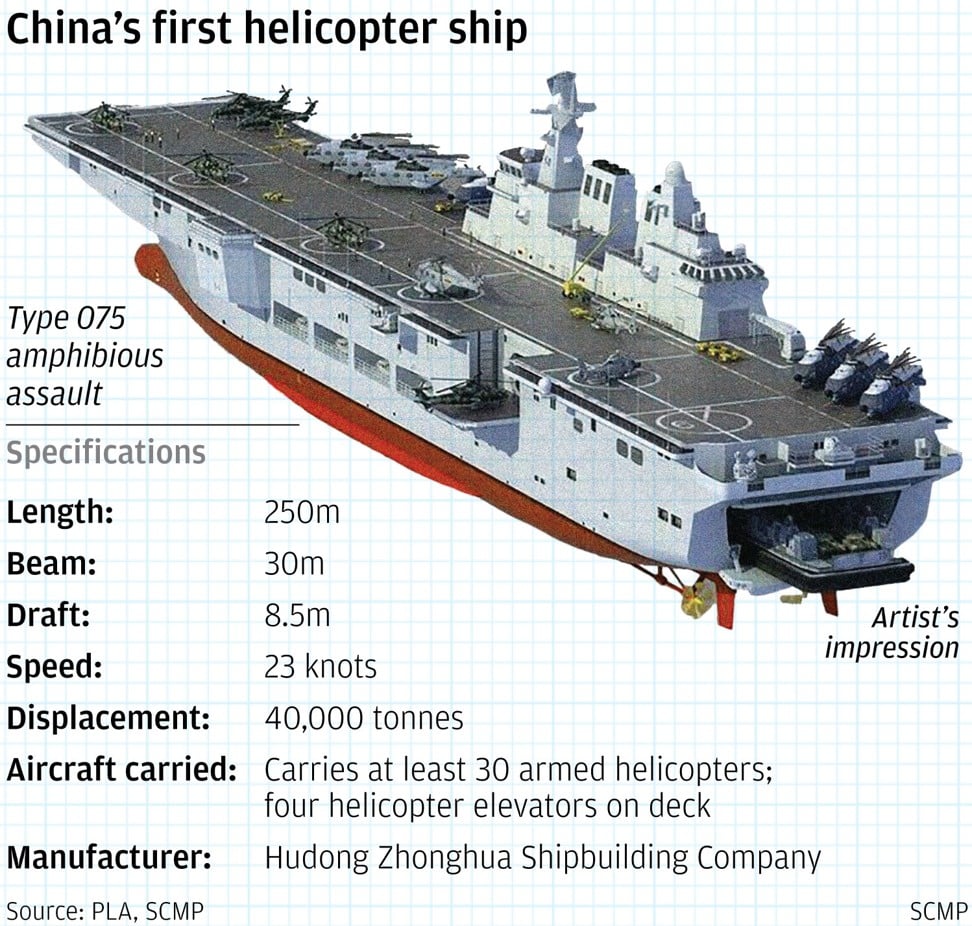
The images, taken outside the dry dock at Shanghai’s Hudong-Zhonghua shipyard, were circulated on Chinese social media and showed scaffolding around two separate superstructures above the flight deck, suggesting the estimated 40,000 tonne ship may have two islands.
In June, commercial satellite images showed the vessel had a 32-metre wide beam, with bow and stern sections yet to be added. In the most recent pictures the bow of the vessel is clearly visible.
The status of the construction suggested the ship would probably be launched in the next few months, according to Song Zhongping, a Hong Kong-based military affairs commentator.
An image of China’s first Type 075 amphibious helicopter assault ship suggests the vessel may be completed in the next few months. Photo: Weibo
Share:
Song said large landing helicopter docks (LHDs) like the Type 075 could play an even more important role than aircraft carriers in the future, following last month’s defence white paper released in Beijing which named protecting China’s overseas interests as one of the key missions of its military forces.
“LHDs are a central part of a blue water navy, because an LHD has a full range of weapons with a lot more marine troops for potential ground operations, whereas an aircraft carrier is just a mobile airbase,” he said. “Each time the Americans deploy their forces overseas, LHDs always serve as the vanguard.”
The PLA Navy has ordered several LHDs in recent years, at the same time as Beijing’s claim to the disputed South China Sea has been challenged and the relationship with Taiwan strained
China claims almost all islands and reefs in the South China Sea, many of which are occupied by rival claimants, and reserves the right to use force to reunify Taiwan, which it sees as a breakaway province.
Five Type 071 25,000 tonne amphibious landing dock ships have been launched since 2016, of which three have been commissioned and two are on sea trials.
It is believed China’s first batch of Type 075 craft will consist of three ships. The Type 075 will be the world’s third largest amphibious assault ship, behind only the US Wasp-class (41,000 tonnes) and America-class (45,000 tonnes). It is significantly bigger than Japan’s Izumo-class (26,000 tonnes), and France’s Mistral-class (21,000 tonnes).
The Type 075 will be able to carry up to 30 helicopters, as well as a number of amphibious tanks, armoured vehicles, jet boats, and hundreds of marine troops.
Its massive flat deck could also accommodate vertical take-off and landing fighters such as the F-35B. This capability would enable the ship to operate as a light aircraft carrier, in a similar function to the way the US military uses LHDs. However, China currently does not yet have any vertical take-off jets.
Source: SCMP
Posted in Aircraft carrier, aircraft carriers, Americans, amphibious helicopter assault ship, amphibious tanks, armoured vehicles, Beijing, blue water navy, completion, dry dock, France’s Mistral-class, helicopter assault ship, helicopter ship, helicopters, Hudong-Zhonghua shipyard, Japan’s Izumo-class, jet boats, Kunlun Shan, landing helicopter docks (LHDs), marine troops, military enthusiasts, mobile airbase, pla navy, Shanghai, South China Sea, Taiwan, Uncategorized, US Wasp-class, vertical take-off and landing fighters |
Leave a Comment »
14/08/2019
- New facility is designed to help scientists study particles that help deflect cosmic rays in the high atmosphere
- Despite scepticism among some scientists, those familiar with the project insist radar will have a range about 10 times greater than existing ones
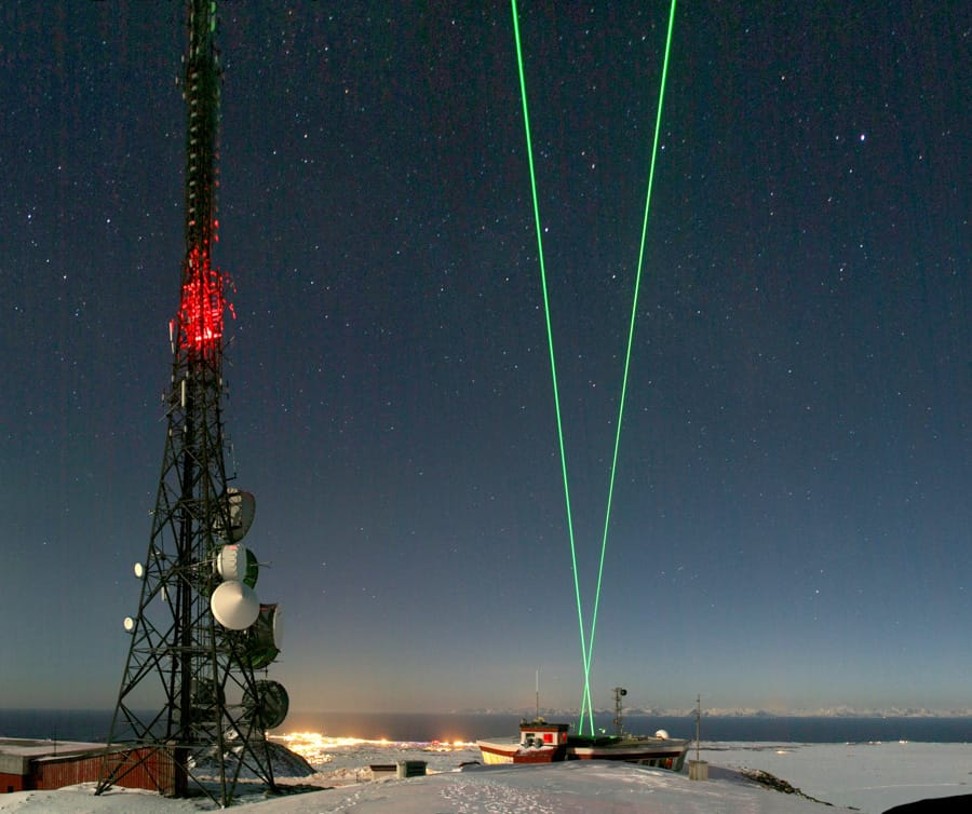
When completed the new laser radar will be used to study the high atmosphere. Photo: Handout
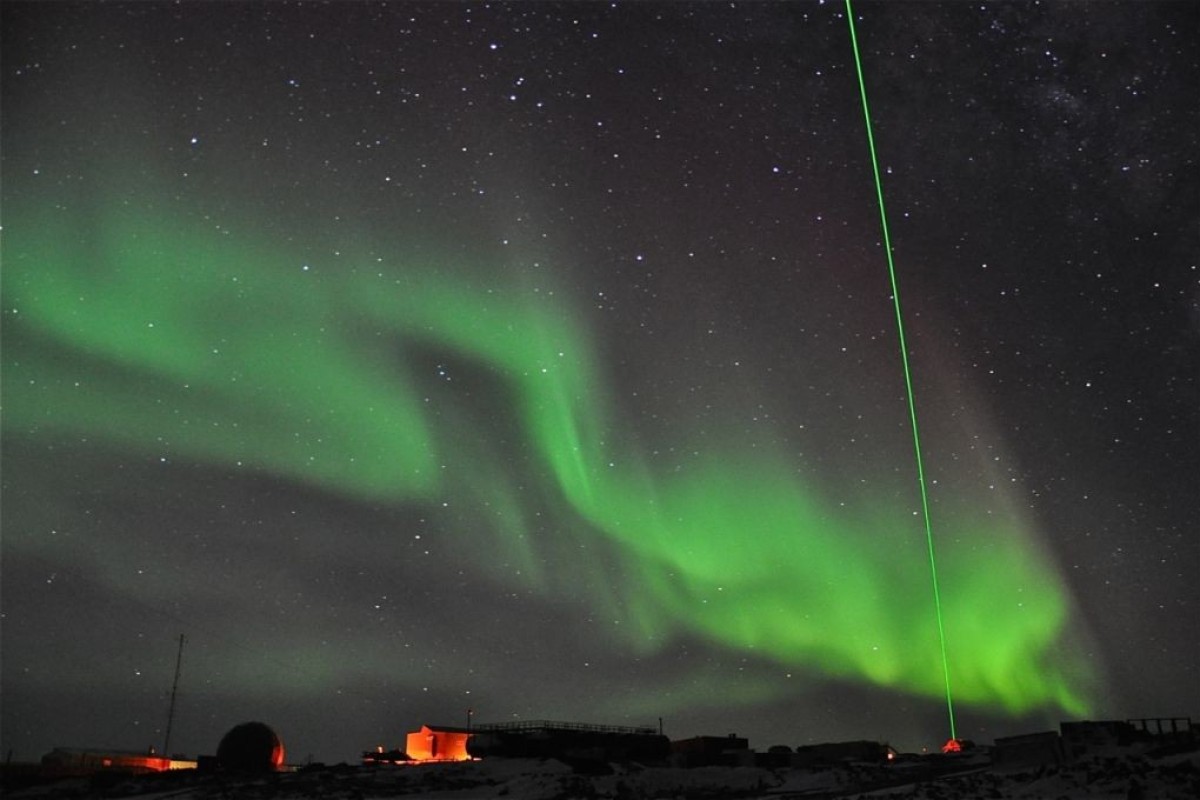
China has started building the world’s most powerful laser radar designed to study the physics of the Earth’s high atmosphere, according to state media reports and scientists informed of the project.
It is described as having a detection range of 1,000km (600 miles) – 10 times that of existing lasers – and will be used to study atmospheric particles that form the planet’s first line of defence against hostile elements from outer space such as cosmic rays and solar winds.
The facility, to be built on a site that remains classified, is expected to be up and running within four years and will form part of an ambitious project to reduce the risk from abnormal solar activities.
The radar will use a high-energy laser beam that can pierce through clouds, bypass the International Space Station and reach the outskirts of the atmosphere, beyond the orbiting height of most Earth observation satellites.
Lasers help tell ghostly story of doomed Nazi submarine U-576 and its entombed crew
There, the air becomes so thin that scientists will be able to count the number of gas atoms found within a radius of several metres.
These high-altitude observations could greatly expand our knowledge of a part of the atmosphere that has been little studied because the distances involved mean no one has been able to make direct observations from the ground.
“The large-calibre laser radar array will achieve the first detection of atmospheric density of up to 1,000km in human history,” said a statement posted on the website of the Chinese Academy of Sciences on Tuesday, a day after the launch of the project.
But the claim has been greeted with some scepticism in the scientific world.
“I think the 1,000km is a misprint!” professor Geraint Vaughan, director of observations at the National Centre for Atmospheric Science in the UK, replied when asked about the project.
Vaughan, who is also a Fellow of the Royal Meteorological Society, said that while he thought the Chinese announcement was “very interesting”, it did not seem possible with existing technology.
At present, the effective range of atmospheric lasers is about 100 kilometres.
Some other senior scientists in China and overseas also expressed doubt about the project, although they requested anonymity due to the sensitivity of the issue.
US warns airmen to beware of laser attacks near China’s military base in Djibouti
“There are other approaches, such as launching a satellite. Building such a huge, expensive machine on the ground does not make sense,” said a Beijing-based laser scientist.
But several researchers told the South China Morning Post that the project did exist, and insisted that 1,000km range was not a mistake.
Hua Dengxin, a professor at Xian University of Technology and a lead scientist in China’s laser radar development programmes, said: “I have heard of the project, yes. But I cannot speak about it.”
Powerful telescopes will pick up the signals reflected back to earth. Photo: Handout
According to publicly available information, the facility will use several large optical telescopes to pick up the faint signals reflected by the high-altitude atoms when the laser is fired at them.
The project is part of the Meridian Space Weather Monitoring Project, an ambitious programme that started in 2008 to build one of the largest, most advanced observation networks on Earth to monitor and forecast solar activities.
By 2025 Meridian stations containing some of the world’s most powerful radar systems will be established across the world – with facilities in Arctic and Antarctic, South China Sea, the Gobi desert, the Middle East, Central Asia and South America.
China in race for counter-drone tech and laser weapons as it tries to catch up with US
The purpose of the Meridian project, according to the Chinese government, is to reduce the risk abnormal solar activities pose to a wide range of Chinese assets including super-high voltage power grids, wireless communication, satellite constellations, space stations or even a future base on the Moon.
Chinese laser scientists have developed some of the world’s most sophisticated systems in recent years, including ranging stations that can track the movement of satellites and space debris, which the Pentagon has claimed have temporarily blinded some American scientists.
Last year researchers based in Xian, the capital of Shaanxi province, announced that they had developed a “ laser AK-47” that could set fire to target from a distance of 800 metres.
The Chinese government is also funding the development of a laser satellite that can penetrate seawater to a depth of 500 metres from space to detect the waves generated by submarines.
The use of such a powerful laser raises concerns that passing objects such as planes, satellites or spacecraft – to say nothing of birds – may be at risk from its beams.
But Professor Qiao Yanli, engineer in chief at the Anhui Institute of Optics and Fine Mechanics, part of the Chinese Academy of Sciences, said there was an “extremely low” risk of this happening.
“The sky is enormous. Getting hit by a tiny beam is almost impossible,” he said.
Some much smaller laser radars, such as those installed in auto-driving test vehicles, have reportedly damaged digital cameras by burning a few pixels on sensor.
But spacecraft such as earth observation satellites, according to Qiao, usually have some protection mechanisms, such as a warning system, to avoid permanent damage caused by an accidental laser hit.
‘Laser AK-47’? Chinese developer answers sceptics with videos of gun being tested
Professor Li Yuqiang, a researcher at the Yunnan Observatories in Kunming, whose team has measured the distance between the Earth and the Moon by shooting lasers at a reflector placed on the lunar surface during the US Apollo 15 mission, said detecting atom-sized targets on the fringes of the atmosphere posed many technical challenges.
“The number of photons [particles of light] reflected by the sparse gas particles will be very small. Even if they can be picked up by large telescopes on the ground, the analysis will require some very good algorithms to separate the useful signals from the noise,” Li said.
“How that can be achieved is beyond the scope of my knowledge.”
Source: SCMP
Posted in algorithms, Anhui Institute of Optics and Fine Mechanics, Antarctica, Arctic, Building, Central Asia, China alert, Chinese Academy of Sciences, Djibouti, Earth's solar shield, Gobi Desert, high atmosphere, International Space Station, Kunming, Meridian Space Weather Monitoring Project, Middle East, Moon, National Centre for Atmospheric Science, Nazi submarine, Pentagon, physics, powerful laser radar, Royal Meteorological Society, shaanxi province, south china morning post, South China Sea, study, Uncategorized, Xi'an, Xian University of Technology, Yunnan Observatories |
Leave a Comment »
14/08/2019
- Developers say their prototype craft could dive to 1,000 metres in five minutes
- Liu Kaizhou, who also worked the Jiaolong submersible, says ‘We are in uncharted water’
Professor Liu Kaizhou, who developed the autopilot for China’s manned Jiaolong submersible, says his team has designed a vessel that can move through water like a plane moves through the air. Photo: Xinhua
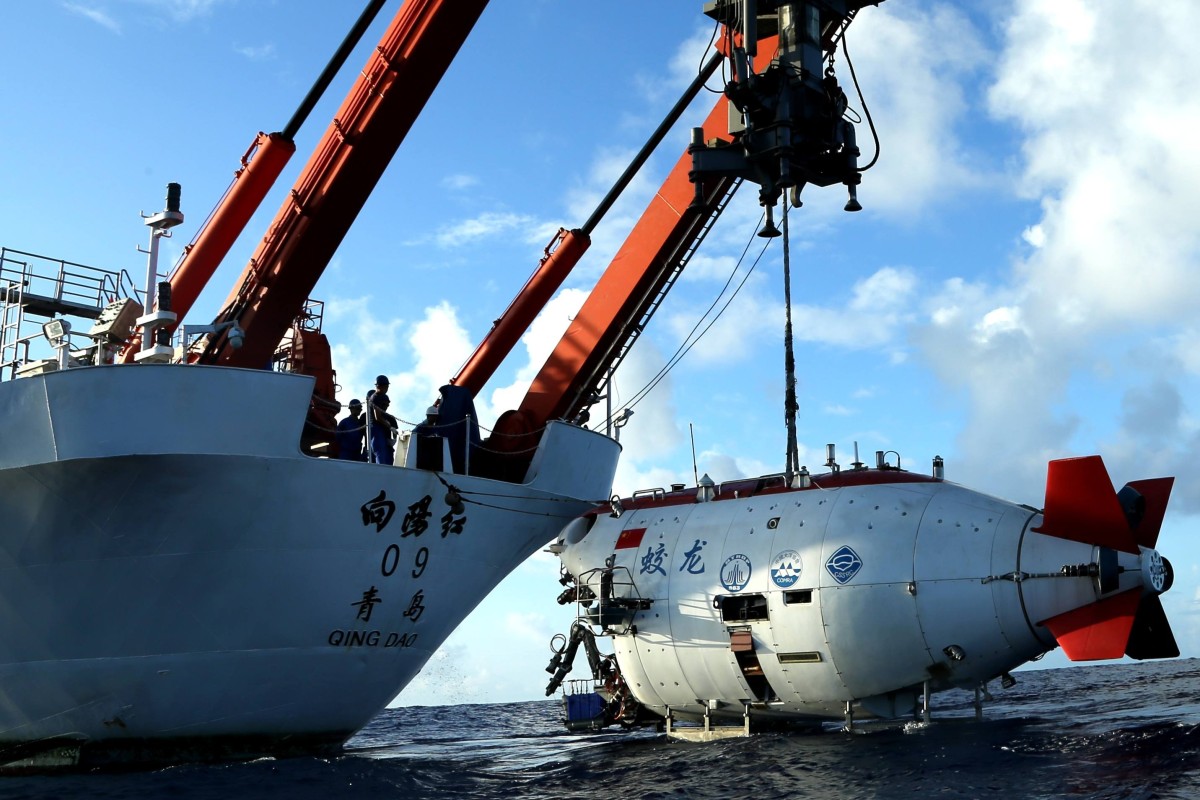
Chinese engineers say they are developing a radical design for a super-fast robot submersible which the project leader, who worked on the manned deep-sea vessel Jiaolong, or Sea Dragon, claims can “fly” in water like a plane travels through the air.
At 3 metres (9.8ft) long, the prototype consists of a cigar-shaped body, with a guidance system in the bow and a jet plane style rudder and a propeller in the stern.
Outriggers house batteries and two more propellers. These are attached to the body by wing-like planes that the developers said will give the vessel the kind of lift in water that takes an aeroplane into the air and back to the earth.
Developers said the prototype will be capable of 10 knots and could dive to a depth of 1,000 metres (3,281 feet) – or surface from that depth – at about three metres a second, taking about 5½ minutes.
Professor Liu Kaizhou, lead scientist of the project at the Shenyang Institute of Automation, part of the Chinese Academy of Sciences in Liaoning province, said the design had great potential.
If a traditional submarine was like an air balloon, he said, the prototype was like an aircraft. “It is technically flying, fast and freely, like a plane for the water.”
The prototype has 20 major components on board, including a computer, and communications and surveillance equipment. These were all developed and tested by the team, but getting them to work together posed some unexpected challenges, Liu said, meaning the transition to operations in a tough marine environment was some time away.
Underwater station could be a game changer, Chinese scientist says
“We aim to make the first open sea test in about a year,” he said.
The submersible can be powered by conventional batteries or a chemical engine that mixes lithium and sulphur hexafluoride to produce heated steam for electrical generators – an energy source often used by torpedoes.
Funded by the Ministry of Science and Technology from 2017, the project was driven by China’s growing ambition to become a superpower in the world’s oceans.
The team said their submersible had the potential to become the backbone of China’s search-and-rescue operations at sea, naval intelligence gathering, high-precision sea floor mapping, or to transport minerals from the seabed to the surface.
Professor Liu Kaizhou (left) with colleagues Ye Cong and Yang Bo, was instrumental in the success of China’s Jiaolong manned submersible. Photo: Xinhua
Professor Du Tezhuan, a researcher in fluid dynamics at the Institute of Mechanics of the Chinese Academy of Sciences in Beijing, said the design was a bold one but it posed the research team many hard questions.
The density of water was much higher than that of air, he said, which meant the vessel would encounter more drag and would need a strong power source.
“Without sufficient speed, the lift will be weak, and to reach high speeds, lots of energy will be needed. Flying in water is not as easy as flying in the air,” said Du, who was not involved in the project.
Why Beijing is speeding up underwater drone tests in the South China Sea
“But in theory it should work. It is worth a try.”
Liu – who led the design of the autopilot system that can take the Jiaolong to depths of more than 7,000 metres (23,000 ft) – said that after tests on the prototype were complete, other innovations were possible. These included covering the vessel with air bubbles to reduce friction.
“This technology is brand new,” he said. “We are in uncharted water and we are excited by the challenges.”
Source: SCMP
Posted in aeroplane, air, air bubbles, ambition, backbone, batteries, Beijing, bow, challenges, chemical engine, Chinese Academy of Sciences, Chinese engineers, Chinese Ministry of Science and Technology, cigar-shaped body, Communications equipment, computer, conventional batteries, covering the vessel, design, Earth, electrical generators, energy source, fly, friction, game changer, guidance system, heated steam, high-precision sea floor mapping, Institute of Mechanics, jet plane, Jiaolong submersible, Liaoning province, lithium, marine environment, Ministry of Science and Technology, naval intelligence gathering, new submersible, Outriggers, plane, propeller, propellers, prototype craft, robot submersible, rudder, search-and-rescue operations at sea, Shenyang Institute of Automation, South China Sea, stern, sulphur hexafluoride, superpower, surveillance equipment, the Sea Dragon, through water, torpedoes, transport minerals from the seabed, Uncategorized, uncharted water, Underwater station, wing-like planes, world's oceans |
Leave a Comment »
30/07/2019
MANILA, July 29 (Xinhua) — The military-to-military relationship between China and the Philippines has become an important part of the bilateral relations, Chinese Ambassador to the Philippines Zhao Jianhua said on Monday.
“China-Philippines relations have achieved positive turnaround, consolidation and elevation over the past three years, and have entered a new stage of development,” Zhao said in a speech at a reception marking the 92nd anniversary of the founding of the People’s Liberation Army (PLA) of China.
“We have increased contacts and exchanges,” he said, referring to the series of recent military exchanges made by both countries.
In January 2019, the Chinese naval escort fleet, composed of three vessels, paid a five-day friendly visit to the Philippines, he said.
In April 2019, the Philippine Navy sent its amphibious warfare ship BRP Tarlac to participate in the international fleet review during the 70th anniversary celebration of PLA Navy in Qingdao, China, he added.
He further said that members of the Command and General Staff College students of the Armed Forces of the Philippines (AFP) just concluded their educational and cultural tour in China recently.
“PLA stands ready to deepen the mutual understanding, mutual trust and mutual confidence with our Filipino counterparts, and to jointly safeguard regional peace and stability,” Zhao said.
As a result of the concerted efforts of China, the Philippines and other countries in the region, the situation in the South China Sea “has been stabilized in general, with growing momentum for cooperation and increasing positive factors,” Zhao said, adding that China stays committed to peace and stability in the South China Sea.
“China respects and upholds the freedom of navigation and overflight enjoyed by all states under international law in the South China Sea, and stays ready to work with other coastal states and the international community to ensure the safety of and the unimpeded access to the international shipping lanes in the South China Sea,” Zhao said.
For his part, Philippine Defense Secretary Delfin Lorenzana said at the reception that the Philippines is also “committed to the resolution of disputes through peaceful means.”
Lorenzana added that he is looking forward to “more shared endeavors, mutually productive and beneficial cooperation and partnership agreements” with China “to create understanding and friendship between our two nations.”
Source: Xinhua
Posted in amphibious warfare ship, Armed Forces of the Philippines (AFP), BRP Tarlac, China-Philippines ties, Chinese ambassador, Chinese naval escort fleet, Command and General Staff College, Filipino, important part, international shipping lanes, Military-to-military relationship, People's Liberation Army (PLA), Philippine Defense Secretary, Philippine Navy, pla navy, Qingdao, South China Sea, Uncategorized |
Leave a Comment »
28/07/2019
- Hanoi says it has sent several messages to Beijing that a Chinese survey ship vacate the waters located in its exclusive economic zone
- ‘Vietnam resolutely and persistently protects our sovereign rights … by peaceful means on the basis of international laws,’ a foreign ministry spokesperson said
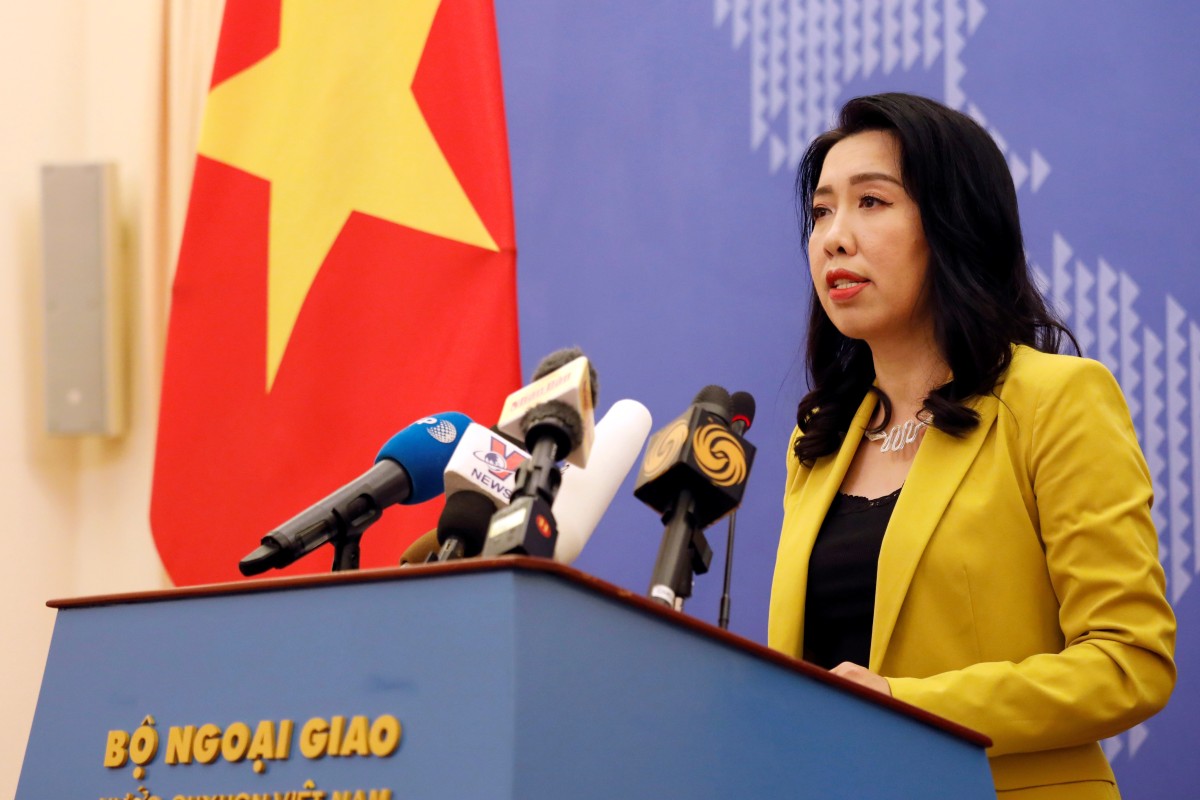
Vietnamese foreign ministry spokeswoman Le Thi Thu Hang. Photo: Reuters
Vietnam on Thursday called for the “immediate withdrawal” of a Chinese ship in the
, as the stand-off over the disputed waters intensified.
Beijing last week issued a new call for Hanoi to respect its claims to the resource-rich region – which has historically been contested by Vietnam, as well as Taiwan, the Philippines, Malaysia and Brunei.
Hanoi responded by saying it had sent several messages to Beijing insisting that a Chinese survey ship vacate its waters, and doubled down on Thursday with new demands for the vessel’s removal.
“Vietnam has had several appropriate diplomatic exchanges … requesting immediate withdrawal from Vietnam’s exclusive economic zone,” a foreign ministry spokesperson told reporters, while refusing to disclose the ship’s precise location.
“Vietnam resolutely and persistently protects our sovereign rights … by peaceful means on the basis of international laws,” Le Thi Thu Hang added.
The ship, owned by the government-run China Geological Survey, begun research around the contested Spratly Islands on July 3, according to the US-based Center for Strategic and International Studies (CSIS).
Before it was spotted, a Chinese coastguard vessel also patrolled near Vietnamese supply ships in a “threatening manner”, CSIS said.
China has not confirmed the presence of its ships in the area.
China’s neighbours boost coastguards as tensions rise in South China Sea
Beijing invokes its so-called nine-dash line to justify its claim to historic rights to the waterway, and has previously built up artificial islands as well as installed airstrips and military equipment in the region.
The line runs as far as 2,000km (1,240 miles) from the Chinese mainland to within a few hundred kilometres of the Philippines, Malaysia and Vietnam.
In 2014 Beijing moved an oil rig into waters claimed by Hanoi, sparking deadly anti-China protests across Vietnam.
The latest stand-off in the sea prompted a swift rebuke from the United States over the weekend, calling for an end to China’s “bullying behaviour”.
US accuses China of acting like a bully in the South China Sea
“China’s repeated provocative actions aimed at the offshore oil and gas development of other claimant states threaten regional energy security,” the US State Department said Saturday.
The US has long called for freedom of navigation in the South China Sea, and on Thursday said it sailed a warship through the Taiwan Strait
Posted in Beijing, Brunei, Center for Strategic and International Studies (CSIS), China Geological Survey, Chinese ship, Chinese survey ship, demand, disputed, Exclusive economic zone, Hanoi, immediate withdrawal, international laws, Malaysia, Philippines, South China Sea, Spratly Islands, Taiwan, Taiwan Strait, Uncategorized, Vietnam |
Leave a Comment »




 CHINDIA ALERT: You'll be living in their world, very soon