

- After a six-month closure, Boracay reopened in October with new rules that prohibit smoking, drinking, dining and littering on the beachfront. But the dos and don’ts seem to have escaped notice, especially among tourists from China and South Korea
-
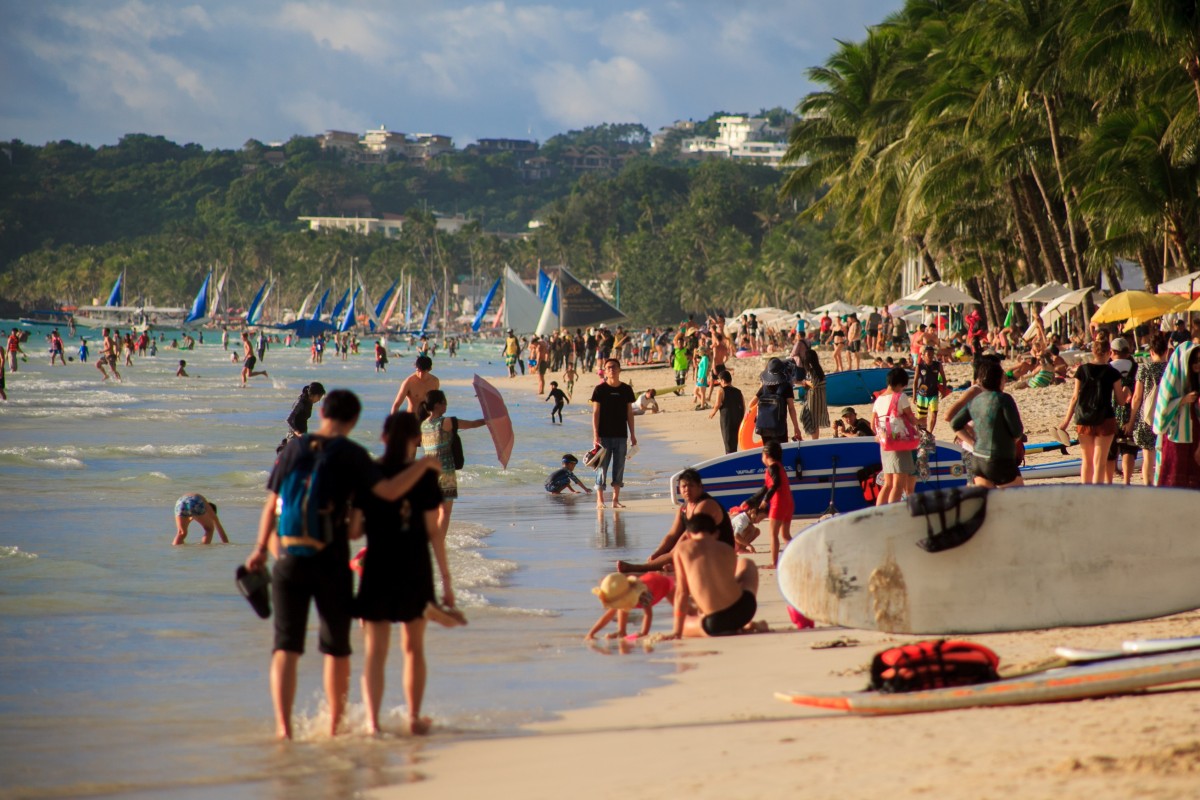 Tourists enjoy Boracay’s famous White Beach in January. Photo: ShutterstockTravel has changed a lot since the 19th century. Obviously. But attitudes towards travellers have not, if the diaries of Francis Kilvert are anything to go by.“Of all noxious animals, the most noxious is a tourist,” the English clergyman wrote in the 1870s, and while Kilvert asserted that it was the British who were “the most vulgar, ill-bred, offensive and loathsome” of them all – a contention that might be challenged today – an increasing number of places across the globe have had their fill of imprudent outsiders, regardless of where they are from.The island of
, in the Philippines, the original face of overtourism in the region, is one of them. In February last year, Philippine President Rodrigo Duterte vowed to
the popular tourist hotspot, saying, “Boracay is a cesspool. It is destroying the environment of the Republic of the Philippines and creating a disaster.” The septic metaphor was no melodrama – a number of hotels, restaurants and other tourism-related businesses were dumping untreated sewage directly into the ocean, contaminating White Beach’s crystalline waters and tarnishing Boracay’s reputation. As Duterte decreed, the island shuttered for six months from April, during which time infrastructure was to be installed and new environmental requirements implemented.
When Boracay, in October, it was heralded as a rare success in the ongoing fight against the tourist menace, despite the fact that thousands of
, the nation’s economic growth had suffered and, heaven forfend, holidaymakers had been forced to cancel hard-earned vacations. And the rehabilitation is far from complete. In January, the Boracay Inter-Agency Task Force, the organisation overseeing the ecological overhaul, announced a 25.3 billion peso (US$485 million) action plan, which, if approved, will fund 233 projects related to the enforcement of laws and regulations, pollution control and prevention, rehabilitation and recovery of the ecosystem, and the sustainability of land activities, according to a report on Philippine news site Rappler.
But still the tourists come, albeit in smaller numbers than before, and just as in pre-closure times, not all of them are welcome; in particular those who pay little attention to the new rules, which prohibit smoking, drinking, dining, littering, partying and fire dancing on the beachfront.A complaint about Chinese tourists, posted to Facebook in April. Photo: Facebook / @philippinesdefenseOn April 29, Wilson Enriquez, the Boracay Tourism Regulatory Enforcement Unit chief, revealed that tourists from China were the worst violators of these regulations, as stated in an article on the Philippines Lifestyle News website. Since the beginning of the year, 739 Chinese had been apprehended.
“Tour guides have informed them about the ordinances but [Chinese tourists] are really stubborn,” Enriquez told the news site. Korean tourists took a distant second, with 277 apprehensions, with most infractions recorded for smoking, eating and drinking on the beach, or littering.
Eighty per cent of the visitors Boracay received in the first quarter of this year hailed from China and South Korea, according to the local tourism office – the former accounting for almost half of all arrivals, 149,019 of 309,591 – so perhaps it is unsurprising that the Chinese break the most rules.
One disgruntled Filipino took to social media (where else) to air their grievance, writing that Boracay had been “teeming with loud, garbage-throwing, spitting everywhere Chinese tourists” during their Holy Week visit, while another told Philippines Lifestyle News, “I saw [Chinese tourists] with my own eyes, breaking ordinances all over the place.”
That there has been a recent rise in anti-China sentiment in the Philippines, a reaction to Duterte’s “love affair” with the Middle Kingdom, according to an article on SupChina’s website, should be noted. But really, if we want to be able to enjoy Boracay, or anywhere for that matter, for years to come, we should all stick to the rules and exercise respect for the community and environment hosting us.
Airbnb bounces back in Japan
 A sign on the door to a block of flats in Tokyo communicating a ban on using units in the property for Airbnb, in March 2018. Photo: ReutersIt has been a year since Japan implemented its minpaku law, aimed at regulating short-term lets, such as those advertised on home-sharing site
. It effectively rendered hosts whose homes were not licensed illegal, and all those without the required permit were forced to delist their properties and cancel bookings. Almost 80 per cent of listings disappeared.
However, Airbnb is back in business. In a statement published on June 6, the company said that 50,000 listings were now available in the country, as well as 23,000 rooms in hotels and ryokan. Just before the rules came into force last June, Airbnb had a total of 60,000 listings.Presumably the company’s efforts to appease local regulations will pay off next year, when Japan hopes to receive 40 million visitors as host of the 2020 Summer Olympics. Whether those 40 million will be welcomed by residents remains to be seen.
Monkey troubles – wild macaque gets cheeky in Bali
If you need any reminder that the macaques that roam Ubud’s Sacred Monkey Forest, in the uplands of the Indonesian, are wild animals, then this tourist’s experience should jog your memory. While posing for a picture, a monkey climbed onto the lap of Sarah Wijohn, a visitor from New Zealand, had a good old scratch and then yanked down her top, almost exposing her to the world.
Fortunately, neither Wijohn nor the primate seemed too scarred by the incident, unlike those who have written blog posts about being attacked by the animals and made videos advising how not to catch rabies from the “crazy monkey forest”.Here’s an idea: don’t go.Source: SCMP
China to send defence minister to Singapore security conference as tensions with US rise
- Observers will be watching to see if General Wei Fenghe holds talks with his American counterpart
- Forum comes as Beijing and Washington are at odds over issues ranging from security to trade
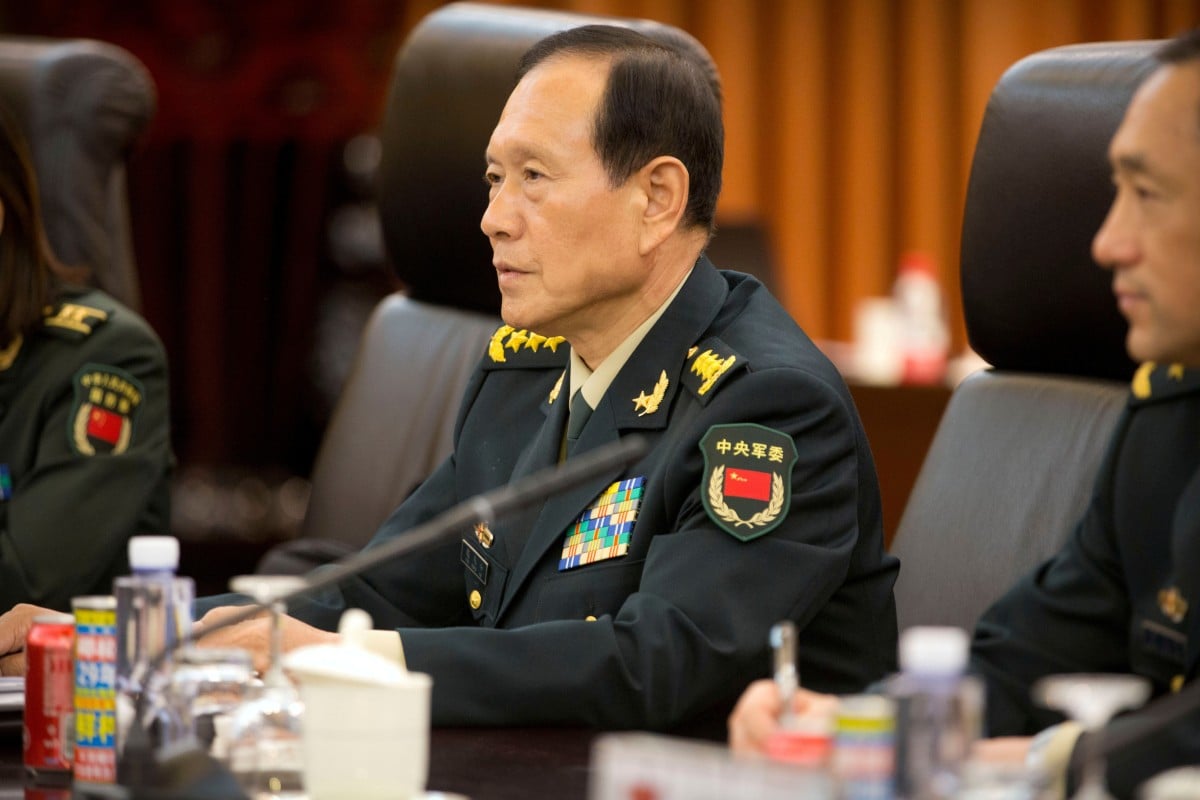
Chinese military sources said that Wei would lead a “relatively big” delegation to the gathering, which starts on May 31 and is co-organised by the Singaporean government.
Beijing-based military specialist Zhou Chenming said observers would be watching to see whether the two senior defence officials held talks.
“The whole world will keep a close eye on any possible encounters between the Chinese and the Americans … At least now China has shown its sincerity in sending Wei to attend the conference, who is of equal standing as Shanahan, if the latter is willing to hold talks with him in good faith,” Zhou said.
But he said a meeting between Wei and Shanahan would be difficult because of the current distance between Beijing and Washington on major issues.
How Trump’s tweets bested China in the trade war publicity battle
“It’s not realistic to expect they will make a breakthrough because both sides will just sound their own bugles. The … mistrust between China and the US is actually growing every day,” Zhou said.
Just on Sunday, the USS Preble, an Arleigh Burke-class guided missile destroyer, sailed within 12 nautical miles of the Scarborough Shoal, an area in the South China Sea claimed by both China and the Philippines.
The
by strongly urging “the US to stop such provocative actions” and saying it would “take all necessary measures” to protect its “national sovereignty”.
Singaporean Prime Minister Lee Hsien Loong will deliver a keynote speech on the opening day of the annual dialogue.
Japan and South Korea are also sending their defence ministers, according to a report by The Korean Times on Tuesday. The report also said South Korean Defence Minister Jeong Kyeong-doo was keen to hold one-on-one meetings with his Chinese and Japanese counterparts on the sidelines of the conference.
Source: SCMP
Short of war, US can’t help but lose to China’s rise in Asia, says think tank Lowy Institute
- Lowy Institute’s 2019 Asia Power Index puts Washington behind both Beijing and Tokyo for diplomatic influence
- Trump’s assault on trade has done little to stop Washington’s decline in regional influence, compared to Beijing, say experts
may be a dominant military force in Asia for now but short of going to war, it will be unable to stop its economic and diplomatic clout from declining relative to China’s power.
However, the institute also said China faced its own obstacles in the region, and that its ambitions would be constrained by a lack of trust from its neighbours.
has slapped tariffs on Chinese imports to reduce his country’s
. He most recently hiked a 10 per cent levy on US$200 billion worth of Chinese goods to 25 per cent and has also threatened to impose tariffs on other trading partners such as the European Union and Japan.
Herve Lemahieu, the director of the Lowy Institute’s Asian Power and Diplomacy programme, said: “The Trump administration’s focus on trade wars and balancing trade flows one country at a time has done little to reverse the relative decline of the United States, and carries significant collateral risk for third countries, including key allies of the United States.”
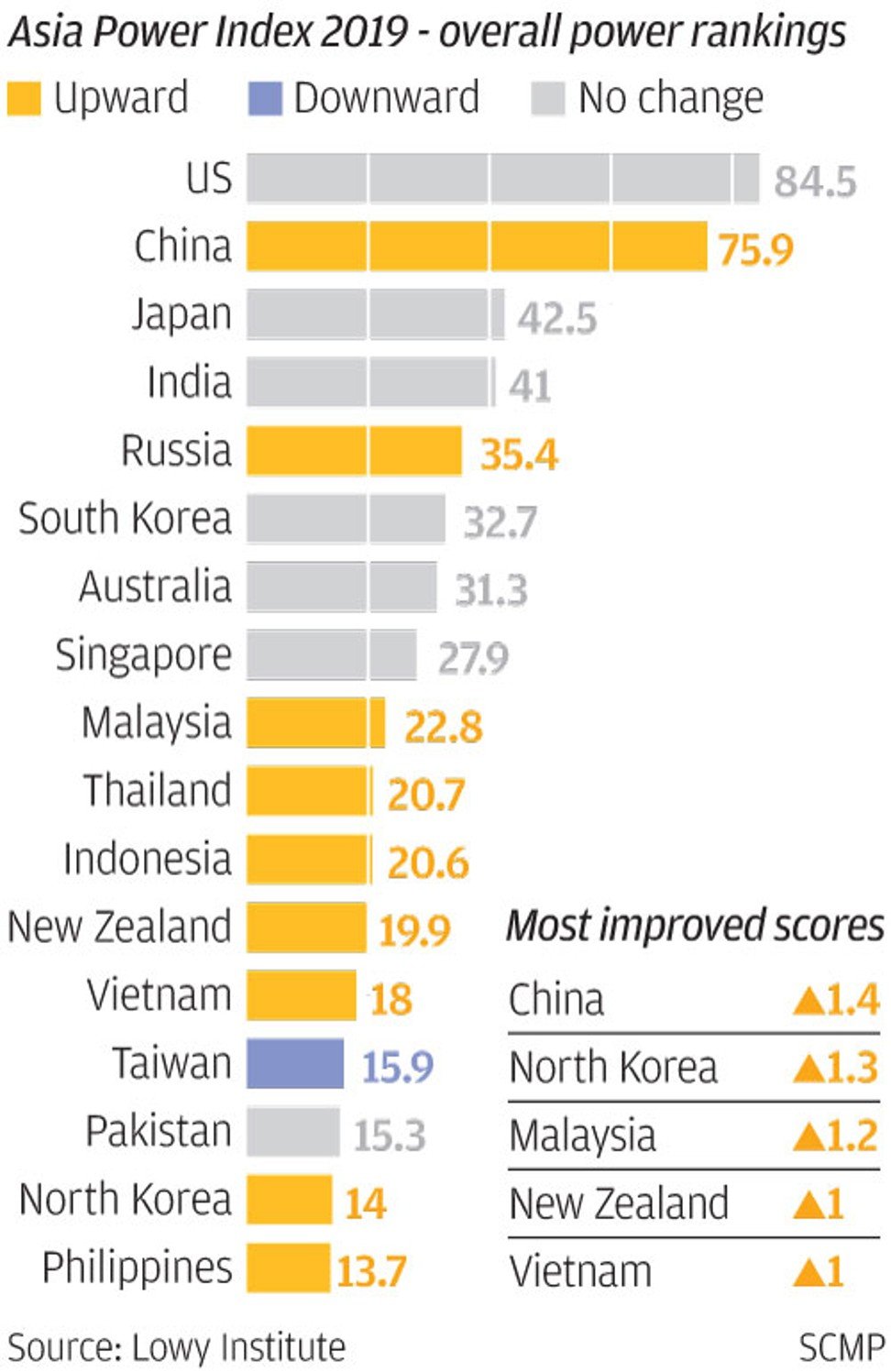
The index rates a nation’s power – which it defines as the ability to direct or influence choices of both state and non-state actors – using eight criteria. These include a country’s defence networks, economic relationships, future resources and military capability.
It ranked Washington behind both Beijing and Tokyo in terms of diplomatic influence in Asia, due in part to “contradictions” between its recent economic agenda and its traditional role of offering consensus-based leadership.
Toshihiro Nakayama, a fellow at the Wilson Centre in Washington, said the US had become its own enemy in terms of influence.
“I don’t see the US being overwhelmed by China in terms of sheer power,” said Nakayama. “It’s whether America is willing to maintain its internationalist outlook.”
But John Lee, a senior fellow at the Hudson Institute, said the Trump administration’s willingness to challenge the status quo on issues like trade could ultimately boost US standing in Asia.
“The current administration is disruptive but has earned respect for taking on difficult challenges which are of high regional concern but were largely ignored by the Obama administration –
illegal weapons and China’s predatory economic policies to name two,” said Lee.
“In midstream products such as smartphones and with regard to developing country markets, Chinese tech companies can still be competitive and profitable due to their economies of scale and price competitiveness,” said Jingdong Yuan, an associate professor at the China Studies Centre at the University of Sydney.
“However, to become a true superpower in the tech sector and dominate the global market remains a steep climb for China, and the Trump administration is making it all the more difficult.”
The future competitiveness of Beijing’s military, currently a distant second to Washington’s, will depend on long-term political will, according to the report, which noted that China already spends over 50 per cent more on defence than the 10
stands in the way of its primacy in Asia, according to the index, which noted Beijing’s unresolved territorial and historical disputes with 11 neighbouring countries and “growing degrees of opposition” to its signature
.
with a raft of countries including Vietnam, the Philippines and Brunei, and has been forced to renegotiate infrastructure projects in
and Myanmar due to concerns over feasibility and cost.
would persist and shape the global order into the distant future.
.
“This is important because Prime Minister Abe wants Japan to emerge as a constructive strategic player in the Indo-Pacific and high diplomatic standing is important to that end,” Lee said.
, ranked 14th, was the only place to record an overall decline in score, reflecting its waning diplomatic influence
during the past year.
Shangri-La Dialogue: ‘win for China’, as hopes for Japan-South Korea talks fade
- The Asian security forum in Singapore had been seen as an ideal venue for a breakthrough in the growing diplomatic spat – but Tokyo has got cold feet
- That will ease the pressure on Beijing in the South China Sea, analysts say
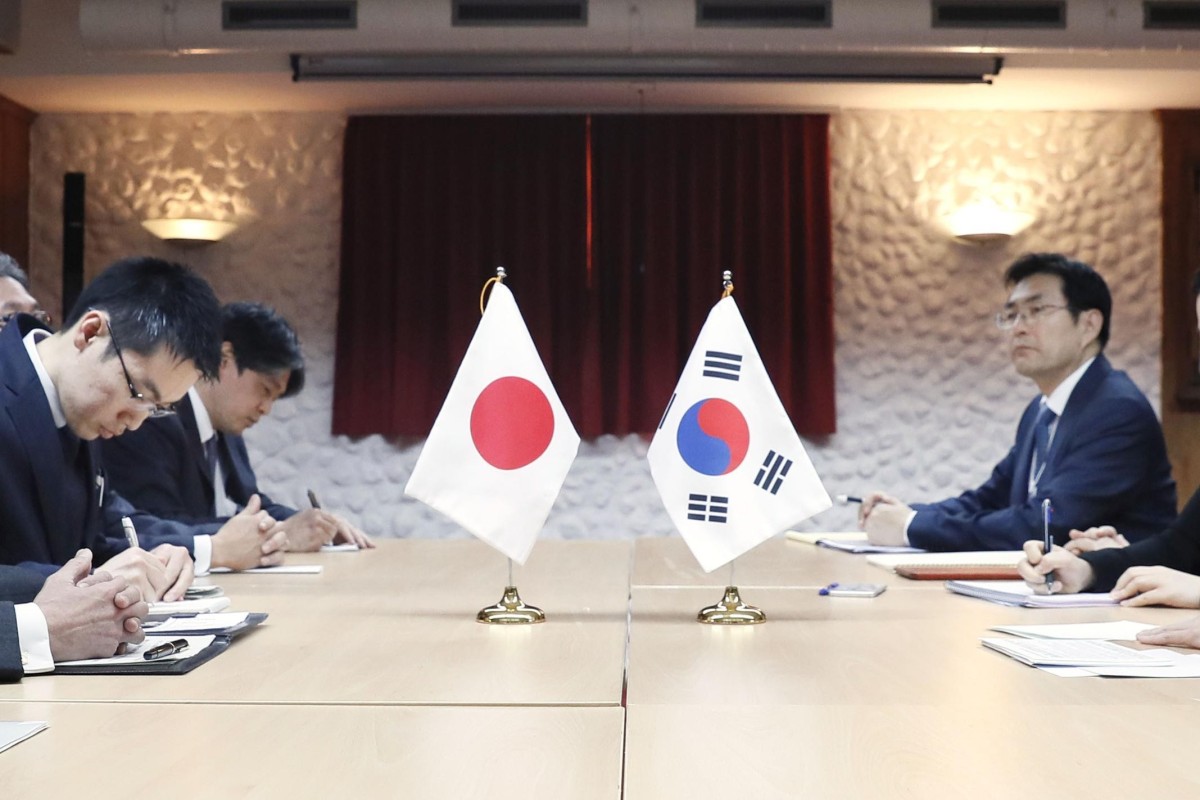
and
could use the Shangri-La Dialogue in
to address their growing diplomatic spat are receding.
onto a Japanese reconnaissance aircraft.
– euphemistically known as “comfort women” – in military-run brothels during World War Two.

“My sense is that Japan sees South Korea as not engaging in negotiations on a number of issues and not adhering in good faith to agreements that it has already signed,” said Stephen Nagy, a senior associate professor of international relations at Tokyo’s International Christian University.
has gone back on a 2015 agreement that was meant to draw a final line under the “comfort women” issue. Its anger deepened when Seoul said it would not intervene in a South Korean Supreme Court ruling, which ordered Japanese companies to pay up to 120 million won (US$100,000) to each of a dozen
of the Korean peninsula from 1910-1945.
“Japan is not ready to get into any more agreements because it fears that Seoul will not follow through or that they will become politicised in the future,” Nagy said.
“Tokyo wants binding, long-lasting agreements rather than having to renegotiate something each time a new Korean government comes in,” he said.
“The biggest winner in this stand-off between the US’ two most important allies in the region is, of course, China,” he added. “They must be delighted to see this playing out because it means the US is not able to exert nearly as much pressure in areas such as the
,” Nagy said. “If Japan and Korea could find a way to put their differences aside and with their security capacity, it would be a powerful deterrent to Beijing and Pyongyang.”

Toshimitsu Shigemura, a professor of international relations at Tokyo’s Waseda University, agreed that the schism between Seoul and Tokyo would be of serious concern to Washington, but he believed that US pressure had already been brought to bear on the two neighbours.
“By avoiding talks in Singapore, Japan is doing its best to avoid public problems between the two sides and I believe that talks are already taking place between the two governments on these issues,” he said.
US wants Japan and South Korea to tag team China. But history is in the way
“The US will have told Tokyo and Seoul that it does not want to see more disagreements and that it is very important that they cooperate and calm things down a bit,” he said.
“I am sure that Washington knows exactly what happened when the Korean warship locked onto the Japanese aircraft in January, but they’re not publicly taking sides and instead they’re telling both governments to put the dispute behind them and to move on,” he added.
Other analysts were more pessimistic.
“The dynamics in domestic politics in both countries are currently overwhelming any diplomatic motives to improve bilateral ties,” said Bong Young-sik, a researcher at the Asan Institute for Policy Studies in Seoul.

, giving the impression that South Korea is going too far in pressing Japan is also beneficial for his own political gains.”
Chinese police arrest 20 over pornographic live-streaming app that attracted 1 million users
- Streaming platform Huahua earned US$2.3 million in profit in five months, according to media report
- Final two suspects arrested in Philippines, police say
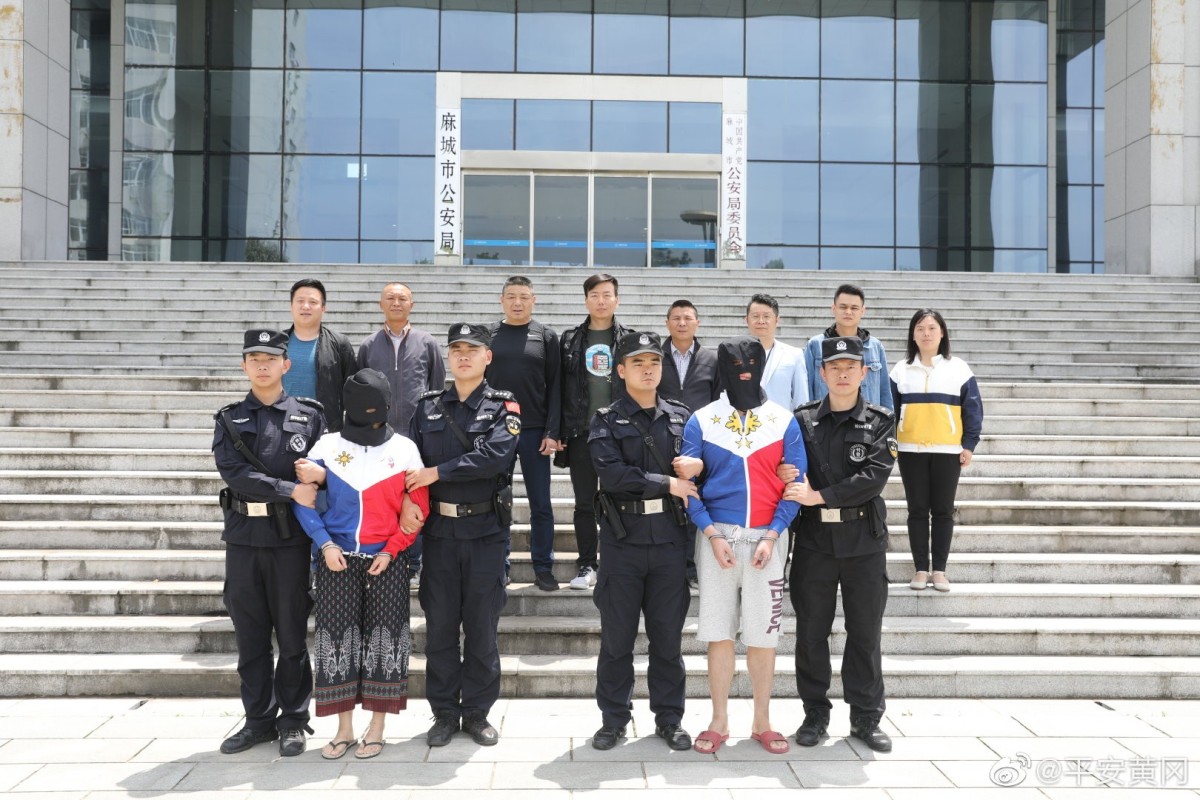
platform, which was initially called Huahua, had more than 900,000 registered users, earning the group 16 million yuan (US$2.3 million) in profit in five months from November 2017, according to the report.
against pornographic and illegal publications to foster a healthy online environment.The next month, Macheng police received a tip-off that people were distributing QR codes to download Huahua in chat groups on the popular Chinese messaging app QQ.
The group had a structure and rules designed to avoid the police’s attention, the report said. Members did not know each other’s identities and each had only one point of contact.
Some recruited streamers, others promoted the app on social platforms to attract traffic, and members in Mongolia laundered money with foreign bank accounts, while the app’s appearance and servers were changed several times, the report said.
After 18 people were arrested by April 2018 across the country, including in Shanghai and Guangdong, the No 1 suspect, the Mongolia-based Hong, fled to South Korea then to the Philippines, where he met Li and they built a similar app, according to the report.
The report said Hong had owned a company in Shanghai focusing on developing video games before turning to pornographic live streaming to make money quickly when the gaming business struggled.
Source: SCMP
China’s quest for clean energy heats up with groundbreaking ‘artificial sun’ project
-
- Fusion reactor built by Chinese scientists in eastern Anhui province has notched up a series of research firsts
- There are plans to build a separate facility that could start generating commercially viable fusion power by 2050, official says
 The Experimental Advanced Superconducting Tokamak (EAST) device – or “artificial sun” – in Hefei, Anhui province. Photo: AFP/Chinese Academy of SciencesA groundbreaking fusion reactor built by Chinese scientists is underscoring Beijing’s determination to be at the core of clean energy technology, as it eyes a fully functioning plant by 2050.Sometimes called an “artificial sun” for the sheer heat and power it produces, the doughnut-shaped Experimental Advanced Superconducting Tokamak (EAST) that juts out on a spit of land into a lake in eastern Anhui province, has notched up a succession of research firsts.In 2017 it became the world’s first such facility to sustain certain conditions necessary for nuclear fusion for
, and last November hit a
of 100 million degrees Celsius (212 million Fahrenheit) – six times as hot as the sun’s core.
Such mind-boggling temperatures are crucial to achieving fusion reactions, which promise an inexhaustible energy source.EAST’s main reactor stands within a concrete structure, with pipes and cables spread outward like spokes connecting to a jumble of censors and other equipment encircling the core. A red Chinese flag stands on top of the reactor.
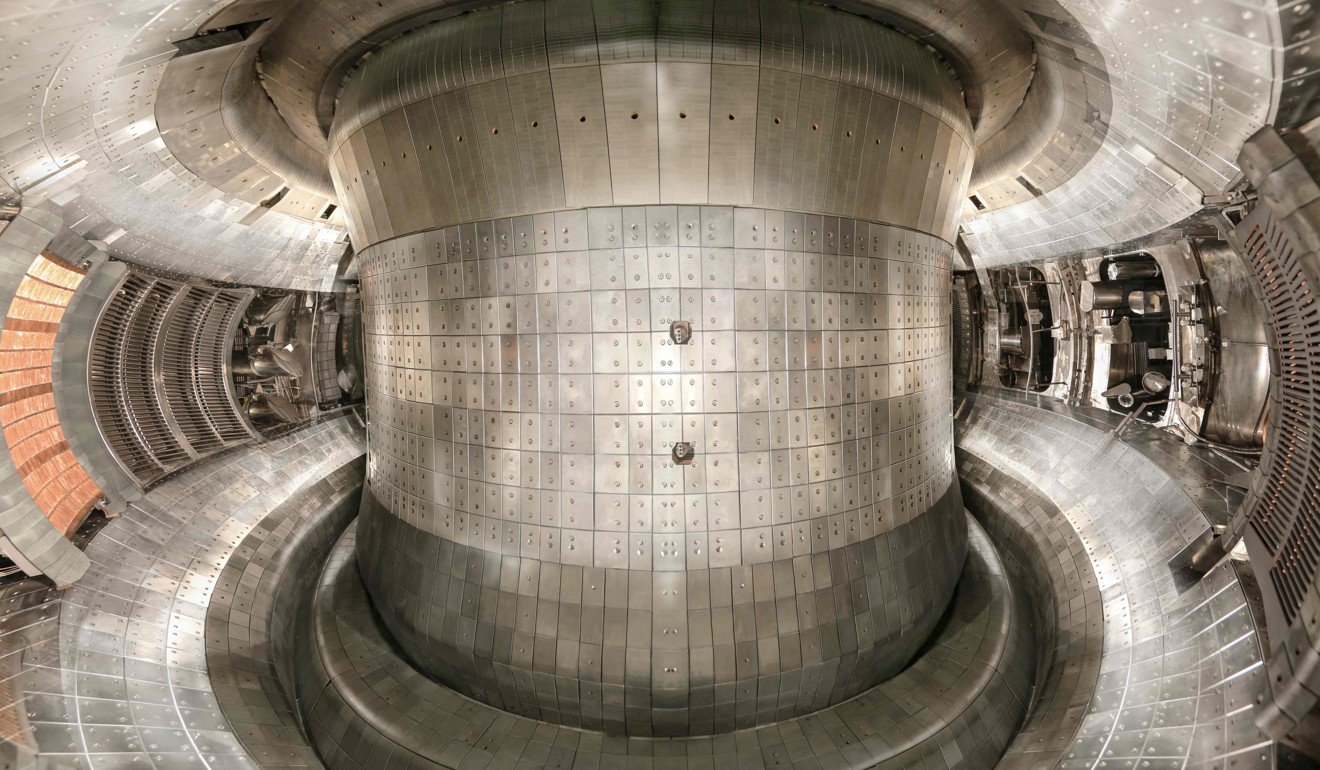 A vacuum vessel inside the fusion reactor, which has achieved a temperature of 100 million degrees Celsius – six times as hot as the sun’s core. Photo: AFP/Chinese Academy of Sciences
“We are hoping to expand international cooperation through this device [EAST] and make Chinese contributions to mankind’s future use of nuclear fusion,” said Song Yuntao, a top official involved in the project, on a recent tour of the facility.
China is also aiming to build a separate fusion reactor that could begin generating commercially viable fusion power by mid-century, he added.
Some 6 billion yuan (US$891.5 million) has been promised for the ambitious project.
EAST is part of the International Thermonuclear Experimental Reactor (ITER) project, which seeks to prove the feasibility of fusion power.
Funded and run by the European Union, India, Japan, China, Russia, South Korea and the United States, the multibillion-dollar project’s centrepiece will be a giant cylindrical fusion device, called a tokamak.
Now under construction in Provence in southern France, it will incorporate parts developed at the EAST and other sites, and draw on their research findings.
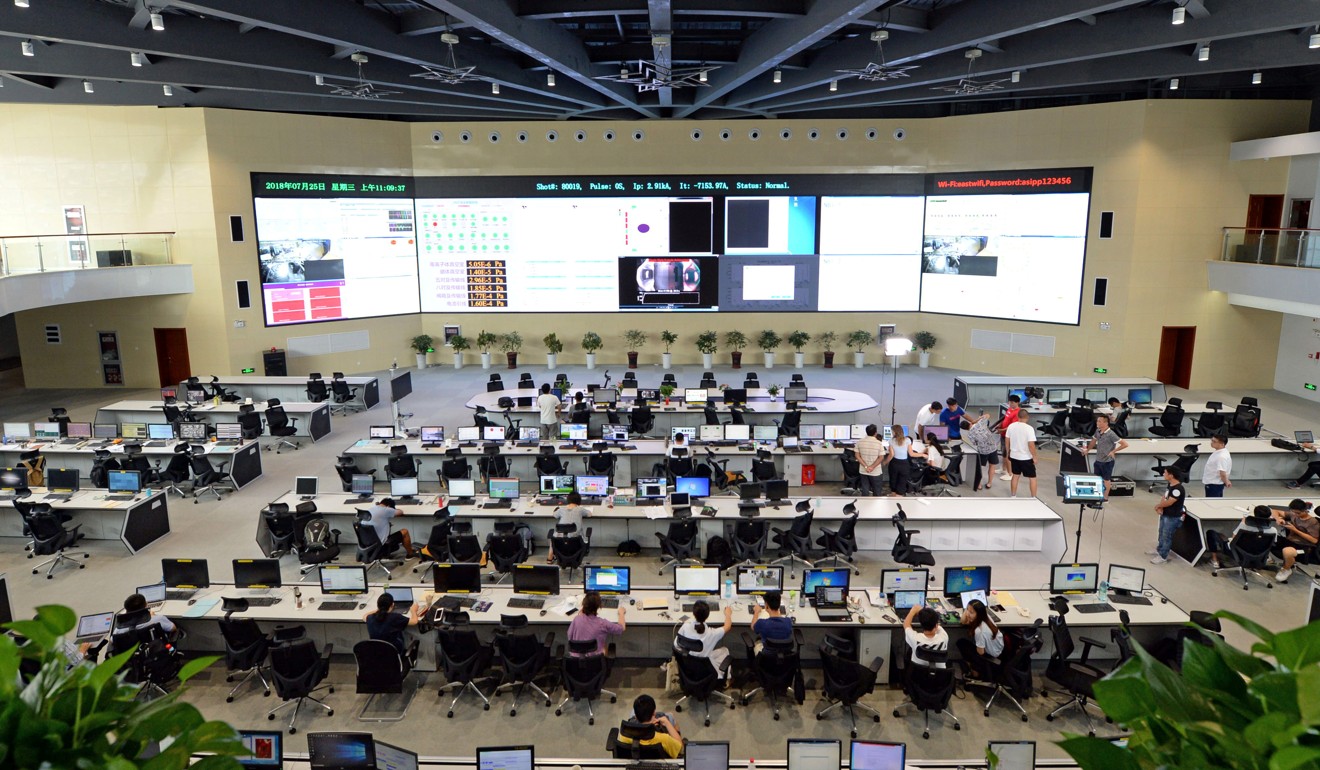 China is “hoping to expand international cooperation” through EAST. Photo: Reuters
Fusion is considered the Holy Grail of energy and is what powers our sun.
It merges atomic nuclei to create massive amounts of energy – the opposite of the fission process used in atomic weapons and nuclear power plants, which splits them into fragments.
Unlike fission, fusion emits no greenhouse gases and carries less risk of accidents or the theft of atomic material.
But achieving fusion is both extremely difficult and prohibitively expensive – the total cost of ITER is estimated at €20 billion (US$22.3 billion).
Wu Songtao, a top Chinese engineer with ITER, conceded that China’s technical capabilities on fusion still lag behind more developed countries, and that US and
Japanese tokamaks have achieved more valuable overall results.
But the Anhui test reactor underlines China’s fast-improving scientific advancement and its commitment to achieve yet more.
China’s capabilities “have developed rapidly in the past 20 years, especially after catching the ITER express train”, Wu said.
In an interview with state-run Xinhua news agency in 2017, ITER’s director general Bernard Bigot lauded China’s government as “highly motivated” on fusion.
“Fusion is not something that one country can accomplish alone,” Song said.
“As with ITER, people all over the world need to work together on this.”
Source: SCMP
Greece says EU’s China concerns must not harm its economic interests
- Deputy prime minister Yannis Dragasakis hopes ‘logic will prevail’ ahead of EU-China summit
- Affirms Greek support for Beijing’s belt and road plan for global trade
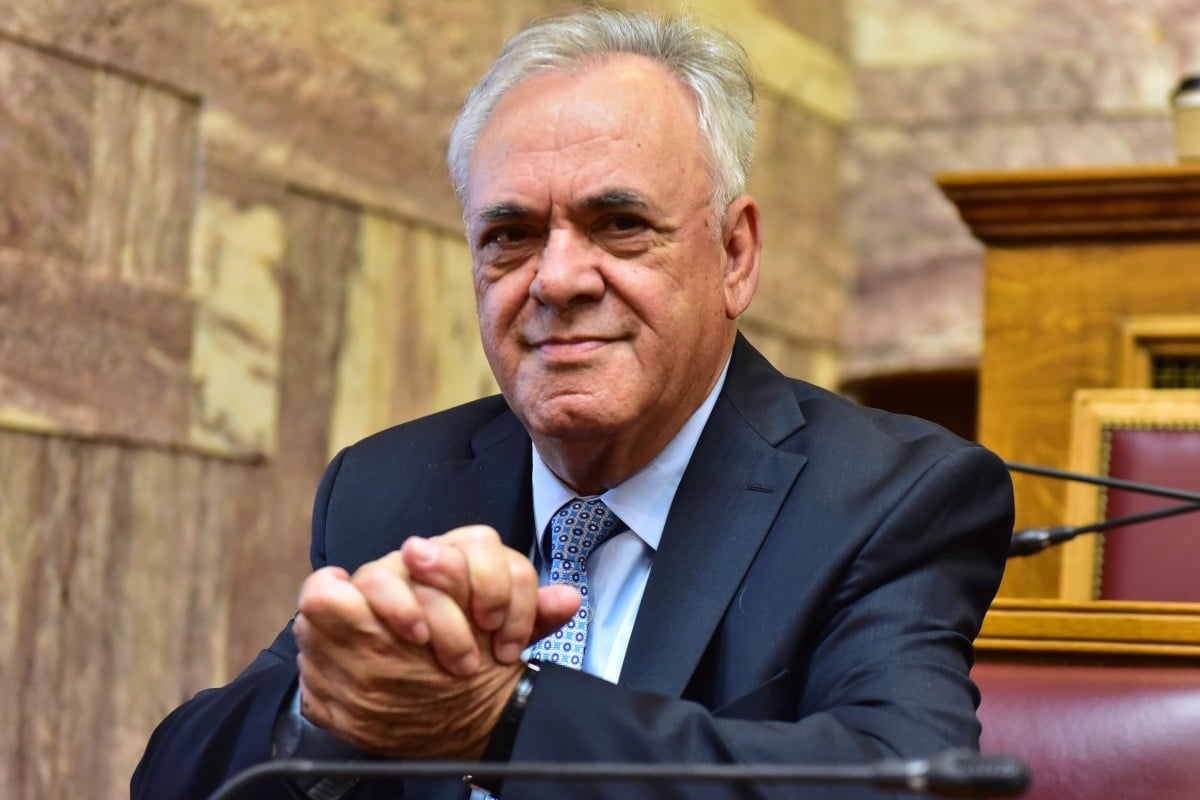
Washington has criticised the scheme as a “vanity project”, and the EU looks set to refer to China as a “strategic rival”, with some European leaders fearing Beijing’s diplomatic manoeuvres could derail unity among member states.
Last month Italy, which is grappling with its third recession in a decade, became the first G7 nation to join the belt and road programme, in a bid to boost exports and upgrade its port facilities.
Last year Greece – ranked second lowest in economic competitiveness within the EU by the World Economic Forum in 2018 – signed up to the scheme, after years of relying on China to help it through its own financial crisis.
Chinese state-owned shipping company Cosco bought a 51 per cent stake in Pireaus Port, Greece’s most important infrastructure hub in 2016 with an option to buy another 16 per cent after five years.
China aims to make the port the “dragon head” of its belt and road programme, serving as a gateway for its cargo to Europe and North Africa.
Will Greece be China’s bridge to the rest of Europe?
With its warming relationship with Beijing, Athens has, at times, departed from EU positions on China.
In 2016, Greece helped stop the EU from issuing a unified statement against Chinese aggression in the South China Sea. The following year, Athens stopped the bloc from condemning China’s human rights record. Days later, it opposed tougher screening on China’s investments in Europe.
Dragasakis was clear that the EU should not devise any policies that may hinder Greece’s ability to revive its economy.
“Greece badly needs investment. We hope logic will prevail at the end of the day, which means we should take advantage of all opportunities and build on these prospects to further our collaboration,” he said.
“Greece will keep following a multidimensional policy, an inclusive policy, without excluding anyone.”
Dragasakis hit back at France and Germany for treating China as a geopolitical rival, while simultaneously signing up to trade agreements with Beijing.
Days before receiving Chinese President Xi Jinping in France last month, President Emmanuel Macron declared that the “time of European naivety” towards China was over – a remark the Greek deputy prime minister described as “interesting” during the interview.
“It’s so interesting, yes. Mr Macron, despite his statement, actually signed very large-scale agreements with China,” he said, adding: “Germany, the same”.
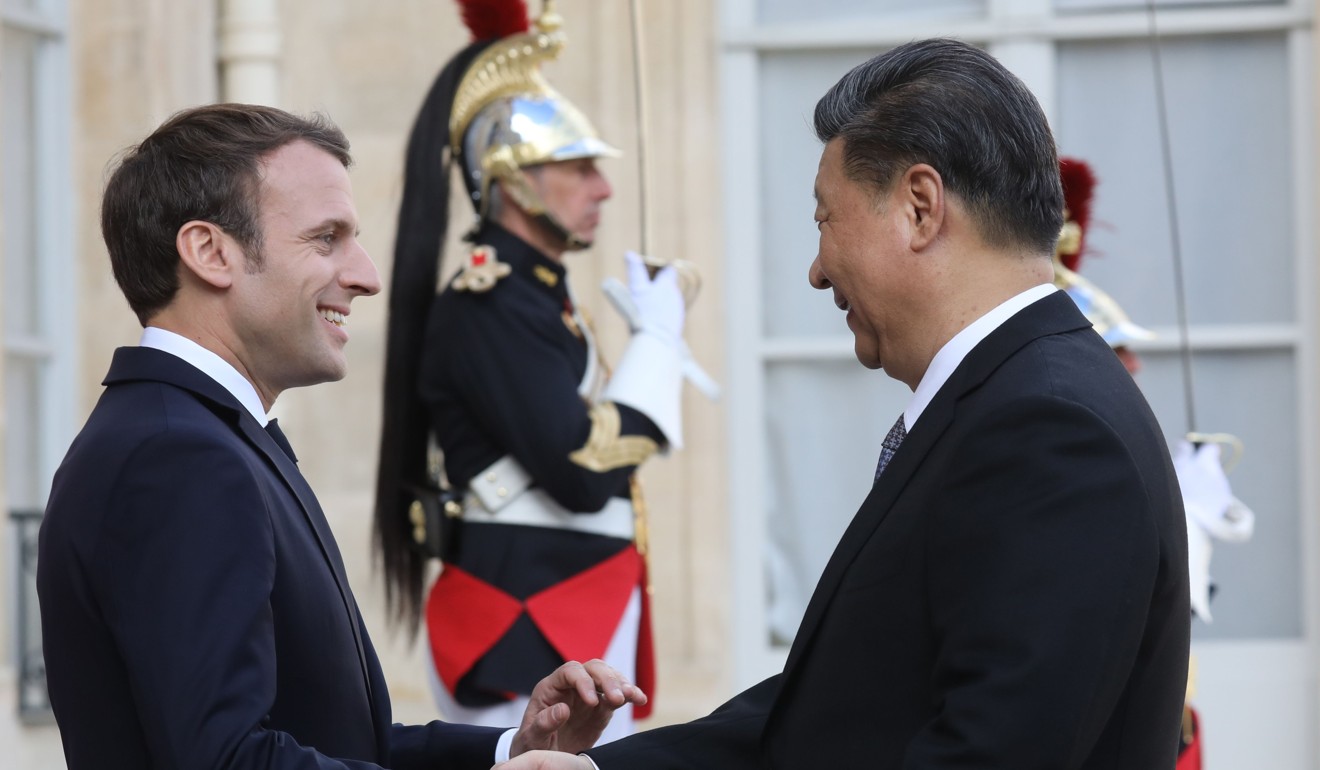
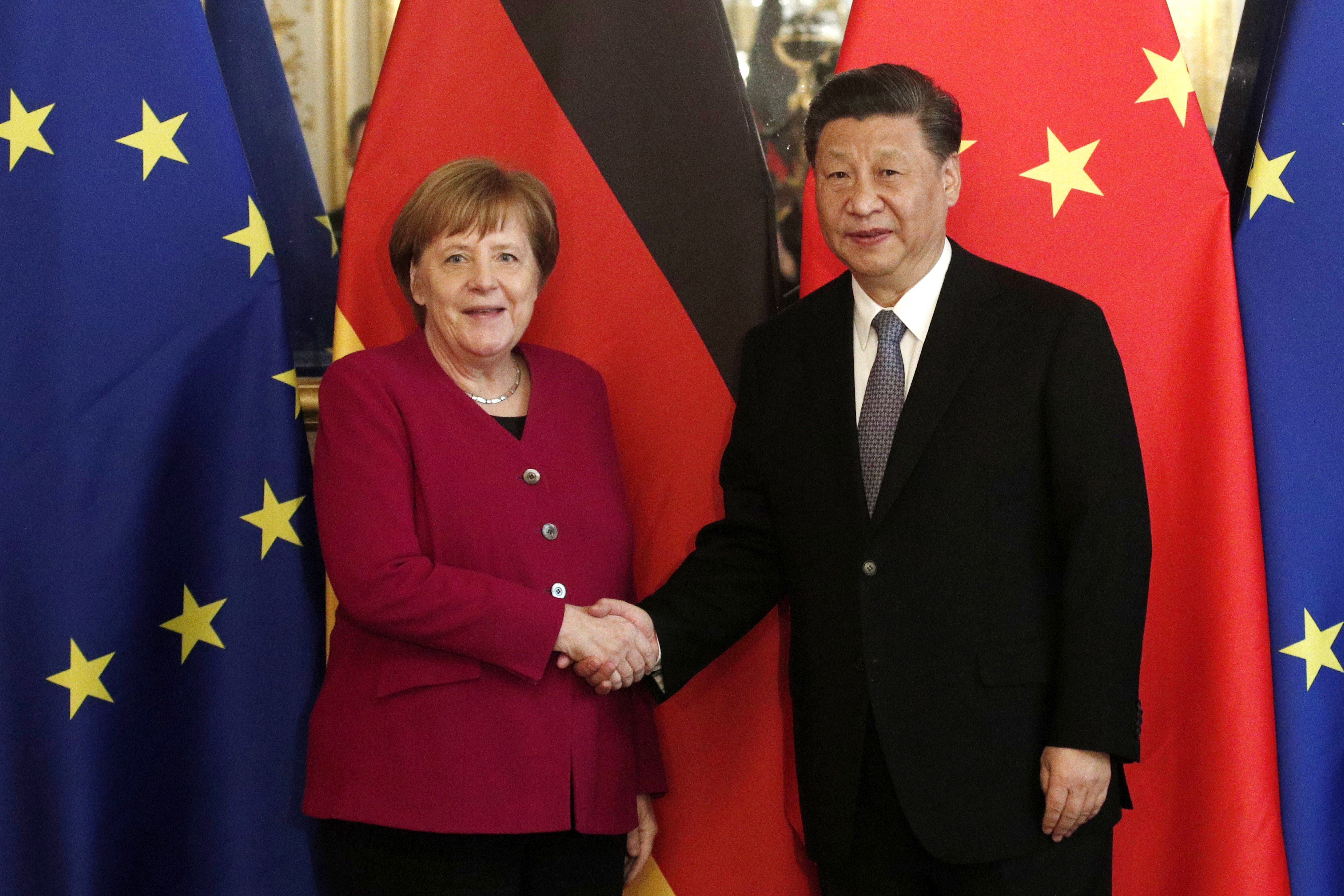
Macron invited German Chancellor Angela Merkel and European Commission President Jean-Claude Juncker to his meeting in Paris with Xi, where the four sought to reassure each other over economic cooperation between the European trading bloc and China.
Dragasakis said Greece’s relations with China were based on “very solid ground” with the two countries sharing complementary interests, particularly through the belt and road plan.
Greek Prime Minister Alexis Tsipras is understood to be considering joining Foreign Minister George Katrougalos at the belt and road summit in Beijing, which will be hosted by Xi later this month.
More than 40 heads of state are expected to attend the summit, with China’s foreign ministry recently saying that Europe had started to see the value of the scheme.
If confirmed, Tsipras’ presence at the summit will be interpreted as an attempt by Greece to consolidate Chinese support in the wake of Italy’s joining of the scheme.
He will also need to mend ties with Beijing, following a recent decision by Greece’s archaeological body to block a plan by Cosco to upgrade facilities at the Piraeus port, throwing the future of the multimillion euro privatisation deal into uncertainty.
Portugal’s support for China’s belt and road plan ‘bad news’ for EU
Dragasakis said there were strong prospects for the future relationship between Greece and China because of the two countries’ reciprocal interest.
Relations with other Asian countries, while not yet as close as Greek ties with China, would continue to be developed, he said.
Dragasakis said Athens would not adopt discriminatory policies against any country as it looked to shore up foreign investments to boost its economy.
India, for instance, has set its sights on Greece as a potential business partner, with President Ram Nath Kovind becoming its first titular head of state to visit Greece last year.
“Relations with India are lagging behind – they are not at the same level as with China, but of course we are mulling further developments with India,” Dragasakis said, adding that Greece would also work more closely with Japan, South Korea and Vietnam.
EU leaders hold out olive branch to China over belt and road
Read more
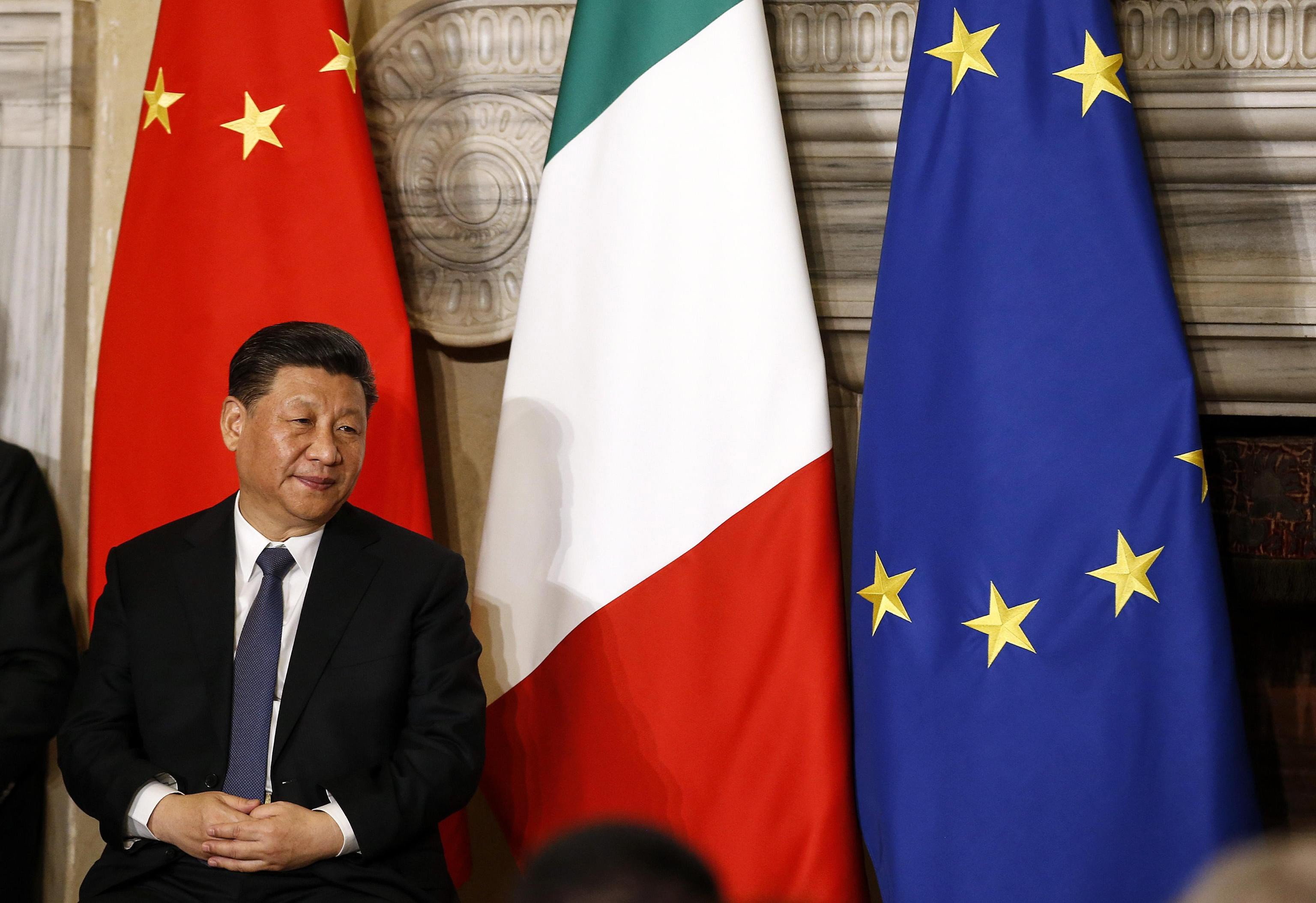
China will not divide Europe, senior diplomat says
Chinese navy’s 70th birthday parade set to showcase country’s rising sea power
- Next month’s nautical spectacle will allow country to show off its most advanced warships to an international audience
- More than a dozen foreign navies are expected to join in, including the United States
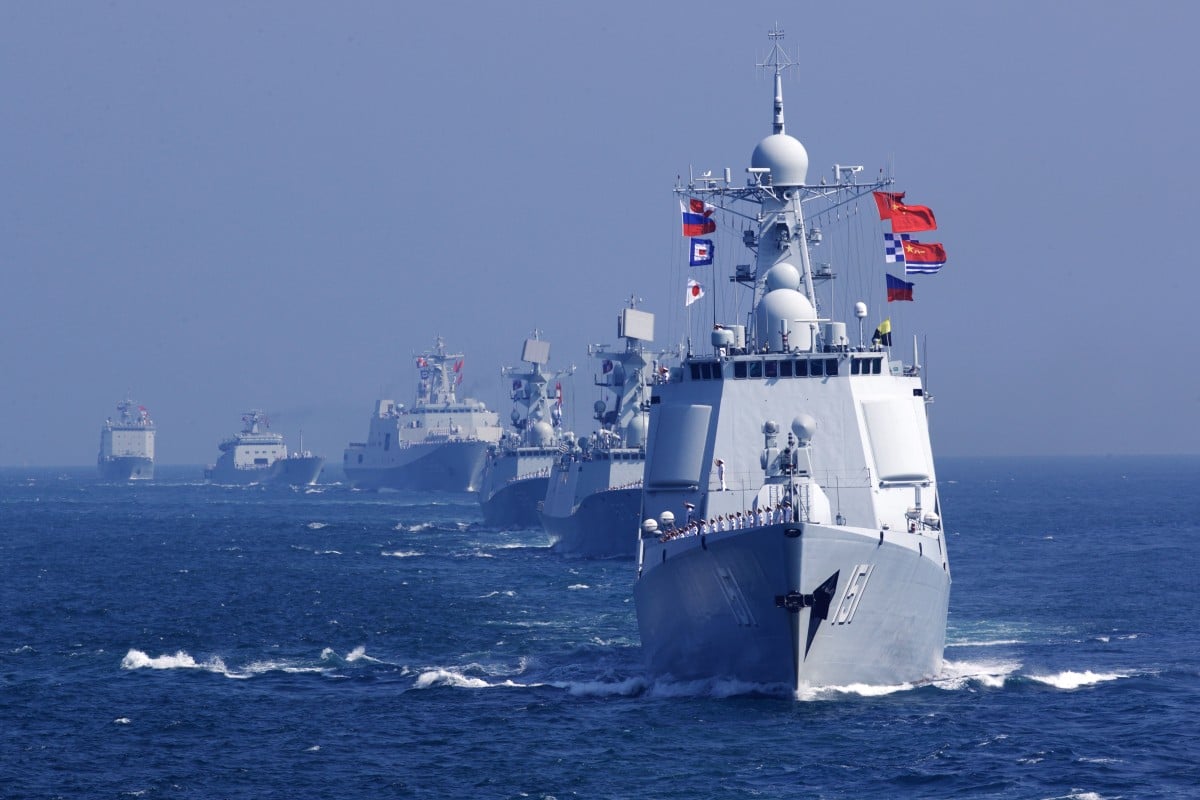
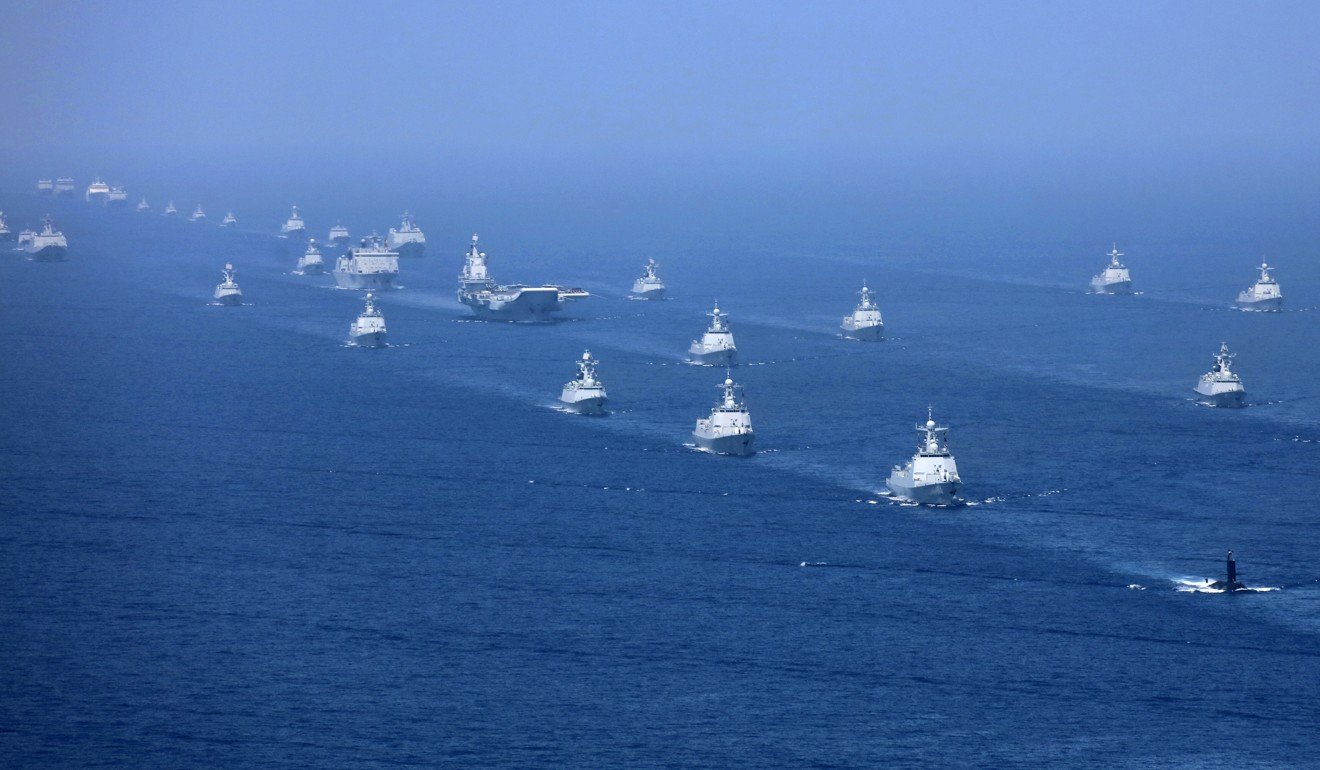
In April last year a naval review in the South China Sea featured a total of 48 vessels and 76 planes, including China’s first aircraft carrier, the Liaoning, its Type 094A and 095 nuclear submarines, 052D guided missile destroyers and J-15 fighter jets.
The experts expect that next month’s event will provide a showcase for several new and more powerful vessels including its home-grown aircraft carrier Type 001A, the Type 055 – Asia’s most powerful destroyer – and several nuclear submarines.
“The fact that China is holding the naval parade just one year after the South China Sea review shows the great importance [the leadership] attaches to the development of China’s maritime interests, the navy and its expansion,” navy expert Li Jie said.

China also held a major naval parade in 2009 to mark the navy’s 60th anniversary.
It was smaller in scale than the upcoming extravaganza with 25 PLA vessels and 31 fighter jets taking part.
Fourteen foreign navies sent ships to the 2009 parade, including the USS Fitzgerald from America and the guided-missile cruiser Varyag from Russia. France, Australia, South Korea, India and Pakistan also joined in the event.
More foreign countries are expected to join the party this year as the PLA has become more active internationally and China has sold more warships to foreign navies.
“The parade is more like a birthday party for the PLA Navy and the participation of foreign navies is a matter of diplomatic courtesy with few military implications,” said Yue Gang, a former PLA colonel.
Yue said the US and its allies would attend despite the rising tensions between the two sides.
Since 2015 the US and Chinese navies have engaged in a series of confrontations in the South China Sea as China strengthens its military presence in the region and the US has sought to challenge Beijing’s claims to the waters by conducting what it describes as “freedom of navigation” operations.
“I don’t expect they will send any of the warships that have taken part in such operations [to the parade],” Yue said.
It has been reported that the Japanese Maritime Self-Defence Force has expressed an interest in joining the parade and the Philippines – which has a rival claim to the South China Sea – is planning to send a vessel to the event for the first time.
Li said militaries such as the US and Japan would not want to miss the chance to observe the PLA Navy closely.
“In addition, greater transparency [through the parade] will also help reassure smaller regional partners such as the Philippines that China is a friendly power despite its growing military strength,” he said.
China held its first naval parade in 1957 and April’s display will be the sixth such event.
Sailors also took part in the parade through Tiananmen Square to mark the foundation of the People’s Republic on October 1 1949.
Source: SCMP
North Korea’s Kim on his way by train to summit with Trump in Vietnam
SEOUL/HANOI (Reuters) – North Korean leader Kim Jong Un made his way across China by train on Sunday, media reported, bound for a high-stakes second nuclear summit with U.S. President Donald Trump in Vietnam’s capital of Hanoi.
RELATED COVERAGE
Trump and Kim will meet in Hanoi eight months after their historic summit in Singapore, the first between a sitting U.S. president and a North Korean leader, where they pledged to work towards the complete denuclearisation of the Korean peninsula.
With little progress since then, the two leaders are expected to focus on what elements of North Korea’s nuclear programme it might begin to give up, in exchange for U.S. concessions.
In rare, revealing coverage of Kim’s travel, while it is still going on, the North’s Rodong Sinmun newspaper featured photographs of him getting a red-carpet send-off in Pyongyang and waving from a train carriage door while holding a cigarette.
He was accompanied by top officials also involved in the Singapore summit, including Kim Yong Chol, a former spy chief and Kim’s top envoy in negotiations with the United States, as well as senior party aide Ri Su Yong, Foreign Minister Ri Yong Ho and defence chief No Kwang Chol.
The North Korean leader’s sister, Kim Yo Jong, who acted as a close aide in Singapore, is again part of the delegation, the North’s KCNA news agency reported. It made no mention of his wife, Ri Sol Ju.
The extensive coverage in the secretive North’s official media was a contrast to the limited reporting that has traditionally prevailed during his foreign trips.
Other senior officials, such as his de facto chief of staff Kim Chang Son and Kim Hyok Chol, negotiations counterpart to U.S. envoy Stephen Biegun, were already in Hanoi to prepare for the summit.
With scant progress since the June summit, the two leaders are likely to try to build on their personal connection to push things forward in Hanoi, even if only incrementally, analysts said.
“They will not make an agreement which breaks up the current flow of diplomacy. (President Trump) has mentioned that they’ll meet again; even if there is a low-level agreement, they will seek to keep things moving,” said Shin Beom-chul, a senior fellow at the Asan Institute for Policy Studies.
LEARNING FROM VIETNAM
The Trump administration has pressed the North to give up its nuclear weapons programme, which, combined with its missile capabilities, poses a threat to the United States, before it can expect any concessions.
North Korea wants an easing of punishing U.S.-led sanctions, security guarantees and a formal end of the 1950-1953 Korean War, which ended in a truce, not a treaty.
Few details of summit arrangements have been released.
Some lamp posts on Hanoi’s tree-lined streets are decked with North Korean, U.S. and Vietnamese flags fluttering above a handshake design, and security has been stepped up at locations that could be the summit venue, or where the leaders might stay.
It could take Kim at least 2-1/2 days to travel to Vietnam by train.
Some carriages of a green train were spotted at Beijing’s station on Sunday, but it was not confirmed it was Kim’s.
South Korea’s Yonhap news agency said Kim’s train had passed through a station in China’s port city of Tianjin, southeast of Beijing, at around 1 p.m. (0500 GMT).
China has given no details of his trip. Its foreign ministry did not immediately respond to a request for comment.
Two top North Korean officials who were not in Singapore but will be in Hanoi are Kim Phyong Hae and O Su Yong, vice chairmen of the party’s Central Committee, respectively in charge of personnel management and industrial affairs, KCNA reported.
O is a former minister of electronics and vice minister of metals and machine building. He might try to learn about Vietnam’s development of manufacturing, analysts said.
Kim Jong Un may tour some economic facilities while in Vietnam.
Vietnam, like North Korea, fought a war against the United States and keeps tight control over its people and economy. It has been touted as a model for North Korea’s development.
Vietnamese media reported that a North Korean cargo plane arrived on Sunday carrying personnel who appeared to be Kim’s security guards and state media workers. They were driven under police escort to a downtown hotel.
Source: Reuters
Seizing on Huawei’s troubles, Samsung bets big on network gear
SEOUL (Reuters) – Samsung Electronics is pouring resources into its telecom network equipment business, aiming to capitalize on the security fears hobbling China’s Huawei, according to company officials and other industry executives.
Orange, which operates in 27 markets and counts Huawei as its top equipment supplier, will run its first French 5G tests with Samsung this year.
“We’re bolstering our network business to seize market opportunities arising at a time when Huawei is the subject of warnings about security,” said one of the Samsung sources.
The sources, who did not disclose specific figures for the employee moves, declined to be identified as they were not authorized to speak on the matter.
Keen to seek new growth, particularly as sales of its mainstay chips and smartphones have begun to drop, Samsung plans to invest $22 billion in 5G mobile technology and other fields over three years. It declined to break down how much will go to 5G and the other areas – artificial intelligence, biopharma and automotive electronic parts.
“Samsung is focused on building trust with our partners and leading the global 5G markets, regardless of other companies,” it said in an emailed statement to Reuters.
Asked about Samsung’s big push into network equipment, Huawei said in a statement that it welcomed competition in the market.
In India, Samsung is now in talks with Reliance Jio to upgrade its network to 5G, looking to build on what has perhaps been its biggest network success – becoming the key supplier for the upstart carrier.
“We don’t think 5G is far away in India,” a Samsung official with direct knowledge of the matter told Reuters. He declined to be named due to the sensitivity of the matter.
Samsung’s clients include U.S. firms AT&T Inc, Verizon Communications Inc and Sprint Corp and it has 5G network contracts with all three, though it was not clear how extensive those contracts are. It also sells to South Korean carriers and has partnered with Japanese mobile carriers to test its 5G equipment.
In many cases, Samsung supplies only small pieces of networks. According to market tracker Dell’Oro Group, the South Korean firm holds just 3 percent of the global telecom infrastructure market compared with 28 percent for Huawei.
Its network business made 870 billion won ($775 million) in operating profit last year, according to Eugene Investment & Securities. Filings show Nokia’s network business made about 1.2 billion euros ($1.4 billion) while Ericsson’s network operations made 19.4 billion Swedish crowns ($2.1 billion). Figures for Huawei were not available.
FINDING THE PEOPLE
One major hurdle for Samsung will be attracting talent amid a dearth of software engineers in South Korea.
“We need more software engineers and want to work with the government to find that talent,” Lee was quoted as saying by government officials at his meeting with the prime minister.
Samsung’s network business unit employs roughly 5,000 people, according to a government official in the southern city of Gumi where Samsung operates its manufacturing plants.
Kim Young-woo, an analyst at SK Securities, expects Samsung to hire 1,000-1,500 people for 5G network equipment this year. Samsung declined to comment on network employee levels and hiring plans.
But Samsung’s bet remains risky as the long-term nature of telecom network investment means change comes slowly.
Sweden’s Ericsson and Finland’s Nokia, which acquired the remnants of once-powerful network equipment companies Alcatel-Lucent and Nortel, have as yet seen little sales growth from Huawei’s problems, company executives said.
Both are in cost-cutting mode, even in the face of the 5G opportunity and the problems confronting their biggest rival.
Indeed, some network operators in Europe are warning that a Huawei ban – now under consideration in France, the UK, Germany and other countries – could push back deployment of 5G by as much as three years.
Others warn Samsung may struggle to develop a global sales and support organization.
“The way telcos purchase products and services from their suppliers demand a lot of time and resources, which is why Ericsson and Nokia have around 100,000 employees and Huawei almost twice as many,” said Bengt Nordstrom, CEO of telecom consultancy Northstream.
But Samsung is taking the long view. In December, it agreed to extend its Olympic partnership with the International Olympic Committee through to 2028 and expand its sponsorship to 5G technology.
The company did not want to leave its sponsorship spot open to Chinese rivals, a separate source with knowledge of the matter said.
“If Samsung dropped the top mobile sponsorship for the Olympic games beyond 2020, then who would have taken that spot? It would only have been China, Huawei.”
($1 = 1,122.8000 won)
Source: Reuters

 CHINDIA ALERT: You'll be living in their world, very soon