Chindia Alert: You’ll be Living in their World Very Soon
aims to alert you to the threats and opportunities that China and India present. China and India require serious attention; case of ‘hidden dragon and crouching tiger’.
Without this attention, governments, businesses and, indeed, individuals may find themselves at a great disadvantage sooner rather than later.
The POSTs (front webpages) are mainly 'cuttings' from reliable sources, updated continuously.
The PAGEs (see Tabs, above) attempt to make the information more meaningful by putting some structure to the information we have researched and assembled since 2006.
Taiwan sends fighters to intercept mainland military aircraft after they cross dividing line in Taiwan Strait
Incursion comes at end of visit to Washington by vice-president-elect William Lai that angered Beijing
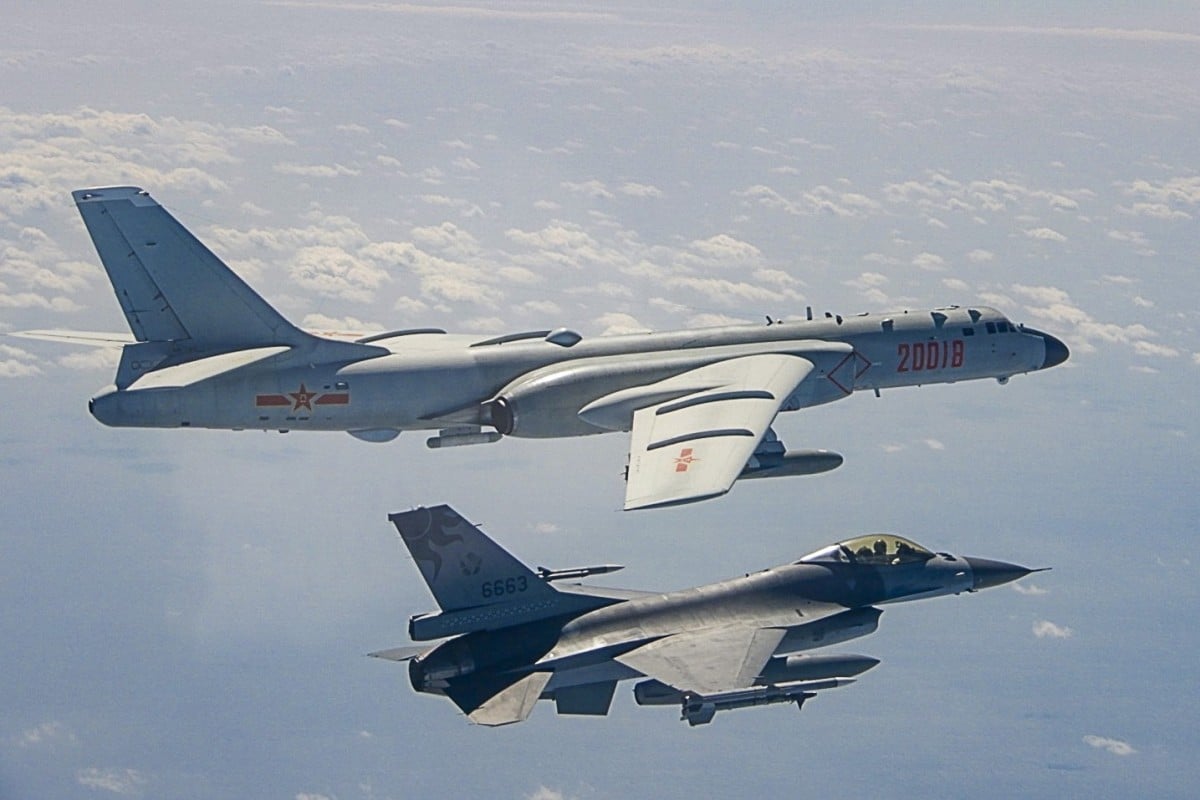
A Taiwanese fighter jet shadows a mainland Chinese bomber over the Taiwan Strait on Monday. Photo: Military News Agency, ROC
Taiwan sent warplanes to intercept a group of mainland Chinese jets that had briefly approached the island on Monday, the second such incident in two days.
The incident came as the island’s vice-president-designate William Lai Ching-te concluded an eight-day visit to the US that had angered Beijing.
The mainland warplanes, including H-6 bombers, briefly crossed the median line in the Taiwan Strait on their way to the western Pacific through the Bashi Channel in the morning for long-haul training exercises, Taiwan’s defence ministry said in a statement on Monday.
“Our air force scrambled fighter jets to shadow, intercept and disperse the communist warplanes through radio broadcasting,” the ministry said, adding the mainland planes later left the area.
The mainland warplanes later returned to their home base after their morning drill, the military said.
It was the second day in a row that the mainland warplanes flew past Taiwan after a group of aircraft, including J-11 fighter jets, KJ-500 early warning aircraft and H-6 bombers, flew over the Bashi Channel on Sunday before returning to their bases via the Miyako Strait northeast of Taiwan, the ministry said.
“The military has full surveillance and control of the communist long-haul training activities and the public can rest assured of our capability to uphold security or our national territory,” it said.
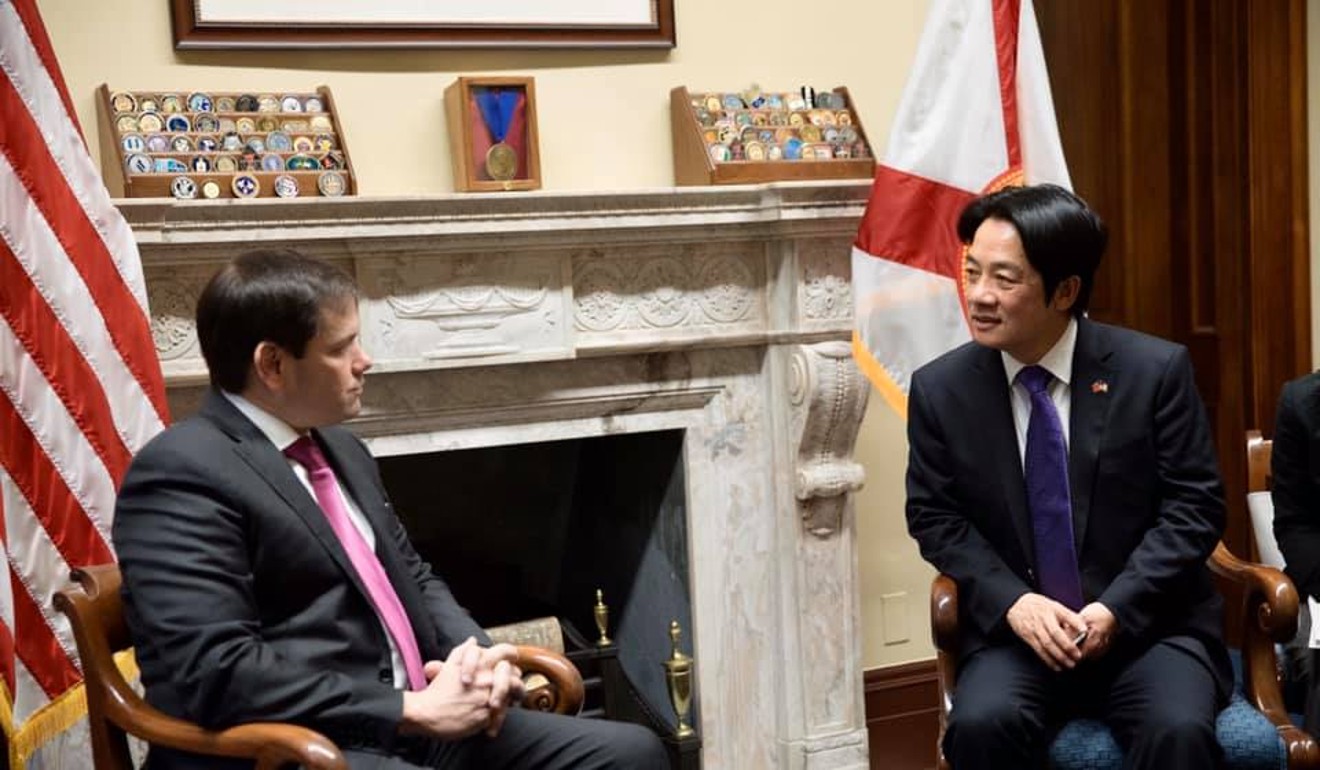
Meanwhile, Lai completed his eight-day “private” visit to Washington, during which he met the National Security Council and other US officials and senators.
Lai, who left for the US last Sunday to attend the National Prayer Breakfast – an annual gathering of political and religious leaders in Washington – was considered the highest-level Taiwanese official to meet with National Security Council officials since the US switched diplomatic recognition to Beijing from Taipei in 1979.
The visit was hailed as a diplomatic breakthrough for the island because until now Washington has been reluctant to allow such exchanges for fear of angering Beijing, which has repeatedly demanded that the US adhere to the “one-China” policy.
Taiwan scrambles jets as mainland Chinese air force flies around island
9 Feb 2020
Beijing views Taiwan as a wayward province that must be brought back to the mainland fold – by force if necessary.
It has suspended official exchanges with Taiwan since Tsai Ing-wen of the independence-leaning Democratic Progressive Party was first elected president in 2016 and refused to accept the one-China principle as the basis for cross-strait exchanges.
Since then, Beijing has staged war games close to the island and poached seven of Taiwan’s allies to heap pressure on the president, who was reelected last month.
A People’s Liberation Army spokesperson said on Sunday the flight was a “necessary action” under “current security situation across the Taiwan Strait”.
Vice-President-elect William Lai Ching-te met National Security Council officials on his visit to the White House. Photo: Facebook
Observers said Lai’s US visit was made possible due to a new US policy to allow high-level official and military exchanges with Taiwan, which has been included in the US security alliance to counter the mainland’s military expansion in the Indo-Pacific region.
They said Lai is still technically a civilian until he takes office in May, and the US can always use this status to defend its move, although the visit has prompted strong protests from the Chinese foreign ministry.
Observers also said Taiwan’s efforts in seeking to join the World Health Organisation amid the deadly coronavirus outbreak have also riled Beijing, which has repeatedly said the island is a mainland province with no right to join international bodies which require statehood for membership.
Taipei complains to World Health Organisation after coronavirus case is classed as ‘Taiwan, China’
23 Jan 2020
On Monday, Ma Xiaoguang, a spokesman for the mainland’s Taiwan Affairs Office, warned the Tsai government against “playing with fire” by “trying to use its strengthening ties with the US to plot independence”.
“This is a sheer provocation,” Ma said, adding what the People’s Liberation Army did was to protect the national sovereignty and territorial integrity of the mainland and to maintain cross-strait peace.
Song Zhongping, a military commentator for Hong Kong Phoenix Television, said the patrol was aimed at the separatist movement on the island.
“Such a patrol is for war-preparedness … and has become a routine practice and a resolution to effectively attack the pro-independence force,” said Song, a former instructor for the PLA’s Second Artillery, the predecessor of the Rocket Force.
A Beijing-based military source close to the PLA, who requested anonymity, said the warplanes were equipped with missiles, which has become a standard procedure for PLA’s air drills.
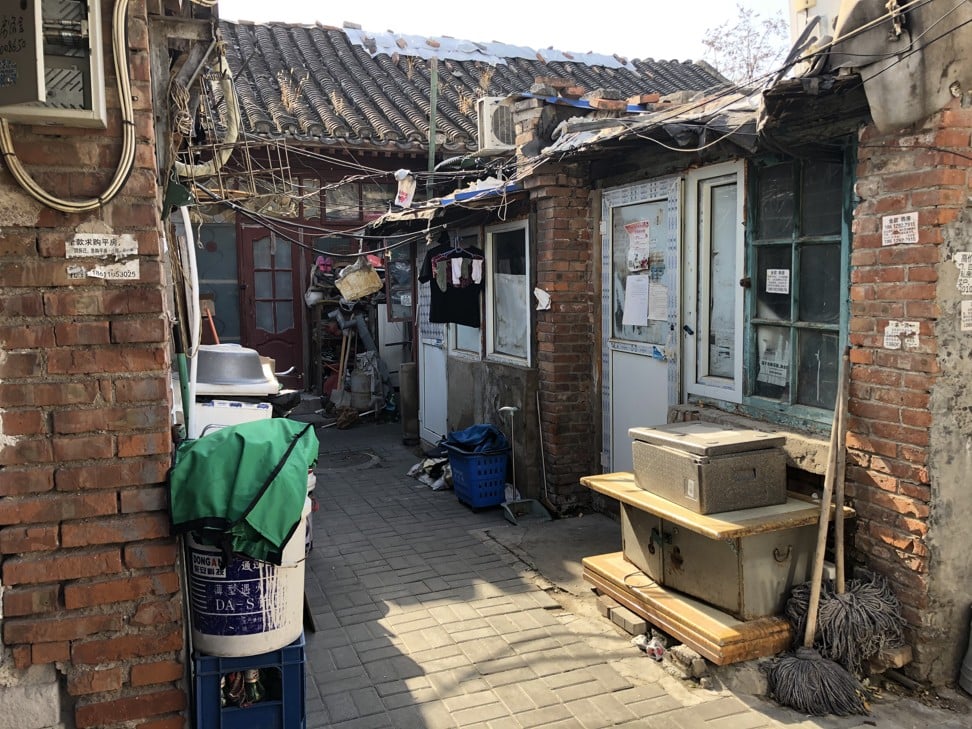
Unit 121 on Lanman Hutong, about 10 minutes’ drive from Tiananmen Square and the Forbidden City, changed hands last month for 1.28 million yuan
The new owner bought a 5.6-square metre (72 square feet) cubicle covered in bathroom tiles large enough to fit a bunk bed, with standing room only
A view of the 5.6 square metre cubicle-size home in Beijing on 15 November 2019. The home sold for 1.28 million yuan at auction. Photo: Louise Moon
A subdivided home in a run-down alley in Beijing recently sold for a record price at auction, as eager buyers piled in to get hold of its much sought-after address to gain access to some of the Chinese capital’s best schools.
A subdivided unit at No. 121 Lanman Hutong, about 10 minutes’ drive from Tiananmen Square and the Forbidden City, changed hands on November 11 for 1.28 million yuan (US$182,400) after 136 rounds of furious bidding during an auction in Beijing.
For 230,000 yuan per square metre (HK$23,850 per square foot), the new owner bought a 5.6-square metre (72 square feet) cubicle covered in bathroom tiles large enough to fit a bunk bed, with standing room only. That’s smaller than even Hong Kong’s notorious micro-apartments – also known derisively as shoebox flats or nano flats – which average about 200 square feet. A standard car parking space measures 126 square feet.
What the dilapidated space does have is an address that entitles its owner to a hukou, the household registration that is the prerequisite for access to schools, homes, civil service jobs, public health care and almost every aspect of daily life in the Chinese capital.
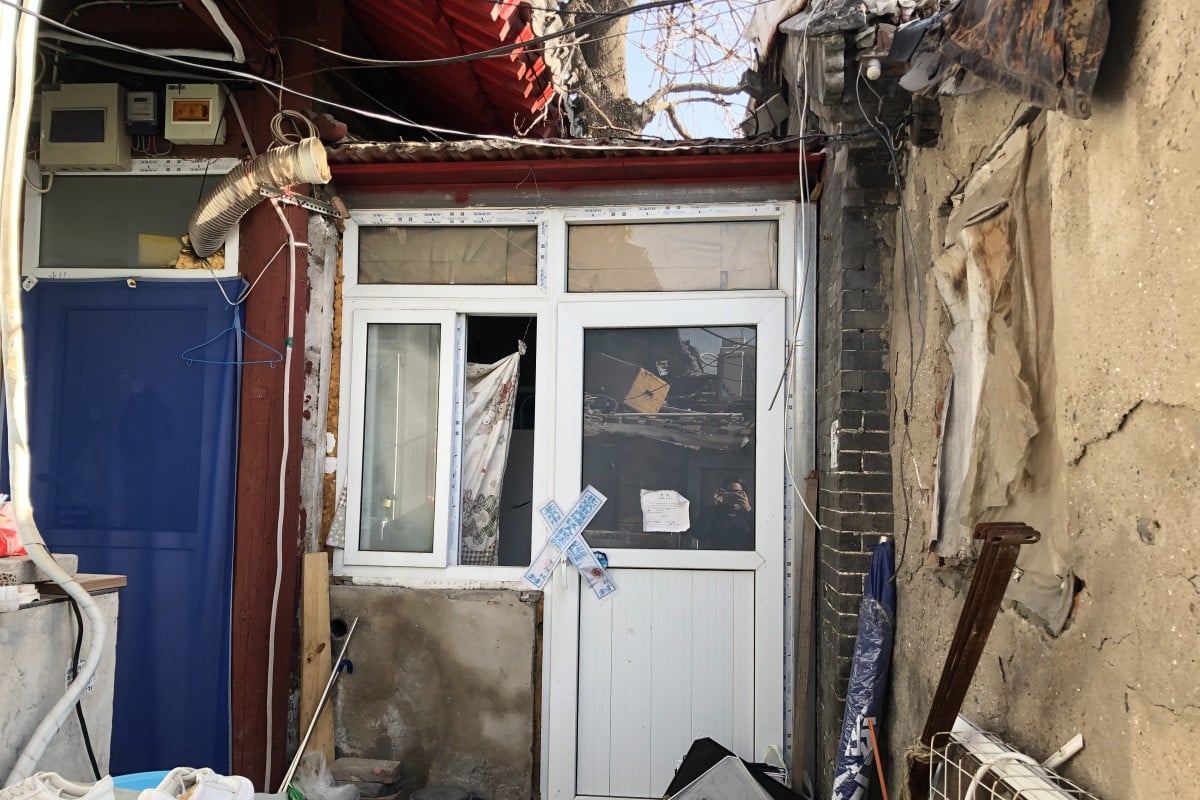
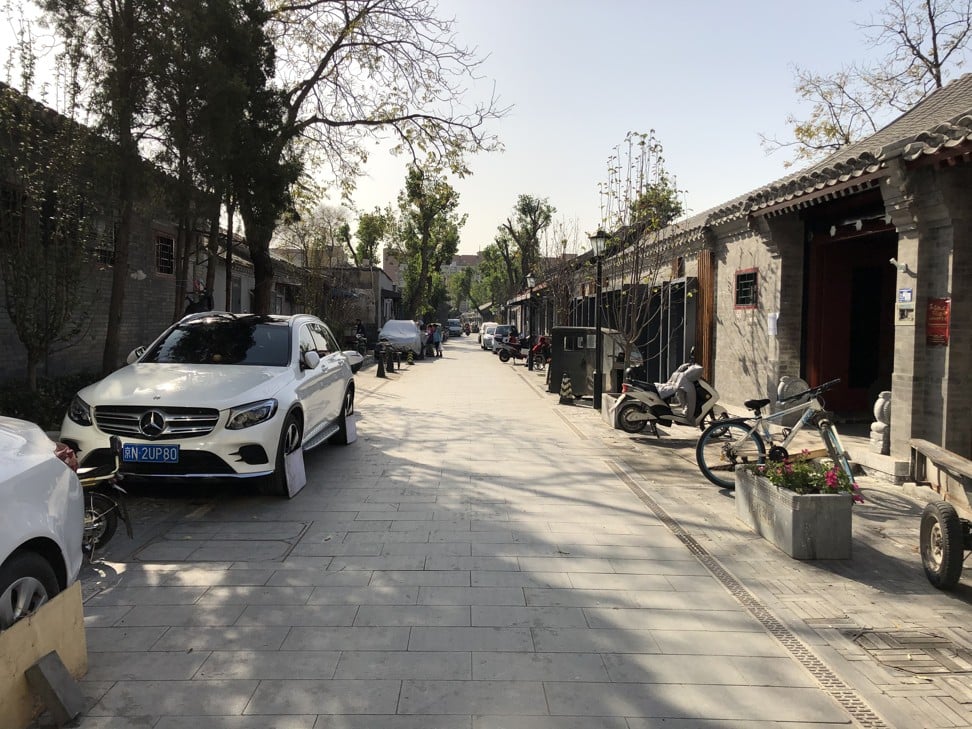
The alley on which No. 121 Lanman Hutong sits in Beijing on 15 November 2019. Photo: Louise Moon
Lanman Hutong, or the Alley of the Brilliant Drapes, sits in Xicheng district, a chequerboard neighbourhood criss-crossed with hundreds of alleyways that boasts three of the five highest-ranked schools in the city.
According to Beijing’s real estate regulations, one square metre entitles the owner a hukou. That fuelled the rush by parents to buy property in the area to qualify for sending their children to such eminent schools as the Beijing No. 4 High School, whose alumni include former Chongqing Commissar Bo Xilai, former China Development Bank president Chen Yuan and Citic’s chairman Kong Dan. Most of these bolt holes are now unoccupied after they have served their purposes, local residents said.
Lanman Hutong, or the Alley of the Brilliant Drapes, in the Xicheng district of Beijing, about 10 minutes drive from the Tiananmen Square and the Forbidden City, on 15 November 2019. Photo: Louise Moon
The auction result offers a peek into the growing speculative bubble in Beijing’s property market, a development that has defied more than two years of policymakers’ attempts to control. The average price of newly built homes rose 4.3 per cent in October to 60,894 yuan per square metre in Beijing, according to China’s statistics bureau data and Lianjia, a major real estate broker.
“Beijing’s homes have always been expensive, [particularly so] in Xicheng, where only the ultra-wealthy can afford to stay,” said Midland Beijing’s analyst Zhao Jia. “A million yuan is not expensive at all, to find space that close to the Forbidden City.”
Beijing’s average home price is equivalent to 24.9 years of the city’s median net income, excluding expenditures, according to data by E-House China Research and Development Institution. Hong Kong, the world’s most expensive urban centre to live and work in, requires 21 years of average income to affordable the average abode, according to the Demographia International Housing Affordability Study, as the city also boasts of a higher income and lower tax rate.
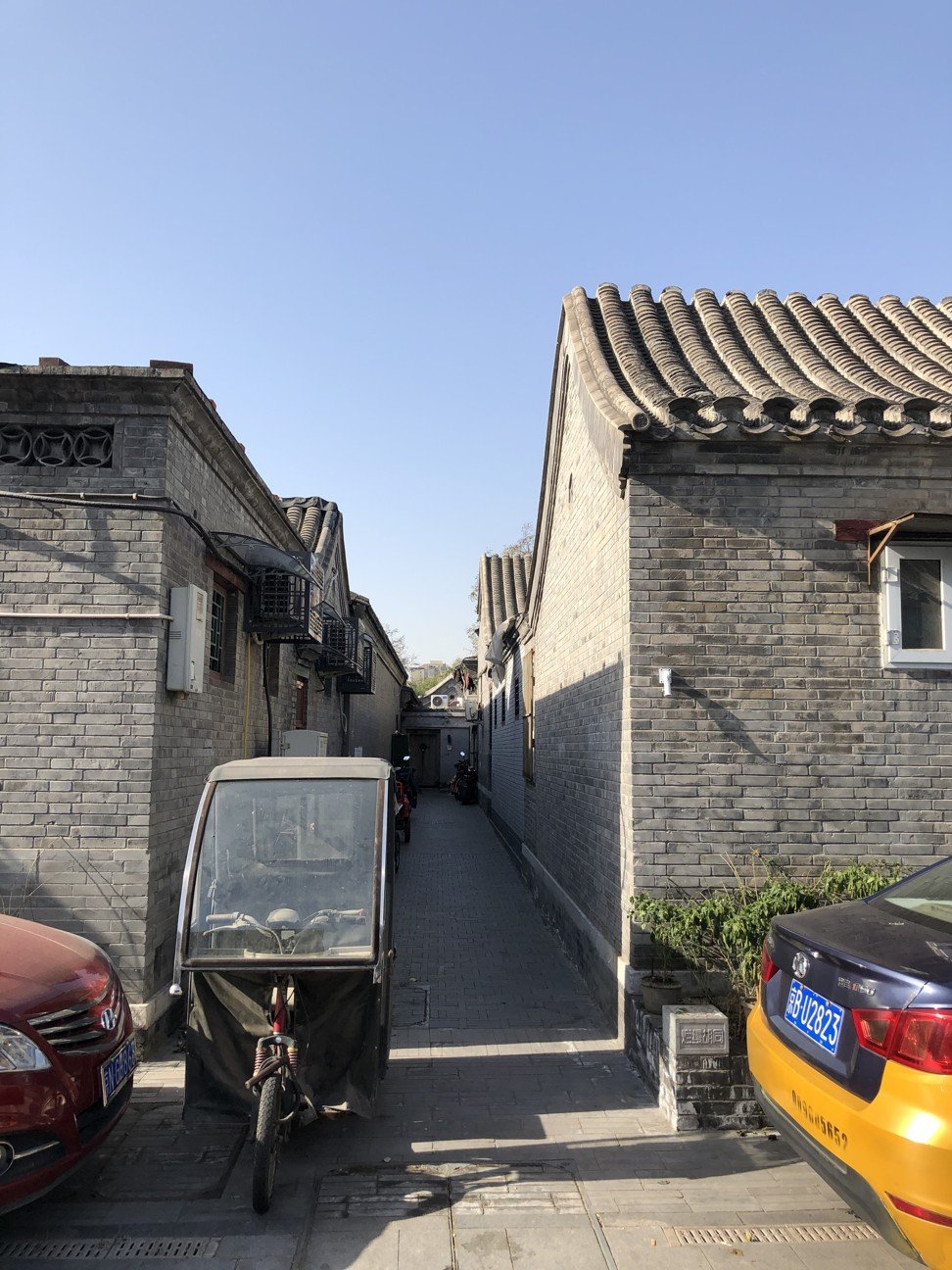
A tiny alleyway leading to No. 121 Lanman Hutong, which sold earlier this week for 1.28 million yuan in Beijing. Photo: Louise Moon
“It is not that easy for the average person to own property in Beijing,” said Midland’s Zhao. “For most homes in the city, 1 million yuan is only enough for a down payment.”
Unit 121 on Lanman Hutong is located among a cluster of siheyuan, as Beijing’s traditional courtyard homes are called. Bicycles, old washing machines and other household junk are piled along the maze of alleyways leading to the ground-floor unit.
Its auction drew 29 bidders starting from 470,000 yuan. The final winning bid prices the Lanman cubicle 35 per cent higher than a 100-million yuan villa with view of the Summer Palace in Beijing’s outskirts, on a per square foot basis.
To be sure, the unidentified buyer of the unit may be speculating for a quick flip, when the property is torn down, said Zhang Dawei, an analyst at Centaline Property Agency.
“This is more like a gamble, betting on the unit being demolished,” Zhang said. “If the odds are good, the buyer can pocket the [compensation], which could be several times what he bought it for. Even if it is not demolished in the short term, it is not bad to have some asset in the heart of Beijing.”
Team from Dalian Institute of Chemical Physics says its goal is to ‘develop an all-season battery that is low cost but high safety for consumer products’
Researchers make breakthrough by using hard carbon and lithium vanadium phosphate
Chinese researchers say they have made a breakthrough in the development of small lithium batteries that can withstand low temperatures. Photo: Xinhua
Chinese researchers say they have found a way to produce a tiny, lightweight lithium battery for use in mobile phones and electric cars that can hold up to 80 per cent of its charge in temperatures as low as minus 40 degrees Celsius.
The breakthrough came by using a combination of a new material called hard carbon along with lithium vanadium phosphate, the team from the Dalian Institute of Chemical Physics said in a paper published in this month’s edition of the scientific journal Nano Energy.
“Our goal is to develop an all-season battery that is low-cost but high-safety for consumer products,” said Song Zihan, its lead author.
It was an unprecedented approach, but “we proved it works”, he said.
The idea of a battery that can withstand extreme cold is not new. Photo: Shutterstock
The idea of a battery that can withstand extreme cold is not new, and they are already in use in space and in the Arctic and Antarctic.
But they tend to be very bulky because of the heating system and large amount of insulation they need to function properly at sub-zero temperatures.
Such measures are neither physically nor economically viable for applications like smartphones, cameras, laptops or electric cars. The trick, Song said, was replacing the soft graphite in normal lithium batteries with hard carbon.
Graphite is a good conductor and often used for the anode at the bottom of a battery, where electrons are generated. But the performance of graphite drops as the mercury slides.
How military tech sparked a robot revolution in firework factories
Song said that hard carbon was a new material that had attracted a lot of research interest in recent years, and compared with graphite, it had a much higher tolerance for the cold.
That was because of its highly irregular and “almost messy” structure, comprising layers of carbon atoms that are interconnected with each other, he said.
However, hard carbon also caused a rapid depletion of the lithium ions that served as an agent carrying the electric flow in battery, he said.
The researchers want to make battery suitable for use in consumer products. Photo: EPA-EFE
In the past, researchers have tried adding lithium powders or flakes to improve battery life, but the approach has proven costly and dangerous, mostly because pure lithium is highly reactive.
So Song and his colleagues used a composite material called lithium vanadium phosphate as the positive cathode on top of the battery.
The composite was capable of providing enough extra lithium ions for the hard carbon’s need without increasing the risk of fire or explosion, and it was cheap, he said.
“The pairing of hard carbon and lithium vanadium phosphate worked a charm,” Song said.
But the technology is still a long way from being commercially viable.
The battery Song’s team made is far too small for any real-life applications, and enlarging it would require some “innovative engineering solutions”, he said.
Another scientist involved in the project said the team was working with battery manufacturers to see if the technology could be commercialised.
Image copyright EPAImage caption Indian scientists say contact with the lander was lost seconds before it was scheduled to touch down
India’s space agency, Isro, has not yet released information on how it lost contact with its Moon lander seconds before it was due to touch down on the lunar surface. But former members of the agency tell the BBC what may have gone wrong.
Chandrayaan-2 (Moon vehicle 2) entered the Moon’s orbit on 20 August and was due to land on the lunar surface a little after midnight India local time (1800 GMT) on 7 September – a month after it first shot into space.
But contact was lost moments before the lander (named Vikram, after Isro founder Vikram Sarabhai) was expected to touch down at the lunar south pole.
The orbiter has since spotted the lander on the surface of the Moon – unbroken, but tilted on its side. So far, scientists have not been able to establish contact with it.
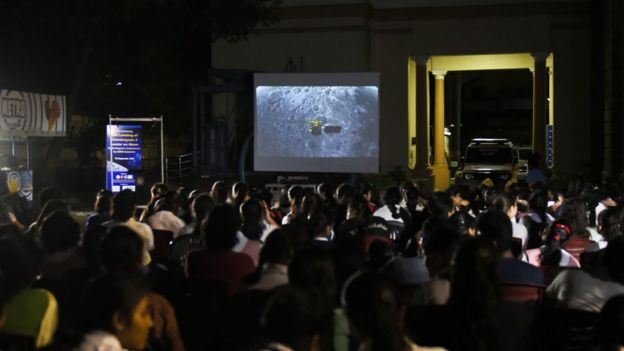
Image copyright GETTY IMAGESImage caption The event was watched by millions across India
The lander’s final heart-stopping descent were monitored on screens, complete with readings which reflected the movement of the lander as it headed towards the surface of the Moon.
The screens carrying the readings also appeared on television and various social media accounts as the landing was broadcast live.
When the countdown began, the lander was moving at a velocity of 1,640 metres per second. Scientists say it appeared to be moving as planned during the first two phases of deceleration, known as the rough braking and fine braking operations.
It was during the final stage, known as the “hovering” stage, that the problem occurred.
The problem could well have been with the lander’s central engine, according to Prof Roddam Narasimha, a former member of Isro. He said that his theory was based on the readings on the screen.
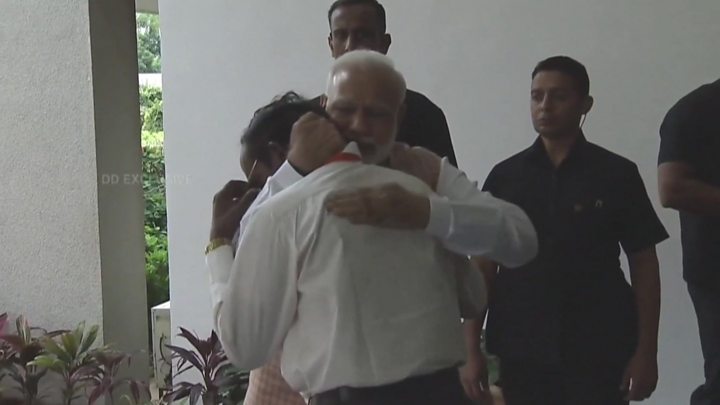
Media caption Modi consoles scientists after India Moon-lander loses contact
“One plausible explanation was that the lander started falling more rapidly,” he told BBC Hindi’s Imran Qureshi. “It’s supposed to come down at a velocity of two metres per second when it hits the Moon’s surface. But the gravity on the moon would have made it fall somewhat more rapidly.”
He believes this could be because the central engine was not “producing the thrust that is required and, therefore, the deceleration was no longer what it was supposed to be”.
And this, in turn, may have led to eventually losing communication with the lander itself.
The head of India’s first Moon mission, Mylswamy Annadurai, also said the anomaly in the velocity profile was an indication that something had malfunctioned in the lander as it hurtled towards the Moon.
“Most likely the orientation [of the lander] could have been disrupted. Once we look at the data we will be able to say for sure what happened, but it is likely that either a sensor or a thruster could have malfunctioned,” he told BBC Tamil.
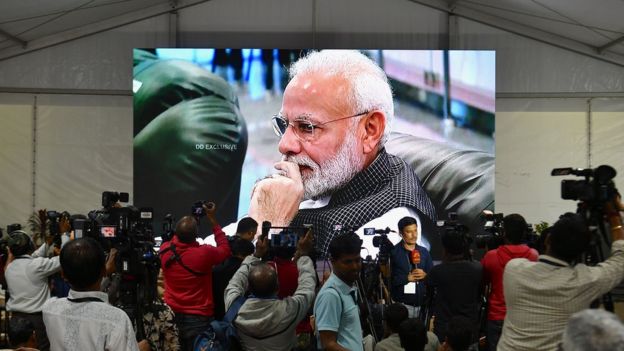
Image copyright GETTY IMAGESImage caption Prime Minister Narendra Modi also watched the event live
Dr Rajeswari Rajagopalan, the head of the Nuclear and Space Policy Initiative of the Observer Research Foundation (ORF), also said an engine malfunction was the likeliest reason.
“In the absence of data parameters, it is difficult to come to a conclusion, but the readings on the screen did show that something was wrong,” she told BBC Hindi.
“The other possibility is that when you do a landing at a higher speed, you cause a lot of dust to rise that also shakes up the spacecraft because of the gravitational pull. But it’s more likely the malfunctioning of one of the engines.”
Chandrayaan-2 was the most complex mission ever attempted by Isro.
The lander carried within its belly a 27kg Moon rover (called Pragyan, which translates as wisdom in Sanskrit), which included instruments to analyse the lunar soil.
The rover had the capacity to travel 500m from the lander in its 14-day life span, and would have sent data and images back to Earth for analysis.
The mission would have focused on the lunar surface, searching for water and minerals and measuring moonquakes, among other things.
Settlements along the route linking Europe and Asia thrived by providing accommodation and services for countless traders
Formally established during the Han dynasty, it was a 19th-century German geographer who coined the term Silk Road
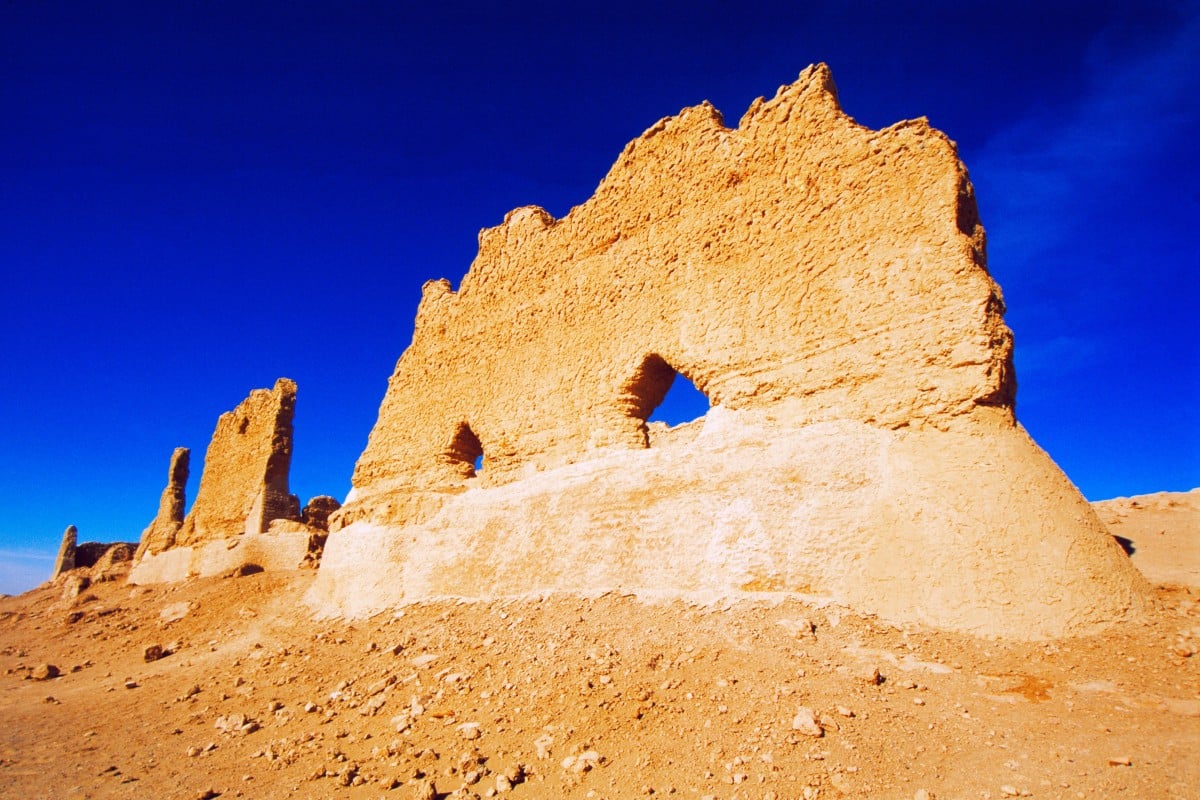
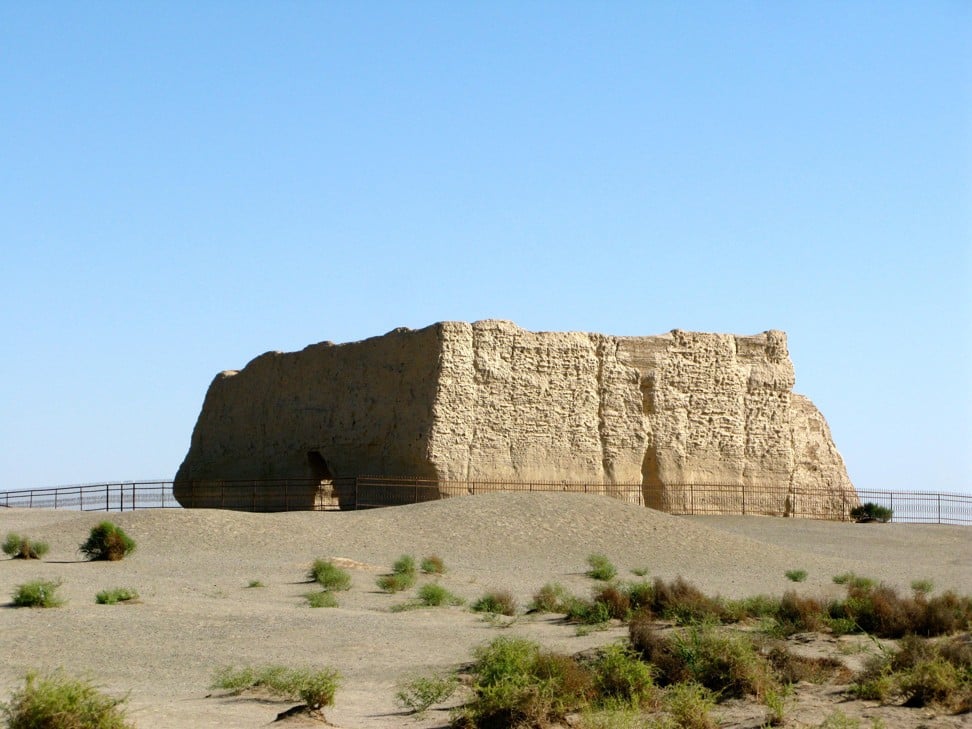
The ruins of a fortified gatehouse and customs post at Yunmenguan Pass, in China’s Gansu province. Photo: Alamy
We have a German geographer, cartographer and explorer to thank for the name of the world’s most famous network of transcontinental trade routes.
Formally established during the Han dynasty, in the first and second centuries BC, it wasn’t until 1877 that Ferdinand von Richthofen coined the term Silk Road (historians increasingly favour the collective term Silk Routes).
The movement of merchandise between China and Europe had been taking place long before the Han arrived on the scene but it was they who employed troops to keep the roads safe from marauding nomads.
Commerce flourished and goods as varied as carpets and camels, glassware and gold, spices and slaves were traded; as were horses, weapons and armour.
Merchants also moved medicines but they were no match for the bubonic plague, which worked its way west along the Silk Road before devastating huge swathes of 14th century Europe.
What follows are some of the countless kingdoms, territories, (modern-day) nations and cities that grew rich on the proceeds of trade, taxes and tolls.
China
A watchtower made of rammed earth at Dunhuang, a desert outpost at the crossroads of two major Silk Road routes in China’s northwestern Gansu province. Photo: Alamy
Marco Polo worked in the Mongol capital, Khanbaliq (today’s Beijing), and was struck by the level of mercantile activity.
The Venetian gap-year pioneer wrote, “Every day more than a thousand carts loaded with silk enter the city, for a great deal of cloth of gold and silk is woven here.”
Light, easy to transport items such as paper and tea provided Silk Road traders with rich pickings, but it was China’s monopoly on the luxurious shimmering fabric that guaranteed huge profits.
So much so that sneaking silk worms out of the empire was punishable by death.
The desert outpost of Dunhuang found itself at the crossroads of two major Silk Road trade arteries, one leading west through the Pamir Mountains to Central Asia and another south to India.
Built into the Great Wall at nearby Yunmenguan are the ruins of a fortified gatehouse and customs post, which controlled the movement of Silk Road caravans.
Also near Dunhuang, the Mogao Caves contain one of the richest collections of Buddhist art treasures anywhere in the world, a legacy of the route to and from the subcontinent.
Afghanistan
Afghanistan’s mountainous terrain was an inescapable part of the Silk Road, until maritime technologies would become the area’s undoing. Photo: Shutterstock
For merchants and middlemen hauling goods through Central Asia, there was no way of bypassing the mountainous lands we know today as Afghanistan.
Evidence of trade can be traced back to long before the Silk Road – locally mined lapis lazuli stones somehow found their way to ancient Egypt, and into Tutankhamun’s funeral mask, created in 1323BC.
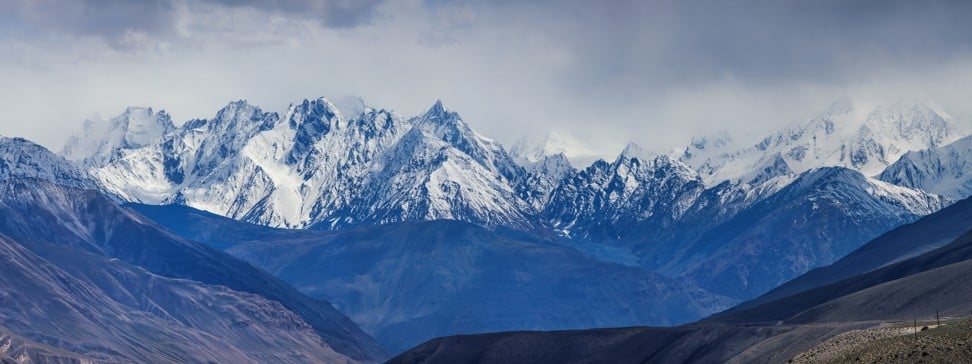
Jagged peaks, rough roads in Tajikistan, roof of the world
Besides mercantile exchange, the caravan routes were responsible for the sharing of ideas and Afghanistan was a major beneficiary. Art, philosophy, language, science, food, architecture and technology were all exchanged, along with commercial goods.
In fact, maritime technology would eventually be the area’s undoing. By the 15th century, it had become cheaper and more convenient to transport cargo by sea – a far from ideal development for a landlocked region.
Iran
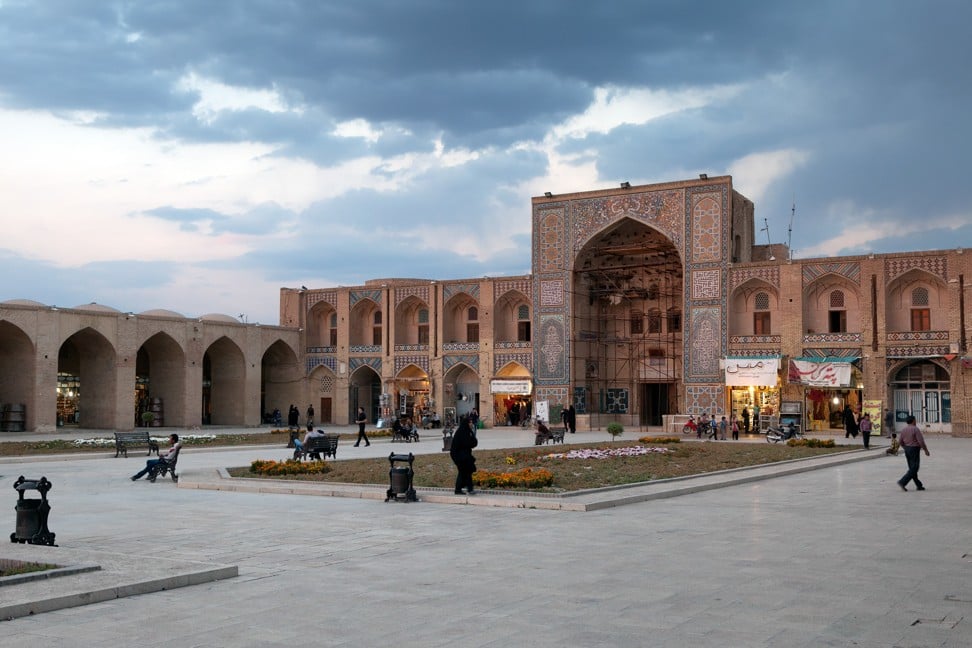
The Ganjali Khan Complex, in Iran. Photo: Shutterstock
Thanks to the Silk Road and the routes that preceded it, the northern Mesopotamian region (present-day Iran) became China’s closest trading partner. Traders rarely journeyed the entire length of the trail, however.
Merchandise was passed along by middlemen who each travelled part of the way and overnighted in caravanserai, fortified inns that provided accommodation, storerooms for goods and space for pack animals.
The good, bad and ugly sides to visiting Chernobyl and Kiev
With so many wheeler-dealers gathering in one place, the hostelries developed into ad hoc marketplaces.
Marco Polo writes of the Persian kingdom of Kerman, where craftsmen made saddles, bridles, spurs and “arms of every kind”.
Today, in the centre of Kerman, the former caravanserai building forms part of the Ganjali Khan Complex, which incorporates a bazaar, bathhouse and mosque.
Uzbekistan
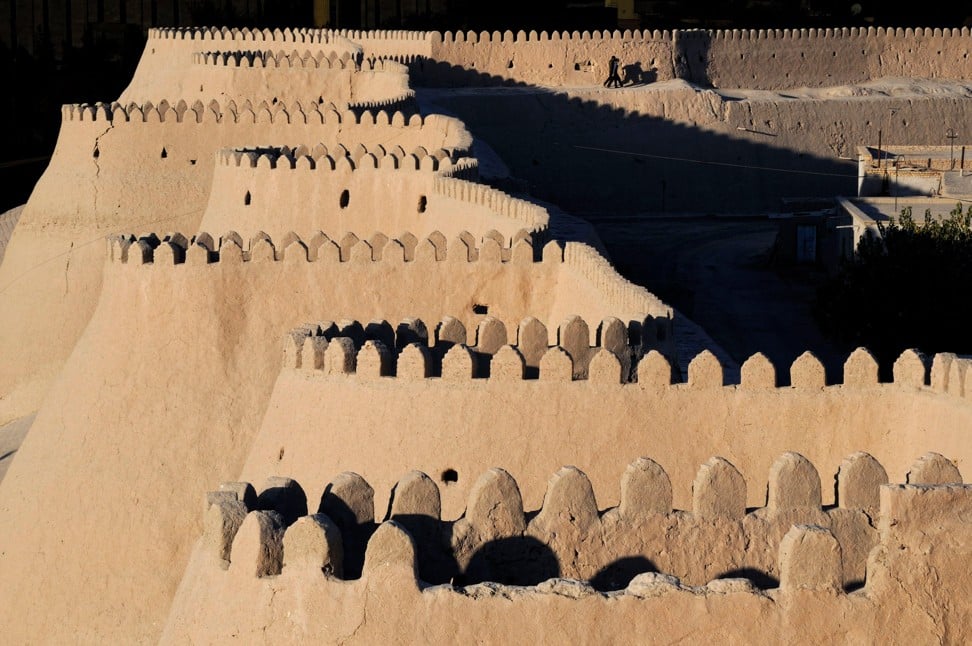
A fort in Khiva, Uzbekistan. Photo: Alamy
The double-landlocked country boasts some of the Silk Road’s most fabled destinations. Forts, such as the one still standing at Khiva, were built to protect traders from bandits; in fact, the city is so well-preserved, it is known as the Museum under the Sky.
The name Samarkand is also deeply entangled with the history of the Silk Road.
The earliest evidence of silk being used outside China can be traced to Bactria, now part of modern Uzbekistan, where four graves from around 1500BC-1200BC contained skeletons wrapped in garments made from the fabric.
Three thousand years later, silk weaving and the production and trade of textiles remain one of Samarkand’s major industries.
Georgia
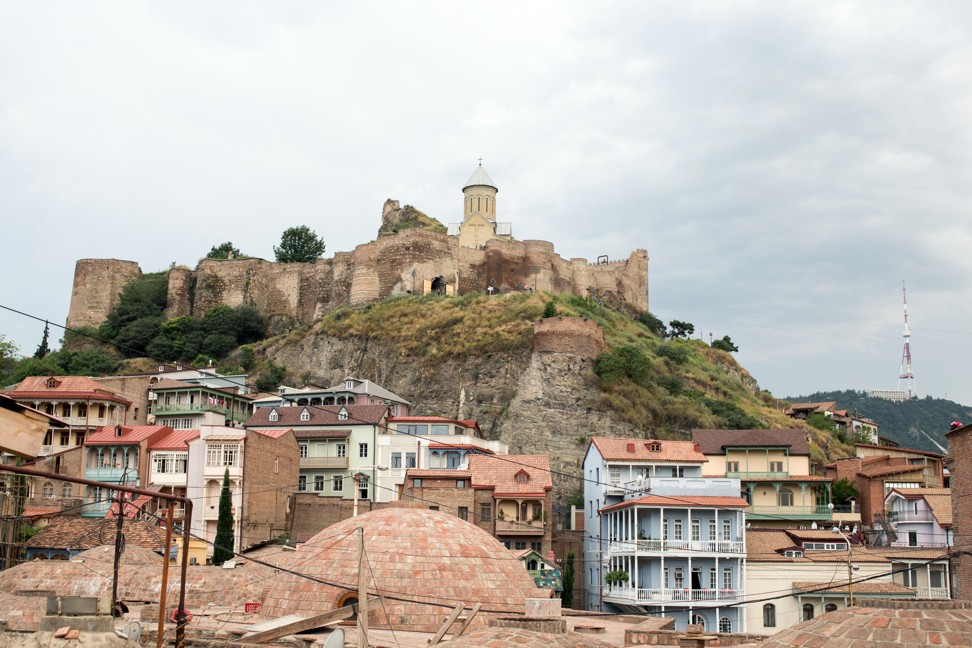
A street in old town of Tbilisi, Georgia. Photo: Alamy
Security issues in Persia led to the opening up of another branch of the legendary trade route and the first caravan loaded with silk made its way across Georgia in AD568.
Marco Polo referred to the weaving of raw silk in “a very large and fine city called Tbilisi”.
Today, the capital has shaken off the Soviet shackles and is on the cusp of going viral.
Travellers lap up the city’s monasteries, walled fortresses and 1,000-year-old churches before heading up the Georgian Military Highway to stay in villages nestling in the soaring Caucasus Mountains.
Public minibuses known as marshrutka labour into the foothills and although the vehicles can get cramped and uncomfortable, they beat travelling by camel.
Jordan
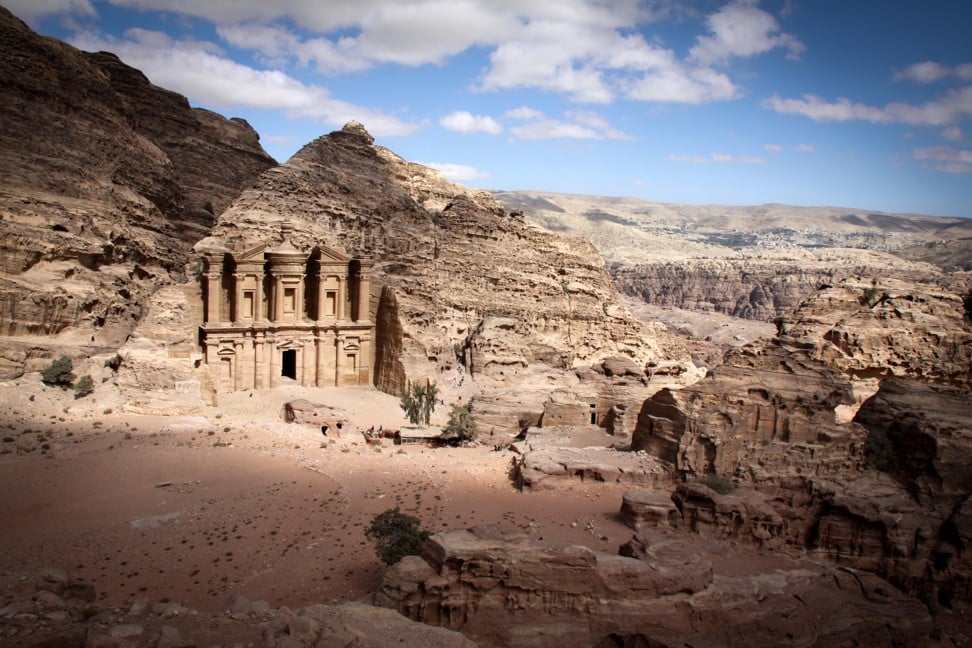
Petra, in Jordan. Photo: Alamy
The location of the Nabataean capital, Petra, wasn’t chosen by chance.
Savvy nomadic herders realised the site would make the perfect pit-stop at the confluence of several caravan trails, including a route to the north through Palmyra (in modern-day Syria), the Arabian peninsula to the south and Mediterranean ports to the west.
Huge payments in the form of taxes and protection money were collected – no wonder the most magnificent of the sandstone city’s hand-carved buildings is called the Treasury.
The Red Rose City is still a gold mine – today’s tourists pay a hefty
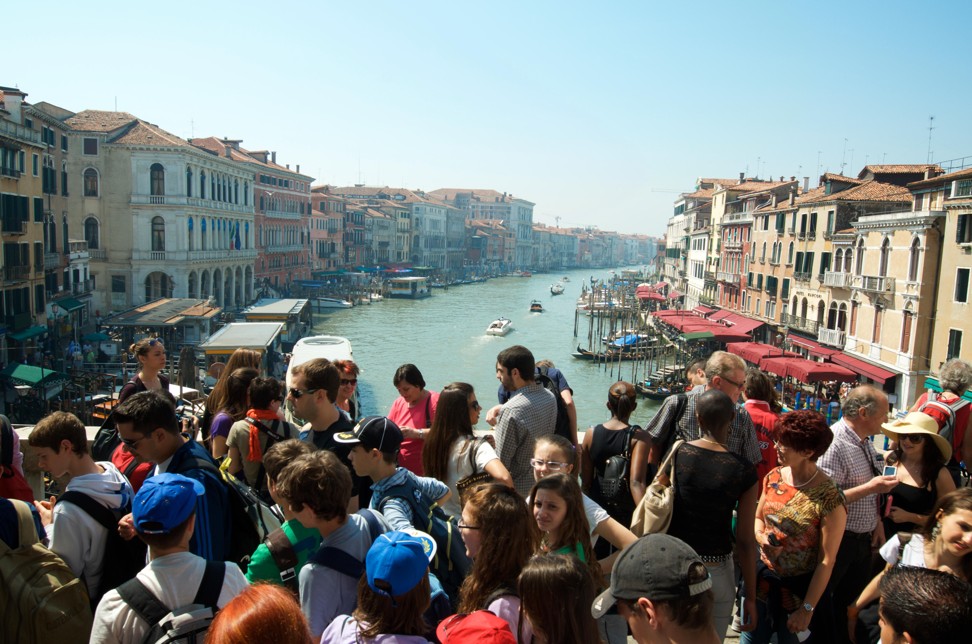
Trade enriched Venice beyond measure, helping shape the Adriatic entrepot into the floating marvel we see today.
Besides the well-documented flow of goods heading west, consignments of cotton, ivory, animal furs, grapevines and other goods passed through the strategically sited port on their way east.
Ironically, for a city built on trade and taxes, the biggest problem Venice faces today is visitors who don’t contribute enough to the local economy.
A lack of spending by millions of day-tripping tourists and cruise passengers who aren’t liable for nightly hotel taxes has prompted authorities to introduce a citywide access fee from January 2020.
Two thousand years ago, tariffs and tolls helped Venice develop and prosper. Now they’re needed to prevent its demise.
Synthetic material that mimics and improves on nature could be used in China’s hypersonic space plane
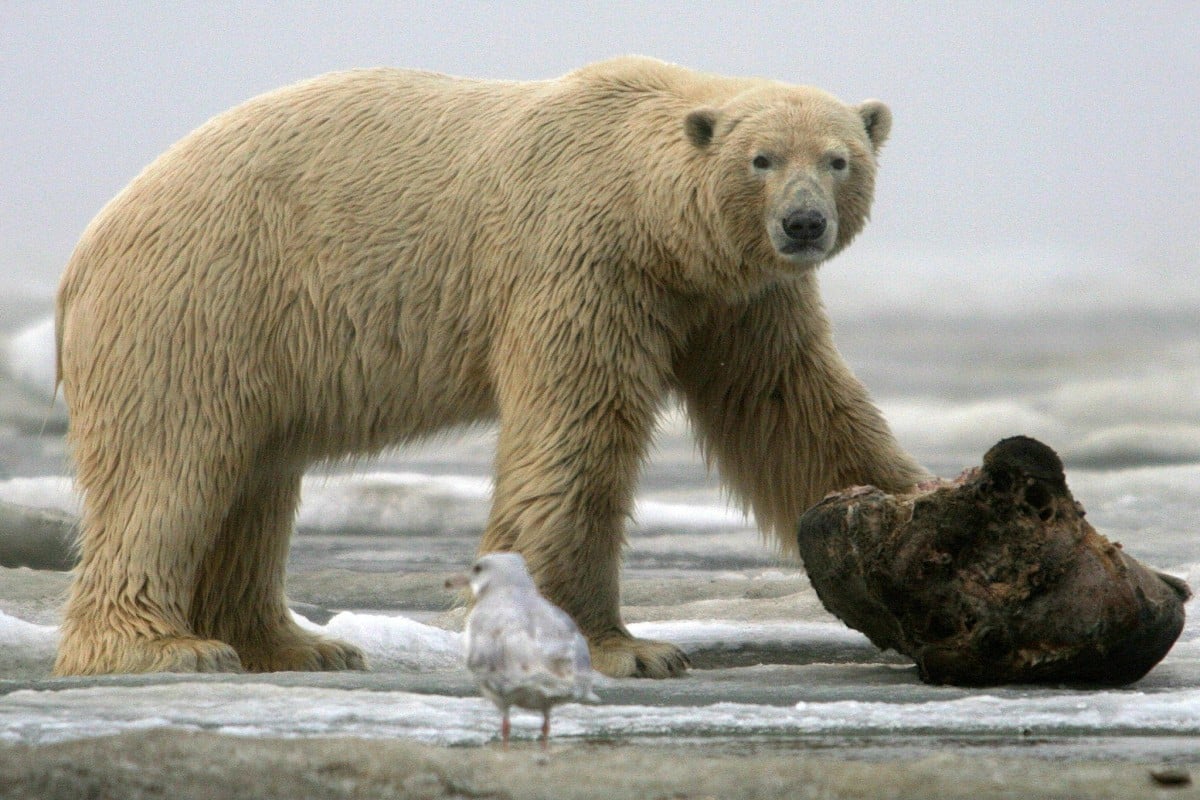
Chinese researchers have developed a super insulator based on the unique properties of polar bear fur. Photo: TNS
What can withstand heat of more than 1,000 degrees Celsius (1,832 Fahrenheit), maintain its elasticity in extreme cold, and dry almost instantly after being submerged in water?
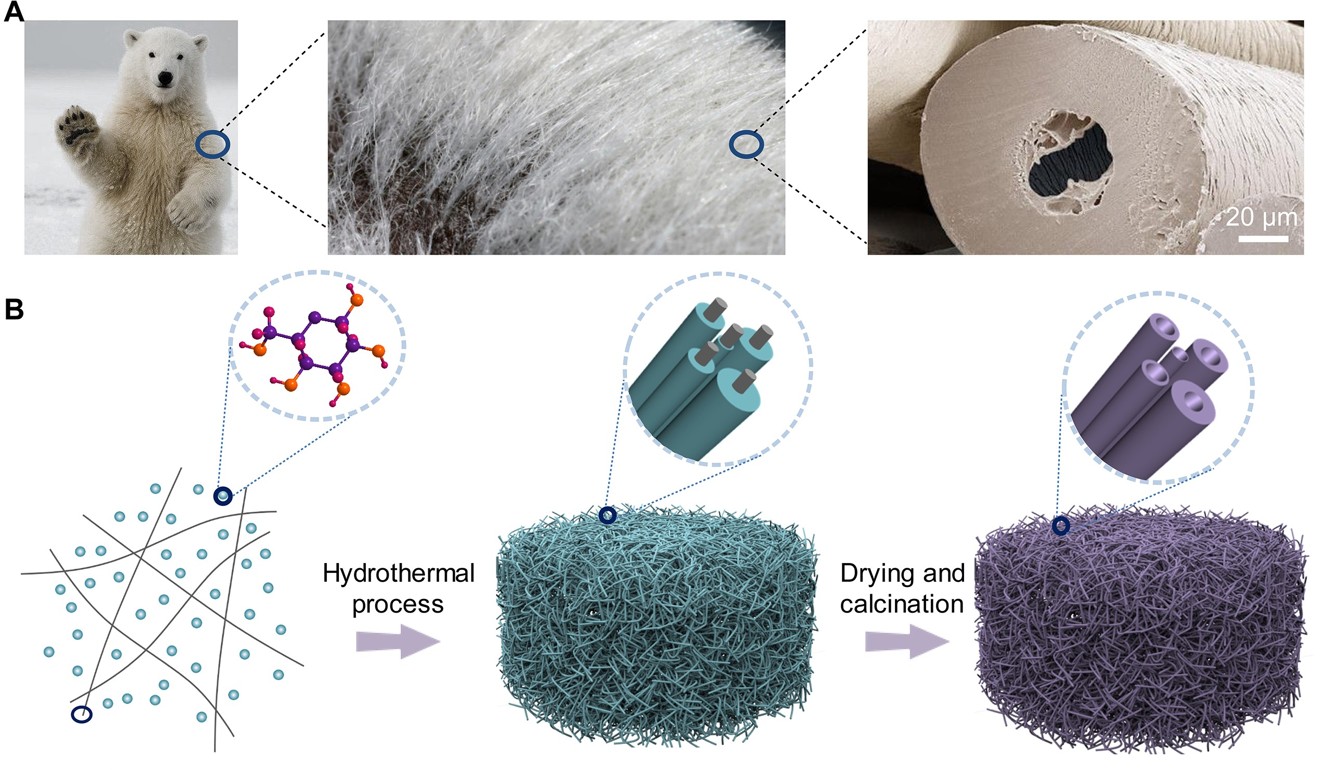
The answer is a new synthetic fur which has been developed by Chinese scientists, who set out to mimic – and improve upon – the unique properties of the polar bear’s coat.
The team, led by Professor Yu Shuhong, was at first simply curious to know what made the polar bear so comfortable and successful in the unforgiving environment of the Arctic.
In their laboratory in Hefei, in the southeastern province of Anhui, they studied polar bear hair with a high-definition microscope and found a unique difference compared to the hair of human beings and other mammals.
Chinese researchers have wrapped a carbon material around a nanowire, which is then removed, to mimic a polar bear’s unique hollow hair, which could have applications for the aerospace industry. Photo: Handout
It was hollow inside. What’s more, they observed the tubelike hairs intertwined with one another, forming a random network like a bird’s nest. Using theoretical models on a powerful computer, the researchers confirmed that the structure was an efficient heat insulator.
The only drawback was its fragility and – according to their research paper in the latest issue of online science journal Chem – the researchers have managed to develop a synthetic version strong enough to withstand being pressed one million times during testing.
The new material was lighter than any heat insulation product in use today, with one cubic metre weighing just 8kg (17.6lbs) and might have applications in many areas, including the hypersonic space plane, under development in China for low-cost transport between space station and Earth, the researchers said.
Liu Jianwei, professor with the chemistry department at the University of Science and Technology of China and a co-author of the paper, said several research institutes and aerospace companies had been in contact to discuss the possibility of mass production.
“It is a super-strong, super-light heat insulator that can be used in hostile environments,” Liu said.
“To find a new material that can be used in critical engineering projects, we needed to make it stronger. We needed to surpass nature.”
Chinese university is first to build and test own hypersonic plane
The researchers replaced the organic substance of the hair with a carbon material and used it to coat a long, fine thread known as a nanowire which was then removed through a series of physical and chemical processes, leaving a dark-coloured, spongy “fur” about the size of a thumb.
According to their study, the new material outperformed natural polar bear hair in nearly all aspects from physical strength to heat insulation. The next challenge is to develop a process that can produce the material at a scale suitable for industrial use.
At the moment, the thumb-sized sample takes about a week to form and, said Liu, there were still some issues to be resolved before it could be mass produced, including building processing equipment at a much larger scale than what is available in the laboratory. Another challenge will be to simplify and speed up the manufacturing process.
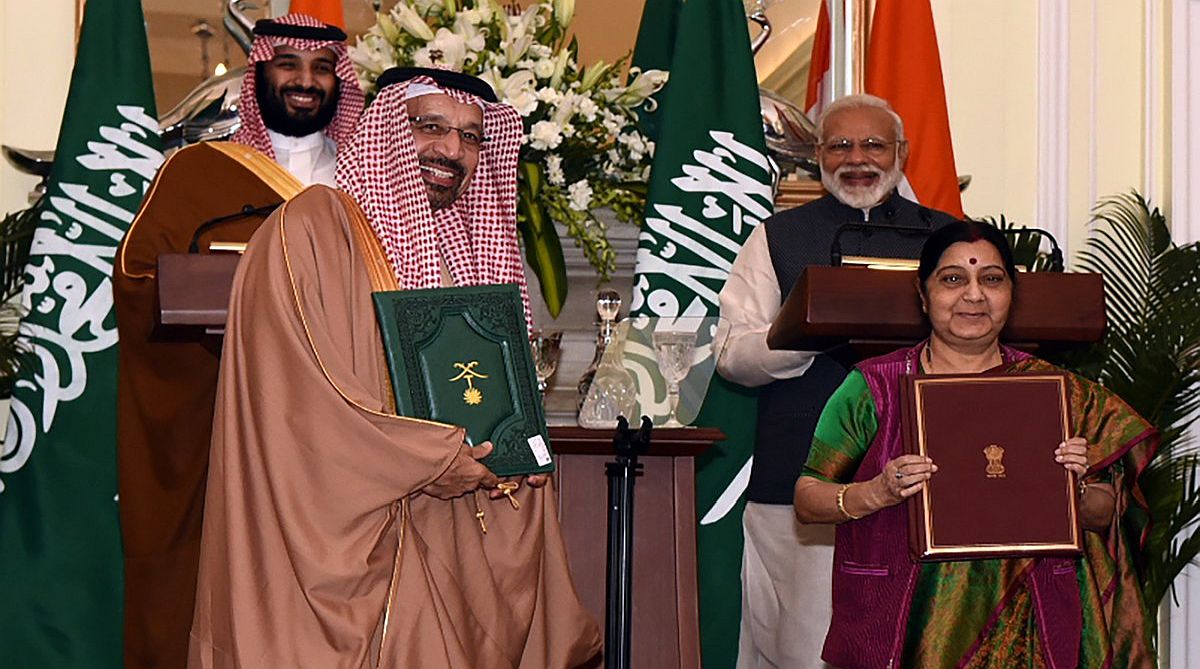
MoUs on tourism, cooperation in the field of housing, International Solar Alliance among others were exchanged between the two countries.
SNS Web | New Delhi | February 20, 2019 2:52 pm
Prime Minister Narendra Modi and Saudi Arabia Crown Prince Mohammed bin Salman witnessing the Exchange of Agreements between India and Saudi Arabia at Hyderabad House, New Delhi. (Photo: Twitter | PIB India)
MoUs on tourism, cooperation in the field of housing, International Solar Alliance among others were exchanged between the two countries.
On his first state visit to the country, Prime Minister Narendra Modi welcomed the Saudi Crown Prince saying that Saudi Arabia was India’s “close friend”.
India and Saudi Arabia have a longstanding relationship, PM Modi said adding that in the 21st century, Saudi Arabia was among India’s most important strategic partners.
The Prime Minister, in a joint press conference with Crown Prince Mohammed bin Salman, also welcomed Saudi investment in Indian infrastructure.
In a major development, Saudi Arabia also joined the International Solar Alliance, informed PM Modi adding that the two leaders also discussed how to further strengthen the defence cooperation between the two nations.
“We have agreed to strengthen their cooperation in the areas of renewable energy. We welcome Saudi Arabia to the International Solar Alliance. The peaceful use of nuclear energy, especially water desalination and health, will be another dimension of our cooperation,” PM Modi said.
Speaking on the Pulwama terror attack that killed at least 44 CRPF personnel, the Prime Minister said the two leaders agreed on the need to destroy the infrastructure of terror and clamp down on countries supporting terror.
“We have also vowed to increase pressure on any country that promotes terror activities,” the Prime Minister said.
This comes after Salman’s high-profile tour of Pakistan on January 17 where he said dialogue was the only way to resolve “outstanding issues” between India and Pakistan.
Addressing the joint press conference, Saudi Arabia Crown Prince Mohammed bin Salman said his country shares India’s concerns over terror.
“Terrorism is a common concern. We will cooperate with India in every way, like intelligence sharing. India has played a positive role,” he said.
He also thanked the people of India and the Government for the warm welcome.
“The relationship between India and Saudi Arabia is over thousands of years old. It is even older than history, and this relationship has grown stronger in the last 50 years. Our objectives are similar be it in energy, agriculture or technology,” he added.
Salman also called for common planning between the two nations to tackle various issues and said that “Saudi Arabia has invested $44 billion in India”.
Earlier in the day, PM Modi and Salman held delegation-level talks on key areas of mutual interest such as trade and investment, energy, defence and security, nuclear and space, civil aviation, renewables, counter-terrorism, community welfare and regional challenges.
External Affairs Minister Sushma Swaraj also met Salman and discussed ways to add further momentum to the strategic ties between the two nations besides deepening engagement in areas of trade and investment.
Earlier on Wednesday, the Saudi Crown Prince was accorded a ceremonial reception at the Rashtrapati Bhawan by President Ram Nath Kovind.
After meeting President Ram Nath Kovind, the Saudi Arabia Crown Prince said, “Today we want to be sure that this relation is maintained and improved for the sake of both countries. With the leadership of the President and the Prime Minister, I am sure we can create good things for Saudi Arabia and India”.
Earlier on Tuesday, in a special gesture, Prime Minister Narendra Modi broke the protocol to personally receive the Saudi prince and welcomed him with a warm hug at the Palam airport.
External Affairs Ministry spokesperson Raveesh Kumar had said that the first state visit of the Saudi Crown Prince marks a “new chapter in bilateral relations between the two countries”.
Salman’s visit comes in the backdrop of the escalating tension between India and Pakistan following the Pulwama terror attack carried out by Pakistan-based Jaish-e-Mohammad (JeM) terror group in which at least 44 CRPF personnel were killed.
Saudi Arabia had on Friday said it stood with India’s fight against terrorism and extremism and denounced as “cowardly” the attack.
India’s bilateral trade with Saudi Arabia was USD 27.48 billion in 2017-18, making Saudi Arabia its fourth largest trading partner.
Saudi Arabia is also a key pillar of India’s energy security, being a source of 17 per cent or more of crude oil and 32 per cent of LPG requirements of India.
The Crown Prince is expected to travel to China from India.







 CHINDIA ALERT: You'll be living in their world, very soon