Chindia Alert: You’ll be Living in their World Very Soon
aims to alert you to the threats and opportunities that China and India present. China and India require serious attention; case of ‘hidden dragon and crouching tiger’.
Without this attention, governments, businesses and, indeed, individuals may find themselves at a great disadvantage sooner rather than later.
The POSTs (front webpages) are mainly 'cuttings' from reliable sources, updated continuously.
The PAGEs (see Tabs, above) attempt to make the information more meaningful by putting some structure to the information we have researched and assembled since 2006.
President may suspend act that gives preferential treatment to people from the city, if Beijing passes national security law
Policymaking body clarifies that Tsai’s remarks were aimed at letting Beijing know there would be ‘serious consequences’ over the legislation
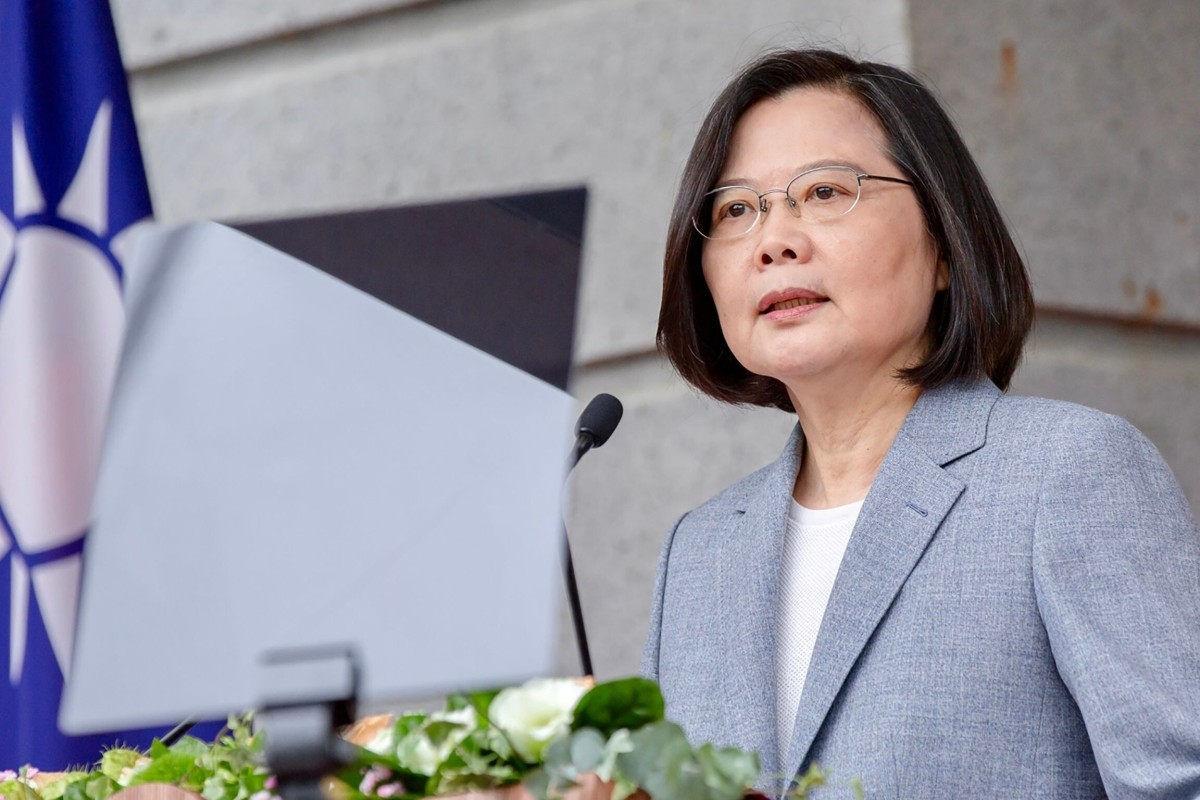
President Tsai Ing-wen said if Beijing’s national security law was implemented in Hong Kong it would seriously erode the city’s freedoms and judicial independence. Photo: AFP
Taiwan’s mainland policymaker on Monday clarified that the self-ruled island would continue to support Hong Kong, after President Tsai Ing-wen said its special status could be revoked if Beijing passed a controversial national security law for the city.
Tsai said in a Facebook post on Sunday that she might consider invoking Article 60 of the Laws and Regulations Regarding Hong Kong and Macau Affairs by suspending the “application of all or part of the provisions of the act” if the National People’s Congress bypassed Hong Kong’s Legislative Council to approve the security law.
That would mean an end to the preferential treatment given to people from Hong Kong and Macau, including to visit and invest in the self-ruled island.
Tsai said Beijing’s move would break its promise for Hong Kong to remain unchanged for 50 years after it was handed over to China, and for the city to be run with a high degree of autonomy.
Tear gas fired as thousands protest Beijing’s planned national security law for Hong Kong
In a statement on Monday, Taiwan’s Mainland Affairs Council responded to criticism from opposition lawmakers that Tsai planned to “dump” Hong Kong people after using them to win January’s presidential election.
“What the president said in her Facebook post did not mean ‘giving up on Hong Kong’, rather she meant to let Beijing know there would be serious consequences if the Chinese Communist Party National People’s Congress passes a Hong Kong version of the [mainland] national security law,” the statement said.
It said that the island’s authorities would continue to offer necessary assistance for Hong Kong people in view of the latest developments in the city.
Tsai’s strong support for the mass protests in Hong Kong last year – triggered by a now-shelved extradition bill – helped win the backing of many young voters in the Taiwan election in early January. The youth vote was seen as an essential part of her turnaround in the campaign – she had been expected to lose the race to mainland-friendly Kuomintang candidate Han Kuo-yu but ended up being re-elected for a second term in a landslide.
In her Facebook post, Tsai, from the Democratic Progressive Party, said if the national security law was implemented, it would seriously erode Hong Kong’s freedoms and judicial independence.
Taiwan to fire up missile programme as Tsai puts focus on asymmetric warfare against mainland China
23 May 2020
Opposition lawmakers said what Tsai was suggesting – suspending the city’s special status – was unthinkable as it would essentially mean shutting the door to Hong Kong people doing business, studying or fleeing to Taiwan to avoid penalties for their protest actions in the city.
KMT legislator Charles Chen I-hsin said he and others on Monday proposed that the legislature revise the act to allow Hong Kong people to seek refuge in Taiwan in the absence of a formal political asylum law.
In response, the Mainland Affairs Council said Tsai had made clear that the government would continue to help Hong Kong people in need, and that would continue in the future.
The team, accompanied by a member of Du’s family, was due to travel on Monday, and will handle arrangements for the remains, as well as conducting its own internal investigation, according to Israeli newspaper Haaretz.
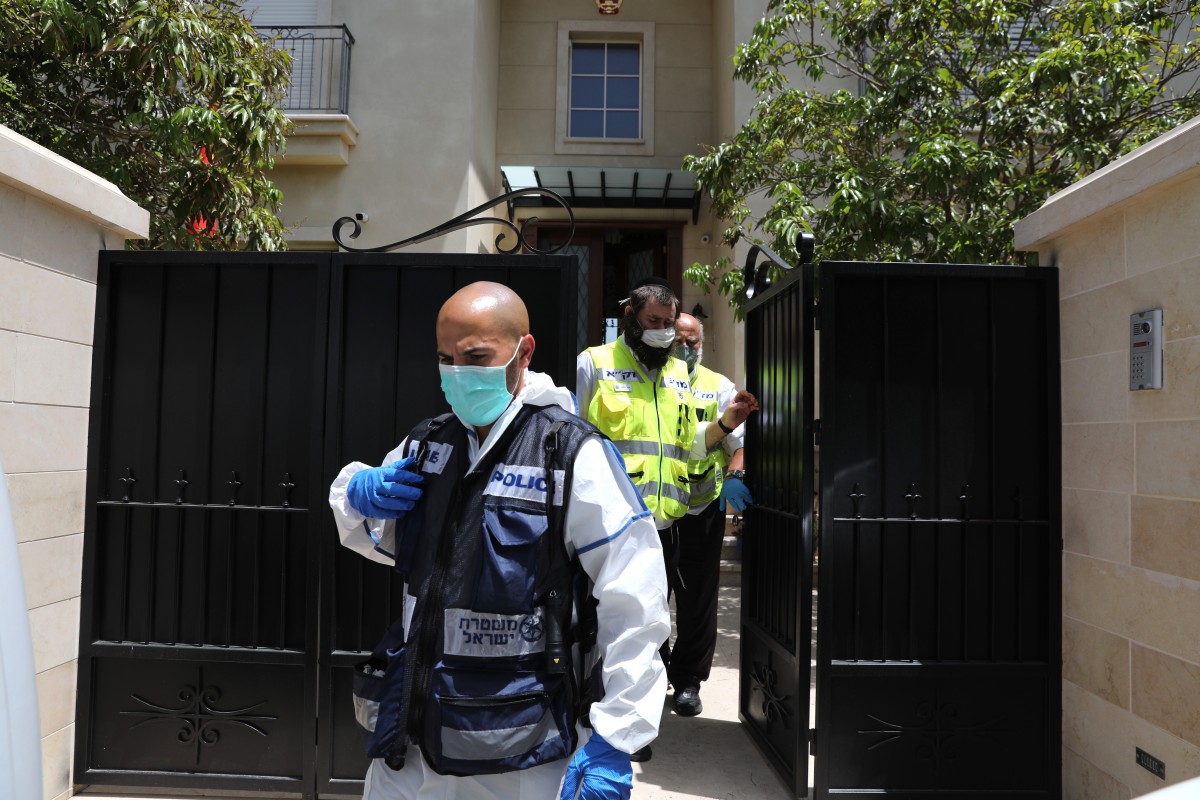
Israel’s foreign ministry said its director general Yuval Rotem had spoken with deputy ambassador Dai Yuming to express his condolences. Local police are continuing to investigate at Du’s residence in a suburb of Herzliya, near Tel Aviv.
Details from the Chinese side have been scant. China’s foreign ministry provided a statement to AFP on Sunday which said the preliminary verdict was that Du, 57, had died unexpectedly for health reasons, and details awaited further confirmation. AFP also reported that Du’s wife and son were not with him in Tel Aviv.
“As far as I know, China’s ambassador to Israel Du Wei passed away in ambassador’s residence in Tel Aviv this morning for physical reasons. It happened abruptly,” said Hu Xijin, editor-in-chief of state media tabloid Global Times in a tweet late on Sunday night.
Du was last seen in public on Tuesday in a video conference with an official from Israel’s foreign affairs ministry, according to the embassy website.
James Dorsey, senior fellow at the S. Rajaratnam School of International Studies in Singapore, said Du’s untimely death should be seen as a personal, rather than a political, tragedy for the growing relationship between China and Israel, but he said it came at an important moment for the two countries because of rising US-China tensions.
Dorsey said Israel’s increasing hi-tech cooperation with China, as well as continuing US hostility to Iran – which has close ties with China – were potentially problematic for relations between the two countries.
“I’m not sure that the China-Israel relationship can be seen as independent of the Israel-US relationship. One could argue that the Chinese may be well advised to very quickly replace him soon,” Dorsey said. “Israel could find itself on the fault line of deepening US-China decoupling,” he added.
Israel’s ambassador to China in quarantine after ‘infected’ flight to Seoul
28 Feb 2020
Following a brief trip to Jerusalem on Wednesday – his first foreign visit since March – US Secretary of State Mike Pompeo renewed warnings about China-Israel ties in an interview with Israeli state-owned media outlet Kan News.
“We do not want the Chinese Communist Party to have access to Israeli infrastructure, Israeli communication systems, all of the things that put Israeli citizens at risk,” he said.
China’s embassy in Tel Aviv blasted Pompeo’s comments as “absurd” and “ill-intentioned”. However, the embassy statement was not written by Du, but by a spokesperson.
Du had only served in Israel since February. Just before his arrival, the Chinese embassy had to issue an apology after then-acting ambassador Dai denounced Israel’s tightened restrictions on Chinese visitors by comparing them to the Holocaust.
During his brief tenure, Du gave frequent interviews to local media, speaking mainly about China’s virus control measures, US-China tensions, and friendship between China and the Jewish people.
Du had worked as a career diplomat since entering China’s foreign service in 1989. Before his appointment in Tel Aviv, he served as China’s ambassador to Ukraine from 2016-2019.




 CHINDIA ALERT: You'll be living in their world, very soon