Chindia Alert: You’ll be Living in their World Very Soon
aims to alert you to the threats and opportunities that China and India present. China and India require serious attention; case of ‘hidden dragon and crouching tiger’.
Without this attention, governments, businesses and, indeed, individuals may find themselves at a great disadvantage sooner rather than later.
The POSTs (front webpages) are mainly 'cuttings' from reliable sources, updated continuously.
The PAGEs (see Tabs, above) attempt to make the information more meaningful by putting some structure to the information we have researched and assembled since 2006.
Remains of two of river’s estimated 1,012 porpoises found in less than a week
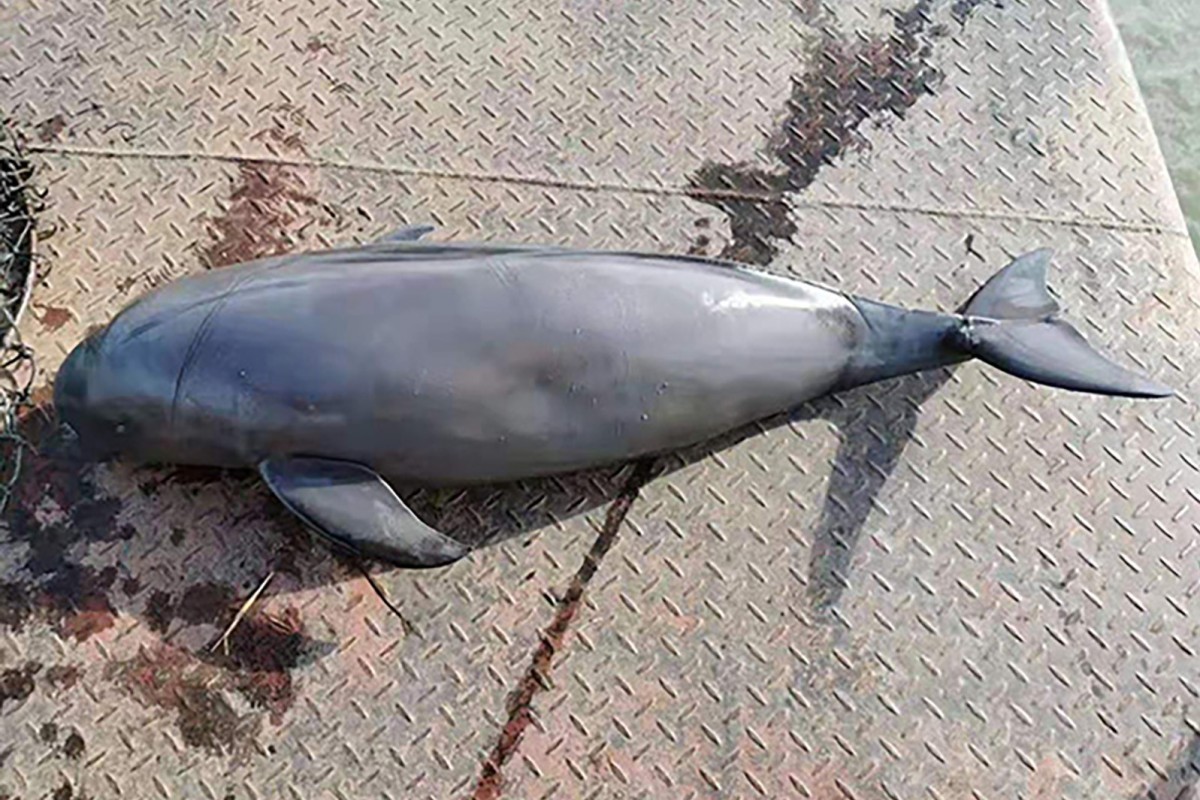
The finless porpoise found dead in the Yangtze River in Hubei on Monday was the second fatality in a week. Photo: 163.com
Two endangered finless porpoises have been found dead in the Yangtze River in the space of a week, according to mainland Chinese media reports.
One was found on Monday in Jiayu county, central Hubei province, four days after the remains of another were recovered from Dongting Lake, a tributary of the Yangtze in central Hunan province, news website Thepaper.cn reported.
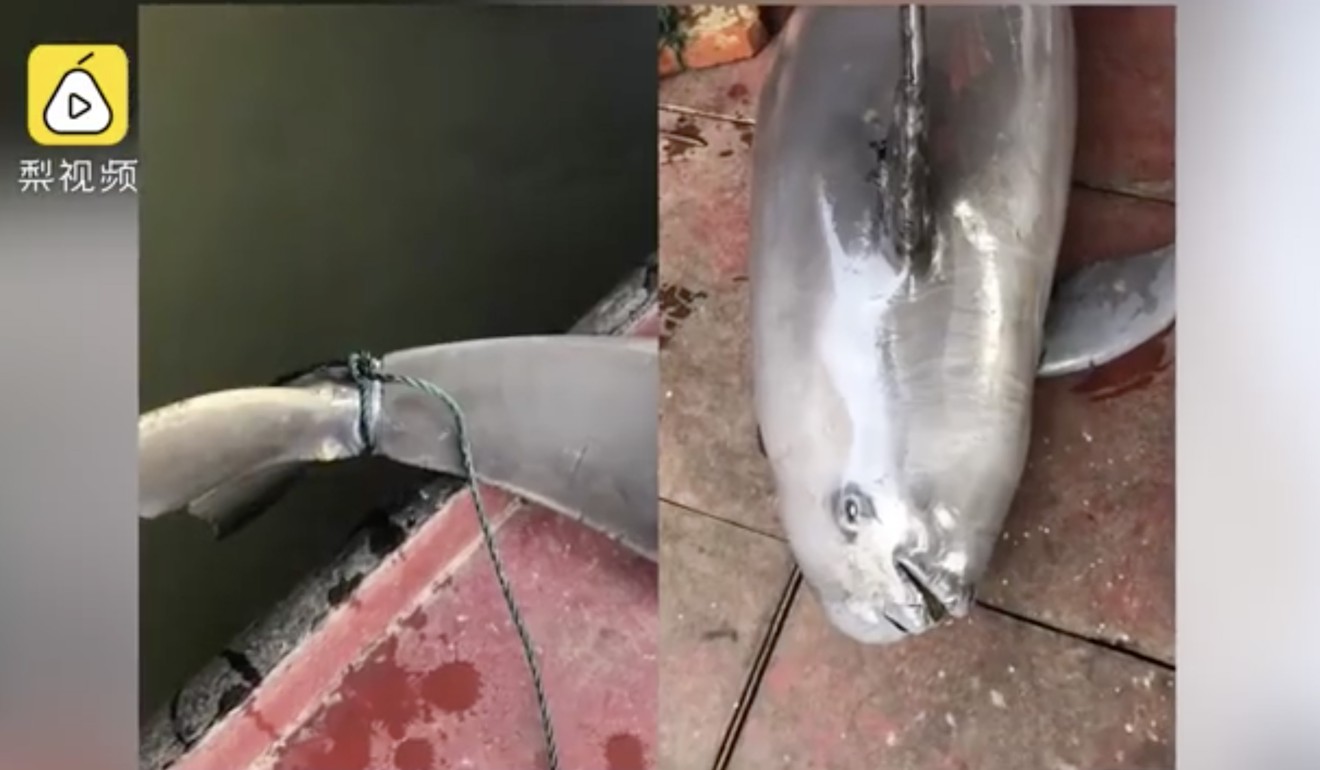
The Dongting Lake carcass was tied with a rope and weighted with bricks, and authorities in Hunan said the creature became tangled in a fishing net. The Hubei death is under investigation.
The Yangtze’s finless porpoises are “extremely endangered”, the Ministry of Agriculture and Rural Affairs said in a 2016 action plan to protect the species. Last year, vice-minister Yu Kangzhen said surveys showed there were about 1,012 of the animals in the river.
The tail of a dead finless porpoise pulled from Dongting Lake in Hunan appears to have been tied to weights. Photo: Pear Video
In 2017, China raised its protection for the mammals to its highest level because of the critical dangers they faced. Experts said that as the river’s “flagship” species, the porpoise was an indicator for the Yangtze’s ecology.
The porpoise discovered in Hubei was small and it had suffered superficial wounds, investigators were quoted as saying. They estimated that it was found soon after its death.
Xiaoxiang Morning Post quoted fisheries authorities in Yueyang, near Dongting Lake, as saying the porpoise in Hunan was found with weights around its tail.
Two porpoise carcasses found on separate Hong Kong shores
Officials said the fishermen who set the net feared they would be blamed for the creature’s death and tied bricks to its tail to sink it.
Other fishermen who witnessed the incident told the authority, leading to the discovery of the body, the report said. The investigation is ongoing and the suspects are still at large.
A fishing authority spokesman told the newspaper that the porpoise’s death showed the difficulty of balancing conservation with the livelihoods of fishermen.
“It’s difficult to figure out a good model to protect the porpoises without affecting fishermen’s business,” he said.
In mainland China, finless porpoises are referred to as “giant pandas in water” because of their endangered status. Their numbers fell from 2,700 in 1991 to 1,800 in 2006, and there were 1,045 finless porpoises in 2012, according to agriculture ministry data.
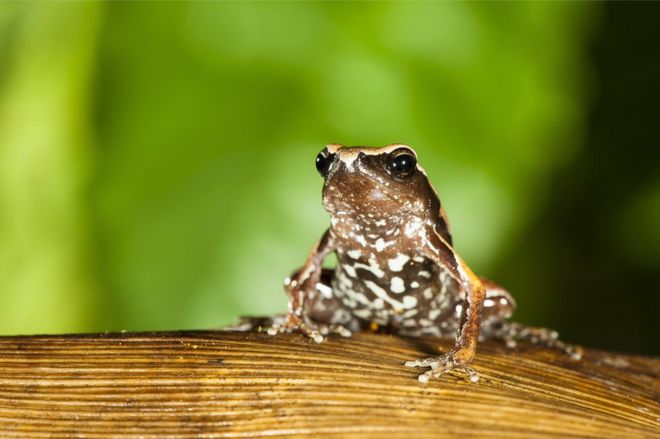
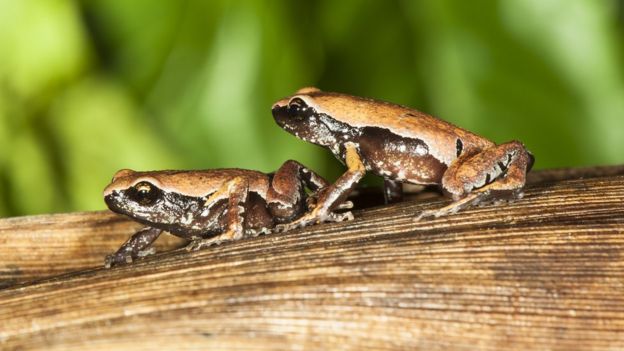
Indian researchers have discovered a new species of frog – in a roadside puddle.
Sonali Garg, a PhD student at Delhi University, and her supervisor SD Biju found the new species in the Western Ghats, a biodiversity hotspot in southern India.
The species belongs to a new Indian frog group or genus which the scientists have named Mysticellus.
The name is derived from Latin and means mysterious and diminutive.
The scientists discovered the narrow-mouthed frog after three years of extensive explorations, and have confirmed that it represents an entirely new species and genus of microhylid frogs.
The new genus is currently known only in a single locality.
“Our discovery of this new frog genus from one of the most explored and researched regions in the Western Ghats indicates that documentation of amphibians in this globally recognised biodiversity hotspot is still far from being complete,” says Sonali Garg.
“This frog went unnoticed until now probably because it appears for less than four days for breeding activities and lives a secretive lifestyle for the rest of the year.”
A number of new frog species have been discovered in the Western Ghats in the past decade, making it one of the leading biodiversity hotspots in the world.
“At the same time, Indian amphibians face various extinction threats, especially due to habitat loss and degradation. The only known population of the new genus is found in a wayside area disturbed with vehicular movement, plantation activities and human settlements,” says Ms Garg.
“Since little is known about the habitat requirements and the distribution range of the new frog, the specific site needs to be preserved to protect this frog.”
A new tadpole that burrows through sand was discovered in Western Ghats in 2016, and an extraordinary tree frog thought to have died out more than a century ago was also rediscovered in the same year.



 CHINDIA ALERT: You'll be living in their world, very soon