19/04/2020
- Faced with a backlash from the West over its handling of the early stages of the pandemic, Beijing has been quietly gaining ground in Asia
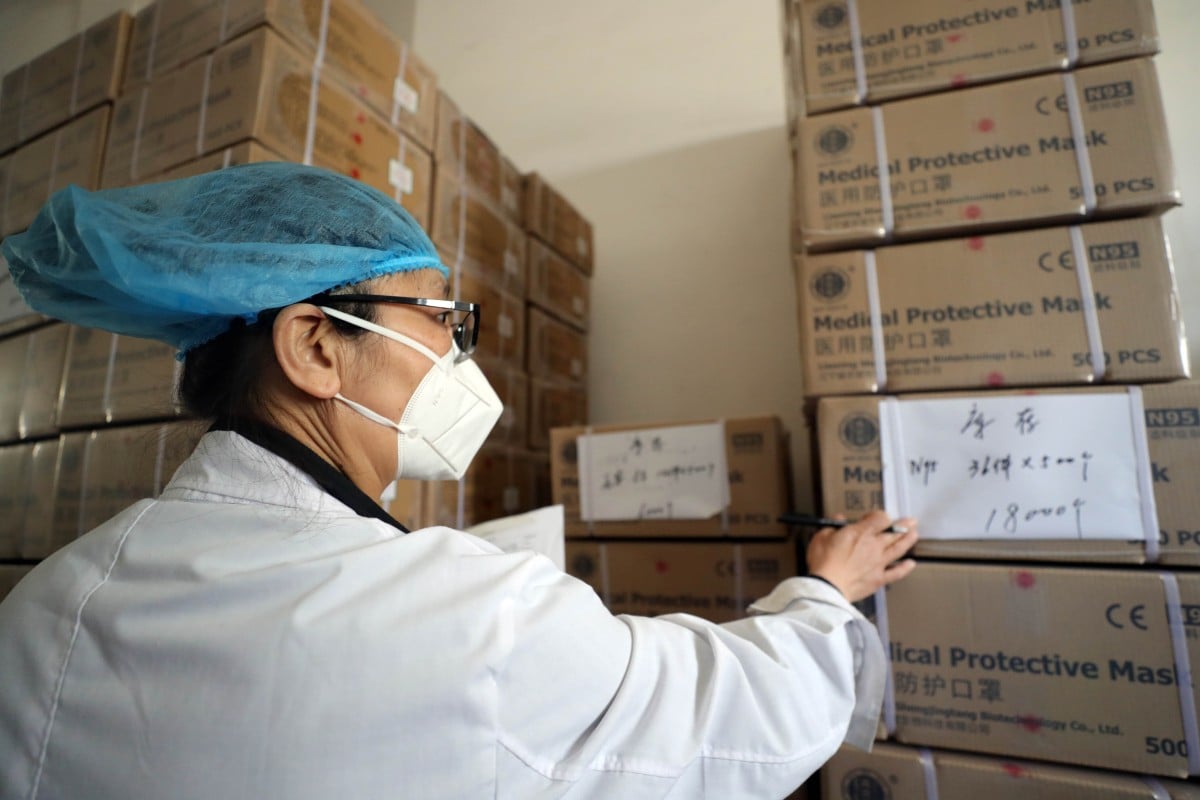
- Teams of experts and donations of medical supplies have been largely welcomed by China’s neighbours
Despite facing some criticism from the West, China’s Asian neighbours have welcomed its medical expertise and vital supplies. Photo: Xinhua
While China’s campaign to mend its international image in the wake of its handling of the
coronavirus health crisis has been met with scepticism and even a backlash from the US and its Western allies, Beijing has been quietly gaining ground in Asia.
Teams of experts have been sent to Cambodia, the Philippines, Myanmar, Pakistan and soon to Malaysia, to share their knowledge from the pandemic’s ground zero in central China.
Beijing has also donated or facilitated shipments of medical masks and ventilators to countries in need. And despite some of the equipment failing to meet Western quality standards, or being downright defective, the supplies have been largely welcomed in Asian countries.
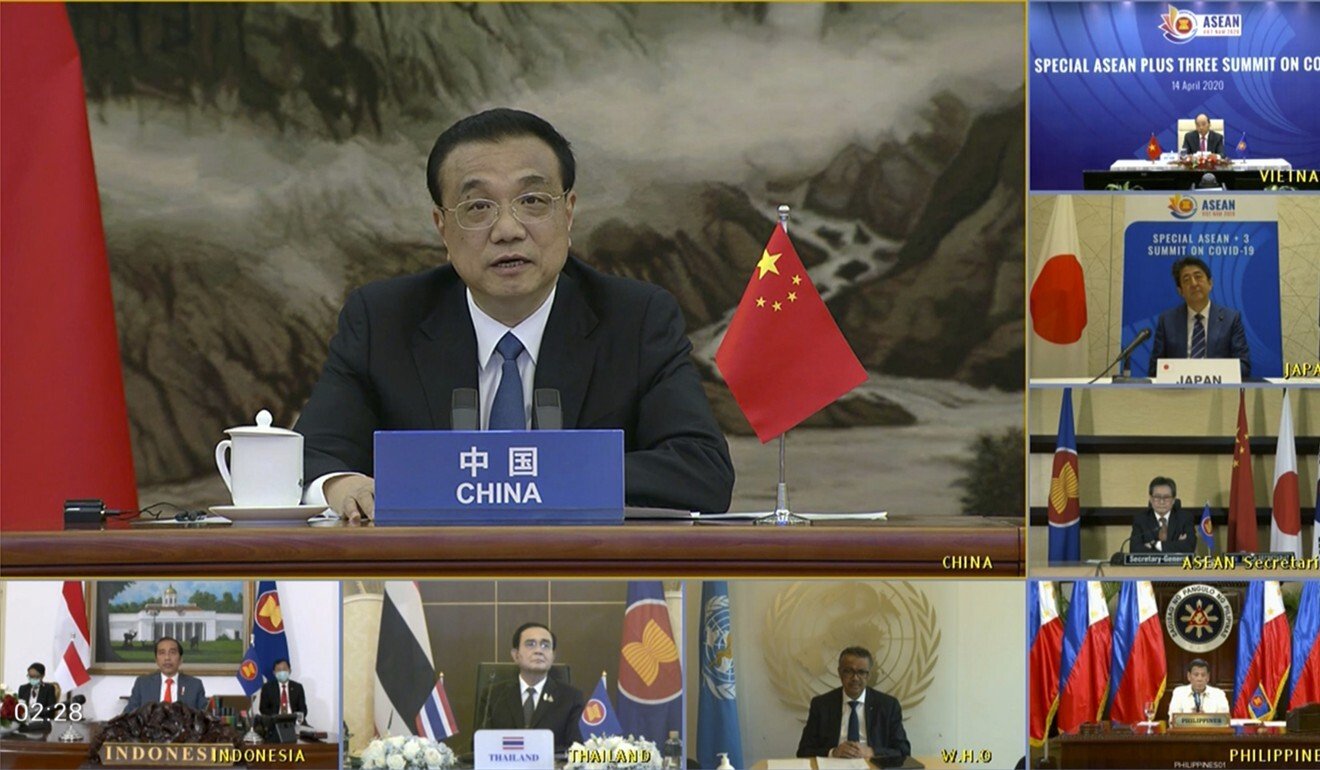
China has also held a series of online “special meetings” with its Asian neighbours, most recently on Tuesday when Premier Li Keqiang discussed his country’s experiences in combating the disease and rebooting a stalled economy with the leaders of the Association of Southeast Asian Nations (Asean), Japan and South Korea.
Chinese Prime Minister Li Keqiang speaks to Asean Plus Three leaders during a virtual summit on Tuesday. Photo: AP
Many Western politicians have publicly questioned Beijing’s role and its subsequent handling of the crisis but Asian leaders – including Philippine President Rodrigo Duterte and Japanese Prime Minister Shinzo Abe – have been reluctant to blame the Chinese government, while also facing criticism at home for not closing their borders with China soon enough to prevent the spread of the virus.
An official from one Asian country said attention had shifted from the early stages of the outbreak – when disgruntled voices among the public were at their loudest – as people watched the virus continue its deadly spread through their homes and across the world.
“Now everybody just wants to get past the quarantine,” he said. “China has been very helpful to us. It’s also closer to us so it’s easier to get shipments from them. The [medical] supplies keep coming, which is what we need right now.”
The official said also that while the teams of experts sent by Beijing were mainly there to observe and offer advice, the gesture was still appreciated.
Another Asian official said the tardy response by Western governments in handling the outbreak had given China an advantage, despite its initial lack of transparency over the outbreak.
“The West is not doing a better job on this,” he said, adding that his government had taken cues from Beijing on the use of propaganda in shaping public opinion and boosting patriotic sentiment in a time of crisis.
“Because it happened in China first, it has given us time to observe what works in China and adopt [these measures] for our country,” the official said.
Experts in the region said that Beijing’s intensifying campaign of “mask diplomacy” to reverse the damage to its reputation had met with less resistance in Asia.
Why China’s ‘mask diplomacy’ is raising concern in the West
“Over the past two months or so, China, after getting the Covid-19 outbreak under control, has been using a very concerted effort to reshape the narrative, to pre-empt the narrative that China is liable for this global pandemic, that China has to compensate other countries,” said Richard Heydarian, a Manila-based academic and former policy adviser to the Philippine government.
“It doesn’t help that the US is in lockdown with its domestic crisis and that we have someone like President Trump who is more interested in playing the blame game rather than acting like a global leader,” he said.
Shahriman Lockman, a senior analyst with the foreign policy and security studies programme at Malaysia’s Institute of Strategic and International Studies, said that as the US had withdrawn into its own affairs as it struggled to contain the pandemic, China had found Southeast Asia a fertile ground for cultivating an image of itself as a provider.
China’s first-quarter GDP shrinks for the first time since 1976 as coronavirus cripples economy
Beijing’s highly publicised delegations tasking medical equipment and supplies had burnished that reputation, he said, adding that the Chinese government had also “quite successfully shaped general Southeast Asian perceptions of its handling of the pandemic, despite growing evidence that it could have acted more swiftly at the early stages of the outbreak in Wuhan”.
“Its capacity and will to build hospitals from scratch and put hundreds of millions of people on lockdown are being compared to the more indecisive and chaotic responses seen in the West, especially in Britain and the United States,” he said.
Coronavirus droplets may travel further than personal distancing guidelines
Lockman said Southeast Asian countries had also been careful to avoid getting caught in the middle of the deteriorating relationship between Beijing and Washington as the two powers pointed fingers at each other over the origins of the new coronavirus.
“The squabble between China and the United States about the pandemic is precisely what Asean governments would go to great lengths to avoid because it is seen as an expression of Sino-US rivalry,” he said.
“Furthermore, the immense Chinese market is seen as providing an irreplaceable route towards Southeast Asia’s post-pandemic economic recovery.”
Aaron Connelly, a research fellow in Southeast Asian political change and foreign policy with the International Institute for Strategic Studies in Singapore, said Asian countries’ dependence on China had made them slow to blame China for the pandemic.
“Anecdotally, it seems to me that most Southeast Asian political and business elites have given Beijing a pass on the initial cover-up of Covid-19, and high marks for the domestic lockdown that followed,” he said.
“This may be motivated reasoning, because these elites are so dependent on Chinese trade and investment, and see little benefit in criticising China.”
China and Vietnam ‘likely to clash again’ as they build maritime militias
The cooperation with its neighbours as they grapple with the coronavirus had not slowed China’s military and research activities in the disputed areas of the
South China Sea – a point of contention that would continue to cloud relations in the region, experts said.
Earlier this month an encounter in the South China Sea with a Chinese coastguard vessel led to the sinking of a fishing boat from Vietnam, which this year assumed chairmanship of Asean.
And in a move that could spark fresh regional concerns, shipping data on Thursday showed a controversial Chinese government survey ship, the Haiyang Dizhi 8, had moved closer to Malaysia’s exclusive economic zone.
The survey ship was embroiled in a months-long stand-off last year with Vietnamese vessels within Hanoi’s exclusive economic zone and was spotted again on Tuesday 158km (98 miles) off the Vietnamese coast.
Source: SCMP
Posted in 10, 13, 15, 16, 17, 18, 1976, 27, 44, 50%, 54, according, across the world, again, against, April, areas, arriving, ASEAN, Asian, Association of Southeast Asian Nations (ASEAN), ASYMPTOMATIC CASES, at, authorities, avoid, ‘mask diplomacy’, battling, Beijing, Beijing’s, biggest, blame, blame game, borders, Britain, build, burnished, cabinet, cases, cautioning, central, central district, chairmanship, China, China's, China’s National Health Commission, Chinese capital, chinese government, Chinese market, City, clinical, closer, closing, coast, coastguard vesse, coastguard vessel, combating, compensate, confirmed, confirmed cases, considered, contain, contention, control, controversial, coronavirus, coronavirus cases, cough, countries, country’s, COVID-19, COVID-19 outbreak, cripples, crisis, criticism, cross infections, Data, day, deadly spread, death toll, deaths, declines, delegations, despite, destabilising, Disease, disputed areas, districts, domestic, down, earlier, eastern, economic recovery, economically, economy, elsewhere, embroiled, epicentre, epidemic, everybody, exclusive economic zones, experiences, eyes, facing, fall, family gatherings, fever, first time, fishing boat, flare-up, foreign policy and security studies programme, Friday, from, GDP, global leader, global pandemic, Government, Guangzhou, Haiyang Dizhi 8, handling, Hanoi’s, Harbin, health commission, Heilongjiang, high-risk, Home, hospitals, However, hubei province, hundreds, imported, imported infections, including, infected, Institute of Strategic and International Studies, interested, International Institute for Strategic Studies, investigations, irreplaceable, Japan, Japanese Prime Minister, Japanese Prime Minister Shinzo Abe, Jiaozhou, km, last, leaders, local, locally, lockdown, low-risk, lowest, mainland, Mainland China, Major, Malaysia’s, March, medical equipment and supplies, medium-risk, miles, military and research activities, millions, months-long, moved, narrative, new, nine, Northeastern, Notably, now, number, off, Official, officials, on guard, outbreak, patients, People, perceptions, Philippine, playing, political, politicians, Post, post-pandemic, pre-empt, Premier Li Keqiang, present, President Trump, prevent, previous, province, provincial capital, provincial government, publicly, published, punished, quarantine, questioned, quickly, quoted, reached, rebooting, rebound, recent, reluctant, remaining, reported, reporting, reputation, research fellow, reshape, resurgence, role, route, Russia, Saturday, saying, scratch, seen, senior analyst, shandong province, shipping data, showed, shrinks, since, Singapore, sinking, Sino-US rivalry, slow, social media, socially, soon enough, South China Sea, South Korea, Southeast Asia, Southeast Asian political change and foreign policy, southern city, spotted, spread, squabble, stalled, stand-off, State Council, statement, stood, stop, subsequent, Suifenhe, Sunday, surge, survey ship, symptoms, tally, task, test positive, Three, Thursday, Total, towards, transmitted, Transparency, travellers, Tuesday, two, Uncategorized, United States, vice governor, vice mayor, Vietnam, Vietnamese, Vietnamese vessels, virtual summit, Virus, Washington, website, weeks, were, Western, within, Wuhan, year |
Leave a Comment »
26/08/2019
- Police say man from Fujian province was detained while trying to burn body on remote farm after strangling girlfriend
- Online lender contacted officers after its verification software spotted that the victim’s eyes weren’t moving
Police were tipped off by an online lending company after its software could find no signs of movement in the victim’s eyes. Photo: Simon Song
A man accused of murdering his girlfriend in southeast China was caught after facial recognition software suggested he had tried to scan a dead person’s face to apply for a loan.
Officers in Fujian province said the 29-year-old named Zhang was caught while trying to burn the body on a remote farm, but they had been tipped off by an online lending company after its software could find no signs of movement in the victim’s eyes, Xiamen Evening News reported on Sunday.
Zhang is suspected of strangling his girlfriend with a rope in Xiamen on April 11 after they argued about money and she threatened to leave him. He then allegedly went on the run with the body hidden in the boot of a rented car.
Zhang is also accused of pretending to be the unnamed victim and contacting her employers via her WeChat account to ask for time off work.
Ugandan police spend US$126 million on surveillance system from Huawei
When he arrived in his hometown of Sanming the next day, police said he tried to apply for a loan using an app called Money Station, which uses artificial intelligence to verify the applicants’ identity and asks them to wink to help the process along.
But the facial recognition technology found no signs of eye movement.
Staff at the lender contacted police after a manual check found bruises on the unnamed woman’s face and a thick red mark around her neck.
Its voice recognition software also detected that it was a man, rather than a woman, applying for the loan.
Zhang, whose formal arrest was approved by prosecutors earlier this month, is accused of using the victim’s phone to take 30,000 yuan (US$4,200) from her bank account, and lying to her parents that she was “going away for a few days to relax”.
Although a trial date has yet to be announced, details of the case have shocked many people.
Some Chinese social media users suggested that the plot would be too gruesome or far-fetched for a horror movie and another wrote: “[I] never thought the facial recognition process could be used in this way.”
Source: SCMP
Posted in AI software, Artificial intelligence, artificial intelligence (AI), boot, burn body, caught, Chinese murder suspect, dead person, detained, Face, facial recognition software, facial recognition technology, Fujian Province, girlfriend, Money Station, Police, rented car, spotted, strangling, Uncategorized, verification software, WeChat, Xiamen Evening News |
Leave a Comment »
04/06/2019
NEW DELHI (Reuters) – Five bodies were spotted high on a mountain in the Indian Himalayas on Monday during an aerial search for eight climbers feared swept away in an avalanche last week, a government official said.
The climbers – four from Britain, two from the United States, and one each from Australia and India – were reported missing by colleagues on Friday after they failed to return to their base camp near Nanda Devi, India’s second highest mountain.
An air force helicopter spotted the five bodies on a flight over the area where they went missing, Vijay Kumar Jogdande, the top government official in the nearby Pithoragarh district.
“Four bodies can be seen together and a fifth slightly away from the others,” he said.
The search mission was now working on the assumption that all eight climbers had been killed, he said.
“We are trying to retrieve the bodies. We believe the other three will be nearby,” he said.
The climbers was attempting to climb an unnamed, previously unclimbed 6,477 metre (21,250 feet) peak near Nanda Devi when their route was hit by a “sizeable avalanche”, said the company that organised the expedition, Moran Mountain.
Jogdande, said the bodies were above 5,000 metres and the possibility of a second avalanche would make accessing the site difficult. It had not been decided whether a team would go in by air or on foot, he said.
“We’re considering both alternatives. Since the bodies are at high altitude it is inaccessible, it is still unstable terrain that could lead to a secondary avalanche. We’re working out a plan.”
“It has always been a dangerous place to go. Mount Everest is easier to climb,” he said.
A team would take at least a week to reach the area, Sanjay Gunjiyal, a senior police official involved in the mission, told Reuters.
Four climbers in the group had turned back and later raised the alarm about their missing colleagues. They were evacuated from their base camp by helicopter and were “fine and healthy”, said Tripti Bhatt, an official of the Uttarakhand State Disaster Response Force.
DEADLY SEASON
It has been one of the deadliest climbing seasons in the Himalayas for several years. More than 20 people have been killed in the mountains, including 11 on Mount Everest, the world’s highest peak that has been plagued by poor weather, inexperienced climbers and overcrowding.
Nanda Devi, at 7,816 metres (25,643 feet), and its sister mountain, Nanda Devi East, are among the world’s most challenging peaks and only a handful of people have climbed them.
The leader of the missing group, Martin Moran, was the first person to summit Changuch, another peak in the area, and was known as a “godfather” of guiding in the Himalayas, according to a video diary of Rob Jarvis, who accompanied him on that expedition in 2009.
“He was very well versed with the area, but the route they were taking is not usually travelled,” Gunjiyal said.
Many of the other missing climbers are veterans but with little experience of Nanda Devi and its surrounding peaks, he said.
Indian authorities have identified the eight missing as Moran, John McLaren, Rupert Whewell and Richard Payne, all from Britain, Anthony Sudekum and Ronald Beimel from the United States, Ruth McCance from Australia, and liaison officer Chetan Pandey from the Indian Mountaineering Foundation.
Source: Reuters
Posted in Australia, avalanche, Britain, Changuch, climbers, Five bodies, India alert, Indian Himalayas, Indian Mountaineering Foundation, Martin Moran, missing, Moran Mountain, Mount Everest, Nanda Devi, Pithoragarh district, search, spotted, State Disaster Response Force, Uncategorized, United States, Uttarakhand |
Leave a Comment »
26/05/2019
Infrared camera image taken on April 20, 2019 shows an all-white giant panda in the Wolong National Nature Reserve in southwest China’s Sichuan Province. A rare all-white panda has been captured on cameras in the Wolong National Nature Reserve in southwest China’s Sichuan Province, the reserve management authorities said on Saturday. (Xinhua)
CHENGDU, May 25 (Xinhua) — A rare all-white panda has been captured on camera in the Wolong National Nature Reserve in southwest China’s Sichuan Province, the reserve management authorities said on Saturday.
The panda was captured in mid-April by an infrared camera about 2,000 meters above sea level in the wild, the authorities said.
The panda has no spots on its body and its eyes look red. It was crossing the forest at the time.
“Judging from pictures, the panda is an albino, one to two years old,” said Li Sheng, a researcher with Peking University and a specialist in bears, who studied the pictures.
The panda is a rare all-white individual in wild pandas, which showed that the albinism genes exist in the wild population of giant pandas in Wolong, he said.
“The panda looked strong and its steps were steady, a sign that the genetic mutation may not have quite impeded its life,” Li said, adding that the gender of the panda cannot be decided based on current data.
Albinism exists in different vertebrate species. The albino mutation inhibits melanin synthesis in animal’s body. Albino usually does not affect animal’s physical makeup and functions. It could make them easier to be discovered and more sensitive to direct sunlight, Li said.
The albino mutation is a recessive gene. Only when the parent pandas both carry such gene, can the baby show the albino traits.
If this white panda would mate with a normal panda, their first generation babies will still be black and white. But their babies, carrying the albino gene, will possibly give birth to all-white pandas if their partners also carry such genes, Li said.
In order to better protect the ecosystems, the Wolong nature reserve has been using infrared cameras to monitor the distribution and activities of wild animals in its seven demonstration areas.
Previously, some rare brown giant pandas were found in China’s Qinling Mountains. The cause of the brown fur color was also considered as genetic mutation by some researchers.
Source: Xinhua
Posted in albino, brown fur color, China alert, Peking University, Qinling Mountains, Rare all-white panda, sichuan province, spotted, Uncategorized, Wolong National Nature Reserve |
Leave a Comment »





 CHINDIA ALERT: You'll be living in their world, very soon