Archive for ‘stealing’

13/09/2019

John Bolton accuses China of stealing F-35 technology to make a stealth fighter. Is this what he was talking about?

  • US National Security Adviser recently said an unnamed Chinese fighter ‘looks a lot like the F-35 … because it is the F-35’
  • The PLA’s only active stealth fighter the J-20 looks rather different to its US counterpart, but the FC-31 prototype may be closer to the mark
A Chinese FC031 stealth fighter pictured during a test flight in November 2014. Photo: Xinhua

US National Security Adviser John Bolton recently accused China of stealing US technology to make a stealth fighter, a charge Beijing has denied.

On a visit to Ukraine last week, Bolton said an unnamed fifth-generation aircraft “looks a lot like the F-35, that’s because it is the F-35. They just stole it”.

At present China’s only active stealth fighter, the J-20 or Mighty Dragon, looks very different to the F-35 because it has two nose canards – which are not found on any modern US fighters – and it is larger and around 50 per cent heavier.

However, Bolton might have had another fighter in mind – the Shenyang FC-31 Gyrfalcon, which is still in the prototype phase.
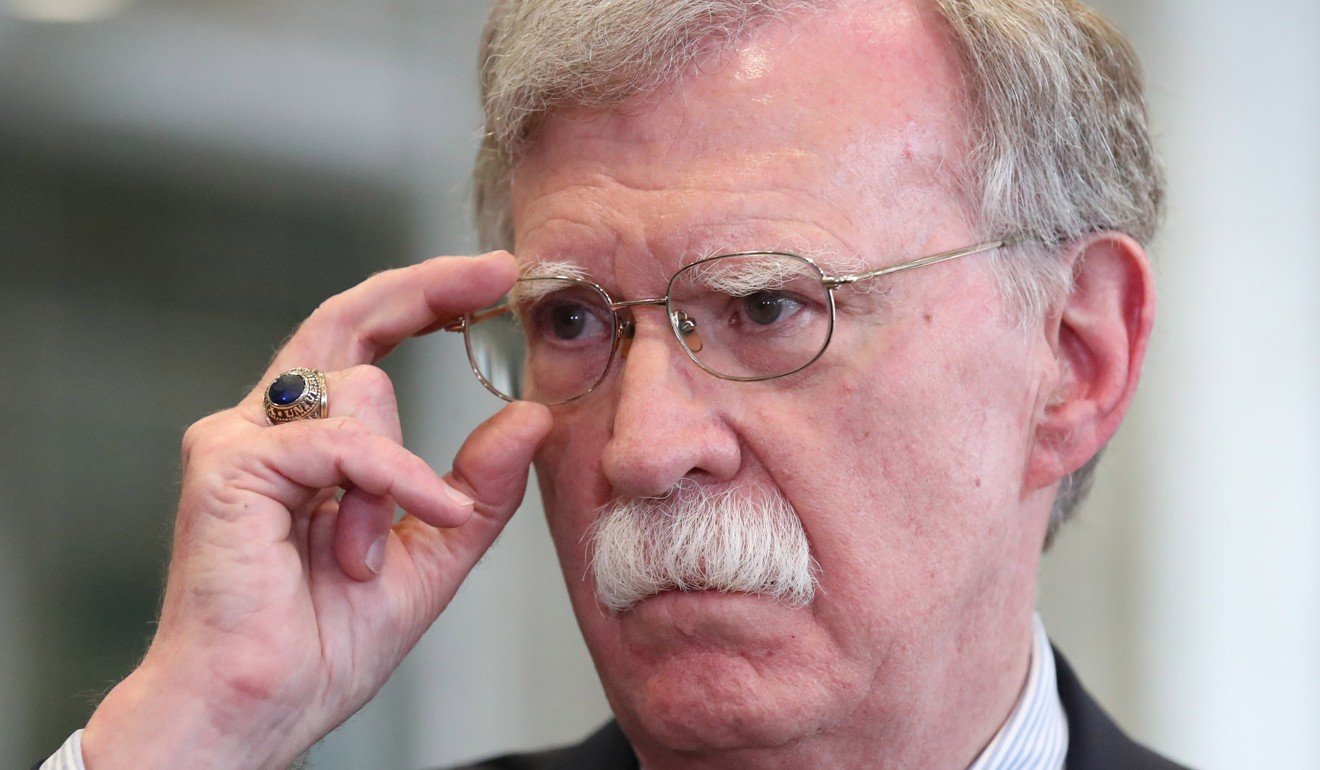
John Bolton said China “just stole” the F-35 for its own fighter. Photo: EPA-EFE

The FC-31 is made by the Shenyang Aircraft Design and Research Institute, a branch of the state-owned Aviation Industry Corporation of China.

The aircraft, which made its maiden flight in 2012, has broadly similar specifications to the F-35 although it does have twin engines rather than the American jet’s single engine.

The Chinese fighter has a maximum take off weight of 25 tonnes, a combat range of 1,200km (746 miles) and a top speed of Mach 1.8, or 2,205km/h (1,370mph), whereas the US fighter’s take-off weight varies between 27 and 32 tonnes, has a top speed of Mach 1.6 and a range of up to 2,200km (1,367 miles).

The FC-31 has a weapons payload of 8 tonnes, compared with 6.8 to 8.1 tonnes for the different varieties of F-35, and a service life of up to 30 years.
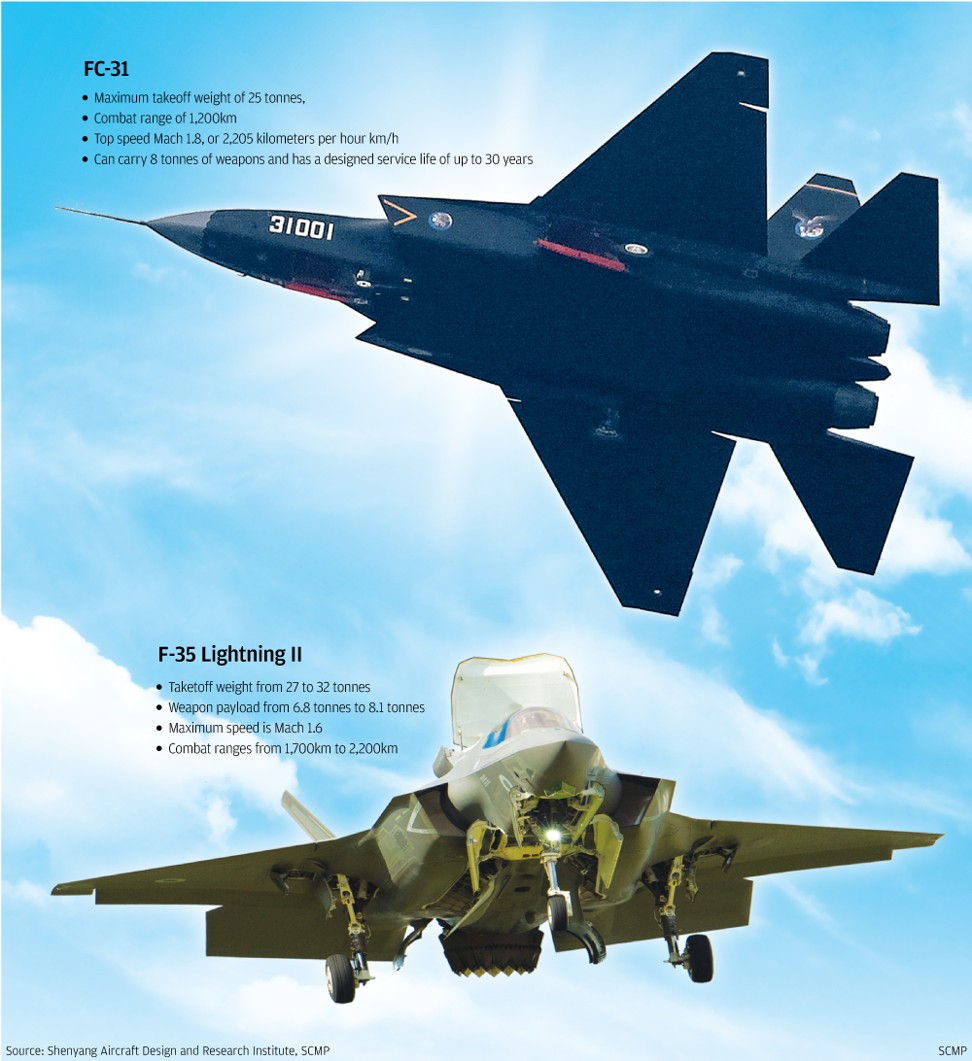
Graphic: SCMP
Graphic: SCMP

Lockheed Martin, which makes the American stealth fighter, has produced three different varieties – the land-based f-35A and two for use on ships: the vertical jump F-35B and catapult-assisted F-35C.

While the Chinese jet was primarily designed for the use of the air force, its light weight also means it could be adapted for use on carriers.

It was reported to have been in the running to be used on China’s next-generation aircraft carriers, but military sources recently said it would lose out to the J-20 because of its slow pace of development and reports of technological problems.
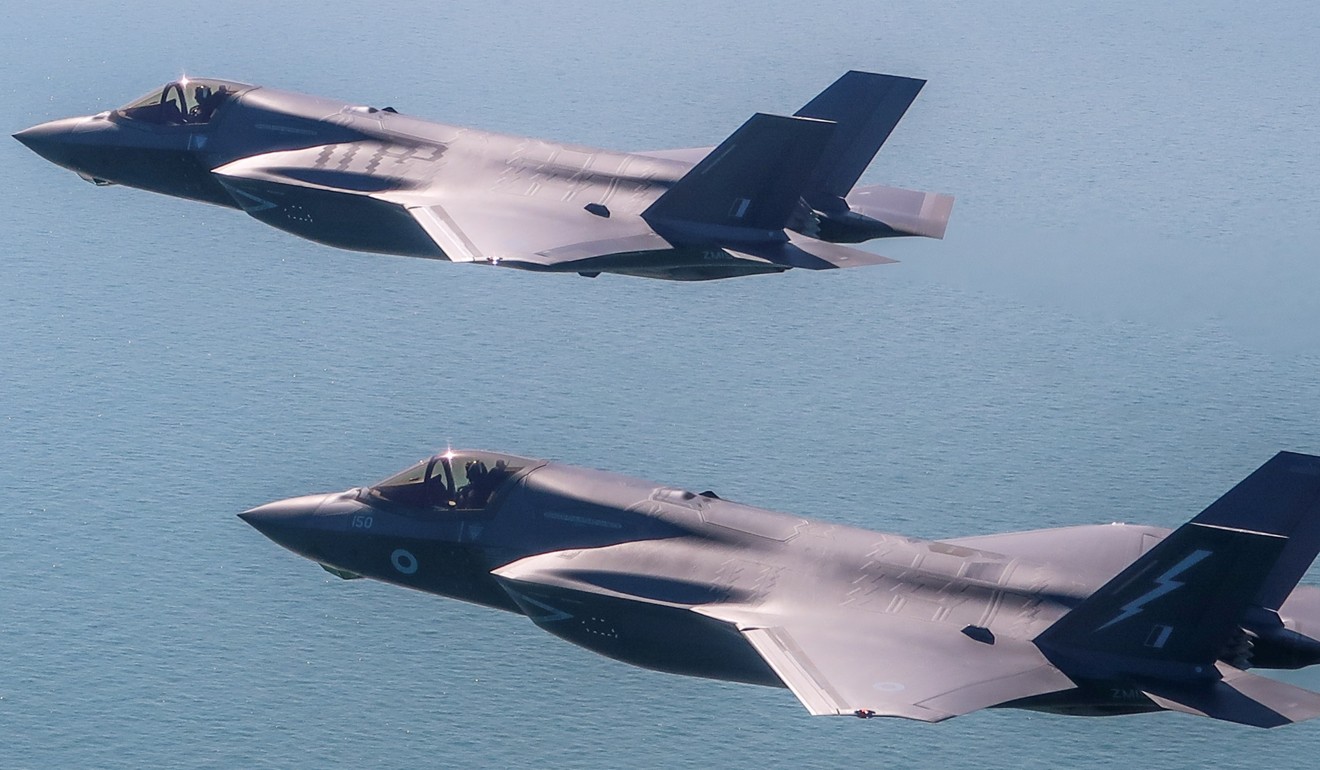
The US currently restricts sales of the F-35 to its closest allies: Photo: EPA-EFE/ USAF

However, the Chinese manufacturer is already actively marketing the fighter to other countries and a model of the plane appeared at the Paris Air Show in June.

One official from the Aviation Industry Corporation of China who attended the Air Show told state media that the firm hoped to “seize some share in the military aircraft market of developed nations”.

One area where the plane does have a definite advantage over its American counterpart is price. The price of a single FC-31 is expected to be about US$70 million, significantly less than the F-35 which has a price tag of around US$100 million per unit.

The US also restricts sales of the fighter to its allies, leaving a potential gap in the market for China to exploit when the fighter is ready for use.

Source: SCMP

29/04/2019

China’s quest for clean energy heats up with groundbreaking ‘artificial sun’ project

    • Fusion reactor built by Chinese scientists in eastern Anhui province has notched up a series of research firsts
    • There are plans to build a separate facility that could start generating commercially viable fusion power by 2050, official says
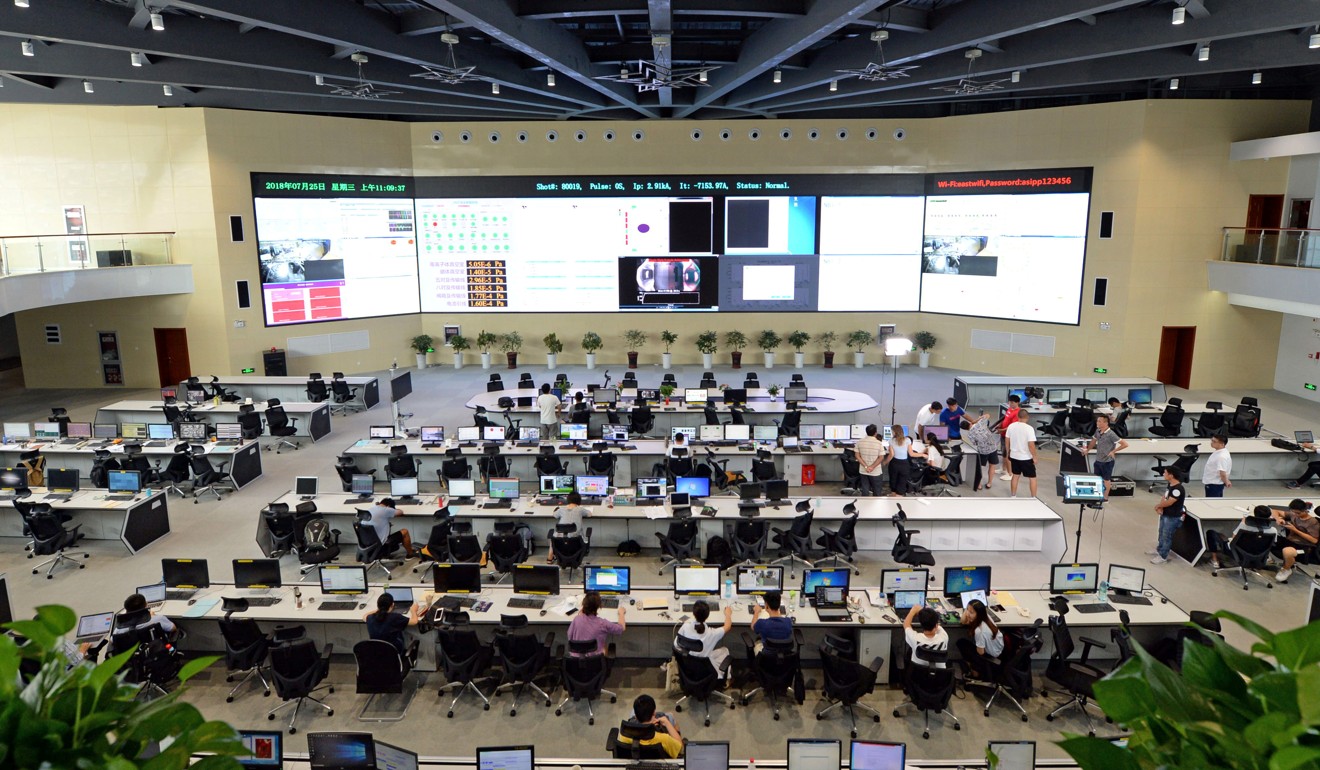
    The Experimental Advanced Superconducting Tokamak (EAST) device – or “artificial sun” – in Hefei, Anhui province. Photo: AFP/Chinese Academy of Sciences
    The Experimental Advanced Superconducting Tokamak (EAST) device – or “artificial sun” – in Hefei, Anhui province. Photo: AFP/Chinese Academy of Sciences
    A groundbreaking fusion reactor built by Chinese scientists is underscoring Beijing’s determination to be at the core of clean energy technology, as it eyes a fully functioning plant by 2050.
    Sometimes called an “artificial sun” for the sheer heat and power it produces, the doughnut-shaped Experimental Advanced Superconducting Tokamak (EAST) that juts out on a spit of land into a lake in eastern Anhui province, has notched up a succession of research firsts.
    In 2017 it became the world’s first such facility to sustain certain conditions necessary for nuclear fusion for 
    longer than 100 seconds

    , and last November hit a

    personal-best temperature

    of 100 million degrees Celsius (212 million Fahrenheit) – six times as hot as the sun’s core.

    Such mind-boggling temperatures are crucial to achieving fusion reactions, which promise an inexhaustible energy source.

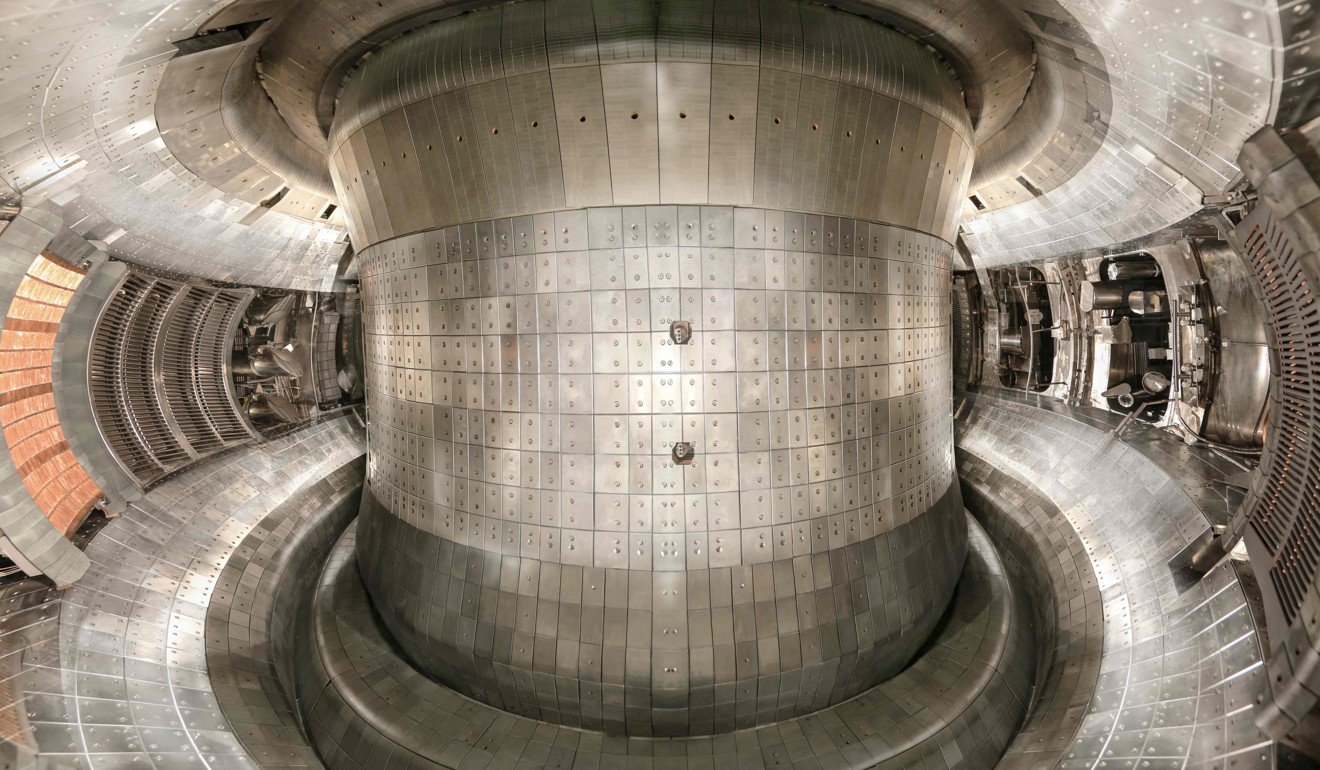
    EAST’s main reactor stands within a concrete structure, with pipes and cables spread outward like spokes connecting to a jumble of censors and other equipment encircling the core. A red Chinese flag stands on top of the reactor.

    A vacuum vessel inside the fusion reactor, which has achieved a temperature of 100 million degrees Celsius – six times as hot as the sun’s core. Photo: AFP/Chinese Academy of Sciences
    A vacuum vessel inside the fusion reactor, which has achieved a temperature of 100 million degrees Celsius – six times as hot as the sun’s core. Photo: AFP/Chinese Academy of Sciences

    “We are hoping to expand international cooperation through this device [EAST] and make Chinese contributions to mankind’s future use of nuclear fusion,” said Song Yuntao, a top official involved in the project, on a recent tour of the facility.

    China is also aiming to build a separate fusion reactor that could begin generating commercially viable fusion power by mid-century, he added.

    Some 6 billion yuan (US$891.5 million) has been promised for the ambitious project.

    EAST is part of the International Thermonuclear Experimental Reactor (ITER) project, which seeks to prove the feasibility of fusion power.

    Funded and run by the European Union, India, Japan, China, Russia, South Korea and the United States, the multibillion-dollar project’s centrepiece will be a giant cylindrical fusion device, called a tokamak.

    Now under construction in Provence in southern France, it will incorporate parts developed at the EAST and other sites, and draw on their research findings.

    China is “hoping to expand international cooperation” through EAST. Photo: Reuters
    China is “hoping to expand international cooperation” through EAST. Photo: Reuters

    Fusion is considered the Holy Grail of energy and is what powers our sun.

    It merges atomic nuclei to create massive amounts of energy – the opposite of the fission process used in atomic weapons and nuclear power plants, which splits them into fragments.

    Unlike fission, fusion emits no greenhouse gases and carries less risk of accidents or the theft of atomic material.

    But achieving fusion is both extremely difficult and prohibitively expensive – the total cost of ITER is estimated at 20 billion (US$22.3 billion).

    Wu Songtao, a top Chinese engineer with ITER, conceded that China’s technical capabilities on fusion still lag behind more developed countries, and that US and

    Japanese tokamaks have achieved more valuable overall results.

    But the Anhui test reactor underlines China’s fast-improving scientific advancement and its commitment to achieve yet more.

    China’s capabilities “have developed rapidly in the past 20 years, especially after catching the ITER express train”, Wu said.

    In an interview with state-run Xinhua news agency in 2017, ITER’s director general Bernard Bigot lauded China’s government as “highly motivated” on fusion.

    “Fusion is not something that one country can accomplish alone,” Song said.

    “As with ITER, people all over the world need to work together on this.”

Source: SCMP

19/02/2019

The US cannot crush us, says Huawei founder

The founder of Huawei has said there is “no way the US can crush” the company, in an exclusive interview with the BBC.

Ren Zhengfei described the arrest of his daughter Meng Wanzhou, the company’s chief financial officer, as politically motivated.

The US is pursuing criminal charges against Huawei and Ms Meng, including money laundering, bank fraud and stealing trade secrets.

Huawei denies any wrongdoing.

Mr Ren spoke to the BBC’s Karishma Vaswani in his first international broadcast interview since Ms Meng was arrested – and dismissed the pressure from the US.

“There’s no way the US can crush us,” he said. “The world cannot leave us because we are more advanced. Even if they persuade more countries not to use us temporarily, we can always scale things down a bit.”

However, he acknowledged that the potential loss of custom could have a significant impact.

What else did Mr Ren say about the US?

Last week, US Secretary of State Mike Pompeo warned the country’s allies against using Huawei technology, saying it would make it more difficult for Washington to “partner alongside them”.

Australia, New Zealand, and the US have already banned or blocked Huawei from supplying equipment for their future 5G mobile broadband networks, while Canada is reviewing whether the company’s products present a serious security threat.

Mr Ren warned that “the world cannot leave us because we are more advanced”.

“If the lights go out in the West, the East will still shine. And if the North goes dark, there is still the South. America doesn’t represent the world. America only represents a portion of the world.”

What did Mr Ren say about investment in the UK?

The UK’s National Cyber Security Centre has decided that any risk posed by using Huawei technology in UK telecoms projects can be managed.

Many of the UK’s mobile companies, including Vodafone, EE and Three, are working with Huawei to develop their 5G networks.

They are awaiting a government review, due in March or April, that will decide whether they can use Huawei technology.

Commenting on the possibility of a UK ban, Mr Ren said Huawei “won’t withdraw our investment because of this. We will continue to invest in the UK.

“We still trust in the UK, and we hope that the UK will trust us even more.

“We will invest even more in the UK. Because if the US doesn’t trust us, then we will shift our investment from the US to the UK on an even bigger scale.”

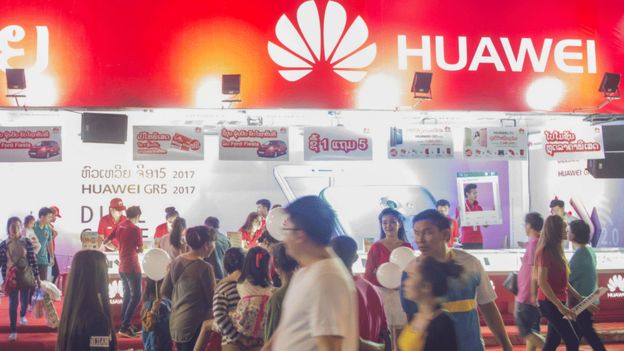
Huawei boothImage copyrightGETTY IMAGES
Image captionHuawei has denied that it poses any risk to the UK or any other country

What does Mr Ren think about his daughter’s arrest?

Mr Ren’s daughter Meng Wanzhou, Huawei’s chief financial officer, was arrested on 1 December in Vancouver at the request of the US, and is expected to be the subject of a formal extradition request.

In total, 23 charges are levelled against Huawei and Ms Weng. The charges are split across two indictments by the US Department of Justice.

The first covers claims Huawei hid business links to Iran – which is subject to US trade sanctions. The second includes the charge of attempted theft of trade secrets.

Mr Ren was clear in his opposition to the US accusations.

“Firstly, I object to what the US has done. This kind of politically motivated act is not acceptable.

“The US likes to sanction others, whenever there’s an issue, they’ll use such combative methods.

“We object to this. But now that we’ve gone down this path, we’ll let the courts settle it.”

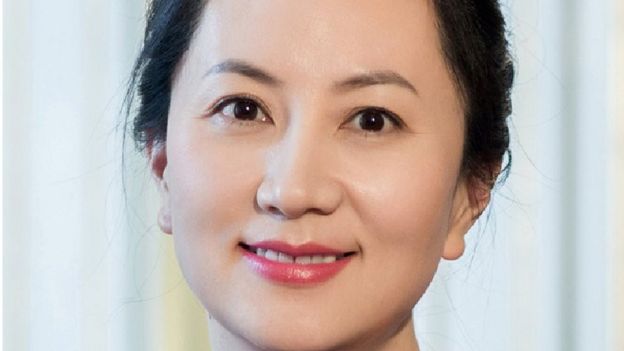
Meng Wanzhou, Huawei Technologies Co Ltd"s chief financial officer (CFO), is seen in this undated handout photo obtained by Reuters December 6, 2018.Image copyrightREUTERS
Image captionMeng Wanzhou was arrested in Vancouver last December

What did Mr Ren say about Chinese government spying?

Huawei, which is China’s largest private company, has been under scrutiny for its links to the Chinese government – with the US and others expressing concern its technology could be used by China’s security services to spy.

Under Chinese law, firms are compelled to “support, co-operate with and collaborate in national intelligence work”.

But Mr Ren said that allowing spying was a risk he wouldn’t take.

“The Chinese government has already clearly said that it won’t install any backdoors. And we won’t install backdoors either.

“We’re not going to risk the disgust of our country and of our customers all over the world, because of something like this.

“Our company will never undertake any spying activities. If we have any such actions, then I’ll shut the company down.”

Presentational grey line

Is Huawei part of the Chinese state?

Analysis – Karishma Vaswani, BBC Asia business correspondent – Shenzhen

For a man known as reclusive and secretive, Ren Zhengfei seemed confident in the conviction that the business he’s built for the last 30 years can withstand the scrutiny from Western governments.

Mr Ren is right: the US makes up only a fraction of his overall business.

But where I saw his mood change was when I asked him about his links to the Chinese military and the government.

He refused to be drawn into a conversation, saying only that these were not facts, simply allegations.

Still, some signs of close links between Mr Ren and the government were revealed during the course of our interview.

He also confirmed that there is a Communist Party committee in Huawei, but he said this is what all companies – foreign or domestic – operating in China must have in order to abide by the law.

Source: The BBC

Law of Unintended Consequences

continuously updated blog about China & India

ChiaHou's Book Reviews

continuously updated blog about China & India

What's wrong with the world; and its economy

continuously updated blog about China & India