Chindia Alert: You’ll be Living in their World Very Soon
aims to alert you to the threats and opportunities that China and India present. China and India require serious attention; case of ‘hidden dragon and crouching tiger’.
Without this attention, governments, businesses and, indeed, individuals may find themselves at a great disadvantage sooner rather than later.
The POSTs (front webpages) are mainly 'cuttings' from reliable sources, updated continuously.
The PAGEs (see Tabs, above) attempt to make the information more meaningful by putting some structure to the information we have researched and assembled since 2006.
SHANGHAI (Reuters) – China’s smog-prone northern province of Hebei met its air quality targets by a big margin over the winter after concerted efforts to tackle emissions, a local official said on Sunday, without mentioning coronavirus-related factory shutdowns.
Average PM2.5 concentrations over the October-March period dropped 15% from a year earlier to 61 micrograms per cubic metre, while sulphur dioxide also fell by a third, said He Litao, vice-head of the provincial environmental bureau.
Most experts have attributed the significant decline in air pollution throughout China in the first quarter to the coronavirus outbreak and tough containment measures, which saw cities and entire provinces locked down and sharply reduced traffic and industrial activity throughout the country.
With millions staying at home, concentrations of lung-damaging PM2.5 particles fell by nearly 15% in more than 300 Chinese cities in the first three months of 2020.
Shanghai saw emissions fall by nearly 20% in the first quarter, while in Wuhan, where the pandemic originated, monthly averages dropped more than a third compared to last year.
However, He of the Hebei environmental bureau attributed the local decline in pollution to the “conscientious implementation” of government decisions even in the face of unfavourable weather conditions.
According to a winter action plan published last year, 10 cities in Hebei were expected to cut lung-damaging small particles known as PM2.5 by 1%-6% compared to the previous year.
Despite the decline, average PM2.5 was still much higher than China’s official standard of 35 micrograms, and the recommended World Health Organization level of 10 micrograms.
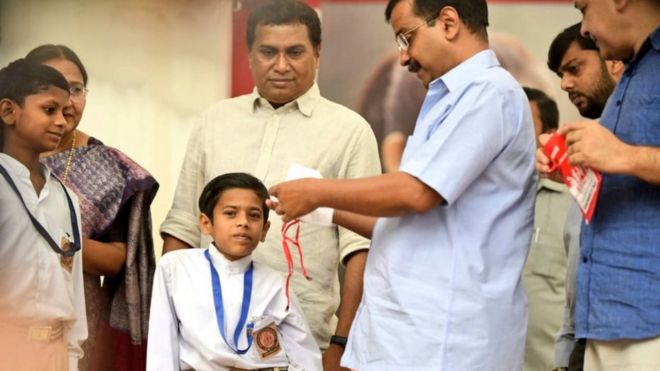
Image copyright TWITTER/@ARVINDKEJRIWALImage caption Delhi Chief MinisterArvind Kejriwal has been handing out masks to school students
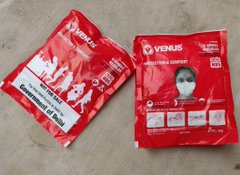
Five million masks are being distributed at schools in India’s capital, Delhi, after pollution made the air so toxic officials were forced to declare a public health emergency.
A Supreme Court mandated panel imposed several restrictions in the city and two neighbouring states, as air quality deteriorated to “severe” levels.
All construction has been halted for a week and fireworks have been banned.
The city’s schools have also been closed until at least next Tuesday.
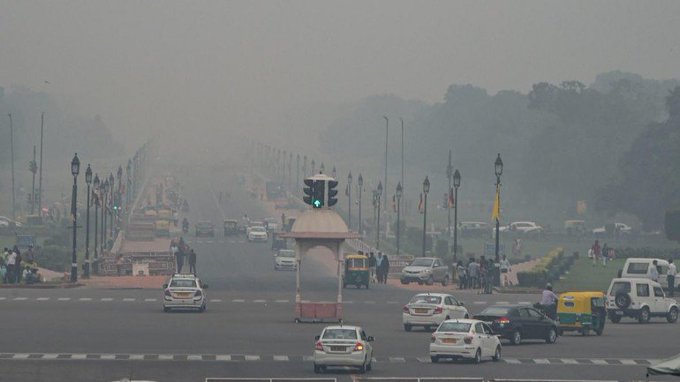
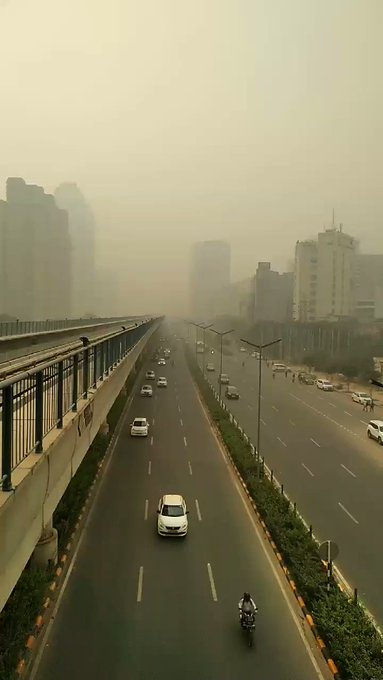
Delhi’s Chief Minister Arvind Kejriwal said Delhi had been turned into a “gas chamber”.
The masks are being handed out to students and their parents, and Mr Kejriwal has asked people to use them as much as possible.
The levels of tiny particulate matter (known as PM2.5) that enter deep into the lungs are 533 micrograms per cubic metre in the city. The WHO recommends that the PM2.5 levels should not be more than 25 micrograms per cubic metre on average in 24 hours.
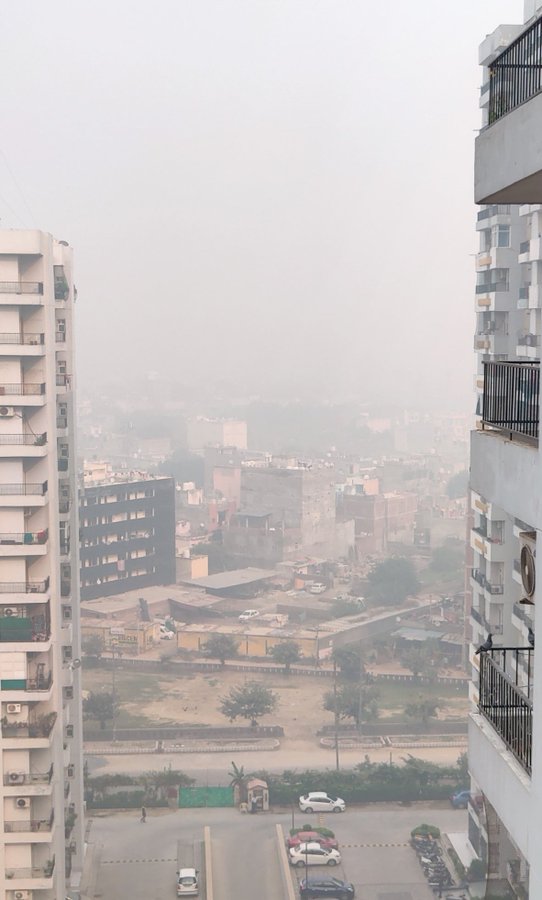
As thick white smog blanketed the city, residents started tweeting pictures of their surroundings. Many are furious that the situation remains the same year after year.
The hashtags #DelhiAirQuality and #FightAgainstDelhiPollition are trending on Twitter.
One of the main reasons for air quality in the city worsening every year in November and December is that farmers in the neighbouring states of Punjab and Haryana burn crop stubble to clear their fields. It’s made worse by the fireworks during the Hindu festival of Diwali.
There are other reasons too, including construction dust, factory and vehicular emissions, but farm fires remain the biggest culprit.
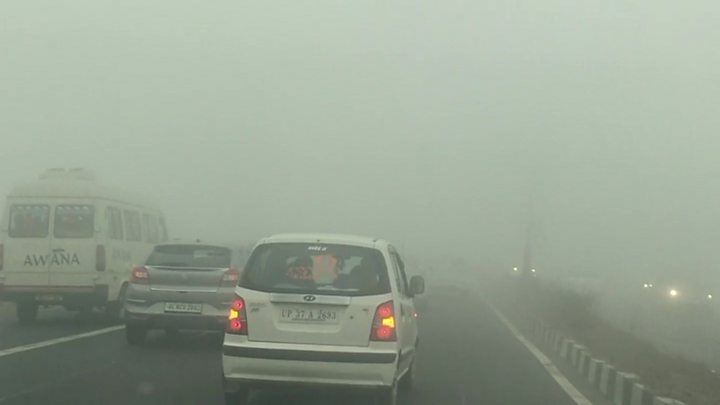
Media caption A hair-raising drive through the Delhi smog
More than two million farmers burn 23 million tonnes of crop residue on some 80,000 sq km of farmland in northern India every winter.
The stubble smoke is a lethal cocktail of particulate matter, carbon dioxide, nitrogen dioxide and sulphur dioxide.
Using satellite data, Harvard University researchers estimated that nearly half of Delhi’s air pollution between 2012 and 2016 was due to stubble burning.
The burning is so widespread that it even shows up in satellite photos from Nasa.
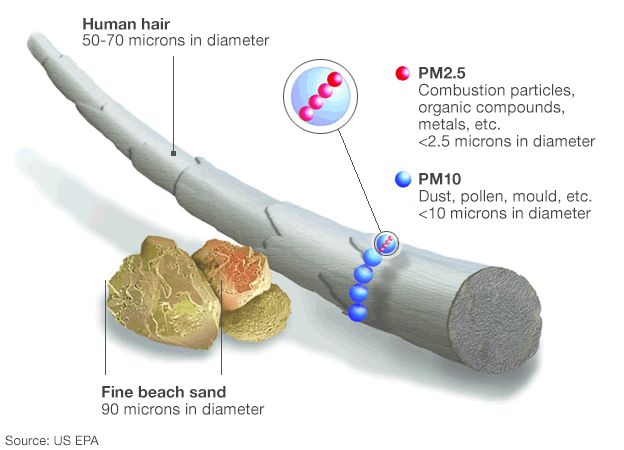
What are PM 2.5 particles?
Particulate matter, or PM, 2.5 is a type of pollution involving fine particles less than 2.5 microns (0.0025mm) in diameter
A second type, PM 10, is of coarser particles with a diameter of up to 10 microns
Some occur naturally – e.g. from dust storms and forest fires, others from human industrial processes
They often consist of fragments that are small enough to reach the lungs or, in the smallest cases, to cross into the bloodstream as well












 CHINDIA ALERT: You'll be living in their world, very soon