04/05/2020
BEIJING (Reuters) – Tang Yue, a 27-year-old teacher from the city of Guilin in southwest China, steam-presses a blue dress and takes dozens of photographs before picking one to clinch her 200th online sale.
For a growing number of Chinese like Tang, hit by job losses, furloughs and salary cuts, the consumer economy has begun to spin in reverse. They are no longer buying – they are selling.
Instead of emerging from the coronavirus epidemic and returning to the shopping habits that helped drive the world’s second-largest economy, many young people are offloading possessions and embracing a new-found ethic for hard times: less is more.
With Tang’s monthly salary of about 7,000 yuan ($988), the self-described shopaholic said she has bought everything from Chanel lipsticks to Apple’s (AAPL.O) latest iPad in the past three years.
But the adrenaline rush that comes with binge-shopping is gone, said Tang, whose wages have been slashed with the suspension of all the classes on tourism management she usually teaches.
“The coronavirus outbreak was a wake-up call,” she said. “When I saw the collapse of so many industries, I realised I had no financial buffer should something unfortunate happen to me.”
There is no guarantee that the nascent minimalist trend will continue once the coronavirus crisis is fully over, but if it does, it could seriously damage China’s consumer sector and hurt thousands of businesses from big retailers to street-corner restaurants, gyms and beauty salons.
To be sure, there are signs that pent-up demand will drive a rush of spending as authorities reopen malls, leisure venues and tourist spots. In South Korea, the first major economy outside of China to be hit by the virus, people thronged malls this weekend to go “revenge shopping” to make up for time lost in lockdown.,
There are some signs that a similar trend will take hold in China, where some upscale malls are starting to get busy, although luxury firm Kering SA (PRTP.PA) – which owns Gucci, Balenciaga and other fashion brands – has said it is hard to predict how or when sales in China might come back.
A recent McKinsey & Co survey showed that between 20% and 30% of respondents in China said they would continue to be cautious, either consuming slightly less or, in a few cases, a lot less.
“The lockdown provided consumers with a lot of time and reasons to reflect and consider what is important to them,” said Mark Tanner, managing director at Shanghai-based research and marketing consultancy China Skinny.
“With much more of their days spent in their homes, consumers also have more time and reasons to sort through things they don’t feel they need – so they’re not living around clutter that is common in many apartments.”
#DITCHYOURSTUFF
Tang made a spreadsheet to keep track of her nearly 200 cosmetic products and hundreds of pieces of clothing. She then marked a few essentials in red that she wanted to keep. In the past two months, she has sold items worth nearly 5,000 yuan on second-hand marketplaces online.
Bargain-hunting online has become a new habit for some Chinese as the stigma that once hung over second-hand goods has begun to fade.
Idle Fish, China’s biggest online site for used goods, hit a record daily transaction volume in March, its parent company Alibaba (BABA.N) told Reuters.
Government researchers predict that transactions for used goods in China may top 1 trillion yuan ($141 billion) this year.
Posts with the hashtag #ditchyourstuff have trended on Chinese social media in recent weeks, garnering more than 140 million views.
Jiang Zhuoyue, 31, who works as an accountant at a traditional Chinese medicine company in Beijing – one of the few industries that may benefit from the health crisis – has also decided to turn to a simpler life.
“I used to shop too much and could be easily lured by discounts,” said Jiang. “One time Sephora offered 20% off for all goods, I then bought a lot of cosmetics because I feel I’m losing money if I don’t.”
Jiang, the mother of a 9-month-old baby, said she recently sold nearly 50 pieces of used clothing as the lockdown gave her the opportunity to clear things out. “It also offered me a chance to rethink what’s essential to me, and the importance of doing financial planning,” she said.
Eleven Li, a 23-year-old flight attendant, said she used to spend her money on all manner of celebrity-endorsed facial masks, snacks, concert tickets and social media activity, but now has no way to fund her spending.
“I just found a new job late last year, then COVID-19 came along, and I haven’t been able to fly once since I joined, and I’ve gotten no salary at all,” said Li, who said she was trying to sell her Kindle.
Some are even selling their pets, as they consider leaving big cities like Beijing and Shanghai where the high cost of living is finally catching up with them.
NO RETURN TO OLD WAYS?
As the coronavirus comes under control in China, the government is gradually releasing cities from lockdown, easing transport restrictions and encouraging consumers to venture back into malls and restaurants by giving out billions-worth of cash vouchers, worth between 10 yuan and 100 yuan.
But many people say they are still worried about job security and potential wage cuts because of the struggling economy. Nationwide retail sales have plunged every month so far this year.
Xu Chi, a Shanghai-based senior strategic analyst with Zhongtai Securities, said some Chinese consumers may prove the ‘21 Day Habit Theory,’ a popular scientific proposition that it only takes that long to establish new habits.
“We believe people’s spending patterns follow the well-known theory, which means most people in China, having been cooped-up at home for more than a month and not having binge-shopped, may break the habit and not return to their old ways,” Xu said.
Jiang said she was determined not to return to her free-spending ways and planned to cook more at home.
“I’ll turn to cheaper goods for some luxury brands,” she said. “I’ll choose Huawei’s smartphone, because (Apple’s) iPhone has too much brand premium.”
Tang, who has recently used 100 yuan of shopping coupons to stock up on food, is going to hold the purse strings even tighter.
“I’ve set my monthly budget at 1,000 yuan,” she said. “Including one – and just one – bottle of bubble tea.”
Source: Reuters
Posted in #ditchyourstuff, 1,000 yuan, 200th, accountant, adrenaline, Alibaba (BABA.N), apartments, Apple’s, Apple’s (AAPL.O), authorities, ‘21 Day Habit Theory,’, “revenge shopping”, Balenciaga, Bargain-hunting, beauty salons, Beijing, big cities, big retailers, biggest online site, binge-shopping, blue dress, bottle, bought, brand premium, bubble tea, businesses, buying, cash vouchers, cautious, celebrity-endorsed, Chanel, China, China Skinny, China's, China’s, Chinese, Chinese social media, City, classes, collapse, Company, concert tickets, Consumer economy, consumer sector, coronavirus crisis, coronavirus epidemic, coronavirus outbreak, cosmetic products, cost of living, COVID-19, daily, damage, Dozens, drive, economy, embracing, emerging, essentials, establish, ethic, every month, everything, facial masks, fashion brands, financial buffe, Flight attendant, Food, furloughs, garnering, Government, growing, guarantee, Guilin, gyms, hard times, hashtag, health crisis, helped, high, hit by, how or when, Huawei's, hurt, Idle Fish, industries, iPad, IPhone, job losses, Job security, Kering SA (PRTP.PA), Kindle, leisure venues, less is more, lipsticks, lockdown, luxury firm, Major, make up, malls, March, McKinsey & Co, minimalist, monthly budget, monthly salary, nascent, nationwide, new-found, number, offloading, online sale, outside, owns, parent company, pent-up demand, People, pets, photographs, picking, pieces of clothing, plunged, popular, possessions, posts, predict, proposition, prove, purse strings, realised, recent, record, red, reopen, research and marketing consultancy, researchers, respondents, restaurants, retail sales, returning, Reuters, reverse, rush, salary cuts, scientific, second-hand goods, second-hand marketplaces, self-described, selling, senior, Shanghai, Shanghai-based, shopaholic, shopping coupons, shopping habits, slashed, smartphone, snacks, so far, social media activity, South Korea, Southwest China, spenders, spending, spreadsheet, sputters, steam-presses, stigma, strategic analyst, street-corner, survey, suspension, teacher, teaches, this year, Thousands, thronged, time lost, to clinch, to spin, tourism management, tourist spots, Traditional Chinese medicine, transaction, trend, trended, trillion yuan, Uncategorized, unfortunate, used goods, views, Virus, volume, wage cuts, wages, weekend, weeks, world’s second-largest economy, young, yuan |
Leave a Comment »
12/04/2020
- Between January 20 and April 4, PM2.5 levels across the country fell by more than 18 per cent, according to the environment ministry
- But observers say that as soon as the nation’s factories and roads get back to normal, so too will the air pollution levels
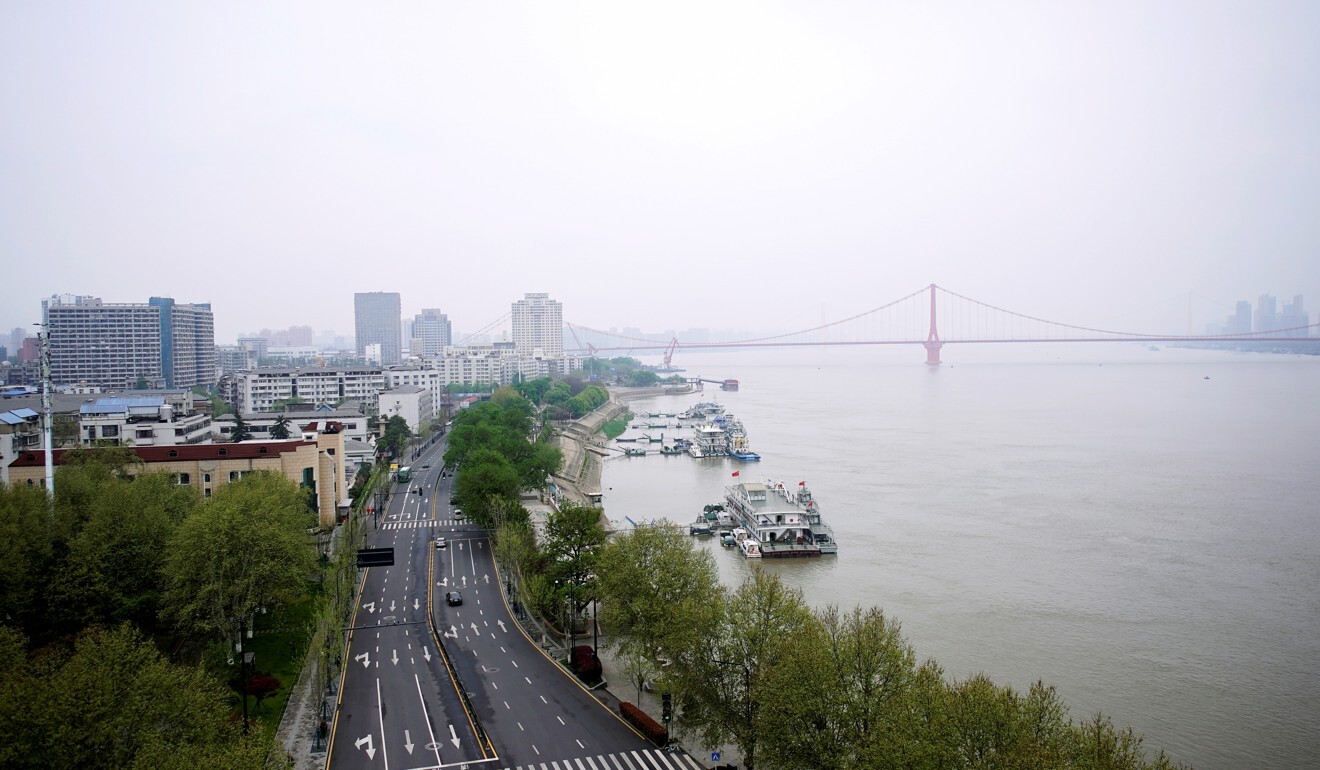
Blue skies were an unexpected upside of locking down cities and halting industrial production across China. Photo: AFP
China’s air quality has improved dramatically in recent weeks as a result of the widespread city lockdowns and strict travel restrictions introduced to contain the
. But experts say the blue skies could rapidly disappear as factories and roads reopen under a government stimulus plan to breathe new life into a stalled economy.
According to the Ministry of Ecology and Environment, between January 20 and April 4 the average concentration of PM2.5 – the tiny particles that pose the biggest risk to health – fell by 18.4 per cent from the same period of last year.
Meanwhile, the average number of days with good air quality – determined as when the air pollution index falls below 100 – rose by 7.5 per cent, it said.
Satellite images released by Nasa and the European Space Agency showed a dramatic drop in nitrogen dioxide emissions in major Chinese cities in the first two months of 2020, compared with a year earlier.
According to Nasa, the changes in Wuhan – the central China city at the epicentre of the initial coronavirus outbreak – were particularly striking, while nitrogen dioxide levels across the whole of eastern and central China were 10 to 30 per cent lower than normal.
The region is home to hundreds of factories, supplying everything from steel and car parts to microchips. Wuhan, which has a population of 11 million, was placed under lockdown on January 23, but those
restrictions were lifted on Wednesday
.
Air pollution is likely to return to China’s cities once the lockdowns are lifted. Photo: Reuters
Nitrogen dioxide is produced by cars, power plants and other industrial facilities and is thought to exacerbate respiratory illnesses such as asthma.
The space agency said the decline in air pollution levels coincided with the restrictions imposed on transport and business activities.
That was consistent with official data from China’s National Development and Reform Commission, which recorded a 25 per cent fall in road freight volume and a 14 per cent decline in the consumption of oil products between January and February.
Guangzhou cases prompt shutdown in ‘Little Africa’ trading hub
Liu Qian, a senior climate campaigner for Greenpeace based in Beijing, said the restrictions on industry and travel were the primary reasons for the improvement in air quality.
According to official data, in February, the concentrations of PM2.5, nitrogen dioxide and sulphur dioxide – a toxic gas that comes mostly from industrial burning of coal and other fossil fuels – all fell, by 27 per cent, 28 per cent and 23 per cent, respectively.
“The causes of air pollution are complicated, but the suspension of industrial activity and a drop in public transport use will have helped to reduce levels,” Liu said.
As the epicentre of the Covid-19 pandemic has shifted to the
United States and
, human and industrial activity in China is gradually picking back up, and so is air pollution.
Lauri Myllyvirta, lead analyst with the Centre for Research on Energy and Clean Air in Helsinki, said that levels of nitrogen dioxide pollution, measured both by Nasa satellites and official stations in China, started inching back up in the middle of March and had returned to normal levels by the end of the month.
That coincided with the centre’s findings – published on Carbon Brief, a British website on climate change – that coal consumption at power plants and oil refineries across China returned to their normal levels in the fourth week of March.
How the Wuhan experience could help coronavirus battle in US and Europe
Ma Jun, director of the Institute of Public & Environmental Affairs, a Beijing-based charity, said a stimulus plan to kick-start the economy would have a significant impact on air pollution.
“Once industrial production is fully resumed, so are the emission levels,” he said. “Unless another outbreak happens and triggers another lockdown, which would be terrible, the improvement achieved under the pandemic is unstable and won’t last long.”
After the 2008 financial crisis, Beijing launched a 4 trillion yuan (US$567.6 billion) stimulus package that included massive infrastructure investment, but also did huge damage to the environment. In the years that followed, air pollution rose to record highs and sparked a public backlash.
Even before the
Covid-19 outbreak, China’s economy was slowing – it grew by 6.1 per cent in 2019, its slowest for 29 years – and concerns are now growing that policymakers will go all out to revive it.
“Local governments have been under huge pressure since last year, and there are fears that environmental regulations will be sidelined [in the push to boost economic output],” Ma said.
But Beijing had the opportunity to get it right this time by investing more in green infrastructure projects rather than high-carbon projects, he said.
“A balance between economic development and environmental protection is key to achieving a green recovery, and that is what China needs.”
Source: SCMP
Posted in 20, 2020, 4, air pollution, air quality, April, Asthma, ‘Little Africa’, back, balance, Beijing, blue skies, brought, business activities, car parts, Carbon Brief, cars, charity, China, China’s economy, Chinese cities, climate campaigner, Coal, concentrations, consumption, coronavirus epidemic, coronavirus outbreak, COVID-19, COVID-19 outbreak, Covid-19 pandemic, decline, drop, eastern and central China, environment ministry, Environmental protection, environmental regulations, epicentre, Europe, European Space Agency, everything, exacerbate, expect, factories, February, fossil fuels, get back, green infrastructure projects, green recovery, Greenpeace, Guangzhou, Helsinki, high-carbon projects, Home, Human, hundreds, improvement, industrial activity, industrial burning, industrial facilities, industry, Institute of Public & Environmental Affairs, January, last, levels, local governments, lockdowns, March, microchips, months, NASA, National Development and Reform Commission, Nitrogen dioxide, oil products, PM2.5, PM2.5 levels, policymakers, power plants, primary reasons, public transport, region, respiratory illnesses, restrictions, road freight, roads, shifted, sidelined, slowing, so too, space agency, Steel, supplying, suspension, tiny particles, to normal, toxic gas, trading hub, Transport, travel, Uncategorized, United States, Wednesday, Wuhan |
Leave a Comment »





 CHINDIA ALERT: You'll be living in their world, very soon