Archive for ‘innovation’

24/06/2014

China’s Government Admits Chinese Patents Are Pretty Bad – Businessweek

For years, China’s leaders have exhorted the country’s businesses to become innovative. After all, a glorious country like China that is reasserting its role as a global superpower should be known for more than just its copycat and me-too companies. So while Chinese presidents come and go, the message is the same: Whether it’s Jiang Zemin, Hu Jintao, or the current boss, Xi Jinping, the country’s leaders have consistently talked about the importance of local innovation. Paraphrasing Xi’s remarks at a speech earlier this month at the Chinese Academy of Science and the Chinese Academy of Engineering, the Xinhua news agency reported that the government’s goal is to “push forward the fusion of science and [the] economy, so that science and technology strength can be transformed into industrial and economic power.”

Chinese President Xi Jinping at the Chinese Academy of Science and the Chinese Academy of Engineering in Beijing on June 9

By China’s own scorekeeping, though, the country’s innovators still have a way to go before they can meet the Communist Party’s expectations. While the number of patent applications inside China is “booming,” according to a report today by Xinhua, “the quality of patents is still poor.” Writing about a report to the Standing Committee of the National People’s Congress, China’s rubber-stamp legislature, Xinhua added, “China owns very few patents featuring originality and high or core technology.” Fewer than 1,000 Chinese patents have won recognition from counterparts in the U.S., Europe, or Japan, added Xinhua.

China is making progress. The gold standard in international patents remains the U.S., and Chinese from the People’s Republic applied for almost 6,600 patents in the U.S. last year, according to data from the U.S. Patent and Trademark Office (USPTO).  That’s just ahead of France and more than double the number from India. China had the sixth-largest number of patents granted by USPTO. Still, China’s innovators are hardly leaders in the U.S. The Chinese total of 6,597 U.S. patents puts it far behind Japan’s 54,170 applications. Even more embarrassing, Taiwan, the island that Beijing considers a province of China, had 12,118 patent applications granted.

via China’s Government Admits Chinese Patents Are Pretty Bad – Businessweek.

11/06/2014

Mozilla to Sell $25 Smartphones in India and Indonesia – India Real Time – WSJ

Smartphones as cheap as $25 powered by Mozilla Corp.’s software will be available in India and Indonesia later this year, an executive said.

Mozilla has been pitching its Firefox mobile operating system for low-cost smartphones in emerging markets as an alternative to Google Inc.’s Android and iOS from Apple Inc. through partnerships with major handset vendors, carriers and assemblers since July.

The U. S-based company has collaborated with four handset makers such as ZTE Corp.000063.SZ +1.32% , LG Electronics Co. 066570.SE +0.13% and five wireless carriers including Telefonica SA, TEF.MC -0.16% Deutsche Telekom AG DTE.XE -0.59% ,America Movil SAB AMX.MX -0.30% to launch five Firefox-powered smartphones in Europe and Latin America so far.

But the price for these smartphones are above US$60 and are still too expensive for most consumers in India and other Southeast Asian countries, Mozilla Chief Operating Officer Gong Li said in an interview on the sidelines of the Mobile Asia Expo.

“One U.S. dollar means a lot of things to consumers in emerging countries. It’s difficult to sell smartphones that cost more than US$50 in those markets,” he said.

To tap the next billion first-time smartphone users, Mozilla is collaborating with Chinese chip maker Spreadtrum Communications Inc. to unveil a low-cost chipset that enables smartphones to be priced at $25 this year.

“With a $25 price tag, there is no price gap between a smartphone and a feature phone. This attractive price point would help motivate feature phone users to switch to smartphones,” said Mr. Gong.

via Mozilla to Sell $25 Smartphones in India and Indonesia – India Real Time – WSJ.

06/06/2014

China’s Xiaomi, the World’s Fastest-Growing Phone Maker – Businessweek

On May 15, behind the curving, imperial facade of the China National Convention Center in Beijing, a veteran technology executive named Lei Jun walks onstage before a thousand raucous fans and members of the media. It’s a familiar scene everywhere now, and like many technology chiefs, Lei peppers his talk by ticking off some of the recent successes enjoyed by his company, the mobile device maker Xiaomi. Sales have been higher than expected; more than 50 million people use the company’s MIUI operating system. Then he gets to the new products, which today are a smart TV that can be controlled with an app and an Android-powered tablet computer, called Mi Pad, that comes in five colors and is priced to undercut the iPad mini. “I hope through our endeavor we can make Apple (AAPL) feel some pressure,” Lei says.

Lei established a “10-to-10” schedule at the company

The crowd reacts to each product revelation as if it’s a World Cup goal. The hardware is indeed slick—the TV has the latest high-def specs, and the tablets are the first devices to use the newest processor from chipmaker Nvidia (NVDA). But Lei is delivering another, more potent message. He’s effectively giving an hourlong demonstration of an historic moment: China, for the first time, has its own technology brand that consumers truly lust after.

Following the event, the fans mill around in the Beijing smog, taking selfies with their MiPhones, waving Xiaomi signs, trading impressions of the new gadgets. Some made 15-hour trips to be here. Zhi Yuan, 28, who took a seven-hour train ride from Shandong province, proudly shows off his Xiaomi phone, the economical Redmi model. He likes it because it’s easy to use. Lei, he says, “can understand our wishes. He knows what Xiaomi fans want.”

via China’s Xiaomi, the World’s Fastest-Growing Phone Maker – Businessweek.

Enhanced by Zemanta
06/06/2014

Creativity advances as patent filings rise – China – Chinadaily.com.cn

An increase in overseas patent applications from Chinese applicants is a positive sign for China’s innovation and economy, World Intellectual Property Organization Chief Economist Carsten Fink said.

WIPO emblem.

WIPO emblem. (Photo credit: Wikipedia)

According to the WIPO, China’s patent office became the world’s largest intellectual property office in 2012 in terms of the number of its patent applications, but Chinese patent applicants did not file their patents as frequently abroad in other countries as did those from the United States, Europe and Japan.

Fink said that a changing picture was observed as patent filings abroad by Chinese companies and research institutions have been growing rapidly.

The WIPO found in its new study that the growth of Chinese patent filings abroad increased significantly after 2000, with a five-year average annual growth rate of 40 percent between 2000 and 2005, and 23 percent since 2005.

“That is important because on the one hand, it signals that Chinese companies really operate on the world technology frontier, and (on the other hand) it also suggests that indeed they are pushing the world’s technology frontier. That is a good sign for China’s innovation system,” Fink said.

Fink stressed that overseas patent filings weighed heavily for China’s economy and could be a positive boost.

“That will help Chinese companies to transfer their business models from the past one that relied on low wages to another one that will rely more and more on new technologies, new products and new ideas,” he said.

via Creativity advances as patent filings rise – China – Chinadaily.com.cn.

Enhanced by Zemanta
16/05/2014

China to build new hi-tech power network to help fight pollution | South China Morning Post

China will build the world’s largest high-power electricity transmission network as part of the country’s efforts to battle smog and pollution.

7e99a2afad02bc229b6b2a9780156981.jpg

The State Grid Corporation of China – the world’s largest state-owned utilities company – said on its website that the central government would soon approve plans for the construction of 12 power lines connecting the energy-rich interior with heavily industrialised coastal areas. The initial investment is estimated to be at least 210 billion yuan (HK$264 billion).

The 12 projects include eight ultra-high-voltage (UHV) lines, which offer distinct advantages over conventional power lines by transmitting electricity over significantly longer distances with far greater efficiency. Energy losses from UHV power lines are five to six times lower than the conventional ones, studies show.

Despite some concerns about the project – especially the vulnerability of such a broad network to system-wide failures – the emerging technology is being hailed as an ultimately far cleaner, more efficient way to deliver electricity across the country.

State Grid claims UHV power lines can reduce the density of PM2.5 smog particles, which are considered most dangerous to human health, by 4-5 per cent in central and eastern regions and cut coal consumption by 200 million tonnes a year.

via China to build new hi-tech power network to help fight pollution | South China Morning Post.

Enhanced by Zemanta
06/05/2014

China’s Military Recruits Monkeys to Protect Air Force Base – China Real Time Report – WSJ

The Chinese air force has a new secret weapon to protect one of its bases: macaques.

These fuzzy new recruits have been called upon after numerous methods to rid a base of an abundance of migrating birds—from sending  soldiers scampering high up into trees to training eagles and setting up sound and light effects—fell flat. Birds are a headache world-wide in the aviation industry because they can get stuck in the engines of aircraft.

Soldiers have trained the monkeys, according to the official People’s Liberation Army-run news portal, to scamper up trees and rip down the birds’ nests, with one monkey able to destroy six to eight birds’ nests per day. Two macaques have cleared about 180 nests in the month since the PLA adopted them, according to the report.

The macaques’ odor is also said to repel the birds from rebuilding their nests at the same spots, according to a local expert whom the report quotes.

via China’s Military Recruits Monkeys to Protect Air Force Base – China Real Time Report – WSJ.

Enhanced by Zemanta
24/04/2014

China to Get the World’s Fastest Elevators: 95 Floors in 43 Seconds – Businessweek

It’s a country of superlatives: home to the world’s longest wall, largest population, and fastest-growing major economy. Soon, China will have the fastest elevators.

A rendering of the Guangzhou CTF Finance Centre

Earlier this week, Hitachi (6501:JP) announced plans to deliver two of the world’s quickest-ascending elevators to a skyscraper now under construction in the southern city of Guangzhou, Guangdong. The 530-meter-high Guangzhou CTF Finance Center will be home to a hotel, offices, and residential space when it opens in 2016.

The ultra-high-speed elevators will travel at a pace of 1,200 meters per minute (44.7 miles per hour) up a 440-meter shaft, reaching the 95th floor in about 43 seconds. “Technologies to prevent lateral vibration and to reduce the sensation of ear blockage caused by air pressure differences,” and “brake equipment using braking materials with outstanding heat resistance to safely stop the elevator car ” will be used in the system, Hitachi said in an April 21 press release.

via China to Get the World’s Fastest Elevators: 95 Floors in 43 Seconds – Businessweek.

Enhanced by Zemanta
15/04/2014

How a Chinese Company Built 10 Homes in 24 Hours – China Real Time Report – WSJ

Chinese companies have been known to build major real-estate projects very quickly. Now, one company is taking it to a new extreme.

Suzhou-based construction-materials firm Winsun New Materials says it has built 10 200-square-meter homes using a gigantic 3-D printer that it spent 20 million yuan ($3.2 million) and 12 years developing.

Such 3-D printers have been around for several years and are commonly used to make models, prototypes, plane parts and even such small items as jewelry. The printing involves an additive process, where successive layers of material are stacked on top of one another to create a finished product.

Winsun’s 3-D printer is 6.6 meters (22 feet) tall, 10 meters wide and 150 meters long, the firm said, and the “ink” it uses is created from a combination of cement and glass fibers. In a nod to China’s green agenda, Winsun said in the future it plans to use scrap material left over from construction and mining sites to make its 3-D buildings.

Winsun says it estimates the cost of printing these homes is about half that of building them the traditional way. And although the technology seems efficient, it’s unlikely to be widely used to build homes any time soon because of regulatory hurdles, Mr. Chen said.

The Chinese firm isn’t the first to experiment with printing homes. Architects in Amsterdam are building a house with 13 rooms, with plans to print even the furniture. The Dutch architect in charge of the project said on the project’s website it would probably take less than three years to complete.

via How a Chinese Company Built 10 Homes in 24 Hours – China Real Time Report – WSJ.

Enhanced by Zemanta
07/03/2014

Scientists discover world’s oldest cheese buried on mummies – People – News – The Independent

Scientists believe they may have found the world’s oldest cheese discovered among mummified bodies in China’s Taklamakan Desert, dating back as far as 1615 BC.

Embedded image permalink

Blocks of the cheese were found around the neck and chest of the Beauty of Xiaohe. Researchers believe the cheese may have been buried with the mummies so they could enjoy it in the afterlife.

The Xiaohe tomb complex was first discovered by Swedish archaeologist Folke Bergman in 1934. Full archaeological excavations were finally undertaken between 2002 and 2004 by the Cultural Relics and Archaeology Institute.

The Taklamakan Desert’s hot dry sand and arid land provides excellent conditions for mummification. The burial conditions also may have created a vacuum- like environment that would have helped to preserve the cheese, researchers said.

Researchers from the Max Planck Institute of Molecular Cell Biology and Genetics collected 13 samples of organic matter from ten tombs and mummies, including the Beauty of Xiaohe, in the Small River Cemetery Number 5.

Protein analysis performed in Dresden showed the organic material was a cheese made by robust, easily scalable kefir fermentation. Researcher Andrej Shevchenko told USA Today the team collected evidence to suggest skimmed ruminant milk was combined with bacteria and yeast used to make a kefir cheese.

“We not only identified the product as the earliest-known cheese, but we also have direct evidence of ancient technology,” he said.

“It’s the earliest known dairy practice that persists until present times in an almost unchanged way,” University of Chinese Academy of Sciences archaeologist Yimin Yang told Discovery News.

“The discovery moves the mysterious history of kefir as far as to the second millennium BC, making it the oldest known dairy fermentation method.”

via Scientists discover world’s oldest cheese buried on mummies – People – News – The Independent.

See also: http://www.curledup.com/geniusch.htm

Enhanced by Zemanta
06/03/2014

20 Clever Inventions Given to Us by the Incredible Indians!

annetbell's avatarTalesAlongTheWay

20 Clever Inventions You Probably Didn’t Know Were Made By Indians

FOLLOW @STORYPICKER

FEBRUARY 20, 2014

indian-inventions-cover
Indian inventions and discoveries have been instrumental in shaping the face of the current modern world. We picked up 20 such interesting findings out of a whole bunch that will make you go, “I didn’t know that”.

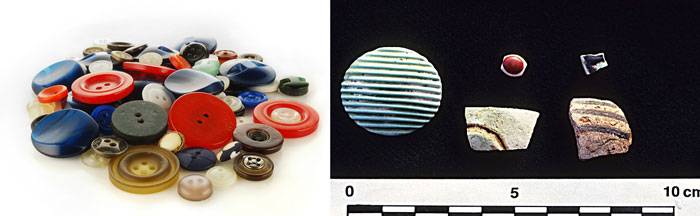
1. Buttons

buttons

image sources 12

Buttons were first used in Mohenjo-daro for ornamental purpose rather than for fastening. They were first used in the Indus Valley Civilization by 2000 BCE.

2. Chess

chess

image sources 12

Chess developed out of Chaturanga, which is an ancient strategy board game developed during the Gupta Empire in India around the 6th century AD. Now you know why Vishwanathan Anand is…

View original post 825 more words

Law of Unintended Consequences

continuously updated blog about China & India

ChiaHou's Book Reviews

continuously updated blog about China & India

What's wrong with the world; and its economy

continuously updated blog about China & India