Archive for ‘Technology’

14/05/2014

How Small U.S. Businesses Can Court Customers in China – Businessweek

Question: What are Chinese consumers looking for in an online shopping experience? What would you describe as the main reason websites aimed at Chinese consumers fail?

How Small U.S. Businesses Can Court Customers in China

Answer: News about Chinese tech companies making their way to Wall Street has been raising awareness about the vast potential Chinese market for U.S. small businesses. China is definitely interested in American-made goods. Here are some steps you can take to make sure your website is appealing to these new customers.

First, as I discussed recently, you need a website in Chinese. Make sure the site is created by a native Mandarin speaker who can convey the culture of your brand without a clunky verbatim translation that will fall flat, says James Chan, president of Asia Marketing & Management.

The main obstacle to selling online in China is the pervasive fear of being cheated or of buying a pirated product. “You need to find the best way of making a Chinese customer in front of a computer comfortable with the fact that you really have a brick-and-mortar company on American soil,” Chan says.

Pictures are a must: an exterior shot of your office or shop, a map showing your location, and pictures of you and your staff. A video of you talking about your business and its history (include Chinese subtitles) and giving a tour of your premises will go a long way. “Some companies ship orders with a certificate that says, ‘This product is made in America,’” Chan says. “Others will wrap the product in their city’s American newspaper for that day. Anything that authenticates you will help.”

Your site should also feature lots of good pictures of your products. “Use different angles, show different colors, and give detailed written descriptions as well,” advises Stanley Chao, managing director of All In Consulting, and author of Selling to China: A Guide to Doing Business in China for Small- and Medium-Sized Companies (2012). “Seeing is believing for the Chinese.”

Anything you can think of that would allow a wary Chinese customer to feel comfortable with your company will help: Your mailing address, your e-mail address, your telephone number. It will cost some money, but if you can, hire a customer service representative who speaks Chinese and can answer telephone queries or at least provide online chat support. “Also, always include 100 percent-guaranteed refunds, or even an added incentive where they get a small credit for the inconvenience of returning something they did not like,” Chao advises.

The piracy problem has prompted Chinese shopping sites such as Taobao.com to institute multilayered customer rating systems for every product, Chan says. You most likely cannot replicate that, but you can include comments on your site—in Mandarin and English—from your Chinese customers. “If others successfully bought your products, then [Chinese customers will think] maybe you are trustworthy.”

Being a small business will put you at a disadvantage in the minds of most Chinese consumers, Chan says, so if your company has any connection to a celebrity or an iconic American brand—such as a major corporation that buys your products, sells them in its retail outlets, or uses your services—trumpet that connection on your site, with pictures, if possible. “Maybe you make a food product that has been served at the White House, or your shoes were worn by an American celebrity,” he suggests. That will appeal to some shoppers in China. “Just make sure you’re being truthful,” Chan says.

Company websites fail in China for the same reasons they fail in the U.S.: They’re done on the cheap, so they are marred by misspellings, ugly design, bad photos, and technical glitches. “I’ve noticed that successful sites are updated frequently, so users want to come back to check for new information, special deals, or more products. This also shows that the site is active, it’s busy, and there are real people behind it,” Chao says.

The bottom line: Take care of your Chinese customers, and they will recommend your company to their friends, show off your products proudly, and visit your store when they’re vacationing in the U.S. When they do, get pictures and put them on your website, Chan says: “If you can build a history in China, where there are millions of people buying and selling online, you’ll win big business there.”

via How Small U.S. Businesses Can Court Customers in China – Businessweek.

Enhanced by Zemanta
06/05/2014

China’s Military Recruits Monkeys to Protect Air Force Base – China Real Time Report – WSJ

The Chinese air force has a new secret weapon to protect one of its bases: macaques.

These fuzzy new recruits have been called upon after numerous methods to rid a base of an abundance of migrating birds—from sending  soldiers scampering high up into trees to training eagles and setting up sound and light effects—fell flat. Birds are a headache world-wide in the aviation industry because they can get stuck in the engines of aircraft.

Soldiers have trained the monkeys, according to the official People’s Liberation Army-run news portal, to scamper up trees and rip down the birds’ nests, with one monkey able to destroy six to eight birds’ nests per day. Two macaques have cleared about 180 nests in the month since the PLA adopted them, according to the report.

The macaques’ odor is also said to repel the birds from rebuilding their nests at the same spots, according to a local expert whom the report quotes.

via China’s Military Recruits Monkeys to Protect Air Force Base – China Real Time Report – WSJ.

Enhanced by Zemanta
24/04/2014

China to Get the World’s Fastest Elevators: 95 Floors in 43 Seconds – Businessweek

It’s a country of superlatives: home to the world’s longest wall, largest population, and fastest-growing major economy. Soon, China will have the fastest elevators.

A rendering of the Guangzhou CTF Finance Centre

Earlier this week, Hitachi (6501:JP) announced plans to deliver two of the world’s quickest-ascending elevators to a skyscraper now under construction in the southern city of Guangzhou, Guangdong. The 530-meter-high Guangzhou CTF Finance Center will be home to a hotel, offices, and residential space when it opens in 2016.

The ultra-high-speed elevators will travel at a pace of 1,200 meters per minute (44.7 miles per hour) up a 440-meter shaft, reaching the 95th floor in about 43 seconds. “Technologies to prevent lateral vibration and to reduce the sensation of ear blockage caused by air pressure differences,” and “brake equipment using braking materials with outstanding heat resistance to safely stop the elevator car ” will be used in the system, Hitachi said in an April 21 press release.

via China to Get the World’s Fastest Elevators: 95 Floors in 43 Seconds – Businessweek.

Enhanced by Zemanta
19/04/2014

India’s Mobile Marketers Try Phone Calls to Reach Rural Consumers – Businessweek

In many parts of the world, businesses relentlessly market to customers via their Web-connected smartphones, slipping pitches into everything from interactive games to graphics-laden productivity apps. Not so in rural India: To better reach the country’s 833 million villagers, Unilever (UL) is delivering free Bollywood music to their basic cell phones via old-fashioned phone calls.

In India, Mobile Ads Mean Phone Calls

Between the popular tunes and cheesy jokes presented during the 15-minute recorded programs served up by Unilever’s mobile phone music service, users listen to four product ads. Consumers are biting: In March, at least 2 million people subscribed to the free service available in two states, says Anaheeta Goenka, executive director of Lowe Lintas & Partners, the agency handling the campaign for the world’s second-biggest consumer company. The service expanded to Uttar Pradesh, India’s most populous state, on March 31.

Companies from Unilever to PepsiCo (PEP) to Mondelēz International (MDLZ) are turning to mobile campaigns to win over consumers who live in locales where cable television or even newspapers may have limited reach. In a country where most people don’t live in big cities and 88 percent of phones aren’t smart, the tuneful approach makes sense because rural spending growth now exceeds that of India’s urban centers. And mobile phone ads cost less and are more targeted than mass media campaigns on the subcontinent.

via India’s Mobile Marketers Try Phone Calls to Reach Rural Consumers – Businessweek.

Enhanced by Zemanta
15/04/2014

How a Chinese Company Built 10 Homes in 24 Hours – China Real Time Report – WSJ

Chinese companies have been known to build major real-estate projects very quickly. Now, one company is taking it to a new extreme.

Suzhou-based construction-materials firm Winsun New Materials says it has built 10 200-square-meter homes using a gigantic 3-D printer that it spent 20 million yuan ($3.2 million) and 12 years developing.

Such 3-D printers have been around for several years and are commonly used to make models, prototypes, plane parts and even such small items as jewelry. The printing involves an additive process, where successive layers of material are stacked on top of one another to create a finished product.

Winsun’s 3-D printer is 6.6 meters (22 feet) tall, 10 meters wide and 150 meters long, the firm said, and the “ink” it uses is created from a combination of cement and glass fibers. In a nod to China’s green agenda, Winsun said in the future it plans to use scrap material left over from construction and mining sites to make its 3-D buildings.

Winsun says it estimates the cost of printing these homes is about half that of building them the traditional way. And although the technology seems efficient, it’s unlikely to be widely used to build homes any time soon because of regulatory hurdles, Mr. Chen said.

The Chinese firm isn’t the first to experiment with printing homes. Architects in Amsterdam are building a house with 13 rooms, with plans to print even the furniture. The Dutch architect in charge of the project said on the project’s website it would probably take less than three years to complete.

via How a Chinese Company Built 10 Homes in 24 Hours – China Real Time Report – WSJ.

Enhanced by Zemanta
11/04/2014

All you need to know about business in China | McKinsey & Company

A lot of people view China business as mysterious. Relax. Consumers behave pretty much the same everywhere. Competition is pretty much the same everywhere. You just need to ignore the hype and focus on the basic fact that in China today, there are six big trends (exhibit). That’s it. Six trends shape most of the country’s industries and drive much of China’s impact on the Western world. They are like tectonic plates moving underneath the surface. If you can understand them, the chaotic flurry of activity on the surface becomes a lot more understandable—and even predictable.

Coauthors Jeffrey Towson and Jonathan Woetzel discuss China’s six megatrends with Nick Leung, the managing partner of McKinsey’s Greater China office.

These trends move businesses on a daily basis. They’re revenue or cost drivers that show up in income statements. Deals, newspaper headlines, political statements, and the rising and falling wealth of companies are mostly manifestations of these six trends, which aren’t typically studied by economists and political analysts. In fact, we happen to think that Chinese politics or political economics are wildly overemphasized by some Westerners in China. So let’s tell a story about each of these megatrends, with some important caveats. They’re not necessarily good things. They’re not necessarily sustainable. For every one of them, we can argue a bull and a bear case. Most lead to profits or at least revenue. Some may be stable. Some lead to bubbles that may or may not collapse. We are only arguing that they are big, they are driving economic activity on a very large scale, and understanding them is critical to understanding China and where it’s headed.

via All you need to know about business in China | McKinsey & Company.

Enhanced by Zemanta
31/03/2014

China’s Huawei books quickest profit growth in four years on smartphone demand | Reuters

China’s Huawei Technologies Ltd, the world’s No.2 telecommunications equipment maker, reported its fastest profit growth in four years as expansion in enterprise and consumer revenue far exceeded growth in its network building division.

A man looks at a Huawei mobile phone as he shops at an electronic market in Shanghai January 22, 2013. REUTERS/Carlos Barria

The unlisted company has benefited from companies investing heavily in cloud and mobile computing, while it has shipped so many mobile handsets that it became the world’s third-biggest smartphone manufacturer last year.

Shenzhen-based Huawei is now looking for revenue from Chinese mobile phone operators switching to fourth-generation networks to cushion the impact of a slowdown in network spending abroad.

In 2013, net profit rose 34.4 percent to 21 billion yuan ($3.38 billion), the company said in a statement on Monday.

Operating profit was 29.1 billion yuan, compared with the company’s forecast range of 28.6 billion yuan to 29.4 billion yuan.

via China’s Huawei books quickest profit growth in four years on smartphone demand | Reuters.

Enhanced by Zemanta
07/03/2014

Scientists discover world’s oldest cheese buried on mummies – People – News – The Independent

Scientists believe they may have found the world’s oldest cheese discovered among mummified bodies in China’s Taklamakan Desert, dating back as far as 1615 BC.

Embedded image permalink

Blocks of the cheese were found around the neck and chest of the Beauty of Xiaohe. Researchers believe the cheese may have been buried with the mummies so they could enjoy it in the afterlife.

The Xiaohe tomb complex was first discovered by Swedish archaeologist Folke Bergman in 1934. Full archaeological excavations were finally undertaken between 2002 and 2004 by the Cultural Relics and Archaeology Institute.

The Taklamakan Desert’s hot dry sand and arid land provides excellent conditions for mummification. The burial conditions also may have created a vacuum- like environment that would have helped to preserve the cheese, researchers said.

Researchers from the Max Planck Institute of Molecular Cell Biology and Genetics collected 13 samples of organic matter from ten tombs and mummies, including the Beauty of Xiaohe, in the Small River Cemetery Number 5.

Protein analysis performed in Dresden showed the organic material was a cheese made by robust, easily scalable kefir fermentation. Researcher Andrej Shevchenko told USA Today the team collected evidence to suggest skimmed ruminant milk was combined with bacteria and yeast used to make a kefir cheese.

“We not only identified the product as the earliest-known cheese, but we also have direct evidence of ancient technology,” he said.

“It’s the earliest known dairy practice that persists until present times in an almost unchanged way,” University of Chinese Academy of Sciences archaeologist Yimin Yang told Discovery News.

“The discovery moves the mysterious history of kefir as far as to the second millennium BC, making it the oldest known dairy fermentation method.”

via Scientists discover world’s oldest cheese buried on mummies – People – News – The Independent.

See also: http://www.curledup.com/geniusch.htm

Enhanced by Zemanta
06/03/2014

20 Clever Inventions Given to Us by the Incredible Indians!

annetbell's avatarTalesAlongTheWay

20 Clever Inventions You Probably Didn’t Know Were Made By Indians

FOLLOW @STORYPICKER

FEBRUARY 20, 2014

indian-inventions-cover
Indian inventions and discoveries have been instrumental in shaping the face of the current modern world. We picked up 20 such interesting findings out of a whole bunch that will make you go, “I didn’t know that”.

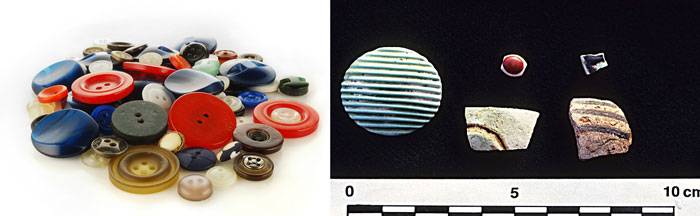
1. Buttons

buttons

image sources 12

Buttons were first used in Mohenjo-daro for ornamental purpose rather than for fastening. They were first used in the Indus Valley Civilization by 2000 BCE.

2. Chess

chess

image sources 12

Chess developed out of Chaturanga, which is an ancient strategy board game developed during the Gupta Empire in India around the 6th century AD. Now you know why Vishwanathan Anand is…

View original post 825 more words

06/03/2014

BBC News – India police use WhatsApp to trace missing boy

A missing 11-year-old boy in India has been found after he was spotted by a member of the public who received a WhatsApp alert sent out by police.

Police message on the missing boy

Police in the northern town of Bareilly say they used the instant messaging service to send out the boy’s photo to several mobile phones in the area.

A man travelling on a train, who had received the alert, recognised the boy sitting near him and called the police.

India has more than 900 million mobile users and WhatsApp is hugely popular.

The app, used by more than 400 million people globally every month, was bought by social networking site Facebook recently for $19bn (£12bn).

via BBC News – India police use WhatsApp to trace missing boy.

Enhanced by Zemanta
Law of Unintended Consequences

continuously updated blog about China & India

ChiaHou's Book Reviews

continuously updated blog about China & India

What's wrong with the world; and its economy

continuously updated blog about China & India