19/10/2019
- ‘Only when China is good, can the world get better,’ president says in congratulatory letter read out at launch of event to promote global trade
- Summit opens two weeks after South Korean giant Samsung closes its last factory in mainland China with the loss of thousands of jobs
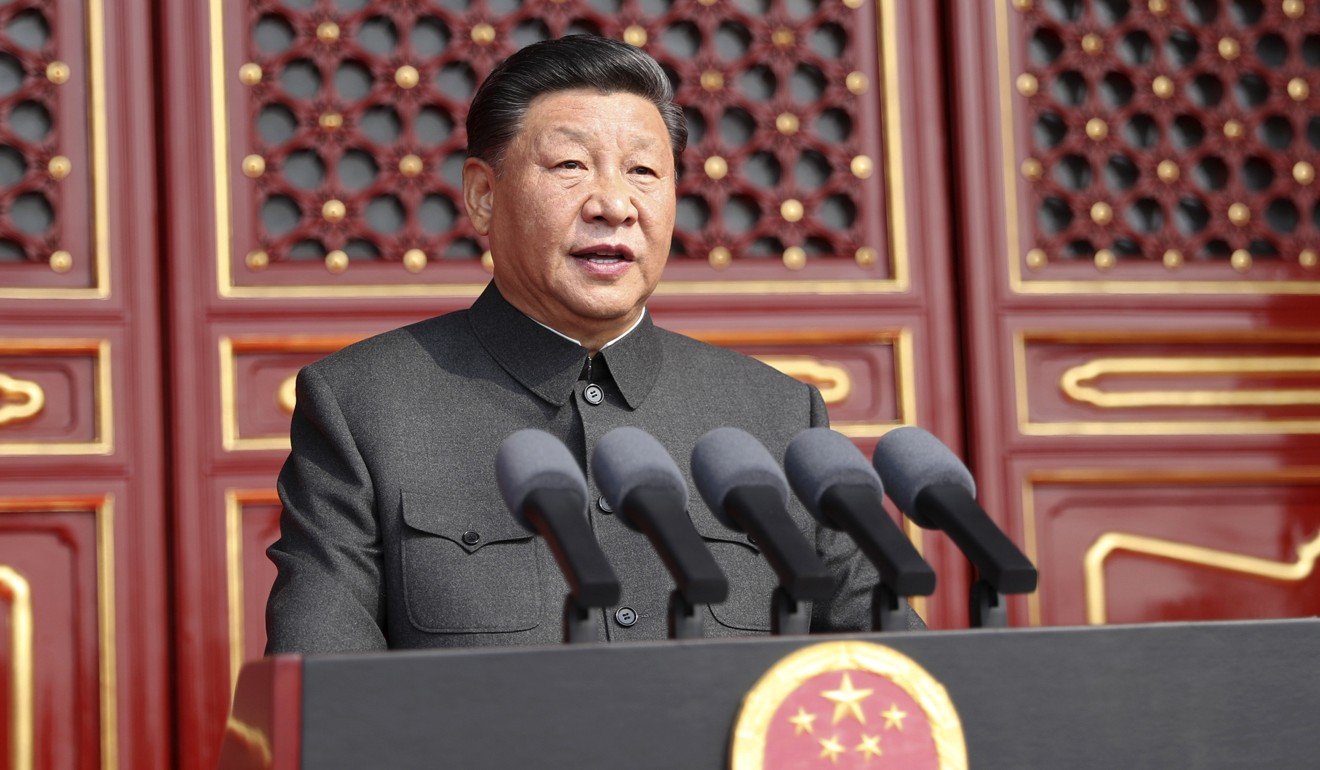
Xi Jinping has praised multinational companies for the role they have played in China’s opening up over the past four decades. Photo: AFP
Just a day after China reported its slowest ever quarterly economic growth,
on Saturday reiterated his promise to keep opening up the nation’s markets to companies and investors from around the world.
“The door of China’s opening up will only open wider and wider, the business environment will only get better and better, and the opportunities for global multinational companies will only be more and more,” he said in a congratulatory letter read out by Vice-Premier Han Zheng at the inaugural Qingdao Multinationals Summit in the east China city.
The two-day event, which ends on Sunday, was organised by China’s commerce ministry and the provincial government of Shandong with the aim, according to its website, of giving multinational companies “the opportunity to articulate their business values and vision” and “promote cooperation with host countries”.
In his letter, Xi praised multinational companies for the role they had played in China’s opening up and reform over the past four decades, describing them as “important participants, witnesses and beneficiaries”.
China was willing to continue opening up to benefit not only itself but the world as a whole, he said.
“Only when the world is good, China is good. Only when China is good, can the world get better.”
Despite its upbeat tone, Xi’s message comes as Beijing is facing intense scrutiny from the international business community over its state-led economic model – one of the main bones of contention in its trade war with the US – and its attempts to prevent foreign firms from speaking out on issues it deems too sensitive, from
Hong Kong to
human rights.
Foreign firms have also long complained about the barriers they face when trying to access China’s markets and the privileged treatment it gives to state-owned enterprises. Even though Beijing has promised to reform its state sector, foreign businesses have complained of slow progress, and just last month the
European Union Chamber of Commerce urged the EU to take more defensive measures against China’s “resurgent” state economy.
Xi promised “more and more” opportunities for global firms. Photo: AP
Sheman Lee, executive director of Forbes Global Media Holding and CEO of Forbes China, said at the Qingdao summit that foreign firms were facing a difficult trading environment in the world’s second-largest economy.
“Multinationals have seen their growth in China slow in recent years because of the growing challenge from local firms, a gradually saturating market and rising operation costs,” he said.
Craig Allen, president of the US-China Business Council, said that many multinational companies were reluctant to release their best products in China out of fear of losing their intellectual property.
China still not doing enough to woo foreign investment
In his letter, Xi said that over the next 15 years, the value of China’s annual imports of goods would rise beyond US$30 trillion, while the value of imported services would surpass US$10 trillion a year, creating major opportunities for multinational companies.
China would also reduce tariffs, remove non-tariff barriers and speed up procedures for customs clearance, he said.
Commerce Minister Zhong Shan said at the opening ceremony that China would also continue to improve market access and intellectual property protection.
The country supported economic globalisation and would safeguard the multilateral trade system, he said, adding that it was willing to work with the governments of other countries and multinational corporations to promote economic globalisation.
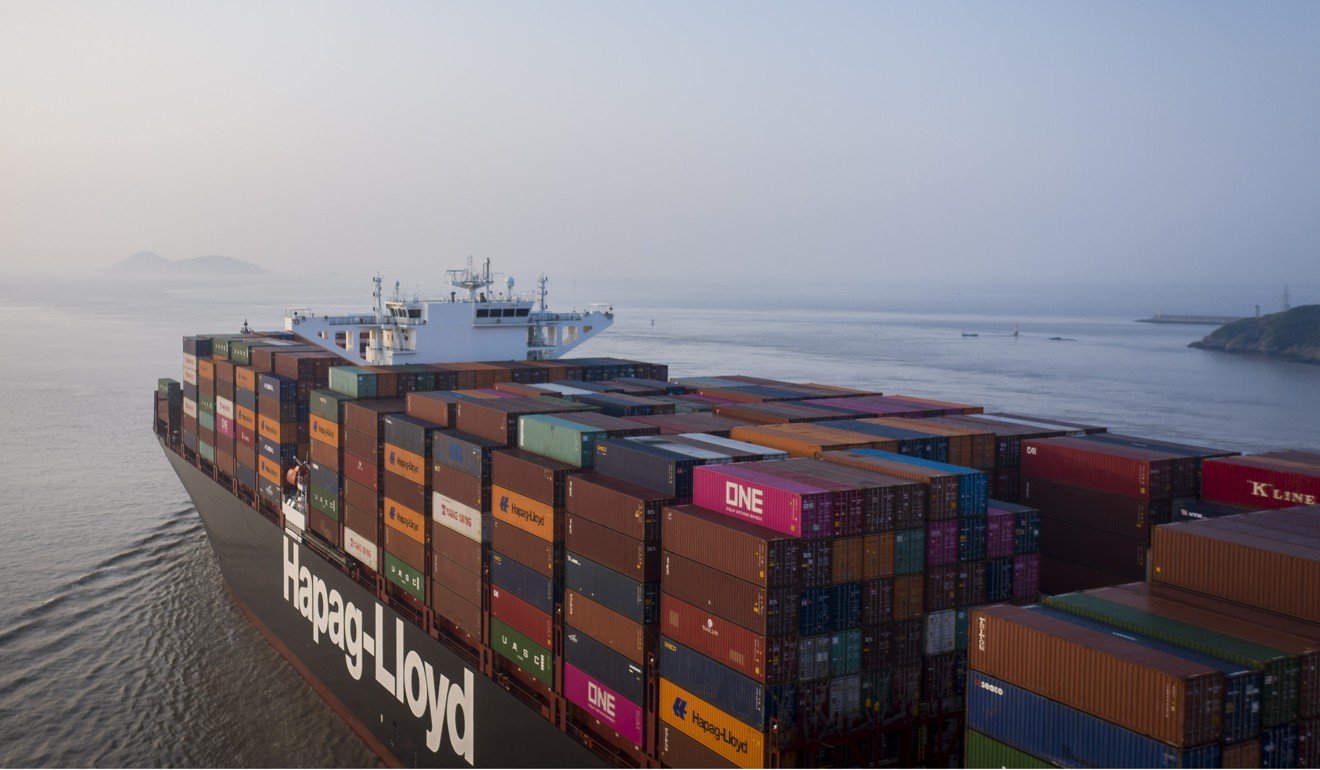
Xi Jinping says the value of China’s annual goods imports will rise beyond US$30 trillion over the next 15 years. Photo: Bloomberg
The promise to continue to open up China’s markets came after the
State Council
– the nation’s cabinet – made exactly the same pledge at its weekly meeting on Wednesday.
After the latest round of trade war negotiations in Washington, Beijing said it had achieved “substantive progress” on intellectual property protection, trade cooperation and technology transfers, all of which have been major bones of contention for the United States.
Despite its pledge to welcome multinational companies into its market, China is in the process of creating a list of “unreliable foreign entities” it considers damaging to the interests of Chinese companies. The roster, which is expected to include FedEx, is seen as a response to a similar list produced earlier by the United States.
Xi’s gesture would also appear to have come too late for South Korean multinational
, which announced on October 4 it had ended the production of smartphones at its factory in Huizhou, Guangdong province – its last in China – with the loss of thousands of jobs.
Source: SCMP
Posted in barriers, Beijing, bones of contention, CEO, Chamber of Commerce, China’s door, China’s State Council, closes, Commerce Minister Zhong Shan, complained, customs clearance, delegates, EU, European Union, Factory, FedEx, Forbes China, Forbes Global Media Holding, Foreign firms, guangdong province, Hong Kong, Huizhou, Huizhou City, Human rights, Intellectual property, intellectual property protection, mainland, Mainland China, Multinationals Summit, nation’s cabinet, only open wider, President Xi Jinping, procedures, Qingdao, Samsung, Samsung Electronics, smartphones, South Korean giant, South Korean multinational, speed up, technology transfers, trade cooperation, Uncategorized, United States, US-China Business Council, Washington |
Leave a Comment »
02/10/2019
- The trip comes amid growing resistance from European leaders over what they see as China’s failure to change long-term practices unfair to foreign investors
- French President’s trip to Beijing follows Chinese leader’s visit to France in March
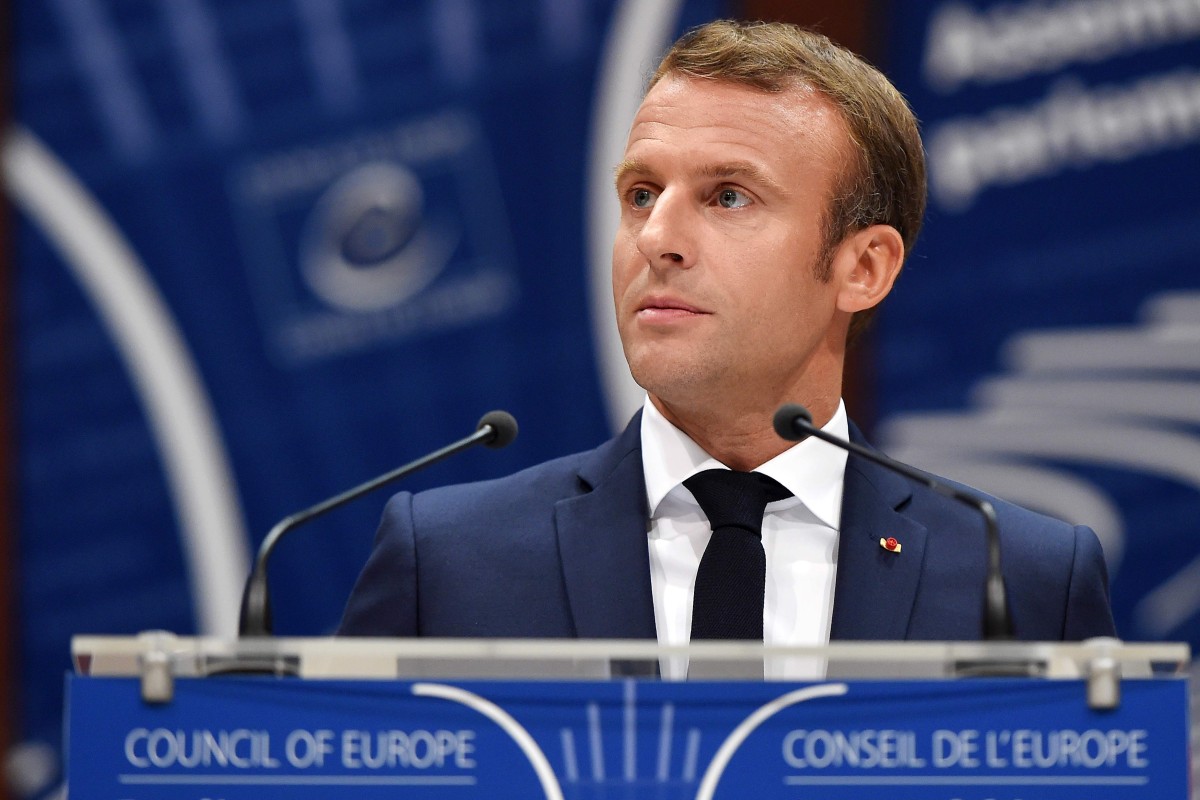
President Emmanuel Macron of France speaks to the Council of Europe parliamentary assembly on Tuesday. Photo: AFP
French President Emmanuel Macron will visit China next month as Europe’s most diplomatically active leader focuses on climate change cooperation and trade promotion with Asia’s leading power, a source briefed on the Elysee Palace’s discussions said.
This will be the second Chinese tour for Macron since he took office in 2017, and it will come amid escalating resistance from European politicians and business communities over what they see as China’s failure to change long-standing practices unfair to foreign investors.
His visit also comes at a time when France – as well as the European Union as a whole – is bracing for Washington’s potential levies of tariffs on European products, and the lack of progress on climate change policies with US President Donald Trump’s administration.
“President Macron will meet President Xi [Jinping], while France strives for better cooperation with China on climate and trade,” the source said. “His itinerary is still in the pipeline, but he is expected to visit Beijing and Shanghai.”
Macron, 41, who is widely seen as emerging as Europe’s most aggressive leader filling the political vacuum left by German Chancellor Angela Merkel’s political twilight, has cast himself as an honest broker between Russia and Ukraine, and between the US and Iran.
He has also been critical of China’s influence in Europe, joining forces with Merkel to push for a tougher EU stance on the world’s second biggest economy.
In March, when Xi claimed a major diplomatic victory by clinching a memorandum of understanding with Italy on the Belt and Road Initiative, Macron declared: “The time of European naivety is ended. For many years we had an uncoordinated approach and China took advantage of our divisions.”
Macron also backed investment screening mechanisms for Chinese business moves in Europe, while endorsing plans to change the EU’s notoriously strict antitrust rules in order to facilitate mergers between large European groups and companies to counter Chinese companies’ global ambitions.
Macron urges Iran and US to show ‘courage of building peace’
The EU is also wary of China’s effort to “divide and rule” the European Union. Greece and Hungary – both recipients of large amounts of Chinese investments – have repeatedly wanted to water down EU’s stance on issues deemed sensitive to Beijing, including the South China Sea and China’s human rights violations.
“It would be good [for Macron] to stress that 17+1 is irritating,” said Joerg Wuttke, president of EU Chamber of Commerce in China, in reference to China’s engagement with a group of EU and non-EU member states in eastern and southeastern Europe.
“After all, the EU has a ‘one China’ policy, [so] EU could expect this position from China too.”
Macron’s domestic call for EU unity has translated into diplomatic appeals, with China being one of the targets.
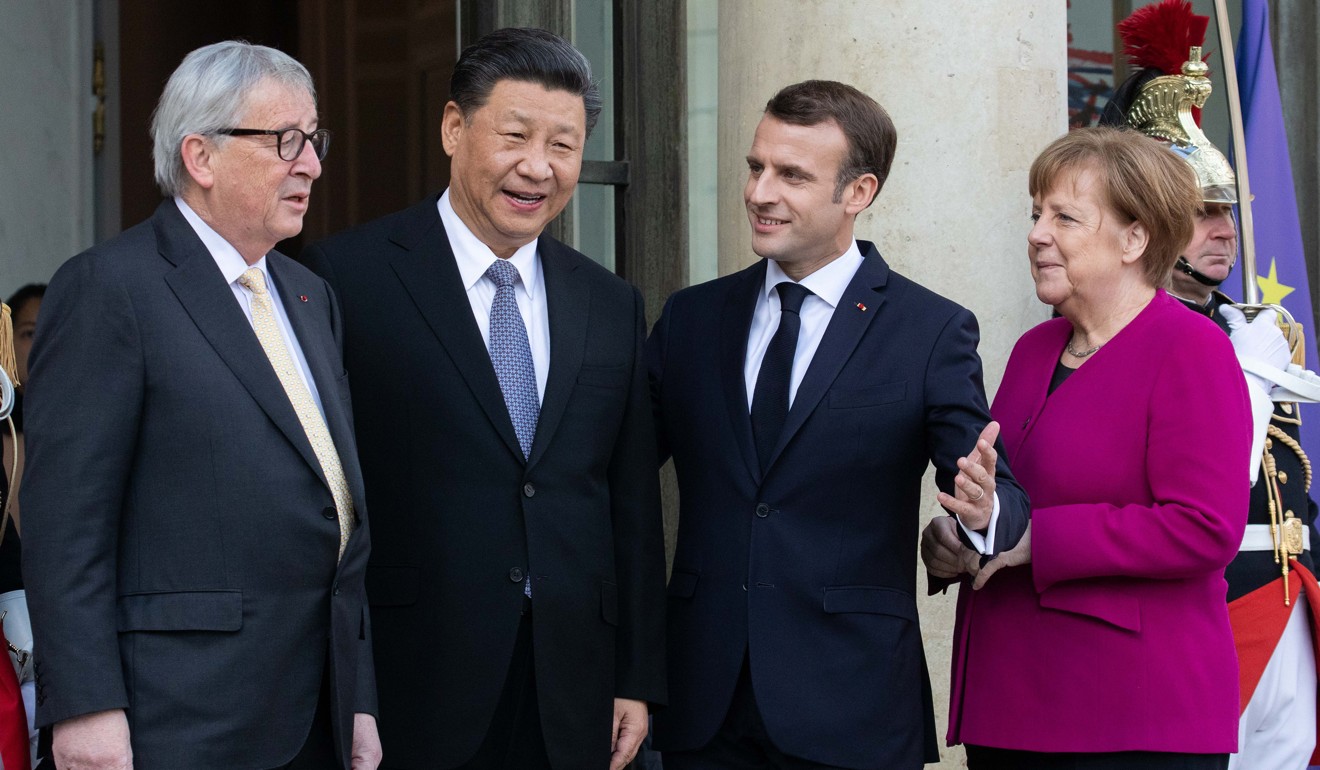
(From left) Jean-Claude Juncker, president of the European Commission; Xi Jinping, China’s leader; Emmanuel Macron, France’s president; and Angela Merkel, Germany’s chancellor, ahead of a meeting in Paris on March 26. Photo: Christophe Morin/Bloomberg
When Xi visited France in March, Macron hosted him at the Elysee Palace in the presence of Merkel and European Commission President Jean-Claude Juncker, showcasing European solidarity when it comes to EU-China policies.
In terms of French-Chinese bilateral ties, trade imbalances have persisted after Macron called for a “rebalancing” during his last visit.
France has a 1.4 per cent market share in China, compared with China’s 9 per cent market share in France. China represents France’s largest bilateral trade deficit, totalling €US$29.2 billion (US$31.9 billion) last year, ahead of Germany.
The EU has been calling for reciprocal investment treatment with China, a call that European business leaders in China expect Macron to make.
France bids farewell to late president Jacques Chirac
“We [Europe] need … a solid investment agreement to allow EU business to conduct their affairs in a similar manner as Chinese companies can operate in Europe. The agreement should be finalised in 2020, but not at all cost,” said Wuttke.
“The last thing EU business needs in China is a weak agreement that institutionalises imbalances,” he added.
Part of that involves building “more efficient defensive tools to prevent abusive technology transfers and to address the deep asymmetry in EU-China relations when it comes to access to public procurement markets,” said Mathieu Duchâtel, director of Asia programme at the Paris-based think tank Institut Montaigne.
Duchâtel added that it was also important to convey the message to Beijing that there are areas for cooperation even amid a more defensive China policy from France.
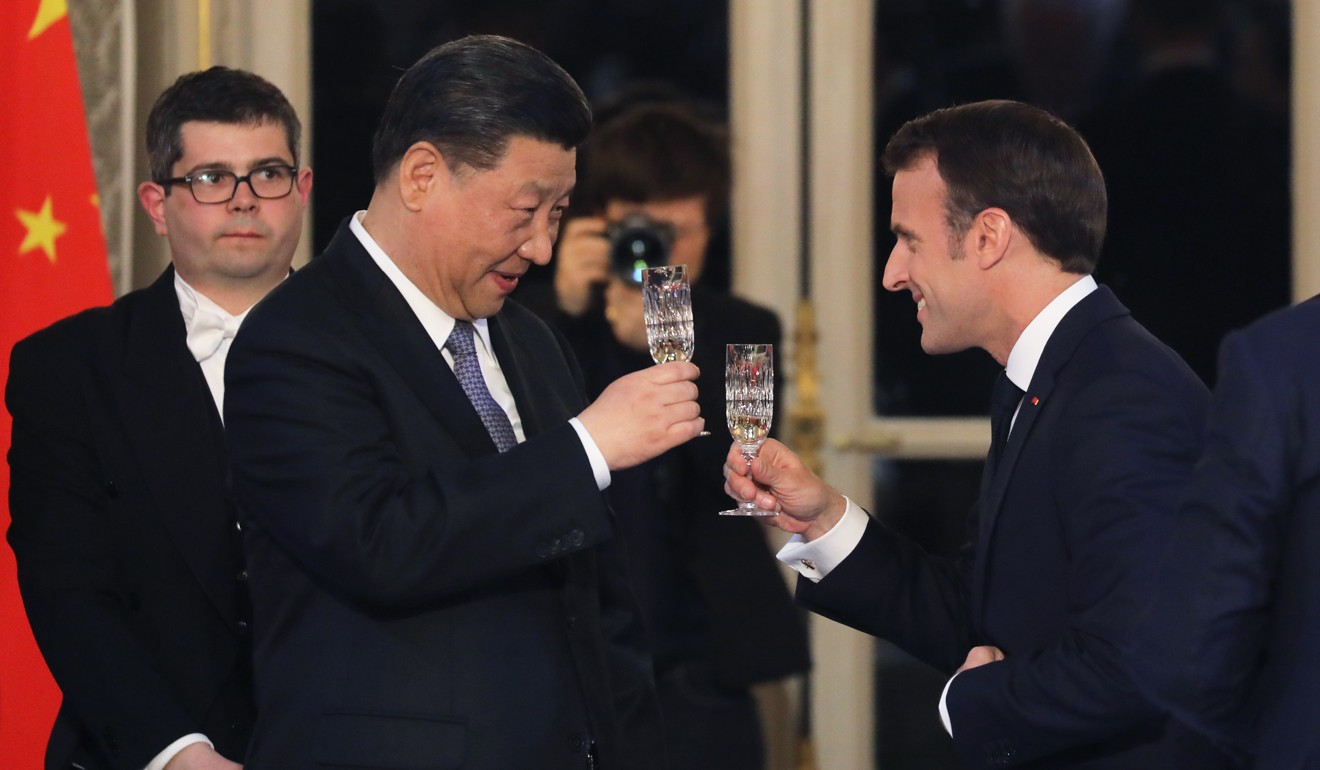
Chinese President Xi Jinping and French leader Emmanuel Macron toast raise a toast during a state dinner in Paris on March 25. Photo: EPA-EFE
One such area is the climate and environment, where China is “an important partner” for France to reach its goal of global carbon neutrality by 2050, he said.
“The energy/environment agenda is a political priority in Paris and one of very few issues on which cooperation with China remains promising and will continue to create business opportunities,” he said.
China is the world’s biggest carbon polluter, producing around 30 per cent of the planet’s man-made carbon dioxide. It remains committed to the 2015 Paris accord on climate change, even after Trump pulled the US out of the deal.
Under the agreement, the long-term temperature goal is to keep the increase in global average temperature to well below 2°C above pre-industrial levels, and to pursue efforts to limit the increase to 1.5°C.
Source: SCMP
Posted in Angela Merkel, Beijing, Belt and Road Initiative, Belt and Road Initiative (BRI), building peace, Carbon dioxide, carbon polluter, China alert, climate change, Council of Europe, courage, deep asymmetry, divide and rule, energy/environment agenda, EU, EU Chamber of Commerce in China, European Commission, European Commission President, European Union, focus, France, German Chancellor, Greece, human rights violations, Hungary, imbalances, institutionalises, INVESTMENTS, iran, Italy, Jacques Chirac, Jean-Claude Juncker, meet, Memorandum of understanding, Memorandum of Understanding (MOU), month, one-China policy, Paris, Planet, political twilight, recipients, South China Sea, technology transfers, Trade, Uncategorized, US, US President Donald Trump, Xi JinPing |
Leave a Comment »
08/07/2019
BEIJING (Reuters) – China and the rest of the world must co-exist, Vice President Wang Qishan said on Monday, in an indirect jab at the United States, with which Beijing is trying to resolve a bitter trade war.
Top representatives of the world’s two biggest economies are trying to resume talks this week to try and resolve their year-long trade dispute, which has seen the two countries place increasingly harsh tariffs on each other’s imports.
The Trump administration has accused China of engaging in unfair trade practices that discriminate against U.S. firms, forced technology transfers and intellectual property rights theft. Beijing has denied all the charges.
“China’s development can’t shut out the rest of the world. The world’s development can’t shut out China,” Wang told the World Peace Forum at Beijing’s elite Tsinghua University.
He also warned against “protectionism in the name of national security”, but without mentioning the United States, and urged major powers to make greater contributions to world peace.
China has also been angered by U.S. sanctions against tech giant Huawei Technologies Co Ltd over national security concerns, and U.S. visa curbs on its students and academics.
In his speech, Wang, who is extremely close to Chinese President Xi Jinping and rarely speaks in public, reiterated China’s commitment to opening up.
“Large countries must assume their responsibilities and set an example, make more contributions to global peace and stability, and broaden the path of joint development,” he added.
“Development is the key to resolving all issues,” Wang, who became vice president last year, after having led Xi’s fight to root out corruption, told an audience that included Western diplomats based in Beijing and former European Council President Herman Van Rompuy.
“NOT A RATIONAL ACTION”
The United States should not blame China for the problems it is facing, Vice Foreign Minister Le Yucheng told the forum later.
“Viewing China as the enemy is not a rational action,” the foreign ministry quoted him as saying, adding that China would not put up “high walls” or “decouple itself from any country”.
China has been nervous that the United States is seeking to sever, or at least severely curb, economic links, in what has been called a “decoupling”.
Tariff, trade, finance and science and technology wars are “turning back the clock on history,” Le said. “The consequences will be extremely dangerous.”
The two sides have communicated by telephone since last month’s summit of leaders of Group of 20 major nations in Japan, at which U.S. President Donald Trump and Xi agreed to relaunch stalled talks.
Talks broke down in May, after U.S. officials accused China of pulling back from commitments previously made in the text of an agreement negotiators said was nearly finished.
The countries have also been at loggerheads over issues ranging from human rights to the disputed South China Sea and U.S. support of self-ruled Taiwan, which China claims as its own.
No matter how the international situation or China developed, Vice President Wang said, the country would follow the path of peace, and not seek spheres of influence or expansion.
“If there is no peaceful, stable international environment, there will be no development to talk of.”
Source: Reuters
Posted in Beijing, Chinese President Xi Jinping, Decoupling, European Council President, Huawei Technologies Co Ltd, intellectual property rights theft, jab at U.S., Le Yucheng, National security, protectionism, shut China out, Taiwan, technology transfers, Trump administration, Tsinghua University, Uncategorized, United States, Vice Foreign Minister, Vice President Wang Qishan, World, World Peace Forum |
Leave a Comment »
09/04/2019
BRUSSELS (Reuters) – Chinese Premier Li Keqiang and EU institution leaders meet in Brussels on Tuesday for an annual EU-China summit set to be overshadowed by differences over trade and investment.
After years of offering free access to its markets, the European Union has said it is losing patience with Beijing over the pace of liberalising reforms. It also has growing concerns over state-led Chinese companies’ dominance of some EU markets and acquisitions of strategic industries.
Like the United States, many EU countries want to crack down on industrial subsidies and forced technology transfers, although prefer dialogue to the trade war Washington has triggered.
The European Commission set out a 10-point action plan last month, seeing scope for greater cooperation in fields such as climate change, but demanding greater reciprocity, such as access for EU firms to Chinese public tenders.
“The old narrative is absolutely obsolete,” Commission Vice President Jyrki Katainen told Reuters.
Beijing and Brussels have been wrestling for weeks over the text of a joint declaration to be presented as the fruit of Tuesday’s summit between Li and Commission President Jean-Claude Juncker and European Council chief Donald Tusk.
“China aims to have a feel-good summit, whereas we aim to have a meaningful summit, with a meaningful outcome,” Peter Berz, acting Asia director at the Commission’s trade section, told the European Parliament last week.
EU diplomats said on Monday negotiators had made some progress, but were still short of an agreed text. Talks would continue until the summit, due to start at 1 p.m. (1100 GMT).
China points to a new foreign investment law due to take effect at the start of 2020. It includes provisions to ban forced technology transfers and ensure foreign companies have access to public tenders.
EU officials say the law lacks detail and question how effective it will be in reality in protecting foreign firms.
Li wrote in a German newspaper on Monday that China wanted to work with the European Union on issues including trade and denied Beijing was trying to split the bloc by investing in eastern European states.
Source: Reuters
Posted in acting Asia director, Beijing, Brussels, China alert, Chinese premier Li Keqiang, Commission President, Commission Vice President, Commission’s trade section, Donald Tusk, EU diplomats, European Commission, European Council chief, European Parliament, European Union, industrial subsidies, Jean-Claude Juncker, Jyrki Katainen, Peter Berz, technology transfers, trade-focused summit, Uncategorized, United States |
Leave a Comment »
23/02/2019
WASHINGTON (Reuters) – President Donald Trump said on Friday there was “a very good chance” the United States would strike a deal with China to end their trade war and that he was inclined to extend his March 1 tariff deadline and meet soon with Chinese President Xi Jinping.
“I think that we both feel there’s a very good chance a deal will happen,” Trump said.
Liu agreed there had been “great progress”.
“From China, we believe that (it) is very likely that it will happen and we hope that ultimately we’ll have a deal. And the Chinese side is ready to make our utmost effort,” he said at the White House.
The Republican president said he probably would meet with Xi in March in Florida to decide on the most important terms of a trade deal.
Extending the deadline would put on hold Trump’s threatened tariff increase to 25 percent from 10 percent on $200 billion of Chinese imports into the United States. That would prevent a further escalation in a trade war that already has disrupted commerce in goods worth hundreds of billions of dollars, slowed global economic growth and roiled markets.
Optimism that the two sides will find a way to end the trade war lifted stocks, especially technology shares. The S&P 500 stock index reached its highest closing level since Nov. 8. Oil prices rose to their highest since mid-November, with Brent crude reaching a high of $67.73 a barrel. [.N] [O/R]
CURRENCY AGREEMENT
Trump and Treasury Secretary Steven Mnuchin said the two sides had reached an agreement on currency. Trump declined to provide details, but U.S. officials long have expressed concerns that China’s yuan is undervalued, giving China a trade advantage and partly offsetting U.S. tariffs.
Announcement of a pact aimed at limiting yuan depreciation was putting “the currency cart before the trade horse,” but would likely be positive for Asian emerging market currencies, said Alan Ruskin, global head of currency strategy at Deutsche Bank in New York.
“How can you agree to avoid excessive Chinese yuan depreciation or volatility if you have not made an agreement on trade that could have huge FX implications?” Ruskin asked in a note to clients.
In a letter to Trump read aloud by an aide to Liu at the White House, Xi called on negotiators to work hard to strike a deal that benefits both country.
Trump said a deal with China may extend beyond trade to encompass Chinese telecommunications companies Huawei Technologies and ZTE Corp.
The Justice Department has accused Huawei of conspiring to violate U.S. sanctions on Iran and of stealing robotic technology from T-Mobile US Inc.
Chinese peer ZTE was last year prevented from buying essential components from U.S. firms after pleading guilty to similar charges, crippling its operations.
MEMORANDUMS NO MORE
Trump appeared at odds with his top negotiator, U.S. Trade Representative Robert Lighthizer, on the preliminary terms that his team is outlining in memorandums of understanding for a deal with China. Trump said he did not like MOUs because they are short term, and he wanted a long-term deal.
“I don’t like MOUs because they don’t mean anything,” Trump said. “Either you are going to make a deal or you’re not.”
Lighthizer responded testily that MOUs were binding, but that he would never use the term again.
Reuters reported exclusively on Wednesday that the two sides were drafting the language for six MOUs covering the most difficult issues in the trade talks that would require structural economic change in China.
Negotiators have struggled this week to agree on specific language within those memorandums to address tough U.S. demands, according to sources familiar with the talks. The six memorandums include cyber theft, intellectual property rights, services, agriculture and non-tariff barriers to trade, including subsidies.
U.S., China sketch outlines for trade deal
An industry source briefed on the talks said both sides have narrowed differences on intellectual property rights, market access and narrowing a nearly $400 billion U.S. trade deficit with China. But bigger differences remain on changes to China’s treatment of state-owned enterprises, subsidies, forced technology transfers and cyber theft of U.S. trade secrets.
Lighthizer pushed back when questioned on forced technology transfers, saying the two sides made “a lot of progress” on the issue, but did not elaborate.
The United States has said foreign firms in China are often coerced to transfer their technology to Chinese firms if they want to operate there. China denies this.
The U.S. Chamber of Commerce on Friday urged the U.S. government to ensure the deal was comprehensive and addressed core issues, rather than one based on more Chinese short-term purchases of goods.
China has pledged to increase purchases of agricultural produce, energy, semiconductors and industrial goods to reduce its trade surplus with the United States.
China committed to buying an additional 10 million tonnes of U.S. soybeans on Friday, U.S. Agriculture Secretary Sonny Perdue said on Twitter. China bought about 32 million tonnes of U.S. soybeans in 2017. The commitments are a “show of good faith by the Chinese” and “indications of more good news to come,” Perdue wrote.
China was the top buyer of U.S. soybeans before the trade war, but Beijing’s retaliatory tariffs on U.S. soybeans slashed business that had been worth $12 billion annually.
Source: Reuters
Posted in agricultural produce, agriculture, Alan Ruskin, Beijing, Brent Crude, China alert, Chinese Vice Premier, currencies, currency cart before the trade horse, cyber theft, depreciation, Deutsche Bank, emerging market, energy, FX implications, global head of currency strategy, Huawei, Intellectual Property Rights, Justice Department, MoU, Negotiators, New York, optimism, President Donald Trump, President Xi Jinping, Republican, Robert Lighthizer, robotic technology, S&P 500 stock index, Semiconductors, Sonny Perdue, soybeans, Steven Mnuchin, subsidies, T-Mobile US Inc, tariff deadline, technology transfers, trade deficit, trade surplus, trade war, Treasury Secretary, Twitter, U.S. Agriculture Secretary, U.S. Chamber of Commerce, U.S. Trade Representative, Uncategorized, undervalued, United States, Vice-Premier Liu He, volatilit, volatility, White House, yuan, ZTE |
Leave a Comment »



 CHINDIA ALERT: You'll be living in their world, very soon