25/04/2020
- But trade with partner countries might not be as badly affected as with countries elsewhere in the world, observers say
- China’s trade with belt and road countries rose by 3.2 per cent in the January-March period, but second-quarter results will depend on how well they manage to contain the pathogen, academic says
China’s investment in foreign infrastructure as part of its Belt and Road Initiative has been curtailed because of the coronavirus pandemic. Photo: Xinhua
The
coronavirus pandemic is set to cause a slump in Chinese investment in its signature
and a dip in trade with partner countries that could take a year to overcome, analysts say.
But the impact of the health crisis on China’s economic relations with nations involved in the ambitious infrastructure development programme might not be as great as on those that are not.
China’s total foreign trade in the first quarter of 2020 fell by 6.4 per cent year on year, according to official figures from Beijing.
Trade with the United States, Europe and Japan all dropped in the period, by 18.3, 10.4 and 8.1 per cent, respectively, the commerce ministry said.
By comparison, China’s trade with belt and road countries increased by 3.2 per cent in the first quarter, although the growth figure was lower than the 10.8 per cent reported for the whole of 2019.
China’s trade with 56 belt and road countries – located across Africa, Asia,
Europe and South America – accounts for about 30 per cent of its total annual volume, according to the commerce ministry.
Despite the first-quarter growth, Tong Jiadong, a professor of international trade at Nankai University in Tianjin, said he expected China’s trade with belt and road countries to fall by between 2 and 5 per cent this year.
His predictions are less gloomy than the 13 to 32 per cent contraction in global trade forecast for this year by the
World Trade Organisation.
“A drop in [China’s total] first-quarter trade was inevitable but it slowly started to recover as it resumed production, especially with Southeast Asian, Eastern European and Arab countries,” Tong said.
“The second quarter will really depend on how the epidemic is contained in belt and road countries.”
Nick Marro, Hong Kong-based head of global trade at the Economist Intelligence Unit, said he expected China’s total overseas direct investment to fall by about 30 per cent this year, which would be bad news for the belt and road plan.
“This will derive from a combination of growing domestic stress in China, enhanced regulatory scrutiny over Chinese investment in major international markets, and weakened global economic prospects that will naturally depress investment demand,” he said.
The development of the Chinese built and operated special economic zone in the Cambodian town of Sihanoukville is reported to have slowed, while infrastructure projects in Bangladesh, including the Payra coal-fired power plant, have been put on hold.
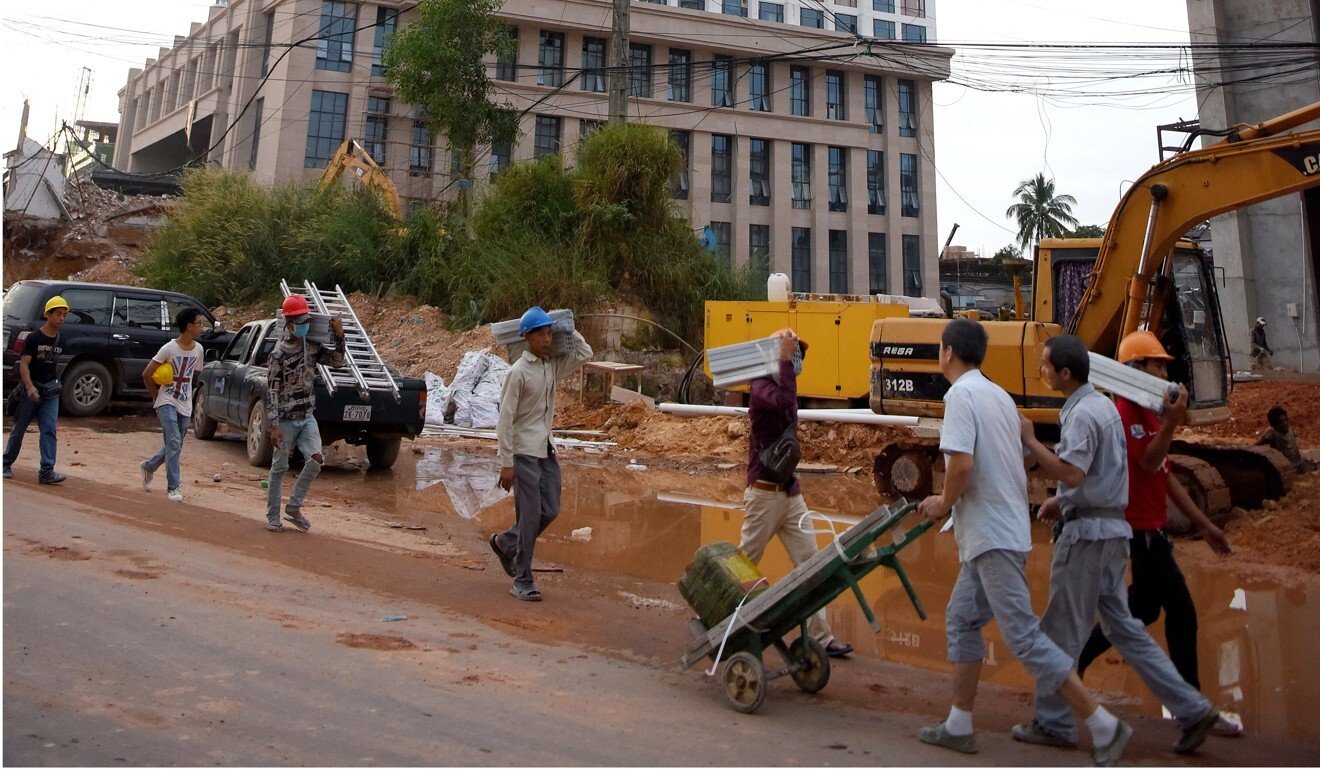
The development of the Chinese built and operated special economic zone in the Cambodian town of Sihanoukville is reported to have slowed. Photo: AFP
Marro said the reduction of capital and labour from China might complicate other projects for key belt and road partner, like Pakistan, which is home to infrastructure projects worth tens of billions of US dollars, and funded and built in large part by China.
“Pakistan looks concerning, particularly in terms of how we’ve assessed its sovereign and currency risk,” Marro said.
“Public debt is high compared to other emerging markets, while the coronavirus will push the budget deficit to expand to 10 per cent of GDP [gross domestic product] this year.”
Last week, Pakistan asked China for a 10-year extension to the repayment period on US$30 billion worth of loans used to fund the development of infrastructure projects, according to a report by local newspaper Dawn.
China’s overseas investment has been falling steadily from its peak in 2016, mostly as a result of Beijing’s curbs on capital outflows.
Last year, the direct investment by Chinese companies and organisations other than banks in belt and road countries fell 3.8 per cent from 2018 to US$15 billion, with most of the money going to South and Southeast Asian countries, including Singapore, Vietnam, Indonesia and Pakistan.
Tong said the pandemic had made Chinese investors nervous about putting their money in countries where disease control measures were becoming increasingly stringent, but added that the pause in activity would give all parties time to regroup.
“Investment in the second quarter will decline and allow time for the questions to be answered,” he said.
“Past experience along the belt and road has taught many lessons to both China and its partners, and forced them to think calmly about their own interests. The epidemic provides both parties with a good time for this.”
Dr Frans-Paul van der Putten, a senior research fellow at Clingendael Institute in the Netherlands, said China’s post-pandemic strategy for the
belt and road in Europe
might include a shift away from investing in high-profile infrastructure projects like ports and airports.
Investors might instead cooperate with transport and logistics providers rather than invest directly, he said.
“Even though in the coming years the amount of money China loans and invests abroad may be lower than in the peak years around 2015-16, I expect it to maintain the belt and road plan as its overall strategic framework for its foreign economic relations,” he said.
Source: SCMP
Posted in 10-year, 2018, 2019, 2020, 30, academic, according, accounts, across, activity, africa, airports, allow, ambitious, analysts, annual volume, answered, Arab countries, Asia, bad news, Bangladesh, because, Beijing, Belt and Road Initiative, belt and road plan, billion, billions, budget deficit, Cambodian, capital, capital outflows, cause, China, China’s, Chinese, Clingendael Institute, combination, Commerce Ministry, compared, comparison, complicate, contained, contraction, cooperate, coronavirus, Coronavirus pandemic, countries, curbs, Currency, curtailed, Dawn, decline, demand, depend, depress, derive, development, dip, direct investment, disease control measures, domestic stress, dropped, Eastern European, economic prospects, economic relations, Economist Intelligence Unit, elsewhere, Emerging markets, enhanced, epidemic, especially, Europe, extension, fall, falling, Fell, figure, first-quarter, forecast, foreign, foreign trade, GDP [gross domestic product], global trade, gloomy, great, growth, health crisis, high, impact, increased, increasingly, Indonesia, inevitable, Infrastructure, infrastructure projects, international markets, International trade, Investment, investors, involved, January, Japan, Labour, last week, loans, local newspaper, located, logistics, lower, Major, manage, March, might not, nations, naturally, nervous, Netherlands, observers, official figures, on hold, other, overall strategic framework, overcome, overseas, Pakistan, pandemic, parties, partner, pathogen, pause, Payra coal-fired power plant,, per cent, Period, ports, predictions, production, professor, programme, providers, Public debt, put, questions, recover, reduction, regroup, regulatory scrutiny, repayment, reported, results, resumed, Risk, second-quarter, signature, Singapore, slowed, slower, slump, South, South America, Southeast Asian, sovereign, special economic zone, stringent, take, this year, Tianjin, time, Total, town, Trade, Transport, Uncategorized, United States, US dollars, US$30, Vietnam, weakened, while, World, world trade organisation, worth, year, year-on-year |
Leave a Comment »
19/04/2020
BEIJING, April 18 (Xinhua) — New media platforms are reshaping China’s documentary industry, ushering in a new era of vigorous development, said Zhang Tongdao, director of the Documentary Center with Beijing Normal University.
There is a rapid growth of new media companies in the documentary market, according to an annual study report of the development of Chinese documentary in 2020, which was released Saturday by the center, the China Intercontinental Communication Center and other institutions.
China’s total investment in documentary making was 5.04 billion yuan (about 710 million U.S. dollars) last year, and the country was blessed with 6.66 billion yuan in total output value, according to the report.
“More and more documentaries are broadcast on the internet, even only on the internet media, which complement those aired on television,” Zhang said.
Some documentaries, including “Flavorful Origins: Chaoshan Cuisine” by Tencent video and the second season of “The Story Of Chuaner” by video-sharing platform Bilibili, gained the brand value in 2019 through exclusive streaming on the platforms.
The report also showed that the documentary production capacity of new media companies reached a new height in 2019.
Last year, Tencent produced 23 documentaries on its own, accounting for about one-third of its total online projects throughout the year. Bilibili produced and launched 16 documentaries, totaling 55.6 hours, while iQiyi, also an online platform, produced or co-produced 15 documentaries, said the report.
The report added that documentary producers and streamers are also foraying into the short video field, varying versions such as shorter or longer in length for different platforms.
Source: Xinhua
Posted in 2019, accounting, aired, Beijing, Beijing Normal University, Bilibili, brand value, broadcast, China Intercontinental Communication Center, China's, co-produced, development, director, documentaries, documentary, Documentary Center, era, evolving, exclusive, foraying, industry, institutions, Internet, media, media companies, new, one-third, online, platforms, produced, projects, rapid growth, reshaping, shine, streaming, Television, TENCENT, Tencent video, throughout, Total, Uncategorized, video-sharing platform, vigorous, year |
Leave a Comment »
19/04/2020
- Faced with a backlash from the West over its handling of the early stages of the pandemic, Beijing has been quietly gaining ground in Asia
- Teams of experts and donations of medical supplies have been largely welcomed by China’s neighbours
Despite facing some criticism from the West, China’s Asian neighbours have welcomed its medical expertise and vital supplies. Photo: Xinhua
While China’s campaign to mend its international image in the wake of its handling of the
coronavirus health crisis has been met with scepticism and even a backlash from the US and its Western allies, Beijing has been quietly gaining ground in Asia.
Teams of experts have been sent to Cambodia, the Philippines, Myanmar, Pakistan and soon to Malaysia, to share their knowledge from the pandemic’s ground zero in central China.
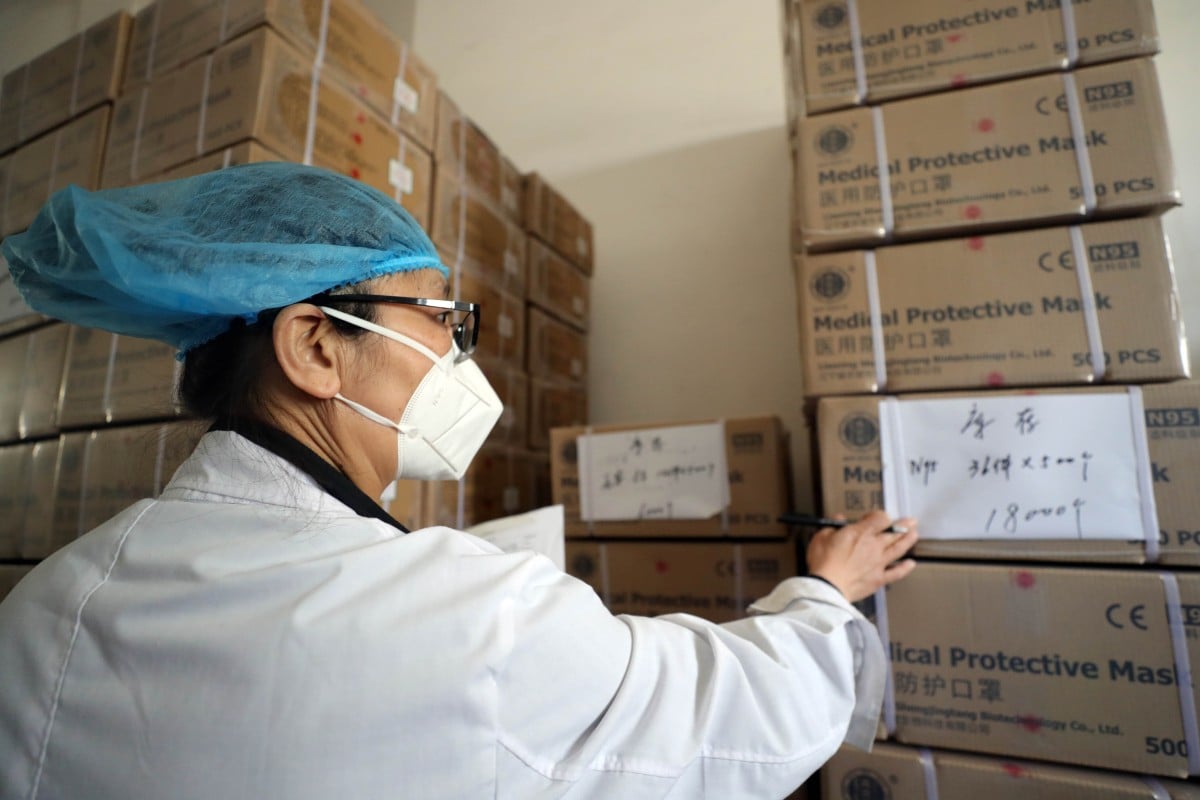
Beijing has also donated or facilitated shipments of medical masks and ventilators to countries in need. And despite some of the equipment failing to meet Western quality standards, or being downright defective, the supplies have been largely welcomed in Asian countries.
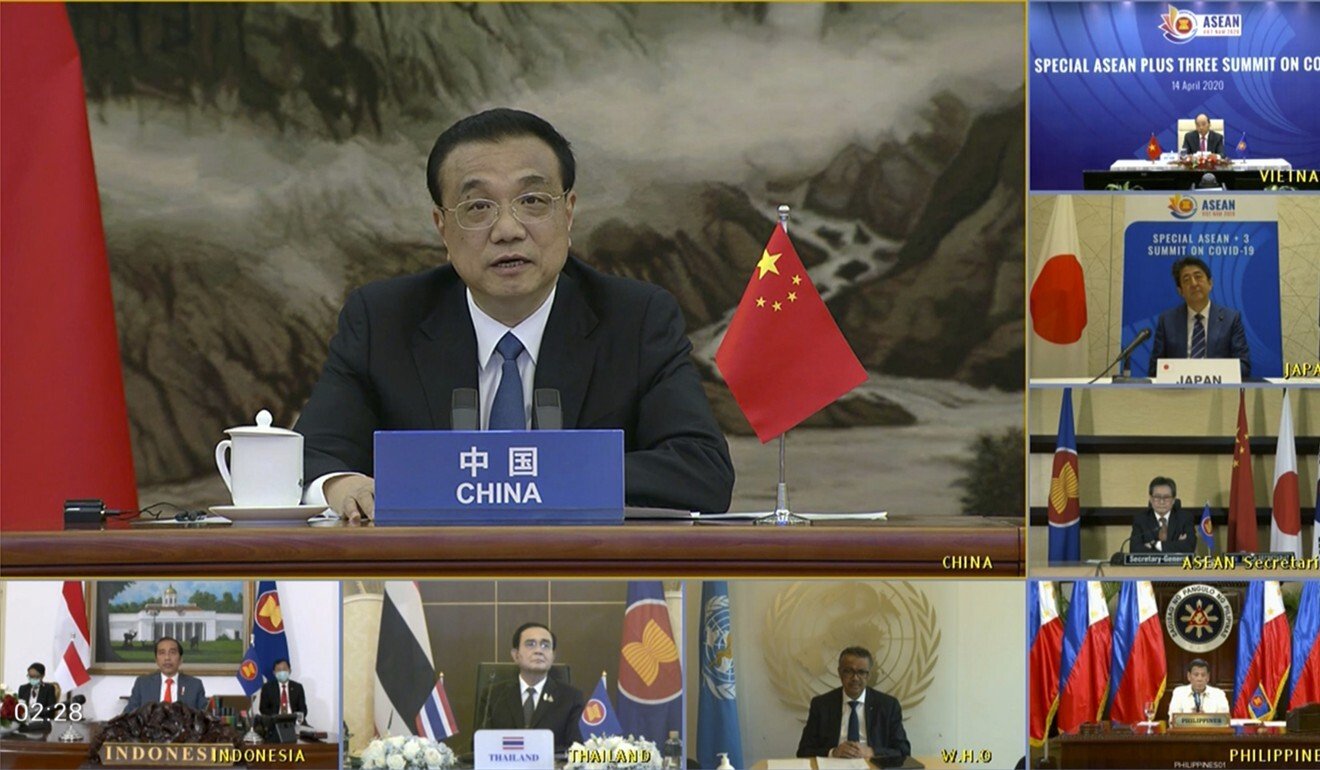
China has also held a series of online “special meetings” with its Asian neighbours, most recently on Tuesday when Premier Li Keqiang discussed his country’s experiences in combating the disease and rebooting a stalled economy with the leaders of the Association of Southeast Asian Nations (Asean), Japan and South Korea.
Chinese Prime Minister Li Keqiang speaks to Asean Plus Three leaders during a virtual summit on Tuesday. Photo: AP
Many Western politicians have publicly questioned Beijing’s role and its subsequent handling of the crisis but Asian leaders – including Philippine President Rodrigo Duterte and Japanese Prime Minister Shinzo Abe – have been reluctant to blame the Chinese government, while also facing criticism at home for not closing their borders with China soon enough to prevent the spread of the virus.
An official from one Asian country said attention had shifted from the early stages of the outbreak – when disgruntled voices among the public were at their loudest – as people watched the virus continue its deadly spread through their homes and across the world.
“Now everybody just wants to get past the quarantine,” he said. “China has been very helpful to us. It’s also closer to us so it’s easier to get shipments from them. The [medical] supplies keep coming, which is what we need right now.”
The official said also that while the teams of experts sent by Beijing were mainly there to observe and offer advice, the gesture was still appreciated.
Another Asian official said the tardy response by Western governments in handling the outbreak had given China an advantage, despite its initial lack of transparency over the outbreak.
“The West is not doing a better job on this,” he said, adding that his government had taken cues from Beijing on the use of propaganda in shaping public opinion and boosting patriotic sentiment in a time of crisis.
“Because it happened in China first, it has given us time to observe what works in China and adopt [these measures] for our country,” the official said.
Experts in the region said that Beijing’s intensifying campaign of “mask diplomacy” to reverse the damage to its reputation had met with less resistance in Asia.
Why China’s ‘mask diplomacy’ is raising concern in the West
“Over the past two months or so, China, after getting the Covid-19 outbreak under control, has been using a very concerted effort to reshape the narrative, to pre-empt the narrative that China is liable for this global pandemic, that China has to compensate other countries,” said Richard Heydarian, a Manila-based academic and former policy adviser to the Philippine government.
“It doesn’t help that the US is in lockdown with its domestic crisis and that we have someone like President Trump who is more interested in playing the blame game rather than acting like a global leader,” he said.
Shahriman Lockman, a senior analyst with the foreign policy and security studies programme at Malaysia’s Institute of Strategic and International Studies, said that as the US had withdrawn into its own affairs as it struggled to contain the pandemic, China had found Southeast Asia a fertile ground for cultivating an image of itself as a provider.
China’s first-quarter GDP shrinks for the first time since 1976 as coronavirus cripples economy
Beijing’s highly publicised delegations tasking medical equipment and supplies had burnished that reputation, he said, adding that the Chinese government had also “quite successfully shaped general Southeast Asian perceptions of its handling of the pandemic, despite growing evidence that it could have acted more swiftly at the early stages of the outbreak in Wuhan”.
“Its capacity and will to build hospitals from scratch and put hundreds of millions of people on lockdown are being compared to the more indecisive and chaotic responses seen in the West, especially in Britain and the United States,” he said.
Coronavirus droplets may travel further than personal distancing guidelines
Lockman said Southeast Asian countries had also been careful to avoid getting caught in the middle of the deteriorating relationship between Beijing and Washington as the two powers pointed fingers at each other over the origins of the new coronavirus.
“The squabble between China and the United States about the pandemic is precisely what Asean governments would go to great lengths to avoid because it is seen as an expression of Sino-US rivalry,” he said.
“Furthermore, the immense Chinese market is seen as providing an irreplaceable route towards Southeast Asia’s post-pandemic economic recovery.”
Aaron Connelly, a research fellow in Southeast Asian political change and foreign policy with the International Institute for Strategic Studies in Singapore, said Asian countries’ dependence on China had made them slow to blame China for the pandemic.
“Anecdotally, it seems to me that most Southeast Asian political and business elites have given Beijing a pass on the initial cover-up of Covid-19, and high marks for the domestic lockdown that followed,” he said.
“This may be motivated reasoning, because these elites are so dependent on Chinese trade and investment, and see little benefit in criticising China.”
China and Vietnam ‘likely to clash again’ as they build maritime militias
The cooperation with its neighbours as they grapple with the coronavirus had not slowed China’s military and research activities in the disputed areas of the
South China Sea – a point of contention that would continue to cloud relations in the region, experts said.
Earlier this month an encounter in the South China Sea with a Chinese coastguard vessel led to the sinking of a fishing boat from Vietnam, which this year assumed chairmanship of Asean.
And in a move that could spark fresh regional concerns, shipping data on Thursday showed a controversial Chinese government survey ship, the Haiyang Dizhi 8, had moved closer to Malaysia’s exclusive economic zone.
The survey ship was embroiled in a months-long stand-off last year with Vietnamese vessels within Hanoi’s exclusive economic zone and was spotted again on Tuesday 158km (98 miles) off the Vietnamese coast.
Source: SCMP
Posted in 10, 13, 15, 16, 17, 18, 1976, 27, 44, 50%, 54, according, across the world, again, against, April, areas, arriving, ASEAN, Asian, Association of Southeast Asian Nations (ASEAN), ASYMPTOMATIC CASES, at, authorities, avoid, ‘mask diplomacy’, battling, Beijing, Beijing’s, biggest, blame, blame game, borders, Britain, build, burnished, cabinet, cases, cautioning, central, central district, chairmanship, China, China's, China’s National Health Commission, Chinese capital, chinese government, Chinese market, City, clinical, closer, closing, coast, coastguard vesse, coastguard vessel, combating, compensate, confirmed, confirmed cases, considered, contain, contention, control, controversial, coronavirus, coronavirus cases, cough, countries, country’s, COVID-19, COVID-19 outbreak, cripples, crisis, criticism, cross infections, Data, day, deadly spread, death toll, deaths, declines, delegations, despite, destabilising, Disease, disputed areas, districts, domestic, down, earlier, eastern, economic recovery, economically, economy, elsewhere, embroiled, epicentre, epidemic, everybody, exclusive economic zones, experiences, eyes, facing, fall, family gatherings, fever, first time, fishing boat, flare-up, foreign policy and security studies programme, Friday, from, GDP, global leader, global pandemic, Government, Guangzhou, Haiyang Dizhi 8, handling, Hanoi’s, Harbin, health commission, Heilongjiang, high-risk, Home, hospitals, However, hubei province, hundreds, imported, imported infections, including, infected, Institute of Strategic and International Studies, interested, International Institute for Strategic Studies, investigations, irreplaceable, Japan, Japanese Prime Minister, Japanese Prime Minister Shinzo Abe, Jiaozhou, km, last, leaders, local, locally, lockdown, low-risk, lowest, mainland, Mainland China, Major, Malaysia’s, March, medical equipment and supplies, medium-risk, miles, military and research activities, millions, months-long, moved, narrative, new, nine, Northeastern, Notably, now, number, off, Official, officials, on guard, outbreak, patients, People, perceptions, Philippine, playing, political, politicians, Post, post-pandemic, pre-empt, Premier Li Keqiang, present, President Trump, prevent, previous, province, provincial capital, provincial government, publicly, published, punished, quarantine, questioned, quickly, quoted, reached, rebooting, rebound, recent, reluctant, remaining, reported, reporting, reputation, research fellow, reshape, resurgence, role, route, Russia, Saturday, saying, scratch, seen, senior analyst, shandong province, shipping data, showed, shrinks, since, Singapore, sinking, Sino-US rivalry, slow, social media, socially, soon enough, South China Sea, South Korea, Southeast Asia, Southeast Asian political change and foreign policy, southern city, spotted, spread, squabble, stalled, stand-off, State Council, statement, stood, stop, subsequent, Suifenhe, Sunday, surge, survey ship, symptoms, tally, task, test positive, Three, Thursday, Total, towards, transmitted, Transparency, travellers, Tuesday, two, Uncategorized, United States, vice governor, vice mayor, Vietnam, Vietnamese, Vietnamese vessels, virtual summit, Virus, Washington, website, weeks, were, Western, within, Wuhan, year |
Leave a Comment »
19/03/2020
- In Madrid, local health authorities describe ‘one case every 16 minutes’
- New cases in Europe include new Prince Albert of Monaco and Michel Barnier, the European Union’s chief Brexit negotiator
Italian military trucks and soldiers are seen by Bergamo’s cemetery after the army was deployed to move coffins from the cemetery to neighbouring provinces. Photo: Sergio Agazzi/Fotogramma via Reuters
Italians on Thursday mourned a record number of deaths from the Covid-19 pandemic and expected the toll to surpass that of China, where the crisis began. On the mainland, there was a sense of relief as there were no new domestic cases reported for the first time since the outbreak began.
As opposite turning points were marked in China and Europe, the worldwide total of infections exceeded 220,000. The new cases include Monaco’s reigning monarch, Prince Albert, and Michel Barnier, the European Union’s chief Brexit negotiator.
More than 9,000 people have died around the world, at least 2,978 of them in Italy, including five doctors. The death rate in Madrid is described by local health authorities as “one case every 16 minutes”.
Concerns are also growing that the surge in cases in Europe and North America could result in a second wave in Asia, amid reports of mass movements of travellers fleeing the current epicentres.
Australia and New Zealand became the latest countries to ban non-citizens from entry.
In China, the National Health Commission said on Thursday that all 34 new infections reported the previous day had been imported cases.
It is also the first time Hubei province, where the crisis began, recorded no new cases either domestically or from abroad.
The number of new deaths in mainland China was down to single digits, with eight reported, bringing the total fatalities to 3,245.
Coronavirus: Italy’s hospitals overflow with the dead as toll tops 1,000
Italy experienced its worst death toll on Wednesday with 475 reported, the highest one-day official toll of any nation.
Italy has the world’s second-highest number of diagnosed cases, after China.
Dramatic footage has been circulating on social media, showing military vehicles taking corpses out of the Italian city of Bergamo because cremation facilities were overloaded.
Prime Minister Giuseppe Conte extended a nationwide lockdown that is weighing on the economy, saying: “We managed to avoid the collapse of the system and the measures are working.”
Prince Albert of Monaco (pictured in 2019) has tested positive for the coronavirus, it was announced on Thursday. Photo: Xinhua
The government is considering tightening restrictions amid concern that many Italians are not respecting rules that confine them to their homes except for work, health or emergency reasons.
In Spain, the second hardest hit country in Europe, the virus’ spread continues with a rate of 25 per cent new cases per day.
Spanish King Felipe VI, in a rare televised address, told his citizens: “This virus will not defeat us. On the contrary. It will make us stronger as a society.”
Source: SCMP
Posted in Asia, Australia, Bergamo's cemetery, China’s, coronavirus, COVID-19, deaths, Europe, Grim toll, hubei province, Italian military trucks, Italy, Madrid, Mainland China, National Health Commission, New Zealand, North America, number, pandemic, Prince Albert of Monaco, soldiers, Spain, Spanish King Felipe VI, Total, Uncategorized |
Leave a Comment »
27/06/2019
- First Qatar, and now Saudi Arabia, are competing to dominate China’s fast-growing natural gas market, already the third largest in the world, as Beijing encourages the switch from coal to cleaner, greener energy
-
A PetroChina LNG tank at Rudong port in Nantong, Jiangsu province. China’s massive and rapidly growing appetite for natural gas is sparking off a scramble in the Middle East, as energy producers compete to become the biggest player in the market. Photo: Reuters
As more countries turn towards clean energy, the geoeconomic impact of natural gas as a fuel has become second only to that of oil. Over the past decade, the global demand for this carbon-free energy source has risen considerably and one major buyer is China.
The third largest global market for natural gas, China has implemented government policies to replace the use of coal as fuel and millions of households are switching over to clean energy. Consequently, China’s market for gas expanded by a record 43 billion cubic metres last year to reach 280 billion cubic metres at the end of 2018.
With the recent
, China’s gas consumption should continue to grow in the year ahead. As the demand spirals further, natural gas consumption in China is estimated to grow to around 620 billion cubic metres in 2030.
Prioritising its energy security, Beijing last year approved a 22-year gas supply deal between QatarGas and PetroChina International Co. The agreement is PetroChina’s largest LNG supply deal by volume, and will provide 3.4 million tonnes of liquefied natural gas annually.
With this deal, which QatarGas initiated with Total and ExxonMobil Corp as partners, Qatar achieved regional dominance and filled a vacuum left by major gas producer Iran, currently the target of US sanctions. Interestingly, Beijing has also unwittingly sparked off a competition between Qatar and Saudi Arabia, the kingpins of the Middle Eastern energy industry.
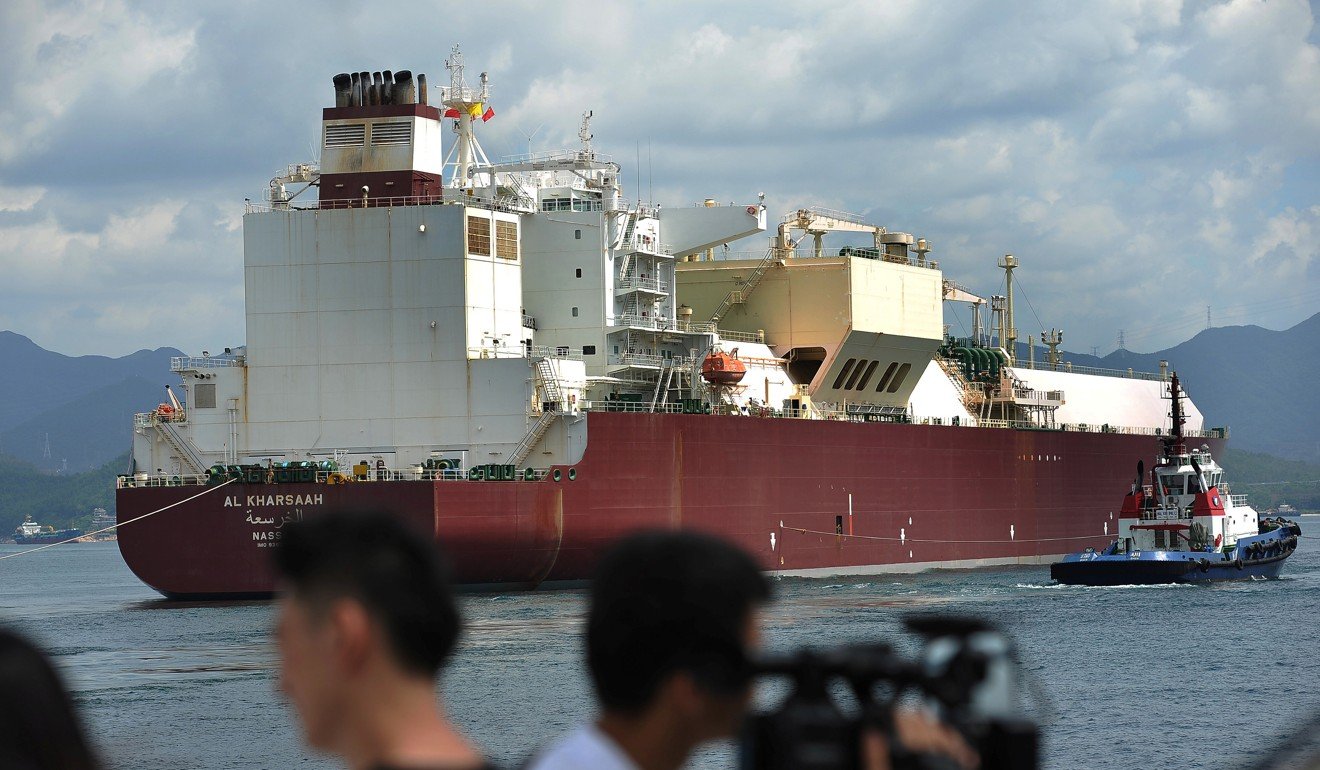
A vessel carrying Qatar LNG looking to berth in Shenzhen, China last August. Qatar’s recent deal highlighted the massive and growing Chinese appetite for natural gas. Photo: Reuters
China to become world’s top natural gas importer in 2019: report
By exporting gas, as well as oil, Qatar sail unruffled through the
imposed by Saudi Arabia, the United Arab Emirates, Bahrain and Egypt in June 2017, over allegations that Qatar supports terrorism and is friendly with Iran, which the region sees as an enemy. Qatar denies this. Meantime, Qatar plans to further increase its gas output. To attract more buyers, it is offering attractive long-term supply contracts to other countries in the region.
Inspired by the success of Qatar Gas, Saudi Arabia has stepped up its efforts to capture this new market. The Saudi state-owned oil giant Aramco plans to build an “energy bridge” between Saudi Arabia and China to better meet Beijing’s growing requirements for oil, gas, including LNG, said Aramco’s chief executive Amin Nasser at an industry event in Beijing in March.
Aramco, already a major supplier of crude oil to China, would need to invest US$150 billion over the next decade to realise its plans to convert crude oil into chemicals, and eventually become a gas producer. “We need to help our stakeholders – including here in China and the wider Asia region – realise that oil and gas will remain vital to world energy for decades to come,” said Nasser.
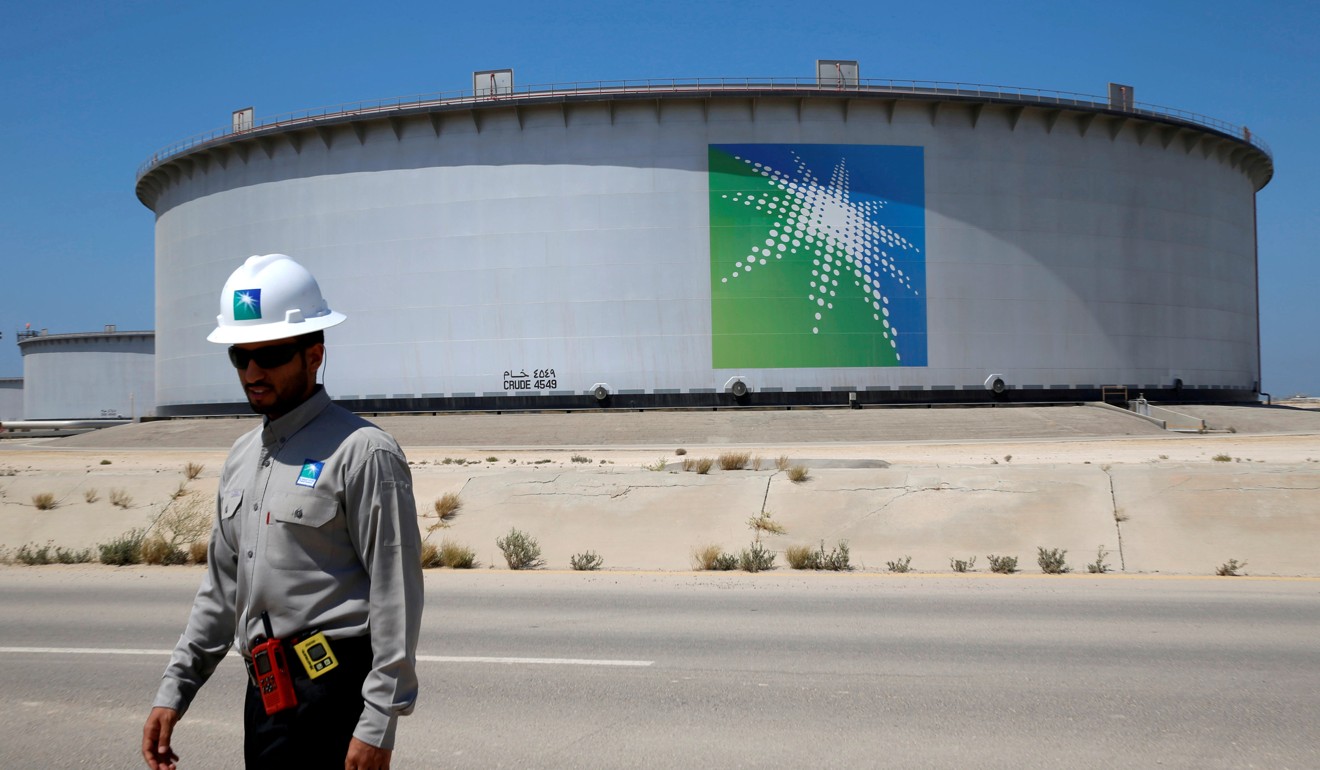
An Aramco employee near an oil tank in Saudi Arabia. Aramco has grand ambitions to become a major producer of natural gas. Photo: Reuters
The vision of Saudi Arabia as a major natural gas producer is in in line with Saudi Crown Prince Mohammed bin Salman’s economic plan Vision 2030. Riyadh has only Qatar to beat, with Iran on the back foot. Under sanctions pressure, Tehran, despite plans to increase gas exports, has clung on to just 1 per cent of the natural gas market, exporting 36.24 million cubic metres daily. Yet Iran was once part of the so-called regional gas troika along with Russia and Qatar, and is located at the cusp of several energy transit corridors. China, defying sanctions, continues to buy oil from Iran.
In around five years, Riyadh could become a major gas exporter. Saudi Arabia has already replaced Iran as the main energy provider in countries such as China, Pakistan and India, and has made huge investments in energy projects in these countries.
However, Qatar is also playing smart, sharply lowering its prices to clinch deals and make the right business connections. The competition for the growing natural gas market is a long game. The main possible setback for Riyadh is that its gas reserves do not match those in Qatar and Iran.
Source: SCMP
Posted in Aramco, Bahrain, Beijing, China’s growing demand, clean energy, Egypt, ExxonMobil Corp, India alert, iran, jiangsu province, LNG tank, Middle East, Nantong, Natural gas, Pakistan, PetroChina, Qatar, QatarGas, Riyadh, Rudong port, Russia, Saudi Arabia, Shenzhen, sparks contest, Total, Uncategorized, United Arab Emirates (UAE) |
Leave a Comment »








 CHINDIA ALERT: You'll be living in their world, very soon