Archive for ‘trains’

24/09/2019

China 70th anniversary: Pigeon ban and lockdowns as countdown begins

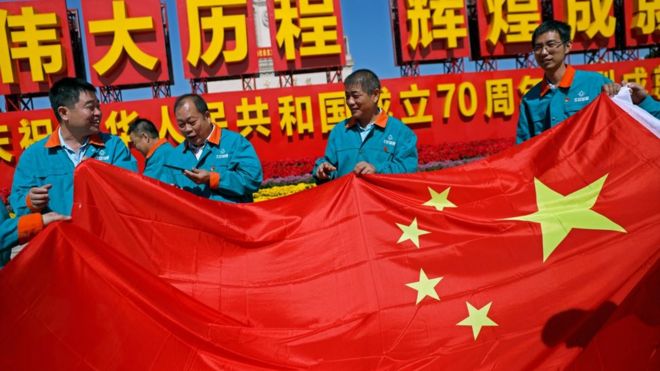
Chinese workers with Chinese flagImage copyright EPA
Image caption China is getting dressed up for its big birthday party

One week from now, the People’s Republic of China will mark its 70th anniversary with celebrations on a scale not seen in China in decades.

Beijing is pulling out all stops and 1 October will be flush with fireworks, fanfare and a huge military parade.

To ensure it goes smoothly, authorities have been ramping up security in the capital – and online – for weeks.

But with yet more protests expected in Hong Kong, the territory might just rain on China’s parade.

What is it all about?

The birth of modern China was declared on 1 October 1949, after the communists under Mao Zedong won the civil war that followed World War Two.
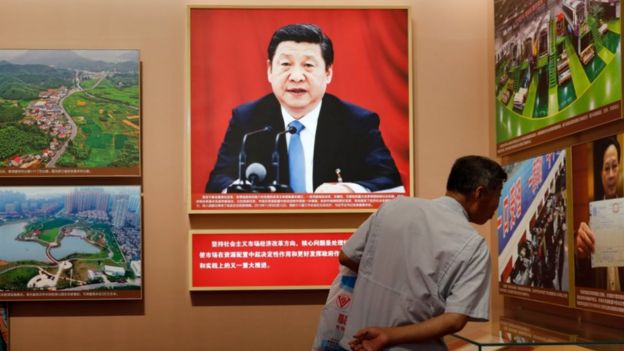
Portrait of Xi JinpingImage copyright EPA
Image caption Exhibitions are highlighting the achievements of the Communist Party

The date is marked every year, but celebrations for this 70th anniversary are expected to eclipse previous events.

It’s the first big anniversary since China has emerged as a global power. While 10 years ago China was a superpower in the making, it is now the world’s second largest economy, almost eye-to-eye with the United States.

What to expect?

The main celebrations will take place in the capital, Beijing, where there will be a grand military parade with “advanced weapons” on display, followed by a “mass pageant”.

President Xi Jinping – considered the most powerful Chinese leader since Mao – will address the Chinese people. His speech is expected to celebrate China’s rapid growth and which will be closely watched for any indication of the country’s direction in the coming years.

The president will also hand out honours for contributions to the country and in the evening there will be a grand gala and fireworks show.

All official Chinese celebrations are carefully choreographed and the success of this one is particularly important to the government.

The Dos and Don’ts

The parade – open to invited guests only – will take place around Tiananmen Square in central Beijing. The surrounding area will be practically under lockdown, and in fact has been so several times already.

During rehearsals leading up to the big day, hotels near Tiananmen Square told guests that for several hours each day, no-one would be able to leave the hotel or return to it should they be out, leading to much travel chaos and rebookings.

Many shops and restaurants in the centre are also closed or have shortened hours and some subway stations are temporarily shut.
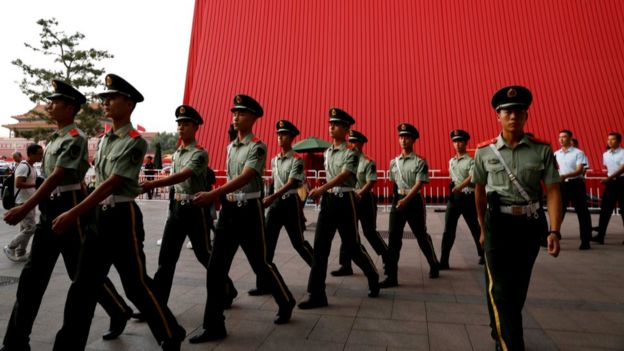
Chinese paramilitary policeImage copyright EPA
Image caption Security is tight ensure the party goes to plan

Trains to Beijing are running numerous safety checks on their passengers and vehicles going into the city are also being tightly watched.

On the big day itself, areas around Tiananmen Square will be blocked and guarded. Local residents will need to identify themselves if they want to pass.

To ensure the sun will shine brightly on the celebration in notoriously polluted Beijing, several coal plants and construction sites in and around the city have been ordered to stop work for the duration.

There’s also a ban on any low-flying aerial vehicles in place. That means anything from light aircraft to drones, balloons and even racing pigeons.

Censorship galore

Across much of the city centre, there are national flags set up at every door. Voluntary inspectors are monitoring the streets and locals have told the BBC they’re being questioned after having even brief conversations with foreigners

One person said she was asked by an inspector: “Who were those foreigners? Why were they here?”

The tight control naturally extends online as well. Popular social media platform Weibo said it was deleting content that “distorts” or “insults” the country’s history ahead of the anniversary.
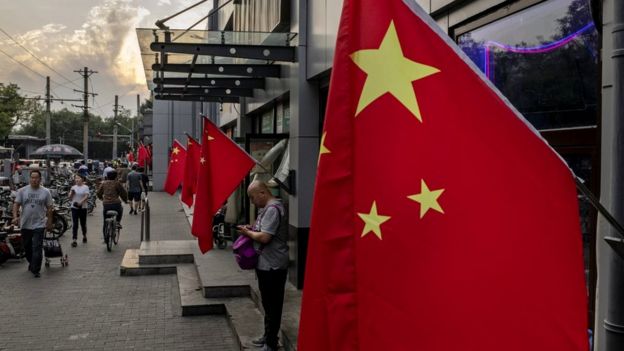
Chinese flags outside a row of shopsImage copyright GETTY IMAGES
Image caption Every house and every shop is sporting a national flag

Chinese journalists are always expected to toe the party line anyway, but starting in October they will have to pass an extra test to prove they are versed particularly in Xi Jinping’s teachings, officially called Xi Jinping Thought on Socialism with Chinese Characteristics, which has been written into the constitution.

Whether or not they pass the exam will then determine whether they’ll be accredited as journalists.

“The fundamental point with this ‘training’ and indoctrination process isn’t so much about the content,” David Bandurski of China Media Watch told the BBC.

“It is about reinforcing the message and understanding among journalists that they work, first and foremost, for the Chinese Communist Party, and serve its agenda.”

So not only will the events be choreographed – the domestic coverage of them will also be tightly guarded.

What about Hong Kong?

Despite Beijing’s determination to let its achievements shine on 1 October, there’s a good chance Hong Kong will pull focus.

Anti-Beijing protests always take place in Hong Kong on China’s National Day, but this time, the activists know that the world is watching.

Anti-government protests have rocked the city for months and the situation shows no sign of dying down.

Clashes between police and activists have been becoming increasingly violent, with police using tear gas and activists storming parliament.
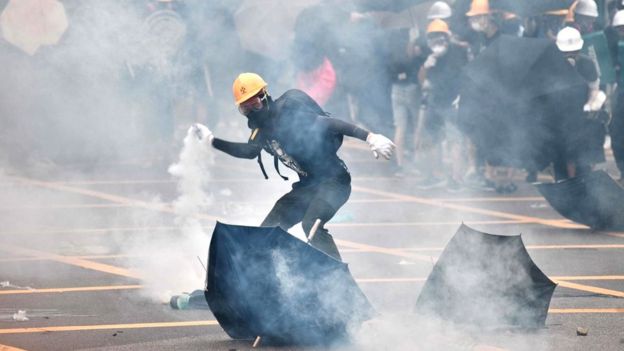
Protester throwing a tear gas can back at the policeImage copyright AFP
Image caption The protests have often escalated into violent clashes

That means two things for 1 October: official celebrations in the territory are being toned down to avoid clashes – the annual fireworks display has been cancelled – while at the same time, activists are planning to step up their protests.

On Sunday 29 September, a “Global Anti Totalitarianism March” is scheduled to take place at various locations around the world in support of Hong Kong.

On 1 October itself, a march in central Hong Kong is planned with everyone asked to wear black.

If the past weeks’ demonstrations are anything to go by, the smiles and celebrations in Beijing will be competing for media space with pictures of tear gas and angry young protesters in Hong Kong.

Source: The BBC
10/08/2019

Typhoon in eastern China causes landslide, killing 18 people

BEIJING (Reuters) – Eighteen people were killed and 14 were missing in eastern China on Saturday in a landslide triggered by a major typhoon, which caused widespread transport disruptions and the evacuation of more than one million people, state broadcaster CCTV reported.

Typhoon Lekima made landfall early on Saturday in the eastern province of Zhejiang with maximum winds of 187 km (116 miles) per hour, although it had weakened from its earlier designation as a “super” typhoon, the official Xinhua news agency reported.

Thousands of flights were cancelled in eastern China, according to the country’s aviation regulator, with most flights into and out of Shanghai’s two major airports cancelled on Saturday afternoon, their websites showed.

China’s weather bureau on Saturday issued an orange alert, its second highest, after posting a red alert on Friday, when the storm forced flight cancellations in Taiwan and shut markets and businesses on the island.

The deadly landslide occurred about 130 km north of the coastal city of Wenzhou, when a natural dam collapsed in an area deluged with 160 millimetres (6.3 inches) of rain within three hours, CCTV reported.

The storm was moving northward at 15 kph and was gradually weakening, Xinhua reported, citing the weather bureau.

High winds and heavy rains battered the financial hub of Shanghai on Saturday afternoon, and Shanghai Disneyland was shut for the day.

Nearly 200 hundred trains through the city of Jinan in Shandong province had been suspended until Monday, Xinhua reported.

More than 250,000 residents in Shanghai and 800,000 in Zhejiang province had been evacuated due to the typhoon, and 2.72 million households in Zhejiang had power blackouts as strong wind and rain downed electricity transmission lines, state media reported.

Some 200 houses in six cities in Zhejiang had collapsed, and 66,300 hectares (163,830 acres) of farmland had been destroyed, CCTV said.

The storm was predicted to reach Jiangsu province by the early hours of Sunday and veer over the Yellow Sea before continuing north and making landfall again in Shandong province, CCTV said.

Coastal businesses in Zhejiang were shut and the Ministry of Emergency Management warned of potential risk of fire, explosions and toxic gas leaks at chemical parks and oil refineries.

Source: Reuters

09/08/2019

China on red alert as Typhoon Lekima bears down on east coast

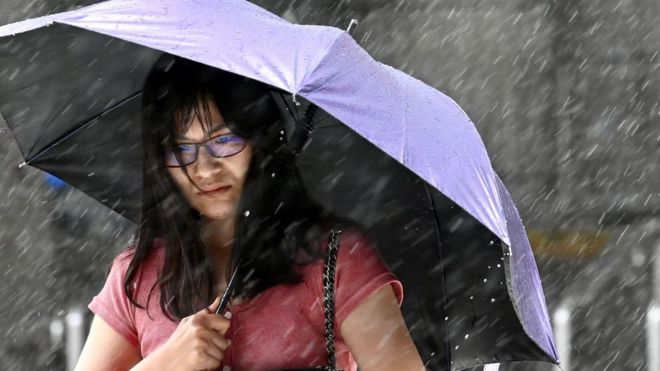
A woman shields herself with an umbrella as she walks in New Taipei City in rain brought by Typhoon Lekima as it passes northeastern Taiwan on August 9, 2019Image copyright AFP
Image caption Lekima has brought heavy rain to Taiwan

Chinese authorities have declared a red alert as a powerful typhoon heads towards the eastern coast.

Typhoon Lekima is currently battering Taiwan with winds of more than 190km/h (120mph) and is due to make landfall in China’s Zhejiang province on Saturday.

Emergency teams have been deployed to the region to guide relief work, China’s emergency ministry said.

Thousands of people further up the coast in Shanghai have been warned to prepare to evacuate.

Lekima, which is the ninth typhoon so far this year, strengthened into a super typhoon late on Wednesday, but Taiwanese authorities have since downgraded it to a regular typhoon.

Flood warnings have been issued for eastern sections of China’s Yangtze River and the Yellow River until Wednesday. The provinces of Jiangsu and Shandong are also on alert.

Cruise liners have been told to delay their arrival in Shanghai and some train services have been suspended over the weekend.

Beijing has also cancelled some trains heading to and from the Yangtze delta region.

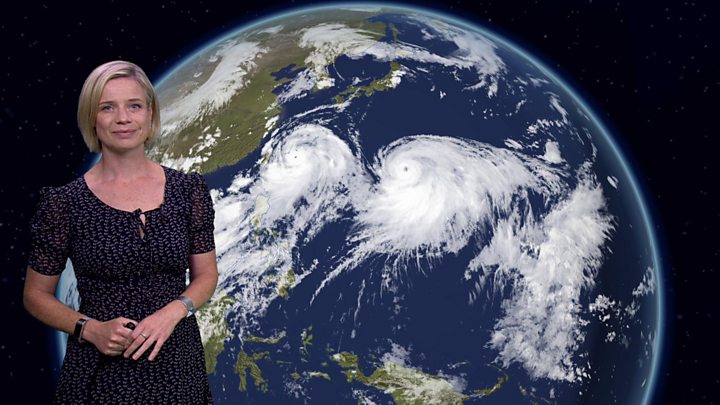
Lekima is one of two typhoons in the western Pacific at the moment. Further east, Typhoon Krosa is spreading heavy rain across the Northern Mariana Islands and Guam. It is moving north-west and could strike Japan some time next week, forecasters said.

Media caption BBC Weather’s Sarah Keith-Lucas on typhoons Lekima and Krosa

Lekima was passing the north of Taiwan on Friday, causing flight cancellations and the closures of schools and offices.

Power was cut to more than 40,000 homes and the island’s high speed rail service was suspended north of the city of Taichung, local media reported.

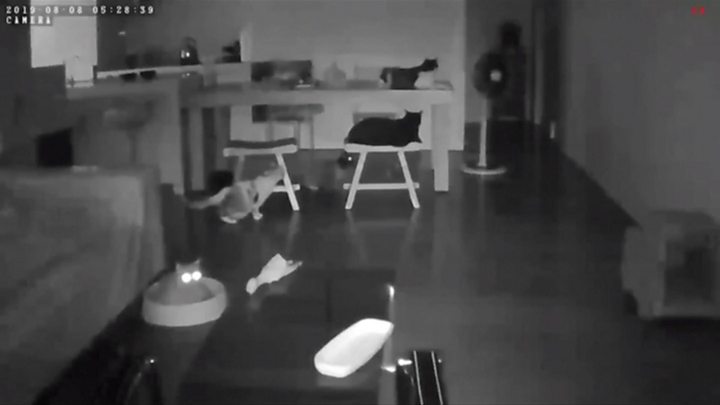
The huge storm came a day after eastern Taiwan was rattled by a 6.0 magnitude earthquake. Experts said the risks of landslides triggered by the tremor were made more likely by the typhoon dumping up to 900mm (35 inches) of rain on Taiwan’s northern mountains.

Media caption The 6.0 earthquake in Taiwan was caught on cat cam

Lekima also brought heavy rain and high winds to south-west Japan on Friday, cutting power to about 14,000 homes, broadcaster NHK reported.

China’s weather bureau said Lekima was expected to have weakened further by the time it made landfall. The country has a four-stage colour-coded warning system, with red representing the most severe weather.

Source: The BBC

24/02/2019

North Korea’s Kim on his way by train to summit with Trump in Vietnam

SEOUL/HANOI (Reuters) – North Korean leader Kim Jong Un made his way across China by train on Sunday, media reported, bound for a high-stakes second nuclear summit with U.S. President Donald Trump in Vietnam’s capital of Hanoi.

Few details of Kim’s trip have been announced but he left Pyongyang by train on Saturday afternoon for the Feb. 27-28 summit accompanied by senior North Korean officials as well as his influential sister, North Korea’s state media reported.

Trump and Kim will meet in Hanoi eight months after their historic summit in Singapore, the first between a sitting U.S. president and a North Korean leader, where they pledged to work towards the complete denuclearisation of the Korean peninsula.

With little progress since then, the two leaders are expected to focus on what elements of North Korea’s nuclear programme it might begin to give up, in exchange for U.S. concessions.

In rare, revealing coverage of Kim’s travel, while it is still going on, the North’s Rodong Sinmun newspaper featured photographs of him getting a red-carpet send-off in Pyongyang and waving from a train carriage door while holding a cigarette.


He was accompanied by top officials also involved in the Singapore summit, including Kim Yong Chol, a former spy chief and Kim’s top envoy in negotiations with the United States, as well as senior party aide Ri Su Yong, Foreign Minister Ri Yong Ho and defence chief No Kwang Chol.

The North Korean leader’s sister, Kim Yo Jong, who acted as a close aide in Singapore, is again part of the delegation, the North’s KCNA news agency reported. It made no mention of his wife, Ri Sol Ju.

The extensive coverage in the secretive North’s official media was a contrast to the limited reporting that has traditionally prevailed during his foreign trips.

Other senior officials, such as his de facto chief of staff Kim Chang Son and Kim Hyok Chol, negotiations counterpart to U.S. envoy Stephen Biegun, were already in Hanoi to prepare for the summit.

With scant progress since the June summit, the two leaders are likely to try to build on their personal connection to push things forward in Hanoi, even if only incrementally, analysts said.

Both sides are under pressure to forge more specific agreements than were reached in Singapore, which critics, especially in the United States, said lacked detail.


“They will not make an agreement which breaks up the current flow of diplomacy. (President Trump) has mentioned that they’ll meet again; even if there is a low-level agreement, they will seek to keep things moving,” said Shin Beom-chul, a senior fellow at the Asan Institute for Policy Studies.

LEARNING FROM VIETNAM

The Trump administration has pressed the North to give up its nuclear weapons programme, which, combined with its missile capabilities, poses a threat to the United States, before it can expect any concessions.

North Korea wants an easing of punishing U.S.-led sanctions, security guarantees and a formal end of the 1950-1953 Korean War, which ended in a truce, not a treaty.

Few details of summit arrangements have been released.

Some lamp posts on Hanoi’s tree-lined streets are decked with North Korean, U.S. and Vietnamese flags fluttering above a handshake design, and security has been stepped up at locations that could be the summit venue, or where the leaders might stay.

It could take Kim at least 2-1/2 days to travel to Vietnam by train.

Some carriages of a green train were spotted at Beijing’s station on Sunday, but it was not confirmed it was Kim’s.

South Korea’s Yonhap news agency said Kim’s train had passed through a station in China’s port city of Tianjin, southeast of Beijing, at around 1 p.m. (0500 GMT).

China has given no details of his trip. Its foreign ministry did not immediately respond to a request for comment.

Two top North Korean officials who were not in Singapore but will be in Hanoi are Kim Phyong Hae and O Su Yong, vice chairmen of the party’s Central Committee, respectively in charge of personnel management and industrial affairs, KCNA reported.

O is a former minister of electronics and vice minister of metals and machine building. He might try to learn about Vietnam’s development of manufacturing, analysts said.

Kim Jong Un may tour some economic facilities while in Vietnam.

Vietnam, like North Korea, fought a war against the United States and keeps tight control over its people and economy. It has been touted as a model for North Korea’s development.

Vietnamese media reported that a North Korean cargo plane arrived on Sunday carrying personnel who appeared to be Kim’s security guards and state media workers. They were driven under police escort to a downtown hotel.

Source: Reuters

14/02/2019

Sweden replaces China envoy in furore over dissident bookseller

STOCKHOLM (Reuters) – Sweden said on Thursday it had replaced its ambassador to China after her “incorrect” handling of unauthorized meetings intended to help free dissident bookseller Gui Minhai.

The Hong Kong-based, Swedish publisher of books critical of China’s communist leaders was abducted in Thailand in 2015 and later appeared in custody in mainland China.

His daughter Angela Gui said this week she had met ambassador Anna Lindstedt and two businessmen in Stockholm in January, where she was advised to keep quiet about her father’s case while negotiations were proceeding.

Sweden’s Foreign Ministry said that was not an official meeting, and Lindstedt had now returned to Sweden with an interim envoy sent to Beijing during an inquiry.

“Neither the Foreign Ministry nor the Foreign Minister were informed until after the event,” ministry spokesman Rasmus Eljanskog said in an emailed statement.

“As a consequence of the incorrect manner in which the said meetings were handled, we are now conducting an internal investigation.”

Gui, 54, became a Swedish citizen after studying there in the 1980s. After the abduction, he was released in October 2017, but his whereabouts were unclear until January last year when his daughter said he was seized by Chinese agents on a Beijing-bound train in the presence of Swedish diplomats.

China later confirmed it had detained him again.

In her blog, Angela Gui said Lindstedt invited her to Stockholm to meet two businessmen who could help secure her father’s release.

“OUTRAGEOUS SCANDAL”

“The businessman said, ‘you care about Anna (Lindstedt), right? If you keep talking to the media it’ll damage her career. You don’t want her to come to any harm, do you?’”, she said in the post on blog portal Medium.

“In order for this to happen (negotiations), I was told I needed to be quiet. I wasn’t to tell anyone about this, or say anything publicly about the case,” she added.

“I’m not going to be quiet in exchange for … an arbitrary promise that my father ‘might’ be released. Threats, verbal abuse, bribes, or flattery won’t change that.”

China’s Foreign Ministry declined comment, with spokeswoman Hua Chunying saying she knew nothing about Gui’s latest situation. On its website, China’s embassy in Stockholm said it had not authorized anyone to “engage” with Gui’s daughter.

“The Chinese side handles the Gui Minhai case in accordance with law and legal procedure,” it said.

Gui’s original abduction – along with four others in the Hong Kong book trade – fed worries about interference from Beijing despite guarantees of wide-ranging freedoms for the former British colony which returned to Chinese rule in 1997.

The four others have since returned to Hong Kong. The United States and European Union have urged Gui’s release.

Sweden said it was continuing to seek Gui’s freedom, as Lindstedt faced scathing criticism for what the leader of Sweden’s Left Party called an “outrageous scandal”.

“A Swedish ambassador has done the bidding of a dictatorship and tried to silence the daughter of a Swedish political prisoner in China,” Jonas Sjostedt told local TV.

“I don’t think we have seen a worse scandal in Swedish foreign administration for decades.”

Lindstedt could not immediately be reached for comment.

Source: Reuters

04/01/2019

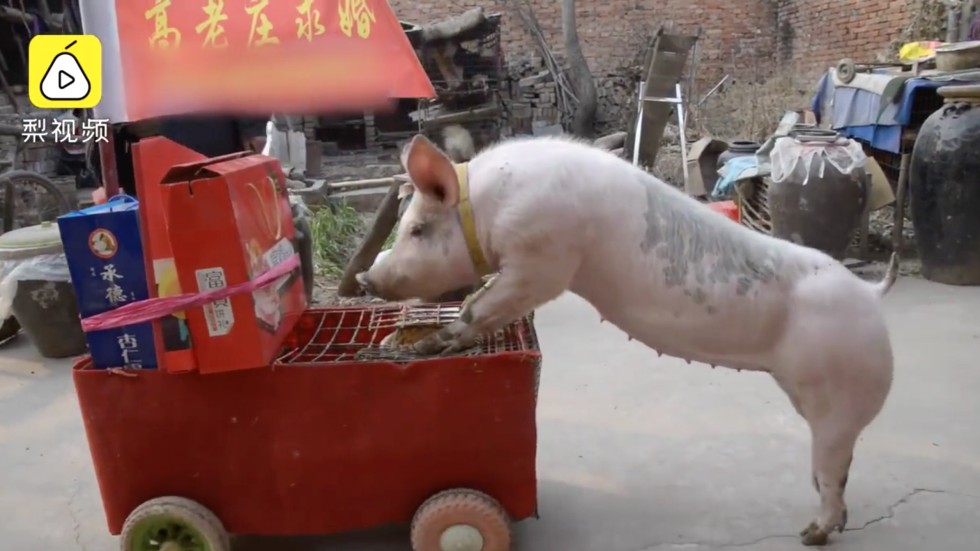
Is this China’s cleverest pig? Farmer trains porker to pull wedding carts

  • Wang Dingxuan has been training animals for past 17 years
  • 75-year-old mother even uses his favourite pig as a private taxi
PUBLISHED : Friday, 04 January, 2019, 4:08pm
UPDATED : Friday, 04 January, 2019, 4:08pm

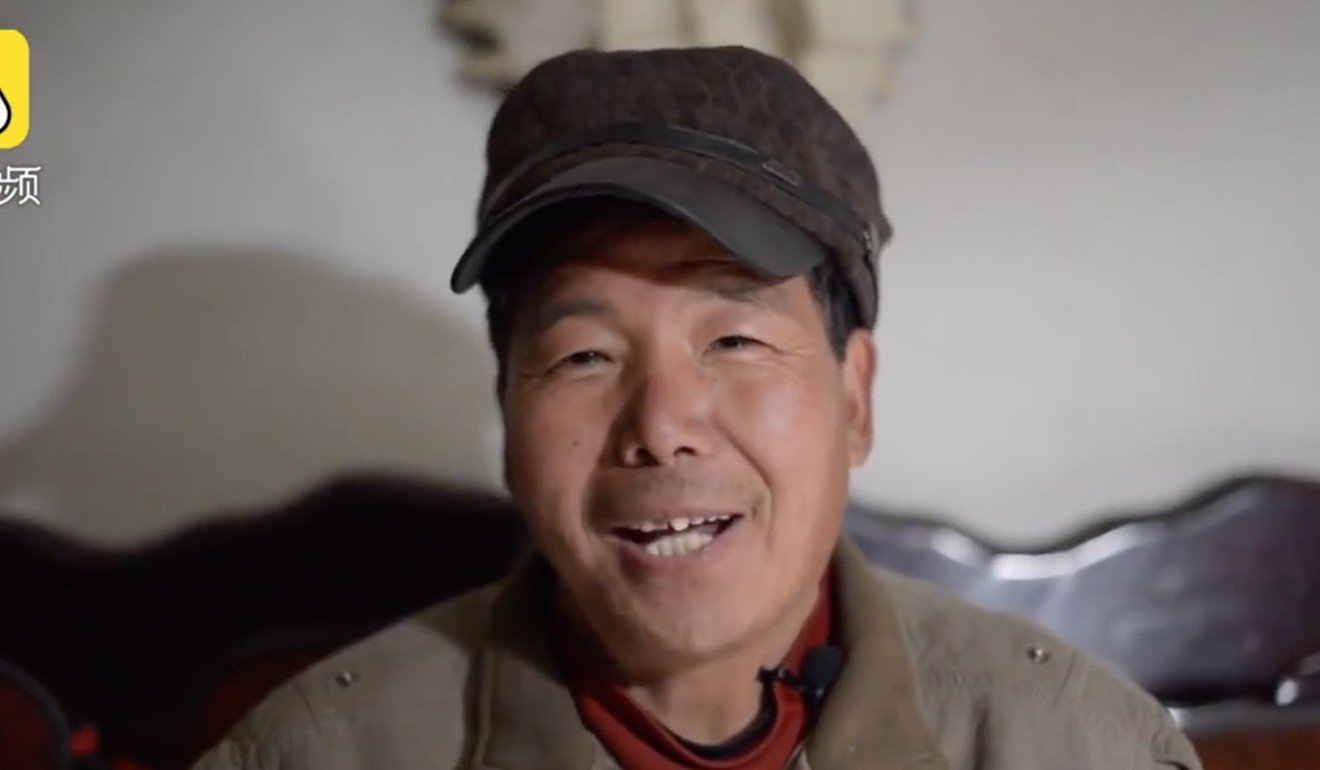
Wang Dingxuan, 54, said his star performer was a pig that he had trained to jump over hurdles and pull wedding carts – in return for a handful of treats.

Over the years, Wang has built up a strong bond with his animals, he said in an interview published on Pearvideo.com.

“I let the pig live in my house,” he said. “We’ve developed a close relationship.”

The farmer, from the city of Yanshi in Henan province, said he had always loved animals and decided to start training them after seeing a dog perform tricks on a Western television show.


After practising for several years, Wang set up the Yanshi City Happy Everyday Pet Performance Group in 2007.

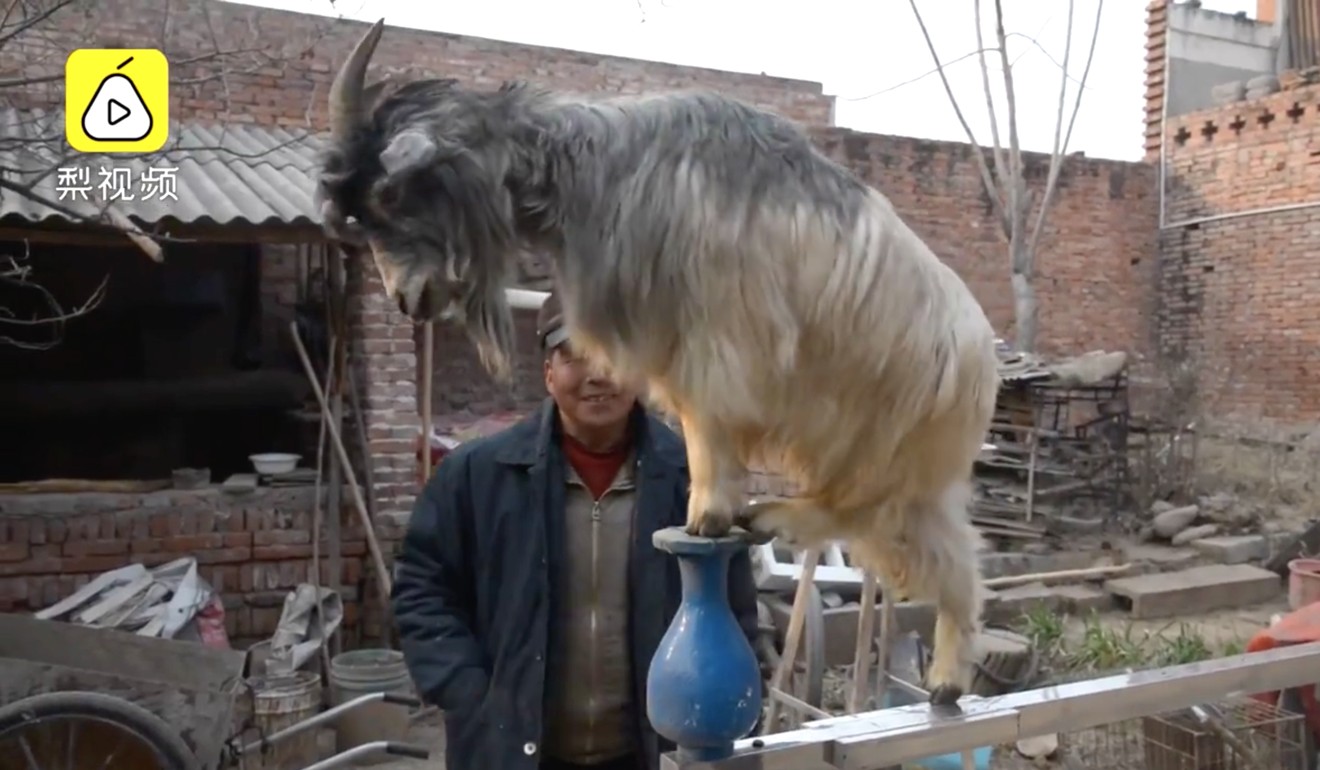
The show features a number of animals, including a pig, dog, goat and pigeon. Footage of a goat walking along a narrow plank became a hit on social media.

“A man from Shandong saw my animals and wanted to buy my pig for more than 10,000 yuan (US$1,450),” Wang said. “I turned him down, but said we were willing to perform for him.”

Although he is now a big hit, Wang said his family was not supportive in the early days.

“They said I should be working in the daytime rather than playing with my animals,” he said. “So I trained my animals at night.”

His persistence worked, and his 75-year-old mother can now often be seen riding the pig on the streets of Yanshi.

Law of Unintended Consequences

continuously updated blog about China & India

ChiaHou's Book Reviews

continuously updated blog about China & India

What's wrong with the world; and its economy

continuously updated blog about China & India