Archive for ‘treatment’

15/03/2020

Temporary hospitals play key role in curbing virus spread in Wuhan: expert

WUHAN, March 14 (Xinhua) — Temporary treating centers converted from public facilities have played a key role in curbing the spread of the novel coronavirus in Wuhan, the central Chinese city at the epicenter of the epidemic outbreak, a medical expert said.

The experience in setting up temporary hospitals in Wuhan should be drawn on in the future and could help other countries fight the pandemic of COVID-19, Wang Chen, a respiratory disease specialist and vice president of the Chinese Academy of Engineering, told Xinhua in a recent interview.

The hospitals were converted from public venues such as exhibition centers and gymnasiums in early February in an effort to treat patients with mild symptoms and isolate the source of infections amid strained medical resources.

Over more than a month, the 16 temporary hospitals have received more than 12,000 patients until the last two of them were shut down Tuesday as the city sees more patients recover and a sharp drop in the number of new infection cases, according to Wang.

The temporary hospitals were set up in Wuhan at the grimmest moment of its fight against the virus, when medical institutions were overwhelmed by an influx of patients and over 10,000 infected patients were unable to receive proper medical treatment, Wang said.

Under the principle of “leaving no patients unattended” established by Chinese central authorities, these hospitals have performed three major functions — isolation, treatment and monitoring, Wang said.

“These hospitals can keep patients under quarantine to block household and social contacts, offer proper treatments to patients with mild symptoms and monitor their conditions in case of exacerbation,” he added.

“One of the characteristics of COVID-19 is that most patients have mild symptoms, but they need proper treatments to avoid possible exacerbation. And the key is to keep them isolated to stem the spread of the virus,” said Wang, explaining why temporary hospitals are important to curbing the epidemic in Wuhan.

Source: Xinhua

09/03/2020

Majority of over 50,000 recovered COVID-19 patients in China receive TCM treatment: official

BEIJING, March 9 (Xinhua) — Most of the more than 50,000 coronavirus disease (COVID-19) patients in China who have recovered and been discharged from hospital received traditional Chinese medicine (TCM) treatment, a health official said Monday.

Yu Yanhong, deputy head of the National Administration of Traditional Chinese Medicine, told a press conference that the combination of TCM and Western medicine in COVID-19 treatment has been proved effective by the huge number of recovered patients.

TCM has been involved in the treatment of 74,603 confirmed COVID-19 cases nationwide, accounting for 92.5 percent of the total, according to official data.

Compared with those only treated with TCM or Western medicine, an expert team confirmed that the integrated treatment of TCM and Western medicine can more quickly improve the symptoms such as fever, cough and fatigue, as well as effectively reduce the chances of mild and regular symptoms developing into severe or critical ones, so as to improve the recovery rate and reduce the mortality rate.

TCM treatment focuses on improving the body’s natural defenses against an epidemic and its own ability to repair itself while maintaining the overall balance, Yu said.

TCM clinical treatment is personalized and targeted based on the differences in geography, climate and a patient’s physical condition, said Zeng Yixin, deputy director of the National Health Commission.

A circular issued by the commission also encouraged the promotion of effective TCM treatment plans at the community-level epidemic prevention and control, giving full play to the unique role of TCM.

Source: Xinhua

17/02/2020

Traditional Chinese medicine effective in COVID-19 treatment: official

BEIJING, Feb. 17 (Xinhua) — Traditional Chinese medicine (TCM) has been proven effective in curing patients of the novel coronavirus disease (COVID-19), a Chinese health official said Monday.

For example, a TCM decoction named “Qingfei Paidutang” has been used in treating 701 confirmed cases in 10 provinces, of which 130 have been cured and discharged, said Li Yu, an official with the National Administration of TCM.

Symptoms have disappeared in 51 cases and improved in 268, with another 212 remaining in stable condition, said Li, adding that the decoction was recommended to medical institutions nationwide on Feb. 6 after data analysis on 214 cases.

Li also shared the analysis and statistics cases with detailed clinical records, as 94.6 percent of the 112 patients restored to normal body temperature, and 80.6 percent of 214 patients stopped coughing after using the decoction for six days.

The data showed the decoction’s good clinical effect and treatment prospect on COVID-19, said Li.

The central government’s joint prevention and control mechanism on the situation has called for stronger cooperation between TCM and Western medicine in the prevention and treatment of infectious diseases such as COVID-19, requiring local authorities to promote the use of TCM in the whole process of diagnosis and treatment.

As of Monday, more than 3,100 medical personnel from over 630 TCM hospitals across the country have been sent to aid Hubei Province in the fight against the epidemic, said Jiang Jian, another official of the national administration.

TCM has been used in treating 60,107 confirmed cases in China, or 85.2 percent of the total, according to Jiang.

Source: Xinhua

05/09/2019

Chinese teenager who lost her hair from stress of chasing grades sparks debate about pressure on young people

  • Doctor who helped 13-year-old girl recover says demands on her to do well at school induced condition
  • Weibo poll reveals that 68 per cent of participants had hair loss in school
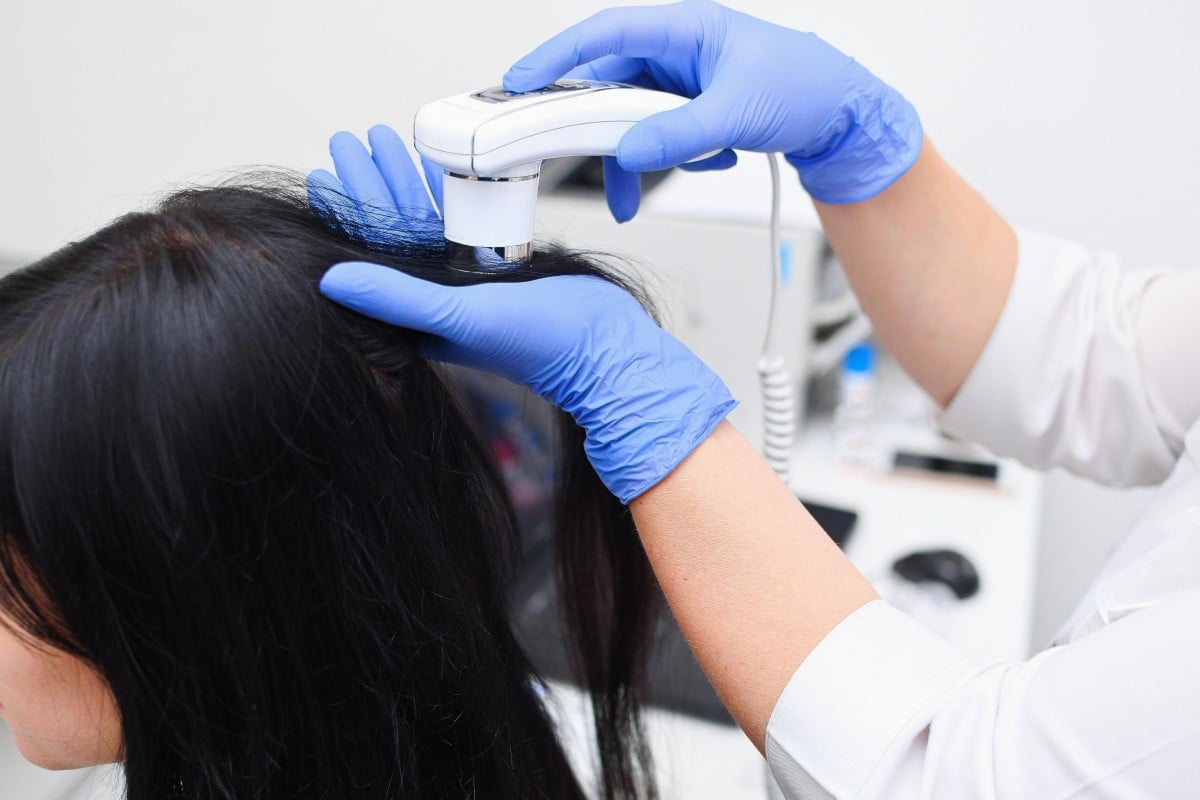
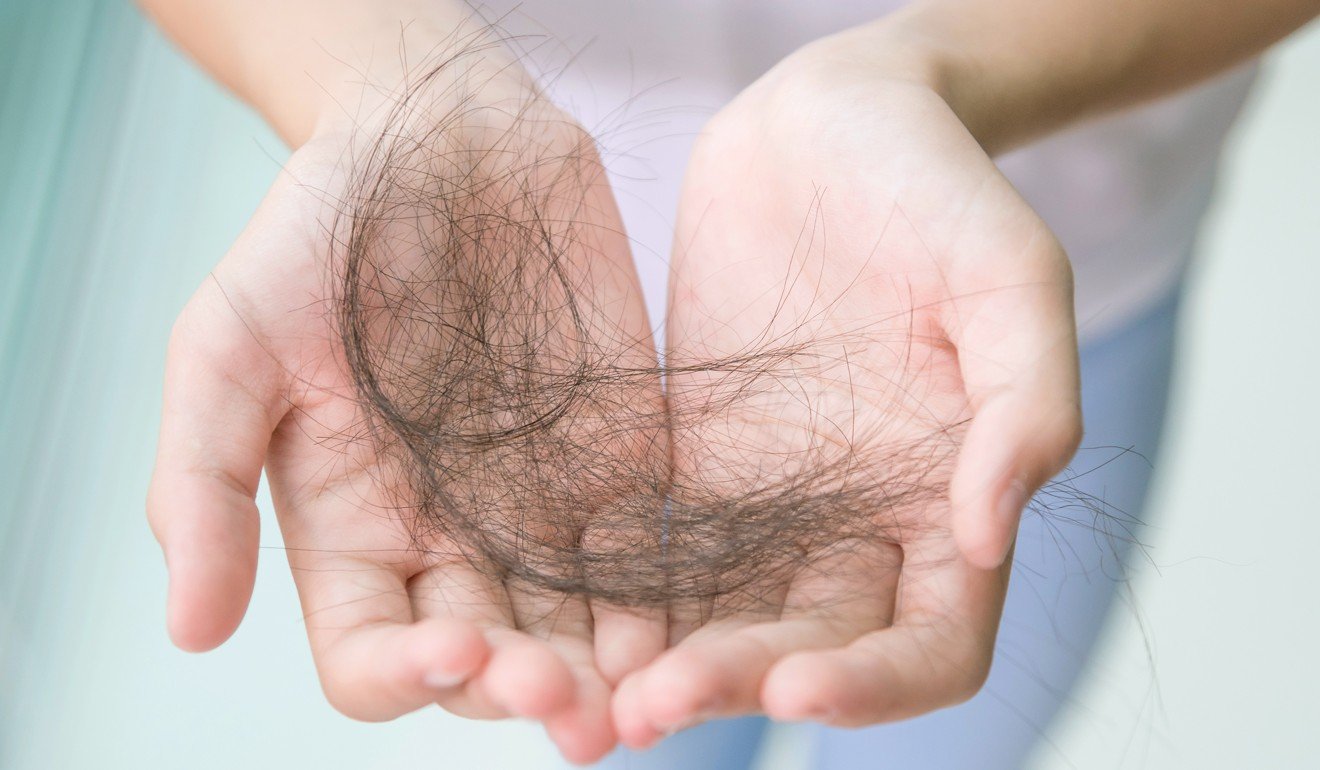
Studies and polls suggest stress leading to hair loss is a big health concern in China. Photo: Alamy

When the 13-year-old girl walked into the hospital in southern China around eight months ago, she was almost completely bald, and her eyebrows and eyelashes had gone.

“The patient came with a hat on and did not look very confident,” Shi Ge, a dermatologist at the Sixth Affiliated Hospital of Sun Yat-sen University in Guangzhou, told the Pear Video news portal.

The girl had done well in primary school but her grades dropped in middle school, Shi said.

Under parental pressure to do well, the girl pushed herself harder, but the stress resulted in severe hair loss.

With time and medical treatment, the teen’s hair grew back but her story left a lasting impression, raising awareness of the increasing number of young people in China seeking treatment for stress-induced hair loss, according to Chinese media reports.

Jia Lijun, a doctor at Shenzhen Traditional Chinese Medicine Hospital, told state-run Xinhua News Agency in May that aside from genetics, factors such as stress in work, study and life would result in endocrine imbalances which affected the cycle of hair growth.

And in January, a survey of 1,900 people by China Youth Daily found that 64.1 per cent of people aged between 18 and 35 said they had hair loss resulting from long and irregular working hours, insomnia, and mental stress.

Hits and myths: stress and hair loss
Shi said that an increasing number of young people had come to her for treatment of hair loss in recent years, and those working in information technology and white-collar jobs were the two biggest groups.

“They usually could not sleep well at night due to high pressure or had an irregular diet because of frequent business trips,” Shi said.

A Weibo poll on Wednesday revealed that 68 per cent out of 47,000 respondents said they had had serious hair loss when they were in school. About 22 per cent said they noticed after starting their careers, while only 5 per cent said it happened after they entered middle age.

More than half of the Chinese students who took part in a China Youth Daily survey said they had hair loss. Photo Shutterstock

Research published in 2017 by AliHealth, the health and medical unit of the Alibaba Group, found that 36.1 per cent of Chinese people born in the 1990s had hair loss, compared to the 38.5 per cent born in the 1980s. Alibaba is the parent company of the South China Morning Post.

The teenager’s experience sparked a heated discussion on Weibo, with users recounting similar cases and some voicing their panic.

“My niece’s hair was gone while she was in high school and has not recovered, even after she graduated from university. This makes her feel more and more inferior,” one user said.

Hong Kong’s schoolchildren are stressed out – and their parents are making matters worse

Another said: “I lost a small portion of my hair during the high school entrance exam, but that is already scary enough for a girl in her adolescence.”

“I had to quit my job and seek treatment,” said a third, who adding that he also suffered from very serious hair loss a few months ago because of high pressure.

Source: SCMP

26/01/2019

Huawei’s treatment by foreign countries ‘unfair and immoral’, China’s foreign minister say

  • Boycott of Chinese telecom giant’s products has ‘obvious political intentions’, Wang Yi says
  • Comments come as Britain’s Vodafone becomes latest Western firm to suspend purchases
PUBLISHED : Saturday, 26 January, 2019, 4:20pm
UPDATED : Saturday, 26 January, 2019, 4:20pm

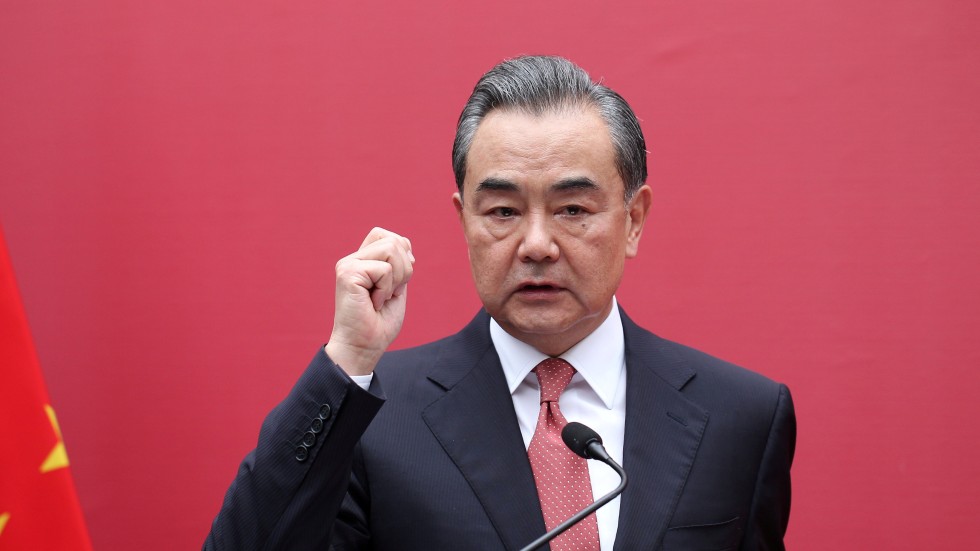
The use of state power to smear or discredit a legitimate business is “not only unfair but also immoral”, China’s Foreign Minister Wang Yi said in Rome on Friday when asked to comment on the recent problems faced by Huawei Technologies.

“Considering the obvious political intentions and manipulation behind it, it is even more unacceptable,” he said, without naming the Chinese telecom equipment giant.

“I believe that all countries should be vigilant and resist this unreasonable practice, and such bullying,” he told reporters from China’s state media at the end of a three-day trip to France and Italy, according to an article on the ministry’s website.

“Of course, every country is entitled to protect their right to maintain information security, but they cannot use security as an excuse to damage or even strangle legitimate business operations,” he said.

“Companies are just companies, and the survival and development of companies must ultimately be determined by market competition. What governments have to do is to provide them with a fair, just and transparent business environment.”

Wang’s comments came after Vodafone Group became the latest Western company to boycott Huawei products. The British telecom conglomerate said on Friday it had suspended its purchases of the Chinese firm’s equipment for the core of its wireless networks.

Huawei is the world’s largest telecom equipment supplier and has been the subject of intense international scrutiny since its chief financial officer Sabrina Meng Wanzhou was arrested in Canada on December 1, pending extradition to the United States.

The US has sought to persuade its allies, including Japan, Australia and New Zealand, not to use Huawei products in their fifth-generation wireless networks, on the grounds Beijing could use them for spying. The telecom giant has denied any such links to the Chinese government.

During his low-key European tour, Wang met French President Emmanuel Macron on Wednesday before attending a ceremony with his opposite number Jean-Yves Le Drian to mark the 55th anniversary of the two countries establishing diplomatic ties on Thursday.

Wang ended his trip on Friday with a meeting in Rome with Italian Prime Minister Giuseppe Conte.

Source: SCMP

25/01/2019

Alibaba slams U.S. treatment of Huawei, efforts to curb China’s rise

HONG KONG (Reuters) – A senior Alibaba executive slammed the United States’ treatment of China’s Huawei Technologies [HWT.UL] as “extremely unfair”, saying measures by the country to curb the firm’s access to their markets was “very politically motivated”.

Joe Tsai, the e-commerce giant’s executive vice-chairman, also sharply criticised what he called an attempt by the U.S. government to curb China’s rise via a trade war.

He struck an optimistic note about China’s economy, saying it remained fundamentally strong despite a slowdown, and added that stimulus such as tax cuts needed to be imposed to prop it up even as it battles U.S. efforts to dent its businesses.

U.S. President Donald Trump’s administration has not only slapped crippling tariffs on Chinese imports, it has also stepped up scrutiny of Chinese investments in the country and torpedoed many deals citing national security concerns.

Huawei, the world’s biggest network equipment maker, has been caught up in the crosshairs, with the United States alleging its products could be used by Beijing for espionage.

SPONSORED

Huawei has repeatedly denied the allegation.

“I think what the American government and together with the Five Eyes Alliance – what they’re trying to do with Huawei – is a bit unfair, there’s definitely a political agenda behind it,” Tsai said at a Reuters BreakingViews event in Hong Kong.

The United States and its allies, Australia and New Zealand, have restricted Huawei’s access to their markers, while Canada and the United Kingdom are reviewing whether to curb access.

Last month, Meng Wanzhou, Huawei’s finance chief, was arrested in Canada, sparking a diplomatic row between Canada and China. She faces extradition to the United States.

Tsai, a Canadian passport holder, said he hoped the relationship between Canada and China would improve.

“I love Canadians, they’re great,” Tsai joked when asked about Meng’s arrest, calling it a politically charged question.

“ANTI-CHINA PROBLEM”

Relations between Washington and Beijing have deteriorated rapidly amid a tit-for-tat escalation in tariffs that has roiled financial markets and raised fears over the impact on global supply chains and investment plans.

“President Trump may have started it focussing on the trade deficit itself … but over the course of the last nine months it was blown into a bigger anti-China problem,” Tsai said, adding the trade war has spurred anti-China sentiment.

“It worries everybody.”

Alibaba has been previously critical of the trade war as well, with founder Jack Ma calling the spat the “most stupid thing in the world.”

The company, which promised in 2017 to create a million U.S. jobs, backed out last year, blaming the trade war.

Tsai said U.S. regulators had made it very difficult for Alibaba to make investments in the country, adding that the company would look at other parts of the world for investment.

Just last year, a U.S. government panel rejected a bid by Ant Financial, which Ma owns together with Alibaba executives, to buy U.S. money transfer company MoneyGram International Inc on national security concerns.

Among the most high-profile Chinese deals to be scuttled under the Trump administration, the $1.2 billion deal’s failure was a major blow for Ma, who was looking to expand Ant’s footprint amid fierce competition back home from rival Tencent Holdings Ltd’s WeChat.

CHINA OPTIMISM

Brushing aside the pains of the trade war, Tsai said people were over worried about China’s economy. Chinese consumers are still fundamentally very strong and consumption in China is going to grow over the next 5-10 years, he said.

Comments from Tsai come at a time when China’s economic growth has slowed to its weakest pace in nearly three decades amid faltering domestic demand and bruising U.S. tariffs.

Growth is expected to ease further this year.

Tsai said Alibaba will continue to invest aggressively despite the uncertain business environment.

Asia’s second most valuable public company has been investing heavily in offline retail and rural e-commerce to win new customers as China’s urban market shows signs of saturation.

Law of Unintended Consequences

continuously updated blog about China & India

ChiaHou's Book Reviews

continuously updated blog about China & India

What's wrong with the world; and its economy

continuously updated blog about China & India