Chindia Alert: You’ll be Living in their World Very Soon
aims to alert you to the threats and opportunities that China and India present. China and India require serious attention; case of ‘hidden dragon and crouching tiger’.
Without this attention, governments, businesses and, indeed, individuals may find themselves at a great disadvantage sooner rather than later.
The POSTs (front webpages) are mainly 'cuttings' from reliable sources, updated continuously.
The PAGEs (see Tabs, above) attempt to make the information more meaningful by putting some structure to the information we have researched and assembled since 2006.
Leo Tolstoy’s War and Peace is in the news in India after a judge asked an activist to explain why he had a book “about war in another country”.
Vernon Gonsalves had appeared in the high court in Mumbai city on Wednesday for a hearing on his bail plea.
The judge’s question sparked a flurry of tweets, with users both outraged and bemused by it.
Five activists, including Mr Gonsalves, were arrested in August 2018 in connection with caste-based violence.
Police raided and searched their homes at the time and submitted a list of books, documents and other belongings to the court. The public prosecutor told the court that police had found “incriminating evidence” in Mr Gonsalves’ home, including “books and CDs with objectionable titles”.
“Why were you having these books and CDs at your home? You will have to explain this to the court,” the judge told Mr Gonsalves.
Police said that all five activists incited Dalits (formerly untouchables) at a large public rally on 31 December 2017, leading to violent clashes that left one person dead. They accused them of “radicalising youth” and taking part in “unlawful activities” which led to violence and showed “intolerance to the present political system”.
The arrests had been criticised by many at the time who saw them as an attack on free speech, and even a “witch hunt” against those who challenged the governing Bharatiya Janata Party (BJP).
So the judge’s question quickly made news and War and Peace was soon trending on Twitter.
The tweets ranged from jokes to shock over the state of India’s judiciary.
Others wondered how they would fare in a courtroom given what’s on their bookshelf, and some have issued a call out asking people to share books from their own “subversive” collection.
City’s richest person was ‘very pleased’ to have bumped into group of youngsters in Hokkaido, mother says on social media
Li has a personal fortune of US$31.7 billion and is known for his charitable acts
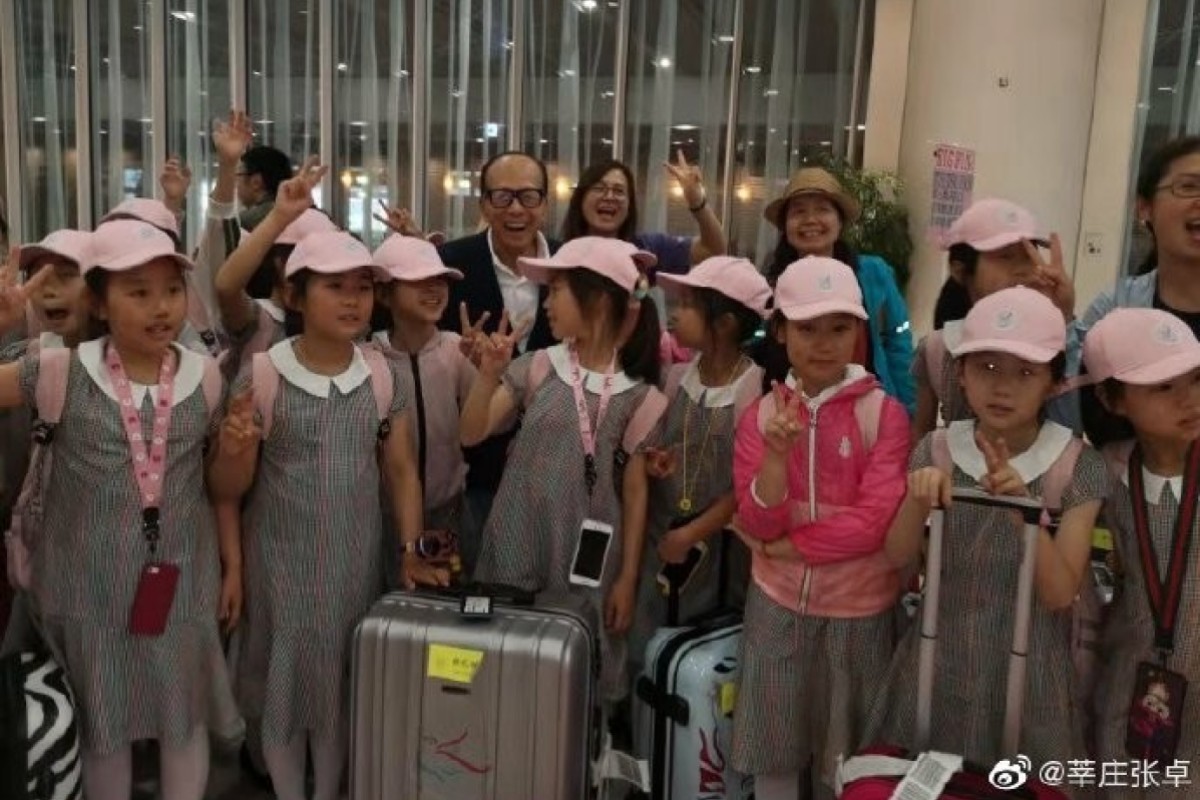
The youngsters from Shanghai got a wonderful surprise when they met billionaire Li Ka-shing at an airport in Japan. Photo: Weibo
Christmas came early for a group of children from Shanghai on Tuesday when they met Hong Kong billionaire Li Ka-shing at an airport in Japan while en route to a dance competition and he offered to pay for their trip … and buy them each a gift.
The 45 youngsters and their teachers from the Little Pigeon Dancing Group in the east China metropolis were passing through New Chitose Airport in Hokkaido, the northernmost of Japan’s main islands, when the serendipitous meeting happened, according to social media posts.
“The children bumped into Mr Li Ka-shing at the airport, who looked very pleased and volunteered to take pictures with the children,” Zhang Zhuo wrote on Weibo – China’s Twitter-like platform – on Thursday, adding that she was the mother of one of the dancers.
“Today a staff member from the Li Ka Shing Foundation contacted the dance group and offered to sponsor the trip to Japan,” she said. “The children shot a video to wish him good health,” she said.
Li met the youngsters from the Little Pigeon Dancing Group in Hokkaido. Photo: Weibo
One of the dance teachers wrote on Weibo that Li was “so pleased after seeing the children at the airport that he decided to sponsor for the trip”.
“So rich and generous, charitable and loving,” she said.
It was not clear exactly how much Li donated, but based on a post by another of the teachers, the cost of the trip was 18,840 yuan (US$2,700) per child, so it would appear to have been in excess of US$120,000.
As part of the offer, the foundation said also that the children should treat themselves to a gift.
Zhang said her daughter treated herself to an eraser, as it was something she wanted to buy before the trip.
“It is not about how expensive the gift is. It’s happiness that counts. We must know to be grateful and moderate,” she wrote.
Li’s influence at Shantou University under threat
Born in 1928 near Shantou in south China’s Guangdong province, Li moved to Hong Kong as a child. According to the latest Forbes list he is richest person in Hong Kong and 28th richest in the world, with a personal fortune of US$31.7 billion.
In 1981 he helped to establish Shantou University and since then the Li Ka Shing Foundation has donated more than 10 billion yuan to support its development.
Last month, the university announced that starting this autumn, for the next four years all new intakes will have the entire cost of their university education paid for by the foundation – a donation of about 100 million yuan a year.
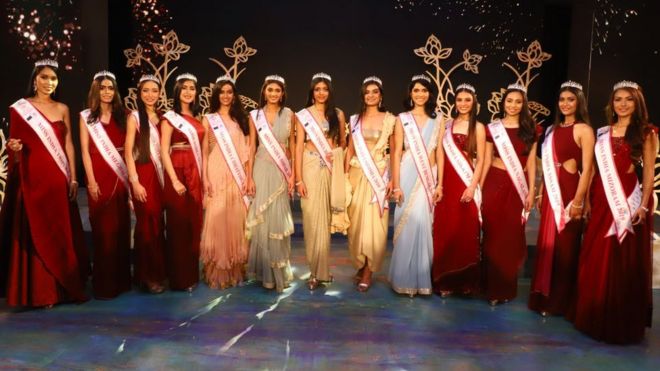
Image copyright GETTY IMAGESImage caption Critics say many participants in this year’s beauty pageant look similar
It is the contest that kick-started Bollywood superstar Priyanka Chopra’s career, so it is unsurprising that this year’s Miss India finalists have such wide smiles in their publicity shots.
After all, this is a competition with the power to change lives.
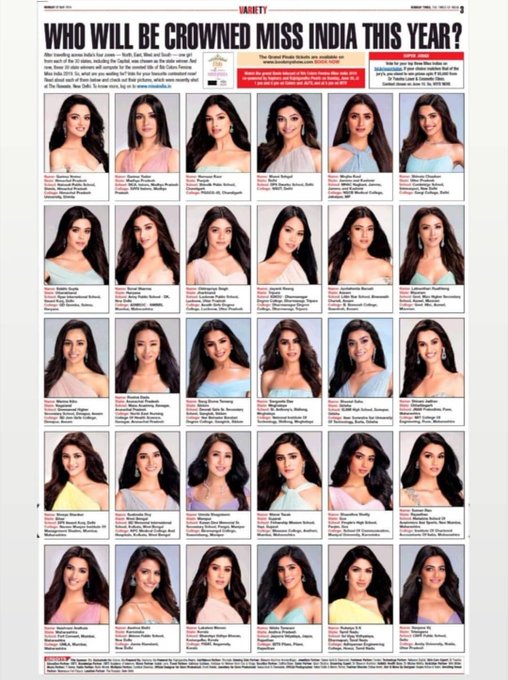
But instead of being able to enjoy their success, they have found themselves at the centre of a storm over a photo collage which, critics say, suggests the organisers are obsessed with fair skin.
The collage published in the Times of India newspaper – which belongs to the group that organises the annual beauty pageant – depicts 30 headshots of beautiful women.
But when a Twitter user shared it and posed a question: “What is wrong with this picture?” it began to gain traction.
With their tame, glossy, shoulder-length hair and a skin tone that is virtually identical, some quipped that they all looked the same. Others wondered out loud – albeit as a joke – if in fact they were all the same person.
As the picture gained traction on Twitter, critics made the point that while there was nothing wrong with the image of the women themselves, the lack of diversity in skin colour has once again highlighted India’s obsession with being fair and lovely.
As social media chatter grew, we tried to get in touch with the organisers but there has been no response so far.
Beauty pageants have been serious business in India since the mid-1990s. The country has produced several famous Miss Indias, like Aishwarya Rai, Sushmita Sen and Ms Chopra, who also won global titles. Many pageant winners have also gone on to have lucrative Bollywood careers.
Over the years, institutions that train young women aspiring to participate in beauty pageants have mushroomed across the country.
But again, many of their biggest successes have been women who are light-skinned.
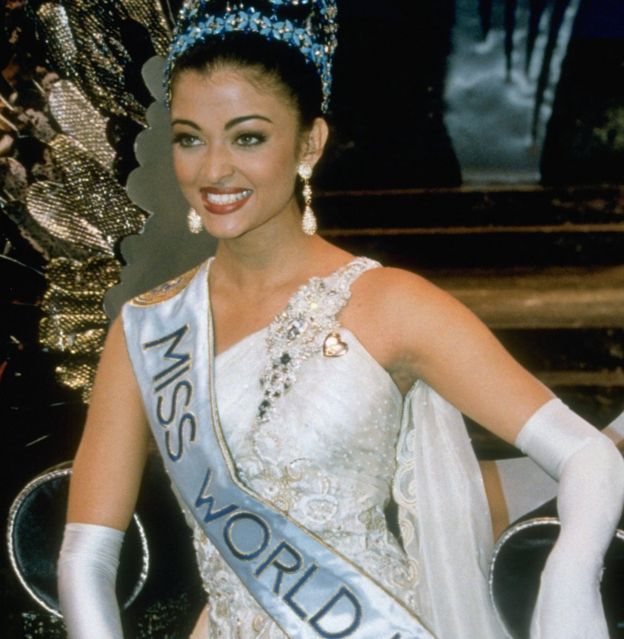
Image copyright GETTY IMAGESImage caption Aishwarya Rai soon after she was crowned Miss World 1994
This is hardly surprising.
India’s obsession with fairness, especially when it comes to women, is well known and many regard fair skin as being superior to darker tones.
It has always been accepted for instance, that fairer is better in the marriage market.
And ever since the 1970s, when Fair and Lovely – India’s first fairness cream – was introduced, skin whitening cosmetics have been among the highest selling in the country and, over the years, top Bollywood actors and actresses have appeared in advertisements to endorse them.
Commercials for such creams and gels promised not just fair skin but also peddled them as means to get a glamorous job, find love, or get married.
And pageants like this, which favour a particular type of skin tone, only serve to perpetuate that stereotype.
In 2005, some bright spark decided that it was not just women who needed fairer skin, so along came India’s first fairness cream for men – Fair and Handsome.
Endorsed by Bollywood superstar Shah Rukh Khan no less, it soon became a huge success.
But this has not stopped the flood of new creams and gels that claim to lighten everything from armpit hair to – hold your breath – female genitalia.
Their popularity in India can be gauged from the fact that fairness creams and bleaches sell for hundreds of millions of dollars every year and, according to one estimate, the market for women’s fairness products is expected to be 50bn rupees ($716m; £566m) by 2023.
The defenders of skin whitening products say it’s a matter of personal choice, that if women can use lipstick to make their lips redder, then what’s the big deal about using creams or gels to appear fairer?
It may sound logical, but campaigners point out that this obsession with fair skin is grossly unfair – the “superiority” of light skin is subtly, but constantly, reinforced and that perpetuates societal prejudice and hurts people with darker complexions who grow up with low self-confidence. It also impacts their personal and professional success, they say.
We’ve heard models with darker skin colours say how they were overlooked for assignments and I can remember only a few darker-skinned Bollywood actresses in leading roles.
Image copyrightGETTY IMAGESImage captionBeauty pageants have been accused of favouring a particular skin tone
In 2014, the Advertising Standards Council of India (ASCI), a self-regulatory body of advertisers, issued a set of guidelines barring commercials from depicting people with darker skin colour as “unattractive, unhappy, depressed or concerned” and said that they should not be shown as being at a disadvantage when it came to “prospects of matrimony, jobs or promotions”.
The ads, however, continue to be made, even though they are a bit more discreet now compared to the earlier in-your-face sort of campaigns. Popular film actors and actresses also continue to endorse them.
But as I write this piece, a heart-warming piece of news is just being reported: South Indian actress Sai Pallavi has confirmed that she rejected a 20m rupee deal to appear in a fairness cream advertisement earlier this year.
“What am I going to do with the money I get from such an ad? I don’t have… big needs.
“I can say that the standards we have are wrong. This is the Indian colour. We can’t go to foreigners and ask them why they’re white.
“That’s their skin colour and this is ours,” she was quoted as saying.
Pallavi’s comments are being hailed as a breath of fresh air by commentators, especially as they are seen in context to the Miss India collage where all contestants look the same – whitewashed.
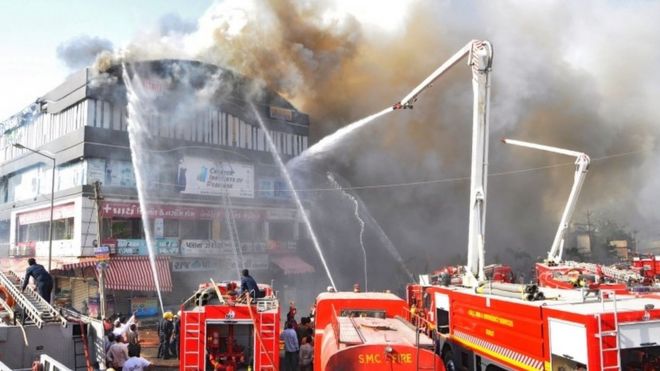
Image copyright GETTY IMAGESImage caption The fire ripped through tuition classes in the western state of Gujarat
At least 19 students have died in a fire at a school in India, officials said.
Students were seen jumping and falling from the building in the western city of Surat as black smoke billowed from windows.
Most of the victims were teenagers who had been studying at a tuition centre.
The initial cause of the fire was not immediately clear. Officials said the blaze spread through packed classrooms because of flammable roofing.
At least 20 others sustained serious injuries and were being treated in hospital in Gujarat.
“The students lost their life both because of the fire and jumping out of the building,” Deepak Sapthaley, a local fire official, told AFP.
All of the dead were aged below 20 years and many were trapped because the fire began near the staircase, Reuters reported.
Prime Minister Narendra Modi offered his condolences on Twitter and called for local authorities to provide assistance.
Narendra Modi
✔@narendramodi
Extremely anguished by the fire tragedy in Surat. My thoughts are with bereaved families. May the injured recover quickly. Have asked the Gujarat Government and local authorities to provide all possible assistance to those affected.
An inquiry into the incident has been ordered and a report is expected within three days, said the spokesman for the office of Gujarat Chief Minister Vijay Rupani.
Parent posts photos of son’s bruised bottom and it is claimed pupils are too scared to go to school
Education authority says teacher is under investigation
The education authority said the teacher was under investigation. Photo: Shutterstock
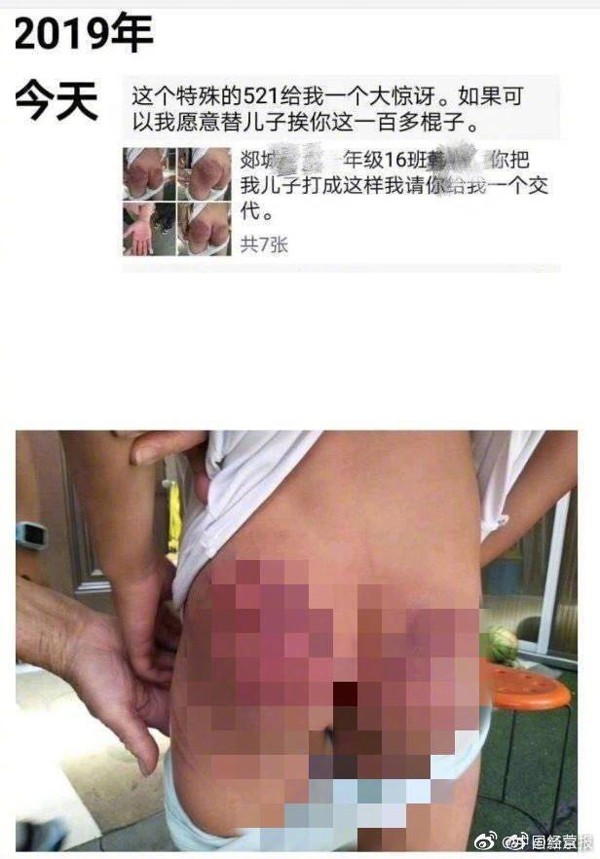
A primary school teacher in eastern China has been sacked and detained for hitting a young boy on the bottom with a stick over 100 times, education authorities have said.
The teacher, surnamed Han, was dismissed by No 2 Experimental Primary School in Tancheng county, Shandong, the county’s education and sports bureau announced.
The boy, a first-year pupil surnamed Wang, sustained minor injuries from Han’s corporal punishment, the bureau said on Thursday in a post on Weibo, China’s equivalent of Twitter.
One of the boy’s parents posted pictures of his red and swollen bottom on social media. “It’s a shock to me,” they wrote, according to news outlet The paper. “I wish it were possible to take my son’s place to be beaten 100 times.”
Chinese kindergarten teachers arrested after camera shows beatings
A Weibo post by someone who said they lived in the county claimed the teacher had beaten the boy in a classroom on Tuesday after telling him to bend over so that he could strike the boy’s hip more easily.
One of the boy’s parents posted pictures of his bruises on social media. Photo: Weibo
“Now the students in that class are too scared to go to school,” they wrote.
The paper reported that, at a meeting between school staff and the boy’s parents, the principal blamed Han but acknowledged that the school, too, had been responsible. The principal did not say whether the school would compensate the boy, according to the report.
Han’s actions were being investigated jointly by the local police and education authorities.
Kindergarten teacher accused of stepping on child’s face, abusing two others
It is not rare for allegations to surface about mainland China’s pupils being beaten by teachers for making mistakes at school.
Last December, a primary school teacher from Huating in Gansu province was suspended and investigated for allegedly using a plastic water pipe to beat a third-year pupil who could not remember English words correctly, leaving the boy’s arms swollen and bruised, according to The Beijing News.
A maths teacher in Chenzhou, in Hunan province, was sacked and investigated in 2017 for allegedly lashing the bottom of a 10-year-old boy with a bamboo whip for three consecutive days for not finishing his homework, news portal qq.com reported.
MUMBAI (Reuters) – Amazon.com faced a social media backlash in India on Thursday after toilet seat covers and other items emblazoned with images of Hindu gods were spotted on its website.
Thousands of Twitter users backed a call for a boycott of the U.S. retailer, making #BoycottAmazon India’s top trending topic on Twitter. Some tagged Indian Foreign Minister Sushma Swaraj, urging her to take action against the company.
Amazon, the world’s biggest online retailer, said it was removing the products from its online store.
“All sellers must follow our selling guidelines and those who do not will be subject to action including potential removal of their account,” the company said in a statement.
The episode is reminiscent of an incident in 2017 when the Indian government took Amazon to task after its Canadian website was spotted selling doormats resembling India’s flag.
Swaraj at the time threatened to rescind visas of Amazon employees if the doormats were not removed from its site.
Reuters found several listings of toilet seat covers, yoga mats, sneakers, rugs and other items depicting Hindu gods, or sacred Hindu symbols, on Amazon’s U.S. website.
Some of the items were no longer available for purchase.
“Until you hit these Hinduphobics Business hard they will keep on insulting your gods, your beliefs & your entire civilization,” tweeted Sumit Kandel, whose profile describes him as a film trade analyst.
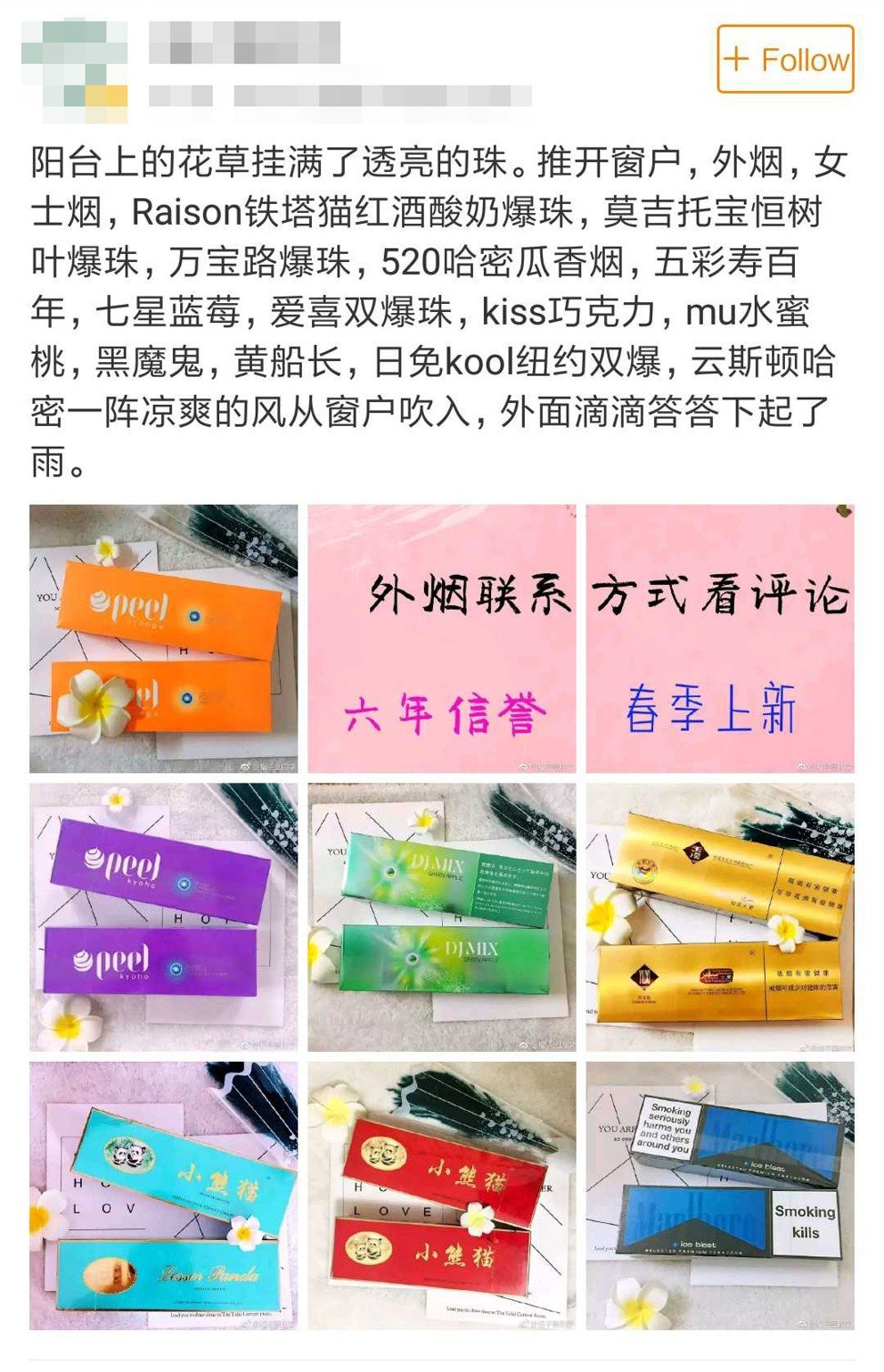
Health watchdog warns that tobacco products are widely available on both social media and online retailers
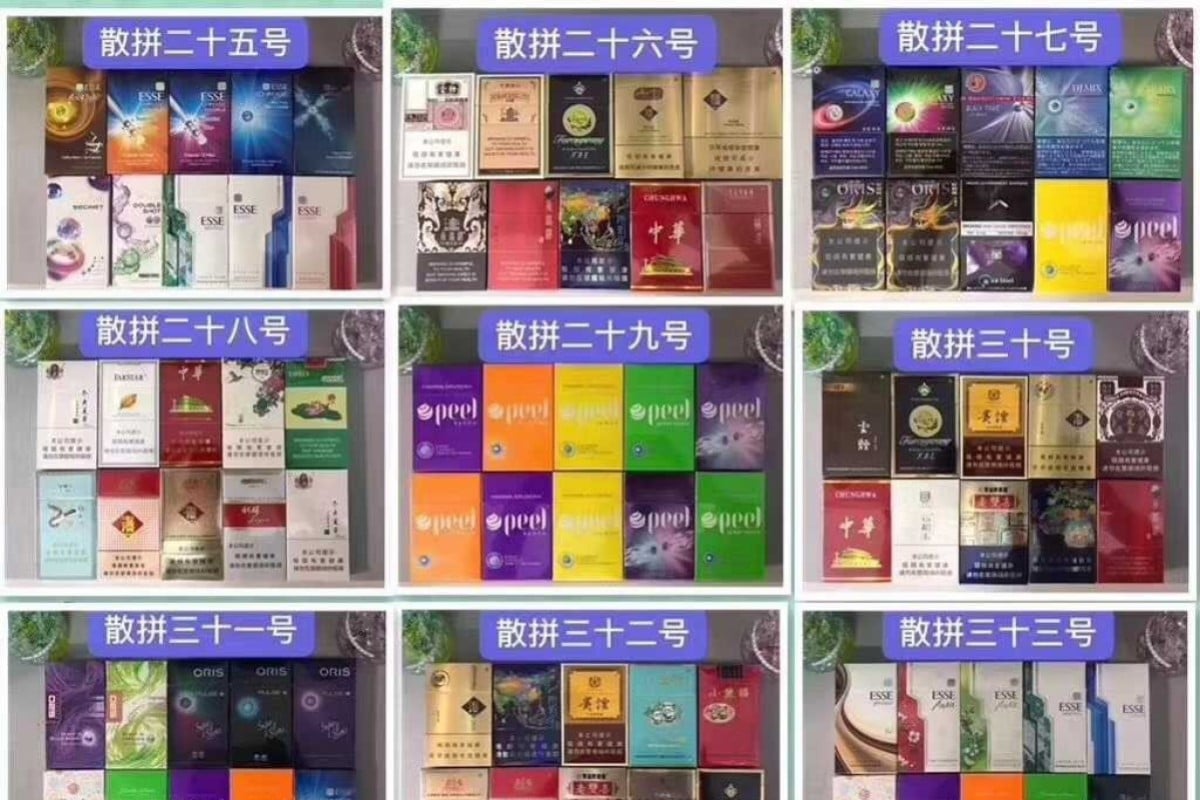
A tobacco seller’s advert posted on WeChat. Photo: Handout
Illegal tobacco trading is rife online in China both via social media and e-commerce platforms, a health watchdog has warned.
The Beijing Centre for Disease Prevention and Control released a report on Monday that said almost 52,000 advertisements and listings for tobacco products had been found on 14 social media and e-commerce platforms in the first half of last year.
“Compared with traditional advertising, tobacco promotion on the internet uses methods such as sponsored content, which is more discreet,” the report said.
China’s internet advertising regulations prohibit the online promotion of tobacco products.
Selling cigarettes online is illegal as the State Tobacco Monopoly Administration bans the sale of tobacco across provinces and strictly controls the production, sale and import of the product.
Screenshot from Weibo of an advertisement for imported cigarettes. Photo: Handout
The social network Weibo, China’s equivalent of Twitter, was highlighted as the platform where most of the banned promotion and selling were found, with nearly 43,000 adverts and listings, or 82 per cent of the total.
The South China Morning Post found that tobacco advertising and direct selling proliferates on Weibo, where searching for terms such as “cigarettes” and “women’s cigarettes” yielded almost 1,300 results, many of them offering WeChat and QQ contact information.
Five vendors found through Weibo offered various imported cigarettes such as Marlboro and South Korean brand Esse.
One seller claimed his wares were smuggled into China from places like the US. Another offered refunds for products that were confiscated, but only if they were bought for delivery within the same province.
A 10-packet carton of Kent cigarettes, an American brand, was selling for around 30 per cent less than the retail price in Beijing.
An extraordinary man’: China’s tobacco and orange king, entrepreneur Chu Shijian, dies aged 91
“A few days ago, cigarette sellers on Little Red Book began trending. People in different places have stopped. I’m still going, one step at a time,” a vendor calling herself “24 hours online cigarette hawker” wrote on her WeChat timeline on Wednesday.
She was referring to media coverage of Little Red Book the e-commerce platform popular with influencers selling lifestyle products.
Little Red Book, whose investors include Alibaba, the owner of the South China Morning Post, has pledged to remove as many as 95,000 adverts and listings for tobacco products found on the app on Tuesday in response to a report by newspaper Beijing Youth Daily.
Searches for “cigarettes” or “women’s cigarettes” no longer yielded results on Thursday.
“We are working hard to remove related content. We ask users to promptly report cases and work together to maintain order on the platform,” Weibo’s PR director Mao Taotao said.
Imported cigarettes on sale on Weibo. Photo: Handout
While advertising and online selling of tobacco are prohibited, e-cigarettes fall in a grey area. China’s tobacco agency has banned the sale of IQOS, a type of battery heated cigarette that delivers nicotine. However, regulations for non-nicotine vaporisers are less clear. These continue to be widely available online.
“In China, even toilet paper has standards. There are none for e-cigarettes,” Li Enze, the industrial law committee secretary for the Chinese Association on Tobacco Control, said.
“I think there needs to be a total ban on the sale of e-cigarettes until standards and regulations are set.”
E-cigarettes and vaporisers come in a variety of flavours and shapes to target women and young people, which poses a serious problem according to Li.
Under-18s can easily purchase vaporisers online and can be induced to smoking the real thing, he said.
Two sets of standards for e-cigarettes have been considered by the Standardisation Administration of China since 2017.
However, both were proposed by organisations associated with the state tobacco monopoly, which Li deemed a conflict of interest.
WASHINGTON (Reuters) – White House national security adviser John Bolton said on Monday Pakistan’s foreign minister has assured him Islamabad is committed to de-escalating tensions with India and dealing “firmly” with terrorists.
Bolton’s comments follow a Feb. 14 suicide bombing, claimed by Pakistan-based militants, which killed at least 40 Indian paramilitary police.
“Spoke with Pakistani FM (Shah Mehmood) Qureshi to encourage meaningful steps against JeM (Jaish-e-Mohammed) and other terrorist groups operating from Pakistan,” Bolton said on Twitter.
“The FM assured me that Pakistan would deal firmly with all terrorists and will continue steps to deescalate tensions with India,” Bolton added.
Pakistan, which denies Indian accusations of aiding militant groups, last week announced a crackdown against all proscribed outfits.
Pakistan’s foreign ministry late on Monday said Qureshi informed Bolton “about the de-escalatory measures taken by Pakistan” in the wake of the aerial bombing missions carried out by both countries in late February.
Qureshi told Bolton that Pakistan’s strike in Kashmir on Feb. 27 was in self-defence and retaliation to India’s raid on its territory a day earlier. New Delhi said it hit a JeM training camp in Pakistan, but Islamabad denies any such camp exists.
The two countries fought an aerial dogfight over Kashmir on Feb. 27, and a couple of days later Pakistan returned a downed Indian pilot in a gesture that appeared to de-escalate the crisis.
German Foreign Minister Heiko Maas, in a joint conference with Qureshi, commended Pakistan on Tuesday for returning the pilot and offering talks with India. But he also urged Islamabad to stamp out militant groups which attack neighbouring countries.
“We both agreed that cross-border terrorism has to be permanently stopped and there too there have been positive signs in the past few days that we welcome very much,” Maas said. “Ultimately it’s about fighting any kind of terrorism and extremism.”
Image copyrightGETTY IMAGESImage captionAn Indian man watches the news broadcasting images of the released Indian pilot
As tensions between India and Pakistan escalated following a deadly suicide attack last month, there was another battle being played out on the airwaves. Television stations in both countries were accused of sensationalism and partiality. But how far did they take it? The BBC’s Rajini Vaidyanathan in Delhi and Secunder Kermani in Islamabad take a look.
It was drama that was almost made for television.
The relationship between India and Pakistan – tense at the best of times – came to a head on 26 February when India announced it had launched airstrikes on militant camps in Pakistan’s Balakot region as “retaliation” for a suicide attack that had killed 40 troops in Indian-administered Kashmir almost two weeks earlier.
A day later, on 27 February, Pakistan shot down an Indian jet fighter and captured its pilot.
Abhinandan Varthaman was freed as a “peace gesture”, and Pakistan PM Imran Khan warned that neither country could afford a miscalculation, with a nuclear arsenal on each side.
Suddenly people were hooked, India’s TV journalists included.
Image copyrightAFPImage captionIndian PM Narendra Modi is accused of exploiting India-Pakistan hostilities for political gain
So were they more patriots than journalists?
Rajini Vaidyanathan: Indian television networks showed no restraint when it came to their breathless coverage of the story. Rolling news was at fever pitch.
The coverage often fell into jingoism and nationalism, with headlines such as “Pakistan teaches India a lesson”, “Dastardly Pakistan”, and “Stay Calm and Back India” prominently displayed on screens.
Some reporters and commentators called for India to use missiles and strike back. One reporter in south India hosted an entire segment dressed in combat fatigues, holding a toy gun.
And while I was reporting on the return of the Indian pilot at the international border between the two countries in the northern city of Amritsar, I saw a woman getting an Indian flag painted on her cheek. “I’m a journalist too,” she said, as she smiled at me in slight embarrassment.
Print journalist Salil Tripathi wrote a scathing critique of the way reporters in both India and Pakistan covered the events, arguing they had lost all sense of impartiality and perspective. “Not one of the fulminating television-news anchors exhibited the criticality demanded of their profession,” she said.
Media captionIndia and Pakistan’s ‘war-mongering’ media
Secunder Kermani: Shortly after shooting down at least one Indian plane last week, the Pakistani military held a press conference.
As it ended, the journalists there began chanting “Pakistan Zindabad” (Long Live Pakistan). It wasn’t the only example of “journalistic patriotism” during the recent crisis.
Two anchors from private channel 92 News donned military uniforms as they presented the news – though other Pakistani journalists criticised their decision.
But on the whole, while Indian TV presenters angrily demanded military action, journalists in Pakistan were more restrained, with many mocking what they called the “war mongering and hysteria” across the border.
In response to Indian media reports about farmers refusing to export tomatoes to Pakistan anymore for instance, one popular presenter tweeted about a “Tomatical strike” – a reference to Indian claims they carried out a “surgical strike” in 2016 during another period of conflict between the countries.
Media analyst Adnan Rehmat noted that while the Pakistani media did play a “peace monger as opposed to a warmonger” role, in doing so, it was following the lead of Pakistani officials who warned against the risks of escalation, which “served as a cue for the media.”
What were they reporting?
Rajini Vaidyanathan: As TV networks furiously broadcast bulletins from makeshift “war rooms” complete with virtual reality missiles, questions were raised not just about the reporters but what they were reporting.
Indian channels were quick to swallow the government version of events, rather than question or challenge it, said Shailaja Bajpai, media editor at The Print. “The media has stopped asking any kind of legitimate questions, by and large,” she said. “There’s no pretence of objectiveness.”
In recent years in fact, a handful of commentators have complained about the lack of critical questioning in the Indian media.
Image copyrightAFPImage captionIndians celebrated news of the strikes
“For some in the Indian press corps the very thought of challenging the ‘official version’ of events is the equivalent of being anti-national”, said Ms Bajpai. “We know there have been intelligence lapses but nobody is questioning that.”
Senior defence and science reporter Pallava Bagla agreed. “The first casualty in a war is always factual information. Sometimes nationalistic fervour can make facts fade away,” he said.
This critique isn’t unique to India, or even this period in time. During the 2003 Iraq war, western journalists embedded with their country’s militaries were also, on many occasions, simply reporting the official narrative.
Secunder Kermani: In Pakistan, both media and public reacted with scepticism to Indian claims about the damage caused by the airstrikes in Balakot, which India claimed killed a large number of Jaish-e-Mohammad (JeM) militants in a training camp.
Hamid Mir, one of the most influential TV anchors in the country travelled to the area and proclaimed, “We haven’t seen any such (militant) infrastructure… we haven’t seen any bodies, any funerals.”
“Actually,” he paused, “We have found one body… this crow.” The camera panned down to a dead crow, while Mr Mir asked viewers if the crow “looks like a terrorist or not?”
There seems to be no evidence to substantiate Indian claims that a militant training camp was hit, but other journalists working for international outlets, including the BBC, found evidence of a madrassa, linked to JeM, near the site.
Image copyrightPLANET LABS INC./HANDOUT VIA REUTERSImage captionThe satellite image shows a close-up of a madrassa near Balakot in Pakistan’s Khyber Paktunkhwa
A photo of a signpost giving directions to the madrassa even surfaced on social media. It described the madrassa as being “under the supervision of Masood Azhar”. Mr Azhar is the founder of JeM.
The signpost’s existence was confirmed by a BBC reporter and Al Jazeera, though by the time Reuters visited it had apparently been removed. Despite this, the madrassa and its links received little to no coverage in the Pakistani press.
Media analyst Adnan Rehmat told the BBC that “there was no emphasis on investigating independently or thoroughly enough” the status of the madrassa.
In Pakistan, reporting on alleged links between the intelligence services and militant groups is often seen as a “red line”. Journalists fear for their physical safety, whilst editors know their newspapers or TV channels could face severe pressure if they publish anything that could be construed as “anti-state”.
Who did it better: Khan or Modi?
Rajini Vaidyanathan: With a general election due in a few months, PM Narendra Modi continued with his campaign schedule, mentioning the crisis in some of his stump speeches. But he never directly addressed the ongoing tensions through an address to the nation or a press conference.
This was not a surprise. Mr Modi rarely holds news conference or gives interviews to the media. When news of the suicide attack broke, Mr Modi was criticised for continuing with a photo shoot.
Image copyrightAFPImage captionImran Khan was praised for his measured approach
The leader of the main opposition Congress party, Rahul Gandhi, dubbed him a “Prime Time Minister” claiming the PM had carried on filming for three hours. PM Modi has also been accused of managing his military response as a way to court votes.
At a campaign rally in his home state of Gujarat he seemed unflustered by his critics, quipping “they’re busy with strikes on Modi, and Modi is launching strikes on terror.”
Secunder Kermani: Imran Khan won praise even from many of his critics in Pakistan, for his measured approach to the conflict. In two appearances on state TV, and one in parliament, he appeared firm, but also called for dialogue with India.
His stance helped set the comparatively more measured tone for Pakistani media coverage.
Officials in Islamabad, buoyed by Mr Khan’s decision to release the captured Indian pilot, have portrayed themselves as the more responsible side, which made overtures for peace.
On Twitter, a hashtag calling for Mr Khan to be awarded a Nobel Peace Prize was trending for a while. But his lack of specific references to JeM, mean internationally there is likely to be scepticism, at least initially, about his claims that Pakistan will no longer tolerate militant groups targeting India.
NEW DELHI (Reuters) – Indian cricketers wore army camouflage-style caps in a match with Australia on Friday in solidarity with Indian paramilitary police killed in a militant attack by a Pakistan-based group and in an unusually strong display of patriotic fervour in sport.
The suicide bombing last month killed 40 in Indian-controlled Kashmir, a region also claimed by Pakistan. The attack prompted India to launch an air strike inside Pakistan, which responded with an aerial attack the next day.
The Board of Control for Cricket in India (BCCI) has in recent days tried unsuccessfully to isolate Pakistan in the cricketing world. The International Cricket Council rejected India’s calls to boycott games against Pakistan, whose prime minister is former cricketing hero Imran Khan.
But there are still calls within India for the national team to pull out of a World Cup match against Pakistan in June in England.
The idea to sport the olive-and-black caps bearing the BCCI’s logo came from former Indian cricket captain and current player Mahendra Singh Dhoni, one of the game’s biggest stars and an honorary lieutenant colonel with the Indian army.
“It’s a special cap,” Indian captain Virat Kohli said before the third in a five-match one-day series with Australia. “This is to pay respect to the martyrs … and their families.”
He said all the players would donate their fees from the match to a national defence fund to help out the families of defence personnel who die on duty. Kohli also urged all Indians to contribute to the fund.
The BCCI posted a clip on Twitter of commentators for the match also wearing the caps, signing off the tweet with “#JaiHind”, or “Hail India”.
The board has scrapped the opening ceremony for the Indian Premier League Twenty20 tournament, which begins on March 23, and will donate the money saved to the families of those who died in the bomb attack.
Cricket historian Boria Majumdar said he could not remember seeing any Indian cricket team in the past making such a gesture, which he called a “peaceful political stand”.
“(Indian cricket) teams have expressed solidarity in the past but not this kind of public display of that solidarity,” Majumdar told Reuters.
“Sport has always been meshed with politics and people have often used it to make very strong points. This is yet another one. This is a peaceful way of expressing solidarity in a manner which I don’t see problematic at all.”
But Pakistani lawyer Abdullah Nizamani said on Twitter the BCCI and international cricket board should keep “sports away from petty politics”. Some Pakistanis even asked on social media if Indian cricketers would turn up for the World Cup match with Pakistan in military fatigues.
Nuclear-armed neighbours India and Pakistan have fought two of their three wars since independence over Kashmir, which both sides claim in full but rule in part.


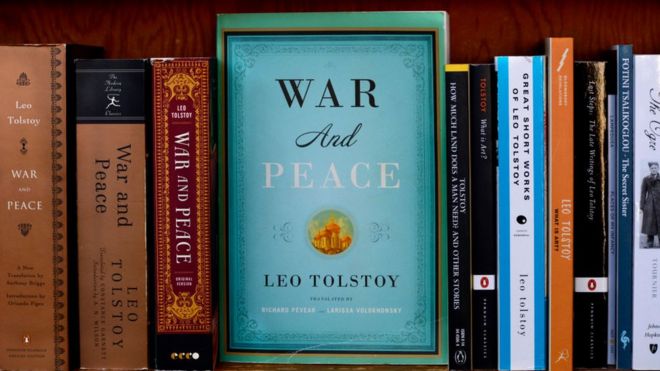 Image copyright GETTY IMAGES







 CHINDIA ALERT: You'll be living in their world, very soon
India and Pakistan: How the war was fought in TV studios
As tensions between India and Pakistan escalated following a deadly suicide attack last month, there was another battle being played out on the airwaves. Television stations in both countries were accused of sensationalism and partiality. But how far did they take it? The BBC’s Rajini Vaidyanathan in Delhi and Secunder Kermani in Islamabad take a look.
It was drama that was almost made for television.
The relationship between India and Pakistan – tense at the best of times – came to a head on 26 February when India announced it had launched airstrikes on militant camps in Pakistan’s Balakot region as “retaliation” for a suicide attack that had killed 40 troops in Indian-administered Kashmir almost two weeks earlier.
A day later, on 27 February, Pakistan shot down an Indian jet fighter and captured its pilot.
Abhinandan Varthaman was freed as a “peace gesture”, and Pakistan PM Imran Khan warned that neither country could afford a miscalculation, with a nuclear arsenal on each side.
Suddenly people were hooked, India’s TV journalists included.
So were they more patriots than journalists?
Rajini Vaidyanathan: Indian television networks showed no restraint when it came to their breathless coverage of the story. Rolling news was at fever pitch.
The coverage often fell into jingoism and nationalism, with headlines such as “Pakistan teaches India a lesson”, “Dastardly Pakistan”, and “Stay Calm and Back India” prominently displayed on screens.
Some reporters and commentators called for India to use missiles and strike back. One reporter in south India hosted an entire segment dressed in combat fatigues, holding a toy gun.
And while I was reporting on the return of the Indian pilot at the international border between the two countries in the northern city of Amritsar, I saw a woman getting an Indian flag painted on her cheek. “I’m a journalist too,” she said, as she smiled at me in slight embarrassment.
Print journalist Salil Tripathi wrote a scathing critique of the way reporters in both India and Pakistan covered the events, arguing they had lost all sense of impartiality and perspective. “Not one of the fulminating television-news anchors exhibited the criticality demanded of their profession,” she said.
Secunder Kermani: Shortly after shooting down at least one Indian plane last week, the Pakistani military held a press conference.
As it ended, the journalists there began chanting “Pakistan Zindabad” (Long Live Pakistan). It wasn’t the only example of “journalistic patriotism” during the recent crisis.
Two anchors from private channel 92 News donned military uniforms as they presented the news – though other Pakistani journalists criticised their decision.
But on the whole, while Indian TV presenters angrily demanded military action, journalists in Pakistan were more restrained, with many mocking what they called the “war mongering and hysteria” across the border.
In response to Indian media reports about farmers refusing to export tomatoes to Pakistan anymore for instance, one popular presenter tweeted about a “Tomatical strike” – a reference to Indian claims they carried out a “surgical strike” in 2016 during another period of conflict between the countries.
Media analyst Adnan Rehmat noted that while the Pakistani media did play a “peace monger as opposed to a warmonger” role, in doing so, it was following the lead of Pakistani officials who warned against the risks of escalation, which “served as a cue for the media.”
What were they reporting?
Rajini Vaidyanathan: As TV networks furiously broadcast bulletins from makeshift “war rooms” complete with virtual reality missiles, questions were raised not just about the reporters but what they were reporting.
Indian channels were quick to swallow the government version of events, rather than question or challenge it, said Shailaja Bajpai, media editor at The Print. “The media has stopped asking any kind of legitimate questions, by and large,” she said. “There’s no pretence of objectiveness.”
In recent years in fact, a handful of commentators have complained about the lack of critical questioning in the Indian media.
“For some in the Indian press corps the very thought of challenging the ‘official version’ of events is the equivalent of being anti-national”, said Ms Bajpai. “We know there have been intelligence lapses but nobody is questioning that.”
Senior defence and science reporter Pallava Bagla agreed. “The first casualty in a war is always factual information. Sometimes nationalistic fervour can make facts fade away,” he said.
This critique isn’t unique to India, or even this period in time. During the 2003 Iraq war, western journalists embedded with their country’s militaries were also, on many occasions, simply reporting the official narrative.
Secunder Kermani: In Pakistan, both media and public reacted with scepticism to Indian claims about the damage caused by the airstrikes in Balakot, which India claimed killed a large number of Jaish-e-Mohammad (JeM) militants in a training camp.
Hamid Mir, one of the most influential TV anchors in the country travelled to the area and proclaimed, “We haven’t seen any such (militant) infrastructure… we haven’t seen any bodies, any funerals.”
“Actually,” he paused, “We have found one body… this crow.” The camera panned down to a dead crow, while Mr Mir asked viewers if the crow “looks like a terrorist or not?”
There seems to be no evidence to substantiate Indian claims that a militant training camp was hit, but other journalists working for international outlets, including the BBC, found evidence of a madrassa, linked to JeM, near the site.
A photo of a signpost giving directions to the madrassa even surfaced on social media. It described the madrassa as being “under the supervision of Masood Azhar”. Mr Azhar is the founder of JeM.
The signpost’s existence was confirmed by a BBC reporter and Al Jazeera, though by the time Reuters visited it had apparently been removed. Despite this, the madrassa and its links received little to no coverage in the Pakistani press.
Media analyst Adnan Rehmat told the BBC that “there was no emphasis on investigating independently or thoroughly enough” the status of the madrassa.
In Pakistan, reporting on alleged links between the intelligence services and militant groups is often seen as a “red line”. Journalists fear for their physical safety, whilst editors know their newspapers or TV channels could face severe pressure if they publish anything that could be construed as “anti-state”.
Who did it better: Khan or Modi?
Rajini Vaidyanathan: With a general election due in a few months, PM Narendra Modi continued with his campaign schedule, mentioning the crisis in some of his stump speeches. But he never directly addressed the ongoing tensions through an address to the nation or a press conference.
This was not a surprise. Mr Modi rarely holds news conference or gives interviews to the media. When news of the suicide attack broke, Mr Modi was criticised for continuing with a photo shoot.
The leader of the main opposition Congress party, Rahul Gandhi, dubbed him a “Prime Time Minister” claiming the PM had carried on filming for three hours. PM Modi has also been accused of managing his military response as a way to court votes.
At a campaign rally in his home state of Gujarat he seemed unflustered by his critics, quipping “they’re busy with strikes on Modi, and Modi is launching strikes on terror.”
Secunder Kermani: Imran Khan won praise even from many of his critics in Pakistan, for his measured approach to the conflict. In two appearances on state TV, and one in parliament, he appeared firm, but also called for dialogue with India.
His stance helped set the comparatively more measured tone for Pakistani media coverage.
Officials in Islamabad, buoyed by Mr Khan’s decision to release the captured Indian pilot, have portrayed themselves as the more responsible side, which made overtures for peace.
On Twitter, a hashtag calling for Mr Khan to be awarded a Nobel Peace Prize was trending for a while. But his lack of specific references to JeM, mean internationally there is likely to be scepticism, at least initially, about his claims that Pakistan will no longer tolerate militant groups targeting India.
Source: The BBC
Posted in Adnan Rehmat, airstrikes, airwaves, Al Jazeera, Balakot, BBC, BBC reporter, campaign schedule, casualty, combat fatigues, commentators, congress party, critical questioning, Dastardly Pakistan, Delhi, escalation, factual information, fought, general election, Hamid Mir, hashtag, Imran Khan, India alert, Indian jet fighter, international border, Islamabad, Islamist militant groups, Jaish-e-Mohammad (JeM), JeM, jingoism and nationalism, Journalist, Kashmir, madrassa, Masood Azhar, Media analyst, media editor, militant camps, militants, missiles, nationalistic fervour, Nobel Peace Prize, Pakistan, Pakistani, Pakistani military, Pallava Bagla, pilot, PM Narendra Modi, press, press conference, Prime Time Minister, rahul gandhi, Rajini Vaidyanathan, red line, retaliation, Reuters, Salil Tripathi, Secunder Kermani, Senior defence and science reporter, sensationalism and partiality, Shailaja Bajpai, signpost's, suicide attack, Surgical strike, The Print, Tomatical strike, toy gun, training camp, TV anchors, TV journalists, TV studios, Twitter, Uncategorized, war, war mongering and hysteria, warmonger, Wg Cdr Abhinandan Varthaman | Leave a Comment »